
Search Results for: F word
Today we’re going to explore one of the most important components in the craft of screenwriting – visual storytelling. If you can master this part of the craft, you’ll have seriously leveled up. That’s no joke. The best writers tend to be the ones who consistently convey things visually.
Why is this? Because ACTIONS SPEAK LOUDER THAN WORDS. The action of an unexpected kiss will always be more interesting than two lovers talking about how much they like one another. The action of a character turning his gun away from his enemy and towards his friend will always be more interesting than him telling his friend he’s betraying him.
Visual storytelling can be broken down into four components.
Action
Framing
Choice
Creativity
The heart of the visual scene is action. Instead of a character saying something, see if you can achieve the same thing with an action. So instead of a character saying, “You look cold,” have him take his coat off and hand it to the other character.
Framing is the process by which you re-frame what would typically be a dialogue scene and turn it into something that can be conveyed through action. So let’s say you’ve thought up this big blowout break-up scene outside of a night club. To write this same scene visually, why not put it in the night club? The noise will force you to show the breakup through actions.
Choice is like action on crack. You give your character a choice (or a series of choices) and those choices give us insight into the character (as well as push the scene forward). At the end of Nightcrawler, Jake Gyllenhaal’s character comes upon a murder where the victim is still barely alive. Does he call an ambulance or get the footage that’s going to net him his biggest payday yet? That choice is what makes the scene so compelling.
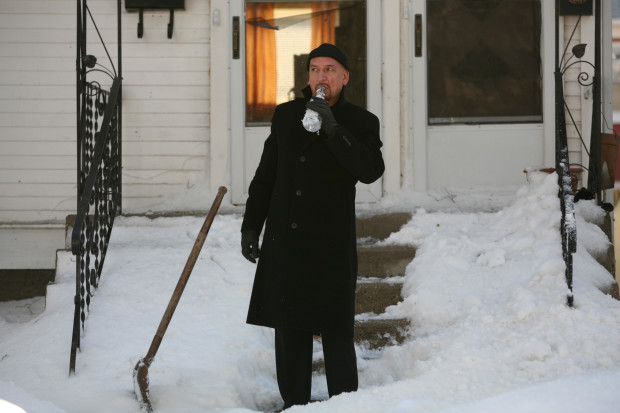
Creativity is the final piece of the puzzle. Come up with a neat or inventive way to visually tell your story. I’ll never forget one of the commenters bringing up Ben Kingsley’s movie, You Kill Me, where Kingsley played an alcoholic. To show this, the movie opens with Kingsley shoveling snow while drinking a bottle of vodka. He’d toss the bottle a few feet forward in the snow, shovel to it, take a drink, toss it a few more feet, shovel to it, take another drink, and so on.
999 out of 1000 writers would’ve shown the character in a bar getting cut off at the end of the night, or waking up on their couch with an empty liquor bottle nearby (and a bad headache). This writer’s desire to push beyond the obvious, to be creative, led to a way more interesting visual scene.
Now what you may notice is that a lot of great visual scenes have dialogue in them as well. The climactic scene of Luke blowing up the Death Star isn’t dialogue free. We see him make the choice to use the Force instead of his targeting system, but it still contains some discussion with the base. And that’s fine. Dialogue and action are teammates, fighting the same opponent, trying to win the same game.
All I’m saying is that scenes tend to be more interesting when they’re first approached visually. And if the scene still feels incomplete after that, you can always sprinkle dialogue in where it’s needed. If you only ever see a scene through the words the characters speak, you’re probably writing a lot of boring scenes.
Okay, now time for today’s scene challenge. In this pretend movie, our main characters, Claire and Nick, are a married couple who have been together for 20 years. But that’s not where we start. We start on the day they met, where Nick spots Claire on the street and is instantly smitten with her. I want you to show us, in a single scene, how Claire fell in love with Nick that day. Not just, “Oh, he’s cute, I’ll go on a date with him.” She has to FALL IN LOVE with him right then and there.
You don’t have to use anything I taught you today. You can make up your own visual rules. The only stipulation is that the scene can’t have any dialogue. Write your scene in the comments below and make sure to up-vote your favorites! Winner gets a shout-out tomorrow and Scriptshadow brownie points. Good luck!
Congrats to Paul Schellens! Who yesterday won the “Introductory Character Scene” Contest. Really good scene – did everything I asked for. Was even clever enough to use a scene I’d previously suggested, which always gets you points. :) Nice job, Paul!
Genre: Horror, Thriller
Premise: After accepting a gig to craft a demon mask, a makeup effects artist must protect her and her daughter from her abusive husband and the sinister forces that stalk them.
Why You Should Read: I’m not a mother but I want to be (eventually). I also want to be a paid screenwriter, proficient Japanese speaker, dog owner and in another life, Cirque du Soleil performer. What most people know (especially in this industry), is it’s really hard to find balance and sometimes you must sacrifice something to get your heart’s desire.
Besides that idea, I wanted to pair movie horror with the real horror of domestic violence. I researched, googled and trolled forums to craft my story. It wasn’t until after a reading when a woman approached me that I realized I was telling her story. It hurt to hear her share her accounts of abuse that she’d mostly kept to herself. I hope if anything this story inspires people to take control of their own lives.
Writer: Katherine Botts
Details: 103 pages (updated draft from last week)
I love self-promotion. It’s a huge under-talked-about element of this business. But self-promotion cannot prop up subpar writing. You have to get the writing part down before you blitz the world with your work. But how do you know when you’re ready, you ask. That’s a bit harder to determine. But Scriptshadow is a great place to start. If legitimate people aren’t voting for your script and if those same people are agreeing on common issues, accept that you have some work to do and then go get the work done. There are no shortcuts here. So stop trying to create them.
Okay, I don’t want to take away the spotlight from the true winner the week, Devil’s Workshop, so let’s get to it! Note that I’m reading a newer draft than the one you guys read, I’m guessing because Katherine incorporated a few of your suggestions.
Serena Berkin is in an abusive relationship in every sense of the word. At the center of the abuse is her husband’s, Isaac, desire to have a child, something Serena has been secretly preventing by taking birth control pills.
But when Isaac discovers her secret, he eliminates that problem and the two end up having a daughter. Flash forward nine years where the bulk of our story takes place. Serena is now a struggling make-up artist secretly using the money she makes from jobs to save up so she and her daughter, Charlotte, can get out of this dungeon of a marriage.
So Serena takes a job on a low-budget film that needs a demon character quickly. As she starts creating this demon, strange things start happening around the house, such as Charlotte talking to people when no one is around and waking up with strange bruises on her body.
At first Serena assumes that the culprit is Isaac. But when Isaac is sent to jail, Serena notices that Charlotte’s strange behavior and mysterious injuries continue. In comes Isaac’s mother, a rich old hag who would stick up for her son if she found out he was one of the 9/11 terrorists. She’s convinced that it’s Serena abusing the child, and begins proceedings to gain custody of Charlotte.
In the meantime, as Serena continues to create this monster, stranger and stranger things begin happening, such as the actor cast to play the demon taking on the persona of the monster when he wears the suit. Is he just method acting? Or could this be something more?
Serena holds off on the assumption that this suit could actually be demonic until the evidence is too strong to ignore. But by that time, there are so many people closing in on her, trying to steal the daughter she, ironically, never wanted in the first place, that this demon may be the least of her worries.
Wow, this was a good script!
I really only have one major complaint, and it’s the opening scene. The scene shows our main character, Serena, secretly taking birth control pills, her husband discovering her, and then him pinning her against the wall. We then see: “9 YEARS LATER.”
I bring this up because I see it a lot. The starting-off-with-a-flashback scene that isn’t big enough to necessitate a major time jump afterwards. Look, it’s a good scene. Our main character is discovered pulling off some shady shit by her abusive husband.
But that’s not a “CUT TO 9 YEARS LATER” opening scene. If you’re going to cut to 9 years later, you have to hit us with something huge in that opener. Somebody needs to die. Something utterly unforgettable needs to happen.
A couple of weeks ago we had “American Witch,” which started with a group of people carrying a witch into the caves and burying her alive as she stuck an acorn up her vagina which we then watched grow over the next 100 years. THAT’S a scene worthy of jumping forward in time after. This is just a normal well-written scene.
But after that, the script gets good. Katherine does a really nice job of building an emotional core into her story. Sure, this is about a demon suit that may or may not be associated with the devil. But it’s also about a woman who’s trying to protect her child from an abusive husband.
And what’s cool about The Devil’s Workshop is that it isn’t straightforward. It’s not black and white. I loved that this is a daughter Serena never wanted. And now, ironically, she’ll do anything to protect said daughter against the man who DID want her.
Another thing I want to touch on is originality. Look, we’re all trying to come up with that premise that nobody’s heard of before. That’s what turns heads in Hollywood. But it’s hard to find anything original when you’re competing against 100 years of film.
Lucky for writers, there’s a “next best thing.” Which is a world or a job that not many people know about. In this case, that’s a make-up artist. The reason this still works is because a lot of what you’re going to be writing about are things that the average person doesn’t know about. Which means your script is going to feel “new” and “fresh.” And that’s exactly how I felt here. Sure, we’ve seen plenty of horror films like this. But not from a make-up artist’s point of view. So that was fun.
Katherine wraps all this up by writing about something she cares about, that she’s emotionally invested in – abuse and the power of standing up to it, of getting out of it. Never underestimate the power of something you care deeply about. It comes out in the writing and it turns your script from just another horror flick or just another thriller flick, into something that hits people on a gut level. And that’s how you write a screenplay that stays with someone. You hit’em in the gut.
I really liked this. The only other change I’d suggest is possibly making Isaac more three-dimensional. You want to be careful not to make your villains too villain-y. Isaac coming home and calling his wife’s make-up work garbage is a bit on-the nose. What if that’s what he loved about her? Her artistry? That would make him even more fucked up that he’d be able to go from that to beating her.
Just a thought. But in the end, these problems were minor compared to the script’s strengths.
Script link (new draft): The Devil’s Workshop
[ ] what the hell did I just read?
[ ] wasn’t for me
[xx] worth the read
[ ] impressive
[ ] genius
What I learned: Everybody says, “Write what you know,” but then you have writers who all they do is play video games all day, so they write about a character who plays video games all day. “Write what you know!” they defend their script with. Uhh, no not really.
So today, I’m going to make two addendums to this famous piece of advice.
1) Write about the most interesting thing you know.
2) Package your “write what you know” idea inside a marketable premise or genre.
Let’s say you’re a housewife. You could write a story about being a houswife because you know it well. But is there enough to work with there? Is it that interesting? Probably not. But being a make-up artist? That’s a pretty unique job with some potentially interesting avenues to explore. I’d pick that over a housewife in a second.
Next, create a marketable component around your “write what you know” subject matter. For example, Katherine could’ve written a drama about a make-up artist who’s in a custody battle with her child. But that’s not going to sell tickets. Instead, she placed her subject matter in one of the most marketable genres in the movie business – horror. And the result is something that could actually be a movie. Well done!
First Edit: Okay, not sure if this has sold yet. I thought it sold to Warner Brothers but someone said not true? Can anyone confirm?
Second edit: Wow, just 5 hours after the review was posted, Netflix came in and bought Bright. This is easily going to be their biggest original film yet.
HUUUUUGE spec sale reviewed today folks. And from the most controversial screenwriter working today. Days like this are what Scriptshadow was made for.
Genre: Cop Drama/Fantasy
Premise: In a world where fantasy creatures live alongside humans, a cop and his orc partner stumble upon a magical item so rare, everyone in the city comes after them to get it.
About: This is that super big spec sale that just occurred a few days ago. And yup, you’re correct, it was written by Max Landis. Although this time, Landis has teamed up with David Ayer (who wrote one of my favorite cop movies of all time – Training Day), and his revised draft is the draft I’ll be reading today. Ayer is also planning on directing the film. Lots of folks wanted this one. Let’s see if it lives up to the hype.
Writers: Max Landis – Current Revisions by David Ayer
Details: 96 pages – 2/29/16 draft

Here’s a brief through-the-years synopsis of how to sell a spec script:
1990 – Come up with any idea that resembles a movie that could conceivably make money, don’t have to write the actual script, get a million dollars for it.
1996 – Come up with a cool hip indy script with tons of dialogue (note: dialogue does not have to be story-relevant).
1998 – Come up with a “high concept” summer blockbuster idea that likely involves the end of the world.
2003 – Write high-concept horror. Bonus points if there’s a big twist at the end.
2008 – Come up with a cool contained thriller. Anybody trapped in a small location will earn you a sale.
2009 – Anything found-footage. ANYTHING!
2014 – Low-budget horror gets you in like Flynn.
2015 – Biopic Party. Write a script about anybody from any time period who was reasonably famous. Bonus points if World War 2 is mentioned in even a cursory manner.
2016 – Be Max Landis.
Today’s script is going to be interesting because on the one hand, you have Max Landis, the social media rabbel-rouser who’s six months away from having an Amanda Bynes-like public meltdown. On the other you have David Ayer, a screenwriting superstar who’s a writing badass on every level. I don’t know what I’m expecting, but I do know it’s going to be worth talking about.
Scott Ward is a good cop who used to be well-liked until he teamed up with the first orc-cop in the department, Nick Jakoby. There’s tons of tension between humans and orcs in the real world as well as this precinct, and this politically correct hire has pissed a lot of cops off.
Scott and Nick receive a dispatch to check out some gunshots fired in South Central, only to walk into a home and see people dead in ways they’re not supposed to be dead. That’s when Scott sees it. A magic wand! Just lying there. Now magic wands are a big deal in this world. As another cop points out: “You wanna be rich? Tall? Have a bigger dick? Live forever? A magic wand can give you anything.” And it’s just lying there.
The second group of cops on the scene realize just how rare this opportunity is and inform Scott that they’re keeping this motherfucker, and he’s going to stay quiet about it. Not only that, but since his orc partner can’t be trusted, he has to kill him right now.
Scott freaks, and when the moment of truth comes, he spins around and kills the other cops instead. Him and Nick then take the wand and book it into the bowels of South Central, where word quickly spreads that they have a magic wand. And everybody wants that wand.
Latino gangs, Orc gangs, LAPD, the Feds, even private companies are coming after that wand. And let’s not forget that the owner of the wand, the witch, probably has a “find my wand” app on her phone. As Scott and Nick realize that nobody’s playing by the rules anymore, they’ll have to escape South Central and come up with a plan to get the wand into safe hands. That’s assuming there are any safe hands left.
There’s a lot to learn from this script, guys. For starters, what are the scripts that are most likely to sell? We’ve discussed this before so you better know the answer. What? You’ve forgotten??? A fresh take on an established idea. That’s the first thing Landis does with Bright. What’s cool is that this plays out like a typical grimy LA cop drama. But the introduction of orcs and magic and witches and elves – it gives it all an exciting fresh feel.
Next, we have a SIMPLE STORY. How many times have I babbled about this one? If you’re writing a spec, you don’t want to get too complicated. And actually you don’t want to get too cpmlicated with any screenplay you write. You only have 2 hours so keep things basic. Here we have cops who have found a wand and must escape South Central LA without getting killed. Easy-peasy bag of cheesy.
Next, we have the tried-and-true McGuffin setup. One item that all the characters are after. The McGuffin setup is particularly effective when you’re following multiple groups of people in a script. That’s because if you have to create unique goals for 5-6 groups of people in your story, you’re going to spend 10-15 pages of your screenplay dishing out exposition (“We have to go here now so that we can get that thing that will helps us solve that other thing.”).
What a McGuffin does is it takes out all that exposition. Because everyone’s chasing the same thing – the wand! We know that. So when we jump to the Feds or the orc gang or the bad cops, we know exactly what they’re up to and don’t need to be constantly updated.
Something else is going on here that I’d like to weigh in on. I’ve heard this a lot lately: “Don’t write a big-budget spec.” Everybody says that. Guess what? It’s bullshit. What these people are really saying is, “Don’t write a big-budget spec with a lame-to-average idea.”
They’re probably not even aware that that’s what they’re saying. To them, they’ve seen all these big-budget specs passed over by their bosses with the feedback: “Too expensive.” So they disperse that information into the ranks. But what the boss is really reacting to is the fact that this movie is going to cost all this money and the idea isn’t even very good.
“Bright” is a good idea. So it doesn’t matter if it’s going to cost a bunch of money. And that’s what you have to remember when writing a big-budget spec. The more your movie will cost, the better the idea and the more marketable the concept will have to be.
Whenever I read big-budget specs, 95% of them fall victim to the same mistake. They’re a carbon copy of another big movie from the past. Lord of the Rings, The Hunger Games, The Matrix, Blade Runner, Independence Day, Armageddon. You can’t change the character names and the time periods and expect to win the “fresh take on an old idea” argument. It’s more like a “fresh coat of paint on an old ass house” argument.
If you really want to write something fresh, you have to perform a tear-down. “Bright” really does nail that “same but different” feel, and that’s why it’s gotten all this heat.
But what’s great about this script is that it also executes. I have no idea how much of this is Landis and how much is Ayer (Ayer is the cop-movie expert so I’m sure a lot of the specific cop-related stuff was his), but this is solid storytelling here. The scene where we find the wand and the other cops tell Scott that he has to kill his partner – and we build up that suspense of “what is he going to do?” – that was a great scene and the moment I got hooked.
If I had to nitpick, I’d say I wish they’d spent more time on the other creatures and not just the orcs. More variety. But the story was so strong that it didn’t suffer much from the issue. It’ll be interesting to see how this comes together. Isn’t Ayer signed on to Suicide Squad 2? When is he going to have time to make this movie? Anyone know?
[ ] what the hell did I just read?
[ ] wasn’t for me
[ ] worth the read
[x] impressive
[ ] genius
What I learned: Whenever you write a script that requires a lot of world-building (fantasy and science-fiction), it’s essential that you convey exposition in as few lines as possible. You don’t want to weigh down your script with Monologue Mike never shutting up about how the Orc Castle of Targenhale once birthed a young orc cub, who would later become the king of Smokerbasin until he lost his right eye. That may fly in Game of Thrones. But movies are short and need to move quickly. Here Landis and Ayer did a great job of explaining the magic wand. This wand is driving the entire story, so a lesser writer might’ve thought a flashback and three page monologue were in order to build it up. Here’s what we get instead:
HICKS
: Ever seen a wand in person?
WARD
: What? Sure … yeah. That broken one in the Smithsonian.
This conveys two things quickly. One, that seeing a wand is very rare. And two, that they’re such a big deal, they’re displayed in museums. That’s all we need to know going forward to understand that this wand is going to change their lives.
So they’re making a TV series about the Angriest Woman in The World, the same subject matter that Michael Whatling won Amateur Offerings with. If you remember, I wondered if anybody would want to make something so uncommercial. Well, somebody is. This goes to show that the entertainment world is full of opinions and a lot of those opinions turn out to be wrong. If you feel passionately about something, don’t listen to me or anybody else who tells you no. Keep pushing your script until you find the person who connects with it.
Next week is Amateur Offerings Pilot Week. Send in your pilot scripts to carsonreeves3@gmail.com. Include the title, genre, logline, and why you think it deserves to be chosen. If all goes well, we’ll find the next Ozark. Rock and roll people. You know what to do next. Read the below scripts and vote on your favorite! And no, you can’t revote for Time Shark.
Title: A Change Is Gonna Come
Genre: Sci-Fi Biography
Logline: In 1965 a white musician struggles to pursue a music career with his black friends, until he crosses paths with a singer who oddly resembles his lamented hero, Sam Cooke.
Why You Should Read: I’m a huge fan of alt-history and what-if scenarios. I’m going to be honest, this premise is very unique. It revolves around one of America’s greatest Soul singers, Sam Cooke, and sort of acts his biopic, but not to the point of boring facts and situations. The story is seen through the eyes of his biggest fan, Jeffrey, and starts on the day that Cooke was murdered in the 1960s. It creates a whole new set of rules for time travel and fuses its sci-fi characteristics with themes of race and breaking down barriers. With everything going on these days with police brutality, and even the more-frivolous “OscarsSoWhite” controversy, this story may be more relevant than ever. It’s intense at times, but also does it with an appropriate sense of levity. I guarantee you this will be a very fun read of epic proportions. Thank you for your consideration.
Title: The Devil’s Workshop
Genre: Horror, Thriller
Premise: After accepting a gig to craft a demon mask, a makeup effects artist must protect her and her daughter from her abusive husband and the sinister forces that stalk them.
Why You Should Read: I’m not a mother but I want to be (eventually). I also want to be a paid screenwriter, proficient Japanese speaker, dog owner and in another life, Cirque du Soleil performer. What most people know (especially in this industry), is it’s really hard to find balance and sometimes you must sacrifice something to get your heart’s desire.
Besides that idea, I wanted to pair movie horror with the real horror of domestic violence. I researched, googled and trolled forums to craft my story. It wasn’t until after a reading when a woman approached me that I realized I was telling her story. It hurt to hear her share her accounts of abuse that she’d mostly kept to herself. I hope if anything this story inspires people to take control of their own lives.
Title: The Playhouse
Genre: Contained horror
Logline: When seven strangers, with no memory of who they are, wake up inside an old, dark house with no way out, they become victims to a series of terrifying supernatural encounters… but if they ever want to escape this place alive, they’ll have to unlock the mystery of who they are, why they’re here, and what this place really is.
Why You Should Read: I want to do something a little different and a little special with my submission today, and take this opportunity to use Scriptshadow as the mighty marketing tool which I know it can be. Carson’s site is immensely powerful and it has already brought several writers and scripts to the attention of Hollywood producers. I want to see if we can make this happen again. — Firstly, for anyone reading, it’s important to think of The Playhouse, not as a single screenplay, but instead the beginning of a franchise. It’s true to say that the script is a self-contained story with a beginning, a middle and an end, but built into the fabric of its DNA is the potential for the continued expansion of its central concept. — The script is, essentially, a low-budget contained horror, but it has a unique hook at its heart. Without revealing any spoilers, what begins in the traditional haunted house genre quickly elevates into entirely new territory in the final act (while also keeping its hooks firmly within the conventions of horror). — Now, the interesting part: if my script gets enough votes and is chosen to be reviewed by Carson, I’ll be releasing a special pitch document attached to the script for you guys to read which will contain a synopsis for the next two sequels as well as outlining my vision for the evolution of the series as a whole, showcasing why this is the next horror franchise to step up after The Purge, Saw and Final Destination series. — I will also simultaneously be pitching the script to producers at the same time it’s featured here on scriptshadow, and I’ll be doing my best to keep you guys updated during this process. — My real hope, however, is that producers will concurrently find the script themselves through this amazing site. If you’re a fan of my project and you choose to vote for me, I hope you can help out by creating buzz, using social media to direct producers and industry professionals, that you either know personally or online, here. — You can consider this an exercise in hype, word of mouth, marketing or even a type of social experiment. Thank you for reading.
Title: Intelligent Design
Genre: Gothic Horror/Sci-fi/Crime
Logline: A grisly vampire-like murder sends an NYC Detective in way over his head when he suspects that the culprit he’s after might actually be a real vampire.
Why You Should Read: You’ve actually read this before, but a moderately longer version. It was in the “Almost Top 25” category for the Scriptshadow 250. The feedback I received from your site was that it was too long. Funny part was a management company (a very good one too) who saw the logline asked to read it, liked it, and had the exact same feedback. So, I spent the last month slowly killing my darlings a bit. I managed to shave off 8 pages from the script, 120 down to 112. Is it enough? I definitely think it reads quicker, but you never what you have until someone else reads it. I made a few narrative changes. I swapped the opening “teaser” with something that felt a little more gripping. I think the previous opening could easily be mistaken for weird pillow-talk. I tweaked the ending as well. I also did my best to get rid of over-description, which I think was one of the major hurdles when reading it. Alas, hope it makes the cut again…
Title: Wild
Genre: Crime/Thriller/Drama
Logline: In 18th century London, a con artist becomes the head of the police and uses this new power to secretly rise to the top of the organized crime world.
Why Read?: It’s the type of story that people can’t believe could be true, except it is! It’s based off of the real life story of Jonathan Wild, one of England’s most notorious criminals. This script was a Quarterfinalist in the 2015 Nicholl Fellowship, and a Finalist in the 2015 Scriptapalooza Screenplay Competition, so we’ve gotten a little bit of attention from some management companies, but haven’t been signed.
Is there such thing as the perfect concept? Today’s script poses that question. And no one makes it out alive before the answer is given! Time Shark baby! TIME SHARK!!!
Title: Time Shark!
Genre: Spoof/Action Adventure
Logline: A retired marine biologist goes back into the water when inter-dimensional time-traveling sharks invade our world. But an overzealous military-man has nefarious plans for the strange fish. Airplane! meets Jaws.
Why you should read: Hey there! So I’m a first time screenwriter, starting this a little later than most, (I’m in my early 40s) and I had a story to tell about time traveling sharks. So I did. I don’t live in California, I’m actually a tv sports producer in Florida, a cuban-american dad, and write as a hobby on the side. I think you should review my script because it’s a comedy about time traveling sharks. And time travel is awesome, and so are sharks. And spoof comedies aren’t all that common anymore, so why not? I really hope you give it a look. Thanks.
Writer: Enrique Bertran
Details: 97 pages
First off, I want to apologize to the four OTHER applicants of last week’s Amateur Offerings. Because, seriously? Did anybody REALLY stand a chance against Time Shark? We’re talking about time travel and sharks. The two greatest things that have ever existed on the planet. I once conducted a survey of the greatest pairings of all time once and you know what the number 1 pairing was? Peanut Butter and Jelly. Except there was an asterisk next to it. The asterisk stated: “Unless you’re counting time travel and sharks.”
The only bad thing about putting time travel and sharks in the same script is that the expectations are stratospheric. Anything less than genius would be a literary catastrophe. But no worries. We can be sure that today’s screenplay will be perfect. Why? Because if it isn’t, we can just send a shark back in time to rewrite it. Boom! Splash goes the shark’s fin.
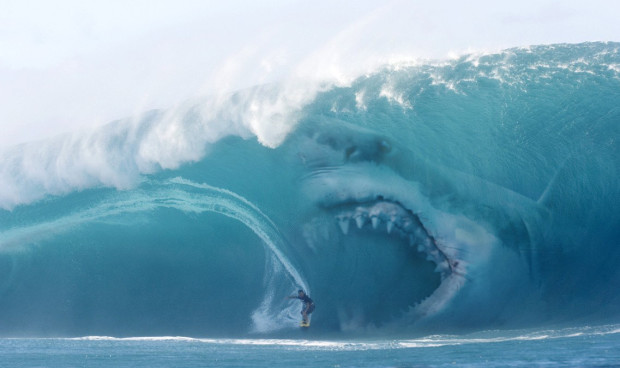
Pentagon worker Sarah Lightman has just been informed of the impossible. All over the world, ancient sharks – sharks that have not existed in millions of years – are attacking and killing people. We’re talking megalodon sharks here, those giant prehistoric motherfuckers, and flying sharks, and sharks with two heads. Sarah and her co-worker, Chairman Higgins, are tasked by the government to figure out a solution to this growing problem.
It doesn’t take long for Sarah to realize they’re in over their heads. Luckily, she knows a man. Gil Baitman, the world’s number 1 shark expert. The thing is, Baitman hasn’t been seen in years. Ever since his wife was chewed up by one of these dorsel-finned gravy gobblers, he can’t so much as mouth the word “shark.” But desperate times call for desperate measures, and the curiosity factor of prehistoric sharks using our beaches as buffets is too big for even Baitman to resist.
The goal is to capture one of these sharks so the government can study what they’re up against. And somehow, Gil and Sarah pull this off. Little do they know, however, Chairman Higgins never had any intentions of studying these sharks and their time-traveling ways. He wanted to create the ultimate time shark army! So he starts cloning these sharks and strapping weapons to them (like lasers), and before you know it, he’s sending this shark army off on missions.
But wouldn’t you know it – those bastard sharks rebel. And now that they’re armed with weapons, they have one goal in mind – to settle the score with their makers. It’ll be up to Gil, the only person who knows enough about sharks to stop this kind of attack. But will he be able to put past tragedies behind to pull off this impossible feat? Only time will tell. Or should I say, only time SHARKS will tell.
I honestly considered giving this script a “worth the read” on its title alone. I’m serious. There have only been five screenplays in existence that were worth money on their title alone. Monster-In-Law, I remember, was one of them. Then there were… those other ones. And Time Shark would definitely be in that group.
But Enrique makes a critical mistake. He mixes two types of comedy that shouldn’t be mixed. “Spoof” is the kind of comedy that works when you have a generic subject matter – like an airplane. The spoofing is there to “spice up” up the otherwise bland concept. But when you have a spicy concept to begin with, you don’t need any more spice. Too much spice can turn a relaxed dinner at an Indian restaurant into an all-night date with your toilet.
I mean Russians speaking with subtitles, then looking down to read their own subtitles and then, because they’re upside-down relative to them, turning those subtitles right-side up so they can read them – that’s pretty funny and something that would work in a movie like Airplane. But it doesn’t work here when you’ve already got a wacky concept to begin with.
Every bit of comedy here needs to stem from two things – sharks and time-travel. When you’ve got scenes centered around the cloning of Kim Kardashian’s ass, you move from “buzzworthy so-bad-it’s-good” type movie, a la “Sharknado,” to “Vampires Suck,” which is the trash heap of the comedy genre. You don’t want to get anywhere near that. I mean a joke about Abe Vigoda? Really? I suppose that’s sort of time travel related. As in time traveling jokes from the 90s.
As for the plot itself, it’s a mixed bag. Having Sarah and Gil try and bag a time shark was okay, I guess. But once they deliver the shark, the movie shifts over to Chairman Higgins, who’s driving the story with his whole “weaponizing sharks” plan. In the meantime, our main characters are just hanging out on a boat for 30 pages.
There’s this misconception that when you’re writing comedy – ESPECIALLY broad comedy – that nothing matters. That you can do whatever the hell you want because ‘who cares, it’s comedy.’ But the standard pillars of storytelling still apply. And having your two main characters inactive for 30 pages is a bad idea. You want them to be driving the story at all times.
The script picks back up when the time sharks rebel and Gil and Sarah are tasked with cleaning up the mess (so they’re finally active again), but it’s too little, too late. By that point we’d gotten bored of the two.
I DEFINITELY think this is salvageable though. The idea of megalodon sharks attacking people on beaches is genius. I also like the idea of the government weaponzing them. I would try and keep Gil and Sarah closer to the action in that second act though. You never want your main characters waiting at the side of the ring to be tagged back in. They need to be fighting the fight at all times. And stop trying to mix two different types of comedy. I’d go so far as to say this will never go anywhere if you keep the spoof angle.
Out of my own curiosity, I’d like to hear other commenters pitch their Time Shark movies. This is something I’m almost sure will be turned into a film, even if it’s just on Syfy. And if we can help Enrique see a better version of this script, we could help him speed up that process. So, fire away!
Script link: Time Shark
[ ] what the hell did I just read?
[x] wasn’t for me
[ ] worth the read
[ ] impressive
[ ] genius
What I learned: Guys, if secondary characters are making the decisions that are pushing your story forward, it means your main characters aren’t. That’s bad storytelling 101.