
Search Results for: F word
Get Your Script Reviewed On Scriptshadow!: To submit your script for an Amateur Review, send in a PDF of your script, along with the title, genre, logline, and finally, something interesting about yourself and/or your script that you’d like us to post along with the script if reviewed. Use my submission address please: Carsonreeves3@gmail.com. Remember that your script will be posted. If you’re nervous about the effects of a bad review, feel free to use an alias name and/or title. It’s a good idea to resubmit every couple of weeks so your submission stays near the top.
Genre (from writer): Euro Horror
Premise (from writer): A Transylvanian Countess struggles to conceal her dark inheritance from
two investigators when she finds herself drawn to a bereaved English girl. A love
letter to European vampire cinema of the 1970s.
Why You Should Read (from writer): Because I’d love to see Carson plunge into the hypnotic, eroticized world of Euro Horror! Sure, LET US TOUCH THE SUN is a zillion miles and at least 40 years removed from multiplexes and opening weekends; but I’d like to think it can find an audience among the fanatical followers of dvd labels such as Blue Underground, Redemption and Shameless. Indeed, LET US TOUCH THE SUN was my attempt to write something I would purchase myself from one of these labels, a film possessed by its mysterious female vampire, unerring sense of place, and all-pervasive sensuality. —The script also represents my learning and assimilation of craft techniques over the past four years (I’ve been working on other projects in that time, but nevertheless this one has been through 100+ iterations!) Certainly, its pages incorporate elements I probably wouldn’t utilize again in a hurry; but ultimately I hope the reader leaves with something not dissimilar to the feeling expressed by Linkthis83 last time around: “… I’m adrift in realms, and being guided towards moments where I’m privy to exchanges and happenings that once all these moments are totaled I will have experienced something that I can neither quite describe nor possibly express in a manner that exhibits understanding… but a knowing that something occurred because I felt it… and struggle to define it.”
Writer: Levres de Sang (selected dialogue from J. Sheridan Le Fanu’s “Carmilla” (1872)
Details: 102 pages

Scriptshadow Nation has finally been heard! If I had a dime for every time someone asked me to review amateur entry “Let Us Touch The Sun,” I’d have a big jangling jar full of dimes to take to the grocery store to put in that coin machine, which would then return 20% of my money and give the other 80% to orphans and spit out a special receipt which stated that if I did not cash the receipt within 90 seconds, I not only wouldn’t be able to receive my funds, but I would now owe the supermarket money.
I’m not going to lie. I’m a little scared here. I’m not entirely sure what “Euro Horror” is and I’ve never read a script before that included selected dialogue from another source, much less a source from 140 years ago! I feel like Snoop Dog walking into Carnegie Hall. But as has been the case in the past, you can experience a lot of great things when you go out of your comfort zone, so let’s see if Let Us Touch The Sun does so for me……
It’s 1978 and Countess Valerie Kristeva is under suspicion for the disappearance of four young women. Detective David Chang from America and Inspector Rollin from Interpol are closing in on Valerie’s trail of death, but there’s no way to connect her to these women. It’s gotten so weird that Rollin has come up with this cockamamie idea that Valerie might be a vampire!
Valerie, of course, is a vampire, and not a very patient one. She has a weakness for young women and her latest target is a beautiful 19 year-old hottie named Malika. Valerie invites Malika on a voyage across the sea and when you’re 19 and a beautiful woman invites you to travel the world, how can you possibly say no?
While Valerie plots her seduction of young Malika on the boat, David Chang and Inspector Rollin are off following their respective leads in the killings of the previous girls. Valerie will eventually take Malika home to her castle, where she’ll either turn her into vampire lunch meat or Malika will finally figure out that it’s a little weird a random woman has invited her to a castle and run the hell out of there.
This is going to be a tough review because I love how much Levres has contributed to the site. He’s an invaluable part of the daily conversation here at Scriptshadow. But I’d be doing a disservice to him if I reviewed the script with kid gloves and it sounds like Levres understands that this script is a little… offbeat. So I’m going go at these notes like I would any other script and Levres can determine if they’re relevant to what he’s trying to do or not.
I’ll start by saying, I could see this movie in my head. Levres has a very distinct style that echoes a 1970s casualness, an almost presumptuous pace that assumes you’ll spend the rest of your day sipping a coffee in the park and then writing in your diary. There is a patience to the story and boy is that brave in this day and age. I commend Levres for it.
But it should be noted that this style is hard to make work no matter what era you’re in. A story is a story is a story, and stories need to move. If Let Us Touch The Sun were a blender, it would be turned to the lowest setting, and I had trouble waiting for my drink to be ready.
The CAA coverage department’s first note of Let Us Touch The Sun would likely be: “Overwritten.” And I wouldn’t argue with that. A quick look through the pages and here are some words and phrases I pulled out: Photogravure, Casa Angola, Cossack style, Foster Grants, Noh mask, perspex screen, slimline Dunhill, somnolent lapis lazuli, afga c60 cassette,
I don’t mind a flourish here and there but when there are a 100+ words I’ve never seen before in a screenplay, or that I’ve seen infrequently enough that I have to read them twice to place them, that can take its toll on a read. I like to enjoy a script, not work for it. And too much of the writing here made me work – squinting through the fog of prose to discern what was really being said.
Indeed by page 50, I was only understanding around 60% of the information on the page. For example, I didn’t understand why Valerie was waiting to turn Malika into a vampire. Why not just turn her into one right away? To be honest, I didn’t even know where they were going on their trip. I know that information is in the script somewhere but that’s the danger of stressing purple prose over clarity, is that the reader is more likely to miss important details.
And that’s how this read. Every 10 pages, I felt like I understood the story less instead of more. I knew there was an internal logic to the plot and I knew that Levres knew where he was going. But the fog-like prose really made it hard for me to keep up. I feel guilty about this and I considered going back and re-reading the script to fill in those gaps but I realized that the average reader isn’t going to do this, so I can’t either.
On the story side, I thought Levres could’ve done more with the detectives. Here we had Valerie on the boat with Malika for a majority of the script and the two detectives were halfway across the world doing their own thing. I wanted them to be closer. I wanted Valerie to feel that pressure, of them putting the pieces together. And really, I wanted there to be only one detective. Having two was confusing and spread the inspection storyline too thin.
What about putting the inspector on the boat with them (I know he starts out there but then he leaves early on)? And actually, if we’re using yesterday’s article as a guide for how to improve a screenplay, what about making the victim and the inspector one and the same?
So you make the Inspector a woman, the female version of Michael Douglas’s character in Basic Instinct. Valerie, who would now play the Sharon Stone black widow character, invites (the now older) Inspector Malika on the boat trip to question her about the missing girls. The two then engage in a twisted game of deception where the lines keep crossing.
That’s off the top of my head but still, I guess I’m looking for ways to beef this story up. Everything here comes across so subtle that too much tension is left on the table.
In Levres’ defense, this is not a “screenplay friendly” movie. It’s clearly stylized in a way that only film can capture, like the difference between reading a Terrance Malick screenplay and seeing a Terrance Malick movie. So that has to be factored in here. Still, I think the script is focused more on imagery than story and when I sit down and read a script, I want a good story.
Screenplay link: Let Us Touch The Sun
[ ] what the hell did I just read?
[x] wasn’t for me
[ ] worth the read
[ ] impressive
[ ] genius
What I learned: There’s a famous story about an agent who told a screenwriter client of his that his script was “too smart.” And that makes for a funny story but I understand what he meant. Hollywood isn’t looking for high art, perfect prose, or the painting version of a screenplay. They’re looking for a great story. Let me repeat that. THEY’RE LOOKING FOR A GREAT STORY. And if anything in your script takes precedence over that, they’re likely to dismiss it. Here, it seems like Levres is more interested in how his script reads than how his story is told. Strip away all the prose here and ask yourself if the story mechanics (what happens and when it happens) are compelling enough. I think everything’s happening too slowly, even for an inherently slow film, and that more plot can be packed into the pages. Of course, this isn’t a genre I understand well so I’ll gladly leave the final decision in Levres’ hands! I wish you the best of luck, Levres, and keep commenting!
Scriptshadow 250 Contest Deadline – 81 days left!
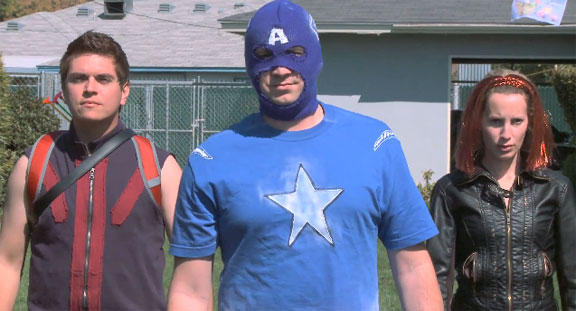
It’s a strange Monday in the movie business as we’re looking at one of the PRIME weekend slots of the calendar year, the second weekend in May, having no big flashy releases. This is usually where you’ll see a 250 million dollar titan shake its fists and wiggle its belly as it prepares to gobble up your hard-earned dollars, yet there was nary a big-budget flick to be found as every studio was terrified of Captain Iron Man Hulk’s second weekend.
Those same suits are kicking themselves now as the king of all franchises isn’t doing nearly as well as Mickey would’ve hoped. This could’ve been a prime opportunity to not just take over a vacant weekend, but steal some paper from the biggest studio in town. While Avengers touts a lot of big numbers in its press releases, the reality is, the film’s box office is down 30 million from the last entry’s second weekend. In a world where franchise sequels regularly make more than their opening counterparts, the most underrated box office nose dive of the decade is leaving some to wonder the impossible: Are super hero movies in trouble?
That sounds absurd, and let’s keep in mind that Avengers 2 is making more globally than the last film did (due to ever-expanding markets, but still), but I’ve gotten some strange e-mails this past week stating that Avengers 2’s lackluster domestic performance is the beginning of the end for the oversaturated super hero market. The film had EVERYTHING – literally EVERYTHING – that a moviegoer could want. And yet 45 million dollars worth of people (counting the smaller box office take in the film’s first weekend) have disappeared from the theaters.
From what I’m hearing, the reason for this is superhero-itis. Avengers is the culmination of every super hero movie that came before it. It is the biggest most expensive piece of digital celluloid money can buy. Yet its trailer doesn’t show anybody anything they haven’t seen before. In fact, it looks an awfully lot like the first film. No thanks, says today’s youth, I’d rather spend that money on a video game.
While I’m not ready to announce the death of the superhero film just yet, I do think studios will have to reevaluate the genre. It doesn’t matter how much people love superheroes. If every superhero movie is just a slight variation of the last one, Avengers is the beginning of the end. But if they find new exciting ways into the genre, it’ll have legs. That’s why I’m curious to see how the exceptionally unique Ant-Man does. And an even bigger crisis will occur when Marvel has to reboot all its superheroes after the end of Avengers 3 and 4. Will audiences get on board for all new films that aren’t new at all? Ask Sony and Spider-Man about that.
That’s not the only story this weekend as Warner Brothers put forth the first film in another hot trend, the female-led big-budget comedy. Hot Pursuit sees Hollywood capitalizing on the female comic craze, but if the film is any indicator of what’s to come, this pursuit could end up behind bars. Pursuit barely made 13 million this weekend. I thought the film looked fun and I like both Reese Witherspoon and Sofia Vergara, but the average ticket buyer doesn’t agree with me. Granted, neither of the two are major comedy stars, which had something to do with the less-than-stellar b.o., but the film scored terrible reviews as well (7% on Rotten Tomatoes!) and bad word of mouth can kill any comedy that doesn’t star Will Ferrell.

We’ll have to see if this is a blip on the radar or a real issue when the next female-dominated comedy comes out later this summer, the Paul Feig – Melissa McCarthy collaboration, “Spy.” I’m not going to lie. The movie looks horrible. Massively over-produced and maybe one level up from Paul Blart. Watching the trailers has given me flashbacks to Big Momma’s House. But McCarthy is lovable and on the comedy circuit, lovable actors/actresses are often more important than the quality of the film (see McCarthy’s last offering, the absolutely awful Tammy, which still managed to make 85 million dollars).
Again, the studios are all in on this thing. We have an all-female Ghostbusters film coming. A female version of 21 Jump Street. The Judd Apatow-Amy Schumer collaboration, Trainwreck, and whatever else McCarthy attaches herself too. So people are going to be looking closely at how “Spy” does. If it does badly, expect everyone to freak out and reevaluate the comedy genre, a genre that’s already in trouble due to comedies not fitting into the studios’ new global game plan.
Speaking of female-led movies, I checked out the black comedy, Welcome to Me, this weekend, starring Kristin Wiig. For those who don’t know this, Kristin Wiig is in my top 5 female celebrity crushes. I know that won’t make sense for some but there’s something just… I don’t know, sexy about her. There’s an honesty and rawness there, so I really wanted to like this film. Unfortunately it just… it didn’t work.
Black comedies are a strange beast. They’re the genre most likely to get a new writer noticed, and that’s because they’re the easiest genre to demonstrate a unique voice in. But when you try and turn them into films, the results are less-than-stellar. From The Beaver to Better Living Through Chemistry to Take This Waltz (yeah it was reviewed well but nobody watched that movie), the track record is rarely positive and that’s because the tone required to get these movies right is razor thin. Make it a little too goofy or a little too serious and the whole thing crumbles apart like a stale cupcake, which is why producers hate these scripts unless a proven director (like Spike Jonez) is attached.
Welcome to Me follows Kristin Wiig, who plays a mentally unstable loner who wins the lottery and uses the money to fund her own talk show, which is all about… herself. Comedies about mental illness are particularly tricky to navigate with how sensitive to mental illness the public is these days. With fewer people laughing about the subject matter, it eliminates any opportunity for Welcome To Me to have fun with its premise. And if you can’t have fun with a premise about a woman who buys her way into a talk show about herself, then is there any reason to even write the movie anymore? Comedy is hard enough as it is. If you’re dancing around your premise to placate the P.C. police the whole time, you probably want to move onto a premise less restrictive. After watching this, I’m not sure I’d ever get excited over a mental illness comedy. The genre simply has too many landmines that come with it.
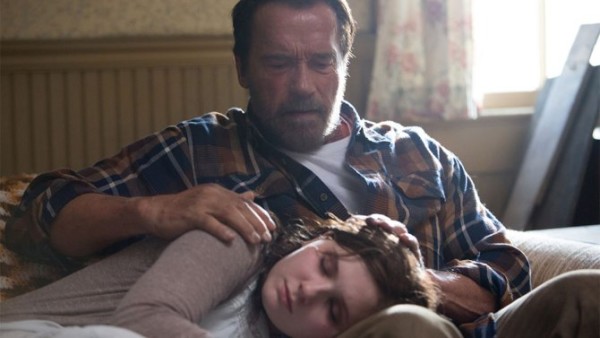
Speaking of illness, the last big release of the weekend was the zombie flick, Maggie. For those who’ve been reading the site for awhile, you’ll remember that Maggie was a huge spec script sale from four years back. The project took all four of those years to finally get to the big (and small) screen, coming together when Arnold Schwarzenegger agreed to play the father in the film.
I still think Maggie is a great example of finding a way to sneak a drama through the system. Too many writers try writing straight-forward dramas where some 28 year old good-lucking white guy is trying to make ends meet after his middle class parents cut him off. Boo-hoo. Writer John Scott wrapped his drama inside a marketable genre (zombies), and redefined the genre in the process – creating new rules for the zombie’s incubation period (it takes months, not minutes). If you’re a dramatic writer, this is how you get your script noticed. Hide your heartfelt storyline inside a genre that sells.
Unfortunately, when you redefine a genre, you risk alienating fans of that genre, and unlike the zombies themselves, that was always the fear with Maggie. Would people come see a zombie film where zombies weren’t chasing the protagonists? Even the ultra-somber Walking Dead has the occasional blood-curdling zombie attack.
It’s a classic screenplay conundrum. The very thing that makes your idea unique is the thing that handicaps it. But that’s the movie game. You have to gamble a little in order to have a shot at breaking through. Unless you want to compete with the other 5 million people who are all writing the same thing, that is.
“Maggie” endured the purist movie test there is in my household. I only had time for one movie and I needed to make a choice. It came down to it or Welcome to Me. In the end, Maggie looked too depressing. And after a long week, I wanted to enjoy myself. So I went with “Welcome.” That movie ended up depressing me in a different way, but there was no going back. I’d made my choice.
That’s something you want to be thinking about as a writer. You’re creating a product. And someone, somewhere, is going to be sitting in their house watching a trailer for that product, trying to decide if they should pay for it. Are you giving them a product that they’ll be excited about? As complicated as people like to make screenwriting and filmmaking, that’s what it comes down to. If you can be honest with yourself and come up with something that you genuinely believe people will say “Yes” to when asked that question, then you probably have yourself a screenplay. So go write it!
Scriptshadow 250 Contest Deadline – 84 days left!
One of the least talked about components of screenwriting is READABILITY – or “How easy is your screenplay to read?” That’s because when compared to character, dialogue, structure, and theme, readability doesn’t seem that important. And that’s true to a certain extent. But think of it this way. While eggs and flour and sugar are all essential to make a great cake, you can’t serve the cake unless you have a plate to carry it on. “Readability” is a screenplay’s plate.
This is one that’s always vexed me. I’ll be sludging through a screenplay where every sentence feels like I’m on the 405 freeway during rush hour. Start-stop-start-stop-start-stop. Then, when I read a good screenplay, the sentences run together like melted butter. Everything seems so natural. So easy. I never think about the writing once.
But it’s not always clear why some scripts read uglier than others. I’ll go back through the bad-reads to figure out what went wrong and find that “technically” the writing was “correct.” What clouds the analysis is story quality. When you’re in the middle of a good story, the sentences always read quicker. When you’re reading a bad story, each sentence seems to go on forever.
Is readability just relative? Are sentences only as bad or good as the story they’re a part of?
I don’t think so. There’s clearly a way to combine sentences together in a pleasing easy-to-read manner. Unfortunately, there don’t seem to be any books or online tutorials about how to achieve this. You’re taught all the rules of writing in school and from then on it’s up to you to “write good.”
That’s why I’m writing today’s article. If nobody else is going to do it, I might as well give it a shot. To do so, I’ll be comparing four sentences/paragraphs from professional and amateur screenplays. My hope is, by utilizing this direct comparison technique, we’ll find some answers. Let’s give it a shot.
Example Number 1
From – “Joy” by Annie Mumolo
“They both glance over to a table where Joy’s father RUDY sits like a KING with his arm around a ROBUST woman in an ill- fitting MARILYN MONROE DRESS.”
From – Amateur Screenplay
“Danny patters to the front doors. Angelina awaits him there. The two join hands, partaking in a private moment.”
At first glance, the amateur submission isn’t that bad. But I don’t think it’s as good as the professional one. I found Joy to be EXTREMELY readable. While I wouldn’t nominate it for “most technically proficient screenplay of the year,” I don’t remember a single moment where I had to reread a sentence to understand what was going on.
That’s one of my biggest takeaways from this experiment. Professionals know they’re not trying to win over English professors with their scripts. They’re trying to tell a story. And the easier they can get that story across to the reader – whether it’s technically correct or not – the better.
A lot of times, amateurs overthink their prose and make it more complicated than it needs to be. If you look at the sentence from “Joy,” it’s not trying to be more than it is. There isn’t a single word in the sentence that you don’t understand. But reading the amateur sentence, we get the word “patters” immediately. That’s not a common word in this context and causes a pause, if however slight. Whenever a reader stops, if even for a split-second, that means you’ve failed as a writer. Reading is supposed to be seamless. When it isn’t, the reader is taken out of the story.
There are two other issues with the amateur example. The word “partaking” is another odd unpleasant word in this context, which causes another pause. Also, notice how the paragraph is broken up into very abrupt sentences, making for a robotic presentation. I wouldn’t say that this is unpleasant. We’ll see in a moment that it’s possible to do this well. But in conjunction with the other mistakes, it hurts the read.
That’s another thing I’ve learned through this experiment. Bad writing is a lot like bad piloting. If you make one mistake as a pilot, it usually goes unnoticed. But when the mistakes pile up, that’s when the plane crashes. Let’s move on to the next example.
Example Number 2
From – “February” by Osgood Perkins
“Kat comes out from behind the closet door, wearing her oversized hooded Bramford sweatshirt and a pair of printed pajama pants.”
From – Amateur Screenplay
“Cinnamon unbuttons shirt cuffs, rolls up sleeves, pulls on thin black leather gloves from a rear hip pocket. He draws the backside .22 and holds it aloft by the silencer.”
Here we have a lot of detail. But in one case, the sentence is easy to read through, and in the other, it made my head hurt. Notice how in “February,” we have three words in a row that end with the letter “d” and then nearly four words in a row that start with “p.” This alliteration helps the sentence move along quicker in the mind.
With the amateur entry, it feels like information overload. I remember reading this script and there were a lot of sentences, like this one, where I had to read them 2-3 times to take in everything that was going on. While technically fine, it seems like the paragraph could’ve been simplified. Also note that while in “February,” we have a full sentence, in the amateur submission, words are missing in favor of the staccato style. I’ve added where those words would be:
“Cinnamon unbuttons [her] shirt cuffs, rolls up [her] sleeves, [then] pulls on [some] thin black leather gloves from…”
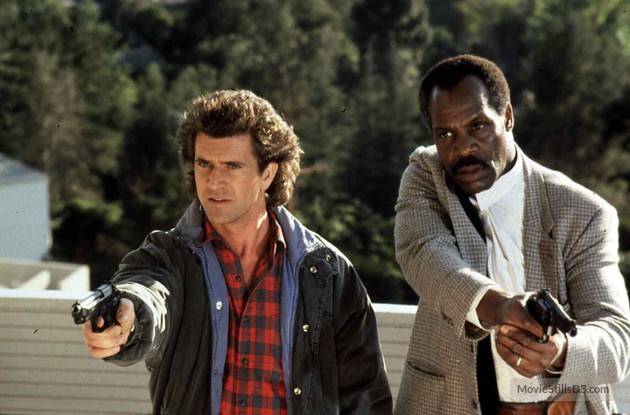
I’m not going to say to never use staccato style. This is something a lot of writers have used successfully. But when you use in it conjunction with too much information or overwritten sentences, it can easily start to feel like work to read through. Case in point, here’s a paragraph from who many feel to be the king of this kind of writing, Shane Black, in his first screenplay, “Lethal Weapon.”
“Sergeant Martin Riggs is driving. He looks like he hasn’t slept. He certainly hasn’t shaved. The DISPATCH RADIO SQUAWKS. He turns down the MUSIC from the car radio and hears:”
We have short quick sentences here, like the amateur example. But they’re all grammatically correct, making them easier to read. Let’s move on to the next example, staying with our friend, Shane.
Example Number 3
From – “Lethal Weapon” by Shane Black
“A section of the parking lot is cordoned off by yellow streamers which read: POLICE LINE – DO NOT CROSS, and as we watch, a black and white patrol car pulls up, admitting two beat COPS and a young hooker. Her name is DIXIE, and she is not happy.”
From – Amateur Screenplay
“Hadley settles in. The Maitre d’ snaps at a server, pointing to the table and holding up one finger addressing Hadley who has just joined the group.”
At first glance, Shane Black’s sentence seems odd. While he probably should’ve ended his first sentence after “DO NOT CROSS,” he chooses to make it one continuous sentence. Some may say this is “wrong,” yet it all feels so relaxed and natural, I’m tempted to say it’s fine. I don’t have to put in any effort to figure out what he means or reread anything, which tells me the sentence is a success.
Now let’s look at the amateur example. Everything seems to be going well until we reach the Maitre d’ holding up one finger. When we get to “and” in this example, “holding up one finger” seems to be more of an afterthought, as opposed to a natural extension of the sentence. This is fine in everyday conversation when we remember things at the last second all the time, but when you’re describing something in a screenplay, it has to feel planned, or else it reads like you’re making your story up as you go along.
This assumption is solidified when the last part of the sentence arrives: “…addressing Hadley who has just joined the group.” This tacked on piece of information is lazy. Notice how everything in Shane’s example is in the ACTIVE VOICE. What’s happening is happening RIGHT NOW. In contrast, “…who has just joined the group” is PASSIVE. It already happened, making it feel tacked on. The lesson here is clear. Keep everything in the active voice if possible. And don’t tack things onto the ends of sentences. It shouldn’t be, “Carson writes an article after he opens a coke.” It’s, “Carson pops open a coke and writes his article.”
Example Number 4
“500 Days of Summer” by Scott Neustadter & Michael H. Weber
“And that question hangs in the air. Tom, panicked, decides to cut the silence. All the pent up uncertainty and confusion, coupled with the challenge to his manhood in front of the woman he loves, all manifests in one single, solid, almost automatic RIGHT CROSS TO THE GOOD LOOKING DOUCHEBAG’S FACE.”
From – Amateur Screenplay
“Joseph drives too fast through woody shrubs on a steep, gravelly hillside. He slams on the brakes before heading off a bluff. Gets out and looks across the vast desert sands.”
Our 500 Days friends go big here with a really long sentence. They even make a mistake. “All” is used twice when it should’ve been used once. And yet it works. The long sentence is fine because it’s a pivotal moment in the film. It’s okay to write bigger when the moment is bigger. The sentence also takes place completely in the active voice, making it easy to read. And everything flows. Every word/fragment/idea is a logical progression from the word/fragment/idea before it.
Now let’s look at the second example. Everything here is fine until we get to “before.” “Before heading” takes us out of the active voice into a semi-passive voice. But it’s the next sentence that derails the paragraph. Driving the car and getting out to look at the desert are two different actions and should’ve been split up into different paragraphs. Together, they feel jarring, causing the reader to hesitate as he realizes we’ve moved out of the car into a different area. There’s also an inconsistency to focusing on such specific moments within the paragraph (“woody shrubs, a steep gravelly hillside, slams on the breaks”) to then end on one so general (looking across a desert).
CONCLUSIONS
This exercise has taught me a few things about the elusive quality of readability. First off, “technically correct” doesn’t always mean “readable.” Just as “technically incorrect” doesn’t always mean “unreadable.” You can go against what they taught you in school and still write a very easy-to-read sentence. Look at our first example from Annie Mumolo. Some people might call that a run-on-sentence. But it’s fast and smooth and easy-to-read so it works.
Another big breakthrough for me – the closest I got to an “ah-ha” moment – was Osgood Perkins’ use of alliteration, which added a pleasing repetition to the words on the page. It’s this “pleasing” quality that I’m after. But I don’t think it’s possible to ALWAYS use alliteration. It’d just be too hard (and might even get annoying after awhile). I almost wonder if there’s a less structured/defined way to achieve the same effect using a middle-ground technique (not quite normal sentence and not all-the-way alliteration). Has anyone heard of such a technique?
One of the most frustrating things about all this is the reality that there’s nobody out there who actually teaches you how to WRITE. Sure, there are teachers who teach you nouns and verbs – all the technical stuff. But once you have that down, where is the instructor who teaches you how to place words together in a pleasing way? I haven’t found him yet. And I want to. How bout you guys? Do you know of any books or tips that help one achieve this? I’ve been looking for material on this forever.
In the meantime, here are some tips to avoid the mistakes today’s amateurs made.
1) Keep your writing simple.
2) Keep your writing in the active voice if possible.
3) Never write to impress. This is what most beginners do and they end up writing a bunch of unnecessary prose in the process.
4) Don’t use vocabulary to show off. If you’re using a thesaurus to include a word you’ve never personally used before, you probably shouldn’t use that word.
5) Staccato-style writing (“Jump down.” instead of “They jump down.”) can be draining to read over a long period of time. There are some writers who do this well. But usually, it requires the brain to think differently in order to process the words, which is taxing. Proceed with caution.
6) In screenwriting, “fewer words” is usually better than “more words.” While this would seem to contradict what I just wrote, what I mean is, even with traditional sentences, there’s always a way to say something with fewer words. “John grabs his grimy baseball hat as well as his gun while wiping the ever-thickening sweat off his brow,” can easily be turned into, “John grabs his cap and gun and flicks the sweat off his brow.”
7) Complex sentences are dangerous. Indeed, it’s after a conjunction where a few of our amateurs fell apart. A single conjunction (and, but, or) is standard. But when you start using more than one in your sentence, it may be time to start a new sentence.
8) Write to your level – If you’re only capable of doing a double-axel, you’re going to be exposed every time you try a triple-axel. Sure, we’d all like to be Cormac McCarthy, but one of the biggest mistakes I see writers make is writing above their level. And it’s VERRRRRY painful to read. Screenwriting is one of the more forgiving forms of writing when it comes to prose. You don’t have to knock our socks off. Take advantage of that.
And with that, I’m going to leave you with two final UNLABELED examples, one pro and one amateur. Tell me which you think is pro, which is amateur, and why in the comments. I’ll reveal which is which (in the comments) after sundown.
MYSTERY EXAMPLE #1
“Casper, wearing only tighty-whiteys, sits on the floor of his bedroom amid t-ball trophies, race car bed sheets and a pin-up of Farrah Fawcett; the conflicting decorations of a boy who went through a quick growth spurt.
He thumbs through last year’s yearbook looking for the mystery girl. He gives up, lays down and lights a joint.”
MYSTERY EXAMPLE #2
“Surrounded, Black begins a coughing fit. His hands come up to cover the cough – the paperclip he stole from Moreau slips into his hand.
Stumbles into the Elevator panel – hitting the EMERGENCY button. The Elevator STOPS – sending everyone flailing.
Black uses the paperclip to release the cuffs. Nickels sees what’s going down – but isn’t quick enough to stop –
– Black unloads a barrage of strikes, taking down each Agent. Quickly undoes his shackles.”
Get Your Script Reviewed On Scriptshadow!: To submit your script for an Amateur Review, send in a PDF of your script, along with the title, genre, logline, and finally, something interesting about yourself and/or your script that you’d like us to post along with the script if reviewed. Use my submission address please: Carsonreeves3@gmail.com. Remember that your script will be posted. If you’re nervous about the effects of a bad review, feel free to use an alias name and/or title. It’s a good idea to resubmit every couple of weeks so your submission stays near the top.
Genre: Biopic
Premise (from writer): In 1964, writer Gene Roddenberry struggles to get his vision on television – a show called “Star Trek”.
Why You Should Read (from writer): Three reasons. One – unlike other biopics which give you the whole Wikipedia routine, my script focuses on a year-long period in a man’s life, during which he has a clear goal. Two, it could generate a discussion on the act of using licensed properties you do not own in a spec written as a sample. (Like “Wonka”, which I am certain will not be made unless Roald Dahl’s zombie corpse approaches a production office, gobstopper in hand, and signs off on it while offering casting notes: “Two words: Get Gosling.”). And, three, my script comes from the heart. My father passed on in ’91, when I was kid, and one of the things he instilled in me was a love of science fiction, particularly “Star Trek”.
Writer: Jack McAuley (based on the books, “Inside Star Trek” by Herbert F. Solow and Robert H. Justman, “Star Trek Creator” by David Alexander, and “Star Trek Memories” by William Shatner with Chris Kreski
Details: 106 pages
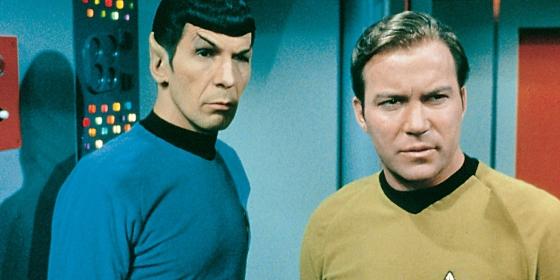
Man, there were some HARSH reactions to last week’s batch of amateur scripts. Let’s remember that we’re trying to be critical but supportive. The idea here is to help writers improve.
Because no single script won out in AO, I’ll be reviewing the most talked about entry, “To Boldly Go.”
I’ll start off by saying the Black List LOVES these scripts. In fact, if the Devil came to me and said, “If you don’t write a screenplay that makes the Black List this year, you’re coming down to hell with me,” the type of script I’d choose to write wouldn’t even be a contest. I’d write about a famous author’s early life and the influences it had on his greatest work. It’s like Black List crack that set-up.
And the scripts don’t even have to be that good! From the ones I’ve read, I’d say at least half are boring. It seems that the idea alone carries enough weight to overshadow the execution. It’s this secret formula that’s only talked about in basements between successful writers (“Can you believe how rich we are now? All we had to do was write about an author’s early life!”)
To Boldly Go starts off introducing us to a young Gene Roddenberry and his father, a police officer. The two are strolling through the neighborhood when the father makes a racist remark after spotting a young black boy. This is followed by a montage that covers Roddenberry’s service in World War 2 as a pilot and his eventual transition into commercial piloting.
After Gene nearly dies in two plane mishaps (one a crash), he decides to move into a job less suicidal: screenwriting (clearly, Roddenberry has never written before). He moves to Los Angeles and finagles his way onto some TV shows, until he comes up with an idea for his own show, a science fiction series where a space ship crew travels the galaxy. This was in 1964, at a time where nobody had attempted something of this scope on television.
The remainder of the story chronicles the making of the show, everything from finding a director to casting the part of Spock. When the studio doesn’t like what Roddenberry comes up with, they give him a second chance for some reason, and he recasts everyone (save Spock) and turns the show into more of an action-adventure. Although the show was cancelled after three seasons, it would later inspire five spin-off series and twelve feature films and become one of the most recognized science-fiction brands ever. It is the original “Universe” approach that every studio in town has adapted today.
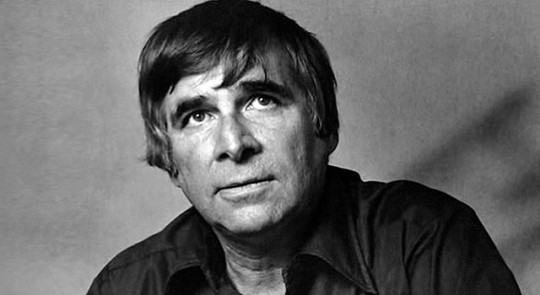
One of the things I still have a hard time grasping in screenwriting is theme. Sometimes it feels so clear and other times wholly elusive. But today’s screenplay helped me understand theme about as well as I’ve ever understood it. And that’s because there wasn’t any. And that’s what kept To Boldly Go from working.
Instead of there being a unified message to keep going back to in To Boldly Go, we got a hodge-podge of events that happened to Roddenberry over the course of his lifetime – mostly in relation to Star Trek. Everything from Roddenberry’s infidelity to escaping a plane crash to looking for an associate producer. Put frankly, the message was all over the place.
I went back to the comments for Amateur Offerings, and someone brought up how interesting it was that Roddenberry’s father was a racist, and how that was an inspiration for him to create a racially diverse cast on Star Trek.
Now THAT to me is a story. THAT to me is a theme you can hang a movie on. And yet, it’s BARELY covered at all here.
Instead, we get the technical details of how the show came together (the hiring of the costume guy, the production designer, the music guy). There’s no drama in that (or at least there wasn’t any here). Even William Shatner, who it’s well known is one of the most difficult people ever in show business, is rosy and happy and agreeable in this.
If you know, going in, what your theme is – say it’s a man hellbent on changing the white-washing of television shows because his father was a racist – then it’s easy to figure out what does and doesn’t belong in your script. Take Roddenberry’s infidelity. Can infidelity lead to drama? Sure. But since it has no bearing whatsoever on a man trying to break down racial barriers in television, there’s no reason to include it.
Personally, I think that’s a great storyline to focus on – the race stuff. Because nobody knows that. Everybody knows that Spock has weird ears. With a biopic, you have to give us the stuff we don’t know and a young boy who was so affected by his father’s racism that he wanted to change the world with a multi-ethnic show – that’s a fucking movie right there. I’d go see that. What I wouldn’t go see is a highlight reel of kooky things that happened on the Star Trek set. There’s no depth to that.
This leads to my second problem with the script which was the lack of conflict. For a show that was so cutting edge and unlike anything that came before it, where was all the resistance? Where was that one executive who hated the idea and was constantly trying to kill it? There was no drama on that side of the story. It was, again, technical historical bullet points combined with occasional goofy memories (having to stop filming because pigeons were on the set).
For example, when the show’s pilot goes bad, they’re just offered another pilot on the spot. The characters don’t have to do anything, don’t have to earn anything. They simply get a call that says, “We didn’t like that. Try again.” The last thing you want to do in any script is magically solve problems for your characters. You need your characters to encounter obstacles and then to overcome them themselves, regardless of if that’s not the way it happened in real life.
This scene, in particular, embodied the casual, “no problem’s really that bad” nature of the script. It comes after the network reads the three potential scripts for the new pilot.
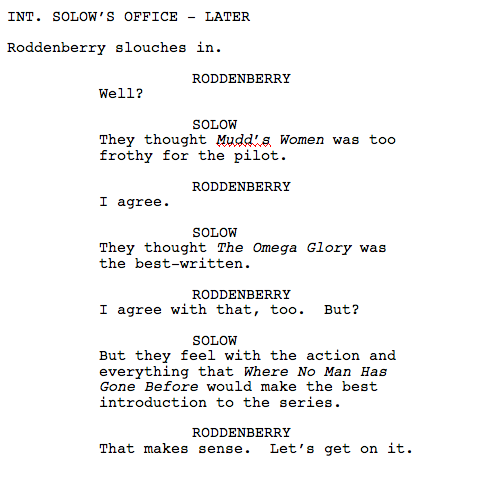
As you can see, even when there are problems, they’re just solved instantly. All the characters have to do is listen.
There are some dialogue issues here as well. Mainly, the characters sound too stiff, technical, or robotic. Take this line from Roddenberry when he’s told he has to reshoot the pilot: “But they want me to get rid of Spock. I am therefore going to keep him, anyway.” I don’t know anybody who talks like that who isn’t sitting on a leather chair in front of a fireplace smoking a pipe. How bout, “They want me to lose Spock. They might as well tell me to lose space.” Relax the dialogue. Have a little more fun with it. Contractions, overlapping, less formal-speak. All those things will help.
I do think there’s more leniency in the industry when it comes to these scripts. A lot of people are just keen to go down memory lane. I remember that’s exactly how that Black List Chewbacca script played out two years ago. But for me? I need more. And I think writers should demand more of themselves as well. Give us a unifying theme. Give us more conflict. More drama. Little highlights here and there are fun. But they shouldn’t be the centerpiece of your script.
I hope these notes were helpful for Jack because I do think there’s a story here somewhere and with the industry falling over itself for these kinds of scripts, I think it’s worth figuring out.
What did you guys think?
Script link: To Boldly Go
[ ] what the hell did I just read?
[x] wasn’t for me
[ ] worth the read
[ ] impressive
[ ] genius
What I learned: Unless it’s a conceit that’s built into the premise, repeating things in screenplays very rarely works. I lost a lot of interest when we went through this whole pilot only to be told that we would now participate in the exact same process for a second pilot. I suppose if the second run-through is significantly different from the first, it might work, but this one wasn’t. It felt like the same general issues (casting, figuring out the script) that we’d already dealt with. In a movie like “Edge of Tomorrow,” the repeating structure is an essential component of the premise. Here, it just feels like we’re doing the same thing over again.
Genre: TV Pilot – 1 hr. Drama/Comedy
Premise: A look at the behind-the-scenes drama that occurs on a “Bachelor” like reality show.
About: Had you told me a month ago I’d be reviewing a Lifetime teleplay about reality television, I would’ve told you to bring me your torch. You’ve been voted off the island. But Lifetime is really high on this show and is giving it the full rollout treatment in anticipation of its June 1st premiere. Also, half-a-dozen people have e-mailed me on separate occasions to tell me how much they liked the script. And that doesn’t happen at all with TV pilots. The show was created by Marti Noxon, who adapted the YA novel, “I Am Number Four,” as well as the updated “Fright Night.” Marti’s also written a ton of TV, with her resume including Mad Men, Grey’s Anatomy, Buffy the Vampire Slayer, and Glee. Co-creator Sarah Shapiro, is making her writing debut here.
Writer: Marti Noxon & Sarah Gertrude Shapiro
Details: 55 pages – 8/28/13 draft
I’m guessing the percentage of the Scriptshadow reader base that also watches reality television is equivalent to the percentage of Mormons who caught 50 Shades of Grey. You’re not alone. The industry has never liked reality television.
It’s the reason why nobody would even glance at a screenplay that dealt with reality shows. The unofficial official company line was: Never write a screenplay about reality TV.
But that’s the funky thing about Hollywood. Is that something’s a given until all of a sudden it isn’t. And the “isn’t” is, in most cases, a good script. If you write a good script, your friendly neighborhood rule book can be tossed out the window.
So I have an extra modicum of respect for anyone who breaks through the firmly locked gates of Hollywood’s ivory tower with something different. Typically, when Hollywood wants to keep someone out, they succeed.
29 year-old Rachel is a reality show producer. Reality show producers are the behind-the-scenes workers who prime the contestants on your favorite reality show that you tell everyone you don’t watch to say what the show wants them to say. The ones who say they think they’re “falling in love” with Douglas the Bachelor even though they just met him 20 minutes ago? Yeah, Rachel’s the one who makes sure that soundbite happens.
A producer is SUPPOSED to stay objective and let the talent dictate the course of the story. But come on. If that were the case, you wouldn’t get those level 17 meltdowns from the former prom queen who’s just realized that no man will ever consider her marriage material. It’s Rachel who plants that seed a few days earlier so that when the contestant’s voted off, it all comes spilling out in her exit interview.
The thing is, Rachel hates her job. She considers it to be more soul-sucking than doing porn and if there’s anywhere else she could be, even if it was cleaning sewers in Mumbai, she would do it. That is, if she wasn’t so damn good at her job. Rachel can convince anyone to do anything, a highly valued skill in the world of producing reality television.
In this first episode, those skills will be put to the test when our “Bachelor,” Adam Conway of Conway Hotels, decides to quit just minutes before the show’s to begin. Rachel uses some Darth Vader level Jedi mind tricks on Adam to get him to reconsider. But they end up backfiring. Adam agrees to come back but only if he gets to have Rachel around all the time.
Of course, that leads to the most obvious of questions. If Adam and Rachel are going to be around each other so much, what’s going to happen between them? And if something’s going to happen between them, what does that mean for the 18 women vying for Adam’s hand in marriage?
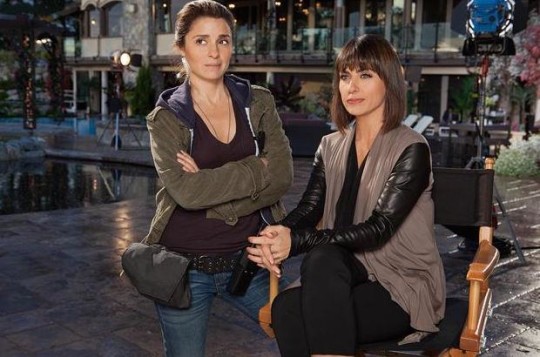
As demand for product keeps expanding in television, more and more of these blacklisted ideas (“Never write about reality TV!”) are going to get lifted. TV is in this really rare place in history where the demand for product is way bigger than the supply.
So if you’ve tossed an idea out just because you’ve heard Hollywood hates it, it might be time to dust that idea off and write it. Today’s show proves it’s possible.
But it wasn’t just the idea that got the pilot on the air. This is good writing. In fact, Unreal utilizes one of the most powerful tools available to writers to make it work. IRONY.
The Bachelor is the personification of a fairy tale. Every date is postcard perfect. Every conversation is filled with laughter. Every kiss is framed against a golden sunset. So what is Unreal about? It’s about the cheating that goes on behind those dates. It’s about the manipulation used to guide those conversations. It’s about the bullying that must be used to get that golden kiss. Unreal is about the slimy underbelly of reality television, and that’s what makes it so fun.
“Irony” is a tough word for some screenwriters to grasp. So let’s put it this way. One of your biggest weapons as a writer is CONTRAST. Whatever extreme you have in one aspect of your idea, try to contrast it with the opposite extreme in another.
So if you have a show about happiness, contrast it with a crew who hates their jobs more than anything. If your main character is a serial killing cannibal, contrast that by making him polite and inviting. If you’re writing a scene about a woman dumping her boyfriend, create contrast by setting it at his birthday party. Contrast, my fellow screenwriting enthusiasts, is a really easy way to look like a really good writer.
Also, when you’re writing a romance-based show (or a show where people hook up a lot), you want to make it as hard for those people to hook up as possible. The more difficult it is for people to hook up, the more drama you’re going to get. So you have this show here where contestants hooking up with crew can destroy the entire production. So there are real stakes to people getting together who shouldn’t be together.
The only thing wrong with this pilot is that the execution’s vanilla. Everything kind of went the way you expected it to, save for a Rachel breakdown in the final act. You can even sniff out where the main hook-ups of the season are going to be. That can be enjoyable to an extent. Waiting for two people we’re dying to see get together finally get together. But there still needs to be an element of surprise to a show. And Unreal hasn’t shown me it’s capable of doing that yet.
I will say, though, that if you want a dark humorous look at the behind-the-scenes shenanigans of a reality television show, Unreal does a pretty good job of delivering.
[ ] what the hell did I just read?
[ ] wasn’t for me
[x] worth the read
[ ] impressive
[ ] genius
What I learned: Make it so your character must consistently go against their moral compass in order to push the story forward. Rachel hates manipulating these contestants. But she has to in order to get the big moment for the cameras. For example, when one of the girls is ready to give up, Rachel uses her knowledge of the girl’s previous boyfriend physically abusing her to promote Adam as the opposite of him. This dirty trick reenergizes the contestant and now she’s back pining for Adaman’s attention. Maybe a better way to convey this is this: Have your main character sell a little piece of their soul every time they have to do something important. This will ensure that your character is always fighting an inner battle, which audiences love to watch.