
Search Results for: F word
Genre: TV pilot
Premise: (from AMC) Set in the early 1980s, the series dramatizes the personal computing boom through the eyes of a visionary, an engineer and a prodigy whose innovations directly confront the corporate behemoths of the time. Their personal and professional partnership will be challenged by greed and ego while charting the changing culture in Texas’s Silicon Prairie.
About: This is one of the next big shows coming to AMC, the network that brought you Mad Men, Breaking Bad, and The Walking Dead. As for the writers, I’ve actually reviewed one of their scripts before and WOW have they improved. I thought their spec effort, The Knoll, was below par, with my main beef being that it was stick thin. But this is the polar opposite. Very rich and detailed and deep. Good job guys!
Writers: Christopher Cantwell and Christopher Rogers
Details: 64 pages

Breaking Bad is over. Mad Men has only one season left (well, two halves of one season actually – in a sly or slimy move, depending on who you talk to). Which leads to the inevitable question, what does the network producing the best shoes on television have next? Word on the street (or from a Google search) says that AMC has over 60 shows in development. So they’ve got plenty of potential successors. “Halt and Catch Fire” is first trying to take the baton. Will it succeed? Let’s find out.
It’s 1981. You know, when E.T. came out? When Michael Jackson had only a couple of facial reconstruction surgeries in the rear-view mirror (the MAN in the rear-view mirror)? And when the personal computer was just starting to hit the world. Computer systems salesman Joe Macmillan is someone who knows the PC boom is coming. The problem is he’s also suicidal, and actually drives his car off a cliff in the opening scene in an attempt to meet his maker. But he survives. Bummer. Or not bummer?
Joe, who used to work at IBM (and hated it), decides to use this second chance to take over the PC industry. He’s heard of this computer innovator named Gordon Clark, a bar-brawling family man (yeah!) who spends his nights pulling apart and putting back together Atari 2600s. Joe specifically comes to IBM rival Cardiff-Giant (at the time just a software company) to work with Gordon. His goal? To build a PC that’s better and cheaper than IBM’s.
And that’s exactly what they do (with a lot of resistance on Gordon’s part). They take one of IBM’s PCs and they reverse engineer it. Which is kind of a legal no-no. But Joe doesn’t stop there. He actually CALLS IBM and tells them that he did it. Which gets every lawyer within 5 miles of IBM’s headquarters together to take down Cardiff. What’s going on? Is Joe trying to destroy his own company?
Not exactly. In a somewhat difficult-to-understand development, the only way for Cardiff to avoid getting sued into bankruptcy is to pretend like they were working on a PC all along. This forces Cardiff’s top brass to allow Joe to head up the PC side of the company, where he of course brings with him Gordon, and a plucky (yet attractive!) young computer genius from a nearby university, Cameron. The three will do the impossible. They will take on the biggest computer corporation in the world and try to beat them at their own game – making PCs.
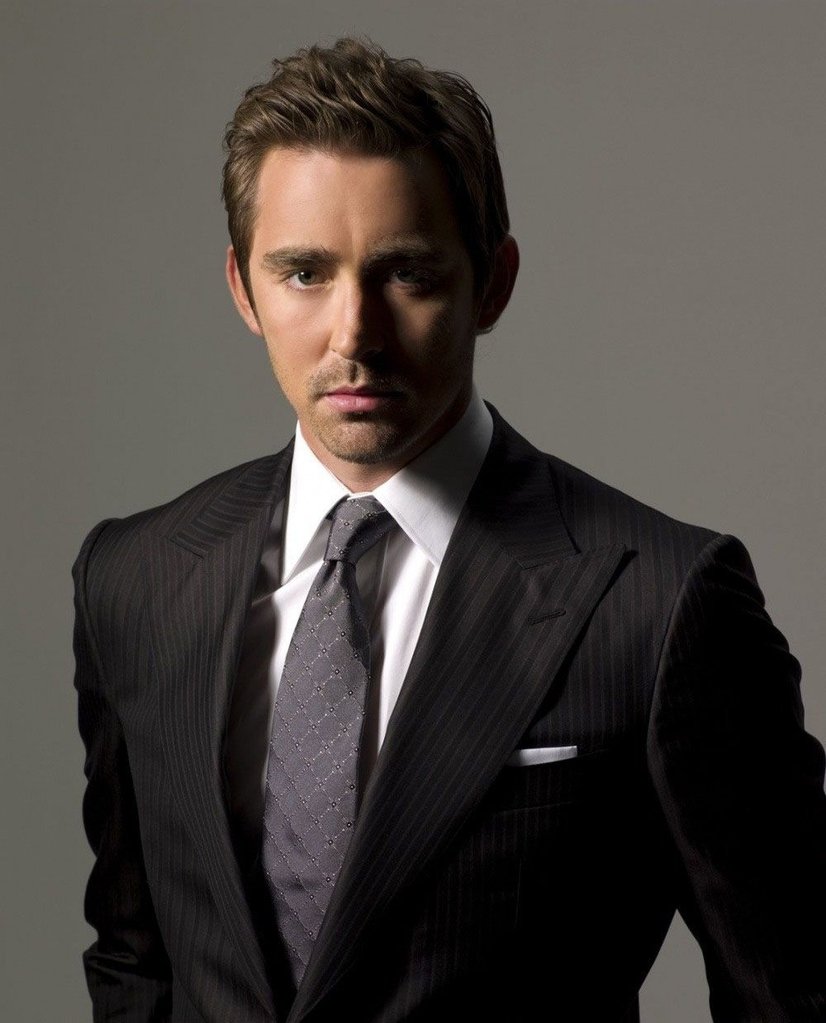 Lee Pace will play Joe.
Well, I don’t really know what I just read. I just know it was good! Almost an impressive. See, here’s what has me tripped up. This is a show about a company called “Cardiff-Giant” competing with titan IBM in the early days of the personal computer business. The thing is, I’ve never heard of Cardiff-Giant. Are they an also-ran company that eventually succumbed to IBM? Did Cardiff-Giant merge into some other famous company that’s still alive today? Or is this all just fiction? I mean, the Cardiff Giant IS one of the most famous hoaxes in history – a ten foot tall mummified man. So is the company title a hint that there’s more to this show than meets the eye? I don’t know!
Luckily, this is a really well-written pilot with a lot of good stuff going on. The first thing you notice about “Halt” is the irony (always use irony in your ideas if possible guys!). This is the computer business, a place where we expect dorks to huddle in their closets and basements and build computer boards. Which does happen here. But one of our two leads starts bar fights and the other is a ruthless closer that would make Alec Baldwin’s character on Glengary Glenn Ross feel like a spineless chump. These don’t feel like the geeky techies we associate with this industry, instantly giving the show some edge.
And Chris and Chris not only built those characters ironically, but used them to instill a lot of the conflict that drives the script. Joe is a suicidal dick who never takes no for an answer, and Gordon is a frustrated family man who isn’t afraid to tell someone to fuck off. The two don’t really like each other (or each others’ contrasting styles) and that adds a lot of fire to their scenes. Conflict, conflict, conflict people. It’s the oldest dramatic tool in the book. It’s gotta feel natural (you can’t force it) but if you set the characters up right and they’re naturally butting up against each other, the scenes will write themselves.
And the script just made some cool choices along the way. One of the easiest ways for me to spot a bad writer is to read a scene play out the exact way I’ve seen it play out 6000 times before. Only the good writers say, “How can I do this differently?”
There’s a scene early on where Joe needs an engineer for their group. So he goes to the local college to look for one. Now it’s important to see how this scene would’ve been written by a bad writer. We probably would’ve shown a professor type lecturing his students, and then a particularly difficult question would’ve been posed that stumped everyone, and our plucky young student, Cameron, would’ve answered it in an unexpectedly clever way. Joe would’ve been waiting in the wings, witnessing this, then caught up to Cameron afterwards and asked if he could talk to her.
Here’s how the scene went instead. Joe works his way in front of the class and tells everyone who wants to be an engineer to raise their hand. He’s going to list off several categories. Every time he lists a category they don’t have experience in, they have to lower their hands. He lists a bunch of stuff (electrical engineering, software design, microprocessing, etc.) and each time, more and more hands go down until there are three left. Of those three, he asks each to tell him one thing that will be true about computers 10 years from now. They each give their answer. Cameron ends up giving the best one. Macmillan says, “See me after class.”
I haven’t seen that scene before. And those scenes don’t just come to you off the top of your head. You have to fight for them. You have to go through a couple of cliché scenes until you find them. And the writers who are willing to put forth that extra effort and find that fresh take on a scene are typically the ones who succeed.
Speaking of Cameron, I loved how the Chris’s added ANOTHER layer of conflict within this three-person team. Later on, after Joe discovers Cameron, he gets drunk and sleeps with her. Realizing he screwed up everything, he ditches her the next morning. Later, however, when he becomes in charge of Cardiff’s PC division, he needs that engineer still. So he must go groveling back to this girl that hates him and ask her to join the team. She reluctantly does, and now we’ve got one big unhappy family.
We also have a boss who hates Joe. We have a rival (his old boss from IBM) who hates Joe. Everyone seems to hate these guys. And that’s PERFECT for a show because it creates drama. It creates resistance. It creates conflict. That’s what you need!
Now not everything is blueberries and soft shell tacos here. I had a couple of issues. Gordon’s character was inconsistent. He starts off as this guy who beats people up in bars. But when he meets Joe, he becomes meek. This tends to happen when you try and create two alpha males. In the scenes, one of them has to become dominant, and by association, the other’s going to disappear a little. However, Gordon disappeared too much. I liked him better when he would beat somebody’s ass. I hope they go with that guy in the show.
And also, this pilot was so heading for an impressive before the “Cardiff PC Division” plot point. This whole time, Joe looked like he was cleverly orchestrating this really cool plan that was going to outsmart everyone – an outsmarting I was dying to see – but it turns out they sort of accidentally get asked to start this new PC division because of a weird legal loophole that was never clearly explained. It drives me NUTS when major plot points are fudged over by unclear plot developments. I was hoping for more there.
Still, everything else here was top notch. Is it the next Breaking Bad? Too early to tell. I gave AMC show Hell on Wheels the same grade I’m giving this and thought it was headed for big things. But that show was bigger than AMC was capable of making it. It needed Boardwalk Empire dollars to do it justice. “Halt” doesn’t require a big production budget, so it will be all about the characters and the story. They’ve got some cool characters. Let’s see where the story goes from here.
[ ] what the hell did I just read?
[ ] wasn’t for me
[xx] worth the read
[ ] impressive
[ ] genius
What I learned: QUESTION MARK CHARACTERS – In a lot of good TV shows, you have characters who are question marks. You don’t know what they’re capable of or what they’ll do. You need to almost present them as ticking time bombs, waiting to explode. Here we have one protagonist who’s willing to beat the shit out of people (and get beat up) if they get in his way, and another who drives his car off a cliff at the beginning of the show, trying to commit suicide. Those are two big question mark characters if you ask me.
Genre: Drama
Premise: Cutting between two timelines, one that focuses on a famous author father, the other his emotionally reclusive daughter, we watch as the two struggle to overcome their inner demons.
About: Fathers and Daughters ranked number 12 on the 2012 Black List with 25 votes. It has since been cast with Russell Crowe and Amanda Seyfried and will be directed by well known Will Smith collaborator, Gabriele Muccino, who directed The Pursuit of Happyness and Seven Pounds. Not much is known about writer Brad Desch. He appears to have a couple of TV shows in development but this seems to be his breakthrough script.
Writer: Brad Desch
Details: 116 pages

Over the past couple of years, I’ve received these periodic e-mails of, “Have you read Fathers and Daughters yet? It’s really good.” And, “Fathers and Daughters. You have to review this. Great writing!” Of course, my response to these people is the same as yours would be: “How could a script titled ‘Fathers and Daughters’ be good?” Granted, it’s probably slanted towards a female audience, where it evokes more of an emotional response, but even taking that into consideration, it’s a very bland title, bordering on over-sentimental. So I put it off and put it off and put it off, until recently, when some actors signed on, reuniting Les Miserables cast members Amanda Seyfried and Russell Crowe. Now that I knew the project was moving forward and I could actually imagine (the assumed) father and daughter, I decided to give it a shot.
Author Jake Davis may remind you of Bradley Cooper’s character from Silver Lining’s Playbook. He’s just been released from the crazy house and is ready to start his life again. The big difference is that Jake has won two Pulitzers and is considered by many to be the greatest living author in the world. But just like Cooper’s character, Jake’s got wife baggage. His wife was killed in a car accident while Jake was driving. Since the two have a daughter together, Katie, that leaves only Jake to raise her.
A task complicated by his mental hospital stay. Actually, while Jake spent 18 months getting better, Katie’s Aunt and Uncle took her in, and in the process fell in love with her. The last thing they want, now, is to give Katie back to Jake. Jake tells them to screw off and begins a very difficult journey, trying to carve out a life for himself and Katie in the most expensive city in the world, Manhattan.
During this time, we intercut with the present, where Katie is a grown adult pursuing a career as a child psychologist. Katie is an emotionally void human being. She doesn’t feel ANYTHING, and as a result, stumbles around Manhattan, sleeping with any guy she meets, never remembering their names the next morning. In fact, one guy, who realizes Katie doesn’t like him, asks her why she had sex with him. She replies, flatly, “Because I didn’t get a chance to go to the gym today.”
Things begin to change for Katie, however, when she meets a couple of people – a young orphaned girl named Lucy, who hasn’t spoken a word since her druggie parents were killed. And then Cameron, a documentary filmmaker who manages to charm Katie enough to get beyond her standard one night stand. Both begin to give Katie purpose, and help her emerge from her shell.
From there we keep jumping back and forth between the past and the present. Jake’s new novel bombs, forcing him into a job he hates in order to keep Katie in private school. And Present Katie struggles with feelings for Cameron she’s never had before. (spoiler) Still torn up by her father’s death, she refuses to love, pushing the only man who can make her happy away. Will Katie change? And what exactly is the flashback storyline leading up to? What is it about Jake that we don’t know?

I’m getting better at understanding how these character pieces work. You guys know me. I want a big goal in my story driving the characters. Without that, the story tends to sit there and get boring. However, character pieces don’t always operate with big goals. Instead, they utilize dramatic questions to drive the story. The question in Adult Katie’s storyline is “Will she be able to love again?” The writer hopes that that question is compelling enough to keep you reading until the end. Is it? I would say yes. There’s something about Katie where you want to see her succeed.
But the question I always ask these character piece writers is, why stop at the dramatic question? Why not add a goal too? Then you have a dramatic question AND a goal driving the story. Sure Silence of the Lambs could’ve ONLY been about a young female FBI agent trying to prove herself in a job dominated by men. It could’ve been a really deep and trying female coming-of-age story. But didn’t the goal of trying to catch Buffallo Bill make it a hell of a lot better?
Having said that, what Fathers and Daughters DOES have is this dual-storyline thing. And that separates it from a lot of these boring straight-forward character pieces with ZERO story. The thing is, I wasn’t always sure what the past storyline was about. I believe what Brad was trying to do (spoiler) was use the past storyline as a mystery. We were supposed to wonder what happened to Jake. But we’re told (spoiler) pretty early on in the PRESENT storyline that he dies. So what’s the purpose of continuing to watch him? I guess you could argue we want to see HOW he dies, and there is some mystery in that. But I’m not sure the big reveal there was worth the wait.
Still, this was probably the most emotionally intense script in relation to how sparse the writing was that I’ve ever read. Paragraphs are often one line long, two tops, and yet we still feel the weight of the story on every page. This was surprising because usually when I see writing this sparse, there’s zero depth. So I’m not entirely sure how Brad did it.
What I can say those is that Brad used his dialogue to tell the story. People didn’t banter on pointlessly. Every scene was an exploration of the inner battle our character was going through. Whether it was Cameron indirectly asking Katie if she was really committed to him, or Jake begging a school principal to take his child in. You really got the sense that every conversation mattered, which is probably why Brad didn’t have to write much action. Everything was right there in the dialogue.
Having said that, there’s no doubt this script hits the drama bell hard. It’s a really “down” experience and that’s a dangerous game to play on the spec market. Truthfully, your only shot to do well with one of these scripts IS to get on the Black List. So I recommend staying away from them. But if you can add a little twist, like Brad did with the dual-storylines, you may be able to stand out enough to find a buyer. Always look for that angle that makes your script fresh.
Also, I’m surprised that Jake’s mental illness didn’t play a bigger role in the story. It was really smart to include a character suffering from mental illness to begin with. As I tell you guys, you want to write roles that actors will want to play. And what actor doesn’t want to play crazy? But the only embodiment of that “crazy” was when Jake would rock back and forth uncontrollably. Contrast that with Bradley Cooper’s character in Silver Linings where he got to scream things out uncontrollably. Jake’s issues just didn’t seem that… crazy. It’ll be interesting to see whether they do more with this in the shooting draft.
Fathers and Daughters was a tough script to categorize. It was uber-dramatic, but a fast read. The subject matter wasn’t unique, but it was executed uniquely. The biggest testament to this script though is that this isn’t my thing, yet I wanted to read the whole thing. That’s rare. It isn’t a perfect character piece, but it’s one of the better ones I’ve read in awhile. A good spec for writers to study if they can get their hands on it (especially for all you over-writers out there!).
[ ] what the hell did I just read?
[ ] wasn’t for me
[x] worth the read
[ ] impressive
[ ] genius
What I learned: Readers get bored if one emotional beat goes on for too long. Just like a story needs to change itself up to stay exciting, so does emotion. You must bring us up, down, make us laugh, cry, fear, love. Fathers and Daughters did that better than Seven Pounds, but still stayed a little too close to that single emotion of sadness. I would’ve loved to have seen more humor here. More balance.
What I learned 2: If someone were to ask you, “What’s different about your script? What does it do that no other script out there does?” You should have an answer. Fathers and Daughters used a dual-storyline. What have you done? Whether it be the concept (District 9), the execution (Eternal Sunshine), an exciting twist (Gone Girl), a fresh take on an old idea (Hangover), give us something new or chances are we’re going to be bored.
What I learned 3: The spec market tends to celebrate the flashier emotions – fear, excitement, happiness. Fathers and Daughters, focusing almost exclusively on sadness, is definitely an exception to the rule.
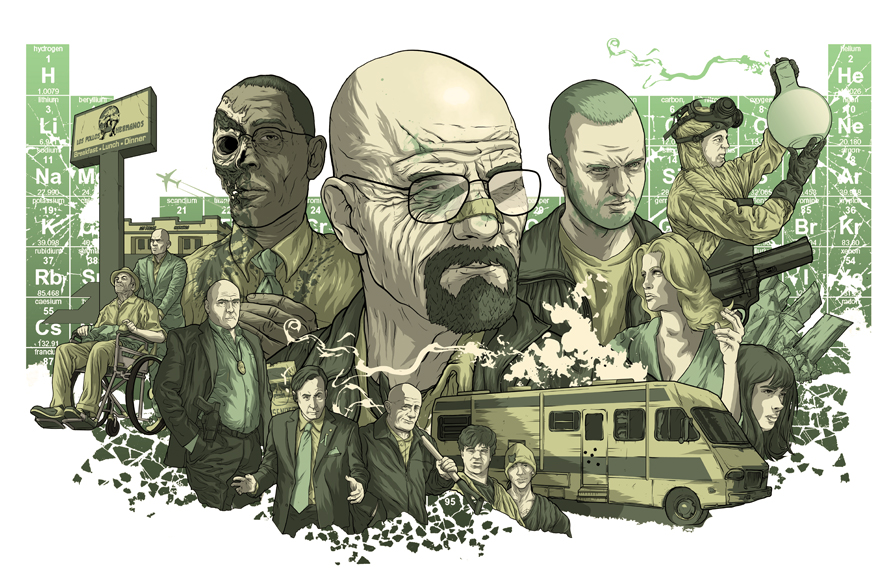
So for those of you on my newsletter, you know I posed the question last week of, which article did you want me to write?: Why Breaking Bad is so good, or why The Fast and the Furious franchise is so successful. Now a lot of you may think this is a no-brainer. Breaking Bad is one of the best written shows in television history. The Fast and The Furious is eye-candy, fast cars and hot women. But here’s why it was a close vote. Readers pointed out that they knew why Breaking Bad was so good. It wore its great writing on its sleeve. What they couldn’t figure out was how this seemingly vapid car franchise was one of the biggest franchises in history with no hints of slowing down. That needed explaining. And what intrigued ME about it was The Fast and the Furious franchise started as a spec! That means it’s the only spec-driven franchise in decades that was able to hang with the likes of IP properties Batman, Harry Potter, Lord of the Rings, etc. To think that one of you guys could learn from that and start your own franchise based on a spec – I thought that was worth exploring.
So then why am I going with Breaking Bad instead of Furious? For the simple reason that I haven’t figured out what makes The Fast and The Furious so successful from a screenwriting point of view. From a concept point of view and from a casting point of view, I know. But I’m going to have to delve back into the franchise’s scripts to see why it stands out from other similar movies (like Driven and Gone in Sixty Seconds). Breaking Bad, on the other hand, oozes good writing in just about every episode, which is really hard to do (to give you some perspective, I’ve been going back over Lost and found some real dud eps – there’s an episode where Sawyer chases a boar. That’s the whole episode!). So I thought, why not show everyone how to do it right?
For those of you who don’t know anything about Breaking Bad, it’s about a high school teacher, Walter White, who finds out he’s dying of cancer. Walter has a special needs son and a pregnant wife and if he were to die today, they’d have zip to live off of. So Walter needs to make a lot of money really fast before he dies. Being a chemistry professor, he realizes that making meth offers the biggest buck for its bang. All he needs is someone to sell it. Enter his former flunky student and current small-time dope dealer, Jesse. The two are the most unlikely pair, but when Jesse realizes how much money Walter (or “Mr. White” as he knows him) can make him, he jumps on board. Of course, since the two have no idea how the upper-level drug trade works, their world gets really crazy really fast.
Breaking Bad works for a ton reasons. First, Walter is leading a double life. He must be the upstanding family man in one world, and the relentless drug producer in another. Remember that double-lives lead to one of the most powerful storytelling devices there is: dramatic irony. We know Walter is secretly a drug dealer, but his wife and family and friends do not. This means in most of the scenes, he’s hiding something, and when one character is hiding something from another, the scene is always watchable. Will he get caught? Is someone on to him? What happens if they catch him? We have to know! It’s the same reason why characters like Superman and Batman and Spider-Man have lasted for so long. The double-life thing leads to a lot of easy-to-write scenarios.
Then there are all the little things. Vince Gilligan (the creator) makes Walter’s brother-in-law a D.E.A. agent. Now we don’t just have dramatic irony, we have sky-high stakes. If his brother-in-law finds out he’s making meth? He’s in jail for life! And his brother is always around! We also have the “climbing the drug ladder” aspect of the series. We love watching characters climb up organizations, especially through the drug trade. The baddies keep getting badder and the stakes keep getting higher. It’s why we love Scarface. It’s why we love Goodfellas.
And then the show is funny! When I first heard about Breaking Bad, I mentally tuned it out. A guy dying of cancer? No thanks Depression Channel. But Gilligan makes sure this isn’t a downbeat show. Breaking Bad is packed with humor! In this episode I’m highlighting today, there’s a great scene where Walter and Jesse have a little “teacher-to-student” moment that plays up the silliness of their dynamic (Walter’s trying to teach Jesse about all those things he missed in high school via the battery they’re building. The clueless Jesse proves he hasn’t learned a thing). It’s hilarious. That balance evens out the intensity of the cancer storyline.
And then, of course, there’s the strained Walter-Jesse dynamic, which is the heart of the show. Conflict people. CONFLICT! Not only is this pairing exceptionally ironic (a goody-two-shoes chemistry teacher must go to one of his worst former students for help in the drug trade), but because this is the most unlikely pair in existence, and because they come from two totally different worlds, they’re always at odds with one another, always arguing or debating, and it’s always entertaining. They’re one of the best pairings in TV history.
Which leads us to the episode I’m highlighting today. I knew I couldn’t breaking down ALL of Breaking Bad. It’d be a 20,000 word post. So I looked for an episode that encapsulated what I loved about the show. That episode is “4 Days Out.” It’s the ninth episode of the second season, and Walter’s just learned that he isn’t anywhere near his target money number (the final amount of money he needs so his family can live comfortably after he dies – what I call: The Overall Series Goal).
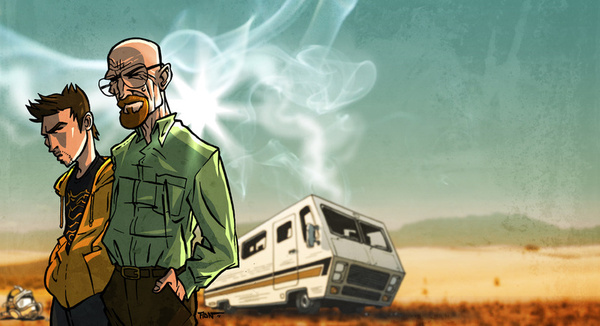
He’s just received a terrible diagnosis, meaning he may die a lot sooner than he thought. So he calls Jesse and tells him they need to go make a ton of meth RIGHT NOW. The two drive their mobile meth lab (a dying Winnebago) out into the middle of the New Mexico desert, where they won’t be found, and make 1.3 million dollars worth of meth. Time to party right? Yeah. Except Jesse, who’s always doing something moronic, left the keys in the ignition. The battery is dead. The two begin to realize that no one knows where they are (and even if they did, it’s not like Walter can call his wife to pick them up). They’re too far away from anywhere to walk. And there’s no water left. If they don’t figure out a solution soon, they will die out here.
To me, the best television episodes establish a problem or a goal right away. This makes the episode feel self-contained and relevant. Whenever an episode deals with a series of threads and don’t have any form, it tends to feel unfocused and pointless. Every TV show has to do these episodes at some point, and if the threads are interesting enough (or the show is paying off some earlier season mystery), the episode can sometimes overcome this problem. But usually the episodes that stick are the ones that not only work for the show, but work on their own.
“4 Days Out” is not only a master class in how to write a good television episode, it’s a master class in how to write a good movie. Just like in any story, you want to propose a problem. That problem will then lead to a goal. That goal will drive your characters, which will, in turn, drive your episode. In this case, the problem is they’re stuck out in the desert with a dead Winnebago. The goal, then, is to find a way out of the desert to safety.
From there, you provide the stakes. The stakes in this case start off as annoyance, but quickly escalate to death. It’s clear that if they don’t figure out something soon, they’re going to be a permanent part of the horizon. Finally, you have the urgency. With water gone, they’ve got maybe 3 days before they’re dead. This is the basic structure for the episode and it’s practically full-proof. Everything is in place to write something compelling.
That leads us to our next essential ingredient – CONFLICT. If your characters are getting along during this predicament, we’re bored. You, then, need to create friction, create problems and issues between the characters, which will usually revolve around the characters having different points of views on how to solve the problem. Luckily Gilligan establishes at the beginning of the Breaking Bad series that Jesse and Walter really dislike each other. Therefore, it’s only natural that they start bickering like schoolgirls when the battery dies. Goals stakes and urgency set up the party. Conflict IS the party.
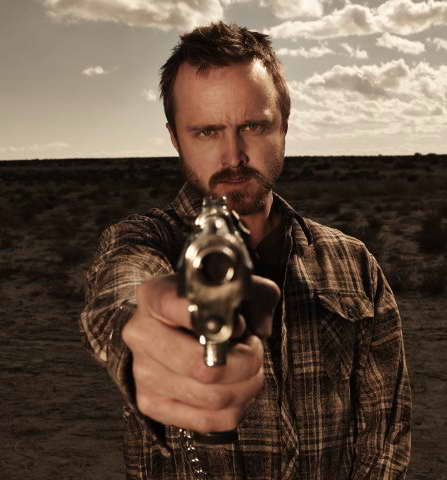
Next comes obstacles. Things have to keep getting worse over the course of the story. If the problem stays at the same level, our emotions remain at the same level. You want to play with the audience’s emotions. Obstacles help you do this. So first the generator blows up. Then Jesse puts it out with their remaining water (leaving them with no water to drink). Then the guy who’s supposed to pick them up – Jessie’s druggie friend – gets lost (it’s hard to give directions to the middle of nowhere), Then Walt’s phone goes dead. And their last ditch effort to manually rig the generator fails too. The obstacles have left them with no options left.
This puts the characters at their “lowest point.” We think these two are dead. They think they’re dead. There’s obviously no way out of this. But then our characters (NOT SOME RANDOM DEUS-EX-MACHINA LUCKY BREAK) conceive of a plan (born out of chemistry – so an established part of one of our character’s backgrounds) to build a battery from spare parts. They put away their differences for a moment to work together, and against all odds, somehow make it work! They’ve saved themselves!
Now that’s how to tell a story!
There were a couple of other things I noticed here as well. I love how when Gilligan brings us to a high (they count up all the meth they just made and realize it’s worth 1.3 million dollars) he immediately slams us back down to a low (they find out the battery’s dead). That’s what you want to do with your audience. You should always be bringing them up, then bringing them back down again. I also liked how Gilligan didn’t do the obvious. Writers are inherently lazy people. If we can take the easy way out, we will. It would’ve been really easy here to have it so neither characters’ phone worked. But Gilligan makes it so that Walter’s does, which is more realistic, and forces the writers to work a little harder to keep their characters in harm’s way. It leads to the thread where Jesse calls his stoner friend to come get them. And then of course, later, we find out his friend is lost (once again, bring them up high, then bring them down low). If you take the easy ways out as a writer, your script will read that way. Which is why I loved this choice.
It’s pretty rare that you encounter this level of writing on a consistent basis. I just reviewed the Dracula pilot the other day (the new show on NBC) and it was fine. The goal was a little muddled. The stakes were kind of there. You’re not sure you noticed any urgency. You realize how much better writing can be when you watch Breaking Bad. And revisiting this episode only reinforced that opinion. I had so much fun with, “Four Days Out,” maybe I’ll do another Breaking Bad episode some time. What about you guys? What aspect of Breaking Bad’s writing do YOU enjoy the most. Share. I want to learn too! ☺
Genre: Sneak-Into-Disney-World-And-Don’t-Tell-Anyone Genre
Premise: While on a family trip to Disney World, a man finds out that he’s lost his job. As the reality of this situation starts to hit him, he begins to see the famous park in a dark, twisted way.
About: Escape From Tomorrow debuted at Sundance where it quickly became a hot ticket for its unique backstory: the writer-director shot the film in Disney World and Disney Land without Disney’s knowledge. The buzz grew because everyone assumed that this would be the only chance to ever see the movie. How would Disney ever allow it to be released to the public? But after four months of lawyers combing through the film, they decided that even though many of Disney’s famous characters and landmarks were used, Disney wouldn’t be able to win a lawsuit (due to complicated legal terms like “fair use” that I can’t even begin to explain). As the film industry waited for Disney to roar, they never did, deciding instead to remain silent. The assumption was that any legal threat would bring more attention to the little indie film. Their position was that it would be ancient history within a few weeks if they just ignored it. They may have been right. The film made $66,000 in 30 theaters this weekend, for a $2000 average per theater. That’s low for a limited release. By comparison, Woody Allen’s Blue Jasmine had a $102,000 average per theater on its opening weekend. For all the pub this film is getting, that’s surprising. Then again, it was also released on VOD (something I only learned AFTER I laid down $28 for two people), so that will probably determine if the film was a sound investment or not.
Writer: Randy Moore
Details: 90 minutes
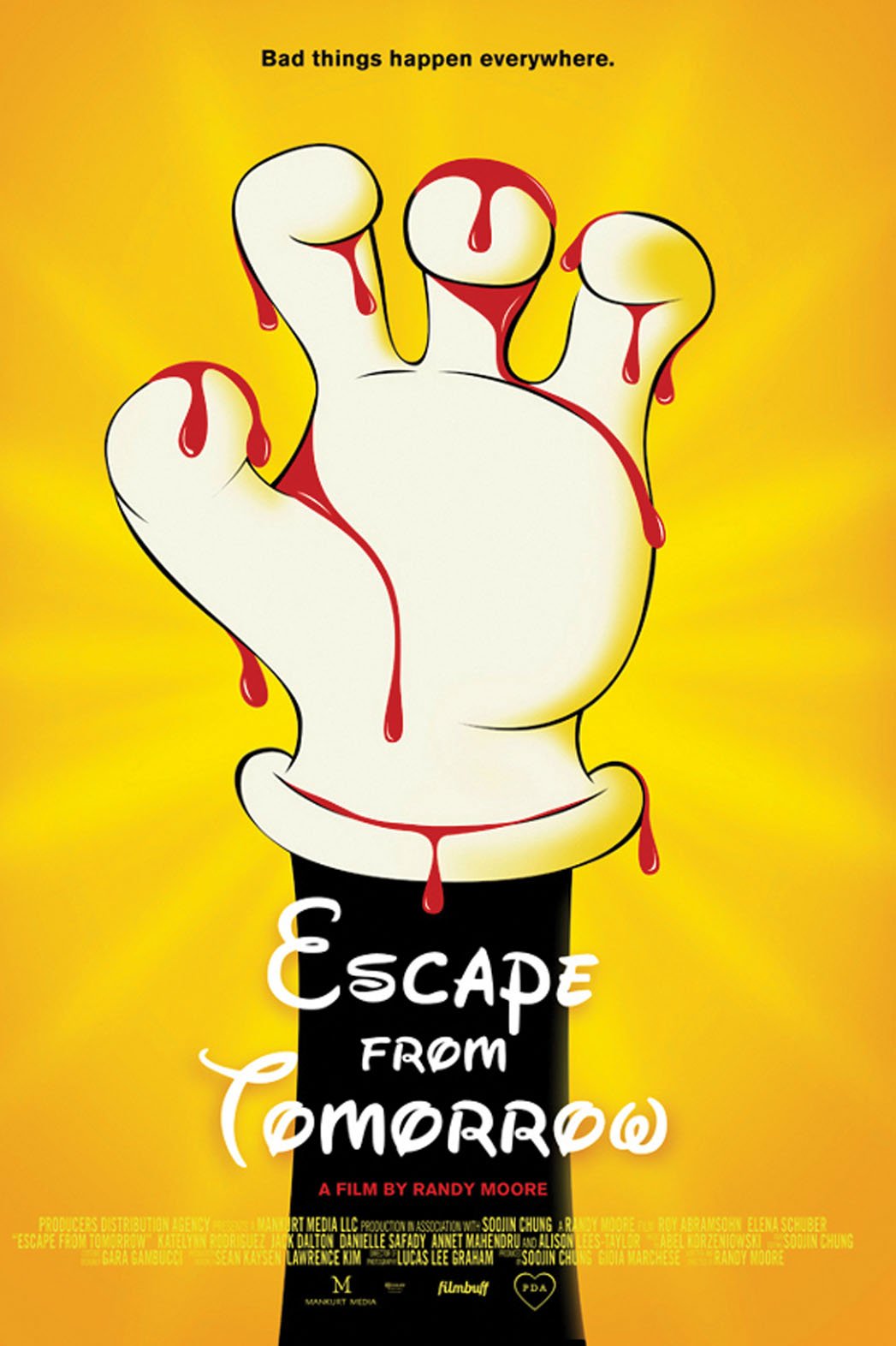
I’m always telling you guys to limit your scripts to 110 pages. And if you have a comedy or a thriller, you should probably be closer to 100. You would think then, that I’d be happy to see a movie with a 90 page script. That means the story’s going to move even faster, right!? Not exactly. You see, 90 minutes is the minimum running time a movie must be to play in theaters (I think the actual number is 88 minutes). So when I see that, I subconsciously think that the filmmakers/writers didn’t have enough story for a feature film, and just padded their script with a bunch of filler to meet that minimum requirement.
There are exceptions. If you have something really contained with a low character count (“Buried,” for example) 90 minutes/pages might be just right. But Escape From Tomorrow had a family in Disney World. That story should’ve been longer. This was a prime candidate, then, for Padding Nation. But I was still hoping the film would prove me wrong.
Escape From Tomorrow introduces us to Jim, a father of two who’s on the last day of his trip to Disney World. Jim doesn’t seem to be the happiest guy to begin with, so when he gets a call from his company to inform him that he’s fired, it only adds fuel to his depression fire.
Naturally then, you’d expect to see this depression played against the happiest place on earth. And you’d be right. After the family goes on a few rides, Jim’s focus quickly becomes these two really young French girls (we’re talking 14-15 years old) who are frolicking around with barely any clothes on. Jim’s able to split from his wife by taking one of his kids, and follows the girls around to all the rides. The girls appear to notice him, and maybe even like the attention, but Jim can only get so close before his nagging wife keeps reappearing to nag some more.
What follows is a whole lot of nothing. We’ll go on a ride. Jim will watch the girls. Then his son will throw up. Jim will meet another mom, go to her room and have sex with her, even though it isn’t clear whether it really happened or not. Jim finds himself in the center of Disney World being held hostage by a crazy German scientist who turns out to be a robot. He’s shown images of a flight simulation and a naked woman. Jim loses his daughter, who he later finds out has been sorta kidnapped (I say “sorta” because she’s given back without any trouble).
Oh, and then there’s the ending (spoiler alert)! Jim succumbs to the anemically set-up “cat flu” and dies in the bathroom of his room! Only to show up again, alive and well, with that naked woman we’d intermittently seen jump cuts of throughout the movie (for no discernable reason of course). My friends, if you thought Upstream Color was too mainstream, then boy have I found the movie for you.

Okay, before I get pissed off about the storytelling here (and I am going to get pissed off), I have to give Randy Moore a TON of credit. He did the impossible. He broke into Hollywood. If you’re a reader of this site, you’re hopefully racking your brain every night to try and find a way into this exclusive club (at least I hope you are). In order to do it, you gotta write/make something great, inspired, clever, controversial or all of the above.
If you can find a way to break the rules in an interesting way, to create an excited discussion around your film or script, then the doors to Hollywood will open right up. Moore figured out a way to do that. Illegally filming a movie on the hallowed grounds of Disney World, a movie that smashes the very image the company likes to portray, was genius. It really was. One of the easiest ways to get people to discuss your film/script is to find an ironic slant. And what’s more ironic than an evil, twisted Disney World trip? And then to shoot the film in black and white? Stripping the Mouse House of the color they so desperately use to lure everyone in? Genius!
And when I did some research on Moore, I found out other good things. He worked his BUTT off to make this movie over the last three years. The first thing he did was come up with the idea. But here’s why Moore is where he is and you’re still sucking up black mold from your 400 square foot bachelor pad in Burbank – HE ACTUALLY WENT OUT AND MADE HIS IDEA. He didn’t stop at the concept point. He went to Mandy.com and found his crew. He planned meticulously for how he was going to pull off the shoot without Disney knowing. I mean, the guy went out and did it. And as crazy as it sounds, that’s the only thing that separates the successful and the non-successful people in this business. Some just talk about it and dream about it. The others GO OUT AND DO IT. And for that reason, I shall respect Randy Moore and others like him regardless of if I like or dislike their films.
But (oh, come on, you knew it was coming) I was SHOCKED to find out what I found out about Moore. You see, I had assumed this whole time that we were dealing with a filmmaker only who had a vision for a film but no money to hire a screenwriter. So he just did the best he could and scribbled out a bunch of scenes in order to get his movie made.
Then I learned that Randy Moore was a longtime [albeit unsuccessful] screenwriter?? That he was a reader and did coverage for people? That he consulted on scripts??? That blew me away because there isn’t a shred of ANYTHING good in this script whatsoever. If you stripped away the movie and read this script on its own, without a question it’s a “what the hell did I just read?” It’s that bad.
Let me try and break down some of the problems here. NOTHING LOGICAL HAPPENS. There is no cause and effect. In other words, one thing does not lead to the next. Random things just happen and you’re expected to go with it. Oh, our main character has sex with some woman he meets while his son waits in the next room. Oh, there’s a naked woman who keeps appearing on the screen and then in the end, the re-birthed Jim goes to Disney World with her. Oh, there’s a break-out of “cat flu” on the grounds (what the hell is cat flu????). Oh, a robot scientist locks Jim up (???????). Oh, Jim gets into a spat with a large, wigged man in a wheelchair. This film was built on set-ups that NEVER got a payoff (how can you screw that up? Setups and payoffs are some of the easiest things to do in screenwriting!).
The only narrative focus used here are these 14 year-old French chicks. That’s the only thing pulling the story forward – Jim’s pursuit of them. But their inclusion is so thin (we don’t know anything about them – they might as well have been carrots and Jim a mule) that we don’t care if he gets them or not. So they only seem to be there so we can see more places in the park and pad the story with more scenes (remember what I said about those 90 pages?).
There was a scene, when Jim’s daughter is “kidnapped” by a witch, where I thought, “Okay, this kind of makes sense.” We’re in Disney World. There are witches in this world. He’s going insane so maybe this is or isn’t happening. I can make some sort of connection there. If there was more of that, maybe the story might have actually been interesting. But instead we have cat flus and huge men with bad wigs on wheelchairs and the Epcot Center ball blowing up because it’s a fun special effects shot, things that don’t seem to have anything to do with Disney World.
I mean, coming up with a more cohesive story that still allowed Moore to play around with Jim’s insanity wouldn’t have been that difficult. Have him lose his family early. They go off one way, him the other, and the narrative engine is him trying to find them again. If you want to get trippy, maybe he starts to question if he ever had a family – if they weren’t a part of his imagination. Or his wife’s back at the room and he loses his kid and is so terrified of his wife’s reaction, that he decides to look for him himself. Or, if you really want to get wild, start by having Jim wake up in a strange room with a dead girl (the French girl?). No idea how he got there. He goes back to his family, sneaks in before they wake up, and must pretend like nothing’s wrong on their last day at Disney World, all while Disney guards become more and more suspicious of him and seem to be following his family everywhere. Things get really bizarre when he sees the impossible – the French girl, out and about, still alive.
Yeah, I’m not asking for awards for these ideas, but give us SOME sort of narrative thrust so we’re not randomly stumbling through a world with no rhyme or reason. That kind of thing is interesting for about 7 minutes before the audience gets impatient and wants a reason to stick around.
I suppose this kind of thing might work for David Lynch fans who are into trippy unconventional plots, but from what I’m hearing, even Lynch fans are calling this movie random and pointless. And that’s not a good sign because that’s the only audience that’s going to go for this. Again, I commend Moore for coming up with this idea and generating so much buzz. But the screenplay for this was so disappointing, I can’t possibly endorse it. I just can’t. It was so very bad. ☹
[x] what the hell did I just watch?
[ ] wasn’t for me
[ ] worth the price of admission
[ ] impressive
[ ] genius
What I learned: You are not as good as you think you are. I don’t care if you’re a script reader, a script consultant, or if you’ve sold a script – ALWAYS GET FEEDBACK! Always! Because the world doesn’t see your story the same way you see it in your head (ESPECIALLY stories like this, where you’re playing with reality). You need that outside perspective so you can identify the faults in your script and fix them. “Escape” could’ve become a classic if it was actually good. But it appears Moore never got any feedback on the script.
What I learned 2: Even “trippy” scripts need structure. You can’t use the excuse, “Well, it’s supposed to be weird” to explain away a wandering plot and wall-to-wall strangeness. Create the boundaries of your world first, then you can play within them.
Get your script reviewed!: To submit your script for an Amateur Review, send in a PDF of your script, along with the title, genre, logline, and finally, something interesting about yourself and/or your script that you’d like us to post along with the script if it gets reviewed. Use my submission address please: Carsonreeves3@gmail.com. Remember that your script will be posted. If you’re nervous about the effects of a bad review, feel free to use an alias name and/or title. It’s a good idea to resubmit every couple of weeks so your submission stays near the top.
Genre: Drama/Action/Period/Western
Premise: (from writer) When a woman is kidnapped in Texas during the Dust Bowl, her husband embarks on a harrowing odyssey where he’s forced to confront danger in the forms of Mother Nature and man and also the mysterious past he buried years ago.
Why you should read: (from writer) Who am I? I’m 28 years old, live in Boston and have a day job in PR. For the last several years I’ve been moonlighting , weekending and every-free-fucking-second-I-have-ing as a writer. I’m hell bent on breaking in, by any means necessary. Anyway, back to the script. Sunny Side of Hell is set during a time where most us who frequent SS wouldn’t have lasted a week — the Dust Bowl. My grandparents actually lived through it and their stories set the backdrop for SHOH. The script, although a first draft, has a page-turning plot, interesting characters, compelling themes and a couple twists and turns to keep everyone locked in.
Writer: John Eidson
Details: 118 pages
 Scriptshadow pick for Sam: SCOTT EASTWOOD!
Oh boy. Not a period piece. When I see 1 am and “period piece” on the same computer screen, a part of my script-reading mojo dies. It’s not that I don’t like period pieces. Two of my top 5 favorite unproduced scripts are period pieces. It’s just that when you’re stuck reading a bad period piece, it’s a lot worse than being stuck reading a bad present piece. They’re slower. They’re over-described. They’re mired in that drab “history lesson” snore-y fashion.
BUT! But when they’re good, they’re good. And you know what I’ve found? I’ve found that the writers of period pieces, on average, are usually better writers than their contemporary cohorts. I know that sort of contradicts what I just said, but hear me out. When someone wants to write a period piece, they’re usually a pretty smart guy. Most history buffs are knowledgeable folks. So there tends to be more depth to their work than the average script. Whereas a lot of contemporary writers who have more marketable concepts tend to write more from a “I like movies, so I can do it too” perspective. They don’t have that same appreciation for how difficult it is to create an imaginary world. So there isn’t as much attention paid to depth and detail.
So if we could somehow MARRY these two types of writers into a high concept detail-specific super cyborg writer… why, we could print money. Hmm, a cyborg writer. Now that’s an idea. I’m gonna look into that. But in the meantime, let’s take a look at John Eidson’s script. We’ll see if he’s one of those rare writers that can make a period piece fly.
Everything’s bigger in Texas. Like dust storms in the 1930s. Yup, try to plant an orange tree back then and it’ll be more like Tropican’ta than Tropicana, if you know what I mean. You see, before there were sharknados? There were dustnados. And maybe they didn’t have Great Whites doing 360s inches from your face, but if you ever got some dust in your eye? Well, shoot. You weren’t going to be opening that eye until AT LEAST tomorrow morning.
35 year-old husband Sam is trying to make the best of a situation that’s looking increasingly dire. You can’t grow crops in dust. So he and his wife Hannah are looking at all options in the survival game. One of those options is to take a big hunk of money from the town judge, Reginal Barron (who also happens to be Hannah’s father), and move west, where they haven’t figured out how to screw up crop fields yet.
Sam would rather starve than take handouts from Asshole Von Barron, whom he figures is enacting some scheme to separate him from his wife. So he tells him to dust off. That whole skirmish becomes secondary, however, when a day later Hannah is kidnapped! Turns out someone wants their brother out of jail, and they figure they’ll use the judge’s daughter for a trade.
Sam works with Barron to do the trade, but when he gets to the drop-point, the only wife waiting for him is a couple of smith and wessons! This is the kind of three-way I don’t want any part in! Bang bang. Bang some more, and somehow everybody’s dead except for Sam. So Sam keeps following Hannah’s trail, willing to go through hell or swirling dust to make sure the “death til you part” part of his vows doesn’t happen yet.
Along the way, Sam runs into a stampede of jackrabbits (not kidding), a sickly leatherface like family (sorta kidding), and some lesbian cannibals (definitely not kidding). In the end, he’ll learn the truth about his wife, and (spoiler) have to team up with his mortal enemy to take down the big bad shocking puppeteer of this farce of a kidnapping.
Okay, I’ve watched Miley Cyrus’s “We Can’t Stop” video, so I can safely say that I’ve seen everything. But Sunny Side of Hell is like Miley Cyrus’s long lost screenplay cousin. I mean, this is one weird little script. Case in point. I’ve never seen a jack-rabbit stampede crashing a 1930s motorcycle and turning our protagonist into road goo before. So Eidson gets a point for that.
But man, I mean, as for the rest, I don’t know where to stop. Because I can’t stop. And we won’t stop. I mean, know where to start. START. No, I’m not twerking right now.
So here’s the thing with this script. It’s very well-written. When you’re writing a period piece, you have to establish mood. And you do that by crafting words in a pleasingly descriptive way. A.K.A. Unlike that sentence I just wrote. Eidson is really good with description. There are a lot of paragraphs like these: “Golden stalks of wheat swaying gently from side to side, set against a great pale blue sky. The scorching sun roasts the fragile stalks.” – It’s really the perfect balance. It’s not over-described. It’s accurately described, and doesn’t give us any extra words or sentences we don’t need. That’s what I like. I don’t want the writing to be too flashy. I like it to be invisible, with just enough depth and imagery to place me in the world.
Ditto with the dialogue, which was consistently authentic. I mean, I could pick a hundred lines out of this script that sounded just like this one: “Lots a that goin’ on these days. Dust storms scaring folks outa’ here faster than a bee-stung stallion. Good for you fellers though I suppose?” That sounds to me like a real Texan from 1930s middle-of-nowhere, right?
But just like everything in this script, where there was a positive, it was coupled with a negative. There were sooooo many errors in here, and that’s WITH the “newer version” Eidon sent me. I’m not sure there’s a single correct usage of “your” in here. “Sees” is written as “see’s” for some reason. And there were just a lot of mistakes like that. So this beautiful writing was constantly being pulled down by silly mistakes.
As for the story, I have to admit I wasn’t sure what Eidon was doing for awhile. We start off with a clear goal – Sam’s wife’s been kidnapped. He must go after her. However, it’s as if the immediacy and importance of that goal are constantly thrown out the window in favor of these strange stops along the way. I have no idea why a 15 page chunk was dedicated to this strange sickly band of folks holed up in their mansion. It just felt like a completely random diversion. Ditto the lesbian cannibals.
After awhile, I began to wonder if what Eidon was trying to do was use this forum as a sort of cinematic postcard for the Dust Bowl. Because showing the scorched fields and the sickly families, at a certain point, became more important than our main character’s pursuit of his kidnapped wife. And while I sometimes found these people interesting, in the back of my head I’m going, “Why the hell is he hanging out with these people when his wife is in danger of being murdered at any minute?”
In addition to that, Eidon telegraphed his twist way too clearly. Going to be some southern spoilers here. By having the rift between Sam and Barron so out in the open and obvious, in combination with Sam showing up at the drop point only to find out it was a set-up, I mean it was pretty obvious to me at that point that Barron was the one setting him up. Yet another 60 pages go by until we’re told this. In the next draft, I’d advise Eidon to make Barron much more subtle, or maybe make him the opposite of how he is now – overly nice, so we don’t suspect him. Because that twist is supposed to be a big moment, and we were way ahead of it.
Despite all that, there’s definitely something here, if not with this particular script, then with the writer. There are two questions I ask myself after I finish a script in order to determine how I REALLY feel about the screenplay 1) Do I want to push this up the ladder (pass it on to people)? And if not, then 2) Do I want to read what this writer writes next? In this case, I definitely want to read what Eidson writes next. But right now, he’s not there yet. He needs to work on focusing his narrative and not losing sight of the plot. This drifted too far off the main road too many times, and in the process, got stuck in the dust. But the great thing about writing is you learn something with every script you write. Hopefully this only makes Eidson stronger.
Script link: Sunny Side of Hell
SCRIPT
[ ] what the hell did I just read?
[x] wasn’t for me
[ ] worth the read
[ ] impressive
[ ] genius
WRITER
[ ] still figuring out basic English
[ ] needs to write a lot more scripts
[x] someone to keep an eye on
[ ] this guy should already be a pro
[ ] the next coming of Aaron Sorkin
What I learned: Guys guys guys. I can’t stress this enough. Please send your best stuff the first time out. When you e-mail a day later and say, “Here’s the new one. Don’t use the last one,” I die a little inside. Because I don’t understand why you didn’t make it perfect the first time. You’re basically admitting that you didn’t meticulously make sure everything was perfect the first time out, which is what you need to do! If you’ve done a major rewrite, that’s different. But whenever you’re submitting a draft of a script, make sure it’s “the one.” And remember that I’m SUPER LENIANT about this compared to the rest of the industry, who probably will delete you forever if you try and pull that stunt.
What I learned 2: There’s this new thing being done in scripts that I don’t know if I’m on board with. When a line or two of description interrupts a person speaking, and that same person speaks again, the writer doesn’t include the name above that second chunk of dialogue. So it’ll look like this (my apologies for not being able to format it correctly).
JOE
I was racing for years, Mac. YEARS I say. But it wasn’t until I got the cancer that I realized how much I loved cycling. It’s funny how that is, right? How you don’t know what you got until it’s gone? But that’s when they hit me with the whopper. It was ass cancer. Ass cancer. I would never be able to sit on a motorcycle again.
Mac looks at Joe before finally reaching over and giving him a hug. It’s emotional for both of them.
Maybe if I had got more of these from Mom, I never would’ve got the ass cancer. Never would’ve got it…
So the name “JOE” should be above the line that starts with “Maybe…” but in this new format people are using, they don’t do it. Does this make it easier to read? That’s debatable. One less name to ingest means possibly. The thing is, whenever I see that, I THINK about it. And that’s the problem. I mentally stop for a second and THINK about how the writer’s using this unorthodox device, which takes me out of the story for a second. And as a writer, your job is to NEVER let your reader out of your spell.