
Search Results for: F word
I remember first hearing about the Sequence Method. I was appalled. It sounded like a math equation. And since art should never be boiled down to a set of variables, I was insulted. In order for art to be successful, it needs to come from that subconscious place from within – that place that emotes, that expresses – that thing you can’t quantify via numbers.
However, as time passed and I read more scripts, I began to realize that unlike other art forms, screenwriting was heavily dependent on structure. The screenplay was originally created as a blueprint for a film, and that little fact had me rethinking everything I knew. Blueprints are all about measurements and space. And when you look at a script, you see exactly that. A script isn’t like a novel. Things need to be where they need to be. The courier font with spacing between paragraphs was used specifically so that each page would approximate 1 minute of screen time. I began to realize that there was more math going on here than I was originally willing to admit.
So what is The Sequence Method? Well, in order to understand it, you must first understand the importance of the character goal. Ideally, you’d like to establish a central goal for your story’s hero early on. The movie, then, is about your hero’s pursuit of that goal. Movies tend to work best when the hero is active all the time. And by placing a goal in front of your hero, something he’s pursuing, he’s basically forced to be active. Not all movies will have a clear overarching goal, but most will (Indiana must find the Ark, John McClane must save his wife). Either way, as long as you understand the importance of the character goal and why you would or wouldn’t use it, you’re in good shape.
The Sequence Method basically says this: If our main character is only pursuing one goal, the audience will become bored. That’s because today’s audiences are impatient. They don’t like waiting 2 full hours to see if their character wins or not. They need something in the meantime. The solution to this is dividing your screenplay into 8 little mini-movies, each with their own immediate character goals. This is called “sequencing.”
A big reason why this works is because audiences love constantly being rewarded. They like to feel like they’re achieving something as the movie/script progresses. We might not find out if Indy gets the Ark until the very end. But we find out if he gets that Gold Monkey out of the cave. We find out if he gets the headpiece for the Staff of Ra from Marion.
Each of these mini-movies, then, establishes their own little character goal. Goal – Get the monkey out of the cave. Goal – Get the Staff of Ra headpiece. It’s beautifully simple, yet surprisingly effective. So why are there 8 of these sequences? Well, you don’t have to use 8. You can use 6. You can use 4. But 8 gives you about 12-15 pages for each sequence, and 12-15 minutes of movie time is the perfect amount to create a little mini-movie, the ideal wait time for an audience to be rewarded.
Now I can’t get into all the specifics of sequencing because there’s too much to cover. But so you don’t get confused, let me remind you of one more important thing. It isn’t always the main character who has the goal that’s driving the sequence. For example, Darth Vader is driving the opening sequence of Star wars – he’s trying to get his hands on those Death Star plans. C-3PO and R2-D2 are driving the next sequence, as they’re trying to find Obi-Wan Kenobi. A sequence can be driven by any character with a goal, yet most often is driven by either the hero or the villain.
Once I began to understand the Sequencing Method, I realized how genius it was. You see, one of the biggest problems with amateur screenplays is that they wander. They get into that middle area and completely lose themselves, mainly because character goals are murky and the writer isn’t really sure where everything’s going. The Sequencing Method breaks the story down into more manageable pieces. No longer do we have to figure out how to fill up 110 pages. We only have to fill up 12-15 pages to see if our character reaches his current goal. And then fill up the next 15. And the next 15 after that. I’m not saying that using the Sequence Method guarantees a good script. But there’s no question that sequenced scripts are more focused and easy to follow.
This brings me to the point of this article. The Sequence Method has one giant flaw. It’s TOO STRUCTURED. It FEELS too sequence-y. True, eight 15 minute mini-movies are going to keep the script focused, but if those mini-movies feel too individualized, too “now this sequence happens and then THIS sequence happens and then THIS sequence happens,” you lose that organic feel that helps a story feel effortless. For this reason, ironically, once you’ve mastered the Sequence Method, you must learn how to make it feel like you haven’t used the Sequence Method.
Introduce – layering.
Layering occurs when you take storylines, mysteries or secondary character goals and expand them over numerous sequences. Because you’ve layered these story threads over the sequence breaks, the audience is less likely to realize that a break has happened. Without layering, it feels like you’ve created 8 completely separate movies. Now I’m not going to lie. This is really advanced stuff. You have to learn how to sequence before you can layer. But let me give you a few examples so you can see how the technique works.
In Star Wars, the first sequence is Darth Vader trying to get back the Death Star plans. He fails when C-3PO and R2-D2 escape. End of sequence. The second sequence is C-3PO and R2-D2 trying to find civilization, presumably so R2 can deliver this “message” to its recipient. This sequence ends when Luke buys them from the Jawas. The third sequence is Luke trying to figure out what this message is about. It ends when he finally locates Obi-Wan. Each time, a goal is put forth in front of a major character, and that character goes after it.
The layering here occurs with the mystery of Princess Leia’s message. It’s set up in the first sequence, when she places the message inside R2. It’s discussed in the second sequence, when R2 stubbornly looks for the recipient of the message (Obi-Wan). And then, of course, it sets Luke off to find Obi-Wan when he sees the message himself. Think of layering as a series of bridges between sequences. If there’s nothing crossing over those bridges from sequence to sequence, then your sequences are too isolated. Here, the mystery of this message crosses over two bridges.
Bad sequencing would’ve shown Princess Leia physically record the entire message into R2-D2 in that first sequence on the ship. We then would have already known what she was saying, what was going on, and therefore there’s no mystery crossing over.
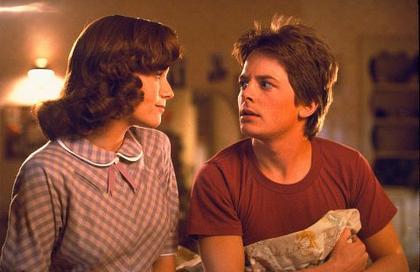
In Back To The Future, the third sequence in the movie (once Marty arrives in the past) is finding Doc. The fourth sequence is Doc and Marty figuring out how to get him home. And the fifth sequence is Marty trying to get his dad to ask his mom out to the dance. In sequences 3 and 5, we see Biff Tannen targeting George (Marty’s dad) and Marty himself. Biff, our villain, then becomes the layering. His goal isn’t isolated to a single sequence. His subplot of trying to take Marty down expands over several sequences.
Another layer is Marty needing to tell Doc that Doc dies in the future – killed by the terrorists. He tries to tell him first in sequence 4 (but Doc tells him he can’t know anything about the future), struggles with telling him during the “jump back” demonstration, and then tries to tell him as Doc’s setting up the electrical equipment at the clock tower. Ditto the famous “disappearing siblings” picture. This is used in multiple sequences to show that bit by bit, Marty’s family is disappearing. You layer these little storylines over multiple sequences, sometimes 2 or 3 at a time, and your script stops feeling so segmented.
So the first question is, do you want to sequence? Do you believe in sequencing? If so, it’s pretty easy to learn how to do it. Buy the book, The Sequence Approach, and you should have a pretty solid idea of how to create sequences after a single read. From there, you have to learn how to layer. They teach The Sequence Method at USC Film School. The thing I’ve repeatedly heard from readers, though, is that they know when they’re reading a “USC script,” because of the blatant use of sequencing. I think a big reason for the tell is the lack of layering. The writers are so focused on each individual sequence, they don’t focus on creating enough threads that cross over those sequences.
If you can master this technique, you’ll become a very dangerous screenwriter. That’s because the Sequence Method is the best weapon to rein in that dreaded endless second act. And the layering makes your use of it invisible, leaving others to wonder how you wrote such a focused screenplay that feels so effortless. What do you guys think? Do you think screenwriting should be broken down into terms this structured? Or do you think it’s all bullshit and writers should let their story be dictated solely by imagination and whatever they come up with next? Share your views in the comments below.
Today we take a look at a script from the man responsible for the darker, edgier Daredevil reboot. Not surprisingly, the script is a bit of a daredevil itself.
Genre: Drama
Premise: A story that follows a dozen different seedy characters in New York City during one of its sleaziest decades, the 1980s.
About: This script made the 2006 Black List. I don’t know much about it but the writer, Caleb Kane, had been a Broadway actor for a long time and has appeared in a lot of popular TV shows. He segued into writing and wrote a few episodes of Fringe. He wrote a draft for the reboot of Daredevil, but hasn’t had that big breakout writing moment yet. These City Walls appears to be his writing sample.
Writer: Caleb Kane
Details: 165 pages!!! (1/06 Draft)
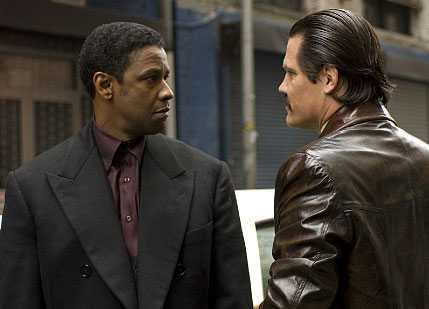 Denzel for Mr. Man?
I love me some 165 page screenplays. As in, “I hate me some 165 page screenplays!” I mean seriously? 165 pages? Do you really think you’re THAT good that you can completely ignore what every reader and producer in town finds acceptable? I guess so. And I guess it worked since enough people liked it to get it on the Black List (to a degree – I don’t think it finished very high). But seriously, I have never seen a 160 page script that couldn’t be sliced to pieces.
I’m actually glad this came along on the heels of the Fight Club post, as it, too, is a non-traditional screenplay. We’re jumping around between multiple characters. We’re taking our time getting in the plot. We’re not entirely sure who the main character is. There is an experimental vibe to the script, and I’m sure something can be learned from that.
Maybe the first is: Beware the ULTRA AMBITIOUS SCREENPLAY. Jaw-dropping page counts, murky plots, lots of characters. I know I just wrote an article telling you how to approach these types of scripts, but that doesn’t mean I think you should write them. Besides the fact that it’s just really hard to wrangle together a story of this enormity, readers aren’t really trained to understand scripts like this. They’re looking for clear narratives, clean goals – a story that moves forward quickly and with purpose. These anti-structure screenplays are hard to define so even when a reader likes something about them, they’re reluctant to say so, since they can’t really pinpoint (in industry terms) why they feel that way. It’s safer, then, for a reader not to support a script like this. Something to keep in mind.
It’s winter in New York City. 1983. 20 year-old Ruben has worked his way up the ranks for Mr. Man, a local pimp who’s keen on expanding his business. But before he can do that, he needs the perfect girl. Someone new. A fresh face. If Ruben can find him that face, he can get in on the ground floor of Mr. Man’s new business venture.
Ruben does just that, finding a homeless 17 year old girl named Noel trolling the streets with her boyfriend. Mr. Man slyly gets the boyfriend hooked on heroin so he can remove him from the picture, and turns Noel into one of his top girls. Everything’s going according to plan until Ruben starts falling for Noel, and wants to get her out of New York City. Mr. Man notices something growing between the two and doesn’t like it. He tells Ruben that he better mind his own business. The girl is his.
In the meantime, Mr. Man blackmails one of his richer clients with pictures of him doing some really nasty stuff with one of his girls. Mr. Man classes up his women and uses the client’s access to a high rolling clientele, and soon he’s not slumming it on the streets anymore. Unbeknownst to him, however, Ruben has saved a bunch of dough and is planning for Noel’s escape. Mr. Man can’t have that, which means we’re going to get a stand-off between the two. And it’s very likely only one of them is coming out alive.
That is a REALLY simplified synopsis of the screenplay. I should probably get an award for that actually, as I make it sound like a pretty focused little story. The reality is, there are a lot more characters and way too many subplots here. I see this problem a lot in these screenplays – where writers are trying to be super-ambitious. They write a bunch of storylines, thinking it will add complexity and grandiosity to their story, making it more “respectable,” but many of those storylines either a) don’t push the narrative forward or b) aren’t very good.
I mean, we have this subplot where a drug-addict named “Boo” is trying to kidnap his son back from his ex so he can place him in a child porn magazine and make some easy dough. Boo had next to nothing to do with any of the other characters. Plus his storyline just wasn’t very interesting. Since that accounted for 15-20 pages, Kane could’ve easily cut the subplot and got this down to 145 pages. Do the same for another unnecessary subplot or two, and you’re down to 120 in a jiffy, a page number where readers don’t actively hate you within 2 seconds of opening your screenplay.
These City Walls DOES have some stuff going for it though. I WAS curious enough to keep reading and I think that’s because a lot of the characters popped. I don’t know if I’d say they were great because there wasn’t any traditional character development here. We weren’t getting into their pasts or arching them. But they all had personalities, and I think that’s something a lot of writers forget to add. You can include all the depth in the world when it comes to character, but if there isn’t a personality there, we’re probably going to be bored by them.
There’s plenty of personality to go around here. Mr. Man was a part any actor would want to play. Despite Boo being unnecessary, his drug-addicted rantings and mumblings made him stick out. Noel was delightfully naïve. Ma Love stuck out as the aging prostitute. Blackmailed client Milton Klein wore the nervous screwed businessman part well. I don’t remember a lot of characters when I read scripts. I remembered almost all of them here. And that’s saying something.
I thought the dialogue was pretty good at first. It felt authentic. Lines like, “Motherfuckin’ outlaw, man. Bet. Just gotta keep movin’ on that one big sting, though, you know? Get my game straight.” – they put me in that time and place. Impressed me. However, as the script went on, pretty much EVERYONE started talking like this so the effect lost its luster. Literally 8 different characters could’ve said that line, they all spoke so similarly. When you’re writing dialogue, you HAVE to distinguish your characters so that they all talk uniquely. If they’re all talking alike, the dialogue (no matter how good) becomes stale and tiresome, like it did here.
I hate to beat a dead horse, but I think the fixes here are pretty obvious. Get rid of the unneeded time-sucking subplots, and build the story around Mr. Man’s ascension into high class escorting. In other words, give him a CLEAR GOAL. Make this like a prostitute version of Scarface. With that goal driving the story, everything will be more focused, and you still get to explore most of the seedy characters from this draft, just in a more plot-heavy setting. Right now we don’t get to Mr. Man’s first high-class prostitute party until, like, page 110. GIVE ME A BREAK! That should’ve been on page 45 at the latest.
Anyway, this had some nice flashes, but it was too messy to recommend. Too bad. I was hoping to find a lost gem. ☹
[ ] what the hell did I just read?
[x] wasn’t for me
[ ] worth the read
[ ] impressive
[ ] genius
What I learned: “Writing samples” are scripts that highlight a writer’s biggest strength. They typically aren’t marketable enough to be made. So if you’re great with dialogue, write a script that centers around dialogue. You then get a lot of meetings from people who need dialogue punch-ups and hopefully start making some dough. If a writer gets big enough or a big enough actor falls in love with one of the roles in the script, a “writing sample” will occasionally get made.
What I learned 2: OTMSS (one too many subplots syndrome). A lot of time, when a writer is told to cut out pages from their script, they do so via little pieces here and there. A line of dialogue, a description, the tail end of a scene. If you REALLY want to cut pages, cut out unnecessary subplots. These are subplots that you convince yourself are necessary because you like what they add to the characters, but that don’t move the story forward in any interesting way. Get rid of one of these and you can make 10 pages disappear like THAT. It’s one of the easiest ways to cut a bunch of pages.

Yeah, I know. I’m breaking the first rule of Fight Club by writing this article. But I thought it was time to dissect a screenplay that wasn’t like anything I’ve dissected before. Fight Club was one of the biggest gambles of the decade. The movie was not traditional in any way. You could argue that there isn’t a single scene in the first 60 minutes that pushes the story forward. Heck, you could make the argument that there isn’t even a plot. But that’s exactly why I wanted to break it down. We look at a lot of conventional stories here. But there are a lot of you who hate the Hollywood formula, who are looking to do things differently. I thought it’d be fun, then, to feature a script that ignores almost every rule in the book. Maybe we can find a baseline for writing one of these screenplays ourselves.
1) If you’re going to ignore structure, embrace theme – I’ve found that these formless, structure-less scripts work best when the theme is strong. That’s because when you don’t have a traditional plot, you need something else to link everything together. Theme becomes that link. Fight Club has a very strong theme. It’s about the frustration of growing up and not getting what the world promised us. It’s about the empty angry feelings that drive us as a result. Have a weak plot? Incorporate a strong theme.
2) Voice over is your friend in non-traditional scripts – Again, when you don’t have a clean plot, a clean structure, you need a way to link everything together. Fight Club jumps forward, backward, backward even more, forward again. There’s no clear goal, no plot. BUT, Jack’s constant voice over guides us through this rocky terrain effortlessly. We’re not really lost because he’s holding our hand. Keep this in mind if you’re writing a plot that’s all over the place.
3) In non-traditional scripts, character is king – Characters are important no matter what. But strong characters become imperative when you don’t have a traditional plot. Since there’s no clear goal driving us forward, the characters become the only reason to watch. So they have to be FASCINATING. At least one has to be SUPER BIG AND MEMORABLE (in this case, Tyler). But even your straight man (main character) needs to be unique somehow. Jack, with his constant rambling and philosophizing, with his insomnia, with his dependence on group therapy, is almost as interesting to watch as Tyler.
4) Use ACTION in dialogue scenes to reveal character – Avoid characters standing around when talking/arguing if possible. Instead, have them (or one of them) doing something that reveals something new about their character. Instead of Jack and Marla (the love interest) arguing over who gets what support groups in a single room, we’re following Marla as she walks across the street, steals clothes from a dryer, then walks over to a thrift shop and sells them. This way, we achieve the characters’ goals (hashing out who gets what support group) WHILE revealing something about Marla (that she’s a thief with no morals who will do anything to get by).
5) Utilize callbacks to initiate consistency throughout your unconventional screenplay — Remember, if you don’t have as clear of a plot, you need to create the illusion of connectivity wherever you can. You do this by bringing up something, then calling back to it throughout the screenplay. So early on we see that Jack’s become a slave to IKEA. It’s a nice funny moment. And that could’ve been it. But later we see Jack sitting on his bedroom floor, assembling IKEA furniture. It’s a callback that creates connectivity – desperately needed when your plot is nonexistent or unclear.
6) No matter how unconventional your script is, make sure it still contains CONFLICT – Even in non-traditional indie cult classics like Fight Club, you’ll see that one of the most important storytelling tools is still utilized – conflict. Our two main characters here are polar opposites. Jack is reserved and careful. Tyler is aggressive and careless. This leads to a lot of fun conflict-filled conversations and scenes. Never underestimate how important of a device this is.
7) Be imaginative – If you’re writing an unconventional screenplay, you gotta go all out. You have to eliminate those filters that tell you “this is right” and “this is wrong.” If we’re going to endure a plot-less story, we have to be rewarded with lots of shit we haven’t seen before. So have fun. Do the opposite of what you’d normally do. We have a 300 pound man with bitch tits. We have characters stealing cellulite out of trash bins. We have Jack chilling out with penguins in a cave. “Different” scripts are your opportunity to highlight your imagination. Don’t disappoint us by putting limitations on that imagination.
8) Your character’s job should sync up with the tone of the film – Fight Club is dark and disturbing. So Jack’s job, naturally, should be dark and disturbing. Jack isn’t a lawyer. He’s a recall coordinator. He decides after a deadly horrifying car crash where teenagers and babies have died, whether that car should be recalled or not. That fits perfectly with the dark tone of Fight Club.
9) Formal sentences are not required in screenplays – As crazy as it sounds, you can use sentence fragments when writing a screenplay, as long as they’re clear. For example, to indicate that Jack is on a street, the paragraph under the slugline begins, “Along a residential street.” That’s the sentence. Would it work in an English class? No. But screenplays aren’t about perfect grammar. They’re about saying as much as possible in as few words as possible. You could’ve used the more robotic: “We are standing on a residential street.” But it doesn’t sound as smooth or free-flowing.
10) These kinds of scripts are nearly impossible to write – I don’t want to end this on a negative note but it’s important you know that I read tons of scripts from writers trying to “break the rules” and “do something different” and they’re usually the worst scripts I read. That’s because it’s hard to write something that doesn’t have a goal, that doesn’t have a conventional purpose, and keep it interesting for 110 pages. It takes an amazing amount of skill and a ton of talent. So I just want you to know what you’re getting into. You’re basically counting on yourself to be one of those one-in-a-billion brilliant writers. But hey, if you believe in yourself that much and want to take a chance? Go for it. ☺
These are 10 tips from the movie “Fight Club.” To get 500 more tips from movies as varied as “Eternal Sunshine Of The Spotless Mind,” “Pulp Fiction,” and “The Hangover,” check out my book, Scriptshadow Secrets, on Amazon!
Netflix throws their hat in the ring for original programming. But is this Spacey and Fincher f*cking around with a desperate new company’s money? Or is this show actually good?
Genre: Political Drama (TV)
Premise: (from IMDB) Francis Underwood is Majority Whip. He has his hands on every secret in politics – and is willing to betray them all to become President.
About: David Fincher went looking for a writer for this project 3 years ago. He came upon “Ides of March” scribe Beau Willimon, who excited him with his desire to cherry-pick the best parts of the original UK show then reinvent everything else for the American audience. This is Netflix’s first original show, a show that bucked the traditional TV release model and released all 13 episodes at once.
Creator: Beau Willimon
Writer of pilot: Beau Willimon (based on the 1990 TV series by Andrew Davies and Michael Dobbs)
Details: 60 minutes long

Kevin Spacey. David Fincher. How bad can it be? As bad as the writer allows it to be. So who wrote it? Beau Willimon. Wait a minute? Beau WHO?? Chances are, you don’t know that name. Well, I can tell you he wrote a hell of a screenplay (Farragut North – which ended up becoming “The Ides Of March”) that made the Black List in 2007 and which I reviewed a couple of years ago. Outside of that, I don’t think Beau’s done much. In that sense, he’s really lucky that Ides got made (for five years it was deader than Hugo Chavez) because if it didn’t, he would’ve never got an opportunity like this, which appears to be the opportunity of a lifetime.
You get to write a show that has the biggest budget on television (over 4 million bucks an episode) for a new network that’s spending outrageous money solely to make a splash in an industry that’s kicking every other industry’s ass. Yup. That’s why I’m reviewing a TV pilot today (and plan to review more). Everyone wants to get into TV. All my writer friends are ditching the pie in the sky spec sale scenario and moving into television. Like it or not – this is where all the writing heat is these days.
And what better way to celebrate that than by checking out the pilot for House of Cards, a project that probably would’ve never been made if it wasn’t for Netflix. The show is different. It’s risky. And it takes on subject matter that’s typically ignored unless your name’s Aaron Sorkin (people don’t like to see their politics dramatized. They prefer the real-life stuff. Case in point – check out how Ides of March did, despite great writing and a high profile cast).
If you’re like me, you might’ve been worried about a couple of other things, as well. First, that this was a Kevin Spacey vanity project. We all know how those turn out (Beyond The Sea). Fincher directing alleviated some of that, but I was also worried about this being something every other network passed on but Netflix was so desperate to work with some top names that they let Spacey and Fincher come in with their garbage and use them to make a weird show nobody wanted to see. “Ha ha” they’d say, as they stole 50 million dollars from this clueless video rental company.
Anyway, House of Cards follows Francis Underwood, a congressman who’s been cleaning up messes for his party for 30 years. He’s paid his dues. He’s done his time. And now he’s backed the perfect candidate, who’s gone ahead and become president. His reward for all this? Secretary of State, a position he’ll surely get as he’s responsible for everyone on the president’s team (including the president himself) having a job.
But things don’t go as planned. When Francis takes his first meeting with the president to start game-planning, he’s met instead with the prez’s right-hand woman, Linda Vasquez. Vasquez has some bad news for Francis. They’ve decided against making him Secretary of State. They need him, instead, to stay in Congress. Francis. Is. PISSED. But he holds it together. He plays the roll of the good son. He nods, says he’ll do his best, and Vasquez is thrilled. She knew that would be a toughy.
Well Vasquez shouldn’t be too thrilled. Francis doesn’t spend 30 years of careful maneuvering to get to this point only to have his dream position snatched away and NOT DO ANYTHING ABOUT IT. NO no no. Francis decides to become the nastiest dirtiest politician in Washington. Now we don’t quite know what this means yet, but when he blackmails a senator and starts dishing dirt to a hot new Washington Post blogger, we get an idea. This guy wants to either puppeteer the presidential office or destroy it entirely.
Okay, there are a lot of factors in play here for this analysis. First off, I’m dissecting a pilot as opposed to a film. I don’t know as much about TV, so that’s going to be a challenge. On top of this, we’re breaking down a show that got carte blanche from Neflix to do whatever the hell it wanted. According to Beau, Netflix never gave a single note. What that likely resulted in was a lot of experimenting, a lot of rule-breaking. It’s always fascinating to watch people break rules because there’s an inherent part of us that believes rules are bullshit. That if we stopped being a slave to them, we’d actually write something original and exciting and different and great (for once). Of course, there’s also the analyst side of me who’s endured the 3000 scripts that you guys never see, the ones where writers are always trying to break the rules. And every single one of them is a disaster.
Fincher and Willimon don’t disappoint. They break two major rules within the first few minutes. Are you ready for this? The show opens with our main character KILLING A DOG. There’s an old joke in Hollywood that you never have your main character kill an animal because the audience will hate him. As almost a way to say “FUCK YOU” to convention, Willimon and Fincher literally start their show with Francis killing a dog. Wow.
The second thing? They have Francis break the fourth wall. Yes, he talks directly to the audience. Talking directly to the audience is almost always a disastrous move. It’s just really hard to get right. For every Ferris Bueller, there are a thousand….well, movies you’ve forgotten because they had a character talking to the audience. And then of course, I’ve never seen this device used in a DRAMA before. When a character like this is funny, talking to us doesn’t seem so strange. We’re laughing! But to use this device in a DRAMA?? Wow, that’s chance-taking right there.
My first reaction to this? NOOOOOOOOO. Gag me with a moldy plastic spoon. But here’s the funny thing. This second rule-breaking stunt actually fixed the first one. Who doesn’t hate a character after they’ve killed a dog? Raise your hand. But when Francis starts talking to us, we feel connected to him. That’s the one big advantage with breaking the fourth wall. You create a direct connection between the audience and the character that you can’t get through any other device. So we start to feel like this guy’s friend, like his accomplice, and for that reason, we kind of forgive him for killing that doggy, just like we’d forgive one of our own friends for doing something terrible.
Another reason why we’re able to overlook the pooch-killing? Ironically, the answer lies within the canine family. Because Fincher and Willimon turn Francis into the world’s biggest underdog. This guy helped a nobody become the president of the United States. And then that president fucks him over and doesn’t reward him, basically relegating him to cleaning the shit out of the company toilets? How can we not root for Francis after that?
This leads me to one of the cooler devices Willimon used throughout the script, which is that he’d set up the stakes for many of his scenes ahead of time, giving later scenes added pop. For example, Francis spends the first 10 minutes of the episode basically telling us how hard he’s worked to get to this point. We can see the relief in his eyes, the thankfulness that after 30 years, everything’s finally going to pay off. In other words, we’ve established his STAKES. Getting here is everything to him.
This is why the later scene where Vasquez tells him they’re going with someone else is so powerful – BECAUSE WE KNOW HOW MUCH THIS MEANS TO HIM. We set up those stakes earlier so that the audience would be devastated when he received the heartbreaking news. Had Willimon not dedicated those first few scenes to setting up Francis’ excitement for becoming Secretary of State, the rejection scene would have been 1/10 as powerful. We see this device being utilized several times during the episode to great effect.
I also found it interesting how much this felt like a feature. There were none of those gimmicky cliffhangers you’d typically find right before the commercial breaks in a “normal” TV show. Everything unraveled slowly and meticulously. It was like they weren’t afraid not to grab you. And it worked, mainly because of those differences (the breaking of the 4th wall) and the strong characters. If that’s one thing I’ve learned, it’s that TV has to have strong characters. Because even the lesser guys are going to be on dozens of episodes. So you have to make them all compelling. That can’t be easy.
I feel like I could keep talking about this medium forever because there’s so much about it I don’t know yet. Instead, I’ll just say to check out House of Cards on Netflix if you get a chance. It’s definitely worth it.
[ ] what the hell did I just see?
[ ] wasn’t for me
[xx] worth watching
[ ] impressive
[ ] genius
What I learned: To create sympathy for your main character, have someone screw him over. But if you want to add an extra dose of sympathy, have them screw him over AFTER he’s done something nice for them. This is why we sympathize with Francis so much even though he’s a manipulative dog killer.

Would it be blasphemous to admit that I don’t hold Jaws in the same high regard as the majority of the cinema-going public? That’s not to say I don’t like it. I actually enjoy the movie whenever I watch it. I just don’t think it’s AMAAAA-ZING. When you break it down, it’s actually a strange little screenplay. The goal here is to get rid of the shark. However, we have to wait for the final third of the film for the characters to physically go after that goal. I’m not sure we’d be able to wait that long in today’s market. As a result, a lot of the film takes place back in the town, where our police chief (Martin Brody) goes toe to toe with the Mayor on whether to close down the beach or not due to the attacks. While the characters ARE actively trying to solve the problem, they’re basically relegated to waiting for the next shark attack to happen. – The script itself has about as “Hollywood” a path as they come. Peter Benchley, who wrote the novel, was brought on to write the screenplay. Spielberg didn’t love his draft and hired numerous writers to punch it up, basically changing everything that comes before the final shark hunt. He also brought in comedy writers to make it funnier. Even Robert Shaw, who played Quint, rewrote a lot of dialogue. In the end, Carl Gottlieb got the “official” nod, punching up scenes daily on the set throughout the shoot. – The draft I’m reading is the “final” shooting draft, credited to Peter Benchley. Although much of it is what you see in the film, there are some differences here and there, which I may decide to include in the lessons.
1) Bonus points if your character’s fear is the opposite of his goal – Whatever your character’s goal is, make his fear the opposite of that. Here, Brody’s goal is to kill the shark. Therefore, his fear is that he’s afraid of water. It’s a simple yet effective way to create conflict within your hero’s pursuit.
2) I’ve never seen a perfect marriage in a movie – Marriages are wrought with issues. Something’s always pulling on them, creating a problem that needs to be resolved. These problems usually fester underneath the relationship, un-talked about, creating subtext throughout the characters’ conversations. Here, Brody’s wife wants to leave this town. She wants a better life for them in a nicer place. But he wants to stay. And that grinds on their marriage. Always try and add some sort of issue to your hero’s marriage.
3) Use suspense to drive your story – As you know, I prefer a character goal to drive a story. Get the hero out there and after an objective and he’ll take the story with him. While it means a slower story, you can use suspense to drive your story as well. One way to do this is to link together a series of looming disasters. That’s essentially what drives the first 2 acts of Jaws. True, our characters are trying to find the shark and stop it, but what we’re really waiting for is that next shark kill.
4) Conflict is good. Forced conflict is bad. – Conflict is good, WHEN IT’S NATURAL. Audiences can feel when you’re trying too hard though – when you’re pushing some artificial conflict in there to juice up the story. In the book, Benchley had Hooper (Richard Dreyfus) have an affair with Brody’s wife. Everyone felt that would be too much and nixed it for the screenplay. Good choice. It would have detracted from the story instead of added to it. Any conflict that you add should feel organic and natural. If it feels like you’re adding conflict just to add conflict, you probably shouldn’t do it.
5) URGENCY ALERT – It’s a SIN not to include urgency in a blockbuster (popcorn) film. So in Jaws, our ticking time bomb is the 4th of July weekend. That’s the biggest weekend of the year, the weekend all the tourists show up. And it’s coming soon! Therefore, the film’s urgency comes from Brody needing to find and kill the shark before that weekend (even though he eventually fails to do so).
6) Where’s your Quint? – The more scripts I read, the more I realize that the best scripts have one extremely memorable character. Someone who stands out because he acts different, talks different, does his own thing – a character who sort lives in his own world as opposed to the one you’ve created. A character like Quint, or Hannibal, or Han Solo, or Lloyd Dobler, or Clementine, or Rod Tidwell or Jack Sparrow or Alonzo Harris. This character is almost always a secondary character. Find him and put everything you have into making him as unique as possible.
7) Prevent your hero’s task (goal) from being easy – A common mistake new writers make is allowing their heroes to do what they want unimpeded. As a writer, your job is to do the opposite. Look for ways to make your hero’s job tougher. So here, Brody learns that there’s a shark attack. Okay, simple solution. Close down the beach. The bad writer allows this to happen. The good writer introduces the mayor character, who tells our hero, “You can’t do that. That beach is our income.” Now our hero’s job becomes tougher. He can’t just close down the beach. He has to find and kill a shark.
8) “DON’T GO IN THERE!” – Again, dramatic irony is when we know something the characters do not. Any time you can create a scenario where the audience wants to get up and scream, “No, don’t go there!” Or “Get out of there!” or “Don’t do that!” to warn the characters, you’ve essentially created a great dramatic irony situation. The reason Jaws is inherently dramatic is because it’s driven by dramatic irony. We know the shark is coming to kill these unsuspecting beachgoers, but they have no idea.
9) Always place your problem at the worst possible time it could be – These shark attacks aren’t happening at the tail end of summer with a few scraggly beach-goers getting a last-second tan. It’s happening at THE BUSIEST TIME OF THE YEAR, making it the worst time this problem could’ve happened.
10) If a character is going to tell a story, it better be one hell of a story – Movies are about characters DOING THINGS. They’re not about characters TALKING ABOUT DOING THINGS. Therefore, don’t have your characters tell stories. I see so many amateur writers have characters tell stories that are so boring I want to cut my eyes out. So if you dare to bring your screenplay to a grinding halt while a character tells a story, it better be the best f&*%ing story in the universe! Quint’s famous monologue here about sitting in shark infested waters for 110 hours while everyone around him was eaten by sharks worked because it was a damn good story. Please don’t bother having your character tell their own story unless it’s as good as this one.
These are 10 tips from the movie “Jaws.” To get 500 more tips from movies as varied as “Aliens,” “Pulp Fiction,” and “The Hangover,” check out my book, Scriptshadow Secrets, on Amazon!