
Search Results for: F word
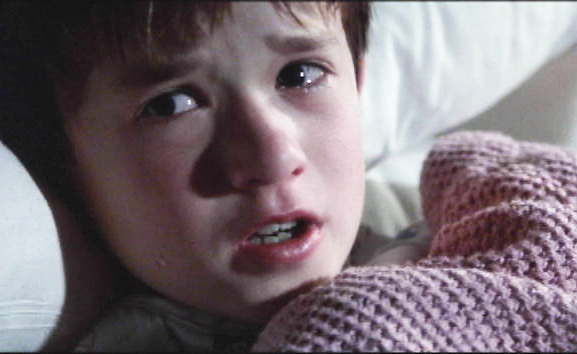
They are as elusive as Adele snacking on carrots. And yet, they’re probably the most important part of your script. As you all know, a bad ending cancels out a good movie. And a bad movie can actually be saved by a good ending. That’s because the ending is the last thing the reader (or audience) leaves with. It’s the feeling they will take with them when talking to friends, when talking to co-workers, when going online. If you write a great ending, people will tell other people about your movie, and word-of-mouth will turn your film into a box office star. I still remember when The Sixth Sense came out. The ending of that film was so strong, the movie had virtually ZERO fall-off from week to week at the box office, which is basically unheard of for a wide-release.
So what’s the secret to these stress-inducing third act monsters? Gosh, I wish I knew. Then I could write an article about it and we could all become millionaires. While I may not have all the answers, I’ve got a pretty solid understanding of what makes an ending stick. And while it’s more difficult than following an IKEA instruction booklet, it isn’t as complex as one might think.
Basically, great endings can be broken down into two categories.
1) Something unexpected happens.
2) Our protagonist (or one of the other main characters) overcomes his flaw.
If you go back through your favorite endings, you will inevitably see the incorporation of one of these two techniques. The Sixth Sense – we find out that our hero is dead (unexpected). Star Wars – while trying to destroy the Death Star, Luke learns to believe in himself as Han learns to be selfless (overcoming flaws). The Shawshank Redemption – Our protagonist breaks out of prison (unexpected). In When Harry Met Sally, Harry realizes that the love of one woman is more rewarding than being with many women (overcoming flaw). In Silence Of The Lambs, Hannibal escapes (unexpected).
Now if you’re ambitious, you can try to do both of these things and get a real killer ending. Back To The Future has George McFly learning to stand up for himself (overcoming flaw) as well as Doc dying…then coming back to life (unexpected). That one-two punch of an emotional catharsis stacked on top of a “Holy shit!” surprise leaves us feeling about as charged as a human being can feel leaving a movie theater.
However, those are just the broad strokes. When you get into the nitty gritty, there’s a lot more you have to plan for. First and foremost, you want to know your ending before you start writing your script. Michael Arndt (Toy Story 3, Star Wars VII) says he never writes a script without knowing his ending beforehand and I agree that that’s the way to go. The reason for this is that everything in your script should be pushing us towards our ending. And you can’t write that way if you don’t know what your ending is. Essentially, an ending is a series of payoffs for everything that’s come before it. So we need to know how it all concludes before we can set the stage for that moment.
In addition to this, you must understand the structure of the third act, as it is basically the container for your climax. In most scripts, your character is at his lowest point going into the third act. Whatever he’s been trying to do (his goal), he’s failed spectacularly at it. In other words, everything he’s been chasing has ended in disaster. So in Apollo 13, they’re stuck in this tiny capsule with barely any oxygen and all their controls destroyed. It’s as low as it can get. In that sense, you should look at the third act as a rebirth. It’s an opportunity for your character to regroup from his “lowest point” and give it one last shot.
As you may have expected, it’s also important that you have a strong character goal driving your story. And you’d like for that goal to be stated in the first act. In Indiana Jones, we establish in the first act that the goal is to get the Ark. In The King’s Speech, we establish in the first act that the goal for Birdy is to overcome his stutter so he can speak to his nation. Once you establish a strong character goal, an audience will be interested in seeing if your character can achieve that goal. But the real power in this is that a strong goal maps out your ending for you. That’s because the ending is the conclusion to the question: Does he achieve his goal or not? This is extremely important to understand. Strong character goals lead to the best endings.
Whenever you don’t have a clear goal driving your story, you won’t know what to do with your third act. That’s because nobody’s going after anything. And if nobody’s going after anything, it isn’t clear how the journey is supposed to resolve. Miss Scriptshadow and I rented “Liberal Arts” the other night and it was the perfect example of this. There was no goal in the movie. It was just characters talking to each other. So the writer, Josh Radnor, had no idea what to do with the ending. As a result, it just kind of petered out. That’s not the case with ALL goal-less scripts. When Harry Met Sally is a notable exception. But typically, without that clear goal, you’re not going to have a clue what to do with your climax.
Another important reason to incorporate a goal is that it allows you to place obstacles in front of it. These obstacles make the ending more interesting because they put our hero’s success in doubt. For example, in The Karate Kid, Daniel’s goal is to win the tournament. In the semi-finals, one of the Cobra contestants takes out his leg. This way, in the finals, he must fight on only one leg! That’s an obstacle! You’ll want to throw a few big whopper obstacles at your characters during the climax. The more you can put our hero’s success in doubt, the more entertaining the ending will be.
In addition to this, you’ll want to build an ending that specifically challenges your hero’s flaw. So if your hero’s flaw is that he’s a coward, build an ending where he’s challenged by a bully. If your hero’s flaw is that he’s selfish, build an ending where he can either save himself or save others. This is really important. If your ending doesn’t in some way challenge your hero’s fatal flaw, it will feel random. And if you don’t have a fatal flaw for your hero in the first place, your ending will feel empty. This of course requires that you know how to give your main character a flaw in the first place. There’s not enough room to go into that here, but I’m sure somebody will explain how to do it in the comments section if asked.
From there, as stated earlier, you’d like to come up with that one final unexpected surprise in your climax. This is something I can’t teach you. It’ll come down to you making a unique and interesting choice that the audience didn’t see coming. It doesn’t have to be a twist ending like The Sixth Sense. But SOMETHING unexpected should happen. The Stay-Puft Marshmallow Man in Ghostbusters wasn’t a twist ending. But it was definitely unexpected and fun. Your ending should never be exactly what your audience expects. Even if they know your hero will win in the end, you should add something unique that makes getting to that point a surprise.
So let’s summarize the keys to writing a great ending.
1) Know your ending before you start.
2) Understand where your character’s at at the beginning of the third act (he should be at his lowest point).
3) Write a strong character goal into your central plot.
4) Introduce tons of obstacles into the climax.
5) Make sure your character has a fatal flaw.
6) Build in an ending that specifically challenges that fatal flaw.
7) Add something into the climax that the audience isn’t expecting.
There you have it. Now go write your kick-ass ending!
Pick up a copy of my book Scriptshadow Secrets for more structural breakdowns and over 500 screenwriting tips!
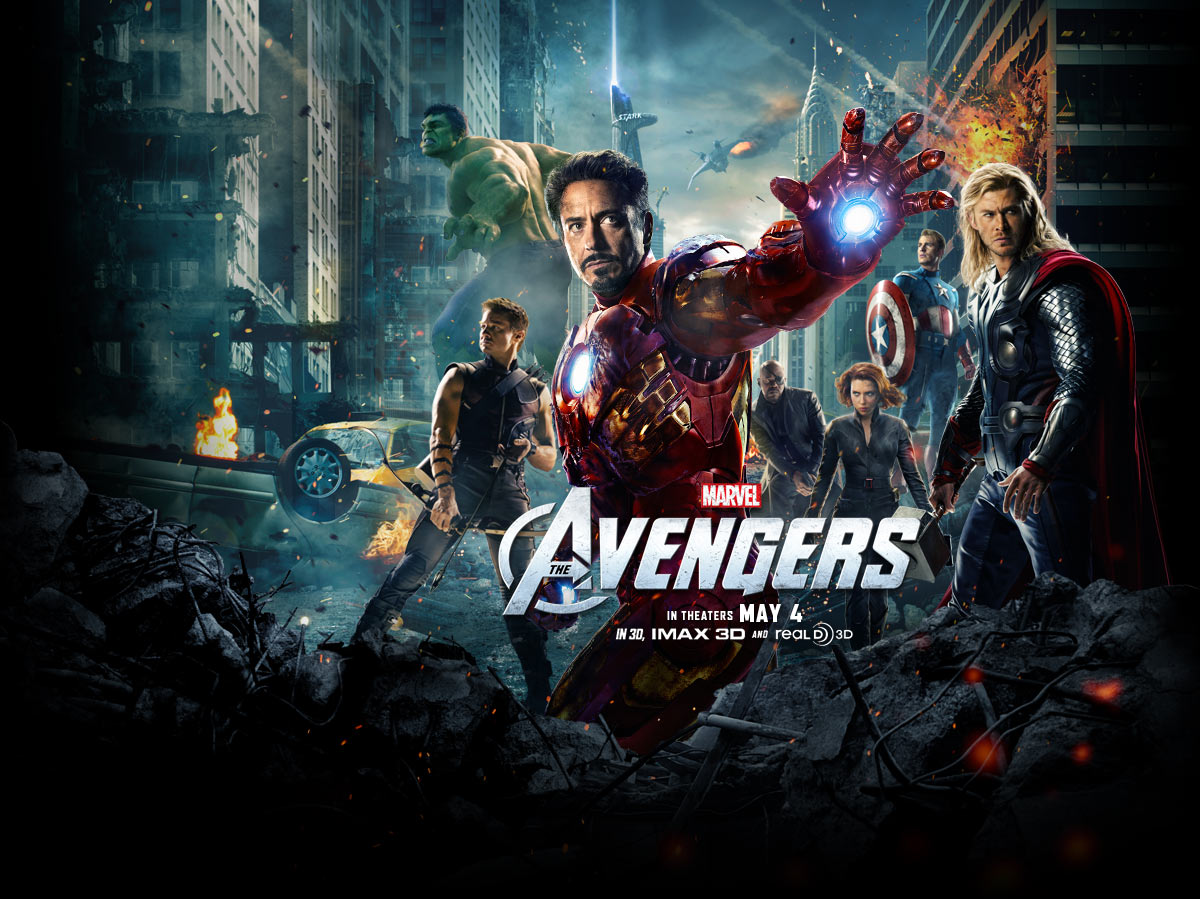
Almost all of my “10 Lessons You Can Learn From” posts have dealt with classic, or at the very least, well-respected films. I’m not sure I’d put The Avengers on that list. It was a fun movie. But like a lot of summer movies, it was meant to be viewed once on a Saturday night with a theater full of teenagers. I don’t believe it’s meant to go toe-to-toe with any “respected” film. Having said that, I’m always breaking down films that are critically loved, with the film’s commercial success being secondary. As a commenter brought up the other day, “Why are you always knocking Transformers? It made a billion dollars worldwide. People saw it and enjoyed it.” It’s hard for me to quantify that statement. Yeah, people are going to see the movie, but they’re all 14 years old. I don’t know anyone over the age of 23 who actually enjoyed Transformers. But the commenter was right about one thing. SOMEONE is going to see these movies and enjoying them. So almost as a challenge, I thought it would be fun to look at the highest grossing movie of 2012 (by almost 200 million dollars) and see if we couldn’t extract 10 screenwriting tips from it – maybe figure out some screenwriting tips for the summer blockbuster writer. Here we go!
1) What’s your problem? – In most big budget movies, you want to introduce the problem in your story right away. Once you have a problem, you can begin introducing characters who are going to solve that problem. So here, that problem is the Tesseract. It opens up. Loki (the villain) comes through it. Now we got a problem.
2) Set-pieces are driven by URGENCY – Whenever you write a big action set-piece, you have to incorporate urgency in some way – preferably via a ticking time bomb. So here, after Loki arrives, the Tesseract’s lack of stability causes the building to start imploding, giving them only 2 minutes to get out. This makes the impending chase of Loki even more intense, as they must also escape the area before they’re destroyed along with it.
3) Refocus your script after set-pieces – Set pieces are fun and wild and crazy. But a mistake I find a lot of amateur writers making is that AFTER their set-piece, they don’t re-orient the reader. Remember, we were just in action mode. Enjoying explosions. Enjoying super-heroes fighting. Now that that’s over, we need to be re-briefed on our character goals. So immediately after that first set-piece in Avengers, Nick Fury gets on the phone and says, “The Tesseract’s been stolen by a hostile force. Everybody we know, I want them after it.” The goal has been established. We now know what we’re doing. This may SEEM obvious, but rarely do I see the new writer do it. They often assume you know what the goal is or, in drastic cases, don’t establish a goal at all.
4) Don’t get bogged down in exposition – You should always try to limit your exposition. That’s because exposition is boring. No matter how you dress it up, we’ll be bored by it. If there’s one major fault in The Avengers, it’s that once we get to the airship, we get about six or seven scenes of exposition and discussion. The film slows to a crawl as a result. Remember that your primary focus in any screenplay is to keep the story moving. Don’t get bogged down in exposition. One – or in drastic cases a maximum of two – scenes is enough.
5) Capture your villain – It’s hard to maintain a single unchanged plotline for an entire screenplay. If something’s unchanged for that long, there’s a good chance we’ll get bored with it. To keep things fresh, you want to “interrupt” that plotline with something unexpected. A perfect example is here with Loki. The plot COULD HAVE HAD the Avengers trying to find and destroy Loki the entire time. But Whedon switches things up by having us actually CAPTURE Loki, which adds a fresh new dynamic to the story. In general, you’re always looking to keep things fresh in your scripts, so you want to make unexpected choices whenever possible.
6) Once again, the best dialogue often results from conflict – Some of the best dialogue in Avengers is when Stark is battling it out with Captain America. Why? Because they’re on completely opposite ends of the personality spectrum. Stark is carefree and does whatever he wants. Captain America is uptight and follows orders. If you put any characters like that in a room together, the dialogue’s probably going to be good, so it’s not surprising it works here. Contrast this with the dialogue between Banner and Stark, who both respect each other. It’s not bad, but it’s not nearly as alive and fun as when Stark and Captain America talk.
7) If two characters don’t get along or don’t like each other, put them around each other a lot! – This is an extension of the last tip, and an important one. If you have two characters who don’t like each other, keep them around each other as much as possible. Make them work together! Note that when the airship loses an engine, Whedon doesn’t have Stark and Banner work on it together (they like each other!). He has Stark and Captain America work on it together.
8) Fights and battles must have high stakes or we won’t care – A lot of people complained that the Thor Iron Man fight in the forest was pointless, just an excuse to have Iron Man fight Thor. To a certain extent this was true. I mean, Thor did want to take Loki back to be tried on his planet and Iron Man refused to allow that unless Loki gave them the Tesseract. So there was SOME motivation to the fight. But let’s face it. It was weak. We didn’t really feel the stakes of the fight. So it was nice eye candy, but left us feeling empty. To fix this, always keep the stakes high in every fight/battle. In The Matrix, when Neo fights Smith in the subway, we know that if Smith kills him, the world is doomed. Neo is THE ONE, the only hope mankind has. So the impact of that fight hits us much harder and we’re therefore way more invested.
9) Set-pieces are about BUILDING – You don’t want to throw the kitchen sink at your characters right away during a set-piece. You want to slowly build it up. The set piece should feel like things are getting worse and worse for your heroes at every turn. So in that final battle in Avengers, where the portal opens up and the aliens arrive, first the small guys on speeders show up. When they’re handled, the big worm thing shows up. When they defeat that, MULTIPLE worms show up. There’s something about struggling to defeat something only to see it get much worse that really pulls an audience in.
10) Yup, even big summer movies (minus Transformers) have character arcs – Not everyone has to arc, but a couple of your characters should. Here, Stark needs to learn to buy into the team as opposed to only care about himself. Bruce Banner must learn to embrace his dark side instead of focusing his entire life on avoiding it. When these characters learn to overcome these issues, that’s how the Avengers win in the end.
These are 10 tips from the movie “The Avengers.” To get 500 more tips from movies as varied as “Aliens,” “Pulp Fiction,” and “The Hangover,” check out my book, Scriptshadow Secrets, on Amazon!
Warm Bodies flips the zombie genre upside-down. But is it enough? Or is this organ-centric horror-comedy another screenplay emperor without any clothes?
Genre: Horror Comedy
Premise: (from IMDB) After R (a highly unusual zombie) saves Julie from an attack, the two form a relationship that sets in motion a sequence of events that might transform the entire lifeless world.
About: Writer-director Jonathan Levine broke onto the scene with his 2008 film, “The Wackness,” which chronicled life in the 90s for a young New York drug dealer and won that year’s Sundance Audience Award. He followed that up by directing the Seth Rogan Joseph Gordon Levitt cancer comedy, 50/50. Itching to get back into the writing game, he adapted Warm Bodies for his third film, a novel Isaac Marion wrote. Mr. Marion self-published 3 novels before getting “officially” published with Warm Bodies. So far, Warm Bodies has grossed 60 million domestically.
Writer: Jonathan Levine (based on the novel by Isaac Marion)
Details: 120 pages (undated)

So last night we celebrated a couple dozen of the best movies of 2012. What better way to follow that up than to review the screenplay for… Warm Bodies? Okay okay. That was a cheap shot. The truth is, I wanted to review this movie this week but chose Dark Skies instead and, well, that turned out to be a mistake. Dark Skies could’ve best been summarized this way: Pointless cereal box structure found in kitchen, husband in yard with his mouth open, conspiracy theorist dude talks about alien stuff that would be considered dated during The X-Files run. Ending that makes zero sense because the writer wrote himself into a corner.
There wasn’t enough meat there for a review so I decided to read Warm Bodies instead, as I heard it was actually good. Was it? Well, it was certainly better than Dark Skies. Although that’s kind of like saying you can sing better than One Direction. Not exactly a huge accomplishment.
But what this script does right (which I tell all of you to do) is it takes an established genre and it adds a new spin to it. In this zombie flick, we’re rooting FOR the zombie. How many zombie movies have we watched where our humans are fending off numerous flesh-eaters and we’re hoping against all hope that they get away? Well here, we’re thinking, “Our zombie protagonist needs to eat or he’ll starve! I hope he catches up with one of those humans and makes a meal out of him!”
I also liked that Levine added some heart to his screenplay. Literally! This movie is about zombies turning BACK into humans when they start “feeling” which means their hearts start working again. Unfortunately, it’s not very clear how this whole process works. But I’ll get into that in a sec. First, let’s find out what Warm Bodies was about.
Warm Bodies follows 20-somethng “R.” Yes, that’s our hero’s name. “R.” “R” is “R” because he’s a zombie and zombies can’t say anything. They can only mumble out sounds. And when you ask R anything, he answers “Rrrrrrr.” So naturally, his name is “R.”
Luckily for us, R is quite articulate in voice over, which is how he communicates with us. R informs us that some years back, the plague hit, and now the world’s been overrun by his kind, zombies. The thing is, R is a little different. He can think, which the others aren’t really able to do. And he can talk! Well, not “talk” talk, but he can say a few words. And that’s pretty impressive when you’re undead.
R lives in an airport with the rest of his brethren. In fact, he even has his own 747. Not bad. But his life is going to get a lot worse if he doesn’t eat human flesh soon because the next step down from a zombie if a “Boney,” and you don’t want to turn into one of those guys. In the zombie food chain, you look a lot better if you still have your flesh on you, however gray and mangled that flesh may be.
So a bunch of zombies head into the city due to the munchies, and it’s there where R meets Julie, a human. For some odd reason, R doesn’t want to eat Julie. He wants to help her! So he pulls her away from the zombies and the boneys and takes her home, back to his 747! She’s a little confused by the fact that a zombie won’t eat her, but after some terrific conversation (that’s a wee-bit one-sided), she starts to like R.
But more importantly, she notices he’s getting better. He’s actually becoming more human as the days go by. It’s not enough to make her want to set up camp at Air Zombie for the next few years, but when she goes back home (to a stadium where all the humans are staying) she tries to convince her ditzy friend and gung-ho father that maybe the plague is turning.
In the meantime, R gets wind that a huge group of boneys are heading for the stadium to take out the remaining humans. So he grabs his best friend “M” and sets off to get there first so he can save his new long-distance girlfriend, Julie. Of course he’ll have to deal with a lot worse than that when he gets there, as Julie’s father is hell bent on killing anything that even winks like a zombie.

Warm Bodies reminded me in a lot of ways of The Wackness, even though it’s been five years since I’ve seen that film. There was a lot going on on the surface of “Wackness” but very little actual depth. It was like a celebration of the 90s with two sorta interesting characters and that was it.
While Warm Bodies flips the script and makes the zombies the good guys, it’s still basically a celebration of the zombie genre following two sorta interesting characters and that was it. I know you can’t get too deep when one of your characters can’t even talk, but I found the relationship between R and Julie to be borderline boring. Levine added a cool little thing where Julie didn’t know that R had killed her ex-boyfriend (providing some nice dramatic irony during their conversations). But it was so sloppily written (I actually thought HE was Julie’s boyfriend for a while) that I didn’t figure it out until way too late in the script.
And really, there isn’t much of a plot at all when you think about it. Zombie takes girl. Girl goes back home. We hear boneys are going to attack. So we head to girl’s home to warn her. It’s enough to keep things moving along, but just barely. Truthfully, it felt like one of those scripts that was just thought up on the fly with no outlining. Kind of like, “Hmm, he’s let the girl go back home. But there’s still 50 pages left. What now? Uhhhhh, what if the boneys were going to attack her home and he had to warn her! Yeah!” If you’re writing your script like this, where you’re thinking up solutions and coming up with major story directions on the fly, it’s going to FEEL like you’re coming up with major story directions on the fly!
I will give Levine credit though. He knew that if he had a zombie main character with a 5 word vocabulary, we probably wouldn’t relate to him very well. So he has R dishing out voice over the whole script, telling us what he’s thinking, which I thought was a nice contrast. Remember, while voice over is hard to get right, it’s one of the easiest ways to create a connection between the audience and the character. Once we have someone speaking directly to us, no matter who it is, we feel a connection with them, and that definitely helped here.
But yeah, when it was all said and done, this was a really thin zombie story that thought its fresh take on the genre would give it enough juice to turn it into the next Zombieland. Unfortunately, that didn’t happen. It has its moments. But Warm Bodies typically finds itself in cold territory.
[ ] what the hell did I just read?
[x] wasn’t for me
[ ] worth the read
[ ] impressive
[ ] genius
What I learned: When you’re writing flashbacks, it’s important that the reader KNOW they’re in a flashback. I’ve seen too many writers not make their flashbacks clear enough, leading to a lot of confusion. In my opinion, the best way to inform the reader that a flashback has begun is to include it at the end of a slugline and BOLD it. Like so…
INT. VACANT HOSPITAL – FLASHBACK
Today’s script made some noise in the Scriptshadow Newsletter, but does it pass the Carson Screenplay SAT? Read on to find out.
Amateur Friday Submission Process: To submit your script for an Amateur Review, send in a PDF of your script, a PDF of the first ten pages of your script, your title, genre, logline, and finally, why I should read your script. Use my submission address please: Carsonreeves3@gmail.com. Your script and “first ten” will be posted. If you’re nervous about the effects of a bad review, feel free to use an alias name and/or title. It’s a good idea to resubmit every couple of weeks so your submission stays near the top.
Genre: Horror
Premise: (from writer) A mysterious drifter with a dark past stumbles into a small town where he rents a room in the attic of a strange couple’s home, but he may not be alone up there.
About: Today’s amateur script got the best response from the amateur script entries in last week’s Scriptshadow Newsletter. To be a part of the Scriptshadow Newsletter, contact me through the site and “opt in” to the newsletter at the bottom the submission box.
Writer: Chris Rodgers
Details: 92 pages
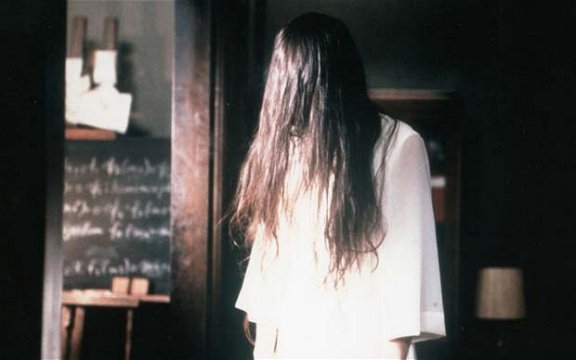
I’ve read scripts like this before. Scripts that are so sparse, you’re almost searching for the words between the words, like they may have gotten lost in the transfer from the writer’s computer to yours. Emma is better than most scripts that come through the Amateur Friday pipeline, but I don’t know if it’s at “worth the read” status. It’s got too many quirks. The voice contains an extra dose of bizarre. People don’t speak like real people. At times I almost thought this thing could be animated, its cartoonish qualities shined through so aggressively.
And yet through it all, I had to keep reading. I said this to Miss Scriptshadow at one point: “I don’t know if I like this script. But I sure as hell want to find out what happens.” Have you ever read scripts like that before? Where finishing them basically becomes a grudge match? I don’t mean to devalue Rodgers’ script. He’s got a funky interesting style to him. But Emma is one of those scripts you finish with a startled look on your face. Like you’ve just woken up in a room you don’t recognize.
20-something Johnny has scoot-dazzled his way into a small town in the middle of nowhere. This town’s so sparse you can walk into a restaurant and not find a single patron. Except for today that is. Because Johnny’s our single patron, and it’s here where he meets short-order cook Darrell, a local idiot with an asshole older brother and a hypochondriac mother. After some small talk, Darrell tells Johnny that if he’s looking for a place to stay, he should check out Chuck and Mary’s place. They usually rent rooms out.
So away Johnny goes where he meets 30-something Chuck, who’s plagued with burns all over his body, and 50-somethng Mary, who can’t stop yelling at Chuck about whatever the hell comes to mind. They seem like a strange couple, but not half as strange as the place they live in. That’s because the place they live in is HAUNTED!
Johnny figures this out early on when he sees the ghost of a girl named “Emma” sneaking around. A little research reveals that Emma used to be a model and was best friends with Mary. But then Emma went off to California to pursue her modeling career and disappeared. She now haunts this house for some reason. Even Chuck admits to seeing her.
These two aren’t the only ones with some backstory. It turns out our buddy Johnny has escaped a mental institution, making these Emma spottings suspect. Is he really seeing her, or is he just having an episode? And what about these rumors that Chuck’s hiding a huge stash of millions in the house? Could that be Johnny’s ticket to freedom for the rest of his life? And how far will he go to get that freedom? These are the haunting questions Emma asks.
Emma’s not one of those scripts you can just synopsize. You kind of have to read it to understand it. Take the first dialogue exchange in the script for example. It sets the tone for everything you’re about to read. Johnny’s just walked into the diner where he meets Darrell. J: “Um, can I just have a cheeseburger combo with a Coke?” D: “I’m sorry, we don’t have combos.” “Oh. Well, can I get a cheeseburger, a medium French fry, and make the drink a large.” “What kind of drink sir?” “Coke.” “Is Pepsi O.K.?” “Pepsi?” Darrell nods. “Come on. I just walked—never mind, give me a root beer.” “Good choice, sir.” “You don’t have to call me sir.” “Okay.” “Why would you say that root beer is a good choice? What makes root beer so great?” “I just like it.” “Oh.” “That will be four dollars and twelve cents.”
I don’t know about you but that dialogue feels awkward. And not purposefully awkward. Just awkward. The stuff about the root beer at the end is random. It doesn’t seem to have a point. And the early Pepsi challenge takes up a lot of time and doesn’t have a payoff. When you’re exchanging dialogue, especially early on when we don’t know your characters yet, you want to use that dialogue to teach us about your characters.
Take The Equalizer, which I review in this week’s newsletter (which you can sign up for here). In one of the early scenes, the main character is talking to a woman at the diner (so a similar location). The conversation centers around the book our hero is reading (The Old Man And The Sea). This tells us a little about our character. He reads old books. Which leads to the question: WHY does he read old books? We want to find out so we keep reading. The point is, we’re learning about the character through his exchange with someone else. I’m not sure we learn anything about these two characters in this conversation.
I think that’s something a lot of young writers don’t know. When you write dialogue, you’re either trying to reveal story or reveal character. It may seem to the audience that the conversation is casual. But what they don’t know is that you’re secretly passing along key information to them through the characters’ “casual” exchange.
Another thing that bothered me here were the flashbacks. I wasn’t sure what the point of them was. They pretty much kept telling us the same thing over and over again – that Johnny was in the nuthouse. That meant each subsequent flashback was extraneous. It was information I already knew. If there was an evolving storyline to these flashbacks, a mystery we wanted answered (aka, Johnny wakes up in a cell with a stabbed cell mate – and each scene gets us closer to why that happened), I would’ve been fine with them. But they didn’t evolve, leaving me to wonder what their purpose was.
With those things said, there were some interesting things going on in Emma. I thought some of the characters were pretty well drawn. Well-drawn characters typically evolve from well thought-through backstories. And this whole backstory where Chuck was burned during his electrician job and won a multi-million dollar lawsuit against his company – that was admirably constructed.
I also thought the mystery behind Emma was strong. How Johnny would see her with plastic wrapped around her face and body. That was creepy. And while the reveal for how she ended up that way wasn’t perfect, it wasn’t bad either.
Here’s where we run into a problem though. You have a haunted house script titled, “Emma,” and it really isn’t about Emma. It seems to be more about Johnny running away and hiding in this town. The Emma storyline is more of a subplot. If I were Chris, I’d give Emma a much bigger role. This movie has to be about her. I’d also create more of a conspiracy around her death. Possibly expand the amount of people inside the town who know what happened, and then place Johnny around more of those people. I didn’t like how we basically had two locations in the movie – Chuck and Mary’s house and the diner. It made the script feel too small. Let’s explore this town more, get to know more people, and this will start to feel like a movie.
I wouldn’t tell someone NOT to read this script but I probably wouldn’t go around recommending it either. I will say this though. I’d read Chris’ next script for sure. I feel like he’s still learning the craft and will continue to get better. I’d focus on adding more layers to his future stories. This one felt TOO simple. With a little more town exploration – bringing in a few more characters – he might’ve struck gold. I wish him luck. His voice is unique enough to make me think he’s got a future.
Script link: Emma
[ ] what the hell did I just read?
[x] wasn’t for me
[ ] worth the read
[ ] impressive
[ ] genius
What I learned: Treat character reveals like commercial breaks. When you’re writing mysterious protagonists, you want to give a little info about them in each scene, but also tease a mystery about them for later. If there continue to be mysteries about our hero, we’ll want to keep reading to find out what they are. So in The Equalizer, via that scene I mentioned above, we give the audience a little piece of the protagonist by revealing that he reads old books, but we don’t tell the audience WHY he reads those books yet. We “cut to commercial” and reveal that info later. If you answer all the little mysteries about your character right away, why the hell would we keep reading?
So there I am, watching “A Good Day To Die Hard” this weekend, and asking myself the question that moviegoers across the world ask a dozen times a year at their local cineplexes: “Who writes this shit?”
Terribly written movies with dreadful dialogue are a huge reason why people all over the country move to LA to pursue a career in screenwriting. They’re convinced that, “I can do better than that!” And yet, thousands of these “I can do better than that,” screenwriters show up in Hollywood every year and the same dreadful terribly-written movies still get made.
Is it a conspiracy? Is Hollywood purposefully keeping good writers out of the business for some reason? Are there thousands of amazing screenplays that have been buried under a Los Angeles landfill somewhere, a conspiracy headed up by 20th Century Fox so they can keep making more “A Good Day To Die Hard” movies without having to worry about competition?
I can answer that question easily. No. The truth is, there are only a dozen great screenwriters out there, and maybe less than a hundred truly good ones. Since a few hundred movies are released each year and countless TV shows with multiple writers are produced on the networks and cable, there are more spots to fill than there are good screenwriters.
And it’s not for lack of trying that the average screenwriter isn’t very good. Screenwriting is just REALLY HARD. A lot harder than it looks. Moviegoers assume all screenwriting is is coming up with a cool hook and some witty dialogue. But screenwriting is way more complicated than that. Outside of learning how to write within its unique bastardized format, there’s a ton of stuff under the hood that audience members never think about.
The most obvious of which is creating a seamless story. That’s something most people outside the business take for granted. They assume seamless stories are a given. However, when those same people come to Hollywood and give screenwriting a shot then send their screenplays to people like me, they learn the hard way that their stories are borderline incoherent and that it actually takes years of hard work to create a seamless story. Not even a GOOD story. Just one that makes sense from beginning to end.
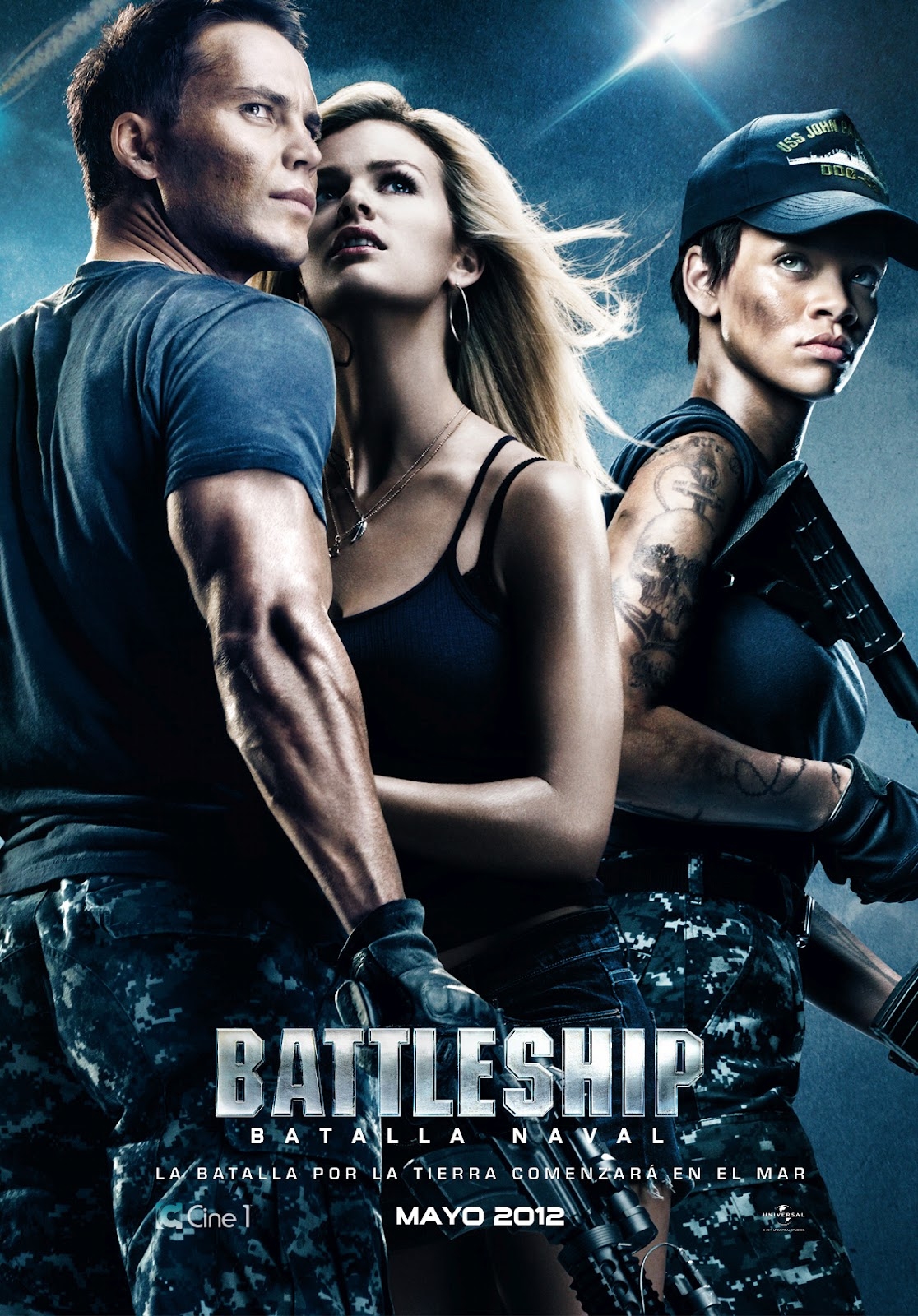
But we’ve established that there ARE good screenwriters out there. As many as a hundred of them. That should be enough to take care of most of the movies we see. So why do movies still suck? Why are films like Transformers so badly written? Or Dark Shadows? Or John Carter? Or Battleship? Or Mirror Mirror? Why are these embarrassingly written projects given hundreds of millions of dollars? The answer to that question isn’t simple. In fact, it’s very complicated. But if you want to know, read on.
TIME – Unless you’re writing a spec, you’re usually up against the gun in a project. And since only one out of every ten produced movies is a spec script, most writers are racing to beat a deadline. The faster you’re forced to work, the lower the quality that work tends to be. That’s because creativity takes time. It takes trial and error. It takes seeing what works and what doesn’t. It takes rewriting and rewriting and then more rewriting. Without time, you’re likely to write something lousy, no matter how good of a writer you are.
DIRECTOR AND ACTOR ARE STILL SUPERIOR TO SCREENWRITER – When putting a project together, studios know that the two most important elements are the director and the lead actor. A good director is going to give you the best chance for making a good movie, and a big actor is going to give you a large enough budget to get a wide release. When looking at the director, the actor, and the screenplay, then, it makes sense that a studio would pay the least amount of attention to the script. With that said, most actors and directors won’t sign onto a project without a good script (or good source material). So the screenplay is still important. The problem is…
DIRECTORS COME ON LATE THEN SCREW SHIT UP – While there are directors who will shepherd projects over a long period of time, a lot of times a director will come onto a project as it’s greenlit and given a production date. Since directors are creative people, they’re going to want to play with the script and get it the way they want it. Which means if a writer has been perfecting that script over three years, they now have to rewrite the whole damn thing to the director’s vision – a vision they may not entirely agree with – within a matter of months. More times than not, this results in a worse screenplay.
PASSION – You want to know the truth about Hollywood? Passion may be the most important factor in getting a movie made. That’s because this business is designed to KEEP movies from getting made. It’s much easier and safer for people in all factions of the business to say no to a project than yes. Yes means their ass is on the line if the movie fails. Why put yourself in that position? For that reason, the stuff that gets through is often the result of a producer or group of producers who will stop at nothing to get their movie made. These producers, who may be experienced vets or total newbs, will gladly go to every shop, every studio, every production company, and keep racking up ‘no’s’ until they find that one yes. And guess what, it’ll have nothing to do with how good the script or project is. It will just be because these guys refused to take no for an answer. This means, ironically, a lot of badly written projects get made because of passion.
BIG IDEA WRITERS AREN’T OFTEN THE BEST WRITERS – Lots of “big idea” writers who are good at coming up with concepts and trailer-worthy set-pieces will slip past the Hollywood gates and into the system. These writers aren’t necessarily “bad,” but they didn’t make it to the top because they’re experts at character or theme or structure. They made it because they came up with some big futuristic time-travel spec that got some pub all over town. These writers then get big-movie assignments due to their spec and the best of these subpar writers become premiere summer tent-pole movie scribes – scripting such classics as Battleship and Transformers. Sure, you could bring in someone like David Mamet to write Transformers and the script would be better in areas like character and dialogue. But it would probably lack a lot of the fun and “bigness” that you want from these movies. So you’d be gaining something but you’d lose something as well. Since an executive knows that the last thing a 14 year old in Kansas cares about is theme, he’s likely to go with the big idea writer over Mr. Mamet.
MO MONEY MO PROBLEMS – The other day a producer told me that this one well-known indie writer-director who’s had a hard time breaking into Hollywood called him and basically said, “I want 20 million dollars to make my movie and I don’t want you or anyone at your company to bother me.” Unfortunately, that’s not the way it works. Money comes from a bunch of different places these days (foreign financing, private investing, production houses, studios, etc.) and the bigger the pot, the more people want to be involved in the decision-making. If you’re making a movie like Transformers, with a budget of 250 million, you will have TONS of people sticking their finger in the pie. And chances are, a lot of these people won’t know jack-shit about writing. In these cases, the screenwriters aren’t even really writing a script. They’re MANAGING a dearth of strange and sometimes terrible ideas and trying to turn them into a story that makes sense. This is one of the main reasons why these giant movies are so terribly written. Too many cooks in the kitchen.
There are, of course, other reasons for badly-written films. Endless development. Foreign financing that puts little emphasis on the screenplay. Producers who hire their friends instead of good writers. And the bar for sequels, like “A Good Day To Die Hard,” just isn’t that high.
So what’s the solution here? Is there a way out of this mess? The thing that studios don’t realize is that it’s in their best interest to write a good screenplay. Not only does a well-written movie encourage positive word of mouth, which means more audiences members and repeat business, but the film has a better life in the post-theatrical market. It also increases the likelihood of building that all-important franchise everyone’s chasing.
In order to get scripts in better shape, Hollywood needs to make some sacrifices, stuff that they probably don’t want to do because it goes against everything they’ve done up to this point. First, they should look closer at the Pixar approach. Pixar screens multiple storyboard previews of their movies in order to get a feel for how the story is playing. The writer, who’s usually on the project for years, is then able to see what isn’t working and fix it. This perk is available because it takes so long to make an animated movie, time live-action films don’t have. Live action films are usually backed into tighter schedules, giving the writer less freedom to figure things out. But you do find the occasional live-action project that takes its time, like the Batman films and anything directed by James Cameron. And we see the results when those films finally come to screen. I realize studios have corporate commitments and need to meet certain financial forecasts, but with a little more planning, they should be able to take that extra time and get the script right.
Producers and studios also need to keep the same writer on the project if possible. I realize this means less work for writers (since only one writer will be on the job), but if you want to make good movies, you need to keep writers around who understand the project. A huge reason movies feel so unfocused and disjointed is because Writer F had no idea what Writer A was trying to do when he wrote the original screenplay and therefore changed everything that made everyone fall in love with the script in the first place!
If agents and writers hate this idea because it means less jobs, what about doing what the studios did back in the old days where they kept 20-some writers under contract every year? Those writers would then be available to come in to give notes on the studios’ key projects. This is essentially what Pixar does and it’s proven to be an effective model. In addition to this, hire smart producers who actually understand storytelling and screenwriting. A reason a lot of writers get replaced is because the producer who hired them doesn’t know how to get the most out of them. Therefore when the script stops improving, they just hire someone else. A good producer will guide a writer into overcoming any problems a script may encounter.
Production companies and studios also need to take more chances on scripts that are ready to go, even if they’re afraid of them because they don’t fit into their proven paradigm. When The Streetlights Go On, After Hailey, Desperate Hours. Everyone loves these scripts but they’re still not being made. If you already have a script that people love, don’t fuck with it. Just make the damn thing. I’m not saying you have to put a hundred million dollars into these projects. You have to make them for the right price. But moviegoers out there want better writing. You have it. All you have to do is greenlight the film and make it.
Let the scripts be critiqued online. It always makes me laugh when studios spend 50 million bucks to fix movies they’ve already shot, usually because of story problems. Why not put your scripts online and let the fans critique them? Let them spot what’s wrong ahead of time so you don’t have to pay the price later. Your everyday moviegoing audience won’t pay attention to this, so you won’t spoil the film for the masses. And your core cinephile fan who participates is going to see the next Spiderman or Guardians Of The Galaxy film anyway. In all likelihood, being a part of the development process, even indirectly, is going to get them even more excited to see the film. This has gone on on a smaller scale on Scriptshadow for years. I’ve been told from numerous producers that they made changes to their scripts based on the comments from people who read them here. So I know it works. The question is, will studios put their egos aside to do that for their bigger projects? That remains to be seen.
As you can see, there are no easy answers here. There are a lot of things working against good writing. In many ways, you can consider it a minor miracle when a well-told story DOES reach the screen. But I think with a few changes, we could make sure good screenplays happen more often. And besides, by treating America (and the world) to better movies, our industry wouldn’t be the butt of so many jokes across the country about how they “could’ve written something better.” And with that, I’m out of here. What do you guys think?