
Search Results for: F word
Hey guys. In celebration of, well, all of us being alive, I’m making Scriptshadow Secrets just $4.99 through the weekend! Many of you have asked when the book is coming out in hardcopy. It will, I promise. I just have to carve out some time and get it done. In the meantime, remember, you DO NOT have to have a Kindle device or an Ipad to read the book. You can download, for free, the Kindle for PC (or Mac) app, and use that to read the book right on your computer.
Get Scriptshadow Secrets for $4.99 NOW!!!
Note: Stores outside the U.S. may have a slight delay in the updated price. But it should show up soon.
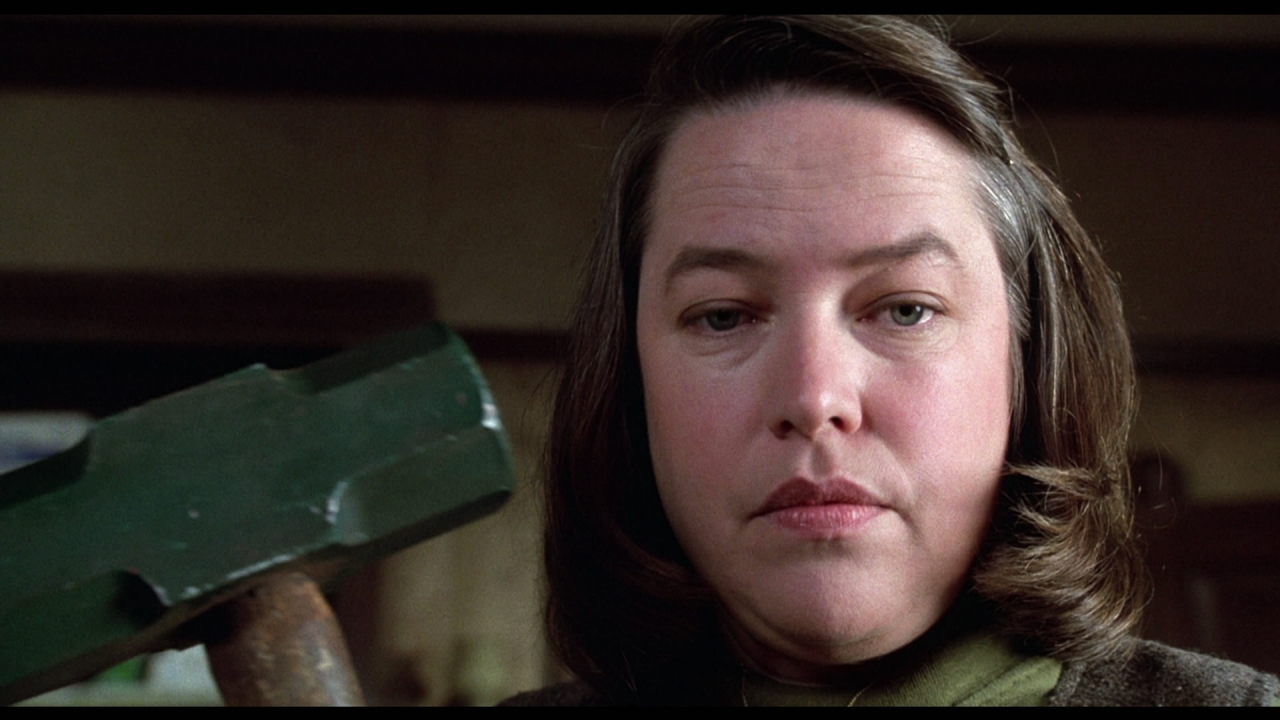
Remember a couple of years ago when every other spec was a contained thriller? Well, believe it or not, the sub-genre got its start a lot earlier than that. In fact, author Stephen King loved writing contained thrillers, with Misery being his most famous. The movie is the result of three artists at the top of their game. Rob Reiner (who directed the film) had just kicked ass with another King adaptation, Stand By Me. King’s books were being adapted every other day in Hollywood, including the recent hit, The Running Man. And Goldman had just come off The Princess Bride. Misery is built on an old writing adage – Place your hero in the worst situation possible, then watch them try to get out of it. It also operates on the notion that you want to torture your main character as much as possible. Some would argue that King went a little too far in that capacity, but it’s hard to argue with the end result. Misery is also a study in how to write a great character, as Annie Wilkes (played by Kathy Bates – who won an Oscar for the role) is one of the most unforgettable villains of all time. It should also be noted that I could TOTALLY see one of these middle-aged Twilight moms doing this to Stephanie Meyer today. So we may get a Misery re-imagining soon!
1) When you write a movie that takes place in a contained area, the most important tools at your disposal are suspense and conflict. – In a contained thriller, you must continuously imply that something bad is going to happen (which is typically done in the first act), and almost every scene after the first act should be steeped in some sort of conflict. Annie being angry at Paul for writing a bad chapter (conflict), Annie telling Paul he needs to burn his manuscript when he doesn’t want to (conflict), Paul telling Annie his new writing setup isn’t good enough (conflict). Conflict and suspense. Suspense and conflict. They are your saviors in contained thrillers.
2) The most interesting battle is often the battle within a character – We were talking about this yesterday with Gatsby and I think it’s important to note here as well, as we see it with Annie. Conflict WITHIN a character often leads to most entertaining type of character. Annie is both loving and kind, but also manipulative and hateful. She wants to be good, thinks of herself as good, but is in fact a monster. Watching her battle this is both fascinating and horrifying. We’ve seen this with Darth Vader, Michael Corleone, Bruce Banner. It’s why Dr. Jeckyll and Mr. Hyde still survive as one of the most memorable characters in literary history. The more intense the conflict is within one’s self, the more interesting the character tends to be.
3) Try to write career-making roles – When you read Misery, you just KNOW that whoever plays Annie – it’s going to change her life forever (as it did for Kathy Bates!). That’s how complicated and interesting and unexpected and crazy and scary and challenging the character is. You would’ve seen the same thing for Hans while reading Inglorious Basterds, or Ferris while reading Ferris Bueller’s Day Off. Look at your script. Are there any career-making roles in there for actors? If not, maybe reevaluate your script and see if you can do something more compelling with at least one of those key characters.
4) The more you set up a scene, the more powerful that scene will be – For a scene to really pack a punch, it needs high stakes. And high stakes only come through repeated set-ups. One of the best scenes in Misery is when Paul plans to poison Annie with the powder from all the pain pills he’s saved. We watch him meticulously hide and hoard these pills over time. This way, when he invites Annie to dinner and secretly poisons her wine – there’s SO MUCH riding on the moment because we know how much effort Paul’s put into this. It’s also why, of course, when she accidentally spills the wine, we’re devastated. There was SO much on the line since it took him SO long to save those pills. This scene does not work if there’s no setup, if we don’t’ see Paul hiding those pills over time. Continuous set-up results in higher stakes results in bigger more intense scenes.
5) When you’re stuck in a room with a lot of dialogue, you have to look for ways to change things up so the dialogue remains interesting. – Too many writers don’t put enough energy into thinking how they can change the feel or tone or undercurrent of a scene. Note the scene near the 30 minute mark where Paul has to pee in a bedpan while talking with Annie. It’s embarrassing and weird, but most importantly, it gives the dialogue a different twist. There’s a different undercurrent to their conversation because of the awkwardness. This is SO important when you have a bunch of talky scenes in a single location. Keep changing up the feel in the room!
6) Go the opposite to be scary – The scariest things usually aren’t obvious and in your face. They’re reserved or the opposite of what you’d expect. Instead of someone screaming at you, it might be that they talk very quietly and rationally. Instead of someone beating you up, it might be that they’re overly, almost oddly, kind to you. We see this with Annie in her language. She doesn’t believe in swearing, so that when she’s upset, her rants are almost comical. But it’s that lack of the obvious that actually makes these rants so scary. “I thought you were good, Paul, but you’re not good, you’re just another lying old dirty birdie and I don’t think I better be around you for awhile.” Had Annie yelled instead, “Fuck you you asshole. I fucking hate you!” It just wouldn’t have had the same eerie effect.
7) No choice in your script should be random – Every choice you make in your story, there should be a reason behind it, right down to the smallest detail. Take what Annie does whenever she’s outside of Paul’s room, for instance. She watches her favorite show: “Love Connection.” That’s no coincidence, as this theme of Annie being in love with Paul is established throughout Misery. Had she been a huge fan of, say, the sitcom “Taxi,” it wouldn’t have fit into the story as nicely.
8) If you jump into your story right away, your “first act break” has to work like a mid-point. – Typically, in a regular story, the first act break is when the hero begins his journey (like Luke, in Star Wars). But in Misery, Paul is captured by page 5, and has been kept in this room for 20-25 pages already. If you continue on with this setup without any significant changes, the audience will get bored. So you almost use your first act break as a mid-point, as a way to twist the story, up the stakes, and set us off in a new direction. That occurs here when Annie finds out Paul killed her favorite character, Misery. She freaks out and threatens Paul, letting him know that she’s controlling this show and he’s her fucking slave from this point forward (note: you will still use a REAL mid-point break later as well).
9) Most heroes should come into a story trying to make some sort of change in their lives – Change is what makes characters and stories interesting. If all anybody’s trying to do is live the exact same life and do the exact same things they’ve always done, how interesting is that going to be? Therefore, Paul isn’t working on Misery 11 when we start the story. He’s just written his first non-Misery novel in a decade. It’s a huge risk for him, a big CHANGE in his life. And it’s what makes his character more interesting than if he was just trying to do the same old boring thing.
10) Each scene must push the story forward, not repeat the story. – A big mistake I see in these kinds of scripts is that each successive scene isn’t really different from the previous one. For example, a bad writer would have Annie be mean in one scene, and the next time she comes around, she’s mean again. Maybe mean about something else, but still mean. In other words, you’re not evolving the story. You’re repeating yourself. Instead, every time Annie comes in the room, she should have a new agenda, a new goal. First it’s to meet her favorite writer. Then it’s to ask about his new book. Then it’s to talk about her dislike of the new book. Then it’s to introduce her best friend (a pig). Then it’s to yell at him for killing off Misery. Then it’s to have him burn his manuscript. It is SO EASY to repeat scenes in contained thrillers because of the limited location. Don’t fall into this trap. Do something new with each scene.
 These are 10 tips from the movie “Misery.” To get 500 more tips from movies as varied as “Aliens,” “Pulp Fiction,” and “The Hangover,” check out my book, Scriptshadow Secrets, on Amazon!
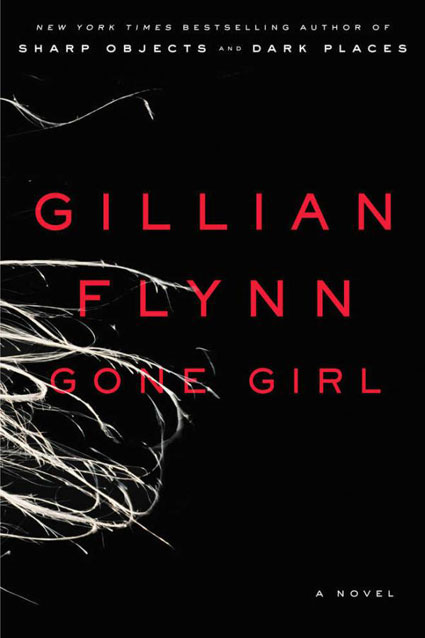
David Fincher swoops down to explore his next potential directing assignment. So I decided to check out the book.
Genre: Thriller
Premise: Told from two different points of view, a man’s wife goes missing and he becomes the prime suspect.
About: 41 year old Gillian Flynn is a former Entertainment Weekly TV critic. She’s written three novels, with “Gone Girl” being her most recent. The bestseller got a bump a few months back when David Fincher expressed interest in adapting the book into a film. It’s unclear if he was just circling it or is now officially developing the screenplay.
Writer: Gillian Flynn
Details: Way more than 120 pages long
Why the hell am I reviewing a book? Well, first of all, to prove that I can read books! There’s this rumor going around that I can only read text in courier 12 point font, and that said font can never eclipse 4 lines of continuous text at a time. There have been stretches in my life where this is true. But when someone like David Fincher comes along and says he likes something, my book-reading juices start flowing. And this juice is not made from concentrate.
I can’t remember a single project Fincher’s been attached to that has been bad. Most of the time the script for the project is at least a [xx] worth the read and usually an [x] impressive. What I love about Fincher is that he’s one of the few guys out there willing to take chances. While directors like Jon Favreau and Ridley Scott are pretty much playing it safe, Fincher always wants to push the envelope. Gone Girl is no different. This book is a freaking wild ride. It does stuff I’ve never seen in a novel before.
However, let me warn you, this book is one giant spoiler. There’s a shit load going on and it has one of the best twists I’ve ever seen in a novel or movie. If you have any interest in reading this book or seeing this movie, do not read this review, because I’m going to get into all the spoilers. You’ve been warned.
The first 40 or so pages of Gone Girl are pretty boring. In them, we meet Nick and Amy Dunne, former Manhattanites who have to relocate to Nick’s home town in Missouri when he loses his job. Nick has since used Amy’s money (that comes from her wealthy parents, authors who made a fortune writing books about her childhood) to open a bar that only barely breaks even, and is one of several factors that have driven these two lovebirds apart.
You see, Nick and Amy used to really love each other. Like “love has no boundaries” love. The kind of love Double Rainbow guy would have for a Triple Rainbow. We know this because interspersed between Nick’s present, is Amy’s past, told in firsthand through her journal entries. It’s a devastating dichotomy as we cut back and forth between the wonderful love story Amy offers up and the cold clinical realization of their relationship now, told through Nick’s POV.
Just as we’re getting to know these two, something unthinkable happens. Someone breaks into Nick’s house while he’s away and takes Amy. The crime scene is violent and bloody and while there’s certainly a chance Amy’s still alive, it doesn’t look good. What also isn’t looking good is Nick. You see, Nick fell out of love with his wife a long time ago. And even though she’s been taken, there’s something deep inside of him that doesn’t really care. And therein lies the problem. When Nick goes on national TV to ask for his wife back, there isn’t a shred of emotion in his voice. To any and everyone who watches Nick, they have no doubt that he killed her.
Nick looks for solace from his twin sister, Go. She’s the only one who believes him. But even that’s looking shaky as Nick can’t give the cops an alibi for the time his wife was taken. The book then keeps cutting back and forth between Nick’s worsening nightmare and Amy’s love-sick journal. However, as the story continues, and the journal’s timeline catches up to the present day, we see that Nick has been hiding some secrets. He’s got some demons. And those demons are so bad that as early as last week, Amy went to buy a gun to protect herself from him. It’s looking really bad for Nick. Even we’re wondering if he did it.
And then comes the twist of all twists.
It was a lie. Every word we heard in Amy’s diary was a lie, right down to the personality we thought we knew for the last 250 pages. Amy isn’t bubbly and sweet and good and caring. She’s evil. She’s the definition of hate and bitterness. The diary was a plant, something she’d been working on for a year to lead up to this moment to work as the smoking gun that would send her husband to the chair for her murder. Why would anybody do something like this? For that you’ll have to read the novel. But let’s just say that Amy is the single most vindictive person on the planet.
Once we realize we’ve been scammed, we realign ourselves with Nick, hoping against hope that he can find Amy to prove he didn’t kill her. This task is getting harder by the second as Amy leaks sordid details of Nick’s past anonymously to the press, which means that the cops are probably going to pounce and arrest him soon. Only time will tell how or if Nick will get out of this. If he doesn’t find out how his girl got gone, he’s going to be gone himself.
Okay, I just have to say it. The twist here fucking ROCKED. I mean I was blown away. For 250 pages, we’re given a person, a backstory, a personality, someone we like and trust. We love Amy. To see the “mid-point twist,” then, where we realize it was all a setup? That she made up this version of herself and was really the complete opposite? It’d be like if your best friend of 20 years showed up one day and revealed that he was a completely different person. The way that twisted the story, realigned our sympathy, reversed the polarity of who we were rooting for? It was nothing short of genius.
And really, that’s where a lot of the genius occurs here – the way Flynn frustrates us with who we’re supposed to root for. She makes us hate Nick and love Amy at the outset. Then she shows us Nick’s point of view, and we like Nick and hate Amy. Then we find out something about Nick, and we hate him again, falling back in love with Amy. This constant “switching of allegiances” was masterful, and something we just don’t see in movies, probably because we don’t have enough time. Being yanked back and forth between these two is a big reason this book was able to stay so interesting for so long.
Also, Flynn does an amazing job keeping you guessing who the killer may be. At different points we wonder if Nick himself did it. If an old friend of Amy’s did it. If someone from town did it. At one point we even wonder if Nick’s twin sister is secretly in love with him and killed Amy to get her out of the picture. Flynn is really good at making you think you have things figured out, only to pull the rug out from under you.
What makes Gone Girl so difficult to read though, is that it destroys all hope you have in humanity and relationships. Amy is a vindictive bitch who will go so far as to stage her own murder to take down her husband. And Nick just doesn’t care about Amy anymore. These were two people who were madly in love. So to watch them become these hateful human beings, to see the severity of their relationship’s collapse, kind of makes you want to slit your wrists. It’s really depressing!
But despite snagging an elusive [xx] genius rating through the first half of the story, Gone Girl completely falls apart in its final act. Embarrassingly so. Running out of money and options to survive, Amy comes back to Nick. Amidst all the news coverage and the circus surrounding her disappearance, she just starts living with him again. Amy points out that because they’ve gone through what they’ve gone through, they can’t possibly be with anyone else. They may be miserable, but they’re stuck with each other. And that’s how the book ends, with both of these miserable people deciding to stay together and hate each other til the day they die.
WHAT???
I was so upset with this ending that I went online and researched Flynn to figure out why she would do such a thing. What I found made everything clear. Flynn, it turns out, doesn’t outline. She just writes whatever comes to her. WELL JESUS! NOW IT MAKES SENSE! She wrote a bunch of crazy shit then had no idea how to pay it off. This is EXACTLY how the last act felt. Like someone who had no idea how to end their story.
Which begs the question: How the hell does Fincher plan to adapt this? Why would you adapt something if the greatest thing about it is un-adaptable? We’re fooled by a journal, by a character writing directly to us, who it turns out is lying to us. How does one pull that off in a movie? We have to see Amy. We must show her writing these entries. And since her writing is a façade, something she’s making up, one would presume we’d pick up on her deception as it’s happening.
I suppose you could tell the first half in Amy’s voice over, with her journal entries read out loud over the life she’s describing, but I’m just not sure that would be as convincing (or even make sense). If they do decide to make this, though, I’d look into making the genius twist the ending, as opposed to the mid-point. You don’t really have time to go through an entire relationship and then an entire aftermath of the twist anyway, in a film. This way you’d also eliminate that dreadful ending. That would be really cool if they figured it out, but it will be a challenge.
What an unforgettable reading experience “Gone Girl” was. It has amazing highs and devastating lows. It has “holy shit” twists and an indefensible climax. It’s such an imperfect piece of art, it’s hard to categorize. But I’m not surprised Fincher became interested. It’s so dark and different. If there’s anyone who can figure it out, it’s probably him.
[ ] what the hell did I just read?
[ ] wasn’t for me
[x] worth the read
[ ] impressive
[ ] genius
What I learned: Know your ending before you start your story, if possible. You can come up with all the cool twists and turns in the world, but if you can’t bring everything together in the end, it won’t matter.
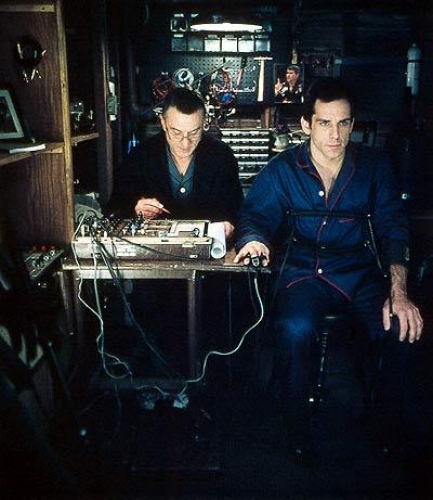
Ben Stiller may be pulling in 15 million a movie these days. But there was a time when he was struggling to make a name for himself. In fact, Stiller had been in a string of commercially unsuccessful movies and TV shows, only recently making a name for himself in 1998 with “There’s Something About Marry.” “Meet the Parents,” then, established him as a legitimate comedic force. Now what most people don’t know, is that “Meet The Parents” is actually a remake of a 70+ minute indie film from 1992 that nobody saw. It starred, of all people, Emo Phillips, that bizarre guy with the extreme bowl cut who was famous for like 56 minutes. The film played the festival circuit and actually earned a few fans from critics. Universal reluctantly optioned the remake rights and only after Jim Carrey and Steven Spielberg showed interest (isn’t it Spielberg’s job to show interest in everything at least once?) did the studio really start to push it, eventually casting, of course, Ben Stiller and Robert DeNiro. Another little known factoid is that DeNiro came up with the famous lie detector test scene all on his own.
1) Set up the stakes for your main character before the journey begins – One of the reasons Meet The Parents works so well is because it establishes the stakes for Greg (Ben Stiller) right away. We see Greg trying out his proposal on one of his patients. We then see him go through an elaborate failed proposal to his girlfriend, Pam. Through these scenes, we see that getting this girl’s hand means everything to him (high stakes!). If we don’t know how much achieving the goal means to our character, we won’t care if he achieves it or not. So establish those stakes!
2) Once you establish the goal, you can introduce the main obstacle – The goal here is Greg trying to win Pam’s hand in marriage. Now obviously, if your character succeeds in achieving his goal, your movie is over. So before they can achieve it, you must hurry and introduce the main obstacle. The obstacle in this case is Pam’s father, Jack. Pam makes it clear that she can’t marry anyone her father doesn’t approve of. Now that we have the main obstacle, something that will repeatedly prevent our character from achieving his goal, we have ourselves a movie.
3) Clever over Big – In the original script, the Greg proposal scene had him taking Pam to a baseball game and proposing to her via plane pulling a “Will You Marry Me” sign. Not only has the ball game thing been done before, but it was far too expensive to shoot. So they re-wrote the scene to happen outside of Pam’s work (she’s a kindergarten teacher). While Greg distracts Pam, her students hold letters that spell “Will You Marry Me?” behind them. Of course, all the letters are in the wrong order, so Greg must guide them into their spots with his eyes without Pam noticing. Before they can finish, Pam gets a call from her father that negates the proposal. The point here is, everybody always thinks of the big giant easy scene – even the professionals. Ignore the big. Try to do something clever instead. It always ends up better.
4) In comedies, keep having your characters fail – That’s all comedies are if you think about it. You keep setting these little goals up, then continue to have your character fail at them. Greg must make a great first impression on Jack when he and Pam arrive. He fails. Greg has to win over Jack at the big dinner scene. He fails. Greg has to win the volleyball game to prove his toughness in front of Jack. He fails. Greg has to find Jack’s cat that he lost. He fails. In comedies, just keep having goal after goal come up, and have your character fail again and again, until they finally come through in the end.
5) Design your other characters with your main character in mind – When you design your supporting characters, they shouldn’t be designed randomly, but rather as a way to affect or conflict with your protagonist. For example, Greg is a nurse. When he gets to Pam’s, Pam’s sister is celebrating her recent engagement to her longtime boyfriend, Bob. Now, what would you have Bob be? A race car driver maybe? A lawyer? A scientist? Sure, I mean any one of those could work. But the writers make him a DOCTOR, because they know it will make Greg (who’s a nurse) look even worse in the eyes of Jack.
6) Always look to go against type in comedies – Most comedy specs I read go with the obvious. So for the father our main character has to win over, they’d make him a military man with a giant dog. Not here. Jack is a botanist with a Persian cat. Go against type go against type go against type!
7) Torture your main character in a comedy whenever and wherever possible – It’s a comedy. So have fun torturing your main character. At the airport, the TSA forces Jack to check his bag, and of course they lose his bag. This leaves him without clothes, forcing him to have to wear Pam’s brother’s clothes. Now since it’s our job as writers to torture our protagonists, we can’t just give him normal clothes. Nope, the writers make Pam’s brother a younger hip-hop druggie type. Therefore Greg ends up having to wear these ridiculous oversized hip-hop clothes. We see it again later in the water volleyball game where Greg is forced to wear a tiny speedo. Torture your characters people!
8) Add twists to your comedies – Writers assume that since comedies are all about the laughs, they don’t need to add any twists or turns. The assumption is that you save those for the thrillers and the sci-fi specs. The thing is, a comedy is still a story, and every story needs a few surprises along the way to keep the audience guessing. In the original draft for “Meet The Parents,” Jack’s CIA background is revealed right away. The writers realized that doing so was kind of boring, and therefore pushed the reveal back and made it a surprise, with Jack initially pretending to be a botanist.
9) Combine scenes for Christ’s sake! – Writers always act shocked or upset or confused when I tell them they need to combine two average scenes into one super scene in order to speed up their story. Combining scenes ia great option to deleting them altogether because you get to keep all the stuff you like instead of losing it altogether. So in the original “Meet The Parents” draft, we had the big dinner scene (“I have nipples Greg. Can you milk me?”) and then a game of scrabble, where Greg accidentally pops the cork that destroys the bottle holding Jack’s mother’s ashes. The scrabble scene was extremely weak and redundant, so they just combined it into the dinner scene. Which scenes can you combine in your script?
10) When limited to one location, the easiest way to change up the plot is to bring in new characters – When you’re writing a thriller or an adventure script or, really, any script where your character is out in the world doing shit, it’s easy to spice things up. You just move to a new location with a new set of goals, stakes, and urgency. But when you’re in a single location, you obviously can’t do that. Therefore, you need to find other ways to keep the script interesting. The Greg, Pam, Jack, and Dina stuff is great. But if we’re ONLY with those four inside this house the entire script, we’re going to get bored. The easiest way to spice things up then, is to bring in new characters. They become the change. Here, it’s Debbie (Pam’s sis) and Bob (her fiancé) who pop in and start adding more pressure to the situation (with Bob being Jack’s ideal son-in-law). Immediately we feel a new energy in the script, and the story is reignited.
These are 10 tips from the movie “Meet The Parents.” To get 500 more tips from movies as varied as “Aliens,” “Pulp Fiction,” and “The Hangover,” check out my book, Scriptshadow Secrets, on Amazon!
Sofia Coppola goes back to her roots with her latest film. Will it reignite her career?
Genre: Drama (based on a true story)
Premise: A group of Los Angeles teenagers start robbing high profile celebrity homes, stealing thousands of dollars’ worth of merchandise.
About: This is the newest feature film from director Sofia Coppola. Coppola rose to fame with her 2003 film, “Lost In Translation,” but has since had trouble recapturing the indie audience (her last film, “Somewhere,” made $120,000 at the box office). This may have spurred her to do something more marketable, which a film about rebellious teens would definitely qualify as. It’s important to note that Coppola is a director first and a writer second, so some of the pieces here could end up feeling different once on screen. The film is currently playing the festival circuit and stars Emma Watson.
Writer: Sofia Coppola
Details: 82 pages (Oct. 6, 2011 draft)
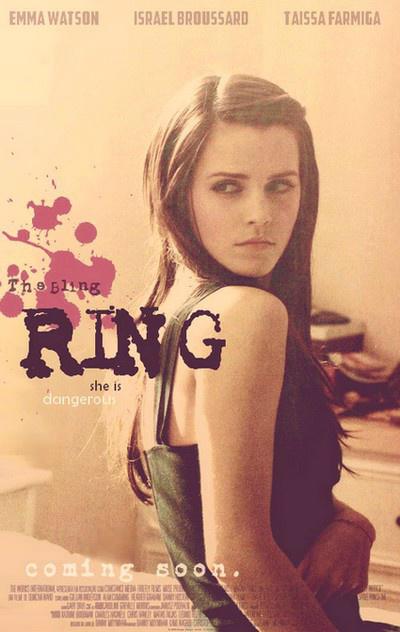
The script for The Bling Ring starts out with a quote from Nicole Ritchie: “Life is crazy and unpredictable, my bangs are going to the left today.” This quote is meant to prepare us for the script, an ode to the absurdity that drives the average D-List celebrity’s life. But also to highlight our obsession with these faux celebrities, no matter how mundane or ridiculous their lives may be.
In a world where young women are now making sex tapes to pocket a small fortune and stay in the spotlight, I suppose there’s a statement to be made here. But that’s assuming the author can find an interesting angle into the story, an angle they can dramatize in order to keep people entertained for 90 minutes.
Sofia Coppola is not that author. She kind of cheats when she makes movies. She places the camera on a couple of (usually) blank characters, adds some great cinematography and a kick-ass soundtrack, then edits it together like one long music video. While some may argue that this is a legitimate way to make films, I think she uses it as a crutch. When you hide behind your music and your edits, you don’t have to face your story. And the story here is about as boring as they come. I mean, nothing happens except the same boring thing over and over again.
I liked Lost In Translation. I thought it was her most accomplished film. She took a relatable situation (fish out of water) and added two characters who we felt sympathy for. She’s never done anything like that before or since. There’s rarely anyone to root for in her movies, and I’m not sure if she does that on purpose or if she simply isn’t aware that by creating unsympathetic characters, she’s alienating her audience.
Anyway, The Bling Ring is a true story centering around a Korean-American teenager named Rebecca (who is clearly the Caucasian Emma Watson in the film) and her new, outcast gay friend, Marc. The two find themselves at some sort of Los Angeles “reject” school for being disobedient little brats at their previous “normal” schools. It’s hard to tell if these two are really well off, sort of well off, or just well off. But they seem to have some kind of money.
Which makes it strange when Rebecca becomes obsessed with breaking into Beverly Hills houses while the owners are gone. It starts with anyone she’s found out is out of town, but then moves to celebrity houses, like Paris Hilton, Audriana Partridge, and Lindsay Lohan. Her, Marc, and her other thuggish rich friends watch TV to see when these stars are out of town, then go to their houses and break in. And because the stars live in such nice areas, they never lock their doors.
But they don’t just go in the houses, they start stealing stuff like luggage and jewelry and cash. Rebecca’s the ring leader – cool, calm and collected all the time – and Marc’s the worrywart, always freaking out about getting caught.
Eventually, the burglaries are reported, and TMZ starts covering them. Instead of scaring these teenaged terrorists, it only helps grow their popularity. They become cool and hip among their friends, something that doesn’t seem like a big deal since their friends already thought they were cool and hip in the first place. So I guess they’re just slightly cooler and hipper.
Anyway, Marc ends up getting identified in one of the surveillance videos, then rats out all the other players to the police. All of this happens in the most undramatic way possible. We never see anyone confront anyone else after this ratting out. That would actually be interesting. Instead it all sorta happens casually. A court date is then set, and a few months later they find themselves all going to jail. The end.
Oh man.
Please help me God with these indie writer-directors who don’t know how to write. I’m not going to say this is as bad it gets, but it’s close. I mean, first of all, why the heck did anyone think this would be a good movie? It’s about a bunch of sorta spoiled kids who rob a bunch of really spoiled celebrities.
NOBODY is likable here, with the exception of maybe Marc. But because he’s so bland, we don’t have an opinion on him either way. So we’re neutral on the “hero” and hate everyone else. That’s a recipe for script disaster.
The next problem – there’s no plot! None. I’m not going to pretend I’m surprised. Sofia Coppola isn’t exactly Miss Plot. But there’s a certain level of drama expected with every movie, twists and surprises that make you curious and keen to keep watching. There’s none of that here. Much like her previous two movies, The Bling Ring is obnoxiously repetitive.
Go break into a house. Marc freaks out, says they should leave. Rebecca says chill out and they stay longer. A few pages later, they go to the NEXT house. Marc freaks out, says they should leave. Rebecca says chill out and they stay longer. This exact same situation is repeated no less than seven times!!! There is nothing different about any of the break-ins!!!
Stack on to that boring characters and boring relationships, and you have one hell of a boring screenplay. I mean at least inject your main relationship with a little drama, a little conflict. Rebecca and Marc never share a harsh word with one another. Rebecca says let’s go do this. Marc says fine. Besides the occasional whining from Marc about wanting to leave, their relationship can be boiled down to the above paragraph. There is literally NO DRAMA and NO PLOT and NO CONFLICT in this movie.
The thing that bothers me about Coppola is that she wants to make these movies about life – shine a spotlight on the world’s problems. But her perspective is all warped. She sees the world through the eyes of a privileged woman who grew up in a Hollywood super-director’s home. Even if she rebels against that, it doesn’t change the fact that none of us can relate to what it’s like to be a teenage girl running around Hollywood doing blow at semi-famous people’s houses. That’s ALL she writes about, is famous or once famous people being miserable.
Her straying from that is why I liked Lost In Translation. We could relate to those characters. They both felt out of place and lost in life. Not to mention it was the only time Coppolla created characters we actually cared about. Having Scarlett Johansen’s character get screwed over by her asshole husband endeared us to her, made us root for her. I don’t see any of that here. We just don’t like or care about anyone. Characters we don’t like in a script with no story? I don’t care if you’re the best filmmaker in the world, if you add the greatest cinematography and the world’s best soundtrack – the movie’s screwed.
If there’s any chance of this working, it will hinge on the teenage girl crowd. There’s a theme of rebellion here that a younger crowd will gravitate towards. But I will stand behind my belief that a thematic connection is not enough to satisfy an audience. A story that pulls you in and makes you care about the people involved is required. And sadly, there’s none of that here.
[ ] what the hell did I just read?
[x] wasn’t for me (by the skin of its teeth)
[ ] worth the read
[ ] impressive
[ ] genius
What I learned: The Likability Leash – Look, no one says your hero(es) needs to be extremely likable. But each hero you write has a “likability leash.” And the further you extend that leash, the less likable your character becomes, and the more of a chance your audience turns on that character. Since it’s almost impossible to write a good movie where we aren’t rooting for the main character, you best keep that likability leash fairly close.
What I learned 2: If you don’t have conflict in your logline (and therefore your screenplay), you probably have a boring screenplay. Remember, movies are about conflict. You never write the logline, “Joe breaks up with his girlfriend and she’s cool with it.” You write, “Joe tries to break up with his girlfriend, who threatens to kill him if he does.” I mean read the logline (which I admittedly wrote) for The Bling Ring: “A group of Los Angeles teenagers start robbing high profile celebrity homes, stealing thousands of dollars worth of merchandise.” There’s no conflict! No “but”! That’s why this story is so boring. There’s no opposing force.