
Search Results for: F word
Black List? Hah. Hit List. Nope. My top 10 screenplays of the year!
For those of you disappointed that the end of the world didn’t come, I say to you, chin up! A new year is upon us, which means new possibilities, new frontiers, new chances to sell your script. For a little inspiration, let’s look back at the best scripts of the year. Or, at least, the best scripts of the year in my opinion. Which is, of course, the only opinion that matters. For those of you unfamiliar with my end of the year “Best Scripts” list, they don’t always fall in line with my Top 25. I know that makes zero sense, but some scripts burrow into your soul and stay with you all year while others burn brightly at first but fade faster. Still, you’re going to see a lot of familiar faces here, and a couple of surprises. The scripts on this year’s list have a few things in common. They’re either shocking, consistently surprising, really well-written, have a unique voice, have amazing characters, or all of the above. Wanna take a look? So do I!
10. Promised Land – Promised Land is about as “plain” a script as you can get away with and still have it be great. We’ve got a small town. We’ve got small characters. For a script like this to work, the writing has to be top-notch, and it is. I think what stayed with me the most was how much pressure was put on the main character. That pressure created high stakes, which made us care about whether our hero was going to succeed or not. This is something I felt a script like Lincoln really failed at. Despite the 13th Amendment being one of the most important moments in history, the writer managed to make Lincoln’s plight feel only a fraction as important as Promised Land (yes, I just used Promised Land to take one more shot at Lincoln). Anybody seen this movie yet? How is it?
9. Untitled Arizona Project – Rarely does a script with just one great scene leave such an impression on me, but this one did. Yes, I’m talking about the Squirrel Scene. For those unaware of the Squirrel Scene, just imagine being trapped in a confined space and then being bombarded with hundreds of terrified angry squirrels. Yes, that actually happens in this script. But this is also one of the unique voices I was talking about. You’re so unsure of what these bizarre one-of-a-kind characters are going to do next, you can’t help but continue reading. I remember reading this one like it was yesterday, which I can only say for a handful of scripts.
8. Echo Station – Is Echo Station benefitting from the freshness of only being read a week ago? Probably. But I always admire a time-jumping or time-looping narrative that stands up to plot scrutiny. Usually these scripts fall apart faster than a flan baked by your Cousin Edna. Can it handle scrutiny by the super time-travel script assassinators? Probably not. But I’m not sure any time-travel movie can. I mean, those guys could find fault in Back To The Future. I also think Echo Station is a great reminder of what kind of spec gets noticed in the industry. A little hook, a lot of urgency, and some high stakes.
7. The Disciple Program – The Disciple Program is a little like Star Wars at this point. I’m not sure I can say anything new about it. So I’ll just remind you of how the script was written, which continues to fascinate me. TDP was written 10 pages at a time for a contest. Each of those 10 pages was vetted by a judge and those notes sent back to Tyler. So every time Tyler had to turn something in, those self-contained 10 pages had to be exciting and memorable in some way. This is why the script stays consistently good, because you know every ten pages something interesting is going to happen. Now is this a surefire way to success? No. I’ve read some of the other scripts that were in the competition and they didn’t light the world on fire. But it’s still a solid technique that every screenwriter should try at least once.
6. Origin Of A Species – For those who don’t remember, this is the script that won Amazon’s Screenwriting Contest. I’m still kind of surprised by how much flak that contest got. They gave out gobs of money to screenwriters, more than any other competition by far, allowing many of those writers to obtain some momentary financial freedom so they could continue their dream, and they did it over and over and over again. And they also found this script, which was a really original voice and a story so far removed from conventional structure that I needed Google Maps to get me back on track. This writer has a hell of a talent for making small moments interesting. He’s also great with dark moody material. I haven’t stopped thinking about this one.
5. Saving Mr. Banks – To me, the scripts that really give me hope are the ones that I have no business liking, and yet somehow they win me over. I’ll tell you why: Because it reminds me that the most important aspect of your screenplay is your characters. Characters can exist in any world, whether it be space, football, lumberjacking, or children’s book authoring. If they’re interesting enough, if they’re relatable and compelling enough, we’ll wanna see what happens next. There was no reason I should’ve loved a script about a bitchy middle-aged woman complaining about her children’s book being made into a movie. It’s a testament to the writing that I did.
4. The Ends Of The Earth – Myself and the word “sweeping” don’t generally hang out at the same coffee houses. “Sweeping” is something I’d expect from a romance novel. Which is ironic, I guess, since “Ends Of The Earth” is a love story. Although it’s nothing like the love stories you grew up on. This ain’t no Nicholas Sparks, that’s for sure. I won’t spoil the big hook since, if you ever read the script, it’s best to go in knowing nothing. I’ll just say that, despite its defiance of my coveted GSU, it again goes to show that if you have two compelling characters at the heart of your story, you can get away with a lot of structural defiance.
3. The Equalizer (no review) – Here’s the thing. Every star is looking for a franchise. Everyone wants their Bourne, their Mission Impossible, their Die Hard. Because successful franchises mean longevity. If your career ever goes south (and it can happen folks – remember when Val Kilmer was an A-list actor?), you can pull out another episode from your franchise and you’re back in the mix. It’s why Cruise grabbed onto the Jack Reacher books. It’s why Wahlberg attached himself to Disciple. But franchises can’t become franchises unless that first movie kicks ass. And man is this movie going to kick ass. People have complained about the fact that Denzel’s character never once seems to be in danger. And usually that kind of thing bothers me. But there’s something about how this guy is built that you can’t wait to see him beat down the bad guys. He’s almost like a superhero. You know he’s going to win, you know they don’t have the skills to beat him, but you don’t care. — Equalizer also has the distinction of being the best SCRIPT I’ve read all year. What I mean by that is the writing is so crisp and clean and descriptive and to-the-point. It consistently conveys a ton of information in very few words, which is the essence of good screenwriting.
2. Django Unchained – Quentin is the master of scene-construction. Each of his scenes is like a mini-movie with a set-up, an implied collision, and a climax. I don’t know how anyone writes a 160 page screenplay and has me riveted on every single page. If not for that late scene (spoiler) where Django artificially cons his captors into letting him go – the only point in the script where I was aware of the author’s pen – this probably would’ve been my number 1. But other than that – awesome! I mean what a unique fucking story. A German recruits a black slave to become his apprentice in hunting down slave owners? Genius! And in classic Tarantino fashion, you’re never quite sure what’s going to happen next.
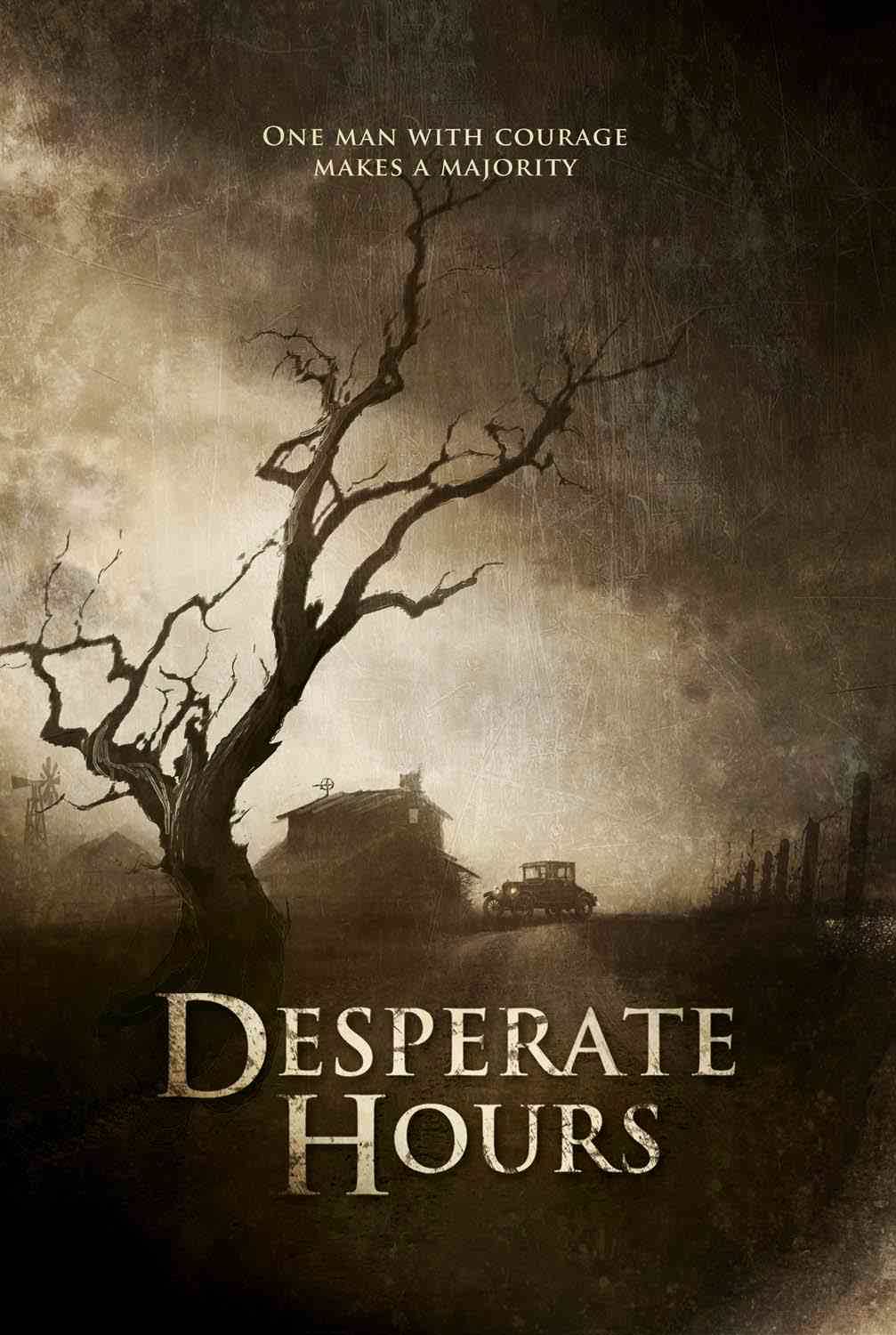
1. Desperate Hours – Third act. Third act. Third act. Leave them riveted as they close the final page and they’ll go racing to tell everyone they know about your script. The third act of Desperate Hours is absolutely un-freaking-believable. I don’t know if I’ve ever read a script where I’ve agreed with every single choice the writer made, but I did here. There is so much skill on display in “Desperate,” so much mastery of craft and structure, you’re going to need a scalpel to scrape it all out. The two big knocks on the script were a lack of memorable dialogue and a slow opening. For whatever reason, neither of these bothered me. I usually like realistic dialogue as opposed to the fancy memorable stuff, which is probably why the absence of flash didn’t occur to me. And I was curious enough about the main character that the first act moved quickly (I was intrigued to learn how he had gotten to this point!). I just loved this script. It’s wrapped up in Johnny Depp Land at the moment. Here’s hoping Depp doesn’t wait another 15 years to make it, but rather offers the lead role to another actor.
That’s it for me folks. Doesn’t look like there’s going to be a post tomorrow due to it being New Year’s and all. I’m not a huge partier but even I have to have a little fun every once in awhile. This should give this post plenty of time, however, to get all of your Top Tens in. I’d love to hear about some scripts I haven’t read yet. HAPPY NEW YEAR! (note – I still haven’t transferred the comments over from the old site so sorry there are no comments on these older posts).
UPDATE: There are still countries where the discount hasn’t updated yet, so I’m going to keep the $4.99 special going on for one more day (Wednesday). Take advantage!
The book with more screenwriting tips than you’ll know what to do with is just $4.99 through Christmas Day. Snatch it while you can. And Merry Christmas! (non U.S. Amazon territories will see the discount show up within 24-48 hours).
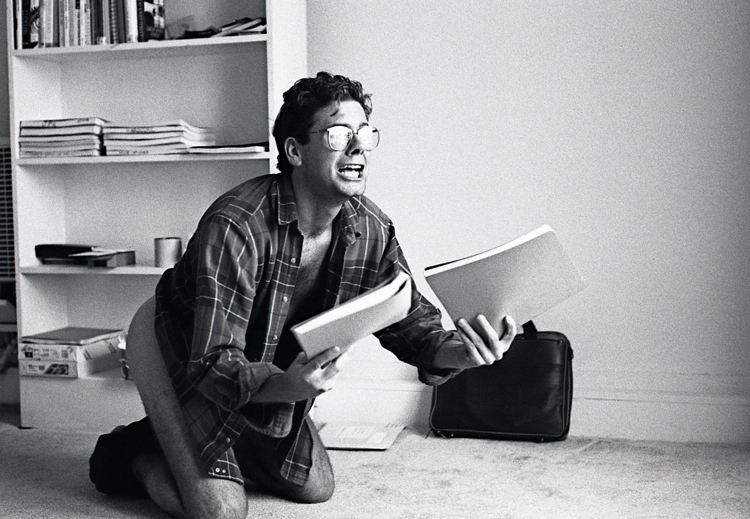
My favorite writer is back! John Jarrell. You may remember him from the awesome interview I did with him a few months ago. The guy has a ton of screenwriting knowledge and unlike us hack bloggers, the man’s actually been in the thick of it for 20 years, fighting the good screenwriting fight, landing those six figure jobs we all dream of. Which is why I’m more than happy to promote his new screenwriting class – Tweak Class — starting this January. Who better to learn from than the guy who’s seen it all? Goddamit, he’s even taken his pants off for a publicity shot (that’s really him above!). This man is dedicated. And today, he’s going to share with us a couple screenwriting stories from Hollywood Hell. I enjoyed this piece so much I told John he needs to write a whole book of this stuff. Let him know if you feel the same in the comments!
“Will You Please Buy My Script Now, Please?” — One Writer’s Journey Into the Troubling Bowels of Development.
By John Jarrell
Back in 1995, I wrote a Horror spec called The Willies. It was essentially Carrie with Evil Twins. People are constantly abusing and shitting on these orphans, until at last, after making a pact with the devil, they take their bloody revenge.
My agent went out with it and immediately got a sadistically low-ball pre-emptive bid from a smaller studio in town. By that point in my life, my dream of becoming a legitimate screenwriter was nearing extinction. I’d been struggling in L.A. for four years, was stone-cold broke, about to lose my apartment, and my girlfriend and I were subsisting solely on the 49-cent value menu at Taco Bell. Facing even more of that ugliness, I did what struggling young writers have to do sometimes — I sucked it up and took the shit money, simply glad to survive and hopeful I would live to fight another day.
First day working, I go into a story meeting with the company’s “Creative” VP and Head of Development. We dug in and spent several hours doing notes starting Page One — discussing what they thought worked, what didn’t, and what I’d need to address in my rewrite.
At one point, the VP looks up at me and says, “Wow, John. This description on page fifty-two is really good writing. Would you mind reading it out loud?”
Flattery will get you everywhere with a screenwriter, and I’m sure I flushed with pride as I found the page and paused to clear my throat.
The set up was simple — a grieving daughter (our protagonist) looking through her deceased Mother’s belongings, which have been boxed up and stored in the attic. The beat offered a brief respite from all the genre action, gave us a further glimpse into our lead’s character, and prompted her discovery of an important clue at the end.
This was the description I wrote, verbatim —
“She rifles several of the boxes, finding little more than old letters and checkbook stubs, key chains and their forgotten keys. The meaningless remnants of our too brief lives.”
There was a long pause after I finished. The VP and Head of Development were nodding their heads in synchronized approval. Then the VP says —
“Yeah, it’s really great. Great stuff.”
(HARD BEAT)
“Lose the poetry, John, cut it all out. It’s slowing down the script.”
I’d never been quite so close to crapping my pants. Did he just say LOSE… THE… POETRY? a.k.a. LOSE THE GOOD WRITING? Wantonly kill off two short sentences — two sentences he actually likes — which perfectly sell the moment? And replace them with what, Mr. Hemingway? “She opens her dead mom’s shit and finds a mysterious clue!”
Like every other indignant scribe in Hollywood history, I sat hooded in a queasy half-smile, cerebral cortex locking up. Surely “development” couldn’t be like this everywhere? Surely this exec must be a nutter, a lone gunman of sorts, some soulless script assassin who didn’t value lightweight artistry over the groan-inducing stock lines which had been stupefying readers for decades?
But I was wrong. He wasn’t the slightest bit insane. In fact, Mr. Company VP was the Gold Standard — an Industry veteran and Number Two guy at the whole company! And if I didn’t “lose the poetry” voluntarily, believe me, he would have no qualms hiring another low-ball writer to lose it for me.
Way back at NYU, an older studio vet had once shared a bit of sage wisdom with me — “It’s better for you to fuck up your script the way they want then have ’em hire somebody else to fuck it up for you.”
As baffling and counterintuitive as his advice had seemed, now I grabbed onto it like a life vest. I labored at “losing the poetry”, beat after tight beat, good scene after good scene. For nine agonizing months, they “developed” the script this way. Any nugget of goodness was ruthlessly ferreted out, any clever turn of phrase or interesting character tick was quickly sandblasted into beige. My reward, such as it was, was being kept onboard on as sole writer.
Finally, they were ready to go out with it. And they did. And in a matter of three short weeks, the company blew a sure-thing co-financing deal, flatlined similar offers via absurd distribution demands, then shelved the project out of self-loathing and/or shame, never to see daylight again. Their epic fail also left The Big Question still looming — Had sacrificing all my poetry to the Commercial Film Gods made my script better… or worse? Now, tragically, there was no way I’d know for sure.
Instead of my project — and I’m totally NOT kidding here — the company produced the urban side-splitter “Don’t Be A Menace to South Central While Drinking Your Juice in the Hood” in its place. It survived three demoralizing weekends before being euthanized and laid to rest in the VHS market.
During what I thought a poignant last ditch appeal, before all the lights had been turned out, I’d made the case to the company that horror was an American genre mainstay, essentially a license to print money when well-executed. This is what that same VP told me —
“Horror’s dead, John. Nobody wants horror anymore. It’s all about the urban audience.”
Scream opened that same December and made $173,046,663 worldwide. In its wake, an uninterrupted avalanche of extremely profitable low-budget horror pics overran the coming decade.
And me? Exactly one year after the sale, my girlfriend and I found ourselves back at Taco Bell.
* * * * *
Those first professional cuts for any young writer are excruciating. Everything about your script — every flat character, every lousy throwaway line, every unnecessary parenthetical — feels personal and inviolate, gifted from the heavens and written in stone, like some multimedia take on Moses’ holy tablets.
“Change something? Why? It was plenty good enough for you to buy it in the first place, wasn’t it, douchebag?”
Some version of this is what the working writer yearns to bark in his benefactors’ (read: torturers’) faces. If you loved it enough to put real money behind it, why in the fuck do you want to change every last thing about it now? Why date a tall, skinny brunette if you really wanted a short, squat redhead? Where’s the logic in that?
This mentality is, of course, completely understandable. The script is quite literally your baby, your winning Powerball ticket, the lone vehicle by which you hope and pray to escape the nagging self-doubt and just-getting-by poverty of a middle class kid with a mountain of student loans. This is your shot — perhaps the one and only shot you’re gonna get — and if it’s mishandled somehow, if somebody shits the bed and drops the ball, you and you alone will pay the ultimate price for that.
On the other hand… there’s a couple big problems with sticking by your guns every damned time. One, without question, you’ll be replaced as soon as your steps are up, and most likely won’t work for that company or any of those people again. Producers hate writers as it is, see them as largely unnecessary evils. Certainly nobody wants to work with a “difficult” one sitting in meetings with his or her fingers jammed in their ears.
Two, and this can be a tough one for us writers to swallow, what if all these developmental numbskulls are actually right??? What if a few of those “shitty notes” you keep bad-mouthing to friends turn out to be gems, pure gold, BIG IDEAS that help take your script to that hallowed “next level”? Some writers are so busy being defensive that they’re throwing away the very ideas which can dramatically increase their odds of success… and survival.
So John, you ask, how in the hell do I know when to do what? How do I discern between the gold and the gravel, the shit and the pony? How can I insure I do the right thing creatively while traversing such treacherous industry tundra?
And that, my friends, is the eternal question every writer faces, every time they book a gig. Because there aren’t any right answers one-hundred percent of the time. The whole endeavor is entirely subjective, a complete crapshoot, with the looming possibility of some ravenous tiger waiting to bite your head off behind every corner.
Your creative action — or inaction — affects not only this project, but the possibility of the many unseen projects yet to come. Of prominent producers and execs putting in a good word, greasing the skids for a full-freight first draft at 100% of your quote… or not. Of you being able to pay off those loans, buy your hard-working parents a house of their own, live the creative lifestyle you’ve always dreamt of and suffered so damned much trying to actualize…
Best advice I’ve heard? “You’ve got to choose your hills to die on.”
But hey, no pressure, right? Best of luck on those pages.
* * * * *
Spring of 1999, I was coming off saving a film for a big studio. My stock was high and I was starting to make my first legitimate splash.
After years of obscure, unpaid laboring, I was really feeling it, finally discovering my groove. All that “woodshedding” had vastly improved my writing. It was becoming much better crafted and far more intuitive. Better still, proof of this breakthrough was now coming across on the page, for anyone and everyone to see.
A hungry young agency saw it and took me on, and they had enough juice to start getting me into the right rooms. As every artisan in Hollywood knows, if you can’t get into the room, you sure as hell can’t get the job. My new agents totally had my back in that department and very quickly it became plug and play — they’d send me out, after that, everything else was on me. As you might imagine, this was a really good time for a young writer.
So… as a last ditch effort, the big studio had hired me, and against all rational odds, I’d saved their movie. Not only that, but to everybody’s further surprise, it became a big hit.
In this town, you always strike while the iron’s hot. My agents quickly set me up with a very famous director, one of the old school legends, in fact. There was a new company in town spending real money, and he’d set up a project there. All they needed now was a writer.
We met on his studio lot, the Director and I immediately hitting it off. This guy was a blast, regaling me with wild tales of ’70’s Hollywood, each more x-rated hilarious than the last. These were the classic movies I’d grown up with and deeply loved, back to front I knew them all. Now here I was talking to the guy who’d actually made some of them! For a good hour we jawed warp-speed, then spent maybe ten minutes talking broad strokes about his project. It was to be a modern-day Robin Hood — the big twist was casting a famous Brazilian MMA fighter as the lead and setting it in the violent ghettos of inner city L.A.
Now remember, this is ’99, way before the whole MMA/UFC thing fully turned the corner. But within two years, Dana White and Co. would radically reinvent the marketing of that world and find themselves sitting on a multi-billion dollar business.
So in a way — even though it wasn’t on purpose — the Director’s idea of casting an MMA superstar with international appeal in a kick-ass action film was perfectly timed. By the time it was ready to roll out, the U.S. would be beginning its new love affair with the UFC. And we’d be standing there waiting with lightning in a bottle, boffo box office certain to ensue.
I drove back home. Two hours later (just two hours!) my agent calls. Business affairs from this new company had called and made an offer — $100K against $275, or 100/275 in film biz parlance. The Director was crazy about me and knew immediately I was the perfect guy for the job. Just like that it became a spontaneous four-way love fest; Company, Famous Director, Agents, Me. My cup runneth over with this highly-addictive first burst of adulation.
It was pretty hard to wrap my head around. A guaranteed ONE HUNDRED THOUSAND DOLLARS for drinking a free bottle of Evian and listening to one of Hollywood’s most successful filmmakers tell epic war stories? For just being (GASP!) me???
Abruptly, the lightbulb went on. So THIS is what everybody was chasing. Everyone knew there were heaps of money to be made — Monopoly money, from where I was standing. But what about having all the heavyweight ego-stroking a film-addled shut-in like myself could desire? Wasn’t that shit awesome, too?
Next came a company meet-and-greet to discuss our collective vision for the project. My honeymoon continued unabated. We were all on the same page! We all agreed EXACTLY what this film should aspire to! From the top down, everybody on-board was euphoric with developmental glee!
Our homage to Robin Hood would be set in the impoverished jungles of East L.A. Our Lead, forced to flee Brazil because of his heroic actions against homicidal police, would join his Uncle in L.A. to start building a new life for himself. But after witnessing dehumanizing oppression in the sweatshops, and running afoul of local gangsters who violently extorted and terrorized the good-hearted (but powerless) immigrants who had befriended him, our Lead is compelled to take the law into his own hands, seeing justice done, whatever the cost. I was urged to think of the story as gritty, raw and realistic — “Robin Hood ’99” if you will, with someone like Jay-Z playing Friar Tuck.
Robin Hood is one of the oldest legends in all of Western Civilization, and for good reason. The timeless themes of rich vs. poor, the corrupt haves vs. the honest have-nots, still speak as loudly to audiences today as they did in Medieval times. So our ripped-from-the-headlines take involving sweatshops and immigrant labor, oppression and cultural inequality, would fit perfectly alongside the honorable intent of the original.
After a few frenzied white-guy high-fives (“I love this guy!” from one goofy exec), and another complementary bottle of Evian, I was sent off to knock out a treatment so we could quickly proceed to first draft.
* * * * *
Ensconced back in my bungalow, I set about creating my masterpiece. Like I said, I was totally in my wheelhouse at this point, doing the very best writing of my young career. I buckled down and poured my heart and soul into the idea. I skipped concerts, cancelled dates, ate nothing but bad Chinese and Mexican delivery. Day and night, I labored to make the story not just a kick-ass MMA thrill ride — the essential dynamic of the entire project in the first place — but a film which would actually have something to say as well.
I saw it as a classic have-your-cake-and-eat-it-too opportunity — killer action and ultra-cool, franchisable genre characters, with a timely message to the contemporary audience nestled behind all the head-butting and hard talk.
Listen, end of the day, if all you wanted was to see somebody’s trachea stomped into tomato soup, or some asshole’s nutsack blown off, yeah, you would get that in spades. I mean, this was a MOVIE afterall, mass escapist entertainment. But for the more discerning genre lover (like myself) there would also be a legitimate subtext they could hang their hats on. A little something… more.
One month later I submitted my twelve-page, single-spaced treatment. I was anxious, but extremely confident. Never had I felt better about the work and what I was trying to accomplish. I believed it awesome that Hollywood execs were willing to push for a meaningful story, even within the confines of a tiny little genre pic like this. Maybe the self-serving, head-up-ass development stereotypes I’d been brutalized by before would be proven wrong this time around.
A week passed. Then a second. Neither my agent nor myself heard so much as a whisper.
Believe me, if there’s anything a writer learns in Hollywood, it’s this — the silence is deafening.
Silence is never good. Silence says disinterest, displeasure or — scariest of all — disappointment. When you put finished pages someone paid for in their impatient little palms and they don’t get back to you a.s.a.p. something is terribly and irrevocably wrong. In my experience, there are no exceptions to this rule.
Sure enough, start of week three we finally got word. It wasn’t good. Let’s just say nobody loved it. The company didn’t hate it initially, per se, but the Director’s people did. They loathed it with a passion. Which meant the company had to start hating it as well.
Judgment Day came in the company’s flagship conference room. Picture a Hudsucker Proxy-sized oak conference table, all five of my company inquisitors massed at the far end, and me — best of intentions, isolated, confused — docked in a half-mast Aeron chair at the other.
The Head of Development led the prosecution. He was a real trip, an IMAX D-Guy Cartoon, 3D cells brightly penciled in by Pixar. We’re talking Aliens level development exec here, with him playing the egg-laying Queen, not one of the day-player xenomorphs. For the safety of all involved, let’s call him Producer X.
“This treatment is too preachy, too grim, too goddamn G-L-O-O-M-Y,” his first salvo whistled across my bow. “Where’s the fun in this world, John? The Lethal Weapon III of it all? The wink-wink, the hijinx, the Wow Factor?”
Where’s the fun in… illegal immigration? In the callous rich taking advantage of the struggling poor? Is that what he was asking?
“Look, John, trust me — it’s not THAT BAD down there. There are plenty of happy stories to tell. Happy stories which give those people plenty of hope.”
Whoops. My Spidey Sense began an ugly twitch. “Down there.” “Those people.” This couldn’t be going anywhere good.
“To some, you know, this might sound controversial. But I’m going to go ahead and say it anyway, ’cause frankly I’m not a P.C. person and I don’t give a damn,” Producer X leaned forward now, Sunday smile, as if confiding in me. “You know what? I have a maid, and she’s an illegal. That’s right. An illegal. And guess what, John? She LOVES working for me. Loves it! She couldn’t be happier!”
“Me too.” The famous director’s D-Girl piped up. “My husband and I have an illegal nanny. Always smiling, that woman. Very Zen.”
“In fact,” Producer X blazed on, “Recently I had a bit of a funny conundrum. My maid’s daughter was having her quinceañera, and she told me they didn’t have enough decorations for it. So guess what I did? This is great — I let her go around the house and gather up all the old flowers that had been there a few days and take those to the party! Isn’t that terrific? She was soooooo happy.”
There was one exec in the room I’d met before, a good guy, coming from the right place. I watched the same horrified shockwave blitzkrieg across his face that I already wore on mine. So they weren’t all Replicants, I thought. Thank Christ.
Oversharing kills. No doubt, I’m every inch as white boy as the next white motherfucker out there. But there was one huge problem.
I wasn’t that kind of white.
Both my mother and father had Ph.D.’s from Teachers College at Columbia. Their specialties? Education for Gifted Minority Students. My girlfriend was Hispanic, a social worker born literally — true shit — in a dirt-floored shack in Pacoima. So yeah, this probably wasn’t going to work out too well.
All this time, Scriptshadow Reader, I’d been racking my brain, trying to figure out why they hated my treatment so much, why everyone was acting like I’d totally butt-fucked the pooch on this one. Now it hit me full-force — my pages were too, well, Robin Hood. I’d done exactly what we’d agreed upon, gotten it pitch perfect… which was criminally out of tune for these folks.
Class struggle? Rich vs. Poor? What was I thinking? They envisioned our heroic Brazilian as a grubby street urchin, crashing Beverly Hills parties, stuffing his shirt with hors d’oeuvre and stealing thick wads of cash from mink coat pockets. Which is precisely the take they pitched me.
Everything quickly became a vague blur, Charlie Brown’s teacher shot-gunning syllabic nonsense. The only part I remember was Producer X’s take on our protagonist — “It’s like Ché Guevara. He was sexy, he was hot, did a couple of cool killings. Cinematic stuff, right?”
Talk about mind-fucks. Their collective brainstorm now was to take the Robin Hood out of Robin Hood. Regrettably, it was kind of, well, getting in the way.
Meeting over, we shook hands with the nauseous smiles of strangers who’d eaten the same rotten shellfish. I grabbed my ’66 Bug — the same car I’d driven out to L.A. eight years earlier — and puttered straight up Wilshire to my agent Marty’s office.
When I walked in, I just unloaded. Play by play, line by line, vomiting up details of the nuclear winter I’d just lived through. From Marty’s expression, I could see he was having trouble making sense of it all. He knew my background, knew the guy I was, but still. After I’d slaked my desperate need to rant, I punctuated things with this cute little gem —
“They can keep the money,” I said. “I don’t want it.”
In Marty’s entire life, I don’t think a single client had ever told him that. And why would they? Idealism and moral outrage are the privilege of a rarified few in this Biz. At the grunt level, the level I was at, those concepts played worse than kiddie porn. Besides, who the fuck was I? Claude Rains in Casablanca? “I’m shocked, shocked to find that half-baked racism is going on here!” It’s not like I’d signed up for the Peace Corps or anything.
Still, I had my principles, and I was willing to put all that Monopoly money where my naive pie-hole was. Marty’s advice was to go home, cool my tool and let him do some reconnaissance. Once he’d sussed things out, he’d get back to me.
Two things bailed me out. First, the exec I knew called Marty and totally vouched for my eyewitness testimony (told you he was a good guy). Second, Producer X himself knew how badly he’d fucked up and called trying to smooth things over. “Listen, Marty,” he told my agent, “This is a big misunderstanding. Nobody over here wants to make an… irresponsible movie.”
They scheduled a second meeting trying to salvage things, but in many ways it was worse than the first. My time was spent daydreaming about putting Producer X in a chokehold and pulling a Sharky’s Machine — pile-driving us through the plate glass and then plummeting 200 feet straight down to the pavement below.
So that’s it. The deal died. They paid for the treatment, and I — insisting on principle — left the other $65,000 sitting on the table. SIXTY-FIVE THOUSAND DOLLARS. Just walked away from it. And yeah, it kinda stings to write this, even now.
You may have wondered — what about the Famous Director, the one guy who surely would’ve had your back? Predictably, after that first, glorious filmic dry-humping, I neither saw nor heard from him again. No phone call. No nothing. To this day, I don’t know if he actually hated it, or his D-Girl with the illegal nanny had cut my throat without giving him the real scoop on any of what went down.
And Producer X? Was there any Bad Karma due a producer like that? Would the bold heavens take a stand and angrily smite down what the film industry itself would not?
You’re fuckin’ kidding, right? This is the Film Biz.
A few years later, I was over at some friends’ place watching the Oscars on auto-pilot. About ten hours in, after two dozen absurd dance numbers, they finally got around to Best Picture.
And who should win but Producer X.
This go ’round I did crap my pants. Openly and without restraint. But this wasn’t even rock bottom. Because up next was his acceptance speech —
“I’m soooooo happy you’ve taken my movie into your hearts, this wonderful little film about compassion, racial harmony, the end of prejudice of all kinds, and, of course, hope. Always hope, for all those people less fortunate than ourselves.”
Producer X had just won an Oscar. That’s right. A fucking Academy Award. By playing the “Can’t we all just get along?” card.
Before he even left the stage, I was stumbling into the backyard, begging the hostess for a frenzied bong hit. A writer can only take so much, you see, and my mind was dangerously close to snapping. My only real hope of retaining any sanity now lay in a bright, protective sheen of cannabis.
As I slipped into oblivion, a single thought ran roughshod through my mind —
“I wonder if Producer X’s illegal maid is back at his house watching this, too.”
Carson again. Naturally, I’m asking the same question you are. Who the hell was the producer?? John refuses to name names, but I will find out. Mark my words! In the meantime, head over to John’s Tweak Class Page and sign up for his screenwriting class that starts this January. It truly is a unique opportunity to study with a produced, working writer. You won’t be disappointed!
Today we go racing back to Black List’s past to see if a forgotten screenplay can sneak its way back onto the Hollywood Highway.
Genre: Action/Romance/Drama
Premise: A high-speed chase on the streets of LA told through multiple points of view.
About: Iranian-born Massy Tadjedin penned today’s script, which landed on the 2007 Black List and was picked up by Dreamworks. Massy is a really good writer and has written such scripts as The Jacket and Last Night. Curious to see why this one was forgotten.
Writer: Massy Tadjedin
Details: 126 pages – March 23, 2007 draft

Scriptshadow suggestion: Will Smith for Jay?
I didn’t know what to expect when I picked up “Wednesday.” I knew I liked the writer but that’s all I had to go on. That and the script revolved around a car chase. That’s what interested me most. How do you make a car chase interesting for 120 minutes? And it was quite a departure from Massy’s last script – a slow-moving character piece about the temptations in our everyday relationships. To put it bluntly, the script’s existence didn’t make sense. Which is exactly why I wanted to read it!
And read it I did. To the tune of 45 pages of, “Are you f’ing kidding me? This is what this script’s about? A guy who robs a bank for $800 and the police chase him?” Even within the most lenient of critic’s circles, this seemed like a giant miscalculation. But this is why reading scripts is so fun. Because, sometimes, right when you think you’ve got it all figured out, something happens that changes it up again. Read on to find out more…
“Wednesday” introduces us to a bunch of characters right off the bat going through their morning routines, the most important of whom are Jay and Carrie. Jay looks down and out, a guy who’s at the end of his rope. He’s even got an infection in his right eye that’s bleeding. Never a good thing.
The perky 26 year-old Carrie, on the other hand, has her whole life ahead of her. She’s young and upbeat and happy. She’s got a big meeting today, something we get the feeling is going to change her life.
Oh, her life’s going to be changed all right, but not by that meeting.
Jay, whose disastrous existence we’re getting bits and pieces of along the way, appears to be the victim of a bad divorce. And now his ex-wife’s dating some slimy asshole who he doesn’t trust around his daughter. But there’s nothing he can do about it. He’s gotta suck it up and hope everything turns out all right.
But that doesn’t explain why Jay, all of a sudden, walks into a bank and steals $800. He runs outside, hops in his car, and makes an escape. As he pulls up to a light, Decker, an off-duty cop, spots him and thinks he’s up to something. But there’s only so much he can do as he doesn’t have the authority to follow Jay (for some unstated reason).
Still, he goes after him and Jay’s forced to ditch the car at a gas station where he finds none other than Carrie, innocently pumping gas. He throws her in her car and starts round 2 of this high speed pursuit. Carrie’s freaking out, naturally, and keeps trying to get away, but at a certain point, realizes they’re in this together until the end.
All of this was fine. Not good, not bad. Just fine – one of those scripts you try to tolerate and muscle through. That is until the twist comes. All of sudden, almost midway through the script, we cut to the day before, where we meet all of our characters again, this time, however, before they’ve gotten into this mess. Hmmm, wasn’t expecting that. All of a sudden, Wednesday got interesting.
It’s funny because everything just slooooowed down. We go from 60 to 0 within a few seconds. It’s here where we learn more about why Jay robbed the bank (he’s behind on child support), what Carrie’s big interview is tomorrow (she’s a writer who’s written her first novel) and why Decker’s been suspended.
With this new information, we see tomorrow’s chase through much different eyes. We now have WAY MORE sympathy for what Jay is doing, which throws the third act into another gear. Before we wanted Carrie to escape Jay. Now we want them to be together! But can a carjacker and his kidnapped victim really fall in love during a 12 hour car chase? That’s the question “Wednesday” asks.
Overall, Wednesday was a wild ride (yes, I went there). It’s interesting because I don’t think a movie’s been done about a city car chase yet, where that’s the entire movie. It happens so much out here you’d think they would’ve made a film about it. Maybe they did and it went straight to video, I don’t’ know.
But if someone were to make a movie about it, I think they’d do well by following Massy’s lead. You can’t fill up an entire 120 minutes with a car chase. You just can’t. We’ll get bored. So splitting things up so that we meet the characters before the chase started was a smart move.
It’s also another example of dramatic irony, which was a Scriptshadow Secrets obsession of mine – one of the easiest ways to pull an audience in. Once we jump back in time and are meeting our characters, all we’re thinking about it, “You guys don’t know it, but tomorrow you’re going to be involved in a 5-alarm car chase,” and that pulls us in in a way that introducing the characters’ lives first couldn’t have done. For example, one of the main characters dies in the chase. To see him alive again, not knowing that he’s going to be a goner in 24 hours, is captivating in the strangest way.
There were some problems with Wednesday though, some almost catastrophic. The script starts with a MASS INTRODUCE (this is when you introduce a bunch of characters all at once) and as we all know, if you don’t pull off the mass introduce perfectly, the reader can lose track of the characters quickly. You only get one shot to introduce your characters and if you don’t do it well, we might spend the rest of the script mistaking two key characters for each other, and if that happens, it’s practically impossible to enjoy the script.
Complicating things was the script killer move of giving key characters names that started with the same letter. We have three important characters here (all women) named Cynthia, Camille and Carry. What are the chances we’re going to keep all of these straight? Not good. But even worse when you’re coupling the names with a mass introduce. There are still people in this script who I’m not 100% sure they are who I think they are. And that stemmed from the sloppy opening.
And even with the snazzy twist in the story, it still doesn’t address the issue that for the first 45-50 pages we’re watching a chase happen between characters we don’t know or care about. Remember – it’s NEVER about the chase. It’s never about how creative or cool or unique or grand you can make the chase. It’s about the PEOPLE GETTING CHASED. If we don’t care about them, the chase is worthless – A rule that shined brightly in this script. I didn’t care about the chase for the first half, but cared deeply when we cut back to it in the final act.
What I’m happy about, however, is that Wednesday is different. It’s got something to it that’s a little bit unexpected, which is why it caught peoples’ eye. Never forget that. You always want to approach something slightly differently so your script has a fresh feel to it. Otherwise, your screenplay’s going to experience a head-on collision on the 405.
[ ] Wait for the rewrite
[ ] wasn’t for me
[x] worth the read
[ ] impressive
[ ] genius
What I learned: Beware the “Same Age Phenomenon” in your script. We all tend to write characters that are around our age. Not just for our leads, but for everyone. The real world is peppered with people from every age bracket, so this is not realistic. Outside of Carrie, every damn character here was “in their 40s.” Is there a single person in LA not in their 40s? I think so. Branch out. It’s okay to try other ages.
What I learned 2: With Wednesday, I realized how powerful the “reevaluation device” was when done right. Take us back to the characters before things got out of control and you can completely change/manipulate how we perceive those characters. This basically makes the final act (or whatever follows) a completely different movie. Not every story is going to be designed this way, of course, but it’s definitely an idea to play with if you want to shake your script up. Not everything has to be told in linear fashion.
What I learned 3: Is your script a tweener? – I think I know why this script was forgotten. It’s one of those tweeners. It doesn’t fit easily into any marketable genre. It’s not really an action film. It’s not a “romantic comedy on the run.” It’s not Crash. It’s sort of stuck in that netherworld, somewhere between all those genres. That’s the hard thing with scripts. They have to be different enough to catch people’s attention, but the same enough to justify a 50-70 million dollar marketing campaign.
Many time travel stories have contemplated going back in time and killing Hitler. This one tackles going back in time and saving him.
To submit your script for an Amateur Review, send it in PDF form, along with your title, genre, logline, and why I should read your script to Carsonreeves3@gmail.com. Keep in mind your script will be posted in the review (feel free to keep your identity and script title private by providing an alias and fake title). Also, it’s a good idea to resubmit every couple of weeks so that your submission stays near the top of the pile.
Genre: Sci-fi
Premise: (from me – not writer) In an alternate future where freedom is nonexistent, a young woman must recruit her time-travelling great grandfather to go back in time and save Hitler.
About: This one was referred highly to me from the same writer who referred “Rose In The Darkness,” so I was really excited to read it.
Writer: Jeffrey J. Marks
Details: 116 pages

So, um, like, when you live in the future, then travel back to the past, then contact your great uncle who’s originally from the future but currently resides in the present, to help you contact the alternate you in an alternate timeline who exists in both the past, present and future, you must kill yourself in all alternate and current time periods in order to free the world from the past, which is only a problem because of what someone did in the future.
Just like old Georgie Washington, I’m not gonna tell a lie. This script confused the living daylights out of me. I was desperate for Marty and Doc to come in, pause the screenplay, and engage in one of their classic time-travel exposition scenes so I could have some semblance of what was happening.
This is the risk you run when you write a complex time travel script (or really any complex plot). The second your reader can’t follow along anymore, your screenplay is finished. So you have to be careful. You have to do everything in your power to make sure that every potentially confusing plot development is easy for the reader to understand.
There’s some cool stuff in “The Great War,” no doubt. But it just became too hard to follow after awhile, and I was constantly forgetting what the ultimate goal was. You’ll probably pick up on some of that here in the synopsis.
It’s the year 2000. And there are flying cars everywhere.
Say what??
Yeah, that’s the first thing that threw me. Young Megan Wheeler is shocked when her bloody father stumbles into their apartment and tells her that everything she knows about the past is a lie and that she has to find her great grandfather (who’s only a couple of years older than her for some reason) and go back to the past to fix everything! Are you still following me?
Cut back to World War 1. We’re in the middle of one of those ugly trench battles where soldiers are shooting mustard gas at each other. It’s ugly. But ugly turns to bizarre when a Blackhawk helicopter appears out of nowhere and starts gunning everyone down, both the Germans AND the Allies. Equal opportunity killing!
The helicopter is being commanded by Colonel Jack Bowman, a guy who loves the smell of mustard gas in the morning. But the one who got him there is a geeky little guy named James Wheeler. Yes, Wheeler as in related to Megan! This guy invented time travel so that they could go back, kill Hitler, and prevent the Holocaust from ever happening. Not a bad idea.
Except Bowman has other plans once he gets a look the place. Oh sure, he kills Hitler all right. But then he takes his place, and creates a United World Front led by, well, HIM! And then his son. And then his grandson.
Flash back – err, I mean forward – to 2017, where Megan is now 28. She’s kept her promise and has been looking for Jim Wheeler for two decades now. And she’s found him. He works up in Wisconsin trying to create synthetic milk. She grabs a friend, heads up there, and confronts him, explaining that he (or some alternate-time version of him) created time travel and she needs him to bring her back in time I think so they can kill Bowman so he doesn’t rule the world for the next 100 years.
Wheeler doesn’t believe this chick and it doesn’t really matter anyway since a couple government dudes tell him he’s been transferred to a 500 story building where they produce water. Milk to water sounds like a major demotion. Bummer. But Megan doesn’t give up. Even though the evil government is after her, she gets to the water tower and makes a second plea to Wheeler, one he finally listens to.
The duo realize that if they have any shot at changing the past to change the future, they will need access to the since-thrown-in-a-museum Blackhawk helicopter that still secretly has a time machine on it. The only time that helicopter is going to be available is at the 100th Anniversary celebration of Unification, and that will be headed by President Jack Bowman III himself, making it nearly impossible to pull off their plan.
Did you get all that? Because I didn’t. I’ll say this. I have no doubt that Jeffrey himself knows what’s going on here. But I think he severely underestimates what we know.
Now if complexity was the only problem, I wouldn’t be so harsh. But there are numerous issues here, starting with the boring jobs Marks chose to give Wheeler. They didn’t have anything to do with anything, as far as I could tell. Putting one of your lead characters in a synesthetic milk manufacturer is so weird it’s practically begging for some major payoff. Like maybe cows are the key to time travel. I don’t know. But there wasn’t. There was no connection to the milk whatsoever.
Ditto with the water job. It was random. I kept waiting and waiting for something plot-related to come out of it. Like maybe Bowman was going to keep water from all the people unless they did what he wanted. But it never happened.
More concerning to me, though, was the deja-vu jailbreaking of Wheeler. We go through this whole thing of getting him out of the milk factory. But then he’s transferred over to a water factory and we have to go through the exact same thing all over again. It would be like in The Matrix if, after they snagged Neo and brought him onto the ship, they accidentally dropped him back into the Matrix and they had to start all over again, with us enduring a second 30 minutes of them looking for Keanu.
It was around that time that I just gave up. I was still reading but my concentration was sapped, especially when we started talking about alternate timelines and if the current versions of the characters would disappear if they successfully killed the previous versions of the bad guys. My mind didn’t want to go there. It hurt so bad.
I did think the 3rd act idea of going back to the past to SAVE Hitler in order to save the world was a clever one, but there were so many things to keep track of by that point that I couldn’t fully appreciate the irony.
If I were to boil my difficulty with this one down to a single word, that word would be: Confusion. I was constantly confused. That’s the big piece of advice I’d give to Jeffrey moving forward. Simplify the story and try to explain things a little clearer.
Script link: The Great War
[ ] Wait for the rewrite
[x] wasn’t for me
[ ] worth the read
[ ] impressive
[ ] genius
What I learned: If any plot points in your script are taking a really long time to explain, that’s a sign they may be too complicated. Consider going with something simpler instead. This does NOT mean dumbing down your story. Quite the opposite. Clever story twists and big payoffs work mainly because the writer was able to convey all his plot points simply. It’s because we always understood what was going on that the twist (or unexpected plot development) worked so well.
What I learned 2: Stay away from this female character description: “Her tough exterior does little to mask her natural beauty.” I’ve read that description a billion times. It’s very generic. Go the extra mile and give your female character a unique description, something no one’s read before!