
Search Results for: F word
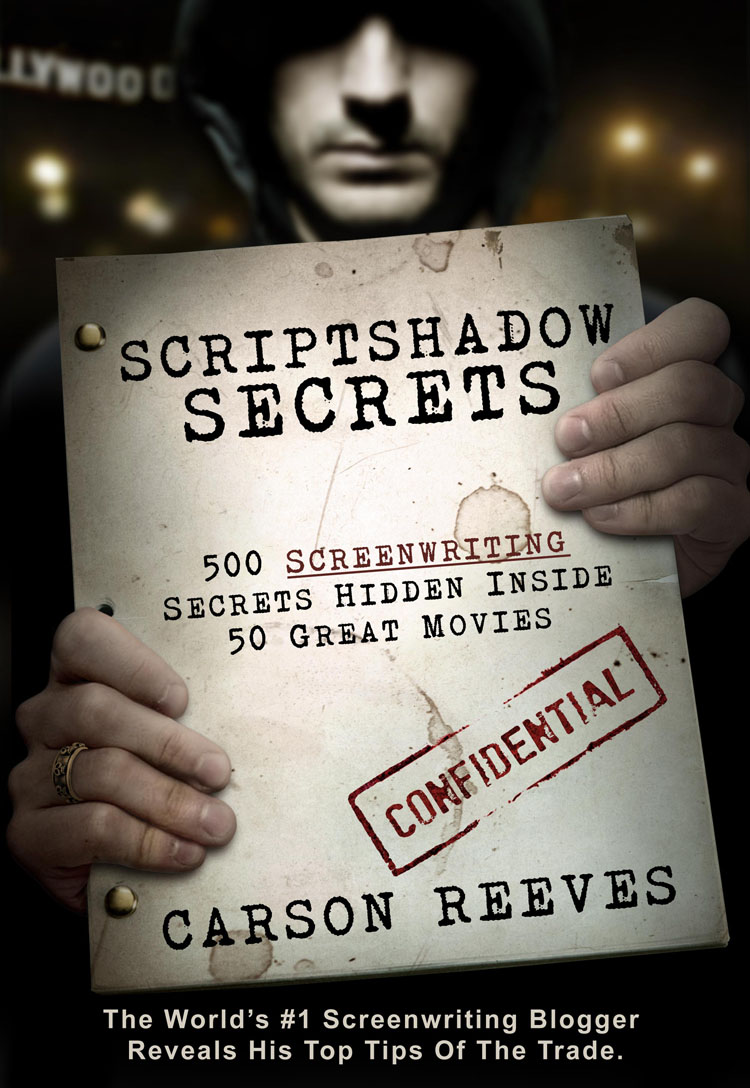
SCRIPTSHADOW BOOK RELEASE WEEK CONTINUES!!! If you haven’t purchased the book yet, what is wrong with you?? What? You say you don’t have a Kindle or an Ipad to read the ebook on? No problem! Just download the Kindle App and you can read it right there on your computer or phone. Writers have been keeping the book open on one half of their screens with their script open on the other and going to Scriptshadow Secrets whenever they run into trouble. They read through a few movies, get some ideas, then jump right back into their script. Best strategy ever? I think so.
Yesterday I gave you a peek at the “How To Write A Screenplay” chapter. Today, I’m going to give you a look at one of the movies I break down, “Pirates of the Caribbean.” If you like this, remember, there are FORTY-NINE other movies broken down just like this one. A cornucopia of tips/lessons/secrets packed into the greatest screenwriting book ever written. Okay, so there might be some hyperbole there and I’m a little biased. But what I DO KNOW, without question, is that this book will make you a better screenwriter. That much I can assure you. So, read today’s excerpt and then go buy the book!
Excerpt from Scriptshadow Secrets…
THE PIRATES OF THE CARIBBEAN: CURSE OF THE BLACK PEARL
Written by: Ted Elliot & Terry Rossio (based on a story by Elliot & Rossio and Stuart Beattie and Jay Wolpert)
Premise: A young blacksmith must team with an infamous pirate, “Captain Jack Sparrow,” to save the love of his life, who’s being held by a band of undead pirates.
About: What’s interesting about this film is that during its development stages it was considered anything but a guaranteed hit. The last half-dozen pirate films had plunged to the ocean floor faster than the Titanic, and pretty much anyone writing a pirate spec was labeled a lunatic. Well, that is until the Pirates Of The Caribbean franchise made over three billion dollars at the box office. This taught me that there’s no such thing as a “dead genre.” It might be dormant. It might be in a slump. But nothing’s ever completely dead. So if you want to break out with a big hit, look to resuscitate dormant genres and sub-genres. For example, it’s been awhile since Frankenstein was updated. It’s been awhile since a good submarine flick has come out. The trick is figuring out when these genres are ripe for a comeback.
TIP 68 – LIKABILITY ALERT – Jack Sparrow is selfish, conniving and untrustworthy. Therefore he needs a big “likable” moment so that we root for him. To achieve this, the writers go with the tried and true “save someone’s life” scene. But here’s why they’re making a million bucks and you’re not (yet). It wasn’t just anyone Jack was saving. It was someone we knew and adored – Elizabeth Swan (Keira Knightly). The added weight of saving a pre-established character (who we liked) guaranteed we’d like Jack. Had it been some nameless damsel in distress, we probably wouldn’t have found the moment that powerful.
TIP 69 – LIKABILITY ALERT 2 – Have the bad guys condemn your hero for a good deed – This is such a great way to get us to love a character. We’ve just watched Jack Sparrow save someone’s life. And how is he rewarded? By being told he’ll be hanged! That’s not fair! An audience will always root for people who get screwed. Cameron used this exact same device in Titanic. Jack saves Rose from falling off the boat, then nearly gets arrested for it. We see it in Jerry Maguire as well. Jerry tries to change his company for the better with a mission statement. As a result, he gets fired.
TIP 70 – The power of the MacGuffin – In any big adventure movie, it’s great to have something that everybody wants, a “MacGuffin.” If there’s something everybody wants, then all of your characters will be active in pursuing it. Here, it’s the gold coin. In Star Wars, it’s R2-D2 (who’s carrying the stolen Death Star plans). In Raiders Of The Lost Ark, it’s the Ark. Remember, action-adventure films need a lot of action and adventure and an easy way to achieve this is to have everybody chasing a MacGuffin.
TIP 71 – Nobody answers questions the same way – An easy way to improve your dialogue is to make sure each character has their own vocabulary and unique way of speaking. For example, when our villain asks Jack Sparrow if he’s made himself clear, Jack doesn’t say, “Yes.” He says, “Inescapably.” Ask Martin Lawrence in Bad Boys the same question and he might have said, “Fuck you!” To get the hang of this, ask your five biggest characters a question (i.e. ”How are you feeling today?”). Each character should answer differently.
TIP 72 – The essence of a character description – Although it’s not required, I find that some of the best character descriptions ignore physical traits and focus instead on the character’s essence. For example, Norrington (the man who wants to marry Elizabeth) is described as “Royal Navy to the core.” Another character is described as “born old.” Notice that these descriptions don’t detail any physical traits (i.e. “wrinkled forehead and tired eyes”), yet we still have a great visual of them.
TIP 73 – MIDPOINT SHIFT – Pirates has a great and memorable midpoint shift. We learn that all the pirates are ghosts!
TIP 74 – Use underlining in screenwriting like you would a close-up in a movie – Underlining in scripts is used to tell the reader that this here is important, so remember it for later. Keep in mind that readers read fast, oftentimes skimming through action paragraphs. So if you have something important you don’t want them to miss, it’s a good idea to underline it. On page 41, we see this underlined: “Where they enter the moonlight, Koehler’s wrist and hand are skeletal.” It’s an important detail, hence the underline. Just remember to use underlining sparingly or else it loses its effect. It’s only used about five times in Pirates.
TIP 75 – POWER TIP – Are your characters “dialogue-friendly?” – Try as you may, try as you might, you’re always limited to the vocabulary and personality of the characters you’ve created. Will (Orlando Bloom) is never going to say anything that interesting. He’s not that kind of character. Jack, on the other hand, has something interesting/funny/witty/weird to say every time he opens his mouth. That’s why almost all dialogue scenes with Jack jump off the page. He’s “dialogue friendly.” If the dialogue in your script sucks, you may want to see if you have enough “dialogue-friendly” characters.
TIP 76 – Replace your cliché character trait with an unexpected character trait – Whenever you create a character, try to give him at least one trait that goes against what you’d normally expect from that character. Jack Sparrow, for example, is a pirate. We have many preconceived notions about pirates. They’re mean. They’re nasty. They’re rude. Jack, on the other hand, is bumbling, goofy, and awkward. That’s so…not pirate-y, which is why it’s so genius. It makes Jack’s character unique. This is one of the quickest ways to create a memorable character, so use it often!
TIP 77 – “A character who wants something badly and is having trouble getting it.” – If your story ever gets boring, if it’s ever in need of a seeing eye dog, go back to the above mantra. Take a look at Pirates. That credo is what makes the entire movie work. Jack Sparrow comes to town to get a boat but he has trouble getting it. Jack and Will try to save Elizabeth, but they have trouble saving her. The pirates attempt to end the curse, but they have trouble ending it. If you don’t have characters that want something badly, but are having trouble getting it, you probably don’t have a movie.
TIP 78 – If a character doesn’t have a flaw, give him something from his past he’s trying to resolve – Not every major character has a fatal flaw, but every major character should have something they’re trying to resolve before the story is over. An unresolved issue from one’s past is a nice substitute for a fatal flaw. Here, Will must come to terms with the fact that his father was a member of the very people he despises the most: pirates.
Hello everyone. First of all, I want to thank everybody who congratulated me on the New York Times article. I’m hosting a friend this week and therefore haven’t really had the time to process it all. It’s funny because I don’t read the New York Times. And you know how even if something is huge, if it’s not a part of your personal day to day life, you don’t hold it in the same high regard as everyone else? So, as crazy as it sounds, I didn’t think much of it. But then when all my New York friends and older friends and family (my older brethren have read the Times forever) found out, they were all like, “This is a really huge deal!” I was like, “It is?” So it’s hitting me a little harder this morning than it did over the weekend and now that it’s settling in, I’m very thankful for it. And once again, it wouldn’t have been possible without all of your support. So thank you to everyone who reads Scriptshadow, even the haters! This would not be possible without you.
Now, this week is going to be a little different. Why? Because it’s SCRIPTSHADOW BOOK RELEASE WEEK!!! Some of you may have noticed that the book ad on the upper right-hand side has been changed from “Coming Soon” to “Buy now.” You can click that picture or click right here and you’ll be taken to Amazon where you can buy a copy of the e-book. Many of you have been asking me, “When can I get the book in physical form?” Unfortunately, paperback copies of the book won’t be available for another 1-2 months. We’ll get there. It’s just going to take some time.
So what’s the book about? Well, I basically took the most popular aspect of the site – the “What I learned” section – and applied that philosophy to an entire book. So I took movies like Raiders of The Lost Ark, The Social Network, and The 40 Year-Old Virgin (50 movies in all) and broke down 10 things I learned from each, which translates into 500 screenwriting lessons/tips/tools. I also wrote the book because that’s how I personally learn best, through example, so I always wished there had been a screenwriting book out there that taught solely through example. Well, now there is!
Now for those pounding your fists due to the fact that there will be no reviews this week, hold tight. This is Scriptshadow. I can’t go through an entire week without reviewing SOMETHING. So Wednesday is going to be realllly special. I’m reviewing 300 Years! This is a script I found from an unknown writer up in San Francisco named Peter Hirschmann, who’s not only super talented, but a really great guy. I loved the script so much, I asked to come on as producer, and we’re currently doing a rewrite before we go out to directors. In the spirit of Scriptshadow, I would LOVE to hear your feedback on it. There are a couple of places we feel it can be improved, so we’re open to ideas. If you want to read it, contact me at carsonreeves1@gmail.com with the subject line “300 YEARS.”
And now, it’s time. The following is a small excerpt from the first chapter of my book, “Scriptshadow Secrets,” available in E-book format from Amazon. This opening section prepares you for the movie-tip section by introducing the basics of writing a screenplay. Tomorrow, we’ll delve into some actual tips. Enjoy! (p.s. Because I’m performing hosting duties all week, I’m not going to be as quick with moderation. So, sorry if your comment gets stuck. I will do my best to get them up as soon as possible).
Excerpt from Scriptshadow Secrets…
(edit: People have been asking if they need an ipad or Kindle to read the book. The answer is no. You just need to download the Kindle Reader to your PC and you can read it right from your computer. Download the Kindle App here).
STRUCTURE
Whenever you write a screenplay, you’re telling a story. A lot of writers forget this, and it’s funny because we tell stories every day. When you have a few beers with your buddies and share how you asked the intern out? You’re telling a story! When you replay the amazing three-run homer your son hit at T-ball? You’re telling a story! When you’re giving your professor an excuse for why you didn’t finish your homework? You’re telling a story! A screenplay is just another venue to tell a story.
In order to tell an entertaining story, though, one that’s going to keep your audience on the edge of their seats, you need to understand structure. Structure places the key moments of your story in the spots where they’ll create the most dramatic impact. Ignore structure, and your story will have no rhythm, no balance. It might be front-loaded or back-loaded, choppy or unfocused. For example, in the story about your son’s three-run homer, if you jump straight to the home run, your story will be short and anti-climactic. With good structure, you set the stage for that home run over time, leading to an exciting climax.
The structure you’ll be using for almost all of your scripts is the 3-Act Structure. Don’t be intimidated by its fancy moniker. All it means is that there are three phases to your story: a “Beginning,” a “Middle,” and an “End.” Or, if you want to take the training wheels off, a “Setup,” some “Conflict,” and a “Resolution.” If you’re going to write screenplays, then you’ll be writing 90-120 pages of story contained within this basic 3-Act format.
ACT 1 (20-30 pages long)
Act 1 sets up your hero and then throws a problem at him. That problem will propel him into the heart of the story. Let’s say our story is about a guy desperate to ask out a beautiful intern who works at his office. To start your story, you might show your hero staring longingly at the intern from afar. He may even text his buddy: “No more messing around. I’m asking her to the Christmas party this weekend!” Soon after, you’ll write what most screenwriters refer to as the “inciting incident,” which is a fancy way of saying, the “problem.” A great example of an inciting incident happens in the movie Shrek, when the fairy tale creatures move into Shrek’s swamp. This is the “problem” to which Shrek needs to find a solution. In our story, it might be when our office dude learns that it’s the intern’s last day at work! In other words, this is his last chance to ask her out!
This inevitably leads to our hero having to make a choice. Does he stick with his old life (never taking any chances) or man up and go for the goal (ask her out)? Well, we wouldn’t have a movie if the hero stayed put, so your character always goes after the goal. In Shrek, this moment occurs when Lord Farquand tells Shrek that if he rescues the princess, he can have his swamp back. In our office story, it might be as simple as Office Dude deciding he’s going to ask Gorgeous Intern out today. He knows she always makes copies at 11 o’clock. So he spiffs himself up and heads to the copier room.
ACT 2 (50-60 pages long)
A lot of people get confused by Act 2, so let me remind you of its nickname: “Conflict.” Act 2 is the act where all the resistance happens in your story. Your hero will encounter arguments, setbacks, physical battles, insecurities, broken relationships, obstacles, their past, the protective best friend, killers, guns, car chases, and 80-foot lizards – basically, anything that makes it harder for them to achieve their goal. The more things you throw at your character, the more conflict he’ll experience. And conflict is what makes your story fun to read!
In addition to this, every roadblock, every obstacle, every setback, should escalate in difficulty. Start small and keep building. In our office story, maybe our office character stops outside the copy room, takes a deep breath, checks his reflection in the window, practices the big question a couple of times, then opens the door. He finds Gorgeous Intern, but, lo and behold, she’s talking to Sammy the Office Stud, who has her doubled over with laughter. Oh snap! Obstacle encountered!
Pages 55-60 in your script are referred to as the “mid-point.” The mid-point is important because it’s where your story changes direction. Whatever the first half of your story was about, the mid-point will shift it in a slightly different direction. By doing this, you keep the story fresh. So in our office story, maybe the midpoint is the fire alarm going off, forcing everybody to evacuate the building. This will place the second half of your story in a new environment – outside. If you want to use a real movie example, the midpoint of The Godfather is when Michael kills the Captain and Sollozzo at the restaurant. There are a million different scenarios you can write for your mid-point, but something needs to happen to give the second-half of your screenplay a slightly different feel from the first-half. Otherwise, the reader will get borrrrrrr-ed.
The pages after the mid-point and before the third act, form what I call the “Screenwriting Bermuda Triangle.” It’s where most screenplays go to die. What often happens is that writers run out of ideas in the second act and start scribbling down a bunch of filler scenes until they can get to the climax. Filler scenes are script-killers and will destroy everything you’ve worked so hard for.
If you follow proper structure, however, you should be able to navigate the Bermuda Triangle. After the mid-point, keep upping the stakes of your story. Make the problems bigger and more difficult for your character. In our office story, maybe it’s freezing outside, so everyone is pissed-off when the fire alarm sounds. To make things worse, the gorgeous intern is now cuddling up with Sammy the Office Stud to stay warm. That’s when the boss hits us with a bombshell: if they can’t get back inside within the next 20 minutes, he’s calling it a day. Ahhhh! Our hero now has 20 minutes to ask Gorgeous Intern out or lose her forever!
As the pages tick away in this section, so too should the attainability of your character’s goal. The closer we get to the climax, the more dim your hero’s chances of achieving his goal should get. In our office story, perhaps a car splashes water over our hero’s suit, destroying his appearance. Or even worse, a rumor spreads that the company is downsizing next week and his job is on the chopping block. It looks like all hope is lost. This is often referred to as your hero’s lowest point and will signify the end of the second act. We might even see Sammy the Office Stud nudge Gorgeous Intern towards his car where they can “warm up,” as our hero watches on hopelessly .
ACT 3 (20-30 pages)
The final act of your screenplay is really about your hero’s inner transformation, which is complicated, so we’ll discuss it later in more detail. In short, after your hero reaches his “lowest point,” he’ll experience a rebirth, finally realizing the error of his ways. If he’s selfish, he’ll see the value of selflessness. If he’s fearful, he’ll find the strength to be brave. He won’t have completely transformed yet, but this realization will give him the confidence to go after the girl or take on the villain or look for the treasure one last time.
In our office story, our hero realizes that his whole life has been a series of missed opportunities because he’s been afraid to take chances. I call this the “epiphany moment” and it signifies that your hero is ready to take action. Our office hero straightens up, barges through the group, CHARGES after Gorgeous Intern, spins her around, and plants a big wet one on her. She, Sammy the Office Stud, and all the coworkers stare at our hero in shock. He can’t believe it either. He’s done it! He’s won over the girl of his dreams! That is, until – CRACK – a hand smacks him across the face. “Asshole!” the intern shouts, grabbing Sammy the Office Stud and stomping off. Our hero stands there, alone, and watches her leave. The End. Hey, I never said this story had a happy ending!
Now, it’s important to remember that this is the most basic way to tell a story: a beginning, a middle, and an end. But as you’ll see over the course of this book, movies have taken this basic template and mutated it into hundreds of different variations. For example, there are movies where the hero doesn’t have a goal. There are movies where the story’s told out of order. There are movies where there isn’t a traditional main character. These are all advanced techniques and before you attempt them, you need to know the basics. We’ve just reviewed the basics of structure. Now let’s take a look at the basics of storytelling.
So there I was, reading this week’s screenplays, minding my own business, and it occurs to me that there’s an interesting question emerging. On Monday, I had this quirky character driven dramedy about a family of grown-up siblings who realize they’re all adopted, and on Wednesday I had a script about an unlikely friendship between an old drunk and a 12 year old geek.
There were some similarities here. Both were small independent films that put the focus on the characters. But more significantly, there was very little plot to either one of them. I’d almost say they were “plotless.” That got me thinking just how hard it is to break into the business with one of these types of scripts. I mean let’s be honest. These are the kinds of scripts that can end a logline’s career. Which REALLY depresses loglines because they live to impress people! This is likely why so few people have actually read these scripts. Even if they’re recommended, whoever got them probably said, “Errr…Why the hell would I read that??”
I remember, at one point, writing in Relativity’s review, to NEVER write a script like this if you wanted to get reads. Then two days later, I’m propping up St. Vincent like it’s the second coming. So which is it? Write’em or don’t write’em? Well, I do stand by my original statement. You shouldn’t write a script like this if you’re trying to break in. When it comes down to it, Hollywood is a numbers game. The more people you can get to read your script, the better chance you have of finding someone to buy it. And when you throw a low-concept character-driven idea out there, the amount of read requests you’re going to get is going down by 80% – AT LEAST. Not only do producers and agents avoid these things like the plague because they never make money, but as a reader, I can tell you, a bad character-driven drama is the worst kind of script to get stuck in. These things can get soooo boring soooo fast if they’re not written well. And most of the time they’re not written well.
But, I’m guessing you’re reading this, pointing your fingers at the screen and saying, “Yeah, but I’m DIFFERENT.” You Angus T. Joneses of the world want everyone to know that you’re an amazing writer and therefore don’t need to be held to these lame Hollywood standards. Your character piece is going to be that powerball winner, because it’s THAT good. Okay, okay. I know we writers didn’t come to Hollywood because we’re the smartest lot. We chose one of the riskiest professions in the world cause we’re kinda nuts. And if we’re already risking embarrassment and ridicule from our much more successful family and friends, why stop taking chances now? So if the dramatic character-piece route is the one you’re going to take, it is my duty to prepare you for it. Here are five essential elements to include to give your indie character piece the best shot at success.
A BIG INTERESTING MAIN CHARACTER A BIG ACTOR WOULD WANT TO PLAY
This is one rule that doesn’t change no matter what kind of script you’re writing, whether it be The Disciple Program or St. Vincent de Van Nuys, you still gotta nab a big actor, because the film’s gotta get financed, and you’re not going to find financing without a star, and a star isn’t going to attach himself to your script for some “sorta okay” role. So you gotta write someone intriguing, different, someone who’s going through some major internal shit, someone who does weird things or is unique or retarded or deranged or strange. Look at De Van Nuys. Vin is an asshole, says what’s on his mind, gets wasted all the time, gets to act post-stroke, is full of repressed emotions about his wife. This is a character someone’s going to want to play, something an actor would see as a challenge. With Relativity, there was craziness, but there was zero depth to the characters. It was skin deep. What actor wants to play a skin deep “wacky” character? You gotta give them more.
STAY AWAY FROM ‘QUIRK FOR QUIRK’S SAKE’
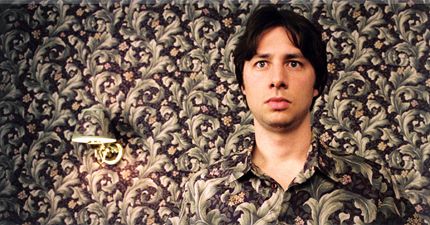
Call it the Garden State or Little Miss Sunshine effect, but after those films, lots of writers started writing things like guys dressed up in 17th century jousting armor pouring cereal in the kitchen because it was a neat quirky image! Look, I have no problem with 17th century jousting armor characters pouring milk into your script AS LONG AS IT FITS THE CHARACTER AND THE STORY. If the ONLY reason you’re putting it in there is because you think it will be cool or neato, prepare to meet some reader backlash. Readers want things to make sense. They want every choice to be organic to the story. They don’t want a bunch of random wildness that has nothing to do with anything. If your main character keeps a white tiger in his living room, he better be a failed circus trainer who got booted out of his Vegas show recently and not an average 20-something slacker who just happens to live with a tiger. “HEY! WHAT IF OUR HERO HAD A WHITE TIGER??!” “Why?” “CAUSE THAT WOULD LOOK SO COOL ONSCREEN!” “But why would he have a white tiger?” “Who cares about why! It’s quirky. It’s crazy. People will love it!”
ARC YOUR MAIN CHARACTER
If you’re writing a character piece and your main character doesn’t have a flaw that’s holding him back in life, then don’t bother writing your indie character piece because this is what writing indie character pieces is all about – exploring the flaw inside your main character and watching his journey challenge that flaw. So in De Van Nuys, Vincent has cut himself off emotionally from the world. He refuses to connect with others. That’s his flaw. But in the end he finally learns to move past his wife’s death and allow others in again. Or in American Beauty, Lester’s flaw was his need to live life without responsibility. When he rejects the opportunity to sleep with Angela in the end, he overcomes that flaw. So yeah, do some character arcing dude. Or else write something a lot bigger that has a lot better chance of getting you noticed!
ALL YOUR CHARACTERS SHOULD HAVE SOMETHING GOING ON
Don’t let the term, “character piece” fool you. A better term would be “characters piece,” cause if you’re only trying to make one of your characters interesting and different and flawed, then your script is going to feel thin. The thing with character pieces is they have to have depth – there’s gotta be more going on there. That’s why we read them, because those other “big idea” specs don’t have enough going on under the surface. For this reason, ALL of your characters should be going through something, trying to get past some roadblock in life. Vincent has his whole “refuse to connect” thing. Maggie, the neighbor, is trying to move past her broken marriage and deal with the lack of time she has to spend with her son. Even Charlisse, the hooker, has to learn when it’s time to clock out and be a friend as opposed to only being there when she’s getting paid.
YOU GOTTA TAKE SOME RISKS WITH THESE SCRIPTS
There’s that word again: RISK. Here’s the thing. You’re writing something that has very little shot at being read. So don’t disappoint the reader who DOES pick up your script by giving them a boring predictable indie character piece. Take some chances. Go to some unexpected places. Alan Ball wrote a four minute scene into American Beauty with a bag blowing in the wind. The writer of De Van Nuys has his main character slap a homeless legless beggar’s coin cup out of his hands. If we’re going to take the time to read a script that we’re betting is boring, you have to make some risky choices to prove that your story ISN’T boring. Or else you’re better off writing commercial fare, where it’s easier to get away with safe choices.
In summary, I still say you stay the hell away from an indie character piece as your break-in script. I mean even De Van Nuys had some extenuating circumstances. The writer was a commercial director for the past decade. He’d been in the business for awhile. He was directing this script AS WELL as writing it, which meant he didn’t have to go through the traditional channels of getting the script read, of having to come up with a logline that excites someone enough to take a chance on you, the unknown amateur screenwriter. But I get it. You still believe in your script. And you know what? YOU SHOULD! If you don’t believe in yourself, who will? But I’ll make one last plea. If you do write one of these, try to give the script ANY kind of hook, any kind of angle that makes it stand out from the boring character piece pack. Give us a janitor who’s smarter than everyone at MIT (Good Will Hunting) or a couple who don’t know they used to be a couple because their memories were erased (Eternal Sunshine Of The Spotless Mind). And then follow the guidelines I’ve laid out above. They’re going to give your indie script an actual shot at getting some attention! Good luck!

A thousand Twit-Pitches have been narrowed down to one winner. Was your favorite chosen??
Months back, I decided to try an experiment (at the worst possible time, mind you – I was creating a new site and writing a book). The experiment was to allow people to tweet me the loglines for their screenplays. The catch was that they only had one tweet to do it in. So they had to boil down an already boiled down logline to even LESS words.
I took the Top 75 of those loglines and I read the first 10 pages of each, tweeting live reviews on Twitter. It was a pretty cool experiment. I wanted writers to be able to get into the head of a reader AS HE WAS READING their script. You could see exactly what they were thinking as they were thinking it. And I didn’t hold back. If something was dumb, I’d say it was dumb.
The top 20 of those first 10 pages moved on to the final round, where I read the entire script and reviewed each of them here on Scriptshadow. So how did the experiment end? What did I learn from all this? Well, I’m not sure I learned anything definitively. But I will say this. The winner and runners-up of Twit-Pitch stood out for two different reasons. The first because it took chances, pushed the envelope, and didn’t go where you expected it to. The second and third because they had smart contained concepts and were well written. None of these scripts were home runs. They all had their problems. But I do think there’s a good lesson here. You CAN stand out by pushing the envelope or just with good old fashioned solid writing on a strong idea.
And with that, let’s get to the winners. Here they are…
***FIRST PLACE***
Proving Ground by James Topham – (Original Twit-Pitch Logline) 9 strangers wake in a deserted Mexican town besieged by killing machines: they must discover why they’ve been brought there to survive.
**RUNNER-UP**
Fatties by Matthew Ballen – (Original Twit-Pitch Logline) When a lonely masochistic chubby chaser is abducted by two fat lesbian serial killers, it’s the best thing that ever happened to him.
*THIRD PLACE*
Guest by Matthew Cruz – (Original Twit-Pitch Logline) After checking into a hotel to escape her abusive husband, a woman realizes guests in the next room are holding a young girl hostage.
Hello everybody. Like a lot of you preparing for Thanksgiving, today is a travel day for me. I’m heading back to Chicago. Do not fear, however. One of Scriptshadow’s new consultants, Alexander, will be taking over review duties. I’d link you to his bio so you could learn more about him but I’m still at a point where WordPress won’t allow me to link anything! Very frustrating. But anyway, just click “Script Notes” up above and look for “Alexander.” — I want to apologize about comments disappearing or taking a long time to show up. Still sorting that out. Also, when I get to Chicago tonight, I’ll put up a post where you guys can give me your feedback and note any issues you’ve had with the site. I know “mobile” is a big one. I’m going to try and get to everything as soon as I can. In the meantime, enjoy Alexander’s review. I thought it was great!
Genre: Period Drama
Premise: Based on the true story of a New York City architect involved in the race to build the world’s tallest building in the year 1930.
About: Writer’s most recent spec, POMPEII, was taken into studios this summer by big time producers but he’s still looking for his first sale as far as I know.
Writer: Eric Kirsten
Details: 115 pages
The spec market is tough. Looking to sell a period spec? Strike one. Looking to sell a period spec that’s a small historical drama/biopic? You’re probably staring down at least two strikes unless your subject is iconic or eccentric enough to attract a big piece of talent.
THE LIGHTHOUSE doesn’t quite fall into either of those categories, but Kirsten manages to take a pretty straight-forward story that doesn’t sound all that sexy and crafts an engaging and entertaining script. That’s only done with good writing. And having a good writing sample is often better in the long run than managing to somehow sell a commercial idea that’s a bad piece of writing.
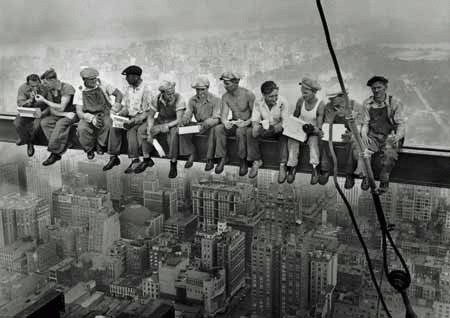
We open on two workers sitting on top of the metal frame of an in-construction skyscraper in the middle of New York City. It’s 1930, and these guys are wrapping up an 11-hour shift….which was preceded by a 12-hour shift. Needless to say, they’re having a hard time concentrating. As a crane sends a huge metal beam their way, Worker #1 starts to clip his buddy onto the support frame – except with all the Sandman’s dust in his eyes he doesn’t do it right and the hook comes loose, causing Worker #2 to lose his balance and plummet hundreds of feet to his death as his bloodshot friend can only watch and wake up real fast.
Good idea to grab our attention with an unexpected death scene instead of opening up on a guy using a protractor or something. If it worked for CLIFFHANGER… And we learned an important lesson: Building a skyscraper was dangerous shit back in those days.
Flashback seven years to Paris, where recent architecture grad Will Van Alen and his socialite best friend Harry Tanning decide to partner up and start a design firm of their own back in the States. With Will’s design talent and Harry’s contacts, they’re confident they’ll make a name for themselves. And when businessman Alan Reynolds approaches Will in an attempt to hire him to be part of a team designing a swanky new hotel in NYC, Will successfully uses his confidence and determination to convince Alan to give Will and Harry’s new firm the gig.
Unfortunately, with success comes responsibility and Harry’s just not pulling his weight bringing in new clients, so Will gives in to pressure from Alan to hire the slick, ego-driven Craig Severence as his new business partner, relegating Harry to mere “employee” status. Needless to say, Harry is pissed and his friendship with Will is deeply fractured.
Flash forward six years later: Will and Harry are still estranged, though Harry is now a model employee. Will meets spunky photographer Meg Bagley and they hit it off. Plus, Alan loves the new, innovative design that Will secretly sent him and greenlights construction! Will is thrilled. Craig, however, is less than pleased, making it known to Will that he is never to present a set of designs without consulting him first. It’s the first time that Will’s seen this darker side of Craig and it’s unsettling.
Meanwhile, Will makes a trip to see his older brother, Terry, who’s rotting away in Sing Sing for an unknown crime but one that Will implies helped him survive their tough childhood. Clearly wanting to make Terry proud, Will excitedly tells Terry about the imminent construction of his building and vows to find a way to get Terry out of prison.
But just as construction is about to start on Will’s awesome hotel design, Will gets called to see Alan. Seems the stock market crashed and Alan’s fortune disappeared along with it, which means Will’s building is dead and so is his company. As Craig and Will say their acrimonious goodbyes, Craig breaks the news that Alan has killed himself. The beginning of The Great Depression, both literally and figuratively for Will.
Everyone goes their separate ways and soon, Will finds himself standing in a food line, unable to find a job. Luckily, Harry shows up and wants to get their two-man band back together, tipping him off that Alan sold his land to William Chrysler (the car guy), who’s looking to build his new headquarters. So Will applies…and is promptly sent a standard rejection letter.
After a nice bender to try and drink his misery away, Meg and Terry convince Will to try and get his designs directly to Chrylser himself. Will manages to sneak his plans into Chrysler’s office but isn’t hopeful about his prospects until Chrysler makes a surprise appearance at Will’s modest apartment and requests to pay a visit to his company the next day…the company that doesn’t exist anymore. So Will rounds up a bunch of unemployed construction workers and breaks into his old office, succeeding in convincing Chrysler that he runs a reputable firm and getting the greenlight to start construction on what will be the world’s tallest building.
Except that at the groundbreaking, the press informs Will that his old partner/new nemesis Craig is working on an even taller skyscraper for the Bank of Manhattan. Chrysler tells Will that if he beats Craig, he’ll use his connections to get Terry out of prison. Will assures Chrysler that he has a plan…which he doesn’t. The race is on!
Which brings us back to the sleepy head at the start and his dead friend, who, it turns out, dies as a consequence of this race, having worked those multiple double shifts so that Craig’s building could come out on top. Wanting to make sure no one else dies because of their egotistical battle, Will agrees to not add anymore floors to his building plan, assuring that Craig will have the tallest building in the world, which Craig soon unveils to great fanfare.
So how does Will keep his word to Craig while simultaneously keeping his promise to Chrysler? In a dramatic unveiling of Will’s building, which Craig attends, a crane pulls out a HUGE GLEAMING SPIRE from the base of the building, placing it on the very top, making it taller than Craig’s and the tallest in the world. Our guys win!
Sadly, this being the real world, and the business world at that, we get a dose of “not so fast” when Chrysler reneges on his deal to help Terry get out of prison and it’s announced that the Chrysler Building will only remain the tallest for a few more months…until a little thing known as the Empire State Building is completed.
Historical/biopic scripts can often be generic and/or boring, following the same, simplistic dramatic clichés (“I’m gonna be somebody!”) or bogging themselves down by relying on a dense rundown of “the facts” to tell a story without giving much thought to the characters, dialogue and actual storytelling. And I guess that’s why THE LIGHTHOUSE kept me engaged throughout – because Kirsten focuses on, and does a good job with, crafting believable and well-written characters that we care about in a world that felt authentic.
Rather than focus on the big names behind the race to build the world’s tallest building, or the race itself on a superficial level, Kirsten finds a more personal way to tell the story by introducing us to Will Van Alen, a man with very relatable hopes, dreams, relationships, failures and triumphs. We come to know Will so well through the first two-thirds of the script that by the time the “race” enters the equation, we’re invested in Will’s goals and thereby invested in the skyscraper race – not the other way around – which wouldn’t have worked. If Chrysler himself had been made our protagonist, I’m pretty sure I wouldn’t have cared whether or not a rich guy managed to satisfy his ego and gain a little more notoriety. In fact, I probably would’ve rooted against him. Similarly, a multi-character take on the race would’ve likely come across as impersonal and cold. But in this version, we’re rooting for the likeable Will – not to win anything per se, but to realize his dream of building a towering monument and to get Terry out of prison. Okay, maybe we want him to smack Craig a little in the process, which doesn’t hurt. In the script, Kirsten reveals that Chrysler and the Bank of Manhattan honcho hated each other and desperately wanted to top the other and, sure, Kirsten could’ve told the story through this specific rivalry, but focusing on the rivalry between Will and his former partner Craig offers the same relationship dynamic albeit with characters and situations we could probably all relate to in some way, shape or form.
I will say that I wish Will wasn’t portrayed as such a good guy throughout the whole script (his dis of Harry notwithstanding). I think it would’ve made him a more interesting, complex character if we would’ve seen his darker side at some point. He admits to Meg that all architects are driven by ego, but he willing offers up that insight, and in a cheerful way. I would’ve rather seen Meg drag an angry confession out of him, her concern for Will’s obsession the ultimate reason why he calls the race off. What can I say? I wouldn’t have minded some shades of a version that could’ve been called THERE WILL BE BUILDING.
All in all, one of the more enjoyable historical biopics I’ve read in recent years.
[ ] What the hell did I just read?
[ ] wasn’t for me
[ ] worth the read
[x] impressive
[ ] genius
What I learned: Often when people write historical scripts, it’s difficult for them to resist the urge to focus on the “big” elements in the tale, rather than find ways to create a more character-driven entrance into a particular story. The former version can end up reading like the kind of generic “highlights” biography I’d find in the Kids section of the book store, or, conversely, like I’m reading an encyclopedia. It’s generally more interesting to read a script that’s a personal story touched by an historical event rather than the other way around.