
Search Results for: F word

Yesterday, I proclaimed that I expected Bite After Bite to rule the weekend and win the Blood & Ink First Scene Showdown. And now I’m going to explain why. The Bite After Bite pages were the only pages out of the 62 submissions where I felt that the writer had captured the exact promise of their pitch. These pages are giving me the movie that I imagined.
If you missed yesterday, I’m doing a deep dive into the first scenes of the Blood & Ink Contest. Yesterday was winner, Karoshi: The Drive. Today, we’re getting our zombie on with Bite After Bite.
Let’s take a look.

You’ll notice that this page starts quite differently from yesterday’s first page. We don’t start in the middle of an action that’s already taking place. This scene is more of a slow build.
I point this out so that writers understand that there’s no universal “correct” way to start a script. You can start fast. You can start slow. Up to you. I will say that the slower you start, the better the writer you have to be. Because it takes a more skilled writer to keep the reader invested while things are moving along slowly.
I consider the opening page a great example of my newsletter article about pages 0 and -1. Bite After Bite is a first scene that is helped tremendously by what the logline promises. Here’s that initial logline: “From Bite to Bite, we follow the zombie infection as it spreads – each victim’s story unfolding from the moment they’re bitten to when they pass it on.”
That logline helps the reader power through a page where seemingly nothing is happening. And some of you might be saying, “Carson, do you really need extra fuel to get the reader through the very first page?” I’ll answer that question this way. Have you ever stopped reading on the first page? My guess is that you have. Well, Hollywood people have less patience than you. So, there’s your answer.

It turns out we didn’t have to wait that long for something to happen. This is, essentially, the inciting incident of the screenplay. Elliot has been bitten. Presumably, he’s now infected. This is going to propel the narrative for the rest of the screenplay.
So, even though the script starts “slow,” we’re still introducing a major plot point just two pages into the script.
Something I also noticed here was that Andrew is using even shorter paragraphs than Mike was yesterday. Most of the paragraphs are one line. And, if they’re two, they’re finishing very quickly on the second line. This moves the eyes down the page even faster than yesterday.
I strongly recommend doing this if there’s a lot of description in your story. Description can feel like a chore once those paragraphs get up to 4 lines or more. However, if you have a ton of dialogue, which is the fastest part of the script to read, then it’s okay to have longer paragraphs, as the reader is okay with reading them every once in a while.

To be honest, this page is a teensy bit clunky. The interaction between the family feels off. Amber seems to be working against her husband rather than with him.
I also think more clarity surrounding the bite could’ve been conveyed. I always go back to this directive: “If this conversation were happening in real life, how would it go down?” That’s not to say you have to use that conversation in your script. But it should be the foundation of the conversation you use because it is the most truthful. And, in writing, we writers can sometimes lose the thread and focus more on what we want to put in the script rather than what would actually happen.
Here, I feel like there’d be more discussion regarding what happened. “Wait, did you see anything?” “No, I was swimming and then I felt it and I shrugged it off.” The kid would probably ask, “Was it a shark?” “No.” The wife might say, “Hold on, take me through what happened.” I then think there would be a longer conversation about whether to go to the hospital or not. Instead, we’re taking pictures of the thing and moving on.

This is a good example of the difference between being a wordsmith and being a good storyteller. The most important thing you must do as a writer is get the reader to turn the page. To do this, you must be a good storyteller. There are lots of ways to be a good storyteller and the use of suspense is one of the big ones. If you can learn how to build suspense, you can consistently hook a reader. And if you can do that, you don’t need to be a wordsmith.
Even though there’s not a lot going on this page, there’s one line in particular that stands out. “My leg is on fire.” It establishes a ticking time bomb that we know, because of page -1, is going to kill him. And it’s going to be responsible for killing millions of others as well.
That one sentence compels us to keep reading. Because even though we know that he turns into a zombie, we can still hope we’re wrong. We can still hope (even if it’s impossible) that he figures it out before it’s too late. We’re also wondering if he’s going to turn and infect his family or if he’s going to be separated from them before things get bad. So there are still questions to be had.

We now have escalation. We talked about this yesterday. You want your scenes to evolve. You don’t want them to stagnate. One page ago, his leg was burning. Now he’s vomiting. Things are escalating which means we have to act fast.
Just two pages ago, we were watching a family enjoy their day at the beach. Now, things have gotten very bad very quickly. Real danger is rushing in. At this point, I would say it’s impossible to stop reading until the scene is over. Which is where you want to be with that first scene. You want to make it so that they HAVE TO finish the scene. Not even WANT TO. They HAVE TO.

The scene continues to evolve with a new character – the lifeguard. Things are getting bigger. Which is what you want. You want to BUILD with a scene. You don’t want it to stay the same. Writing a screenplay is about building pressure then releasing it. You can build within a scene. You can build within a sequence of scenes. You don’t want to go too long in your screenplay where you’re not building towards something.
I noticed some readers complain that we don’t care about this family because we don’t know anything about them.
That’s a choice we all have to make as writers. Do you want to go the traditional route, where you use your first 15 pages to introduce your hero (or heroes) in their everyday environment so that we get to know them and sympathize with them, and only THEN hit them with the inciting incident?
Or do you jump into the story right away and teach the reader about your characters while all the action is happening? With Bite After Bite, we’re going to be following 8 different stories which is why I’m guessing we don’t have time to set this family up. By the time this sequence is over, we’ll be moving on to another character. So, in this case, Andrew has no other choice but to do it this way.
And even if he didn’t, I still think jumping into things is a perfectly viable option. I will say, however, that you should look for quick ways to set up characters to create the “mini” effect of a larger character setup.
For example, maybe when Elliot is about to swim out, he sees a little girl who’s by herself in water that’s almost up to her chest. She’s perilously close to losing her footing and being swept out. He moves her out of the water, spots a family down the way, and says, “Hey! Is this your daughter!?” And they look over. The mother realizes, ‘Oh,’ and comes and grabs the girl. In other words, it’s a quick way to make us like Elliot a bit more. So you should be doing that in these scenarios to help make up for the fact that you weren’t able to set the characters up traditionally.
And by the way, I should point out, the writers who get paid the big bucks are the ones who can do what other writers can do in 1/4 the time, or 1/8 the time. They can make you like a character in one page as opposed to eight pages. So, you should definitely know how to set up a family like this quickly if you want to work in this industry.

I will say that there could be more specificity in this scene. I don’t know much about this beach other than it’s your garden variety generic beach. As someone who used to ride his bike down the beach from Santa Monica to Torrance, I can tell you that each beach has its own personality.
Santa Monica is all tourists. Venice is the pothead beach. Dockweiler has the planes taking off from LAX. Manhattan Beach was the glitzy beach. Hermosa Beach was beach volleyball central. Redondo has the giant pier that’s still stuck in the year 1993. Each beach had its own demographic.
It adds something extra when you bring those details into your story. Not just for the beach. But for the characters. For the community. For the types of people who are around. That’s how you make things feel real on the page.
The good news is, this is not something you have to worry about in the first draft. So I’m fine giving Andrew some leeway here. For your first draft, it’s okay to be a bit generic cause you got to get the pages down. That’s what’s most important. But once you get to draft two, you have to start populating these scenes with more detail.

I’m not entirely on board with “I’m going to do bad things.” That sounds like something Bruce Banner would say. I think it’s a lot scarier for everyone if he doesn’t know what’s coming.
Then again, these are STORY CHOICES. When I give notes, I’m usually using dramaturgy to inform the writer about what he should or shouldn’t do in his story. But sometimes, I’ll give an opinion.
When it comes to opinion notes, that’s up to the writer. I can convey my concern but if he doesn’t like my suggestion, he’s the writer. He’s the one who, ultimately, has to face the fire. Which is why, as a writer, you should go with choices that you believe in.
George Lucas famously got flak for “The Force” and Obi-Wan becoming a ghost in Star Wars. His director friends (DePalma especially) told him it was a dumb idea. But Lucas believed in the choice, kept it, and created one of the most iconic mythologies ever. So I won’t get mad at Andrew if he believes in this choice.

Yesterday I said to think of your first scene as a pilot episode. At the end of every pilot episode, you want to include a cliffhanger so that the reader wants to see episode 2. Likewise, at the end of your opening scene, create a cliffhanger that makes the reader want to read scene number 2.
The reason you want to do it this way is because of the way a reader thinks. A reader will start reading that first page. If there’s enough there that they like, they’ll mentally say, “I’ll read the rest of the scene.” But, if they don’t like that scene, they’ll stop reading. Which is why you use this little cliffhanger trick to FORCE them to read the second scene. Once someone starts reading a scene, they’ll usually finish it. So keep giving them reasons to start the next scene.

I know you guys are dying to know my prediction for how I thought this weekend’s voting would play out. I boldly proclaimed that one of the scenes was a clear winner. Did that scene win? I’ll tell you right now.
Here’s how I suspected the voting would turn out. I thought Bite to Bite would run away with the weekend. I thought Karoshi would be number 2. I thought Devil in 5D would be number 3. So, I was right in that sense that those did turn out to be the top 3.
I think people slept on Cleave. There was some good writing on display there. But I knew that a therapy scene was a tough sell. The reason I knew The Zakim wouldn’t win was because it was the exact opening scene you would expect. It was well-written but when you give the reader something they could’ve written themselves, they don’t see it as special. And then Immolation had that one great image but didn’t offer enough in the scene beyond that.
I might review a few of these scenes this week, depending on how today goes. If you like getting into the nitty-gritty of scene-writing, let me know in the comments, and I’ll review one or two more. Maybe I’ll even review Eldave’s scene, which I know some of you preferred over the scenes offered.
If there’s one thing we learned, it’s that writing first scenes is hard. I’d say that of the 62 writers that entered, 50 of them didn’t have nearly a big enough dramatic engine to push their scenes along. I can help you if you want to get better there. As I stated in the newsletter, I’m doing one page of notes on First Scenes for just $75. 2 pages of notes for $125. E-mail me at carsonreeves1@gmail.com if you want help.
Okay, let’s take a look at Karoshi: The Drive, which pulled in 18 votes for the win. What I’m going to do here is post half a page at a time then give my thoughts as we read.

The thing to take note of here is that the script starts in motion. There’s movement. Something is happening. And there’s an urgency to the proceedings, even if it’s just driven by the weather.
A lot of writers start their scripts off too casually and, in the process, lose the reader before they ever got them.
A smaller thing to point out is the sound. Movies have sound (newsflash, I know) and you want to mimic that where you can. Michael didn’t have to focus on the click-clack of footsteps but he did because that’s the sort of thing that brings you into the movie theater and it makes it feel like you’re watching a movie.

Here, we get our first glimpse into something being wrong. And we’re only halfway through the first page! That’s good.
Remember, there’s this game you’re playing when you write a screenplay. Which is: How do I keep this person, who doesn’t want to read my screenplay, interested? And the answer is, you gotta move fast.
You don’t have to do something crazy. But you have to include little moments like this that require the reader to keep reading to find out more. By posing a simple, small mystery, “why are the driver’s eyes so sunken, sallow, and blood shot?” you create just enough suspense to make the reader have to read more.
The good news is, you don’t have to do this for every single page for the rest of the script. Hooking a reader is similar to hooking someone you’re talking to for the first time. If you get past those first couple of minutes and they like you, they’ll spend another half an hour chatting with you. That’s why this first scene is so important.
Things then escalate quickly. We go from ‘this guy is having a rough day’ to ‘this guy seems very off.’ But our hero is late to wherever she’s going so she doesn’t have the luxury of jumping out and grabbing another cab.

What’s happening now is escalation. Things are not staying the same. The same is boring. We’ve gone from sunken bloodshot eyes to “the DRIVER’s face, so, so, so, so tired, wan, pale, sickly…”
This is accompanied by our now being in danger on two fronts. Whatever’s going on with this guy, it seems like he could be dangerous. And then you have this out of control car. We’re in legitimate peril.
What you want to be doing with your first scene in particular is to ask yourself, after every quarter page, “If a reader reads this, would they have to keep reading?” Notice how I used the words “have to” instead of “want to.” You want to write pages that make readers HAVE TO keep reading.
And here, we pretty much have to keep reading. We’re helpless inside of a speeding car with something creepy going on with the driver. Even if you didn’t like this scene, you’re probably going to keep reading it because you have to find out how it ends.

I want you to note the style of writing here. Two line and one line paragraphs all the way down. Which means our eyes are moving down the page quickly. Also, the writer is matching the pace of the story with the writing.
You shouldn’t be writing 3 line paragraphs when things are moving this fast.
Also, the writing is strong enough that we don’t notice it. I can’t emphasize this enough. I read so many amateur scripts where something as simple as sentence structure gets butchered. So now, I’m focusing on a bad sentence instead of being wrapped up in the story.
“The air becomes a deafening cacophony of BLASTING HORNS.”
“And SUSAN sees, in that horrific instant, the true state of the DRIVER — half-dead, bone-thin, clad in filthy clothes…”
These are great, clear, descriptive sentences.
We never have any questions about what we’re seeing and what we’re experiencing.
For example, a lesser writer may have written that last line as, “The driver in the mirror now looks even worse than before.”
But how does he look? That weaker version of the line doesn’t tell us much. The image we’re getting is vague. That’s the difference between good and bad writing.

I saw some of you discussing the choice to CAPITALIZE certain words in your scene, and not knowing exactly when to do so.
The capitalization effect is one of the only screenwriting tools you can use to, sort of, mimic the intensity of watching something on screen, which is why it’s often used for sound effects. But there is no defined rulebook for how or when to use it anymore.
I suggest using it to emphasize intense beats within a scene. I like Michael using it for moments like “SWERVE,” and especially “CLIPPED.” You’re drawing attention to the moments that are going to pop onscreen.
The one beat I think Michael missed – and it was a big one – was “CRACKS.” When Susan’s head hits the window. You know that crack is going to bring out that, half-look-away audience moment where they all wince. And you can somewhat mimic that on the page by emphasizing the sound of the “CRACK.”

If I had one critique for this scene, it would be that I don’t like how passive our heroine is. On the one hand, I like that Michael’s playing into the terror and helplessness of being a passenger in a car we have no control over. It taps into that nightmare we’ve all had before.
But also, protagonists should never be passive. Good heroes always insert themselves into the problem to try and fix it. In other words, they are ACTIVE. Susan only does that here at the very end when she has to. I would’ve liked to have seen her try and stop this earlier. Try to be more involved.
You might say, “Do we really have time for that?” Of course you do. You could’ve easily added one more page in the middle of this car sequence. When you have an exciting situation like you do here, you don’t have to worry about condensing it. There’s enough drama and suspense to lengthen a scene like this.
And it isn’t just about making the hero active. As it turns out, Susan isn’t the script’s protagonist. But it creates more drama and uncertainty when you tease the possibility of fixing the problem, only to then see the protagonist fail, the situation get worse, and THEN (after all that drama) end up in a crash.
That creates more of that “roller coaster” emotional effect for the reader, which is always more satisfying and memorable.

The first four paragraphs here are REALLY GOOD WRITING. They give us total clarity over a very intense violent moment. The detail. The specificity. The sentence structure. All of it is very strong and a big reason why this scene won the showdown. The writing was a step above everyone else.
By the way, when I say “writing,” I’m referring to the actual writing – the words, the sentences, the description. That’s different from when I’m complimenting the storytelling, which is also good here, but I want to make sure you know that there’s a difference between the two.
Cause I know some really good writers who aren’t that great with telling stories, and vice versa.
Finally, we have the ending of the scene. Another reason I think this won was because it was an ending we were not anticipating. We weren’t anticipating that Susan would die. So it’s a shock. Any little thing you can do to throw the reader off of their expectations is good because the vast majority of writers write scenes that go exactly how you expect them to go.
Not only that but the visceral violence involved in the way that Michael killed off Susan made it THAT MUCH MORE impactful, leaving you in a state of shock. You’re not even sure what to do now. But one thing is definitely true, you’re going to read the next scene. Which is exactly what a first scene should accomplish.
I want to emphasize that. Instead of thinking of your first scene as 1 of 50. Think of it as a pilot script. A pilot script has to have a great cliffhanger at the end so that you want to see episode 2. Do the same thing here. Give them an ending that makes them have to read “the next episode,” aka, the next scene.

I’m swamped today but didn’t want to leave you hanging. And there’s actually Scriptshadow-relevant movie news since yours truly may possibly be – nothing has been confirmed yet but there are multiple witnesses testifying as such – obsessed with Star Wars.
Quick side story: Getting my rackets strung today, I ask the stringer her name and she says ANAKIN. I kid you not! Anakin is stringing my rackets! There’s a 30% chance my rackets will turn into lightsabers the next time I play.
Does that make me… a tennis jedi???
Anyway, The Mandalorian and Grogu trailer dropped today and it’s not trending. Not even a little bit. Which is frustrating cause there’s a lot of littleness going on in this trailer. While I know we’ve beaten the Lucasfilm dead bantha 10,000 times already, neither Celine’s nor my heart will let this franchise die. Near. Far. Wherever we are. Our Star Wars hearts WILL go on.
I said in my Rise of Skywalker review that I wanted Babu Frik to have his own movie. He basically gets that here! He’s the real co-star, seemingly in every adventure with Baby Yoda. And I have absolutely no issues with that. Babu Frik’s brother is in this movie and his name is Keeto. KEETO! Without a doubt, the most adorable name ever invented. Keeto is my new Jesus. This movie’s going to be hilarious.
But the big criticism against Mandalorian and Grogu is that this feels like a slightly bigger episode of The Mandalorian. Why are people saying that? You guys should know! You’re screenwriters. You follow my site. I talk about it constantly. Think hard! Why doesn’t this feel like a big movie?
The answer? No stakes. Movie stakes need to be high. Movies are chronically larger-than-life scenarios. And in a Star Wars movie, the demand for high stakes is even bigger. Characters just hopping from planet to planet getting into shenanigans won’t cut it for a movie.
To be fair, Jon Favreau hasn’t given us the full story yet. I’m hoping when he does, it will have very high stakes.
But here’s what worries me: Mandalorian and Grogu have yet another use of AT-AT Walkers! And not just use—they’re the trailer’s climax. This reiterates Star Wars’ primary problem: they’re not being inventive anymore. They keep relying on old crusty ideas. How about creating some cool NEW vehicles every now and then? Just a thought.
Let’s end with a screenwriting tip. Figure out what your script does best and LEAN INTO THAT. Favreau knows people love Baby Yoda. He’s the only thing that’s worked in Star Wars in a decade. So what does this trailer do? It leans heavily into Baby Yoda.
You need to do the same in your script. If you have a character who’s working amazingly, feature them as much as possible. Maybe Ken had a smaller role in Barbie’s original draft. But Greta Gerwig realized he was working, expanded his role, and he became the best thing about the movie. It’s HARD to come up with anything that works in a story. Most things are boring. So when you strike gold, mine as much of that gold as you can!
You are going to be SHOCKED at the movie I endorse at the end of this post
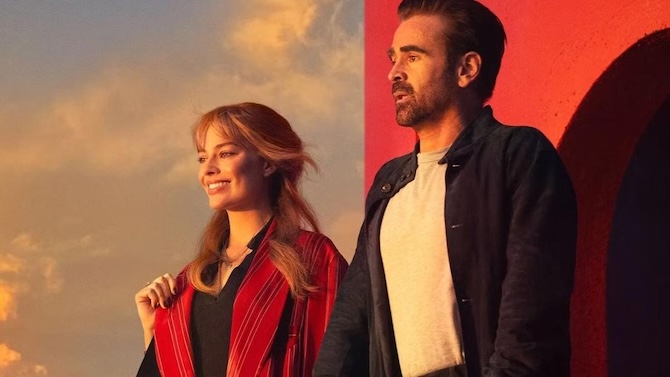
A lot of people in Hollywood are asking the question: how did A Big Bold Beautiful Journey bomb? It’s the follow-up film for THE STAR OF BARBIE, one of the biggest hits in movie history, a movie that made $635 million at the domestic box office. Yet Big Bold couldn’t even squeak out $4 million. What is going on here? Make it make sense!
This is actually a multi-faceted answer, so I want you to pay close attention. Because I really wanted this movie to succeed. It’s unique. I like the genre. I think this director is a visionary. And when movies like A Big Bold Beautiful Journey do well, it opens the doors for Hollywood to take more risks.
This is a big reason Hollywood is so reluctant to give up the superhero genre despite its deteriorating quality and increasingly lackluster box office. It’s because on the other side of that is darkness, is uncertainty, and A Big Bold Beautiful Journey shows you what can happen with that risk. It can go south quickly.
But there’s a lot going on here, so let’s get into it. The first reason this didn’t do well is obvious. Margot Robbie has been gone for two years since Barbie took over the world. All that buzz she created got swallowed up into a black hole of stagnation. If this would’ve come out six months after Barbie, it would’ve made at least $20 million.
Big Bold’s failure is also a reminder that concept matters. It used to be that it didn’t matter what the concept was for movie stars. Arnold Schwarzenegger could literally appear in the dumbest movie idea ever – Kindergarten Cop – and people would still show up because it was Arnold Schwarzenegger. But these days, the concept’s gotta be good. Actually, before the concept can even be good, it’s gotta be clear. What is the actual movie? I’m not sure people knew what this movie was about.
That brings us to the screenplay, what we here at Scriptshadow are experts at assessing. And I read this one back in 2021. To me, it felt like, if not a writer’s first screenplay, their second or third screenplay. Let me explain.
Two of the things that a lot of beginner screenwriters write are quirky coming-of-age-ish romantic stories and magical realism. Both genres are like threading a needle in the dark – there’s this incredibly narrow target you have to hit to make them work. Magical realism, in particular, is tough because it’s never entirely clear what the rules are. How magical are things allowed to get? And when the writer starts deciding those rules on the fly, the reader/viewer starts losing trust in the story quickly.
That’s what I remember from reading this. The writer was playing fast and loose with the rules of his world. It’s 20 years ago and we’re in high school and the adult version of the character is in the play instead of the high school aged version of the character and everyone just goes with it while we’re sitting there thinking, WTF.
When you look at something like A Christmas Carol, that story did a great job setting up its rules. It laid everything out for us. Ghosts of the past, present, and future are coming. Once we were in these different times, we could only watch, not participate. That’s how you do magical realism. You can’t just roll with it or things start to feel very loosey-goosey. We don’t understand what’s happening.
And I would argue that when you watch the trailer for this movie, that’s what you see. You sort of understand what you’re looking at. But you don’t totally get it. And that’s a big deal when you’re trying to sell a movie. It needs to make immediate sense to the potential audience member what the movie’s about!
Finally, you’ve got the cast. And this is probably the reason that trumps all of these reasons. There was no chemistry here. You can see the actors doing their best to force the chemistry. But that’s exactly when you know there is no chemistry. Chemistry between actors either happens or it doesn’t. And you saw that here. And if the chemistry doesn’t work in a romantic movie, you’re done.
Which is too bad. Because I love Kogonada as a director and I know exactly why he picked this movie to make. His talent lies in his visual aesthetic. He read this script and realized how much he could do in that area. And there’s also this underlying sadness to the story, which I know he also loves. But if you’ve got a quirky script that feels try-hard and you’ve got two actors whose chemistry feels try-hard, you can’t salvage that.
The news wasn’t all bad for Black List scripts over the weekend. “Him,” with its odd pairing of sports and horror, made $13.5 million to finish in second place behind Demon Squabble: Zanzibar’s Revenge. But all is not touchdowns and playoff appearances for this film, which is getting murdered by critics and audiences alike. The word of mouth seems to be so bad that, after some nice Thursday preview numbers, they were thinking the movie could make $18 million. But word got out that it was worse than a Chicago Bears draft night and receipts plummeted quickly.
I reviewed the script when it was called Goat and I saw these issues in big shiny flashing letters back then. In some ways, the script is similar to A Big Bold Beautiful Journey in that it contains magical realism as well, just a more “horror” version of it.
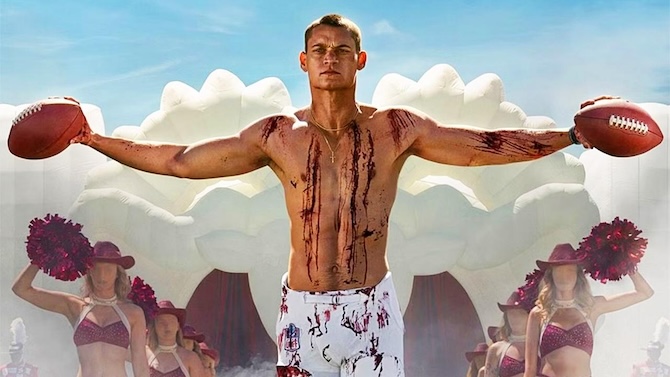
But what I remember most about the script is that it was sloppy. And even though this director is the real deal – he added a ton of style to the finished product and made this movie look interesting – you can’t overcome a) lack of effort in writing, and b) sloppiness in writing. And “Goat” had both. And all of the complaints about the movie are in line with these issues. You can see it in the trailer as well. In the same breath as you say, “That looks cool,” you say, “But it also looks like a total mess.”
Which brings me to our final movie critique of the day. And folks, it doesn’t happen often. But once every 20 years or so, I’m wrong. I am here to admit that I was wrong about a film. I’ve been hard on this film ever since it was announced, ever since it came out with its first trailer, ever since the publicity tour leading up to the movie. I’ve been extremely hard on this writer-director. I’ve given one of his scripts a “what the hell did I just read.”
But look, we all get it wrong every once in a while. And I got this one wrong. How wrong? I can confidently say that this movie will end up in my Top 10 of the year.
The film?
Eddington.
That’s right. I said it. Ari Aster’s movie. I don’t know if I’d go so far as to say it’s genius. But it has genius-ness within it.
I originally watched this movie last week but, because I had already read the script, I wasn’t giving it my full attention. As the week progressed, I noticed that I kept thinking about the film and, once the weekend rolled around, I decided to watch it again. And I’m very glad that I did because this is a movie that deserves a lot more attention than it’s gotten.
For starters, I thought Joaquin Phoenix was spectacular. He plays a very difficult character, this sort of simpleton spineless sheriff who decides to run for mayor despite being way in over his head. And he’s captivating to watch. Because, despite him being a total moron, he’s the only person in town who is being rational about Covid (which plays a big part in the story). Everyone else is yelling at him and recording him in the supermarket when he won’t wear a mask.
This is probably one of the reasons this movie didn’t get pushed more by the industry. It definitely puts a mirror up to the absurdity with which the industry was acting at the time. But I would argue that one of the great things about this movie is that it doesn’t take a side. It expertly maneuvers right down the middle politically, always choosing dramatic impact over message. For example (spoiler), a big plot point at the end is that Joaquin’s character is compromised because he catches Covid due to the fact that he walked around without a mask the whole movie.
The movie does a great job capturing the chaos of that time. And maybe people don’t want to revisit that. I get it. But from a screenwriting perspective, it’s good stuff. He keeps the drama taut throughout. And he DEFINITELY improved the draft that I reviewed on the site.
This is an incredibly complex story. There are lots of moving parts, both on the character end and the plot end. When you have that much complexity in a script, you have to rewrite the shit out of it. I would argue that scripts like that have no end point. You literally can ALWAYS improve them because you can always better set something up or better connect Plot Thread #13 with Plot Thread #6. Which I saw Aster do. The draft he shot was a lot cleaner and more cohesive than the earlier draft.
With that said, Aster made a critical screenwriting mistake that all of us make and it’s something that’s very hard to avoid as writers. But conquering it ALWAYS makes the script better. And I’ll explain by going back to another Joaquin Phoenix movie, this one his first official leading role, where he played the older brother in M. Night Shyamalan’s “Signs.”
In that movie, which is about a family privately dealing with an alien visitation, M. Night got some feedback about his script from a producer friend. And the producer friend said, “You know, the script is great. And I thought the one scene with the family trying to get the alien radio signal from their transistor radio was interesting. Too bad it will never make the movie.”
And M. Night said, “What are you talking about?” “Oh,” the friend said, as if obvious. “You know. It’s one of those scenes that’s fun to write but never works in the movie. It’s the first scene the studio always has you cut.” If you haven’t seen the movie, it’s this scene where this rural family is trying to get a signal from the aliens and the baby monitor is giving too much noise so they have to reach the monitor up higher into the sky to get the signal but it’s still not getting it so they get on top of their car. But it’s still not getting it. So they all start climbing on top of each other and creating this small little human hill on top of the car in order to get the radio up as high as possible until they finally get the signal.
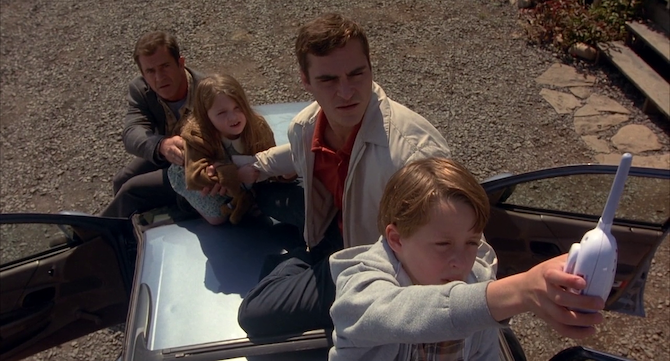
M. Night was miffed by this critique and because he had carte blanche with making movies at the time, he put the scene in his movie anyway. And it was… not good. It was exactly what the friend said. It was forced, it was try-hard. It didn’t make real-world sense. And the most important detail: It could’ve been axed and nothing would’ve been lost from the movie. In fact, the movie would’ve had a much faster pace without it.
As writers, we fall in love with certain scenes and plotlines, usually early on in the screenplay’s life. And then when the script evolves into something slightly different, we hold onto those initial scenes and plotlines, even though they don’t really make sense in the story anymore.
The Emma Stone Austin Butler weird wife cult leader plotline in Eddington is one of the worst plotlines I’ve ever encountered in a movie. It didn’t connect with anything at all. It didn’t make sense. Why is this nationally known young handsome charismatic cult leader who can literally have any woman in the world, falling in love with the weirdo half-comatose 40 year old crazy lady in the middle of nowhere town Eddington, New Mexico???? There’s literally nothing about that that makes sense.

It’s your job as a writer to kill those storylines when they’re not working. Because you know they’re not working. You know it! Every time you read your script, you feel the awkwardness and the clumsiness of those sections. But you keep convincing yourself that you’ll figure it out in the rewrites. Some things can’t be figured out! You gotta kill your babies sometimes.
Had Aster been honest with himself about this and cut this storyline, he could’ve cut 20 minutes out of this movie, which would’ve massively improved the pacing and the running time, which was too long. And now, every plotline we would’ve cut to, we would’ve been interested in, as opposed to before when, sometimes, we had to endure this boring plotline.
And the thing is, he still could’ve salvaged it if he’d ditched the whole cult stuff. If it were just about his wife potentially being sexually assaulted by the mayor when she was younger, that could’ve worked. But Aster reached too far and got lost in a plotline that didn’t work.
With that said, I’ve found that the best movies often have some messiness to them. They’re imperfect. So, maybe this is just the price you pay to get a movie that’s so inventive and thoughtful and different and unexpected. It’s not going to be for everyone. But I’m more than happy to admit that I was wrong about this and that Eddington may low-key be the best movie of the year.
I have another screenplay consultation deal available! $150 off full price. If you want it, e-mail me at carsonreeves1@gmail.com
The winning script of the Second Wave Showdown – and the long-time Scriptshadow reader who wrote the screenplay – gets a review!
Genre: Action-Adventure
Premise: After one of their own murders a Comanche boy, a skirmish leaves a small group of Spanish cavalrymen stranded without horses deep in hostile territory, facing the dangers posed by vengeful warriors, nature and each other.
About: A few months ago, we had a giant showdown (screenwriting competition). This past weekend, I put up five scripts that just missed making that showdown to see if I had overlooked a gem or two. You guys voted on your favorite one and that ended up being this script, Enemy. I know that the writer, Clint Williams, has been reading the site forever. So it’s fun to see his latest script get featured.
Writer: Clint Williams
Details: 110 pages

I have an inkling that Westerns are going to make a small comeback. I know this isn’t a prototypical Western but it’s Western-adjacent. I believe this because the Superhero genre is limping badly. It may finally be on its way out if they don’t come up with a fresh new superhero franchise soon. And, in the chasm that that genre will leave behind, it only makes sense that one of the most reliable genres in Hollywood history will start churning out movies again.
The year is 1731. We are in West Texas. A group of Spanish warriors, led by Tomas De Torquemada, are up in Texas territory looking to spread the word of the Lord Jesus Christ. But that plan gets interrupted when they encounter a Comanche town. Since the Comanche men are out hunting, Tomas orders his team to burn the town down (he doesn’t kill anybody though).
Later, as they continue up north, they encounter a young Comanche boy. Cristobal, the troublemaker in the group, proceeds to kill him, which pisses Tomas off. Now, he says, they’re going to come after us.
And come after them they do. While camping out in the prairie, a group of roughly a dozen Comanche warriors on horses attacks. There are casualties on both sides but the Spanish lose their horses.
A second round of fighting ensues, ending in a stalemate and Tomas decides it’s time to escape north. So the group heads north into the forest. There, the Comanche, led by Nacona, whose son is the one who was killed, strategically sets fires throughout the forest to push the Spanish where they want them to go. After three days of intense trekking, they end up right back at their old camp. They were tricked!
The two sides gear up for a final battle but, just as it’s about to commence, a new enemy enters the fray, pushing the Comanche towards the Spanish. This showdown was inevitable. Who will win? Who will perish? Only one way to find out (script link below!).
Let me start off by saying what I liked most about this script. I liked the conflict between Tomas and Cristobal. Every time we were inside of this group and the tension between these two rose up, I was entertained.
And it was a smart move by Clint. Cause one of the things I always maintain about screenplays is that you want to focus on the things that give you the most bang for your buck. If two characters are going to be around each other for 80% of your script, and you can come up with a compelling unresolved conflict between them, that’s going to pay dividends in 10, 15, maybe even 20 scenes.
The other conflict in the story, between the Spanish and the Comanche, did not work for me. And I kept asking myself, “Why?” I eventually figured it out. It came down to two things. Number one is that the side that’s done the bad thing (killing someone) is the side we’re asked to root for. The Spanish kill this Comanche warrior’s son yet we stay with the Spanish the whole movie. Why should I be invested in the “bad” side? Why should I want to be with them?
Number two, the hook that got me to pick this script was the Spanish getting stuck in a huge underdog situation. From what I understood, this small group of people were stuck in this overwhelmingly uneven battle where they had no chance of survival. Underdog scenarios are one of the most dependably dramatic scenarios you can write. Audiences always root for underdogs.
But based on what I was reading, this was more of an even battle. There were more Comanches than Spanish but it wasn’t a ridiculously high number. Somewhere around 15 Comanche I think? Meanwhile our Spanish group had WAY BETTER technology. They had guns and armor. The Comanche had bows-and-arrows.
This “even battle” was solidified after the first skirmish when the Spanish took out so many of the Comanche that the Comanche momentarily gave up and decided to collect their dead.
In storytelling, understanding how to craft a collection of variables that make the audience root for who you want them to root for is an essential skill. As writers, you should be able to set up the dynamic exactly how you want and then dial it up or down depending on how intense you want it to be. Unfortunately, we don’t get that here.
I’m going to finish off by saying something some of you may push back on, but hear me out. If this had been 200 Comanche warriors against five Spanish soldiers—that’s a movie I would see. I would not see this current movie. The odds are too even.
In storytelling, the safer we feel about your heroes’ situation, the less dramatic tension there is in the script. And I felt very safe here. But 200 Comanche warriors chasing a group of five? I would feel an unending anxiety throughout the script, which is what you want your reader to feel. You want them feeling that unease. That’s what keeps them reading.
You might counter my suggestion by saying, “Making the Comanches 200 versus 5 is ridiculous. But how in the world would the Spanish soldiers escape?” That’s exactly my point!!! That question you just asked is the same question readers are going to ask: “How in the world are they going to get out of this?” Which is exactly what makes reading the script so exciting! You want to see how they pull off the impossible.
Do you absolutely need 200 Comanches to make this script work? No. There are other combinations of variables to weight things heavily in the Comanches’ favor. My point is that one of those must be established. Because the way this script was constructed, I never feared much for the Spanish soldiers. Even at their worst, I thought the odds were pretty good for them to survive. And the second the reader believes your heroes are safe, you’re done—because they’re not being entertained anymore.
I think this script is okay. It’s definitely cinematic. But I can’t personally recommend it only because I didn’t think it gave me enough. I think you got 60% of what the concept promised. I need that number to be up above 85%. Simply making the odds much worse for the Spanish could do wonders for this story.
Script link: Enemy
[ ] What the hell did I just read?
[x] wasn’t for me
[ ] worth the read
[ ] impressive
[ ] genius
What I learned: Yesterday I talked about risk. It’s important that we continue to take risks as writers because the lack of risk will equal a predictable screenplay. So, I asked myself, what risk could’ve been taken here? Because it’s not just the risk itself you must take into consideration—it’s the aftermath. The script still needs to make sense. I could have a herd of buffalo mow all the Spanish down, eliminating the threat to the Comanche. That’s a risk. But what would that do to my screenplay? The story would be over. Instead, what I would’ve done here is, at the midpoint (a great spot to take a big risk), I would’ve had Cristobal kill Tomas. And now, the devil is in charge of your group. I would be much more excited to read the second half of the script had that happened than this draft.