
Search Results for: F word
How slop started with special effects and eventually crept its way into screenwriting. And how you can inoculate yourself against the virus.

I was muscling through a particularly successful spate of procrastination the other day when I stumbled upon this tweet: “You can go back and observe that Season 1 of Stranger Things actually had kinda decent, dark brooding True Detective vibes. Then each subsequent season, it basically morphed into Marvel Avengers Universe slop.”
I don’t know why that statement landed so hard, but it did. I’ve been hearing the word “slop” everywhere, but it largely registered as background noise. This time was different. It stuck in a way that felt clarifying. It wasn’t just a trendy term people like tossing around, like “mid.” It felt like a diagnosis. A real problem in an industry that’s losing ground to other forms of media every day.
I stopped watching Stranger Things somewhere around Season 3 or 4. Not because of any specific creative decision. More because I’ve learned that TV series built around a story meant to conclude in a single season lose their footing once they push past that point. With each new episode, I could feel the writers struggling to justify the story’s existence. I understood why others stayed with it (the characters). But I need a good plot to keep me entertained. And this plot was deader than Barb.
So what is “slop?”
The easy answer is: “slop” is short for “sloppy.” And you could certainly end the definition there. But it feels like there’s so much more to it. In my assessment of the birth of slop, ground zero is the Marvel franchise.
I know some of you might not remember this but Marvel actually used to put a lot of time and care into their movies. In those early days, regardless of whatever bumps and bruises a Marvel movie had, you could tell that a lot of love and care had been put into films like Iron Man, Spider-Man, and Captain America. Even as the sequels rolled out, with the occasional exception, I always wanted to see what Marvel came out with next because I felt like the people working on those movies cared.
But I remember the exact Marvel moviegoing experience where everything shifted. Doctor Strange in the Multiverse of Madness. I walked out of that theater with a clear, unsettling thought: some Rubicon had been crossed. That movie didn’t feel made with care. It felt assembled. Like something stitched together with popsicle sticks, bobby pins, and scotch tape. The end result was a Frankenstein-like contraption that played less like a film and more like a sideshow attraction at a circus.

It was also the first time you could feel the internal attitude toward the visual effects shift from, “let’s do the best job possible” to, “fuck it, this’ll do.” Gone was the obsessive attention to detail that had turned Marvel into the most dominant force in Hollywood history. Overnight, slop was born.
For a while, none of it seemed to matter. Box office expectations were still being met. But that success turned out to be bad news. It told Kevin Feige that what they were doing was okay. It got logged, somewhere on a spreadsheet, as “the audience will tolerate this.”
What they didn’t realize was that they’d just locked in the main ingredient of the meal. From that point forward, if anything went wrong, weak or careless visual effects would never be considered the problem.
Which brings us back to Stranger Things. Even though I wasn’t watching anymore, it was impossible to miss the endless promotions for the final season, or the final part two of the final season, or the final part three of the second part of the final season. That kind of slicing alone feels like its own strain of slop. And then I saw the image of Eleven flying up and leaping straight into the dragon’s mouth. In that moment, I knew exactly what that tweeter had been talking about. Stranger Things hadn’t just drifted off course. It had fully, unmistakably become slop.
What began as special-effects slop didn’t stay contained, however. It evolved. Once Marvel realized we would still show up for superhero movies made with fewer effects artists and less experienced labor, they began to test the boundaries. Consciously or not, they started asking where else they could cut corners. It didn’t take long to find the next place to skimp.
The writing.
And once they made that decision, they were doomed. Because audiences will forgive a lot of crappy things going on on screen if the story is good and the characters rock. But the second you get sloppy in the writing, the rose colored sunglasses get torn off. Watch as every fan you so carefully pulled in turns on you. And not because the audience is “toxic” or whatever other coping mechanism you want to use. They have turned on you because you have gone full slop. There isn’t a single part of your movie that you are giving 100% to.
And that’s why reining in slop is so elusive for studios. Slop isn’t a total collapse of effort. It isn’t the moment a project falls apart entirely. It’s a small, steady loosening of standards that quietly becomes the default.
The real problem with slop, and why studios don’t seem to be in a rush to eliminate it, is that slop lives in the average. It lives in the absence of total commitment. You can work on a script and a movie and feel like you’re consistently giving 80% to the plot, the characters, the scenes, the dialogue. And that feels like a lot. But what you’re actually doing is stacking small percentages of missing effort, and when you add them all up, you end up with a product that feels lazy. And laziness is slop’s main source of fuel.
Which I believe is the best definition of slop. It is: A LACK OF EFFORT. Because there is nothing that audiences can spot from further away than a lack of effort. And once they see it, they no longer trust you. That slop is the reason they then start checking their phones, the reason they watch your movie in patches. Because you’ve said to them. “We haven’t committed everything to this. So why should you?”
And where this has truly become alarming is that the industry is changing, and Hollywood is losing more and more ground to other forms of entertainment every day. This is the time, more than ever, that we can’t afford to embrace a “slop” mindset. If anything, we should be giving more of ourselves, pushing harder, and laying even more of our soul on the page.
So, what’s the formula for combating slop, then?
It’s two-fold.
Part 1: SLOP IS WHAT OCCURS WHEN YOU LOOK FOR SHORTCUTS
When you say, “I don’t need 200 special effects guys. I only need 100.” Guess what? There’s going to be a cost for that. And this is true in writing as well. If you write one draft of a key scene and say, “That’s it, I’m done.” That scene will be slop. So never take shortcuts.
Part 2: SLOP IS WHAT OCCURS WHEN YOU EMBRACE CLICHE
Writing is the act of respecting the past while refusing to copy it. The single biggest image that screams “slop” in that Stranger Things trailer is Eleven jumping into the dragon. Why? Because 7 million 3 hundred thousand Marvel movies have had that exact same image in their films. The second we see that you are not trying to be you. That you are, instead, embracing the easiest route, then we see you as slop.
I would go so far as to say that effort is the last wall standing between the movie industry and irrelevance. I’m specifically talking about studios. I know that in the indie space, where you’re scratching and clawing every day, a lot of writers are pouring their entire lives onto the page. But indie movies don’t prop up the movie business. Studio movies do. So it’s there where they need to hold themselves to a higher standard.
And the great thing you can do is show them what their product could look like if you were writing it. Show them what real effort and real blood on the page looks like. They need a reality check, and you’re the only ones who can give it to them.
And my thoughts on Golden Globes Best Screenplay Winner, One Battle After Another

I don’t put much stock in the Golden Globes. I’m not sure anyone does. But I did notice that One Battle After Another won the screenwriting award, which raises the obvious question: should it have?
Let’s look at the other nominated scripts. There were:
Sinners
Marty Supreme
It Was Just an Accident
Sentimental Value
Hamnet.
Start with Sinners. Was it a good screenplay? I’d say no. Not a brutal no, but clear enough that if it were a UFO in the sky, you’d be able to take a picture and start disclosure. The story took far too long to get going. There was an overload of setup and exposition, and that’s one of the most important tools a screenwriter has. It’s also one of the easiest things for studios to point to when justifying why they hire a writer. Someone who can handle that part of the script is incredibly valuable.
Movies need to move. And the opening, which carries the heaviest informational load, is where non-screenwriting development types need the most help. No amount of AI assistance can guide viewers through an information-dense opening the way a great screenwriter can. Here, the setup just kept going and going. It was clumsy sauce with a splash of lazy lemon.
Once the story finally hit its stride, it was pretty solid. But let’s be honest: it ultimately boiled down to: vampires are trying to kill us, ahhhhhh! For that reason alone, it makes sense that Sinners didn’t take the award.
Next up is Hamnet. I don’t know much about Hamnet other than that Chloe Zhao directed it and was a co-writer. Hey, it looks emotionally affecting. I suppose the screenplay might be good. But Chloe Zhao is not about narrative. She’s about vibes. You don’t win screenplay awards on vibes alone. There has to be serious technical skill at work. The great screenwriters are the most rigorous below the page and the most invisible above it. That’s not how Zhao writes, so Hamnet losing isn’t surprising.
Moving on, we’ve got It Was Just An Accident. You can’t give an award to a movie nobody’s ever seen. Word on the street is there was exactly one screening of this movie, in the town of Minab near the southern border of Iran, and every single person in the audience was a cousin of the director. Putting this on the list is just silly. It feels like someone said, “We’ve got one slot left. What do we do?” and another person went, “Well, it’s got a 98% on Rotten Tomatoes from the 72 most pretentious film critics on Earth. Nobody will question it.” And that’s how it ended up here. This is catnip for snooty publications that love movies nobody actually wants to sit through. So yeah, I completely understand Accident not winning the award.
On to Sentimental Value. This movie is basically anti-screenwriting. It’s the kind of film where, if the production showed up one morning and realized they’d left the script at home, it wouldn’t have mattered. They still would’ve rolled cameras and nobody would’ve noticed. The story doesn’t move with any urgency. It’s perfectly happy to hang out, wander off, follow random threads, then drift back whenever it feels like it. You could invent an entire sequence on the spot, shoot it that afternoon, and it would slide right into the movie without causing a ripple. I’m sorry, but that’s not screenwriting. So yeah, I completely understand Sentimental Value not winning the award.
 No script? Shoot a beach scene with no dialogue at golden hour!
Finally, we’ve got Marty Supreme. Of the six nominated films, this one had the best chance at stealing the screenplay award from Battle. If your main criteria for good screenwriting is memorable characters — and that is one of the hardest things to do in screenwriting, is create memorable characters — then Marty Supreme probably should’ve edged out Battle. But the narrative was such a goddamn mess. And so was Battle’s. But Marty Supreme felt a little sloppier. As I’ve said a million times, you gotta use that urgency, baby. That urgency gives your narrative focus. By spreading that movie over a year’s time, it disintegrated any focus that might’ve pulled this mess together.
So the voters were kind of stuck. There isn’t great screenwriting on display here. But Paul Thomas Anderson is one of the last holdovers from that ’90s wave when all those distinct voices broke through and voters remember that. They’re not voting for Battle, which is clumsy and unsatisfying. They’re voting for Boogie Nights. They’re voting for There Will Be Blood. The brand tells them, “This is the safest, most reasonable choice.”
I just hope no aspiring screenwriters are watching these Golden Globes and thinking they should use Battle as a template for how to write movies. Cause if they are, the future of cinema is in a lot of trouble!
Let’s move on to some real screenwriting, shall we?
The Housemaid!
The Housemaid is turning into a crazy slow-boil hit. The kind of hit that we used to see in Hollywood half a dozen times a year. Now, it only happens once a year. And The Housemaid has snagged this year’s title. It started off with a solid but less than exciting 19 million dollar opening weekend. But it fell only 19.5% in its second weekend, 1% in its third weekend, and 25% this weekend. It’s currently at 94 million dollars domestic and is probably going to play strongly for another month.

I told Sydney the last time we chatted, which was on this site that she most certainly reads daily, that she can’t make these vanity projects like Christy anymore. Play to your base. She listened, signing onto this movie, and the rest is history.
Now, the movie may have “officially” started off as a book. But it essentially started off as a spec script. What I mean by that is, these quick-read thriller novels are spec scripts in disguise. They’re short like scripts. They’re always contained in some way (here, both in location and timespan), which translates beautifully to movies. Like any good thriller, it includes “talked about moments” — in this case a couple of fun twists. And they have that easy marketing hook that, just as I was talking about Thursday, can be captured in a poster that gets people excited to see the movie.
These romantic thrillers or “danger” thrillers or horror thrillers, or any combination of these subgenres, are script sale gold. It’s like you’ve found this secret cave full of spec scripts that sell effortlessly. And make no mistake, the success of this film is going to mean that at least for the next year, studios are going to be desperate for these types of scripts. Not just because they’re easy to market and they’re hot. But because they don’t cost a lot of money.
I love a good thriller script. I love this stuff! Fatal Attraction and Single White Female and Basic Instinct are seared into my screenwriting blood. So if you guys are into this genre at all, throw it my way at some point. Because I would love to make one of these movies.
Your thoughts on Housemaid, Golden Globes, or even Avatar (Is it possible to have a billion dollar bomb?). Share’em in the comments!

Just to put everyone’s mind at ease, I want to give a quick update on the Blood & Ink Contest.
About a month ago, I asked all the entrants to check in and let me know how things were going. The most common response was simple and honest: they were behind. But the more telling response came from the people who didn’t email me at all. My guess is that a lot of them are stuck. They don’t think they have a movie. They don’t think they can finish. Nothing is working, so they’ve gone into avoidance mode and buried their heads in the sand.
I want to make something very clear, not just to the writers in this contest, but to all the writers reading this post. A lot of you think this problem is unique to you. It isn’t.
There has never been a writer in history who finished a piece of work without, at multiple points, wanting to quit. There has never been a writer who didn’t become convinced midway through their script that what they were writing was terrible. There has never been a writer who didn’t believe, at some point, that they were the worst writer on the planet.
That’s not a personal failing. That’s just how the writer’s mind works, dude!
Writers live in their brain matter. That’s their gift. It’s what allows them to imagine worlds, characters, and all that swelling emotional nuance. But it’s also a curse. Internal people are very good at spiraling. Very good at catastrophizing. Very good at convincing themselves that everything is broken and unsalvageable.
Once you understand that, you gain power over it. You can ignore those thoughts. You can cut them off. Or you can let them pass through you and keep going anyway.
Self-judgment is the enemy of output.
Stop judging yourself. Just get the pages down. Don’t worry about where the script will be in a month, a week, a day, or even an hour. Focus on the present moment and on moving new words onto the page. If you do that consistently, you will finish. If instead you obsess over the perceived quality of every little word you’re writing, continuing becomes impossible.
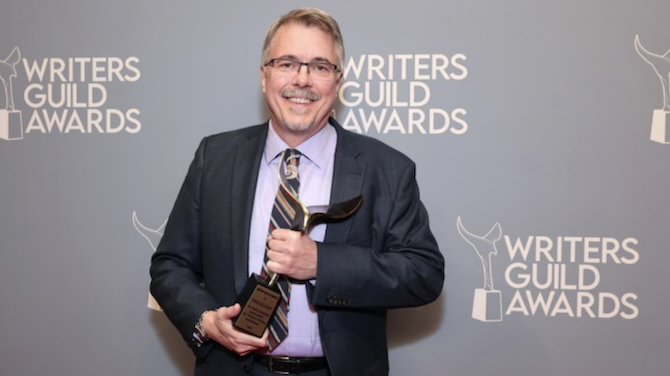
I watched an interview with Vince Gilligan recently, after finishing Pluribus, and he said, “Writing never gets easier. You’d think it would. It would be nice if it did. But it doesn’t.” And I know what he means. It always remains hard to discover those game-changing creative choices that bring a script alive. You gotta fight for them.
So do this for me. Don’t quit. Keep writing!
Now, moving on.
Since it’s the start of a new year, I want to talk about beginnings. Specifically, the beginning of ANY NEW SCREENPLAY you’re about to write. My job gives me a unique vantage point into the choices writers make at this stage, and there is one decision that comes up again and again as the most important of all. That is: deciding what kind of script to write.
That choice shapes everything that follows. Arguably, it’s the most important decision you will make on a screenplay. I’ve written a lot about choosing concepts, but over time I’ve realized there’s a variable that makes this decision especially tricky.
That variable is you.
As writers, we’re drawn to certain subjects. We’re fascinated by particular dynamics, themes, and corners of the human experience. The problem is that we often let our personal obsessions drive the idea, rather than stopping to ask whether those obsessions translate into something audiences actually want to see.
For example, I’m endlessly fascinated by people who have known each other forever, like married couples, quietly lying to each other in small, everyday ways. I find that dynamic riveting. But if I wrote a screenplay about a marriage built on tiny, constant deceptions, who’s lining up to buy a ticket to that movie?
My fascination alone doesn’t make it compelling.
This happens all the time. Writers inject their obsessions into scripts without asking whether those obsessions serve the audience’s curiosity. A screenplay should maximize dramatic conflict, deliver a compelling plot, and give audiences characters they want to root for. If the script exists mainly to indulge the writer’s personal interests, the result is a movie that only the writer enjoys.
With that in mind, I want to remind you of the three most effective ways to choose a script idea. I call these Tier 1 approaches. They consistently give writers the best chance of selling a script, getting a movie made, or getting hired for writing assignments.
First, the Big Idea
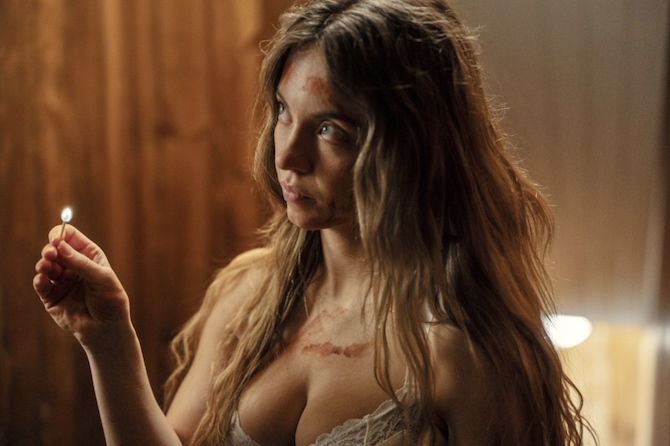
The Big Idea is baked into Hollywood history. It’s the idea that immediately feels like a movie, either because it’s high concept or extremely marketable. One of the easiest ways to figure out if you have a big idea is to imagine the poster. Is the poster exciting? Does it lean into a known genre and “type” of movie whose format we recognize? Or is it vague, confusing, or boring? Here are two posters. Which movie would you rather see?
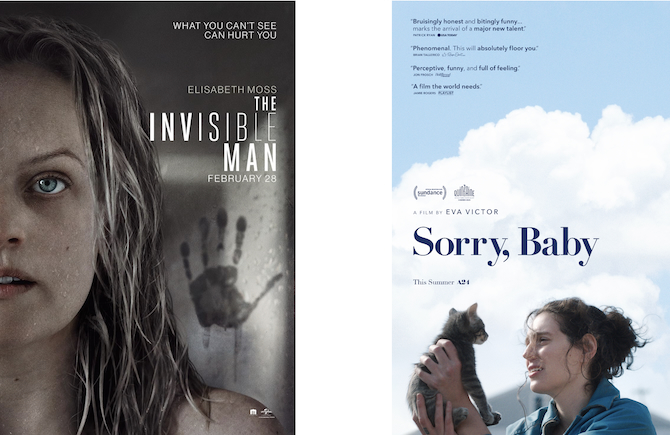
What helps is that the title is in sync with the image. When those two things don’t connect, it leaves the potential viewer confused.
The Housemaid is a big idea. The Running Man is a big idea. The Long Walk is a big idea. Good Fortune is a big idea. Sinners is a big idea.
On the other side of the spectrum are films like Train Dreams, If I Had Legs I’d Kick You, The Baltimorons, and Christy. I’m not making a value judgment here. This isn’t about what’s good or bad. It’s simply about illustrating what a Big Idea looks like. Big ideas are easier to pitch, easier to understand, and easier to get made.
Second, the Big Character
One of the great secrets of screenwriting is that if you have a big enough character, they become their own high concept. In that sense, the Big Character is the Big Idea’s close cousin.
I first heard this articulated by Wes Anderson. He said that he never starts with a concept. He starts with a character. That’s how Rushmore came to be. He created Max Fischer, a secretly poor student at an elite private school who signs up for so many extracurricular activities that he has no time left to attend class, and is therefore failing everything. Then Max falls in love with a teacher and chaos ensues. You could watch Max Fischer for hours. Which helped you forget that you were watching a very simple movie about going to school.
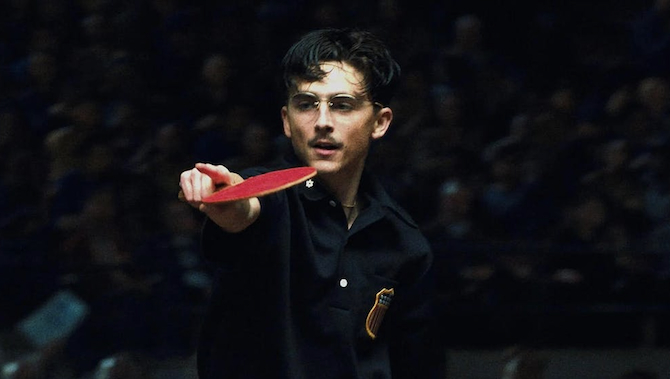
When you eliminate concept from the equation, you’re forced to work relentlessly to make the character fascinating, because that’s all you have. If the character isn’t shockingly interesting, the movie collapses. And ultimately, this is why people go to movies in the first place. We go to fall in love with people, not plots.
Recent Big Character movies include Marty Supreme, which I just reviewed, Christy from a few months back, Jerry Maguire, Tár, The Martian, and Anora. A good test is this: imagine a role so good that actors would happily stab each other in the back to get it. If that’s the case, you have a Big Character.
Third, the Big Voice.
The Big Voice is an interesting case. Having a strong, distinctive voice is arguably more valuable today than ever before, even though the golden age of the voice-driven screenwriter was fifteen to twenty-five years ago. That era gave us Charlie Kaufman, Diablo Cody, Quentin Tarantino, Richard Linklater, and Alexander Payne.
The media landscape is noisier now. We don’t really create household-name screenwriters anymore. But that doesn’t make voice any less important. If anything, it makes it more powerful. So many scripts today feel safe, familiar, and interchangeable. If you write weird ideas, see the world in an offbeat way, have a dark or unusual sense of humor, and your pages read unlike anyone else’s, you will stand out immediately.
The advantage of the voice writer is that the writing itself makes every page exciting to read. Even if no great character emerges or no great plot emerges, we enjoy reading the words on each page because those words are a direct link to a very unusual mind, which is a rare experience.
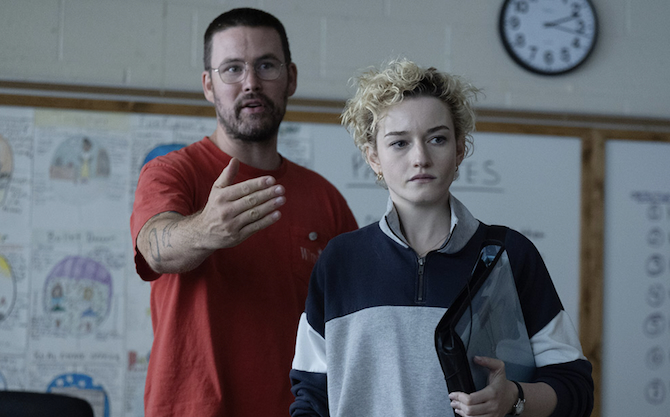
That said, this path only works if you truly have a voice. If your voice is vanilla AF, choose one of the other Tier 1 approaches. And if you do commit to voice, commit fully. Don’t hedge. Give us Bugonia, not Ice Cube’s War of the Worlds. Some contemporary writers working in this space include Charlie Brooker, Ari Aster, Zach Cregger, Alex Garland, Brian Duffield, Jesse Armstrong, Taylor Sheridan, Phoebe Waller-Bridge, and Vince Gilligan. When you read their work, it always feels unmistakably like them.
These three tiers will consistently give you the best shot at industry attention. They are not the only path in, but they are the most reliable. You can always choose to write exactly what you want and hope that passion carries it across the finish line. Sometimes it does.
But above all else, I’ll be happy if you just keep writing. Keep writing!! Don’t get discouraged. Writing is a peaks-and-valleys experience, and if we’re being honest, there are far more valleys than peaks. Let that knowledge empower instead of defeat you. When you expect the valleys, you’re better equipped to push through them.
Good luck in 2026. Here’s to a whole gondola full of you breaking in!
 Will this film make the list??
Could this be the last post of the year???
I don’t know.
The truth is, I usually get separation anxiety whenever I don’t post for too long so I’m guessing you’ll see me again.
In the meantime, I wanted to give us all something juicy to talk about for the rest of 2025. And since we’re all so darn opinionated, why not discuss our favorite and least favorite films of the year!?
I can promise you my list is unlike ANY OTHER “Best Movies of the Year” list you’re going to find. My lists are always driven by something I see in the writing, whereas most other reviewers look at the movie as a whole. I do that as well but I always prioritize the writing. What I can promise that you won’t find here is me including any movies I believe I’m *supposed to* include, which is what I’ve always hated about end of year movie lists. I feel like I’m reading lists of people who have been brainwashed rather than getting their true favorite movies of the year.
Let’s start with my worst movies of the year. For me, the biggest disappointment (expectations versus execution) goes to Good Fortune. I thought this film had a real shot at bringing comedy back to the multiplex, but Ansari’s screenwriting felt surprisingly lazy. The story crawls into its second act, never fully exploiting its fun premise. And while casting Keanu Reeves sounds great in theory, his limited time on set seemed to prevent anyone from clearly communicating what was expected of him. As a result, he often appears unsure of what kind of movie he’s in. Just an all-around dud.
Next up has to be Mickey 17. I knew this movie was screwed when I read the book. But people told me that the book was only going to be used as inspiration and not as a direct adaptation. It goes to show that you can’t dress up a story that, at its core, sucks. And, to make matters worse, Robert Pattinson botched his performance so aggressively that the movie turned out not just to be bad, but spectacularly bad.
 I think this is the only shot in the entire movie with a real background.
The race for worst superhero film of 2025 is a dead heat between Brave New World and Fantastic Four. It’s a tough call because they’re both bad in different ways. Brave New World is just boring. Whereas Fantastic Four felt different but looked so incredibly CGI generic that you never felt for a second like you were watching something that was really going on. Fantastic Four is probably a little bit better. But this quadro definitely isn’t good enough to be leading Avengers Doomsday, which is rumored to be the case.
Believe it or not, One Battle After Another is not my least favorite movie of the year. That title goes to If I Had Legs I’d Kick You. You have never IN YOUR LIFE watched a movie that is more frustrating than this one. It is an onslaught of abuse. Seriously! I feel like the director could be taken to court for the abuse she puts everyone through who sees this film. And it’s not fun abuse. It’s like she hates you and wants you to suffer for 90 minutes. Avoid this movie at all costs unless you hate yourself.
All right, time to move on to the movies I haven’t seen yet. These are movies that could conceivably make my 2025 Top 10, and therefore, I reserve the right to retroactively add them.
These movies include F1, Marty Supreme, Predator Badlands, Avatar 3, 28 Years Later, The Long Walk, Warfare, Hamnet, and Good Boy. Of these films, the ones most likely to make the list would be Marty Supreme and The Long Walk.
Don’t worry, we’re getting to the main event. But before the Top 10, here are some movies worth mentioning. I’ll begin with the Philippou Brothers’ “Bring Her Back.” A very odd movie with a completely nonsensical but spooky-as-hell character whose only purpose is to trigger a million WTFs during the film. Shaky and just missed my Top 10.
Next up we have Frankenstein which was easily the most beautiful movie I saw all year. The only reason it didn’t score higher is that I’m not a Frankenstein guy. But it’s very unique and different and worth checking out.

We then have Thunderbolts, which was a big swing. But it was a swing that ultimately failed. Nobody who goes to a superhero movie wants to be swindled into realizing they’re watching an A24 film about depression. That’s not an exaggeration by the way. The studio touted that 95% of the crew were A24 crew.
Next we have Naked Gun. This was easily the funniest movie of the year. I only wish they could’ve kept the laughs up for the whole film. The first half is very strong and then it kind of falls apart. But it has some hilarious moments so if you need a good laugh over the holidays, check it out.
Coming in next is The Amateur. What’s interesting about The Amateur is that, 15 years ago, this would have been a solid box office earner that would’ve given Rami Malek’s career a big bump and primed him for a shot at leading a high-budget Hollywood film. Now it’s just relegated to a Hulu streamer that barely anybody’s heard of. But it’s a fun movie that does a lot with its medium-sized budget.
This next one is going to be controversial but I don’t care. I thought Flight Risk was highly entertaining. This is the Mel Gibson-directed Wahlberg film. You guys know me. I love a good contained thriller. And this hits all the beats I require from one. The only reason why it didn’t make it into the Top 10 is because Mel had no explanation for why these two would repeatedly leave the passed-out dangerous murderous criminal in the back and never check to make sure that he was, ya know, STILL PASSED OUT.
Tim Robinson’s Friendship is a frustrating movie because it’s so unique and genuinely different that it immediately stands out from the crowd. Unfortunately, there are too many moments where the writing feels juvenile. It’s sloppy and never rises to the level of sophistication its oddness seems to promise. That same issue is why I couldn’t fully commit to Robinson’s HBO series, The Chair Company.
If you want a film that’s good but that is going to bring up feelings of extreme frustration, to the point where you want to throw something at your screen, Apple’s “Echo Valley” with Sydney Sweeney is your movie. You get so angry at this mom for babying her drug-addicted monster of a daughter. And yet, despite it all, you still want to find out what happens next.
Finally, we have Superman, which was easily the best superhero movie of the year. But it says a lot about how much this genre has fallen that Superman took that title. Because it just wasn’t big enough. Granted, the primary reason why this movie didn’t feel big enough was the hype behind it. But James Gunn built that hype. So, it was up to him to deliver. The film is better than okay. But never reaches anywhere above that.
I’ve made you wait long enough.
Here are my Top 10 movies of the year!
NUMBER 10: NOBODY 2

Nobody 2 is all about one thing: making sure you have a good time. That’s it. And it pulls this off using one of the oldest tricks in screenwriting: we know our hero is an unstoppable ass-kicker, but none of the bad guys do. That creates a reverse dramatic irony that plays out over and over. These fools keep challenging him, and he keeps making them pay. What’s interesting about the Nobody universe, though, is how it differs from the Equalizer or John Wick franchises. Hutch has to earn every kill. Some people dislike that Denzel in The Equalizer never struggles, that he always wins so easily. With Hutch, there’s always doubt. Even though he’s a badass, he’s twice the age of most of his opponents, so nothing is guaranteed. The franchise also balances its action with a fun, semi-goofy sense of humor that keeps things light. That combination is what makes Nobody 2 the kind of movie you watch and leave feeling invigorated.
NUMBER 9: BUGONIA

I went back and forth on whether to include this one. In many ways, it’s the opposite of Nobody 2 in that it’s all about you having a bad time, lol. The main character chemically castrates his retarded cousin as a means to accomplish his big kidnapping plan of a CEO. He then shaves the kidnapped CEO’s head and there’s this sexual abuse subplot with a local cop and, needless to say, it’s all a real downer. With that being said, it’s never not interesting. And that’s something I put a lot of stock into – are you being interesting with your creative choices? Creative choices are the one thing you can’t really teach in screenwriting. Does the writer make good ones or not? The only thing you can really teach screenwriters to do is challenge every creative choice they make to see if it’s really the best one they can come up with. This writer never makes the easy obvious choice. And some wild-ass things happen in it. All in all, it’s too interesting to leave outside my Top 10.
NUMBER 8: AFTER THE HUNT

I know I’m on my own island with how much I like this screenplay and movie, and I’m not going to change my mind just because everyone else dislikes it. I still think it has the best dramatic setup of any film this year. The writer constructs a triangle between three characters that is incredibly complex and layered, requiring each of them to think seven moves ahead in order to succeed. That said, the film also highlights how difficult it is to connect with audiences when none of the main characters are likable. I believe that’s the primary reason it didn’t resonate with viewers. It didn’t bother me because I resonated with Julia Roberts’ character. I understood her guardedness and why she kept others at a distance. While many people disliked her, I found myself rooting for her, which probably explains why I experienced a very different movie from everyone else.
NUMBER 7: SKETCH

Before I saw this movie, I reserved the word “sketch” for the DoorDash guy who suspiciously hung around the inside of my building for 30 minutes after every delivery he made. But now, the word will always make me think of this movie, which is as close to a Spielbergian experience as you’re going to get in 2025. Heck, it was more Spielbergian than Spielberg these days. While it’s true the movie is limited by its low-budget, it somehow still has some of the best effects of the year. But what really holds it together is the touching, well-crafted story of a family trying to move on from the death of their wife/mother. For that reason, this script is a particularly good script to study for how to write a formulaic movie. It’s a deceptively difficult format to write in because the formula makes everything predictable. But if you can make us love and care about the characters, you can supersede that issue.
NUMBER 6: WEAPONS

I absolutely love that this movie did so well, because it’s a major swing for a horror film. It doesn’t follow a single protagonist, which is always a risk, and it uses a backwards approach to navigating its central mystery. All of this reinforces a point I constantly stress on the site. If you truly want to break through in this industry, you have to take creative risks. The one downside is something I noted when I first reviewed the screenplay. The characters lack depth. The only character who feels fully realized is the villain. If that issue had been addressed, Weapons would go from being the best horror film of 2025 to one of the best horror films ever made. Even so, Weapons has a sharp, risky edge combined with just enough mass appeal to make it the kind of movie anyone can enjoy.
NUMBER 5: EDDINGTON

There isn’t a movie on this list that made a bigger comeback on the Carson Opinion-O-Meter than this one. When I first read the screenplay, my main criticism was simple. You can’t make a movie about Covid. Period end of story. People want to put that time as far behind them as possible. It was miserable, and nobody wants to be reminded of it. In a way, I was right, because nobody went to see this movie. But it turns out Ari Aster actually did find a way to make a movie about Covid good. In retrospect, I think the location is what made it work. If the story had been set in a city, it would have felt uncomfortably close to home. By placing it in a remote small town in New Mexico, it felt like a world we hadn’t seen before, which helped create a genuinely original moviegoing experience. Aster’s one real flaw here is that he tries to cram too many ideas into the film, and by the end, things start to feel garbled. That said, when it comes to making unexpected creative choices, he always delivers. They aren’t always the right choices, but they’re consistently bold and unpredictable. And the insane WTFIGO climax ranks among the most entertaining large scale Hollywood endings in recent years. You have to go in with the right mindset and expect the unexpected, but if you do, there’s a very good chance you’ll love this film.
NUMBER 4: FINAL DESTINATION: BLOODLINES

Talk about bringing a franchise back with a bang. This movie was insanely entertaining. Just last week, I found myself hovering my mouse over the “rent” button for The Running Man, but I couldn’t bring myself to click it. Then it hit me why. I know for a fact that Edgar Wright has no passion for making that movie. Glen Powell doesn’t either. Wright needed a paycheck so he could keep making more art-driven films, and Powell was looking for a star-making vehicle and thought he’d found one by teaming up with a respected “artsy” director. But neither of them actually gave a shit about The Running Man franchise. The result was exactly what you’d expect: predictable, forgettable sameness. Now contrast that with Final Destination: Bloodlines. Directors Lipovsky and Stein are massive fans of the franchise, to the point that they made a spreadsheet ranking every single kill in the series. Then they asked themselves a simple question: how do we create five kills that are better than anything on this list? And they delivered. This movie was great. It was the best time I had in a theater all year. It’s a perfect reminder that when you write something you’re truly passionate about, you put in the extra work to make it as good as it can possibly be. When the primary motivation is anything else, that level of care just isn’t there.
NUMBER 3: THE BALLAD OF WALLIS ISLAND

To me, the true test of good screenwriting is executing a story built entirely around characters. There are no bells and whistles to distract the audience, no robots, monsters, or time travel. It’s just people. If you can write a great screenplay based purely on character, you can write anything. That’s why After the Hunt made this list, and it’s also why this movie did. The Ballad of Wallis Island has the best character arcs I saw all year. Charles, the man who owns the island and hires a once-famous folk duo to come play for him, has one of the most heartbreaking arcs you’ll encounter. He spends all of his money to bring them here because their music was the soundtrack to him falling in love with his wife, who has since passed away. Watching him slide through that grief over the course of the story is genuinely moving. On top of that, there’s the complicated relationship between the band members (also former couple) Herb and Nell. Their dynamic unfolds in ways you don’t expect at all. That’s a theme I’m always looking for in writing. Do you take the expected path and let the audience stay ahead of you, or do you choose the unexpected and stay ahead of the audience? It’s a slow movie, so you need to be in the right indie-film headspace to fully enjoy it. But if you are, this one is absolute magic.
NUMBER 2: NOVOCAINE

Hold up, Carson. Novocaine was your number two movie of the year? You bet it was. And do you know why? It’s a screenwriting reason. I’ll give you a second to figure it out. It’s because no movie did a better job of fully exploiting its concept. A guy can’t feel pain. His girlfriend is kidnapped. He decides to turn what should be his greatest weakness into his greatest strength in order to save her. Earlier, I mentioned what made Nobody 2 interesting was that we weren’t always sure Hutch could beat the bad guys. This script dials that up to a thousand. The main character, Nate, doesn’t even know how to fight, yet he’s up against trained killers. Usually, when I see this in screenplays, the protagonist only survives because the writer bails him out with plot armor. But Novocaine consistently puts Nate in truly fatal situations and then has him use his inability to feel pain to escape in ways that actually feel believable. I thought it was masterful. I’m convinced the only reason this movie didn’t perform better is because the trailer made it look familiar, like a typical B-grade, low-budget action film you’ve already seen. But it’s not. It’s the absolute best version of a B-grade action movie you’ll see this decade, precisely because it’s unique and because it relentlessly mines that uniqueness in inventive ways. I place it as my second favorite movie of the year with complete confidence.
NUMBER 1: COMPANION

There was no movie this year with a better twist than this one. Much like Novocaine, it does an excellent job of using its unique concept to drive every creative choice. This is a film you’re best off seeing cold, but spoilers are coming, so consider yourself warned. Once we understand that this world includes robot companions, the writer squeezes every possible idea out of that premise. One of the best examples is the reveal that another member of the gang is also a companion robot. You might think that’s been done before, but it really hasn’t, because what makes these companions unique is that they don’t know they’re companions. They discover the truth at the same time we do. That choice opens the door to a deeper, almost existential exploration of humanity, suggesting that for all we know, we could all be living a lie without realizing it. Another thing I loved about the script is how convincingly it makes Iris feel completely outmatched by the villain, her “boyfriend” Josh. He literally remote-controls her. The entire time, you’re asking how this woman could possibly defeat someone who can control her every movement and even her emotions. I love stories where the goal feels genuinely impossible, and this one absolutely does. We care deeply about the heroine and truly hate the villain. The story delivers strong twists and turns, and midway through, a T-1000–like character enters the picture to make Iris’s journey even more daunting. In the end, it’s just a wildly fun movie built around the most inventive concept of the year and it makes for a perfect double feature with Novocaine.
There you have it. Those are my favorite movies of the year.
I’m now really interested in hearing what your favorite movies of the year are!
And a popular show reminds us of the power of a classic screenwriting tip

This whole ‘Hollywood is dying narrative’ is sillier than a candy cane cobbler.
Trust me, if Hollywood disappeared tomorrow and all we had were TikTok shorts and Youtube conspiracy videos, our society would implode.
You know, a while back, I asked myself, “Why do I care so deeply about movies? Why do I want to write them, produce them, devote my life to them?” The answer that came back: I want to bring entertainment to people.
Most people’s lives are hard. They’re paying high rent and higher mortgages, covering never-ending bills and taxes, dealing with health issues both minor and serious. They worry about family. They’re stressed at work. Their relationships are unstable, exhausting, and unpredictable.
Movies and television matter because they offer relief from that. At their best, they provide a chance to escape. And when they’re done really well, they provide hope! The most powerful heroes we meet in these stories are the ones who get knocked down repeatedly yet stand back up to fight again. It’s almost impossible not to root for them.
Those characters remind people that they can fight too. That the obstacles and depressions in their lives aren’t permanent, but rather temporary. If John McClane can survive a sealed Nakatomi Plaza, Nazi-adjacent terrorists, crawling over broken glass barefoot, and a couple of one-on-ones with Hans Gruber, then maybe I can get back on the horse after getting fired from my job.
I admit we’re going through a rough patch in Hollywood right now. But that’s mainly because the industry went all-in on superhero movies and now that they aren’t making money anymore, Hollywood’s having a tough time pivoting. And I get it. We convince ourselves that it’s better to keep fixing up that old car than buy a new one. But it’s time for Hollywood to buy a new car.
And what’s cool is, YOU GUYS get to influence what car they boy. Often “what’s next” is determined by some unexpected hit movie. That’s what signals the town that, “This is what audiences want next!” And then, in classic Hollywood style, they go all in. So, it’s up to the people who read this site to challenge their imagination and try to see the future. What do you think people want that currently isn’t available? If you can answer the question, write a script about it.
You want to know what I think the next big lane is going to be? I think it’s going to be big-budget sci-fi. Cause sci-fi hasn’t been good lately. It’s been wrapped inside of Marvel movies, where it’s mostly become bastardized. As a result, there haven’t been a lot of great sci-fi movie options. Dune, maybe. But that’s it.
If somebody could come up with a really original sci-fi take, the way Star Wars felt brand new in 1977 and The Matrix felt brand new in 1999. That could mark the next big trend in Hollywood. Cause I don’t think this Supergirl movie is going to save the superhero industry. It just doesn’t look unique enough.
Okay, it’s time to talk Pluribus Episode 7!

I think I’ve finally figured this show out.
When you create a show, it’s important to have a “North Star,” which is a metaphor for a direction you can always go towards when you’re lost.
You can do this in feature writing as well, but it’s more important in television because the story is so sprawling. It goes on for years. So it’s easy to get lost. And when shows fall apart, it’s usually because they didn’t have that north star guiding them.
I figured out the north star for Pluribus.
It’s: SHOW DON’T TELL
Never has that been more evident than in the most recent episode, Episode 7.
The episode is, sort of, a two-hander. The “hive” have long since left Carol after she nearly killed one of them. This leaves Carol on her own and that means she’s got to come up with things to do during her day. So she works on her golf game from the top of a skyscraper. She steals a bunch of high-grade fireworks and lights them up at night.
Concurrently, one of the only other 12 people who hasn’t been infected by the hive, Manousos, begins this long trek from deep in South America, to get to Carol. Manousos HATES the hive even more than Carol does and, therefore, despite their constant attempts to fly him to New Mexico, he ignores them and continues to drive north, eventually ditching his car because he has to trek, on foot, through hundreds of miles of jungle.
At first, I hated this episode. For 25 minutes, we see Carol playing golf and lighting fireworks, as well as Manousos driving through the South American countryside. There is little to no dialogue. It’s all visuals. And because of that (because there was no drama) I actually turned it off after those 25 minutes, deciding to finish it the next night.
The second half was much better. For Manousos, he has a clear flaw, which is that he refuses to listen to anybody, regardless of his own well-being. And what’s kind of interesting about the episode is that that’s similar to what Carol is going through. She doesn’t want help from these people. She doesn’t want to be around these people. So it’s a theme that’s guiding the episode.
Manousos’s storyline kicks into high gear when he reaches the edge of the jungle he has to trek on foot. Several of the hive-mind humans step in front of him just as he’s about to begin the trek and warn him that there’s basically zero chance he’ll survive. Manousos, being stubborn, disregards their advice.
This is a great dramatic setup that any writer can use. You tell the audience: If your hero chooses to go forth, he will die. Now you’ve got our full attention. With the beginning of the episode, Manousos was just driving. There was no drama. With Carol, she was just existing. There was no drama. The warning from the hive-mind finally infused the script with some drama. We had to watch to see if Manousos would somehow survive a 100 mile trek through the most inhospitable place on the planet.
It was around this time that this “north star” guiding principle became clear to me.
Vince Gilligan is very big on SHOW DON’T TELL.
And, of course, this has always been some of the most popular screenwriting advice you’d get. For good reason. There’s something about characters telling us something that doesn’t resonate the way it does compared to when we see it with our own eyes.
There’s this moment in Star Wars where Luke Skywalker and Obi-Wan are trying to buy passage off of Tattooine from Han Solo and Han asks for this obscene amount of money: 10,000 republic credits. Luke gets pissed off, replying, “Ten-thousand?? We can almost buy our own ship for that.” “Yeah but who’s going to fly it, kid,” Han replies. “You?” “You bet I can, I’m not such a bad pilot myself.”
And that’s it! That’s the only information we get about Luke Skywalker being a pilot before he’s tasked with taking on the Death Star at the end of the movie. And most people never pick that up when they watch the movie for the first time. Why? Because it’s just words. And you would think that George Lucas would know that: how much more powerful showing is. So why didn’t he SHOW Luke Skywalker flying a ship instead of telling us? It would’ve been a much better setup for the ending.
Guess what?
He did.
In the original rough cut, Lucas shows Luke piloting a ship. But they had to cut it for time.
The point is, “SHOW DON’T TELL” has been around forever and you should always be trying to integrate that mantra into your storytelling.
WITH THAT SAID…
You can take it too far. Just like any screenwriting advice. And I think that’s what Gilligan is doing by making SHOW DON’T TELL his north star in Pluribus.
Because what we ultimately learn in this episode – that Carol is insanely lonely and has nothing to do, and Manousos has to chart a path 3000 miles north – is told completely via “SHOW DON’T TELL.”
And it gets tedious.
Audiences are more savvy than you think they are and they pick up on things quicker than you think they will. You could’ve shown Carol in her cul-de-sac street, looking bored out of her mind, shooting fireworks, and conveyed her loneliness from that scene alone. You didn’t need the golf stuff.
Concurrently, did we need 10 minutes of “show don’t tell” driving from Manousos to convey how long his journey was? No. You could’ve gotten there in half the run-time with the same effect.
Now, I will say this: Both of the payoffs for these long “show don’t tell” storylines were strong. (Spoilers) We see Carol paint some mysterious lines on her cul-de-sac, only to later see Zosia show up at her door and Carol run to her and embrace her, breaking into tears. It’s a great “show don’t tell” payoff of just how lonely she was. And then when we pan up from them, we see what Carol’s street painting said, which was the message: “Please Come Back.” Another “show don’t tell” payoff.
For Manousos, he predictably becomes dehydrated and physically unstable in the jungle, ultimately slipping and severely injuring himself. He eventually passes out, but before doing so, sees the faint outline of a helicopter above him.
So, what’s the point to all this? Gilligan is perfectly fine living by the show don’t tell and dying by the show don’t tell. He’s determined to tell this story through actions and imagery as much as possible, and to only use dialogue when it’s necessary.
I think it gets him trouble. There are too many slow sequences in this show. And no matter how much showing not telling is going on, it can’t save elongated stretches of story. So, use show don’t tell when it makes sense. But don’t over-rely on it. Sometimes, the best course of action is a character explaining things or talking to someone else. The hive-mind people warning Manousos before he enters the jungle is the perfect example. If Gilligan would’ve tried to “show don’t tell” that moment, we wouldn’t have felt nearly as much fear and danger for Manousos, which would’ve lowered the dramatic tension considerably.
Did any of you watch the latest episode?
What did you think?