
Search Results for: F word
Scriptshadow called it the best script of 2024. How did it hold up!??
Genre: Drama
Premise: A Yale professor up for tenure must navigate a rape accusation from her most cherished student against another professor, who happens to be her best friend at the school.
About: After the Hunt was one of the buzziest scripts of 2024. When Julia Roberts hopped on to play the lead role of Alma, the Oscar statuettes began humming into the ethos, beginning their manifestation of Julia Roberts winning a second Oscar. But when the movie “only” received a 6 minute standing ovation at the Venice Film Festival (the best films routinely get over 13 minutes these days), worry began to permeate the post-festival game plan. Then came the critics’ response. The film is hovering around 45% on Rotten Tomatoes, a shocking score when you consider the talent involved (the movie is directed by current indie god, Luca Guadagnino). It is near impossible to get me to the theater for any movie that scores lower than 80% on RT. But I figured, since I loved the script, it would be an interesting case study on what went wrong. Imagine my surprise when I realized NOTHING WENT WRONG. That the movie was actually awesome. What makes this script-to-screen tale even cooler is that the writer came out of nowhere. Nora Garrett had zero footprint on the internet as a screenwriter before After the Hunt changed her life.
Writer: Nora Garrett
Details: 130 minutes
There was a time in Hollywood when studios would make movies and let the audience decide which were good enough to promote as an Oscar contender.
Those days, unfortunately, are long gone. They’ve been replaced with studios treating their “Oscar movies” like Marvel films, planning them 2-3 years in advance. They say, “This will be our Oscar film for 2025!”
They’ll then build marketing campaigns well ahead of time doing everything in their power to manipulate the general audience into believing that their movie is the most important piece of digital celluloid anybody will ever see.
The problem with that is audiences are pretty hip to the game these days. We can smell the manipulation. It smells like old car grease. And so it becomes this frustrating experience of watching a movie we’ve been told is amazing when, in actuality, it’s just some average adult-skewing film with more mature themes than usual.
One Battle After Another is a textbook example of this, and it frustrates me to no end that so many viewers are falling for it. It’s no different than when we thought we loved Chocolate, The Shape of Water, The Artist, or The English Patient. These movies were, at best, average. But the marketing campaigns gaslit us into believing they were masterpieces.
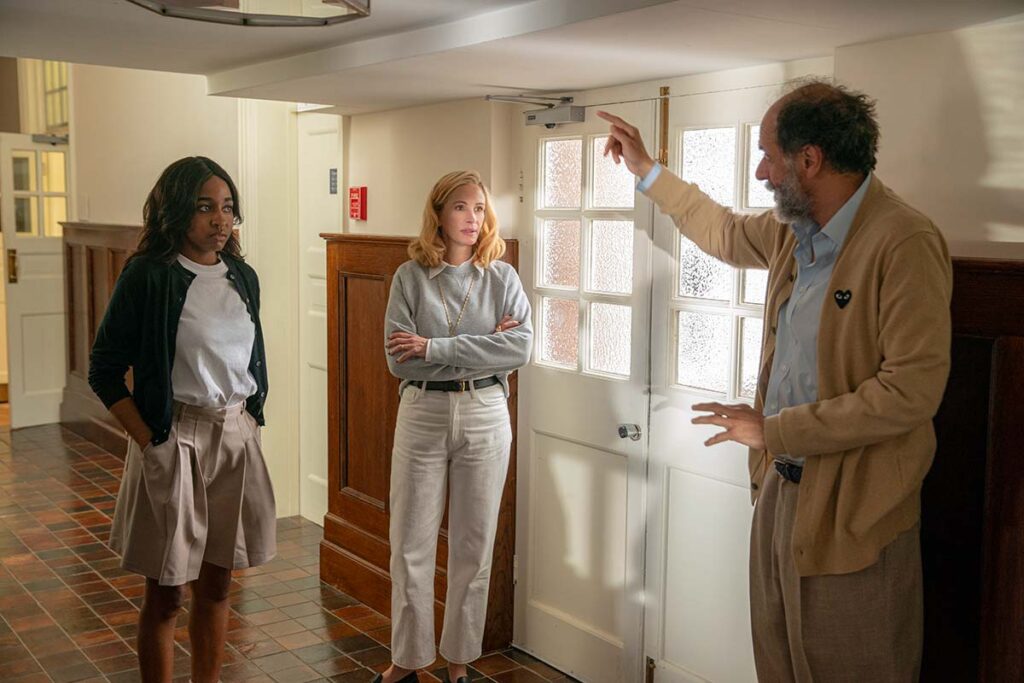
After The Hunt is a stupendous movie. I loved it. But it is not immune from this criticism. This movie wants to win the Oscar even worse than One Battle. At least One Battle has action scenes. This is just people in rooms talking.
But boy are they delicious ‘people in rooms talking’ scenes.
As some of you may know, I reviewed the script a year ago and called it the best script of 2024. The finished film started screening a few weeks ago and the critics were not kind, giving it a 45% Rotten Tomatoes score, effectively ending any chances of it winning Oscars.
What went wrong? It’s hard to tell! I don’t understand why people aren’t loving this film. I’m going to break down several areas that I believe may have caused the critics to sharpen their knives. But it’s disappointing because I think they’ve got it all wrong and are ignoring one of the best movies of the year.
After the Hunt is a simple story. Alma is a beloved professor up for tenure at Yale. Rumors are that her star student, Maggie, is putting the finishing touches on an amazing dissertation.
Alma is married to Frederik, whom she no longer finds attractive, but poor Frederik is in complete denial about it. Alma is best friends, drinking buddies, and flirting buddies with Hank, known around campus as the hot, cool professor.
One night after professors and students mingle at a party, Hank walks Maggie home. The next morning, Maggie comes to Alma and claims that Hank raped her. Alma, in a state of shock and confusion, is far from supportive.
This begins a series of “he said, she said” interactions where Alma, being violently pulled in opposite directions by each party, finds herself trying to gauge what the truth really is. But because her support for Maggie isn’t absolute, Maggie turns on her, putting Alma’s shot at tenure in question.
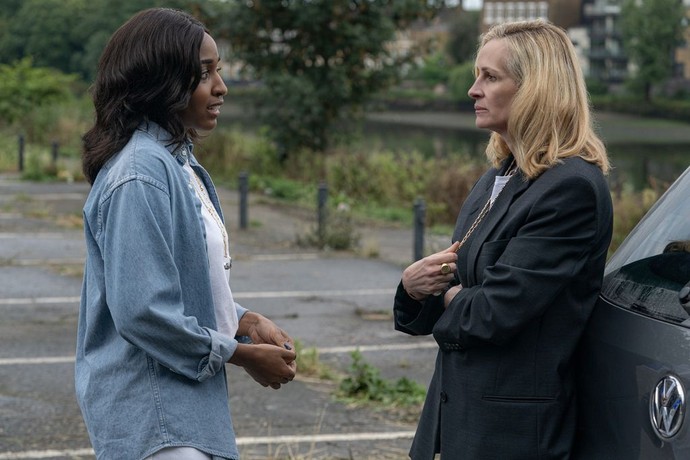
Let’s talk about the first screenwriting reason why I think people aren’t connecting with this film. The main character, Alma (Julia Roberts), is inaccessible. She’s cold. She’s unable to connect with others on any emotional level. She can’t be there for Maggie in her worst moment, she can’t give love back to her over-loving husband, and she’s able to heartlessly cast off Hank, who has fallen in love with her.
It’s very hard to pull people in when their entry point is a person who doesn’t let anyone in. That’s screenwriting 101. If you create a warm main character, we feel warm. If you create a funny main character, we feel good. So that’s definitely something to keep in mind when you write a script.
Now, the reason this didn’t affect me personally is that I am fascinated by these types of characters. I have had people like this in my life. And I can sometimes be this way myself. So that’s another lesson in why storytelling is so tricky. You never know what the audience is going to relate to because everybody’s different. Due to my negative experiences with people like Alma, I carry a higher emotional investment in what happens in this story because I’m hoping that Alma can change. That way I, retroactively, can change the people in my life who were similar to her.
But the point is, I think this was a big reason critics didn’t like the film. Alma put this giant wall up in front of the story and unless you were like me and were really determined to get to the other side, you decided not to scale it.
The next big screenwriting thing that hurt this movie was the back half of the second act. I would actually be surprised if anybody watched the first half of this movie and didn’t love it. It’s an incredibly compelling scenario! Someone accuses a beloved figure of sexual assault. The accuser is obsessed with a professor who just happens to be very close to the accused. That is a PERFECT dramatic triangle.
But 80% of that situation is resolved by the midpoint. Hank has already been fired. So we’re left to wonder: what is the story now? The makers of the film would probably argue that the story is the fallout – it’s about what happens to these relationships “after the hunt.” But the movie doesn’t do the greatest job of signaling that shift. So I think viewers felt a little lost. Like, “Why are we still here?”
There’s no doubt that 65-70% of the way through this movie, things have slowed down A LOT. It made me realize just how much writers struggle to nail the second act! It’s literally a problem in 9 out of 10 movies that I see. I don’t think anybody out there has truly cracked how the second half of the second act of a screenplay is supposed to work.
And it got me thinking: How *does* it work?
Most writers know that the third act is where the script “revs up” again. It’s where your heroes get together and execute that one last push to obtain the goal or take down the bad guy.
So, intrinsically, you would think that BEFORE THAT, things would need to SLOW DOWN. You can’t rev up if you’re already moving fast, right? Therefore, writers allow their second acts to drift off into this little nap as the act nears its completion. There’s no doubt that’s what happened here.
The solution? It’s tricky. Since Garrett is new to screenwriting, she may not understand story engines well yet. This movie is strongest when the story engine is: what’s going to happen between Hank and Maggie? Who’s going to win that battle? Well, Maggie wins it pretty quickly. Hank is out of a job by the midpoint.
So what’s the story engine now? The engine becomes: will Alma get tenure? And the drama comes from how nasty Maggie is going to get with Alma, since Alma didn’t give her full support.
But here’s why the engine sputters. The writer and director completely forgot to remind us how important tenure was for Alma. I don’t even think the average person understands what tenure means or why it would be so important for someone. It’s up to the writer to convey that and to also continuously hype up its importance. We need scenes where we see Alma freaking out or getting angry when her grasp on tenure starts slipping. But there was none of that and, as a result, the end of the second act began to wander.
Had they tightened that up and better established the engine, I think critics would’ve been more favorable.

And if you want to know how to handle second-halves-of-second-acts in general, here’s the trick: Go hard and crash hard. Yes, there needs to be that “lowest point” for your hero at the end of the second act. It is their “death.” And then the third act is their “rebirth.” But the second-half-of-the-second-act should not be a cancer death. It should not be slow and lingering. Instead, you need your hero pushing and pushing and pushing to obtain whatever it is they’re trying to obtain, and then you give them a heart attack. The death needs to be sudden (metaphorically speaking, of course). Even in these slower dramas. In fact, ESPECIALLY in these slower dramas.
Okay, I’ve told you why I think everybody else didn’t like After The Hunt. But why did I like it? Well, for starters, I’m personally drawn to a lot of things here. I love old college institutions and campuses. I find them very romantic and one of the few pieces of real history that America has.
I think the character-writing here was amazing. Just like in the script, every character had something deep going on. You just don’t see that in screenplays these days. They even improved the character of Maggie from the draft I read, giving her more depth. She’s a black woman whose parents essentially run the school, so she has some power. She’s gay. She’s dating someone who’s non-binary. And it all plays into the story. There’s this great late scene where Alma calls her out on all of this. She points out: “you don’t even like this person you’re dating! You just think it makes you look more interesting!”
But what made the movie even better than the script was the performances. The performances here are SOOOOO good. I mean, Julia Roberts isn’t playing as splashy a role as she did when she won the Oscar for Erin Brokovich. But in many ways, it’s a much harder role because it’s so internal. And she does an amazing job of playing this character who’s keeping all of this damage inside while smiling at the rest of the world.
I recently told a writer that the key to writing an Oscar-winning character is to create the biggest gap possible between who they are on the inside versus who they are on the outside. In other words, if they’re extremely damaged, don’t have them act extremely damaged. Have them act happy. And that’s what you get here.
Ayo (who played Maggie) won me over by the end because she really is a good actress. Michael Stuhlbarg almost steals the show playing the “cuck” husband of Alma. He’s so nice and such a good guy and just has no idea that that’s the exact reason why his wife has fallen out of love with him. The way that Stuhlbarg passive-aggressively expresses his anger by cooking with the music volume dialed up to a hundred—he’s just a really fun but tragic character.
But the actor who steals the show, without question, is Andrew Garfield. Andrew Garfield is AMAZING in this. He plays the PERFECT balance between charming professor and potentially creepy guy. He steals every scene he’s in. He should be up for an Oscar for this, but I just don’t know if the Academy has ever celebrated a role like it before. It’s not the kind of role that results in awards, which is exactly why it stands out. In many ways, it’s a throwaway role. He’s there to jump-start this movie that will ultimately be about Alma and Maggie. But he’s just so damn fun to watch any time he shows up.
For example, there’s a scene in the middle of the film where Hank gets Alma to come have Indian food with him so he can explain his side. And as he’s explaining the very thing that could ruin his life, he’s gleefully ordering everything on the menu, flirting with the waitress. And you’re just like, “What the hell is up with this guy!??” You don’t know what to make of him, which is exactly why you want to keep watching him.

There’s another scene later in the story where he goes to Alma’s secret apartment, where they, presumably, used to hook up. It’s a 15-minute scene of just them hashing it out. And he’s so incredibly good in it. I’ve always thought Andrew Garfield was a solid actor. But I came out of this thinking he was a great actor. And he’s a big reason why, even when that second act took its nap, I still enjoyed it. Because he kept showing up.
The final, and probably biggest, mistake they made was miscasting Maggie. Ayo was good. Of course she was good. She’s a good actress. But her image was completely wrong for this part. This girl needed to be stunning, and that would’ve changed EVERYTHING about how we saw the situation. Hands down. It’s a completely different film. And it sucks because this is one of the things that writers have no control over, how a director can undermine a role just by miscasting it. It was the only mistake Luca made, but it was a big one. I think that alone would’ve bolted this up AT LEAST another 30 percentage points on Rotten Tomatoes.
Will you like this movie? That depends. Does this setup sound intriguing to you? If it does, I find it difficult to believe you wouldn’t like it. But if this isn’t a movie or a concept you find any interest in, you’re probably not going to like it. It’s not something that converts people who wouldn’t normally like these types of movies.
But for me, I loved it.
[ ] What the hell did I just watch?
[ ] wasn’t for me
[ ] worth the price of admission
[x] impressive
[ ] genius
What I learned – Here’s Nora Garrett on selling the script in her interview with Indiewire: [Before I sold the script], I didn’t have an agent, I didn’t have a manager. I asked a friend to introduce me to a manager. I thought, best case scenario, the script would become a spec that I would use as an example of my writing, and then I would hopefully get a manager, hopefully some jobs. Because it’s the exact opposite of what everyone tells you to write, it’s an adult psychological drama, it’s very heady. There are a lot of people talking. There aren’t a lot of action sequences. It can feel very play-like. And it’s about a subject that most people don’t want to talk about or touch. But then the woman who became my manager, Sydney Blanke, was very smart about who she sent the script out to. Allan Mandelbaum had just come out of doing “Fair Play,” and was then at Imagine. I had a meeting with a couple of interested producers, but Allan and the rest of the team at Imagine were always the ones who I felt like had just a real creative understanding, and also a really good idea of how to approach getting it made.
I don’t know what ElDave and I are. Are we enemies? Frenemies? Are we brothers who fight in the car the whole time we’re driving on vacation, our parents screaming at us from the front seat that if we don’t stop, they’re turning this car around! Are we sisters who scream at each other all day who then get mani-peddies and ice cream afterwards??
I’m not sure. But I thought it would be educational to make this post regardless.
For those of you who don’t follow Scriptshadow every day, this one requires some backstory. So, let me lay it out for you. Hundreds of writers pitched their horror ideas to make it into a Scriptshadow Horror Screenplay Contest. Only 97 writers made it in.
I then held a First Scene contest where any of the 97 writers could enter their first scene. I picked the best six scenes to feature on the site. One of the contestants, ElDave, didn’t make the cut. So, he posted his scene in the comments section.
A lot of writers liked it. In fact, quite a few of them said they would’ve voted for ElDave to win. It only seemed fair to ElDave, then, that I feature and analyze his scene on the site, which I did two weeks ago.
To summarize, I thought the scene was okay. But I didn’t think it was as good as the six other scenes that had made the First Scene Showdown.
Keep in mind, the main way to successfully get into my contest was to pitch me an idea that I really liked. But I also offered other ways to make it into the contest, one of those being, if your pitch got 15 upvotes from your fellow writers, you were automatically in.
ElDave did not get into the contest via my endorsement. He got in because the writers here upvoted his concept in. I mention that because ElDave repeatedly points out that I never liked his concept to begin with. Which I don’t think is true. I just had a very high bar for making the cut.
Moving on, ElDave responded to my critique of his scene in the comments section, which is something I’m totally fine with. If I’m going to analyze your script, you have every right to analyze my critique of it.
This provides a rare opportunity to respond to the concerns a writer had with my critique. I feel like this is going to help all of us get better. You know those Youtube videos where you have someone responding to a view of someone responding to a video? This is the Scriptshadow equivalent of that.
ELD: For all the complimentary stuff – sincere thanks. I’m mainly going to deal with the perceived issues.
=============================================================
So when I read this opening page, my first thought was, “It’s the old suicidal person on the other line scene and our heroine is going to save them.” It’s a scene pattern I’ve come across a lot.
=================================================================
ELD: I’m ESTABLISHING a 9-1-1 center. As it turns out, they handle a lot of suicides. And again, we’re establishing a routine call here to get our new world bearings because the next call is going to be the weird. So, as a writer, you know that, and you do not want your establishing 9-1-1 call to out-weird your weird that gets the premise rolling. You could make an argument to nuke the opening call and just get to it. But the argument that it must somehow be special belies the purpose of ESTABLISHING SCENES.
I have mulled that over but right now I feel it is more advantageous for the reader to see normal Zoey for at least 60 secs.
SS: This is an interesting point. Because, in principle, I agree with what ElDave is saying. You have to introduce the normal everyday life of your protagonist before you introduce the inciting incident, which is going to turn that normal world upside-down.
My problem is more with the choice of calls. Yeah, you want to introduce “normal.” But normal does not mean boring. Normal does not mean clichéd or uninspired. It’s a bit of a mindfuck but you want to introduce the “exciting version of normal” if that makes sense.
Give me an emergency situation that I can tell you put some thought into. I can’t even begin to convey how many of these “suicidal calls” I’ve read in scripts. It’s the first choice many writers use, which is why you should know it shouldn’t be the choice for you.
=================================================================
When I read this second page, the big word that popped into my head was “competent.” The writing is very competent. It’s very professional. It’s doing the job.
But a screenplay needs something beyond competence. It needs a special quality, wherever that quality is going to come from. And when I read this page, this fear started to creep in that this scene was going to be adequate and nothing more. Because I feel like I’ve read hundreds of scenes just like it.
==========================================================
ELD: I don’t buy this at all. This is an opening for a horror movie with a 9-1-1 dispatch operation at its center. What is more – I’ve read it or seen it a 100 times – This premise or — A zombie bite scene? A couple in therapy? A person dying in a car crash? Etc.
See – those make the cut even though they have actually been done and you have actually seen them written 100 times. The irony here is that this premise is relatively unique. You don’t like the premise. You didn’t when it was first presented and seeing it on the page won’t change that. I can respect that. Tastes are tastes. Even though Bite by Bite was really well written, it would not have made my cut because I just don’t care for Zombie movies and would have no interest in the 100th iteration of one. Now, what you might have loved is what goes on in a 9-1-1 center during a Zombie outbreak. All I know is that the solution is not to make the first call unique, fascinating, one in a million. The objective of the first call must be to make you feel like what it is in a 9-1-1 center.
and – There are two macro outcomes in play on a suicide call. 1) She saves him. 2) He dies. I thought I’d go with # 2 – She saves him with a twist – he is mad and ungrateful for her efforts.
SS: So here, ElDave is pitting the originality of his scene’s execution against the originality of some of the other entries. Let me be clear. I don’t think any entry knocked their first scene out of the park. Which is actually supporting what I’m saying. Every writer needs to work hard on making their first scene stand out.
The first scene needs some special quality that makes a reader perk up and go, “ooh, this is cool.” It can be dialogue, it can be an original scenario, it can be that the writer has a very unique voice, it can be we fall in love with the main character right away, it can be the writer is a master of suspense and he has you in the palm of his hand within half a page because he set up a great suspenseful scene.
The point is, there has to be SOMETHING for the big-time Hollywood producer to latch onto. I think that one of the errors writers make is they compare their openings to the openings of other movies they’ve seen. Let’s compare this to the opening of Weapons, which is a basic expositional montage scene. Your average aspiring screenwriter says, “Well, that wasn’t all that amazing. So why am I being asked to be amazing?”
You’re being asked to be amazing because you are a nobody. You are not Zach Cregger who 7 different studios were desperately bidding to work with after Barbarian. Zach Cregger has buzz, he has a hit movie, he’s demonstrated the ability to direct a strong feature film. The only thing you have is your script. So your script has to do a lot more than these other movies. It sucks. It’s unfair. But it’s the reality of this business. It’s why Christopher McQuarrie says, “It’s pointless to write spec scripts.” Because he knows how difficult it is to get Hollywood’s attention with a script all by itself.
He’s right. It is difficult. But it’s not impossible if you listen to people like me, who are telling you, the bar isn’t 5 feet high. It’s 20 feet high. So you just have to aim higher.
If I told any of you, you have to come up with a more original and entertaining first scene than the one you’ve written or else you die, do you think you’d be able to? I bet every single one of you would be able to. Not because you were all of a sudden more creative. But because with your life on the line, you’d realize that you didn’t put 100% of yourself into that scene.
There is DEFINITELY a more original emergency call you can create here. I once had this crazy woman living below me who would always file noise complaints for the most random of things, like that I was running my dryer too loudly. She got so crazy once that she called 911 on me because I was walking around too much. To me, a situation like that is not only more original, but more representative of what a 911 operator might experience — getting a bunch of bullshit calls that aren’t really emergencies.
=================================================================
This was probably the page where I decided this wasn’t going to make the cut. Because this is the page where our main character solves the problem. And my question is: what special or unique or clever thing did she do to solve the problem? As far as I can tell, nothing.
She just got the guy to stay there long enough so the cops could pick him up. Remember, when you’re introducing a character, you’re trying to create something the reader will either fall in love with or become fascinated by. Anything less, and the reader isn’t going to be interested in them.
I’ll give you an example. The famous Lethal Weapon Mel Gibson suicidal jumper scene. In that scene, a guy is about to jump off a building and Detective Martin Riggs (Mel Gibson) is tasked with stopping him. What does Riggs do? Instead of trying to stop him, he says, “Let’s do it!” The jumper is so confused he’s not sure how to react. Riggs keeps pushing him. Let’s do it. Let’s do it! And eventually, they jump!
It’s a scene that both goes against what we’re expecting and creates a fascinating character in the process.
Those are the kinds of things I’m looking for when I get introduced to characters.
===========================================================
ELD:Arrrrgh….
She is NOT a clever character. This is not Sherlock Holmes or Martin Riggs in 9-1-1 center (although both would also be good movies). This is Zoey. A gal raised by the Foster Care system in New Orleans. She has no family, no real life outside of work. That is why she works the night shifts and every holiday possible. Things we will learn when they organically make sense for us to learn them. Like the fact that she became a 9-1-1 operator because when she was 17, a 9-1-1 Operator saved her from being raped and murdered by her Foster Dad.
She is an average person who will be faced with extraordinary new circumstances. i.e. why in the world would you require or expect a clever way to solve the problem from an unclever person. That is a biased filter at work. i.e., you like movies with clever folks, so you need the clever solution. Again, this is a taste issue – not a writing one.
This is going to be a Sixth Sense-type story with a Sixth Sense-type lead character. This is not going to be Indiana Jones. Let’s look at the lead character in The Sixth Sense – here is his description:
Dr. Malcolm Crowe is characterized as a devoted, quiet, and thoughtful child psychologist who is highly intelligent and at the top of his profession. His professional manner is described as subdued and academic, yet he is committed to his cases and hesitant to immediately “slap a ‘label’ of a diagnosis on a child.”
Think Maclom Crowe in a 9-1-1 Center – how “clever” would he be?
Carson – just my humble opinion – but you need to open your script review mind to include these types of characters and situations because, at least in the case of the Sixth Sense, they can lead to one of the best horror movies either way.
SS: This one you’re not just wrong on, ElDave. You’re dead wrong.
Every character has to have something they’re good at or what’s the point of writing a character at all. If we’re all the same, all devoid of any special skills, then there is no originality in us. There is nothing for others to root for.
Every person in the world has something they’re better at than most people. And the thing about highlighting this skill, especially early on, is that it does an AMAZING JOB at making us like the protagonist.
You said that Zoey grew up in the foster care system. Jesus Christ, that’s a goldmine of opportunities to get really good at certain things. You have to be a survivor to go through that system. You have to be resilient. You have to be tough. You’d probably have to learn all sorts of tricks to survive, basic things like how to navigate other girls bullying you.
How well do you remember The Sixth Sense? Malcom has an early scene, when he first meets Cole, where he does the most clever thing in the script. When Cole won’t talk, Malcom comes up with a game to get Cole to open up (If I guess something right about you, you have to take a step forward, if I guess wrong, you have to take a step back).
That’s EXACTLY what I’m talking about. That game is something only a psychiatrist would learn working in their line of business.
It sounds to me like Zoey’s life experience has subjected her to a lot of unique experiences that have made her a fighter and, likely, a problem-solver. So let’s see her use those problem-solving skills in that first call.
=================================================================
The explanation of using the word “darling” didn’t make this feel any more clever. If the idea is that she goes against the handbook to save people, I’m down with that. But if sometimes using an unapproved word is breaking the rules, it’s the tamest rule-breaking I’ve ever seen. So much more could’ve been done here.
For example, if this would’ve been some incel lamenting the fact that no girls like him and Zoey exploited that to save his life by pretending to be romantically interested in him. Maybe even agreeing to go on a date with him if he stepped back, only to go cold the second the cops snatched him up, that’s a character I would’ve been interested in. But just calling someone ‘darling’ doesn’t move the needle for me.
=============================================================
ELD: I like this suggestion.
SS: Phew, an easy one.
=================================================================
In every script, I’m always looking for honesty. For truth. In other words, are the people in the story acting out truthful moments, saying truthful things? Or are they just puppets for the writer to say what he wants or do what he wants? The more I see of the latter, the more tuned out I become. The more I see of the former, the more invested I get.
I have a hard time believing this call center goes cuckoo over “the q word.” That feels made up to me. It feels like a lie a writer concocted. I want the truth. And I want the details of that truth.
=================================================================
ELD: This was the first comment that actually irritated me.
So, I spent a solid week researching 9-1-1 call centers down to every detail and one of the more common rituals/jinxes I came across was the Q word jinx – and not surprisingly, most often caused by rookie operators. So, a writer does all this work to try and make something authentic, and then you judge its authenticity based on whether you are personally knowledgeable in the matter ( It would have taken a 2 second google search on your part). What that paradigm means is if Carson is not aware of it than it is not authentic.
That is a poor reviewing technique. Sorry… It just is.
SS: I actually went back and forth on whether I should include my thoughts on this “Q-word” moment because, like you said, what do I know about call centers?
But it’s important to remember that authenticity doesn’t just mean you literally point to the detail you added and confirm it’s a real thing. It’s that the situation as a whole must FEEEEEL AUTHENTIC. So I think this had more to do with the presentation of how the q-word was introduced. That’s the part that didn’t feel right.
I once did notes on this screenplay about a doctor who was trying to cover up his malpractice on a high-profile patient. And my number one note to the writer was that it was the most inauthentic depiction of a hospital I’d ever read. I told him he needed to do a ton of research on hospitals and doctors before writing the next draft.
He then proceeded to tell me that he was a doctor. Yeah, that got awkward fast. I felt strange about it so I called him and we talked about it. We ended up going through a few of the bigger sequences so I could highlight why I thought they were inauthentic. As I was explaining myself, he would say things like, “Well no, you’re wrong because the hemodynamic parameters would’ve been reconciled with the attending physician so that the telemetry system could accurately track the cardiac output and mean arterial pressure.”
And I said to him, “Wait, why the f$&@ isn’t *that* in your script?” And as we went through every section, he would explain in detail what was going on, but he hadn’t included any of that detail in the script. And if he had, it would’ve felt VERY authentic.
But the point is, it’s not just the technical component of it (that people don’t like the q-word). It’s how it’s depicted. It’s got to feel natural and effortless. And I remember reading that part and feeling like the whole world stopped to highlight this one moment about the ‘q-word’ and it just didn’t feel genuine. It felt manufactured.
================================================================
Essentially what’s happening here is that the scene is rebooting. It’s starting over. We’ve got a brand new call. And the good news is, there’s something different going on with this call. There’s something glitchy, both in the connection and the way that connection is interfering with the nearby electronics.
=================================================================
ELD: First call – ESTABLISHING
Second call – CATALYST
All before page 9.
I’m fine with that pace.
SS: Yeah, the pace of this scene is fine. But the funny thing about pacing is, it’s not “the” thing. It’s “the supporting” thing. As I’ve established, the creative choices behind that first call could be better. Now, is it nice that the pacing allows us to get through that not-as-good-as-it-could-be first call faster? Sure. But that doesn’t absolve you from not coming up with a better first call. The pacing would work even better if that first call was more entertaining.
=================================================================
For some reason, I’m only casually interested in this boy’s plight. I don’t know if it’s because the rest of the pages haven’t fully pulled me in or if it’s something with the boy himself. If I had to guess, I’d say it’s because the scenario feels too obvious. First we have the drug addict tweaking out. Now we have the little child. None of these things feel different enough.
I can’t emphasize enough how much I read and, because of that, I read stuff like this all the time. Something that might help you guys is to put yourself in my head and ask, “Is this something Carson has probably seen a lot?” If the answer is yes, go back to the drawing board and write a scene that’s more original.
================================================================
ELD: To get a script approved by you – Yes. To write a good script – No. Again, see above, your core problem is the premise. It wouldn’t really matter how this was written. I’ll offer you the same test. How many times have you read a Zombie scene, a car crash scene, a therapy scene? You coat this as an originality problem when it clearly is not – it is a taste difference. Otherwise, I would have to believe there are just hundreds of scripts out there with 9-1-1 call scenes where the cops show up and all are fine and all deny that they ever called.
SS: Okay, let’s address this cause you’ve brought it up a couple times now. I liked the movie Eddington. There is no movie that is designed more for me to dislike than Eddington. But Eddington won me over. Any single concept can win me over if the writing’s good.
As for this specific concept, I don’t know why you think I wouldn’t like a call center movie. I was pumped when they announced that The Guilty movie with Jake Gyllenhaal. It sounded cool. I also think phone calls with people in trouble are naturally dramatic. There’s plenty to worth with here.
My problem is that, of the two calls at the beginning of the script, neither of them stand out. Neither is nearly as good as they could be. Since that’s the whole focus of the movie, that worries me.
And you’re wrong when you say: “to get a script approved by you.” The people who actually have to put up money are SO MUCH MORE JUDGMENTAL than I am. I don’t have anything on the line. I just want to be entertained. These people risk their careers when they buy a script.
================================================================
There’s a beat on this page that is the key to this entire scene living up to its promise. It’s when the boy says, “I got a bike. Santa already came.” And Zoey says, “Why would Santa have already—?”
This is supposed to be our introduction to the hook—the strange situation our operator finds herself in. Receiving calls from the future. But it’s such a blink-and-you-miss-it moment that it doesn’t register. I wouldn’t be surprised if someone reading this completely missed it.
===============================================================
ELD: I’ll take a fresh look at this – I thought when the boy said Santa already came and we know the real time scene is before XMAS was clear enough.
I’ll run this by some folks to see if they pick it up or miss it.
SS: Sounds good.
================================================================
I get that Eldave doesn’t want to show his cards too soon, but you need to hook us here and this scene BARELY mines its hook. Even the scene at the house afterwards is rushed. You want to SLOW DOWN as we get to the house. Show that the cops believe someone is in danger. Have them carefully go up to the house, maybe even knock the door in when nobody answers. And they just see this family casually dining. That would’ve hit a lot harder.
================================================================
ELD: I don’t know – I have a feeling if I would have done that I would have got the start the scene as late as you can mantra. But I’ll look at it.
Thanks for the read and notes – I do appreciate it. I just did not find most of the suggestions compelling.
SS: My feeling is always, when you have a strong suspenseful moment, milk it as much as you can. That’s when a story like this is going to be at its strongest. I see no value in rushing through this moment. You want to tease it, make us beg. Make us wonder. Have us in the palm of your hand. This moment would’ve been great for that.
ELD: PS – for some reason I did not see the DID TODAY’S SCENE GET SCREWED?? banner until just now.
Screwed is an odd word… If I answer yes, it means I was treated unfairly.
I don’t think I was treated unfairly. I think instead you have blinders for certain topics and a certain type of storytelling and those contaminate your script review process. That is of course true for all human beings. What we know is:
You were a NO on the logline – Yet, it got 23 upvotes.
You were NO on the scene, making it in the top 6 – Yet, the scene got 24 upvotes and tons of comments stating it should have been in and several I would have voted for it ones. And I did not solicit these. I merely said – here is my scene.
Point being, I think there was sufficient evidence there for you to conclude you got it wrong.
The objections/criticisms/reasoning above are for the most part not compelling as a separator from the entries that moved forward. e.g., Your issue that – you have seen this a hundred times before (which you have not) is not a disqualifier knowing that you have seen a car death, zombie bite, couples therapy, etc, exponentially more times. You have an authenticity hiccup on 9-1-1 operators discussing a Q word jinx because you’re not familiar with it, but are quite willing to accept really weird and unknown elements in the other scripts.
This was DOA because you did not like the premise. BUT – I don’t feel cheated because you didn’t. It is your site, ergo your tastes.
SS: I think you’re looking at this the wrong way, ElDave. By making this my fault, you are relieving yourself from having to look in the mirror and ask if you could’ve done better.
I don’t dislike this idea or the subject matter. I’m not sure where you’re getting that. I just didn’t like them as much as some other ideas. But there have been two fairly high profile 911 call center movies recently, those being The Guilty and The Call. So there are movies out there that this feels similar to.
Also, there’s a show called 911 and I’ve seen at least a couple of hundred (probably more) scenes from movies or TV shows that have included a 911 dispatch operator. So, actually, I’ve seen these scenarios more than 100 times. Which is why the bar is high. And I don’t understand why you want to keep it low. That logic doesn’t make sense to me.
As a writer, you should stay out of comfort. You should be pushing yourself for the best versions of these scenes you’re capable of writing. I just don’t believe that this opening scene you’ve offered is the top of what you’re capable of. If you insist that it is, I apologize. But I think you can do better.
Script Notes Deal! – For all writers, if you want me to push your writing to another level, I’m offering a 40% deal for script notes on your screenplay or pilot script. If you want the deal, you have to e-mail me with the subject line “forty,” but with a Chicago accent (where I’m from). So e-mail me at carsonreeves1@gmail.com and put in the subject line, “FOURDEE”
The most ambitious movie of Paul Thomas Anderson’s career
Genre: Drama/Thriller
Premise: A former revolutionary who gets high all day must spring back into action when his teenage daughter is taken by the very group he used to fight for.
About: Paul Thomas Anderson burst onto the scene as a directing superstar with his one-two punch of Boogie Nights and Magnolia. The auteur continues to try and push the boundaries of cinema in an industry that seems determined to push the auteur aside. One Battle After Another, which stars Leonardo DiCaprio, brought in 22 million dollars on its opening weekend, and attempts to have staying power for the rest of the year in hopes of becoming Warner Brothers’ big flashy Oscar hopeful.
Writer: Paul Thomas Anderson
Details: Almost 3 hours long!!!
A month and a half ago, I started seeing a lot of publicity for this movie, which was confusing because Paul Thomas Anderson movies don’t usually get marketing campaigns this big. Sure, it had Leonardo DiCaprio in it. But it’s not like he was playing Jack Dawson again.
Paul Thomas Anderson hasn’t exactly been hitting the ball out of the park lately. The worldwide box office for his last film, Licorice Pizza, was 33 million. For The Phantom Thread, 48 million. Inherent Vice, 15 million. And The Master, 28 million.
So why is his latest movie getting the same marketing push as a Marvel movie?
Finally, the answer revealed itself.
Warner Brothers paid 150 million dollars to make this movie.
150 million dollars!!!
That’s four times the budget of any previous Paul Thomas Anderson film.
So of course WB was promoting the heck out of the movie. They had to after sinking 150 million dollars into it.
Did the movie deliver on that huge investment? Not exactly. It squeaked out 22 million bucks, officially killing the overtly political movie going forward. I mean, if audiences won’t show up for a film that mirrors the biggest political story in the country, when will they?
Everybody knows that if you want to make a political movie, you do it through sci-fi or horror. How do I know this? Because James Cameron made a movie about the environment in 2008 and it made 3 billion bucks. It was called Avatar.
Look, I’m not here to sugarcoat it — I’ve always had mixed feelings about Paul Thomas Anderson, who invented his own lane, aka, “the sloppy auteur.” He’ll present his movie as if it’s set in 1983, like he does here, yet have cops taking selfies at the end of the sequence. Maybe in his late-night drug-addled writing sessions, choices like that felt inspired. To me, they just feel careless. Have a plan. Build a consistent world that makes sense so we can believe in it. It’s not 1992 anymore — you can’t cram 72 storylines into a two-and-a-half-hour movie and expect critics to call it genius. The internet changed that. It raised the bar. But Anderson still seems to be playing by the old rules.
If you haven’t seen the film, and I hope you never have to, it follows a terrorist group called the French 75 (yet the movie looks like it’s set in 1983, though we later find out it starts in 2009, only to eventually to be set in 2025). Leading the group is a black woman named Perfidia. She and Bob (Leonardo DiCaprio), the French 75’s resident bomb expert, are in a relationship.
Colonel Steven Lockjaw (Sean Penn) has been tasked with stopping the French 75, but quickly falls for the sexy Perfidia. He tells her she can do all the terrorist things she wants if she just has sex with him. That’s an easy decision for her and she does so without telling Bob.
Perfidia later stupidly kills a cop, gets arrested, and the only way to lighten her sentence is to name names. She gives up everyone but Bob.
16 years later, a severely lazy Bob is raising his daughter, Willa, he had with Perfidia (or so he thinks). Willa just wants a normal life but gets taken by a reestablished wing of the French 75.
They’re saving her because word is Colonel Lockjaw is looking for her, as he believes she’s his daughter. Lockjaw’s pursuit is complicated by the fact that he’s a part of a secret white nationalist group that doesn’t allow interracial relationships. So Lockjaw wants to erase the evidence by killing his half-black daughter.
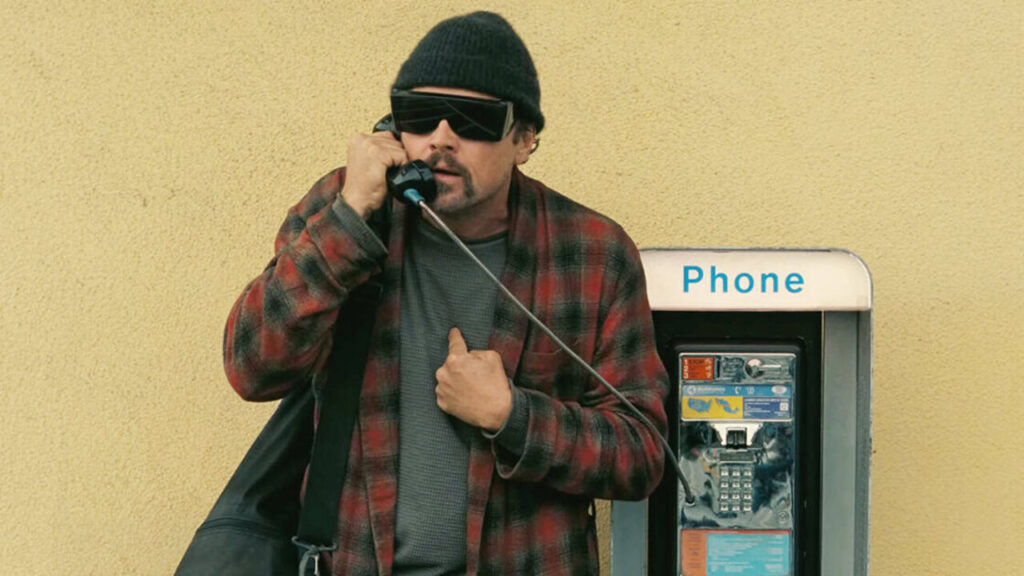
Meanwhile, Bob, who’s been laying on a couch for 16 years getting high, is pulled back into service. The lazy forgetful bumbling druggie teams up with Willa’s karate sensei to go and save her. Turns out it’s hard to do stuff, though, when you’ve become the physical embodiment of Jeffrey Lebowski.

Hmmmmmm…
I’m trying to think of anything I liked about this movie. The closest I’ve got to a positive would be Sean Penn’s character, Colonel Lockjaw. I wouldn’t say I liked the character. But the combination of the character and Sean Penn’s weird interpretation of it was, at least, interesting.
I don’t know what Leonardo DiCaprio is doing these days. This is the second major role in a row where he plays a half-witted dolt. At this point, if your script has a moronic main character, just send it to Leo’s people — he clearly loves these guys.
The frustrating part is that there was a version of this character — Bob — that could’ve made the whole movie work. Here’s what I mean. The film revolves around a group of ultra-progressive revolutionaries determined to change the world, and Bob is one of them.
Then comes the fallout (Perifia names names), sixteen years pass, and Bob gets pulled back into that world. Now, from a dramatic point of view, the most interesting version of this setup writes itself: Bob’s grown up. He’s changed. He’s become a middle-aged, 9-to-5, moderately conservative guy. The polar opposite of who he used to be.
That’s where the tension (and the humor) would’ve come from. A man re-entering a culture he no longer understands. A rebel turned square who suddenly has to face the ideals he abandoned. That’s conflict. That’s irony.
And you can tell Anderson wanted that contrast. Like when Willa’s friends come over and one of them is transgender. Bob awkwardly asks what pronouns he should use. It’s a great setup for a generational or ideological clash… except it doesn’t track, because Bob’s still progressive. He’s still this aging hippy whose identity was built in the same world that would obviously be comfortable around a transgender person.
The same issue pops up later, when Bob’s trying to call the French 75 number and forgets the old code words that will allow him access to his daughter’s whereabouts. He starts yelling at the operator, who chirps back, “You’re invading my safe space!” Bob snaps, “Invading your space? We’re not even in the same room!”
Again — Anderson wants that contrast, that sense that Bob has drifted so far from his roots he no longer speaks the language. But it never lands, because Bob isn’t fundamentally different. He’s only slightly less progressive than before. And “slightly” doesn’t create drama. It just creates noise.
All of this ties back to the larger point: Paul Thomas Anderson is a screenwriting cautionary tale. He came up in an era that celebrated anti-storytelling — where craft was considered “square” and traditional structure was seen as a prison. As a result, he never fully grasped that to make this premise work, Bob needed to be a true fish out of water. Instead, Anderson seems to think that simply moving Bob from one pond to another is enough.
By the way, one of the easiest tells of a weak screenwriter is an inflated page count. Long scripts are what happen when a writer can’t make decisions. Instead of committing to a clear direction, they throw everything in — every tangent, every side character, every half-idea that should’ve been cut. The result? A screenplay equivalent of the director’s cut. The one that no one asked for.
Look, I don’t love cutting scenes I like either. But that’s literally the job. You have to serve the spine of the story. This whole subplot about Colonel Lockjaw’s wannabe–white nationalist group that forbids interracial relationships? It’s so ludicrous it drags the film into parody. You didn’t need it. His motivation was already clean and compelling: he wants his daughter. That’s enough.
Unless you are heavily into leftist politics, a self-proclaimed cinephile, an uptight critic for one of the major newspapers, or a die-hard Paul Thomas Anderson fan, I would not watch this. I wouldn’t even bother when it shows up on streaming. It’s long. It’s aimless. It’s self-serving. And it’s ten drafts and a much better screenwriter short of anything watchable.
[x] What the hell did I just watch?
[ ] wasn’t for me
[ ] worth the price of admission
[ ] impressive
[ ] genius
What I learned: “The Level Above The Level” – In both this movie and Eddington (a movie I liked), both writers create this level of people above the central antagonists. Here, it’s this group of white nationalists who supposedly rule the world. And in Eddington, it’s this black ops military unit that protects ultra-progressive ideology. I don’t believe “the level above the level” works. Without enough time to let the plotline blossom, it always feels forced. I thought the wild gun shootout at the end of Eddington was fun. But I had no idea why this black ops unit was interested in killing a random small-town sheriff. And here in One Battle after Another, the white nationalist storyline had such a weak payoff that you clearly didn’t need it. Which meant you could’ve chopped off 10-15 minutes of your movie just by dropping it. So, the next time you’re thinking of adding a level ABOVE the level, don’t do it. It’s probably not going to work.

These scene showdowns always end up being a little more controversial than I expect. Some people have said that by creating this challenge, it forces writers to write bigger scenes than they otherwise would have. I don’t think that’s true. As unknown screenwriters, you have to hook a reader right away. So starting with a great scene is, dare I say, essential.
And how do I respond to these criticisms? By announcing another scene showdown!
So you know I’m not trolling, the main reason I’m holding this new showdown is TO KEEP YOU GUYS WRITING. I’ve already heard several of you complain that writing your scripts has been difficult. So, anything I can do to push you forward and continue to write, I’m going to do.
What’s this latest showdown?
It’s called the “THAT SCENE” SHOWDOWN.
Every good movie has THAT SCENE, that amazing awesome scene that everyone remembers. Technically speaking, your climax should be your best scene. But, for whatever reason, it never ends up that way. The best scene is usually somewhere in the second act. So that’s the scene I want you to write. I want your best scene that occurs in your second act (it’s fine if it isn’t in your second act but that’s what I want you to aim for).
If you want examples, the Deli scene in The Wrestler comes to mind. Will confronting the Harvard Douchebag in the bar in Good Will Hunting. Anton Chigurh’s coin toss in the gas station in No Country for Old Men. The cars waiting at the border crossing scene in Sicario. The blood test scene in The Thing. Clarice’s first meeting with Hannibal Lecter. Georgie talking to the clown in the storm drain scene in It. When the marines inspect the colony for the first time in Aliens. The clown doll attacking the boy in Poltergeist.
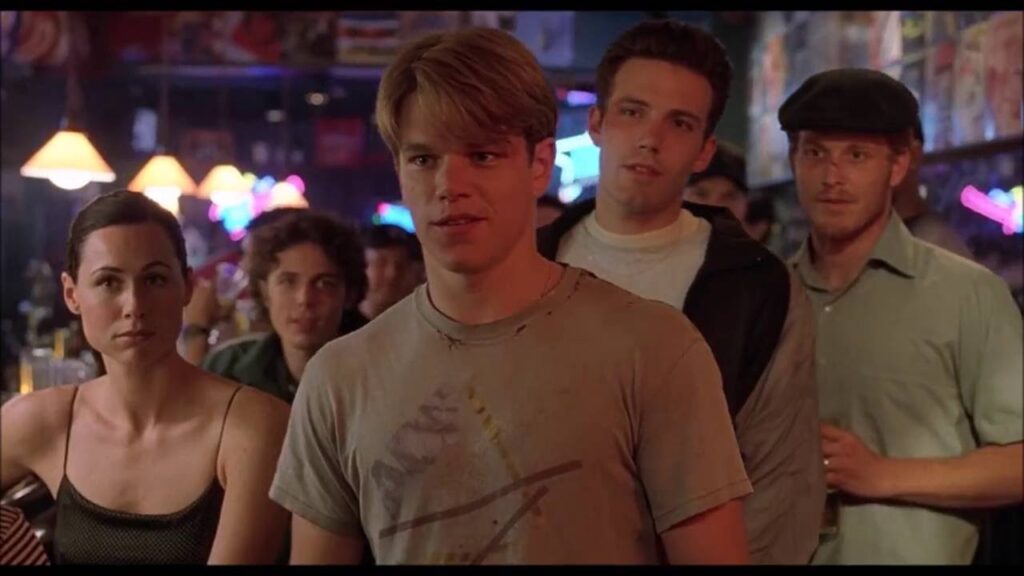
It’s that scene that people talk about for years. It’s that movie that you put on JUST SO YOU CAN GET TO THAT SCENE AND WATCH IT. It’s your movie’s best scene. And I want to see what that’s going to be for all the Blood & Ink participants.
Even if you haven’t gotten that far in your screenplay yet, you should already know what that scene is going to be. So, don’t wait to get to that scene. Jump ahead and write it. That should actually help those of you who aren’t writing fast enough. It’ll give you a checkpoint to write towards.
Don’t worry about context. I’ll give you 100 words to set up your scene for the readers if need be. And we’re going to post this showdown on Halloween – this October 31st. Which gives you about a month to write it. I would think that’d be plenty of time! And, you can start sending in your entries RIGHT NOW.
By the way, a few Blood & Ink participants seemed to think that, by not making the First Scene Showdown, they were no longer in the contest. Let me be clear: ALL 97 BLOOD & INK ENTRIES ARE STILL IN THE CONTEST. You don’t have to enter these Blood & Ink showdowns if you don’t want to. But you should still be writing your script so that it’s ready in February.
Okay, here are the details for ‘THAT SCENE’ SHOWDOWN
For Blood & Ink Contest Participants Only!
What: “That Scene” Showdown
When: Friday, October 31st
Deadline: Thursday, October 30th, 10pm Pacific Time
Send me: title, genre, logline, up to 100 words of context for the scene, a PDF of the scene
Sent to: carsonreeves3@gmail.com
Should today’s scene have been included in the First Page Showdown? A lot of you thought so!

This week, I’ve been breaking down the top scenes in my Blood & Ink Screenwriting Contest. This is a contest writers had to pitch for—you had to come up with a good enough idea just to get in. Of 2500+ pitches, only 97 got through. Last weekend, I did a “showdown” for those 97 writers where they could compete to see who had the best first scene.
The six best scenes were featured on the site. However, Eldave, who’s in the contest, posted his scene in the comments section and got a ton of positive feedback, with many readers proclaiming he should’ve won!
Should he have?
Let’s find out!

I love the first three paragraphs of this page. They’re simple. They’re effective. They’re descriptive. They imply a strong sense of craft. I know, after reading these first three paragraphs, that I’m dealing with someone who’s written a lot of scripts. However, that’s not always an advantage. More on that in a sec.
When you read a lot, you come across patterns. Writers tend to make similar choices since we’re all drawing from the same pot of ideas. And it can be said that what a reader is looking for is a writer who disrupts the pattern. Not haphazardly. But with a plan.
So when I read this opening page, my first thought was, “It’s the old suicidal person on the other line scene and our heroine is going to save them.” It’s a scene pattern I’ve come across a lot.
Now, that doesn’t mean I’m tuned out. If the writer can give the main character a clever way to solve the problem, I’ll call the scene a success. Or if the scene goes in a different direction than I expected, that’s also appealing to me. So let’s see what happens.

When I read this second page, the big word that popped into my head was “competent.” The writing is very competent. It’s very professional. It’s doing the job.
But a screenplay needs something beyond competence. It needs a special quality, wherever that quality is going to come from. And when I read this page, this fear started to creep in that this scene was going to be adequate and nothing more. Because I feel like I’ve read hundreds of scenes just like it.
All of this is going through my head as I’m trying to decide if this scene is going to make the cut for the weekend.

This was probably the page where I decided this wasn’t going to make the cut. Because this is the page where our main character solves the problem. And my question is: what special or unique or clever thing did she do to solve the problem? As far as I can tell, nothing.
She just got the guy to stay there long enough so the cops could pick him up. Remember, when you’re introducing a character, you’re trying to create something the reader will either fall in love with or become fascinated by. Anything less, and the reader isn’t going to be interested in them.
I’ll give you an example. The famous Lethal Weapon Mel Gibson suicidal jumper scene. In that scene, a guy is about to jump off a building and Detective Martin Riggs (Mel Gibson) is tasked with stopping him. What does Riggs do? Instead of trying to stop him, he says, “Let’s do it!” The jumper is so confused he’s not sure how to react. Riggs keeps pushing him. Let’s do it. Let’s do it! And eventually, they jump!
It’s a scene that both goes against what we’re expecting and creates a fascinating character in the process.
Those are the kinds of things I’m looking for when I get introduced to characters.

The explanation of using the word “darling” didn’t make this feel any more clever. If the idea is that she goes against the handbook to save people, I’m down with that. But if sometimes using an unapproved word is breaking the rules, it’s the tamest rule-breaking I’ve ever seen. So much more could’ve been done here.
For example, if this would’ve been some incel lamenting the fact that no girls like him and Zoey exploited that to save his life by pretending to be romantically interested in him. Maybe even agreeing to go on a date with him if he stepped back, only to go cold the second the cops snatched him up, that’s a character I would’ve been interested in. But just calling someone ‘darling’ doesn’t move the needle for me.

In every script, I’m always looking for honesty. For truth. In other words, are the people in the story acting out truthful moments, saying truthful things? Or are they just puppets for the writer to say what he wants or do what he wants? The more I see of the latter, the more tuned out I become. The more I see of the former, the more invested I get.
I have a hard time believing this call center goes cuckoo over “the q word.” That feels made up to me. It feels like a lie a writer concocted. I want the truth. And I want the details of that truth.
Whenever I hand myself over to a writer, I want to be pulled into their world, to the specificity of that unique place. I just read this interview with James Cameron where he talks about how obsessive he is with every single little detail on Pandora. Which is a huge reason the movies work. The details feel like they could only exist in that specific reality.
I would’ve liked to see more of that specificity highlighted in this call center. It should almost feel like an alien planet. Because it is to someone who’s never been inside one before. And it’s up to the writer to convey that.

Essentially what’s happening here is that the scene is rebooting. It’s starting over. We’ve got a brand new call. And the good news is, there’s something different going on with this call. There’s something glitchy, both in the connection and the way that connection is interfering with the nearby electronics.
Yesterday we talked about dangling carrots. This is the first true carrot being dangled in this scene. And it’s taken me six pages to get here. I’m not saying that’s too long. I think if some of the issues I brought up earlier were improved, this moment would hit harder. But as you can tell, I’m on the fence with these pages. So this moment feels more like a Hail Mary to bring me back into the fold than a continuation of an organically building sequence.
The good news is, it’s a pretty big carrot, which is the right move. We’ve waited through a handful of pages of what was, essentially, exposition. We deserve a reward. So you have to make that reward plump and juicy.

For some reason, I’m only casually interested in this boy’s plight. I don’t know if it’s because the rest of the pages haven’t fully pulled me in or if it’s something with the boy himself. If I had to guess, I’d say it’s because the scenario feels too obvious. First we have the drug addict tweaking out. Now we have the little child. None of these things feel different enough.
I can’t emphasize enough how much I read and, because of that, I read stuff like this all the time. Something that might help you guys is to put yourself in my head and ask, “Is this something Carson has probably seen a lot?” If the answer is yes, go back to the drawing board and write a scene that’s more original.


There’s a beat on this page that is the key to this entire scene living up to its promise. It’s when the boy says, “I got a bike. Santa already came.” And Zoey says, “Why would Santa have already—?”
This is supposed to be our introduction to the hook—the strange situation our operator finds herself in. Receiving calls from the future. But it’s such a blink-and-you-miss-it moment that it doesn’t register. I wouldn’t be surprised if someone reading this completely missed it.
Again, you’re trying to HOOK A READER. It’s one of the hardest things to do in the world. Reading takes work. So you need to give people a reason to do it. I would’ve built an entire page around the confusion surrounding what the boy is saying as opposed to just one half-line. Have him talking about several things that don’t make sense.
There’s this great sequence in Back to the Future where Marty is at his mother’s parents’ house in the past (1955), trying to find Doc. There are so many great lines in this scene, but my favorite is when Marty asks where Riverside Drive is. The dad says it’s on the other end of town, “a block past Maple.” Marty says, “A block past Maple? That’s John F. Kennedy Drive.” The dad looks at him like he’s crazy. “Who the hell is John F. Kennedy?” That dinner scene really mined the deliciousness of its concept – a kid getting stuck 30 years in the past with his young parents.
I get that Eldave doesn’t want to show his cards too soon, but you need to hook us here and this scene BARELY mines its hook. Even the scene at the house afterwards is rushed. You want to SLOW DOWN as we get to the house. Show that the cops believe someone is in danger. Have them carefully go up to the house, maybe even knock the door in when nobody answers. And they just see this family casually dining. That would’ve hit a lot harder.
To summarize, this scene was very competently written, but I think there were a lot of much stronger choices left on the table, which is the main reason it didn’t make the cut.
But as I said earlier this week, THIS IS FINE! Nobody writes a great first scene right off the bat. What often happens is, as you continue to write the rest of your screenplay and you understand your characters and world better, you go back to this scene with new information and improve upon it. I think this scene could be great. But it’s definitely at a 6 right now and it needs to be at a 9 by the time the script is finished.