
Search Results for: F word

Okay, so last week I put out an open call: anyone could query me and pitch their screenplay. The best query would win, and I’d review their script on the site.
But the script review wasn’t really the point. The point was the query itself. Learning how to reach out to agents, managers, producers, anyone, is an essential skill that’s rarely talked about. It’s discussed so infrequently that I thought I’d dedicate an entire week to it.
I’ll be reviewing the winning script tomorrow. But today, we’re going to talk about the winning query.
This turned out to be harder than I anticipated. When it comes to querying, 90% of the query is the logline itself. Often, that’s what the recipient will be jumping to. Because even if they like you or like your personality through your writing, that doesn’t matter if they don’t think the script itself works for them.
But, at the same time, if I only went off the loglines in these queries, then it’d be a logline contest. So I had to pass over some of the better loglines in order to focus on the point of this exercise: the query itself.
With that said, there were a couple of really good queries with really poor loglines. And since part of the deal here is that I review the winning query, I wasn’t about to reward a query with a weak concept/logline.
Exhale Carson!
Needless to say, I’m happy to report that I located the best of the bunch.
***********************************
In third place is Patrick McNulty!
Subject Line: QUERY – A DARK BREED
Dear Carson Reeves,
I’m reaching out with a contained horror feature, A DARK BREED (90 pages).
Logline:
After a blizzard traps a family in a remote mountain cabin, they rescue a caged pregnant woman being held on the property—only to discover she’s not the prey, she’s the predator. And she’s not alone.
A DARK BREED is a single-location survival horror built around clear rules, contained scope, and escalating siege tension. It’s written with practical production in mind while delivering strong suspense and trailer-driven set pieces.
I’d be happy to send the script at your request.
Thank you for your consideration,
Patrick McNulty
***********************************
In second place is David Lamberston!
Subject Line: QUERY – WHEN AN EMOTIONALLY WRECKED STAR TREK NERD DECIDES HE MUST BECOME MR. SPOCK
Hi, Carson:
Title: IN SEARCH OF VULCAN
Logline: After a socially awkward science teacher and lifelong Star Trek collector is left at the altar and robbed in a memorabilia scam, a near-fatal electrocution leaves him convinced he’s Mr. Spock — forcing his recently retired military brother to take him on a road trip to Vulcan, Canada to recover a stolen Bitcoin fortune and convince him he’s human again.
Comps: Rain Man – meets – Lars and The Real Girl
Why I am sending this request to you
I believe IN SEARCH OF VULCAN fits the lane of commercial, character-driven high-concept comedies that balance big set-pieces with real heart — and your track record in that space makes you an ideal match.
May I send IN SEARCH OF VULCAN to you for your review?
Thanks in advance for your consideration.
Sincerely,
David Lambertson
dlambertson@hotmail.com
***********************************
And in first place, our winner is…. CALEB HERMANN!
Subject Line: Horror Feature Query
Hi Carson,
My name is Caleb Hermann, and I’m a screenwriter based in Kansas City, MO. Through a writing program over the past year, I wrote and polished a horror feature under the mentorship of a literary manager from Navigation Media Group.
I’m currently seeking representation, and I’ve seen that some of your clients are in the genre space!
Title: Godforsaken
Logline: When a young preacher’s wagon train to Oregon becomes trapped in a frozen valley, he must confront his waning faith and ally with a Native guide to protect the survivors from starvation and a monstrous Wendigo that hunts them.
Comps:
The Witch
The Ritual (Netflix)
The Revenant
I would love to send you my script if it is of interest!
Best Regards,
Caleb
Okay, so let’s break our winning query down because, if I’m being honest, it’s not perfect. But it’s strong where it matters most.
What I like about Caleb’s entry is that it’s simple and to the point. I want all of you to internalize that. Cause that’s the key to writing a strong query. I’d say about a third of you stashed too much text inside your queries. People in this business don’t have time to read all of that.
Caleb gets right to the point. He says hello. He tells us just a teensy bit about himself (where he’s from). He gives us a very succinct backstory about the script (writing it with a literary manager). He then gives us THE MOTIVATION for his query (he’s seeking representation).
Now, if I’m being fair, I wouldn’t include the mentorship stuff. You never want to give out too much information, especially information that might hurt you. I have no idea who Navigation Media Group is. So that hurts the writer. Cause it indicates they’re working with “nobodies.”
I can’t emphasize this enough. Every extra word you write is more information that the recipient can use to dismiss you. In that sense, a query is similar to a screenplay. You only want to write as much as you have to and not a word more.
With that said, I had a handful of writers who queried me with just the logline alone and that’s not enough. You still have to provide context and include basic professional etiquette.
Luckily, Caleb’s logline is strong. It’s a unique movie scenario. It’s a marketable idea. And, in the end, that’s the name of the name. If you’ve got a good screenplay idea, you just don’t want to get in your own way when querying people about it. So many of you got in your own way. You wrote and wrote and wrote about stuff that just wasn’t relevant.
Now, Caleb also gives us comps after the logline. You don’t have to do this. But what I like about his strategy is that the comps take up no space at all. I can read all three of them in under a second. Some of you went on these long paragraphs describing other movies that inspired your script. This is better.
And then he says exactly the right sentence to end the query. If you’re interested, I’d love to send the script to you.
It’s such a clean, to-the-point query and that’s why it won.
If you want to clean up your own query, I do query consultations for 60 bucks. That includes three follow-up e-mails where we make adjustments to your query until it’s perfect. E-mail me at carsonreeves1@gmail.com if you’re interested. Or, if you need a consultation on your entire screenplay, we can do that too.
As for this week, what we’re going to do is: Tomorrow I’m reviewing Caleb’s script. Wednesday I’m writing an article on crafting the perfect e-mail query. And then Thursday, I’m going to include some of the queries that didn’t make the cut and explain why, as well as what the writers could’ve done to improve them.
In the meantime, here’s a link to Caleb’s script so you guys can all read it and participate in tomorrow’s discussion!
Genre: Erotic Thriller
Premise: A couples therapist is drawn into a dangerous triangle of lust, lies and manipulation when she begins an affair with a stranger—who turns out to be the husband of her new client.
About: This script was a spec script that was purchased by New Regency. The writers, Erika Vázquez & Siena Butterfield, wrote on the Netflix hit, Wednesday.
Writers: Erika Vázquez & Siena Butterfield
Details: 110 pages
 Kendrick for Pau?
Today’s script actually covers a lot of great screenwriting topics. It’s packed with them! So let’s jump into it!
40-something Dr. Paulina Cuevas Strom is just minding her business as the great couples therapist she is when, one night, at a party, she’s propositioned by a sexy man with a wedding ring named Oliver. She almost has sex with him in the bathroom but thinks better of it.
Paulina (Pau), can’t stop thinking about Oliver though. It doesn’t help that her marriage with the weak and wimpy Anders contains a lot of boring sex. So one day, she texts Oliver back, meets him at a hotel, and they start banging.
Meanwhile, Pau is trying to help a fairly new patient, Mare, fit in better at work. Mare is tall and beautiful and looks like a model. But she’s also a bit crazy and controlling, which is what they’re working on.
Well, that work gets a bit tougher when Mare shows up to her session one day with her husband, Oliver. Pau tries not to freak out and, after that session, Oliver sneaks back in to apologize. He didn’t know. And then they have sex again.
Pau knows what she’s doing is bad but can’t quit this sexy guy! She can’t get away with it forever though (spoilers) and, one day, Mare comes into their session telling Pau she knows she’s sleeping with her husband. But it gets worse. It turns out, Mare orchestrated all this from the beginning. She’s been controlling her helpless husband, who does whatever she wants.
Pau knows to get the fuck out of the situation now. But it may be too late. The State Licensing Board gets a complaint about Pau’s practice and now she considers this all-out war. But war with Mare is not a war you want to be in. Pau may be way in over her head.
For some weird reason, Hollywood keeps forgetting that sex sells. I mean, that phrase (Sex Sells) was born in this town. So I don’t know why they go through these giant time chunks where they completely forget how thirsty people are. Especially women.
I know a female friend who STILL TALKS ABOUT the film, Unfaithful, to this day cause of the sex scenes. And if you’ve seen that movie, you know that they really don’t show that much. That’s the thing with this erotic-romance genre. It’s more about the lead-up to the sexual acts than the acts themselves.
This is exactly why Wuthering Heights is being hyped up. And “Fixation” wants to be the next movie in this very lucrative genre space.
The first thing I want to talk about when it comes to Fixation is AMPLIFYING CONFLICT.
You want conflict in every movie you write. But there are levels to conflict. And good writers look for ways to amplify conflict so it’s more powerful.
For example, if you’re covering infidelity, like this script is, you could write about a woman being unfaithful and that’s it. Which is, ironically, the plot to Unfaithful. But why not “plus it up?” You achieve this by amplifying conflict.
So, instead of just having a man and a woman cheating on their partners, why not make it so a therapist is unknowingly sleeping with the husband of one of her patients? Notice how that amplifies the conflict in two ways. She’s betraying the trust of someone paying her to be the most trustworthy person in their life. And she’s also risking her career.
Now, getting caught isn’t just about two people cheating. It’s about a lot more. Which means getting caught has bigger consequences, which is how you raise the stakes.
In order to make this sort of setup work, though, you have to solidify a couple of things. The bond between Pau and Mare has to be super close. Mare needs to trust her with her life. And Pau’s self-identity has to be built around how professional she is. These two requirements were not met. But they would’ve amplified the conflict even more had they been.
One of the reasons I love therapy-focused scripts is because they’re a cheat code for character development. Creating characters who are deep and who the reader feels like they know, is one of the harder things to do in screenwriting.
Therapy scripts allow you to do this easily. Cause you can ask characters very direct questions about what’s going on in their head. “Why do you feel like you need to control everything?” The answer to that question is going to tell us a lot about Mare. But if Mare was in a non-therapy screenplay, asking a question like that feels on-the-nose.
Another thing you might notice about this script is that there’s no goal. The main character isn’t trying to achieve some primary objective. So then you might ask, “Well, what’s the engine powering the story then?”
In a script like this, the engine is that we know the train is going to crash at some point and readers will always keep reading until the crash. It’s a classic story engine and it works very well. It works here too. I wanted to see what happened when this tightrope walk came tumbling down.
Another thing the script executes well is its midpoint. You have to make a decision with a script like this whether you’re going to take the train all the way to the third act or if you’re going to take it to the midpoint.
If you’re going to take it to the third act, it has to be a really compelling situation. And, to be honest, I think this script had enough juice to take its infidelity storyline to the third act. But they opted to come clean with the cheating at the midpoint. And this is usually what you want to do because it creates an amazing midpoint scene and it changes the nature of the story going forward so that the second half feels different from the first half.
So, here, Mare storms into Pau’s office, says she knows she’s sleeping with her husband and they fight it out. The scene takes some unexpected turns and becomes what will be the most talked about scene in the movie. So that’s good!
However, if you’re going to end your movie’s hook at the midpoint, you need to have a stellar plan for what’s going to happen in the second half of the movie. And this is where Fixation stumbles.
It’s not a catastrophic stumble. But here’s the problem. Everything up to the midpoint was authentic. You could imagine something like this happening in real life. After the midpoint, the writers fell victim to what I call “the movie-logic seduction.”
This is when a script quietly stops behaving like humans would… and starts behaving like a movie that knows it’s a movie. For example, Pau and Anders get away for a remote vacation (so Pau can escape the madness). And then, the next day, Mare and Oliver show up, saying they just happened to be in the neighborhood.
That’s not happening in real life.
And I’m not saying you can’t get away with this sometimes. But something about it feels sloppy, and most of your audience is going to feel that too. Worse, that kind of sloppiness is usually a warning sign. The Sloppy Monster almost never shows up alone. It brings friends. Which is exactly what happens here. By the end, the movie doesn’t even make sense.
Spoilers ahead. The two women are easily the worst people in the story. They are the ones doing all the terrible things. And yet Oliver and Anders are the ones who get punished, with Oliver turned into a handy scapegoat so everyone else can emotionally move on, consequences optional.
Despite that, the script was still good overall and a great example of exploiting marketing blind spots in Hollywood, which occasionally happen. Although I don’t know how you can forget that sex sells. I mean, duh.
[ ] What the hell did I just read?
[ ] wasn’t for me
[x] worth the read
[ ] impressive
[ ] genius
What I learned: In addition to all the other great screenwriting tips in this script, another is dramatic irony. This is a great dramatic irony situation. Pau is doing marriage counseling therapy sessions with a couple while sleeping with the husband. Every word she utters in these sessions has dual meanings. That creates great subtext which, in turn, leads to compelling scenes.
Best pitch gets a script review next week!

While I’m tempted to spend 1500 words chastising Jon Favreau and Disney for spending 10 million dollars on the most poorly produced trailer in the history of Star Wars (and potentially cinema)…
WE’RE HERE TO BE POSITIVE TODAY!
Next week, I want to focus on the query letter. It’s a little talked-about component of screenwriting but an insanely important one. I’ve probably received more query e-mails than anyone else in Hollywood so I consider myself somewhat of an expert on what makes a good one.
I’ll get into the secret sauce of a good query letter next Thursday. But, the skinny of it is this. Most writers overdo it. And, in overdoing it, they expose their writing weaknesses. What you need to remember is that the star of your query is your logline. That’s the only thing that the person receiving your query really cares about. So, you want to make sure that’s featured.
This is how this is going to work.
You’re going to pretend I’m a producer at Scriptshadow Productions. And you’re going to pitch me a REAL SCREENPLAY. That’s it. And whoever has the best query, I will review their script next week.
A couple of caveats to this. Don’t pitch me your Blood & Ink screenplay. We’re saving those scripts for the official contest. But you can pitch me any other script. Also, include an attachment of your screenplay. In a real query, you wouldn’t do this. You would wait for them to request your script. But since I’m going to review the winner on the site, I need the script.
Send all query e-mails to carsonreeves3@gmail.com. You have all the way until Sunday at NOON PACIFIC TIME to query me. You can only send one query.
If you’re not interested in putting your script out there for the world to see but you’d still like to know how to write a good query letter, I offer a query consultation service. It’s 60 bucks and includes three follow-up e-mails, allowing us to make a couple of extra tweaks beyond my initial fixes. If you’re interested in that, e-mail me at carsonreeves1@gmail.com.
Can’t wait to see what you guys have got!
I’M GIVING OUT TWO SETS OF SCREENPLAY NOTES FOR 40% OFF!!! E-MAIL ME AT CARSONREEVES1@GMAIL.COM TO CLAIM ONE – YOUR SCRIPT DOESN’T HAVE TO BE READY YET TO CLAIM THE DEAL!
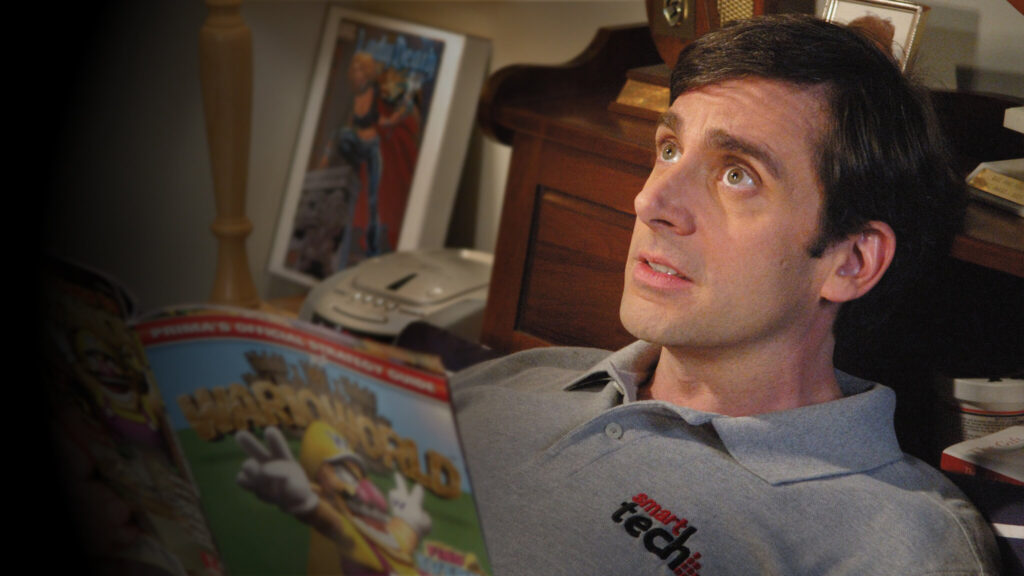
So, the other day, I was listening to a sports podcast (Pardon My Take for those interested) and they were talking about how an external mouse instantly makes you look more professional. Not better at your job. Just more serious. Put a mouse next to your laptop and people assume you’re working 20 percent harder than you are, even if you’re doing the exact same thing as the trackpad person. It was actually a funny five minute bit.
Afterwards, something hit me. This is the sort of thing that only used to be available in movies. If I wanted a thoughtful funny bit about the minutia of life, I would’ve had to go to the theatre to watch When Marry Met Sally. Or, more recently, The 40 Year Old Virgin. But now, even daily podcasts are giving me the equivalent of what I only used to get in the theater.
I think about stuff like this all the time because I see cinema as being in a war. And, every day, we’re losing ground to the enemy. Unlike other people, though, I’m not Mr. Doom & Gloom. The reason I want to know what we’re up against is because I want to figure out how we fight back. How we regain ground in this war.
And that question boils down to: What can we give people that no other medium can? Or, specific to this site, what can we write about that creates a movie experience that can’t be experienced anywhere else? To be honest, that was one of the big reasons I went all-in on Osculum Infame. And it’s been echoed back to me by everyone who’s come onto the film. This is an experience you will not be able to get ANYWHERE ELSE but in film. Period. End of story. Not even close.
With that said, it’s a shocker of a film. And I don’t want to think that’s the only way to write a script that becomes a movie in the future. I want there to still be versions of movies in the romantic comedy genre, the thriller genre, the supernatural genre, the sci-fi genre, and yes, even the drama genre, that people go and see.

One movie that got people to the theater that no one was expecting was this weekend’s Iron Lung. Iron Lung was written, directed, starred in, and produced by a video game streamer, Markiplier.
The story behind the movie is interesting. Markiplier played this little-known video game years ago about steering a submarine through a sea of blood and thought it would be interesting to turn it into a movie. In the spirit of every smart aspiring filmmaker, he kept costs low by starring in it himself and setting it in one location (the sub).
After finishing the film, no distributor would give him the time of day. He could only get into 60 theaters. So he called on his followers to call every theater they know and demand the movie. The campaign worked. He was eventually able to get a wide release (3000 theaters) and finish with the highest per-theater average of the weekend, finishing number 2 overall, with 18 million dollars.
It’s a true do-it-yourself triumph.
But what does it say about screenwriting?
A couple of things actually. One thing I’ve always said is that there are TONS – we are talking TONS – of overlooked IP in the book, comic book, and video game space. If you had a cool take on one of these IP, the rights would cost you NOTHING. And now you’re working with something that’s already been proven and that provides a little more cachet whenever you’re pitching up the Hollywood ladder.
Clearly, the weird moodiness of this unique video game made Markiplier believe it would strike a chord with audiences. And he was right! It did.
Also, this is another reminder that when you film your own script, you skip the line. I mean, if we’re being one-hundred here, this movie looks awful. It looks like your typical “stuck in a room and goes crazy” narrative, which are essentially impossible to do well past the 20 minute mark. Even when Hollywood puts its biggest stars and highest production value into them (Solaris 2002), they’re horrible. So, I’m guessing this is a much worse version of that.
But that’s actually more inspiring than you think. Cause you guys actually know how to write! I would be shocked if Markiplier has spent more than 30 hours on screenwriting in his entire life. And that’s including writing this script!
If you could write a GOOD version of a contained thriller that’s cheap to produce, and then somehow found a way to make it? Then you’ve just made an actual good movie while all the other writers who used to be on the same level as you are still holding their hands out waiting to be given permission to step forward.
But if you’d rather stab yourself a thousand times in the eyes with an ink-tip pen than direct a feature film, I got good news for you. Send Help, about a boss who crash lands on a deserted island with his psycho assistant, won the weekend box office! It took in 20 million dollars. Not only that. It was basically a spec script! And that means, if you had written a script like it, you could’ve sold it.

This script is part of a new subgenre I want to officially title now. I’m calling it an “Expanded Contained Thriller.” What I mean by that is, we’re not constrained to a single room (Iron Lung) or a single indoor space (10 Cloverfield Lane). We’re still contained (in this case, we’re on an island) but the area is larger and gives us more to play with.
The downside to a Send Help is that it’s definitely going to cost more to make than an Iron Lung or an Osculum Infame. So that’s the risk. You’re going from a 3-5 million dollar movie to a 15-25 million dollar movie. And less production houses can afford that kind of cap hit. But, it’s still a better strategic option than writing a 100 million dollar sci-fi script.
Want more good news? Between Send Help, Mercy, The Housemaid, and Shelter (Jason Statham pic), you’ve got four movies that either were, or which could’ve easily been, spec screenplays. Throw Primate in there as well. In other words, there are opportunities for writers to sell their scripts and get them turned into films. I just gave you proof!
BUT! Notice how sexy all of those pitches are. Each one of them is a clear “this could be a movie” pitch. You’re not getting to this place with your thematic mood piece about a dying middle-aged couple who try and sell their farm before they kick the bucket.
Back to my original question. What can we give people, as writers, that they can only experience in the world of film? I don’t know the answer to that yet. But I do know this. The margin for error has gotten exponentially slimmer. And Hollywood hasn’t accepted that yet.
They’ve gotten into this state of denial where they’ve cozied up with Rotten Tomatoes and still believe that a 90% Rotten Tomatoes score means you’ve made a good movie. And it’s just not true. I don’t know if it was ever true but it certainly used to be more true.
Audiences are clearly demanding something closer to a transformational experience, and not just something that passes the time. Because there are a million things out there that allow you to pass the time now. Movies are no longer the only game in town.
Which benefits writers who are dedicated to the craft and determined to keep learning and keep getting better.
I will say that, from what I can tell, writing doesn’t seem to be under threat from AI. I’m actually starting to think that the filmmaking space is way more under attack than the writing space. But AI doesn’t seem to know how to elicit emotion or create compelling drama or create affecting characters. So I suspect that as the AI filmmaking world continues to improve, screenwriters will be more and more in demand.
But that’s an article for another time. :)
What did you guys watch this weekend? Anything good?
 “Am I, like, getting executed or a root canal?”
You may have glanced at the weekend’s box office, saw that some low-budget Chris Pratt movie miraculously climbed its way to the top of the heap, a la Alex Honnold in Taipei, before going back to your TikTok scrolling.
But if you’re a screenwriter, you should be paying more attention. Because this is great news! A spec screenplay just finished number 1 at the box office. That NEVER happens. So let’s take a closer look at why it did.
It starts by asking a crucial question. What kind of spec screenplay can attract an actor with enough star power to not only get a movie made, but to help push it all the way to number one at the box office?
You need a concept where the main character is featured prominently. And I mean VERY PROMINENTLY. The more prominent, the better. Sure, actors want challenging roles. But you know what they really want? They want to be propped up on a pedestal as THE GUY in a film. You can’t spell “actor” without “ego.”
“Mercy” featured its actor more than any other spec I read in 2024. And when actors see that, they want to be a part of it.
Next, the script had a high concept. There’s a lot of discussion about what exactly “high concept” means. It can be quite unclear. So, let me give you a fun way to measure it. When someone asks you what your script is about, are you unapologetically excited to pitch it to them? If so, you’ve probably got a high concept.
What I’ve realized over the years is that any script grounded in real life, whether it’s a coming-of-age story, a period drama, or a dark comedy, almost always has to be sold with qualifiers.
“It’s about a marriage that slowly dissolves. The husband takes it so hard he ends up losing his job. The wife retreats into this book club because it’s the only real connection she has left.” (pause, noticing the light leave the other person’s eyes) “But it’s really sharp. Like, the scenes are great. And the husband is actually a super interesting character. There’s a lot of tension. It’s not depressing or anything.”
That’s the typical pitch of a non-high-concept idea. You feel like you have to apologize for it when you pitch it.
Contrast that with a pitch like Mercy. “It’s set in the future where accused murderers are put on trial immediately. They have 90 minutes to prove their innocence or they’re executed on the spot.”
That’s the kind of pitch you would not be apologetic in giving.
And finally, you’ve got GSU in spades, baby! You’ve got your goal – PROVE YOUR INNOCENCE. You’ve got your stakes – IF YOU DON’T, YOU DIE. You’ve got your urgency – YOU’VE ONLY GOT 90 MINUTES!
If you have these three things – a giant featured role for an actor, a high concept, and GSU – then you can definitely do what they did here. This formula worked in the 90s and this proves it still works today.
So then wait a minute, Carson. Why is it that the movie got a 20% on Rotten Tomatoes?
Now hold on there, cowboys. I never said anything about the quality of the story. That’s a different skillset entirely. This is a point too many screenwriters miss. If you check all the boxes I just laid out, the bar for execution drops dramatically. Why? Because a studio’s first priority is simple: can we market it? If you hand them something that markets itself, they’ll overlook A TON, mostly because they’re convinced they can fix the script later (even though they never do).
So, yeah, Mercy is a pretty awful screenplay. I read it. It’s bad. But if anything, this should make you thrilled as a screenwriter. It means you don’t have to be perfect to get something made. Just don’t show up with some busted ass boring concept and expect great things.
Moving on.
I saw something quite good this weekend – the new Game of Thrones show, A Knight of the Seven Kingdoms. I wasn’t just wowed by the writing here – which was good. I was wowed by the choice to take a giant property and go small with it. So much so that I realized how valuable the choice was.

In discussing the fall of Star Wars the other day, I was fascinated by the fact that no matter which way they went with their shows/movies, it always seemed to be the wrong direction. And when I watched Knight, it occurred to me that they may have finally found the formula for expanding a giant franchise.
Don’t go bigger. Go smaller.
Now, “go smaller” always sounds great. Especially in cinema nerd circles. A bunch of film dorks get to proudly say they’re doing the opposite of what Hollywood wants. But it’s important to understand what “go smaller” actually means. It means build the story around the characters.
What this does is it forces writers to put everything possible into their characters. Because they know the story isn’t big enough to keep people hooked, especially under the weight of a franchise that’s gone big before.
And when you put all your focus on creating great characters, guess what happens? You suddenly have a much better shot at creating great characters! Funny how that works.
Knight is smart in exactly this way. It knows everything is going to live or die on the characters, so it reaches for the most battle-tested character type in storytelling history: the underdog. But this is Game of Thrones. One underdog isn’t going to cut it. Not with those expectations. So it gives us two.
Dunk, a giant, lumbering, slightly clumsy wannabe knight. And Egg, a strange little orphan kid with way more going on than he lets on.

Honestly, that alone would probably be enough to keep most people watching past the first episode. We love underdogs. We root for them. We want to see them beat the odds.
But the writers of Knight didn’t stop there. They actually built a plot into the pilot, which happens far less often than you’d think (at least in the pilots I read). Dunk has come to this town to compete in the Knight Tournament. It’s not a massive plot. But it has something incredibly important.
It has purpose.
A goal provides your hero, and by association, your story, with purpose.
And because we’ve already established Dunk as a lovable underdog who wants nothing more than to be a knight, the mere announcement of a Knight Tournament is enough. We’re in. Of course we’re going to keep watching. We have to see how he does!
The writers then do all the right things to hold our attention. Other knights openly taunt Dunk, daring him to bring it on. And what does Dunk do? He backs down. Every time. This isn’t John Wick, where the moment someone steps up, they get flattened in a blur of violence. Knight plays it smarter. It withholds. It builds suspense. It makes us lean forward, begging for the moment Dunk finally stops backing down.
So today’s two screenwriting takeaways are, ironically, complete opposites.
Number one: if you come up with a giant, high-concept idea, you don’t have to nail the execution. The concept is doing a lot of the heavy lifting for you.
Number two: if you want to write truly great characters, strip the big concept away entirely. Force yourself to hold the reader’s attention with nothing but character.
That kind of pressure is a gift. It’s what pushes you to write the strongest characters you’re capable of.
Here’s my old Mercy screenplay review, which had previously only been available in the newsletter.
SCREENPLAY REVIEW – MERCY
Genre: Sci-Fi Thriller
Premise: In the future, Capital Punishment has been expedited with those being accused of murder having 90 minutes to prove their innocence.
About: We’ve got a big one. This is the package Amazon just picked up starring Chris Pratt. It is a spec sale from an unknown writer, which is rare these days. Nobody knows anything about Marco van Belle other than he wrote and directed a version of King Arthur a decade ago that nobody saw.
Writer: Marco van Belle
Details: 108 pages
In the future, this is where the spec sales are going to happen. They’re going to happen on streamers. Which is fine. Cause streamers have just as much money as studios. Probably more. Which means the paycheck will still be hefty. And, if enough of these spec scripts go on to become hits for the streamers, the studios will get back into the original spec screenplay market. Which means we want movies like Mercy to do well.
Will Mercy do well?
It’s some time in the near future. Chris Raven is a homicide detective in a different world than the one we live in now. Capital punishment, which cost Americans an untold amount of money for every prisoner placed on Death Row, has been thrown out for a much cheeper version. The “Mercy” Program.
Ironically, Chris wakes up in the Mercy chair. The Mercy system locks you down in a chair, gives you one AI robot judge, in this case, Maddox, and you have 90 minutes to prove your innocence. To do so, you must bring your percentage of likelihood that you are innocent down below 92%. If you are unable to do that within 90 minutes, your brain is injected with some electrical wave that immediately kills you.
Chris’s wife, Nicole, is murdered. She was found in her home. And the only person anywhere near her, according to street cameras and phone signal locations, and a bunch of other evidence, is Chris. It is virtually impossible that anybody else killed Nicole. Judge Maddox is so sure of this, she tells Chris that he may as well wait the 90 minutes out and say goodbye.
Obviously, Chris isn’t going to go down that easy. He knows he didn’t kill his wife but has no leads as to who else would kill her. However, the Mercy program allows you to use your judge to access any phone records or video records or databases you want to help prove your innocence. So Chris goes to work.
What Chris quickly realizes is that his wife may have had an affair. That’s the first lead he follows. He’s also interested in a party that happened the night before at his home. Could one of the party members be the killer? Nicole also worked for a shipping company that has some dicey employees, guys who may be shipping suspicious cargo.
As Chris’s frantic investigation continues, there is a secondary battle going on between him and Maddox. Maddox is an AI judge deemed perfect for this Mercy system because she cannot feel anything. She only goes on facts. But as the investigation continues, Maddox learns that not every aspect of a case can be explained with facts. There are times when you have to make judgments based on your gut. Maddox grapples with this as well as with the duty of a job where she’s forced to kill. In the end, the two will have to team up to take down a bigger enemy.
“Mercy” is what I call a “bulletproof concept.”
Let me explain what this means.
When you send a script like Nyad or Maestro out to the town, you’ll hear the phrase, “execution dependent.” In other words, the idea is so unmarketable that the execution of the idea has to be amazing for the movie to succeed.
Bulletproof concepts are the opposite of this. The concept and story setup are so marketable and ideal for an audience experience that you don’t need to nail the execution to sell the script. The movie will work regardless of how well you write it.
Which sounds insane but it’s true. There are certain ideas that write themselves. Mercy is one of those ideas.
We’ve got a flashy genre, in sci-fi. We’ve got timely subject matter, in AI. We’ve got a gigantic goal – prove innocence. We’ve got gigantic stakes – if you fail, you’re executed. We’ve got insane urgency – you’ve only got 90 minutes to prove your innocence. You’ve got a movie star. You’ve got a robot. You’ve got a mystery.
Let’s be honest. This script has it all. This script is everything I tell you to do when you write a spec. Cause when you nail all these things, this is what happens. Big movie stars want to star in your movie. Big producers want to produce your movie.
Oh, and on top of all that, it’s going to be a fun ride.
But here’s why the bulletproof concept really matters…
Mercy isn’t a very well-written script.
It’s okay in places. But every ten pages, I would notice something that didn’t make sense. For example, at a certain point, a SWAT team is working for Maddox and Chris on the outside. But this team seems to have been brought onto the case by pure happenstance. They weren’t doing anything so they happened to have some extra time. And now Maddox and Chris are able to direct them around the city wherever they want.
It would seem to me that a system based on proving your innocence or dying in 90 minutes would have a clearer rule-set than hoping a SWAT had some free time to help save your life.
Or there were times when Chris would call people he knew and the people would be annoyed, insisting that they had to get back to work. Is that how people really act when someone they know is 60 minutes away from electrocution? There were a lot of clunky moments like that.
But.
BUT.
When the major pillars of your movie idea are in place like this one, a script can withstand these miscues. I was still curious who killed Chris’s wife! I still wanted to see if Maddox had any humanity. I was still under the spell of the story’s intense GSU.
Just to be clear – these things do not mean the finished movie is going to be good. I don’t care about that nor should you. You should care about getting your script to the finish line. That’s it. Yes, if you want a great movie, you need to fix a lot of these problems in the script. But if you want to get something made, the bulletproof concept is your biggest asset.
I will never hold Mercy up as an example of good writing. It’s way too uneven for that. But the strength of the concept as well as the setup of the story, make this a surprisingly compelling read. I hope they bring in a good screenwriter to clean it up.
Because if they can fix all the weak world-building and max out the character interplay between Chris and Maddox, which has the potential to be moving, this goes from a decent script to a really good movie.
We’ll see!
[ ] What the hell did I just read?
[ ] wasn’t for me
[x] worth the read
[ ] impressive
[ ] genius
What I learned: Two underrated things that screenwriters overlook are vanity roles and budget, two things that this script nails. This script is a total vanity project. The camera is on our trapped hero the entire movie. It’s hard not to find an actor who will be excited by that idea. And, also, the entire movie takes place in a room with two characters (cheap to make!). Sure, we get some outside stuff via the video feeds and those will need to be shot. But it’s easier to create those on a small screen than go out and shoot them like Christopher McQuarrie does with Mission Impossible. This makes a big idea cheap to produce.