
Search Results for: F word
Chad St. John had a great year in 2009. He sold his first script, “The Days Before,” which I reviewed here. He also sold a script titled “Motor City,” which has only a couple of lines of dialogue in the entire script. Both scripts made the 2009 Black List, and “The Days Before,” landed in the Top 10. This led to St. John selling another spec, “The Further Adventures Of Doc Holliday” to producer Lorenzo di Bonaventura and Paramount. That film is said to be a Pirates Of The Caribbean-esque action adventure story, with a basis in history. Since St. John spends hours upon hours in the shadows writing his masterpieces, he had no problems jumping into a Scriptshadow interview.
SS: Can you tell us what led up to your sale of “The Days Before?” How long had you been writing? How many scripts had you written? How much had you committed yourself to the craft of screenwriting?
CSJ: Years. I had written quite a few things. I think you have to write 100 rotten scripts. No one writes a great song till they’ve written a hundred awful ones.
I would work the “real job”, then come home and write for another 3 or 4 hours and on the weekends. I considered that my real work. The more desperate and irritated I’d get with workin’ for The Man, the more I’d immerse myself in writing. I used to call it “writing for my life”.
SS: Okay so when you say 100? How many did you really write before that first sale?
CSJ: Including all the ones I wrote for just me, as exercises? I’d say somewhere just north of twenty.
SS: Why did you write “The Days Before?” Was it because you wanted to write something marketable? Was it because you were passionate about the idea?
I definitely try to write things that I think are marketable. It’s the business of entertainment, after all.
As far as DAYS, I always wanted to write an alien invasion story. But, I could never figure out a nifty way for them to show up. Seems like a bunch of massive alien craft cruising towards earth might be the kind of thing somebody would notice. That is, unless they just popped up out of nowhere. Like popping out of hyperspace, a wormhole, or some dimensional mumbo jumbo. But, none of those ideas really blew my skirt up.
One day I noticed a homeless guy with a sign. It’s something I’ve seen hundreds of times in L.A., but this guy stuck out for some reason. It was one of those “Ninja’s killed my father. Need money for karate lessons” kind of signs. I honestly don’t remember what it said, but it reminded me of that cliché of the crazy guy with a “Repent! The end is near!” sign. I thought, what if it had been one of those signs. And, what if he was right. What if he was the only person in the world who knew the world was ending. Today. Man, what a drag.
So, the idea of an alien invasion, and that homeless dude careened around in my head for a few weeks. At some point, they crashed into each other. Aliens show up out of thin air. One guy knows and has to try and warn the world. Etc. etc. I got pretty jazzed about the concept once it all clicked. It was a cool new take on an old idea.
SS: Can you give us a blow by blow of how the sale happened?
CSJ: I finished it in November of ’08, and gave it to my agents. They flipped for it. But, things were awful as far as spec sales were concerned at that time. The economy had just taken a nosedive, and not too many folks were buying. Not to mention, DAYS is something you either get, or don’t get. I’ll admit it’s a far out concept, and I had originally imagined it as a “Lethal Weapon in tone/don’t take itself too seriously” kind of flick. We didn’t want to burn it by going out with it, and no one buying. So, we decided we’d sit on it till the new year, and see what was what marketwise then.
Still, just to test the waters, one of my agents slid a copy with no cover page to someone at Warner Brothers he trusted, to get an opinion on the marketability of the script. That was on a Friday night. They bought it Monday afternoon. Just like the aliens in the story, I never saw it coming.
SS: You also wrote a script called “Motor City” that is 75 pages and has almost no dialogue. Can you tell us why you decided to write that script and why you think it was received so well. Also, what’s the status on the project?
CSJ: Honestly, it wasn’t my idea. Greg Silverman over at Warner Bros., one all around bad ass dude, tossed that one my way. After they bought DAYS and I had rewritten it based on their notes, Greg offered me a two script blind deal. I was definitely salivating for the chance, but I really wasn’t keen on the blind aspect of it. I wanted to have at least one of the scripts spelled out before I said yes. I thought it was crucial to follow DAYS with something just as unique. So, Greg throws this idea at me. Then, he says the magic words…“and there’s no dialogue.” A “silent” revenge movie.
I said yes before he finished the sentence. The artist in me leapt at the chance. Beside, when the hell is another Exec this far up the food chain in a studio going to ask me to write a “silent” movie? I was all over it. It was audacious and ballsy. Of course, then I spent a week banging my head into a desk in front of my computer thinking, “What the hell have I done?”
Why was it received so well? I was just humbled that it was. Truly. I still am. I think part of it is definitely that it was just so ballsy and different. Maybe it was a reminder that a script doesn’t need to have an explosion a minute. Or, even dialogue. You’ll have to ask all those cats who like it. I just aim for “Don’t Suck”.
I rewrote it for Dark Castle. And, yes, added dialogue. I’m really happy with how it’s coming along. We still go back and forth as to which version is the right one to get made. I suspect it might be a version that combines the no dialogue and dialogue versions. We’ll see.
SS: How did you get your agent?
A friend of mine gave something I had written called THE GIRL to a young lady at ICM they call Ava Jamshidi. Reading them didn’t cause her any physical or emotional discomfort, so I met with her and Lars Theriot. I liked them both on the spot. They didn’t have me thrown out. Been partners in crime ever since.
SS: What was “The Girl” about?
CSJ: It’s a black comedy about a low level hitman, who is actually a woman, that has an overwhelming, debilitating fear of blood. She screws something up for a mob boss, and is tasked with bringing said mob boss the head of someone that screwed him over. So, she kidnaps the next guy on her hit list, and promises him his life back if he’ll do the deed for her.
SS: Cool. And how long did you have your agent before you sold Days?
CSJ: We’d been together for 5 or 6 months before we sold DAYS.
SS: If you were to start all over again, knowing what you know now, what would you have done differently to speed up your path to success?
Develop my voice as soon as I could. Anyone can write a story, but only you can write it like you do. Hopefully, people become a fan of that last part.
Personally, I know enough to know that I wouldn’t change a single thing. I had to write everything I wrote, I had to bust ass, I had to get my teeth kicked in, I had to struggle exactly the way I did to get where I am today. It makes you a better writer. Story is conflict. So is life. One seasons the other.
SS: What’s your writing regimen like? (How many hours do you write a day? How much rewriting do you do on a script, etc.)
CSJ: Balls to the wall comes to mind. Usually, I do little else when I’m working on something. I get consumed by it. Totally immersed. I forget to eat. I’ll spend fourteen hours in front of the computer before I realize it. I usually don’t do a lot of rewriting. But, I do many, many passes. Changing a word here and there. Tweaking in places. Etc.
SS: How do you know when your script is ready? Do you have an extensive system where you give the script to certain friends and get feedback, or is it more of a feel thing?
CSJ: There are only one or two people I might show something to, barring my Agents. And, they’re not in the business. The absolute best judges, as far as I am concerned. People with opinions I completely trust. We make what we make for the people who aren’t in the business, after all. There are exceptions sometimes, but that’s usually how it goes. No extensive system. I just try to write what I would like to watch.
SS: I asked this question to another sci-fi writer. What do you think the key is to writing good sci-fi?
Character. The same thing that is the key to writing everything else. I think a good sci-fi story is one that can be lifted out of that genre, placed in any other setting, and be just as good. Think of every great sci-fi story. You love them for the characters.
[SS note: This is almost the same answer Ben Ripley gave. And yet I keep getting sci-fi scripts that focus on the world more than the characters!]
SS: “The Days Before” has such a unique structure in that you’re jumping through time repeatedly. How challenging was it structuring that story? Or was it easy?
Not as bad as you’d think. There’s really only one “jump” that changes everything.
SS: You had such a successful year in 2009. I’m always curious, does it feel like you thought it would feel when you imagined breaking through? Is it exciting? Or does that feeling wear off and you immediately begin thinking about the next level?
All of the above, really. I wouldn’t say the excitement wears off for me. Rather, I just don’t think about it. It’s mighty tough to get anything done when you’re geeking out every ten minutes. I know. But, it is every bit as awesome as you’d imagine, being able to make your living doing it. I have honestly worked harder than I ever have in my life (and I’ve worked in steel mills and on farms), but I wouldn’t trade it for anything.
SS: Staying with that, what was the biggest surprise about the industry once you sold that first script? Were there things you weren’t prepared for? Or was it exactly how you thought it would be?
Meetings. The sheer number of meetings. With everyone. Everywhere. They don’t tell you that in the handbook, but a huge part of this gig is meetings. You develop the social skills real fast.
SS: Can I ask what you’re working on now?
CSJ: My 3rd pot of coffee and SGT. ROCK, with SPYHUNTER on deck.
So today I wanted to do a little interview with Jim Mercurio, one of the many friendships I’ve been able to formulate through the Scriptshadow blog, and let you know about his contest, The Champion Screenwriting Competition, currently running, which has a $10,000 Grand Prize. I first became aware of Jim through a contest I held over at the Done Deal site. He wrote this unique script about a seriously dysfunctional relationship that was sort of like a Woody Allen film if it were on speed. It was called, not surprisingly, Dysfunction Junction. Wanting to know more about the warped mind behind this story, I got in touch with him, where I found out he’s been at this game for a while, having worked as a development executive for Allison Anders, directing the first six years of the Screenwriting Expo’s screenwriting contest, and written a column for Creative Screenwriting magazine. In between making a low budget film every other year, he now manages to put out his own free monthly ezine Craft & Career. I used the excuse of promoting his contest to get myself some free screenwriting advice!

SS: First of all, why don’t you tell us a little about yourself and your contest? What inspired you to start it?
JM: The name of my contest, Champion, says a lot about what I’m trying to help these writers achieve. I want to encourage writers and help them grow, and when they’re ready, give them access to the industry. Almost ten years ago, Erik Bauer, then-owner of Creative Screenwriting and founder of the Screenwriting Expo, asked me to design and run the Expo competition because he thought I had the risk-taking gene. All of us writers are risk-takers. Choosing this career and writing on spec is a huge gamble. I hope the excitement of vying for $10,000 motivates these writers to do their best work, and it feels great to be able to reward them. I also invite the top writers to a weeklong party called the Champion Lab. We’ve got to feel rewarded as writers, on some level, or it’s tough to stay motivated.
SS: In general, are contests worth the risk?
JM: If your writing is competition quality, then contests can be a smart and reasonable investment. There are other benefits aside from the Grand Prize — the excitement of waiting for results; making friends and connections on message boards like Done Deal and Movie Bytes, and having a deadline, which helps you to crank out those pages. However, if you enter a dozen contests where your script is the sort that the contest purports to reward and you don’t advance in any of them, consider spending the next $600-$1000 educating yourself and honing your work with classes, coverage, consultants, etc.
SS: You’ve read a ton of scripts, I’m pretty sure way more than I have. What is the big difference you see between amateur scripts and pro scripts? What really sticks out in your mind?
JM: If you don’t want this to turn into a 20-part interview, give me some leeway to give a smart-ass answer or at least a creative one.
SS: Go for it.
JM: I am going to make up a word. Most aspiring writers’ scripts don’t have a high enough “story density.” Story density is the amount of good storytelling you can cram into 110 pages. For beginning writers, there is often too much dead space between the good shit in their script. For some, it might be cumbersome language or style. For others, it might mean the antagonist’s plan in their action script doesn’t have enough twists. In a non goal-oriented script, it might mean a sequence goes slightly astray and wastes our time. Check out the first page of The Beaver. The Beaver’s first page has high story density. I know, that sounds bad.
SS: Okay, let’s get more into craft later. What do you personally look for in a screenplay?
JM: I think some contests and university writing programs overvalue the “heaviness” of a subject. Let’s say we take To Kill a Mockingbird and The Nutty Professor. When the writer aims for the To Kill a Mockingbird masterpiece but only accomplishes 55% of his goal, you can’t argue that it is a better screenplay than a well-crafted broad or high-concept comedy that accomplishes 95% of what it set out to achieve. Screenplays can’t be compared or quantified like that. Their aim is not to be literature. The best screenplays are blueprints for stories meant to be told on film that will meet their audience’s expectations. The closer writers get to accomplishing their goal with a script, the more of a chance they’ll have to satisfy their audience.
I look at scripts for what they are trying to be. I want them to aim to surpass what the other writers in the genre have already consistently achieved. And then I look at how well the craft and execution achieves that goal.
SS: If you were a new writer, sitting down to start your next script, how would you approach it to give yourself the best chance of selling the screenplay?
JM: It depends on how new the writer is.
SS: What do you mean?
JM: If you are a beginning writer, write WHATEVER script you want to write and then finish it. Use it to develop your craft, learn your strengths and weaknesses, and grow as a writer.
SS: Yeah but come on. You remember what it was like writing those first few screenplays. The last thing you wanted to hear was that your script was basically worthless, that all it was good for was “to get better.”
JM: True, but that’s what screenwriters have to learn. This industry isn’t a cakewalk. It takes several scripts, sometimes up to a dozen, for most writers to reach a tipping point with their craft. And that’s okay. Don’t think of it as “it doesn’t matter,” think of it as practicing free throws at 11pm when everyone else has gone home for the night. This is your preparation for the big leagues. So write whatever material you’re passionate enough to FINISH, and when the moment comes, pick a genre you know or love so you can transcend it. You have to be willing to do the research or brainstorming to make sure you can nail a genre. For instance, if you aren’t up to the challenge of finding a hundred clever and integrated ways to exploit, say, the first-person camera technique, then don’t write Rec or its American remake Quarantine, Paranormal Activity, The Blair Witch Project or Cloverfield.
SS: Okay, so this leads to one of my favorite questions: “Should I write a more character driven piece, something I can put my heart into? Or should I write something more high concept, despite my heart not being in it?” The argument is that the character-driven piece will have more depth, but Hollywood is scared off by the fact that it’s not marketable. The high-concept script is more marketable, but is often labeled as “not having enough heart.” Which route should I take?
JM: I think the answer is both.
You are going to write several scripts on your way to learning the craft, so I suggest writing each kind of script at some point.
SS: Well cause I know Dysfunction Junction is a passion project of yours, and that comes through in the writing. But it’s still a hard sell, right?
JM: Unfortunately, it’s true. The problem is, even if something’s good, that might not even be enough. When I entered the industry in the 90s, I fell in love with movies like Allison Anders’ Gas Food Lodging. Maybe they gave me hope…or false hope… that personal cinema could be done in and around Hollywood.
If you have a character-piece, decide one of two things.
1) It’s a sample: Spend six months on it. Get it done. Move on to the next script.
2) You are going to make it: You can’t really control if it gets made, but you can make it actor bait, easy to shoot, and maybe even have rabble-rousing material (In the Company of Men, The Woodsman). Be or find a “producer.”
At some point, you should write a high-concept script, but be warned — writing a well-integrated, high concept piece is labor intensive. Look at the first draft of your high concept story and circle the conflicts that are unique to the script’s specific set up. And then circle the ones that are generic (like the drugged out sequence in Land of the Lost, wtf?). If you are not at an 8:1 or 9: 1 ratio between the cool/specific-to-the-concept stuff and the could-be-in-any-movie stuff, then you are not going to compete with Leslie Dixon and Freaky Friday or Charlie Kaufmann and Eternal Sunshine of the Spotless Mind. You have to hit most of the character beats of the character piece but you have to cleverly wrap it ALL around the concept.
One of the goals of in my workshops is to illustrate the subtlety of craft and how understanding the exploitation of concept and the inner workings f character and theme are both essential to writing scripts that have a chance in the marketplace. I actually wrote an article about it here.
Why can’t movies be both character pieces and high concept? If writers do have a tendency or skill toward one or the other, then the real skill is to make sure that they can complement the high concept or genre script with character, or the character piece with some hook.
Are Chinatown, Citizen Kane, and The Godfather smart character pieces or high concept fare? I went old school on purpose. But what about Memento, Wall Street, or The Sixth Sense? If Eternal Sunshine doesn’t have great characters and really honest things to say about memory, shared experiences, and love, it comes off as a confusing gimmick.
SS: As long as I have you here, I’m going to be selfish and get your thoughts on a couple of things I’m always trying to improve on. What are the keys to writing good dialogue and strong characters?
JM: Your readers can check out your Facebook from earlier this week for a link to a longer piece I did on dialogue in Craft & Career. But basically, with dialogue, your creative freedom comes from the clarity of the beats, not the words themselves. Go and watch the famous “I could’a been a contender” scene from On the Waterfront. There is all this heavy stuff about the depth of his brother’s denial and betrayal, about life-changing epiphanies and how relationships will be forever changed and possible lives lost. Brando is overwhelmed with the surprise and revelations. And his response is simply… maybe the first modern hip usage of the word: “Wow.” It only takes those three letters to capture his shock, disbelief and sense of loss.
As far as character goes, I don’t think that there is much debate about the theory. A story challenges the character’s deep-seated beliefs and hidden wounds until the character comes to a crisis and a chance to change. I think what it comes down to is craft. Can the writer find the action and situation that can make these inner machinations external? Can they succinctly show us the character’s essence?
Let’s say you want to show that your character is smart. You have a scene where he uses three or four explicitly spelled out and logical steps to make a deduction. That’s not going to work for a Jack Ryan or Gregory House character. Cut out most of the baby steps and let your character make one big leap of logic, intuition or faith. In every Harrison Ford thriller, there will be a scene where a subtle visual cue will be all the character needs to jump into action. In Air Force One, he sees milk dripping from a bullet-riddled cart — CUT TO: he dumps gas from the fuel tank. Okay, he’s smart. But the challenge is at the scene level — can the writer reveal it succinctly with elegance or cleverness?
SS: What is the biggest mistake you see writers make?
JM: Hmm, having read half a million pages of screenplays, I am not sure I can pick just one. Here are a few.
Not writing. If you’re a beginning screenwriter, write a few scripts. They may suck. So what? Keep writing.
Beware of the faux masterpiece. What is that? That’s when you try to tackle something huge like a critical piece of history – the Holocaust, slavery, World War II – or try to set an expensive politically-charged love story against that sort of backdrop. You might be a deep thinker and have an unparalleled understanding of the subject, but as a beginning writer, your craft is not going to be able to do the story justice.
You don’t write The Unbearable Lightness of Being, Schindler’s List, Sophie’s Choice or even Atonement as your third or fourth script. When a writer aims for that sort of script – one that only works if it’s a masterpiece – then whether they achieve 50% or 75% of their goal, it’s sort of irrelevant. They haven’t crossed the tipping point where the script has any viability.
SS: Great point about the faux masterpiece. I see a lot of those. But does that mean writers shouldn’t try? Aren’t you the guy who is supposed to be championing people? Ore you are contradicting yourself…you said writers should write whatever they want when starting out.
JM: Fair enough. If you are writing your attempted masterpiece to learn about screenwriting, go for it. And get it over with ASAP. The skill you need to pull off the masterpieces come from finishing several non-masterpieces.
So, let me contradict myself again. One of the biggest mistakes is to not have high enough expectations. Writers shouldn’t just nail a genre. They should innovate and transcend it, too. For example, The Hangover is an okay mystery but the genre-crossing makes it a great comedy. When you come up with a hook like Memento or Eternal Sunshine of the Spotless Mind, you will spend several hours banging your head against the wall to find your way through it. If your script isn’t driving you nuts, then you didn’t challenge yourself enough.
And when you are finally in control of your craft… PREACHING TO THE CHOIR ALERT, CARSON! … If you want to be calculating and commercial-minded, aim for modestly budgeted high concept fare with a good hook.
SS: Choir preached to indeed. I know each contest is different, but is there a specific type of script that does better in a contest?
JM: It’s the writer’s responsibility to research who’s running and judging a contest. Look at the winners from previous years. If the contest is giving away 10K or 20k to period biopics, stuffy dramas and literary-sounding faux masterpieces, then don’t enter your “Die Hard in a skyscraper” script, right? Be aware of their tastes and limitations.
Because the stakes in the production world to find good in a screenplay or to find a good screenplay at all are higher than in the contest world, I suggest making your contest script a little bit more the “theoretical good script” that the screenwriting education niche prescribes. You know — being a good read, having no typos, having a brisk pace, setting up the reader’s expectations very quickly regarding tone and genre and being less than 120 pages.
SS: What types of scripts do better in your contest?
JM: I have an inner film snob that appreciates film as an art form. My last script’s influences are Bergman’s Scenes from a Marriage, the plays of Patrick Marber and Neil Labute and a few French films like Romance and Dreamlife of Angels. And I have made three low concept features as a director or producer. On the flip side, I am also first in line at the Thursday midnight screenings for The Lord of the Rings and Iron Man and have given development help to some of the most commercial-minded people in Hollywood.
I pride myself on being able to appreciate good screenwriting “across the board.” Last year, Champion feature winners were a high concept comedy, a coming-of-age drama, and quirky buddy picture. One of the shorts winners was a masterpiece (non-faux) and the other a smart comedy.
We have a prize (and a micro-writing deal or option) for best low budget horror and our short categories include prizes for serious scripts, comedies and best script under three pages.
SS: I think contests are a great way for new writers to test their mettle. If your script is good, it will do well, which gives you confidence, pushes you further along in the industry, and buffers your bank account in the process. But I always believe in a multi-faceted attack. So while these writers are waiting for their names to be announced as winners, what else should they be doing to break into this industry?
JM: Writers need to know what stage they’re at in their writing career and act accordingly. The basic stages:
1) Learning – They need to knock out a couple scripts, get some feedback, read scripts, watch movies, take in every opportunity to improve.
2) Mastering the Craft – Here, writers start choosing scripts with some practicality in mind and are writing a couple of scripts per year. They enter contests and share their work with peers or professionals who are willing to give feedback. Don’t blow a potential contact by submitting a script before it’s ready. When you have confirmation via peers, contests and professionals, then you are ready for the final stage.
3) Marketing – Spend some time studying queries and loglines. Consider pitch services and get your material to producers and managers, or people who can help you get your script read. Contests might be a part of your strategy but use your wins or advancements as ammunition in cold calls and query emails. Spend some time with the “salesperson” hat on and get your script out there.
SS: Can you tell me anything else about your contest? Entry fees? Deadline? Where you sign up? Any tips you have to improve the readers’ chances?
JM: With WithoutABox discounts our entry fees are still less than $45 and shorts are $20. I think our prices are the lowest of any of the contests with a Grand Prize of $10,000. For an additional $40, entrants can enter our Coverage Category (and get a free copy of my DVD Killer Endings) and receive a page and a half of notes. Coverage will never be the Holy Grail of insight into improving your script, but I designed the category to help writers advance to the next round where their script garners additional attention. It’s meant to take some of the luck out of the process.
May 15 is the Regular Deadline and the last chance to use the Coverage Service.
Enter at www.championscreenwriting.com.
Even if you aren’t entering the contest, please sign up for my free newsletter there.
If you have any questions about the contest or anything else, please feel free to drop me a line: info@championscreenwriting.com
SS: Last question. I understand you just got back from Paris for work, right? How the hell did you get out of the country? Did you take a tramp steamer back here?
JM: Yeah and I met a hobo on the tramper who was working on a script. We made a barter deal. In exchange for a semi-stale baguette, I told him his second act was way too long.
SS: And that’s it. Thank you Jim for taking the time to let Scriptshadow pick your brain.
JM: It’s all good. Thank you.
SS: I hope you find the next Aaron Sorkin in your contest. (And I hope he’s reading this sentence right now!)
Three quick mini-reviews of upcoming sci-fi projects. Enjoy!

Writer: DW Harper (based on novel by Hiroshi Sakurazaka)
About: This is the big spec that sold a few weeks ago for a million dollars. It is based off the graphic novel of the same name.
Synopsis: Private Cage is 20 years old, a bit of a coward, and minutes away from the biggest battle in earth’s history. It’s some time in the far off future and an alien army has decided to dispose of mankind. And these aliens are badasses, grown for battle, able to dispatch humans as easily as you or I would flick away a mosquito. So when our not-so-courageous hero, Cage, lands on this futuristic battleground, he gets slaughtered in under a minute…Only to wake up 24 hours ago. Yes, Cage is stuck in some kind of loop, being forced to relive the same bloody hopeless battle over and over again. Cage also has an object of affection. Her name is Rita, better known as “the full metal bitch.” Whereas everyone else, within seconds of meeting one of these aliens, dies a gruesome death, Rita can kill a couple dozen of these things in under 30 seconds. She is mankind’s only hope. Oh, and while everyone else fights with guns, Rita fights with a battle axe the size of a man. Over the course of reliving the day over and over again, however, Cage realizes that cowardice is pointless. He begins to study Rita and her moves, slowly learning how to become a great warrior. He will also figure out why he’s being looped repeatedly back into this battle, and how he can stop it, a revelation that will force a choice of epic consequences.
Is it any good?: I ain’t gonna lie. I hated this script at first. It was all sugar and no substance. It felt like two 14 year old video game addicts having just played 100 hours of Halo, Modern Warfare, Gears of War, Resistance, God of War, and any other video game with the word ‘war’ in it, smoked a bowl and said, “Dude, we should, like, make a movie that combines ALL of this shit.” But as I kept reading, I found that there was a method to the madness, and that this was a sort of love letter to the video game generation. It is, essentially, a video game in itself. A guy keeps dying, but keeps getting extra chances, and gets better and better each time through. But what surprised me was, without overtly trying, they created a couple of really great characters in Cage and Rita. You really cared about these two by the end of the screenplay. When you combine that emotional component with all the crazy anime style jumping and floating and slow motion and fast motion and impossible game-style killing, you have that rarest of commodities – the GOOD sci-fi/fantasy film. This totally surprised me and I really liked it.

Writers: Alfred Gough & and Miles Millar (based on novel by Pittacus Lore)
About: This property was recently purchased with Michael Bay to produce. Sharlto Copley (District 9) is rumored to star, though I don’t know what part he’d be playing.
Synopsis: Whoa. Where to start with this one. “I Am Number Four” is about an alien teenager and his alien father who have escaped from their war-ravaged home planet to hide out on earth. But the baddie alien race finds them and sends a group of aliens down to kill them and the rest of the good aliens. Lucky for our teenager, the aliens will only kill each of them in order. Each refugee knows when one of the others have been killed because a special pendant necklace lights up. So when the third refugee gets slaughtered by the bad guys in some Brazilian jungle, our teenager’s pendant lights up. He is “Number 4,” and that means he’s next. So he and his daddy-o hightail it to the most obscure place they can find, some hick town in the middle of nowhere, then settle down and hope the aliens don’t find them. He enlists in high school, makes friends with the popular girl, and pisses off the bully. Occasionally, when he gets really mad, he uses his alien powers to fight back. And that’s pretty much it.
Was it any good?: In a word, no. I mean, granted, this isn’t geared towards me. It’s geared towards the 12-16 demographic, but still, this was just way too cheesy on way too many levels. It felt like a group of producers got together and tried to figure out how they could replicate the Twilight craze with teen boys, which is why it feels so familiar (a new kid comes into town, goes to school, alien powers instead of vampire powers, etc.) But if I’m being honest, that’s not the main thing that bothered me. I just don’t like stories where a protagonist goes and waits somewhere for something bad to happen to them. There’s nothing dramatically compelling about a character who waits around. So that’s what did this in for me. But just to fair, this movie is not being made for my demo.

Writer: David Twohy
About: This will be the third film in the Riddick franchise. Diesel has been public about his disappointment in the franchise’s death. But it appears that after much campaigning and the surprise success of The Fast and The Furious 8, he and Twohy were able to convince the studios to give them one more shot, this time, going back to the low-budget roots of the first film.
Synopsis: I still don’t know what the hell happened in the last Riddick movie. I remember a big city, some sort of ship, some mean guy, a female Obi-Wan Kenobi, and Riddick becoming king of the Universe or something. In other words, the opposite of everything that made Pitch Black cool. Well, it turns out Twohy realized this as well, as he’s going back to basics here. In the third Riddick film, it turns out poor Riddick’s turn as a king has gone sour. He had new assassins trying to take him down by the hour, and at some point, though I’m a little unclear on the details, some bigwig ends up kidnapping him, beating him to within an inch of his life, and leaving him for dead on some desert plan. Eventually, the broken-down Riddick finds an outpost with a beacon callout. Riddick presses the button, with the intent of waiting for someone to arrive, killing them, and stealing their ship. But things get complicated when instead of a rosy crew showing up, two merc ships appear, here for the express purpose of picking up the bounty on the most wanted man in the galaxy. As should be expected, none of these morons have any idea just how dangerous Riddick is, and must endure a slow meticulous attack by Riddick as he kills the mercs one by one, in order to eventually steal one of the ships. Things get particularly interesting when a former character from the Riddick universe appears, someone who DOES know how dangerous Riddick is, and the only one of the group prepared to take down Riddick, once and for all.
Is it any good?: Well, once we get through with all of the exposition, segueing from the last movie into this one, which takes a good 15 pages, the script picks up quite a bit. And the character callback from a previous film was a nice surprise. There’s no question that the low key simple plot structure is better suited for the Riddick world. My question is, is it too simple? I mean, this is basically an extended version of the sequence from the second film where the mercs were trying to catch Riddick on that Rogue planet. I think I was looking for something a little more…more-y. But overall, an enjoyable read, and a nice return to what made Riddick cool.
So, I’d like to introduce you all to Matt Bird, a screenwriter and book lover who will be occasionally contributing to the site. I’ve toyed with the idea of creating a Sunday “Book Review” segment for awhile and while Matt’s schedule won’t permit him to commit a review every Sunday, he will pop in from time to time, and give us advance word on some newer properties, or chime in on an un-optioned property that’s just dying to be made into a movie. If the segment works out, I may bring in another reviewer or two to fill in the gaps, so the Sunday review can be a weekly thing. But for Matt’s introductory post, he’s going to be filling you in on six books you should be adding to your Ipad book queue. Enjoy and don’t forget to say hi to Matt.
Hello Scriptshadow readers: You don’t know about me, less you have read a blog called Cockeyed Caravan, but that ain’t no matter. I’m a big Scriptshadow fan and a working screenwriter. When Carson ran pieces by Roger and Michael, recommending books that they’d like to see turned into movies, I knew I’d found my calling, and got in touch with him right away. Carson asked if I could focus more on books that are upcoming and not yet sold. I thought that was great idea, so here goes–
My wife reviews books for a bunch of places, including her blog on School Library Journal, so I had plenty of youth-oriented Advanced Reader Copies at hand. I decided to start off spotlighting some Young Adult books that might have cross-over potential for those elusive four-quadrant movies. You’ve seen how the “Twilight” movies have intensified Hollywood’s youth obsession… well, imagine how much bigger that youth-quake has been on publishing side, where the books are an even bigger phenomenon. As a result, there are a lot of talented writers sticking a toe into this material. The hottest properties sell the movie rights long in advance, but a lot of good stuff has slipped through that net and is now approaching publication without a sale. According to IMDB Pro, there are no movies in development based on these promising properties:

The Boneshaker, by Kate Milford, comes out next month. In his piece, Roger recommended a recent alternate history adult novel with an almost identical name. This one is The Boneshaker. (The author blogs about her panic when she found out about her doppelganger here). That book used the term to describe a drill, but the term was originally a nickname for early bicycles, and that’s what it means here.
Natalie is a 13-year old girl in 1913 Arcane, Missouri whose father tinkers with bicycles and automatons, but nothing as intricate as the terrifiying perpetual motion machines built by Dr. Limberleg, who has brought his sinister medicine show to the edge of town. Limberleg is accompanied by four inhuman assistants who each specialize in a different nostrum: nightmarish versions of phrenology, animal magnetism, hyrdrotherapy, and amber therapy that show off the author’s flair for creepy visuals. Con-men used the phrase “burn the town” back then, but Dr. Limberleg means it in more ways than one. What he doesn’t suspect, however, that he’s stepped into the middle of a battle that has already been brewing in Arcane for years, between Satan himself and a Robert-Johnson-esque guitar player.
I picked this one because it reminded me of some other properties that have attracted attention: Like Scorsese’s next big adaptation, “The Invention of Hugo Cabret”, it includes some steampunk elements introduced into a real-world setting. Like “Holes”, one of the most successful adaptations of a kids book in the last ten years, it ties together many American myths into one neat little package, using real-life tragedies to spice up the mythology and add weight to the story (such as the “jake leg” scandal)
In fiction, steampunk has been an idea that has proven very popular with authors (if only somewhat popular with readers) but it’s barely crossed over into film. I think that that’s because most steampunk books (like the other Boneshaker) have been alternate histories, and movie audiences just don’t have the time or the patience to figure those out (see also: the Golden Compass movie) Give material like to this to a director like Guillermo Del Toro and I think the visual appeal of clockwork creatures and steam-powered junk science could finally make for a great movie.
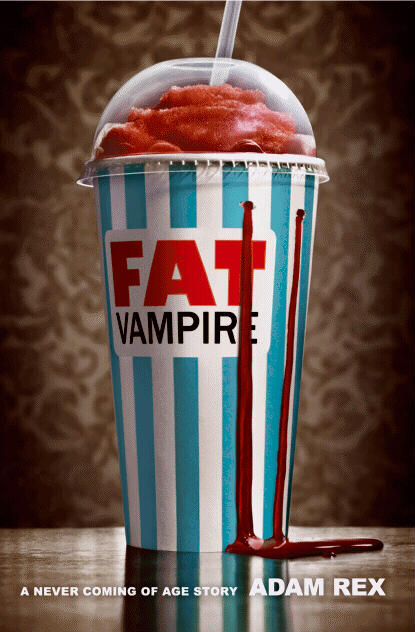
Fat Vampire by Adam Rex comes out in July. Rex is a very funny writer and this book is one of many hoping to be recognized as “the anti-Twilight”. It’s got a neat central metaphor: Doug was a fat 16-year-old loser when he was bitten, and now he realizes that he’s never going to lose any more weight or become any cooler—a nice reversal of the usual “strong and beautiful forever” conception of teen vampires.
Rex’s great talent is for hilarious dialogue and fully-rounded characters (no pun intended) We cut back and forth between the worlds of Doug, his dry-witted Indian exchange student crush Sejal, and the reality TV host of “Vampire Hunters”, who is on the hunt for his first real vampire (Everyone they’ve caught on the show so far has turned to be merely non-superhuman Eurotrash). Doug, inspired by a viewing a “Lost Boys” type teen-movie, thinks that he can cure himself by killing the head vampire, a dubious quest that brings together all the players for the final confrontation. Unfortunately, the metaphor doesn’t pay off as well as it could in the end, but a good screenwriter could use this material to craft a more linear and cinematic narrative than the book provides.

By far the best book I found was actually a British book that came out over a year ago, but it’s remained merely a cult hit so far, so it still fits the “new and undiscovered” category. The sequel is about to be published here and I suspect that it’ll give this series the break it needs. The Carbon Diaries 2015 by Saci Lloyd is a far more realistic version of “The Day After Tomorrow” crossed with “Scott Pilgrim”. It follows a snarky16-year old trying to launch her punk band as she suffers through London’s first year of carbon rationing, brought on by the increasingly extreme weather that is destroying many cities. This has a very cinematic escalating structure and a real epic scope, nicely telescoped in this one girl’s dawning awareness of the problem. It all culminates in a harrowing flood that snaps all the elements together, including a surprisingly effective low-key romance.
I hear that the sequel, “The Carbon Diaries 2017”, which I want to get my hands on, will show the punk band getting more revolutionary, putting them in opposition to the reactionary anti-rationing forces that are turning to violence across the country. Any producer who feared that Laura was too much of an observer of the problem in the first book could synthesize the two and get enough active-protagonist material for a thrilling movie.
I think the main thing holding back the first book from crossing over so far is how British it is. For one thing, it’s about a 16-year old going through her first year of college, which just seem totally wrong to Americans. Would a movie need to be Americanized to give it a broader audience? I don’t see why not, but the trend now is definitely towards super-faithful adaptations, and I think it could work in the original setting too, though you’d probably want a smaller budget, just to be safe. This could work as a smaller film, too, because it’s a disaster story driven more by strong characters than spectacle.
Don’t you want to see Carey Mulligan in punk get-up, smashing the windows of high-polluting cars? I know I do.
So that’s the state of upcoming teen books. Of course any production company that chases after hot ARCs quickly learns that it’s a tough way to make money—the most cinematic books have the most bidders, and many producers who pre-buy a book based on hype find themselves stuck with a dud after it comes out and fizzles. It always surprises me that prodcos don’t spend more time tracking down forgotten literary properties. As Roger and Michael did before me, I’ll spotlight a few of my favorites. Of course, as you can probably guess, I’ve been unable to interest my own managers in adaptations of these books, but I still think that they’d make great movies:

Michael covered “High Rise”, but here’s the J. G. Ballard book that I’ve always thought would make for a great cheap indie thriller: Concrete Island. It’s such a beautifully simple premise and a great metaphor for modern malaise: “Robinson Crusoe on a traffic island.” It’s that simple.
Robert Maitland is an asshole architect is driving back and forth between his mistress and his wife, both of whom have gotten used to his absences, when his car flips over a highway divider, stranding him on a large traffic island in the middle of a massive suburban highway interchange. He thinks that he’ll get up the steep embankments surrounding the several-acre ditch easily, but he’s injured and nobody zipping along the highway can see him down there. Days pass and each plan for getting out fizzles. Then, just like his literary predecessor, he finds another set of footprints. Eventually, Maitland comes to see that the highway makers bulldozed over an older neighborhood and the basements of various businesses are still there under the surface. He identifies his own his own nightmare-version of “Friday”, a brain-damaged homeless man, but he also finds a young woman living there who doesn’t want anyone to ever leave the “island”.
Obviously, the first half would be plagued by the same problem that any survival-drama has: the lack of anyone to talk to. This would probably have to be solved through narration, but there are other solutions too, such as the personified volleyball in “Cast Away”. Or you could just compress that half of the novel and get to the interpersonal conflict sooner. The movie needs to get made simply because it’s the ultimate high-concept: everyone who hears the one-line pitch gets an instant smile from picturing this situation and the metaphor it implies. Someone can take that seed and grow a great movie out of it.
“Concrete Island” shouldn’t cost that much to option, but you can get off even cheaper if you can find something in the public domain that’s ready for adaptation. Of course, since it takes almost a hundred years these days for copyright to expire, those savings usually disappear because properties that old demand super-expensive 19th-century-set adaptations, right? Well don’t tell Spielberg, who made some nice money on “War of the Worlds”. So what else could get the same treatment?
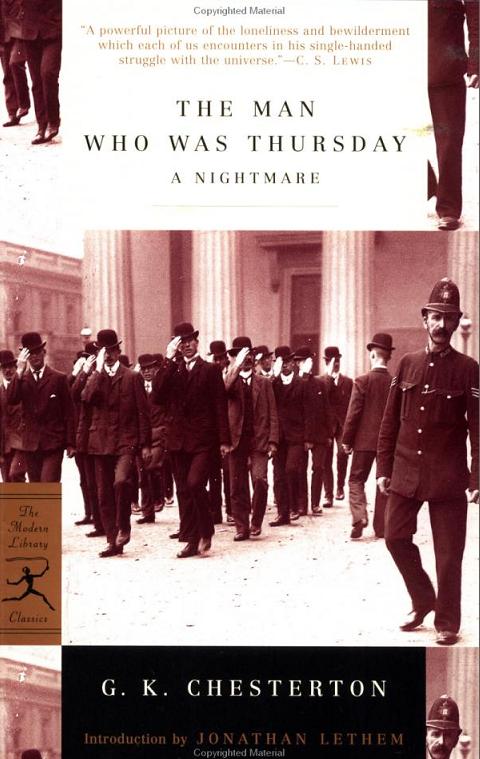
I’ve always been shocked that they’ve never made a movie of G. K. Chesterton’s “The Man Who Was Thursday”. It’s over a hundred years old, but its premise could not be more edgy: in a terrified city rocked by anarchist bombings, a young cop is assigned by his secretive boss to infiltrate a terrorist cell, whose members are named after the seven days of the week. He follows a nightmarish path into the catacombs of the city to find the leaders. He eventually becomes the new Thursday, but as he confronts his fellow terrorist one by one, he finds that each one is also an undercover cop, or at least thinks they are.
The book’s resolution is probably too surreal for an updated movie adaptation, but, just as they’ve done with all those Phillip K. Dick adaptations, a screenwriter could convert this concept into a more traditional, but still head-trippy thriller— something like “The Adjustment Bureau”.
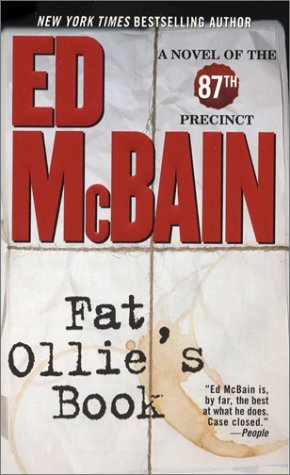
Another upcoming adaptation that has passed through Scorsese’s hands is “High and Low”, which has the cachet of being based on Kurosawa film, but guess what? Kurasawa’s film was based on an American crime paperback that nobody over here had spotted the value of. This still goes on, with the French selling “Tell No One” back to us after we couldn’t get the movie made ourselves. The novel that “High and Low” was based on was “King’s Ransom” by Ed McBain, one of 56 books he produced about the detectives of the 87thprecinct, a series that only recently ended with McBain’s death in 2005. Instead of watching different A-list directors fight over who gets to direct the remake of the one art film that was already made from this material, why not pick one of the other lean, mean novels in this series and find the value in it, just like Kurasawa did?
In the final ten years of the series, McBain introduced a new detective that quickly became a fan favorite: Fat Ollie Weeks was a crude racist slob who drove the more conscientious detectives crazy simply by being too good to fire. In two of the best books from this period, “Money, Money, Money” and “Fat Ollie’s Book”, McBain started the painfully awkward process of turning Ollie into a better person. After uncovering a CIA front-company run amok in the first book, Ollie decides to fictionalize that story into his own debut crime novel, in which he’s replaced himself with a sexy-young female supercop. After his terrible manuscript is stolen from his car, Ollie realizes that the only way he can get it back is to find the criminals who are now trying to recreate the impossible crimes he’s described. Meanwhile, he’s shocked to find himself falling in love with a young Latina street cop who sees past his surface vulgarity. McBain is widely acknowledged as one of the all-time great dialogue-writers. With the introduction of Fat Ollie, he was able to invest his neat little police procedural plots with a bigger emotion payoff.
These books could become two movies or one. The best American adaptation of an 87thPrecinct book was the good-but-not-great Burt Reynolds movies “Fuzz”. That movie made the smart move of drawing on multiple books in the series. After all, if Orson Welles could pull together all of Shakespeare’s Falstaff scenes into one movie for “Chimes at Midnight”, there’s no reason that a few novels couldn’t be stitched together to make the ultimate Fat Ollie movie.
Genre: Comedy
Premise: (from IMDB) A comedy centered around a foul-mouthed, junior high teacher who, after being dumped by her sugar daddy, begins to woo a colleague — a move that pits her against a well-loved teacher.
About: “Bad Teacher” sold as a spec back in 2008, the same year it made the Black List. It was written by the same writers who penned “Year One,” and “Ghostbusters 3” (or at least some draft of Ghostbusters 3). Jake Kasdan (Zero Effect, Orange County) is set to direct, with “I am now an actor” Justin Timberlake playing the male lead alongside his former girlfriend, Cameron Diaz. The movie is filming right now. Eisenberg and Stupnitsky, the writers, also wrote for “The Office.”
Writers: Lee Eisenberg & Gene Stupnitsky
Details: June 6, 2008, spec sale draft (This is an early draft of the script. The situations, characters, and plot may change significantly by the time of the film’s release. This is not a definitive statement about the project, but rather an analysis of this unique draft as it pertains to the craft of screenwriting).
 You’ve been very bad Cameron!
 I’ll be honest with you, the thought of Cameron Diaz and Justin Timberlake pairing up for a movie together doesn’t exactly get my old N’Sync juices flowing, but I read Bad Teacher long before these two were attached, and remember it being a lot spicier than your average sweet-potato comedy spec. This new word I keep hearing myself bat around these days is “teeth.” So many scripts I read don’t have teeth. They don’t bite into you. They’re more likely to politely rub against you or nudge you lovingly. But every story needs a little teeth, a little edge to set it apart from the pack. And that’s what I remembered about Bad Teacher. It had teeth.
Elizabeth Halsey is not a good person. In fact, she makes Melvin Udall, from As Good As It Gets, look like the milkman. Elizabeth has one desire and one desire only – to marry a man with money – the American dream for hot lazy women with no skillset everywhere. And Elizabeth has finally achieved that dream, finding a short bald troll-like man with lots of moola and an astute inability to know when he’s being taken advantage of. Or maybe not. Yes, Elizabeth’s dreams come crashing down when she walks in on her future Bilbo Baggins pulling a Jesse James with some gigantically breasted whore. It is such a devastating moment for Elizabeth that she’s barely able to spit out: “You are buying me the biggest pair of yellow diamond earrings they make!” Yeah, Elizabeth is a teensy bit materialistic. And vain. And a bitch. And cruel. But all of those adjectives pale in comparison to what Elizabeth is now: Single. Cue hard rock music!
Back Elizabeth goes into her own personal hell, that goddamned middle school, and boy is she pissed about it. So pissed, in fact, that she takes it out directly on her kids. A class with Elizabeth is like a day when the substitute shows up. If that substitute were a drunk reckless asshole who hated you. But Elizabeth has a plan. In her universe of fucked-up logic, she postulates that the woman who stole her troll fiancé had huge fake breasts. This means, in order to make sure this debacle doesn’t happen again, SHE must get huge fake breasts. The problem is, huge fake breasts cost $9300, and Elizabeth barely makes enough money to pay the rent (those damn teacher salaries). So, somehow, Elizabeth will have to cheat, lie, steal, scam, and deceive her way into getting that money. And nothing is off limits. Not school funds. Not other teachers. If there is money that can be gotten, she will find a way to get it.
Of course, you need to throw your protagonists some curveballs, and a big one arrives in the form of new teacher: Scott. Scott is as honest as Elizabeth is deceitful, and when she finds out that his father owns one of the biggest watch companies in the world…well, it’s game on. Unfortunately, Elizabeth’s rival, the sweet-as-caramel Amy Squirrel, is also vying for Scott’s attention. And since the two were practically chiseled out of the same loving stone, Elizabeth’s chances aren’t good. To make matters worse, Amy has huge natural breasts. The only way for Elizabeth to have a shot (in, once again, her warped little universe) is to transform into the exact opposite of who she is around Scott, and keep him interested just long enough to get those damn D-Cups!

Let’s not beat around the bush here. Bad Teacher is Bad Santa. I mean, it’s the exact same movie, but with a female lead and set in a middle school. I’m not saying that accusingly. I think it’s brilliant. It’s a perfect twist on a movie that worked. And if you thought Billy Bob’s character was funny, there’s something even more hilarious about a woman who will stoop lower than hell itself, who will take out the very kids she’s supposed to be protecting and nurturing, to get what she wants. I mean, the way she despises these children…you feel bad that you’re laughing and yet you can’t help yourself. Elizabeth doesn’t even know any of the kids names. NONE. And while this may seem like an obvious joke, Elizabeth is so authentic and believable that when she says “Hey you,” to a kid she’s known for 3 months, you laugh every time.
The cool thing about “Bad Teacher” is that there’s nothing spectacular about the way it’s constructed. It’s simply about a woman trying to save up enough money to get breast implants. But I realized there was a little more thought that went into this than it first seems. Here you have this appallingly selfish protagonist leaving a path of destruction in pursuit of her goal, and yet you’re still engaged. Conventional wisdom says we shouldn’t be rooting for Elizabeth because she’s “unlikable.” But what I realized was this: Because this character wanted something so badly – and I mean really really wanted it– it didn’t matter that we didn’t like her. What we’re drawn to is whether she’ll achieve this goal. So we’re not necessarily rooting for Elizabeth here, but we do want to find out if she gets what she wants because she cares so much. I know I’ve come across this before, but for whatever reason, it really stuck out in this instance. It was a good lesson to learn. But it’s important to note that it wasn’t the only reason we tolerated this character. This device is aided by Elizabeth being so funny. Had she not been funny, I don’t know if this approach, all by itself, would’ve worked. So I think that’s important to remember. If you are going to use an unlikable protagonist, try adding a couple of devices/traits to soften the blow. Because if someone is so repulsive that you can’t even stand them, I’m not sure there’s anything you can do to make us care about their journey.
So I obviously liked this script a lot. Why did it only get a “worth the read?” Simple. The ending is a complete mess. I don’t know if it’s a holdover from a previous draft or something they put together with the intent of expanding on later on. But it’s like they tried this big climactic ending, and in the process went away from everything they’d been doing up to that point. I’m sure they’ve fixed it by now, cause it’s really glaring, but since I’m critiquing this draft and not the future one, I can’t give this that “impressive” label.
[ ] What the hell did I just read?
[ ] wasn’t for me
[x] worth the read
[ ] impressive
[ ] genius
What I learned: If you’re writing your first or second screenplay, I’m going to give you the best chance at success. Use Bad Teacher as a template for simple dramatic structure. Here’s how you do it: Give your main character a big goal, then give them a bunch of smaller goals they have to achieve in order to reach that big goal. So here the big goal is to get fake breasts. The smaller goals are all the little things Elizabeth has to do to get the money to buy those breasts. This may seem obvious to some of you, but I read so many scripts where the protagonists don’t want anything. They’re just hanging around and talking to different people in different locations with no pursuits or desires whatsoever. If you’re just starting out as a writer, and especially if you write comedies, this simple goal-oriented approach is going to give you the best chance at writing a screenplay that’s good.