
Search Results for: F word
For the month of May, Scriptshadow will be foregoing its traditional reviewing to instead review scripts from you, the readers of the site. To find out more about how the month lines up, go back and read the original post here. Last week, we allowed any writers to send in their script for review. This week, we’re raising the bar and reviewing repped writers only. The caveat is that they cannot have a sale to their name. The idea here is to give aspiring writers an idea of the quality of writing it takes to have a professional manager or agent take an interest in your work. Monday, Roger reviewed the Western, “Quicker Than The Eye.” Yesterday, I reviewed the 80s’esque comedy “Duty,” and today, I’m reviewing the JFK thriller “The Shadow Before.”
Genre: Thiller/Drama/Love Story
Premise: John F. Kennedy made a speech in Cork City, Ireland five months before he was assassinated. This is the story of the two weeks leading up to that speech.
About: This is the third script of Repped Week. Martin McSweeney is represented by Conrad Williams at Blake Friedman UK. This script is an adaptation of his own book, “Two Weeks In June,” which you can find here.
Writer: Martin McSweeney
Details: 113 pages
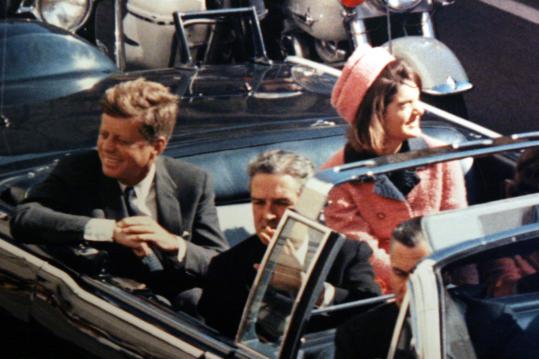
I’m by no means a Kennedy conspiracy freak. I watched Oliver Stone’s “JFK” when I was a kid but I was more consumed with the strange directing style of this off-his-rocker director than I was the actual movie. But it is a shady slice of American history and it’s clear the entire truth has never been revealed. So when the subject pops up in a concept, I usually take notice.
I was particularly intrigued by this premise, which wasn’t focusing on the actual assassination, but rather something that happened a full 5 months ahead of it. Could an event that took place in a small Irish city 8000 miles away from Dallas have had something to do with what happened on November 22nd, 1963? I didn’t know, but I wanted to find out. Strangely, any expectations of what I thought I was about to read were dashed within the first act. This Irish tale is a curious cross between a drama, a love story, and a thriller.
It’s June, 1963 in Cork City, Ireland. In two weeks, John F. Kennedy will be arriving to deliver a speech. It’s a turbulent period in Ireland, with a large portion of the population upset that the British keep sticking their noses in Ireland’s affairs. Since Kennedy’s speech is rumored to address some of these issues, and since the word is that it will be Pro-British, there’s a lot of fidgety Irish folk preparing for the worst. The IRA, in particular, is worried about the fallout if America publicly sides with Britain.
The Brady Bunch-sized Horgan family has lived in Cork City their whole lives. And the gem of the family is 19 year old Mary, a beautiful shop worker who, like most women of that era, is on the hunt for a husband. Unfortunately, her pursuits have led her into a disastrous date with Willy, a wrong-side-of-the-tracks type who, even though Mary has moved on, believes that the two are still together. A day in the life of Mary involves being on the lookout at all times, as she’s never sure where Willy is or what he’s capable of.
Luckily for Mary, she meets a dashing 30 year old American named Dean Reynolds. Although nobody knows what Dean does, a thick layer of charm and the non-invention of google keep the suspicions at bay. He seems nice enough. And he’s from America. So who cares what he does?
In the meantime, Mary is unaware that her two older brothers have joined the IRA. The Kennedy speech fears are reaching a fever pitch, and Cork’s IRA chief wants the brothers to deliver a letter to the local paper. The letter subtly warns Kennedy that if his speech is pro-British, there will be repercussions.
 Cork City
Back to Mary, who’s quickly falling in love with Dean. So blind is this love that she doesn’t much notice when her pervert boss is severely beaten. And that old Willy character? Yeah well, he hasn’t bothered her much recently because he’s DEAD. Doesn’t take Einstein to figure out Dean may be connected somehow. The suspicious-o-meter hits car alarm levels when Mary’s brothers spot Brendan out in a secluded field with a souped up sniper rifle, taking down targets hundreds of meters away. Could Dean have been sent to Ireland to assassinate Kennedy?
When the IRA gets wind of this, they start sweating the same bullets Dean’s shooting. They just put a public letter out vowing that if Kennedy showed support for Britain, they would retaliate. But they didn’t plan on actually *doing* anything to Kennedy. Now, if things shake out the way they’re looking to, and Kennedy is harmed or killed, the IRA could be in some hot water.
So what’s the deal? Is Dean really trying to kill the president? If so, will he be able to before the IRA get to him? And how does this affect Mary? Dean’s expressed interest in marrying her after Kennedy’s speech is over. Is she in trouble too ? Hmmm. I guess you’ll have to read the script to find out.
The first thing I noticed about The Shadow Before was that it was an odd way to approach a thriller. I think that worked both for it and against it. “For it” because I love reading scripts where I have no idea what the next page will bring, and because the love story and the mystery are so heavily intertwined here, I was always wondering which aspect would dictate the next plot point. I mean, I knew we were going to end up at Kennedy, but I had no idea how we were going to get there. “Against it” because I had no genre to ground me. “Thriller” and “love story” are such odd genres to mix that I always felt off-balance. It’s kind of like taking your girlfriend to the gun range on Valentine’s Day. Something doesn’t feel right about it. I think the bigger issue here though is that the concept hints at a JFK thriller, so that’s what I was anticipating. Disappointment crept in when that anticipation was only partially met.
(non-specific spoilers from here on) Another issue The Shadow Before runs up against is that we already know no one’s going to kill Kennedy, because, well, it’s history! And that takes away a good amount of suspense. This is why I dislike the idea of prequels in general, and why I don’t like films such as 2008’s Valkyrie. The entire movie is geared towards a climax that we already know the outcome of. That takes away one of your most powerful tools, the element of surprise. But there are ways to make this foreknowledge work for you, and it’s all in how you handle the characters. In American Beauty, for example, Lester tells us he’s going to die at the beginning of the film. Yet we’re still riveted because we see each of these characters develop motives to kill him. There’s still a big mystery involved. WHO is going to kill Lester? The Shadow Before uses a bit of that magic itself, as it takes the focus off of Kennedy, and puts it on Dean. The central question becomes, “Is Dean good or bad?” Is he here to kill the president or save him? And what happens then, if the IRA prevents him from doing either of these things?
But I think whenever you base your concept around JFK, and specifically his assassination, you’re tapping into an audience that’s eager for tidbits about the conspiracy, especially when you imply that the conspiracy is dealt with in your logline. For that reason, it was a little disappointing that this was such a self-contained story.And what I mean by “self-contained” is there’s nothing here that makes you look at the real assassination, which happened five months later, in a new light. And the hook kinda hints that there will be.
Still, this is a very well-written script and an engaging character story. I enjoyed never quite knowing where it was going, and for that reason, I think it’s worth the read.
[ ] What the hell did I just read?
[ ] wasn’t for me
[x] worth the read
[ ] impressive
[ ] genius
What I learned: Whenever you tell the audience your ending ahead of time, especially at the beginning of the film, you’re putting the primary load of your screenplay on your characters. Since we know where the story’s going, the only uncertainty left is the characters who take us there. For this reason, you need to be extremely strong with character development if you use this device. If you don’t know what a central character flaw is or how a character arcs or how to set up original and compelling relationships between your characters, I would stay away from this device.
For the month of May, Scriptshadow will be foregoing its traditional reviewing to instead review scripts from you, the readers of the site. To find out more about how the month lines up, go back and read the original post here. This first week, we’re allowing any writers to send in their script for review. We warned them ahead of time that we’d be honest and judge their material aggressively, so put that Kleenex box away. There’s no crying in screenwriting. Actually, there’s lots of crying in screenwriting but that’s besides the point. On Monday, Roger tackled “Hell Of A Deal” by Joe Giambrone. Yesterday, I took on “The Deja Vu Of Sidney Sumpter Stu.” And today, I’m delving into the world of dark sports comedy.
Genre: Dark Comedy
Premise: A lifetime minor leaguer blackmails his way onto the New York Yankees.
About: Script number 3 of Amateur Week.
Writer: Dustin Smith
Details: 110 pages
Contact: dustindustyrex@gmail.com
Once Costner hit his 50s, it was the death of the fictional sports film as we knew it. Bull Durham? Ah-may-zing! Field of Dreams? Spec-tac-u-lar. That no-hitter movie he made? Sort of…good…in a boring kind of way. Nowadays, the only sports movies we get are broad comedies with Will Ferrell testing the limits of bafoonery or super serious real life dramas like that Matt Damon – Morgan Freeman Cricket flick. Makes me a might nostalgic if I do say so. Which is why I picked out “Blackball,” the quintessential perfect idea for a dark comedy. A minor leaguer blackmailing the owner of the Yankees to get on the team? I don’t know about you but that has all the ingredients to be a delicious late night treat if I say so.

So did Blackball (good title btw) break the string of two consecutive “What the hell did I just reads?” Let’s give this script its close-up and find out.
Hank Penders is a 40-something minor league lifer. This guy was born on the buses that travel through the heartland from ballpark to ballpark where dozens, and on a good day, hundreds of people come out to watch his team play. But poor Hank is nearing the end of his career, and when you’ve been doing the same thing for 40 some years, it’s not easy to imagine the next stage of your life.
Which is why Hank can’t believe his luck. The owner of the Yankees is in town to scout one of his teammates! Now by luck do I mean he takes the opportunity to make a case for his own promotion. ha ha ha. No. Hank notices that the town whore has seduced the owner back to her hotel. So he follows them and snaps a couple of primo pictures of the couple getting down to biznass. And just like that, Hank is in the most powerful position he’s ever been in in his long uneventful life.
So does he want with this power? Money? No. Women? No. Celebrity? No. Hank just wants to play for the New York Yankees.
So he blows into the Big Apple, and when the Yankees owner sees those pictures, he’s ready to give Hank everything he wants. The next thing you know, Hank is playing first base for the most storied sports franchise in American history. Except there’s one problem. Hank sucks. And I mean, he really sucks. He’s batting like .016, and he’s lucky to catch the ball even when it’s thrown directly into his mit. Immediately, the players, the fans, and the whole city, hate Hank. Wherever he goes, he gets booed and hissed at. So what does he do? Well, he complains. Hank really likes to complain. He complains to the manager when he doesn’t start. He complains to the owner when he gets suspended. He complains to other players, he complains to the other team, he complains to the umps. If I had to use one word to describe Hank, it would probably be: a Class-A complainer.
(spoilers below)
Anyway, with less than two weeks from the end of the season, New York likely out of the playoffs, Hank decides, the hell with it, I’ll take steroids! Hank then becomes the greatest player in the history of the world for two weeks. He hits like .900, racks up a bunch of home runs, is a gold-glover. He single-handedly wins the division for the Yanks. And just when his dream is about to reach its peak, the media suspects Hank of using steroids and he gets kicked off the team. Wah-wah-wahhhhh.
And that’s it. That’s the script.
I feel a little bit like Randy Jackson here but I’m just going to get into it. Dustin, you know I love you dog. You know I’m a fan, right? Okay, I’m going to be real here, because there are a bunch of mistakes that need to be addressed in this script.
First, Hank is an alienating protagonist. We don’t really like him because all he does is complain. You’d think Hank would be thankful for this rare opportunity to play for the Yankees. If I got away with something like conning my way onto the best team in baseball? I’d shut up and count my lucky stars until someone wised up and got rid of me. Instead, all Hank does is demand more from everyone. He’s never satisfied and always complaining about his situation.
Second, there’s no character development here. Hank’s not trying to overcome anything. Take Tim Robbins’ character “Nuke” in Bull Durham for instance. He’s trying to overcome his recklessness. He’s trying to find control, both in his game and in his life. Since Hank has nothing to overcome, he’s too simplistic. And simple = boring. When you get notes telling you your character isn’t “three-dimensional,” or doesn’t “rise above the page,” this is usually what they’re referring to.
Next, the story is too linear. It feels like we can see all the way to the end of the screenplay from the very first page. There are no major subplots, no big twists or turns, and no aforementioned inner journey. You have to mix it up more, give your main character more problems to solve. Give other characters more things to do. Shock us with a few reversals. We need to turn a corner every once in awhile. You want your script to be more Grand Prix and less drag race.
The biggest problem with Blackball, however, is that there’s no clear-cut character goal in the story. All we know is that Hank wants to play for the Yankees. Well Hank starts playing for the Yankees on page 60. Now what? What’s the end goal? What’s the story about? Is it just to see him get to the end of the season? That’s not very compelling. We need a clear-cut goal, a ticking time bomb to center the story. Otherwise we’re just sitting there wondering what the point is. Take Rocky, for instance. We know Rocky’s going to fight Apollo, so the movie always has that clear motivation and destination pushing it forward.
Finally, the ending solution for Hank was too easy and it came out of nowhere. All Hank had to do was take steroids and he’d become the greatest player in the world? That’s it? The big solution? Even if you make this a morality tale (steroids are bad), since Hank had never struggled with steroids or talked about steroids or had an opportunity to take steroids at any previous moment in the screenplay, this choice comes out of nowhere. If you don’t set up the big plot points in your movie, it’s going to feel like you’re making it up as you go along. And that’s how it felt here.
There are other things we could talk about but those are the bullet points. If I was only able to tell Dustin one thing, I’d tell him to explore his main character more. Dig deep, figure out his flaw, then build a story around him that consistently challenges that flaw. Rocky doesn’t believe in himself. That’s his flaw. And everything in the story, from the environment to the other characters, is a reminder that he SHOULDN’T believe in himself. That’s what makes his story so compelling, watching him fight that perception and finally overcome it in the fight with Apollo. And I know I’m comparing a drama to a dark comedy but it doesn’t matter what genre you’re in, you have to explore your main character.
Script link: Blackball
[x] What the hell did I just read?
[ ] wasn’t for me
[ ] worth the read
[ ] impressive
[ ] genius
What I learned: I’m going to keep this simple. You don’t ever want to make your main character a whiner or a complainer. It’s one of those qualities that’s universally despised. Think about it. Do you know anyone who constantly whines and complains that you like? Of course not. So don’t give your hero those qualities.
For the month of May, Scriptshadow will be foregoing its traditional reviewing to instead review scripts from you, the readers of the site. To find out more about how the month lines up, go back and read the original post here. This first week, we’re allowing any writers to send in their script for review. We warned them ahead of time that we’d be honest and judge their material aggressively, so put that Kleenex box away. There’s no crying in screenwriting. Actually, there’s lots of crying in screenwriting but that’s besides the point. This is not a final judgment of your script, just how we see it in relation to the other scripts we read. We’re hoping the original writer can learn something and so can you. Roger is here with the first script, Hell of A Deal, by Joe Giambrone.
Genre: Thriller (?) Mystery (?) Drama (?) Black Comedy (?)
Premise: An aging Hollywood film mogul makes a deal with a mysterious man who is selling an experimental medical treatment that promises youth. In exchange, the salesman wants to use the mogul’s resources to make a movie, but the only catch? The salesman may or may not be the Devil.
About: Blindly chosen from the ScriptShadow slush pile for Amateur Week. I received this screenplay in my inbox with this attached email from Carson, “I literally closed my eyes and clicked. This is what came up.” The title page indicates this script is based on an original novel by the screenwriter, but upon further investigation (Google!), I couldn’t find any information about said novel on the Internet.
Writer: Joe Giambrone
I dove into this script with nary a logline nor a clue as to what genre I was about to read. All I had was the title, “Hell of a Deal.” Would it be a Mark Twain social satire like The Prince and the Pauper, a picaresque Horatio Alger rags to riches story, or would it be something more Faustian? And, more importantly, what sort of ramifications would it have for the next few hours of my life?
After I studied the title page, I looked at the first page. I examined the formatting and the prose in the Action/Direction lines. This is always telling. For example, you can always look at the A/D lines on the first page to gauge if this is going to be a safe read or not. By safe, I mean, does the writer have a competent command of not only the English language, but Screenplay Shorthand? Can they string words together in a clear and concise way that creates tone, atmosphere and description of not only character, but action? In other words, can the writer set the stage (scene) and describe what happens on the stage (scene) with prose?
If the answer is ‘Yes’, then it’s possible you might be in safe hands. But even if it’s obvious the writer has a skill with words, sometimes they come from the world of novels and prose fiction and the A/D lines may be overwritten, redundant, too dense (some may also argue that the prose is too spare) for the brevity required in screenplays. If the answer is ‘No’, then your luck is cut out for you and you’ll find yourself in what can be described as a frustrating foray into clumsy A/D lines that will have you both confused and pulling your hair out.
But luckily, with “Hell of a Deal”, the A/D lines looked safe so I continued my journey.
What’s it about, Rog?
This is a morality play about a Hollywood mogul named Al Smith. When we meet him, he’s seventy-three years old and he’s walking on a treadmill, staring at a plasma screen monitor that features living wills and trusts.
Al doesn’t have a lot of time left here on earth. He spends his days exercising on his treadmill, looking for that next original screenplay and keeping final cut away from the death merchant directors that make movies for him.
But then Lou Seaford arrives in his life, a shark-like salesman hawking a veritable fountain of youth. Al is suspicious, as of course he’s researched all the latest medicinal treatments, but he seems to cave in pretty fast when Lou talks about nano machines and shows him a video of his assistant, Katya, dressed up as a naughty nurse, injecting an old mangy mutt with a serum that transforms the dog into a puppy so realistically that Al is convinced it’s CGI.
Al is all too ready to sign up for the treatment, but when he asks how much this is gonna cost him, Lou answers, “I want money, I go to a bank. I come to you, Big Al Smith, the king of Hollywood, and of course?”
“You want to make a movie.”
But what are the conditions?
Well, of course, the studio cannot go beyond an R rating. “No male genitalia. No mutilation.” Lou doesn’t understand, as Al’s last movie had tons of blood. But they move on.
Al emphasizes that Lou must stay within budget, a generous twenty million. But then they get into an argument and Lou talks a hard bargain, driving the budget up to a hundred million dollars.
When Al tells Lou that the studio has final cut, Lou threatens to walk away. But Al is desperate to be young again, so not only is he gonna give Lou the hundred million, it also seems like surrendering final cut to this odd salesman is going to be negotiable.
The next thing we know, a waiter carries over a contract on a tray, but when Al tries to sign it with his pen it suddenly runs out of ink. Lou hands his pen over, and Al notices the ink is blood red. As he’s signing, the lights seem to dim.
All this and he doesn’t know yet what the movie is going to be about.
So how does the treatment go?
After he experiences some chest pains, an ambulance ferries Al from his Beverly Hills home, where his daughter Victoria sees him off with promises to visit later, to the treatment center.
Victoria’s decision to go do “a shoot” instead of accompany her father (who appeared to be having a heart attack) to the treatment center puzzled me. I just can’t rationally or logically accept it. Characters should act like real people in these situations, and as a loving daughter, I would expect her to go with her father in an emergency like this. It could be the last time she sees him, after all.
At the treatment center, it’s a chaotic scene as Al is losing consciousness. Lou is yelling at him to choose an age before he administers the drugs, and Al passes out and has a flashback about his deceased wife.
What happens in the flashback?
Al is in the Haight-Ashbury district of San Francisco with a crew of film students. He’s pushing them to film a drum circle of Ojibwe as they’re out looking to score footage of a police riot or topless girls. “Sex and violence. Don’t waste film otherwise.”
One of the Ojibwe women confronts Al, a gal named Lisa. But they seem to have an attraction to each other and the next thing we know they’re doing LSD and making love. They share a bond now, and Al proposes to Lisa.
Then we’re out of the flashback, and the age Al screams out to Lou before he passes out again is “Thirty!” This was Al’s age in the flashback and that’s the age he returns to when he awakens from the treatment.
If he’s 30 again, how does Al deal with Victoria and the film studio?
By pretending to be Al, Jr. I didn’t have a problem with this tricking the film studio, but I did have a problem when it came to convincing Victoria. It felt too easy and it didn’t feel as graceful as it should have.
I have a hard time getting past a plot glitch like that, and this brings me to my main criticism with “Hell of a Deal”. I’m going to be honest here, and my negative feedback may seem harsh, but as writers, we should be used to feedback, both positive and negative.
There’s a lack of verisimilitude, that quality of stories and storytelling that uses the right details to create the appearance of truth. To make something made up seem realistic. As storytellers, we are basically spinning lies into truth. And we must become masters at it if we want to succeed.
This lack of verisimilitude rears its head in the scenes dealing with the examination of the film business. And as the rest of the story is about Lou’s movie, well, this absence of truth plagues much of the script.
So what’s Lou’s movie about and what’s his end game?
Lou’s film is called, ‘Terra: Earth Under Terror’. Much of the second act is focused on Al dealing with Lou’s demands as they hire a screenwriter to script the project. After that, we see what happens when they send the script out to the latest leading men to see who’s gonna bite.
This movie within the script is pretty weird. Lou explains it, “It’s about the Supermen of the Homeland…like the Nietzsche Ubermenschen…,” who rise up to defend civilization against the terrorists.
Except these Supermen are into gangrape, torture and killing.
Basically, things come to a head during an Angel Heart-like moment when we learn that Lou Seaford is really Lucifer. His movie is hopefully gonna be as effective as La Fin Absolue du Monde from John Carpenter’s Cigarette Burns when it comes to inciting madness and homicidal urges in people, in turn causing World War Four and the end of civilization as we know it.
So the third act becomes a court case where Al is trying to block the release of ‘Terra’, but is then sued for a billion dollars by Lou’s team of lawyers.
Does Al succeed?
Strangely, no.
We have a heavy-handed finale where Al urges Victoria to live a happy life and “make moral art” before Lou comes to collect his soul, welcoming him into the gates of hell.
This sequence kind of blind-sided me as an attack on violence in cinema, especially violence in the “Torture Porn” genre.
I mean, as a dude that saw Kick-Ass three times in the same week, I felt like I was being personally condemned for being entertained (and finding value) in the Cinema of Violence.
But personal feelings and ego aside, that wasn’t my issue here. My issue is that the sequence felt pretty preachy, and I wish it was more subtle.
So, what’s your final verdict, Rog?
Well, despite my criticism concerning the plot glitches and character logic, I think there’s a good use of the three act structure. There’s a good macro-structure here. The writer nailed his over-all structure.
My criticisms deal with mostly the micro stuff, the stuff that happens in the scenes. I found that the scenes ran too long or lacked the realism they required. Instead of feeling like I was glimpsing into a window of a real-life mogul, it felt more like a hasty approximation of what one imagined this mogul’s life to be.
It ultimately ran off the tracks for me when it came to Lou’s movie. It was just really strange.
My advice to the writer would be to focus on making his scenes feel realistic, on making his characters feel like real people. Study genres and their tones, what makes them work, and apply appropriately.
Script link: Hell Of A Deal
[x] What the hell did I just read?
[ ] wasn’t for me
[ ] weirdly worth the read
[ ] impressive
[ ] genius
What I learned: Does your screenplay have a message? It does? Okay, kill it. No, seriously. Dismember it and bury it under your story. Because chances are, unchecked, this message has grabbed the reins from story and has shattered through the fourth-wall and has punched the audience member in the face, breaking his or her nose. The audience is coming to your movie because they want to be told a story, not a sermon. Sure, a theater can be sacred like a cathedral if you’re an audience member passionate about cinema, but it’s still not a church.
Here’s the analogy: Say you’re writing a science-fiction tale. The fiction comes first, not the science. The story is the center. If there’s no story at the center for the audience to be moved by, then they might as well be reading a text book on quantum mechanics.
All screenplays address an idea or ideas, something we can refer to as theme. If theme is a bell, then every scene should ring this bell. However, watch out for those moments where it seems like the character has stepped on a pulpit and is ringing the bell so hard it’s clanging and hurting our ears. And if you’re telling a morality play, aim for subtlety. Christopher Nolan’s The Dark Knight was a morality play, but its message was always in harmony with the story.
To get in touch with Roger, you can e-mail him at: rogerbalfourscriptshadow@gmail.com
note 1: Cruel remarks such as “This is f’ing terrible” or “This story sucks” will be deleted. I want you to be honest and I want to have a discussion about the writing but be respectful to the writer.
note 2: I’m sorry that the comments aren’t working for some – try using different browsers while I continue to work on it. Ever since upgrading it’s been a nightmare. Unfortunately, like most computer shit these days, they won’t let you downgrade back to the old version. If you have any experience with Disqus and/or commenting problems and know what the problem may be, e-mail me please: Caronreeves1@gmail.com
Genre: Action-Comedy
Premise: Merlin assembles a group of modern-day knights to battle a resurrected ancient evil, but all that’s available are an alcoholic ex-Olympian, a geriatric actor, a grumpy billionaire, and a nerdy scientist.
About: Brian K. Vaughn has quickly become an all star on the writing scene. When the comic book and Lost writer puts a spec on the market, all of Hollywood stops. A couple of years ago, Vaughn had a huge bidding war over this spec, which Dreamworks won. Pretty much everyone considers it to be the next Ghostbusters.
Writer: Brian K. Vaughn
Details: 99 pages – First Draft, May 2008 (This is an early draft of the script. The situations, characters, and plot may change significantly by the time the film is released. This is not a definitive statement about the project, but rather an analysis of this unique draft as it pertains to the craft of screenwriting).
 Jack Black, why haven’t you signed on to Roundtable?
You know, it’s no wonder they’ve been desperately trying to make a third Ghostbusters for two decades now. There really is no other movie franchise like it. Every movie that has ever tried to be the next Ghostbusters has fallen flat on its ass with a big resounding THUD. The franchise found that elusive combination of comedy, mock horror and action that SEEMS like it should be easy to replicate, but in actuality, is damn near impossible. It’s like Coke or Kentucky Fried Chicken. You generally know what’s in there, but you don’t know how it’s all mixed together. Well, Brian K. Vaughn must have broken into the Ghostbuster labs and stolen the recipe, because he’s written the next Ghostbusters.
Roundtable starts out back in the olden days when Merlin was a badass and knights ruled the roost. An evil old witch named Morgana spent her time flying around killing people for fun. Luckily, Merlin and the knights of the round table are all about turning this bitch into a pop-tart, and eventually battle her down into the ground where she becomes trapped inside a tree. As long as there are knights to protect England, Merlin proclaims, their country will be safe from Morgana, and safe from evil.
 Michael Caine, why have your agents not gotten in touch with Dreamworks?
Jump forward to modern day New York City.
Merlin now lives in a Brooklyn apartment (which he’s had for over 300 years) and spends the majority of his time scarfing down twinkies and playing World of Warcraft. Due to a Morgana curse, if Merlin were to ever leave England, he would never be able to come back. So Merlin popped over to this land England bought, thinking it would be a quick vacation, only to find himself stuck here once the United States declared their independence. This is a very big deal because he’s just gotten word that some numnuts back in England who wanted to build a mall, ran over the tree that was housing Morgana! This is officially a worst case scenario situation. Morgana is back in business and Merlin can’t go back to stop her!
Since the only other thing that can stop a witch are Knights, Merlin is forced to recruit four knights from the modern-day coffers. Of course, since these days they knight anyone with a pulse, the pickings are slim. He ends up with Simon, a dweeb who was knighted for his expertise in ecology, Ricky, a former Olympic javelin gold medalist who’s now a slobbering drunk, Edmund, a stuck up angry billionaire supermarket CEO, and Michael Caine. As Vaughn writes in the script, “Yeah, THAT Michael Caine.”
 Ricky Gervais, this would be the funniest movie you’ve ever been in.
Merlin zaps these four to Brooklyn where he informs them of the task at hand, and they predictably tell him, in no uncertain terms, HELL NO. They don’t even have their own lives together. What makes them think they can take out a witch? So back to England they’re zapped, believing they’ll simply be able to watch Wimbledon, hang with Becks, and inhale strumpets. But they quickly learn that the situation is more grave than they considered. Morgana is turning everyone into ogres and quickly taking over England! These knighted men each look deep into their souls and somehow find the courage to step up and fight for their country. They’re not sure they can do this, but because they’re England’s only shot, they have to.
And thus begins the story of Roundtable.
In all the scripts I’ve ever read, I don’t think I’ve ever read a screenplay as FUN as this one. The Hangover was close, but this beats it. It’s just a blast from page 1 to page 100. It all, of course, starts with the characters, who are hilarious. A lot of the script has them squabbling with one another other and it’s some of the funniest squabbling you’ll ever read. For example, they only remember Michael Cain for his bad movies like Jaws 3-D and The Muppet Christmas Carol. None of them have any idea that he was in iconic successful films like Alfie or The Italian Job, and it pisses the shit out of Caine.
 I know they wanted Simon Pegg, but Simon is all you Martin. Make the call.
 Just look at how the script opens: “A crowd of SCREAMING PEASANTS charges over the rolling green hills of sixth-century Britain. But just when you start to worry that this is going to be a shitty historical drama, we push in close on one of these moaning peasants to reveal WORMS crawling through the flesh of its reanimated corpse-face. Oh, okay, neat. These marauding farmhands are actually an ARMY OF THE UNDEAD.”
Vaughn even throws out casting suggestions on the fly, informing us that Merlin shouldn’t be old and boring, but should probably be played by Jack Black.
I’ll be honest with you, I can’t fathom how this movie hasn’t been fast-tracked into production. It’s easily one of the best spec script ideas in the last decade and there isn’t a single character in the script that wouldn’t be a blast to play. Why hasn’t Jack Black committed to this? Why hasn’t Ricky Gervais committed to this? There’s a scene in a celebrity wax museum that would easily be one of the greatest scenes of all time, right up there with the Stay Puff Marshmellow Man. This has “classic” potential written all over it.
Having said that, this draft isn’t perfect. Not everything has been fleshed out yet, and the second half of the screenplay, in particular, seems to go too fast. The final battle also kind of comes out of nowhere and after it was over, I felt like I hadn’t gotten to know these characters well enough. It’s rare when I say a screenplay has to slow down, but I think Vaughn may have underestimated just how lovable this team of misfits was. We needed some drawn out moments towards the end of that second act, and I think if they’d done that, the finale would’ve played out better.
Very enjoyable read. I’m left with only one question. When the hell are they going to make this movie???
[ ] What the hell did I just read?
[ ] wasn’t for me
[ ] worth the read
[x] impressive
[ ] genius
What I learned: In a screenplay, near the end of the first act, there is usually something that’s fancily referred to as the “Refusal of the call.” What it is is your hero initially refusing to accept the challenge that’s been put forth before him. Obi-Wan asks Luke if he’ll come with him to Alderran. Luke says no way. He can’t leave. He has to help his Uncle on the farm. In The Matrix, Morpheus is guiding Neo to safety out on a building ledge when Neo finally says, “Screw this shit, this is too dangerous,” and allows himself to be captured. The Refusal Of The Call actually makes sense when you think about it. The challenge set forth in the movie is usually so above and beyond what your protagonist is capable of, that it wouldn’t make sense if they DID accept it right away. You need that transition moment where the hero says, “I can’t do it,” because, hey, it’s the same way we’d all react, and it sets up your character for the change they’ll have to make later in order to arc. When our four heroes are tasked to take out the killer witch here, they all say, “No friggin way dude. We’re not committing suicide.” And they walk away. It’s only when the witch begins her path of destruction that they realize, “Hey, we don’t really have a choice here. We have to do this.” —- Note, however, that a refusal of the call is not always necessary. In the film this script was inspired by, Ghostbusters, the technique was never used.
Note: I’m still figuring out the comments section here. I upgraded to the newest version of Disqus but it seems to have made it so nobody can comment (is that what an “upgrade” is supposed to do?). Do me a favor, even if you don’t normally comment, leave a “test” in the comments section just so I can see if the comments work for anyone. Brownie points if you simply leave your system and browser (ie Windows XP, Firefox 7) Also, if you are familiar with Disqus or blog code and can see why Disqus is having such a difficult time working for me, please let me know what you find.
Genre: Action/Drama
Premise: When a pair of priests discover proof that there is no God, they go on a path of destruction.
About: Back in 1995, Tri-Star made one of the most famous spec purchases of the decade. The 400 thousand dollar sale about two priests who find out there is no God is on several “Best Unmade Scripts Of All Time” lists and is, by far, the script I get asked about the most. However, if there was a project that defined Development Hell, both figuratively and literally, it would be “The Sky Is Falling.” As rewrites continued through the decade, no writer could find the elusive tone that both captured the original writers’ intent, while making the story accessible to a mainstream audience. I wasn’t able to get the spec sale, but this is the first attempt by the original writers at a revision. Although I’m sure the two did plenty of assignment work after “Falling,” it appears they were never able to get anything into production, except for Singer, who recently wrote the Clive Owen starrer, “The International.”
Writers: Howard Roth & Eric Singer
Details: 110 pages – October 27, 1995 draft

There are violent specs and there are VIOLENT specs and this, my friends, is a VIOLENT spec. Natural Born Killers? Tame. Fight Club? G-rated. Resevoir Dogs? A Sunday stroll in Disneyland. Pulp Fiction? Playing this weekend at your local Chucky Cheese. None of these movies and their supposed violence and debauchery hold a candle to the sheer bombasity of this insane screenplay. And make no mistake, Howard Roth and Eric Singer are clearly insane people. You’d have to be to write this. Because it is so out there, so bizarre, so twisted, so violent and reckless, that you’re going to need anti-anxiety medication just to make it out of the first act. I will now attempt to summarize this story. But beware, if you are a moral person, if your typical night involves baking cookies and exchanging work tales, if you saw “Passion Of The Christ” 7 times, you should not read on.
Cli-click [me strapping on my seatbelt]
Okay, so here we go. Monsignor Felix Crowley and Father Ringo Michaels were involved in a Nevada desert excavation. Nobody knows exactly what happened but what they do know is that 30 plus excavators were brutally beaten to death by a hammer and Felix and Ringo are nowhere to be found. That is until they show up on a security video at a local casino, hopped up on a cocktail of narcotics, robbing the place like they’re Butch Cassidy and The Sundance Kid. And when authorities get a call that the duo are tearing through the city in a stolen vehicle, they send some units out to partake in a car chase that would make even your most reckless Grand Theft Auto afternoon look like Super Mario Brothers. Oh, and just to give you a feel for how weird this script is, the officers chasing them are named “Officer Frick” and “Officer Frack.”
Ringo and Felix, who, despite the constant chaos around them, always speak plainly and to the point, have discovered, through this excavation, definitive proof that God doesn’t exist . They are keeping this proof in an orange fanny pack which they treat like a deity (why they treat something like a deity if they no longer believe in deities is beyond me). All the two care about now are doing as many drugs as possible, stealing as much money as possible, murdering whoever they can, fucking whatever they find, and finally, their main purpose, finding Felix’s old high school girlfriend so Felix can tell her he loves her before, presumably, offing himself.
Hans Langerman, the man who owned the excavation site and a devout religious dude, is terrified of what may happen if the contents of the orange fanny pack are shown to the world, so he calls his old friend, Hitman turned God’s Man Frank Doyle. He wants frank to come out of retirement so he can save religion. Doyle is a bit of a curiosity himself. He has some sort of terminal disease – and I wish I could explain his condition better but since I had no clue in hell what was going on, I can only say this: Frank places worms inside his body, possibly (though I’m not sure) to battle the disease. So he’ll be talking to you and a worm will slither its way up underneath his forehead. No additional comments are needed. Doyle agrees to do the job on one condition. He wants absolution of all his sins both past and future. Doyle wants to go to heaven when it’s all over.
From this point on, it’s a not-so-standard chase film, as Doyle tries to find and take down the heretics. And if guys with worms in their faces weren’t enough to hook you, we have a scene where Felix and Ringo are in their hotel room….WITH THEIR CAR. There are no holes in the wall. It’s just a normal room. Yet somehow they found a way to get their car in it. Oh! And there’s a scene where a character is just hanging out, then grabs the end of a bungie cord, a missile attached to the cord shoots into the sky, he rides it, where he is then picked up by a passing airplane. So you get plenty of wacked out weirdness delivered with your story. Except I’m still not sure which is the main dish. Is this weird with a side of story? Or story with a side of weird?
The thing is, amidst all the craziness, there’s an actual theme here, an attempt to explore some meaningful debate about faith. When Doyle, maybe hours from death, finally catches up with the lunatics, the notion of what’s in the fanny pack becomes the central focus. Is God real? Is he a figment of our imaginations? And does Doyle look before he dies? Can “the truth” really override faith? I mean, it’s not The Ten Commandments, but it’s pretty thoughtful for a film with men on bungie cords being picked up by 747s wearing orange fanny packs.
Look, let’s not kid ourselves on why this has never been made. It’s so relentlessly bloody and hopeless and cruel, even for risky independent fair, that everyone’s probably terrified to risk 60 million bucks on it. And I’m sure that’s why they’ve rewritten it so many times. They’re trying to lighten it up to a point where it’s digestible. Not audience-friendly mind you. But *digestible.* as in, people don’t start rioting after the screening. But the problem is, if you lighten it up, you take away everything that’s unique about it.
I don’t’ really know what to make of this. It’s definitely unlike anything I’ve ever read. While there’s a noticeable 3-Act structure here, it definitely doesn’t care about conventions. It might be an interesting exercise to ground this idea in some sort of reality, but I wouldn’t want to be tasked with that assignment because then you run the risk of making the script preachy and boring. I wouldn’t say I liked this screenplay, but if I told you it wasn’t worth reading, I’d be lying. It’s just so weird and different and unpredictable that it’s one of those anomalies you just have to check out.
I may have to make up a new category for this one.
[ ] What the hell did I just read?
[ ] wasn’t for me
[x] weirdly worth the read
[ ] impressive
[ ] genius
What I learned: I remember when I first started writing and I would read a Tarantino script or a Shane Black script and think, “Okay, this is how you have to write to be successful.” So I’d go ahead and write a script like that. And it would suck. And it took me awhile to figure out that just because someone else was successful with a particular style of writing, doesn’t mean you’re going to be successful with that style of writing. I bring this up because “The Sky Is Falling” has a very ballsy aggressive style to it, a style that’s fun to read. And I’ve found that whenever you read scripts like that, they tend to influence you in your next script. This happened most recently after – yes I’m going to say it – Juno. After that script, everybody and their grandmother wrote super quirky cute clever dialogue. Some were successful at it. Most weren’t. My point is: Never forget the things that matter: Plot, character, structure, theme. Focus on those things first and allow your style to emerge organically. If you try to ape somebody else’s style because it’s the hip style of the moment, your script won’t work. Cause it’s not you.
Shoot. I think the comments are broken again. E-mail me at carsonreeves1@gmail.com if you can’t comment. I just “upgraded” the Disqus software.