
Search Results for: F word
We’re wrapping up “Amateur Month” this week. The first week, we allowed any writers to send in their script. The second week we had repped writers only. Last week we had Favorites Week. This week is going to be wonky. Roger will review another “random” Amateur script. Tomorrow I’ll review another of my favorites. Wednesday I’m busting out an article that I hope will be inspirational for all you writers. Thursday is still undetermined. And Friday I’ll be reviewing the script for an upcoming sci-fi/horror movie which I really liked.
I’ve also decided to continue the tradition of reviewing amateur screenplays. On the last Friday of every month, I’ll review one amateur script. The angle will be more one of helping to improve the screenplay than flat out reviewing though, so we all learn something from it. If you’re interested (and you can handle criticism!), send me your script along with a convincing argument for why I should read it to Carsonreeves3@gmail.com. Don’t be upset if I don’t choose your script. I’ll only be able to review .1% of the entries!
Also, don’t forget to check out the “Tracking Board Post.” Now here’s Roger with “The Beat Down.”
Genre: Crime, Black Comedy
Premise: Two cool, small-time cons steal a lotto ticket worth $100,000 and hit the road in search of someone straight to cash it for them.
About: One more Amateur Script, in which the writer made a convincing case on why I should give the script a read: He wants honest feedback and recommendations for how to fix his script.
Writer: Matt Racicot
During the middle of Amateur Week, I received an email that made me laugh. The first few sentences implied that the writer thought this month’s theme transformed ScriptShadow into some sort of bloody, experimental gladiatorial arena, or at the very least a classroom where the walls were stained with the dregs of 3-hole-punch dreams and cots full of rookie writers and bruised egos.
The writer, against all odds and conventional wisdom, wrote to me, expressing that he wanted his script to be in on the action. He seemed to be a guy that had been keeping tabs on the type of material I like, as evidenced by his script’s logline. A crime story about some cool cons trying to find a legit citizen to cash their winning stolen lotto ticket. Visions of Charlie Huston and Elmore Leonard protagonists strapped into a rollercoaster ride of Grindhouse Violence were swirling on the movie screen inside my head.
I wasn’t totally convinced though. This was an unknown writer, and would he really want me to criticize his labor of love in front of the online Screenwriting Community?
But then I read this line: “I wanna know what’s wrong with my script so I can fix the fucker…”
And that clinched it for me.
So in the spirit of the critique workshop, I’ve decided to review Matt Racicot’s “The Beat Down”.
Who are the cool cons this caper is about?
James is a Jimmy Dean-cool, small-time con (I really enjoyed some of the character descriptions here), and when we meet him he’s standing under a single lamppost, surrounded by Asian gangbangers. Him and his associate Sam, work for the Italians, but they’ve both been caught stealing heroin from the Asians, and are about to be appropriately punished.
The Italians, wanting to continue business with the Asians, give up James and Sam to smooth things over. In situations like this, I’d imagine that this crime syndicate would kill both men for their transgressions, but no, they hand James a gun and force him to shoot Sam dead. And that he does, although he doesn’t seem to feel much guilt about the deed, shrugging off this peculiar brand of punishment.
Diamond is James’ pinup sexy, Rockabilly girlfriend.
I really like how the writer describes Diamond, “As lovely as a rain drop dancing on a rose.” I think it captures a tone and style I wish was woven throughout the script.
Diamond works in a convenience store, and she does something interesting in her introduction: A customer arrives with a lottery ticket he wants her to check. She runs it through her machine and discovers it’s a winning ticket. But instead of handing it to him, she drops it and switches it with another ticket before handing it back.
So Diamond totally scams this guy out of a $100,000 lotto ticket?
Yep. And you think that’d be all she wrote. Our cool couple cashes in their ticket and they live happily-ever after like the minimum-wage kids Clarence and Alabama in True Romance.
Except there’s two complications. One is that James is an ex-con and the ticket “will come up stolen. They investigate this shit now.”
The second complication is Mickey.
Mickey is the guy James takes orders from with the mob, and he’s not so much pissed at the fact that James was stealing from the Asians, but that he got caught. As far as Mickey is concerned, James owes a debt, but he’s willing to wipe the slate clean if he leaves Seattle in the next twenty-four hours.
Fair enough.
But for reasons I didn’t quite understand, when Mickey catches wind that James and Diamond have skedaddled, he tracks their movements, learns that they’re making a pit-stop in Eugene, Oregon on their way to California.
When I look over it, I think it’s implied that Mickey is obsessed with Diamond, but I’m not sure. Otherwise why would he follow a guy across state-lines when he wanted him to flee town in the first place?
And that’s one of the issues with the script, character-wise. The motivations aren’t consistent, and there are setups without payoffs; and payoffs without setups. Which makes the plot a bit confusing and scattered.
So James and Diamond go on a quest to find someone straight to help them cash their lotto ticket?
That’s the concept. But, the execution doesn’t fulfill the promise of the concept. I was intrigued by the first act, and couldn’t deny that there was talent in the writing, although the dialogue wavered from entertaining to trying-to-hard.
But the script fell apart for me in the second act, which is usually the case with rookie scripts. They start to wander, unsure of plot. It seems like the characters lose sight of their goals, and scenes begin to feel tangential, distracted.
It’s basically filler.
In the second act, the script begins to focus a lot on another couple that was introduced in the first act, Bea and Will. They’re driving in a mustang, and we learn that Bea is an eccentric actress preparing for an audition. She’s reciting Irwin Shaw’s Bury the Dead.
She seems pretty crazy, which is confirmed when she randomly pulls out a gun to the surprise of Will, her intellectual boyfriend. She seems a bit like Mallory from Natural Born Killers, except Will is no Mickey. He’s pretty reserved.
He almost gets into a wreck when she starts giving him road head in their introductory scene.
They get a lot of screen time, and I began to feel unsure of which couple I was supposed to focus on. Because they don’t feel like a real foil to James and Diamond, their existence felt extraneous.
Of course the couples collide in Mt. Hood, Oregon, when they end up neighbors in the same motel. Bea seems attracted to James, and we learn that James isn’t that interested in his own girlfriend, Diamond.
I was confused about this point because he seemed pretty happy to be with her in the beginning, even if he wasn’t able to return her ‘I Love You’s’. This point seemed undeveloped, and I didn’t understand their relationship. Why were they together? Why were they engaged if he didn’t love her? I wasn’t shown a reason.
So when James takes Will out to a bar, and starts hitting on all the girls there, I was not only confused, but I began to dislike his character.
After a crazy night, James decides that Will is the guy that can help them cash the lotto, and things get dicey when Mickey arrives looking to snatch Diamond away from James.
It all comes to a head at a campsite on a mountain road when infidelities are revealed, a marriage proposal is rejected, and guns come out.
What were the issues?
The characters were underdeveloped. I wasn’t sure who James was or what he wanted. I know he wanted to cash the ticket, but why was he with Diamond? He felt one-dimensional, and I never got a solid read on his psychology or what lengths he would go to in order to cash the ticket. As such, there was no inner-conflict (his flaw) I could really hook into other than that he was an asshole, which just made him unlikeable.
Setups with no payoffs. In one of James’ first scenes, we learn that he’s obsessed with Bruce Lee and martial arts. He also owns a samurai sword, which he brings with him on the road trip. Now, I was expecting a few things here: James beating people up, or possibly doing something crazy to someone with a fucking samurai sword. But…no dice. It ultimately gets thrown into some bushes.
Payoffs with no setups. James cheats on Diamond various times, but I didn’t understand his motivation. He’s engaged to Diamond, and seems pretty okay with that. There’s one point where it even seems like he’s in love with Diamond by the way they talk to each other, and he didn’t feel like the type of character that would be a cheater at all.
The plot was unsure of itself. The pace was too mellow for such a cool logline. Lots of scenes of characters talking, but it doesn’t feel like anything is happening. I really felt like the ball was concerning the execution.
No ticking clock. No stakes. Which contributed to the leisurely pace.
But how could we fix it?
I think the writer should focus on telling this story from the focus of his main couple. Let them have the majority of the scenes, and really define who they are and think character motivations and plot details through.
For example, why did Mickey follow them out of town so doggedly? A fix could be that they stole the ticket from him, and basically you have him hunting them for a payday. Or, maybe he’s Diamond’s ex-boyfriend or ex-pimp, and this is a personal matter for him.
I like that we got to the lotto ticket business in the first ten minutes, and I think the script needs to pick up the pace and keep it. Make it a chase movie instead of a languid road-trip tale.
Perhaps throw in some other parties who are interested in the ticket as well, anyone from more people from Diamond’s past or James’ enemies.
To make things interesting, do a reversal concerning the so-called straight people they need to cash the ticket. For all we know, they seem alright, but then spin it so that they’re actually worse than our cool cons. They can double-cross our anti-heroes.
Hell, you could even write it as a movie about love, leaving and resolution. What if James loved Diamond, but Diamond left him when she got the ticket? And he had to pursue her and they had to resolve their relationship?
Either way, the plot needs to be tightened with more obstacles getting in the way of the protagonist’s clear goals, but it should serve the story of James and Diamond’s relationship. The story should be about them and the conflict in their relationship and how they ultimately resolve it.
Script Link: The Beat Down
[x] What the hell did I just read?
[ ] wasn’t for me
[ ] worth the read
[ ] impressive
[ ] genius
What I learned: Give your protagonist as much screen time as possible. They should not only be in the majority of the scenes, but they should also have most of the biggest moments. It’s hard to pull off an ensemble piece because every character has to have solid motivations and compelling arcs and concrete goals that payoff accordingly. It’s hard to pull off dueling protagonists, or in this case, couples, as it always feels like one pair is stealing valuable time away from the other’s story, or is diminishing it somehow. Ask yourself, okay, whose story here is worth-telling? Whose is more compelling? That character is the engine of your story. Focus on them.

I would say, in order to stay with the theme of the site, that you’re only allowed to talk about the Lost finale in relation to writing, but we all know how good that’s going to go over. So I expect all the usual criticisms about 10,000 mysteries and no answers and people who’ve only seen a few episodes blasting it for how terrible it is. And I can live with that. But I will say this. Ending a series like Lost has to be one of the biggest challenges in the history of writing…ever!
Now I’m not going to watch the episode until later tonight when it becomes available online (I don’t have ABC – don’t even ask). So I won’t be leaving my impressions about the show until later tomorrow probably (Monday). But for now, feel free to have at it. Was the Lost finale all you had hoped for?
EDIT: Lost Finale Thought (spoilers)
Wow, I have to say, the finale was pretty damn incredible. I’m a little too emotionally beat to get into a rational discussion about it, but I will say this. They made a really smart choice and a choice that’s a great lesson for all writers out there who are writing endings to their scripts. The finale was entirely character-driven. It was a bright move to deal with all the major secrets in the pre-finale episodes. Because the truth is, there wasn’t any major plot twist or revelation that would satisfy us. It was all about these characters coming to terms with themselves, exorcising their demons, and ending their journey. That’s why the episode was so awesome.
And as far as the one “revelation” (I put it in quotes because it’s been pretty clear that it would be something *like* that for awhile), I thought it worked perfectly. There was something about the way his dad worded it that captured the imagination. He didn’t say “heaven” or “an alternate universe.” He said, “A place you guys built so you could find each other.” I don’t know why. That just made perfect sense to me.
And the final image was wonderful, with Jack lying in the bamboo field, just like in the opening episode, and Vincent coming over , like in the first episode, so he didn’t have to die alone. I thought it was a series of strong choices. Probably my favorite episode of the series, right up there with the pilot, Walkabout, and The Constant. A great way to end a great series. :)
Script link now up!!! :) :) :)
For the month of May, Scriptshadow will be foregoing its traditional reviewing to instead review scripts from you, the readers of the site. To find out more about how the month lines up, go back and read the original post here. The first week, we allowed any writers to send in their script for review. Last week, we raised the bar and reviewed repped writers only. This week, we’re doing something different. I read a lot of amateur scripts. Some through my notes service, some through contests, and some through referrals. I wanted to spend a week (or maybe two) highlighting some of the best scripts I’ve come across. All these scripts are available. So if you’re a buyer and it sounds like something you may be interested in, then get a hold of these writers through the contact information on their script before someone else does. Monday, Roger reviewed a cool script from Michael Stark titled, “Treading On Angles.” Tuesday, I reviewed our first female writer of Amateur Month, Lindsey, and her script, “Blue.” Wednesday I reviewed the sci-fi thriller/procedural, “Nine Gold Souls.” Yesterday, I reviewed another sci-fi piece, “The Translation.” And today I review a teenage thriller.
Genre: Thriller
Premise: Seven teenagers head into the Louisiana forest to celebrate a birthday. But when one of them is accidentally killed, the rest must figure out what to do with the body before the night is up.
About: Jared is repped by Sarah Self at The Gersh Agency and managed by Jim Thompson at Original Content.
Writer: Jared Romero
Details: 110 pages

Oh man, I still remember when I first read this script. It was in the same contest I read The Translation in and I had just read 40 horrible screenplays in a row. That’s the thing writers don’t get about readers, is they can read dozens and sometimes HUNDREDS of scripts until they find one that’s actually good. That’s why they’re so skeptical of your script. Cause the previous 99 were terrible! I was expecting another ho-hum teen-angst-thriller flick here, but what I got instead was an expertly crafted thrill ride.
So you want to know the number 1 way to get an agent? I’m going to tell you right now and I’ll use “Cylinder” as an example. After reading Cylinder last year I felt like my body had been injected with the same adrenaline as Jason Statham in Crank. It was a pure rush and I kept thinking, “This is really fucking good.”
So I e-mailed a writer I knew and I said, “I think this script is really fucking good (RFG).” And he was busy but he ended up reading it anyway and to my surprise he responded, “Yeah, this script is RFG. Let me give it to my agent.” His agent was at Gersh so he brought it to her and after reading it she agreed that it was “RFG,” so she signed him. And that’s it. That’s how you land an agent. You write a RFG script and you keep pushing it (to contests, friends, whatever) until sooner or later someone who matters gets their hands on it and gives you a break.
Ahh, but let’s remember the key to this whole equation working – The script has to be REALLY FUCKING GOOD. Do not begin this process if you have a script that’s SPBFTMPU (sorta pleasant but for the most part unentertaining). But wait, you say Carson, how do I know if my script is RFG???
I shall reveal to you now how to tell if your script is RFG. First, give it to a couple of friends. But before calling them to get their reactions, make sure to plug in your “friends always react more enthusiastically than they really feel when they read their screenwriter friend’s script” variable. In other words, if they say, “I thought it was pretty good,” it means they outright hated it.
However, if these friends are jumping out of their skin and can’t stop saying things like, “No, Diablo. This script is really really good. Like I was crying at the end,” and quoting lines back to you and coming up with inspired ideas to make it even better, and inquiring repeatedly in the coming weeks to find out who you’ve sent it to, well then your script is RFG and you should send it out.
But if they’re saying, “Yeah, it was good,” in the same voice people use when they tell the parents of an ugly baby how cute he is (you know what I’m talking about – where they won’t make eye contact when they say it?), then don’t waste people’s time. Continue working on the craft and start something new. Cause if there’s one thing I’ve learned about contacts/friends/family, it’s that they form an opinion about you the first time they see your work and they NEVER change that opinion.
Hey wait a minute. Aren’t I supposed to be reviewing a script? Right. “Cylinder.”
Okay, so Cylinder has an admittedly simple premise. But where it excels is in its EXECUTION.
It’s Charlie Robichaux’s birthday. He’s 17 years old. The world could not be more firmly fitted in the palm of Charlie’s hand. He’s a nice kid, a smart kid, an ideal best friend, would give you his last dollar if you needed it. The only negative in Charlie’s life is his workaholic father, a District Attorney who’s cracking down on today’s reckless youth. If your kid drunk drives and kills an innocent civilian, Charlie’s dad is the one who will make sure he goes to jail for the rest of his life.
Immediately after meeting Charlie, we’re introduced to his friends. There’s cute Sam, a blonde girl-next-door type who’s got a crush on Charlie. There’s the dorky Theo. There’s the drop dead gorgeous Laurie (Meghan Fox type – which is good cause I hear she needs a job). There’s preppy Matt. And there’s Jackson, a bit of a townie. While this group wouldn’t normally all hang out together, it’s Charlie’s birthday so an exception is made.
As a present, they drive him out into a clearing in the Louisiana forest to an old deserted mansion so they can get drunk and fuck around. But things get interesting when Jackson pulls out a revolver. Some of the guys freak out. Others laugh. It’s just a gun, they say. But that gun becomes their central source of entertainment. They set up a makeshift shooting range with beer bottles and the fun begins.
In the meantime Charlie and Sam escape, and she finally reveals to Charlie her hidden crush. The two start making out. It’s quickly turning into the best birthday party Charlie has ever had and then…and then something goes horribly wrong. Sam pulls away to find Charlie non-responsive. That’s when she notices the large hole in his head with blood gushing out. Charlie’s been killed by a stray bullet.
Now there aren’t many times I’m genuinely SHOCKED while reading a screenplay. But this shocked me. And the funny thing is, we were just talking about this the other day (or at least I was talking about it. I don’t know if you guys were). They just killed off the main fucking character!!! I was SO shocked, in fact, I actually went back and re-read the scene. Did they just really do that? Did they kill off the protagonist?? This had to be how audiences felt when they first saw Psycho (I never experienced that feeling as the first time I saw Psycho, I’d already been told what would happen).
This was such a brilliant move on so many levels. We were excited for Charlie’s future. We identified with him. And the second he dies…we feel completely lost. Now what? Now who? What the HELL is going on? Who’s our lead? Who’s going to carry us through the rest of the story??
And this isn’t even the only great moment in Cylinder. There’s two of them. Later on there is, if it’s ever filmed, what will be known as the greatest Russian Roulette scene ever etched in celluloid (or digitoid). It’s ten dozen kinds of awesome.
After Charlie’s death, the group begins a mad dash to figure out how to deal with the situation. Some want to go to the cops. But that will most surely ruin their lives. The colleges they got into, their standing in the community. All of that will go up in smoke. So they begin to concoct a plan B. Problem is, the longer the decision-making goes, the less they begin to trust each other, and the more drastic the actions they take.
Cylinder takes what would normally be a predictable setup, throws a twist into it, then takes what would normally be a sloppy execution, and crafts a set of sequences that keep us engaged the entire time. I can’t stress how often these kinds of scripts devolve into a repetitive sloppy narrative. But Romero has carefully plotted out each sequence so that the chaos has form, so that there’s a method to the madness. The result is a confident story that always knows where it’s going.
I also loved how honest the conflict read. Once Charlie’s dead, you really get the sense that these characters are weighing their futures against the cover-up. They know Charlie’s father is the D.A. They know he’ll make sure none of them have anything resembling a life for as long as they live. So watching that inner conflict play out with the characters who loved Charlie the most, the ones who were closest to him, the ones who know what the *right* thing to do is, that’s where the script really shines.
I don’t really have many criticisms except that the concept is a little bland. When you hear it, you don’t think, “Oh cool, I’ve never heard of a movie like that before.” So the lack of a wow factor has kept this manimal from being unleashed. Cylinder used to have a sloppy first act. But Jared has since streamlined it and it reads effortlessly now. This is just a really prime example of great execution. I hope someone finds this and does something with it.
Script link: Cylinder
[ ] What the hell did I just read?
[ ] wasn’t for me
[ ] worth the read
[x] impressive
[ ] genius
What I learned: I’m going to stay on my whole “RFG” kick and talk about gauging the quality of your own script. And I want to discuss it in regards to getting notes back. Unless you’re receiving notes from a professional, it’s your job to “read” into the intent of the note, because if you’re giving your script to a friend or acquaintance, they’re not going to be honest with you. Think about the consequences if your friend tells you they hate it. You’ll be pissed at them and potentially permanently damage the relationship. So instead they’re going to be critical in the nicest possible way. I’ll never forget this note I received on a scene in a script I wrote a long time ago from a friend who worked in the industry. The script was a drama (important) and the scene was a traditional guy meets girl scene. The characters are outside a restaurant when they run into each other. He introduces himself. They talk. He gets her number. After saying goodbye, he turns around and promptly runs STRAIGHT INTO A TREE and falls on his ass! Now I thought this was the funniest thing that could possibly ever happen in a movie at the time (I know – I was deeply disturbed back then). But for whatever reason, my friend just couldn’t understand it. She kept asking, very politely, why, in a drama, people were crashing into trees and falling on their ass. I chalked it up to her just not “getting me,” and kept the scene. Cut to me reading the script three years later and realizing it was THE WORST SCENE IN THE HISTORY OF EXISTENCE! I replayed our conversations in my head and I realized that she wasn’t “politely” asking me why I had the scene in there. She was trying to say, albeit in the nicest possible way, that the scene SUCKED BEYOND ALL RECOGNITION because it made absolutely no sense and violated the tone I’d spent the previous 40 pages setting up and was essentially a Three Stooges prat fall in the middle of Terms Of Endearment. The point I’m making is, because I was focusing on *what* she said – that she disagreed with the choice – I missed out on what she was *trying* to say: “You need to get rid of this scene or readers are going to think you’re a two-bit hack.” So always take into consideration that friends and family are going to be nice to you when giving notes. It’s YOUR job to read into what they *really* mean.
In fact, I’m going to pose a challenge to the Scriptshadow readers. I want you to call up the last person who read one of your scripts and I want you to say to them, “Joe, remember that script I sent you? Remember everything you said? I want you to pretend like you’re talking to someone you don’t know right now. I want you to be brutally honest. What did you think?” And I want you to write the responses down here in the comments section, good or bad. Then take it one step further. Ask them WHY they felt that way. Try to get to essence of their issue with your script so you can improve.
For the month of May, Scriptshadow will be foregoing its traditional reviewing to instead review scripts from you, the readers of the site. To find out more about how the month lines up, go back and read the original post here. The first week, we allowed any writers to send in their script for review. Last week, we raised the bar and reviewed repped writers only. This week, we’re doing something different. I read a lot of amateur scripts. Some through my notes service, some through contests, and some through referrals. I wanted to spend a week (or maybe two) highlighting some of the best scripts I’ve come across. All these scripts are available. So if you’re a buyer and it sounds like something you may be interested in, then get a hold of these writers through the contact information on their script before someone else does. Monday, Roger reviewed a cool script from Michael Stark titled, “Treading On Angles.” Tuesday, I reviewed our first female writer of Amateur Month, Lindsey, and her script, “Blue.” Yesterday I reviewed the sci-fi’ish thriller/procedural, “Nine Gold Souls.” And today I’m reviewing…the next Blade Runner?
Genre: Sci-fi
Premise: In the year 2054, a widowed cop’s job is to hunt down fugitive “translations,” organically created replacements of lost loved ones. After a mysterious murder, he finds himself on the run with a translation of his wife.
About: Aaron is managed by Mad Hatter Entertainment, but does not have agency representation yet. I read this script over a year ago as part of a small contest I held over on the Done Deal message boards. Aaron lives far away from the Los Angeles borders, in St. Louis, Missouri.
Writer: Aaron Coffman
Details: 113 pages
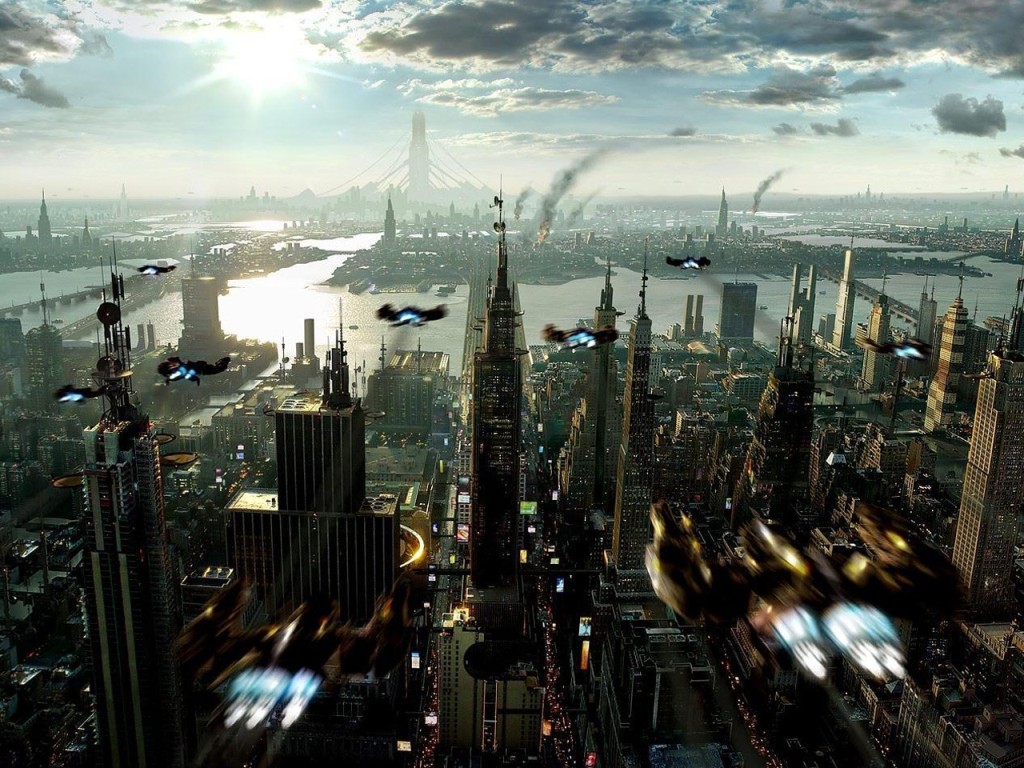
The Translation is another script I read over a year ago and I’ll be honest, when I started reading it, I wasn’t sure if it was going to be any good. As is the trouble with most sci-fi scripts, the writer is tasked with educating the audience about the rules (the “science”) of their world in a very short period of time. And there’s so much to learn here, I initially had trouble keeping up. But once the main story kicked in, I found myself drawn into this modern day Blade Runner tale and loving every minute of it.
It’s 2054. William Monroe is a cop, but a cop with a very specific job – to take down “twigs.” Twigs is the street name for “translations,” copies of people grown to replace lost loved ones – kinda like being able to clone your dog.
Unfortunately, during the time it takes to grow a translation (2 years), many families go through the grieving process and, to put it simply, change their mind. The problem is, society doesn’t know what to do with these discarded clones. And since they can’t be killed, they’re dumped into a sectioned-off ghetto, left to live with only a half the rights real citizens have.
Monroe has a hate-hate relationship with these human copies. He thinks they’re worthless, a mistake society’s made and is too afraid to clean up. So when they escape the ghetto, he’s the one who finds them and does whatever it takes to eliminate the problem.
Monroe takes his job seriously because it’s the only thing he has. His wife, Alyssa, was killed two years ago in a terrorist attack.
Against his wishes, Alyssa’s high-profile parents went ahead and had Alyssa translated, a process only days now from finishing. But when they’re abruptly and mysteriously murdered, the only person left to pick up Alyssa, or this copy of Alyssa, is Monroe. And he’s not happy about it.
It’s supposed to be simple. Monroe picks her up, takes her to the Translation Ghetto, and drops her off. But as soon as he gets her, the fully grown up but childlike curiosity of Alyssa begins spouting off other plans. She keeps remembering and wants to go to a place called “Beacon Point,” and while Monroe won’t show his cards, it’s clear the name means something to him.
But that ends up being the least of his worries. Within hours, there’s a shadowy group following them and trying to kill Alyssa. Could this have something to do with her parents being murdered? Monroe is forced into the role of protector, but much worse, into sharing time and space with this shell of a body that looks and acts so much like his wife. He knows it’s not her. He knows his duty is to bring translations in, not protect them. But he can’t help but fight for this woman, even if it’s not the woman he once loved.
Like I said above, The Translation is similar in a lot of respects to Blade Runner, most notably in tone. It’s a dark dreary future where most of the people are just trying to make it through the day.
But I think what separates The Translation from other movies is the intriguing love story at its core. Here’s a man who worked so hard to get over the surprise death of his wife, and now he’s forced to look her in the eye every second of this harrowing journey. We sense that a part of him wants to give in, wants to believe that she is, indeed, his wife. But he knows that logically that’s impossible. And it’s this central conflict that drives the story.
I also like the pace of the script. Every time you think Monroe and Alyssa are okay, they’re immediately back on the run again. It’s almost like The Bourne movies stumbled into a Blade Runner shoot – the best of both worlds.
But that world isn’t perfect. I loved Monroe but I thought Alyssa strayed from what made her so endearing at times. She’s best when she’s tender, curious, innocent, like a child. But after she starts learning the truth, she becomes angry, almost violent, and it was a little too out-of-character in my opinion.
The opening act is also an issue. And it’s not that I don’t recognize the challenge in writing it. Normally, your job in the first act is to set up 2 things: your plot and your characters. But when you write a sci-fi or fantasy film, you have to set up both those things *in addition to* your sci-fi world. In other words, you have to smoosh 33% more information into the opening 25 pages. As a result, your first act will feel jumbled or dense – not unlike you’re reading the Encyclopedia Britannica. That’s what it felt like here for me.
In addition, I thought some of the chase scenes could’ve been more imaginative. There’s a great car chase early on where Monroe is trying to elude the bad guys after Alyssa’s lost her breathing mask (worn until translations can breathe in the real world). The combination of being shot at from the outside and Alyssa dying on the inside made for an intense sequence. But after that, the chases become a little too “been there, done that.” And this is something I tell writers a lot. There’s a chase scene in almost every single movie ever made. So you can’t take short cuts when write your own. You have to try and be original.
In “Déjà vu,” (one of the biggest spec sales ever), they had a car chase where a character in the present is chasing a character in the past. The execution was shoddy on-screen but the point is, they were thinking outside the box. They were trying to do something different (I also have a feeling that that scene was a big part of why that script sold for so much – talk about delivering on the promise of the premise!)
Despite these problems, I really dug The Translation. I always go back and forth on which act is most important, but after reading this script, I’m reminded that the second act is probably the most important act in the script. It’s where you deal with your central conflict (in this case, the relationship between Monroe and Alyssa) and if that central conflict isn’t compelling, the reader gets bored and won’t give a shit what happens in the end. I thought the second act here was really strong and what separated The Translation from the rest of the competition.
Script link: The Translation (proper draft now up)
[ ] What the hell did I just read?
[ ] wasn’t for me
[x] worth the read
[ ] impressive
[ ] genius
What I learned: Sci-fi pieces are tough, especially when they take place in a distant future or a far off land. Some writers try and weave the key details of their world into the opening act organically, like Aaron does here in The Translation. But this is really hard to do. A much cleaner method is to use a TEXT CRAWL or an OPENING VOICE OVER. What these do is they get the pertinent information about your world out of the way so you don’t have to spend precious story time dealing with it. The most obvious example is Star Wars, which explains its world to you in the opening crawl. Jake Sulley gets us up to speed in Avatar right away via voice over. Still another method, and probably the most viewer-friendly, is to open with a scene that acts as a setup to the world. In “The Fifth Element” for example, we have this entertaining opening sequence in the Egyptian pyramids that sets up the whole backstory for the “fifth element,” so we don’t need to wonder what the hell everyone is talking about later on. Whatever the case, consider using the first minute or three of your story to lay out your sci-fi world via text or voice over so you can use your opening act to do what it’s supposed to do – tell the story and entertain us!
For the month of May, Scriptshadow will be foregoing its traditional reviewing to instead review scripts from you, the readers of the site. To find out more about how the month lines up, go back and read the original post here. Last week, we allowed any writers to send in their script for review. This week, we’re raising the bar and reviewing repped writers only. The caveat is that they cannot have a sale to their name. The idea here is to give aspiring writers an idea of the quality of writing it takes to have a professional manager or agent take an interest in your work. Monday, Roger reviewed the Western, “Quicker Than The Eye.” Tuesday, I reviewed the 80s’esque comedy “Duty.” Wednesday, I reviewed the JFK thriller “The Shadow Before.” Thursday I reviewed another thriller called “Skin.” And today, I take on a Rom-Com. Rom-Com nuts unite!
Genre: Comedy/Romantic Comedy
Premise: A recently broken-hearted man returns to his hometown to have a guys weekend with his (also recently broken-hearted) best friend, only to find out that his ex is in town doing the exact same thing, forcing them to avoid each other at all costs.
About: Our fifth and final script of Repped Week. David DeGrow Shotwell & Steven Michael Walters are repped by APA.
Writers: David DeGrow Shotwell & Steven Michael Walters
Details: 106 pages
So I decided to save my favorite script of the week for last. And this one was a bit of a surprise, because it started off like any other “Guys get together and talk about chicks” script. The setup was too obvious and the characters bordering on thin. The comedic sidekick, in particular, was hogging the spotlight, and he felt more like his own movie than he did part of a movie. I’m not a fan of this because I don’t like sacrificing story for laughs. I always think story should come first, even in a comedy.
So I’m going to go on a tangent here and you have to join me because it’s Friday and shit gets crazy on Fridays. I call characters like the one I mentioned above “Last Comic Standing” characters. And let me explain why. I went to a party one night long ago and this guy approached me and he said, “Hey man, how’s it going?” And I said, “Fine.” And he replied, “Yo, have you seen the kitchen in this place? I’ve seen closets with nicer sinks.” I thought that was kind of a weird way to start a conversation, but it’s not like I knew anyone else here, so I couldn’t run. He followed that up with, “And what’s up with the hills in this town? I feel like I’m a rat in a maze. I’d rather get stuck in the Sahara Desert than the Hollywood Hills, you know what I mean?” No, I didn’t know what he meant. I also noticed the guy was wearing a big plastic smile while he spoke. This was starting to get creepy.
“And this beer. Helloooooo. I’ve tasted cow urine better than this!” This weirdo proceeded to give me two minutes of the most random observations you could think of before it finally hit me. He was a stand-up comedian! He was trying out his “act” on me! Going out and testing his material on “the real world.” He never let me talk or respond or engage or anything. He just made his jokes and waited for me to either laugh or not laugh.
I bring this up because this is the “Last Comic Standing” approach I see in so many bad comedy specs. The story is almost non-existent. It’s just an excuse to put a character “up on stage” and let him riff through a bunch of scenes. There’s no connection to the story, to the other characters, to the plot or to the theme. As a result, the audience feels a bit like I did talking to that nutcase at the party. Like they’ve been given tickets to a Saturday afternoon show at the Laugh Factory.
A screenplay is about creating a universe and having your characters live and breathe within that universe. If it ever feels like that universe is put on hold so your hero can do his Rodney Dangerfield impression, the illusion of the story (the “suspension of disbelief”) is gone. And since most production companies are looking for stories and not stand-up acts, it’s best to adhere to this principle.
When I started “The Rebound,” I was immediately worried about this. The plot follows Stan, a recent LA implant who’s been dumped by the love of his life. Stan’s best friend Jeff, who’s never grown up because he’s a Toys-R-Us kid, has just booked Stan on the next flight back to their hometown so they can compete in a Guitar Hero contest that weekend (for Jeff’s band “Whore Parade Route”), and Stan can experience a little hometown healing.
We’re thrown into Jeff and his buddies talking about banging bitches and getting ready for their big Guitar Hero performances. Jeff has also just broken up with his girlfriend, Kara, and wants to win the competition so he can bang as many “groupies” as possible. It’s all Jeff all the time and since the story (a Guitar Hero tournament?) is thinner than plywood, it just felt like an excuse to have a bunch of funny conversations.
However, as soon as Stan gets into town and he learns that Cathy (his ex) is also in for the weekend, the script starts to formulate. Stan’s upset, because this was supposed to be a weekend of healing. And Cathy isn’t thrilled because now she’s going to be tempted to talk to him. The goal then becomes to avoid each other so they don’t fall back into a situation they know will never work.
So Stan runs into an old girlfriend from high school and Cathy meets a sophisticated older guy with all the qualities Stan doesn’t have. These two become foils for what we ultimately want to happen, which is for Stan and Cathy to meet up and get back together. But the longer the story goes, the less likely it is that that will happen. We’re essentially watching a movie where the two main characters never meet. It’s sort of a cross between Swingers and Sleepless In Seattle.
There are a few things that really make this story work. First, it has a natural ticking time bomb – the weekend. I like the way it’s slyly placed there but never addressed. We just know that when the weekend is over, these two go back to their own worlds and that’s it.
Also, we really like Stan and Cathy. They’re both honest, funny, endearing people. For that reason, as the script goes on, we become more and more attached to their situation and want them to get together. In fact, I kept checking the pages numerous times going, “Page 60?? And they still haven’t seen each other??? What if they don’t see each other at all??”
But where “The Rebound” separates itself from the amateur ranks is in how it addresses its secondary characters, namely Kara and Jeff. They start off being the goofy comedic sidekicks, but eventually learn something and change into better people. In amateur comedy scripts, you never see this. All of the supporting characters are usually flat and boring because they’re exactly the same at the end of the movie as they were at the beginning. In other words, they’re just there to do their stand up routine and get out. It was really refreshing to discover that Jeff was more than a few silly lines.
My only real complaint here is that the first 30 or so pages indicate a more juvenile story than it ends up becoming. Once we got into the actual relationships (Stan meets his girl and Cathy meets her guy), the script hits its stride. This might need a few rewrites to bring out every scene’s full potential, but I could definitely see this as a movie.
[ ] What the hell did I just read?
[ ] wasn’t for me
[x] worth the read
[ ] impressive
[ ] genius
What I learned: Whenever you have a straight man in a comedy, you usually contrast him with a goofy/extreme sidekick character. Sean William Scott’s character in Role Models. Spike in Notting Hill. Any of the 3 guys opposite Jason Biggs in American Pie. From my experience (and this isn’t always the case, but mostly), secondary characters who are the same at the end of the movie as they were at the beginning, are boring. Just because someone is a comedic sidekick doesn’t mean he can’t or shouldn’t be explored on a deeper level. In the end of Notting Hill, Spike learns to take love more seriously. In Role Models, Scott learns to actually give a shit. And in American Pie, all of the supporting players overcome their individual flaws by the end of the film. Take a look at your comedy script. Do your supporting characters change? Do they learn anything from this journey? If not, consider changing it so they do. It will make your script a lot better, and it will show readers you know what you’re doing.