
Search Results for: F word
Today’s post comes with a fun twist. One of the loglines is AI generated. See if you can guess which one!

Okay, it’s time for one of my favorite segments here at Scriptshadow – “Why Didn’t My Script Get Picked?”
Ever wonder why your script didn’t make the cut? You’re going to find out exactly why, as I provide you with 11 scripts that didn’t make this past Friday’s High Concept Showdown, as well as why they didn’t make it.
Just a reminder that, in the new year, I’ll be pitting five loglines against each other every month. You will decide which one wins, and, in the process, which script I review the following week. Therefore, just because you didn’t make High Concept Showdown, that doesn’t mean your submission is dead in the water. You can re-submit your high concept script, or any script for that matter, and will have a dozen shots next year to get that spotlight review.
Oh, and there’s a little TWIST to today’s post. I’m including an AI-generated logline. So here’s what I want you to do. I want everyone in the comments to vote for their FAVORITE logline here as well as the logline they think is AI generated. That’s fine if they’re one and the same. I’m going to be highly worried if an AI logline wins today’s post because that, of course, means, Skynet is coming. (P.S. – the AI script link is a dummy script. So make your votes and guesses BEFORE you download any the screenplays).
Enjoy!
Title: The Fire Inside
Genre: Sci-fi/Fantasy, Historical Fiction, Horror, Drama
Logline: After dead Confederate soldiers come back to life and attack during a Civil War battle, a Union soldier returns to his Georgia home looking for answers – and finding more questions.
Reason It Didn’t Get Picked: Whenever I see more than two genres under the genre designation, I get really worried. Because all of the scripts I read that do this are bad. And this entry has four, one of which is a dual-genre (sci-fi/fantasy). So actually, five. A movie just can’t hold five genres. So I already know it’s going be all over the place. As for the idea, it does have some ‘high concept’ DNA in it. Confederate soldiers coming back to life is good. But another logline-killer is the tapered-off vague ending that doesn’t really tell us anything. “…home looking for answers. – and finding more questions.” You need to tell us what actually happens. Not hint at questions and answers. There are going to be questions and answers in every script, hopefully.
Title: Southsiders
Genre: Adventure
Logline: After his treasure hunting father is arrested for a crime he says he didn’t commit, his twelve-year-old son and his friends search the South Side of Chicago to find Al Capone’s hidden fortune and clear his name… It’s in the vein of GOONIES, DOPE and NATIONAL TREASURE.
Reason It Didn’t Get Picked: This one almost made the cut. As a Chicagoan, I’ve always been convinced that Capone hid a bunch of his money in the suburban houses where all his cronies lived. The issue with this logline is that the first half doesn’t organically connect with the second half. A father is arrested for a crime. So, to clear his name, you have to find Al Capone’s treasure? How does that work? Does the Chicago DA give away free get-out-of-jail-free cards for anyone who finds Capone’s treasure? With the Goonies, the connection was more organic. The need to find the treasure was to stave off the foreclosures of their family homes so a country club can’t buy them out. Still, this one finished Top 10-15 for me. I’d be curious to hear what all of you think of it.
Title: ACTION REPLAY
Genre: Sci-fi/Action/Comedy
Logline: When the world’s Most Wanted Criminal hijacks a TIME MACHINE a lowly technician keeps sending himself back to save the day – but more and more of his past, present and future selves just keep adding to the chaos…
Reason It Didn’t Get Picked: This is a good example of the importance of getting feedback on your loglines. Cause, if you glance through this quickly, it feels high concept. It feels like a movie. But when you read through the logline with a detailed eye, it’s harder to understand. Before we get to that, though. Stop with the unnecessary capitalization. I don’t understand why writers do this. “Most Wanted Criminal” should not be capitalized. If I see unnecessary capitalization? That’s pretty much a guarantee I’m not reading the script. But, anyway, we’ve got a criminal who hijacks a time machine. And we’ve got a technician who wants to stop him. So he goes back in time to stop him, I guess. But… how can he go back in time to stop him if the criminal already took the time machine? It doesn’t quite make sense.
Title: Vampire in Silicon Valley
Genre: Comedy
Logline: In the high-tech world of Silicon Valley, a young and successful entrepreneur discovers that he is a vampire. As he struggles to maintain his humanity while navigating the cutthroat world of tech startups, he must keep his true identity hidden while dealing with the challenges of being a vampire in the modern age. With the help of his quirky and eccentric team, he must find a way to use his vampire powers to succeed in the competitive world of tech while also staying true to himself.
Reason It Didn’t Get Picked: I loved this title but there’s something about the way the logline is presented that tells me the screenplay is going to be extremely generic. The phrase, “quirky and eccentric team,” in particular, was a logline killer in my opinion. Writing loglines is a balance between getting the basic idea across, yet still peppering it with just the right amount of detail so it feels like the script is going to be unique in some way.
Title: Hollywood Ending
Genre: Horror-comedy
Logline: After a zombie outbreak at a swanky Hollywood party the lowly Caterers realize the biggest stars in the world are suddenly trying to eat them.
Reason It Didn’t Get Picked: This is what I’d refer to as an “almost idea.” It certainly has components of a high concept idea. But there’s something not clever enough about it. It just feels kind of surface-level. I don’t even think the right people are turning into zombies. It would probably be better if the stars were getting attacked. I think audiences would enjoy that more. Even still, I tend to resist movie ideas with giant stars playing themselves only because it’s so insanely hard to get huge actors to do this. And to get multiple movie stars to agree to it is even harder. Also, another unnecessary capitalization (Caterers)!
Title: LANDED
Genre: R rated Comedy
Logline: A freshman makes a promise not to use any cellphone during her first day at college, but when she must make a phone call, the result is a wild and unexpected adventure following a map to the campus’s few landlines.
Reason It Didn’t Get Picked: The reason I didn’t pick this one is pretty simple. I just didn’t see any stakes in the story. A big reason why that comedy, “Tag,” from several years back, was DOA at the box office, was because nobody cared if these guys kept tagging each other. There were no stakes. Same issue here. Who cares if someone needs to make a phone call or not? You might *stress on might* be able to make a short of that. But it’s not even like somebody stops her. This is a promise she made to herself. Okay, then, break your promise. Problem solved. I’m just not understanding this premise. Also, the title doesn’t match the plot.
Title: ‘Zero at the Bone’
Genre: Mystery Thriller
Logline: A troubled detective on leave is thrust into a secret Anarchist community seeking help to investigate the first ever murders behind their gate.
Reason It Didn’t Get Picked: We’ve got yet another unnecessary capitalization. This is becoming an epidemic. We’ve also got single quotes around the title. I don’t know why anybody does that. People, you have to understand that managers and agents and producers don’t have time. You give them an easy reason to say no, they’re going to take it. These are small things that you can fix with a little feedback. So many writers are shooting themselves in the foot, here. It’s frustrating to watch. As for the concept, there isn’t enough irony in it. Anarchists bring about anarchy. Therefore, it makes total sense that someone within that community would kill someone. Why not set the murder in an Orthodox Jewish community, where the murder rate is 1/1000th the rest of the country? Now you’ve got irony in your idea.
Title: Don’t Let The Fire Die
Genre: High Concept Horror
Logline: On a wilderness, glamping adventure, a dysfunctional man and his dysfunctional friends must fight to keep their fires lit as they are hunted by primeval predators that are afraid of fire.
Reason It Didn’t Get Picked: First of all, props to Morgan for ZERO unnecessary capitalization in his logline. Thank goodness. Couple of reasons this one didn’t make the cut. One, I didn’t know what glamping was. I had to look it up. That’s usually not a good thing since readers don’t want to do your work for you. They just want to know what they’re reading. So most won’t look that word up like I did. I don’t like the use of “dysfunctional” twice. That tells me the writer didn’t do a ton of work on the logline. Just say, “a dysfunctional group of friends.” But the biggest issue here is that there’s no cleverness or irony to the setup. They’re supposedly hunted by these special predators that are afraid of fire. Every predator is afraid of fire. The “strange attractor” in this idea isn’t strange enough, in my opinion.
Title: Time’s Past
Genre: Sci-Fi/Thriller
Logline:A special agent is brought on to a top secret programme where they use a device to turn back time in order to stop crime before it happens, but finds herself in a predicament when one criminal they are chasing seems to know about the device and a dark secret behind it
Reason It Didn’t Get Picked: If you’re keen, you’re starting to see what I see, just on a smaller scale. Which is that I get all these submissions that feel like they SHOULD be big, and yet they don’t have that clarity or that special attractor, or that irony, or that well-thought-out plot direction that truly elevates them into high concept territory. Turning back time to stop crime is a big fun sci-fi idea. But then the logline limps towards the finish line with this vagary regarding a criminal who knows a dark secret behind the device. Nobody cares about that. They care about the fun part. Not the much smaller detail of a ‘dark secret.’ And, if the dark secret is really cool, it needs to be in the logline. You’re trying to get people to read your script here. Tell them what your movie is about. Don’t be cryptic.
Title: Southern Belle
Genre: Action / Comedy
Logline: A government assassin uses her undercover identity as a beauty queen to travel the South until she bumps into a rival assassin… who turns out to be her mother.
Reason It Didn’t Get Picked: This idea just felt dated to me, that’s all. It felt like a script that could’ve been written in 1998. Does that mean you can’t draw inspiration from older movies, like Miss Congeniality? No. But the line between a fresh take on an old idea and just plain dated is blurry. So it’s a risk. Also, the addition of the mother feels like a slightly different movie. I’m not convinced it was needed.
Title: TIS THE SEASON
Genre: Christmas action thriller
Logline: An ex-CIA agent temporarily paralyzes Santa Claus after mistaking him for assassins breaking into his house. When the real assassins show up, the agent must get Santa to safety, evade the assassins . . . and deliver a f*ck ton of toys. It’s The Santa Clause meets My Spy meets Guardians of the Galaxy.
Reason It Didn’t Get Picked: I’m not a fan of violent Christmas movies. I say this to remind every writer here that there’s an element of subjectivity with every script you send out there. Obviously, Violent Night did really well this past weekend. So there’s a market out there for this kind of idea. But it’s just not for me. Which is why you never want to label your script good or bad based on a single opinion. Get a bunch of opinions. That’s where you find if you’ve got something good or not.
Title: Immaculate Nation
Genre: Sci-Fi/Action
Logline: In a nation of clones, where natural reproduction is punishable by death, a disgraced Enforcer from the Reproductive Crimes Bureau falls for a woman leading a free-breeding revolution.
Reason It Didn’t Get Picked: Something about this idea feels too familiar to me. It feels like a garden-variety Young Adult Sci-Fi Setup circa 2010. It feels too similar to Handmaid’s Tale. And cloning is a fairly dated sci-fi concept. From 1997-2005, every single spec had clones. So whenever I see that word, I feel immediate resistance. For me, at least, there isn’t that singular variable in this idea that really helps the concept stand out.
Look, movie ideas are hard. They’re like pop songs. They seem so easy when you hear them. But there’s real art and craftsmanship to constructing an exciting well-thought-out movie concept. It’s why I tell people, get logline reactions from your friends BEFORE you write your script, not after. I know screenwriters are all stubborn and are going to write what they wanna write at the end of the day. And I get that. I’m like that too. But, at the very least, you can identify if you’ve got a true stinker on your hands before it’s too late.
If you’re interested in getting a logline consultation from me, they’re $25 and they include a 150-200 word analysis, a 1-10 rating for both concept and logline construction, and a logline rewrite. If you want a more involved process where we discuss in depth what you’re trying to do with the logline and how to get the most out of it – I offer that as well. E-mail me at carsonreeves1@gmail.com and we’ll get started right away!
Genre: Comedy
Premise: A stoner comedy about one family trying to save Christmas from itself after Santa eats the wrong batch of cookies.
About: This script finished with 9 votes on the 2019 Black List. Writer Dreux Moreland is new to the game. Co-writer Hannah Mescon was a producer on the Adam Driver movie, The Report.
Writers: Dreux Moreland & Hannah Mescon
Details: 108 pages

As tempting as it was to publish a “Why You Are Drinking Too Much Blue Milk” rebuttal article after yet another commenter incorrectly labeled Andor a good show, cooler heads prevailed and I decided to, as the great X-Wing pilot, Jek Porkins, once said, “Stay on target.”
And so a Christmas script it is!
Tom and Leah Mercer are a rich suburban couple. She’s a Type A lawyer. He grew up on a WACO like commune. Bit of a weird choice there since it has nothing to do with the story but, no worries, I’m going to roll with it. They’ve got two daughters, one 7, the other 17. Leah also has a sister, Sasha, who frolics into town. Sasha is the family black sheep and cares more about 4:20 than 4 Calling Birds.
It’s Christmas Eve and Sasha bakes some pot cookies that Tom and Leah snarf down. Then, while they’re in the other room, Santa shows up and likewise stuffs some baked sugar yumminess into his gullet. He instantly becomes very high. After first encountering this assumed Santa imposter, Tom and Leah eventually realize that he really is Santa, and he’s way too high. Which means if they don’t deliver presents in his stead, Christmas is canceled.
Just to be clear – and I’m doing this more for myself – talking through it. Santa, the guy who’s been delivering presents for 600 years is very high. Tom and Leah, who have never delivered a present in their lives, are equally high. Yet Tom and Leah are the ones being counted on to save Christmas. Okay, got it!
So the three of them climb up on their roof, get in the sleigh, and proceed to fly to a single house, go inside to deliver the presents, only to get yelled at by one of comedy’s favorite knee-slappers, the swearing parrot, which says things like, “Little b**ch!” as loud as it can. Cause why wouldn’t the talking parrot swear? It’s a comedy. Wackiness rules!!
After this delivery failure, Santa gets the munchies and decides to take everyone to Miami because he wants a Cubano sandwich. When the Elf team back at North Pole 1 hear of this, they assume he’s been kidnapped by the Mercers and spring into action to locate Santa and get him back on track.
Luckily, with this version of Santa Claus, Santa doesn’t actually have to do anything. He has drones that fly down into houses and deliver the presents, as well as retrieve cookies for him. So it looks like, even though Santa is high as heck, that Christmas is going to end up okay. Hallelujah!
I don’t know what it is about screenwriting but when you first get into it, you always want to write a Christmas script. Every single screenwriter I know, me included, has a Christmas movie idea. So I don’t begrudge anyone who writes one. But just as we learn every year why eggnog is so terrible, we learn that writing a Christmas script is no smooth ride down the chimney.
Here’s the big issue with High on Christmas. And it’s a mistake a lot of comedy writers make. You think of this overall wacky idea and assume it’s going to do all the work for you. I mean, how can ‘wacky’ not result in laughs, right? They go together like Nutella and crepes.
But, in my experience, writers rely so heavily on that “wacky = comedy” premise that they don’t do the work necessary to come up with *actual* funny scenarios.
Let’s go back to one of the final great feature comedies in cinema – The Hangover. There is a “wacky” version of The Hangover that could’ve been written. It’s the version 99% of writers would’ve written. You’ve got a group of friends in Vegas for a bachelor party. You simply follow them around as they party all night. There’s so much wackiness to draw from, right?
But the writers of The Hangover made a much more difficult choice. They focused on the day after the wackiness. All of the supposed “easy laughs” were left behind. So then why is that movie better than all the other comedies that have come out since 2000, including this one? Because now the writers actually have to think in order to craft a funny scenario. They can’t just throw Zach Galifianakis on a blackjack table and have him poop himself. They have to craft a plot with a clever series of goals that take our characters through a progression of funny scenarios.
High On Christmas didn’t have that. It had the swearing parrot. If you like swearing parrots, it’s got that. But how many times have I told you this? You want to include comedy THAT CAN ONLY HAPPEN IN YOUR MOVIE. The swearing parrot can be in any movie, ya nutcrackers!
Now, to the writers’ credit, they did have one moment like this. I like that when Santa gets the munchies, he doesn’t just go to 7-11. It’s Santa. He has a device that can take him anywhere in the world. So, flying to buy a Cubano sandwich that you can only get in Miami – that’s much closer to what I expect in a comedy about a high Santa Claus.
But that was basically it on the creativity front.
Drugs, in general, hurt comedies more than help them. Cause all ‘getting high’ really does for comedy is give you one or two scenes where it’s funny watching your characters try to do something normal but they’re way too high to do it. Yeah, that scene is going to funny. And we do get that here. Tom and Leah trying to take selfies when they first see Santa’s sleigh but continually screw it up – it’s kind of funny.
But now what? You still have an hour and forty minutes of movie left to fill. You can’t just keep doing that joke over and over again.
I don’t mean to be the Grinch but… you gotta come correct here. The characters may be high. But that doesn’t mean you get to write the script high.
LEAH: Tom, I need you to get on my level. That degenerate licking the cookie jar is not Santa.
TOM: But what if he is? He coughed up glitter.
LEAH: So did I at that Bowie concert — and I’m not Santa.
What does this joke even mean?? Do David Bowie’s concerts have a lot of glitter in them? Even if for some reason they do – and I don’t think they do – but let’s say that’s the case. How many people have been to a David Bowie concert and therefore would know that? .0000000001% of the population? So you’re writing jokes for .0000000001% of the population now?
I’m shaking my head here. There’s nothing more frustrating than reading a comedy that doesn’t make you laugh. You get angrier and angrier as you go on. Which is silly, of course. But there’s a deal that’s made between the comedy writer and the reader and that is: you make us laugh. You renege on that deal and we will turn on you m**herf**er. When we don’t laugh, each page feels like a minute of time being ripped out of our life.
The script is also another tonal mismatch. They’ve got the same SEAL-TEAM Elves from the movie, The Santa Clause, but the script also contains lines like, “What a dumb f**king name.” So, is this written for small children or grown adults? I’m confused.
I want to push out good holiday vibes as we move towards Christmas. But we need better Christmas scripts than this if I’m going to do that. This feels like two people got high, wrote a script in a week, and people giggled at the logline and therefore voted it onto the Black List.
[ ] What the hell did I just read?
[x] wasn’t for me
[ ] worth the read
[ ] impressive
[ ] genius
What I learned: The Black List celebrates one or two Christmas scripts a year, regardless of how good they are. That’s because they’re voting on December 11th every year. So Christmas is hot on everyone’s mind. In other words, if you write a Christmas script, go out with it in the month of December.
********
8 DAYS LEFT TO HIGH CONCEPT SHOWDOWN!
SUBMISSION DETAILS HERE!
********
Genre: Family
Premise: When a bully’s antics land a nerdy boy in the bottom of a well, his self-proclaimed psychic friend and unaware crush team up to find him.
About: This script is based on a book that won the Newbery Medal, which is awarded to the author of the most distinguished contribution to American literature for children. It also finished on last year’s Black List with eight votes. They got a pretty big writer to adapt the book. Michael Golamco wrote the surprise Netflix hit, “Always Be My Maybe.” He has also written a draft of the perpetually-in-development, “Akira.” Forrest Whitaker will produce. Netflix will make the film.
Writer: Michael Golamco (based on the novel by Erin Entrada Kelly)
Details: 93 pages
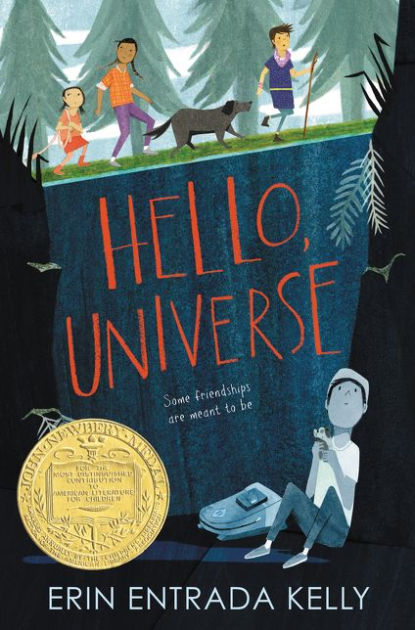
Since all of you are CRAZY for not loving White Lotus as much as I do, it was important, heading into Thanksgiving, that I review a feel-good screenplay that all of us could celebrate together – something so warm and invigorating, we wouldn’t even need alcohol to deal with our families.
Speaking of Thanksgiving, I think a food revolution needs to take place over the holiday. Who’s with me!?
The whole full-turkey-on-the-table thing is played out! I, for one, want to begin a new tradition of turkey pizza. The dish’s execution is simple. You make a pizza, you cut out a lot of little bite-sized pieces of turkey, and then you don’t allow that turkey anywhere near the pizza. Feed it to your pets. Then find some sausage and add that to the pizza. As well as some pepperoni. In fact, just call your local pizza joint and they can speed this whole operation up for you. That’s MY Thanksgiving food suggestion.
Okay, let’s check out this uplifting story about a kid who gets pushed into a well!
11 year old Filipino middle-schooler, Virgil, is a level 17 dork. His dorkiness is embedded so deeply within him, that even his family has given up hope that he can be anything less than a level 9 dork.
But Virgil can’t worry about his dorkiness because it’s the end of school and the last chance – THE FINAL CHANCE – before summer for him to talk to Valencia Sommerset, the girl of his dreams. Valencia is a bit of an outcast herself due to being deaf.
When Virgil fails to speak to Valencia, he trudges home and shares the news with his best friend, Kaori Tanaka, a 12 year old self-proclaimed psychic who lives next door. Kaori and her plucky 7 year old sister, Gen, try to cheer Virgil up but nothing works.
Kaori tries to get Virgil’s mind off Valencia by having him head into the woods to look for some special rocks she needs for her new psychic business. But, along the way, he runs into the school bully, who throws his backpack in a well. Virgil’s guinea pig, Gulliver, was inside, so he climbs down to save him, but ends up getting trapped at the bottom.
Ironically, Kaori’s first psychic customer is Valencia, something she’s unaware of since Valencia uses an alias. Valencia needs help interpreting a recurring nightmare. Around this time, Kaori realizes Virgil is missing and recruits Valencia to help her find him. So the three girls head out into the woods in search of the friend, who ponders the possibility that he may meet his demise down here.
 Thanksgiving at the Carson household.
Hello Universe gets the first part of its central character construction correct. Virgil is in love with a girl who will never love him back. He lacks courage. His family thinks he’s lame. He’s a nerd. He’s picked on by the bully.
In other words, the writer uses a “Life treats our hero cruelly” technique to elicit sympathy from the reader.
However, the writer doesn’t get the second part of the “likable” equation right for these types of characters. Virgil is a downer. He’s negative. Audiences like characters who are dealt a bad hand AS LONG AS THEY STAY POSITIVE ABOUT IT. We just talked about this in “The Maid,” the character that’s going to win Florence Pugh an Oscar.
That character was autistic. She recently lost her best friend. People took advantage of her all the time. But amongst all of it, she stays tirelessly optimistic. And that’s when we love a character. The person who keeps getting up after being knocked down is one of the most powerful likability tools there is in character construction.
That’s not to say Virgil is a bust. We still root for the guy. But Virgil ends up being the fourth most impactful character in the story, behind the three girls looking for him.
As for the story itself, I always get a little nervous about stories that could’ve been written 75 years ago without changing a word. True, some stories are timeless. But this is usually an indication that the writer isn’t bringing anything new to the table.
With that said, if you can get the emotion and the relationships right, you can write a story that works in any time period. And I would probably include “Hello Universe” in that category.
The thing that ultimately pulled me in was the dramatic irony created with Valencia’s inclusion on the rescue team. We know that Valencia is Virgil’s crush but the girls think she’s someone else because she lied about her name. I found that to be kinda fun, that they’ve known about Virgil’s love for this girl for years yet have no idea that she’s helping them find him.
There’s also a sweetness to the journey and to the friendships that make you all warm and fuzzy inside, like a glass of warm apple cider. When you write these younger-skewing stories, you want to explore universal themes and the things that would seem high-stakes to a 12 year old, which are totally different from those of a 32 year old. There doesn’t have to be the threat of the world ending in these stories. Just things that 12 year olds think of as the world ending. Like being trapped in the middle of a forest with the school bully. Or the fear of never fitting in, which is what both Valencia and Virgil are going through.
I just wish there was a little more creativity in the script. One thing I’m always looking for in screenplays – especially ones that play in familiar sandboxes – is unique moments – moments that could only happen in your particular script. Cause if you don’t have those, what’s the point? Why write something that only retreads other films?
Look at every single variable of your screenplay – your plot, your characters, your setting – and figure out combinations of those variables that can you an original moment here, or an original moment there.
I’ll give you the one example I saw in Hello Universe. Soon after Virgil gets stuck in the well, Valencia is, coincidentally, walking by. Virgil doesn’t know it’s her. But he hears somebody. So he starts screaming for help. But… guess what? She can’t hear him because she’s deaf.
It’s this ironic moment that could’ve only happened under these particular set of variables that makes the scene pop.
Hello Universe needed more moments like that to separate itself. With that said, it’s a heartwarming tale that seems perfectly suited for a Thanksgiving weekend read. Of course, that read should be happening while snarfing down several pieces of my new Thanksgiving Turkey Pizza Without Turkey. Feel free to e-mail me and I will send you the recipe.
Script Link: Hello Universe
[ ] What the hell did I just read?
[ ] wasn’t for me
[x] worth the read
[ ] impressive
[ ] genius
What I learned: A common thing I’ve been seeing in scripts lately is hitting the emotional beat so hard that it actually creates the opposite effect. Writers do it cause they can’t help themselves. They NEEEEEEED you to feel that emotion. Here’s an example. It’s the moment after (spoiler) the girls save Virgil.
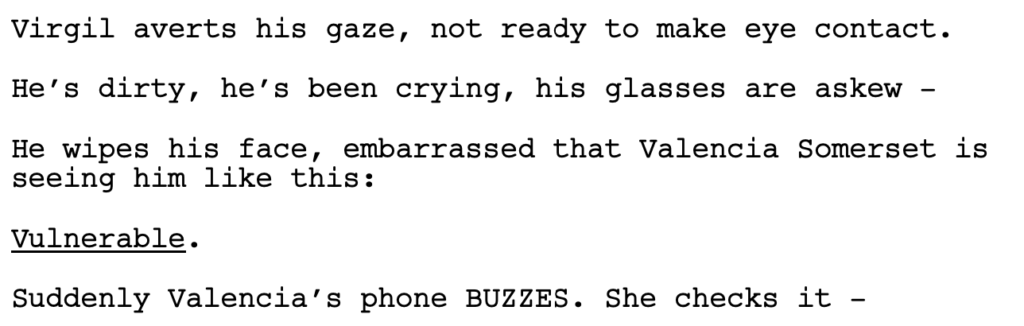
By underlining “vulnerable,” and hitting it so hard, it actually draws attention to the fact that you want the reader to feel emotion. Don’t do this! Trust the emotion. Trust the moment. It will do the job for you. All you need to do in this instance is eliminate the underlining of “vulnerable” and it will work swimmingly. No need to go over the top.
The show remains a screenwriting character masterclass
********
9 DAYS LEFT TO HIGH CONCEPT SHOWDOWN!
SUBMISSION DETAILS HERE!
********
 Ethan & Harper, and Daphne & Cameron
Today, I thought, instead of taking another Black List script through the demanding wringer of a Scriptshadow review, I’d share my thoughts on White Lotus halfway through the second season. I’m on record as saying Mike White couldn’t possibly live up to the genius of the first season. But four episodes into this newest iteration and I’m wondering if this season is even better than the last.
While the Italian version certainly feels more loosey-goosey, the characters all seem to have more depth to them. They have more going on. So any perceived structural loss has been buttressed by character gain.
For the longest time – and this is dating back to Season 1 – I couldn’t figure out why this show worked. There was zero plot other than a vague allusion to a mysterious death that had occurred. But the death was by no means the sole engine for the plot. It was something White sort of threw in there to hook all of us.
But after that hook fades, why are we continuing to watch? Typically, when you bring an ensemble together like this, you do it in a Knives Out fashion, whereby there’s a murder and everyone’s a suspect and the “game is afoot.” If you take that setup out, all you’re left with is characters talking. And how in the heck do you make 8 hours of that entertaining?
Well, you do it by mastering this singular word…
UNRESOLVED
Every character must have something unresolved within them. You also want some of those characters to have unresolved relationships as well. If you can master these two aspects of character development, you can do the impossible, which is to keep audiences engaged despite not having a plot.
So what does this “unresolved” stuff mean, Carson? Well, here are each of the White Lotus Season 2 characters and their unresolved issues.
 Harper
Harper is extremely judgmental and unable to let go and enjoy herself.
Ethan, Harper’s husband, is so concerned about others that he is also unable to let go and enjoy himself.
Cameron is entitled and selfish and lives 100 miles an hour in the moment.
Daphne, Cameron’s wife, is unable to stick up for herself in her marriage and therefore blissfully pretends that everything is okay.
Dominic has a sex addiction that is about to cost him his marriage.
Albie, Dominic’s son, is so desperate to be the opposite of his father that he’s become the poster child for beta males.
Tanya’s happiness is so attached to her husband’s mood that she’s unable to have fun anymore.
Portia, Tanya’s assistant, hates that she hasn’t pushed harder for a more fulfilling career and life.
Lucia, our primary prostitute, lives an out of control existence with zero structure, making every decision on impulse.
Mia knows only how to follow Lucia’s lead and has no agency of her own.
This is the real secret sauce of screenwriting. Once you identify your character’s internal unresolved issue, they, in and of themselves, become a plot. Because the plot is their journey to resolve that which is currently unresolved. It works no different from a real plot.
Just like we want to see if Maverick can bomb the nuclear weapon before it can be launched, we want to see if Harper is ever going to be able to let go and enjoy herself. Just like we want to see if Iron Man can defeat Thanos, we want to see if Albie is going to “man up” and demonstrate some masculinity. Just like we want to see if Channing Tatum and that dog can get to their destination on time, we want to see if Portia can stand up to Tanya and start making more positive decisions in life.
 Portia
And then, to turbo-boost this, you have the unresolved relationship issues as well. For example, Albie and Portia start hanging out together. Albie is trying to be the perfect gentleman and sweet and nice, whereas Portia wants him to be a little less nice — a little more “take charge.” So we stick around to see what’s going to happen between them. Will they end up together or not?
Of course, the second part (the unresolved relationship) does not work unless the first part (the personal unresolved issue) works. Because it’s the first part that makes the second part so interesting. Albie resisting his masculinity is the very reason why his unresolved relationship with Portia is so captivating. Because in order to get Portia, he has to resolve that issue.
Mike White is a master at this. He’s so good with character it hurts. Character construction is, arguably, the hardest thing to do in screenwriting. So to have someone who can effortlessly create TWO FULL SEASONS of characters who are all compelling is quite the feat.
Even when you go beyond the technical screenwriting stuff, White still finds creative ways to shine in his show. I love that he’s adapted C-3PO and R2-D2 into his White Lotus universe. Because that is who Lucia and Mia are (the prostitutes).
 Lucia and Mia (these color choices are not by coincidence)
George Lucas’s original inspiration for Star Wars was to have this giant intergalactic war and to move in and around all the different sides of the war through these two goofy droids. We would follow them as they kept ending up in the hands of different people throughout the war.
This is how Lucia and Mia operate. They’re local prostitutes. They start out getting hired by Dominic. But then Dominic, determined to save his marriage and make better choices, cancels their week together, which leaves the girls with nowhere to go. So they start weaving in and out of the other characters’ lives. They sleep with Cameron. They date Albie. I’m sure, at some point, they’re going to sleep with Bert, the grandfather.
It’s just really fun the way that Mike White plays with his world.
Another major ingredient that has led to this show’s success is that it’s contained by two important storytelling variables – time and space. We are contained to the White Lotus hotel. And the White Lotus experience is one week long.
As any screenwriter knows, the more you can use containment variables, the more structure your story will have. This becomes even more important if you don’t have an overarching plot. Your plot is what gives you structure. So, without it, you need the structure to come from somewhere else. Hence, the containment of time and space in White Lotus.
Try to imagine this series but each set of characters is somewhere else in the world. Or, instead of the story taking place over 1 week, it takes place over 8 months. Do you see how the story becomes less structured? Less interesting? This is the power of using containment variables in storytelling. And the irony is, of course, that the reason Mike White did this was because it was the one mandate HBO game him. They wanted a show that would take place in one finite area so they could control Covid protocols more easily. If Mike White didn’t have that mandate, maybe he doesn’t come up with this idea.
In a TV landscape that seems to be bulking up into a never-ending series of giant mega-budget shows, White Lotus is a thing unto itself. It’s just people talking. And it’s captivating.
How cool would it have been to come up with this franchise (White Lotus just received a third season renewal over the weekend)? You get to travel to these beautiful hotels around the world, cast these great actors, and just play around. If Mike White keeps up the amazing writing on this show, he could give us another eight of these. I can’t wait to see what the second half of the season brings us.
********
10 DAYS LEFT TO HIGH CONCEPT SHOWDOWN!
SUBMISSION DETAILS HERE!
********

It’s looking like the loss of Chadwick Boseman is affecting Wakanda’s homeland more than Disney was prepared for. Black Panther 2 finished with just 67 million dollars in its second weekend. For reference, the first film took in 111 million on weekend number two.
It’s an indication that word-of-mouth is, much like the film’s central villain, below sea level. In all fairness, it probably should be. The picture’s bite is more minnow than shark, even if its running time is more bloated than a blue whale.
They should’ve made the movie lean like a dolphin and mean like a piranna so that people didn’t have so much time to sit in the theater and think, “Why is this girl pretending to be Iron Man?” Or, “When did the world population become 97% women and 3% men?”
Hollywood is trying its best to ignore the negative outlook, flexing on the film’s half-a-billion dollar global box office. And I don’t blame them. As dysfunctional as the Marvel-audience relationship has become, Marvel is the only theatrical game left in town. If it sputters, what’s left? A Fast and Furious franchise led by a 60 year old? We don’t even have Star Wars movies anymore!
I’ll tell you the movie that’s going to temporarily take care of this issue. A little flick called, Avatar: The Way of Water! I honestly believe this film is going to make Hollywood rethink how they approach the theatrical movie business. James Cameron actually took the time necessary to make sure EVERY frame of his film looks perfect.

Marvel, meanwhile, employs the opposite approach. They film their movies on conveyer belts. Their action scenes are shot with second unit directors. Their special effects are farmed out to Thailand.
Cameron is there every day making sure he controls each aspect of his vision, even if that takes a lot more time. You can see the results in the trailer. It looks beautiful. The film is going to clean up. I wouldn’t be surprised if it challenged The Force Awakens for that 2 billion dollar global take.
Once that happens, Hollywood is going to have to really think about what it takes to bring audiences to the theater. Because the one adjustment that they haven’t made in this new “Giant Movies Only” theatrical era, is taking your time in order to create the best product possible. They’ve been pumping these things out like Big Macs. And audiences are starting to say, “We want sirloin. Not frozen beef.”
Another movie that isn’t doing so hot is She Said, the film about the two reporters who wrote a Harvey Weinstein expose that helped start the #MeToo movement. The film was released wide and took in only 2.3 million dollars.
I’m just going to say it. Nobody wants to watch movies like this. We have our real life in real life. We don’t need it in our movies. We don’t go to movies to be depressed, to be reminded of depressing things. I can’t, for the life of me, understand why anyone would’ve thought this movie was going to sell more than five tickets.

Universal is out there saying they “had” to make this movie cause it was the right thing to do, or some such nonsense. This new guilt-greenlighting that I see in Hollywood is one of the stranger developments in the market. I never thought I’d see the day when studios purposefully made movies they knew were going to bomb.
I suppose someone could’ve talked themselves into She Said making money via an Oscar run. But I don’t see it. It’s depressing subject matter. It’s stuff we’ve been bombarded with every day in the news for four years. Why would we then want to pay for it? “Oh man, 15 website articles touting #metoo wasn’t enough for me today. I need to pay 20 bucks to see more!”
It’s also confusing. When the Weinstein scandal broke, it was Ronan Farrow getting all the publicity. For the few people in middle America who might’ve been potential audience members here, they’re probably saying, “Who are these chicks?” They want to see the movie about the guy who *actually* broke the case.
If you’re going to shoot for an Oscar run, I suggest doing what The Menu did. The Menu is stylishly directed. It’s got great actors in it. It’s a sophisticated enough story to get Oscar voters intrigued. And, oh yeah, IT’S ALSO ENTERTAINING. The one ingredient Hollywood forgot when coming up with, “She Said.”
As you guys know, The Menu was a favorite script of mine. I’m happy to see it do fairly well this weekend. True, it only made 9 million bucks. But, honestly, I think that’s what you’re topping out at these days if you don’t have either a 200 million dollar budget or an easy-to-market horror film. Everything else seems to finish in the 8-12 million dollar opening range.
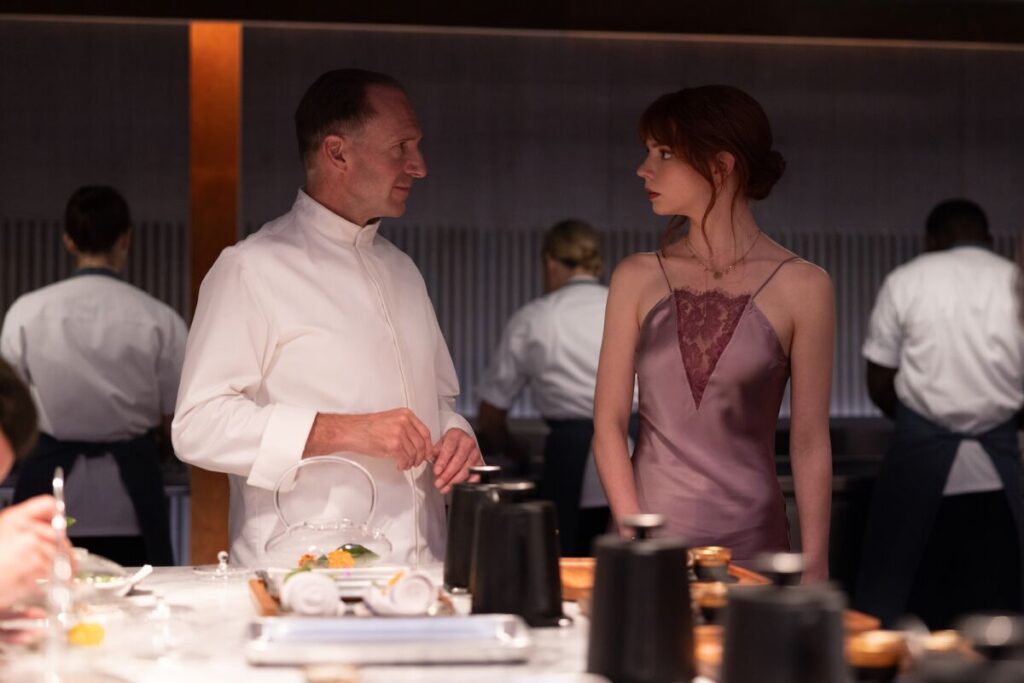
I’m not going to pretend that these types of movies aren’t 3 years away from debuting on streaming. But if you’re looking for a really fun story and a really well-written script, don’t go see Black Panther 2. Don’t go see She Said. See The Menu.
If you have no interest in going to the theater and just want to watch something good, I suggest firing up HBO Max and watching No Country For Old Men. I watched the film for dialogue tips (Yes, I’m STILL WORKING on the dialogue book – It’s coming! I promise!) and became so into the story, I ended up completely forgetting about dialogue.
The movie is the epitome of what I preach on the site – KEEP IT SIMPLE! It’s the simplest of simple stories, told with a likable protagonist, a super-compelling antagonist, and a bag of money. Sure, a couple of other people enter the story later on, but, at its heart, it’s two strong characters and a dramatic situation.
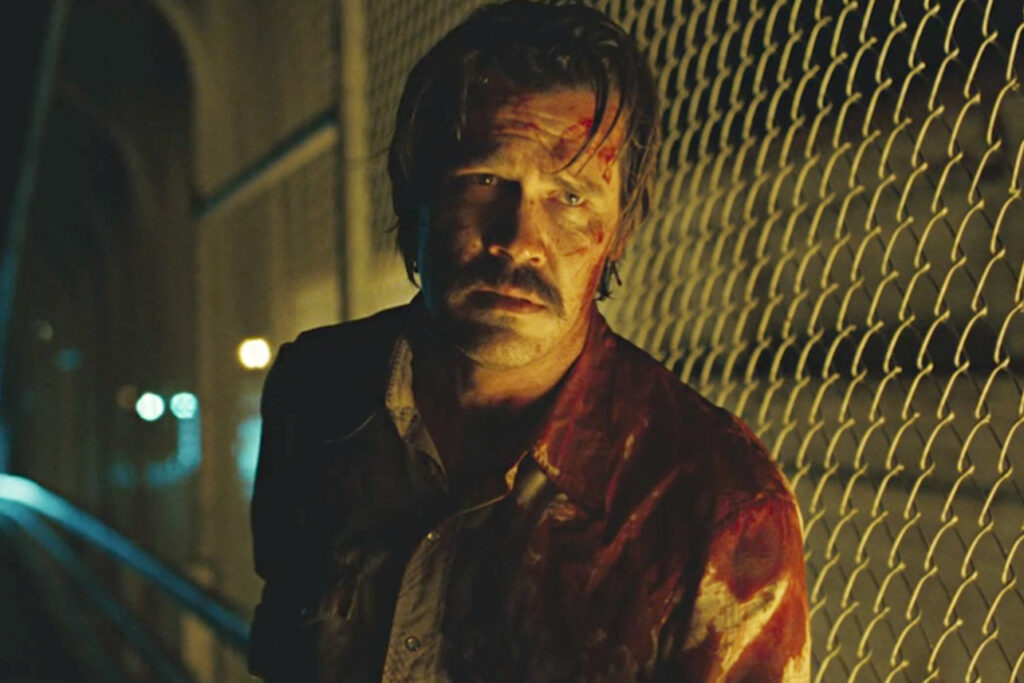
Something that struck me about the film was that, traditionally, the problem with this type of setup is that the villain has the primary goal (to catch the protagonist) leaving the protagonist with the weaker, more reactive, motivation (their job is to, essentially, wait and react to the antagonist). But Llewelyn’s character is written in a surprisingly active fashion. He knows he’s being chased by a de facto Terminator, so he’s always constructing plans to trick Anton (the bad guy) whenever Anton catches up to him.
For example, Llewelyn knows Anton will probably figure out what motel room he’s in and, therefore, buys the room next to his and sleeps there instead. He then waits for Anton to inevitably show up to his original room so he can figure out who’s chasing him and escape before this psycho can hurt him.
That’s a big part of what’s so fun about the script. It’s a chess match. But it’s an ACTUAL CHESS MATCH. So many writers don’t have the capability (or the discipline) to come up with genuinely clever moves from each character. This script is full of them.
One of my favorite moments is Llewelyn sitting in a dark hotel room in the middle of the night, terrified that Anton is coming. And then, finally, Llewelyn sees two dark shadows in the thin streak of light at the bottom of the door. But before he can do anything about it, the feet shadows disappear, and then, ten seconds later, the hall light goes dark. Anton went and turned it off specifically so that Llewelyn would not be able to see anything in that slit of light underneath his door. What other writer thinks of details like that??
But it really is amazing how captivating the movie is considering that it boils down to such a simple premise. I would love to have the Coen Brothers who made this movie return. They’re always at their best when there’s a bag of money involved. Although half the Coen team is coming out with a pretty good script himself, in Drive Away Dykes.
Did anybody see Black Panther, The Menu, or She Said this weekend? What did you think?
EDIT: QUICK THOUGHTS ON IGER RETURNING TO DISNEY – Since this just happened as I was about to go to bed. I never understood why Iger left in the first place. He was doing the best job leading the company since Disney himself. He was still young. Yet for some reason all Disney could talk about was replacing him. It didn’t make a lick of sense. So, in that sense, I’m not surprised he’s back.
The question is, what caused this dramatic change in leadership? No matter how many things you can knock Disney for, they have still done better than every other studio. They are still miles ahead of everyone else. And while Netflix is stagnant with their service, Disney Plus is still adding people. Didn’t they just add another 12 million subscribers last quarter?
I’m wondering if this is strictly a Marvel problem. Is it because all the Phase 4 movies were bad except for the one not made by them (Spider-Man)? Is it because Chapek allowed a group of people who hadn’t written anything to steer a 150 million dollar show in She-Hulk? Are those the reasons Chapek is out? I’m sure we’ll learn more in the coming days. But wowzers, this is huge news.