
Search Results for: F word
Genre: Drama (sort of a romantic comedy too)
Premise: After her son dies, a grieving mother decides to look for a mate who will get pregnant with the son’s frozen sperm.
About: This script finished with 7 votes on last year’s Black List. If you want to see my re-ranking of all the scripts from last year’s Black List, you can check it out here.
Writer: Geoffrey Roth
Details: 122 pages
 Juno Temple for Audrey?
I love a good underdog story.
So there’s no one rooting for today’s 72nd ranked Black List script more than me. There’s already been one Black List “worth the read” that got 7 votes (“False Truth”). Can we make it two??
We meet Ben, who’s in his early 30s. Ben informs us, much like Lester Burnham at the beginning of American Beauty, that he’s dead. Ben lived a really full life, though. He was a fun guy with a lot of friends who traveled a lot. The only thing he didn’t achieve before he died was starting a family.
Ben introduces us to his mother, Laurie, who helps out with a foundation of Ben’s, which has capitalized on Ben’s obsessive travel experience by taking all of his videos and turning them into a virtual reality experience with “VR Ben” as the guide. The hope is to sell the company and use the profits to save our dying planet.
When Laurie learns that Ben froze some sperm, she becomes convinced that her new goal in life is to impregnate a young consenting woman with this sperm so that Ben can have a child. So Laurie does the only logical thing one does in these situations – she joins Raya as her dead son.
She starts getting matches left and right, to which she then goes on the dates and tells the women that she’s “Ben,” and that the actual Ben is dead, and, oh yeah, could you please get pregnant with his sperm? Naturally, young hot in-heat females don’t respond well to being told that their date is dead and can you get pregnant.
Coincidentally, a swimming friend of Laurie’s, Aubrey, matches with Ben on Raya, and Laurie uses the opportunity to sell Aubrey on the idea. At first, Aubrey is freaked out, just like everyone else. But after she “meets” Ben in his VR traveling simulation, she actually starts to like him. Against all that one would consider good judgement, Aubrey considers the unthinkable – getting pregnant with Dead Ben’s sperm.
For the record, a specific song cue on page 1, accompanied by a 122 page run-time, is not the best way to endear yourself to a reader.
Now that we’ve got that out of the way, let’s discuss the script, which is a bit of an odd duck.
On the surface, we’ve got a semi high concept idea here. A grieving mother starts “dating” young women in the hopes of finding one who will have her dead son’s baby via his previously frozen sperm. Like a much sadder version of Juno.
That’s definitely an inventive concept and I give the writer props for that. Especially because one of the hardest genres to infiltrate with any sort of originality is the romantic comedy. This concept allows for a new spin on that formula.
And it gives us some fun scenes in the process, such as young women matching with Ben on dating apps only for Laurie to show up, tell them the guy they matched with is dead, and that she’s hoping they’ll agree to get impregnated by him posthumously. I mean I’m laughing out loud as I type that. Those will make for a hilarious montage.
But something wasn’t working with the script. Let me see if I can come up with an analogy for why that was. The Way You Remember Me is a brand new house where none of the screws have been tightened yet. It feels too loosey-goosey, and in the process, is hard to buy into.
The loosest of the screws is Ben’s VR subplot. This team of people who loved Ben used all of his travel videos to turn them into a VR experience with Ben being the VR guide.
I understand why the writer did this. It allowed for Aubrey to step into that VR world and sort of be around Ben, almost like she’s dating him. But it’s just not believable on any level.
It’s one of those things we writers notoriously do. We see a problem and we’re so determined to solve it that we don’t hold it up to real-world standards. We use our own internal ‘movie-logic’ instead.
The problem-to-be-solved in “Remember Me” was: “Well, if Aubrey never knew Ben, why would she agree to have his child?” So the writer said, “Well, what if there was this posthumous foundation for Ben that was… ummmm, working on a… VR experience!…. And… ummmmm…. Like, Ben used to be a travel nut and taped all his travel exploits and they were working on turning those into a VR experience and THAT WAY we can have Aubrey “meet” Ben almost like they’re meeting in real life!”
Come on already. It’s such a clearly writer-generated fake situation that it doesn’t pass the suspension of disbelief test.
One of your jobs as a screenwriter is not just to solve problems. It’s to solve them elegantly. It’s to solve them in such a way that they are invisible and the audience is so immersed in them that they never consider the idea that a writer is writing it.
You know who I learned this from? “House of the Dragon’s” Ryan Condal. He used to talk about this all the time back on the Done Deal message boards. Your solutions can’t be so big and outrageous and “movie-logicy” that they break the suspension of disbelief.
Newbie writers are the biggest violators of this because they don’t respect the reader yet. They think the burden is on the audience to go along with whatever they come up with, as opposed to truth, which is that the burden is always on the writer.
Another issue with this script is that it was clearly written by someone who doesn’t read a lot. I know this because if they’d a read a lot of scripts, they would know some of the basic things that readers dislike. Like dual-side dialogue. Giant paragraphs. Big page counts. Unnecessarily over-written openings that go on for too long and, therefore, delay when we get to the actual plot.
One of the reasons I think yesterday’s book was so excellent – and, mind you, it’s a book with 70,000 more words and yet read much faster than today’s script – is that the author was an editor for 20 years. So they’d read so many books.
That’s why The Maid reads so effortlessly, and why I remind aspiring writers at every turn to READ AS MUCH AS POSSIBLE. Because I guarantee you, you will accumulate a list of things writers do that annoy you, and, in doing so, ensure that you never make those mistakes yourself.
The Way You Remember Me is like a lot of Black List scripts these days. It’s imperfect. It has some good things. But it doesn’t feel ready in the way that you pour over your work and make it the best it can possibly be before showing it to anyone ready. Which is why I’d retitle it, The Way You Won’t Remember Me.
Script Link: The Way You Remember Me
[ ] What the hell did I just read?
[x] wasn’t for me
[ ] worth the read
[ ] impressive
[ ] genius
What I learned: Controversial take! This script was super heavy on the music cues. But I’m telling you, music as writing inspiration is HIGHLY DANGEROUS. The beauty of the songs you listen to, and the way they reverberate within you, fools you into thinking that the stuff you’re writing is amazing, when, in reality, it’s just the songs you’re listening to that are amazing. A great scene or a great sequence should be great without a single note of music behind it. This script read like the writer was lost in the power of his music. As a result, the music was doing all the heavy-lifting.
Say hello to the movie that’s going to win Florence Pugh her first Oscar.
Genre: Drama/Thriller
Premise: A maid on the autism spectrum unexpectedly finds herself wrapped up in a high profile murder at the fancy hotel she works at.
About: This book was sent out last year, before publication, to Hollywood, where Florence Pugh got hold of it and quickly signed on. The book was officially published this year and quickly rose to the New York Times best seller list. This is author Nita Prose’s first novel. Just to show you how important it is for writers to read, Nita was a long time editor before she finally broke out with this book. She is from Canada. I will try not to hold that against her.
Writer: Nita Prose
Details: 290 pages

It is becoming harder and harder to make non-gigantic IP properties theatrical releases. Anything that has even a hint of drama and genuine acting in it is dismissed as a streaming movie.
The only way these movies can now become studio releases is if they go TO-THE-NINES on the production. They get a big actor or actress. They give the film 3x as much money as a movie like this would normally cost. They build the most amazing sets and costumes imaginable. And they get a high-level director who directs the s**t out of the movie.
I’m talking every shot is a piece of art.
That’s the only way something can stand up to a Wakanda Forever or a Fast and Furious. You’ve got to see the trailer and it’s got to physically look amazing.
They should do that for The Maid because it deserves it. It’s a really fun story with a great star-making role.
Molly Gray works at an upscale hotel in New York. She’s a maid. And not just any maid. She’s the most dedicated maid you’ve ever watched clean. All she cares about is cleaning. All she cares about is leaving every room in perfect condition.
A big reason for this is that Molly is on the spectrum. She is autistic and while she doesn’t understand the complexities of human interaction, she understands how to make any room look and smell brand new. This is in large part because of her grandmother, who was also a maid. Unfortunately, her grandma, who was her only friend in the world, died recently.
What begins as a normal day at the hotel turns very un-normal. While cleaning the room of the hotel’s highest profile guests, the Blacks, Molly finds Mr. Black dead on the floor. She immediately alerts the hotel manager and that’s when the craziness begins.
Long story short, Molly has been friendly with Giselle Black, the wife of the dead man, who becomes suspect numero uno. Terrified for her friend, Molly tells the cops that she doesn’t know Giselle well, which they quickly find out is a lie. Molly then goes to her crush, the guy she considers her best friend at the hotel, bartender Rodney, for help. But what she doesn’t know is that Rodney may be involved in this somehow. And he’s not afraid to throw Molly under the bus if it means saving himself.
When Molly then becomes the number one suspect, she will have to team up with a local lawyer and get several of the hotel workers to covertly admit that they had a hand in this. But with her unique condition, will she be able to pull it off? Or will she, for one final time, be taken advantage of?

The way actors used to hunt for that big Oscar gold was to take on the role of a mentally challenged person. From Forrest Gump to Sling Blade to I Am Sam to Radio to Me Time. Some had success getting that Oscar, others didn’t.
These days, Hollywood’s become so terrified of Twitter attacks that they don’t want to get anywhere near the “R” word. So they’ve come up with a replacement – autism. Autism allows for characters battling difficult mental conditions. However the characters are still fully functional and, therefore, okay to portray.
We saw this in Silver Linings Playbook. We saw it in The Accountant. We saw it in The Imitation Game. This is one of the best character strategies screenwriters can use because actors will fight each other in gladiatorial arenas to land one of these parts. And it’s rising star, Florence Pugh’s, turn, to put on the armor.
Now, not every autistic role is created equal.
Where most writers go wrong is they only have the barest understanding of autism. They build their character around other autistic characters they’ve seen on TV and in film. Sometimes this can work if you’re writing a comedy (Sheldon in The Big Bang Theory). But if you’re writing a drama, you better understand autism as well as the greatest doctors in the world. Because in order for these characters to work, they must feel authentic.
That’s why The Maid works. And that’s why it rose to the top of Hollywood’s priority list – so much so that they went to their number 1 “It” girl to see if she’d do it. And she loved the character so she was in.
The great thing about autism (I may be the only person who’s ever written that) is that it enacts what I call “The Protection Principle.” The Protection Principle is when the reader feels protective over the main character. They want to make sure they’re okay. They get angry when others take advantage of them.
It can easily be said that the reason Forrest Gump is so popular is because of the Protection Principle. We love him so much that we want to protect him from the big bad world and all the people trying to take advantage of him in it.
The Maid may be the only story that leans more heavily into the Protection Principle than Forrest Gump. I can’t remember the last time I wanted to shield someone from pain more than Molly. She’s such a sweet girl. She’s so naive. Everyone’s taking advantage of her. And it very well might send her to prison for the rest of her life.
What’s so great about this book, though, is that the desire to protect our heroine grows with every chapter. By the time the cops have angrily arrested and accused her of all these things, we’re so charged up we want to drive down to our closest governmental establishment and demand justice. That is until we remember that, oh yeah, this is a fictional story.
The book is a great reminder that writing any story is about getting the BIG THINGS RIGHT. Concept. Character. Plot. We get so wrapped in the minutiae and, while I’m not saying the details aren’t important, they’re not nearly as important as the big three.
I might even take that a step further and say, even if the only thing you get right is the main character, as long as you get it REALLY REALLY RIGHT, you will write something of value that people will want. Especially in this business because it’s all about getting that big actor to sign on and bring buzz to your project so it can get made and, if you nail your main character, that’s exactly what will happen.
What works so well about Molly’s autism and the Protection Principle is that it introduces a level of dramatic irony. It’s established early on that Molly is obsessed with Rodney, the bartender. She loves everything about him, from the way he smells to the way his forearm muscles ripple when he places his hand down on the bar table.
But as Molly describes Rodney and how much she would love to make him her boyfriend, we see things that she doesn’t. We notice that he calls her “special” to others (“He called me special,” Molly beams. “I knew there was something between us.”). We notice that he’s being nice to her, but in a slightly patronizing way that she’s misinterpreting as romantic interest.
In other words, we know early on this guy is probably bad news. So we want to protect Molly from him. But poor Molly can’t read any social cues so she doesn’t see what we see. And it makes us frantic to keep reading and hope that she figures it out before it’s too late.
There’s a chapter late in the book where Molly needs help with this gun that she’s helped sneak out of Giselle’s hotel room, and she decides to ask Rodney for his assistance. And we’re sitting there screaming, “NOOOOOOOO!!! That’s the last person you want to tell!” And, of course, Rodney then uses that information to frame Molly.
Honestly, the plot itself isn’t anything special. It’s a got a few twists and turns. But the reason we’re so invested is because the character is so great. And the character is so great because of the autism choice, the authenticity through which that condition is explored, and the byproduct of that autism, which is the ignition of the Protection Principle.
Those three things kept me turning the pages and, when I finished, I had no doubt that Pugh was winning an Oscar. It’s a done deal already. Just give it to her now. I know that’s never been done before – that an actor is given an Oscar before she starts shooting the movie – but I promise you this is the one time we can break that rule.
[ ] What the hell did I just read?
[ ] wasn’t for me
[ ] worth the read
[x] impressive
[ ] genius
What I learned: This is an AMAZING book to read to learn how to make a character likable. Not just because of the autism thing. But Molly’s best friend in the world, her grandma, died recently. The head maid at the hotel, Cheryl (who Molly’s nicknamed “Cherylnoble”), goes into Molly’s rooms ahead of her to always steal her tips. A former boyfriend took all of her and her grandmother’s money. When others take advantage of our hero, we love our hero more than anything. And because Prose is a such a good writer (how could she not be with that last name?), it all feels very authentic. None of it is desperate over-the-top “please like my hero” writing. I honestly can’t remember the last time I loved a character this much.
What I learned 2: All of the above only works if the protagonist still has a positive attitude towards life. It doesn’t work if your hero feels sorry for themselves and gives up. We love this character so much because in spite of all these things that happen to her, in spite of a job that might depress others, she still gets up every day and has the most positive optimistic attitude in the world.
What I learned 3: A dead body and a really unique main character is one of the most reliable setups for a story out there.
What I learned 4: NO EXCUSES! Nita’s job took up her entire day so she got up at 5am every morning and wrote for 4 hours before her day job. It took her 5 months to finish a first draft.
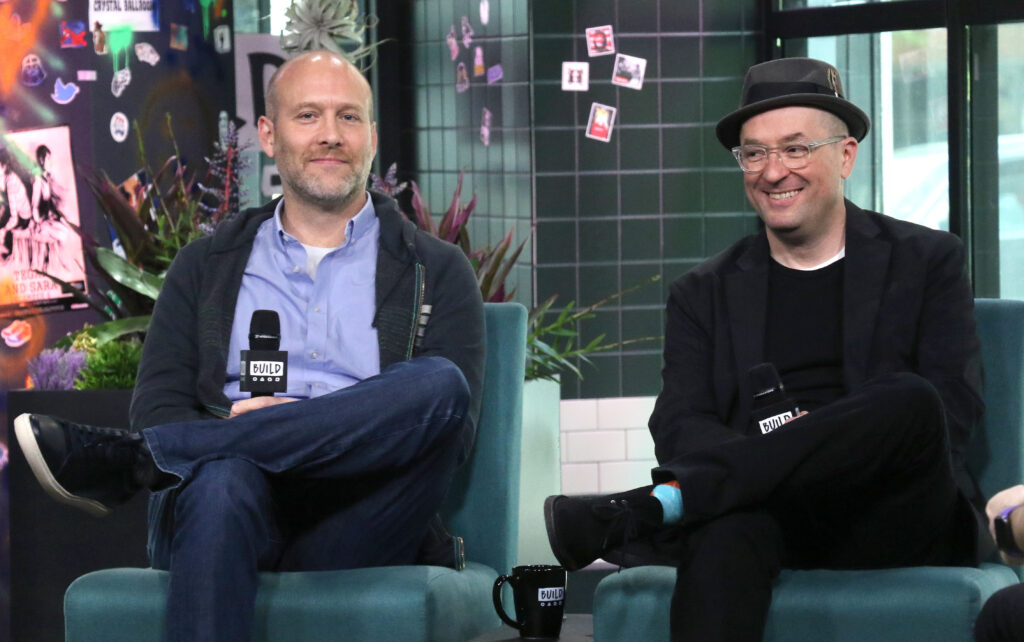
If I say to you the names Christopher Markus and Stephen McFeely, I’m guessing a little over 25% of you know who those two are. If I say those two names on anything other than a screenwriting site, that number drops to .001%.
And yet, those two are the writers of, at one point, the highest grossing movie of all time, Avengers: Endgame.
I want you to think about that for a second. The writers of the most successful movie ever made are so obscure that the overwhelming majority of the people on this planet – people who have seen the movie mind you – have never heard of them.
And yet, if I say the names Quentin Tarantino, Aaron Sorkin, Diablo Cody, and Taylor Sheridan, peoples’ ears perk up. They know those names. Those are respected screenwriters.
This got me thinking about the differences between pursuing a studio career versus pursuing an artist’s career.
In one, you become a cog in the machine, moving from high-profile assignment to high-profile assignment. However, you are a very generously paid cog. And if you can make it to the top of the studio mountain, like McFeely and Markus, or Shay Hatten (John Wick sequels), you are drowning in cash money. Even if no one knows your name.
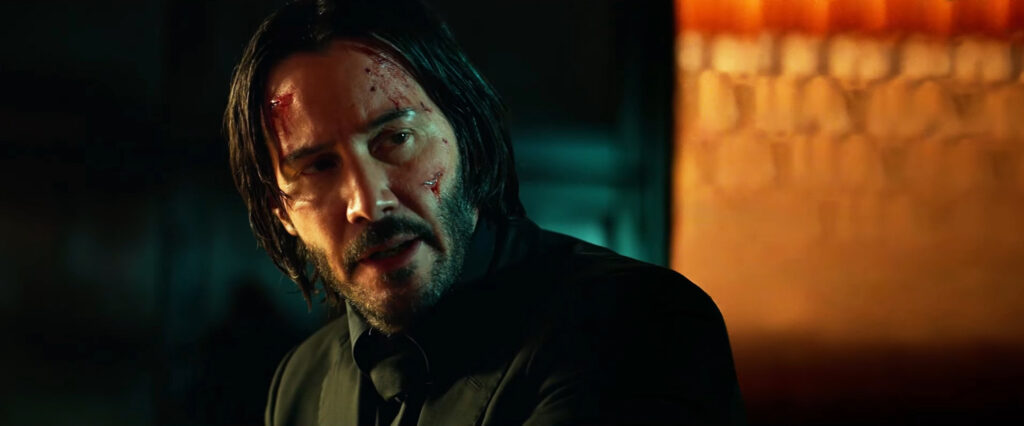
In the other, you are writing for the love of it, and are getting recognized as a respected name in the business. If you can crawl to the top of this pile, you are fighting for Academy awards. And the public may even know your name.
But while you might never be a cog, you will spend a lot more time fighting to get your projects made due to the fact that they’re not obvious money-makers. So while you gain prestige and respect within the industry, you lose financial security.
I think it’s important for amateur writers to figure out which direction they want to go in because each path requires a different strategy. And I want to discuss those strategies today.
If you want to become a studio screenwriter, you need to become obsessed with high-concept. That’s going to be your ticket to ride. Back in the day, you operated on a 1-step process whereby you wrote a high concept script to sell it.
These days, they’ve added a step. You write these scripts to get recognized as somebody who’s good at writing this kind of script. A manager or agent takes you on based on the strength of that spec. They send your script around town to the big-budget production houses and studios, and hopefully, one of those places hires you to write *their* big-budget script.
This is exactly what happened to Michael Waldron. He wrote a script called The Worst Guy Of All Time, and the Girl Who Came To Kill Him, which had time-travel, comedy, and acton set-pieces. That script eventually got to Kevin Feige and Feige loved it. Which led to Waldron getting hired to write Loki, and now the next big Avengers movie, Secret Wars.

Another thing studio writers must have is a mastery of structure. You have to know the three-act structure like the back of your hand. You have to understand page counts and on which pages key plot beats happen. You need to know terms like the “inciting incident” and the “Mid-Point Twist” or “Mid-Point Escalation.”
You need to know these things because studios are way more technical in how they approach things. They don’t leave anything up to wish-washinesss or “feel.” They need to be able to say to you, “the first half of your second act is 10 pages too long. Cut 10 pages out.” And you have to know what that means.
They’re going to use words like “pacing.” They’re going to say, “The pacing in your third act sucks.” And you need to know what that means and how to fix it (it basically means that your third act scenes are dragging or you’ve got some extra scenes in there that aren’t needed).
Studios don’t have time to teach screenwriters. They’re expecting you to already know the technical details like the back of your hand. I learned this the hard way. I recommended a couple of screenwriters who weren’t ready for the intensity of a studio assignment yet, and received a couple of frustrated phone calls from the producers regarding the writers’ abilities.
These writers had previously written strong scripts. But they were scripts where they didn’t have to answer to anyone. The studio system is a collaborative system. You need to be able to work with others. You need to be able to receive notes and understand what they mean.
Which is I why I remind writers if they’ve written ten scripts and still haven’t “made it” yet, that doesn’t mean they should give up. All the learning they’ve gone through writing those scripts has made them great candidates to become studio screenwriters. Cause they’re familiar with a lot of the speed bumps associated with screenwriting and know how to tackle those bumps.
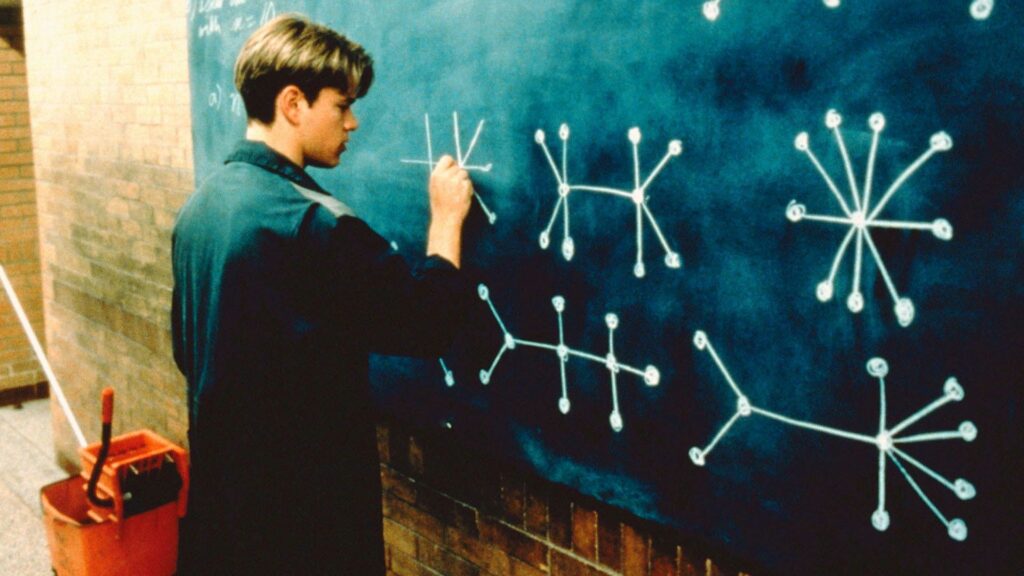
Meanwhile, if you want to become a respected screenwriter, aka an “artist,” high concept isn’t nearly as important. In fact, it might take away from the other aspects of your writing that you’re trying to showcase. You should still be seeking out a clever concept – something ironic maybe (Good Will Hunting – a Harvard janitor solves a math equation that nobody at Harvard could solve). But it doesn’t have to be a big flashy idea with a lot of kung-fu or time traveling going on.
What you *do* have to be great at is character development. If you don’t enjoy delving into the depths of people and what makes them tick, the “artist” route is not the route for you. It’s better to pursue the studio side. Cause studio screenwriters only have to know how to make their characters likable. They don’t have to write Oscar-worthy character journeys.
Character development boils down to creating imperfect characters who we still root for. Arthur Fleck from Joker is a good example. Or Louis Bloom from Nightcrawler. Or Cassandra from Promising Young Woman.
You need to know how to give these characters flaws (Cassandra could not see through her rage and let it dictate all her actions). You need to know how to explore those flaws. You need to know how to have your characters overcome those flaws at the end. Or fall victim to them if that’s the kind of movie you’re writing (like Cassandra). And you need to know how to do this with character relationships as well. You need to know how to start a relationship in one place (broken) and end it on the other end of the spectrum (fixed).
And you need to know how to make characters interesting. Not boring. The most respected screenwriters are the ones who can create classic characters. These screenwriters are obsessed with people and want to dig into them and know how they tick. That intense curiosity is what leads them to write these iconic characters.
You also need be great in one of two other areas. You need to be saying something important thematically with your script. Or you need to have a unique voice. These days, social issues are the easiest ways to explore a theme so they’re the perfect option if you want to go in the thematic direction.
If you’ve never been good with theme or you don’t have any interest in writing a script about 12 Native Americans who go to the moon, you need a flashy strong voice on the page. Taika Waititi. Emerald Fennell. Christy Hall. A voice that explodes and forces the reader to take notice.
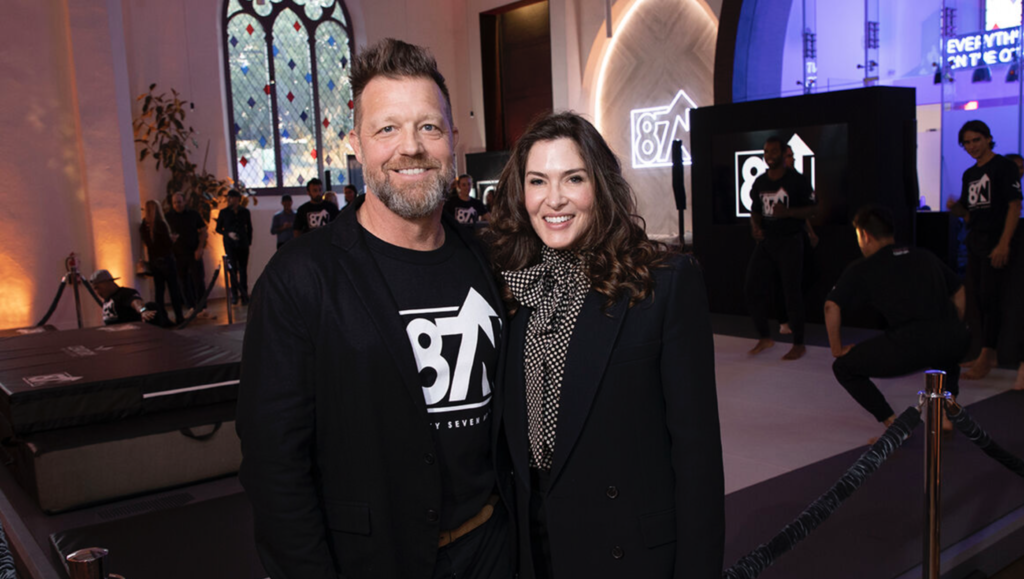
Naturally, artists will be shooting at a different target. Instead of blanketing the town with a sexy action premise and hoping to get a meeting at 87North, you’ll be trying to make the Black List. If you can make the Black List, that’s going to give you the first bump you need towards becoming that “respected” screenwriter. It’s also going to put you in a great position to get your movie made.
I forgot what our last tally was, but I think it’s between 25-30% of Black List scripts get turned into movies. Which is great. Because one of the crappy things about being an artist is that it’s harder to get movies made since your script won’t have the same marketability as a high level, or even a low-level, studio release. So using the buzz of a Black List showing to get your script made is a legit strategy.
But the reality is that, as an artist, you’re going to have to do a lot more work than the studio writer types to break in because it’s always going to be harder to break in with unmarketable material. It’s just harder to get people to read things that don’t have a sexy premise. They’re always the last scripts I read and I think most people in town feel the same.
So as long as you know the journey will be longer and harder, you can accept the challenge and not get discouraged so easily.
Of course, there’s a third option – which is the TV option. But we’re out of time. Maybe that’s an article for a future date. Let me know if that interests you. In the meantime, figure out which kind of writer you are and start strategizing your career immediately!
Get A Screenplay Consultation with Carson! – Do you want me to look at your script? Tell you how it stacks up to the other 10,000 scripts I’ve read? How it stacks up to all the scripts being sent around town? Is it up to par with those scripts? Is it better than those scripts? Is it not as good? If so, what’s wrong? How can you fix it? This is my area of expertise so if you’ve been thinking about getting a consultation, now is the time to do it! I can give you $50 off if you mention this article. E-mail me at carsonreeves1@gmail.com to get started!
Genre: Sports Drama/Comedy
Premise: Mickey Bradley, a wildly talented minor league baseball player in his early twenties who returns home to Los Angeles after an injury and coaches a little league team full of misfits who remind him why he fell in love with baseball in the first place. And there’s a sweet romance in there too.
About: This script comes out of 2020’s Black List. The writer, Ethan Dawes, wrote and directed a small indie film in 2013 called Go For Broke. He was also Carrie-Anne Moss’s assistant in The Matrix Resurrections. Random factoid that has nothing to do with today’s script – Moss just signed on to the new Star Wars show, The Acolyte!
Writer: Ethan Dawes
Details: 107 pages
 MBJ for Mickey?
There are certain staples in the studio release cycle that will never die. The “Adult Has-Been Forced to Coach A Kid’s Sports Team” flick is one of those. The reason I bring that up is because, as a screenwriter, you wanna be strategic about what you write. You want to look for the types of scripts that fit into the slots that Hollywood likes making.
I read this old article that Scott posted in the comments yesterday about a struggling screenwriter who surprisingly sold his script, Showtime (that reality TV cop movie starring DeNiro and Murphy), and noticed something interesting within the article.
The script wasn’t the writer’s idea. Someone suggested it to him. He admits he never would’ve written an idea like Showtime otherwise. Afterwards, he tried to sell a script about a 15 year old kid who lived on a floating casino. It didn’t sell. After that, it took him 17 years to get another movie made. And that was another out-there idea – some sort of 70s period piece about Steve McQueen stealing money from a secret fund of Richard Nixon’s.
The only idea that seems to have done anything for this writer was one that someone else came up with. And say what you want about that move – Showtime – but it very much falls into a slot of movies that Hollywood loves to make. Buddy-cop movies. And it was a fairly inventive spin on the genre at the time. So I can see why it got made.
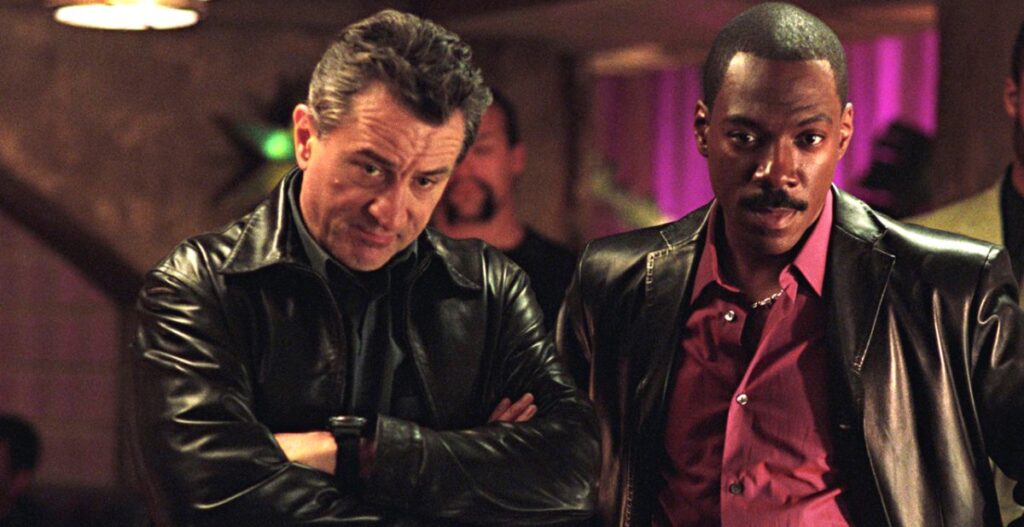
This is a long way of saying that we can get so obsessed by and blinded by our own ideas that we don’t ask the question – does Hollywood actually make the type of movie I’m writing? Cause if they don’t, you’re turning already bad odds into insurmountable odds.
We can make fun of how cliched today’s genre is. But at least this writer is playing to win. Whereas so many aspiring screenwriters are playing to lose.
Mickey is 13 years old pitching to win the Little League World Series when the Japanese team hits a home run off of him to win the game. 15 years later, 28 year old Mickey (hey, didn’t we just cover a Mickey in yesterday’s review??) is pitching in the minor leagues and tears his something-or-other muscle. He’s quickly dropped from the team.
Mickey heads back to the valley in Los Angeles to pick up the pieces and figure out what to do next. After a video goes viral of Mickey throwing a fit in the locker room after getting cut, his agent suggests that he rebuild his image by coaching the same little league team that he played on as a kid. Mickey figures, “why not?” only to learn that the team is now made up of almost entirely girls!
It’s a bit of “A League of Their Own” mixed with “Bad News Bears.” Mickey can’t see himself coaching a bunch of girls but he’s got to rehabilitate that image so he signs on. Naturally, all the girls are terrible (one of them likes singing in the outfield more than catching balls) except for the studly chick who hangs around the park and isn’t on the team… yet!
With a little help from his old catcher, Pickles, and the cute older sister of one of his players, Mickey will have to stop being so serious about the sport and learn how to have fun! If he can figure out that little life hack, he may finally realize that the real wins in life come on the inside, not the outside.
What can I say?
This was a really smart idea to write a script about.
Same old formula. But instead of a boys team, you make it a girls team. I don’t know if it’s possible to tailor something to 2020s Hollywood better than that! Dawes probably reserved his spot on the Black List months beforehand by alerting Franklin Leonard to what he was writing. “Boys bad, girls good!!??” Franklin responded. “You’re in!!”
That had to be how it happened, because if you actually read this script, you saw that nothing else changed. Minus the gender-swap, it’s the exact same Bad News Bears formula.
I don’t know how I feel about that. As someone who critiques screenwriting, I want more. I want originality. I want the writer to push themselves. As someone who closely monitors the business, however, I respect the hustle. The writer knows he doesn’t have to do anything extra here. He gave us the “different” in “the same but different” equation. Why stress yourself beyond that?
As for the writing overall, it was decent but not exceptional.
A reminder to Ethan and all screenwriters out there to be aware of the reader experience. Writers are often so in their heads, they’re not gauging how their writing is being received. If you’re too cavalier about this, you can leave confusing moments on the page. Or moments that cause the reader hiccups. Here’s an example. In this scene, Mickey gets fired from his minor league team…
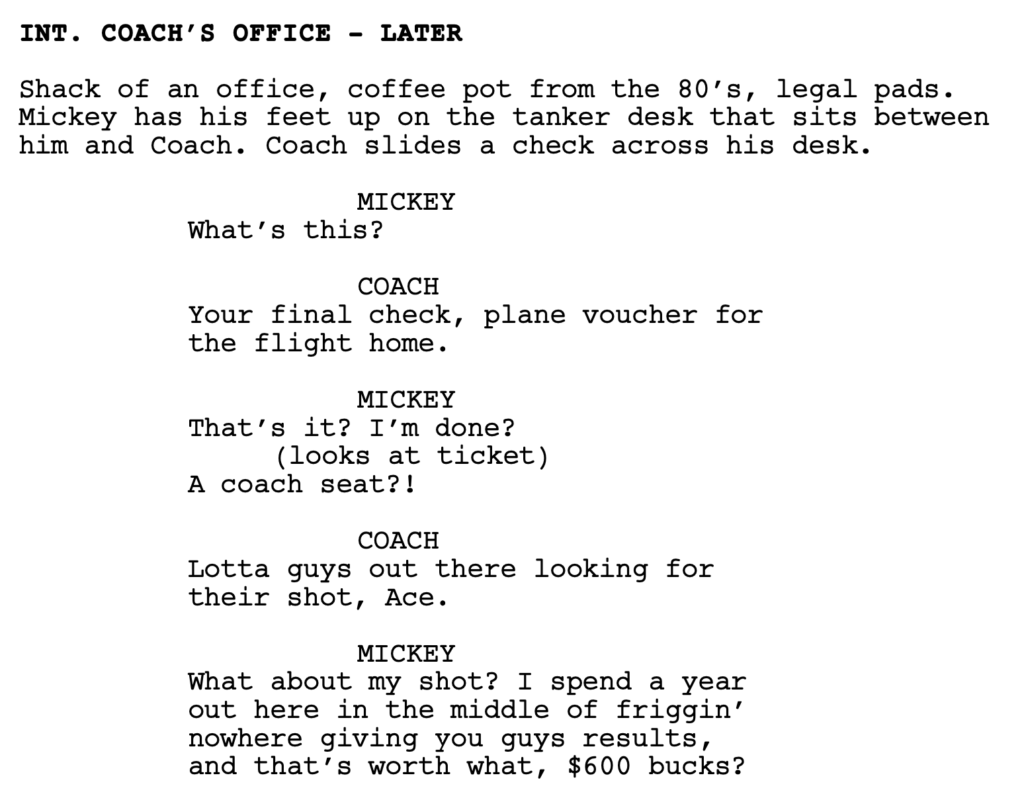
Mickey says, “Im done?” So we know he’s being let go. The next line is, “A coach seat?” The first thing that I thought of, in that moment, was, “Oh, they’re asking him to retire as a player and become a coach.” Because what else would “coach” mean in this context? But then I realize, “Oh… he’s talking about a coach seat on the plane.”
I get it. You want to get the “coach seat” line in there to emphasize how little they value him. But if it’s going to confuse the reader or cause a hiccup, is it worth it? I say it isn’t.
Now it’s true that the parenthetical in there tells us to focus on the ticket, which helps stave off potential confusion. But here’s something that writers may not know: Readers are not reading your script like it’s some classic novel where they’re savoring every syllable like a fine wine. Their eyes are moving down the page fast.
Most readers don’t even read parentheticals. Not because they’re lazy. But because they’ve read so many scripts in the past where writers use parentheticals superfluously. They don’t tell us anything we don’t already know. So we skip them.
Just watch out for that stuff.
To show you that I’m not picking sides here, soon after that scene, Mickey flies back to Los Angeles. The writer uses 3 lines – just 3 lines – to create one of the clearest characters I’ve read all month. Here’s that moment in the script.

By far, the best way to create a strong and clear character is through a strong and clear introduction. Tell me you don’t know exactly who Mickey’s mother is after this scene. Any mom who will show up at the airport for her son, after he’s been let go, and bring a sign with her that highlights how great she thinks he is? That’s the most supportive mom ever. So we immediately know she’s a great mom and that these two have a great relationship. IN JUST 3 LINES!!!
That’s awesome writing!
But let’s be real. This concept, while marketable, is so susceptible to cliche that even when you swap in an entirely different gender, it still feels dated and predictable. Maybe if Mickey had been a more interesting character, it might’ve worked. But he’s pretty generic.
Ted Lasso has really raised the bar for sports comedy. And Here Come The Bandits couldn’t reach that bar if all its players stood on top of each other.
This script didn’t have anything beyond the smart marketing strategy.
[ ] What the hell did I just read?
[x] wasn’t for me
[ ] worth the read
[ ] impressive
[ ] genius
What I learned: Weird ideas (like 15 year olds living on fictional floating gambling islands) should be treated experimentally, not as legitimate attempts to make it in the business. Don’t spend too much time on these scripts. Accept that they will probably only be used as writing samples. If you have that attitude, you’ll be fine. But don’t spend an entire year writing a period piece about Steve McQueen trying to steal money from a secret presidential fund that only exists in your mind. It’s not an efficient way to spend your time as a screenwriter and is only going to lead to frustration. Spend the bulk of your time writing movies THAT HOLLYWOOD ACTUALLY MAKES. Today’s script is an example of one of those movies.
Logline Rewrite: The logline I included at the top of the review comes from the Black List and was likely written by a first-time manager. Here’s what the logline should’ve been — After a devastating injury, a tough traditional-minded baseball player returns home to coach his former little league team, only to find out that it’s become an all-girls squad.
Get a logline consultation for $25. It includes a 1-10 rating, a 150-200 word analysis, and a logline rewrite. Improve your logline from that awful version at the beginning of this review, to the one I just wrote above. E-mail me at carsonreeves1@gmail.com (5-pack of logline consults for $75!)
Oh Mickey you’re so fine, you’re so fine you blow my mind, hey Mickey 7!!
Genre: Sci-Fi
Premise: Set in the future on a mining colony, an “expendable” named Mickey 7 – someone built to die over and over again on dangerous missions, their mind re-uploaded to their cloned successor – is erroneously assumed dead, and comes home to find out they’ve already created his replacement, Mickey 8.
About: I always pay attention to what an actor, at his hottest point, chooses for his next project. Because when you’re at your hottest point, you’re being offered the best roles in Hollywood. So whatever you choose in that moment tells us writers something about what actors are looking for. At Robert Pattinson’s peak of stardom – as he played the Batman, which was in theaters at the time – he announced that this would be his next project. Parasite’s Bong Joon Ho is directing.
Writer: Edward Ashton
Details: 280 pages
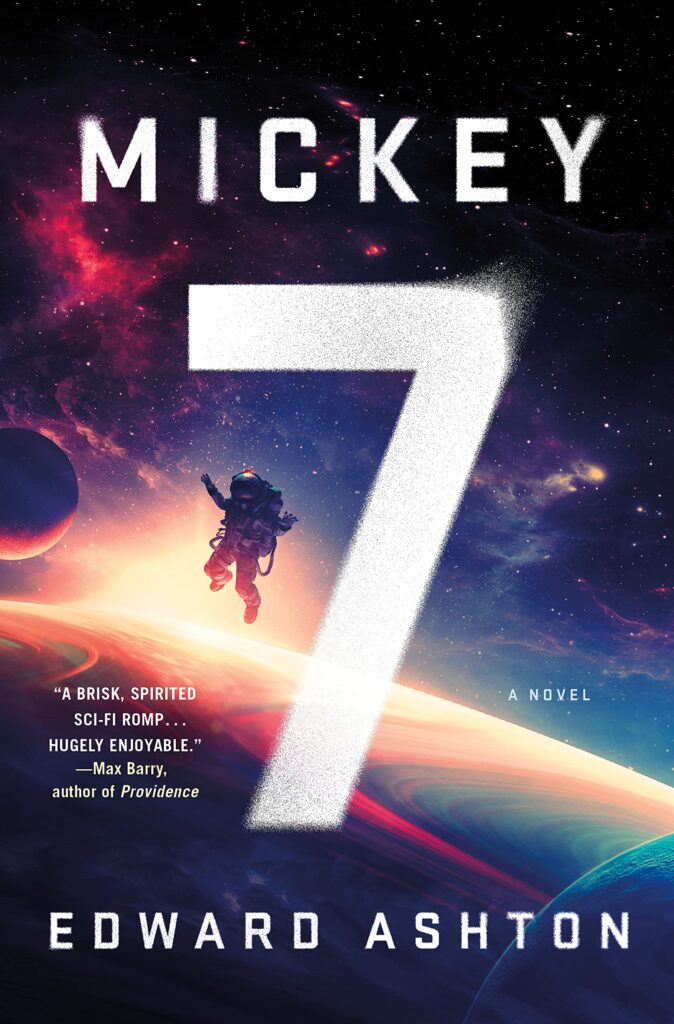
One of the paradoxes present in my life is that I love sci-fi yet dislike so many sci-fi movies I’ve seen lately.
Moonfall, Tenet, The Tomorrow War, Dune, Reminiscence, The Adam Project, Interstellar, Infinite, Life, Blade Runner 2049.
Where the good stuff at?
What I like in a sci-fi script is rich mythology and a good story that moves along at a brisk pace. A good example would be The Martian.
Some of you are probably angry that I’m including “Dune” in movies I don’t like. Dune is the perfect example, for me, of a movie that only gets it half right. It has a rich mythology. But it slogs along at a glacial pace. Then you have something like The Adam Project. That movie moves along at a brisk pace but has some of the weakest mythology this side of Battlefield Earth.
I need both.
Let’s see how today’s novel fares. And whether it will make a stellar movie or not.
Mickey 7 is an “expendable.” He lives in a colony on a planet far away, with about 200 people on it. Mickey has a unique job. He goes out on dangerous missions – usually to suss out whether giant worm-like “creepers” are threatening the base – to die. His deaths give the colony data they can use to stay safer.
As soon as he dies, his backup consciousness is uploaded into a new cloned version of him. So Mickey never truly dies. When we meet Mickey, he’s dropped into a new area and falls through the ice into an underground cavern where a giant worm-like “creeper” sizes him up. Mickey calls base, says he’s about to die, and then waits for the end to come.
But when the worm doesn’t eat him, he finds his way back to the surface and back to base. Except, now, Mickey 8 is in his room. Mickey 7 and Mickey 8 quickly discover that they don’t want to kill each other. So they’re going to try to live together. Which is going to be hard because the base recently instituted a 2000 calorie limit for everyone due to a slow-down in food production. That means each Mickey only gets 1000 calories a day.
In addition to this, our Mickey twins are going to have to fool Mickey’s girlfriend, flight commander Nasha, and Mickey’s best friend, pilot Berto. If they can do that, maybe they can make this “two Mickeys are better than one Mickey” plan work. But when the super angry base commander gets word that something is up, the Mickeys will need to accelerate a plan for figuring out the true purpose of Mickey.

Back in the day, there was this trick literary agents used to use in order to sell scripts. They would send a script off to several buyers at once, let each buyer know that other buyers were reading, which would result in studios quickly reading through the first act to see if they had a movie here, then bidding before they reached the second act, just to beat the competition to the punch.
This is what allowed so many bad scripts to get purchased. When you write a high concept script, the first act is the easiest part. You just introduce your cool concept and you don’t have to prove that it can result in a good movie because the studio doesn’t even get to the second act.
This trend of novels becoming the new spec scripts has a similar con in play. Nobody has time to read anything. Nor does anybody in Hollywood like to read. Agents know this. So they send these books out knowing that nobody is going to read more than 30 pages because doing so would take up 8 hours of their day.
So buyers read the first 30 pages, and if they like the setup, they buy the property. Which has to be how this book got through the system. Because if anybody read the last 200 pages of this, they would not have purchased it. It’s not that it’s bad. But it fails at its primary goal – which is to exploit its concept.
This movie is built around the idea that a guy comes back to find that they’ve already created a new copy of him. Two living copies is illegal. They’re not allowed to exist. That’s our setup. So how does our author explore this dilemma?
One of the copies ends up taking a lot of naps.
No. I’m serious.
This is how the author explores the idea. By ignoring it. He keeps Mickey 8 back in the room so that Mickey 7 can go walk around the base.
The only way this premise works is if we’re scared for Mickey 7. That being discovered would mean instant termination. Yet we’re never once scared for Mickey 7. There are veiled insinuations that bad things might happen if they’re caught. But they’re all so vague, we’re not even kind of worried for Mickey.
What’s frustrating about Mickey 7 is that there are some intriguing ideas being explored in the book. This ongoing question of, is Mickey 8 still Mickey 7, and is Mickey 7 still Mickey 6, going all the way back to Mickey 1? That’s a cool question to think about.
It’s the same concept Christopher Nolan explored in The Prestige, I believe. If you’re immediately uploaded to a new body when you die, did the last version of you die or did you really get transferred?
I liked how this script played with that idea when Mickey 7 discovers Mickey 8. Before this, Mickey 7 was okay with dying because he’d still be alive once his new clone was created. But his new clone – Mickey 8 – has already been birthed. So this person in front of him was already developing his own life and, therefore, wouldn’t be Mickey 7, if Mickey 7 were to voluntarily die.
The book also explores some really interesting backstory stuff about other colonies that went haywire. For example, there was another colony where everybody died except for the expendable and, to make up for it, the expendable kept recreating himself until there were 200 expendables in the colony and no real people. There were several backstories like that that got your noggin thinking.
However, these previous stories were bittersweet to read as they were all a lot more interesting than what was happening in our story, which amounted to, “I’m going to nap for a while, then I want to come out and get some food.”
This was a writing lesson I learned way too late in life. If your characters are talking about things that happened to them (or situations that mirror their lives), and those things are more interesting than the story you’re actually telling? You should probably consider ditching your current draft and writing one of *those* stories. I would’ve loved to have read the version of this where the expendable keeps replicating himself until he takes over the entire base.
If I were this writer, I would’ve sat down and asked myself, how can I exploit this idea as much as possible? For example, there was a brief moment, towards the middle of the book, where I thought Ashton had done something brilliant. I thought that he was actually slipping in and out of Mickey 7 and Mickey 8’s POV and telling the story through their points-of-view without telling us that he’d switched. And we were going to be tasked with trying to figure who was who. Cause they both think they’re Mickey, right? So it would stand to make sense that when telling this story, they both sound the same. And it’s up to us to decipher what’s going on.
Instead, we get this very straight-forward execution that amounts to Nap-Gate and a Tremors ripoff.
Why, then, did Robert Pattinson sign on to this project? That answer is in the What I Learned section below!
[ ] What the hell did I just read?
[x] wasn’t for me
[ ] worth the read
[ ] impressive
[ ] genius
What I learned: With this novel being only okay, it leaves me to conclude that there was only one reason why Pattison signed onto it. He signed on for the same reason so many actors before him have taken these types of roles – because he gets to play two different people. It seems almost too easy of a strategy as a screenwriter. But if you want to grab that big-name actor, write a dual role screenplay. It’s one of the most effective strategies in the book.