
Search Results for: F word
 Where is Zendaya’s movie on this list??
It is time for the official RE-RANKING of the Black List. As we all know, at this point, the Black List ranking system is all over the place. It’s being manipulated by managers and agents. It’s promoting agendas that don’t include the quality of the script. It ignores scripts from seasoned writers with no clear delineation about who’s allowed and who’s not allowed to be on the list. We all have major reservations at this point. That’s not to say I think the list is irrelevant. There are still good scripts on it. They’re just not ranked correctly. Which is why you have me! I’ve read the scripts so I can tell you what’s good and what’s nowhere close to good. You can see the original rankings here.
There are twelve scripts on this list I haven’t read yet (Operation Milk and Cookies, Believe Me, Shania, Hello Universe, A Hufflepuff Story, St. Mary’s Catholic School Presents The Vagina Monologues, Lift, Sleep Solution, Thicker Than Ice, The Unbound, The Way You Remember Me, Ways to Hinder Winter). Eight of them I would rather lower myself into a boiling pot of water and die slowly inside, than read, so it’s safe to say they’d probably be non-factors on this list. But I will review a few more and, if anything is good, I’ll retroactively add it to this list. I’m excited to see what the true Top 10 looks like! We’re going from worst to best, here. Let’s get started!
59. Candlewood by Jason Benjamin and Jessica Granger
Logline: In 1992 a seaplane crash in a lakefront community sparks a relationship between three young sisters and the mysterious, injured female pilot.
Votes: 11
Original Rank: 27 (Tie)
Thoughts: This was one of the most baffling entries on the list. The story is so light and airy and devoid of conflict it’s almost as if it doesn’t exist. Everything from the random choice in time (set in 1992???) to the lesbian subplot that feels more like a ploy to get on the list than a genuine story choice, it’s one of those scripts you see on the list and just shrug your shoulders cause you have no idea why it got there above many more deserving screenplays.
58. Lady Krylon by Brandon Constantine
Logline: Two rival graffiti artists engage in a series of street battles, culminating in an otherworldy duel after the art starts bleeding into th ereal world.
Votes: 12
Original Rank: 22 (Tie)
Thoughts: To use an apt analogy, this script was like quickly scribbled graffiti art. It was so messy, I didn’t know what the artist was trying to paint. At the end of this script, the writer is making up mythology on the spot. Nothing is set up. It’s all random. I don’t now how this made the list.
57. Fiendish by Edgar Castillo
Logline: While meeting her boyfriend’s dysfunctional family at their ancestral manor, a young woman finds herself entangled in a bizarre and terrifying mystery when the family’s patriarch claims to have been cursed by a demon.
Votes: 9
Original Rank: 39 (Tie)
Thoughts: A horror script without enough original scares and without enough scares period.
56. Whittier by Filipe Coutinho and Ben Mehlman
Logline: While looking into a client’s murder, a Los Angeles social worker stumbles on a political conspiracy in the wake of the 1987 Whittier earthquake.
Votes: 15
Original Rank: 12 (Tie)
Thoughts: I remember reading this logline and thinking, “This is either going to be a huge miss or great.” Cause it wasn’t your typical setup for a movie. I liked that. But whenever I see these loglines with pieces that don’t organically connect, it almost always bleeds into the screenplay itself. And that’s what happened. It had a “Chinatown written by a first-time screenwriter” vibe to it.
55. Loud by Whit Brayton
Logline: A famed experimental musician finds himself embroiled in the race to solve Earth’s primary existential threat: A deafening sound that never stops, forcing all of humanity to survive in silence.
Votes: 13
Original Rank: 16 (Tie)
Thoughts: Nooooooo! I was so looking forward to this script. It had one of those newish high concept ideas I’m always looking for. The big critique I had for this one was that it was unsophisticated. And it’s trying sooooo hard to be the opposite. So every time it tries, it shines an even brighter light on how it’s failing. It didn’t feel like the writer had enough life experience to know what he was writing about.
54. It Was You by William Yu
Logline: With the future of Manhattan’s Chinatown at stake, a stubborn store clerk battles against an innovative CEO’s expansion plan, while both are unaware they’ve been falling in love with each other on a new, anonymous dating app.
Vote: 9
Original Rank: 39 (tie)
Thoughts: The Shop Around The Corner or You’ve Got Mail but not nearly as good. Wonky rule-set that doesn’t really make sense.
53. Skeleton Tree by Paul Barry
Logline: When an accident sinks their boat, two teenaged boys must learn how to survive the wilds of the remote Alaskan coastline, endure one another, and to come to terms with a long-held life-altering secret.
Votes: 10
Original Rank: 32 (Tie)
Thoughts: If the central relationship in your story isn’t working, nothing will work. And the central relationship between these two boys didn’t work. With that said, if you liked “Mud,” you might want to check this out.
52. The Dark by Chad Handley
Logline: When stranded on the far end of Manhattan by a mysterious city-wide blackout, a group of inner-city middle schoolers must fight through seemingly supernatural forces to make their way back to their parents in the Bronx.
Votes: 7
Original Rank: 57 (Tie)
Thoughts: A lot of you rightly pointed out that this was, basically, Attack the Block. Writers make this mistake all the time (especially young ones). They inadvertently rewrite their favorite movie. They’re so blind to it that they can’t see it. But we all do.
51. Killers and Diplomats by John Tyler McClain and Michael Nourse
Logline: The true story of the murder of four American churchwomen in El Salvador in 1980 and the low-level American diplomat who teamed with his most dangerous informant to smoke out their killers. Based on Raymond Bonner’s work for The Atlantic.
Votes: 7
Original Rank: 57 (Tie)
Thoughts: This script was just a big fat bummer. It never felt like a story that needed to be told. I’m not going to say, “who cares” about these women. But what’s the point of telling this story in 2022?
50. Indigo by Ola Shokunbi
Logline: An art thief who takes priceless objects from museums and private collections and redistributes them to their original countries of ownership is tracked by a dogged FBI Agent across the globe.
Votes: 11
Original Rank: 27 (Tie)
Thoughts: A James Bond wannabe with an art thief as its protagonist. Not the worst idea but this was a 747 plane that never got off the ground due to its faulty premise logic about stealing paintings from one museum and giving them to another. It’s like that script you write when you’re 22 and know nothing about how the real world works. You make up your own world rules which is fun as heck until you start sending the script around and people look at you cross-eyed. Although I guess this did get 11 votes.
49. Cauliflower by Daniel Jackson
Logline: Under the cruel guidance of a mysterious coach, an ambitious high school wrestler struggles to become a state champion while battling a bizarre infection in his ear that both makes him dominant in his sport and threatens his sanity.
Votes: 32
Original Rank: 1
Thoughts: The only thing I remember about this script was how messy it was. Just a year earlier, there was a great script on the Black List called Magazine Dreams that covered a lot of the same territory. And Magazine Dreams was smart, specific, sophisticated, and had a strong voice. It showed how these scripts *should* be written. We didn’t get anything close to that with Cauliflower, which felt like the low-rent version of Magazine Dreams.
48. Cruel Summer by Leigh Cesiro and Erica Matlin
Logline: During the summer of 1998, five camp counselors accidentally kill a stranger in the woods.
Votes: 10
Original Rank: 32 (Tie)
Thoughts: A way too thin script with way too few laughs.
47. Carriage Hill by Emi Mochizuki and Carrie Wilson
Logline: A pregnant couple hoping to start their family in the suburbs find themselves embroiled in a decades long mystery which threatens to shatter their American dream.
Votes: 7
Original Rank: 57 (Tie)
Thoughts: I love movies where people move into mysterious new communities and weird things start happening so I was kinda into this. But eventually things just stopped being believable.
46. Rabbit Season by Shanrah Wakefield
Logline: Supernatural horror about a woman stalked through a dark city park by the most monstrous manifestation of manhood during her walk home from her high school reunion.
Votes: 13
Original Rank: 16 (Tie)
Thoughts: I barely remember this one. But from what I do remember, it felt unrealistic that the main character was stuck in the park the whole movie. If you’re going to set up a movie dependent on its rules, those rules need to be rock solid. These were not.
45. The Devil Herself by Colin Bannon
Logline: When an elite assassin is sent to the haunted Harz Mountains in Germany on an extraction job she intends to be her last, she quickly learns that the local legends about witchcraft are true and must face a sinister supernatural threat.
Votes: 8
Original Rank: 46 (Tie)
Thoughts: Annnnnnd…. ACTION! And more action. And more action. And more action. The Devil Herself never slows down. And, ultimately, we can’t keep up with it.
44. Wheels Come Off by Kryzz Gautier
Logline: In the year 2065, a fiery teenager with a wild imagination, her paraplegic mom, and their clueless robot struggle to navigate the post-apocalypse; but when the mother’s wheelchair breaks, the trio must venture out into the dangerous “outside” for a chance to survive.
Votes: 11
Original Rank: 27 (Tie)
Thoughts: If this logline were a piece of jewelry, it would be one of the shinier ones on this list. Zany “out-there” concepts are fun to write. They really are. But I often feel they’re more fun for the writer than the reader. And that’s probably how I’d categorize this one. Kudos for giving us something different. But it’s ultimately too weird.
43. Sandpiper by Lindsay Michel
Logline: Still reeling in the wake of her husband’s death, master thief Viola Crier signs on to a risky, last-minute job set to take place inside a man-made time loop, but as the number of loops increases, the job begins to spiral out of control
Votes: 10
Original Rank: 32 (Tie)
Thoughts: As I helped develop a time loop script once, I can confirm they are some of the hardest concepts to pull off. There’s a lot of rule-setting that needs to happen and this script didn’t do its homework. I just remember this being big and cumbersome and confusing. It didn’t work for me.
42. Killer Instinct by Lillian Yu
Logline: After a Hollywood assistant is publicly fired for admitting while on a conference call that he’d love to kill his boss, he finds his boss dead in the office the next morning and goes on the lam to figure out the real culprit, all while being hunted by his boss’s assassin.
Votes: 23
Original Rank: 4
Thoughts: It’s never a good sign when I have to go back to the review to remember what happened. But after skimming the review, I immediately remembered my big problem with this script, which was that the writer wasn’t following the right protagonist. That is Screenwriting 101 so that failure meant this script didn’t do well with me.
41. The Masked Singer by Mike Jones and Nicholas Sherman
Logline: Mickey Rourke loses his mind after he’s forced to take a gig on television’s highest rated show: The Masked Singer
Votes: 12
Original Rank: 22 (Tie)
Thoughts: What I remember most about this script is that I thought it was going to be funnier. This happens a lot with comedy. You’ve got these really funny loglines. Which means you gotta deliver the funny in the actual script! This was still not bad, though.
40. Go Dark by Josh Marentette and Spencer Marentette (newsletter review – e-mail carsonreeves1@gmail.com to join!)
Logline: A team of black-ops soldiers use an experimental technology to travel into the afterlife and rescue their dead teammate.
Votes: 8
Original Rank: 46 (Tie)
Thoughts: Oh how I was looking forward to this one. I saved it. Savoring that I had it in my back pocket for a tough day. This is a movie premise and then some! But this felt like a first draft. It was like Inception with all its cool imagery. But that imagery hadn’t been carefully woven together yet. In my estimation it’s at least 10 drafts from nailing its execution. Not a quick fix by any means.
39. Four Assassins (And a Funeral) by Ryan Hooper
Logline: The Adoptive daughter of a legendary assassin returns home for his funeral… and finds herself in the crosshairs of her four highly trained, highly dangerous siblings.
Votes: 8
Original Rank: 46 (Tie)
Thoughts: One of the better titles on the list leads to a fairly decent script. I always admire writers who can tell you exactly what their move is in the title, and this does that.
38. Michael Bay: The Explosive Biopic by Sean Tidwell
Logline: Packed with enough C4 to split an asteroid in two, this tell-all Michael Bay origin story reveals the explosions that defined him, the fire that ignited his little heart, and the fate that sealed his Hollywood destiny.
Votes: 12
Original Rank: 22 (Tie)
Thoughts: In retrospect, this script had a tough task. It’s doing a biopic as a comedy. The comedy was definitely the focus, though, and it wasn’t up to par. There were some LOL moments. But, when it comes to successful comedy scripts, the reader should be laughing out loud 30-40 times. I laughed out loud maybe five times here? Needs more laughs!
37. Worst. Dinner. Ever. By Jack Waz
Logline: An estranged father and son have to survive terrorists, explosions, and, most terrifying of all, dinner with each other.
Votes: 16
Original Rank: 10 (Tie)
Thoughts: If we were ranking these scripts on which are most likely to become movies, Worst Dinner Ever would probably be in the top 3. It’s a really fun premise. I just felt that the execution was predictable and the comedy wasn’t very funny. I still think this will get made. It’s a good enough premise that you hire a name screenwriter to rewrite it.
36. Idol by Tricia Lee
Logline: The true story of American Idol viral sensation, William Hung.
Vote: 9
Original Rank: 39 (Tie)
Thoughts: In retrospect, I was probably too harsh on this script. I detest biopics so much that just seeing that genre denomination can cloud my judgement. At least the writer came up with an unexpected subject in William Hung. And she does treat him like a real person and not like a joke. If I had to do it over again, I probably would’ve given this one a little more love.
35. See How They Run by Lily Hollander
Logline: A blind mother moves into a remote farmhouse with her young daughter, but the mystery of the home’s previous inhabitants intrudes upon her attempts to repair their relationship.
Votes: 30
Original Rank: 2
Thoughts: I barely remember this script. It’s got a pretty good concept, which I suspect is why it made the list. And with horror, as we just saw with “Smile,” you don’t need a whole lot to win over an audience. But I still felt like the writer didn’t do anything special with the premise. I was hoping for more.
34. Mimi by Scarlett Bermingham
Logline: A successful illustrator finds herself friendless after her best friend gets engaged, forcing her to embark on an epic quest to “date” for new girlfriends — as an adult.
Votes: 10
Original Rank: 32 (Tie)
Thoughts: A bit try-hard with the illustration component rearing its head into the story. It’s something I’ve seen before. And the best part of the premise, the “dating for friends” stuff, wasn’t as good as it could’ve been. Rallies late but doesn’t ultimately live up to its promise.
33. Divorce Party by Rebecca Webb
Logline: Patricia Ford feels pretty good about trading her South Boston roots for a “perfect” life on New York’s Upper East Side, until everything falls to shit and her raucous girlfriends throw her a Divorce Party at the home she’s about to lose. As the night goes from wild to totally insane, Patricia takes back control of her life.
Votes: 25
Original Rank: 3
Thoughts: What I’ll say about this script is that when I read the logline, I remembered the story. What you have to keep in mind with readers is that most scripts are forgettable. You literally forget 99% of what happened within 72 hours. Because there just wasn’t anything in them that stood out. So this script had to have had something about it if I remembered the whole thing. I suppose its success will depend on how they cast it. But it definitely has “the female version of The Hangover” vibes.
32. Bella by Chris Grillot
Logline: A young college student is forced to confront her family’s dark past when a mysterious stalker appears, derailing her life and sending her spiraling into a web of anxiety and paranoia.
Votes: 7
Original Rank: 57 (Tie)
Thoughts: This script feels current, sort of like a cousin episode to Euphoria. Like, “What if we followed Maddy into her own movie?” If you liked Black Swan, you’ll love this.
31. Hard to Get by Dan Schoffer
Logline: After Amanda is seemingly ghosted by the man of her dreams, she’s delighted to discover he’s actually been kidnapped — and takes it upon herself to be his rescuer, going on an adventure of epic proportions along the way.
Votes: 9
Original Rank: 39 (Tie)
Thoughts: I always smile when I read this logline so that’s a good sign. And I could see this script fetching an A-list actress, which may make it look more desirable. But I just thought the same thing that I think for a lot of scripts I read, which is that the writer didn’t go to enough lengths to give us a fresh experience. I felt like I’d been here before.
30. Chicago For One by Madeleine Paul
Logline: Based on Robbie Chernow’s hilarious viral solo adventure, a newly heart-broken groomsman takes Chicago by storm celebrating a solo Bachelor Party Weekend after the rest of the party — including the groom — get stuck over 700 miles away
Votes: 9
Original Rank: 39 (Tie)
Thoughts: This is a cute idea. It’s a cute screenplay. But this reminds me of the movie “Tag.” They had a viral story that didn’t quite work as a movie but they made it a movie anyway. That feels like what they’re doing here. It’s an okay script but don’t go looking for anything more than that.
29. Max and Tony’s Epic One Night Stand by Thomas Kivney
Logline: A disastrous Grindr hookup goes from bad to worse when a meteor unleashes a horde of aliens on New York and the two ill-matched men must depend on each other to make it through the night alive.
Votes: 7
Original Rank: 57 (Tie)
Thoughts: I commend the writer for coming up with a non-obvious LBGTQ story. I would watch this movie a million times over before I watched Bros.
28. Dennis Rodman’s 48 Hours In Vegas
Logline: Before game 7 of the NBA finals, Dennis Rodman tells Phil Jackson he needs 48 hours in Vegas. What follows is a surreal adventure with his skittish assistant GM that involves a bull rodeo, parachuting out of a Ferrari and building a friendship that neither one of them ever thought was possible but will end up solving both of their problems.
Votes: 7
Original Rank: 57 (Tie)
Thoughts: This was a big spec sale! Of the comedies on the list, it’s probably one of the better ones. If you’re unaware of Dennis Rodman, it’s a pretty sweet ride. Cause he basically did a lot of this stuff for real. Okay, maybe he didn’t drive a Ferrari off a cliff and jump out in a parachute.
27. Ultra by Colin Bannon
Logline: When an ultramarathoner earns he is one of the ten contestants chosen to take part in a secret race known as “the hardest race on earth,” he is forced to confront his past when he realizes there are deadly consequences for breaking the rules.
Votes: 19
Original Rank: 6
Thoughts: Ohhhhhh! This one started off so good! And I loved the big concept. The mythology gets dicey at the end, though. When you’re building that mythology into your script, stay away from “absolutely batsh#t insane.” It sounds good in theory but it’s just going to leave your audience scratching their heads. This should be a good movie though.
26. The College Dropout by Thomas Aguilar and Michael Ballin
Logline: A young Kanye West’s intimate journey to create his seminal first album that reinvented hip hop music.
Votes: 13
Original Rank: 16 (Tie)
Thoughts: A testament to the writers that I didn’t hate this script. Probably because Kanye West is one of the most complex people on the planet. He’s such an oddball and he’s got mental issues and he’s a musical genius. I do think it’s kinda cheap to write a biopic about him because anyone can do that and get on the Black List. But this was pretty good.
25. Jellyfish Days by Matthew Kic and Mike Sorce
Logline: A young woman and her devoted boyfriend’s lives are dramatically altered by a medical procedure that could potentially quadruple their lifespans.
Votes: 11
Original Rank: 27 (Tie)
Thoughts: One of the more frustrating scripts on the list. It has some good moments, including a surprising twist around the page 30 mark. But its a heavy script that doesn’t give you enough to justify all the work you have to do ploughing through those heavy parts. If they could get another screenwriter on this to clean it up, it could be good. Right now it’s teetering between okay and good.
24. Barron’s Cove by Evan Ari Kelman
Logline: When his young son is viciously murdered by a classmate, a grieving father with a history of violence kidnaps the child responsible, igniting a frenzied manhunt fueled by a powerful politician — the father of the kidnapped boy.
Votes: 8
Original Rank: 46 (Tie)
Thoughts: I remember this script for having one great jarring chase scene. Also, for successfully tackling a difficult setup. It’s good enough to check out.
23. The Fire Outside by Yumiko Fujiwara
Logline: Peter, a seventeen-year-old painter, lives with his controlling mother in a lonely house in the wilderness. When he meets a mysterious stranger, he begins to question the reality he was raised to believe, gathers the courage to leave his mother, and unveils the sinister truth behind his upbringing.
Votes: 8
Original Rank: 46 (Tie)
Thoughts: It should be noted that I remember the details of this script intimately. Which is strange because I didn’t exactly like it. But if I’m remembering details this many months after reading a script, there must be something to it. Sure, we guess the twist fairly early on. But the way that twist is executed still contains enough uncertainty to keep us hooked.
22. *Weird by Augustus Schiff
Logline: An autistic kid tries to do normal college things — making friends, figuring out if girls like him, getting over his mom’s death — while seeing life in his own “musical” way.
Votes: 14
Original Rank: 15
Thoughts: This one caught me by surprise. I thought it was quite good and did a good job of taking us into the mind of someone with autism. I’ve read a lot of younger characters with autism. I’d never experienced an autistic protagonist in college though.
21. Homecoming by Murder Ink
Logline: Ten years after graduation, one of New York’s most eligible bachelors and his eccentric wanderlust wingman try to pull their recently divorced friend out of his rut by taking him back to Howard University’s legendary Homecoming for the best weekend of their lives.
Votes: 15
Original Rank: 12 (Tie)
Thoughts: The big thing I remember about this script was that it was super-fun. When you’ve got a simple premise, like coming back to your school for Homecoming Weekend, you need to be able to create good characters and write strong dialogue because the plot isn’t doing anything for you. So it’s up to the characters and the dialogue to do that work. Which this did.
20. Mr. Benihana by Chris Wu (newsletter review – e-mail carsonreeves1@gmail.com to get on!)
Logline: When a short Japanese kid from post-war Tokyo decides to make it big in the US of A, he discovers a winning recipe of exploiting his heritage with good old-fashioned American entertainment, to the great shame of his traditionalist father. This is the larger-than-life immigrant story of the OG daredevil playboy tycoon: the one-and-only Rocky Aoki
Votes: 16
Original Rank: 10 (Tie)
Thoughts: Look, I may not like biopics. And you may not like the fact that I constantly remind you that I don’t like biopics. But if your biopic is written well, I will respect it. And this was written well. It wasn’t mind-blowing but it has a unique character and I found it to be entertaining.
19. The Villain by Andrew Ferguson
Logline: The completely outrageous and completely true story of “pharma bro” Martin Shkreli — from his meteoric rise as wunderkind hedge fund manager and pharmaceutical executive to his devastating fall involving crime, corruption and the Wu-Tang Clan — which exposed the rotten core of the American healthcare system.
Votes 21
Original Rank: 5
Thoughts: Hey, have I told you I don’t like biopics? Luckily, this dude is a pretty interesting guy. I definitely think it’s braver to chronicle a villain in a biopic because it’s harder to make us care. So the writer gets points taking that challenge on. And the script does exhibit some voice. Not bad at all.
18. Apex by Jeremy Robbins
Logline: When an adrenaline junkie sets out to conquer a menacing river, she discovers that nature isn’t the only thing out for blood.
Votes: 7
Original Rank: 57 (Tie)
Thoughts: This script keeps changing things up at just the right times in the story, keeping you interested from start to finish. It isn’t blazing any trails. But it travels the already-traveled trails quite well.
17. The Family Plan by David Coggeshall
Logline: A former top assassin living incognito as a suburban dad must take his unsuspecting family on the run when his past catches up to him.
Votes: 7
Original Rank: 57 (Tie)
Thoughts: This is a great example of how to write a comedy spec. It’s all in the concept. If you get the concept down, it will do a lot of the work for you. Your uncle is a retired John Wick? I can imagine 10 comedic scenarios in a couple of minutes from that premise alone. So I wasn’t surprised at all, after I reviewed this, when it came together as a film, which will star Mark Wahlberg.
16. Abbi and the Eighth Wonder by Matt Roller
Logline: When a misogynist explorer meets his sudden (and violent) end, his long-overlooked understudy seizes the moment and embarks on an adventure that will earn her a place in the annals of history.
Votes: 10
Original Rank: 32 (Tie)
Thoughts: Very funny main character. Also some great supporting characters. This script takes on questions of feminism and misogyny in a lighthearted way. I feel like Black List scripts these days are designed to trigger you. This was the opposite. Which is probably why I liked it so much.
15. Follow by Michael Kujak
Logline: When a social media influencer meets a fan at a meet-and-greet, she’s so taken with her cleverness and vulnerability that she invites the fan to intern with her for the summer. At first, they’re an unstoppable team, but soon, the influencer is forced to wonder who she has let into her life.
Votes: 10
Original Rank: 32 (Tie)
Thoughts: This one was great. It really got the stalker-friend dynamic right. These scripts are all about building that central friendship that the reader knows is going to explode at some point. And it wasn’t a disappointment when the explosion came.
14. Blackpill by Alexandra Serio
Logline: Awkward and lonely, Jared is only able to find a community online — until the day he realizes that his favorite Youtuber lives nearby. Desperate for a connection, he becomes determined to find a way into her life… whether she wants it or not.
Votes: 7
Original Rank: 57 (Tie)
Thoughts: A fun little stalker script that doesn’t quite go how you expect it to. Had the potential to be even better, though, if it went deeper into its main character’s desire for fame.
13. Hot Girl Summer by Michelle Askew
Logline: After witnessing a drug deal gone wrong, thirteen-year-old (and exceptionally awkward) Beatrice accidentally finds herself in the middle of an underground drug ring…and on the perfect route to having a proper hot girl summer
Votes: 13
Original Rank: 16 (Tie)
Thoughts: An unexpectedly fun fish-out-of-water script. Does a good job of going right up the line but never crossing it. I described it in my review as Little Miss Sunshine meets Euphoria. I don’t know if that’s totally apt, but it does seem to exist somewhere between those two universes. And it’s funny!
12. Hotel Hotel Hotel Hotel by Michael Shanks
Logline: A man wakes up trapped in a mysterious hotel room. All alone in a mind-bending prison, his only chance for escape is teamwork: with himself.
Votes: 13
Original Rank: 16 (Tie)
Thoughts: Easily the hardest of all the executions to pull off on this list. So Michael Shanks gets credit just for making us care the whole way through. This is the ultimate trippy low-budget production that has a big enough concept to potentially break out. There are some really clever moments in here. This one surprised me.
11. Wait List by Carly J. Hallman
Logline: A troubled millennial from small-town Texas will do anything to get into her top-choice law school, including murder.
Votes: 19
Original Rank: 7
Thoughts: This was a good script! It reminded me a lot of Promising Young Woman, which I loved. It’s not as well written but it shares a common theme of making you think this is going to be some “all women are amazing and all men are terrible” scripts, but then making its female protagonist do more and more questionable things. It engaged with the gray area when all anyone wants to do today is live in the black and white. This was a good one.
10. From Little Acorns Grow by Laura Kosann
Logline: After a woman becomes one of the first female presidents of a 1950s publishing house in New York, she draws a former college classmate into her orbit, who soon finds her literary empire is not what it appears to be.
Votes: 8
Original Rank: 46 (Tie)
Thoughts: This is one of a handful of scripts on the list that I thought I may have been too harsh on with my review. It’s basically one of those “chess match” scripts, where two people are playing each other. And the script does a good job of exploring that. It is slow in its second act, but its big third act makes up for it.
9. False Truth by Thomas Berry, Isaac Gabaeff, and Nathan Gabaeff
Logline: The life of a cynical San Francisco criminal lawyer at the top of his career unravels when he agrees to represent a father accused of killing his infant son in an extraordinary case that challenges widely accepted medical beliefs, a biased justice system, and his own personal worldview. Based on true events.
Votes: 7
Original Rank: 57 (Tie)
Thoughts: Easily the biggest surprise of the list. If you would’ve told me ahead of time that I would’ve been riveted by a true story about “shaken baby syndrome” I would’ve told you you were bananas. But it looks like I’m the banana here cause this was actually good!
8. Yasuke by Stuart C. Paul
Logline: The true story of the first and only African Samurai in feudal Japan who rose from being a slave for the Jesuits to fighting as a Samurai in the unification of Japan.
Votes: 11
Original Rank: 27 (Tie)
Thoughts: Ava Duvernay, who used to get sent every African-American project town, once said, frustratedly, “Not every story about the first black person in a situation is worth telling.” And that went through my mind when I saw this logline. But I was happy to be proven wrong. This is not only a good story, it’s a script where the writer clearly cares about the subject matter. There’s a ton of specificity here that draws us into this world. A very strong Black List entry.
7. Symphony of Survival by Daniel Persitz
Logline: The incredible true story of Russian composer Dmitri Shostakovich writing an epic symphony during the deadly World War II siege of Leningrad — a work of art so powerful it would save him and his family, all while helping to unite his people with the Allies.
Votes: 12
Original Rank: 22 (Tie)
Thoughts: I went back to this review recently and, after thinking about it, I probably gave it more praise than it deserved. If I remember correctly, I hadn’t read a good script in a long time so I was just happy to read anything that was good. In retrospect, the script probably needs more depth. But it’s still a really good story. When they’re stuck behind enemy lines with no way out and they’re starving… I felt it. I felt that pressure and that fear. So this is definitely worthy of being a top 10 Black List script.
6. In the End by Brian T. Arnold
Logline: In the near future, terminal patients are given the opportunity to go out with a bang with personalized VR “perfect endings.” But when the best Transition Specialist gets far too close to a patient, he finds himself questioning everything in his life.
Votes: 17
Original Rank: 9
Thoughts: I was surprised when I re-read this review and saw that I gave In The End an “impressive.” I remember liking it, but it’s hard to get an “impressive” from me these days. Maybe I was bowled over by the fact that someone finally mixed the oil and water genres (drama and sci-fi) together and it worked. Definitely one of the better scripts on the list.
5. Grizz by Connor Barry
Logline: A car accident strands a young paramedic in the rugged Pacific Northwest where she is hunted by a ravenous grizzly bear.
Votes: 15
Original Rank: 12 (Tie)
Thoughts: I love simple stories told well and this is the perfect example of that. There isn’t a ton of plot going on here. But the tension stays high throughout and we’re invested all the way til the last page.
4. Ballast by Justin Piasecki
Logline: A naval engineer and her crew find themselves trapped in a deadly game on a shipping vessel in the middle of the Atlantic when they learn a series of car bombs are hidden amongst the thousands of vehicles on board.
Votes: 8
Original Rank: 46 (Tie)
Thoughts: Easily one of the coolest concepts on the list. While I get what some people are saying about it being too serious and cerebral and not enough fun, I thought the writer did an ace job with the execution. Yeah, it does’t play like a Die Hard movie but that’s what I liked about it. One of the few scripts on this list that I was looking forward to and, which, also delivered!
3. Challengers by Justin Kuritzkes
Logline: Framed around a single tennis match at a low-level pro tournament, three players who knew each other when they were teenagers — a world-famous grand slam winner, his ambitious wife/coach, and their old friend who’s now a burnout ranked 201 in the world — reignite old rivalries on and off the court.
Votes: 9
Original Rank: 39 (Tie)
Thoughts: As a tennis guy, it took me a while to be able to imagine Zendaya as a tennis pro. The girl doesn’t have a single muscle in her body. And she looks clumsy as all getup. Tennis is a graceful sport. But, once I got past that, I really liked this. So much so that it grew on me in the weeks since. And I’m thinking we might actually get the first great tennis movie ever (and no, King Richard is not a great tennis movie).
2. Air Jordan by Alex Convery (newsletter review)
Logline: The wild true story of how an upstart shoe company named Nike landed the most influential endorsement in sports history: Michael Jordan
Votes: 13
Original Rank: 16 (Tie)
Actual Rank:
Thoughts: One of the most effortless reads on the list. Maybe any Black List. Damon and Affleck have been trying to make their Jerry Maguire for years. They finally have it in this script. A really fun main character. I expect this to be a great movie.
1. Mercury by Stefan Jaworski
Logline: When a first date takes a dangerous turn, down-on-his-luck Michael risks everything to save his newfound love from her past. Little does he know, the night — and his date — are not what they seem. Michael soon finds himself on a high-octane cat-and-mouse race across the city to save himself and uncover the truth, armed with nothing but his wit, his driving skills, and a 1969 Ford Mercury.
Votes: 18
Original Rank: 8
Thoughts: Whatever the current trend in town is, readers will always hate it. Because every time they open a script, they’re reading another script in that trend. This gives writers an opportunity, though. Whatever the trend is, write something different. That reader will be so happy to finally be reading something fresh for once. This was just a really fun smartly-written enjoyable read. It felt like a movie from the very first page. This is why I continue to love reading screenplays. Because, every once in a while, you run into a “Mercury.”
Get a logline consultation from the guy who’s seen over 25,000+ loglines! What better way to see if yours stacks up. They’re just $25 and include a 150-200 word analysis and a logline rewrite! E-mail me at carsonreeves1@gmail.com if you have any questions. I also offer full screenplay consultations!
Genre: Horror/Comedy
Premise: A Youtuber who’s recently come back from being cancelled livestreams an all-night excursion in a haunted house.
About: Pitched as “a found-footage horror movie for people who hate found-footage horror movies,” Deadstream made its debut at SXSW to lots of audience love. The movie was written and directed by husband-wife team Vanessa and Joseph Winter. Joseph also stars. The movie was purchased by the Shudder horror streaming service and came out this weekend.
Writers: Vanessa and Joseph WinterDetails: about 90 minutes long

I heard, “This generation’s Blair Witch” and saw a 90-plus percent Rotten Tomatoes score and I thought, “Hmm, this sounds like it could be good!”
I also thought the found footage genre died off too soon. In an attempt to pillage the genre, a lot of idiots who didn’t respect found footage made films that didn’t even attempt to be good. You need to love and respect the rules of a genre to make it work.
Their biggest screw-up was having zero reason for the character to keep recording. Which constantly broke the suspension of disbelief. Hearing all the high praise, I have high expectations that this will not be the case with Deadstream.
Our main character, Shawn, is one of those really annoying Youtubers. Think a nerdier version of Jake Paul. He does stunts like sneaking across the country’s border in a car trunk. Dumb nonsense that gets him millions of views. Which has emboldened him to become even more annoying.
Shawn recently got canceled for something we’re not fully privy to. All we know is that Shawn has just been reinstated by his streaming service, which allows him to come back with a bang. He’s going to livestream a trip into a remote haunted house in the woods.
Shawn has made some rules for himself. For starters, to ensure that things stay entertaining, he must check out any noise he hears or he will concede all monetization of the video. Next, he’s bringing a “Wheel of Stupid Things To Do,” (it has stuff on it like, “Seance,” and, “Play Ouija”) that he’ll occasionally spin.
He also rips out his car’s spark plugs and hurls them into the forest to prevent himself from chickening out. And once he’s inside the house, he uses a master lock to lock himself inside, then throws away the key. This man is committed to staying here!
After he sets all his cameras up, Shawn starts hearing things. When he goes to check out what’s going on, he runs into “Chrissy,” a super-fan who came here to hang with her favorite streamer. When his followers vote to let Chrissy stay, Shawn reluctantly does. But the more he gets to know Chrissy, the sketchier she seems to be. And, at a certain point, it becomes clear that he not only needs to get out of this house, but get as far away from Chrissy as possible.

The first thing that came up as I was watching this was… this is not original. I will bet that there have been several dozen low-budget horror movies made just like this over the past five years. Livestream in a haunted house. It’s the ultimate low-budget horror setup.
So why is it that Deadstream is getting celebrated while nobody’s ever heard of those other films?
The writing.
These two understand screenwriting. And I’m going to guess that everyone else who made one of these films just showed up at the haunted house and figured out the story on the fly.
It was clear while watching this that the writers extensively rewrote this until it was great.
Let me explain how I know this.
A movie like this is deceptively hard to write because while it can easily be a 20 minute movie, it’s nearly impossible to make it a 90 minute movie. There’s just not enough stuff you can do in one location with 1-2 characters for 90 minutes. You really have to structure the script out to fill up the length.
After meeting Shawn with a brilliant introduction that shows us a lot of his previous videos, Shawn arrives at the haunted house. Now I want you to think for a second, if you were writing this movie, you’re in, about, minute 8 of the movie. You still need at least 15 more minutes to get to the end of Act 1. So what do you do? How do you structure that out?
Think about it right now. Cause I want you to compare what you would’ve done to what these guys did.
Okay, so here’s what they did. Sean has to set up all his cameras in the house. There are six main rooms. He’s got his backpack full off gear. And he has to go into each room to set up the camera, which will be connected to his iPad, so he has video monitoring of every room.
As he takes us into each room, he gives us a little history lesson. For example, he’ll say, “This bedroom is the room where the most deaths happened in this house due to a, b, and c.” In other words, it’s all very structured. We have a goal (set up all the cameras) and they’re slyly slipping in exposition (which is the good kind of exposition, by the way, since it’s interesting) that takes us all the way up to the end of the first act.
Not long after, we meet Chrissy. Chrissy then becomes Shawn’s partner in crime (spoilers follow) for a while. The second character adds a different feel from the first act, which is important in movies like this, which get boring quickly due to monotony.
Then the midpoint twist happens. Chrissy attacks Shawn and Shawn kills her in self-defense. Now Shawn has physically killed a person. You may be asking, “And the livestream people are just okay with this?” That’s part of the fun here. The livestreamers are commenting things like, “Fake!” And “Your Special FX are awesome!” There’s this plausible deniability hanging over the livestream the whole time.
From there, Shawn gets out of the house, but, as we remember, he destroyed his car engine. So how is he going to get away? After that, he hides in his car from a few ghosts. And, in the end, he realizes (getting a little help from his followers) that if he’s going to get out of here, he has to go back in and destroy the soul of this house. And that becomes our final act.
The structure is impeccable. It really is. And it demonstrates just how important screenwriting is and why so many indie films – especially indie horror films – are so bad. The directors put barely any effort into the script and you just get a bunch of random nonsense.
Also, they did a nice job with the character development. Shawn isn’t just some guy doing a livestream. He’s a guy who did something terrible that got him canceled and he’s trying to revive his channel. The writers slow-play the reveal of what he did, which creates some mystery. And then when we finally learn what he did, we get some genuine character development, as this becomes about more than just surviving. It’s about growing and learning from your past mistakes.
They even do a great job tying Shawn’s profession to Mildred’s (Mildred is the house ghost who posed as Chrissy). Mildred was a poet desperate to get published. So Shawn realizes, at a certain point, that she was trying to gain an audience (followers) just like him. And this insight into her ultimate goal is what helps him finally destroy her.
And yes! They set up rules that made it make sense why Sean kept filming the whole time. At no point did you say, “Okay, he wouldn’t be filming here.” They even built in reasons for him to do stupid stuff, like go check out scary noises, because he knew it would make the livestream more entertaining so he made a financial promise to his followers to do so. That was clever.
I don’t really have many criticisms, except for the main character’s acting when Chrissy was around. When Shawn is talking to the camera, he’s great. He’s perfect at being “Annoying Youtube Personality.” But when the actor has to do genuine acting with Chrissy’s character, it just felt like acting. The naturalism was gone.
The thing I love about horror is that you can make really good movies for very little money. These two proved that. Definitely check this out if you have Shudder!
[ ] What the hell did I just watch?
[ ] wasn’t for me
[ ] worth the stream
[x] impressive
[ ] genius
What I learned: “’I think the whole time we were just terrified that we were making a movie with a camera on one guy’s face.” This quote from the writer-directors struck me because I think with every script you write, you become obsessed with that one component about your script that makes you think it’s not going to work. Jordan Peele famously talked about this issue with Get Out. He couldn’t reconcile the fact that he was trying to make something genuinely frightening and poignant but also make it kind of funny. He was convinced that that tonal balance couldn’t work. It’s important that we, as writers, understand that this is a natural part of the process. You need to be okay with that thing about your story you’re convinced doesn’t work because if you let it get the best of you, you’re going to give up.
Every Monday in October I’ll be reviewing a classic horror film!
Genre: Horror
Premise: After recovering from his friend being killed by a wolf, an American traveling in England heads back to his nurse’s London home, where he begins to suspect that he’s a werewolf.
About: The famous wolf transformation scene in this movie was so impactful that it forced the Academy to come up with a makeup Oscar. Director John Landis came up with the idea for the movie at 18. But no one wanted to make the script for a full 10 years.
Writer: John Landis
Details: 97 minutes

Do you feel that?
It’s the hair standing up on the back of your neck.
That’s because it’s October, the month of ghosts, ghouls, monsters, and zombies. “Smile’s” 22 million dollar box office proved just how much people love to be scared in October.
With horror opening weekends, I’ve learned, it’s not about how good the movie is. It’s about how good the marketing is. That means what does the poster look like? And what does the trailer look like? Smile has that in spades. And it’s something all of you horror writers should be thinking about BEFORE you write your horror scripts. Not after. This movie was marketed very simply on a sinister looking smile and boy did it work. Cause nobody expected this film to take in 22 million dollars.
The lesson Universal learned was a little more complex with “Bros” bombing. I think a lot of people are going to point to moviegoers not being ready to accept a mainstream LGBTQ movie. But I think if you put a real movie star in that role over Billy Eichner, the movie at least has a chance. Eichner is annoying. He built his comedy brand on negativity. He’s not a leading man and is, arguably, unlikable. He just wasn’t going to be the guy to break a gay romcom into the mainstream.
Not sure how we segue out of that into London circa 1981 so I’m not even going to try. I’ll just say that like a lot of you, I saw this movie as a kid, and that werewolf transformation scene blew me away. It was a part of my nightmares for years to come.
But the funny thing about that scene is that it was so good it overshadowed my memory of the rest of the film. I don’t remember anything about this movie other than that scene. So I was really looking forward to watching it again as it was basically like watching a brand new movie.

The film follows two Americans, David and Jack, just out of college, who are traveling around England. After visiting a weird Yorkshire pub, they’re attacked by a wolf and Jack is brutally killed. The Yorkshiremen from the bar shoot and kill the wolf before it can also kill David.
David then wakes up in a London hospital two weeks later where he learns that his best friend is dead. As David recovers, Nurse Alex gets a crush on him. And his doctor, Dr. Hirsch, believes David is suffering from a delusion that they were attacked by a wolf, as the Yorkshiremen claimed the two were attacked by a madman.
While at the hospital, David starts getting visits from his dead friend, Jack, who informs him that David’s a werewolf now and must kill himself because, if he doesn’t, he’s going to turn into a wolf at the next full moon and start killing people. David dismisses these visions as trauma. But in the back of his mind, he wonders if his dead friend is right.
Eventually David is released and he goes to stay with Nurse Alex. Meanwhile, Doctor Hirsch heads to that Yorkshire pub and believes that David might start to hurt people due to believing that he’s a werewolf. It’s too late, though. The full moon comes and – kazow – he finally turns into a werewolf. From that point forward, his killing spree begins.

First off, great movie.
I was starting to worry that I wasn’t capable of truly enjoying movies anymore because I’ve seen so many. But this proves that it’s not me. It’s the movies. The people making the movies have to do better. Cause this film was basically brand new to me and I thought it was great.
I noticed a lot of good choices here.
For starters, David and Jack were a lot goofier than I remember them being. And when Jack gets killed, I learned a valuable lesson. Which is that, these days, characters are goofy just to be goofy. But here, the goofiness and the jokiness serves a purpose. Which is that Jack’s shocking death hits you harder because of the fact that these two were such good friends. And that friendship was built in just 10 minutes by having these two be very comfortable and jokey around each other. In other words, the choice to make them jokey, was 100% story motivated.
Same thing for Jack’s transformation into a wolf. Of course I remember the actual transformation as a kid. But what I didn’t remember was how much pain Jack was in while it was happening. That’s what stayed with me this time. He was in immense pain as it was happening. And they really draw the transformation out so the pain we feel is extended. Again, it’s a STORY and CHARACTER related reason why the scene hits us so hard. Not just amazing special effects.

I also thought they did a great job with the exposition. I’m working on the exposition section of my dialogue book at the moment so this hit me especially hard. But every single exposition scene takes place when dead Jack comes back to explain to David how the werewolf thing works. The thing is, we’re so focused on the amazing special effects of Dead David (he becomes more disgusting with each visit) that we have no clue that massive exposition is being thrown at us.
And kudos to Landis because he created the biggest distraction of all for the biggest exposition scene of all – that being the porn movie where David and Jack talk in the back of the theater and Jack introduces David to all of his dead victims from last night. I can’t remember anything as creative as that to hide exposition.
Granted, this is more of a writer-director trick since it wouldn’t have worked as well on the page (we can’t see special effects on the page). But it was still genius.
The only thing that perplexed me was the structure. David stays in the hospital all the way until page 35. He doesn’t turn into the wolf until 60 pages in! They just wouldn’t do that today.
And I was really thrown by it because I didn’t think it was necessary. Every movie can benefit from urgency. Urgency keeps the plot zipping along. So why did Landis turn his back on urgency??
Finally, I realized what was going on. They didn’t have any choice but to wait an entire month. Obviously, on the day David and Jack were attacked, it had to be a full moon. So we were going to have to wait another month until the next full moon turned David into a werewolf.
That’s why the movie doesn’t seem interested in pushing anything forward. David has these bizarre extended, ultimately silly, nightmares while he’s in the hospital. When he gets back to the nurse’s place, there’s an entire day where he has nothing to do so he just hangs out. Typically, you want to avoid this in screenwriting. Your hero should never be in a position where they have nothing to do.
Ironically, the movie works in spite of this. And I think it’s because they had such a large carrot dangling in front of the audience (the coming full moon) that we didn’t care that we had to wait. We were so locked in by the suspense, that time didn’t really exist (that’s what good suspense does, by the way – eliminate time).

It seems as if Landis wasn’t ignorant to David’s lack of purpose. When one has a protagonist without a goal, it’s important that someone else in the story does have a goal. At least that way, we can cut back to them occasionally, to give the story some forward momentum. That character came in the package of Dr. Hirsch. He’s the one who starts getting concerned about David. Therefore, he goes out to the Yorkshire pub to see if he can get more answers. He’s the one who grabs Nurse Alex to head back to the city in an attempt to find David before he can hurt people.
That’s a little tip for you if you ever find yourself with an unmotivated main character. Make sure at least one other key character in the story is motivated with a strong goal.
I just thought this was a really good film. It still holds up today. Yes, there are some goofy parts (I could do without the killer Nazi ghosts and ghouls nightmares). But the core of the story works. We care about the main character. We like all the supporting characters. We want to see what happens to our hero. That’s really the only rule that matters in writing: The audience needs to want to see what happens to your hero. If you have that, you have a movie. If you don’t, you have Bros.
Movie is free to watch on Amazon Prime!
Screenplay Link: An American Werewolf In London
[ ] What the hell did I just watch?
[ ] wasn’t for me
[ ] worth the stream
[x] impressive
[ ] genius
What I learned: Intense suspense. If you can’t have the urgency, replace it with VERY STRONG SUSPENSE. It can’t be rinky-dinky suspense. It’s got to be intense suspense, like the impending full moon in An American Werewolf in London.
Is today’s script killing the Black List?
Genre: Biopic
Premise: The true story of the aftermath of the most infamous audition of all time – William Hung’s “She Bangs” cover on American Idol.
About: This script finished with 9 votes on last year’s Black List.
Writer: Tricia Lee
Details: 125 pages
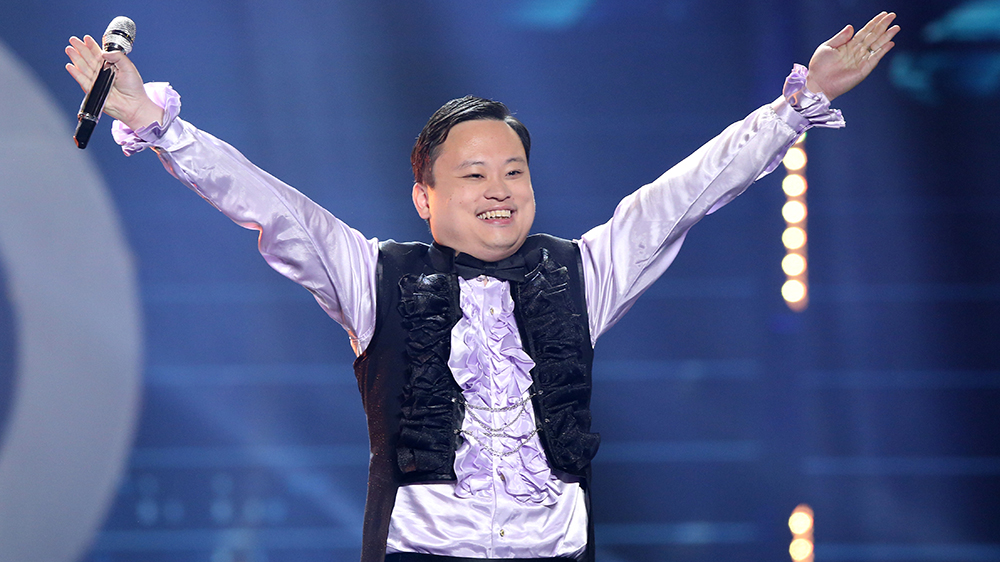
Somebody made an interesting comment to me the other day.
They had this cool idea for a script and noted that they were trying to figure out what direction to take it in. They said they were thinking about writing it for the Black List, which meant making it a slow burn, character driven, and more “cerebral.”
Or, he noted, he could “write a script that will actually become a movie.”
This characterization of the Black List struck me. That the writer thought of it as a compilation of scripts that will never become movies.
Because it didn’t used to be that way. The Black List used to gleefully tout how many of its scripts would go on to become films. But is that the case anymore? A lot has been written about how the Black List cares more about social causes these days than what it used to be about, which was compiling a list of the best scripts in Hollywood.
So I decided to do a quick unscientific look at a current Black List compared to an older Black List. I went through the 2019 Black List and counted how many of the scripts went on to become movies. I didn’t use 2020 or 2021 because scripts need time to get produced. But 2019 is still within the time period where the Black List had refocused its mission, leaning into more socially conscious screenplays and writers.
Here’s what I found. In the 2019 Black List, 8 out of 66 scripts became movies. That’s equal to about 8%. In the 2010 Black List, 36 out of 76 scripts became movies. That’s equal to 47%.
Now I know a few of those scripts from the 2010 list took longer than 3 years to get made but it’s clear to me that the Black List used to be a place where, if you made the list, you’d have an almost 1 in 2 shot of getting your movie made. Now it looks like that’s closer to 1 in 8.
What this tells me is that the writers have figured the Black List code out. They know that they can write scripts that have no shot at becoming movies but because the Black List loves those types of scripts, they’ll make the list. And since more scripts are being written to make the Black List as opposed to writing scripts that could be movies, the Black List has become more and more dominated by screenplays that aren’t movies.
Today’s script might be the perfect example of this.
The story is simple. William Hung is 21 years old in 2002, attending Berkley as an engineering student, when, on a whim, he auditions for American Idol, which was still early on in its run and Simon Cowell was fast becoming one of the biggest stars in the world for how mean he could be to aspiring singers.
An American Idol producer recognizes that she’s struck gold as soon as she hears the earnestness behind William Hung’s audition despite being a terrible singer and puts him through to audition on tape in front of the official judges.
It doesn’t go well.
Months later, when the show airs, William Hung is walking around Berkley and everyone starts approaching him, congratulating him on his audition. What quickly becomes apparent is that William is being made fun of, and the only one who doesn’t seem to realize this is William himself.
So when he’s offered a singing contract, he’s more than happy to sign it. His goal is to use this fame to make enough money to buy a house for his parents. Along the way, he’ll deal with fake friends, girls who use him, lots of ridicule, and even a woman who marries him and later takes half the money he earned from all his singing in the divorce. But through it all, William Hung always remains positive.
Let me start off by saying this script isn’t bad. It’s actually pretty heartwarming. The writer explores themes of celebrity and the pressures of being an Asian in America. And there’s something very sweet about William Hung as a character. His priority is spreading a positive message within a worldwide tsunami of negativity. It’s not reaching to say that we need more people like William Hung on this planet. Especially today.
But come on.
This movie is never getting made.
And while I don’t claim to know what’s going on inside the writer’s head, I’d be surprised if she said she wrote this script in the hopes of it becoming a movie. It’s a music biopic, the catnip of all Black List catnips. Just by writing that word – biopic – next to the genre category, the script’s chances of making the list went up 5000%.
You’re probably wondering what that means. “A movie?”
What’s the difference between a script that’s a movie and a script that is only ever going to be a script?
The answer is in the word itself: “Movie.”
“Move.”
A movie script tends to have MOVEMENT. Characters need to go places. They need to do things. And they need to do them NOW. Because if they don’t, something terrible is going to happen.
Several years ago I did a script consultation for a writer. The broad strokes of his story were that a guy comes back to his hometown for a weekend and spends some time with a girl he kinda likes.
This writer’s plan was to sell the script. And I kept telling him, in as many ways as possible, that this wasn’t a movie. Two people hanging out isn’t a movie. There was no hook here to build a marketing campaign around. It was just two people chilling. And nothing even happened between them.
I told him, literally, the only way this becomes a movie is if you’re the director and you find the money and make it yourself. Nobody’s going to buy this because it’s not something anybody can make money off of.
There’s no MOVEMENT. There’s no hook. There’s nothing important going on. Nothing with genuine stakes attached.
Maybe today’s script isn’t the best example because, at least with music biopics, you have famous music. And people will show up to a movie to see all their favorite songs performed from that group. But this isn’t even a real artist. Nobody’s pining to hear William Hung sing a Richard Marx song.
Another growing problem I’m noticing in the industry is that we’re in this weird state of having so much content that it’s easier than ever to convince yourself that your obscure script idea can get made. And to a minor extent, that’s true. There are more openings for content than ever.
But the principles for what sells are still in place. You got to have a concept with a hook, something that entices a mass audience. You gotta have that MOVEMENT I’m talking about – characters with goals that have stakes, and urgency. And freaking CONFLICT. That was another problem with the consultation script. There wasn’t enough conflict between the main character and the girl.
Even TV shows are becoming like this. They’re moving away from strictly character-driven stories to mini-movies. So they need that concept, goal, stakes, urgency, conflict as well.
Look.
There’s an opportunity out there for someone who wants to start chronicling the best scripts in Hollywood again. Cause The Black List clearly isn’t doing that anymore. And even though I thought this script was fine and it was a fast read, it shouldn’t be celebrated as one of the top scripts in town.
[ ] What the hell did I just read?
[x] wasn’t for me
[ ] worth the read
[ ] impressive
[ ] genius
What I learned: A few weeks ago, I pointed out the opening bully scene in Lord of the Rings as an example of a great way to create sympathy for your main character. Readers immediately like a character who’s being bullied. However, the reason the scene worked was that it found an inventive way to approach the bullying. This little girl lovingly creates a little origami boat and then floats it down the river. And some jerk boys start throwing rocks at it to try and sink it. It wasn’t the on-the-nose bully scene that I usually read in scripts. “Idol,” however, does contain the bully scene you DON’T want to write. William Hung is 10 years old. He’s singing badly. And then we get this line: “Suddenly, a FIST comes rushing toward William’s FACE and makes HARD CONTACT with his right eye. The fist belongs to ANGRY WHITE KID (10).” The “angry white kid” then starts yelling at him that he can’t sing. It’s the epitome of a stereotypical bullying scene, which is why it doesn’t work. Bullying scenes are one of the best ways to create sympathy for your hero. But just like everything else in screenwriting, you have to be creative with it. You can’t give us the on-the-nose, “anybody could think of this” bullying scene.
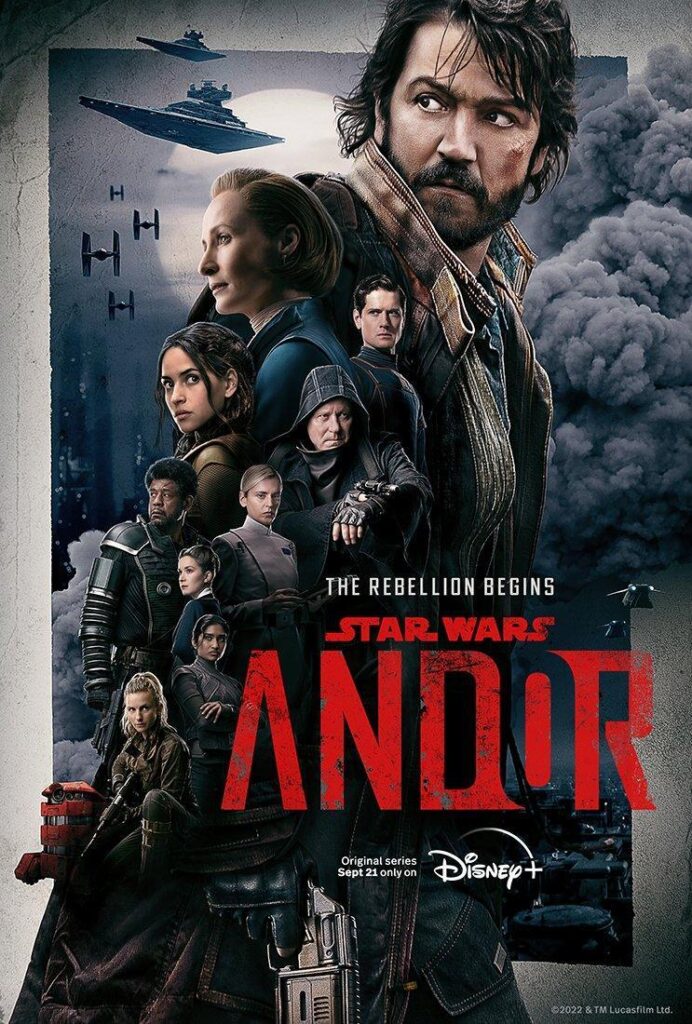
”Andor” asks, can a Star Wars experience without humor or padawans who hate sand entertain a rabid fanbase desperate for a good Star Wars show?
Genre: Sci-Fi Fantasy (TV show)
Premise: After a thief kills two employees from a large corporation while looking for his missing sister, he becomes hunted by the company on the backwater planet where he lives.
About: It’s finally here! Andor, the series. I’ve talked about it endlessly on the site. Tony Gilroy, who reportedly saved Rogue One from original director, Gareth Edwards, was gifted this show as his reward by Lucasfilm head, Kathleen Kennedy. Despite Gilroy insulting poor Star Wars every chance he gets and making the world’s most confusing statement about how the timeline in “Andor” is going to work, the show finally debuted today.
Writer: Tony Gilroy
Details: This review is for the first 3 episodes, which are each about 30 minutes.
Let us start by stating the obvious.
Before this series was announced, nobody was asking for a Cassian Andor show.
Which makes you wonder why they wanted to make it so badly. Lucasfilm has become infamous for terminating in-development Star Wars projects. So why were they so determined to get this one to the finish line?
Who knows? Most of you will probably say, “Who cares? As long as the show is good.”
To this, we can agree. I may not have asked for Andor but you can bet Chukhuh-Trok’s hunting spear that I’d love to be proven wrong. Probably more than anyone on this planet, I want to love a Star Wars show. And, from what we’ve been told, this show was made more for my demographic than any Star Wars project yet.
Are we ready for this?
Okay, let’s dig into Andor!
We meet Cassian Andor on some planet run by what Amazon might look like in a thousand years. Andor heads to a brothel where he appears to be looking for his sister, who may have worked here at one point. He doesn’t get any information on her so he leaves, and is immediately confronted by a couple of drunk-with-power Amazon employees. He quickly kills them both. Take that, Bezos!
Andor then heads back to his current planet of residence where he’s putting together some plan that is so secretive even the audience is not allowed to know it. In between scenes of him sneaking around and never allowing his voice to rise above 3 decibels, we cut back to when he was a kid on some planet living with a bunch of other kids and they discover a crashed ship.
Back at Amazon, a middle management type wants to sweep these employee murders under the rug. But a young ambitious dude in the company wants to kill the murderer in the hopes of propelling himself up the company ladder. So he recruits a dozen soldiers and heads off to Cassian’s planet to find him.
Cassian’s super-secret plan finally reveals itself when he meets with a mysterious rich guy named Luthen Rael. Cassian thinks he’s selling Luthen a star-thingamacalit, after which he’ll use the money to escape to some place far away. But it turns out Luthen has other plans for Cassian. Seeing how crafty this guy is, he wants to recruit him into his shadowy organization. Cassian has to make a decision fast – yes or no? He decides ‘yes,’ and that is the end of our third episode.

I was worried about two things going into this show.
1) That Cassian Andor isn’t a very interesting character.
And…
2) That this show would be way too serious.
I am sad to report that “Andor” confirmed both of these fears. Much like Tion Medon’s infamous botched dental visit, it’s a big fat whiff on each front.
Cassian is boring. He’s active, which is good. But if we never understand what our character is being active for, it doesn’t really matter. Being ultra-mysterious about who your main character is is one of the riskier moves in screenwriting. Because you’re basically saying, “You must like my character even though you know nothing about him or what he’s doing.”
There are examples of this working but they’re few and far between.
On top of this, the show is more serious than Emperor Palpatine when he’s drawing up his latest galaxy takeover. I think there were two attempted jokes in 100 minutes. And they were highly neutered. This is something I tried to warn the Star Wars fan base about. If you go super dark with Star Wars, it’s no longer Star Wars. An essential component of Star Wars’s makeup is fun. And this show is about as fun as when Malakili watched Luke kill his pet Rancor.
The closest to fun we get is the droid, B2EMO, and while I’d anoint him as my favorite character in the series so far, he’s got five minutes of screen time.
So is there anything good about this show, Carson?
I’ll say this. The dialogue is way better than any of the other Star Wars shows. There’s a level of sophistication you’re not used to seeing in this franchise. For example, there’s a scene where Andor comes to a work friend and asks him to provide an alibi for why he wasn’t at work earlier.
The dialogue is not framed in a clunky on-the-nose manner where Andor says something like, “I need you to help me with an alibi. I flew off to another planet which is why I missed work and now I need you to tell Boss Doug that I was hanging out with you.”
Instead, the dialogue is framed as if it really happened. So Andor immediately jumps in with, “I was at your house yesterday. We drank all night. You got mad at me because I bought cheap liquor.” “I would’ve yelled at you for bringing cheap liquor. We were drinking [different booze] instead.” In other words, they set up the alibi by speaking as if it really happened rather than asking for help and then coming up with a story together.
With dialogue, you’re always looking for ways to make the exchange different somehow. You want to avoid straightforward, Character A: “This is what I have to say,” Character B: “And this is how I respond to that” dialogue if possible. You could tell Gilroy is a step above all these newbie screenwriters that Star Wars has been hiring to write their shows. At least in the dialogue department.
Ironically, that same knowledge hurts Gilroy in the storytelling department. What usually happens when you get older as a writer is you show more restraint. You don’t feel the need to constantly titilate the audience every scene. You trust yourself and therefore take your time setting up the bigger plot developments.
But what sometimes ends up happening is you cross the Rubicon and show so much restraint that huge chunks of scenes go by without any payoff. We’re watching you setup and setup and setup and setup and it’s like, “Dude! Give us something for all the hard work we’re doing!”
I get the impression that Gilroy is playing to the highest common denominator here – the 60 year old intelligent veteran moviegoer who’s seen it all and is, therefore, willing to make the trek down Patience Lane. It’s a risky game to play in a franchise built off a never-ending supply of entertaining moments.
I would not have watched Episode 2 if they had only posted the first episode on Disney Plus today. I wouldn’t have even watched Episode 3 if they’d posted the first two episode on Disney Plus today. That’s how slow the story develops.
To Gilroy’s credit, all the things he was setting up in episodes 1 and 2 start to pay off in episode 3. This is the episode where the Amazon Corporation sends their soldiers to Andor’s planet to find and kill him. Gilroy did a really good job building up to this confrontation. What I enjoyed most about it was he made the whole thing just as scary for the Amazon soldiers as he did the locals. These soldiers are inexperienced. They’re 12 in a city filled with thousands of people. At any moment, if the people decide to revolt, they’re screwed.
That combined with the mystery of where Andor was going and who he was meeting created a tense atmosphere throughout the episode. It helped me see the potential of the series I was unconvinced it possessed in the first two episodes.
This has led me to a very confused place going forward with Andor, and with Star Wars in general. The Obi-Wan Kenobi show was a mess. Those rookie writers shouldn’t have been let anywhere near a franchise this big. The Boba Fett show was some of the worst writing I’ve seen on a show with that kind of budget. The Mandalorian is uneven but has some good episodes. It’s written well at times.
I would say that Andor is the most sophisticated written Star Wars show by far. I’m just not sure that’s showing the dividends it needs to after three episodes. Clearly, Gilroy knows how to write a scene. But is his overarching narrative as compelling as he thinks it is? I’m not sure. And is his main character as interesting as he thinks he is? Probably not.
I think this begs the question: Does Gilroy mesh with the Star Wars brand? Or is he pulling a Rian Johnson, where you hijack a franchise to tell the story you want to tell rather than the story that’s right for the franchise?
I’ll probably check back in with you guys at the season midpoint to give you better answers to those questions. In the meantime, tell me what you thought of Andor.
[ ] What the hell did I just stream?
[x] wasn’t for me
[ ] worth the stream
[ ] impressive
[ ] genius
What I learned: Andor is yet another example of why all writers should seriously reconsider adding flashbacks to their story. We saw this in Boba Fett with the silly sand people flashbacks. We see it here with all this time spent on Cassian’s childhood that doesn’t tell us anything we couldn’t have already imagined ourselves. You have to ask the question, is what the flashbacks give you worth the momentum-stoppage they take from you? In this case, the answer is clearly no. The flashbacks dragged along. I’ll never say never. But, in my experience, flashbacks almost always take more from the story than they give.