
Search Results for: F word
Does the ballsiest franchise sequel since Fury Road deliver on the wild chances it takes?
Genre: Sci-Fi
Premise: 50-something game developer Thomas Anderson starts to believe that the game he’s developed, “The Matrix,” may be rooted in reality.
About: Pretty much every major creative in town has come to WB with a Matrix pitch over the past decade and a half. But it took Keanu Reeves becoming an action star again with John Wick for WB to finally greenlight the fourth film in the series. The movie’s production was suspended when Covid hit and Lana Wachowski seriously considered scrapping the sequel. The cast, however, desperate to see it completed, convinced her to keep going. The script was written by Lana and her Sense 8 writers, David Mitchell and Aleksandar Hemon.
Writer: Lana Wachowski, David Mitchell, and Aleksander Hemon
Details: 2 hours and 27 minutes
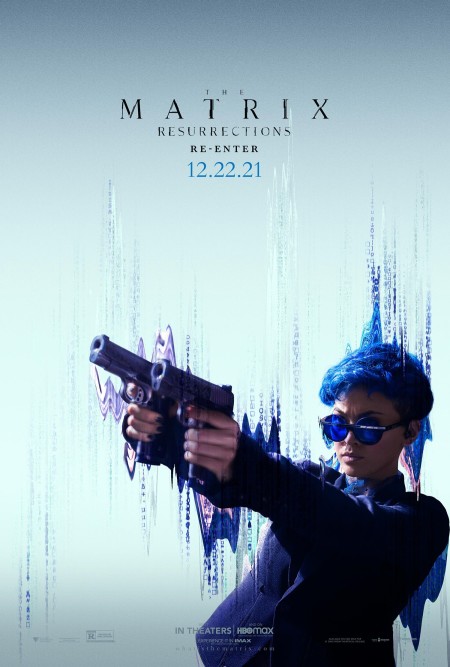
Let’s be real.
When you’re showing up for a Matrix review, you’re showing up to either hear, “GREATEST MOVIE EVER” or “WORST MOVIE EVER.” Anything in between is an insignificant opinion.
Well, if that’s what you’re hoping for, you’ll be disappointed in this review. Because Matrix Resurrections takes some chances that are so wild, you can’t help but admire them, even if the end result isn’t as good as you want it to be.
This is a spoiler heavy review. You’ve been warned.
Our movie starts inside a new version of the Matrix where a fresh-faced female character, Bugs, runs into a sleeker younger copy of Morpheus. They watch a familiar scene from the original Matrix, where Trinity beats up a bunch of cops then runs for her life. But there’s something off about the scene. Trinity isn’t quite… Trinity.
Cut to the real world, where we meet an older Thomas Anderson (Neo), who’s a rich game developer. The game that made him rich? The Matrix. Thomas Anderson has no idea where these ideas and concepts for “The Matrix” came from. But he’s created a trilogy of games based around a trio of characters – Neo, Morpheus, and Trinity.
After a suicide attempt, Mr. Anderson has been seeing a therapist and is starting to believe this therapist is manipulating him. So when Bugs comes to him and tells him that his game is based on something that really happened, it’s like Thomas knew it all along.
Bugs releases him from the Matrix, where we learn that both Neo and Trinity are being kept in special isolated containment units. Their pairing seems to be the central force behind the new Matrix code.
Bugs brings Neo back to the newest underground city, Io, where we meet Nairobi (from the Matrix Sequels) who’s now 80 years old. Nairobi is upset that Neo is here because she’s worked hard to keep peace with the machines. His arrival puts everyone at risk.
Meanwhile, Neo becomes determined to release Trinity (“Tiffany” in the real world) from the Matrix, so the team forms a plan. Bugs and Morpheus will handle the physical side of getting Trinity. But it will be up to Neo to convince Trinity/Tiffany to take the red pill. That won’t be an easy task considering Tiffany doesn’t know Neo, doesn’t believe in the Matrix, and has a husband and two children.
Yet when Neo arrives, Tiffany finds herself drawn to him and finally gives in. Once the Matrix realizes the power couple have teamed up, it initiates its “swarm” protocol, whereby every single person on the planet becomes a kamikaze killer. It’ll be up to Neo and Trinity to escape a city where the entire population is after them.
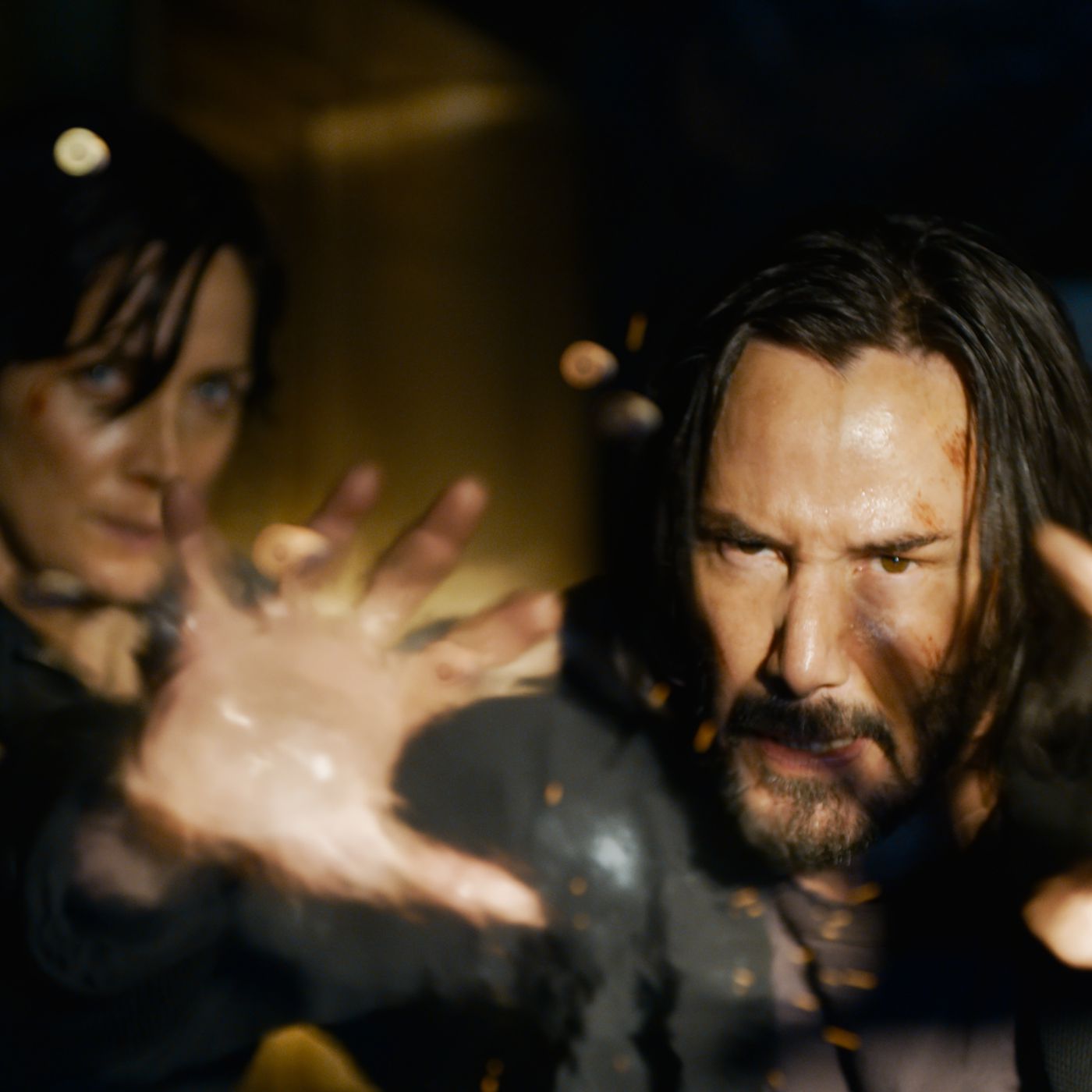
When you first realize what The Matrix has done with Neo, you become giddy. “They’re not really going to go through with this, are they?” you wonder, excited. And when you realize that that’s exactly what they’re going to do, your expectations for Resurrections rise from a 5 to a 50.
I never would’ve guessed in a million years that they’d build a Matrix sequel around the meta concept of Neo making a Matrix video game. Not only was it a bold choice, but it made sense. Thomas Anderson used to be a coder. He’s had these intense dreams all his life about this “Matrix” world. Naturally, he would capitalize on that, making a game out of the concept.
The addition adds some new ideas to the mythology. Was the original Matrix ever the Matrix at all? Or was it only a video game modern day Thomas Anderson created? That was what was so great about the Matrix. It was such a head-trip that, afterwards, you and your friends would discuss what it all meant, putting forth various theories that ranged from dumb to downright ridiculous.
It was the early section of this movie that held so much promise. You got the sense that Lana actually had something to say.
The problem with most sequels is that they’re conceived through a faulty process. The lens through which every movie should be conceived is that a writer has something they want to say. For example, James Cameron really wanted to say something about humanity destroying the planet in Avatar. It’s the need to get this view out there that gives the story the necessary energy to keep an audience invested.
When there isn’t a *need* to tell a story – when instead you’re just doing it for money, or because your career is in a slump, or because the studio won’t stop bothering you about it – the script exhibits a decidedly less energetic pulse. We can tell that it isn’t a life or death desire from the artist to get this story out there.
So I was encouraged by this seeming desire to say something. The story felt original. The dialogue purposeful. I had no idea where the story was going but I was excited to find out.
However, the second we get to the underground city of Io, I knew Resurrections was as dead as Dozer. Zion was a movie killer in the sequels. As was Nairobi. Yet you’re bringing both those elements back in major forms? I don’t want to turn this into a “why the Matrix sequels were terrible” thread because I’ve already written about that ad nauseam. But the brilliance of the Matrix were the scenes that took place inside the Matrix, not in the muddy CGI infested underworld.
The unfortunate reality of Resurrections is that every 15 minutes of Resurrections is worse than the previous 15 minutes. The story builds (we’re moving towards the extraction of Trinity). But the energy and the momentum fade. The Wachowskis are masters at undercutting their own narratives.
A narrative needs to move, especially a sci-fi narrative. The pacing of the original Matrix was relentless. There wasn’t a single moment that could’ve been cut. Here, with the Io stuff and some of the talkier scenes, like when The Analyst plays a game of bullet slo-mo with Trinity’s life — they dragged on, killing any momentum the story had.
Another issue is that Resurrections has a huge character problem. Bugs, the franchise’s flashy new toy, has very little to do other than verbally facilitate Neo’s second emergence from the Matrix. I don’t know what the heck they were doing with Morpheus, who is some sort of half-Morpheus who isn’t really Morpheus but he’s trying to emulate Morpheus. So he does a lot of dancing and irreverent joke-telling. It’s bizarre.
Agent Smith is now some dude who kinda dislikes Neo but also kinda likes him. At one point, they even team up. I don’t profess to know what Lana had in mind with him but he didn’t work. Maybe that’s because they wanted Hugo Weaving in the movie but couldn’t get him at the last second so they had to adjust the storyline.
Neo, meanwhile, says very little throughout the movie. Not only doesn’t he say much. But apparently, Neo only has a single power now. To hold his hands up and blast energy away from his body. I waited the entire movie for badass Neo to show up and and start doing crazy Neo sh#t. Bu it never happened. It was reminiscent of another failed sequel that I shall not mention the name of. Only that it rhymes with “Duh Blast Redeye.”
And Trinity, who arguably gets the most exciting storyline here, is absent for the majority of the second act. She really only shows up in the third act. And since, like Neo, she hasn’t said a whole lot, we don’t feel close enough to her. That’s something that really bothers me about the Wachowskis in general. They give these stupid side characters 18 page monologues. Yet their main characters can go a dozen scenes and barely utter 10 words.
It’s pretty clear that Lana didn’t get enough money to make this movie. The one great thing about those Matrix sequels is the extremes they went through to create set pieces that nobody had seen before. I mean, they built their own highway! They spent 40 days shooting a single scene (the Neo vs. 100 Smiths fight). There’s none of that insane dedication here.
The train scene was sloppy. The fixed set piece scenes (like the warehouse) felt rushed with little attention to detail. The swarm motorcycle chase was so dark you could barely tell what was going on.
While I can blame some of this on a less-than-adequate budget, Lana could’ve ditched Io and spent that money on cooler fight scenes inside The Matrix. That’s exactly what they did in the original film. The original Matrix script featured a trip to Zion but WB wouldn’t pay for it. So they had to ditch it. Should’ve done the same thing here.
There’s a lot to learn here if you’re a screenwriter. The biggest lesson one should take is that what happened in The Matrix Resurrections is the same thing that happens to almost every amateur screenplay. Which is that the writer comes in with a head of steam, spends a ton of time getting that first act right, then gives 80% of that energy to the next 15 pages. Then 60% to the next 15. Then 40% to the next 15. So the script keeps getting… not necessarily weaker. But it doesn’t have the same energy that it started with. So, if you’re a screenwriter, make sure you’ve put just as much time into what happens on page 70 as you did on page 10. Cause there’s nothing worse than watching a movie getting more and more boring as it goes on.
I don’t know what history will say about Resurrections. It seems to have some champions out there. I do commend them for trying something different. Not many franchises will take the big swing Lana did. But just because you go for the home run doesn’t mean you’re going to hit it over the wall. Sometimes you barely make contact and the ball dribbles out to third base. That’s probably the best way to describe this movie – bullet-time dribbling down the 3rd base line.
[ ] What the hell did I just watch?
[x] wasn’t for me
[ ] worth the stream
[ ] impressive
[ ] genius
What I learned: The original Matrix proves the value of combining multiple purposes into a single character. In the original movie, Trinity both recruits Neo and is his love interest. She has two purposes. In Resurrections, Bugs recruits Neo and that’s it. She doesn’t have any other purpose. As a result, she gets lost in the story once that purpose is fulfilled. The lesson here is that when you have a character, give them multiple story purposes if you can. It’ll give them more to do and make them feel more integrated into the story.
Spider-Man saves more than the multiverse. He saves the movie business!
Genre: Superhero
Premise: When Spider-Man accidentally opens up a rift in the multiverse, villains from other universes arrive in our world, determined to eradicate him.
About: Spider-Man No Way Home defied… well… pretty much every expectation in the book, tallying 253 million dollars over the 3 day weekend. That’s better than The Force Awakens and only behind the two-part Avengers finale. There is no other way to describe this opening than, “Wow!” A trivia tidbit for you. All three Spider-Man movies have the word “Home” in their titles. Homecoming, Far From Home, and now, No Way Home.
Writers: Chris McKenna and Eric Sommers
Details: 2 hours and 30 minutes!
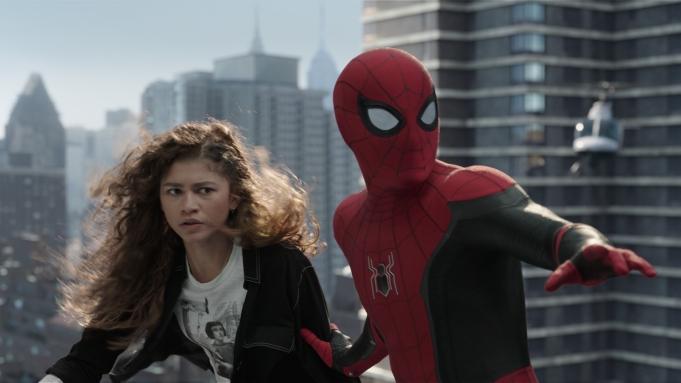
You gotta give it to Amy Pascal, Kevin Feige, and Tom Holland. They have found the winningnest of winning formulas with this iteration of Spider-Man. How did they pull it off? Since Spider-Man just beat out Star Wars, let’s use that franchise as a comparison. Kathleen Kennedy once famously said the reason comic book movies have thrived while Star Wars has dived is because every comic book character has 50+ years of comic book stories to draw from. All they have to do is identify which of those stories were successful then, simply, make the movie version of that. From what I understand, the multiverse was a huge success for Marvel Comics. As was the whole “Forget Peter Parker” storyline.
The reason that’s relevant is because the only variable that’s been capable of predicting success in this business is success in a previous form. Whether it be a movie, a comic book, a novel, a podcast. The industry loves verification that something was good somewhere else at some other time. So the ability to cherry pick from 50 years of comics that have had all these popular storylines is a huge advantage.
I’m jealous. Because all Star Wars has is Boba Fett.
Back to our web-slinging friend — Spider-Man No Way Home is a better movie than I thought it was going to be. But it was far from perfect. To convey just how clunky the movie could be, its most critical scene is its worst and its least critical scene is its best. More on that in a minute. But first, if you haven’t seen the film, let’s give you a quick plot breakdown. This film is impossible to discuss without spoilers so if you haven’t seen it, you might want to come back and read this after you do.
Peter Parker has just been exposed as Spider-Man to the world. No more secret identity. Cancel culture than comes for his best friends, MJ and Ned, who are told they won’t be accepted into their dream school, MIT, because they’re affiliated with Spider-Man.
So Peter goes to the crusty old Dr. Strange and asks him to cast a spell making everyone on the planet forget he’s Spider-Man. That way, MIT will accept MJ and Ned. Dr. Strange says fine. But as he’s conjuring the spell, Peter keeps amending it. “Can you make MJ remember me?” “And Aunt May?” “And Ned?” This cripples the spell and opens up the multiverse.
Doctor Octopus takes advantage of this, arriving from a separate world to attack Spider-Man. Then the Sandman. Then Electro. Then the Green Goblin. Doctor Strange constructs a bad guy holding cell, telling Spider-Man to go out, bring the villains back here, so he can conjure another spell to send them back to their own worlds.
But when Peter learns that all of these villains meet their death back in their home worlds (courtesy of other Spider-Men), he wants to “cure” them first so that they don’t fight Spider-Man back on their home worlds and, therefore, live. Since we’ve all watched movies before, we know where this is going.
That’s right. The villains escape and turn on Peter, determined to kill him. Since Spidey knows he can’t defeat four top-level villains all on his own, he recruits two Spider-Men from separate universes and the Spidey-Trio call the villains out to the Statue of Liberty where they ready for the ultimate Spidey Showdown!
Like every comic book movie these days, Spider-Man No Way Home is a mixed bag. For those who want Cheetos, you’re going to have to endure some Ruffles. For those who want Ruffles, you’re going to have to endure some trail mix. You’re going to hate some bites. You’re going to love some bites. And it will be up to the individual to determine whether the yummy snacks outweighed the rancid ones.
Here’s my biggest takeaway from Spider-Man No Way Home. Normally I don’t like overstuffed narratives. I think they’re a writer’s biggest enemy. I think they cause more harm than good 99% of the time. Too many characters and too many storylines just don’t work well within the feature screenplay format.
However, one of the exceptions to this rule is when the “overstuffed” narrative is organic to the concept. No Way Home is all about this rift being opened up in the universe that is allowing things from other universes to come here. That concept requires multiple characters and multiple storylines because all these characters arriving here is organic to the setup.
I’m not sure you open up a multiverse and only allow one villain through. I’m not sure you open up a multiverse and don’t play with the idea of multiple Spider-Mans. With all this stuff being organic to the concept, I was into it.
But I almost wasn’t due to a single scene.
The spell-conjuring scene between Peter Parker and Doctor Strange might have been the worst scene I’ve witnessed in a comic book movie. It was bad on every level. Mainly from the writing. But the acting was awful as well. You could see poor Benedict Cumberbatch grimacing through the the lines he had to read. It played out like an improv class at the Groundlings. There was no structure, no thought as to how to play the scene, no consideration of whether the scene was working or not. You can always tell when a scene isn’t working because the actors try to distract you by adding a lot of improvised jokes.
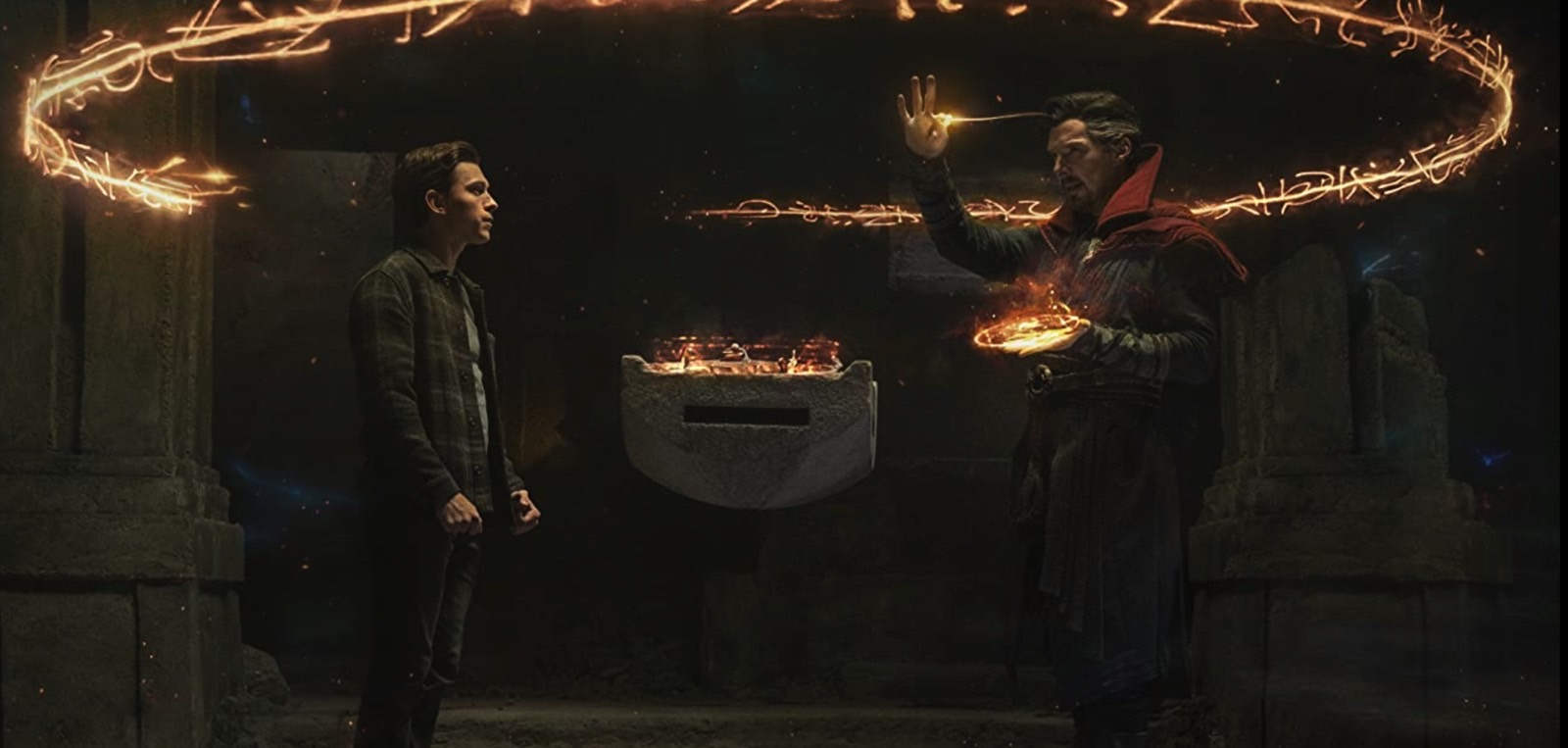
The reason this scene bothered me so much is that it’s the scene that holds up the entire movie, right? I call these “Pillar” scenes because that’s their job. They have to hold everything else up. Why, then, they insisted on shaky logic and goofiness as the main motivators for the scene, I’ll never know.
It took me a good 20 minutes to mentally get back into the movie again, such was the terribleness of that scene. I can’t believe they didn’t reshoot it. Maybe it was due to a Covid issue.
Luckily, No Way Home had a secret weapon. MORE SPIDER-MANS! This was its saving grace. I thought that seeing the Toby Maguire Spider-Man again was what was going to move me. But it was actually the Andrew Garfield Spider-Man that made the biggest impact on me, despite not liking the Garfield Spider-Man films very much.
For those who don’t know, Garfield had a rocky relationship with Sony as Spider-Man and their relationship ended somewhat bitterly. So to see him come back with such excitement and vigor was heartwarming. It me made feel good. He even delivers a meta-speech to Tom Holland saying, “I just don’t want you to end up like I did. Hating what you’ve created.” And it worked because this was a meta movie from the get-go.
I even got the tingles when the three Spider-Men came together early on in the Statue of Liberty fight and changed their strategy from fighting separately to fighting together. Seeing them swing into action after that moment was really cool (and the crowd cheered like crazy – yay for being back in movie theaters!).
I do think it’s interesting that No Way Home’s best scene was its least relevant one. That tells me there’s something inherently wrong with this comic book formula that they haven’t figured out yet. I shouldn’t be getting the biggest feels during moments that aren’t part of the main narrative. The scene I’m referring to comes after Peter allows Dr. Strange to erase the world’s knowledge of Peter Parker for real this time, and Peter goes to pay a visit to MJ, who no longer knows who he is.
This is a basic “dramatic irony” scenario, as you screenwriting aficionados know. The writer allows the audience to know something that one of the key characters in the scene does not. In this case, they know that MJ has been in love with Peter before. But she doesn’t know this. She doesn’t even know who Peter is. So we get this chill scene where he visits her at work and he wants to tell her who he is… but he realizes he can’t. It’s the quietist scene in the movie yet it’s its best because it’s so emotionally gut-wrenching.
If they could’ve had 4-5 scenes of this emotional magnitude throughout the movie (and no, the melodramatic over-acted Aunt May death was not emotional at all), it could’ve been the greatest Spider-Man movie ever, and up there with the greatest comic book movie.
How does a movie which fails its most important scene and aces its least important still end up being worth the price of admission? BECAUSE IT’S SPIDER-MAN. x3! Watching these spider-boys become spider-besties is cuter than watching three Golden Retriever puppies play with a rabbit. You’re going to love it. Is the rest of the movie clunky? Sure. Does anybody really understand how the Spider-Men are “curing” these villains? Not really. But No Way Home is inarguably fun. So you can bet your Spidey-dollars it’s worth checking out.
[ ] What the hell did I just watch?
[ ] wasn’t for me
[x] worth the price of admission
[ ] impressive
[ ] genius
What I learned: This movie taught me that dramatic irony works even better when the stakes behind the dramatic irony are high. In the scene I highlighted above, when Peter talks to MJ, the secret isn’t that he’s going to break up with her. That’s still dramatic irony but it’s low stakes dramatic irony. The secret is that she once knew him and they were madly in love and a couple. The stakes of that secret are enormous, which is what makes that final moment between them so powerful.
Note: For those confused, I originally posted this on Sunday, a full 12 hours before the Black List came out, as a holding spot. While we waited, I shared my top 10 movies of the year. That’s why you have this weird combination of “Best Movies of 2021” and “Black List 2021” in a single post. If you don’t care about my favorite movies of the year, just scroll down. :)
The Black List SHOULD be coming out tomorrow (Monday). Once it’s released, I will update this post with gobs of commentary. If anyone is looking for stuff to do in the interim, you can check out my RE-RANKING of the 2020 Black List, where I give you the TRUE rankings of all of last year’s scripts.
While we’re waiting for that, let’s talk movies!
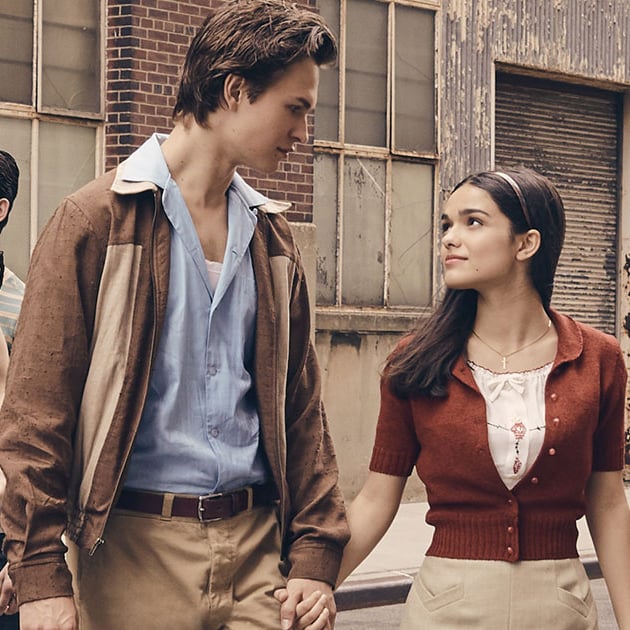
Releasing West Side Story during a pandemic was an idea akin to opening up a gelato stand in Antarctica. Probably not the best idea. West Side Story was always going to be a hard sell but trying to get people to watch a dated musical in this environment? I could think of a few concepts that might’ve brought Spielberg more cheer. Hey, Steven, what ever happened to Robopocalypse? Pretty sure that would’ve made more than 10 mil.
The thing about Spielberg that made him into the mogul he is today is that he had a keen sense for knowing exactly what the masses wanted, a rare ability to always have his finger on the zeitgeist pulse. So you have to ask, with the disappointing box office of West Side Story, has that magical power finally passed Spielberg by? His last five movies before this were War Horse, Bridge of Spies, The BFG, The Post, and Ready Player One. Not exactly a glowing resume.
The funny thing is that this interception probably won’t go down on Spielberg’s stat card. West Side Story made 10 million dollars yet I’ve already read articles about how it’s beginning its awards run so it’s going to be around for awhile and remember The Greatest Showman? That made only 8 million its opening weekend before going on to gross 175 million so that’s exactly what’s going to happen to our movie, West Side Story! The pandemic is the best thing to ever happen to box office bombs. There’s so much spin available to studios these days, you could open your own dreidel company with it.
Considering the Black List is the ‘best of’ list for screenplays, I thought I’d give you my best of movies of the year. Normally, I would give this its own post. But let’s be real. 2021 has been a weird year for movies and when I looked at my list, I didn’t think it deserved its own post. With that said, there was one cool aspect about these films and that’s that a lot of them snuck up on me. That’s the best way to find a movie, in my opinion – when it comes out of nowhere. That was the case for most of these movies, in fact. Let’s take a look.
11) Bo Burnham’s “Inside” and The Lost Leonardo – I have a longstanding frustration with movie reviewers who include documentaries on their end-of-the-year lists. Documentaries aren’t real movies! So I’m going to compromise and squish my two favorite documentaries into one slot and put them at the bottom of the list. “Inside” is amazing for two reasons. Burnham is fearless when it comes to letting you inside of his brain. That makes for both an uncomfortable and exhilarating journey. Also, as a bonus, you’ll be humming half of his songs after watching. — I’m such a sucker for these art docus and “The Lost Leonardo” is probably the best art docu ever. This deep dive into how the art world prices things and how much they hide and manipulate the image of a particular painting is both educational and entertaining. Biggest lesson I learned from the movie? Never cross a billionaire Russian warlord.
10) Nobody – What I liked about Nobody was that it was a John Wick movie but if someone put the movie’s forehead on a bat, made them spin around 50 times, then forced them to run a 100 yard dash. There was an ‘off-kilter’ quality to Bob Odenkirk’s pursuit that made for a kooky hero’s journey. Even the fighting scenes (like the famous bus fight) were unique. And you need that uniqueness in a sea of clones.
9) Free Guy – Possibly the most Ryan Reynolds Ryan Reynolds movie of Ryan Reynold’s career. Fun little premise. Love that this was a naked spec. We haven’t had one of those in the Top 10 of the box office in at least a decade. And unlike West Side Story, Free Guy is the perfect movie to release during a pandemic as it’s an ideal escape. Two hours of feeling good. Sign me up.
8) The Beta Test – Not many people have heard of this one. It’s about a married Hollywood agent who gets an invitation in the mail saying someone wants to have an anonymous sexual encounter with him. Against his better judgement, he decides to do it, and then must suffer through the consequences of doing so. Shades of American Psycho. A very cool directing debut. The acting is a bit uneven but this one shocked me with how good it was.
7) Ghostbusters: Afterlife – Another movie I watched that was only interested in one thing (making you feel good). While I get the nostalgia criticism, I felt that the screenplay was tight and built well towards its climax. I thought it was funny. Podcast was my favorite movie character of 2021 (only half-joking). I didn’t know Reitman had it in him but this was good!
6) Malignant – That twist. THAT TWIST! I don’t know if I could ever watch this movie again because the first 90 minutes are so bad but THAT TWIST. I don’t think a movie has ever made my Top 10 on a twist alone but Malignant just did it.
5) Voyeurs – This may be a case of me being a fan of the voyeur subject matter. It could also be a case of me falling in love with Sydney Sweeney after White Lotus. Either way, this was a simple premise done well. And what do I always tell you guys? Keep it simple! One of the many benefits of doing so is that you keep your production budget low, which increases potential buyers. This entire movie was basically shot in two apartments.
4) Boiling Point – Was just talking about this the other day. A one-shot tension filled restaurant thriller. If your screenplay lacks tension, watch this movie right now then spend the next few ways deconstructing how every scene is packed with conflict. You’ll never write the same way again.
3) Bad Trip – The hardest I’ve laughed during a comedy in I don’t know how long. Taking the hidden-camera gimmick and integrating it into a cohesive narrative was genius. I still don’t know how they pulled some of this off. This movie was unforgettable.
2.5) Coda – Why 2.5? Cause I forgot to include it and, therefore, had to squeeze it in. A tear-jerker that actually turns you into a biological waterfall. Wholly unique. Impossible not to fall in love with the family. Go watch this if you haven’t already!
2) I Care A Lot – You knew it was coming! I did a dialogue scene breakdown for I Care A Lot in one of the best written scenes of the year. This movie isn’t perfect. And those who criticize it for not having anyone to root for have a fair point. But I just loved the way this offbeat plot emerged. So cool to see J Blakeson back in the ‘hot director’ chair. I fully expect him to blow up from here.
1) Riders of Justice – If there’s a theme that connects these top three entries, “unexpected” would probably be it. No movie had me more flummoxed (in a good way) than this one. The movie was so good that super producer, Shawn Levy, optioned it for a remake. I don’t know how they’re going to adapt this quirky character piece slash action revenge tale for American audiences and not confuse the moviegoing universe but I’m there to find out!
And that’s my list! Are there any amaaaaaa-zing 2021 movies that I missed?
THOUGHTS ON THE 2021 BLACK LIST!
My initial thoughts on the list are, “You know, this isn’t half bad.” This year’s list, unlike recent years, seems to be celebrating the best ideas as opposed to following agendas. Of course we still have mainstays such as ‘the true story of this celebrity nobody actually cares about’ and a few concepts that would, shall we say, be applauded by the Twitter crowd. But, by and far, the list seems to be about the best ideas. And that’s all I’ve ever wanted from the Black List.
Another thing I noticed is that Franklin Leonard, as reclusive and curmudgeonly as he is, seems to *sort of* be listening to feedback. We’ve gone from 80 screenplays to only 60 this year. I still think topping out at 25 would make the list so much more exclusive and prestigious. But this is a good first step. When you have 80 scripts on the list, all you’re doing is providing the public with a receipt of every script that agents sent out that year.
To build a little suspense, I’m going to tackle these in REVERSE ORDER. Lowest votes first all the way up to the top voted script. I’m also going to be **HIGHLIGHTING** my favorite concepts, so you’ll know exactly what’s gotten me all hot and bothered. Let’s get started, shall we?
7 votes
Title: Ways to Hide In Winter
Writer: Jenny Halper
Logline: A woman in rural Pennsylvania falls in love with a stranger from Uzbekistan, then finds out he may be responsible for war crimes. Based on Sarah St. Vincent’s acclaimed debut novel.
Thoughts: Obviously, this one is based on a novel and therefore there’s probably a lot more going on here than what’s in the logline. It’s given me flashbacks to that Jason Reitman movie with Kate Winslet and Josh Brolin, Labor Day. Without saying much more, that doesn’t inspire a lot of confidence.
7 votes
Title: The Way You Remember Me
Writer: Geoffrey Roth
Logline: Following the death of her vivacious, entrepreneurial, thirtysomething son Ben, Laurie learns that he had frozen some of his sperm before his passing. As she embarks on an unconventional journey in search of someone who may bear Ben’s child, Laurie forges an unexpected friendship with a woman, who, in turn, starts to fall for the memory of him.
Thoughts: This sounds a little bit like if John Greene and Nicholas Sparks had a screenplay baby then had the Hallmark channel breastfeed him. Then again, this is a logline. There are ways to explore these stories in a sophisticated compelling manner and ways to explore them in a schmaltzy melodramatic manner. I hope this is the former!
7 votes
Title: The Unbound
Writer: Sam West
Logline: Disillusioned with life in the wake of a personal tragedy, Rachel goes on a mountain retreat with her friends in search of an escape, only to find themselves stumbling into the depths of horror and madness.
Thoughts: This is a classic logline mistake so I’m guessing some freshly hired assistant wrote it. You have kept the only thing that would make anybody want to read this script a secret (“only to find themselves stumbling into the depths of horror and madness”). We need details. What horror? What kind of madness? What are the specific details of these events? Without knowing, nobody will want to read this. Cause I read a dozen scripts a year about people mountain climbing. Tell me why yours is different. Another reason to use my logline service! (E-mail carsonreeves1@gmail.com for a logline consult. They’re just $25!)
7 votes
Title: Thicker Than Ice
Writer: Tara Tomicevic
Logline: Inspired by the true story of Hannah and Marissa Brandt, adoptive sisters and hockey players who put their relationship to the test as they vie for Olympic glory… on different teams: top-ranked Team USA and Korea’s first ever unified team.
Thoughts: First of all, kudos to the writer for finding a different kind of true story. This sounds different from everything else out there. But there’s a fatal flaw in the premise, which is that it contains two different movies. On the one hand, you have two sisters forced to play sports for two different teams on the Olympics. That’s a movie right there. But then you also have the first ever unified Korean female hockey team, which is clearly a movie unto itself. Too many ideas has killed more screenplays than I can count.
7 votes
Title: Sleep Solution
Writers: Ted Caplan, Jenni Hendricks
Logline: Two former thieves are having a hard enough time with their fussy newborn baby when a mishap draws them back into their old lives, forcing them to recover a priceless jade bangle, escape their boss’s murderous son and, toughest of all, get their baby to sleep through the night.
Thoughts: At this point we might as well add the “three crazy things” approach to the logline vernacular since it’s used so often. I’ve always had problems with this approach as it indicates that you don’t really have a good idea so you’re forced to throw three crazy things at us in the hopes that it will make up for that fact. The only time it works is when the three things are genuinely awesome. But, first of all, I don’t even know what a jade bangle is. And I doubt most people do. So, already, right there, you’ve kind of screwed yourself. Because the second people are confused in your logline, you’re done. Straight up, you’re done. If you can’t be clear in one sentence, why would someone think you could be clear with 100 pages. This logline is too messy to give me hope.
7 votes
Title: Max and Tony’s One Night Stand
Writer: Thomas Kivney
Logline: A disastrous Grindr hookup goes from bad to worse when a meteor unleashes a horde of aliens on New York and the two ill-matched men must depend on each other to make it through the night alive.
Thoughts: This is one of those ideas that could either be really stupid… or really awesome. I only say it could be stupid because I read a lot of scripts like this and the chaos has a tendency to get so ridiculous, you cease to be emotionally invested. It’s just a bunch of silly gags that run out of gas by the midpoint. If this script has three hilarious set pieces, though, that’s enough for a fun movie.
7 votes.
Title: Lift
Writer: Daniel Kunka
Logline: A female master thief and her ex-boyfriend who works for the FBI team up to steal $100M worth of gold bullion being transported on a 777 passenger flight from London to Zurich.
Thoughts: You know I love myself a plane concept! Throw a heist premise into the mix and you have yourself a movie. I’m a little concerned about whether there’s enough plot here to last an entire movie. I guess it depends on how big you want to go (do they send military planes up after them or is everything going to be relegated to the plane). It’s a fun premise but it feels like it’s missing one more piece.
7 votes
Title: Killers and Diplomats
Writers: John Tyler McClain, Michael Nourse
Logline: The true story of the murder of four American churchwomen in El Salvador in 1980 and the low-level American diplomat who teamed with his most dangerous informant to smoke out their killers. Based on Raymond Bonner’s work for The Atlantic.
Thoughts: While I would love to be positive here, when I heard, “The true story of the murder of four American…” my brain went into a mini-seizure. I’ve seen so many loglines start this way I can’t even count them. I’m looking for the unique element here that sets this apart from every other true story rescue mission but I’m not seeing it.
7 votes
Title: An Ideal Woman
Writer: Laura Kosann
Logline: Set in American suburbia during the Cuban Missile Crisis: A 1960s ex-actress and housewife finds her house-of-cards world begin to tumble as she continues to be pitted against two identities.
Thoughts: I’ll rule this one as ID2ILL, which stands for “Incomplete Due To Insufficient Logline Info.” The thing you don’t want to do with your logline is cause confusion or a lack of understanding. “Pitted against two identities.” What does that even mean? I guess it has something to do with her being an actress and she becomes one of her parts? Who knows? This logline needs to be way more specific to entice people into reading it.
7 votes
Title: The Family Plan
Writer: David Coggeshall
Logline: A former top assassin living incognito as a suburban dad must take his unsuspecting family on the run when his past catches up to him.
Thoughts: Okay, we’ve just located the single most generic logline of the year. I know I say this all the time but, still, people obviously don’t listen so I’ll say it again. What is the unique component about your story? Whatever that is, make sure it’s highlighted in the logline! I may have just dogged An Ideal Woman but at least that logline had “1960s,” “Cuban Missile Crisis,” “Ex-actress.” These are unique things that paint a picture of a specific story in the reader’s head. We don’t get even a hint of that here.
7 votes
Title: False Truth
Writers: Thomas Berry, Isaac Gabaeff, Nathan Gabaeff
Logline: The life of a cynical San Francisco criminal lawyer at the top of his career unravels when he agrees to represent a father accused of killing his infant son in an extraordinary case that challenges widely accepted medical beliefs, a biased justice system, and his own personal worldview. Based on true events.
Thoughts: This isn’t my thing but I understand why these scripts are written. Actors LOVE PLAYING these parts. They love playing lawyers who are going up against impossible odds with heavy emotional stakes involved. Grab a great actor for this part and you’re in the awards conversation. Done.
7 votes
Title: Dennis Rodman’s 48 Hours In Vegas (link)
Writer: Jordan VanDina
Logline: Before Game 7 of the NBA finals, Dennis Rodman tells Phil Jackson he needs 48 hours in Vegas. What follows is a surreal adventure with his skittish assistant GM that involves a bull rodeo, parachuting out of a Ferrari and building a friendship that neither one of them ever thought was possible but will end up solving both of their problems.
Thoughts: Oh boy. I’ve already reviewed this one and it’s not a bad script but when you’ve got that kind of title, your expectations are as high as a parachuting Ferrari. So when that parachute doesn’t open and you crash into the ground like Wil E. Coyote, you don’t exactly remember the experience fondly.
7 votes
Title: The Dark
Writer: Chad Handley
Logline: When stranded on the far end of Manhattan by a mysterious city-wide blackout, a group of inner-city middle schoolers must fight through seemingly supernatural forces to make their way back to their parents in the Bronx.
Thoughts: I’m a little frustrated by the term “seemingly supernatural forces.” I would rather the writer tell us what the forces are so we understand what kind of movie we’re reading. But this is the first script so far that feels like a movie. Clear shades of Attack The Block.
7 votes
Title: Carriage Hill
Writers: Emi Mochizuki, Carrie Wilson
Logline: A pregnant couple hoping to start their family in the suburbs find themselves embroiled in a decades long mystery which threatens to shatter their American dream.
Thoughts: ID2ILL – What’s the decades long mystery? TELL US! That’s what’s going to make us want to read the script! This sounds like it could be good but because I don’t have enough information, the script goes deeper into the pile.
7 votes
Title: Blackpill
Writer: Alexandra Serio
Logline: Awkward and lonely, Jared is only able to find a community online — until the day he realizes that his favorite Youtuber lives nearby. Desperate for a connection, he becomes determined to find a way into her life… whether she wants it or not.
Thoughts: Seems like we’re getting more and more of these “influencer stalker” concepts. And since I like stalker concepts, I’ll keep reading them! As you know, one of my favorite recent reads was Lurker, which covered similar subject matter.
7 votes
Title: Bella
Writer: Chris Grillot
Logline: A young college student is forced to confront her family’s dark past when a mysterious stalker appears, derailing her life and sending her spiraling into a web of anxiety and paranoia.
Thoughts: Stalker deja vu! Unfortunately, there aren’t enough unique details to get me excited about this script. There are plenty of examples of basic premises that turn out to be great scripts because the writer has an amazing voice or they just execute the sh#t out of the story. But if you’re one of these writers who has a great script with only a basic premise, you have to gussy up the logline just a little bit more so your script doesn’t sound generic.
7 votes
Title: APEX
Writer: Jeremy Robbins
Logline: When an adrenaline junkie sets out to conquer a menacing river, she discovers that nature isn’t the only thing out for blood.
Thougths: Time for another acronym! GELS. Generic Ending Logline Syndrome. What *is* out for blood!? Tell us! Or nobody’s going to want to read the script.
8 votes
Title: St. Mary’s Catholic School Presents The Vagina Monologues
Writers: Hannah Hafey, Kaitlin Smith
Logline: Frustrated by the conservative curriculum at her high school, a rebellious teen girl decides to stage the school’s first ever production of The Vagina Monologues. Which is going to be a challenge, as no one else at St. Mary’s can even bear to say the word ‘vagina’ out loud . . . Based on Flynn Meaney’s Bad Habits.
Thoughts: While this might not be aimed at my demo, I appreciate any well-constructed ironic premise as irony is the quickest way to create a “I have to read this” logline. And kudos to the writer for putting the entire premise right there in the title, making it easy for lazy potential readers to get hooked without even having to read a logline. Okay, things are starting to pick up here!
8 votes
Title: A Nice Indian Boy
Writers: Eric Randall
Logline: When Naveen brings his fiance Jay home to meet his family, his traditional Indian parents must contend with accepting his white partner and helping them plan the most fabulous same sex Indian wedding the Bay Area has ever seen.
Thoughts: As one of my best friends is Indian and I saw all the insanity he had to go through with his family when he married a white woman (his parents were disowned by some of their cousins), I can only imagine the endless supply of conflict a premise like this offers. You have to get the execution right. But the writer has a great entry point into a movie.
8 votes
Title: A Hufflepuff Love Story
Writer: Sophia Lopez
Logline: Unpopular Hogwarts student Finn blames everything bad in his life on being sorted into Hufflepuff rather than Gryffindor with Harry Potter and the cool kids. So when he discovers a chance to go back in time and fix that, he takes it — only to discover things aren’t quite as simple as he’d imagined.
Thoughts: The weird Harry Potter ideas continue to make the Black List!. This is basically fan fiction which means it’s a script that can never be made. However, you can get noticed with fan fiction and, obviously, by making the Black List, this writer has achieved that. And since it’s all about getting noticed, I applaud the writer! Whatever it takes.
8 votes
Title: Hello Universe
Writer: Michael Golamco
Logline: When a bully’s antics land a timid boy in the bottom of a well, his self-proclaimed psychic friend and unknowing crush team up to find him. Based on the 2017 book by Erin Entrada Kelly.
Thoughts: There are two kinds of children’s movie ideas. The kind that appeal to kids and the kind that appeal to both kids and adults. This seems more like the former which is why I’m not over the moon about it. But it does feel like one of those sweet harmless movies that, if you caught on a plane, you might break into tears during the climax (everybody cries when watching movies on the plane. Anyone who tells you differently is a liar!).
************CARSON PICK************
************CARSON PICK************
8 votes
Title: Go Dark
Writers: Josh Marentette, Spencer Marentette
Logline: A team of black-ops soldiers use an experimental technology to travel into the afterlife and rescue their dead teammate.
Thoughts: We’ve got our first super high-concept entry into the 2021 Black List. WOOOOO-HOOOOO! Bring back the 90s spec boom! Bring back the 90s spec boom! Come on, I can’t hear you. Bring back the 90s spec boom! This feels like a script that wouldn’t have made the list without the success of The Tomorrow War so thank you Chris Pratt.
************CARSON PICK************
************CARSON PICK************
8 votes
Title: From Little Acorns Grow
Writer: Laura Kosann
Logline: After a woman becomes one of the first female presidents of a 1950s publishing house in New York, she draws a former college classmate into her orbit, who soon finds her literary empire is not what it appears to be.
Thoughts: Everything was great up until, “is not what it appears to be.” Literally the entire logline falls apart in that moment. What isn’t what it appears to be? Tell us and we’ll probably want to read your script. For those of you who counter this logic with, “Well we want to retain the secrets of our story.” It doesn’t matter if nobody wants to read the script in the first place.
8 votes
Title: Four Assassins (And A Funeral)
Writer: Ryan Hooper
Logline: The adoptive daughter of a legendary assassin returns home for his funeral… and finds herself in the crosshairs of her four highly trained, highly dangerous siblings.
Thoughts: Okay, first of all? Best title so far. This one has potential. It’s very high concept yet doesn’t require a big budget. I’m always a little squirrely about comedy concepts that have family members trying to kill each other because you know that – since it’s a comedy – nobody’s actually going to kill their sibling. But the script’s got a good starting point.
8 votes
Title: The First Outside
Writer: Yumiko Fujiwara
Logline: Peter, a seventeen-year-old painter, lives with his controlling mother in a lonely house in the wilderness. When he meets a mysterious stranger, he begins to question the reality he was raised to believe, gathers the courage to leave his mother, and unveils the sinister truth behind his upbringing.
Thoughts: I’ve read so many versions of this story before. And, unfortunately, the logline doesn’t tell me anything that would indicate this is going to be different from those scripts. One thing the writer could’ve keyed in on was the mysterious stranger. Tell us more about them. What makes them unique. That might’ve piqued my interest. But the current logline feels too general to get me excited.
8 votes
Title: The Devil Herself
Writer: Colin Bannon
Logline: When an elite assassin is sent to the haunted Harz Mountains in Germany on an extraction job she intends to be her last, she quickly learns that the local legends about witchcraft are true and must face a sinister supernatural threat.
Thoughts: Okay now this is a cool idea. We’re mixing genres (assassins, the supernatural) which is always a great way to find some high concepts hiding in the shadows. And the idea of an assassin battling witchcraft gives me the tingles. This one could be fun.
8 votes
Title: Barron’s Cove
Writer: Evan Ari Kelman
Logline: When his young son is viciously murdered by a classmate, a grieving father with a history of violence kidnaps the child responsible, igniting a frenzied manhunt fueled by a powerful politician — the father of the kidnapped boy.
Thoughts: This is how you perform a final logline PUNCH, which is a great way to end your logline in style. You build up to it, insert the hyphen, then finish with the hammer punchline. That I liked. What I’m not sure about is young children viciously murdering other children. Does that even happen? And now you’ve got a dad kidnapping a young child who he’s possibly going to harm? I don’t know. Sounds like a dental floss thin rope you’re going to have to walk.
8 votes
Title: Ballast
Writer: Justin Piasecki
Logline: A naval engineer and her crew find themselves trapped in a deadly game on a shipping vessel in the middle of the Atlantic when they learn a series of car bombs are hidden amongst the thousands of vehicles on board.
Thoughts: MAJOR points for coming up with an original high-concept premise. I’ve never encountered anything like this setup before. My worry would be script repetition. After they find and defuse several bombs, what then? Do we just keep looking for more? If the script has a plan to push the narrative beyond that, this could be really fun.
9 votes
Title: It Was You
Writer: William Yu
Logline: With the future of Manhattan’s Chinatown at stake, a stubborn store clerk battles against an innovative CEO’s expansion plan, while both are unaware they’ve been falling in love with each other on a new, anonymous dating app.
Thoughts: I saw some people praising this one as a modern take on You’ve Got Mail (and The Shop Around The Corner). My only concern is that it sort of feels like one of those situations you might find in an episode of a teen TV show. So I’m wondering if it’s big enough. I guess the counter argument to that is the CEO angle. That’s what makes the concept big enough for a movie. I don’t know. I’m lukewarm on this one. I’ll put it in the “has the potential to surprise me” pile.
9 votes
Title: IDOL
Writer: Tricia Lee
Logline: The true story of American Idol viral sensation, William Hung.
Thoughts: When I originally wrote up this list, I missed this entry. That may have been the universe speaking to both me and anyone who wants to make this film. Oh COME ON. I kid. I kid. Who doesn’t love William Hung. SHE BANGS, SHE BANGS! I wonder if this will be a satirical take or a serious take. Oh, who am I kidding. I don’t wonder at all.
9 votes
Title: Hard to Get
Writer: Dan Schoffer
Logline: After Amanda is seemingly ghosted by the man of her dreams, she’s delighted to discover he’s actually been kidnapped — and takes it upon herself to be his rescuer, going on an adventure of epic proportions along the way.
Thoughts: I’m digging this one. I smile every time I read “she’s delighted to discover he’s actually been kidnapped.” Again, my friends – IRONY! Irony is so powerful in loglines. You’re not supposed to be happy that your boyfriend was kidnapped which is why this works. I also like the genre-switch of the female knight going to save her prince-cess.
9 votes
Title: Fiendish
Writer: Edgar Castillo
Logline: While meeting her boyfriend’s dysfunctional family at their ancestral manor, a young woman finds herself entangled in a bizarre and terrifying mystery when the family’s patriarch claims to have been cursed by a demon.
Thoughts: Hmm, this reads like an ‘almost’ idea. There’s clearly *something* here – the starting point for a movie. And the demon is clearly a callback to the ancestral manor, so there is connection between the first and second halves of the logline (something a lot of writers don’t do). But the logline seems to be missing that “and then what” story beat that really gets us excited to read the script.
9 votes
Title: Chicago For One
Writer: Madeleine Paul
Logline: Based on Robbie Chernow’s hilarious viral solo adventure, a newly heart-broken groomsman takes Chicago by storm celebrating a solo Bachelor Party Weekend after the rest of the party — including the groom — get stuck over 700 miles away.
Thoughts: A fun idea. Again, we’ve got a little bit of irony there. Parties are supposed to contain multiple people by definition. So a single person party is ironic. Plus it’s a party with stakes attached to it since it’s a once-in-lifetime ordeal. I think I would’ve liked this better, though, if it was about a guy who was about to get married, his fiancé broke up with him, but he still had this giant bachelor party paid for and decided to do it anyway, even though all the other guys dropped out.
9 votes
Title: Challengers
Writer: Justin Kuritzkes
Logline: Framed around a single tennis match at a low-level pro tournament, three players who knew each other when they were teenagers — a world-famous grand slam winner, his ambitious wife/coach, and their old friend who’s now a burnout ranked 201 in the world — reignite old rivalries on and off the court.
Thoughts: Now you would THINK that this would be my number one most anticipated screenplay, seeing as I’m a big tennis nut. But here’s the thing. I don’t think it’s possible to write a good tennis movie. I’ve tried it several times myself. I’ve worked with several other writers writing them. There’s something about tennis that doesn’t translate well to film. So I’ll read this. But it kind of sounds like your basic talking heads drama. I’m not seeing that “ace” angle here. Also, why is a grand slam winner at a challenger tournament? I mean, duh, that’s the first thing all of you were thinking, right?
10 votes
Title: Skeleton Tree
Writer: Paul Barry
Logline: When an accident sinks their boat, two teenaged boys must learn how to survive the wilds of the remote Alaskan coastline, endure one another, and to come to terms with a long-held life-altering secret.
Thoughts: Lord of the Flies, but with two flies. Can it work? Hey, survival can work as the sole motivator for a narrative because the stakes are literally life and death. And the less apt the characters are at surviving, the more interesting the story tends to be. Since our characters here are young, I’m assuming they’re not well-equipped for survival. This could be good!
10 votes
Title: Shania!
Writer: Jessica Welsh
Logline: Eilleen Edwards rises from an impoverished upbringing in rural Canada to transform into 90’s global country-pop superstar Shania Twain, only to face her greatest challenge yet: putting her life and career back together after losing her voice.
Thoughts: I mean, this logline seems tailor designed to make me dislike it. Not only do you have a music biopic. You’ve got an artist whose music I don’t care for. I don’t know. It seems like we can do better. How about concentrating on a single concert so we at least have some urgency to the story. Otherwise, loglines like this give me PTSD.
10 votes
Title: Sandpiper
Writer: Lindsay Michel
Logline: Still reeling in the wake of her husband’s death, master thief Viola Crier signs on to a risky, last-minute job set to take place inside a man-made time loop, but as the number of loops increases, the job begins to spiral out of control.
Thoughts: I’m pretty sure I highlighted this spec in a newsletter. I’m digging the new angle on the loop movie. And it seems the story gets even more weird as the loop rules start to change once inside the loop. I’ll definitely read this one.
10 votes
Title: Operation Milk & Cookies
Writer: M. Miller Davis
Logline: After their house is threatened with repossession, a mismatched group of foster kids set out on an adventure to summon Santa Claus to save their home and end up on the run from a crew of angry bank robbers.
Thoughts: Oh my god. What a great holiday film title. The concept itself feels a little light under the gortex jacket. But this one will definitely make the pre-Christmas read list here at Scriptshadow.
10 votes
Title: Mimi
Writer: Scarlett Bermingham
Logline: A successful illustrator finds herself friendless after her best friend gets engaged, forcing her to embark on an epic quest to “date” for new girlfriends — as an adult.
Thoughts: This, like It Was You, is a fun idea. But it’s also one of those ideas that feels like a TV episode. I think this was actually a Friends episode, wasn’t it? Still, if the writer is funny, we could have a funny script on our hands.
10 votes
Title: Follow
Writer: Michael Kujak
Logline: When a social media influencer meets a fan at a meet-and-greet, she’s so taken with her cleverness and vulnerability that she invites the fan to intern with her for the summer. At first, they’re an unstoppable team, but soon, the influencer is forced to wonder who she has let into her life.
Thoughts: Okay, that’s it. The social media stalker movie is now officially a new genre. This is why I hate that the Black List doesn’t include genres because I don’t know if this a light comedy, a dark comedy, or the second coming of The Cable Guy. Where it falls on that list has a major influence over how much I want to read it.
10 votes
Title: Cruel Summer
Writers: Leigh Cesiro, Erica Matlin
Logline: During the summer of 1998, five camp counselors accidentally kill a stranger in the woods.
Thoughts: Very common setup. Not seeing anything original here. It almost seems like the manager wants to hide the concept from the prying eyes of Black List readers. Which is fine by me. But it makes me not very excited to read your script.
10 votes
Title: Abbi and the Eighth Wonder
Writer: Matt Roller
Logline: When a misogynist explorer meets his sudden (and violent) end, his long-overlooked understudy seizes the moment and embarks on an adventure that will earn her a place in the annals of history.
Thoughts: This sounds fun. Sort of like a comedic version of Raiders. I always say that the easiest way to find an idea is to take a popular movie and come up with the comedy version of it. The understudy angle implies all sorts of struggle and shenanigans, which are both great for comedy. Sounds pretty good!
11 votes
Title: Yasuke
Writer: Stuart C. Paul
Logline: The true story of the first and only African Samurai in feudal Japan who rose from being a slave for the Jesuits to fighting as a Samurai in the unification of Japan.
Thoughts: You know me. I’m not a true story guy. But I like this idea a lot. Not only do you have the fish out of water element, which is one of the most bankable setups in screenwriting, but I like that we’re telling a unique story about a black slave. So many of these concepts I’m seeing with slavery are on the nose. This is whatever the opposite of on the nose is. And that’s what makes it sound so cool.
11 votes
Title: Wheels Come Off
Writer: Kryzz Gautier
Logline: In the year 2065, a fiery teenager with a wild imagination, her paraplegic mom, and their clueless robot struggle to navigate the post-apocalypse; but when the mother’s wheelchair breaks, the trio must venture out into the dangerous “outside” for a chance to survive.
Thoughts: Let me say this. If you would’ve sent me the logline for Street Rat Allie Punches Her Ticket without context, I would not want to read it. But that screenplay turned out to be great. This seems to exist in that same universe, so I’m curious about it. But, if I’m being honest, the logline reads a little messy.
11 votes
Title: Jellyfish Days
Writers: Matthew Kic, Mike Sorce
Logline: A young woman and her devoted boyfriend’s lives are dramatically altered by a medical procedure that could potentially quadruple their lifespans.
Thoughts: This is a classic “And” logline. Annnnndddd?????? It could quadruple their lives AND then what? Where’s the conflict. Without conflict, it’s an idea. It’s not yet a movie. Maybe the movie is hidden in a longer logline but then I would’ve liked to see that logline. It’s not a bad idea. It’s just incomplete.
11 votes
Title: Indigo
Writer: Ola Shokunbi
Logline: An art thief who takes priceless objects from museums and private collections and redistributes them to their original countries of ownership is tracked by a dogged FBI Agent across the globe.
Thoughts: This seems a little too “do-gooder” to me. It’s like, ohhhh, you’re such a good person for returning these items to their rightful countries! How good of you! That’s so good! You must feel really good about yourself. Give me a break. Someone else read this and let me know if the FBI agent wins. Cause if they do, I’ll give it a read.
11 votes
Title: Candlewood
Writers: Jason Benjamin, Jessica Granger
Logline: In 1992 a seaplane crash in a lakefront community sparks a relationship between three young sisters and the mysterious, injured female pilot.
Thoughts: All right. A plane crash slant on Little Women. I’m with Larry David on this one. No more Little Women stories for me. But seriously, there’s a certain lack of dramatic excitement involved in stories where the plot seems to be about people becoming friends. It’s lightweight. There’s not enough conflict. I’m not saying it never works. There are, of course, many great movies about friendship. But it’s hard to get excited about reading screenplays with that setup is all I’m saying.
11 votes
Title: Believe Me
Writers: Hannah Mescon, Dreux Moreland
Logline: An absurdist biopic chronicling the many rises and falls of Donald Trump, culminating with that fateful night at the 2011 Correspondent’s Dinner.
Thoughts: What’s that old adage? Know your audience? Mescon and Moreland certainly know their audience by throwing a Donald Trump script into the Hollywood butter churner. And, to their credit, they’re giving us an unexpected angle. I’m not aware of what happened at the 2011 Correspondent’s Dinner. But I’m, like a lot of people, burnt out on political stuff so I probably won’t check this out.
12 votes
Title: Symphony of Survival
Writer: Daniel Persitz
Logline: The incredible true story of Russian composer Dmitri Shostakovich writing an epic symphony during the deadly World War II siege of Leningrad — a work of art so powerful it would save him and his family, all while helping to unite his people with the Allies.
Thoughts: Hmmmm… Part of me commends the writer for coming up with a new angle on World War 2 subject matter. The other part wonders if we’re stretching at this point. What’s next? The story of the German chef who created the strudel that ignited Germany’s appetite for world dominance? Where do we draw the line for World War 2 ideas???
12 votes
Title: MICHAEL BAY: THE EXPLOSIVE BIOPIC
Writer: Sean Tidwell
Logline: Packed with enough C4 to split an asteroid in two, this tell-all Michael Bay origin story reveals the explosions that defined him, the fire that ignited his little heart, and the fate that sealed his Hollywood destiny.
Thoughts: Very fun idea. Maybe a few years late but a satirical take on the master of the mindless blockbuster framed within one of these ubiquitous cradle-to-grave biopic formats? Lots of possibility for hilarity here. There’s only one thing wrong with this concept. And that’s that it’s one slot below the funniest concept on the list. Which is………
************CARSON PICK************
************CARSON PICK************
12 votes
Title: The Masked Singer
Writers: Mike Jones, Nicholas Sherman
Logline: Mickey Rourke loses his mind after he’s forced to take a gig on television’s highest rated show: The Masked Singer.
Thoughts: Literally couldn’t stop laughing when I read this. First of all, Mickey Rourke thought he was above being on the Iron Man 2 set. He couldn’t stop complaining in one of the most professional and high-level productions in the business – a giant Marvel film. Can you imagine how angry he would be if he had to do a Masked Singer episode, the current bottom of the barrel for celebrities to get screen time. I honestly couldn’t imagine a single minute going by in this movie that wasn’t funny. It’s a genius concept.
************CARSON PICK************
************CARSON PICK************
12 votes
Title: Lady Krylon
Writer: Brandon Constantine
Logline: Two rival graffiti artists engage in a series of street battles, culminating in an otherworldy duel after the art starts bleeding into the real world.
Thoughts: “…after the art starts bleeding into the real world.” What. Does. That. Mean??????? Two rival graffiti artists engage in a series of street battles, culminating in an otherworldy duel where the characters they’ve painted come alive to fight by their side. I don’t know if that’s what happens but that’s how you want to write it. You want to actually TELL. US. WHAT. HAPPENS.
13 votes
Title: Rabbit Season
Writer: Shanrah Wakefield
Logline: Supernatural horror about a woman stalked through a dark city park by the most monstrous manifestation of manhood during her walk home from her high school reunion.
Thoughts: Seems like a supernatural version of Get Home Safe, which isn’t a bad idea. It’s going to be hard to top that script though with the voice being so strong. Also, not sure how you extend a chase through a park for 90 pages. I can walk through most parks in five minutes.
13 votes
Title: Loud
Writer: Whit Brayton
Logline: A famed experimental musician finds himself embroiled in the race to solve Earth’s primary existential threat: A deafening sound that never stops, forcing all of humanity to survive in silence.
Thoughts: This is one of the most interesting entries on the list but not for the usual reasons. If you have this annoying sound as the main source of conflict, then won’t you annoy audiences by playing it? Or will it just be implied and we’ll sit in silence the whole movie? I do like the unique antagonist though. I’ve never seen that before. Curious about this one.
13 votes
Title: Hotel Hotel Hotel Hotel
Writer: Michael Shanks
Logline: A man wakes up trapped in a mysterious hotel room. All alone in a mind-bending prison, his only chance for escape is teamwork: with himself.
Thoughts: First of all, I love this title. I don’t know why but something about it tickles my curiosity. As for the concept, these super-cheap contained trippy ideas that focus on multipel versions of the same character – I see them a lot. And they’re REALLLLY HARD to extend out to a full 90 minutes. So I’m skeptical but, hey, that doesn’t mean it can’t be done.
13 votes
Title: Hot Girl Summer
Writer: Michelle Askew
Logline: After witnessing a drug deal gone wrong, thirteen-year-old (and exceptionally awkward) Beatrice accidentally finds herself in the middle of an underground drug ring…and on the perfect route to having a proper hot girl summer.
Thoughts: I don’t think you should ever include parenthesis in loglines. They always gum up the logline and loglines are meant to be clean and easy to read. The one exception, though, is comedy loglines. You can have more fun with those. And the parentheses, ironically, are actually what save this logline. Cause without knowing that a girl who was trying to be hot was “exceptionally awkward,” I wouldn’t have understood the point.
13 votes
Title: The College Dropout
Thomas Aguilar, Michael Ballin
Logline: A young Kanye West’s intimate journey to create his seminal first album that reinvented hip hop music.
Thoughts: You knew it was coming, right? We all knew it was coming. In an industry dead set on excavating every musical biopic opportunity it can find, Kanye was going to be in the mix at some point. To be fair, Kanye is one of the more interesting individuals out there. He doesn’t follow the flock. He’s bi-polar. He’s had tragedy that’s defined him. There’s a lot to dig into there. But, in the end, it’s still a music biopic. You can’t escape that prison.
13 votes
Title: Air Jordan
Writer: Alex Convery
Logline: The wild true story of how an upstart shoe company named Nike landed the most influential endorsement in sports history: Michael Jordan.
Thoughts: Just when I thought the list couldn’t get more unoriginal… they did it. Does this story really need to be told?? You’re talking to someone who loves Michael Jordan! I used to go watch him play in the old Chicago Stadium. I should be the prime audience here and I even think this is the most boring angle into this man. We get it. Nike was lucky to get Jordan and the two sides flourished for 30 years together. There, I just told you the entire story.
14 votes
Title: *Weird
Writer: Augustus Schiff
Logline: An autistic kid tries to do normal college things — making friends, figuring out if girls like him, getting over his mom’s death — while seeing life in his own “musical” way.
Thoughts: You never know if these tug-at-the-heartstrings scripts are going to be cheesy and maudlin or complex interesting character studies. So I’ll reserve judgement here. But based on the logline alone, I’m getting a slight “try hard” vibe.
15 votes
Title: Whittier
Writers: Filipe Coutinho, Ben Mehlman
Logline: While looking into a client’s murder, a Los Angeles social worker stumbles on a political conspiracy in the wake of the 1987 Whittier earthquake.
Thoughts: I like murder mysteries that collide with unexpected scenarios. So I like that there’s an earthquake angle to this investigation. Seems like Coutinho and Mehlman are Chinatown fans. If you’re going to be inspired, why not be inspired by the best?
15 votes
Title: Homecoming
Writers: Murder Ink (Brandon Broussard, Hudson Obayuwana, Jana Savage)
Logline: Ten years after graduation, one of New York’s most eligible bachelors and his eccentric wanderlust wingman try to pull their recently divorced friend out of his rut by taking him back to Howard University’s legendary Homecoming for the best weekend of their lives.
Thoughts: I don’t have much reaction to this logline since I don’t know what’s legendary about Howard’s homecoming. Seems very specific. But I love that these three writers have marketed themselves with this very memorable name. It can be hard to remember writers so anything that set you apart is helpful. If there are any 2-team or 3-team writers out there, I’d consider stealing this approach. Just make sure your name is as cool as “Murder Ink!”
15 votes
Title: Grizz
Writer: Connor Barry
Logline: A car accident strands a young paramedic in the rugged Pacific Northwest where she is hunted by a ravenous grizzly bear.
Thoughts: We’ve had a couple of bear-hunts-person scripts reviewed here on the site. One of them was pretty good. As far as this one that’s made the Black List, it seems too standard. You got to gussy it up a little, maybe tell us more about the main character. Anything to add more specificity. The less specificity you add, the more generic your premise will sound. Never forget that!
16 votes
Title: Mr. Benihana
Writer: Chris Wu
Logline: When a short Japanese kid from post-war Tokyo decides to make it big in the US of A, he discovers a winning recipe of exploiting his heritage with good old-fashioned American entertainment, to the great shame of his traditionalist father. This is the larger-than-life immigrant story of the OG daredevil playboy tycoon: the one-and-only Rocky Aoki.
Thoughts: I don’t know who this guy is and I’m biopic’d out. So I can’t muster a shred of excitement for this one.
17 votes
Title: In The End
Writer: Brian T. Arnold
Logline: In the near future, terminal patients are given the opportunity to go out with a bang with personalized VR “perfect endings.” But when the best Transition Specialist gets far too close to a patient, he finds himself questioning everything in his life.
Thoughts: Noooooooooo! You had such a good logline until the last eight words. “He finds himself questioning everything in his life” is literally the equivalent of writing, “I give up on this logline.” I’m going to promote my logline service a SECOND TIME in this article because, clearly, half of Hollywood needs it. $25. E-mail carsonreeves1@gmail.com with the subject line, “Logline.” I will help you!!!!
18 votes
Title: Mercury
Writer: Stefan Jaworski
Logline: When a first date takes a dangerous turn, down-on-his-luck Michael risks everything to save his newfound love from her past. Little does he know, the night — and his date — are not what they seem. Michael soon finds himself on a high-octane cat-and-mouse race across the city to save himself and uncover the truth, armed with nothing but his wit, his driving skills, and a 1969 Ford Mercury.
Thoughts: Can you market an entire concept around a car? Let’s see. “Christine” did it. “Gran Torino” did it. So yeah, I guess you can. But this logline is a mess. Neither people NOR nights are what they seem? So this is supernatural?? But it’s also a first date movie. And then also a cat-and-mouse movie? If the writer puts all these pieces together in a cohesive way, I’ll be happy. But usually when I see loglines this messy, I see scripts this messy.
19 votes
Title: Wait List
Writer: Carly J. Hallman
Logline: A troubled millennial from small-town Texas will do anything to get into her top-choice law school, including murder.
Thoughts: The logline is a little thin but the premise is strong enough that I can see a movie here. Remember what I always say – if you’ve got a dead body, you’ve got a movie.
19 votes
Title: Ultra
Writer: Colin Bannon
Logline: When an ultramarathoner learns he is one of ten contestants chosen to take part in a secret race known as “the hardest race on earth,” he is forced to confront his past when he realizes there are deadly consequences for breaking the rules.
Thoughts: Is this the script sale I covered recently in the newsletter? Or is it a competing idea? Either way, Colin Bannon seems to be one of the only people on this list who understands strong high concept ideas. And he gets extra points for not writing a script about the Michael Jordan flu game.
21 votes
Title: The Villain
Writer: Andrew Ferguson
Logline: The completely outrageous and completely true story of “pharma bro” Martin Shkreli — from his meteoric rise as wunderkind hedge fund manager and pharmaceutical executive to his devastating fall involving crime, corruption and the Wu-Tang Clan — which exposed the rotten core of the American healthcare system.
Thoughts: As we’ve established too many times to count, I’m not a fan of the biopic. However, if you’re going to do one, pick an interesting person. Martin Shkreli is like a real-life movie villain. His evilness is almost too good to be true. If you were to force me to read a biopic from this list, The Villain would be my first choice, hands down.
23 votes
Title: Killer Instinct
Writer: Lillian Yu
Logline: After a Hollywood assistant is publicly fired for admitting while on a conference call that he’d love to kill his boss, he finds his boss dead in the office the next morning and goes on the lam to figure out the real culprit, all while being hunted by his boss’s assassin.
Thoughts: This sounds fun! I didn’t love Yu’s previous Black List entry but this one feels more grounded, like something she could wrangle in. With Cicada, I felt like she didn’t know that world as well as the writers who dominated that space.
25 votes
Title: Divorce Party
Writer: Rebecca Webb
Logline: Patricia Ford feels pretty good about trading her South Boston roots for a “perfect” life on New York’s Upper East Side, until everything falls to shit and her raucous girlfriends throw her a Divorce Party at the home she’s about to lose. As the night goes from wild to totally insane, Patricia takes back control of her life.
Thoughts: Sounds very ‘girl power.’ But I’m more interested in ‘concept power,’ which this doesn’t seem to have a lot of. I do like the irony inherent in the title. A divorce is a sad/bad/depressing thing. Therefore, we’re used to seeing it next to sad/bad/depressing words. Not fun words like “party.” Which is why irony is so powerful. The reader thinks, “Wait? Party? Why are they partying for a divorce?? Let me check this out.”
30 votes
Title: See How They Run
Writer: Lily Hollander
Logline: A blind mother moves into a remote farmhouse with her young daughter, but the mystery of the home’s previous inhabitants intrudes upon her attempts to repair their relationship.
Thoughts: This logline is pretty bereft of details. Which is why the writer’s lucky it finished so high on the list. Because even though the logline itself doesn’t get me excited, I’m guessing the execution has to be pretty good to get 30 votes.
************CARSON PICK************
************CARSON PICK************
32 votes
Title: Cauliflower
Writer: Daniel Jackson
Logline: Under the cruel guidance of a mysterious coach, an ambitious high school wrestler struggles to become a state champion while battling a bizarre infection in his ear that both makes him dominant in his sport and threatens his sanity.
Thoughts: I’m happy with this finishing number one on the list because it’s got a bunch of weird things going on that make me curious. The mysterious coach. The ear infection. The implication that the ear infection gives him some sort of advantage. Him losing his sanity. That’s how I like my Black List concepts to be baked up. In weird sauce. Now I just hope that the execution answers all these questions!
************CARSON PICK************
************CARSON PICK************
One final thought. The other day we talked about hustle being one of the primary ingredients for success. Well, here’s your chance to practice it. Every entry on the Black List comes with the corresponding manager and agent representing that writer. If any of these ideas sound like the kind of scripts you write, query that agent or manager with your logline. See if they’ll read it. Some, like the top guys at Verve, will be too busy. But you might be surprised at how many people respond to you. To get their contact info, just sign up for IMDB Pro and shoot them an e-mail. Good luck!
We are gearing up for the big Christmas movie season. We’re about to get West Side Story. We’re about to get Don’t Look Up. We’re about to get Spider-Man. We’re about to get Matrix. Then, of course, we cap it off with the movie everyone wants the most, Mistletoe in Montana. I’m going to start waiting in line for that one tomorrow.
In the meantime, if you’re not up to date on the town’s entertainment output, you probably don’t know about the movie and TV show I’m about to bring to your attention. But you should be. Especially if you’re a screenwriter. Let me explain why.
Over the weekend, I had a script consultation and the script had one glaring weakness. See if you can guess what it was. The main character was a very enthusiastic person. He was part of a community that was very supportive of his endeavors. Every conversation he had with other characters went well. He almost always got what he wanted.
Anybody see the problem here?
That’s right. There wasn’t any CONFLICT in the story. And because there wasn’t any conflict, there was very little drama. If you don’t have drama, your scenes become a transfer of information. There’s very little entertainment value in information transfer. So infusing your script with conflict isn’t just a good idea. It’s vital to writing a great story.
This weekend, I watched two things that were PACKED with conflict. So if this is an area of your writing that needs improvement, drop everything you’re doing and watch these two things now.
Your first piece of entertainment is a movie called Boiling Point. It’s about a chef, Andy, who must make it through the busiest night of the year at his restaurant. At the very least, I want all of you to watch the first 20 minutes of this movie because it is a cornucopia of conflict.
Before we even get into the restaurant, Andy is on the phone, in the street, angrily talking to his ex-wife. He’s trying to manage their split, the child they have together, the logistics of moving into a new place. So before Andy enters an intense night, he’s already experiencing both conflict with his ex and conflict within himself, since all of this is making him furious.
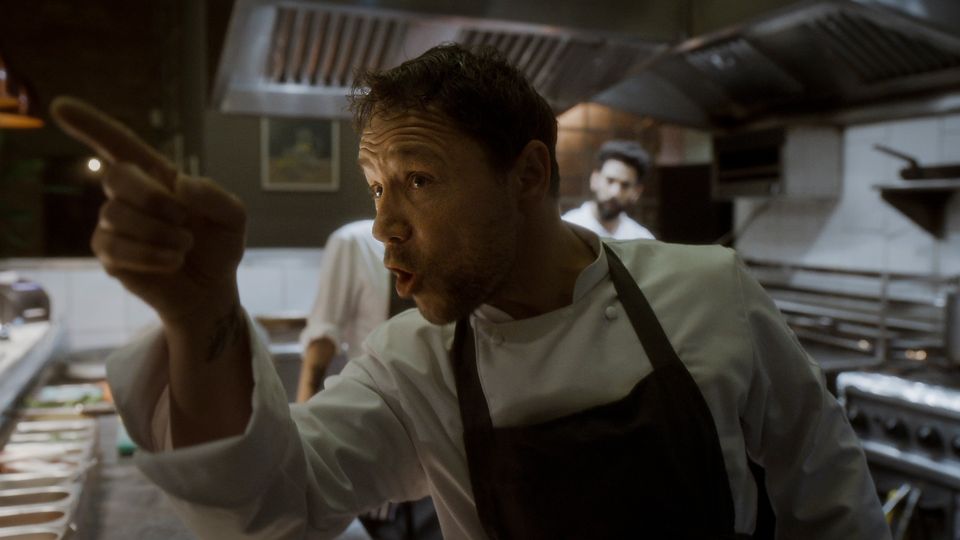
Once Andy gets into the restaurant, he’s met with a health code inspector who’s annoyingly docking points from every member of the staff for the way they’re doing their jobs. The health code inspector then sits Andy down to explain to him all the things that are wrong with the restaurant.
It’s one of the better scenes I’ve watched in a while. The health code inspector meticulously goes through each issue that needs to be fixed and Andy doesn’t say a word. He just sits there, stewing, as each problem is conveyed. By the way, this is a fun little trick to write a good dialogue scene. Have one character do all the talking and the other character only speak through their expressions. These scenes tend to always work. More importantly, this scene is an example of how to do conflict without having two characters butting heads with each other. There’s still tons of conflict without Andy saying a thing. He hates this man more than anything in the universe and that’s what gives the scene life.
After the health inspector leaves, Andy lays into his staff for all the mistakes they made. Again, since he’s upset, every one of these interactions is packed with conflict. And, in some cases, the staff is just as angry at him. They point out that some of this stuff is his fault. So both sides are going at each other.
What’s so great about this movie is that the conflict never stops. Every single scene has a ton of it. I would even go so far as to say that there’s too much conflict. Sometimes you need a scene or two where the audience can decompress and Boiling Point doesn’t give you that. But for the purposes of teaching writers how to infuse scenes with conflict, this movie is amazing. And a little bonus feature is that the film is shot in a single take. So definitely check it out!

The second conflict-filled thing you should check out this December is the girl’s soccer team plane crash show, Yellowjackets. You might remember I reviewed this pilot back in the day and loved it. But you never know how these things are going to turn out so I kind of forgot about it. Well, somehow, they’ve taken a great pilot script and made it even better! The opening images you see in this show are beyond disturbing.
BUT! Sticking with the theme of today’s post, the main reason this show is so good is because it’s PACKED with CONFLICT. Every single freaking scene has conflict. Let’s look at one of the early sequences – the girl’s soccer team playing one of their rivals. I’ve read more sports games scenes than probably anyone in the world so I know how these scenes are usually written. It’s typically boring last second score-a-goal stuff and the team happily celebrating.
Instead, here, we get several of the girls conspiring to take out one of their own teammates because they don’t think she’s good enough to play at Nationals. So, right away, we’re prioritizing conflict over last-second cliche goaals. That’s how I want you guys to start thinking. Don’t think about how previous movies handled your scene. Because then you’re likely to copy them. Think about how you can infuse the most conflict into the scene.
By the way, this scene comes after the initial teaser where we see, many months after the crash, the girls participating in a ritualistic killing where they chase one of their teammates and try to kill her. If they succeed, they’ll eat her tonight. I mean, how much more conflict-filled can a scene get?
But the conflict in this show goes beyond that. When we meet the team, they’re not one big happy family. There are cliques inside the team. There are secret romances. There’s bullying. There are girls who flat out don’t like each other. The reason this is important is because when you infuse conflict into the characters and their relationships, you don’t have to come up with a new conflict idea for every scene because the conflict is already baked in. The characters are already carrying that conflict into the scene.

This is why you don’t write a bunch of characters who love each other and never have any issues with each other because every time you write scenes with them, there’s zero conflict baked into the scene.
But one of the things that’s so good about this show is that they not only bake conflict into the relationships, they still look to create conflict-filled scenarios ON TOP OF that. For those who aren’t good at math, that’s double the conflict.
For example, in the second episode, one of the girls finds a lake five miles away. So the team has to decide if they should stay here at the crash sight or move to the water. Just by introducing a decision, you have conflict. Because, obviously, some girls are going to want to leave and some are going to want to stay.
You then get the added “conflict within conflict” from the individual relationships. For example, two of the girls, Jackie and Shauna, are in a secret relationship. Jackie is the more popular of the two and Shauna feels lucky to have her. Jackie is adamant about staying at the crash site. But Shauna thinks they have a better chance of survival near the water. Does Shauna vote to help the team survive or vote to keep her girlfriend happy? That’s what double-conflict gives you.
This show is becoming popular fast for a lot of reasons. It’s just a cool idea and has great execution. But with TV, especially, you need to be great at conflict because you’re writing sooooo mannnnnyyy scenes over the course of a season. And if the large majority of those scenes aren’t conflict-filled, your show isn’t going to last. So if this something you’re not good at or a part of your writing you think you can improve, watch this show now. You won’t regret it!
We take a look at the Black List script that got the writer the job for the now infamous upcoming movie, Cocaine Bear
Genre: Home Invasion
Premise: A pop star, a basketball player, and a bodyguard will need to defend against a crazed fan and his cronies who invade her home.
About: This script received 11 votes on last year’s Black List. It is written by Jimmy Warden, who wrote the sequel to Brian Duffield’s “The Babysitter” and, more recently, the script to the much buzzed about “Cocaine Bear.” I’m assuming this script got Warden the writing job for Cocaine Bear.
Writer: Jimmy Warden
Details: 97 pages
There is a group of people out there who are OBSESSED with the 1992 movie The Bodyguard starring Whitney Houston and Kevin Costner. That movie may be only second to Goonies in number of scripts I get that are trying to remake past films.
I kind of understand it. Whitney Houston and Kevin Costner were such an untraditional pairing and those untraditional pairs are often what audiences become mesmerized by. Still, I’m not sure I understand the obsession people have with this film, an obsession that has clearly influenced today’s screenplay.
It’s 1994 and 40-something William Bell is a bodyguard for 20-something Sofia, a Grammy-winning pop star who’s part Lady Gaga, part Carmen Electra, and part Ariana Grande. One night, a crazed fan named Duerson shows up to Sofia’s mansion and when Bell answers the door, Duerson stabs him.
Cut to six months later and we meet Sofia for the first time. She saw pictures of a Dennis Rodman like basketball player named Devante Rhodes and did the 1994 version of slipping into his DMs (she got her people to contact him) and now he’s over at her place for some hanky-panky.
It’s clear that Sofia does this all the time. In fact, she’s got a drawer where she keeps newspaper clippings of all the celebrities she’s banged. Which is too bad because Rhodes likes her and wants something more. While the two chat, Bell shows up for the first time in six months. He’s back on the job finally and, this time, he’s not going to take crazed fans for granted.
That new approach will be tested because it turns out Duerson has just broken out of the crazy ward! He’s teamed up with a giant scary man named J.H. and a psychotic French woman named Penny to go right back to Sofia’s mansion and take what he wants!
Bell then gets a call from his new girlfriend, who’s babysitting his daughter. There’s a strange man outside their apartment (it’s J.H.) and she thinks he’s going to harm them. Bell has to leave Sofia and, as soon as he does, Duerson and Penny charge into the house and take Sofia hostage. If you’re wondering why a 6 foot 8 monster of a basketball player is unable to protect Sofia from these two little scrawny gnats, join the club!
J.H. is somehow able to kidnap Bell, his girlfriend, and his daughter (does this guy have like 12 arms?), drive them back to Sofia’s house, all in time for Duerson to reveal his plan: He’s going to marry Sofia! He’s even kidnapped a minister to officiate the wedding. Will Duerson succeed? Or will crazy win once again??
Today I want to make a distinction between the three ingredients that make up a screenplay: Writing, Craftsmanship, and Storytelling. You need to be good in at least two of the three to write a good script. But your goal should be to become good at all of them. Let’s take a look at what each consists of.
Writing – Writing is the way in which you construct your words, your sentences, your paragraphs. It’s the prose you bring to the script to make it pretty, clear, and visual. When you read the description of a room, that’s writing. When you read the description of a character, that’s writing. This is usually what you see in the novel world. Since words are the final form of the medium, most published authors are good at it.
Craftsmanship – Craftsmanship is the ability to incorporate screenwriting-specific tools in an effortless invisible way. For example, understanding that you have to make your main character likable then writing a scene that conveys that likability – that’s craftsmanship. Understanding that a good scene needs to start late and end early – that’s craftsmanship. Coming up with a flaw for your main character, incorporating a theme, knowing where to put the inciting incident – all of that is craftsmanship.
Storytelling – Storytelling is the creative side of the equation. It’s not about being a wordsmith. It’s not about technique. It’s about how imaginative you are. Are you coming up with exciting plot points and story developments? Are you building a unique world that feels fresh and new? Introducing a surprising twist, like the Mary Jane father twist in Spiderman: Homecoming, that’s storytelling. Constructing a really cool spaceship chase, like we got in the beginning of Star Wars, that’s storytelling. The slow and careful infiltration of a poor family taking over a rich family’s home in Parasite, that’s storytelling. Any time you come up with a great scene idea or a great moment for your latest script, that falls under storytelling.
The reason I bring this up is because a lot of writers look at a screenplay as one big blob of writing and therefore don’t know how to pinpoint their weaknesses and improve them. But if you apply this separation, you can better understand where your weaknesses lie.
When I started reading Borderline, I was impressed by the writing.
The interplay between detailed visuals and playful commentary made the pages enjoyable to read.
But the craftsmanship in this script is sorely lacking. For example, there is zero attempt to make Sofia likable on any level. Why would we like a cold hearted bitch who uses people for sex, is disgusted by them when they show vulnerability, then disposes of them after a single night?
The reason this particular component of craftsmanship is so important is because the whole movie is about protecting this woman. If we don’t like her, why would we care if she’s harmed or not? You know what I mean? That’s not a minor craftsmanship screwup. That’s a MAJOR craftsmanship screwup.
Don’t get me wrong, you can get away with making characters a$$holes. But not if the entire movie depends on us liking them.
Another part of craftsmanship is character consistency. Duerson is introduced as an off-the-rails lunatic who can’t tell up from down. He seems to have stumbled upon Sofia’s house at the beginning of the story, almost by accident. Then, after he escapes from the mental institution, he’s all of a sudden Tom Cruise, putting together a Mission Impossible style attack team, complete with kidnappings, misdirects, and time-sensitive coordination. Which is it? Can the guy barely tie his shoes or is he a mastermind?
The storytelling side isn’t great either. Warden makes one interesting choice later in the screenplay (spoiler) when he kills off the main character. But every other creative choice feels rushed, like it was conceived during a feverish 24 hour writing session. Good storytelling has meticulous setups and payoffs. We can tell the writer has a plan that he’s carefully building towards. We don’t get any of that here. It’s mass chaos, a bunch of sloppy story beats carelessly cobbled together.
If you like home invasion movies, you might want to give this a shot. And I suppose if you’re making an argument for Warden, he’s got a chaotic off-the-rails style that some people dig, which is probably how he got Cocaine Bear. But I just found the script to be messy. There was no sophistication to the storytelling at all. I couldn’t get into it.
[ ] What the hell did I just read?
[x] wasn’t for me
[ ] worth the read
[ ] impressive
[ ] genius
What I learned: CHARACTER INTRO DELAYS. One pet peeve I have is when a screenplay mentions a character before they’ve been introduced. For example, sometimes I’ll read a script where we get a voice over from a character – let’s call him “Jason” – who I’ve never heard of until that moment. JASON V.O.: “I grew up in a small town outside Dallas.” Or maybe we’ll meet a character who hasn’t been introduced yet on the other side of a phone call. Or as one of the characters in a family picture we’re looking at. In screenplays, it’s important that when a character comes into a screenplay YOU INTRODUCE THEM PROPERLY. You give them a capitalized name, an age, and some description. This is a cue to the reader that: This is a new character in the script! If you do it any other way, you risk the reader being confused. Of them thinking, “Wait, who is this person? Were they already introduced? Why don’t I remember them?” However, if you absolutely must delay the official character introduction, Warden shows you how to do it. Here’s the proper protocol for a character intro delay.
