
Search Results for: F word
Genre: Biopic
Premise: The story of how oddball internet reporter Matt Drudge broke the Lewinsky Scandal and nearly took down a presidency, all from a desktop computer in his one-bedroom apartment in Hollywood.
About: Today’s script is the 4th most liked script of 2018. Cody Brotter is a Boston University graduate who’s written for TV, most notably on the show, Comedy Knockout. He also has a podcast, Hollywood Terriers, where he interviews fellow BU graduates in the entertainment industry.
Writer: Cody Brotter
Details: 118 pages
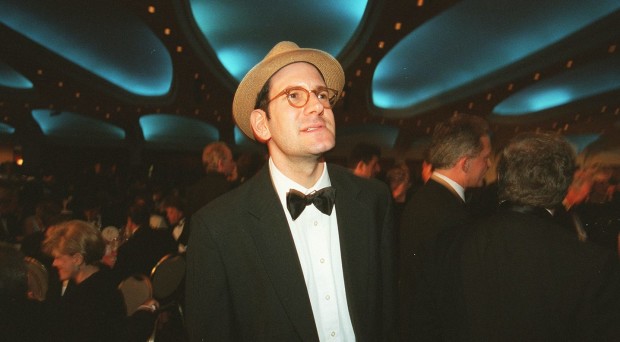
Today we have a totally original screenplay idea that was conceived 100% from someone’s imagination. Just kidding. We have another biopic from the Black List. Writers be working hard on ideas these days. There will come a time – it may be after the Apocalypse with only 20 people left on earth I’m sure – but there will come a time where writers once again attempt to create original stories. Until that time, it’s a biopic world. The rest of us are just living in it.
With that said, if you want to get on Franklin Leonard’s Biopic List, there are two things you can do to improve your chances. One is to find an underdog story. And two is to paint your hero as sympathetically as possible. “Drudge” does both. And once you get past the frustration you feel from having to read another biopic, you realize it does them quite well.
We’re introduced to Matt Drudge through his parents, both staunch liberals who are getting divorced after 15 years. The two are in court for a custody hearing. Except this isn’t your average custody hearing. Instead of the parents fighting FOR custody of their son, they’re fighting to get rid of him. The dad is too busy starting a new family to take him and the mom can’t keep up with Drudge getting in trouble. The judge stares on, flabbergasted. He’s never seen this before.
Cut to a decade later (the early 90s). Twenty-something Matt has moved to Hollywood with no money and managed to beg his way into a Gift Shop job at CBS Studios. When his father flies in for business (not for him), he’s so disgusted by his son’s life, he buys him a computer out of pity. This was right when AOL was sweeping the nation and everyone was talking about getting on this “world wide web” thing.
Little did Matt know, that computer was about to change his life. Through his job, Matt would hear CBS employees gossiping about box office results and who was getting fired, so he started a little newsletter (The Drudge Report), sending this information out to people. It wasn’t long before people began e-mailing HIM to get on the list.
A young conservative named Andrew Breitbart called Matt to meet, and was soon working for him, developing a web page version of the newsletter. The more politically-inclined Breitbart encouraged Matt to include more political news, and that’s where things got interesting. Back then, everyone was still operating by the journalistic rules that had been set up for over a century. You couldn’t just print something. You had to do your “due diligence.” Well, this wasn’t a publication. It was an internet site. So if Drudge got a hot scoop, he could just post it.
A group of young female conservative pundits (pundettes) in D.C. (Laura Ingraham, Ann Coulter, and KellyAnne [soon to be] Conway) recognized they could use this to their advantage. The three were trying to take down Bill Clinton through all of his philandering but the Clinton-loving liberal media were dragging their feet about posting these stories. So they asked Drudge to post them. And he did.
This began a two-front war. The first with the White House and the second with traditional media. You couldn’t just post a story like that, the news networks said. That was… that was… well, you just couldn’t! But Drudge did. And then, when the bombshell story of Monica Lewinsky hit the airwaves and the traditional media still wouldn’t report it (supposedly due to liberal bias), Drudge was all too happy to. And that’s how a little nobody reporter working out of a one bedroom apartment broke one of the biggest news stories in history.
Drudge is a good screenplay mainly because this is a good story. It’s a strange depiction of a person though. I can’t tell if Brotter loves or hates his main character. He starts off painting him with a sympathetic brush. Who’s not going to root for a guy who was abandoned by both of his parents? However, Brotter relentlessly makes fun of his hero’s thinning hair, repeatedly uses the word “creepy” to describe him, and relishes in his lack of friends.
I just don’t understand why you would write a story about somebody you detested. This is why I’m uninterested in seeing Vice. Both Adam McKay and Christian Bale call Dick Cheney the devil. Well if you can’t look at someone objectively, how are you going to portray them accurately?
And yet Drudge works. At least for me it did. Part of that is I went through something similar on a smaller scale. For example, I must’ve received hundreds of e-mails when I started Scriptshadow from people telling me “You can’t do this.” And when I asked them why, the answer was basically, “because it’s always been done this other way.” And I was like, “Well tough cookies. Things are changing.” There will always be resistance to change but, in the end, you can’t change progress.
I do think the script missed some opportunities though. I liked this idea of Drudge’s parents being liberals and Drudge running a conservative website to get back at them. But it’s only casually explored. If Drudge wasn’t actually conservative, but doing this solely to stick it to his father, that would’ve made his character a lot more complex. Maybe with a few more drafts Blotter can explore that angle more.
But by far, the biggest takeaway from this script is the importance of creating sympathy for your hero. You want to do that right away. The cheap way is to have your character give a homeless person a 20 dollar bill (or some do-gooder equivalent of that). Good screenwriters don’t go the cheap route, however. They work harder. Here we create sympathy for Drudge without even meeting him. We see his parents in court trying to pawn him off on each other. Right then, we feel sorry for this guy, and we haven’t even met him yet.
I will continue to rail against biopics. I’m so bored by the genre at this point. But the underdog nature, the high stakes, and the relentless pace of this script made it worth the read.
[ ] What the hell did I just read?
[ ] wasn’t for me
[xx] worth the read
[ ] impressive
[ ] genius
What I learned 1: This was a great character description. You should aim for a character description as specific as this every time out: “Drudge has a twitchy demeanor and horrific posture. He talks with a weird sense of confidence despite a nasally voice and the occasional stutter.” I know exactly who this guy is after that description.
What I learned 2: The most clever thing Brotter did here was identify that there are major controversial players today (Laura Ingraham, KellyAnne Conway, and Ann Coulter, an Andrew Breitbart) who played a big part in a story that happened a long time ago. This makes an older story feel current. So if you’re going to write a biopic about someone in the last 30 years, it will have more punch if some of the players in that story are relevant today. For example, if you’re writing a biopic about Rudy Giuliani centering on 9/11 (oh God, I hope I’m not giving anyone ideas), you know you can include a young Trump in that story.
Genre: Sci-Fi
Premise: In the far-off future, where the galaxy is protected by an equation that watches over them, an evil force arrives, putting the equation, and all who believe in it, in doubt.
About: The Hugo award-winning Foundation series was said to be one of the influences for George Lucas’s Star Wars, and you can see why almost immediately as its main villain, The Mule, is tall and hidden behind a suit and mask. A defining image even has The Mule choking someone, their feet dangling just off the ground (Foundation also has a “Galactic Empire”). Hollywood has been trying to figure out how to turn Foundation into a movie forever, and the property has endured many failed adaptations. This is one of those adaptations, written in 2004, by Jeff Vintar, for Fox. Vintar was hot at the time, having just written a movie (I, Robot) for the biggest movie star in the world (Will Smith). Unfortunately, Vintar does not have a credit since then. A reminder of just how brutal this town is!
Writer: Jeff Vintar (based on the Foundation series by Isaac Asimov)
Details: 110 pages
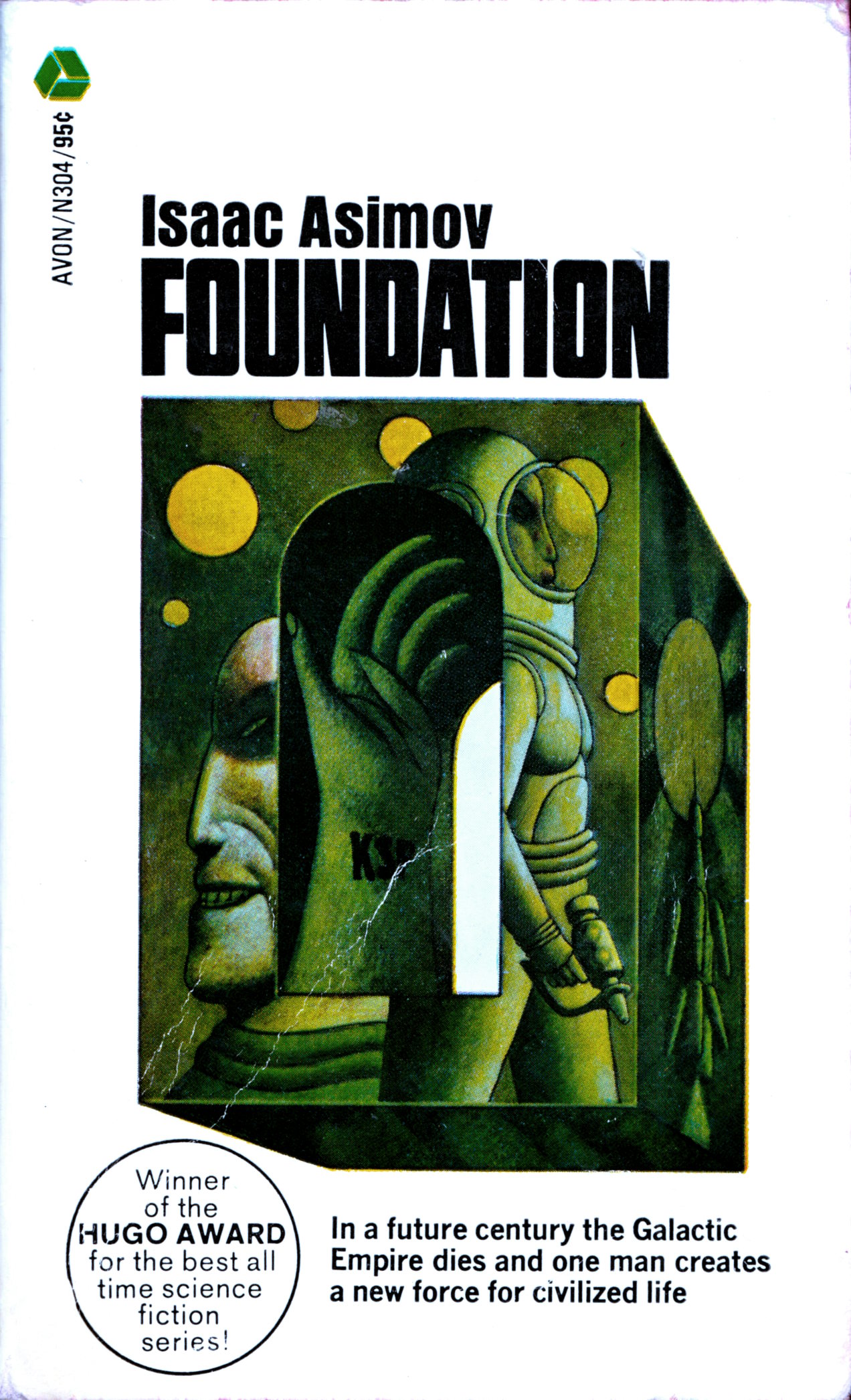
We’ve been talking about Hollywood’s recent obsession with short stories lately. Well guess what? Foundation started off as a series of short stories! I’m telling you, folks. You want to get Hollywood’s attention? Write a kickass short story. And if nothing comes of it but you still love your story, do what Asimov did – expand it into a novel.
I’ve actually tried to read Asimov’s Foundation series several times, only to fall into the Roma trap. I read for five minutes, get bored, try again the next day, read for 10 minutes, get bored, try again the next day. Ultimately it was the mythology that stopped me. It was goofy and weird and hard to get into. Before you throw your weirdo mythology at me, you have to rope me in with the characters. Star Wars doesn’t start with someone explaining the Force. The Matrix doesn’t start with someone explaining the Matrix. But Foundation starts with someone explaining Foundation, and it reads like the musings of the weird kid draped in black in the back of your class who eats his dandruff.
Doctor Hari Seldon is standing trial for spreading fear amongst the people. He has predicted, due to his expertise in “psycho-history” (what???), that within three centuries, the quadrillion human beings spread throughout the galaxy will all die. However, if humanity listens to Seldon’s equation, the galaxy will survive this implosion and rise again in 1000 years. The judges think this is whack, so they kill Seldon.
However, Seldon’s psycho-history equation is followed anyway, and 1000 years later, humanity is thriving, just like he predicted. This equation, guarded by an elite political force known as the Foundation, keeps writing the future, and telling the Foundation what to do so that peace and prosperity remain. Unfortunately, the Foundation becomes too dependent on the equation, and when a man named The Mule takes over an entire planet, they have no idea what to do.
Bayta, a spy working against the Foundation, is on that planet. After the Mule loses his main sidekick, a Gollum-like character named Magnifico, Bayta finds and befriends him. A Foundation officer named Pritcher is also on the planet, as he happens to be looking for Bayta so he can arrest her. But after the Mule takes over, the two are forced into a shaky alliance. The three of them fly off in Pritcher’s ship, and head to the Foundation headquarters on Terminus, where Seldon’s equation resides.
Once on Terminus, Bayta tries to tell the Foundation dummies that their equation doesn’t work, that The Mule is coming for them. But they don’t believe it. The equation hasn’t let them down in centuries. Why would it now? Needless to say, they eat their words. But not the way they expect to. A shocking arrival from someone other than the Mule informs them (spoiler!) that they are not being protected by the equation, but rather, the culmination of it, a sacrifice that will ensure peace and prosperity reign after they are destroyed.
Foundation is a script with a high burden of investment. You have to learn a complex mythology if there’s any chance of enjoying the story. This is the challenge any fantasy or sci-fi writer faces: Keeping things entertaining while explaining all the rules. Which is why you rarely see these scripts succeed as specs.
Nobody in Hollywood wants to learn a giant new mythology in a spec script. They’re only okay with it when it’s a book adaptation. This is why I nudge sci-fi and fantasy writers away from giant stories. If you love these genres, find a tighter more contained story to tell. Source Code over the next Star Wars. Bright over the next Lord of the Rings. There are a few instances of heavy mythology specs succeeding. Killing on Carnival Row comes to mind. But for every 1 that shines, 100,000 are rejected. So proceed with caution.
To Vintar’s credit, once he establishes the rules, the story moves well. I liked that mere seconds after setting up Bayta, her planet is attacked. It’s not easy to make these giant lumbering stories move quickly. In the book, I’m sure we’re cutting between several different planets, setting up numerous plotlines and characters before this happens. But Vintar understands that this isn’t a book. It’s a movie. And in a movie, the engine has to run at a higher RPM.
But where the script really excels is in the characters. Each character had more going on than what was on the surface. For example, Bayta was a loving honeymooner. Until we found out she was a spy trying to take down the Foundation. Pritcher was a businessman. Until we found out he was a spy trying to take down Bayta. The Mule also had secrets, as did Magnifico and Hari Seldon. What you saw wasn’t always what you got. And that kept things interesting.
In fact, it led to the best moment in the script (MAJOR SPOILER). When we find out Magnifico is The Mule. Now you’re probably wondering how someone who’s read everything could be duped by what, in retrospect, seems like something I should’ve figured out. Especially since Magnifico was acting so sketchy the whole movie. The truth is, Vintar cleverly introduces The Mule searching for the escaped Magnifico. So how could they possibly be the same person? If you’re ever going to pull a surprise character reveal, you have to set up a moment earlier in the script that ensures we’ll never make that connection. And that’s exactly what Vintar did with these two.
The only problem with Foundation is the lack of imagination regarding the future itself. 1000 years in the future and we’re all still biological beings with an 85 year lifespan? And pretty much every aspect of life is exactly the same as it is today, the only difference being we have more planets to live on? This is the problem with setting things too far in the future. While it’s easy to imagine what things will look like 100 years from now, it’s impossible to imagine what they’ll look like 500 years from now. So you should think long and hard about anything too far forward in time. Unless you’re talking about an apocalyptic scenario. Then you don’t have to worry about technology.
All things considered, Foundation is a fun script. Can it survive in the ultra-competitive feature market against titans like Star Wars and Guardians of the Galaxy? I don’t think so. But it could be a cool TV show, which I hear is where they’re planning to go with it. So that’s good.
[ ] What the hell did I just read?
[ ] wasn’t for me
[x] worth the read
[ ] impressive
[ ] genius
What I learned: Mythology before character equals gobbledy-gook – In screenwriting (I’m distinguishing between novels here), if you try and throw mythology at the audience too quickly, it will come off as gobbledy-gook and they will rebel. Imagine if you read my story, which started with a guy named WOZAR who lived in Rashclank, which is the moon-tree capital of NUNGO, the fifth biggest asteroid in the BLICK-7 BELT. Wozar is currently finishing up his degree in The Kl’ar’ens, an ancient belief system that allows people to transport to other parts of the universe through dream-dodging. Are you going to keep reading? Of course not. Instead, start by connecting the reader with your characters. Once we feel something for your characters, we’re more willing to invest in the eccentric parts of your universe.
Genre: Horror?
Premise: Three Korean girls who have been adopted by American suburban families have their friendship tested when they conjure up a spell that releases their “mother.”
About: Today’s short story sold at the end of last year after being involved in a bidding war. Five offers came in, with Fox 2000 and 21 Laps winning the grand prize. The short story was written by Alice Sola Kim who won something called the “Whiting Award” in 2016. This short story was published on tinhouse.com and can be read here.
Writer: Alice Sola Kim
Details: Equivalent of 15-20 pages long

Is the short story the new spec script?
Maybe not. But nothing’s gotten closer to replicating the spec sale in the last two years than the short story sale. They’re all the rage, with a couple of new ones picked up every month.
While I know nothing about today’s writer, I suspect from her name (Alice Sola Kim) that she is of Korean heritage (Kim) adopted by American parents (Sola). If that’s the case, this appears to be a personal story. Isn’t that what they say to do? Write what you know? Or, the R version, “Work your personal shit out through your writing?” I’m excited. If Kim is using her own life experiences to tell this story, doing so through the marketable genre of horror, I’m betting it’s going to be an emotionally moving portrait of adoption that can be marketed to the masses. Let’s check it out.
Teenagers Mia, Caroline, and Ronnie are Koreans adopted into American families. That’s how they met, actually, during a gathering for Koreans adopted into American families. These three understand each other in a way the outside world couldn’t possibly comprehend. Mia is the fun alternative one. Caroline is the sophisticated one. And Ronnie is the misfit.
One day, as teenagers are wont to do, the three chant a spell in a parking lot, only to later realize they’ve unleashed their mother. Not their adopted mother. Not their birth mother. But some nebulous afterlife creature who refers to herself as their mother.
This “mother” communicates to the three of them by taking over their brains and speaking through their mouths. The things she says make less sense than your average homeless man on Santa Monica and Colorado (“THIS IS A SONG MY MOTHER SANG TO ME WHEN I DIDN’T WANT TO WAKE UP FOR SCHOOL. IT CALLS THE VINES DOWN TO LIFT YOU UP AND—“). It’s not clear what this mother is trying to accomplish other than be annoying, which she’s an expert at.
As “Mother” is passed around between the girls, we impatiently wait for some sort of plot to arrive. It never does, unfortunately, making you wonder just how frivolously this was written. Eventually, to teach the girls a lesson, “mother” crashes their car into a tree one night. However, just when we think something substantial has happened in this godforsaken story, we cut back to the car, still driving, to learn that they’re all safe, and that “mother” was just teaching them a “lesson.” The End.
Before I get to my reaction, I want to make something clear. I don’t blame Alice Kim for this. It’s not her fault that she wrote a story that’d be dismissed by 99% of college English professors, yet still was able to sell it. Good for her. We should all be so lucky as to sell our weaker material. I don’t blame the original producer, who did an amazing job conning Hollywood into thinking this story was worth buying. That’s what a good producer does (A famous Hollywood agent once said, “Sell a good script? Pfft. Anybody can do that. Sell a bad script? Now that’s when you know you’re a good agent.”).
I blame the production company and studio that purchased this. If you’re trying to figure out who made the mistake here, they’re the one you point the finger towards.
There are two reasons why this sale annoys me so much. The first is it confuses aspiring writers. Writers read this glorified writing exercise, see that it sold, and believe that this is the bar. When it isn’t. It’s an outlier, a purchase that was likely inspired by reasons that have little to do with the story’s quality. Second, it’s taking the place of material that’s ACTUALLY good. There’s a lot of stuff out there that’s so much more deserving than this. But instead the winning lottery spot goes to Rambling Teenage Girls and Their Ghost Mom.
I mean here’s a typical paragraph from “Daughters.”
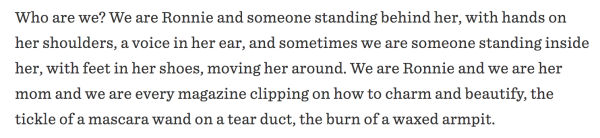
Imagine 20 pages of that.
While the rules for short stories are definitely different from screenwriting, there is one commonality. There needs to be a plot. There needs to be a point to it all. The opening to “Daughters,” which dives into our friends’ lives, does so messily. “At midnight we parked by a Staples and tried some seriously dark fucking magic. We had been discussing it for weeks and could have stayed in that Wouldn’t it be funny if groove forever, zipping between yes, we should and no, we shouldn’t until it became a joke so dumb that we would never. But that night Mini had said, “If we don’t do it right now, I’m going to be so mad at you guys, and I’ll know from now on that all you chickenheads can do is talk and not do,” and the whole way she ranted at us like that, even though we were already doing and not talking, or at least about to.” And that’s fine. When we’re meeting our heroes, you can be messy as long as we’re getting to know the characters who will later lead us on our journey.
But at a certain point, you have to introduce the reason the story exists. What is it our characters are trying to achieve (their goal)? Only then does your story have purpose. Doing so here would’ve been easy. You bring in the mother character. You have her do something awful, and now they need to get rid of her. But, instead, “Daughters,” focuses more on the positive aspects of “mother.” Her appearance is championed, her words idolized.
It’s only at the very last second that the group decides Mother is bad, as if the writer realized that she needed to end her story somehow and, oh yeah, if the mother is bad, then they would have to eliminate her. Instead of being a major plotline, however, it’s relegated to the last 500 words of the story. And this is how I know this was written at 3 am with not a lick of rewriting. It’s a story that was thoughtlessly blasted onto the page so it could be turned into a professor before sunrise.
And who is this mother ANYWAY??????
You all have different birth parents. Why do you only have one mother? Why don’t any of them realize that if someone’s claiming to be their unique mother, she can’t be everyone’s mother? Am I speaking alien here? That makes sense, right? And this is what bothers me about this type of writing. The writer doesn’t want to do the hard work of figuring out the answer to that question. It’s easier to keep it raw, place the onus on the audience to do the work, and in the best of circumstances, trick everyone into believing they’ve made some profound statement about motherhood.
So is there a movie here? That’s the only question that matters, right?
The answer is no.
But if I were paid a million dollars to come up with an angle, I guess I would have these girls unleash an evil mother that starts killing those around them and they have to figure out how to put the genie back in the bottle before there’s too much death and destruction. Which is just like every other horror movie but, hey, they paid all this money for the rights. They need a movie. That’s as good as they’re going to get.
[x] What the hell did I just read?
[ ] wasn’t for me
[ ] worth the read
[ ] impressive
[ ] genius
What I learned: No story can be saved through prose. No story can be saved through internal monologue. No story can be saved through shock tactics (it’s revealed that Ronnie’s involved in a incestual relationship with her brother late). You need a character goal to drive the plot. Without it, you’re just talking to yourself on the page.
Genre: Horror
Premise: Trapped in a strange house, a young woman with a phobia of dogs must escape the jaws of a bloodsucking hound and its master.
Why You Should Read:I find phobias fascinating. The crippling impact they can have on a person’s life. I wanted to take that fear to an extreme level. There seems to be room in the horror universe for an update on Cujo (other than a remake), pitting a protagonist against a vicious, bloodthirsty beast. I set out to write something simpler and more contained than my last work with 100x more blood. Hope you enjoy sinking your teeth into this one!
Writer: Katherine Botts
Details: 91 pages

Katherine is back. If my memory is correct, she’s 3 for 3 on winning Amateur Offerings. When a Katherine script comes in, a Katherine script tends to win. That’s my rhyme for the day. However, there’s some backstory here. Katherine’s been sending this script in for awhile and I wasn’t keen on featuring it. Not because I didn’t believe in her. But because the idea didn’t excite me. A mean dog after a person in a house? It sounded like the most straightforward predictable movie ever. I man Cujo is one of the only Stephen King books I haven’t read (for the same reason). Scary dogs don’t scare me. So I was going into this one with some prejudice. Would the script look up at me with puppy dog eyes and make me fall in love with it? Or would it bare its teeth and run away? Grab the leash and let’s walk this dog together to find out!
17 year old Blair is scarred for life – both literally and figuratively. When she was 7, a dog attacked her at a pool. She’s never been the same since. Also since that time, her father passed away. Her mom’s moved on with some lame-o named Nathanial. Blair’s plan is to save up enough money so she can fix her car and drive away from this place.
So when she gets a last second opportunity to house-sit for some richie riches, she grabs it. She arrives at the remote southern mansion where she meets the strange family – mother, father, son – who are leaving town because the mom’s father has fallen ill. Just before they’re about to leave, they blindside Blair by letting her know that, oh yeah, she has to take care of their new rescue dog, Jumper. Blair tries to back out of the job but gives in when they beg her.
As soon as they’re gone, Blair recruits her goofy boyfriend, Collin, to come keep her company. Collin, a dog lover, bonds with the rescue dog, encouraging Blair to give her a shot. No chance, Blair says. Dogs are evil. After the two raid the fridge, Collin falls asleep, and that’s when Blair sees it. Big scary eyes outside the window. A dog. And not just any dog. A huge beast of a dog.
Blair tries to shake Collin awake but there’s no response. She glances at the leftovers. Could they have been… drugged? As she yells at Collin to wake up, the beast-dog starts banging on the doors and windows. It’s only a matter of time before it gets in. She drags Collin to the old house elevator just as the dog breaks in, and they go up to the attic. It’s there where they meet old man Arthur. But wait, I thought the family was going to visit Arthur. What’s he doing here in the house?
It turns out Arthur is a vampire. That beast-dog thing is his servant. It finds him people, brings them to him, and he drinks their blood. Blair is able to escape this freakazoid, but now she’s right back in the bowels of the house, easy prey for Beast Dog. Blair will need to, ironically, depend on rescue dog, Jumper, to help her defeat this thing. But as the night unfolds, she realizes this entire family has planned everything to make sure she doesn’t leave alive.
First question that, no doubt, everyone will be asking after yesterday’s article. Does Blood Hound pass the First 10 Pages test? It’s hard for me to answer that because I knew I was reading this all the way through no matter what. So I was trying to imagine what I would’ve done if I had no obligation to the script. The answer is I probably would have stopped. But it wouldn’t have been an easy decision.
The opening scene is fun. Little girl at the pool. She wants a dog from her daddy. Sees a dog hiding in the bushes, goes to pet it. It attacks her. It was enough to keep me turning the pages. But I think the suspense could’ve been introduced earlier and drawn out more. The first part of the scene is her in a pool with her dad joking around. It’s not a bad scene at all. But if we’re grading the scene on the “Every word matters” curve, we could’ve hinted at danger earlier, which would’ve, in turn, allowed for Katherine to sneak in the character introductions via a more exciting scene wrapper.
The second scene (“10 Years Later”) is okay but it’s the very definition of “resting on your laurels.” You know you’ve started with this shocking opening scene. So you think, “I can relax now. They’ll allow me to be boring for a few pages while I set the characters up.” You can never rest on any laurels. I’m not asking for two teaser scenes in a row. But you should still be attempting to construct entertaining scenes after your first one.
But as the script goes on, it gets better. Katherine does a great job adding specificity to her world. Things happen because that’s how they would happen, not because the writer needs them to happen. An example would be the house-sitting. A lazy writer would make that a given. Blair’s housesitting tonight because she has to for the movie to exist. Katherine, however, explains that Blair wants out of this town. She needs money to fix dad’s car so she’s taking as many odd jobs as she can. The housesitting job, then, is a crucial step towards meeting that goal.
I also liked that the family had history. They were weird and mysterious. One of the things I worried about when I originally read the logline was that Blair would go to this house and then a dog would appear out of nowhere and start harassing her. It sounded too simplistic. But from the moment we get inside this house, the family seems interesting. There’s something odd going on with them and you want to keep reading to find out what it is.
The peak of the script for me was when I realized Jumper wasn’t the dog that was going to face off against Blair, but rather food for a bigger dog. That’s when I leaned in and really started reading with an invested eye. Once I figured out that she, too, was meant to be dog food, I was all in. At that point, the script was a double worth-the-read for me.
But then a controversial choice is made that people are either going to love or hate. I didn’t like it. And it comes down to “double mumbo-jumbo.” When I realized the old man, Arthur, was a vampire, my head fell. I thought I was reading a killer dog movie. Now it’d become a killer dog vampire movie. It was a bridge too far. After that, it was impossible for the script to win me back. I thought what Katherine had before this was plenty. It didn’t need a vampire kick.
With that said, I loved one other subplot in the script, which was Jumper going from enemy number one to best friend. I love any well-executed character arc. And Blair’s arc from being the last person in the world who would connect with a dog, to trusting her life to Jumper, was really heart-warming. Kudos to her for pulling that off.
But man, I really disliked the vampire thing. It felt like a writer who didn’t have the confidence that their idea was enough. So they had to add something extra. The irony is that I didn’t think the idea was enough when I started it either. But Katherine did such a good job building up this family and this house, that the original concept DID end up being enough. I mean, that’s some freaky shit. A family lures people into their house and then has their psycho dog eat them. That’s a movie right there.
Script link: Blood Hound
[ ] What the hell did I just read?
[x] wasn’t for me
[ ] worth the read
[ ] impressive
[ ] genius
What I learned: Be careful with tropes, even if they’re well-regarded. An early scene has Young Blair crawling through the bushes to pet a dog. The dog growls at her. We sense the big attack coming. Then we cut to: “BLOOD flecks onto the old ball.” Yes, the cut away to blood splatter is a more “artful” way to express a violent attack than showing the violence. But if we’ve seen that trope a million times, is it any less lazy than showing the attack itself? I say this because I’ve read three scripts THIS WEEK that have used that trope. So push yourselves. Do something different. Maybe even show the attack. That might be the unexpected thing that makes the scene memorable.
Save the Cat. The phrase sounds so innocuous and yet it’s become the most popular screenwriting tip in history. More popular than even GSU! For those who don’t know, “saving the cat,” is a term the late Blake Snyder coined that refers to a moment early in the screenplay when your hero does something nice, endearing or helpful to someone or something else. As long as it’s not too generic or too on-the-nose (would we believe that Ethan Hawk would stop running from the bad guys to help a little old woman cross the street?), it’ll make us like your hero. Why has the Save The Cat scene endured for 20+ years? The reason is important so I want you to pay attention. One of the most crucial aspects of making a story work is the reader connecting with the main character. And the easiest ways to solidify that connection is to make them likable. What’s more likable than “saving” someone?
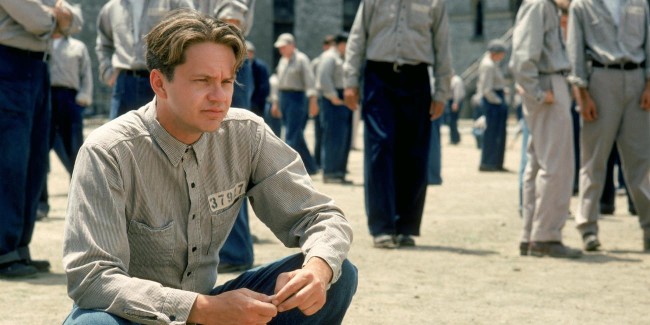
Well the other day I stumbled across one of the best movies ever, The Shawshank Redemption, and I came across a scene that, in retrospect, was the scene that made me fall in love with Andy Dufresne. The reason this particular scene is so important is because Andy Dufresne is considered one of the most likable protagonists in cinema history. After that scene, myself and millions of movie fans liked this guy more than we liked our own friends. So if we can identify what made us fall in love with Andy, we can harness that power to use in our own screenplays. I know all of you are scrambling to figure out which scene I’m talking about. Shawshank has so many good ones, it’s hard to keep track. But before we get to the scene, let’s break down the explanation.
I would argue a more impactful scene than even saving the cat, is a hero’s ability to cleverly out-maneuver the bad guys in the face of adversity. The more clever the character is in the moment, and the more intense the adversity, the better this tool will work. For those of you who’ve read my book, you’ll remember me highlighting one of these scenes. This was before I realized how powerful this scene was so I didn’t give the weight it deserved. But the scene occurred in Terminator 2 at the psychiatric ward when Sarah Connor is running away from the guards. She reaches a locked gate, opens it with her stolen keys, then, as the guards are approaching, reaches back through the bars, inserts the key and then RIPS the top of the key off. When the guards get to the gate, they find that their key is worthless, as the bottom half of Sarah’s key has jammed the lock. This is the epitome of being clever in the face of adversity.
Let’s get back to Shawshank. Now that you have this extra information, do you know what scene I’m referring to? Well, you can watch it right here. Yep, it’s the famous rooftop tarring scene. Now there are a few things going on in this scene but the part I want you to pay attention to is the moment Captain Hadley is running to throw Andy off the roof. This is the highest level of adversity a character can face. His death. Andy then yells out the line that saves him – “Cause if you do trust her, there’s no reason you can’t keep that $35,000.” Captain Hadley stops at the last second, demands an explanation. Andy goes on to inform him of a tax loophole that will allow Hadley to keep his inherited money tax free. After some back and forth, Andy says he’ll even do the paperwork for him, so he won’t have to hire a lawyer. In less than 60 seconds, Andy’s gone from public enemy number 1 to the Captain’s new best friend. You gotta be mighty clever to pull that off. And because Darabont is such a genius, he doubles down! He buttons the scene with a Save The Cat moment – Andy getting beers for his fellow inmates. Is it any wonder, now, why Andy Dufresne is one of the most liked characters ever?
An important distinction I want to make is that being clever is good. Being clever will always make your hero likable. Ferris Bueller was clever. He was always outsmarting everyone. But what turbocharges this tool is being clever in the face of adversity. Real adversity. When we see someone who’s doomed reach into their back pocket and outsmart the bad guys, that’s when the audience feels the warmest and fuzziest. It’s that energy that allows you, the writer, to reach out and join hands with the audience. The both of you are now interlocked as presidents of your hero’s fan club.
Now it’s important to note that the action your hero performs must actually be clever. It has to be something that surprises the audience, something they wouldn’t have thought of themselves. For example, your hero palming a paper clip he later uses to discreetly unlock his handcuffs with won’t do the job. We’ve seen that so many times that we could’ve thought of it ourselves. It must be an act that we wouldn’t have thought of.
Ever wonder why Wesley, from The Princess Bride, is one of the most popular characters of all time? It has a lot to do with William Goldman giving him three scenes IN A ROW where he’s clever in the face of adversity (first the sword fight with Inigo Montoya, second the brawl with Fezzik, and third a duel of wits with Vizzini). One of the reasons The Martian became such a huge book (and later a huge movie) is because Mark Watney is handed a series of obstacles, each of which would ordinarily kill a man, that he cleverly overcomes. First is lack of communication. Next is food. Next he’s critically injured from the air lock explosion. The more we see characters overcome these moments using their intelligence, the more we love them.
So why don’t we see more of these scenes in movies? Because they’re hard to come up with! It’s much easier to save the cat. Have your hero toss a twenty into a homeless man’s cup, follow it with a conversation between the two to show that our hero knows and cares about him, and boom, we’ll like the hero well enough. But that’s child’s play. I can teach a sixth grader to do that. Creating a scenario to show off how clever your hero is is much harder. Which is why, I’d argue, it’s more powerful.
So Carson, if coming up with these scenes is so hard, how do you do it? You do it by identifying your character’s biggest strength. What are they known for? Once you figure that out, you can build a scenario that allows them to show off that strength. Sarah Connor spent a decade preparing to survive. She’s a survivalist. So it would make sense that she’d have a few tricks up her sleeve to outrun pursuers. Andy Dufresne is a tax lawyer. So of course he’s going to know about tax loopholes. Wesley spent years pirating on a ship. He’s spent a decade fighting people. So he’s going to know a few things about sparring with opponents. Find the strength, then create a scenario to highlight that strength.
The reason this works is because it’s built on the concept of us liking people who are good at things. It’s why we can’t look away when Lebron James drives the lane. It’s why we wait with baited breath when Neil deGrasse Tyson is about to answer a question about the universe. It’s why people loved watching Bobby Fischer play chess. We’re drawn to people who are great at things. All this tool is doing is placing that expertise to the most extreme test, when it matters most. And even though it’s complete fiction, we’re entranced by it. We love to see the people we love overcome adversity with their wits.
Sadly, I haven’t been able to come up with a catchy nickname for this type of scene. I’m not clever enough (heh heh). So, I’ll leave that up to you guys in the comments. Whoever comes up with with the best nickname, I’ll give you a free logline consultation. So go at it!