
Search Results for: F word

As I like to remind all the screenwriters out there… always keep an eye on the box office. Hollywood spends so much money on productions these days that a single unexpected triumph or a single earth-shattering failure can create a tectonic shift in the business. Look no further than Solo. Many considered Star Wars the most bullet-proof brand of them all. Solo barely clearing 200 million domestically resulted in Disney pulling their “2 Star Wars Movies a Year” plan and icing all Star Wars movies after Episode 9. A single bomb could mark that current script you’re working on irrelevant. Or an unexpected hit could mean that idea you’ve been sitting on is all of a sudden a hot commodity. So always keep up to date. Here are 10 2018 overperformers and underperformers and the reasons for their box office results.
OVERPERFORMERS
The Meg ($142 mil dom, $525 mil worldwide) – Sharks, sharks, sharks, sharks, and sharks. Probably the most bullet-proof subject matter there is behind horror. When’s the last time you heard of a shark movie doing bad? To show you how solid this genre is, look no further than 47 Meters Down. That movie was supposed to go direct-to-video. Instead they released it in theaters and it made 44 million dollars. Wow.
Crazy Rich Asians ($169 mil dom, $226 mil worldwide) – Crazy Rich Asians brought back an old-school approach to movie-making – Introduce us to a unique culture and tell us a story within that culture that is both entertaining and educational. Something that’s oft-forgotten is that audiences want unique experiences. If you can introduce them to a fresh world that they haven’t seen before, and promise them they’ll be entertained in the process? They’ll show up.
A Quiet Place ($188 mil dom, 334 mil worldwide) – I don’t care what anybody here says. This was a genius concept. I knew it the second I read the script. I knew right away it was going to make a ton of money. You can either keep complaining or seek to understand why this did well. Because these are some of the last concepts a screenwriter can come up with and make a big spec sale with. A family that operates in a post-apocalyptic monster-ridden world where you can’t make a sound. Boom. That’s a dream concept producers everywhere would die to find the next version of.
Hereditary ($44 mil dom, $79 mil worldwide) – Hereditary proves the value of the horror brand. This is about as non-traditional as a horror film gets. It’s dark and weird and unsettling. In other words, it’s not “The Nun.” But if you can come up with a great image or a great trailer that promises scares? People are going to show up. Which is why if you’re a screenwriter who likes horror even a LITTLE bit, you should be writing in it. While the rest of your screenwriting friends are debating what’s more important, theme or a character’s fatal flaw, you’ll be deciding whether to buy a house next to Leonardo DiCaprio or Will Smith.
Searching ($25 mil dom, $65 mil worldwide) – Searching is a film that begs the question to every screenwriter trying to break in: “What are you waiting for?” People are making movies where they don’t have to leave their bedroom! Why are you complaining that nobody will read your script when there are clearly opportunities to write and create movies for next to nothing? Do you have any idea how hard making movies used to be? You used to need to buy film. FILM! And it was expensive. Now you can use your darn phone. Stop the excuses!
UNDERPERFORMERS
Skyscraper ($67 mil dom, $303 mil worldwide) – If “Crazy Rich Asians” is the embodiment of giving us something new, Skyscraper is the embodiment of giving us everything old. I mean, these people do realize they’re remaking Die Hard, right? This reminds me of the crap studios used to pull before social media could destroy word-of-mouth in less than 12 hours, where they’d vomit out an unoriginal screenplay then try to hide it behind a big star. Audiences aren’t fooled by that anymore. Studios? You have to do better.
Tag ($54 mil dom, $77 mil worldwide)– Imagine coming up with an idea that had absolutely no stakes at all (someone getting tagged is literally the stakes of the movie) and then asking people to pay to see your movie. Slap onto that “tweener” status (when a movie is stuck between genres – this one both a comedy and a drama) and you’ve got a disaster in the making. As long as we’re here, let’s add the trifecta. The movie ends at a wedding. A wedding! The ONE THING you have going for you here is that your idea’s a little bit unique. So instead of embracing that you give us the most cliche ending scenario of them all? They should’ve gone full comedy here and figured out a plot that had some actual stakes. Also, casting Jeremy Renner in anything that involves comedy was the final nail in the coffin.
The Happytime Murders ($20 mil dom, $25 mil worldwide) – Here’s an odd one. This movie is actually giving us something we desire – a fresh idea. Yet it bombed. And not just bombed. People gleefully celebrated its demise. You realize you’re the same people who complain that Hollywood never tries anything new, right? “But, but, but…” you say, “we DO want something new. We just want the good kind of new.” You can’t have it both ways. You have to celebrate when people take chances, even if they fail. The reason this movie failed is a subtle one, and one of the hardest to calculate as a screenwriter – tone. I like the idea of puppets acting bad. But they pushed it too far. I mean, at one point, they have a puppet ejaculating for five minutes onscreen. Somewhere around 15 seconds is when you know you’ve gone too far. If they would’ve pulled the humor back and made it a little less risky, I could see this being a success.
Tomb Raider ($57 mil dom, $273 mil worldwide) – There wasn’t a single person who came out of Tomb Raider and said, “Man, I’ve never seen that scene before!” Tomb Raider suffered from “Save the Cat” syndrome. This is when you follow the formula so closely, there isn’t a single surprising or fresh idea in your screenplay. Yes, you could take your script in front of a USC screenwriting panel and point out how every single component of the script is perfect. But screenplays can’t just be technically perfect. They have to be imaginative, creative, and unexpected. You have to make bold choices every once in awhile so that your story feels original. I didn’t like Hereditary (spoiler), but the choice to kill off the sister halfway through the script helped separate that film from everything else in 2018.
Fahrenheit 11/9 ($6 mil dom, $6 mil worldwide) – A documentary? Carson, have you gone mad? What does the box office of a documentary film have to do with screenwriting? I’m actually including this movie for a specific reason, one that director Michael Moore is so out of touch with, he wasted millions of dollars and a year of his life for. What’s the lesson? Don’t write anything that people can get for free. Back in 2002, we didn’t have hundreds of online political outlets to spout off about 9/11. Which is why that earlier documentary made so much money. It was one of the few places you could go to get a thoughtful detailed look at how 9/11 went down. But now, the second anything happens in the news, there are hundreds of Youtube channels breaking it down WITHIN HOURS. If we can get it for free without having to put our clothes on, why would we pay $15 bucks to go see it in the theater? Let this lesson extend to the concepts you choose to write. Give us things we can’t get anywhere else but the movies. What are examples of documentaries that fit this bill? Tickled and Three Identical Strangers.
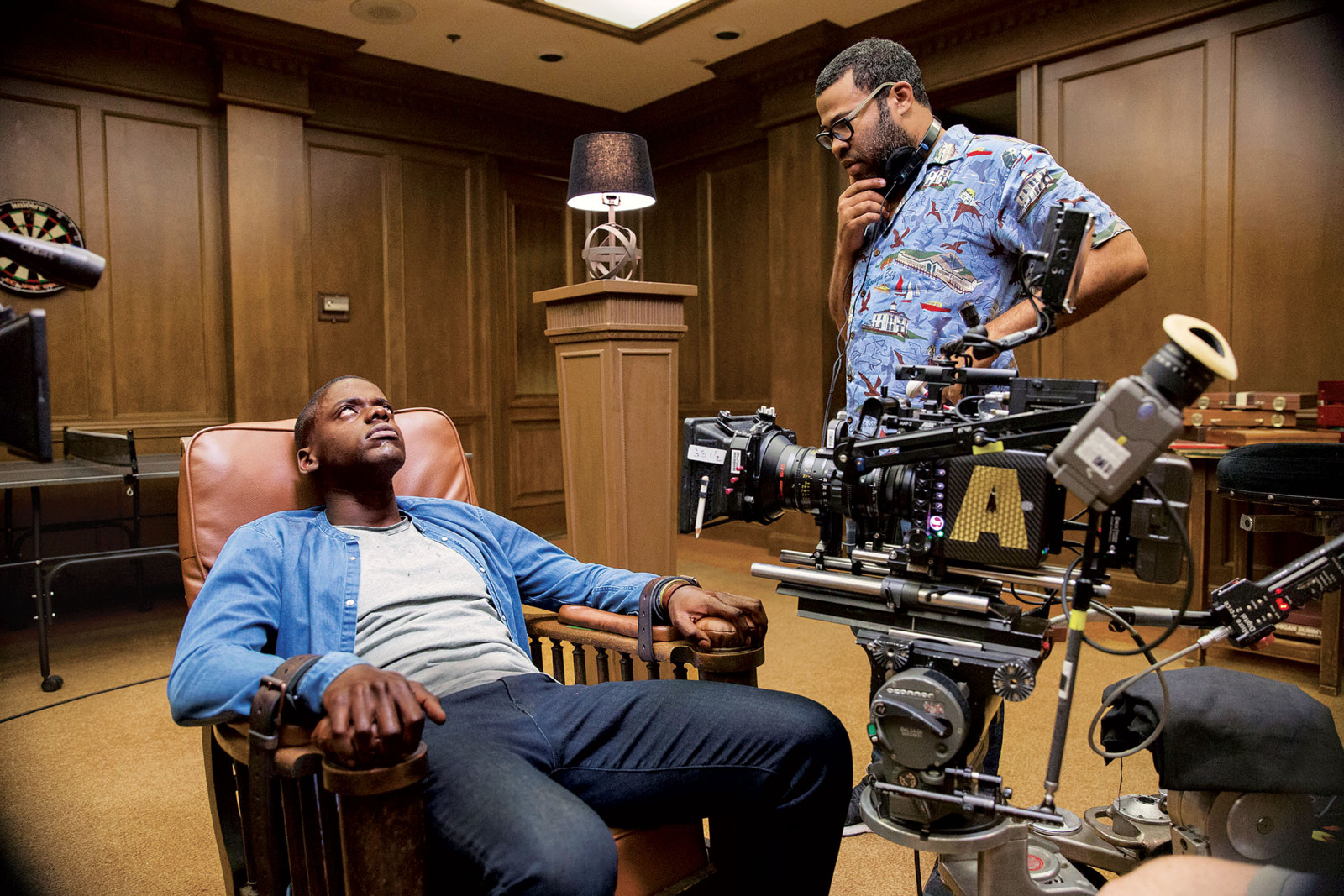
The most tragic thing in the world is an abandoned screenplay. Okay, maybe that’s an exaggeration. But at least in the screenwriting world it’s true. There have been tens of millions of abandoned screenplays over the years. Maybe more. And the reason that’s a travesty is because we’ll never know if any of those would’ve been great movies. Jordan Peele almost quit writing Get Out fifteen times. Imagine for a moment if he would’ve given in just one of those times? He wouldn’t have an Oscar on his mantle.
So let’s talk about why writers give up on screenplays. The most common scenario is you come up with an idea you’re excited about and need to write it NOW! You rip open Final Draft, start typing away, and the pages are flying by! You get through the first act in a few days! Then, seemingly out of nowhere, everything sloooowwwws down. That magical inspiration has been replaced by a dogged hatred for film. You have no idea what happened. “Everything was so easy before!” you cry out to your dog. “What changed?”
What changed is that when we come up with ideas, we’re mainly thinking about the setup. Take Independence Day. When you come up with that idea, you’re not thinking about what the characters are discussing on page 70. You’re thinking about the alien ship hovering over the White House then blowing it up. When you finish writing those scenes, you’re left with… well, you’re left with THE REAL STORY. The stuff with the characters and the theme and the relationships. And you weren’t thinking about that. This is why most screenplays die in the early stages.
Also, a new idea can feel like the greatest movie in the world! Santa Clause kidnaps Jeff Beznos because Amazon is putting him out of business? Hell yeah, you say! I can see the opening now. Santa catches his elves ordering Christmas toys from Amazon. Except three weeks later you wake up and realize this is the dumbest idea ever and it has zero legs. Of course if became a screenplay casualty. So here’s my first piece of advice to you.
Tip #1: When you come up with an idea, sit on it for at least three months.
I know that sounds crazy. But I’d even extend it to six months if possible. Bad ideas disappear quickly. Good ideas stick around. So if you’re still thinking about an idea six months after you conceived it, chances are it’s worth exploring. Not only that. But by waiting, you can add notes and flesh out the story. I think of these notes as “script ammo.” The more script ammo you have going into a script, the more likely you are to finish that script.
Okay, let’s say you come up with an idea, you sit on the idea, six months later you still want to write the idea, in the interim you’ve come up with script ammo for your idea, so you start writing your script, onnnnn-ly to end up in the same predicament. You’ve gotten a LITTLE further than you would’ve had you started right away. But still, by page 60, your creativity has taken a vacation in the Bahamas. What’s going on? I’m going to tell you what’s going on. But it’s going to make some of you mad. So if you’re easily triggered by words that rhyme with “shoutshine,” please turn away.
Tip #2: The number 1 reason for getting stuck is that you didn’t outline.
There was a time when I thought outlining was the equivalent of throwing baby squirrels in a blender – pure evil. Since then, I’ve learned that nearly all anti-outliners are beginners or intermediates who believe that outlining destroys artistic expression. Meanwhile, 99% of professionals swear by outlining. So who do you think is right? The great thing about outlining is you’ve created a safety net for idea generation. You have a plan in place for any moment you run into trouble.
I’d always found this to be the end-all be-all solution to writer’s block. You can’t be blocked if you’ve written it all out beforehand. But a writer recently brought up a good point to me: “What if you run out of ideas in your outline?”
An outline is essentially a script, only abbreviated. Just because you’re writing in outline form doesn’t mean you magically have ideas for every stage of the story. It’s arguably harder to generate ideas in outline form because you’re not building ideas on a foundation. You’re building on conceptual fragments – “idea babies” if you will. So what happens if you can’t even finish an outline?
Tip #3: An outline is useless without a pre-existing understanding of story structure.
An outline isn’t some random sequence of ideas you cobble together. It must be built on the basic tenets of story structure. That means before you write anything down, you must understand that stories have a beginning (where you set up the main character’s journey) a middle (where that journey is put to the test) and an end (where you conclude that journey). Anti-structuralists will debate this but it’s the basis for all the best stories ever told so ignore them.
The beginning of a script (Act 1) will run you about 25 pages. The middle (Act 2) will have about 50 pages. The end (Act 3) will have about 25 pages. Why is it important to know this? Because one of the reasons we give up on screenplays is fear of a blank page we can’t fill. The less we plan, the sooner that page arrives. The goal then is to distill as many of those 100 pages into manageable chunks as possible. You don’t have to write 100 pages. You only have to write 25. And then you only have to write 50. And then you only have to write 25. Then you’re done!
But 25 is still a lot when the creative juices aren’t flowing. So let’s distill the script into even smaller chunks. I favor the 8-sequence method. Act 1 has two 12 page sequences. Act 2 has four 12 page sequences. Act 3 has two 12 page sequences. Now you don’t have to fill up 100 pages. You only have to fill up 12. Then you only have to fill up 12. Then you only have to fill up 12. You get the idea. For this approach to be effective, you have to know what to do within each of these sequences. If you bear with me, I’ll help with that.
Sequence 1 (page 1-12) is where you set up your hero’s normal everyday life and then throw a problem at them that interrupts their life. Upgrade – A guy with a nice life has it ripped apart when his girlfriend is killed by criminals and he’s paralyzed.
Sequence 2 (page 13-25) is where your hero will resist the journey before coming around and thrusting himself after the goal. There’s some leniency here. Sometimes this is a “calm before the storm” sequence where the machinations of the plot force the hero into action. Gone Girl is an example of this. After Nick finds out his wife is missing (Sequence 1), he’s dragged into the investigation whether he wants to be or not.
Sequence 3 (pages 26-38) This is where your hero will begin their pursuit of their goal. This is a very logical section. Whatever your hero is trying to get, you have them take the first steps towards getting there. In Game Night, it’s going to be leaving the house so they can find the “killer” in this game. In Jumanji, it’s traveling across the countryside to find the crystal that transports them out of the game.
Sequence 4 (pages 38-50) This is where your hero realizes things aren’t going to be easy. It’s also where you begin exploring the conflict within your relationships. This is what makes scripts fun, is that they aren’t just about physical obstacles. They’re about inter-personal obstacles (disagreements, old beef, differences in world-view, deep-seated issues characters have been avoiding for years). To use Jumanji as an example again, this is the sequence where The Rock and Kevin Hart get into a big fight about the deterioration of their friendship back in the real-world.
Sequence 5 (pages 51-62) Something significant should happen at your midpoint that throws things out of whack. Your characters are forced to react to this new challenge, which distracts them from the ultimate goal. In Juno, this is the scene where Juno comes over to Mark’s house and Vanessa isn’t home. The two spend the afternoon together, where things become dangerously close to inappropriate. It changes the entire dynamic of who Juno is leaving her child with.
Sequence 6 (pages 63-74) This is where your hero gets back on track and makes a push for the goal. However, things will end up imploding on both the plot side and the character side and your hero will end the sequence at their lowest point, so low that we’re convinced they’ve failed. In A Quiet Place (spoiler), this is where the dad dies.
Sequence 7 (pages 75-87) should see your character mope around a bit before apologizing or resolving issues with other key characters. This then reinvigorates them and they either run after the Ark or confront the villain or drive to the airport to STOP THAT PLANE.
Sequence 8 (pages 88-100) This sequence should be the easiest to write. It’s the final showdown. The big climax. Tom Cruise fights Henry Cavill to stop the nuclear bombs from exploding. Harry professes his love for Sally. Natalie Portman confronts the being inside the heart of the Shimmer in Annihilation. You’ll then have 1-3 prologue scenes and you’re done.
This is a VERY simplified breakdown of the 8-Sequence method, guys. The page numbers are not to be taken literally (some sequences may be longer, some shorter, depending on your story). You’ll want to throw a ton of obstacles at your heroes during sequences 3-6 (if your recruitment of a former girlfriend scene feels lame, throw a crazy Nazi into the mix – Raiders of the Lost Ark). I also skimmed over how important character development is. When you’re struggling to fill pages, it usually means you’re not exploring characters enough. You need characters with flaws so that you can build scenes that challenge those flaws. And you need unresolved conflict in every major relationship in the movie. That conflict will be worth 5-6 scenes in the script of just them trying to hash out their differences.
Feel free to play around with the format, especially if you’re writing scripts for practice. However, if you’re a newbie, it’s a good idea to learn how to write structured screenplays. Once you learn the rules, you’ll be more successful breaking them.
Now you understand structure which allows you to properly outline which allows you to write a script without getting stuck. All good in the hood, right? Yeah, we wish. Just because you plan ahead doesn’t mean you won’t encounter problems. You’ll often find that something you were convinced would work doesn’t. Or your main character is boring. Or you encounter a plot problem that doesn’t have a solution. I once wrote a time-travel script where I needed my main character to travel through time whenever he wanted, but all the other characters could only time-travel once. I never solved the problem and eventually gave up on the script.
If you’re still running into these blocks, here are some things you can do…
WRITE DOWN THE EXACT PROBLEM – Most writers can’t get unstuck because they haven’t identified what’s wrong. Why are you stuck? Is it because you don’t know how to get your hero from A to B? Is a scene boring and you don’t know why? (Add conflict somehow!) Do you not know what your hero should do next? (Add mini-goals!) The more specific your problem is, the easier it will be to find a solution to it. It takes me awhile to fall asleep so I like identifying problems then trying to solve them as I drift into Dreamland.
KEEP WRITING EVEN IF IT SUCKS! – Writing doesn’t cure all. But it cures more than not writing. I’ve found that if you write for long enough, you’ll eventually come up with a good idea, no matter how unlikely that seems in the moment.
BOUNCE IDEAS OFF SOMEONE ELSE – Talking out loud, even with a friend who knows nothing about screenwriting, can lead to ideas. Give them a bare-bones summary of your story, tell them why you’re stuck, then throw ideas back and forth at each other. No-Judgement Zone. Terrible ideas are fine because lots of good ideas are born out of bad ideas.
THERE’S GOLD ON THE OTHER SIDE OF THAT PROBLEM – The biggest breakthroughs in screenwriting tend to come from solving the biggest problems. Some of you may have experienced this. You thought there was no way to save your script. You spent weeks trying to fix the unfixable. Then when you finally came up with the solution, it helped you see the script with a defining clarity that, up until that point, didn’t exist. There’s something about defeating tough problems that elevates your understanding of a screenplay.
IF ALL ELSE FAILS, GET FEEDBACK – If you’re truly stuck and can afford it, get professional feedback. Most readers will read unfinished scrips for a discount. And I know with me, it helps if the writer tells me exactly what’s wrong. That way I can specifically troubleshoot the problem. If you can’t afford professional feedback, make your screenwriting friends read your script. You’d be shocked at what a new pair of eyes can see that you can’t.
Also, keep in mind that there’s a reason screenplays are rewritten so much. It takes awhile to find the best version of your story. So it’s okay if you can’t figure things out right away. Follow the 8-sequence formula, get AN ENTIRE SCREENPLAY WRITTEN, even if it’s not perfect, evaluate the script for problems, then start solving those problems. The great thing about screenwriting is that there’s always something to improve. So if you don’t know how to solve one problem, work on another. And what you’ll learn is that each solved problem generates ideas that solve other problems. If you truly believe in the screenplay, guys, don’t give up on it. Don’t be Alternate Universe Jordan Peele who didn’t win an Oscar because he gave up.
This week has been extremely busy for me, so much so that I didn’t have time to read a script last night. Instead, I offer you a giant helping of Scriptshadow Quick Hits, a dose of the projects that have been making noise around town the last couple of months. Would love to hear your thoughts on them in the comments section. Here we go!
Neil Blomkamp/Robocop – Last month, it was revealed that Neil Blomkamp would be directing a Robocop movie. I find this interesting because it continues a trend of rebooting life-support franchises, such as Shane Black’s Predator and Tim Miller’s Terminator, as opposed to greenlighting fresh original ideas. The reason this particular choice is so troubling is that Blomkamp was one of the last directors creating big-budget original content in Hollywood. And now we’ve lost him to the dark side. However, an argument can be made that Blomkamp dug his own grave. Neither of his last two films, Elysium and Chappie, wowed at the box office. If you’re a studio looking at those numbers, you say, “Here’s one of the biggest talents we’ve had in years, and even he can’t hook audiences with original material.” Hence, studios have one more round of ammunition in their gun they can shoot at anyone claiming the industry needs to take more chances. This is what’s so frustrating about the desire for originality. We say we want it. But when it’s presented to us, we don’t show up. Then again, we’re not going to show up for a piece of trash. It’s a two-way street. I think if you’re going to write something original, it needs to be amazing. It can’t be “as good” as The Force Awakens. It can’t be “as good” as Ocean’s 8. It’s gotta be better. A LOT better. Not only because box office for original material is anemic. But because the only way we’re going to get more trips to the buffet is if we cook better food.
Bad Education – I remember reading this script only because it was on the Black List. It sounded jaw-droppingly boring. Yet it turned out to be one of my favorite scripts of 2017. The script is about a principal who funnels public school money into his own personal bank account. There is virtually nothing buzzy about this idea. There’s no strong hook. It’s not a social issue people care about. It’s not an indie film promoting one of Hollywood’s many agendas. It’s just a story. A good story. A great story! Anyway, after I finished it, I thought, “Great script. Will never get made.” How wrong I was. They somehow got buzzy director Cory Finley (Thoroughbreds) attached, and A-list star Hugh Jackman to play the lead. This is such a coup for good writing. And it’s a reminder that if you write something great, regardless of subject matter, it’s going to garner interest. Mike Makowsky’s career is really picking up, by the way. He’s also the writer of the much buzzed about “I Think We’re Alone Now,” starring Peter Dinklage and Elle Fanning.
KING – Holy Time Machine, Batman! How cool is this news. You have the director of Back to the Future. You have the writer of Braveheart. And then you have… THE ROCK! All coming together to tell the story about King Kamehameha, the founder and first ruler of the Kingdom Hawaii. This! Wow! What a package! I have to admit that I didn’t know Randall Wallace was still writing scripts. And that there’s a 50% chance this movie will never get made because actors aren’t allowed to play any ethnicity other than their own these days (The Rock isn’t Hawaiian) and there’s already backlash. But if this movie gets made – and I hope it does – it’s going to be a trip back into the 1998 filmmaking handbook and whether the movie ends up being good or bad, it will definitely be interesting. Can’t wait for this one!
The Lottery – If you’ve been reading the site regularly, you know I’ve been on this kick of FINDING OLD IP. Hollywood loves old IP. And this deal is one that likely has everyone in town stoning themselves for not snagging the rights themselves. The Lottery, the most famous short story of all time, is being adapted into a feature film for the first time. The well-known tale follows a small town that participates in an annual “lottery” which we assume, at first, results in a prize, only to learn by the end that the winner (spoiler!) gets gleefully stoned to death by the town members. There is a screenwriting lesson to be learned here. A pitch becomes turbo-charged if it has a successful doppelgänger in an adjacent medium. It’s said that this project was greenlit specifically due to the success of The Handmaid’s Tale. Had you pitched this as a television show, people would’ve said, “We already have The Handmaid’s Tale.” But you pitch it as a feature and all of a sudden it sounds fresh.
After – I love this story. And hate it. And absolutely love it. No, I don’t understand it, But I love it. So here’s the deal. I’m someone who follows writing in all formats. I don’t care how one succeeds. If you can capture a large audience with your words alone, you’re a superstar. “After” is the first project making me reconsider that belief. “After” is a book (or a series of books) written by a young author, Anna Todd, about a “good girl” who goes off to college and meets a “bad boy,” throwing everything she knows about life into disarray. Major plotlines involve the “bad boy” kissing our protagonist, so that she thinks he likes her, only for him to act “blase” the next time they meet. Yes, let me repeat that. That is one of the major plotlines in the book. Todd started writing the story on the digital self-publication app, Wattpad, aiming for a chapter a day. This is where shit gets crazy. Her chapters have been read over 1.5 billion times on the site. Naturally, Hollywood came calling, and now “After” is being turned into a feature film. There are a couple of things to take away from this. One, write what you know. Clearly, Todd was exploring her life (going to college at the time) through her writing. Two, there seems to be this obsessive desire for material from a large portion of the female demographic centering on virginal “good” women who get mixed up with reckless “bad” boys. From Twilight to 50 Shades of Gray. If you’re looking purely for eyeballs and dollar bills, and you can write this stuff, you definitely want to write it. It’s tres lucrative. Oh, and one more lesson. JUST WRITE! I love that Todd used Wattpad to keep herself accountable. She made sure she wrote every day. That’s awesome.
Superfecundation – There is a group of people – it’s a small group, but it’s a group – who believe that the romantic comedy is primed for a comeback. They’re basing this off of a few barely overperforming Netflix rom-coms and Crazy Rich Asians having the biggest rom-com opening in years. So maybe Screen Gems picking up the spec script, “Superfecundation,” isn’t as crazy as it sounds. Superfecundation is written by Nicholl semi-finalist Savion Einstein, and follows a woman who learns that she’s pregnant with twins from two different fathers, a rare but real-life occurrence. Let’s hope the film gets a better reception than this comment, which appeared underneath Deadline’s article on the sale: “It’s cloying premises like this that have killed the rom com.” Ouch. What’s cool about this sale is that this is the script Einstein semi-finaled in the Nicholl with. So all you Nicholl semifinalists, don’t give up hope on that script sale!
Superhero Heist Movie – Okay, so you know how I keep telling you guys to FIND A NEW WAY INTO THE SUPERHERO GENRE instead of complaining how unfair it is to compete against billion dollar half-century old IP? That’s what filmmakers Chris Baugh and Brendan Mullin did, pitching their own superhero idea to Legendary. Their movie revolves around a group of criminals who stage a heist on a superhero’s lair, then must escape with their lives when everything goes wrong. I don’t know if they’re aware that they’re stealing from a superhero or not. Either direction could be fun. But note how these guys have found a unique way to give us a superhero movie. Not only that, but they’ve figured out a way to make it contained (keeping the price down). That’s how you do it, guys. You find ways around the roadblocks that Hollywood puts up. I have no idea who Chris Baugh and Brendan Mullin are (they made a movie called “Bad Day for the Cut”), but I’ll be keeping an eye out for this one.
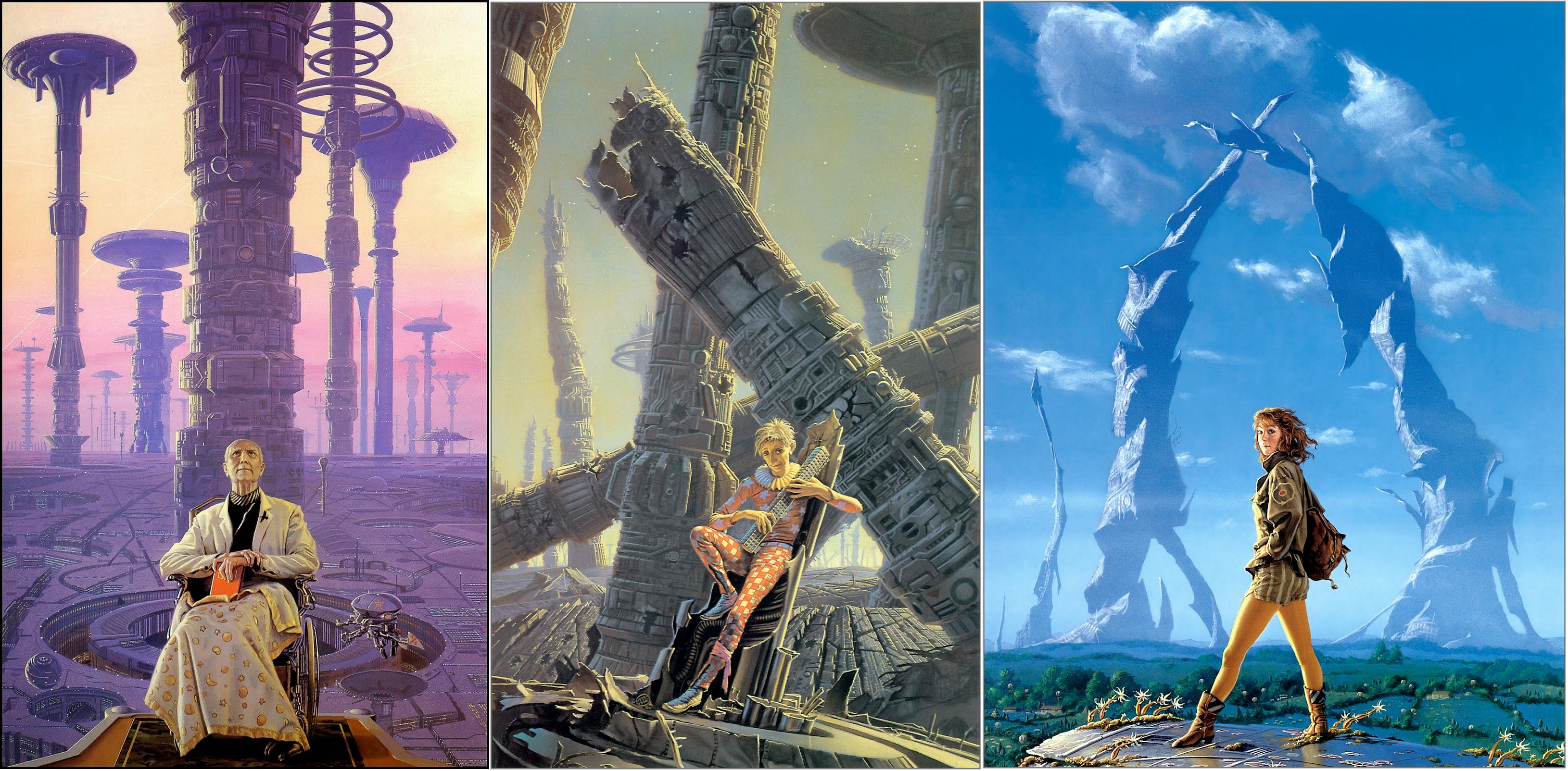
Foundation – Apple is making a TV series based on famous sci-fi author Isaac Asimov’s most successful series of books: Foundation. The series comes from Josh Friedman (War of the Worlds) and David Goyer (Batman Begins). The most shocking thing about this pickup is that the books were written in the 1950s. And if there’s one thing I’ve learned in this business, it’s that old sci-fi doesn’t travel well. And with this book (the first in the series), I can tell you that it ain’t good. Borderline unreadable. To me, this signifies just how hard it is for Hollywood to find product right now. There are too many outlets, too many writers competing for good ideas, and that forces giant corporations like Apple to take risks on properties that weren’t meant to be produced in 2018. But this is good news for screenwriters. It’s a seller’s market right now in TV, more so than at any point in history. If you’ve got something good and you get it in front of a lot of eyeballs, I guarantee you someone’s going to say yes.

A hot topic after yesterday’s review was how the script was driven by “ex special forces” characters. I read a variety of comments that said something akin to, “Whenever I see “ex” anything in the logline, I’m out.” The consensus was that this was a lazy cliche writing choice that demonstrated an utter lack of imagination. To this I say, “I feel ya.” You can probably find some early reviews on the site with me railing against this very issue. But in time, I’ve come to change my mind. And I want to explain why.
The number one reason you want to use an ex-special forces, or ex-detective, or even active versions of these characters in your screenplay, is that it makes your script a hundred times more marketable. There is no genre Hollywood knows how to market better than “guy with a gun.”
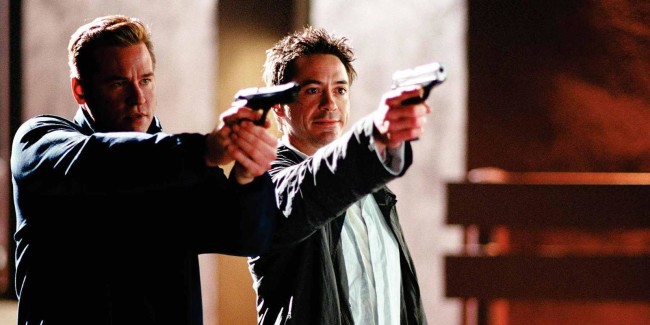
I’ll never forget when this clicked for me. I was reading an interview with Joel Silver, who had talked to Robert Downey Jr., and Downey Jr. was lamenting the fact that he couldn’t break into the larger blockbuster scene. Silver said, as if obviously, “Well yeah, it’s because you’ve never had a gun in your hand in a movie.” In the next movie (“Kiss Kiss Bang Bang”), Downey Jr. strapped up, and it wouldn’t be long before he became one of the biggest movie stars in the world.
You could make the same case for Liam Neeson. Neeson has had a great career. But he didn’t become a household name until his ex special forces character with a particular set of skills, Bryan Mills, flew to France to save his daughter.
I can already hear you saying, “But isn’t it much more original and interesting if the hero DOESN’T possess a particular set of skills?” Not only does he become a bigger underdog, but if he’s not proficient with a gun, he has to use his wits and creativity to get out of situations. That’s so much more interesting than “bam bam, you’re dead.”
There’s some truth to this statement but here’s the thing. You’re limited in how extreme of a situation you can place a character in if they don’t possess the skills to survive that situation. Take John Wick. If John Wick is just a normal guy, he’s dead by the 20 minute mark. You can’t go up against a trained Russian syndicate if you’re a nobody who’s never pulled a trigger before. Any version of that story that has our untrained hero defeating the Russian syndicate is a bold-faced manipulation. And that’s the real issue here. The less skilled your hero is, the less skilled the opposition must be for it to be believable, and, by association, the smaller and less marketable your movie becomes.

The exemption to this rule is the “run away” narrative. You used to see this a lot in conspiracy thrillers like Enemy of the State. Because the “normal everyday guy” didn’t have the skills to go toe-to-toe with his government trained pursuers, he would run away. And the whole movie, then, would become running. As exciting as some of these films have been, a situation where a character runs away is never as compelling as a situation where a character stands his ground. And you can’t stand your ground if you don’t know how. Remember, guys, you’re going up against SUPER HEROES these days. The coolest and most badass characters cinema has ever seen. The ONLY type of character who can compete against this at the box office is a REAL LIFE SUPERHERO – James Bond and Ethan Hunt and ex special forces dudes such as our heroes in Triple Frontier.
So the question you should be asking isn’t, “How can I have my plumber protagonist believably defeat the Chinese mafia?” It should be, “How can I make an age-old character trope interesting, different, fresh, or all of the above?”
Levres offered up the first answer to this, which is that you can camouflage the cliche-ness of your hero’s background if you place them in a fresh situation. In other words, if you place a bunch of ex navy seals on a mission in Iraq to kill a terrorist, we’re not going to be excited about that. It’s too familiar. But a bunch of ex navy seals being forced to save a high-profile politician who’s been taken hostage with his family by a terrorist inside Disney World? That feels different. It’s a key reason why Triple Frontier worked. The unique locale helped offset the ex-special forces cliche.
But the secret sauce in winning this war is in the character construction. If you write a good character, it doesn’t matter what job they have. It doesn’t matter if they’re the most cliche archetype there is. If you can make them likable, if you can make them relatable, if you can provide them with depth, if you can give them personality, if you can give them a flaw they’re battling, we’re not going to be thinking about their jobs. We’re going to be thinking about them.
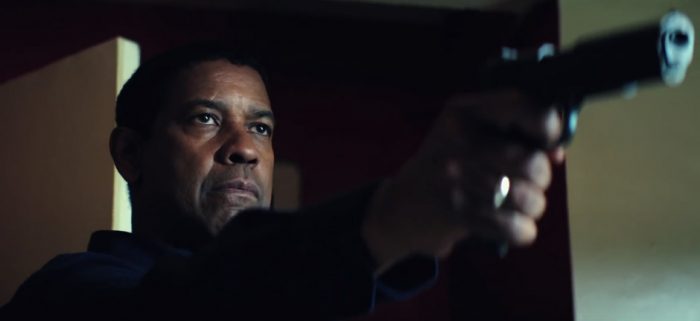
So if you’re one of these writers who’s writing an ex-Navy SEAL, your first order of business is to construct a character we like, and look for ways to make them different. Because what critics are really saying when they say, “I hate ex-Special Forces characters,” is “I hate generic ex-Special Forces characters.” One of the best scripts I’ve ever read, The Equalizer, had ex-agent Robert McCall helping an overweight co-worker eat properly so he could pass a fitness test in order to make security guard. Later, we find McCall reading The Old Man and the Sea (he’s attempting to read all 50 books from the “The 50 Books You Must Read Before You Die” list) in a diner. This guy’s a little different. This ensures that we don’t think about the cliche nature of his former job.
Finally, if you’re writing “cliche” main characters like ex-NAVY SEALS, take some chances with your narrative. The idea here is if you’re going to play it safe in one area, you need to take chances in other areas. Because you can’t completely avoid cliche in a movie. It’s impossible. But you can minimize it. I brought this up with Triple Frontier yesterday. I loved how after they rob the house, the final 50 pages cover the logistical nightmare of trying to transfer 600 million dollars out of Paraguay. I’d never seen that before. If you can make narrative choices that give us things we’ve never seen before, they’re going to cancel out the things we have.
Now I’m not saying there’s no way to write a movie where an average guy defeats an organization of trained men. The Matrix figured out a way to do it. But if you can’t find that elusive Matrix-like idea, it’s still possible to write a good movie with cliche FBI agents or cliche ex-special forces agents. Just put them in a new situation, give us characters we care about, and take some chances with the narrative. You’ll be good. :)
Genre: Comedy
Premise: A woman goes on a vacation with her much younger boyfriend’s family.
About: Melissa Stack is a lawyer turned screenwriter, which is funny when you think about it, since most parents of screenwriters wish their children would’ve become lawyers. In one of the most notorious Black List entries of all time, Stack’s breakthrough screenplay, “I Want To _____ Your Sister,” became a lightning rod for debate, with many calling the title desperate and gimmicky. The success inspired a slew of similarly titled scripts over the years, until the trend finally died out. While “Sister” still hasn’t been made (last I heard it had been moved from its Wall Street setting to college), Stack did get that all important major Hollywood credit with 2014’s The Other Woman. I say “all important” because after you get that credit is when you start getting PAAAAAAAA-IIIID. Family Vacation was purchased by Fox. And taking matters into her own hands, Stack will be making the script her directing debut.
Writer: Melissa Stack
Details: 120 pages

You may be looking at this genre and thinking, “Romantic Comedy? Did I just get transported back to 1991?” Ah yes, tis true. I’m reviewing a romantic comedy. But alas! Don’t be dismissive. Word on Sunset Boulevard is that after the success of Crazy Rich Asians and Set It Up on Netflix, that the romantic comedy is alive again. Granted, it’s not a living breathing bipedal animal. It’s a tiny organism floating helplessly in an endless sea. But the point is… it’s alive! It’s ALLLIIIVE!!!
Which means that if you’ve written a romantic comedy, maybe, just maybe, people will take a look at it. And that’s way better than the situation two years ago, where if you even mentioned the words “romantic” and “comedy” in a Hollywood office, you were branded on the forehand with the letters “RC” and never allowed to speak of screenwriting again. It’s a rough town, I tell you.
Mia is 39 years old, single, and loving life. Well, okay, she’s not “loving” loving life. There’s a romantic void there, a void she’s been filling with Ben, her hot younger (31) neighbor. If forced to define their relationship, Mia might call it friends with benefits and a side of feelings. But the relationship gets scheduled for an upgrade when Ben asks Mia to join him on his family vacation so he’s “not bored.”
Mia, not really sure what this means, accepts the invitation. She’s quickly introduced to Ben’s oversharing parents, former marine Gus, a man who proudly refuses to defecate during vacation, and Linda, who covertly drugs her husband with valium whenever she needs something from him. The four of them hop in the car and head to their destination – a giant ranch in Utah.
Once at the ranch, they meet up with Ben’s brother Sam and his “11 out of 10” wife, Heidi, as well as numerous other vacationers staying at the ranch. The group participates in a series of activities that include cliff diving and fishing, all while Mia and Ben attempt to stay sane. This isn’t easy, as is demonstrated by Gus having an accidental shit explosion during his cliff dive due to the excessive buildup from refusing to defecate, and then Mia ignorantly jumping in right after him.
Eventually, Mia starts to question why she’s on this trip and what she wants from a guy she never expected anything from more than sex. But when Ben starts throwing words like “marriage,” “babies,” and “love” around, Mia realizes that she’s not getting off this ranch without making a choice that will determine the rest of her life.
Family Vacation is an okay script with a couple of big weaknesses. The first is the hook. This is pitched as a woman going on an awkward family trip with her much younger boyfriend. That sounds like a fun movie to me. We typically see the reverse of this – older guy, younger girl – so by flipping that cliche on its head, this already had a fresh feel. The problem is, Ben isn’t that young. She’s 39 and he’s 31. Therefore, once they’re on the trip, there aren’t any situations to exploit their age difference. They’re all fully grown adults. This would’ve been funnier if Ben was 24 or 25 and the parents were only 50, ten years older than Mia. Now that would’ve been awkward.
The bigger issue, however, is the lack of conflict between Mia and the parents. If we go back to the blueprint for this type of comedy – Meet The Parents – you’ll notice that the reason that script works so well is because the main character, Greg Focker, was so desperately trying to win the approval of his fiancé’s father, Jack. But Jack hated him. That conflict and need to change Jack’s mind is what drove the whole film.
In Family Vacation, the parents like Mia immediately. So there’s zero conflict. Nobody to win over. As a result, there isn’t a lot of conflict to exploit. And let me be clear – conflict is the lifeblood of comedy. It’s where all the laughs come from. The pushing and the pulling, the disagreements, the back and forth. It’s hard to make things funny when everyone’s happy and agreeable. And when you don’t have conflict, you’re forced to come up with nonstop hijinx, like a dad shitting in a lake and our heroine jumping in afterwards. I’m not saying that isn’t funny. But you can’t sustain a hijinx-only approach for very long.
To the script’s credit, things get a little more interesting when Mia and Ben begin to struggle with what they want out of their relationship. The problem was this only highlighted the fact that neither character had a strong motivation to begin with. I never knew what Mia wanted out of this relationship and I didn’t know what Ben wanted either. Contrast this with Greg in Meet The Parents. The only thing in the world he wanted was Pam. Pam was his life. He was willing to die for her. Which is why winning over her father was so important to him. That’s the power of a strong motivation.
That’s not to say you can’t explore not knowing what you want in a script. I actually think indecision is a universal flaw that lots of people relate to. But if you’re going to do that, you need to make it clear, in big bold letters, that that’s your heroine’s fatal flaw. She’s always been indecisive. And once again, she’s being indecisive with this guy. That way, we understand what the endgame for the character is and can play along. Mia’s either going to learn to be decisive or she isn’t.
I’m going to make a wild guess here and assume that the writer, Melissa Stack, is basing this script on her own experience. It reads like someone did something and thought, “This could be a movie.” And it can. But when you’re writing about real-life experiences, you have to change things to make the story better. To me, the hook here is the girlfriend joining the much younger boyfriend on a family vacation. But you have to exaggerate that for a movie. So if Stack’s boyfriend was really 8 years younger, you shouldn’t be afraid to double that.
I like Stack’s writing. Her dialogue is fun. And sometimes her hijinx are funny (Heidi getting bit by a snake in the vagina and Mia being forced to suck the poison out was a highlight). But the lack of a genuine hook here combined with barely any conflict left this one feeling light.
[ ] What the hell did I just read?
[x] wasn’t for me
[ ] worth the read
[ ] impressive
[ ] genius
What I learned: Set your scenes up in a distractive environment. The opening scene of Family Vacation is Mia and her three best friends chatting. Stack could’ve placed this scene in a restaurant or a coffee shop. But she instead placed it at a kid’s birthday party. This allowed for kids to be running around, popping their head in, “I have to pee,” and generally giving the scene a more chaotic unpredictable feel. So if you’ve got a stale scene, consider placing it in a more distractive environment.