
Search Results for: F word

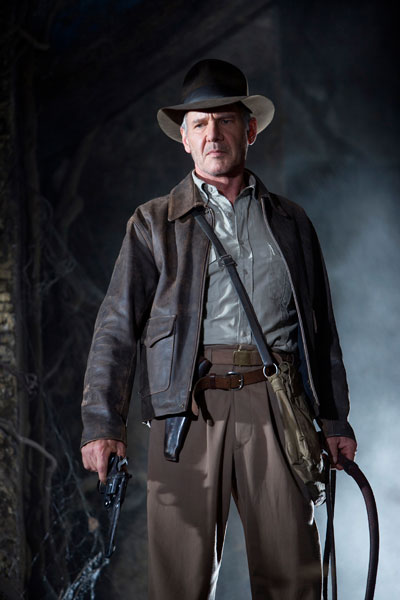
Whoa, I’m not usually nervous while writing up Scriptshadow posts but this one’s got me a little jittery. Outside of the prequels, I don’t think there’s been a more documented breakdown of a film’s failure to deliver on an audience’s expectations than that of Indiana Jones And The Kingdom Of The Crystal Skull
This allowed me to approach Skull with super-low expectations, and ironically, enjoy the film for what it was – a sloppily constructed summer tentpole film. The movie was clunky and awkward and weird – like a lot of those films tend to be – and seemed to spend most of its running time trying to figure out what it wanted to be rather than just…be.
And I think that’s the ultimate failure of Indiana Jones 4. Clearly, Lucas and Spielberg wanted to make two different movies, and a handful of unfortunate writers were assembled to balance those opposing visions and turn them into a cohesive story.
Now it’s important to know that my goal here is not to rip this movie apart. Millions of internet nerds took care of that long ago. I want to identify the poor screenwriting choices Skull made so we can learn from them and avoid those mistakes in our own writing. So, I give you the opposite of my previous Raiders article: Ten screenwriting no-nos you can learn from Indiana Jones and The Kingdom of The Crystal Skull.

THE PROTAGONIST ISN’T ACTIVE
Remember Raiders of The Lost Ark? Remember my very first observation about that movie? Indiana Jones was ACTIVE! In the very first scene, the man is risking his life to secure a golden idol from a trap-filled cave with death at every corner. When he hears about the Ark’s possible resting place, he’s on the first plane to Nepal, obsessed with locating the mythical relic. In this film? You wanna know what happens in the first scene? Indy’s been captured. Indy is REACTING to everyone else. Indy is doing WHAT OTHERS TELL HIM TO DO. It sets the tone for who Indy will be for the next 2 hours (or is it 3 hours?). He will be a REACTIVE character. He will be following Mutt around on this quest for the crystal skull. And because someone else is driving the story besides our main character, everything seems…less important. Think long and hard if you want to have a reactive hero in your action script. Chances are, it ain’t going to work.
MOVIE TAKES FOREVER TO GET GOING
Remember how quickly Raiders moved? Remember how there wasn’t an ounce of fat on it? A big reason for that was that the story knew what it wanted to be so it was able to get there right away. 15 pages in (FIFTEEN PAGES!) we’re given our goal: Get the Ark Of The Covenant. Contrast that with the bumbling, stumbling, mumbling Skull. Do you know when the plot is revealed to us in this film? Page 30! That’s when Mutt tells Indy about the coded Mayan message. Do you know when we actually START our adventure? Page 38! That’s over 20 pages further along than when Raiders got going. And people wonder why Skull feels like it drags.

PLOT IS UNCLEAR
Clarity in your main character’s central objective is crucial to the audience’s enjoyment of the movie. It’s the key to everything else working in the script. If, for example, in Raiders, we didn’t know that Indiana was looking for the Ark, we wouldn’t have cared nearly as much as we did. Yet that’s exactly how Skull tells its story. We’re never exactly sure what we’re looking for. I mean, the title mentions a crystal skull, but we only find out about the skull once Indy and Mutt locate it. Then what’s the movie about? We’re never sure! Indy’s double-agent buddy mumbles something about a city of gold. Russian Psychic Chick talks about plugging the skull in somewhere. But all this jibber-jabber is incredibly vague and we’re constantly wondering what the endgame is. The point is, the audience is never clear what the characters are going after in Skull and the second we’re unclear about your characters’ objectives, your movie is dead.
DON’T BE TOO ‘WRITERLY’
Someone gave me a note on a script once that I’d never heard before, yet I understood exactly what he meant as soon as I read it. He said my scene was too “writerly”. It’s tricky to define this word, but essentially it’s when you’re too clever for you own good, when a scene seems original and interesting as you write it, but feels false when it’s read. The magnet bullet scene in the beginning of Indy 4 is a “writerly” scene. I’m sure it felt inventive when it was conceived. (“And, like, these bullets will be dancing down the warehouse and we’ll be like, ‘Where is it taking them???’”) But man does it feel awkward when you watch it. Another “writerly” moment is the “family holds hands on top of car with baby monitor to get the alien signal” scene in M. Night’s “Signs.” 

DON’T PUT GAGS BEFORE YOUR STORY
The reason people got so worked up about the infamous “nuke the fridge” scene in Skull actually had nothing to do with nuking the fridge. The problem was that the scene shouldn’t have existed in the first place. We could’ve easily cut straight from the warehouse to Indy’s classroom. So why, then, was this scene included? Because Spielberg (or Lucas) liked the gag. That’s the only reason it was there. And boy did they pay the price for it, because by holding the movie up for an entire 8 minutes for a silly gag that added nothing to the story and did nothing to push the plot forward, it allowed the audience to focus their attention on the absurdity of surviving a nuclear blast in a fridge. Except in rare circumstances, avoid putting anything in your screenplay that isn’t pushing the plot forward. Didn’t Spielberg learn this after his buddy’s whole fish-dragon sequence in Phantom Menace?
FORCED PLOT POINTS
Don’t force unnatural plot points on your audience. After the opening warehouse sequence, the FBI – for no logical reason – thinks Indy is a commie, which leads to an embarrassingly forced scene where Indy gets fired. If you need your hero to get fired for story purposes, GIVE US A REALISTIC REASON THEY’D BE FIRED. Don’t make up something that takes us out of the story. I’d easily buy Indiana Jones being forced into retirement because of his age (he is 65). Any time you insert a nonsensical plot piont in your story, you run the risk of breaking the audience’s suspension of disbelief. Keeping that suspension intact is essential to making the story work.
UNCLEAR ACTION SCENES
Remember how much I praised Raiders Of The Lost Ark’s action scenes. Do you remember why? Because the main character always had a clear objective! Here, action scenes are given out like past due Halloween Candy, none more random than the university motorcycle chase. On the one hand, we know Indy and Mutt are trying to escape. The problem is, we don’t know why. What do these men want? Are they killers? Are they kidnappers? Do they want the scribbled note? Do they want Jones to explain it? Is it okay to kill Indy and Mutt? Or do they need them alive? There’s an overwhelming lack of clarity in this chase, which is why it feels so pointless. To make an action scene work, make sure everyone’s motivation in the scene is clear. (as a side note: Compare how much Indiana is BEING CHASED in Skull to how much he was DOING THE CHASING in Raiders. Coincidence that the first film was more fun and exciting? Hmmm…)
EXPOSITION EXPOSITION EXPOSITION
I’m starting to think Christopher Nolan did a rewrite on Indiana Jones 4. The exposition in this script is so abundant and so lazy it’s embarrassing. How many pure exposition scenes do you remember in Raiders? Me? I remember one. The scene where they discuss going after the Ark. Here we have an exposition scene with the CIA agents after the Nuke The Fridge scene. We have one with Mutt in the cafe. We have another Mutt-Indy exposition scene after the motorcycle chase. Then we fly to the Amazon and get ANOTHER exposition/backstory scene as Indy and Mutt walk through the market. We then have another exposition scene down in the haunted cave. Usually when you have that much explaining to do in your story, it’s because you haven’t figured everything out beforehand, and are therefore forced to work it out during your script, resulting in…..you guessed: lazy overly abundant exposition.
LONG SCENES IN ROOMS IN ACTION MOVIES
This is an action movie. So can someone please tell me why there is a 15 minute scene in the middle of the movie that takes place in a tent? Putting your characters in a room for too long in any movie is a bad idea. But in an action movie, where the audience is expecting…ACTION?, a scene like this is deadly. And here’s the thing. WE DON’T EVEN KNOW WHAT THE PURPOSE OF THIS SCENE IS! CIA Double Agent Buddy comes in and yells at Indy about a city of gold or something. Russian Chick comes in afterwards (as if she was waiting for her turn – GOD THE LAZINESS IN THIS SCRIPT!) and tries to read Indy’s mind for…some reason. Then Rickshaw Jim The Mental Moron shows up to write something on a piece of paper. How many “people in a room” scenes were in Indy that went over 3 minutes? The Marion-Belloq scene maybe. But that scene actually had a purpose. Marion was trying to escape. This is just a big fat tent of non-stop exposition (and what’s even more baffling is that the point of exposition is to CLARIFY things for the audience. After this scene, we’re actually MORE confused than we were before it). The lesson here? Don’t place your action hero in a room for any extended period of time unless there’s a strong plot-related reason for it.
NEVER MAKE THINGS CONVENIENT OR EASY FOR YOUR CHARACTERS
You remember the truck chase in Raiders? Remember how Indy had to use every ounce of strength, every punch, every kick, every last brain cell (cleverly sliding underneath the truck so as not to get smushed). He worked his tail off to get control of that truck. Here? Everything, from fights to escapes are just HANDED OUT to our heroes. That 15 minute long tent scene I mentioned above? How did they get away? Shia KNOCKS OVER A TABLE! Are you kidding me? When Indy is shot into the desert with the Russian after the warehouse scene, what happens when he comes to a stop? The Russian has fallen asleep! In the back of the truck arguing with Marion? Indy KICKS the guard in the ass when he’s not looking, resulting in him passing out! But the worst is when our characters accidentally fall into a river, get dumped down three successive waterfalls, and miraculously happen to end up RIGHT IN FRONT OF THE MYSTERIOUS CAVE THEY’VE BEEN LOOKING FOR! This is a huge reason why the Indy 4 experience feels so unsatisfying. Our characters don’t earn anything. They’re HANDED everything. So please, always make things difficult for you characters. And make sure they earn their way.
So, I guess the only question left to ask is…did Indy 4 do anything right? Barely. While the goals are weak, the stakes are low, the urgency isn’t there, the plot’s unclear, there’s too much exposition, the villains suck, and the characters are barely developed, I will admit that the last 40 minutes or so were pretty exciting. Unfortunately, the reason for this had little to do with the screenplay. We, as an audience, simply knew that the story was coming to an end, and this finality, while artificially generated, gave the story some much-needed purpose. I’m disappointed with Spielberg and Lucas. I understand that there were a lot of factors at play in making this movie happen, but you’d think they’d at least put together a COMPREHENSIBLE screenplay, one where we actually understood what was going on. For some odd reason, when directors get older, they get lazier, and we got the result of that laziness here. Oh well, I heard they’re making a fifth film. Maybe someone actually plans to write a screenplay for that one?
Genre: Romantic Comedy
Premise: After a woman spills her secrets to a stranger during a turbulent plane ride, she shows up at work to discover that he is the recently returned CEO of her company.
About: Can You Keep A Secret landed on the bottom half of the 2010 Black List and is an adaptation of a novel by Sophie Kinsella


Writer: Megan Martin (Based on the novel by Sophie Kinsella
Details: 114 pages – 10/04/10 draft (This is an early draft of the script. The situations, characters, and plot may change significantly by the time the film is released. This is not a definitive statement about the project, but rather an analysis of this unique draft as it pertains to the craft of screenwriting).

Oh boy, I’m already anticipating some blowback from this one. I feel the readers descending upon me, chastising me for endorsing a seemingly straightforward romantic comedy. But here’s the thing with romantic comedies: Even if they follow the traditional clichéd romantic comedy path, if you can create two characters that we fall in love with, the predictable plot elements can be excused (TO A POINT! – I am NOT saying that plot isn’t important). And the truth is, I loved both of these characters, starting with our heroine, Emma.
Emma Corrigan is living a lie. Well, aren’t we all living a lie? But Emma’s living lie is one that makes life quite difficult – she’s lying to her parents. She pretends to be a big corporate hotshot on the express elevator to the top when in reality she’s barely holding on to her assistant marketing job at a dying energy drink corporation, a job she hates with a passion and yet, like many of us, is too terrified to leave.
A big reason for Emma’s fakery is her beloved golden child cousin, Kerry, who is the apple of her parents’ eye. Kerry really *is* living the high-class corporate lifestyle, making Emma’s lack of success look more embarrassing at every turn. Of course after a couple of fibs, it’s all even again, to the point where Emma’s parents believe she’s living the exact opposite life that she actually is.
On her way back to the West Coast, Emma experiences one of her few fortuitous moments, finding herself upgraded to first class. Her seat-mate must have gotten bumped up as well because with his five-o’clock shadow and grubby outfit, he’d be lucky to be accepted on a Greyhound bus, much less the first class cabin of an airplane.
Somewhere during that five hour flight, the plane starts careening out of control, and it looks like they’re going down. A terrified Emma responds by barking out an endless closet of secrets she’s never told anyone, starting, of course, with how much she hates her job, moving on to how she made up a charity organization she volunteered for to get the job in the first place, and going into her deepest darkest sexual secrets that she’s never been able to act out (which include, amongst other things, dressing up like a nurse and being taken advantage of by a doctor).
Well wouldn’t you know it, the captain regains control of the ship, and an embarrassed Emma realizes she just told her whole life to a complete stranger. AWK-WARD. But it’s about to get a lot more awkward honey. You see, Panther Cola’s elusive CEO shows up for the first time in forever at the company. And wouldn’t you know it? It’s Airplane Guy. Who will henceforth be known as Jack Harper.
Emma assumes she’s screwed nine ways to Tuesday but is shocked when Jack calls her in and tells her she’s inspired him. Panther Cola has been down in the dumps and he’s been frantically searching for a new marketing campaign. Unleashing who you truly are, in essence, all your secrets, is the inspiration behind the campaign. And since she inspired it, he wants her to head it up.
Emma is re-energized, in both her work and her personal life, charging up those around her in ways that nobody ever expected. But as Emma and Jack’s professional relationship becomes personal, it becomes unclear if Emma is really earning all these accolades on her own, or they’re being handed to her because she’s – let’s not mince words here – “banging the boss.” When the truth finally comes out, Emma’s credibility is called into question, and all this success she’s finally been able to achieve, very well may come crumbling down.
I’ll get to the characters in a second, but what I really liked about Can You Keep A Secret was the uniformity of the theme. This romantic comedy is about something: Lying and/or the omission of truth. There’s the life we project to everyone else, and there’s the life we actually live. The distance between those worlds is usually wider than we’d prefer. Emma must lie to her parents to live up to their lofty expectations. Jack omits the truth in his relationship with Emma. Emma can’t tell her co-workers the truth about her relationship with Jack. The manipulation of truth is one of the most relatable themes out there, and I thought Can You Keep A Secret explored this in a wonderful way.
That’s why I liked Emma. I could relate to her plight. We all exaggerate things (especially us storytellers!) in order to impress the people we love, even though we know there will be consequences to those actions. And I think that’s what makes her situation so fun to watch, is that we know that, sooner or later, the consequences are coming. You can’t keep doing something “bad” forever and not have to pay for it. Just ask Bernie Madoff.
The care and attention to Jack was what really set this apart though. Usually writers will put all this work into their rom-com lead, then maybe half or three-quarters of that same work into the romantic interest. But Jack is not the typical happy-go-lucky “everything is peachy, I’m going to turn your life around” mate you usually see in these films. He’s got some pretty big problems of his own, and although it takes a while before we’re let in on those problems, we can see that they’re weighing on him.
That’s why this script got to me. Despite a lot of the formulaic plot choices (the company that NO real person ever works for – a protagonist with a marketing job), I thought the relationship itself felt realistic, with each person having real problems and real obstacles keeping them from being together.
In fact, I was all set to give this a double worth the read, but then, unfortunately, we get a huge plot contrivance late in the story, and it’s one of those contrivances you can’t make in your rom-com. In every romantic comedy, you need the “guy and girl break up” scene late in the second act. That way, they can get back together in the third act. But the break up in “Secret” is so manufactured (it involves Jack doing a CNN interview and revealing all of Emma’s secrets in a way that would never happen in real life), that it really hurt what was, up until that point, a fun romantic comedy about two people you liked.
That was a bummer, cause otherwise I would’ve given this a huge thumbs up. Unfortunately it will have to stand as a solid recommendation, a smart if predictable entry into the romantic comedy genre that WILL NOT be converting any non-rom-com fans, but should be plenty satisfying for the Notting Hill and Pretty Woman fan clubs. Just goes to show. Work on your characters first. Figure out what makes them tick. You do that and the rest of the story will come.
[ ] What the hell did I just read?
[ ] wasn’t for me
[x] worth the read
[ ] impressive
[ ] genius
What I learned: The late rom-com break up scene people. IT HAS TO BE BELIEVABLE. It has to be realistic! I can’t tell you how many writers I see fudge their way through this. They believe that because it’s part of the convention of the genre, that the audience will accept any version of it you vomit onto the page. Here, Jack gives up the details on Emma’s deepest darkest secrets on national TV completely unprovoked!!! There’s no way in a million years he would do this. Look at how this convention is handled in When Harry Met Sally
Genre: Sci-Fi/Comedy
Premise: Every man in the world is dead except for a young slacker and his pet monkey, leaving a world entirely populated by females.
About: Brian K. Vaughan is a comic book writer, a TV writer (Lost

Writer: Brian K. Vaughan (Based on the series from Vertigo Comics Created by Brian K. Vaughan & Pia Guerra)
Details: Draft 1.2 (This is an early draft of the script. The situations, characters, and plot may change significantly by the time the film is released. This is not a definitive statement about the project, but rather an analysis of this unique draft as it pertains to the craft of screenwriting).

There are few screenwriters out there who have as much geek cred as Brian K. Vaughan. You say his name and geeks everywhere smile unintentionally, their cheeks turning red the way a 13 year old girl reacts when the school stud says hi to her in the hallway. I, however, am still undecided on Vaughan. I loved the majority of Roundtable, his Ghostbusters-like 
Y The Last Man starts the way a spec script should: with something happening. And boy is something happening. Moms are driving their dying husbands and sons to the hospital. Businessmen are keeling over mid-stride. 747s are crashing into the middle of cities. It appears we’re smack dab in the middle of the Apocalypse. Well, sort of anyway. We realize quickly that this apocalyptic event is selective, only killing off the men in the world, sparing the ladies and girls completely. Within 5 hours, every damn living creature with a y chromosome is a burnt pop tart, el officio deadondo.
Or wait, not EVERY living man. It appears that eternal slacker Yorick Brown and his pet monkey, Ampersand, have somehow survived this ordeal. We’re not sure how yet but a guess is that the monkey has something to do with it. So Yorick throws on a gas mask to disguise himself, and heads to his mom’s place, where he hopes she’ll know what to do. Shock City then when his mom betrays him and calls the CIA!
Yorick grabs the monkey, jumps out the back window (don’t you love how awesome back windows are in movies?) and sprints for his life. A test subject for the remainder of his existence does not sound like fun. The last Yorick heard, his girlfriend, Beth, touched down in Los Angeles, and the poor romantic sap feels like if he can just make it to her, everything will be okay. Too bad finding your girlfriend in an apocalyptic wasteland isn’t as easy as jumping out the back window.
Unfortunately, Colonel Alter Tse-Elon, a female soldier in the Israeli defense force, hears about Yorick and makes it her mission to find him. She believes (I think – I wasn’t clear) that if Yorick is found alive that the earth could be repopulated with men, the root of all war, and that once again Israel would be subject to attack. Finding and killing off Yorick would essentially ensure world peace.
And you know what? She’s not the only one who wants to take Yorick down. A huge female biker gang that may or may not be hardcore feminazi lesbians, discover the presence of Yorick and want to pave his way down the Highway to Hell as well. Ugh, not good.
Luckily Yorick runs into Agent 355, a smoking hot secret agent for…some really secret agency, who decides to help him get to Los Angeles. She’s really the only thing that stands between him and capture, as she fights off the biker chicks and Israeli army at every turn, all the while trying to convince Yorick to offer himself to science so they can repopulate the world with men. Will this happen? Will the world’s biggest slacker be able to save mankind? We’ll have to see.
Y The Last Man is as crazy as it sounds. And that’s both its biggest strength and its biggest weakness. What I like about Vaughan is that he gives you what every reader asks for. Surprise. Show me something different. And when Vaughan writes, indeed, you’re never quite sure what’ll happen on the next page. But it’s a double-edged sword, since what you get isn’t always satisfying, and occasionally is so broad that even the developers of those weird Japanese video games step back and say, “Whoa dude, not bi-winning, too far.” A lesbian biker gang? The Isralei army? A pet monkey? It’s not as out there as The Vault, but you definitely need to be up for the absurd when reading one of Vaughn’s scripts.
On the technical side, I wished Vaughan had explored his premise a little more. What if there really were no men left in the world? There’s a great little scene early on where this super-hot chick pulls up in a garbage truck (which she can barely drive), clumsily screwing up her job at every turn, and we’re going, “What the hell is this girl doing driving a garbage truck?” And she explains how she used to be a model, but when all the men disappeared, there was no use for models anymore, forcing her to take the lowliest of lowly jobs. True it was a gimmicky scene that had nothing to do with the plot but I loved that it was actually exploring the premise in a clever way. And I wanted to see more of that. There’s a little of it (the energy sector was dominated by men so there’s basically no electricity anymore) but I was hoping for more.
Structurally, the script has some good and bad things about it. You have a main character with a clear goal (“Get to Beth”) and plenty of urgency behind the goal, since Yorick is constantly being chased. Remember, if you don’t have a ticking time bomb in your script, a great supplement is to create a chase scenario. If someone’s always on your hero’s heels, it creates the illusion of a ticking time bomb. And whenever you have a road trip scenario, you probably want someone chasing your characters anyway, as it gives the story an added edge.
On the stakes front, I’m not sure the script achieves its goal. While Yorick IS the last man on earth, and therefore the last chance to save mankind, that’s not what his mission is about. His mission is to get to his girlfriend. It’s not like Will Smith in I Am Legend

The biggest misstep, however, was one I noticed only because I’d watched Raiders recently. Every third or fourth scene In Y The Last Man is Yorick and Agent 355 in a safe setting (on a train, on the side of the road) talking. These scenes are weak because the story isn’t being pushed forward in any noticeable way. Instead, the characters are talking about their pasts or discussing the effects of the plague. They’re not TERRIBLE scenes because Vaughan is good with dialogue (i.e. “You know what the strongest muscle in the human body is?” “The heart?” “No, it’s not the heart, you sappy fuck. It’s your jaw muscle. Even a scrawny dude like me has five hundred pounds of bite strength.” “Great, that’ll come in handy when you’re fighting food.”) but there’s no outside force or conflict or subtext going on during them. It’s just two people talking.
Compare that with the “dialogue” scenes between Indiana and Marion in Raiders. When he first finds Marion, he has to convince this woman whose life he ruined to help him. Or later on when they’re talking in Cairo, the baddies are moving into place to attack them. Or when she’s dressing Indy’s wounds, probably one of the truest “straight dialogue” scenes in the movie, even there the sexual chemistry that’s been building through them the entire movie is about to burst. In other words, there’s ALWAYS SOMETHING GOING ON in those scenes, whereas here in Y The Last Man, it just feels like two people talking. This is more a testament to how good Raiders is than any defining statement about Y The Last Man, but it is a reminder to add layers to your dialogue scenes.
In my opinion, Y The Last Man is too broad, too loose with the reigns, but there’s no denying that Vaughan always keeps you guessing and has some of the more unique characters you’ll find in a script. You want to talk about a unique voice, a voice that separates a writer from everybody else out there, go ahead and read one of Vaughan’s scripts. And for that reason alone, I think Y The Last Man should be read.
[ ] What the hell did I just read?
[ ] wasn’t for me
[x] worth the read
[ ] impressive
[ ] genius
What I learned: I’m surprised I’m bringing this up with a Brian K. Vaughan script, since I just championed his originality, but this is proof that even the top writers fall into the same traps as the rest of us. No less than six days ago – SIX DAYS AGO! – I read an apocalypse script where in the opening scene, a jumbo jet crashes into the city. What happens in the opening scene of Y The Last Man? A jumbo jet crashes into the city. This is proof that ALL WRITERS THINK ALIKE. We think apocalypse and we imagine a plane diving into the middle of New York. It’ll be epic! But did we ever stop to consider that everyone else who’s writing an apocalypse script would think of the same thing? For that reason, always keep your competition in mind. Ask yourself if another writer would write the same thing. And if they would, write something else. Maybe an oil tanker with no one at the helm plows into the port instead. I don’t know. But keep in mind that that cool original scene you just wrote? A reader may have just read it last week. Which means you’re playing the role of second fiddle.
Genre: Comedy
Premise: Three men on the verge of middle age celebrate a bachelor party at Glastonbury, a notorious mythic music festival in the UK.
About: (Correction – Although Sean does have credits, he does not have representation). — If you are a repped or unrepped writer, feel free to submit your script for Amateur/Repped Friday by sending it (in PDF form) to Carsonreeves3@gmail.com. Please include your title, genre, logline, and why I should read your script. Also keep in mind that your script will be posted.
Writer: Sean Vaardal
Details: 103 pages – Feb. 14, 2011 draft

Lots of people have asked me to write an article on what makes a great query letter. That article has been written somewhere in the neighborhood of 713,000 times already, so I’m not going to rehash it here on Scriptshadow. But I will broach the subject because Sean’s query to me is the reason I picked him for today’s review. Before I get to Sean, let me address a few general thoughts.
Guys, I love you. And you send me some really passionate stories about how difficult it is out there and how hard it is to get your work noticed. However…I can’t pick your script when every tenth word in your query letter is misspelled. i can’t pick ur script if u don’t capitalize or punctuate correctly or if you write 2 me in text speak. I can’t pick your script if you ramble on incoherently about your concept or your aspirations. If you ramble on in a 500 word query letter, I can only imagine how unfocused your screenplay is going to be.
You need to approach your query letter with the same level of professionalism you’d imagine Ernest Hemingway would have done it. That’s not to say you should be buttoned up and humorless. But be focused, devoid of mistakes, and get to the point quickly. I thought Sean’s query was pretty much perfect, so I decided to include it here. Here’s what he wrote…
Dear Carson,
I am a scriptwriter with credits on two award-winning British comedy shows Smack The Pony and Monkey Dust.
I would like to send you my new feature-length script, a comedy called Glastonburied.
I got the idea after an article in The Economist, which said 43 is the age at which you are apparently no longer young. According to this, I have only 6 months left before I am ‘officially’ old. But what I want to know is: How do you stop being young, and are you supposed to? And if so, when does the wisdom start kicking in?
I thought this ‘tipping point’ idea was a good way of analysing three, 40-something friends over a weekend at the Glastonbury music festival. A place where people go to lose themselves or find themselves. A place where all your dreams can come true, a place of myths and legends, bands and chaos, where you might enter an innocent but leave with a rare, new kind of knowledge.
Glastonburied is like The Breakfast Club for adults. It combines male identity themes reminiscent in Sideways, with the added mayhem of Withnail & I.
Go on Carson, you old mucker, make it your Amateur Friday pick of the month.
Cheers,
Sean
Now I don’t know what a “mucker” is, and I’m not going to speak for every agent, manager, and producer out there, but I’ll tell you why this worked for me. First, he exhibits a clear grasp of the English language, which indicates to me that at the very least, his writing will be easy to read. Next, he uses a well-known trick to pitch his idea – relating his screenplay to his own life. If I believe that there are some personal issues you’re exploring in your script, I know I’m reading something meaningful to the writer, which almost always ends up in a better screenplay. Sean also gives me a couple of movie references so I know what to expect, and ends with a pleasant-humored challenge, encouraging me to give his script a shot.
Now, of course, this query got me to read the screenplay. But that doesn’t mean I’m going to like it. Did I like Glastonburied? Read on to find out.

Gary Newman is a piano bar singer just north of 40 who’s beginning to have panic attacks during his performances. It seems as if Gary’s directionless life has finally caught up with him, a life that was once quite promising . You see, back in 2003, Gary won one of those “Idol” shows in Britain, and was for a brief time on top of the world. Clearly, that top has bottomed out.
Adding salt to the wound, Gary’s fiance just called off their wedding. The reason being simply… he’s a shell of his former self. It would’ve been nice, of course, if she would’ve told him this BEFORE Gary’s two best friends showed up for his weekend bachelor party. And because Gary doesn’t want to deal with the consequences of telling them what happened, he decides to keep the break-up a secret.
The friends in question are Jeff, a once moderately successful actor, not unlike Thomas Hayden Church in Sideways, and Keith, a rich family man desperately clinging to his youth. The three of them head off to Glastonbury, a famous/infamous music festival where people go to lose themselves, in search of one last wild time together before Gary gets married (or not).
Naturally, once they get to the festival, all hell breaks loose. A urinating witch immediately puts a spell on them, they befriend a couple of hot young ladies who may be Nazi sympathizers, they meet and participate in some local cult rituals, and of course do a lot of drugs. The characters in Glastonburied do a LOT of drugs. In the end, Gary must decide whether to embrace the next stage of his life or stay trapped in his middling existence forever.

Alright so, first off, let me just say, Sean, I’m on your side. I liked the presentation. I liked the pitch. But since it does nobody any good if I sugar coat my reaction, I’m going to hold Glastonburied to the same high standards I hold million dollar sales. I think this script needs a considerable amount of work. And it starts with the main character. I have a tough time accepting lead characters as celebrities or former celebrities in a character piece, because there’s nothing relateable to an audience about someone who’s a current or former celebrity. Think about it. How many people have won an American Idol like competition in their life? 200? 250? So that’s 250 people who know exactly what your main character feels like. There are obviously exceptions and there was a connection between the character’s past (he’s a musician) and the current situation (he’s at a music festival), but here’s the specific reason why it didn’t work for me: It was false advertising. In the query letter, it was implied I would read a personal everyman journey. That’s the whole reason I wanted to read it! Because it was tackling a normal everyday guy’s collision with that most relate-able of relate-able situations: getting older. So when the main character was given this totally specific celebrity past, every drop of realism, every ounce of that “everyman” I was hoping for, instantly vaporized.
I was also bummed about the way the story was set up. What hooked me in the query was the bit about a guy learning he had six months before officially becoming “old,” and therefore wanting to do something exciting with his last bit of “youth.” But in the script, this line (about becoming 43) is buried deep within the second act, long after it’s lost its significance. That line was the perfect inciting incident for the movie and the fact that it has nothing to do with why he and his friends go to Glastonbury was a bummer.

The structure here needs work as well. Glastonburied is missing three very important story elements: A character goal, stakes, and urgency. Gary isn’t trying to obtain any goal in the script other than a vague sense of holding onto his youth. And since he’s not trying to obtain any goal, there are no stakes to his journey. You can’t gain or lose anything if you’re not going after anything in the first place. And of course, since there’s no goal or stakes, there’s no urgency. You can’t be in a hurry to achieve anything if there’s nothing you’re trying to achieve.
This leaves the plot in the same hole so many other struggling comedies find themselves in: it’s essentially a loosely connected series of comedic situations. This is great if you’re directing a Saturday Night Live episode, but not if you’re constructing a story where all the pieces are supposed to fit together.
Let’s go back to Hangover 
Goal: Find Doug.
Stakes: If they don’t find him, he doesn’t get married.
Urgency: They have two days before the wedding.
I’m not saying to copy this exact structure by any means, but these elements need to be in place for a comedy such as this to work. You also need to be aware of when specific story choices eliminate these opportunities. For example, Gary’s wife breaking up with him before the bachelor party was an interesting choice, but in making that choice, the ticking time bomb (urgency) was eliminated. There’s no need to get to the wedding if the wedding doesn’t exist.
I think a lot of my reaction goes back to the fact that I felt misled from the query. If this was going to be a goofy romp with lots of drugs and pissing witches and strange cults and that sort of thing, that’s fine. That type of comedy can work. But if I’m going in believing this is another Sideways

Script link: Glastonburied
[ ] What the hell did I just read?
[x] wasn’t for me
[ ] worth the read
[ ] impressive
[ ] genius
What I learned: Whatever genre you’re writing, make sure the tone of your query reflects that genre. So if it’s a comedy, throw a joke in the e-mail to prove that you’re funny. If it’s a dark drama, keep the query more professional and straight-forward. Whatever the case, please, before you send your query to anyone, give it to your parents or the most anal punctuation/spelling Nazi you know and ask them to weed out all of the mistakes. It’s hard to catch the eye of someone in this industry. They’re all so busy. So bring your best game to that query.
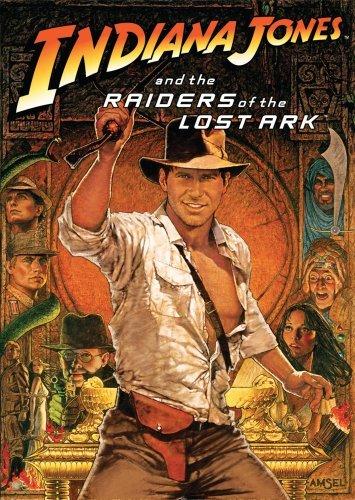
A couple of weeks back I posted my “10 Great Things About Die Hard” article and you guys responded. To quote Sally Fields: “You loved it! You really loved it!” Since I had so much fun breaking the movie down, you can expect this to be a semi-regular feature, and today I’m following it up with a film I’ve always wanted to dissect: Raiders Of The Lost Ark
When it comes to summer action movies, there aren’t too many films that hold a candle to the perfectly crafted Raiders. Many have tried, and while some have cleaned up at the box office (Mummy

So what makes Indiana Jones such a classic? What makes this character one of the top ten movie characters of all time? Here are ten screenwriting choices that made Raiders Of The Lost Ark so amazing.
THE POWER OF THE ACTIVE PROTAGONIST
At some point in the evolution of screenwriting, a buzz word was born. The “active” protagonist. This refers to the hero who makes his own way, who drives the story forward instead of letting the story drive him. I don’t know when this buzz word became popular exactly, but I’m willing to bet it was soonafter Raiders debuted. One of the things that makes Indiana Jones such a great character is how ACTIVE he is. In the very first scene, it’s him who’s going after that gold idol. It’s him driving the pursuit of the Ark Of The Covenant. It’s him who decides to seek out Marion. It’s him who digs in the alternate location in Cairo. Indiana Jones’ CHOICES are what push this story forward. There’s very little “reactive” decision-making going on. And the man is never once passive. The “active” protagonist is the key ingredient for a great hero and a great action movie.
THE ROADMAP TO A LIKABLE HERO
Indiana Jones is almost the perfect character. Believe it or not, however, it isn’t Harrison Ford’s smile that makes Indy work. The screenplay does an excellent job of making us fall in love with him, and does so in three ways. 1) Indiana Jones is extremely active (as mentioned above). We instinctively like people who take action in life. They’re leaders. And we like to follow leaders. 2) He’s great at what he does. When we see Indiana cautiously avoid the light in the cave, casually wipe away spiders, or use his whip to swing across pits, we love him, because we’re drawn to people who are good at what they do. And 3) He’s screwed over. This is really the key one, because it creates sympathy for the main character. We watch as our hero risks life and limb to get the gold idol, only to watch as the bad guy heartlessly takes it away. If you want to create sympathy for a character, have them risk their life to get something only to have someone take it from them afterwards. We will love that character. We will want to see him succeed. I guarantee it.
ACTION SEQUENCES
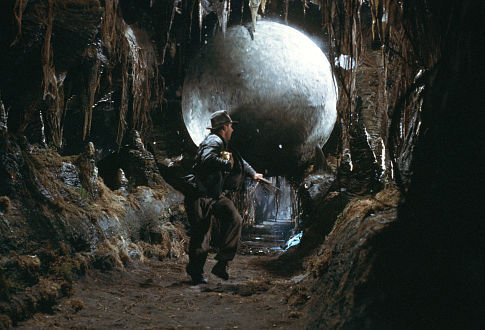
When you think back to Indiana Jones, what you remember most are the great action sequences. Nearly every one of them is top notch. And there’s a reason for that. CLARITY . Each action sequence starts with a clear objective. Indiana tries to get the gold idol in the cave. Indiana must save Marion in the bar. Indiana must find the kidnapped Marion in the streets of Cairo. Indiana must destroy the plane that’s delivering the Ark. It’s so rare that we see action sequences these days with a clear objective, which is why so many of them suck. Look at Iron Man 2 for example. What the hell was that car race scene about? We have no idea, which is why despite some cool lightning whip special effects from Mickey Rourke, the scene sucked. Always create a clear objective in your action scenes.
REMIND YOUR AUDIENCE HOW DIFFICULT THE GOAL IS
High stakes are primarily created by crafting a hero who desperately wants to achieve his goal. I don’t know anyone who wants anything as much as Indiana Jones wants that Ark. But in order to build those stakes even higher, you want to remind the audience just how important and difficult it will be for your hero to achieve that goal. For example, there’s a nice little quiet scene in Raiders right before Indiana goes on his journey where his boss reminds him what finding the Ark means. “Nobody’s found the Ark in 3000 years. It’s like nothing you’ve gone after before.” It’s a small moment, but it’s a great reminder to the audience. “Whoa, this is a really big freaking deal.”

IGNORE THE RULES IF IT SUITS YOUR STORY
Part of becoming a great screenwriter is learning when rules don’t apply to the specific story you’re telling. Each story is unique and therefore forces you to make unique choices. One of the commonly held beliefs with any hero journey is that there must be a “refusal of the call.” When Luke is given the chance to help Obi-Wan, he backs down, “I can’t do that,” he says. “I still have to work on the farm.” Indiana Jones, however, never refuses the call. And Raiders is a better movie for it. Because the thing we like so much about Indiana Jones is that he’s gung-ho, that he’s not afraid of anything. So if the writers had manufactured a “refusal of the call” moment, with Indy saying, “But I have to stay here and teach. I have a dedication to the university,” it would’ve felt stale and forced. So whenever you’re trying to incorporate a rule into your story that isn’t working, consider the possibility that you may not need it.
GIVE A GREAT INTRO TO YOUR FEMALE LEAD
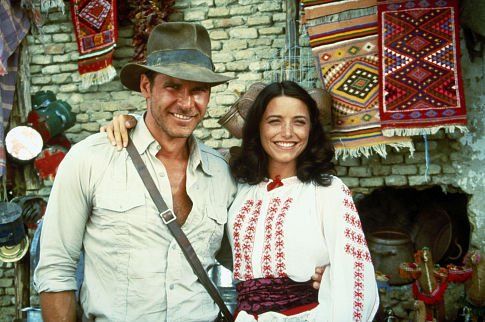
I can’t tell you how many male writers make this mistake (and how many female writers make this mistake in reverse). You need to put just as much thought into your female lead’s introductory scene as you do your male’s. Raiders is a perfect example of this. Indiana Jones has one of, if not the, greatest introductory scene in a movie ever. If you don’t give that same dedication and passion to Marion’s introduction, she’s going to disappear. That’s why, even though her entrance doesn’t compare to Indiana’s, it’s still pretty damn good. We have the great drinking competition scene followed by the battle with German/Nepalese thugs. The girl is badass, swallowing rum from a bullet hole leak in the middle of a life or death battle! Always always always give just as much thought to your female introduction as your male’s.
ADD IMMEDIACY AT EVERY TURN
The pace of Indiana Jones still holds up today, 25 years later. Not an easy task when you’re battling with the likes of Michael Bay and Steven Sommers, directors who have ruined audience’s attention spans with their ADD like cutting. Raiders achieves this pace not through dizzying editing tricks, but through good old fashioned story mechanics, specifically its desire to add immediacy to the story whenever the opportunity arises. Take when Indy arrives in Cairo for example. The first thing he’s told when he gets there is that the Germans are close to finding the Well of Souls! What?? This was supposed to be a simple one-man expedition! Now he’s in direct competition with a team of hundreds of men??? Because of this added immediacy, the stakes are raised and Indiana’s pursuit of his goal is more entertaining. So always look to add immediacy to your action movie where you can!
IF YOU HAVE A BORING CONVERSATION, INJECT SOME SUSPENSE INTO IT
You are always going to have two person dialogue scenes in your movie. These scenes can get very boring very quickly, especially in an action film. There’s a scene after Indy and Marion get to Cairo where they walk around the city. Technically, we don’t need this scene but it does help establish the relationship between the two, which is important for later on. Now a lesser writer may have sat these two in a room and had them divulge their pasts to each other in a boring explosion of exposition. Instead, Kasdan has them walking around, and *cutting to various bad guys getting in position to attack them.* This adds an element of suspense to the conversation, since we know that sooner or later, something bad is going to happen to our couple. MUCH more interesting than a straight forward dialogue scene between your two leads.
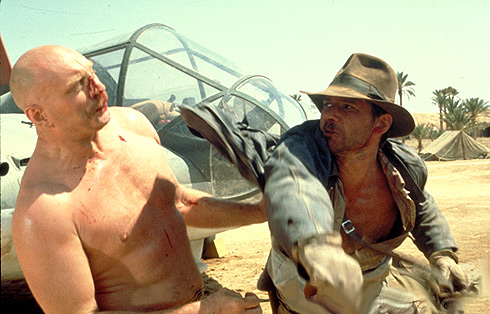
MOVING ON FROM DEATH IN AN ACTION MOVIE
Many times you’ll run into an issue where a major character in your movie dies. Yet you somehow must make us believe that your hero is willing to continue his journey. The perceived death of Marion creates this problem in Raiders. The formula to solve the problem? A quick 1-2 page scene of mourning, followed by the hero being placed in a dangerous situation. The mourning shows they properly care about the death, then the danger tricks the audience into forgetting about said death, allowing you to jump back into the story. So in Raiders, after Marion “dies,” Indiana sits back in his room, depressed, then gets a call from Belloq. The dangerous Belloq questions what Indie knows, followed by the entire bar prepping to shoot him. After that scene you’ll notice you’ve sort of forgotten about Marion, as crazy as it sounds. This exact same formula is used in Star Wars. Obi-Wan dies, we get the quick mourning scene on the Falcon, and then BOOM, tie fighters attack them, seguing us back into the thick of the story.
INDIANA’S ONE FAILURE – CHARACTER DEVELOPMENT
Raiders is about as perfect a movie as they come. However, it does drop the ball on one front. Indiana Jones is not a deep character. Now because this is an action movie, it doesn’t really matter. However, I’d argue that the script did hint at a character flaw in Indiana, but ultimately chickened out. Specifically, there’s a brief scene inside the tent when Indiana discovers Marion is still alive. This presents a clear choice: Take Marion and get the hell out of here, or keep her tied up so he can continue his pursuit of the Ark. What does he do? He continues his pursuit of the Ark. This proves that Indiana does have a flaw. His pursuit of material objects (his work) is more important to him than his relationships with real people (love). However, since this is the only true scene that presents this flaw as a choice, it’s the only time we really get inside Indiana’s head. Had we seen a few more instances of him battling this decision, I think Raiders would’ve hit us on an even deeper level.
Tune in next week when I dissect Indiana Jones and The Kingdom Of The Crystal Skull