
Search Results for: F word
Winning….
Genre: Thriller
Premise: (from IMDB) Centers on a psychologist, and her assistant, whose study of paranormal activity leads them to investigate a world-renowned psychic.
About: Red Lights is the follow-up effort of Rodrigo Cortes, the director of Buried
Writer: Rodrigo Cortes
Details: 124 pages – October 2010 draft (This is an early draft of the script. The situations, characters, and plot may change significantly by the time the film is released. This is not a definitive statement about the project, but rather an analysis of this unique draft as it pertains to the craft of screenwriting).
One thing I worried about after reading Buried was, “Will an audience be able to handle staying in a single enclosed space for the entirety of the movie?” The answer to that, of course, would depend on the director. So when I finally saw the film and spent 90 minutes in a coffin never once wishing we were cutting to an exterior location, I knew they picked the right guy. It’s probably not a surprise, then, that Cortes has found himself as one of the more in-demand young directors in Hollywood, evidenced by the sweet cast he’s secured for this project.
But then I found out Cortes would also be writing the movie. Directors, by their very nature, tend to put more emphasis on the visual than the written word. They’re thinking of crafting that perfect shot or that unique sequence nobody’s ever seen before, not rewriting the living hell out of a plot point until it sings on the page. There are exceptions of course (early Cameron Crowe, early James Cameron, Tarantino) but I always feel like we’re getting the short end of the writing stick when a director writes his own script, and although I love to be proven wrong, it usually doesn’t happen.
But hey, I was willing to give Red Lights a chance. The premise sounded cool and his debut American movie worked. So why not?
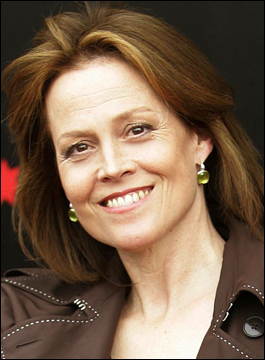
59 year old Dr. Margaret Matheson has dedicated her life to debunking psychics, those fakers who claim to have otherworldly powers, who are able to peek into the unseen dimensions that exist just outside our realm of consciousness. If you say you saw an alien, can talk to the dead, can read minds, can move objects with your brain, Matheson will calmly walk through your door and prove that you can’t.
She’s accompanied by 33 year old physicist Thomas Buckley, who has a little more faith in the supernatural than Margaret, but is quietly shocked as again and again Margaret is able to expose every “real” case they encounter.

While the two debunk cases including a haunted house (that turns out to be one of the daughters banging on the wall) and a faith healer (who’s being fed information about his victims through an earpiece), the most popular psychic in history, the blind Simon Silver, is gearing up for a comeback. The man used to be an iconic figure, one of the only popular psychics to have ever stood up to scientific scrutiny. When he books a series of shows, Thomas is eager to go after him. If they can prove that this guy is a fraud, they can basically prove that the whole field is a sham. But for whatever reason, Margaret refuses to mess with Silver. There’s something different about this one, something that doesn’t quite add up.
But when Silver finally agrees to allows his powers to be scrutinized by top level scientists to once and for prove he’s not a sham, Thomas will do anything to get on the committee, as he suspects Silver will try and manipulate the results. However when Silver gets wind of this man’s personal vendetta, he becomes fixated on him, and Thomas quickly realizes that he may be in over his head.
Red Lights is a funky little thriller that captivates you when it’s working and baffles you when it’s not. Imagine Fringe mixed with The Prestige and you have a pretty good idea of the script. I think the big problem here is that the story is weighed down by too many unneeded scenes, scenes that go on for too long, and scenes that are redundant. For example, you really only need one scene to establish your hero’s abilities – in this case the scene where she exposes the fake haunted house. But we also get two additional scenes reinforcing this ability. This would be fine if they pushed the plot forward in some way. But they do not. One of those scenes in particular, when they go to the preacher’s sermon, just goes on forever. It could’ve accomplished the same thing in half the time but refused to end. These are things pure screenwriters will endlessly work out until they get it right. But here, the mantra seems to be “more is more,” and as a result, it takes us a really long time to get to the plot.
In fact, I would say that the plot (take down Silver) isn’t revealed until halfway through the script . Complicating this is that it’s never entirely clear what the motivations of our main characters are for doing this. Margaret has an experience from her past that sort of explains why she’s so intent on exposing these people, but she doesn’t want to mess with Silver, so it’s not really applicable. Thomas, on the other hand, never explains why he needs to take down Silver so bad, which is problematic, since he eventually becomes the driving force behind the story. If we’re unclear on why our main character is doing what he’s doing, your story is in some trouble.
But all is not lost. What Red Lights loses in the structural department, it finds in the mood/tone department. The entire script is eerie, especially the character of Silver, who we’re constantly trying to figure out. It’s a nice little dance. Silver seems to not want to be exposed for something. Yet if he’s afraid of being exposed, how is he able to make all these otherworldly attacks on our heroes? That simple question drives our need to find out how this ends.

In fact, I would say Silver is the key to this screenplay working. Much like both characters in The Prestige 

And really, this is what writing comes down to. How do you keep the audience’s interest? You should be able to randomly point to any page in your script and explain why, at that very moment, the audience will still be interested in what’s going on. Is it because you desperately want the character to achieve his goal (get the Ark in Indiana Jones

Do I have some issues with it? Sure, of course. Besides the issues I mentioned above, this is yet another script where there’s very little conflict going on in the central relationship (Margaret and Thomas). But Red Lights is a spooky script with an intriguing antagonist that has enough mystery and a unique enough story rhythm to keep you guessing til the end. I’d say it’s worth the read.
[ ] What the hell did I just read?
[ ] wasn’t for me
[x] worth the read
[ ] impressive
[ ] genius
What I learned: When I see a script that’s this long (125 pages), the first thing I think is, I’ll bet anything there’s too much fat here. But I always ALWAYS allow the writer to prove me wrong. If I read that first act and the writer isn’t reintroducing his character three times, if he isn’t staying in scenes for 2-3 pages too long, if he’s not writing scenes that don’t push the story forward, if we get to the inciting incident early, I gladly tip my hat and say, “Okay, you proved me wrong.” But after reading hundreds of 125+ page screenplays, you know how many times that’s happened? Once. These huge page counts go hand in hand with these mistakes. I mean, do you really think it’s a coincidence that in a 125 page screenplay, the plot doesn’t emerge until page 60? So if you’re going to write a 125 page script, prove that you need all 125 of those pages! Don’t rewrite the same scene in a slightly different location ten pages later. Don’t write scenes that establish the same things about your character you’ve already told us. Don’t write scenes that aren’t pushing the story forward. You have to be sparse. You have to be diligent. You have to get to your story quickly. Cortes has a little bit of an excuse because he may be shooting stuff he knows he’s going to cut, but in the spec world, you don’t have that luxury.
Here we are, only three days away from the 2011 Academy Awards. I’m so excited! Yeah, I know, I know. The Oscars are worthless. It’s a popularity and “Who You know” Contest. Blah blah blah. But every time I begin to think that way, I look at the candidates, and you know what? They’re pretty damn accurate most of the time. I mean look at the Best Picture Category. Are there any movies that didn’t make the cut that you think should have? Well, actually, there is. But I’ll get to that in a second.
Anyway, I got some bad news. I’m not going to be live-blogging on Sunday. It’s not cause I don’t love you guys. It’s because live-blogging is hard! Last year they kept screwing up the presentation order, forcing me to write out my prediction and thoughts for each category within five seconds, post each thought, then post an opinion thought after the result. Inevitably something would go wrong and I would have to go back and clean it up, all while the next category was starting, forcing me to simul-post. And let me tell you, I’m not good with simul-posting. I mean come on. Aren’t these Oscar producers thinking of the hard work and dedication bloggers everywhere are putting into this?
For that reason, you’re going to be getting my predictions in all the big categories right here and now. Naturally, all I really care about is the screenwriting competition, but I have some pretty strong opinions on these other categories as well. There’s something about the acting and directing categories in particular that bring out the nasty in me. People who’ve endured my past thoughts on Matt Damon and George Clooney know this well. Anyway, let’s dig in here. Feel free to leave your own pick in the comments section. I know I’ll be coming back here Sunday night to celebrate my 8 for 8 victory.

BEST PICTURE
Black Swan
The Fighter
Inception
The Kids are All Right
The King’s Speech
**The Social Network**
127 Hours
Toy Story 3
True Grit
Winter’s Bone


To me, Inception and Black Swan are the most cinematic experiences of all these ten movies. But the name of this category is not “most cinematic.” It’s “Best Picture.” Toy Story 3 is probably the most complete movie in this group from top to bottom. It’s got the best story. It’s got the best characters. It creates the strongest connection between itself and the audience and has the fewest flaws. Buuuuuut…it’s a cartoon and something wouldn’t feel right about a cartoon winning this category. The King’s Speech has really come on late in this race and is a great “1a” choice. It would be my personal pick for Best Picture. But when it’s all said and done, The Social Network has the most buzz, and probably the most money, behind it. You can already smell the victory. But before I leave this category, I’m still trying to figure out all the love for The Fighter. I thought the movie was okay but I mean, come on, isn’t it just an excuse for Christian Bale to let out all that repressed energy he had to hold back during the Batman films and win himself an Oscar? Here’s why this movie fails for me though. I keep comparing Mark Wahlberg to Sylvester Stallone in Rocky 

PERFORMANCE BY AN ACTRESS IN A LEADING ROLE
Annette Bening (The Kids are All Right)
Nicole Kidman (Rabbit Hole
Jennifer Lawrence (Winter’s Bone)
**Natalie Portman (Black Swan)**
Michelle Williams (Blue Valentine
I don’t have a chicken in this fight but I do have a…swan. Heh heh. Get it? No? Okay, I’m saying I’m picking Natalie Portman to win. That movie is so haunting and it’s the best job Portman’s done in forever. It almost makes me forget Queen Amidala

PERFORMANCE BY AN ACTOR IN A LEADING ROLE
Javier Bardem (Biutiful
Jesse Eisenberg (The Social Network)
**Colin Firth (The King’s Speech)**
James Franco (127 Hours)
Jeff Bridges (True Grit)
Whaaaat? Jesse Eisenberg for best actor? He acted like an asshole for two hours! I would’ve nominated his turn in Zombieland 


PERFORMANCE BY AN ACTOR IN A SUPPORTING ROLE
**Christian Bale (The Fighter)**
John Hawkes (Winter’s Bone)
Jeremy Renner (The Town
Mark Ruffalo (The Kids are All Right)
Geoffrey Rush (The King’s Speech)
This is always the best race since supporting roles don’t need to anchor the movie and therefore tend to be the flashiest. While I thought The Fighter was pretty average, Bale definitely did something unique with his part. Having said that, I really liked Renner in The Town. When he looked into people’s eyes? I honestly believed he could kill them. John Hawkes gets a nomination for grabbing a 17 year old’s hair. Ruffalo’s role doesn’t have enough sizzle factor. And Rush is good but for some reason isn’t getting a lot of mileage from this role. I want Renner to win but Bale’s got this locked up.

PERFORMANCE BY AN ACTRESS IN A SUPPORTING ROLE
Amy Adams (The Fighter)
Helena Bonham Carter (The King’s Speech)
**Melissa Leo (The Fighter)**
Hailee Steinfeld (True Grit)
Jacki Weaver (Animal Kingdom
Say what you will about David O. Russel. I’m not sure he even knows what the word “narrative” means. But the guy always gets some unique performances out of his actors. So I’m leaning towards the two people he directed in this category, Adams and Melissa Leo. I know Hailee Steinfeld is the new young “it” girl, but I’m not buying it. The dark horse here is Jacki Weaver. I thought she was really good. But that movie’s so small. I don’t think enough Academy members have seen it. Three months later and I’m still remembering Melissa Leo’s performance from The Fighter, so I’m taking an underdog shot with this one and going with her.
ACHIEVEMENT IN DIRECTING
**Darren Aronofsky (Black Swan)**
David O. Russell (The Fighter)
Tom Hooper (The King’s Speech)
David Fincher (The Social Network)
Joel and Ethan Coen (True Grit)
This is a GREAT category. You have some real monsters in this group. But I think we can kick Russell and Hooper out easily. That leaves us with visionary titans Aronofsky, Fincher, and the Coens. You know, I still don’t know what people base the criteria of best director on. Is it for the overall vision? Is it for the amazing performances? It seems to me that the best directing decisions probably happen in the heat of the battle behind closed doors. But I think it’s safe to say Fincher isn’t stretching his muscles here. And out of the remaining competitors, Aronofsky is taking way more chances and way more of those chances are paying off. So I’m saying Aronofsky for the win, a win he rightly deserves.


ADAPTED SCREENPLAY
127 Hours (Simon Beaufoy and Danny Boyle)
**The Social Network (Aaron Sorkin)**
Toy Story 3 (Michael Arndt, story by John Lasseter, Andrew Stanton and Lee Unkrich)
True Grit (Joel Coen and Ethan Coen)
Winter’s Bone (Debra Granik and Anne Rossellini)
There’s about as much suspense in this category as there was in the movie, Blue Valentine. I never saw 127 Hours as a strong screenplay and find it odd that it was nominated. Like I said back in my review, it’s a film way more than a script. Toy Story 3 is great and all but it does suffer a little from not being fresh. True Grit’s alright but nothing special. Winter’s Bone…I mean, this just seems like a lazy pick to me. A very standard story. Very sparse. I don’t know what it is about the screenplay that would get anyone excited. That leaves, of course, our clear cut runaway winner, the best reading experience I had of 2009, The Social Network. A-duh.

ORIGINAL SCREENPLAY
Another Year (Mike Leigh)
The Fighter (Paul Attanasio, Lewis Colich, Eric Johnson, Scott Silverand Paul Tamasy)
Inception (Christopher Nolan)
The Kids are All Right (Stuart Blumberg and Lisa Cholodenko)
**The King’s Speech (David Seidler)**
This is a really interesting category. Inception must be in here for imagination, because it violates so many good screenwriting principals and is so lazy in its storytelling practices that it’s hard to argue for its inclusion. The Fighter is just a complete mess on the page, often confused about which character’s story it wants to tell, and concludes its turbulent 120 pages with a last second fight we’re all of a sudden supposed to care about. Can you imagine if Rocky would’ve found out he was fighting Apollo Creed 20 minutes before the end of the movie?? Okay okay! I’ll stop ragging on The Fighter. Of all the films in the two screenplay categories, Mike Leigh’s is the only one I haven’t seen or read, so if that script is brilliant, my apologies for missing it. The two best scripts on this list by far are The Kids Are All Right (old review here) and The King’s Speech (old review here). Personally, I love both of these scripts. And because there’s more to juggle, I believe The Kids Are All Right is the better script, but The King’s Speech is the one that makes you feel better inside after it’s over, and for that reason, that’s my pick. And how awesome would it be to have a 76 year old screenwriter win the Oscar!!
I’ll be reposting this on Sunday to keep the debate going. Oh, and for anyone who’s interested, here’s a link to all 10 of the Oscar nominated screenplays.
Genre: Sci-Fi/Comedy
Premise: An eccentric inventor invents a crude time travel device which allows him to send messages back to his earlier self. Although his intentions are initially noble, he soon begins to use the device for his own selfish needs.
About: Many of you might recognize this script from the first (or was it second) season of Project Greenlight
Writer: Rick Carr
Details: 112 pages (maybe?)

There are times in the script reading process where you come across scripts that defy explanation. Not necessarily bad scripts. Just scripts that have you squinting your eyes, shaking your head, and unable to ditch the frozen “what the f*ck” expression plastered to your face. I want you to imagine the screenplay for Primer


OH WAIT! I forgot to add one important detail. Imagine if this script were written by someone who had no idea how to write a movie.
Hanz Gubenstein is the epitome of the anti-structure. For those of you who have championed the downfall of the foundation-based screenplay, of the screenwriting gurus and the 3 day expos… For those who believe that a story is simply inherent, that you need only follow your passionate fingertips to a 100 page conclusion, well guess what, Hanz Gubenstein is your script.
To get you into the mindset of how freaky out-there this thing is, Hanz Gubenstein is not a main character in the movie. Nope. This is not that kind of film – where you place the character who’s in the middle of your title into the heart of your story. No no no. Not doing that here. Too obvious. This story belongs to Dr. Jeffrey Jeffries, who we’re told is the 4th inventor of time travel. Hanz Gubenstein was actually the first. And there were two other guys as well. Not that they play any part in the story. Why would they?
So our crazy inventor Jeffries invents a crude time machine, whereby you can send messages back to yourself from the future in order to give yourself guidance about said future. For example, you might send a message that says, “Hey, don’t go out with that girl you met today. She’s actually a man.”
Jeffries enlists his humble apprentice, Sid Hackenpfuss, to help him test the machine, and before you know it they’re receiving messages from their future selves. At first the messages are innocent and playful, but after awhile, the two start wondering how they can take advantage of this technology. If they won the lottery for instance, they could give the money back to charities and save the world. The two quasi-idiots decide that this is the best course of action so they send themselves back that day’s winning lottery numbers.

Previous Jeffries and Sid then win the lotto, but for some reason decide to have fun with the money instead of donate it to save others. I think you know where this is going. The next thing you know they’re playing other state lotteries and winning those as well. When that isn’t enough, they begin playing the stock market, sending themselves back tons of market data they then use to make hundreds of millions of dollars.
Eventually a federal agent named Agent Aghnet suspects that the two are up to something and starts following them. Jeffries becomes deathly concerned by the fact that the two aren’t receiving any messages past two days from now, which he assumes means that in two days, something terrible is going to happen to them. His “obvious” solution (of course) is to start doing the exact opposite of whatever he thinks he should do, so as to trick fate and avoid doom.
Doomsday arrives however, and Jeffries is killed by Aghnet just before he’s able to send a message back warning himself of Aghnet’s plan. But when Aghnet sees the message onscreen, he presses it out of curiosity (he still doesn’t know it’s a time machine) inadvertently warning Previous Jeffries of his death, and by association altering the time continuum. However, in the end, this only gets Jeffries, Sid, and Aghnet stuck in a never-ending time loop whereby Jeffries keeps trying to prevent his death and Aghnet keeps trying to ensure it.
And uhhh…that’s pretty much Hanz Gubenstein for you.
So last week I was listening to Creative Screenwriting’s podcast with Ben Affleck and he was asked about this screenplay. Affleck’s response was a strange one. In a very non-committal way he offered, “Oh yeah…(nervous laugh)…well, I guess nothing ever came of that.” Now even though Affleck didn’t actually say anything, his tone inferred everything I suspected. You read Hanz Gubenstein and you think, “There’s something here.” I mean there’s some really funky comedy revolving around the ridiculous characters and the insane amount of time folding back onto itself over and over again. The problem is, it’s so scattered, so all over the place, that the thought of trying to mold it into something comprehensible is too daunting. It’s like being given the pieces to the Golden Gate Bridge without a blueprint and told, “Now go figure this out.” Where the hell do you start?
Still, this is a great script to study for beginning screenwriters because it epitomizes what happens when there’s no structure at play – when you’re just following your whims and writing each scene as it comes to you. For example, there’s a twenty page scene in the first act – I kid you not – where Jeffries and Sid are in a room talking about time travel. They’re in a small room TALKING ABOUT TIME TRAVEL. For 20 minutes!!!
Within those 20 pages there is a 4 page long drawn out joke where Sid keeps trying to defer time travel credit to other people besides himself. A FOUR PAGE LONG JOKE!

Obviously, there’s more than one way to skin a cat. But all you need to do is look at some other successful screenplays to see where this one missteps. Take Hanz Gubenstein’s older more established rich uncle, Back To The Future, for instance. Look at how visual the scenes of Doc explaining time travel are. We have the Delorean. We have nuclear fuel. We have the flux capacitor. We have Einstein being used for a demonstration. We have invisible fire tracks shooting through our heroes’ legs. Now I want you to imagine all of those things disappearing and instead, Marty and Doc in a small room discussing it. That’s Hanz Gubenstein.
Repetition has been a big buzzword in my recent posts and the R-word rears its ugly head here as well. Not only are we stuck in a small room for 60% of the screenplay, but there’s no real evolution to the story. The two just keep trying to win the lottery over and over again! Eventually Aghnet shows up and throws a little wrench into the story but even *his* involvement becomes trivial and repetitive after awhile.
The truth is, ignoring good storytelling mechanics WILL hurt your story unless you know what you’re doing. For example, what the hell is Jeffries’ motivation for wanting all this money?? The only reason he seems to want it is to make more money. Yet we never know what he plans to use this money for. In fact, everything we’ve been told about Jeffries has indicated he *doesn’t* want money. So why is this story revolving around someone who’s desperately trying to make as much money as possible, even though they don’t want or plan to use it??
I could go on. There’s enough randomness here to start an entire new blog on, but using that alone to assess Hanz Gubenstein probably wouldn’t be fair. Ben Affleck’s optioning of the material reinforces a long standing truth in the industry – that a unique voice will get noticed. It may not lead you from rags to riches, but it will help you stand out and get your shot. HOWEVER, it’s also a well-known truth that you need the chops to back that voice up. You need the voice AND the craft. You can’t have one without the other. And unfortunately for Jake, he hit with a script that showed unique talent, but with no ability to hone it.
Hanz Gubenstein just about made my head explode. And it does so many things wrong I can’t possibly recommend it. But I will say that it’s an interesting read, and that you probably haven’t read anything like it before. Check it out if you’re so inclined.
Script link: Does Anybody Here Remember When Hanz Gubenstein Invented Time Travel? (note: Scrib’d is a funky site that makes it hard to read this script. Good luck.)
[ ] What the hell did I just read?
[x] wasn’t for me
[ ] worth the read
[ ] impressive
[ ] genius
What I learned: While just “letting the story take you where it wants to go” is a fun way to write a first draft, that draft will never be anywhere close to a finished product. At some point you’re going to have to sit down and do the real work – mapping out the structure, creating the story beats that keep the plot moving, building the character arcs – all those things that take the genius you discovered in your idea, and craft it into a fully fleshed-out story. Hanz Gubenstein has no structure, and that’s ultimately what dooms it.
Genre: Sci-Fi/Comedy
Premise: One of the top villains in the world is pushed out of the villain coalition when it’s suspected that he has too much compassion for others and might actually be – gasp – good.
About: Villain is one of the first two Amazon Screenwriting Contest $20,000 winners. The writer, Richard Stern, tried to push the script on Hollywood a couple of years ago and while he got a lot of reads around town, nothing came of it. There is apparently a lot of controversy surrounding this script in that it resembles some recent Hollywood release. I believe Megamind 
Writer: Richard Stern
Details: 112 pages – 8th draft (This is an early draft of the script. The situations, characters, and plot may change significantly by the time the film is released. This is not a definitive statement about the project, but rather an analysis of this unique draft as it pertains to the craft of screenwriting).

The most e-mailed question I’ve received over the last couple of months has been, “Carson, what do you think of the Amazon Script Contest?” And my answer has always been…I don’t know. I knew I couldn’t give an opinion until reading that long list of rules on the site. And because the last thing I want to do is carve out an entire afternoon to read some rules, I’m still pretty ignorant about the whole thing.
I’ll admit that what I’ve heard isn’t good though. Something about anybody can change your script whenever they want to (sabotage anyone?). Something about they hold the rights to your script for a year. And I’ve even been told there’s a site dedicated solely to pointing out how bad most of the scripts are.
But if you’re going to tear the contest apart, you have to give it its due as well. The one thing Amazon does that none of these other contests do is it allows the readers to see what beat them. That’s a huge deal since it helps writers learn about their competition and the craft.
Of course all I care about for today’s purposes is if the script is any good. I don’t care if the fucking thing comes from Hickory Sam’s Smokestack Screenplay Contest where each script is battered and skewered on a frying pan before Cleevus the One-Eyed script reader reads it. If it’s a good script, it’s a good script.
So what’s the deal with Villain? Is it a good script?
Impossibly Handsome super-agent Drake Develin is finally proposing to divinely beautiful super-agent Alicia Cox. “Marry me,” he says. And she says yes. But before they can start making flower arrangements, a GIANT ROBOT crashes into their room, grabs Develin and SQUEEZES HIM TO DEATH. Agent Drake Develin is now Agent Drake Dead…lin.
Cut to Professor Mortimer Savage, criminal mastermind super-villain and the apparent orchestrator of this death. Together with his cloned robot-bodyguard-butler, Hugo, Savage is on top of the world. That is, until Savage realizes that by killing his arch-nemesis, he has no one to compete against anymore.
This hurls Savage into a mid-life crisis, punctuated by the Villain Coalition dropping him from the club for not being evil enough. He’s replaced by some new copycat robot-builder named Jackal, and before Savage knows it, he’s unofficially a “good guy,” teaming up with Develin’s old partner, Agent Fox, battling Savage’s network of evil villains.
Of course (spoiler), Savage eventually finds out that The Jackal is really – wait for it – Develin! Which means Develin is now a bad guy and Savage is now a…good guy. I think. Whatever the case, Savage will have to get in touch with his inner hero to finally take down Develin/Jackal and save the world! Or an island. Or something.
Okay, a couple of observations right off the bat. This is so not my thing. To be honest, this script was dead before it even reached my hands, because goofy super-hero humor is my reading kryptonite. I can’t appreciate it on any level. Maybe that’s why I have no idea if this is a Megamind clone or not, because I’ve never been interested in seeing that movie either.
Something else I realized right off the bat was that this wasn’t a good script for Amazon to pick as its winner. The problem is, Villain is one of those scripts that’s very easy to make fun of. The humor is so silly and the plot so ridiculous, that even though that tone is intentional, it creates a fertile ground for angry writers to tear it apart. Onscreen, a robot crashing through a hotel chasing our hero might be pretty awesome. On the page it’s, “This?? THIS BEAT MY SCRIPT?? THIS FUCKING STUPID SHIT!?!” One thing I’ve learned from reading scripts is that there’s no easier genre to tear apart than goofy comedy. In fact, there was a script that sold a couple of years ago for a million bucks with a very similar tone to Villain (Iron Jack – you can read the review here). I’d imagine that script would’ve received the exact same reaction had it won the Amazon competition.
But I *can* see why this won. Having run a couple of contests myself and talking to other contest runners, I know that out of every 1000 entries you get, you’re looking at about 10 decent scripts. And that’s just decent. While those scripts have some impressive component (great premise, great dialogue, unique approach) which helps them stand out, they’re usually plagued by sloppy uneven execution. It’s so rare that you find a contest script that’s consistent all the way through. And say what you will of Villain, but the script is consistent (yes, I’m not unaware of the obvious joke here).
As far as the screenplay itself, you can pick out a number of things that the writer did well. First of all, you have a high concept hook. A villain mastermind who’s hiding a big secret – that he’s good. That one decision puts you ahead of 70% of the competition, who don’t have any hook at all. You have some cleverness here (things like the bad guy ends up being the good guy and the good guy ends up being the bad guy). The dialogue is by no means exceptional, but it’s funny and clever most of the way through. The three act structure is executed to a “T.” The story moves at a very brisk pace. There’s barely if any fat here – a result of creating multiple ticking clocks throughout the script. And it’s a really easy read. I mean this script reads faster than a Japanese bullet train, a testament to the writer understanding the writer-reader relationship.
So whether you think this script is stupid or not, professional readers can easily identify that Stern understands how to tell a story in screenplay form and as much as I hate to say it, 80-90% of writers who enter a competition don’t know how to do that yet. Which is why this script rose above the rest fairly easily.
Now of course none of this matters to me, because I detest the subject matter. There were a lot of angry posters Saturday when I brought up the awesomeness of the Dead Island trailer – pissed that we were getting, yet again, another zombie flick clogging up our multiplexes. Well imagine that feeling times a hundred and you now know how I feel about super hero flicks, real ones or parodies. To me, this script is no different than The Incredibles
And of course, as we discussed in the Chinatown review, I can’t give something a high grade if it does nothing for me emotionally. So despite the technical achievements of Villain and despite me understanding why it won, it was definitely not for me.
Script link: Villain
[ ] What the hell did I just read?
[x] wasn’t for me
[ ] worth the read
[ ] impressive
[ ] genius
What I learned: I have no idea why Villain didn’t find a home when it went out a couple of years ago, but one of my guesses is that it would be insanely expensive. You have giant robots chasing people through hotels. You have battles taking place on volcanic islands. It seemed like every other scene was a 30 million dollar set-piece. While I used to subscribe to the theory of “write what you want and let the producers figure out the budget,” I think in these times more than any, producers are counting money when they read your scripts. They’re thinking “How am I going to sell a 200 million dollar non-pre-existing property to a studio?” They know they can’t so they move on to the next script. So while I’m not going to lay down any hard and fast rules, writing a 250 million dollar film probably isn’t in your best interest.
Amateur Friday is back! I didn’t like the sound of last week’s “New Writer Friday” but I can’t think of anything better at the moment so back to Amateur Friday we go. Who knows though? Next week it could be something else. We’ll see. The drama continues! :)
Genre: Drama/Sci-fi
Premise: A book appraiser working at an old farm mansion finds a diary that implies the family who used to live there 200 years ago may have come in contact with a crashed alien ship.
About: Every Friday, I review a script from the readers of the site. If you’re interested in submitting your script for an Amateur Review, send it in PDF form, along with your title, genre, logline, and why I should read your script to Carsonreeves3@gmail.com. Keep in mind your script will be posted.
Writer: Glenn J. Devlin
Details: 114 pages (This is an early draft of the script. The situations, characters, and plot may change significantly by the time the film is released. This is not a definitive statement about the project, but rather an analysis of this unique draft as it pertains to the craft of screenwriting).

For long-time readers of the site, this premise probably sounds familiar. That’s because it was one of the 25 loglines to make the semi-finals of my “Script/Logline” contest a year ago. If you made the top 25, that meant I read your entire script, so I actually read an earlier draft of this already. While I remember it creating an eerie atmosphere, I also remember it becoming vaguely hokey in the second half when (spoiler) the alien arrives. I mentioned this to Glenn and I was curious to see what he did with the rewrite, as I absolutely love the idea.
Colin Brayton, late 40s, is a book appraiser. As you’d probably expect, Colin’s not exactly “making it rain” every night at the clubs. This guy’s idea of a raucous party is an original second print edition of Tom Sawyer. In other words, Colin keeps to himself.
One day, an older man named Asher Bradford shows up at Colin’s shop and asks him if he’d like a job. The Dibble Estate, one of the oldest estates in Virginia, has thousands of books that need to be appraised, which Asher is willing to pay a hefty sum for. Of course, this means Colin will have to go out to the estate and live there for awhile, which is the last thing he wants to do, but in the end he knows the job is too good to pass up.
Once there, he meets the caretaker of the house, Madeline Prentice, an attractive woman in her 40s who has more rules than your average grade school gym teacher. Madeline does not like Colin being here and she lets him know it.
So Colin tries to stay out of her hair until he comes across an old diary amongst the books he’s appraising. Shockingly, it’s from a 15 year old girl named Kate who used to live here back in 1781! Her entries are rather mundane at first, but that changes quickly when she recalls a strange vessel flying across the sky and crashing onto the estate.
We then flash back to 1781 and meet our author, Kate, along with her parents and siblings. The script quickly settles into a rhythm of cutting back and forth between the past and the present, dictated by Colin’s need to find out what happened with this ship.
The gist of the story is that Kate and her family inspect the crashed craft and meet a surviving alien who they name Bronte. The family takes Bronte in, but learn that other aliens will be coming after him soon. This results in a tough decision. They either have to kick Bronte out or move far far away with him where they’ll never be found.
In the meantime, Colin is trying desperately to convince Madeline that all of this is true, while she, of course, thinks it’s hogwash. Colin goes out in search of the ship, as well as for other alien artifacts Kate speaks of, trying to find some evidence that this is more than a young girl’s imagination. During this time, the icy chill between he and Madeline begins to thaw, and they develop a friendship with one another, with the hint of something more. But before any of that can be resolved, Colin must find out the fate of Bronte and the family.
Okay, I’m going to do something I rarely do on this site. I’m going to admit that I don’t exactly know what’s wrong with The Alien Diaries. What I do know is that something *is* wrong. The script moves way too slowly and I’m not sure the most interesting version of the story is being explored. However, far be it from me to throw my hands in the air and give up. I’m going to give an analysis of this script whether it likes it or not.
So we actually have two storylines we’re dealing with here. The present storyline and the past storyline. Let’s start with the present. NOTHING IS GOING ON IN THE PRESENT STORYLINE. It’s just a man and a woman with some sexual chemistry observing an event that happened 220 years ago. There’s no problem they’re trying to solve. There’s no immediate issue they need to take care of. There are no stakes to whether they achieve their goal or not. And actually, there’s no goal to achieve in the first place. This makes the entire present storyline….I hate to say it but…pointless.
Whenever you have a script exploring two parallel plot threads, you want to make sure that each thread has something important going on in it. I know this is a completely different genre, but think of Apollo 13
Now, as far as the past scenes, those are a little more complicated, and this is where I’m not sure why things aren’t working. Theoretically, initiating an alien into a family should be interesting. I mean, they did it in E.T. right? And that movie was pretty good. But there’s something off about it here.
One issue is that just like the present day storyline, the majority of the 1781 storyline is absent of any problems. There’s no immediacy. That changes later when the other aliens arrive, but that’s really late in the script. Until that point, we’re just watching a family get acquainted with an alien. There’s no real conflict there. And maybe it’s because we’ve seen this play out before in movies like ET 
Another problem here is that our main character doesn’t have anything going on internally. This script is slow enough where it’s posing as a character piece, but there’s little to nothing going on inside any of the characters. What is it that Colin has to overcome? What is it in this specific journey that challenges his biggest flaw as a human being?
Or let me put it in simpler terms. You know there’s not enough going on with a character when you realize that no actor would want to play the role. Think about it. What challenge would an actor get from playing the role of Colin? All they’re doing is showing up on set and reading a book. If you want to get an A-list actor interested in one of your parts, you gotta work some complex UNSETTLED shit into the character that they need to work through during the course of the story.
So the combination of an uneventful present day storyline, a mostly uneventful past storyline, and a main character who’s got no inner demons or inner conflict to overcome…that’s a super deadly combination right there. That is something that’s going to be really tough to make entertaining.
The thing that’s eating at me is I love this idea. And I’m trying to figure out a story direction that would best take advantage of the premise. You know, one of the most important decisions any writer makes when he sits down to write a script is which direction he plans to take the story. And I don’t think this direction is the most interesting direction Glenn could’ve taken.
But this much I know. The script needs to start with a problem. Every script needs to start with a problem. If your hero doesn’t have a problem, you don’t have a story. And the first real problem that arrives in The Alien Diaries (the other aliens coming for Bronte) doesn’t arrive until, I believe, 70-80 pages into the script. And that’s just too late. Glenn needs to go back, identify a problem that BOTH sets of characters in his story have, and build a story from there.
Now I know I’ve been harsh but the potential of this idea is bringing out the passion in me. There’s some good stuff to build on in Alien Diaries. I liked the book appraiser stuff. I’ve never seen that explored in a movie before, and there’s something mystical about the profession that fits well with this idea. The foundation is also there for an interesting relationship between Colin and Madeline. Their conflict is a little too artificial so far (they hate each other for the sake of needing conflict in the relationship) but that’s how all these relationships start in early drafts. You just keep nuancing them with each successive draft until they begin to feel natural. But yeah, the idea’s cool enough to keep plugging away at.
Anyway, I appreciate Glenn putting his baby up for some hard core analysis. Hopefully I’ve given him some new ideas for the next draft. :)
Script link: The Alien Diaries
[ ] What the hell did I just read?
[x] wasn’t for me
[ ] worth the read
[ ] impressive
[ ] genius
What I learned: I think this is a classic case of leaning on your premise. That’s when you’ve got a great premise, and you just try to write enough stuff around it until you have a script. Instead, try to pretend like you don’t have that great hook. Try to make sure your characters are compelling enough that we’d want to watch them regardless of if they were in this story or not. Try to make everything AROUND the premise better than the premise itself, instead of just hoping that the premise is enough.