
Search Results for: F word
Genre: Comedy/Sci-Fi
Premise: A pair of Beatles 
About: Chris McCoy hasn’t broken into the “produced credit” category just yet, but he’s been pretty busy since he debuted on the 2007 Black List with this screenplay, doing lots of assignment work and having a bucket of projects in development. Get Back has garnered some heat lately with Mark Waters (Mean Girls

Writer: Chris McCoy
Details: 115 pages – the Black List 2007 draft (This is an early draft of the script. The situations, characters, and plot may change significantly by the time the film is released. This is not a definitive statement about the project, but rather an analysis of this unique draft as it pertains to the craft of screenwriting).

I took note of Get Back a couple of years ago when I read the premise. Could it be? Let it be? A time travel comedy that actually sounded worthy of taking on Back To The Future
But I decided to take a chance on Get Back anyway and boy am I glad I did. It looks like this is the same situation we were discussing last week. The difference in quality between a spec script (Get Back) and assignment work (Good Looking) is night and day. You can see the passion on the page here that you just didn’t see in that script.
20-something Ted Archer works in a record store
Peruvian Piero Chacon, Ted’s best friend, isn’t much different, but to add insult to injury, he’s so stuck in the world of yesteryear that women won’t even look at him. They don’t understand the clothes he wears, the words he uses, the things he likes. This man belongs in a first class cabin on Pan Am airlines in 1969, smoking a cigarette and not having a care in the world – not in Snooki-dominated 2010
To demonstrate just how weird these two are, they’ve spent the last couple of years looking for a rumored spaceship prop from some 1970’s funk band who ditched it after a concert. It’s said to be in a nearby forest, and Piero and Tim are going to cover every square foot of that forest until they find it.
Imagine their shock when they finally come upon it! And imagine their additional shock when they find a strange dashboard on the inside with destination years on it. Holy shit, Ted and Piero have just found a time machine!
The two debate the ramifications of this find, and pontificate on the most valid uses for it. After agreeing that “killing baby Hitler” would be too difficult, they both agree that the single most horrible thing that happened in history is Yoko Ono meeting John Lennon and breaking up the Beatles. So Tim’s journey is set. He’s going to go back to London in 1966 and prevent John Lennon from meeting Yoko Ono!
So back they go, but get there too late, and must watch as the most fateful meeting in history occurs right in front of their eyes. What can they possibly do now? It doesn’t take Ted long to figure it out. In order to prevent this relationship from proceeding, he will need to get Yoko Ono to fall in love with him. Ted uses every trick in the book (i.e. telling her he’s predicting something called “the internet,” which fascinates Yoko) and soon the competition is on.
Unfortunately John Lennon gets so bummed out by Yoko’s interest in Ted that he decides to quit the Beatles. The guys, via browsing through Piero’s ipod, realize that this destroys half the Beatles’ catalogue and nearly destroys the entire future of music.
As a last ditch effort, Ted has to find a way to have Yoko fall out of love with him and back in love with John, all by the time a young James Brown plays his first funk concert, which is the only fuel that can send the spaceship back to the future. Complicating all this is that Ted actually starts to like Yoko himself!

Okay, truth?
This is a shameless copy of Back To The Future.
But dammit if it isn’t a blast.
If I could only use one word to describe “Get Back” it would be “fun.” The script is fun. It doesn’t do anything exceptional and every choice made only helps you realize just how genius Back To The Future was, but this is just different enough from that film to get you your Back To The Future fix and still feel like you’re experiencing something new.
First, I was surprised at how clever the script was. When I first considered the idea, I didn’t know if it had legs. I figured Ted and Piero would get to London and go through a bunch of pratfall-like hijinx to push John and Yoko apart and then…that would be it. So I loved that John and Yoko got together right away and that Ted’s only choice of stopping them was to win Yoko over – the one person he hated more than anyone. *And* that he had to go against John Lennon – the one person he loved more than anyone.
I actually thought McCoy could’ve done more with this. Yoko’s really weird. And Ted’s present day annoying girlfriend was really conservative. If we could’ve stressed that Ted needed to find someone as “out there” and unconventional as himself, and Yoko could’ve filled that role, and he really genuinely fell in love with her, that could’ve made things really interesting in the end, when he has to go home. The way it stands, he only sorta falls for Yoko, keeping the stakes low and making their break-up at the end way too easy on him.

Actually, the entire ending is pretty clumsy and makes you appreciate just how perfectly constructed Back To The Future is. For example, instead of the lightning bolt scene, the spaceship is fueled by “funk.” This is pretty well set up and McCoy does as much as he can with it, but it still feels awfully clunky when he has to go to this James Brown concert with a spaceship propped on the stage and wait for enough of this mythical funk to fuel the ship so he can jump back to the present day.
Piero also gets short shrift here. I loved that we had a Peruvian lead in a script (don’t think I’ve seen that before) but he’s basically relegated to giving the movie something to cut to while we set up the next beat in Ted’s storyline. His romantic storyline also develops way too late, although I did like how it ended.
Trying to walk in the shadow of one of the best constructed screenplays of all time is not easy. I’ve read a lot of really bad time travel comedies hoping to find the next BTTF. Hot Tub Time Machine
[ ] What the hell did I just read?
[ ] wasn’t for me
[x] worth the read
[ ] impressive
[ ] genius
What I learned: Does your title only sound clever once people read your script? Or does your title stand on its own? “Get Back” is a boring title if we know nothing about the concept. I would never pick this script up off a pile. Here’s the thing though. When you read the script, you realize the title’s actually quite clever. The problem is, *you have to read the script to realize that*. I’m okay with a writer doing this as long as they’re aware of it. But if you want to give your script a better chance of getting read, make sure the title is exciting on its own, not dependent on the read.
Also, check out my breakdown for the Back To The Future 2 script that never was here.
Genre: Drama
Premise: A young boy goes on a journey through New York City to find the truth about how his father, who disappeared in 9/11, died.
About: Based on the book by Jonathan Safran Foer, Extremely Loud and Incredibly Close 


Writer: Eric Roth (based on the novel by Jonathan Safran Foer)
Details: 137 pages – March 17, 2010 draft (This is an early draft of the script. The situations, characters, and plot may change significantly by the time the film is released. This is not a definitive statement about the project, but rather an analysis of this unique draft as it pertains to the craft of screenwriting).

Eric Roth is very much an anomaly in screenwriting circles. He more or less does things his own way and doesn’t subscribe to fancy-schmancy screenwriting theory. He simply sits down and writes what comes to mind. Once asked what a writer should do if they hit writer’s block, Roth unassumingly offered, “Change the weather in the scene. That’s what I do.”
Not exactly shocking. Roth’s adaptation of Forrest Gump bucks numerous screenwriting trends, and you’d be hard pressed to find much structure in Benjamin Button. This makes him a hero to some and a hack to others. The “do it yourselfers” love that they can point to a successful screenwriter who ignores convention. The “structuralists” argue that that’s the reason why his stories are all over the place.
I’ll never forget listening to an interview with Roth where he was asked why we hadn’t seen any spec screenplays from him. Roth was genuinely confused by the term. “Spec?” The interviewer actually had to explain what a spec screenplay was to Roth. He had no idea. After being told what it was, he explained that he had been paid to write a script right out of UCLA and has been working ever since. Eric Roth has never worked on an idea of his own. Make of that what you will.

Oskar Schell is a 10 year old boy who wishes his anus could talk. In other words, Oskar’s weird. He’s the kid who gets picked on at school, the guy snorting up jello through a straw. He’s a loner through and through.
Oskar’s best friend was actually his father. “Was” because his father was one of those unfortunate souls who died in the twin towers on 9/11. Now Oskar, his mother, and his grandmother (who lives in the adjacent building and who Oskar communicates with via walkie-talkie) are taking it one day at time, trying to make sense of how and why this happened.
Oskar, in particular, is devastated by his father’s absence, to the point where he combs international websites with videos of people jumping out of the towers, hoping he can break through the blurry pixelated dots to locate his father. Oskar needs to know how his father died that day so he can stop inventing his death. He needs closure.
One day, Oskar finds an old vase in his mother’s closet and accidentally breaks it, only to find a key inside accompanied by a letter to someone named “Black.” Believing that this key will open something that sheds light on that fateful day, Oskar plans to visit all 500 Blacks in New York City, to find out which one this envelope belongs to. If he can get a couple visits in every week, it should only take a few years.
During this time, Oskar meets his grandmother’s mystery tenant, an old man who can no longer speak. Oskar’s put off by his weirdness, but it’s not like he’s breaking any Facebook friend records, so he asks him to join him on his journey, and “The Renter” (as we come to know him) accepts the invitation.
In the meantime, Oskar has to come up with clever ways to escape his house without his mom finding out that he’s running around New York. The relationship between the two is strained at best. They always got along, but the death of Oskar’s father exposed that the link between them was bridged by him, and that without that bridge, they have nothing to talk about.

Oskar meets tons of characters along the way, including a guard who works at the Statue Of Liberty and lets him come up and look out at the city. But most of his search is met with shrugged shoulders and apologetic smiles. Despite Oskar looking for some grand answer to it all, he may have to accept that the answer may never come.
It’s rare that I just get to talk about how a script affected me b/c it’s rare that a writer is so good that they can make me forget I’m reading a story. But this script did it. In a lot of ways it reminded me of when I read The Social Network, where I just forgot about form and structure and character and got transported into another universe via Roth’s wizardry.
Roth has a strange way of writing that I can’t quite put my finger on, but it’s its singular and unique and when you’re reading him, you go with it. Maybe it’s because he ignores convention. I don’t know. But there’s some really heavy stuff here that Roth has to sell and you never once question it.
Now make no mistake, there are some key things in place to make this story work. First and foremost is the character goal driving the action. Oskar is trying to find out what this key opens, and the connection he has with his father, shown through flashbacks and voice over, makes that goal extremely strong. I mean, I don’t know if I’ve felt this much love between two characters in a screenplay before.
Also, Oskar is the ultimate underdog. He’s a 10 year old kid with no friends who lost the most important person in his life. I mean who’s not going to root for this guy? (Note that Roth’s other most popular character, Forrest Gump, was also one of the biggest underdogs in cinema history).
But it’s the details and the crushing scenes in this screenplay that will leave you thinking about “Extremely Loud” long after you’ve finished it. (Spoilers) First and foremost the final answering machine message scene. I mean, I can’t remember the last time I felt so devastated reading something. The explanation of what happened on that last call? Grab your Kleenex girls AND boys, as you’re going to need it.
And rewinding his father’s “possible” jump from the towers so that he’s going back up into the building instead of falling down? I mean wow. I needed to wipe away some man-tears after that one.

On a lighter note, one of the nice touches here is being able to see what Oskar imagines. The trailer on this movie is going to be phenomenal. We’re going to have helicopters carrying the world’s biggest blanket, dropping it on the twin towers. We’re going to have thousands of coffins with rockets attached to them shooting up into the sky. We’re going to have a half-man/half-robot waiting to talk to Oskar. We’re going to have the “Sixth Borough” out on its own island next to Manhattan. The imagination in this story is incredible, and you really feel like you’re being taken into another world with every page.
This is easily the best thing about 9/11 that I’ve ever read. Probably the best decision Roth (or Foer) made was installing as much humor as there is here – and there’s a lot. Cause the truth is, people are tired of how emotionally draining 9/11 is. They see it and they just want to escape. But Oskar’s view of the world is so funny that this devastating tale is bearable – even enjoyable. And somehow – I’m still not sure how Roth does it – it never feels false. Everyone says “Don’t do voice over. Don’t do voice over.” But man, for writers who know what they’re doing, it can be the most powerful part of a screenplay – as some of Oskar’s musings in this story are.
So was it perfect? No, and I think that’s because this is an early draft. This is 137 pages long and it feels like it. I think Roth gets a little carried away with giving us the father’s backstory. I mean, there are some great moments in there. There’s just too much of it. I liked how we’d get a flashback scene with them every 20 pages or so to remind us what Oskar was fighting for. But right now there are like 20 scenes with the dad, and I think that can easily be cut in half. For this reason, the middle act drags until The Renter shows up.
Also, the mom storyline needs to be fleshed out and better defined. We know these two don’t get along, but we’re not exactly sure why. So their eventual reconciliation doesn’t have nearly the punch that it should have.
There were a few other things that bothered me. Roth can get a little long-winded at times. But the key here is that this script made me feel something. It’s hard to finish this screenplay and not feel affected in some way. Reading through so many average scripts, I sometimes forget how hard that is to do. Someone else told me that this script makes Extremely Loud a front-runner for an Oscar in 2012. I don’t know if I’d go that far but it certainly has the seeds to grow into something great.
[ ] What the hell did I just read?
[ ] wasn’t for me
[xx] worth the read
[ ] impressive
[ ] genius
What I learned: When comparing three of Roth’s most high-profile scripts, something sticks out. The combination of a heavy underdog and a voice over is a powerful one if you have the skills to pull it off. The underdog thing is obvious. Everyone roots for an underdog. But the additional voice over takes that connection between us to a new level. Because the main character is talking to us, we feel like we know him, and you’re always more likely to root for people you know. This approach was used to perfection in both this script and Forrest Gump. Contrast that with Benjamin Button, which was a good but not great film. It had neither. Benjamin was sort of an underdog, but not really, as he basically grew into a handsome young man. Also (if my memory serves me correctly) it was Cate Blanchett who did the voice over, not our hero. Are these the reasons Button is not as memorable as these two stories? I don’t know. But it’s certainly worth noting.
Genre: Comedy
Premise: A group of 20-somethings must deal with the ever-complicated logistics of commitment.
About: Are We Officially Dating made the 2010 Black List, landing somewhere near the middle of the pack. Thomas Gormican, the writer, graduated from Brown University. He began his career at GreeneStreet Films in New York City. Afterwards, he partnered with Charles Wessler and the Farrelly Brothers to produce a short-films-compilation (Movie 43) in the vein of The Kentucky Fried Movie
Writer: Thomas Gormican
Details: 112 pages – 10-22-10 draft (This is an early draft of the script. The situations, characters, and plot may change significantly by the time the film is released. This is not a definitive statement about the project, but rather an analysis of this unique draft as it pertains to the craft of screenwriting).

The male bachelor afraid of commitment sub-genre is probably the most crowded sub-genre in the spec screenplay market. Makes sense, right? There are a lot of males between the ages of 20-30 writing screenplays. It’s only natural, then, that they write about what males between the ages of 20-30 think about. For that reason, if you’re going to add your name to this list, you better make sure your script is one of two things: 1) very well written or 2) a completely new take on the genre. I always advocate for #2, since people are more likely to pass around something that’s fresh and original. If you’re going to go with #1 though, know this: Even if you execute your story to perfection, there’s still a good chance it’s never going to be seen as anything other than an average comedy, and that’s exactly what we have here with “Are We Officially Dating?”
Jason is 28 years old, charming, handsome, and deathly afraid of commitment. He’s specifically afraid of the “So…” I think we all know the “So…” The “So” is when a woman has had enough of the fun, and after a particularly enjoyable sexual encounter sneaks in, “So….where is this going?” Yeah, Jason would rather sleep in an oven than deal with the “So…” So, as soon as a relationship gets to that border between fun and serious (The Great Wall of Commitment?) he bails.
Completing the bachelorhood lifestyle are Jason’s two best friends. There’s Mikey, a doctor whose wife just started banging their lawyer. Because Mikey has little respect for himself, he still allows her to use him for medical advice. Then there’s Daniel, whose best friend Chelsea is “one of the guys.” But when he sleeps with her, he too must deal with the question of whether to commit or keep it casual.
Jason’s problems start when he takes the cute Ellie home for a night of sexual adventure, only to realize she’s a hooker, only to later realize she’s not a hooker. They start hanging out, having fun, and in between these fun escapades, the guys, a la a younger better looking Seinfeld cast
Eventually Jason starts falling for Ellie, but when she gives him the “So…” he freaks out and tells her he can’t make a commitment. Jason then learns that Ellie is seeing a hot new author (both characters work in the publishing industry) and of course realizes that he loves her. He then becomes Stalk Machine 3000, breaking down cryptic updates on Ellie’s Facebook page like archeologists would hieroglyphics, eventually getting to the point where, as one of his friends puts it, he “looks like somebody Jamie Foxx would play in a movie
Jason has to pull it together to win Ellie back but there’s a chance he’s gone too far and that he’ll never experience the joy of a loving committed relationship.

I don’t have anything against “Are We Officially Dating?” There aren’t any big problems here. There’s a nice work goal that keeps the story on track. There’s plenty of conflict between the three pairs of characters. The dialogue is decent. The comedy wasn’t suited to me but I definitely laughed. What plagues “Dating” in my opinion is that there’s nothing new about it. I’ve read this exact kind of script two hundred times before. Was Gormican’s version of the story better than those other 200? It was better than most. But even though well-written, you can only read the same story so many times before it stops affecting you (and hence, another argument why you should find a fresh take on the genre
There were some smaller issues here for me. Ellie isn’t a very exciting character. One of the things I constantly see in these male-written rom-coms – especially ones which sympathize with the male hero’s fear of commitment – is that the female leads aren’t very strong. And I’d probably make that argument here. Ellie is treated more as an ideal than a character. The focus is on what the guys think of her, of their situation, and of the developments on Jason’s side of the relationship, rather than Ellie herself. This is particularly true later on, when Ellie disappears for most of the third act. We’re focused more on Jason going crazy than what’s going on with Ellie. For this reason (spoiler!), when he gets her in the end, we don’t feel it, cause we don’t really know the girl.
I also found it strange that Jason was pursuing Ellie early on, despite the fact that he so adamantly didn’t want a relationship. The explanation we’re given for his contradictory actions is that he “wants her on the roster,” though it’s never explained what that means. So it felt like a cheat.
A lot of you are probably wondering, “Well then how did this get on the Black List?” It’s a fair question. I think it’s because it gets all the little things right. A big problem I see in amateur scripts is that writers don’t know how to get the script to the point where it’s being judged solely on the story. They haven’t learned all the little things required to make the story stand on its own.
For example, they may not know how to set up their main character. When we meet your main character, you need to tell us exactly who that character is, what their strength is, what their flaw is, what the central problem in their life is. We need to know this so we understand what it is our character will need to overcome during the course of the story.
I don’t see that in a lot of amateur scripts. Instead I see character introductions with our protagonist doing arbitrary things that tell us very little if anything about the character. The writer erroneously assumes that since *they* know who their character is, that it will just magically leak out onto the page. But it doesn’t work that way, and as a result, the whole movie’s point is muddled. We don’t know who our main character is, why they’re existing, what they’re trying to overcome, and how it relates to the plot, because nobody’s ever told us. I see this ALL. THE. TIME.
Are We Officially Dating begins with Jason explaining exactly what’s wrong with him. He’s a commitment-phobe. He avoids relationships. There isn’t a single doubt in our mind what’s going on with this character after that scene. And I realize that Gormican chooses to TELL us and not SHOW us this information (we can debate that another day), but the point is, when that opening scene is over, you don’t have any doubt in your mind who Jason is – and that’s important.
There are a lot of little things like that in a screenplay that you have to get right JUST TO HAVE YOUR STORY MAKE SENSE TO THE READER. And that’s why a lot of amateur scripts don’t stack up to “Are We Officially Dating?” even though there’s nothing particularly new going on here.
These are always the toughest reviews for me to write, because the script didn’t make me feel anything one way or the other. It showed a good command of the craft, but that’s about it.
[ ] What the hell did I just read?
[x] wasn’t for me
[ ] worth the read
[ ] impressive
[ ] genius
What I learned: Up above, I went on a long rant about making sure we know who your main character is in his introductory scene. Well, I wanted to make sure you knew that there are times when you DON’T want to do this. In particular, when your character has a deep mysterious background. So say you’re writing a Western and start on a drifter riding into town. The appeal of this character might be his mystery. It might be counter-productive, then, to tell us everything about him right away. Instead, you’ll want to install little pieces of his backstory and problems throughout the story. Just make sure that the revelations about his secret past are worthy of being initially kept from us (in other words, make sure they’re damn interesting).
Hip Hip Hooray! Oscar nominations day. Maybe I’ll get to my thoughts on that later in the week. As of now, Article Thursday has been moved up to today, and Thursday will become a review day. Also, I found a new draft of Dibbuk Box, so I decided to do something unprecedented: go back and remix my review. So if you want to see my review for the newest draft of Dibbuk Box, head back to yesterday’s review now. Now, it’s time to talk about the increasingly strange behavior of Kevin Smith.

What a strange day Monday was. I woke up and every single site I went to had some blogger ranting about how Kevin Smith had become the anti-Christ. At first I thought they were part of a viral marketing campaign for Smith’s new religious-themed horror film, but no, everybody seemed to be genuinely upset, though it was hard to figure out why. After digging around (and reading through 100-something tweets on Smith’s Twitter feed) I finally put it together.
To summarize it, Smith previewed his long in development horror film, Red State, at Sundance Sunday night. Apparently, he’d told the public for weeks that he would have a live auction for the movie after the screening. So all the major indie companies sent their people there to potentially bid for the film. Except afterwards, Smith went on a 25 minute rant (or so we were told – the actual footage is only semi-ranty) telling those very people that they sucked and he was tired of them stealing his money so they could suck his dick. He then proceeded to “sell” the movie to himself, subsequently pissing off a lot of distributors who could’ve used that time to target other Sundance material.
He then announced he’d be taking Red State on tour, one city at a time, and charging $70/ticket (presumably each screening would end with one of Smith’s famous extensive Q&As – so the cost would cover more than the actual film). Smith’s argument was that this old model of marketing movies, where you spend four times the budget of your film on advertising, forcing you to make five times what your film cost just to break even, was ridiculous, and he wanted to try something new.
So instead of traditional advertising, Smith was going to utilize the power of his Podcast and Twitter feed (which has over 1 million followers) to let everyone know where the film was playing and how to buy tickets. After the tour, he’d release the film more traditionally, but with himself distributing the film instead of some big money-sucking distribution company, giving theaters more lucrative terms as an incentive to work with him.

Now I know this isn’t technically connected to screenwriting, but it kind of is. People with 1 million dedicated “can contact them at any time” followers simply weren’t around two years ago. That gives a ton of power to the individual, whereas before the individual had to depend almost exclusively on the company who financed his film. It’s a different ballgame and it might be time to start thinking about things differently. To think that the old model is going to transfer over seamlessly in this ever-changing world of social media is kind of silly.
With guys like Ed Burns foregoing traditional distribution and selling his movie directly on Itunes (where we’ll likely be watching all of our rented films in two years) so that he could retain ownership of his film, rather than hand it over to some prodco, has both its pros and cons. You’re not going to get that big marketing push, and thus your movie won’t be grossing nearly as much money, but you’ll be receiving some hefty royalties from being the sole owner of your film for quite some time.
Back in the days of video stores (I can’t believe I’m saying that – “Back in the days of video stores”), where shelf space was limited, you wouldn’t have thought of that. Not having that juicy “Miramax” or “Lionsgate” tag on your film would keep corporate-minded Blockbuster from even glancing at your film. But a virtual porthole, such as Itunes or Netflix, where the system is intelligent enough to know which movies you like and recommend them to you, makes those companies excited about a small movie owned exclusively by Ed Burns. It doesn’t cost them anything to throw it up there, and targeted recommendations means people will keep watching it.
At some point I expect this to trickle down to the development stage. If you developed your script openly, providing numerous drafts on the internet and encouraged feedback from fans, it’s an easy way to build awareness for your film (not to mention improve your script) and thus create anticipation throughout the development process. A case can be made that the leaked scripts for Inglorious Basterds and Avatar helped make those films what they were, and I would anticipate that same kind of buzz would happen with any filmmaker who has a built-in fanbase. I know some form of this is going to happen soon. I’m just not sure which major name is going to do it first.
So I’m really interested in what happens here with Smith. What sucks, and what’s turning out to be a distracting factor in this giant experiment, is that Smith may be heading off to Crazy Land. The guy is curling himself up into a cocoon of safety in order to protect himself from any sort of negative reaction whatsoever. First he takes on critics for hating a movie that was truly awful and says he’s not going to screen his movies for critics anymore. And now he’s giving a big fat middle finger to studios and production companies, which is allowing him to try this unique experiment, but creating an unhealthy amount of insulation in the process.
What he doesn’t realize, is that he’s effectively becoming the low-budget version of George Lucas. Just make movies in his own back yard and nobody’s allowed to tell him if they’re any good or not. This is the absolute worst way you can approach writing, and almost always leads to subpar work. If you have any doubt about that, go read The Phantom Menace.
It’s a weird scenario, and I don’t know if Smith’s post-modern Howard Huges-like behavior is going to get in the way of determining whether this is a viable option or not. Which sucks, because if it does work, it could be a game-changer. It could give birth to an entirely new generation of writer-directors, guys like Gareth Edwards and Neil Bloomkamp, who have a unique voice and realize that with emerging technology, they can make their movies on the cheap and distribute them outside the studio system, building followers on social media outlets through teaser scenes, short films, and word of mouth, then use those outlets to directly advertise screenings, whether they be in real theaters or online.
I think what Smith is doing is cool. I’m just worried that his questionable red state of mind may screw up the test. What do you think?
On a day where they’ve announced that they’re remaking Lethal Weapon (remaking Lethal Weapon
And I realized that in each script I’d read, some basic common mistake was being made. These weren’t unique problems that only pop up once every hundred screenplays or so. These were genre-specific mistakes that I see over and over again. So I thought, hey, if I knew the number one mistake to avoid when I started writing a screenplay, wouldn’t that give me an advantage over other writers?
So lo and behold, that was the genesis for this article. I marked the 15 most popular genres and the most common mistakes I run into while reading those genres. Other readers may have different experiences, but this is mine. So either silently curse me for pointing out, once again, what NOT to do in a script, or use this advice to topple your competition. Here we go!
PERIOD PIECES – Number one mistake I see in period pieces is writers getting lost in their work. We’re cutting to a king in France and a peasant in Russia and a little known uprising in Austria and dozens of years pass and the old characters die and new characters are born and blah blahblahblah blah blah blah. Jumping around to 15 different characters in 18 different countries for 2 and a half hours isn’t going to entertain a reader. It’s going to frustrate them. Instead, find the focus in your period piece. Make the main character’s journey clear. The King’s Speech is about a King who must overcome his speech impediment before giving the most important speech in the country’s history. It’s clean and it’s simple. If you do want to go “sprawling,” remember this: The more sprawling you get, the clearer your main character’s goal has to be. So the story of Braveheart 
DRAMAS – Many writers believe drama is a license to lay everything on thick as molasses. Cancer, death, car crashes, disease, abuse, addiction, depression. If you have more than a couple of these going on in your drama, consider taking them out now. Dramas are at their best when they pick and choose which moments to explore, not just hurl it all down in one giant depression sundae. It’s a delicate balance and by no means easy to navigate, but I always subscribe to the theory that less is more in drama.
ZOMBIE/SERIAL KILLER/ROM COMS – What the hell are all three of these doing in one category? That’s easy. All three inspire the same problem. Writers never do anything fresh with these genres. Zombie: Group of people gets chased by zombies, usually in a city. Rom-Coms: Boy meets girl, boy loses girl, boy gets girl again. Serial Killer: Serial killer leaves cryptic puzzle behind for detectives to try and figure out. I see these plots over and over and over again. You have to come up with a fresh angle! Look at Zombieland


SCI-FI/FANTASY – Most new writers get into sci-fi and fantasy for the wrong reasons. They’re more interested in the macro than the micro. In other words, they care more about the world than their hero’s journey. I remember reading a really ambitious incredibly detailed sci-fi script that didn’t have a lick of story to speak of, and the writer’s one big question to me afterwards was, “Do you think the disappearing mech suits on page 25 are realistic?” Of all the questions they could’ve asked, they didn’t want to know, “Was my main character’s motivation strong enough?” Or “Do you think the connection between these two characters worked?” but if a singular tiny sci-fi geeky machine that had nothing to do with the rest of story was realistic. This is representative of how writers think of these scripts. They’re focusing on the wrong things. Focus on the character’s journey first (The Matrix 
COMING-OF-AGE – Coming-of-Age is a commonly encountered amateur genre because most writers are in their 20s when they begin writing. Naturally, they start writing about their own confusing directionless lives. Unfortunately, this confusion almost always translates to NO STORY! The writer feels content to just let their character wander about, experiencing life and all its eccentricities, believing that the “realness” of the journey will be enough to capture the audience’s imagination. It isn’t. It just makes everything directionless and boring. If you want to write coming-of-age, give your script a hook and a story just like any other genre. A perfect example is Everything Must Go – very much a coming of age story, but structured so as to keep the story on track and so we always know what’s going on.
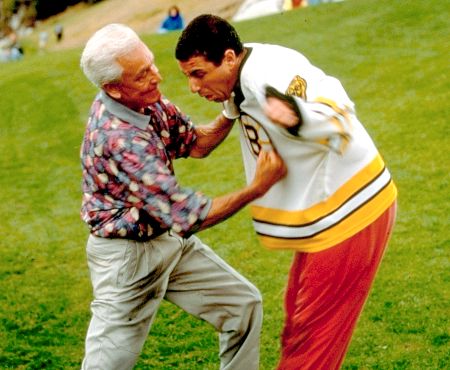
COMEDY and HORROR – I’ve said this a million and one times on the site. The biggest mistake comedies and horror films make, is to focus on the laughs and the scares as opposed to character development. Comedy and Horror plots don’t tend to be that complicated, which is fine. As long as you have a good hook, you’re okay. But the characters in these scripts are a different story. The audience *has to connect* with them in order for the script to work. Yet writers refuse to dig any deeper into those character’s lives than the width of a tic-tac. So figure out what makes your hero tick. What are they afraid of? What’s their biggest flaw? Then use your story to explore that flaw. Happy Gilmore 
WESTERNS – Back in the heyday of Westerns, the world moved much slower. People had more patience, more time. That’s not the case anymore in this information-overload Twitter-centric multitasking world. So you have to update the way you approach the genre. By far, the biggest problem I see in Westerns is that they move too slow. So speed things up a little bit. Develop your characters faster, get to your story sooner, add a few more twists and turns to keep the audience interested. I’m not saying you have to use Scott Pilgrim

ACTION – The big thing with action flicks is the propensity to depend on clichés. Action writers are almost by definition uninterested in character development, and luckily the action genre is the least dependent on that area of writing, so you can actually get away with it. But if your script is just rehashing all the clichés we’ve seen in action movies of the past (a snappy line when disposing of a bad guy, the girl gets kidnapped by the villain in the end, the bad guy is bad for no reason) then you’re not trying hard enough. Some of these things can be done tongue-in-cheek effectively, but even that’s becoming cliche. The reason that the Bourne 

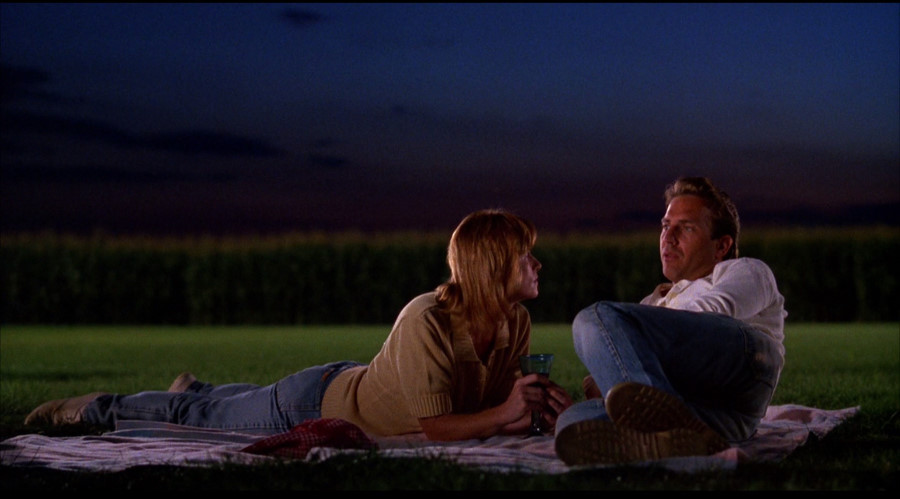
SPORTS – Cliché endings. Amateur sports scripts always end up with some variation of being down by 3 runs with two outs in the bottom of the ninth, and the bases loaded. Then our hero hits the grand slam. It’s sappy, it’s predictable, it’s stupid. You have to find some other way. Look at Rocky


BIOPIC – You’ve heard me drone on about this before. Biopic writers notoriously get caught up on the “best of” or “key” moments of the title character’s life, instead of looking for the most *dramatically compelling* moments of that person’s life. In addition to this, the biopic, more than any other genre out there (since our hero IS the genre) needs to have a *compelling character flaw.* Focus on the events in that person’s life that challenge that flaw and that’s where you’re going to find your story. So if your subject’s flaw is a fear of connection, then place him in a bunch of situations where he’s forced to connect with others. If doing this means leaving out the 3rd most famous moment from that person’s life, then leave that moment out.
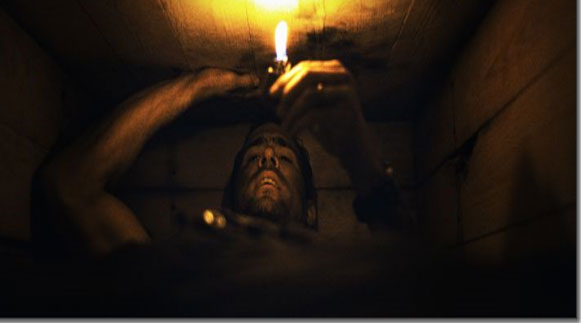
THRILLER – The amateur thrillers I read don’t have enough story developments. The writer erroneously assumes that keeping the pace of the story up is all he has to do. But if you don’t throw us for a loop every once in awhile, if you don’t up the stakes, bring in a new character, force your character to deal with unexpected problems, then your thriller’s going to run out of steam. Just try to make sure something interesting happens every 15 pages or so. In Buried