
Search Results for: F word
A question I always like to ask people in the know is, “What kind of character should you write to give yourself the best chance to attract an A-List actor?” The reason I ask is because there’s no quicker way to get your script sold or made into a movie than to attach a star. Chances are that manager, agent, or producer who’s reading your script right now is wondering, “Who can I get to play this part?” Unfortunately, so far, nobody’s given me a clear-cut answer. Maybe that’s because actors, like anybody, are all different. They have different interests, different needs, different tastes. But that doesn’t mean we can’t find commonalities in their choices. Maybe, if we can identify these common factors, we can write scripts that have a better chance of selling.
Now there’s no perfect way to go about this so this is how I’m gonna do it. First, we need to agree on what an A-List actor is. An A-list actor is someone who can open a movie to at least 20 million dollars on his name alone. People go to see the latest Denzel movie. People go to see the latest Will Ferrell movie. These are actors who get you to open your wallet. Shia LaBoeuf’s name can certainly scrounge up enough money to make a low-rent thriller, but no one out there says, “Man, I gotta go see the latest Shia LaBoeuf movie,” so he and other actors of his ilk are out.
I also needed a systematic way to choose the roles I’m going to break down. So what I’m going to do is take eleven A-list actors and dissect their last starring role. I know some of you are going to whine about the actors I left out but with 25 A-List Actors, I had to cut a few folks. These eleven represent the actors whose roles I know best and therefore can give the best breakdowns of.
Also, I am quite aware that actors sign onto movies for reasons other than the character itself. I think it’s a safe bet that Leo wanted to work with Christopher Nolan bad enough that he would’ve made a movie with him as a deaf librarian trapped in a meat locker. But even in cases such as these, it’s likely that the actor shaped the character into a part he wanted to play. So that character is still relevant to this discussion. Let’s not waste any more time. Here are ten stars, plus one, with the last role they chose to play and why.

Actor: Will Smith
The movie: Seven Pounds.
The part: A gritty role where a man wants to commit suicide to donate his organs to seven needy individuals.
Why he likely chose it: At first glance, this part simply seems like an opportunity for an actor to emote. He gets to cry, he gets to look depressed. It’s a serious role that on the surface gets an actor some street cred. But if we dig a little deeper we find something interesting: Smith is playing a role where he sacrifices himself to save others. Can you think of a more heroic act than sacrificing your own life to save other people? This may sound crazy but actors have big egos and what better way to massage that ego than to play God, which is what Will Smith is doing here.

Actor: Denzel Washington
The movie: Book of Eli
The part: A loner delivering the last bible in a dangerous post-apocalyptic world.
Why he likely chose it: Actors like to be the badass. They like to kick ass. And they like to look cool doing it. What’s cooler than a loner who cuts down his attackers in samurai-like stylistic flourishes? But that’s not the only thing going on here. Denzel’s character rarely speaks. Now younger actors always want a lot of lines. They equate more lines with more screen time. Older actors, particularly A-listers, like to occasionally tackle roles where they have very few lines, the reason being that it stretches their acting muscles. They have to act with their eyes and their bodies, which is much harder to do. Oh, and not to be outdone by Will Smith, did you notice that Denzel is also playing God? He’s delivering the bible in order to save the world. How much more heroic can you get?

Actor: Tom Cruise
The movie: Knight and Day
The part: A mysterious super-agent who must include a woman on his mission when he mistakenly involves her.
Why he likely chose it: First of all, actors love to play spies. The reason for this is that spies are inherently conflicted. They’re always lying to everyone. They’re always having to keep secrets from the people closest to them. That inner struggle is very appealing to an actor. On top of that, Cruise’s character is a cape short of a superhero. He’s capable of superhuman feats – jumping on cars, leaping out of planes, killing dozens of enemies without breaking a sweat – What actor wouldn’t want to play someone so badass? And the cherry on top? The role allows Cruise to be charming and funny, creating the ultimate movie star role.
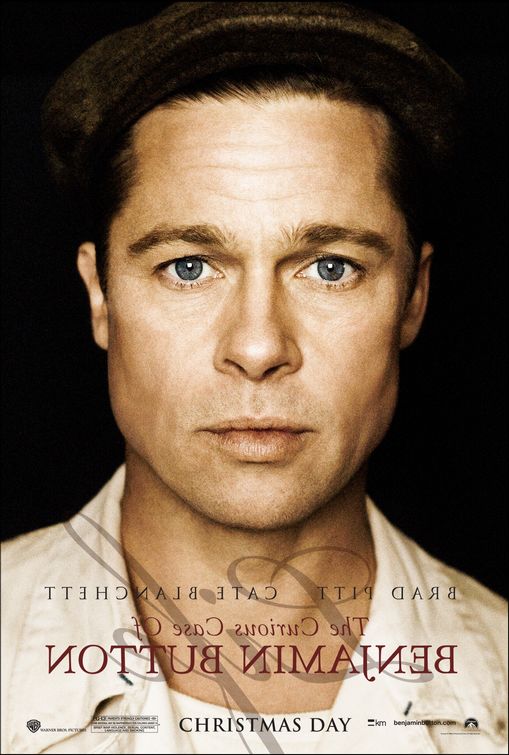
Actor: Brad Pitt
The movie: Benjamin Button
The part: A man who ages backwards.
Why he likely chose it. Well in this case, we know exactly why Brad Pitt chose this role, as he’s talked on record about it numerous times. He chose the role under the stipulation that he get to play every single part, from Benjamin in his 80s to Benjamin as a baby. In the end, Fincher didn’t let him do this – but you can bet he told him he’d be able to. Out of all the characters I’m covering here, this one is probably the most unique, but it’s clear why Pitt chose it. It’s the ultimate acting challenge – playing a person at every age of their life. What actor wouldn’t be interested in that?

Actor: Angelina Jolie
The movie: Salt
The part: A CIA officer who’s accused of being a Russian spy.
Why she likely chose it: Again, we have another spy role. So the reasons for choosing it are similar to Knight and Day. The conflict of lying to those closest to you. The fun of performing superhuman acts of heroism. Indeed, it’s not surprising that Cruise was once attached to this role. It’s also of note that the actress gets to play a female part that isn’t typically cast for females (and in this case, was actually written for a man). I think that appealed to Jolie in an “I can do that too” way. The one difference between this and the Knight and Day role is that there’s no humor here. But that’s because Jolie doesn’t have a sense of humor. :)

Actor: Johnny Depp
The movie: Alice in Wonderland
The part: The Mad Hatter
Why he likely chose it: First off, you’re playing an iconic character. Every actor wants to play an iconic character. But outside of that, Depp’s reasoning was probably similar to Pitt’s. It’s another “ultimate acting challenge.” In general, actors like to play characters who are mad/insane because it allows them to go crazy with the character. Well The Mad Hatter’s the ultimate version of this. He’s got “mad” right there in his name! So to be able to have the latitude to go batshit crazy and challenge every fiber of your acting muscles is, indeed, the ultimate challenge. Also, a character this wacky and different doesn’t usually present itself in mainstream fare, so when it does, actors want to snatch it up. (see also: The Joker)

Actor: Leonardo Dicaprio
The movie: Inception
The part: A criminal who builds dream worlds in order to steal from others.
Why he likely chose it: More than most actors out there, Leo values the character arc. He wants to dig into a character and resolve some internal problem just as much as he wants to resolve the outer one. Indeed, it can be argued that the inner journey here is more important than the external journey. Cobb must come to terms with the loss of his wife before he can achieve his goal. Huge portions of Inception are given to his character battling this problem – most of which were ordered by Leo himself. Also of note is just how tortured Cobb is. Tortured characters always appeal to serious-minded actors as a lot of actors are tortured in some way themselves.

Actress: Sandra Bullock
The movie: The Blind Side
The part: A well-off wife who takes in a troubled homeless teenager.
Why she likely chose it: To this day, I don’t know why people liked this movie. I also have no idea how the role won Bullock an Oscar. The character isn’t a particularly complex one other than that she speaks with a southern accent. What I can gather is this. Women are more inclined to help those in need than men. For that reason, I can see why this role would appeal to Bullock. She gets to save someone who otherwise wouldn’t have been saved. Ahhh, wait a minute. Maybe there’s more to this than meets the eye. Not unlike our friend Will Smith in Seven Pounds, Bullock is *saving* another human being. Maybe roles really are a chance for actors and actresses to massage their egos and play God. Before I get hit with a blind side myself, it should be noted that women rarely get offered roles where they’re not dependent on a man in some capacity. So actresses are going to jump on these roles when they pop up.
Actor: Steve Carrel
The movie: Dinner for Schmucks
The part: An obsessive clingy mouse taxidermist.
Why he likely chose it: In most comedies, there’s the straight guy and there’s the crazy guy. The more innovative you make your crazy guy – the more likely an A-list comedian is going to want to play it. Remember, there’s not as much range in comedy as there is in other genres, so comedians often play the same role over and over again. They yearn for something different. This role is different in that it’s not a character who’s overtly funny (a la Jim Carrey in Liar Liar) but more weird. Getting to play someone strange and “off” is probably a big draw to a comedic actor, because the character has more going on than the typical “Look at how funny I am!” character.
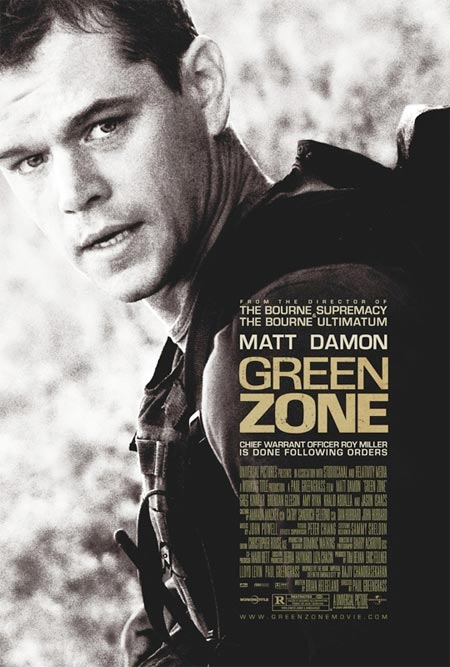
Actor: Matt Damon
The movie: Green Zone
The part: An officer in Iraq looking for WMD’s.
Why he likely chose it: It’s no secret that Matt Damon is a political guy. He forces it down your throat whenever he opens his mouth. So I’m guessing that was a big factor in why he chose this role. He basically gets to live out his dream – being the guy who *literally* discovers that there are no WMDs in Iraq. But that’s not all that’s going on here. There’s another trait that A-listers love in a character: The “My way or the highway” character. Characters that stand up to authority or refuse to follow orders will always appeal to actors because most actors are rebels themselves (they all rebelled against more conventional career choices when they gave acting a shot). You’ll notice that a lot of Matt Damon characters are like this, starting all the way back with Good Will Hunting.

Actor: Ben Stiller
The movie: Greenberg
The Part: A formally suicidal man who moves into his brother’s house.
Why he likely chose it: A lot of our funniest actors are also the most tortured. Judging by the roles Stiller plays outside the comedic arena, I’m guessing he’s one of these people. Greenberg is all about a character who hates the world around him, hates the people around him, hates his own life. He complains and whines about the most mundane of societal etiquettes. My guess is that Stiller is using this character as a surrogate to deal with similar feelings and frustrations. Indeed, a lot of actors use their roles as therapy, as a way to tackle things that they haven’t been able to resolve in their personal lives.
CONCLUSIONS
One of my biggest weaknesses as a writer is not seeing my story through an actor’s eyes. I just try to write the best story possible. That’s a problem because your script usually doesn’t get sold or made unless it has an A-List attachment. So you have to ask yourself when writing a script: Is this a role an actor would want to play? I’m not sure we can make any universal conclusions here, but I did pick up on some trends that might help us answer this question.
First of all, the role has to be challenging in some capacity. True, many of these actors are slapping down product in the middle of the summer where mediocrity reigns supreme, but that doesn’t mean they want neutered down roles. These thespians have gotten to the top of the heap by playing dozens if not hundreds of characters. They’re looking for something new and different. Brad Pitt plays a character not only at many different ages in his life, but plays those ages on a reverse timeframe. That’s challenging stuff. Denzel Washington plays a character who rarely speaks, who emotes only with his eyes and his actions. That’s a challenge. DiCaprio operates in a dreamworld where he’s imprisoned his wife. Every time he then goes into that dreamworld, he’s faced with a sea of conflicting emotions.
Next up, I think your character needs to be heroic. A lot of these characters are saving other people. I hate to state the obvious but actors are very egotistical. They want to play God and save others. There’s nothing more heroic than that. Just remember, heroism doesn’t always mean stopping an asteroid from hitting earth. It can mean delivering the last bible across a post-apocalyptic U.S. It can mean committing suicide to have your organs save seven other people. Whether you’re saving a nation or saving others, look for ways to make your characters heroic.
The last thing I noticed was that characters should have something going on inside of them as well as outside. Running around shooting people is fun but it’s not stretching any acting muscles. You gotta give’em some toys to play with upstairs. Benjamin Button has an ongoing physical transformation as well as having to deal with the realities of being different from everyone else. Denzel Washington gets to shred people into sushi yet must learn to open himself up to others. Tom Cruise gets to fly around on cars but still must learn to be selfless before he can find happiness. Note how in two of these cases (Cruise and Washington’s) the internal stuff is tied to the character arc and in Benjamin’s case, it’s more of a general internal battle that never arcs. That’s fine. Whether you’re arcing your character or not, at the very least, give them some kind of issue they’re struggling with internally.
Now by no means is this a conclusive study. The sampling is too small. I encourage you to look at some of your own favorite actors, the ones you envision playing heroes in your scripts, and break down their last ten roles like I did here. See if you can find any patterns in their choices. That could be the key to making them say yes to you.
The most important thing I take away from this is, before you write a single word in your next screenplay, ask yourself if an A-List actor would be interested in playing the hero. I believe this is such an important element to a saleable screenplay that from now on, I’m adding a new feature to my reviews. If the script I’m reviewing has an A-List attachment, I’m going to discuss why that A-Lister probably took the role. Now what are you waiting for? Get back to writing.
Genre: Comedy
Premise: Three friends with the worst bosses imaginable decide to solve their problem…by killing them.
About: Michael Markowitz sold this script to Rat Entertainment and New Line back in 2005. After busy scribes John Goldstein and John Francis Daley gave it a rewrite, it was able to land Aniston and Colin Farrell in two of the juicier boss roles. Markowitz, the original writer, has been working in Hollywood as early as the eighties, where he acted in a couple of small movies. He’s worked as a producer and writer on TV since, most notably on the Ted Danson starrer, Becker. Markowitz recently worked on another script that sounds funny, titled Tapped Out. It’s about an unemployed man whose life is turned upside down when he accidentally knocks out the Ultimate Fighting Champ at a bar. Shooting right now, Horrible Bosses stars Jennifer Aniston, Jason Bateman, Colin Farrell, Jamie Foxx, Jason Sudeikis, and Charlie Day. New Line seems high on Sudeikis and Day, both of whom teamed up in New Line’s Going The Distance.
Writer: Michael Markowitz (current revisions by Jonathan Goldstein & John Francis Daley)
Details: 120 pages – April 14, 2010 draft (This is an early draft of the script. The situations, characters, and plot may change significantly by the time the film is released. This is not a definitive statement about the project, but rather an analysis of this unique draft as it pertains to the craft of screenwriting).

The Switch.
Bounty Hunter.
Love Happens.
He’s Just Not That Into You.
Common factor between all these movies? I’ll give you a hint: It ain’t that they’re good! Give up? The scripts were terrible! The other common factor? Jennifer Aniston chose to star in all of them. I don’t know why I’ve never seen it before but my brother pointed it out a few weeks ago. Jennifer Aniston is terrible at choosing roles.
So when I opened Horrible Bosses, knowing only that Aniston had chosen to play a part in it, I felt a little like a guy diving head first into an active volcano. But the good news is, Aniston does not play one of the leads here. More like a large cameo. Which meant that the script had a chance. What I wasn’t expecting was that Horrible Bosses took this chance and ran with it like hell.
 Charlie Day
Nick Waters works a nondescript office job and has been busting his ass for 17 hours a day in hopes of getting that big promotion his slick boss, Dave, keeps telling him he’s the frontrunner for. Nick’s eliminated any chance of having a girlfriend or a life with this schedule, but it’s all going to be worth it when he gets that new cushy office! Oh, except that Dave decides to give the job to…himself! He then readily admits to Nick that he lied in order to get him to work harder. It’s called ‘good managing,’ he says. Furious, Nick threatens to quit, but his boss tells him that if he does he will make it his mission to make sure he never gets a job anywhere else ever again.
Ladies man Kurt Gamble works at a chemical company. His grandfatherly boss, Jack, is one of the nicest men you could imagine. He and Kurt see eye to eye on everything. Jack even promises to write Kurt into his will that night. Except ten minutes later Jack has a heart attack and dies, leaving the company to his 20-something coke-fiend mega-dickhead son who hates Kurt more than anything.
 Farrell plays Kurt’s Boss
Dale Stevens is a dental hygienist, high on his recent engagement. In fact, Dale’s got a lot of good things going for him. Except, that is, for his boss. Dr. Julia is hotter than June in Mexico City. The problem is she’s just as dirty. Julia spends the majority of her work day sexually harassing Dale, to the point where you might even call it her real job. From commenting on the potential size of his dick, to explaining how horny she is, and even insisting, every time they put a patient under anesthesia, that they make him/her an unwilling participant in a sexual three-way. The conservative monogamous Dale struggles minutely to perform his job.
The three of these guys are best friends and after discussing just how miserable these bosses make their lives, they wonder what it would be like if they could just…be erased. The thought is funny and euphoric but the once the alcohol takes over, they take it to the next level. What if they actually killed their bosses?
After some initial hesitation, they go marbles in and hire a “killing consultant” to help them plan the kills. As you can expect, nothing goes according to plan after that.
Horrible Bosses roped me in from the very first page. Above all other things, it’s just a funny script. I was laughing throughout the entire first act, especially at all the scenes with Dr. Julia (Aniston’s character), When she invites Dale’s fiancé in for free dental work, puts her under with anesthesia, and suggests they have sex on top of her sleeping body, I mean, I both couldn’t believe what I was reading and couldn’t stop laughing. This character will be one of the funniest characters you’ll watch all year. Mark my words.
The script also makes good on my “what I learned” section from Friday’s script, Flora Plum. Nearly every story improves when you add a villain! And Horrible Bosses has three! Let’s go back even further to my review of Shawshank Redemption. As I pointed out, one of the big reasons for that film’s success is just how much we hated the villains and wanted to see them go down. Horrible Bosses may be flying through different genre airspace, but boy do we want to see all these villainous bosses pay.
 Jason Sudeikis
One of the things I noticed early on about Bosses is that despite liking it so much, the writers made the strange decision to end their first act on page 37. That’s the moment when the trio comes up with the idea to kill their bosses (the end of the first act is usually determined by when the central plot of the movie is initiated). I usually HATE when scripts wait this long to get to Act 2. Not because I care about some arbitrary page number, but waiting 37 pages to get to the point of your movie is usually going to bore your reader to death (a better place to end your act is somewhere in the 23-28 page range). So I was wondering why this didn’t bother me. Then I realized we were setting up three separate storylines (Dale’s, Kurt’s, Nick’s) instead of one, which requires more time. And the fact that we have multiple storylines and characters to jump back and forth between is what kept everything fresh and moving.
The script also handles its problems well. One mistake I see a lot of amateur comedy scriptwriters make is they never care about believability. They think, “Ehh, it’s a comedy. Who cares if it makes sense?” Now it’s true you get a little more leniency with comedies, but it doesn’t mean you can make up your own logic. One of the challenges in Horrible Bosses is you have to convince the audience that killing their bosses is the only option for these guys, because if it isn’t, then you don’t have a movie. So as a writer you need to ask yourself questions like, “Why can’t they just quit and get jobs somewhere else?” So the writers added a scene where an old friend of our trio pops in. He’s a guy who finished at the top of their class and graduated from Yale. Looking barely presentable, the friend tells them how he’s been out of a job for a year, that the economy has made it impossible to find work, and that he actually needs to borrow money from them. It’s a funny scene but it also slyly takes care of that problem. We know that leaving their jobs isn’t an option.
The only thing that didn’t work for me – and I was bummed to see that they had already cast the part cause I was hoping they’d get rid of it – was Cocksucker. Cocksucker is a guy they hire to help consult on the killings for them. True this script is pretty broad, but Cocksucker just moves it into Super-Silly territory, to the point where he feels like a different movie. Even worse, they hire him off Craig’s List. If I had a dime for every time someone hired somebody from Craig’s List in a comedy I read, I’d be able to buy Craig’s List. This script is about 10-15 pages too long, and it’s all because of Cocksocker, who disrupts the flow worse than Kanye West in the middle of an acceptance speech.
But this is a minor misstep in an otherwards very funny comedy.
[ ] What the hell did I just read?
[ ] wasn’t for me
[xx] worth the read
[ ] impressive
[ ] genius
What I learned: Always look to go against type with your characters. What’s the first image in your head if I say, “I hate my fucking boss.” Chances are you’re picturing a bloated white male in his early 40s who looks like an asshole, right? Well guess what? The runaway scene-stealer in Horrible Bosses is Dr. Julia, and the reason she’s the runaway scene-stealer is because you’ve never seen a sexually harassing female dentist boss before. It’s a totally unique character. So push yourself and steer away from cliche. Give us a character that surprises us.
Last week kinda sucked. Nothing even remotely captured my interest. But this week promises to be much better. We have a project with Hollywood’s new bad boy attached. We have an article by yours truly about one of the top 3 things that determine your screenplay selling. We have a really funny comedy that caught me by surprise. And on Friday I review a script that may get an impressive. I haven’t determined what to rate it yet but it’s easily the purest fun I’ve had reading a spec in awhile. Also, we’re going to introduce a new feature in the reviews which will be revealed in that Wednesday article. So I’m anticipating good vibes this week. To start us off Roger’s found himself a copy of a recent Relativity pick up…Goliath. Take us away Roger!
Genre: Action-Adventure, Historical
Premise: When the Mycenaean army surrounds Jerusalem, a young shepherd must accept his divine destiny as king if he wants to save not only his family, but the nation of Judah. But first, he must defeat the elemental force of violence known as Goliath.
About: Goliath sold to Relativity Media back in July. I’ve never heard of the writers before, so I assume they’re tyro scribes and that this is their first big sale. I did some poking around and learned that they were quarter-finalists in the 2005 Scriptapalooza Competition with their script, Our Man Lilburne, and that McKay was a semi-finalist in the 2006 American Zoetrope Screenplay Contest with The Halloween Party. They’re repped by Kaplan/Perrone and UTA.
Writers: John D. Payne & Patrick McKay

This script mysteriously appeared in my hands the other day, and somehow, made it to the top of the pile. I hadn’t heard of it, but was immediately intrigued. I’m no scholar on Judah or the Old Testament, but you could say, from an early age, I’ve always been interested in King David. See, I was raised in the South, and for much of my early life, my parents made me go to Sunday School. I’d rather not get into my thoughts on religion or faith on this forum, but David has always fascinated me. I’ve read a lot about him; I’ve read a lot of stuff written by him. And, I’ll just leave it at that.
The title made me curious.
Did someone write a script about David and Goliath? Or just Goliath? My first thought was, “Wow, this is probably really lame.” So I cracked it open and my expectations were immediately shattered. This thing boldly opens. It feels like a movie with no credits. Just the sickening crunch of bone and a body hitting the ground and being dragged to a mass grave full of dead gladiators. There’s a scarred behemoth responsible for all these deaths, and we meet this war machine as he makes quick work of three of the ancient world’s most bloodthirsty combatants.
These writers aren’t fucking around.
In two pages, they destroyed the pre-conceived notions I had about horrible faith-based movies and the images burned into my brain from Southern-fried Sunday School and those flowery illustrated bibles and their stories therein. It’s a trachea-extracting intro that reads like it was written by a veteran scriptwriter. It felt like one of those cut-scenes from God of War where a Cyclops, a Heavy Metal-inspired nightmare of flesh, is just flattening men with his big club. Because of those first two pages, I was hooked.
I needed to know more about the vision contained within the next niney-eight pages.
Who is Goliath and what does he want?
Other than being a monstrous giant whose flesh is marred with tally marks of all his worthy kills, he has the mind of an archaic philosopher who knows that he’s the personification of violence. Like the Joker in The Dark Knight or Chigurh in No Country for Old Men, Goliath is a force of nature that this region of the ancient world reverently fears. While religious texts might say his height is anywhere from six and a half feet to nine-feet tall, imaginations must wonder if the giant’s mass was some type of physical anomaly.
I like how the script handles the origin story. It’s twisted, a hint of the supernatural melded to the motivation of revenge. It’s mythic.
The mentor in the script says, “He is more a curse than a man. One created by our people.” During the Judean conquest of Canaan, a regiment of soldiers defiled the sole survivor, a beautiful woman. “Eight months later, she died in child birth, bearing a son three times the size of a normal child.” Goliath had not one father, but a hundred. He was forged with their hatred in his mother’s womb, and he lives his life as an honorable killer, preparing.
Preparing to exact justice for her dishonor.
And the ultimate target for his revenge?
The future king of Judah.
David.
I don’t get it, Rog. What makes David so special?
You’re not the only one.
Even his own family doesn’t understand his significance. He’s one of many shepherd’s sons, the runt of the litter who, compared to his brothers, is always overlooked. His own mother mocks him for not being ambitious. In fact, he spends most of his time out in the pasture playing his harp instead of tending the flock.
While young David may not find favor in the eyes of men, in the eyes of his God it’s quite a different story. In the bible, the story goes that the Israelite God no longer favored their current king, Saul. So the prophet Samuel comes along and chooses the least-likely of Jesse’s sons, David, and proclaims that this is God’s choice for king. Out of all the men in the Judaic bible, David was a guy who became known as a “man after God’s own heart”. He became such good friends with the Almighty, that God, in the New Testament and presumably for the rest of eternity, referred to his own son made flesh, Jesus Christ, as the Son of David.
That’s how big of a deal the guy became.
Goliath is interested in David because he knows he will prove a challenge. To a monster that has never met his match, he is interested in fighting a guy who supposedly carries the protection of a god. In slaying David, he will slay an entire people — the Judeans who defiled his mother. And, in doing so, he will humiliate and mark the death of the Judean god.
Enough scriptural context! What’s the damn plot?
Some Mycenaean emissaries, on the warpath to kill David, who according to prophecy threatens their empire, recruit Goliath into battle. Since he finds the practice of killing for money deplorable, he joins the Philistine Dagon-worshippers not for riches but for the chance to face a worthy adversary.
They ravage the countryside around Jerusalem, slaughtering the Judeans and blinding David’s pal, Ezra. David rescues his buddy and they flee into Jerusalem, which has protective walls but is a city that makes the modern slums of Jakarta seem like a five-star resort.
At the House of Judges, the leaders of the twelve tribes are freaking out. Although they outnumber the Mycenaeans ten-to-one, they are a nation divided because they lack someone who can unite and lead all the tribes into battle. It’s a siege and they know they’ll only last so long before everyone in the city starves to death.
King Saul, a porcine man that the Judges don’t respect, decides to visit the enemy camp via royal chariot to inquire about their demands. King Saul suspects that they’ve come to take the Ark of the Covenant (the ultimate war trophy), but instead, he discovers they have an odd request.
It’s disarming.
Grant Goliath unfettered access to their city so he can find the boy who would be the king whom threatens their empire.
What if Saul refuses?
If anyone interferes with Goliath, after three sunsets, the Philistines will crush Jerusalem.
So Goliath is released into Jerusalem, where he goes on a killing spree, executing any and all young shepherd boys that might be David.
Goliath’s only opposition is a secret society of paladin warriors, a band of Dirty Dozen-like soldiers led by Caleb, whose sole purpose is to protect David. There’s a crazy chase through the city as Caleb rescues David and introduces him to The Order of the White Stone.
David can’t believe the news that he’s the rightful king of Judah, and wishes to go to the desert and find Samuel so that he can nullify the prophecy. David is just a shepherd. He doesn’t want this responsibility.
His first order of business is to rescue his family, so he convinces the Order to rescue his family from the House of Judges, which doesn’t go all too great. Goliath chases them through Underground Jerusalem and a shit-ton of people die valiantly whilst trying to protect David.
Goliath chases David into the desert, where more people die. David eventually learns about his true destiny from Samuel the Prophet, and there’s a chase back into Jerusalem and a quest to retrieve pieces of the sacred tablets from the Ark.
Along the way, there’s a crown jewel of an action sequence that has a lot of fucking lions in it.
The script builds up to the famous duel between our two main characters, and yes, it is a doozy. Combining the intimate scale of the mano-a-mano fights in Gladiator and the Let’s Revolt attitude of Spartacus, the final pages are pretty darn satisfying.
Does it work?
Indeed, it does. The pacing is that of a chase movie, and the set-pieces seem like they could belong in a Jerry Bruckheimer movie. It’s a fun read. The theme is pretty epic, familiar but universal, but what makes it shine is the execution. For someone who has read the bible, it was fun to see the writers create a sort of Old Testament primer.
My only gripe is that it lays the Joseph Campbell on pretty heavy. I mean, as a scriptreader and writer, I prefer it when this stuff is more subtle. If it’s possible for formulas to be on the nose, then stories that use prophecy as a major plot device are a prime example. We’ve seen it a thousand times. A literal prophecy declaring that some ordinary person is going to become a hero and save the world?
C’mon! It’s familiar, which is good, but sometimes there’s too familiar! When someone in the general audience can think, “Oh, like in The Matrix?” Then you’re in too familiar territory.
And, unfortunately, all of the Order of the White Stone stuff falls in this realm. It works, but as a reader, I’ve seen it one billion times. I see something like that and I see the writers revealing the gears turning in their heads. They reveal their secrets, methods and reference material whenever that happens.
Luckily, I got thirty-three pages into the script before that happened, and it was the only part that felt like a miscalculation. Why not go for something more fresh?
This sounds kind of like a faith-based film. Is that assumption correct?
Thanks to that Mel Gibson snuff flick that came out a few years ago, Hollywood discovered that there’s a huge market for faith-based movies. Hell, it’s proven that many of them don’t even have to be good, as long as their audience connects with the message. Which may be good enough for the seventy-year old Georgia couple who purchases tickets for Fireproof, whom have no idea that Kirk Cameron used to star in a classic tv show where his best friend was a character named Boner (Boner!), but to the rest of us who rolled our eyes at The Blind Side, we may demand something more, I dunno, good.
I think something like The Book of Eli aspires to create a new standard for faith-based movies, or that’s at least the way I saw it when I read the script. When I watched the movie, I even remembered that Denzel associates himself with Christianity.
In any case, Goliath seems to be in the vein of this new standard, which somehow smuggles in a perceived truth in an original story that can appeal to even the most jaded movie-goer. It entertains first, and delivers a message second. It’ll draw in the Bible-thumping hordes and the sword-and-sandals demographic, and it’ll do so because it’s pretty fucking good action-adventure storytelling.
It’s probably more 300 than Braveheart, and script-wize, it’s more Galahad than Medieval, but Goliath will appeal to fans of all four. It’s a blood-and-guts Bible Story Remix, so don’t be surprised if it even appeals to non-fans who get their movie recommendations from some guy brandishing a bible behind a pulpit.
[ ] What the hell did I just read?
[ ] wasn’t for me
[xx] worth the read
[ ] impressive
[ ] genius
What I learned: Smuggle in your message. Smuggle in truth. Your message, or your truth, is just your theme. Firstly, and above all, your story must be entertaining. And, it must be good. You’re telling a story, not an idea. You’re telling a story, not a theme. Whatever idea you have, whatever theme you have, hide it. Hide it underneath your story. Hide it in the hearts of your characters. If you aspire to be a screenwriter, you’re aspiring to work in Hollywood. In Hollywood, it’s like Martin Scorsese says, you’re gonna have to smuggle in the truth. You’re aspiring to work in a trade where commerce is the bottom line, not art. You’re gonna have to learn how to tell commercial stories. But rest assured at the irony: Usually, for a story to be commercial, it has to have a universal theme. If your story is entertaining, your theme is either eventually gonna reveal itself naturally, like all good metaphor does, or people are going to find it because they’re going to be searching for it. But, first, you have to reel them in and entertain them.
Genre: Drama/Love Story
Premise: (from IMDB) A penniless girl in the 1930’s is taken in by a circus freak, and even as he falls in love with her, she begins to launch a career in the circus herself.
About: Flora Plum has been in development for many years and almost went into production with Jodie Foster directing, and Russell Crowe and Claire Danes starring. The project then fell apart because Russell Crowe fucked up his shoulder. That one unfortunate ill-timed accident sent everyone racing off to other projects and Flora Plum was abandoned like a discarded peanut shell under the rafters. Steven Rogers has been around for quite some time, penning a lot of love stories such as “P.S. I Love You,” “Hope Floats,” and “Stepmom.”
Writer: Steven Rogers
Details: 103 pages – 1999 draft (This is an early draft of the script. The situations, characters, and plot may change significantly by the time the film is released. This is not a definitive statement about the project, but rather an analysis of this unique draft as it pertains to the craft of screenwriting).

Man, it has not been a good week for screenplays here at Scriptshadow. Well, I guess Fright Night got some good reactions, but this is the third script this week that I wasn’t into. I guess it’s only fair as we had to balance out last week. But I did hold out some hope for Flora Plum. It’s been around for awhile and I’ve heard good things about it. But the problem here is that once you read that other circus script (of course I’m talking about “Water For Elephants”) this feels like the JV version. In fact, you could tell where this script went wrong in a lot of places just by comparing it to Elephants.
I’ll give this to Flora Plum: it’s different. Set in the 1930s, we begin with documentary interviews of various circus members recalling Flora Plum, who, from their various recollections, we conclude to now be America’s sweetheart. But that doesn’t stop most of them, such as Opal, a flirty dwarf, from recalling her as somewhat of an annoying bitch. In fact, there seems to be an almost disdain for this woman from everyone interviewed, and of course this builds our anticipation to meet the girl ourselves.
Indeed we meet Flora Plum just as she arrives in town. She’s fresh-faced and naturally beautiful but lacks any definable talent and may be a little on the clutzy side. Luckily she’s the hardest worker you’ll ever find and dangerously determined. More than anything, she just wants to be a part of something, and in her eyes, the circus is her calling. Of course, throw a gorgeous knockout into a sea of freaks and you’re going to see some jealousy. Which leaves us to wonder if those earlier interviews were the truth or simply a bunch of frekazoids with an axe to grind. I mean, could this sweet girl really turn into something as hideous as they say?
After Flora gets settled in, she meets and takes a liking to Jake, otherwise known as “The Beast.” Jake is covered in hair from head to toe, to the point where he makes Robin Williams look like he has alopecia. Jake is clearly talented, but has chosen a very esoteric long-winded routine for his act. This man is Jean-Luc Goddard to everyone else’s Michael Bay. The owner of the circus, Herbert Little, eventually gets fed up with the bizarre act and cancels it, relegating Jake to the humiliating position of “sideshow.”

This part of the screenplay was the strongest, as it not only pushed the story forward, but gave us a glimpse into the politics and cut-throat world of the circus. On the outside, they all seem cute and cuddly, but underneath the dome, everyone’s trying to one-up each other. Greed, jealousy, and the bottom line dictate who gets onstage and poor becomes a victim of this ideology.
But Jake’s downfall is cushioned by the burgeoning support of Flora. She’s the one person who loves Jake’s strange act and probably the only one who believes in him. This leads to an intense friendship and before long Flora comes up with a plan. They’ll create an act together – a sort of “Beauty and the Beast” – and work their way back into the main lineup. As the circus moves from city to city, the two train day in and day out, which of course brings them even closer. However, expert acrobat Patrice, the stud of the show, starts making moves on Flora, going so far as to invite her into his act. Flora is then torn between the beastly Jake and the handsome Patrice. Does she stick with the long shot, or go for the sure thing?
In order to keep the story moving, Rogers wisely throws Blade Devin into the mix. Devin has the best circus in the region and he’s actively searching for a new act. Word has it that he’ll be at their New York show and whoever shines the brightest, that’s who he’ll pick. It isn’t just Flora, Jake, or Patrice who are gunning for the spot, but everyone in the circus. But the bigger question is, who will Flora choose to perform her act with? Jake or Patrice?
Flora Plum wasn’t a bad script. I think if I never read Water For Elephants, I might have liked it more. But comparing the two you can see this script’s faults a lot more easily. Let’s start with the most important element – the love story. Flora Plum has the beauty and the beast thing going as well as the love triangle. But Water For Elephants had forbidden love going for it. Our hero didn’t just fall in love with a random act. He fell in love with the CIRCUS OWNER’S WIFE, someone he couldn’t have. Not only that, but that owner is a raging terrifying psychopath. We genuinely feel like if he finds out that his wife is with this guy, he’ll kill him. So the stakes are through the roof. Here, Flora and Jake’s relationship is pretty much in the open. The only thing at stake is feelings, which can work if we really love the characters, but still, it didn’t come close to the tension and undercurrent present in the Water For Elephants relationship.

Another problem is that the love triangle here doesn’t work. It’s never clear to me if Flora even likes Patrice. And most of the time, she’s overtly uninterested in him. Incidentally, Patrice is no different. One second he seems content with trying to steal Flora from Jake, the next he doesn’t know who she is. And not in a “stuck up” way. He literally doesn’t seem to know who she is. The whole storyline was just way too inconsistent. And since it was never clear where all the characters stood, it was hard to get a handle on what was going on.
What really set Elephants apart, however, was that even though there were a million interesting characters to choose from, it always focused on the right ones. Flora Plum, unfortunately, drops us into storylines we have no interest in watching, and so the narrative keeps getting chopped up by insignificant secondary scenes. For example there’s an “aging star” character who’s watching her limelight fade who I could care less about. After awhile, I began to treat these moments like commercials. I’d watch them begrudgingly hoping for the main show to start back up again.
I think the script does some things right. It has some charm. There are places where the relationship between Jake and Flora really shines. I could imagine Russell Crowe, full on make-up with the wolfman hair and everything, staring into Flora’s eyes, sad and desperately in love, and really see it working. The script had one of my favorite lines I’ve read in a script in a long time. Jake is asked, after his performance, how his act went. He replies. “The act was a success. The audience was a failure.” There’s also a late story twist which caught me off-guard and worked quite well. I feel like the elements are here for something special.
But in the end, this just doesn’t pack the firepower Water For Elephants did, and no matter how hard I tried to judge it on its own merit, I couldn’t get past that.
[ ] What the hell did I just read?
[x] wasn’t for me
[ ] worth the read
[ ] impressive
[ ] genius
What I learned: This is a rehash “what I learned.” I was trying to figure out why this wasn’t pulling me in the same way Water For Elephants did. There were a lot of reasons, but the main one? No villain. There’s no true villain here to root against. In Water For Elephants, you have a ruthless terrifying villain that with every fiber of your being you want to see our hero destroy. You’d be surprised at how much better a villain – any villain – can make your story. So if you choose not to have one, make sure it’s for a good reason. The lack of one here really hurt the story.
Genre: Comedy
Premise: A mild-mannered IT guy receives an ‘owners manual’ that tells him how to fix his life.
About: Made last year’s Black List with 5 votes. Very quietly the heavy-duty comedy producing team of Will Ferrell, Chris Henchy, and Adam McKay are attached. Might this be a future Will Ferrell vehicle?
Writer: Greg Ferkel
Details: 108 pages – undated (This is an early draft of the script. The situations, characters, and plot may change significantly by the time the film is released. This is not a definitive statement about the project, but rather an analysis of this unique draft as it pertains to the craft of screenwriting).
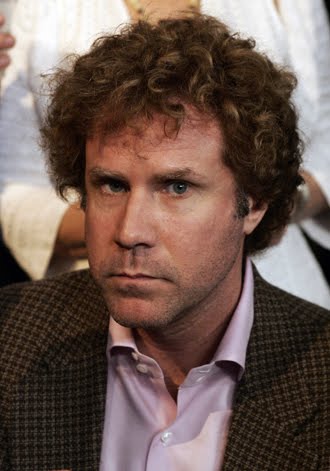 A possible candidate to play Owen?
I must admit I like these kinds of comedies – one step removed from reality, somewhat fantastical, an intriguing hook. Yet I also know that a lot of you hate them. And so I’ll just tell you right now, if you don’t like high concept comedies, there’s no use in continuing with this review. You’re going to hate Owen’s Manual with a passion. But if you like them, you’ll be happy to know that Owen’s Manual is a nice little entry into the genre.
So why do writers favor struggling average-looking heroes who’ve let themselves go, have no direction, and can’t get a girl to save their behinds? Because that character is the average screenwriter! I mean not all screenwriters of course, but a lot of them. And since those are the people writing your stories, you’re damn skippy they’re going to use those stories as wish-fulfillment. Translation: Seth Rogan and Michael Cera aren’t going anywhere!
To that end, Owen is no different. He’s a schlubby IT guy who works at a magazine called “Hip Parent,” where he’s perfected the art of getting stepped on. Owen gave up his life a long time ago to play the role of lewwwwwssserrrr.
Then one night, Owen catches an infomercial promoting one of those gyrating weight-loss belts. Figuring “what the hell,” he grabs the phone and orders one. A couple days later a UPS box shows up except there’s no gyrating inside. Just a manual. But this isn’t any ordinary manual. It’s a “how-to” guide for fixing Owen’s life. The table of contents reads like it’s been sitting on his shoulder for the last five years. “How to get your boss off your back” “How to get that girl at work,” “How to make sure nobody takes advantage of you anymore.”
Owen dismisses it as a practical joke, but when his boss calls to have Owen, once again, fix his laptop, Owen, out of curiosity, follows the instructions in the manual. The exchange reveals that the boss’s 10 year-old son has been surfing porn (hence why it’s had so many problems), which he happens to be fixing just as his wife walks by, which results in his wife believing he’s a porn addict, which results in the boss taking an extended leave of absence from work.
Freaked out, Owen calls the help number on the manual and gets in touch with the smooth-talking Rajeesh, a call tech for these life manuals. Owen asks him all the obvious questions and Rajeesh assures him that if he just follows the manual, all his problems will be solved.
Owen’s suspect at first but eventually starts following the manual religiously. He takes Cara out. He stops allowing others to step on him. He becomes nicer and more accepting of people. Sure enough, his troubles begin to dissolve away.
In the meantime, Owen gets a call from his old girlfriend, Hayden, who’s drop dead gorgeous and since their time together in college has won the Nobel Peace Prize. She’s getting married in a couple of weeks and because Owen knew her before the fame, she wants him to give the toast at her wedding. There’s a part of Owen who’s, of course, still in love with Hayden, which complicates his evolving relationship with Car.
The problem is that Owen starts getting too dependent on the manual, and when he realizes that the manual only solves problems up to the date of its publication, that means he’ll have to solve any new problems by himself. Because Owen’s become so dependent on the manual, he doesn’t know how to figure things out anymore. And we’re left to wonder if he’ll be able to figure it all out in time for the big wedding toast.
Owen’s Manual is both funny and clever, especially the first half of the script, which really moves. I love this concept because I think we all wish we had an owner’s manual to our lives. If the answers were written down in an instruction booklet that we kept on our ipods, everything would be a lot easier. So to watch that fantasy play out and the complications that arise from it was fun.
But this script is not without problems, starting with Cara (the hot girl at work). Cara is our female lead, and I never trusted her. We meet her as she takes advantage of Owen, slyly convincing him to write her article for her. I always say watch how you introduce your character because that first impression is what’s going to stick with the audience the strongest. If you have a character taking advantage of our hero in her very first scene, are we going to like that character?
The script also dips into dangerous territory by making its protagonist passive. A passive protagonist isn’t a death sentence, but when your hero isn’t dictating the action in the film, it’s usually a lot slower than when a protagonist *is* dictating the action. To the script’s credit, the reasoning for Owen’s passiveness is directly linked to the concept (he has to *follow* a manual), so it didn’t hurt the screenplay too much.
Probably the biggest misstep though was the Hayden storyline. Our hero’s being lured to this wedding for a character we haven’t met, don’t know and don’t care about. It never felt organic and as a result, we’re physically watching the strings being pulled as they’re being pulled. If you look at a very similar story, Office Space, and imagine Peter Gibbons getting a call from his fiancé in Hawaii and flying out there for the third act, it just feels all wrong. And that’s how it felt here.
I think the reason for this straying had something to do with the lack of a clear theme. I couldn’t figure out what the script was trying to say. Was it saying you need to make your own decisions? That you can’t depend on others? For awhile, yes. But then in the end, all of that is completely abandoned in order the hash out the complexities of the Hayden marriage storyline, leaving me with a big question mark on my face. Uh…okay? What was the whole point of that again?
Those types of things make this feel like an early draft, which it very well might be. But in spite of these issues, I enjoyed it enough to recommend it. If you’re a high-concept comedy guy like myself, you’ll want to check this out, for both the good and the bad.
[ ] What the hell did I just read?
[ ] wasn’t for me
[x] worth the read
[ ] impressive
[ ] genius
What I learned: Sometimes storylines weren’t meant to come together. If you’re flexing every single writing muscle you have to force two storylines together in a finale – if each word is dripping with sweat from the Herculean effort you’re making to somehow combine these two worlds, maybe it’s time to admit that those storylines can’t coexist. That’s the case here with Owen’s Manual. The Hayden stuff just never gels with the story, which is why the third act derails. Never be afraid to cut out that storyline that isn’t working.