
Search Results for: F word
Genre: Thriller/Contained/Drama/Post-Apocalyptic
Premise: A married couple is vacationing on the island where they spent their honeymoon, when a man in military fatigues washes onshore, claiming the end of the world is coming.
About: I thought that this sold last week but it was actually sold much earlier in the year. Last week was the announcement that Jason Isaccs was being replaced by Inception alum Cillian Murphy in the lead role. Thandie Newton will also star, and co-writer Carl Tibbetts will make his directing debut. Many are calling the film “the next Dead Calm,” which is high praise, as Dead Calm is one of my favorite thrillers.
Writers: Carl Tibbetts and Janice Hallett
Details: 91 pages – March 17, 2010 draft (This is an early draft of the script. The situations, characters, and plot may change significantly by the time of the film’s release. This is not a definitive statement about the project, but rather an analysis of this unique draft as it pertains to the craft of screenwriting).

I strolled into a rental store for the first time in four months last night listening to the audiobook of The Girl Who Played With Fire, the second novel in the now famous “Girl With The Dragon Tattoo” trilogy. I was on the chapter about math. I did everything in my power to escape math once out of college, yet there it was, being piped down my eardrums by Martin Wenner, the audiobook reader for the Dragon Tattoo series, who was explaining to me, in a thick English accent, the root of the square root. I was confused and discombobulated by the conflux of these events, which may explain how I walked out of the store with a copy of “The Losers,” a movie with the cinematic ambition of an eighth grader with a flip phone at the skate park.
As I watched this movie, I was surprised to realize that technically, it was well-written. Sure the dialogue was way corny and it tried uber-hard to be the kind of film you quote with your buddies on a roadtrip, but the thing was so structurally sound you could practically see a graph of Blake Snyder’s beat sheet behind it. It was a reminder that structure is only half the battle. Your choices still need to be original. Your dialogue still needs to be fresh. A dirty little secret is that workmanlike gets it done when you’re an established professional, but when you’re an amateur, more is required in order for others to take notice.
I bring this up not because The Losers and Retreat are similar in any way, but because Retreat is a contained thriller, and there are so many of these flooding the market, you need to figure out ways to elevate the material beyond the obvious (which The Losers wasn’t able to do). Now assuming you’re a competent screenwriter and know your 3-Act structure, the place this happens is in the choices you make for your story. Are they different? Are they new? Are you challenging both yourself and the audience? There’s hundreds of directions you can take a story about a vacationing couple who get word that the world is ending. So did Tibbetts and Hallett merely get to the finish line, or did they come up with an original exciting thriller with loads of surprising twists and turns? Let’s find out.
Martin and Kate are a well-off Irish married couple in their 30s. The two are heading to Dinish Island, a tiny private island off the Irish Coast where they spent their honeymoon together a decade ago.
But it’s evident early on that something is broken in this relationship. Kate seems more interested in talking to the tugboat owner, Doug, on the way over, than she does her own husband. In fact, the more we get to know these two, the more we notice how rare it is for Kate to even *look* at Martin.
And that’s because Martin, a hardcore workaholic, was too busy working to answer Kate’s distressed call 8 years ago when she had a miscarriage. Kate still hasn’t forgiven him for not being there, and hasn’t forgotten that Martin never wanted the child in the first place. This vacation is a last ditch effort on Martin’s part to save this marriage, a venture that’s looking less and less likely by the minute.
Retreat eases into its story slowly – maybe too slowly – as Martin and Kate perform a number of couple-related tasks under a thick cloud of tension. And just when you want to personally kick the story in the behind to move it along, an unconscious man washes ashore with military fatigues and a gun. The two hurry him into the house to nurse him back to health, only to learn, according to him, that a pandemic has swept across the globe like wildfire. Pandemic, if you don’t know, is the deadliest of the “demics” as it’s the kind that spreads through the air. And this one is a doozy. Catch it and you’ll be dead within 48 hours.
The man, Corporal Jack Corman, a member of the Royal Marines, dutifully starts boarding up windows and doors without consulting the couple, preparing for “when they come.” “They” is in reference to the survivors, who Jack predicts will be catching rides over to this island any minute now, in search of safety. And since they’ll probably be infected, it’s their job to make sure they don’t get in the cottage.

But Martin and Kate note an inconsistency in Jack’s comments and logic. There’s something off about the man, and it causes them to question whether he’s locking other people out, or locking them in. Unfortunately, with everything happening so fast, and no previous experience for “what to do when there’s a pandemic and a crazy man runs into your home and starts boarding everything up,” by the time Martin and Kate realize he might be dangerous, they’re already locked inside. With their only communication to the outside world an old CB radio that barely works, Jack becomes their only source to the outside world.
So when I’m determining whether something is elevating the material or just making the obvious choices, the first thing I look at is “Am I able to predict where this story is going?” I may not know exactly what’s going to happen, but if I generally know the twists and turns, that’s a bad sign. Obviously, you’re not being original if the reader can predict what’s going to happen.
Retreat, unfortunately, falls into this rut. For the first 50 pages or so, I knew every beat, every twist, every surprise, and while I wouldn’t say I was bored, I was disappointed that things were moving along so predictably. But I’ll tell you where the script saved itself. At a certain point, we think we know whether Jack’s lying or not. Then we’re not so sure. Then we’re sure again. Then we’re not so sure.
Retreat places that question front and center in the story: Is there a pandemic or not? And it keeps going back and forth on whether there is. After flipping back and forth so much, we really have no idea what to believe. And because we want to know the answer to this mystery, we’re compelled to read til the end. That alone makes this script worth the read.
But Retreat still suffers from the same thing a lot of these low-character contained thrillers suffer from. With only a single couple’s problems to explore during the second act, there’s a lot of extra time to fill, and so we’re given these scenes – particularly between Jack and Kate – that are intense and racy but lack a certain truth to them. Instead of servicing the story they feel like they’re trying to make up for the lack of it. I kept asking, “Why is Jack doing this? What’s his plan here?” And I could never come up with a satisfactory answer, which implied that it was just filler until we got back to the story again. I didn’t think these scenes were bad, but they definitely felt forced, and pulled me out of the script.
I also thought the writers missed a huge opportunity. This story is essentially about a woman who wanted children then lost a child, and how that event affected her marriage. That theme keeps coming up again and again. So why wouldn’t you have Kate pregnant again? How much more intense would this be if they were reliving the very thing that tore them apart in the first place? With her pregnant, possibly due soon, every problem here would be magnified times a thousand. It would also give the story more places to go.
I have to give it to the writers though. It’s so easy to wrap these stories up in a nice little bow. But Tibbetts and Hallett don’t screw around, leaving us with a finale that’s both shocking and disturbing. Retreat doesn’t rewrite the book on thrillers by any means, but the storyline keeps you guessing enough to make it worth the investment.
[ ] What the hell did I just read?
[ ] wasn’t for me
[x] worth the read
[ ] impressive
[ ] genius
What I learned: There’s a sizable percentage of writers who are resistant to any kind of screenwriting academia. I might say to someone, “Your main character needs a fatal flaw,” and they’ll reply with a scoff. “Don’t throw that screenwriting mumbo-jumbo at me,” their eyes say. I get that. Everybody has their own process. So let me take the technical side out of it and say it this way: every character should have a “thing” going on. Everybody’s got a “thing.” My friend Dan’s thing is that he’s obsessed with women, to the point where it’s ruined a marriage and a couple of other great relationships he’s had. My friend Claire’s thing is that she refuses to rely on other people for help. She has to do everything herself, even when at times it’s impossible. Kate’s thing here is that she can’t forgive her husband for putting his work before her. Think about all the friends in your life. You can probably break all of them down into having that one “thing” that identifies them. This “thing” is what you use your screenplay to explore. Sure this concept is about a deadly virus that could potentially end human existence. But really this script is about a woman trying to come to terms with what her husband did to her, forgive him, and move on. Once you identify what your main character’s “thing” is, you can use your screenplay to explore it. If you’re not doing that, I got news for you, you’re going to have a hard time writing a good screenplay.
On the last Friday of every month, I choose an amateur script submitted by you, the readers of the site, to review. If you’re interested in submitting for Amateur Fridays, send the genre, the title, the premise, and the reason I should read your script to Carsonreeves3@gmail.com. Note that your script will be posted online and that you shouldn’t submit if you’re allergic to criticism. :) This month’s script is The Assassination Of George Lucas by Aaron Michael Thomas.
Genre: Comedy
Premise: When George Lucas announces a third trilogy, Mac and his group of ragtag friends hatch a plan to assassinate him in the name of preserving the purity of Star Wars.
About: This is the third amateur script in my monthly Amateur Script review series.
Writer: Aaron Michael Thomas
Details: 105 pages
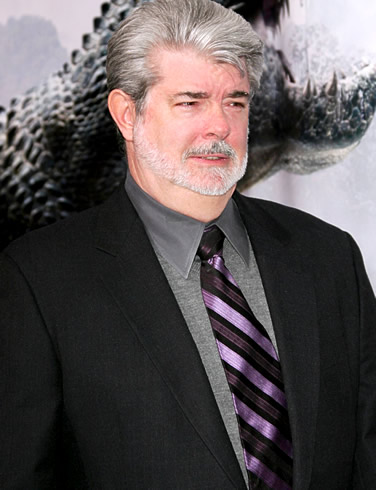
So why did I choose The Assassination of George Lucas over all the other entries for Amateur Friday? Well duh, because the title is “The Assassination of George Lucas!”
But seriously, the title made me smile. And the premise made me laugh. Sometimes that’s all it takes. When you read a lot, there are periods when you want to get away from the serious stuff and just rattle the belly a little bit. I needed some belly-rattlin.
The Assassination Of George Lucas is about four friends: Mac, our conflicted hero, Sarge, the result of a one night stand with a nameless army Sargent, Casey, a home schooled Star Wars nut, and Joanna, who became a lesbian after seeing Princess Leia in Return Of The Jedi.
These childhood friends endure the same devastating disappointment all of us went through when we sat through the debacle known as the prequels. With cinematic perfection forever ruined, the group tries to come to terms with their favorite movies ever never being the same.
And then the unthinkable happens. At Comic-Con, George Lucas makes a surprise appearance to announce that he will be making a third trilogy – episodes 7, 8 and 9. Within minutes, Star Wars costumed geeks are staging a protest. But Mac is so sickened by the announcement, he’s thinking of something much more dire. If Lucas were to make a third trilogy, it would destroy the memory of Star Wars forever, and Mac can’t risk that. Hence, the only way to save Star Wars…is to KILL GEORGE LUCAS.
 The only actor in the world who can turn the word “course” into two syllables.
So he and his buds draw up a flimsy plan to drive up to the Lucas Ranch and poison the goitered one. Along the way they run into a slew of people, including a real life bounty hunter, a frantic Mark Hamill, and a long in hiding Lawrence Kasden. In the meantime we see that Lucas has become so reclusive and paranoid that he can’t even go to the bathroom without body guards. This is a man who will be hard to kill.
There’s some funny stuff in this script. My favorite character was Casey, who’s the only person on the planet who loves the prequels (the guy incorporates Jar-Jar quotes into everyday conversation). In a world where hating on the prequels has become as ubiquitous as pictures of Zac Efron on Perez Hilton, it was funny to watch a character who unapologetically loved them. I also loved the Lawrence Kasdan stuff, as it’s well-known that Lucas didn’t exactly flip over Kasdan getting so much credit for Empire Strikes Back. Seeing him holed up so that Lucas can’t get to him was pretty funny.
The rest of the stuff is hit or miss. There’s a trivial recurring joke about gummy bears, a random scene dedicated to observations about Super Mario Brothers, and probably my least favorite bit, George Lucas being an alienated asshole.
When you write a comedy, you want the jokes to be fresh. And Lucas being a reclusive dickhead has been done to death. I think there’s even a South Park episode dedicated to it. I was hoping for a more complicated original take on the character, not unlike what’s done with Casey. For example, what if Lucas was actually the nicest guy ever? What if they got there and were all ready to kill him and he made coffee for them and sat them down and started telling them stories? How are you going to assassinate the nicest guy ever? That’s a butchered “off the top of my head” idea and I’m not saying it’s great, but the point is, we needed something fresh here.

But the real problem with The Assassination of George Lucas runs much deeper, and that’s the characters. None of these characters have any substance. They have no flaws, no problems, nothing they’re trying to overcome. Each character is exactly the same at the ending as they are at the beginning. And that’s not going to cut it in a comedy spec.
Take the characters in the recently reviewed “Crazy Stupid Love,” for example. Jacob (the womanizer) is emotionally incapable of opening up to women so he engages in an endless streak of one-night stands, not realizing that it’s making him miserable. Watching him resist conquering that flaw is what made his character so interesting. Or take Cal (Steve Carell’s characer), who’s trying to come to terms with his wife leaving him. He doesn’t know whether to embrace the singles scene or fight to get his wife back. In both cases, the characters are fighting an inner battle. None of the characters here are battling anything. In fact, three of the characters are built on a joke. Casey is home-schooled, Sarge is a one-night stand, and Joanna turned into a lesbian after seeing Princess Leia. That’s as deep into the characters as we get. And Mac, our protagonist? His big problem is that he wants to preserve Star Wars. I’m sorry but that’s just not deep enough to keep us engaged for 2 hours.
Instead, what if Mac had a choice tugging at him? What if he’s at a point, 26 or 27, where he has an opportunity to take a job, to start being an adult with responsibilities, or continue this arrested development lifestyle where he’s obsessed with a children’s movie. Now there’s something actually going on with Mac. He has a choice. He has depth. If you want to see this exact flaw in action (and done well), rent The 40 Year Old Virgin and pay attention to Steve Carell’s character.

Another problem I had was that the script didn’t take advantage of its premise. If you look at a movie like Fanboys, which covers similar terrain, there were all these moments where Star Wars serendipitously intruded upon their journey, leading to a lot of funny in-joke situations. The Assassination Of George Lucas is actually about a piece of Star Wars – the prequels – that hasn’t been explored in cinema extensively. There’s a TON of funny situations Thomas could’ve drawn from these movies but instead we keep focusing on the old stuff. For example, why are we bringing in Mark Hamill, who’s already been done to death? Instead, what if they run into Ahmed Best, the actor who played Jar-Jar? Let’s look at how that role ruined his life and how he hates Lucas as a result. What the hell is Jake Lloyd doing nowadays? Maybe he’s a drugged out misfit who actually thinks he’s Darth Vadar. There’s a moment here where our characters walk into a car dealer. Why not make the dealer like annoying nonsensical Watto? In other words, let’s make their journey to kill Lucas turn into their own Prequel Hell. The current comedic choices here are too obvious and deal with territory that we’ve already seen. Let’s explore something new.
The final issue here is that The Assassination of George Lucas probably couldn’t get made. It paints Star Wars and Lucas in a negative light and even though Lucas would whore out the Star Wars brand to flesh lights if it added to the bottom line, the one thing he does still care about is his personal image, which The Assassination of George Lucas…well…assassinates. That would mean you’d have to make this movie without any Star Wars paraphernalia whatsoever, which I don’t think is possible. That’s not to say all is lost, however. Pretty much all scripts are calling cards anyways, so if this made the right people laugh, it could open the door to a career.
The Assassination of George Lucas was a cute script. But if it’s going to compete in the ultra-competitive spec comedy market, it will need to dig deeper.
Script link: The Assassination Of George Lucas
[ ] What the hell did I just read?
[x] wasn’t for me
[ ] worth the read
[ ] impressive
[ ] genius
What I learned: Your comedies, even the goofiest ones, should contain some sort of theme – some sort of statement you’re trying to get across with your story. When I finished The Assassination of George Lucas I felt…empty. Without a larger statement, the story experience dissolved as soon as it was over. One of the reasons Toy Story 3 was so great (and all of Pixar’s movies – which put a heavy emphasis on theme) was that it kept harping on the theme of “moving on.” That there are phases in your life where you have to move forward, even if you don’t want to. In Liar Liar the theme was obviously “truth” and the consequences of not telling it. Even in the seemingly depth-less Dumb and Dumber, the theme is “taking a chance.” Refusing to be held back by the rules and restrictions of society. There’s an opportunity in The Assassination of George Lucas to write a movie about people who are afraid to grow up. Had that been explored here, this script would’ve lingered in the reader’s mind, instead of disappearing into space like the opening crawl.
Genre: Sci-Fi
Premise: A group of time-travellers jump back to 12th Century China in search of a rare gene that will save mankind. Problems arise when they find themselves in the direct path of Genghis Khan’s army.
About: Details are scarce about this one, but it was acquired by Sony earlier in the year. David Gleeson is an Irish writer-director who wrote and directed a couple of small features in his home country.
Writer: David Gleeson
Details: 116 pages – Feb 10th 2010 draft (This is an early draft of the script. The situations, characters, and plot may change significantly by the time of the film’s release. This is not a definitive statement about the project, but rather an analysis of this unique draft as it pertains to the craft of screenwriting).
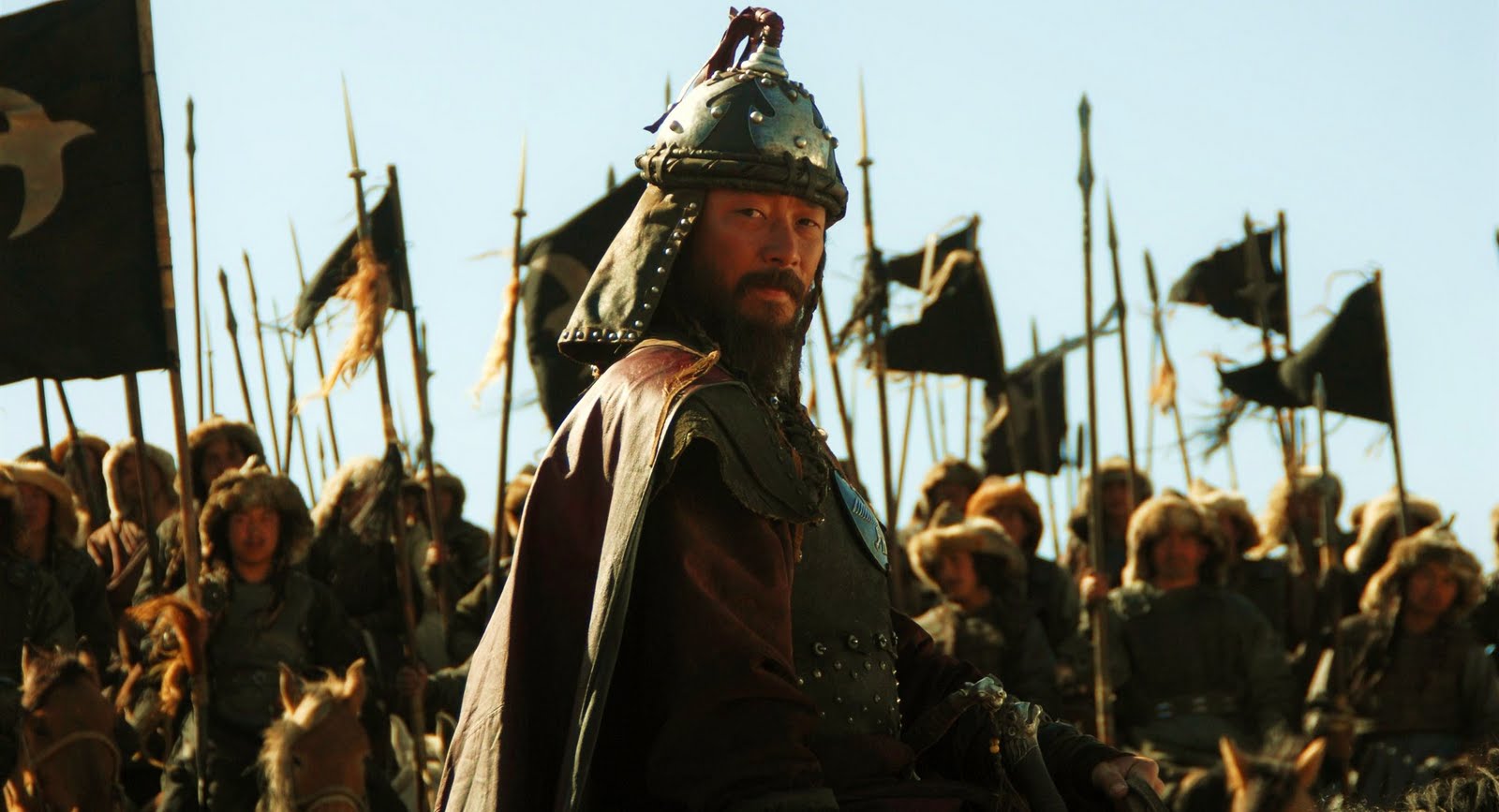
When trying to find out more about this low-key project, I made a call out to my Facebook peeps for more information. A Scriptshadow reader chimed back, “This sold?!! I thought this was going to be the Amateur Week special on Friday. It is so f**kin’ bad!”
To you, Mike, I say….I couldn’t disagree more!
The End Of History starts out much like the sci-fi darling “Children Of Men.” It’s the near future and less than 5000 women in the world are pregnant. Something is preventing the human race from procreating, and if it continues, in about 90 years, earth will look like downtown Pyongyang.
Cool-headed Nathan Scott, however, is going to make sure that doesn’t happen. No place should look like Pyongyang dammit. The Colonel is leading a combination military/scientist team back to 12th Century China, where they’ve located a band of warriors that contain the extinct gene which can reverse the procreation problem.
Scott has a vested interest in the mission. His baby daughter is fighting the killer disease, and won’t live without a gene transplant.
The mission is supposed to be simple. The clan they’re targeting is militarily formidable for the 12th Century, but their weapons might as well be toothpicks compared to what the Americans are packing. Actually, there’s a specific reason the Americans chose this clan. In 100 years, Genghis Khan will wipe every single one of them out on his march through China, permanently erasing any historic influence their presence may have had.
Indeed, when they jump, the sailing is smooth. They infiltrate the fortress without much resistence and the sci-tech team quickly goes to work extracting the gene. But after sending up a quick satellite to get a lay of the land, a horrifying video plays back. An army of 100,000 soldiers is marching DIRECTLY TOWARDS THEM.
Genghis Khan’s army.
There was a malfunction in the jump. They jumped back 100 years LATER than they were supposed to. Which means they’re right in the path of that Ghegis Khan massacre that was the whole reason they chose this location in the first place. Ahh, the irony.
To make matters worse, the hastily scrapped together tech starts malfunctioning in bunches, and after a major explosion, their time travel apparatus is all but toast. The group realizes they can salvage a small piece of the flux-capacitor, but only enough to send a message into the future, not to jump. Their plan is to fix it as fast as possible and send out an SOS. But even under the most optimistic time frame, Genghis Khan is going to arrive before they finish. And that means the unthinkable. A group of rag-tag 21st Century American soldiers is going to have to hold off the most ruthless army in history.
Will they be able to do it?
I have to give it to Glesson. This script straddles the line between ridiculous and awesome so finely that at first I wasn’t sure which side it would land on. But after it got going, I decided on awesome. Usually, in these sci-fi/historic hybrids, either the sci-fi is shoddy and the history is exceptional, or the history looks like it was researched by an 8 year old and the sci-fi is brilliant. Rarely do you find a script where both are handled well, but that’s exactly what happens here, and why I liked the script so much.
And believe me, this isn’t easy to do. One only needs to “travel back” a few years to the abombination that was Timeline to see how to royally fuck up an idea like this. I don’t think I’ve ever heard, read, or seen a time travel story as bad as that monstrosity. There were two castles. People were running back and forth between them for no reason. The time travel had 16,814 rules you had to remember. It was embarrasingly bad.
What The End of History wisely does is it keeps the time-travel plot simple. There’s never a moment where you don’t know exactly what the portagonists’ goals are, and that’s important in a script like this.
I also loved the technology of the war. Oh, I’m not talking about the 21st century technology. I’m talking about all the wacky weapons Khan had in his arsenal. This guy had rudimentary Napalm at his disposal. He had early versions of dirty bombs. He even had an ancient version of the damn Predator (the pilot-less airplane). Watching him unleash these toys on a shell-shocked 21st century army was, in a word, sweet.
However, there were things that kept this from becoming the next Source Code. First, I’m getting tired of these serviceable but ultimately unimaginative motivations for main characters. Yes, Scott has a daughter affected by the killer disease, and that makes his mission personal, but it’s such a derivative motivation that it doesn’t resonate with us. We’ve seen it so many times before. Contrast that with Leo’s character in Inception. Sure there were some problems with the kids storyline, but I have to admit, I don’t remember seeing a character with that particular motivation before, which made it original and therefore powerful.
Also, to echo my sentiments on Layover, there needed to be more dissention inside the group! There’s a troublemaker here, Decker, who adds about as much conflict as an agitated Abe Vigoda. There was so much potential for his character to stir things up, but instead he observes Scott pull off a couple of neat military maneuvers and becomes his BFF. Dissention inside the group – conflict – always makes a mission/goal more interesting, because there’s more for the hero to overcome. If you want to see it how this can help a screenplay, read The Grey.
I also thought Gleeson missed a couple of opportunities. One thing he doesn’t adequately address is what happens if they destroy Khan’s army. Obviously, all of history would change. If they had to fight off this army, but only enough to keep from getting killed, and not enough to become a part of the history books – that’s the kind of unique obstacle that could’ve introduced some interesting challenges. There’s also a female character on Scott’s team who’s half-Asian. What if she were a direct descendent of someone in Genghis Khan’s army? What if killing them wiped her out of existence? Even better, what if she was the romantic lead (a surprisingly absent piece of this puzzle). That would create quite a dilemma as well.
But hey, that’s neither here nor there. Sure the script has some problems (like all time travel stories – there are some holes) but it’s a great spec premise. Contained area. Contained time frame. High concept. These are the kind of scripts that sell when written well, so I’m not surprised that it did.
Still needs to be developed, but overall, enjoyable.
[ ] What the hell did I just read?
[ ] wasn’t for me
[x] worth the read
[ ] impressive
[ ] genius
What I learned: Whenever you write a time travel flick, you have to deal with one specific problem: “Why can’t they just go back and do it again?” The End of History, unfortunately, doesn’t deal with this question satisfactorily. But this is exactly why a franchise like The Terminator is dying. If they fail in killing Sarah Connor or her son, they can just send back another Terminator a few weeks later (or earlier). There’s no end to how many times they can try to assassinate our heroes.
The recommended solution to this isn’t as difficult as you might think. You simply have to make clear that this is a one-shot deal. Maybe the technology is unproven. Maybe the time machine is so expensive that if it breaks, that’s it. Maybe there’s something in your own time travel design that simply doesn’t allow them to jump more than once. If you do it this way, the mission actually means something. Because everyone knows that there are no second chances here. Ignore that rule, and you have a bunch of sophisticated fanboys (the core fanbase for this kind of film) in the audience thinking, “None of this matters cause they can just do it again.”
Genre: Fantasy
Premise: Conan The Barbarian becomes a reluctant king and fathers a son, who is then groomed to become the future King.
About: It should be noted that this is NOT the draft of the script they used for the new Conan project, but rather the famous 2001 John Milius draft that many geeks have fallen in love with. Alas, it was not to be, as this draft was assuming Ah-nold would be in it, and Ah-nold decided to instead bankrupt Caleefohneeya. Little known fact. Oliver Stone got a writing credit on the first Conan The Barbarian.
Writer: John Milius
Details: 166 pages – May 24, 2001 draft

For those put off by the 60 pages of character development in Brigands Of Rattleborge, I hereby warn you, do NOT read King Conan. King Conan scoffs in the face of screenplays that only use 60 pages to set up their characters. Why, you ask? Because King Conan uses one *hundred* pages to set up its characters!
I realize this is a losing proposition. Those who don’t care about Conan won’t give a shit what I rate it, and those who do care, care so much that they’ll tear me to pieces for even implying it’s not genius (I’m looking at you JJ) but holy schnikies, this script is so incredibly boring!
Yes, I said it. It’s boring. I feel almost liberated as I write that.
For 100 pages, NOTHING HAPPENS.
Well that can’t be, Carson, you say. *Something* must have happened. Okay, let me tell you what happened and you can be the judge if anything happened.
Conan The Barbarian impregnates a woman named the Daughter Of The Snows. This evil nasty woman tells Conan she doesn’t want to hang out with him until his child is born and kicks him out of her crib. Women.

In the meantime, Conan meets a man named Metallus who teaches him the importance of “fighting in a line.” You can’t break the line ever or you lose. This is obviously symbolic for many things throughout the story, but since I could never get into the story, it just became annoying that it came up so frequently.
After learning the line stuff, Conan heads back to Snowzilla to grab his son, Kon. Yes, Conan is now a father. The Conan line will live on.
Eventually, Conan becomes king of a country called Zingara, which, as many of you know, becomes famous for creating Farmville. You might say, “How is that ‘nothing’ Carson? He destroyed an entire country to become king! That’s epic. That’s exactly why we want a Conan sequel.” Well yeah, if that HAPPENED, I’d be right with you. But Conan doesn’t have to do anything to inherit the kingdom. It’s just handed to him.
Even better, once he gets it, he doesn’t even want it. Conan is about as reluctant of a king as there is – constantly sulking and complaining that being a king isn’t all it’s cracked up to be.
After awhile, Conan’s handlers suggest sending Kon off to the king version of preparatory school. Kon will study. Kon will fight. He will learn everything there is about becoming a king.
For the next 50 or so pages, we cut back and forth between Kon and Conan – Kon as he grows up and learns the ways of being a king, and Conan as he rules his kingdom. Very little happens during this period. Kon has a rivalry with one of his classmates, Fortunas (the Emperor’s son), and Conan grows so bored of being king that he pulls a Princess Jasmine, dressing up like a peasant, and hanging out with the peasant folk. Here he eventually meets a peasant woman that he falls for.
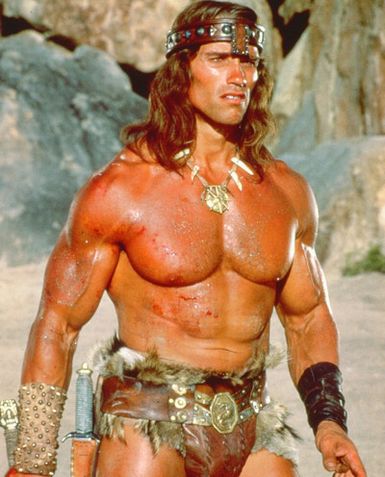
Where I officially gave up on King Conan though, was when Fortunas finds out that Conan and Kon are trading letters. The mischievous Fortunas then secretly intercepts and throws away those letters, making each believe that the other has forgotten about them.
Okay…REALLY???
I can go ahead and buy that plot point in, say, The Notebook or Beverly Hills 90210. But in a Conan sequel??
After this point I found it very hard to stay focused because everything in this script was soooooooooo drawwwwwwwn ouuuuuuuut. From what I could gather, Conan’s boredom leads to him strengthening ties with neighboring countries. But the plan backfires when one of these countries benefits from Conan’s weapons trade, strengthening their army and giving them a decided advantage over a third country. This third country starts bitching at Conan, and he realizes he’s inadvertently created a quagmire in the region.
So outside watching Kon grow up and a king attempt to stave off boredom, we now introduce into the mix… politics? Did we not learn anything from the Star Wars Episode 1 debacle?
Eventually (and I’m talking a good 100 pages into the script here when I say “eventually”) Kon comes back home, and the two try to resolve their artificially fractured relationship. This leads to an assassination attempt on Conan and finally – thank God – something actually starts happening in the script.
But let’s be honest. By that point it’s too late. You are never more drained and more frustrated as a reader than when you’re trying to keep track of a complicated screenplay that you care nothing about. It’s really the worst experience you can have. You want to get it over with, but there are 30-some names like “Lord Gobaniior” along with complicated subplots and reemerging dormant story threads that force you, against all your will, to pay attention. Ugh! I was so drained after I read this.
To Milius’ credit, it’s hard to keep people interested on the page with a story that’s so cinematic – that depends so heavily on actors, costumes, and set design. But that doesn’t excuse the 160 pages, the 100 page first act or the baffling absence of story for long stretches at a time. I remember in the first Conan, which Milius also wrote, Conan pushing that spindle as he grew from a boy into a man. That little montage was a minute long and told me more about that character (how difficult his childhood was) and drew me more into that world, then every single Kon school scene here combined.
I was going to give this a “What The Hell Did I Just Read,” because I just found nothing to grab onto in the story whatsoever. But there’s no denying Milius is brilliant with words. Combined with the extensive mythology he’s created, there’s too much skill on display for me to rate this at the bottom of the barrel, but it was so un-engaging and slow and self-important that I had no joy whatsoever reading it.
[ ] What the hell did I just read?
[x] wasn’t for me
[ ] worth the read
[ ] impressive
[ ] genius
What I learned: Build characters through action. Not through 18 scenes that essentially tell us the same thing. I’m referring, of course, to that scene in the original Conan I just mentioned where we see him pushing the spindle into adulthood. That simple action tells us more than any dialogue ever could. Think about your favorite movies. All of the characters have moments of action that tell us who they are. We see it when Han blasts Greedo. We see it when Neo gives up on the ledge while running from the agents. We see it when Andy Dufrane DOESN’T cry that first night in Shawshank. We see it in how meticulously Wall-E takes care of the city. Those ACTIONS will always be the best way to convey a character to an audience. Favor them wherever you can.

Genre: Horror
Premise: (from IMDB) Set in a medieval village that is haunted by a werewolf, a young girl falls for an orphaned woodcutter, much to her family’s displeasure.
About: David Leslie Johnson’s script “Orphan,” made a lot of noise when it was picked up a couple of years ago. Even though it didn’t make a huge dent in the box office, I thought it was pretty good, especially the bizarre twist ending which I wouldn’t have predicted had you given me a hundred tries. Johnson has a very enviable backstory. He was lucky enough to have been mentored by Frank Darabont (working with him on both The Green Mile and Shawshank). The Girl With The Red Riding Hood stars Amanda Seyfried, Gary Oldman, Virginia Madsen, Shiloh Somebody and Julie Christie. Catherine Hardwicke, the director of the first Twilight film, is directing.
Writer: David Leslie Johnson
Details: 120 pages – revised first draft – April 16, 2009 (This is an early draft of the script. The situations, characters, and plot may change significantly by the time of the film’s release. This is not a definitive statement about the project, but rather an analysis of this unique draft as it pertains to the craft of screenwriting).

You say I don’t do horror. A pox upon you! I do horror. I’m doing horror right now knuckleheads. I heeded all your nasty e-mails and death threats and am finally giving you want you want. Okay, none of that is true. I’m only reviewing this because I hated the other script I was going to review (“36”) and couldn’t muster up the energy to review it.
But here’s the truth. I WOULD review more horror IF there was more horror to review. It seems like every horror script that comes down the pipeline is either a shitty remake or a sure-to-tarnish-the-original sequel. All I’m asking for is ORIGINAL HORROR. Something fresh and unique, like Johnson’s previous effort, Orphan. Any spec sales that fall under that category, let me know, cause I’ll be happy to read them.
So, The Girl With The Red Riding Hood is a “gothic” reimagining of that famous fairy tale, “Little Red Riding Hood.” Johnson has been saddled with the difficult task of fleshing out this 5 minute story into 2 hours. The results are, I suppose, solid, but since this isn’t really my thing, I had a hard time getting into it.

It’s 1324 in a French village and 17 year old Isabelle is having a secret romance with fellow villager, and brooding hunk, Peter, who works for her father. However, Isabelle is told that she’s being married off to a man named Henri to settle a debt between her and Henri’s family. Don’t you just love the old days? Have a problem with me? Here, take my daughter.
Isabelle is devastated but she and the rest of the village have bigger issues to battle. A rogue wolf has been terrorizing the town for decades and while it hasn’t killed any of them recently, signs point to that changing soon. Wolf be hungry. So scared are the villagers that they send for a “Witchfinder General” by the name of Solomon. I’m, of course, wondering the same thing you are. Why would you hire a witchfinder to find a wolf? (see how bad I am at reviewing horror?)
Well Solomon, a very serious individual, is too busy being pissed off to care what I wonder. He explains that this isn’t a wolf terrorizing their town. It’s a WEREWOLF. Solomon knows all about werewolves, you see. He’s killed one before. A werewolf that ended up being his own wife! By the name of Bella! Okay, I’m kidding I’m kidding. She wasn’t named Bella.
Anyway, Solomon and his men lure the werewolf into town, where it becomes preoccupied with Isabelle, and after finally getting her alone, it TALKS. Yes, this werewolf can talk. It wants Isabelle to come off with him. Apparently it’s not a very smart werewolf or it would know that people don’t run off with werewolves! Unless of course, the father orders them to. Then it’s okay.

Afterwards, Solomon realizes that the werewolf is not some rogue wolf at all, but that it lives here, in the village. Someone, one of them, is the wolf! The town naturally starts freaking out, and the mystery is on. Which one of them is the wolf?? And will it kill them all?
Okay so, disclaimer time. This isn’t my thing. Doesn’t matter if this were Oscar-worthy writing, I probably wouldn’t like it. Having said that, it’s a solidly executed script. I admit that the one area of writing that intimidates me the most is swords & shields period pieces. Anybody who can write dialogue for a time they did not exist in, where people spoke in a rhythm and a vocabulary as familiar to us as Japanese, I have a lot of respect for. And I think Johnson did a nice job with that.
I also thought he did a good job keeping the story fresh. There’s little twists and revelations here that throw the story in another direction just when it needs it. We have a devastating family secret that’s revealed about Isabelle’s sister. We have Solomon showing up to add some ass-kicking to the mix. We have a wolf who’s able to speak. All of that really kept you on your toes.
But if there’s one type of story I don’t respond to it’s the “Let’s wait here and die,” story. When you throw a bunch of characters into a location and they just wait for the bad guys to show up – that’s no fun for me. It’s not that you can’t make it work. I just like when my characters are active, when they have plans. In Aliens, they’re not just waiting for the aliens to kill them. They’re formulating a plan to get the hell out of there. Johnson’s able to infuse the characters with some proactive moments, but in the end, they’re still just a bunch of people waiting around.
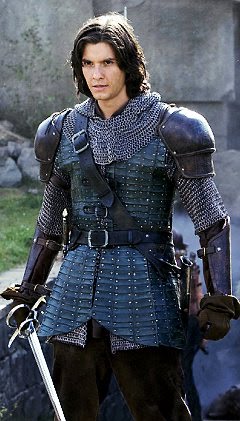
This reminds me. Didn’t the original Red Riding Hood walk through a forest? Wasn’t that the big set piece of the story (did they have set pieces back in the fairy tale days)? That she was going somewhere and the wolf cut her off? I guess I kept waiting for this long journey she would have to take through the woods, knowing that the wolf was out there, and the ensuing suspense that would come from whether she would make it or not. Not a huge deal but it seemed like that kind of scene could have some potential and it was a part of the original story so I was confused as to why it wasn’t there.
Despite this not being my cup of tea, I can see it working. The image of an innocent girl in a red riding hood is so iconic that I can’t imagine the trailer not being cool. The question is, does the public’s demand to have their werewolves with ripped abs and predetermined teams make a tale like this obsolete? We’ll have to wait and see.
[ ] What the hell did I just read?
[x] wasn’t for me
[ ] worth the read
[ ] impressive
[ ] genius
What I learned: Hollywood likes things they know. They like to get behind stories the public’s heard of before because then they don’t have to spend a billion dollars educating them on it. You and I have heard of Red Riding hood, so there’s a familiarity factor there. There’s no familiarity factor with “Blue-shoed Thomas” or “The Old Man With The Green Jacket.” For that reason, fairy tales are a great place to look for stories. Nobody owns the rights to them, and many are well-known. The trick is to throw a unique twist on the tale to make it fresh. Remember how cool that video game “Alice” was? They simply threw Alice in Wonderland into the horror genre. What about taking the Three Little Pigs and turning it into a modern day comedy starring Jack Black, Jonah Hill, and Phillip Seymour Hoffman? I’m only half-joking! But seriously, if you can find a cool spin on one of these tales, run with it. I see a lot of new writers get noticed this way.