
Search Results for: F word
Today’s script asks, “What if Marriage Story actually had a plot?”
Genre: Drama
Premise: A rising movie star and her struggling playwright husband meet with a pretentious director and a manipulative intimacy coordinator to rehearse a sex scene. Over one chaotic day, power struggles, petty jealousies, and explosive accusations threaten their marriage–and the careers of everyone involved.
About: This script finished with 10 votes on last year’s Black List. Sam Rubinek is a young writer who was staffed on the show, Riverdale. The Canadian-born Rubinek was a graduate of the Warner Bros Television Writers Workshop.
Writer: Sam Rubinek
Details: 101 pages
 Eiza González for Carson?
I’m still reeling from just how bad of a screenwriter Christopher McQuarrie has let himself become. Something switched in him when he became a director. It was like he didn’t think the screenplay mattered anymore (something he’s indirectly alluded to several times on X). Final Reckoning is the inevitable conclusion of that attitude. What a disastrous screenplay.
ANYWAY!
In order to get away from the stink of that film, it’s time to read about something the exact opposite – intimacy coordinators!
There’s been some spirited chatter about how ridiculous this position is in Hollywood. But I’m on the other side of the argument. I’m shocked that, for 50+ years, filmed sex scenes were the wild west. You would briefly chat about what to do in them then, once the cameras started rolling, anything that happened happened! That’s INSANE to me. So it made total sense to create this job.
But that doesn’t preclude the position from being made fun of. Writing a script about the job is actually quite smart. There are new things that pop up in society every so often and you get a brief window where a few lucky writers are able to chronicle them before they become old hat. It’s one of the few times you get to write something fresh, something that hasn’t been done before.
Let’s see how today’s writer dealt with it.
Fresh off becoming a movie star, Carson (a female btw) is filming her latest movie, a sort of artsy project with an up-and-coming pretentious director named Marcello. For one of the flashbacks in the movie, which details a former relationship, Carson was able to get her husband, playwright and sometimes actor, Jay, to play the role of the man in the romantic flashback.
In said flashback, the characters have sex, and this has necessitated a run-through of the sex scene, which will be guided by an intimacy coordinator named Perla. Perla seems to be the only one who wants to do this, for secret reasons that will be revealed later.
Marcello would rather be shooting scenes from the film, which is already in production. And both Carson and Jay see this as kind of ridiculous. They are married and therefore don’t believe they need an intimacy coordinator. But everyone is so scared and sensitive these days that there’s no way around it.
The story takes place over just a few hours, virtually real-time, as we begin to see that everyone has something going on. Carson, uncomfortable with her quick rise to fame, relies on booze and drugs to get by. Jay, feeling like the weak link in the relationship, is desperate to finalize Carson being in a play he’s written, which she hasn’t yet told him that she’s not going to do.
Marcello gets a call from his agent at the beginning of the day discussing rumblings of an old short film he made that’s been dug up and posted on the internet. The film could be construed as anti-semitic, which is causing the trades to come digging for a story.
And then we have intimacy coordinator Perla, who we learn is a bit of a stalker, campaigning hard to get this job so she could be in the presence of the beautiful and amazing Carson, someone she very well may be in love with. Perla goes hard at Carson’s marriage, using any chance she gets to emasculate Jay as the two prep for the sex scene.
Over the course of the next few hours, all of their lives will fall apart in some significant way. The goal will be to retain enough of themselves to fight again tomorrow.
There’s this sandwich place down the street from me called “All About The Bread.” With today’s script, we might as well call it, “All About The Dialogue.” There’s a lot of dialogue here, and most of it is quite good.
It’s nice timing because I’ve been running into some dialogue issues with some of the scripts I’ve been consulting on. Today’s script reminded me of one of the keys to getting dialogue right.
You have to be good at establishing WHO YOUR CHARACTERS ARE.
If you don’t, they become this vague amalgamation of a bunch of half-formed ideas. The problem with this is that you’re then unsure how to write the character’s dialogue. Cause if a character is a million different things, then they’re actually nothing.
It’s way easier to find a character’s voice if you create a one-sentence directive for yourself.
For example, if I designate my character “the sweet naive neighbor who sees the best in everybody,” then I know his dialogue will be soft and understanding. Maybe annoyingly polite. He might use phrases like, “Shucks,” and say things like, “It’s so pleasant to see you on this fine morning.”
When you hear the screenwriting advice of, “A reader should be able to tell which character is speaking without looking at their name,” this is how you achieve that.
Perla is a great example of this. She’s introduced as someone with a “soft-spoken, crunchy-granola hippy vibe.” Therefore, when characters apologize to her about something, it’s easy to figure out how she’ll respond. She will not respond with, “It’s fine. Don’t worry about it.” Which is generic. Instead, the actual dialogue from the script is, “It’s all love.”
Note how that’s something only a hippy-type would say.
Another thing that really makes the dialogue pop in this script is power dynamics. I talk about this in my dialogue book in more detail if anyone’s interested. Power dynamics bring all sorts of fire to your characters’ interactions.
In this case, the power dynamics play a huge role. Carson is “above” Jay on the power ladder not just because she’s a movie star, but because she’s a real actor and he’s more of a part-time actor. This means that, during the intimacy sequence, she’s subtly calling the shots and Jay has to go with it.
For example, there’s a sequence where they run through the dialogue in the scene and Perla tells them that they can ask for a “repeat” if the other person’s line read isn’t convincing. Jay says his next line and Carson says, “repeat.” Jay repeats it and Carson says, “repeat.” He says it again and she says, “repeat.” Repeat, repeat repeat.
Why is this relevant? Because the secret sauce to good dialogue is conflict. Unequal power in a scene is conflict, especially when the characters take advantage of that power.
Actually, this is the type of thing you only see in more advanced writing. So, if you’re using power dynamics to charge your dialogue, you’re in a good place in your screenwriting career. Cause most writers don’t know how to do it. Or, if they *do* do it, it’s by accident.
Speaking of advanced writing, I loved how all the characters had their own thing going on. Most writers would’ve stopped figuring out their characters at Jay and Carson. They wouldn’t have put much, if any, effort into Marcello and Perla. But, by doing so, it really kicks this screenplay up a notch. Marcello’s real-time cancelling is a killer subplot if there ever was one. And Perla’s secret obsession with Carson unravels in delicious fashion.
If there’s a weakness to the script, it’s that it’s a play. And Rubinek hasn’t done enough to adapt it for the screen. It’s not visually dynamic in any way. It is not a “show don’t tell” experience. And so, on screen, it risks feeling static. But I found the script itself to be compelling. I was really into these characters and their ultimate fates.
Would recommend it without hesitation.
[ ] What the hell did I just read?
[ ] wasn’t for me
[xx] worth the read
[ ] impressive
[ ] genius
What I learned: Here’s how to properly use guiding parentheticals in dialogue.
JAY
I promised myself I’d finish that rewrite of the second act. Oscar gave me some notes–
CARSON
(teasing)
Oh, Oscar has some notes for you. I didn’t realize Oscar the Great and Powerful had notes on your play.
JAY (unserious)
Shut up.
Note how the parenthetical words are critical to understanding the tone of the responses. If they were not used, the reader would not only have interpreted the meaning incorrectly, but interpreted the exact opposite of what was meant. That’s the only time you need parentheticals in regards to the line’s meaning – when, if you didn’t use them, the line would be read completely wrong by the reader.
Genre: Horror
Premise: When a deadly virus infects mothers and turns them against their offspring, a father must do whatever it takes to protect his daughter from her mom.
About: This script finished with 12 votes on last year’s Black List. It was picked up by Michael Bay’s Platinum Dunes in the hopes of becoming the next breakout horror hit, a la A Quiet Place. Screenwriter Marc Bloom, who hails from Cape Town, South Africa, was also on last year’s Black List, with Ferocious. He also has a script, Cauldron, set up at 21 Laps. Most importantly, he’s an OG reader of the greatest screenwriting site on the internet, Scriptshadow. 10 out of 10 highly recommend.
Writer: Marc Bloom
Details: 94 pages
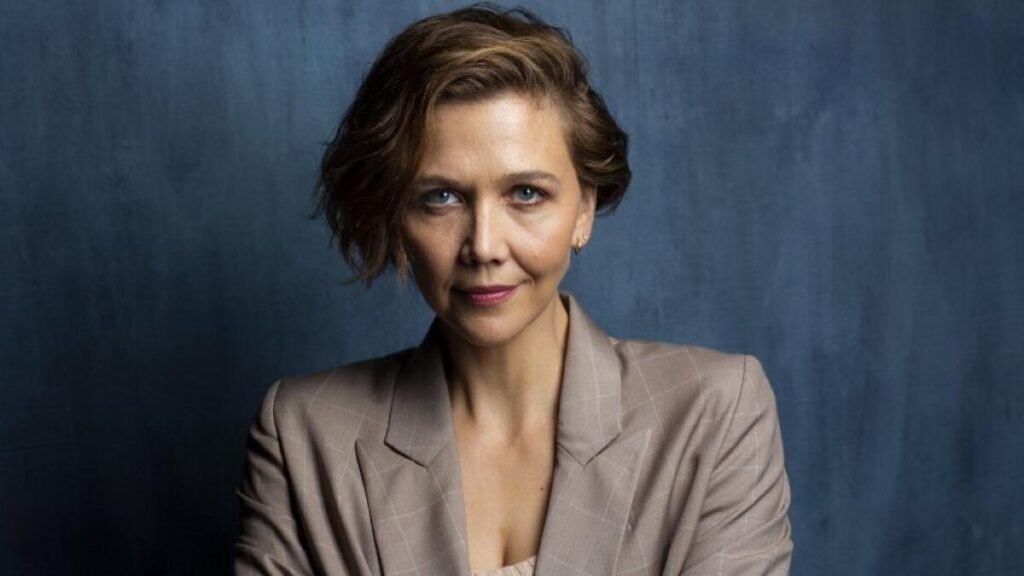 Maggie G. for the mom?
One of the hardest balances to strike in spec screenwriting is writing a script that reads like lightning but still contains depth, particularly on the character front.
It’s hard to write one and two sentence paragraphs and still get into the heart of your characters. It can be done. I’ve seen Brian Duffield do it in Vivien Hasn’t Been Herself Lately.
But, usually, nailing one of these means sacrificing the other. And, with Mom? I think the wonderfully speedy read prevented the script from diving into that section of the story ocean that needed it most – the relationship between the members of this family.
Let’s take a look.
40-something John Slater is a doctor at an Urgent Care Clinic in a small town in Ohio. He’s used to seeing people throwing up, being in pain, and being generally uncomfortable. On this particular day, nothing that exciting happens at work.
But then he gets home where his wife Tess, and 12 year old daughter, Izzy, are waiting. The family seems to be normal and loving – no clear problems from what we can tell. When John heads off on an errand, his next door neighbor, an annoying man in his 60s, pleads for John to help him. His mother has disappeared.
John reluctantly goes inside the dark creepy house only to eventually find the mother walking around for the first time in years. The woman then picks up a rake and viciously attacks her son with it until he’s dead, then uses the instrument to bludgeon herself to death.
John hurries back to his own home where he finds Tess acting bizarre towards Izzy. There’s something sinister about the way she’s speaking. John senses that there’s more going on here and grabs Izzy to leave. That’s when Tess comes after them and things get real. Once outside, John and Izzy see that all across the neighborhood, mothers are killing their offspring. It’s time to get the hell out of here.
The two steal a car (Tess sabotaged theirs so they couldn’t leave) and hear some details on the news about what’s going on. It seems to be some sort of virus connected to trace tissues that every child leaves within their mother. These tissues have gone bad, for lack of a better word. And now mommies wanna slaughter their children.
The National Guard comes in to quarantine the town, which basically makes every person with a living mother a sitting duck, including our duo. So John and Izzy bounce around town, watching as various insane things happen (mothers swan-diving off their roofs once they’ve killed their offspring, mothers coming out of the woods in droves to attack the people stuck on the highway). Eventually, Tess catches up to them and she’s not leaving until her daughter’s ticker is no longer ticking.
I kind of liked this script but the thinness of the story definitely got in the way. It seems only natural that a script about mothers trying to kill their children is trying to say something. But no matter how hard I tried, I couldn’t figure out what that message was. Which means this is just a movie about mothers trying to kill their kids.
Does a script like this have to say something?
I loved Final Destination: Bloodlines, and that wasn’t trying to sell any message. But that was a horror-comedy. “Mom?” feels more serious. The concept wants you to look deeper. But every time I dipped my head below the water, I just saw black.
The answer is somewhere in this family. All screenplays come down to broken relationships that need to be resolved. Whatever the issue is that broke the relationship is typically the message of the movie.
For example, if you watched that Netflix show, Four Seasons, Kate (Tina Fey) and Jack (Will Forte) have this relationship where they’ve become roommates rather than a couple. He wants to change that but she doesn’t want to put in any effort. That’s what they have to figure out. And it’s part of a broader message in the show about how relationships are hard and if you don’t nurture them, they will fall apart.
That’s very clear when you watch the show.
It’s telling when you write a script where the message ISN’T CLEAR. Because the reader is looking for a message. If they don’t find it, they start getting frustrated.
What a lot of writers do is they freak out when they realize their story doesn’t have a message so they kind of pepper it with several messages, unofficially telling the reader to, “Go ahead and choose whichever one you like best.” But that never works. Multiple messages just confused the overall point of the story.
I know this: If you want to write a more thoughtful powerful story, you need more words. You need more sentences and paragraphs. Which is scary for a screenwriter because they’ve been told from day one to keep it lean and tight.
But, remember, there are tools available that allow you to lengthen your descriptions and scenes and character moments without it FEELING like it’s longer. Which basically comes down to dangling carrots. If you’re dangling juicy carrots in front of the reader, that manipulates time. A continuous series of rewards (carrots) helps us forget about time.
This is why every Final Destination set piece moved so fast. Cause the big fat juicy carrot of death was dangling at the end of each scene.
I think Mom? needed more character development so that we understood what this family was going through and, therefore, what needed to be fixed. I don’t have the answer by the way. I don’t know, off the top of my head, how to construct a satisfying family drama in this scenario. It’s tricky. Cause there isn’t anything very relatable in life to your mother trying to kill you.
You can use metaphor (maybe mom has never understood you – so her killing you is a metaphor for your inability to connect) but even as I wrote that out, it didn’t sound quite right. In Vivien Hasn’t Been Herself Lately, Duffield uses possession as a metaphor for the difficulties of marriage. And he pulls it off perfectly.
Like I said at the outset, I kinda liked this script. And I think, depending on who directs it, it’s going to be full of some very freaky compelling imagery. Which I assume will get butts in seats. But I was looking for more here. I don’t think the script is where it needs to be to deliver on the promise of its premise. Yet!
[ ] What the hell did I just read?
[x] wasn’t for me
[ ] worth the read
[ ] impressive
[ ] genius
What I learned: Your heroes should never feel safe in a horror movie. The safer they feel, they safer we feel. And if we feel safe for too long, we check out. Here, the moms are violent killers, but only towards their offspring. In other words, if you run into somebody else’s mom, she’ll walk right past you. Therefore, there were a lot of times in this script where I felt safe. Cause only Tess could hurt them and Tess was nowhere to be found. It’s kind of like a zombie movie where only one zombie is coming after you. I needed to be in fear a lot more here.
An absolutely SUPERB moviegoing experience!
Genre: Horror
Premise: (from IMDB) Plagued by a recurring violent nightmare, a college student returns home to find the one person who can break the cycle and save her family from the horrific fate that inevitably awaits them.
About: The Final Destination franchise is back! Where did it ever go???? This franchise has always been awesome. Maybe we’ll get some answers in the review. The movie MASSIVELY over-performed this weekend, taking in 51 million dollars, bigger than any Final Destination opening by far. And both critics and moviegoers love it, as it has both a 93% RT score and 89% Audience score.
Writers: Guy Busick & Lori Evans Taylor (story by these two and Jon Watts) – characters by Jeffrey Reddick
Details: 110 minutes

Girl, it don’t get better than the latest Final Destination movie.
You know how, sometimes, you’re jonezing for a cheeseburger and you get one from that new smashburger place down the street and it hits your gullet like a magical marshmallow and you’re having that once-a-year foodgasm that allows you to see God?
That’s what Final Destination did this weekend. It was the perfect movie arriving at the perfect time.
DAMN was it good.
It’s funny how this movie even got made when you consider Hollywood all but forgot about the Final Destination franchise. Now that’s it’s pulled in a whopping 50 million bucks, everyone’s thinking, “Why didn’t we do this sooner??”
I’ll tell you exactly why.
Jason Blum.
This is one of those things that annoys the heck out of me about Hollywood. Jason Blum comes around and says, “Never make a horror movie for more than 7 million bucks. Do that and you’ll print money.”
And that formula worked for a while. But that doesn’t mean you can’t ALSO make bigger budget horror movies. Especially when you consider that people get bored of watching the same thing over and over again. I can only watch so many 7 million dollar horror movies before I slam my fists down on the table and demand me some production value.
Which is what is so glorious about Final Destination. You get more horror production value in the first 15 minutes of this movie than you’ve gotten in the last 5 years of horror movies combined.
The opening Skyview Restaurant set piece is BANANAS on top of BANANA SPLITS. “Splits” is a fitting word, actually. The movie starts with a young couple back in the 50s who go to this brand new “Seattle Needle” type restaurant. But then a jerky little kid throws a penny off the top of the tower that gets sucked into the air conditioning unit, creating a chain reaction that takes the entire restaurant down. OR SO WE THINK.
Cut to present day, where college student Stefani starts having these nightmares about that very catastrophe. It bothers her so much that she leaves school to go home, where she reunites with her brother, Charlie, and her dad. Long story short, her grandmother, Iris, was the woman on the date that day. Iris had that Skyview implosion vision in real time and was able to stop the jerky kid from ever throwing the penny.
But that’s baaaaad news for Stefani and her cousins, who are also under the same bloodline of Iris. You see, all those people were supposed to die that day. And because they didn’t, death owes them. The only thing that’s protected Stefani, her bro, and her cousins, is that Iris has become a hermit psychopath, designing a house to keep her safe from death’s attempts to kill her. But once death finally succeeds, it can now come after her bloodline. And only Stefani believes this will happen, meaning everyone else is cluelessly walking into death’s grip.
Can I just thank the screenwriting lords, for a second, for designing a screenplay THAT ACTUALLY HAS SCENES!!!!
For goodness sake! Instead of 50 mini-scenes, we get seven bona fide set piece sequences (aka, long scenes). These scenes are designed around death attempting to kill one of the characters. We have the Skyview scene, a backyard barbecue scene, a fun tattoo parlor scene, an MRI that goes berserk scene, a dump truck scene, and a couple of final scenes for the climax.
A huge reason why this movie is blowing away expectations and everyone loves it is because it SITS IN ITS SCENES. It allows you to marinate in that early anxiety, when we know death is planning its kill. Then things get worse, and worse, and the characters try to save each other. But no matter what they do, death is too strong and wins out.
Every one of these set pieces is designed that way and it’s a perfect design because it keeps you captivated the whole way through the sequence. And then as soon as the sequence is over, another one starts. It’s so refreshing to experience a movie that’s not afraid to sit in its moments.
Let me be clear about that. A big reason nobody does this anymore is because THEY’RE TERRIFIED that the reader is going to get bored. God forbid you don’t machine-gun a new scene at them every 60 seconds.
The irony is, the reader is going to be MORE INVESTED when you slow down. Because it’s exciting to see what’s going to happen next in the scene. Granted, you have to do it well. You can’t just write a bunch of boring nonsense for 8 pages and expect readers to be captivated.
The reason Final Destination kills at this is because each of these set pieces is heavily designed around suspense. Death is trying to kill one of our characters. We turn the page because a) we want to see HOW it will try to kill them, and b) to see if it succeeds.
You can replicate this in your own writing. Just come up with another line of suspense. Some other looming issue that will hurt your character in some way if it succeeds. It could be as simple as a teenager getting ready to go to school knowing that the school’s biggest bully is waiting for him and plans to beat the hell out of him (Dazed and Confused).
One of my favorite things to share with you guys is the ways in which writers show that they’re better than the average writer. I always compare a writer’s creative choices to what the average schmo screenwriter would’ve done. If the professional writer did what the schmo writer would’ve done, that means they’re not a good writer and are extremely lucky to be working in Hollywood. Although they all eventually get figured out. So, like the characters in Final Destination, their luck won’t last forever.
(Spoilers) Here, there’s this moment near the midpoint where Erik, one of the cousins, is up next for death. He’s working late night at his tattoo parlor and has to close up. As he’s closing, a chain from the ceiling flips down and connects to his nose ring. The chain starts getting wrapped up in the slow-moving ceiling fan and Erik is getting pulled closer and closer to the ceiling. Meanwhile, he trips on some alcohol cleaner, which spreads over the floor and catches fire on a flame. Needless to say, Erik is going to die.
The next morning, Stefani realizes that Erik never texted her back so she grabs her brother and they hurry off to the tattoo parlor to make sure he’s okay. On the way, her brother gets a text notifying him of the fire at the tattoo parlor last night. That’s when both of them realize Erik is dead.
SLAM ON THE BREAKS AS THEY ALMOST HIT SOMEONE
Stefani looks in front of her car to see… Erik???!!! Yup, turns out Erik is still alive! He DIDN’T succumb to death last night. All of this is confusing until they get the family together that night and Erik’s mom comes clean. Erik is not her husband’s (Iris’s son) child. His mom slept with some other guy. This means that Erik is not part of the bloodline and, therefore, isn’t on death’s hit list. The stuff at the tattoo parlor the previous night truly was a freak accident, lol.
Why is this good writing? Because I read all the scripts where the writers settle into a predictable pattern. They would never ever write a surprise like this. They would’ve had death’s hit list and gone down it one by one. They think, “This is what the audience wants! So give it to them!”
Yes, the audience wants the kills, of course. But they also want to be surprised. They want unexpected things to happen. Because when unexpected things happen, it’s exciting AND it programs into the reader/viewer that more unexpected things can happen. So the reader/viewer always feels unsteady. Which is exactly where you want them.
There were only two issues I had with this movie. I can’t stand CGI deaths. I wish they would’ve spent a little more money on making some of these look real. And the acting here was barely passable. This may be the first studio movie I’ve ever seen where I didn’t recognize a single actor. I’d never seen ANY of these actors before in my life. And I’ve seen every movie ever made! So they saved A LOT of money on acting here.
But it didn’t matter because the writing was so good and every single freaking set piece worked. It’s rare to write one good set piece in a script. It’s super hard to write two. It’s nearly impossible to write 3. I heard that Mission Impossible, coming this weekend, only has 2. And that movie cost like half a billion dollars. To have 6-7 truly awesome set pieces is so hard. But it’s the reason this movie has taken over the town and will be one of the biggest hits of the year.
[ ] What the hell did I just watch?
[ ] wasn’t for me
[ ] worth the price of admission
[x] impressive
[ ] genius
What I learned: Big-budget horror is back, baby!!! You don’t have to write 5 million dollar horror movies for the next year or two. If you have a higher-budgeted horror, write it. It will still need to be better than its low-budget equivalent because if people are paying more money, they want bigger and better ideas. So you need that big juicy strong concept.
Early 90s “Die Hard in the Chunnel” spec sold for a million bucks!
Genre: Action
Premise: When his daughter gets stuck on a terrorist-controlled train in the Chunnel, an engineer must team up with his girlfriend to save her life.
About: This script sold 4 days after it went out on the town back in the early 1990s. It was originally written for Jodie Foster, which differentiated it at the time, since nobody had yet written a “Die Hard” clone with a female lead. But Jodie eventually dropped out, forcing the writer to change the lead from female to male. From there, it went out to the number 1 star at the time, Arnold Schwarzenegger. But he eventually passed and the project was forgotten.
Writer: Ron Mita and Jim McClain
Details: 128 pages

When I look back at the spec sale days of the 90s, I realize that, in a lot of ways, it was a big pile of fool’s gold. Don’t get me wrong. Getting paid a million bucks for a script must’ve been amazing. And it happened a lot. But once you got past that, you weren’t really in any better shape than the average aspiring screenwriter who had sold nothing. It was nearly impossible to get from “sold” to “produced.”
Case in point, Ron Mita writes about his experience selling this script and how if you sold an action script, YOU HAD NO CHOICE BUT TO GO TO Arnold Schwarzenegger first. I used to think everybody wanted to try and get Arnold attached. But, in actuality, YOU HAD TO go to him.
This is because, if an action movie became a hit and it had never crossed Arnold’s desk, him and his team would go nuclear on everyone in the industry. Therefore, every single sold action script would enter the “Arnold Bottleneck” and you’d have to wait for his team to read it and pass before you could go to anyone else.
Well, when someone’s team has 100 scripts in a pile and zero incentive to hurry (because they know no one can do anything with those scripts in the meantime), you might be waiting a year for your “no.” And the thing with any project – whether it be then or now – is that they’re entirely dependent on momentum. And the Arnold Bottleneck destroyed 99% of every script’s momentum, leaving a graveyard of forgotten material.
With that said, if a script is great, it will find a way to the big screen. I am yet to read a marketable screenplay (key word there – “marketable”) that was great that hasn’t eventually gotten produced. So, I’m assuming there was something holding this script back.
American Charlie Sanger, an engineer who worked on the Chunnel and is living in the UK, is finally ready to take a holiday to France with his 11 year old daughter, Jessica. Jessica really wants Charlie to marry his current girlfriend, Bridget, but neither Charlie nor Bridget is sure what’s going to happen when Charlie moves on to his next job.
But they at least figure out their weekend holiday and plan to take the very Chunnel Charlie worked on. Unfortunately, once they get to the Chunnel, Charlie is pulled into work because of some flooding sensor issues. He decides to send Jessica onto the early train, where Bridget will meet her, and come in on the next train.
Only one problem with that plan. TERRORISTS TAKE OVER THE TRAIN, led by an evil man named Sinclair. Sinclair is IRA. He wants the UK out of Irish business AND 100 million dollars because why not.
Meanwhile, back at the Chunnel tunnel, Charlie runs into… Bridget!? What the heck are you doing here, he asks. You’re supposed to be on the train with Jessica. Oh no. Reality sets in. Bridget is in on the terrorist plan! She’s IRA.
Except she insists she’s not. It’s complicated, she explains. Yes, she’s IRA. But the people on the train are an extremist version of the IRA. She wants to stop them. She insists that, without her help, Charlie won’t be able to save his daughter. Should he believe her?
The control tower is able to lower one of the flood walls, bringing Sinclair’s train to a halt. This allows Charlie and Bridget to race down the tunnel, board the train, and try to save Jessica and kill Sinclair. But does Charlie really have an ally by his side? If not, can he stop a madman all by himself?
It’s always fun comparing these older scripts to the way scripts are written these days. The very first thing I noticed – and it didn’t take long – was how dense the description was. Lots of 4-5 line paragraphs. Slowing down that read! Readers do NOT have the patience for that these days. And you see it in the final page count. 128 pages. Youch.
There is, of course, no way to know for sure why Arnold’s people passed. But if I was on Arnold’s team at the time and I had been asked to give my thoughts on the script, I would’ve had some heavy reservations in those first 50 pages.
Surprisingly, it’s the same sort of thing that writers do wrong today. The script starts off with a fun cold open. One dude asks another dude what he’s doing on a ship. The guy says he’s a terrorist and he’s here to kill the man and assume his identity. As that tension sits, the guy smiles and says he’s joking and the two keep chatting. But then, as it turns out, he wasn’t joking. And he kills him.
Good fun opener.
Then, not long after that, we get a great scene. Several workers are on the tracks, fixing stuff when they get a warning that the train is five minutes away and they have to clear the tracks.
But one of the workers gets their foot caught in the rail. Everyone’s trying to get him out. They can’t. Time is ticking down. Many of the workers flee for their own safety. One worker stays behind, determined to help him get out. And it’s a race to the last second to save his life.
Simple scene. But very effective. At this point, I was in.
But then, the next 25 pages are some of the densest setup I’ve encountered in a while. Tons of characters to keep track of. Lots of technical track and train stuff being thrown at us. Bouncing between four different locations (bad guys, good guys, track workers, the control tower).
The problem with this isn’t just that it hurts your script in the moment. It hurts it THE WHOLE REST OF THE WAY. Because if we couldn’t follow these 25 pages of setup, we’ll be confused about certain people and certain plotlines the whole rest of the way through. So it’s kind of like Double Doom.
And look, this is one of the trickiest things about screenwriting. Onscreen, this stuff isn’t going to be as confusing. We remember faces a thousand times easier than we remember names on a page. But, unfortunately, people have to read and like the script first in order to want to make it. So you do have to alter your script sometimes to make it easier to read even if that means it won’t be as good onscreen.
If this is confusing, remember that, this is why there are additional rewrites once a movie gets greenlit. Once you officially have that money and you’re moving towards a start date THEN you can bring back in these scenes that were maybe more confusing on the page.
All of this, however, bolsters my belief that the answer to everything is just to write better scenes. The best scene in this script is the “foot caught in the railway” scene. And it doesn’t even involve any of the main characters. But simply drawn out scenes that naturally have suspense and stakes along with a clear beginning (foot gets caught), middle (try to get him out), and end (they either get him out or fail), will always keep a reader’s interest. Always.
So why do we then go 25 straight pages without any of those scenes? Instead we get these little quick mini-scenes that either have beginnings, middles, or ends, but never all three. I don’t get it. It seems so obvious to me and yet only 1% of the working screenwriters in this town understand how to do this.
As for the entirety of the script, there was one main thing that worked for me, which was the relationship between Charlie and Bridget. There was a lot of nuance to that setup of her being a part of the IRA but not the IRA faction that had taken over the train.
When it comes to 2-handers, I’m a fan of non-obvious conflict between the two lead characters. The standard is that the two characters hate each other (Rush Hour). But that’s the most basic version of conflict and therefore cliche. This is much more interesting. Can she be trusted or can’t she? That creates a more layered conflict that makes you think whenever we’re with the two. I actually wished that the writers had explored that on a more extensive level.
But, as for everything else, I thought it was okay. It was too much setup for me. Too overly plotted. I mainly want to have fun in these scripts and I felt like the writers would too often get in the way of that.
Script link for male version of script: Trackdown
Script link for female version of script: Trackdown
[ ] What the hell did I just read?
[x] wasn’t for me
[ ] worth the read
[ ] impressive
[ ] genius
What I learned: Be careful about aggressively jumping back and forth between a bunch of different locations and characters early on in your script because WE DON’T KNOW YOUR CHARACTERS YET. We’re still in the stage of trying to remember who’s who. Later in the script, once we know everyone, you can get away with this. But, early in the script, you’re playing with fire, because there’s a good chance that the reader is falling behind due to not knowing everybody yet.
How is it that my two favorite movies of the year so far both star Jack Quaid?
Genre: Action
Premise: (from IMDB) When the girl of his dreams is kidnapped, a man incapable of feeling physical pain turns his rare condition into an unexpected advantage in the fight to rescue her.
About: Do not sleep on Jack Quaid, people. This dude understands material. He knows what a good script is. First, Companion. And now this. This is a great script to study for any spec screenwriters. This is how you do it. A low-budget action movie. This is exactly what I was talking about in my post this Friday – where Hollywood is headed. Novocaine did not light the box office on fire. But it deserves your attention on streaming. So go watch it! In fact, watch it before reading this review, preferably without watching the trailer either. The movie evolves in a really fun way.
Writer: Lars Jacobson
Details: 110 minutes

Having exhausted all movie options, I reluctantly rented Novacaine last night and ended up absolutely loving it. What’s interesting about this movie is that, one the years, I’ve read about a dozen screenplays centering around someone who isn’t able to feel pain.
That’s the thing with the spec world. Everybody pretty much as the same ideas. So you need to be able to find an angle that idea that separates you from the pack. What complicates this is that, sometimes, one of these scripts gets through solely because a great producer shoved it through and somehow got it made. That’s why sometimes bad versions of these common ideas become movies.
But in the case of Novocaine, the opposite happened. Someone finally wrote a great version of this idea. Actually, let me rephrase that. They executed the hell out of this idea. I don’t think anyone could’ve written a better version of a “dude feels no pain” movie. I honestly don’t. The writing is so sharp and seasoned here, that I was constantly impressed. I’ll give you a couple of examples of what I mean, but first let me summarize the plot for you.
By the way, I am going to be getting into spoilers because some of the teachable moments here include spoilers.
Nick, a loner assistant bank manager, has a rare condition that prohibits him from feeling pain. This means he stays away from all social interactions, save for his online gaming escapades.
One day, a beautiful young teller named Sherry starts working at the bank. Nick is obsessed with her but too afraid to ask her out. But one day, the two bump into each other in the break room, sparks fly, and she asks him to lunch.
Lunch turns into a date, date turns into a sleepover, and all of a sudden Nick has his first girlfriend ever. He’s in love. But the very next day at work, three Santas come in with guns (it’s the day before Christmas) to rob the place. They kill the bank manager, and as soon as they figure out that Nick loves Sherry, threaten to kill her unless he opens the safe. Nick gives up the combination, they level him to the ground, and take Sherry with them as a hostage for the pursuing cops.
When Nick wakes up, he’s determined to save Sherry. He’s shocked to find all the cops outside dead. These robbers are no joke. He then steals a cop car and begins his investigation into where these guys are going so he can get there and rescue Sherry.
MAJOR SPOILERS FOLLOW
The first moment that came where I knew this writing was at another level was the big twist. Sherry was working with the bank robbers all along. She played Nate.
I was SHOCKED by this twist. I had NO IDEA it was coming. And you guys know how long I’ve been doing this. I read a billion scripts. I can always sniff out a twist a mile away. So, I had to stop and evaluate how I missed this one so badly.
Here’s why it happened. Because the writer fully committed to the love story in the first act. There’s this really deep intense moment where the two of them are at Nate’s place and they’re taking their clothes off. For Nick, his secret is that, under his clothes, he’s self-tattooed almost his entire body. And then for Sherry, when she takes her shirt off, we see all these cuts on her. It’s a very vulnerable moment, and we can tell that it’s really hard for Sherry to share this part of herself. She doesn’t usually tell people this. We’re convinced this is deep love at this point.
In a typical script where you’re going to later reveal that that girl was playing our protagonist the whole time, the writer wouldn’t have written this scene. They want it to make sense, later, when Sherry turns on Jack. They would’ve thought there was too much closeness here to get away with that twist. But that closeness is exactly why I was fooled.
As screenwriters, we sometimes get lost in the puzzles we create, thinking too far up the line before we’ve put the puzzle together. Good writers write for the moment. They try to create the most powerful present moment and don’t overthink things to make sure that, later on, it’s all going to fit. Because if the writer would’ve made Sherry a little less committed in the moment, I would’ve seen that twist coming 30 pages early.
The second moment where I knew the writing was great occurred not long after that twist. As we know, movies like this require a lot of urgency. Initially, Novocaine’s urgency is obvious. The bad guys have the girl. She’s disposable. It’s only a matter of time before they kill her. So Nate has to find out where she’s being kept and get to her fast.
But then, we get the big twist. Sherry was working with the bank robbers all along. She played Nate. Note how as soon as this reveal is made, THERE IS NO MORE URGENCY IN THE MOVIE. Doesn’t matter how fast Nate gets there. She’s working with the bank robbers so she’s going to be safe.
At the time this happened, I thought to myself, “Ooh, the writers are in trouble now. How are they going to adjust for this?” And then, we get one of the best set pieces in the script. Nate goes to the house of one of the bank robbers (to try and find out where their workplace is) but the whole house is boobytrapped. He gets his leg snagged in a ceiling rope contraption and finds himself hanging upside down.
So he calls his only friend and begs him to come cut him down. The friend says he’ll be there in ten minutes. Now, before I even get to the lesson here, there’s ANOTHER screenwriting tip to come out of this. 90% of screenwriters would’ve cut to the friend showing up and helping him down.
But good screenwriters ALWAYS MAKE BAD SITUATIONS WORSE. So, what happens right after Nate calls his friend? One second later, Nate hears the front door open. It’s one of the other bank robbers. That’s good screenwriting! Never let your foot off the gas. Always make things more difficult. Even if you’re not sure how you’re going to get your hero out of it.
But back to my point. As soon as Nick gets off the phone, he sets his watch timer to 10 minutes, in anticipation of his friend coming (by the way, if anybody thinks this is strange, Nick uses his watch timer constantly throughout the movie – it’s not random). In other words, THIS PROVED TO ME that the WRITER KNEW he lost his urgency once he revealed that Sherry was a bad guy. Therefore he knew he had to add urgency somewhere else. So he creates this entire set piece around urgency! Nick has to convince this bank robber not to kill him before his friend shows up (in ten minutes).
That’s clever stuff.
And the script is filled with good screenwriting. Nick is NEVER helped by the screenwriter ever. He always makes it hard for Nick. This is one of the best screenplays I’ve read about a normal guy (somebody without black ops or military training) going up against much stronger bad guys. The writer never cheats regarding who Nick is. Also, I always tell you guys, LEAN INTO WHAT’S UNIQUE ABOUT YOUR CONCEPT. What’s unique in this concept is a guy who can’t feel pain. There are literally 75 different moments in this script built around the fact that Nick can’t feel pain.
The only weak part of the script is the fact that cops had been killed and there were only 2 cops chasing Nick around the whole time. But EVEN THEN the writer didn’t ignore that. He tried to explain it by saying it was Christmas and they were short-staffed.
I love movies like this because they show what the power of a good script can accomplish. It will get a movie made. And a good one at that! Highly recommend this one.
[ ] What the hell did I just watch?
[ ] wasn’t for me
[ ] worth the stream
[x] impressive
[ ] genius
What I learned: Commit to the emotional beats of your screenplay even if you’re writing in the action or thriller genres. This movie DOES NOT WORK if that love story isn’t perfectly set up in the first act. We wouldn’t give a shit whether Nate saved Sherry or not.