
Search Results for: F word
Let’s find out why!

So you didn’t make last week’s First Page Showdown. Wanna know why? Six of you are about to find out. I encourage everyone here to read these pages then read the official Showdown pages because sometimes it’s not easy to tell why pages work. You need to see what’s on the other side of the tracks in order to compare.
And I’m not bashing today’s writers. I’m hoping to help them. Most writers never get feedback and, as a result, keep making the same mistakes over and over again. Today’s writers are going to be getting some valuable information. That’s why I say, if you can afford me, hire me (I’ll give you $100 off if you mention this article – e-mail: carsonreeves1@gmail.com). I can definitely help you. At the very least I’ll help you identify a couple of blind spots in your writing so you can start improving.
Okay.
Are we ready to check out these six submissions that didn’t make the cut?
Let’s do it.

Okay, so there are a bunch of little issues here hurting this page and telling the reader that, if they continue, it’s going to be a clunky read. I don’t like backwards sentences. For example, I don’t like, “Ice cream moves into the mouth of John, who’s eating it.” I prefer “John eats ice cream.”
In general, screenplays work best in the active voice so, unless you’re really trying to do something unique with your voice, you should stick to that. Cause the very first sentence here was so backwards written (“A spray can in a child’s hand flits across a house front.”), I had to read it a couple of times to understand it. And that’s a death knell for a script. If a reader has to read something twice, you’re a goner. Especially if it’s the first line of the script.
The angry neighbor helping him instead of hurting him was a nice unexpected beat. But then he uses some weird word – which I understand was a joke – but it was a joke that didn’t land. It was more confusing than anything. The thing that made sure I wasn’t going to keep reading, though, was the house owner throwing a bottle at a kid and hitting him in the head and (seemingly) killing him. I suppose in a really dark comedy, beats like this are on the table. But with the glitches I mentioned above (and a few other ones I didn’t), I was reasonably sure that I didn’t need to turn the page.

Jaco in the house! Unafraid to throw his page in front of the judges. I love it. So, when it comes to this page, there really isn’t anything wrong with it. It’s not like the previous entry, where there were a handful of mistakes that painted the page in a negative light. The problem here is that there’s nothing positive to latch onto either. Two guys try to turn a wheel on a drill. That’s not exactly high drama.
I suspect Jaco might make the argument, “Well, I only have one page.” True, but the winner of the contest created a compelling dramatic scenario inside a single page so it definitely can be done. But, let’s go with that argument anyway. Even still, the scene isn’t promising any drama. Two guys are turning a wheel. There are no stakes, no urgency, no conflict (except for maybe which one of them has to turn the wheel – which is a conflict that didn’t even matter in the end since both of them try it).
I suppose we have the danger of the “spark” happening. But it’s so casually mentioned that I assumed it wasn’t a big deal.
If I were advising Jaco on the rewrite, I would encourage him to make everything harder. Don’t have it be cold. Have it be the kind of cold that, if you’re outside too long, you get frostbite and lose your hand. Their work ended two hours ago but they’ve been playing catch-up all day, and now they’re outside late, way past when it’s safe, and it’s clear they’re flirting with fate if they stay out any longer. We really get the sense that someone’s going to lose fingers if they’re out here for even a few more minutes. This could create more conflict between the pair (one’s tough and wants to keep going. The other wants to get inside).
Meanwhile, their boss is pissssssed. If this drill issue doesn’t get solved tonight, both of them are getting reprimanded, which could lead to losing their jobs. These higher stakes will create more stress and tension within the characters, which is going to play so much better than this jovial ‘who cares’ attitude each of them has now. I mean you’d think they were trying to open a coconut on the Fiji islands with how chirpy they are. I would make a few other changes as well, but this is a good starting point.

Always remember that, in screenwriting, you’re trying to pack as much as you can inside the limited amount of space that you have. Not enough was packed into this first page. We discover a Fresca. I don’t know if that’s a common occurrence or not but based on the initial reaction, it seems quite common. “Common” doesn’t get me to turn the page. Uncommon does.
From there, a father has a very on-the-nose argument with his daughter who, in over-the-top fashion, throws her iPad down and stomps away. I’m always wary of over-the-top dialogue or over-the-top actions early on as it indicates that the emotional calibration throughout the screenplay will be off.
For the first page, I would’ve nixed the daddy-daughter setup and, instead, focused on the team unearthing something unexpected. That would’ve gotten me to turn the page.

This isn’t a bad scene. Death is about as high stakes as things get, which is why we like a lot of death in our movies. So the scene does possess a level of weightiness that at least has me curious to finish the page.
I also liked the observation about the casualness in which we act after death. How strange it is that we turn to something as mundane as potato salad after something as monumental as the end of a life. Coming up with thoughtful observations about life isn’t easy and that sentence grabbed me just as I was ready to jump off the ‘done with this page’ cliff.
But after that line, everything else was just… I hate to say it but boring. I got the impression that if I kept reading, I was going to read this low-energy small-town story about 20-somethings trying to figure out life and that’s not a movie to me. That’s a scene in a TV show or a chapter in a book. I need the promise of something bigger, something larger than life, in a movie. And this page wasn’t giving me that.

This page left me bewildered. We’re introducing something that’s never been seen before yet it’s dealt with with the same level of casualness as a stray dog. Oh yeah, that’s just the abnormally giant bird that hangs out in the forest and sometimes comes out and pesters humans.
No. If you’re introducing something extraordinary, you should slow down, linger on the details, and capture the awe it inspires in those witnessing it. This girl is encountering something Jurassic—something that shouldn’t even exist—yet her reaction betrays none of that astonishment. The brother’s reaction is also strange. He’s already seen this thing seven years ago? Does that mean we’re in a fantasy world and most people are aware of these things? Is this a shocking event? A common one? I’m so confused.
I get the feeling that the writer felt pressured to have something big happen on the first page so he decided to introduce his script’s big anomaly right away. But if you’re going to introduce something big and exotic, something that should not exist, you need time to set that up, to build up to it. Jurassic Park built up for a full 30 minutes before its scientists first laid eyes on dinosaurs. And remember how that scene played out. There was a good five minutes of characters standing there with their jaws on the ground. Cause that’s how shocking what they were looking at was.
Jurassic Park is also a good example of how to write an opening page. Don’t let the cat (or the dinosaur) out of the bag right away. Hide the cat in shadows within its cage as the guards transfer it. Show scientists poking and prodding it, as we hear the carnal noises it makes from within its cage. And then have someone make a mistake and the cat grabs them, pulls them in and eats them up, all in shadows. Note how much more dramatic that scenario is than a bird just hopping out of the forest on page one, saying hi, and then we’re onto the next beat.

This page isn’t bad but here’s the problem. It’s all very linear. All very obvious. A pirate boards a Roman ship and rounds everyone up. There’s nothing unique about the scene or the moment. And the pirate leader makes a very weak speech. “I board your ship and your men… try to kill me?” Uh, why would he be confused about that? YOU’RE PIRATES TAKING OVER THEIR SHIP! OF COURSE THEY’RE GOING TO TRY AND KILL YOU!
I’m going to make a weird analogy but stay with me. Have you ever said to a stranger, “Hey, how’s it going?” Or given them a compliment? “I like your shoes.” Because these statements/questions are uttered millions of times a day all over the world, they will be met by auto-responses. “Good, thanks.” “Oh, thank you.”
In other words, your inquiry was so generic that the other party didn’t have to use their brains. They instead depended on “auto-response” mode, a low-energy process happening in the back of their brain that allowed them to not have to think.
Sometimes I feel like these scripts are written in such an expected manner that the readers are in auto-response mode. They don’t have to think. Even when pirates are raiding Roman ships, you have to give us something different, something unique, something that’s going to make a reader tell his boss, “This script had an AMAZING first scene. It grabbed me and never let go.”
Instead of saying, “I like your shoes,” say, “I love these shoes but they look like they’re murdering your feet.” That subtle change takes the person out of auto-response mode and gets them to think a little. Same thing here. Instead of a basic linear “pirates raid a boat” scene and pirate captain acts mad, have these pirates be unlike any pirates we’ve seen before! Have them raid a fellow pirate ship! Or make them unorthodox. Remember that, before Pirates of the Caribbean, pirate movies had been bombing in Hollywood for two decades. So they did something different. They made the pirates ghosts. Turn something – ANYTHING – on its head so we know we’re not reading yet another script that’s going to play it safe and give us a story we’ve seen a million times already.
That March Newsletter is in your inbox. If you aren’t signed up for the newsletter, e-mail me at carsonreeves1@gmail.com and I’ll put you on the list

Since it looks like The First Horseman is running away with the First Page Showdown title, I’m going to put this post up early so that people can discuss the Oscars while it’s going on. But if you still want to vote for First Page Showdown, head on over to that post and cast your vote before midnight.
I’ll make my screenwriting predictions here. For Adapted Screenplay, there’s no contest. Conclave was excellent and leaves the other scripts in the dust. The Original Screenplay Category is tougher to call. Anora is an exceptional script in the way that it takes risks throughout yet never loses momentum. But I think voters see it more as a movie. The Brutalist also has some great writing. Any time you’re working within a longer running time, it becomes infinitely harder to keep the reader/viewer invested. And The Brutalist manages to do that. But, again, it comes off more as a directing feat than a writing feat.
Which means it’s probably going to come down to Anora versus A Real Pain. I’ve seen A Real Pain. I found it to be highly average and a bit of smoke and mirrors. It’s essentially a vehicle to let Kieran Culkin act like himself for 2 hours. I didn’t find the writing to be memorable at all. The one argument you could make for the writing is that Eisenberg “crafted” this memorable character. But, like I said, this is less writing and more an actor doing his schtick.
But will Hollywood be fooled by that, I don’t know. I hope not. Cause I’d rather have Anora win. But ya never know with this show. Sometimes I think these voters are delirious.
Okay, onto the newsletter!
NEWSLETTER SCRIPT NOTES SUPER-DEAL!
The March of Scribes Script Notes Deal is back for 2025! After reading 10,000 scripts, I’ve found that most scripts have one MAJOR issue holding them back and, for whatever reason, that issue exists in the writer’s blind spot. Let me be your shotgun passenger. I can look behind you, see what’s in that blind spot, and help you turn an average script into a great one. I am giving out FOUR half-off script notes deals to the first two state-siders who write me and then the first two writers from anywhere else in the world. Your script DOES NOT NEED TO BE READY. You can pay now and send the script in later, when you finish. E-mail me at carsonreeves1@gmail.com and we’ll get you set up with some game-changing notes.

The other week, I reviewed a script on the site called American Monsters. It was about this team of people who hunt mythical monsters on a remote ranch. What stuck out to me about that script was just how good the first act was. It really set everything up well, from the characters to the plot. However, once we got to the second act, the script slowed down a little. It wasn’t bad. But it became a bit formulaic.
Not long after that, I was reading a script from a client and the opposite happened. The first act was really messy. Character intros were in major need of an overhaul. I wasn’t really sure what the plot was going into the second act. I was losing faith in the script with every passing page. But then I got to the second act and the script came alive! It was like, all of a sudden, the writer knew exactly what he wanted to do.
Now let’s take a time machine back to a couple of months ago. I read a script that was absolutely atrocious. First act was terrible. Second act was abysmal. But somehow, some way, the writer wrote a really good third act with a hell of an ending.
For whatever reason, I was thinking about all three of these scripts one day and this brand new screenwriting revelation hit me. You have to understand, I don’t get many screenwriting revelations these days. There are only so many things one can learn! So this was a big deal.
What was my new revelation?
That the reason screenwriting is so hard is because each act requires a completely different skill set.
Let’s go through them one by one.
The first act is a technical act and therefore favors highly logical thinkers. It’s like the screenwriting equivalent of being an engineer. You have to set up the main characters and set up the problem they’re facing and set up the plot. And it’s really important to do so by certain page markers, which makes it highly mathematical.
Once you reach the second act, the technical aspects of writing become a lot more flexible. A big reason for that is that instead of having 25 pages to work with, you have 50. So, already, you don’t have to worry about cramming everything into this tiny space, which is what necessitated that mathematical approach in the first act.
The second act is also the most creative act. It’s about coming up with creative obstacles and coming up with creative plot points. You’re letting your mind roam in this act. If you do it right, this is the act where you’re going to have the most fun. Of course, for the technical thinker, this act is terrifying. It seems boundless and endless with no clear set rules to follow.
The third act is unlike either of these acts because it’s about bringing everything together. If you’re writing a thesis paper, this act is your concluding statement. And when you’re concluding anything, you’re bringing things together in your head in a way that has nothing to do with the setup or with creativity. You’re trying to land the damn plane.
Because each act requires such a unique skill set, it’s rare that you’re able to find a writer who’s good at all of them. And hence why you have so many scripts that start off strong and then dissipate. Or, to a lesser degree, start off terribly then heat up.
It’s almost like we have to become three different versions of ourselves to get a script right. The good news is, now that I’ve told you this, you can put yourself in the right mindset for each act.
When you enter that first act, you must be “Logical Guy.” You must think very carefully about each and every page and how you’re using them to set up your characters, set up your plot, place that inciting incident where it needs to be, be methodical in how you write exposition. You need to somehow convey a million things to us yet keep things moving.

Back in the late 90s, every single pro screenwriter was really good at first acts because first acts were what got scripts sold back then. If you could set up an amazing movie with your first act, studios bought it because they were afraid the studio down the street, who was reading the screenplay at the same time they were, was going to buy it before they did. Better to buy after a great first act than risk losing the script cause you read the whole thing. Over time, however, since that system died down, writers have gotten pretty bad at first acts.
Once you get to your second act, you must become “Creative Guy.” The second act favors writers with strong imaginations who take bold creative chances and who, frankly, are good at entertaining people. A good example of a writer who thrives in his second acts is Bong Joon-ho. He’s got such a wacky sensibility that he comes up with these weird ideas, like the secret basement man in the Parasite house.
Quentin Tarantino is another writer who thrives in his second acts because all he cares about is entertaining people. So he just has fun with his scenes. He’ll throw you in the middle of the Manson farm, in a cafe in Germany circa 1942, or in a basement with a gimp. He defines the type of creativity the second act favors.
Of course, you still need structure to your second act. You still need to build towards the third act with your scenes and create a nice midpoint that ups the stakes. You need to know how to create obstacles, challenge your characters’ flaws, and consistently inject conflict into the story. But, overall, this act is about entertaining people and you should have fun with it.
The third act is a unique beast. To conquer it, you need to be “Time-Traveler Guy.” Let me explain. Your final act isn’t just about paying off what you’ve set up. It’s about trying to look for ways to make your ending amazing and, often, that means looking back into your script (time-traveling) to see if your setups can be improved to create an even better payoff.
The example I love to use for this is, ironically, Back to the Future. Originally, the time machine in that movie was a static refrigerator in a junkyard. Now, had screenwriters Zemeckis and Gale simply paid that off in their third act, we would’ve gotten a much weaker movie. But by going back in time (no pun intended) to their earlier scenes and challenging that setup, they eventually realized that a more active time machine would work better. They then had to time travel through the rest of the script to adjust for this new setup, but boy did it make a gigantic difference with the ending, where it became one of the time five endings in movie history.
Maybe a better way to put it is to say that, in order to conquer the third act, you have to think three-dimensionally. You can’t just rote-ly connect all the dots you set up beforehand. There are potentially magical revelations, like the Delorean rushing to the clock tower as the lightning strikes, in that third act if you’re thinking three-dimensionally.
Okay, now that you know all this, it’s time to get out there and write your next script. Because we have a script showdown coming up in June! I’m going to help you get ready for that, each month, with a new showdown. I’ll share the latest of those showdowns with you in a second. But first, we have to talk about Bond.
JAMES BOND
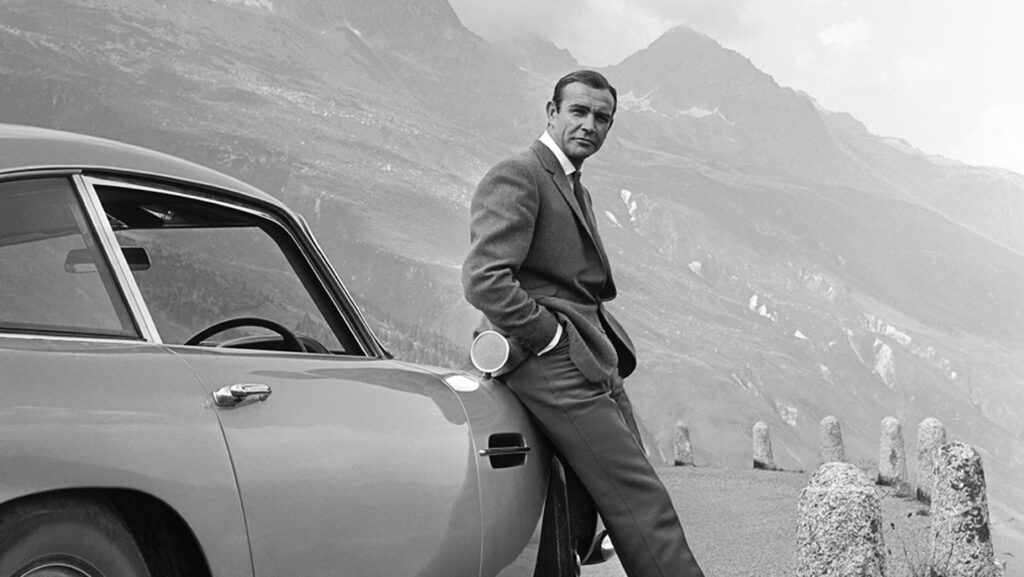
There was a seismic move in Hollywood this weekend. It occurred when the Broccolis finally let go of creative control of the Bond franchise, handing it over to Amazon. The whole thing was kind of weird because Amazon already bought the franchise when they bought MGM. But I guess the Broccolis retained creative control of the franchise as part of the deal. Well, over the past three years since that deal was made, the Broccolis haven’t done jack diddly with the Bond franchise and Amazon had had enough. So they dished out another billion bucks so that they could do whatever they wanted with 007.
A lot of people are calling it a tragedy. And, to a certain extent, they’re right. The Broccolis are one of the few people who think you make a movie once you have a good idea. Not the other way around. And the pitches they were getting weren’t very good. So they rejected them.
To be fair, pitching a Bond film must be hard. I mean, how many different ways can you say, “Bond goes to this continent. Then he goes to that continent!” It’s the kind of franchise that differentiates itself in a) the actor who plays Bond, and b) the direction. As scripts, all these Bond movies, much like the Mission Impossible movies, feel the same to me.
But that opinion may be because I’m not a Bond expert. And, for that reason, I decided to bring in Scriptshadow’s resident Bond expert, Mr. Scott Crawford, to give me an insider’s take on what’s gone on here and what it all means.
So, here’s Scott!
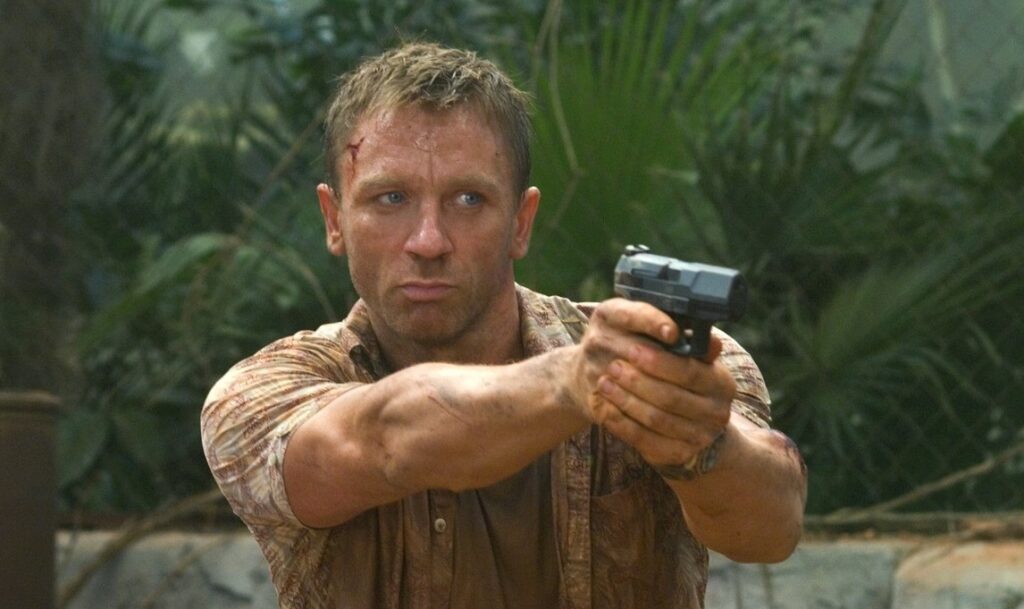
Amazon has paid over $1 billion to take creative control of the James Bond movie franchise from producers Michael G. Wilson and Barbara Broccoli. The world’s longest-running movie franchise, which for almost 63 years has been a London-based, independent, family-run affair, has been taken over by the world’s second largest company. From Dr. No in 1962 to No Time to Die in 2021, one name has been synonymous with the franchise: Broccoli.
It was British-based American producer Harold R. “Harry” Saltzman who in 1961 gave Fleming $50,000 for a six-month option on James Bond. Just as the option was about to expire, Saltzman teamed up with another British-based American producer Albert R. “Cubby” Broccoli and secured the backing of David Picker at United Artists (UA). Broccoli and Saltzman formed a company called Eon to produce the movies.
UA, a studio founded in 1919 by Charlie Chaplin and friends, took a hands-off approach to making films. They agreed to finance and distribute the Bond films while Eon would produce. Profits would be split 50/50, Eon’s share rising to 60% and then 75% as the films remained profitable.
The formula was simple but effective: make the Bond films relatively cheaply in England, at Pinewood Studios just outside London, and – as the budgets got bigger – at locations around the world. Casting a relatively unknown actor – Sean Connery – as Bond rather than a star like Cary Grant or David Niven saved them money they could use to build huge sets.
By the mid-70s, Saltzman’s outside business activities had got him into huge financial debt and in 1975 he sold his half of Eon to UA for $36 million. UA now owned half of Eon but agreed that Broccoli – who would now produce the series alone – would retain creative control.
Broccoli’s stepson, Michael G. Wilson, a lawyer who had previously been an assistant on Goldfinger and legal advisor on The Spy Who Loved Me, became an executive producer on Moonraker, For Your Eyes Only and Octopussy and a full producer on A View to a Kill in 1985. He would be a producer on every Bond movie after that. In addition, Wilson co-wrote all the screenplays for the five Bond films released in the 1980s and continued to contribute many story ideas going forward. Cubby remained the man in charge, but from 1981 onwards, day-to-day production was handled by Wilson.
Money problems at MGM led to multiple delays on productions, the longest of which was six years between Licence to Kill in 1989 and GoldenEye in 1995. During that time, producer Joel Silver tried to buy Bond but was told it would cost $150 million to get the rights.
MGM/UA’s shaky finances eventually led to the announcement of its sale to Amazon in May 2021, five months before the release of No Time to Die, for $8.45 billion. The sale included half of Eon since MGM owned half of Eon after buying UA which had been sold half of Eon. Which many speculated to be the reason why Amazon paid (overpaid) such a large sum.
But Wilson and Broccoli retained creative control, per their contract.
Amazon MGM became almost immediately impatient, having paid over eight billion dollars, and pushed for a James Bond TV show, an idea which Barbara rejected. Another Amazon executive said they didn’t think Bond was a “hero” and when Amazon MGM head Jennifer Salke referred to Bond as “content,” that seems to have been the the tipping point.
Wilson had announced his retirement from Bond after No Time to Die. Barbara didn’t want to produce the series alone, or with a new producer, and so she sold creative control to Amazon for $1 billion+ to let them produce the films. Let’s see how easy they think it is.
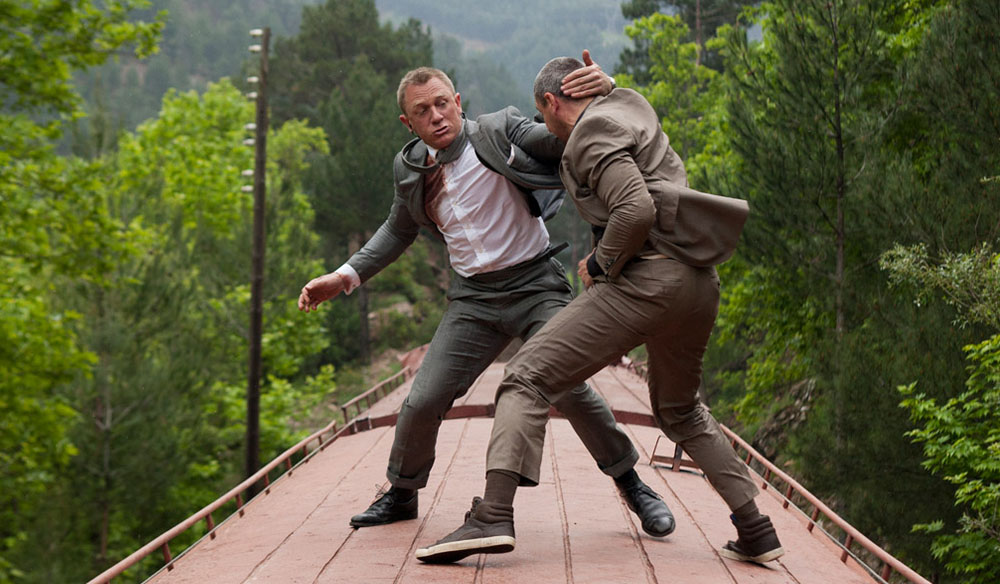
Many people have tried to copy Bond, including 100s of Italian “Eurospy” movies, as well as two unofficial Bond films: a 1966 comedy based on Casino Royale and a 1983 remake of Thunderball starring Sean Connery called Never Say Never Again. Both cost a fortune, more than any Eon film to that point, and neither was as successful.
It’s not as easy as people think it is.
With Amazon given full creative control, the chances of seeing another James Bond film within the next few years have increased, but the worry is that this will be at the cost of the scrutiny that the Broccolis brought to the franchise. The push to make the films for less money, use CGI over practical effects and make Bond more American (Bond movies usually only make around a quarter or a fifth of their money in the US which affects profits) can only result in a more substandard product.
The other fear is that Amazon will push for a Bond TV show. Lots of TV shows. A TV show for every other character… a Miss Moneypenny show… the Q show… a Felix Leiter show… diluting (a word which keeps coming up) the franchise just as it did for Marvel and Star Wars.
Quantity over quality. Bond is too big for TV; he belongs on the big screen.
Personally, I don’t think Amazon will make MULTIPLE TV shows (a la Star Wars and Marvel) because the backlash against that has been so immediate. I think they might do one just to exploit the rights more, but it will be a movie next, first and foremost.
The next thing Amazon will have to do is find a new producer to “run” Bond. That producer will have to find a new Bond (good luck with that)… and do all the rest, probably without the support of the outgoing producers.
To cap it all off, last year Wilson & Broccoli were awarded the Irving G. Thalberg Oscar, a lifetime achievement award for producers, at the governor’s ball. This is a VERY prestigious award; it isn’t handed out every year. Among previous recipients of the award, back in 1982 when it was still shown on TV as part of the main ceremony… was Albert R. “Cubby” Broccoli. His stepfather. Her father.
That’s how respected they are in Hollywood: they gave them an Oscar.
And now… they’re out.
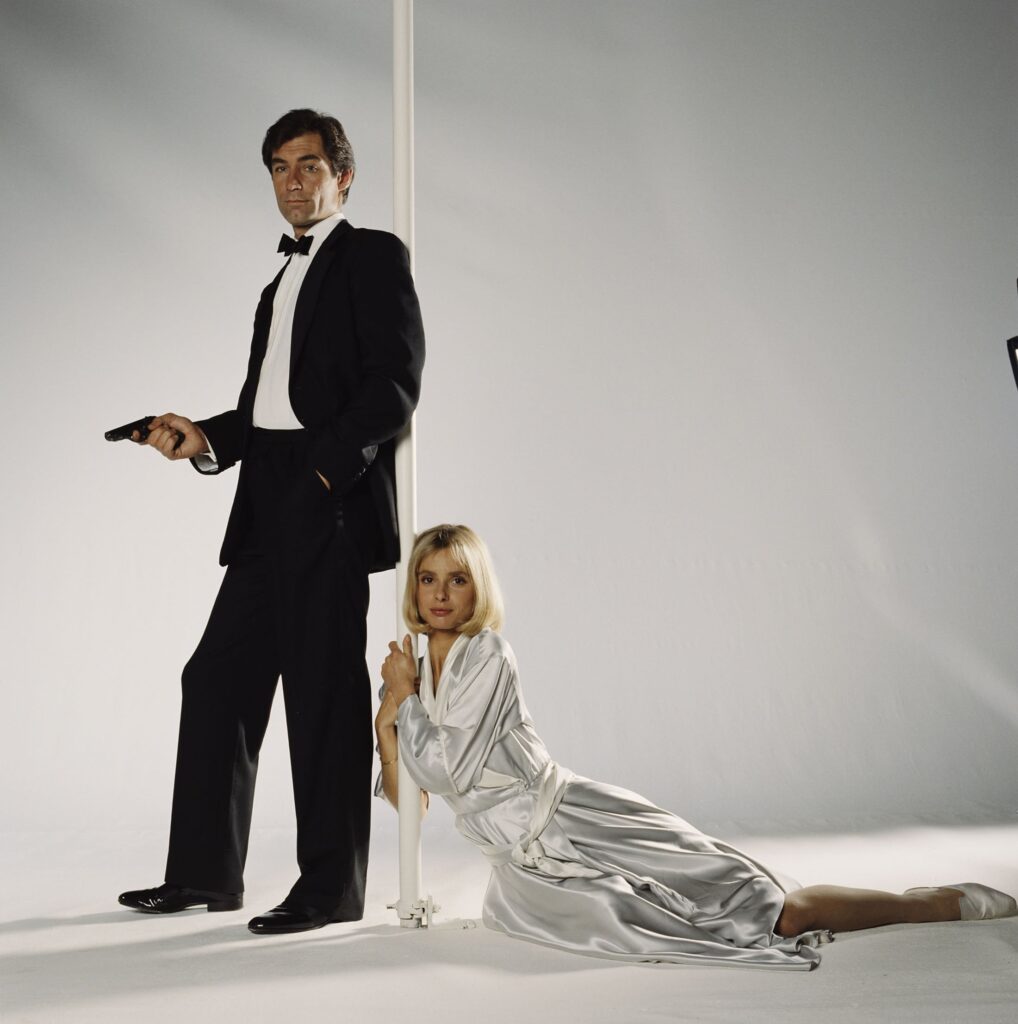
Yeah, I agree with Scott that Marvel and Star Wars have established the protocol for how NOT to treat a franchise re: all these TV shows. But here’s the problem. Amazon has never had a franchise like this before. They paid kabillions for Tolkien’s work but that was for the crappy Tolkien books no one read. Now they’ve got James Bond. JAMES FREAKING BOND. Do you think they’re only going to produce one movie every five years when they have JAMES FREAKING BOND? Helllllllllllllllll no.
So, as someone in the comments said, we will get shows for 001, 002, 003, all the way up to 009. Will that destroy the franchise? Here’s the thing. Bond has a unique problem specific to it and only it. It is ONE DUDE. Just one guy. So, if you come up with the perfect casting, similar to Tom Holland becoming Spider-Man, those shows won’t matter. People will joyfully come to see new Bond movies. Especially because they’ll now have a new one every year. ;)
And the March Showdown is… SCENE SHOWDOWN
That’s right. January was Logline Showdown so we could find you a script to write. February was First Page Showdown so we could get you started on your script journey. March is Scene Showdown. Which means, that’s right, you’re going to enter an entire scene. The only rule is that the scene must be five pages or less. What I’m looking for here is the ability to tell a story within a scene. Scenes are, essentially, mini-scripts. So if you can tell a strong story within a scene, that tells me you know how to structure your larger story, aka your script. Your entry doesn’t have to be the first scene of your script. It can be any scene. And because some scenes are going to need context, I will give you 50 words MAX to set up your scene if need be. Okay, can’t wait to see what you have in store.
What: Scene Showdown
Rules: Scene must be 5 pages or less
When: Friday, March 28
Deadline: Thursday, March 27, 10pm Pacific Time
Submit: Script title, Genre, 50 words setting up the scene (optional), pdf of the scene
Where: carsonreeves3@gmail.com
AROUND TOWN

Andor Season 2 Trailer – At this point, I think Disney’s trolling. I know a small group of Star Wars faithful who champion this show. But I never liked it because the creator, who openly states he dislikes Star Wars, has no interest in making a Star Wars show. He wants to make an adult drama about living under an oppressive system. He’ll begrudgingly add Star Wars touchstones if need be. But he doesn’t care about the universe, which is clear in every frame of the story. This trailer for the second season could not be more indicative of that. Our story, which takes place a long time ago in a galaxy far far away, is playing a 2025 rock song. Could you bastardize Star Wars any more?? I just want Kathleen Kennedy to go away. She doesn’t understand this franchise and keeps missing the tonal bullseye. It’s either too goofy or too serious. Neither is Star Wars.

Havoc Trailer – I mean, C’mon. This looks absolutely badass. And there’s actually a screenwriting lesson to learn here. Havoc is an action movie. It’s a movie where people shoot a lot of guns at other people. If you are going to make an action movie where people shoot a lot of guns, then make sure every scene that has action and every scene that has guns is amazing at the action and gunplay!!! Nobody will care if this movie isn’t funny. Nobody will care if the character development sucks. Nobody will care about clever plot twists. All they’ll the care about is the action and the guns. Same deal when you write scripts. If you write a comedy, 90% of audience satisfaction will be due to whether they laugh or not. If you write a horror film, all I care about is that your scares are first-rate. If you write a Hitchcockian thriller, you better be amaaaaaazzzzing at writing suspense. Havoc knows what it is and its writer and director knew to prioritize that. Which is exactly why I’ll watch this the day it comes out.
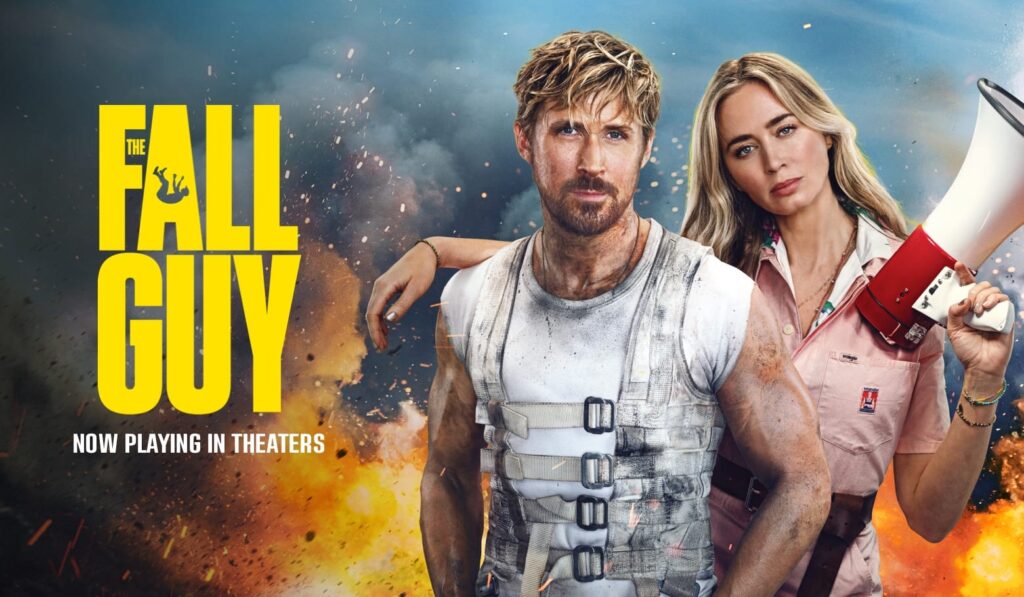
87 North Heist Action Thriller – We’ve got a big heist project that sold to Amazon. 87 North, David Leitch’s company, is producing along with Imagine. Leitch has made a lot of middling movies since he co-directed John Wick. Atomic Blonde, Hobbs and Shaw, Bullet Train, and most recently, the frame-by-frame flop known as The Fall Guy. Lavish production value and star power slathered on a script so vanilla, they’re naming a Starbucks latte after it. But I understand why Leitch believes he doesn’t need good screenplays. He broke out with John Wick. That John Wick script was laughed at all over town. John Wick was never seen as a script success. It was seen as a directing success that became great in spite of its script. So why would Lietch think you have to work hard on a screenplay? Which is why he’s hiring some guy named Mark Bianculli to write this. He of the vaunted TV series, Lincoln Rhyme: Hunt for the Bone Collector, whatever that is. The pitch for this script is that a group of bank robbers use social media to document their heists. So, we’re taking an age-old story trope – bank heists – and we’re modernizing it. But if they don’t have a writer who knows how to dramatize scenes so that the audience actually stays invested, Leitch is in trouble again. With that said, rumor on the street is that Bianculli and Imagine have been developing this script for a decade. A DECADE! So, maybe that’s why 87North is teaming UP with Imagine. Cause Leitch is finally realizing, after Fall Guy, that the script is important. I don’t have a ton of confidence in that theory. But we’ll see.

UFO Conspiracy Thriller – One of the biiiiiiiig scripts that’s been getting the town excited is Zach Baylin’s new UFO conspiracy thriller, which is being pitched as “All The President’s Men meets UFOs.” Baylin wrote King Richard, about Serena and Venus’s crazy dad. He wrote Creed 3. And he most recently wrote the 70s crime thriller, The Order, about big bad white supremacists. I think the concept here is good. Most writers who write in this space focus on the aliens. This sounds like it focuses on the conspiracy aspect and whether there even are aliens. This conversation has been pretty intense in the real world over the last few years. A lot of people, such as myself, think some level of UFO disclosure from the government is imminent. So, why not treat the subject with an adult lens instead of the kiddie lens it’s usually explored through? That’s the main thing we have to remember when we come up with a concept. Every subject matter has been done to death in Hollywood. But not every ANGLE has been done. And this is the answer to the age old question, “What does Hollywood mean when they say they want something ‘the same but different?’” The answer is they want the same subject matter (aliens) but a different angle (explore them through a serious investigation).

Fantastic Four Trailer – This was a head-scratcher. Fantastic Four is the first film in the next phase of Marvel’s storied franchise. Therefore, we should see a clear correction from all the mistakes they made in the last phase. Yet they started off doubling down on the biggest mistake of all – the multiverse. This Fantastic Four movie takes place in some 60s futuristic universe. Kevin, buddy, Carson here from Scriptshadow. Got a “what I learned” for you. If a movie takes place in a parallel world that has nothing to do with the one we, the audience, live on, that means there are zero stakes attached to anything that happens. The whole planet could blow up and it wouldn’t matter at all. You’re going to start your new phase with that? The multiverse is the worst case of toothpaste leaving the tube that I’ve ever seen. Cause if there’s anything that needs to be put back into the tube, it’s the multiverse. But now you’re fucked. You opened that door and you’re fucked. I also found it odd that the movie trailer featured Ebon Moss-Bachrach, known for playing Richie in The Bear, in character as The Thing, discussing cooking. Most of the audience for The Fantastic Four—probably 90%—won’t know what The Bear is. Even fewer will recognize that The Thing is played by Ebon Moss-Bachrach, the same actor who portrays Richie. Prioritizing such a niche Easter egg moment in a trailer tasked with selling the next phase of Marvel feels like the largest of large miscalculations. Why not prioritize… oh, I don’t know… crafting a good movie concept!? I heard someone say they thought this might make a billion dollars this summer? I think it’s going to play like every other non Deadpool non Spider-Man superhero movie. 80 million dollar opening and a plunge off a cliff.
SCREENPLAY REVIEW – BLUE FALCON
Genre: Action Comedy
Premise: When a retired CIA agent learns that his estranged son is marrying the daughter of his nemesis, he must travel to a destination wedding to kill him.
About: Sony purchased this script with Eddie Murphy attached to star. Screenwriter Chad St. John has been around for almost 15 years. His biggest credit would be London Has Fallen.
Writer: Chad St. John
Details: 102 pages

I remember Chad St. John! He used to sell specs consistently during the early days of Scriptshadow. It’s good to see him back. Although I’m sure he’d say, “Yo, Carson. I never left!” Let’s see what old Chad’s been up to lately.
60-something Joe Hayes is a semi-retired CIA agent who isn’t doing a whole lot with his life. His one regret is that he spent so much time on his work that he was a nonexistent father to his son, Chuck. He really wishes he could fix that relationship.
Joe hangs out with his other retired CIA buddy, Sugar. But their hang-out seshes aren’t going to last much longer since Sugar is almost dead. One of their favorite topics is discussing the disappearance of their former co-worker, Vick Arbaca. Sugar and Joe HATE Vick because he screwed the CIA over in order to secure the bag.
Joe is shocked when his son invites him to his destination wedding. Joe sees it as an opportunity to finally fix their relationsthip. However, when he gets there, he finds out that the woman Chuck is marrying is the daughter of… you guessed it… Vick! And Vick, who these days is richer than Bill Gates, is there too!
Joe then gets some terrible news. Sugar is dead. But his daughter, Sharon, is here. And she says that she’s more than happy to help Joe finally kill his nemesis (before Vick kills him). The two play a couple of deadly pranks on each other until they’re ruffied on Vick’s yacht by a bunch of college kids.
They wake up to learn that this ruffie business may be worse than originally thought. It turns out that the world’s worst bad guys, people who Joe and Vick used to make miserable, have been alerted to their position and are coming to kill them. This forces the two to team up. But what they eventually learn is that someone close by is orchestrating their demise.

I mean if they’ve got DeVito, Schwarzenegger has to be Sugar, right?
The first thing I’m going to tell you about this script is from a MARKETING perspective. Not a screenwriting perspective.
Action-Comedies sell!
Comedies may not sell. But action-comedies do. So, if you’re thinking about writing a comedy, just add some action to it. Or include lots of guns!
Now, what about the concept?
The concept here is okay. I love the enemies-who-are-forced-to-work-together trope more than anybody. So I was all for it here. My only issue with this specific pairing is that Joe and Vick were both CIA agents. So how are they enemies exactly? The script jumps a lot of rope and flips through a lot of hoops in order to explain that and I was never convinced. Vick sold CIA secrets or something? That’s why he’s a villain? Okay. I guess? But the pairing didn’t have nearly the same impact as it would’ve if Vick had been an actual villain.
And I say that for a reason that extends into the art of screenwriting itself. As screenwriters, we are constantly wrestling with our stories in order to make them feel as natural as possible. But, at times, we want to make the script go a certain way that’s a little artificial and that’s when we bring out our big writing pen and start manipulating reality in order to get what we want. Chad St. John wanted these two to be enemies but they both worked for the same side. So he wrote in a bunch of mumbo-jumbo with his big writing pen to make that as believable as possible.
Granted, comedy allows for a lot more leniency in this area. But you still have to be careful because the Joe-Vick relationship is a pillar in the script. It’s not like a tiny subplot relegated to 6 pages. So, it’s important that it’s believable, since it will affect every aspect of the story. And it wasn’t believable.
Was the script funny?
I didn’t laugh. Then again, I rarely laugh while reading scripts. I judge comedies on a less rigorous scale. Was the comedy so bad that I became angry? That happens quite a bit. Was the comedy uninspired? That’s fairly common. Was it neutral? Getting better. Did it make me smile multiple times? That’s good. And did it occasionally make me chuckle? That’s usually the high mark for a comedy script with me.
This one was somewhere between neutral and smiling.
Probably the best running joke was Sharon, Sugar’s “daughter.” She’s this wanna-be agent who’s clumsy and clueless. Her continued screw-ups were funny.
[insert page]
It may be hard to impress me with a comedy script but I can tell you how to do it. Because my journey to creating Scriptshadow started with reading a comedy script. It was called The Hangover and I absolutely loved it. It was hilarious.
Why was it hilarious? Were the writers just funnier than Chad St. John? I don’t know if they were, to be honest. But what I can tell you is that the concept for The Hangover was a million times better than this.
You see, the thing with comedy concepts is that you need something to generate consistently funny scenarios. If your concept sets up a familiar scenario, you’re going to be writing a bunch of familiar comedy scenes. But if your concept is unique, like The Hangover, you’re going to be writing a bunch of brand new comedy scenarios that you don’t even have to try to create. Cause they’re built into the concept.
Hasn’t Adam Sandler’s company already made three island movies with secret agents? We’ve seen this before. And not that long ago. So, it just feels too familiar to celebrate. Which is why it’s not recommendable for me.
Script link: Blue Falcon
[ ] What the hell did I just read?
[x] wasn’t for me
[ ] worth the read
[ ] impressive
[ ] genius
What I learned: I’m now an official fan of suggesting actors in comedy scripts. I would’ve read the part of Vick totally differently had Chad not suggested we think of Danny DeVito for the role. It instantly clarified the character and, as a result, it was one of the most effective parts of the script. Cause Danny DeVito has a very specific delivery. He can play the jerk (as he does in Always Sunny) and yet you always like him. So don’t be afraid to cast actors for your roles in a comedy script.
Is this the most f’d up story of the year?
Genre: Horror
Premise: Back in 1989, a family receives an eerie visitor named Tommy Taffy, who sets up shop in the house, becoming a third parent, and torturing them in a way that only Tommy can.
About: We’ve got another big short story sale from Reddit’s Creepypasta subreddit, one of the most popular horror forums around. You can read the short story yourself here.
Writer: Elias Witherow
Details: 5000 words (about 1/4 of a screenplay)
 Matt Smith for Tommy?
No. Horror short story sales are not over.
Remember, horror is the most bankable genre in Hollywood. So it’s the one that everyone tries to figure out. And they can’t. It’s still a genre where some movies hit and others crash and burn.
A big reason for that is that there’s way less IP in horror than in other genres. You’ve got Stephen King, of course. But great horror movies (Talk to Me, It Follows, Heretic, Quiet Place, Terrifier) constantly come out of nowhere.
The thing is, Hollywood is so uncomfortable with that, that they’ll do anything if it provides even a little bit of IP. Enter Creepypasta. Some of these stories have been beloved by hundreds of thousands of people. That’s enough for Hollywood to adapt.
Hence, The Third Parent sale.
Let’s see if it lives up to the hype.
It’s 1989. 6 year old Matt is chilling with his family in their suburban home. There’s Spence, the dad. There’s Megan, the mom. And there’s Stephanie, Matt’s 5 year old sister. There’s a knock on the door. Spence goes to open it. And there’s this… man, standing there. Or some version of a man. Here’s how he’s described.
He was about six foot and had a shock of golden hair cut tight along his scalp. He wore khaki shorts and a white T-shirt that said “HI!” in red cartoon font.
But that wasn’t what caught my eye. It was his skin…it was completely devoid of pores, a perfectly smooth, creamy texture that looked almost like soft plastic. His face was a pool of gentle pink, his mouth a cheerful cut along his cheeks revealing a white strip of teeth…but they weren’t teeth. It was just a smooth, edgeless row, like he had a mouth guard on. His nose was just a slight rise out of his face, like a doll, void of nostrils.
And his eyes…
His eyes were twin puddles of sparkling blue, shining out at us from his flawless, eerie face. They were wide, like he was in a constant state of surprise, and they shifted around the room to look at us in quick, jarring motion.
Matt is both bewildered and baffled by this man’s entry into their home. But his confusion is just getting started. The father is terrified of this thing but simply says that Tommy will now start living with them.
Even though Matt knows something is very off about Tommy, the first real example that this is going to be bad is when Tommy takes Megan into the basement and, for the rest of the night, we hear the most horrifying screams that humanity has ever experienced.
You’d think that Spence would fight back but he doesn’t. He doesn’t even fight back when Tommy takes Stephanie into her room and we hear the exact same screams of horror all night.
Matt finally confronts his dad about why he doesn’t fight back. It turns out that Tommy Taffy lived in his hometown growing up and was present in every single home in the town. They chopped him up. They burned him to death. It didn’t matter. He always came back. And when he did, he punished people with an iron fist.
Poor Matt gets his own dose of Tommy time after finding his first Playboy Magazine. Afterwards, Matt asks his dad how much longer they have to endure this. “Three years,” he says. Tommy always stays for five years total. Sure enough, three years later, Tommy leaves and never comes back. The end.
Is it true what people on Reddit have been saying about this story? That it’s the most f’d up story of the year?
I would have to say…. Yes.
But just how f’d up it is depends on whether you give this story the benefit of the doubt. Is it just a shocking skin deep tale? Or is it trying to say something deeper? If it’s trying to say something deeper, it’s actually quite affecting. But I’m not convinced that’s the case. If I had to guess, I would say that the writer just thought, “How can I write the most messed up story ever and really shock people?”
And you know what? That’s not the worst strategy for a writer. With every project that a writer writes, the ultimate goal is to stand out from the pack. The way you do that is to pick a lane and be faster in that lane than everyone else.
So, if you write something that’s dialogue-centric, your dialogue has to stand above the rest. If you’re writing a thriller, you have to have thrills that stand above the rest. And if you’re writing something to shock people, you have to be more shocking than the rest.
And there’s a lane open for shock-writing right now. For the last 7-8 years, everyone has been avoiding offending people. So the writing has been very careful. Even the stuff that’s been daring has only been daring on one side. Therefore, there’s been this entire mini-generation who hasn’t been offended about certain things.
Enter The Third Parent.
Now, this isn’t total shlock. There is some thought put into this. For instance, there’s a strong core of irony built into the concept. Normally, when you have some evil person doing evil things, they look evil. They’re dirty and smelly and unkempt. When you do that, you’re being on-the-nose.
Tommy is the opposite of that. He’s clean. He’s perfect. He smiles and laughs all the time. That kind of person isn’t supposed to be scary. You’re supposed to trust that kind of person.
Another thing this writer did well was he created a character that wasn’t like any other character we’ve seen. He has clown-like qualities. But he’s not a clown. He’s this weird hybrid of a clown and a full-sized doll.
However, beyond that, this becomes pretty basic. This doll thing rapes three of the four family members in the worst way imaginable. It’s unsettling but this kind of thing works in short story form.
My question is, can it work in feature form? I’m not sure it can. I’m not sure you can have some doll clown thing hanging out and raping children for 2 hours. People are going to be beyond uncomfortable. So they have to make a choice on whether to stop the sexual abuse BEFORE it happens. The story focuses more on the THREAT of that abuse rather than the actuality of it. Of course, if you do that, you take away the one thing about your story that stands out.
What will help is to make the family more active. One thing you definitely can’t do in a movie is have a family that does nothing – that just allows this to happen to them. In this story, that’s kind of what makes it terrifying. They have no choice. But in a movie, the audience will not forgive characters who do nothing. At a certain point, the characters need to attack.
Regarding my earlier statement of, is this surface level or does it go deeper? Here’s my take on the “deeper” storyline. You guys can let me know if I’m off-base. I believe what the writer MAY have been trying to say is that every family has secrets. Every family has abuse. There may not be a physical Tommy Taffy. But metaphorically, there’s always a Tommy Taffy.
Because part of the story is about how they don’t do anything about it. They don’t go to the cops. They don’t bring in the military to nuke the dude. The families are encouraged to keep Tommy Taffy a secret.
If that’s the metaphor, it’s a good one. But, again, this could still be shock shlock. What do you think?
[ ] What the hell did I just read?
[ ] wasn’t for me
[x] worth the read
[ ] impressive
[ ] genius
What I learned: One of the harder things to achieve in horror is creating a truly terrifying horror character. Someone who REALLY scares audiences. Most horror characters I read are lame. This horror character definitely stands out. So, it’s a good idea, when writing horror, to spend that extra time creating the scariest most original horror villain you’re capable of coming up with.
And remember that the First Page Showdown is next weekend! If you want to submit, details are below!
Just a reminder, next Thursday is the deadline for First Page Showdown! And then, over the weekend, the top 5 submissions will compete for your votes. Here’s how to submit…
What: First Page Showdown
When: Friday, February 28
Deadline: Thursday, February 27, 10pm Pacific Time
Submit: A script title, a genre, and your first page
Where: carsonreeves3@gmail.com
Okay, now it’s time to prepare you!
A lot of screenwriting people will tell you to write a great first scene due to the fact that you want to grab the reader. But, actually, you want to start even earlier. You want to write a great first page.
I can’t even begin to tell you how much the reader is judging the script during that first page. And it’s not that they’re doing it overtly. They do it subconsciously because they’ve read so many scripts and the large majority of those scripts are bad. They’re hoping and praying that this is the one that’s going to be good.
So, actually, they’re picking up on the bad things reluctantly. They’re hoping they don’t pop up. Cause if they encounter 2-3 red flags on the first page, it’s a 99% probability that the script will be bad.
What is it they’re judging? They’re judging if the writing itself is good (the sentences are pleasing to read). They’re judging if they like the writer’s voice (is it strong and assured). They’re judging if the page is building towards something. They’re judging if they like the scene you’ve started off with. They’re assessing whether you’re a storyteller, someone who understands the tools required to tell a good story. They’re assessing your confidence. They’re assessing what level you’re at.
I know. All of that is overwhelming. To be honest, if you tried to check all of those boxes, you’d probably write a bad scene. So, today, I want to give you a simple template that gets you the best chance to hit all those beats. Actually, with this template, you don’t even need to hit all the beats. You only need to hit the most important one, which is to be a good storyteller.
We’re going to do that with an example from the first page of one of the Oscar-nominated scripts, Conclave. It’s not perfect, which proves my point. You don’t have to be perfect to write a strong first page. Let’s take a look at the page and then we’ll discuss what it does well.

Before we get into the analysis, let me ask you a question. What is the most important aspect of a first page?
Anyone?
Here’s the answer: That it makes you want to turn the page.
Nobody can read the rest of your script if they don’t read page 2.
Now that you know that, what do you see within the first page of Conclave? Hopefully, I don’t have to point it out to you.
For the people in the back, the scene starts WITH SOMETHING HAPPENING. Actually, let me recontextualize that. It starts with something OUT OF THE ORDINARY happening.
If something was just “happening,” like a man eating dinner, that’s not enough to get people’s eyes to move down the page. It has to be something that doesn’t happen often. That’s what makes “the happening” unique and worthy of reading.
In this case, a man is sleeping, his window cracks, waking him up. Then he gets a phone call. We then cut to him walking through Rome. And there’s a key word there that you need to include on a first page – “QUICKLY.”
He’s walking “quickly.” That tells us something about that phone call was important. Especially because he left his home in the middle of the night. Something big has happened.
Another key word occurs in the slugline: “VATICAN.”
He’s not quickly walking through Costco. He’s walking through the Vatican.
Not to get sidetracked but this is where concept comes into play. You want your movie ideas to feel big. That way, you have more to work with on the page. If your script includes the Vatican, that’s going to feel bigger than if your script includes Costco. And I’m not saying you can’t write a great script about Costco. There are probably several hilarious comedies you could write with the store as a backdrop.
But in this game where you’re trying to keep peoples’ attention for 2 hours, the more high-powered your weapons are, the better the chance you have of striking your target.
The main reason this page works is because we’ve been thrust into a big situation where we want to find out what happens next.
Now that we know that, let’s look at the scene more specifically. Cause what you’re going to find is that it’s imperfect. But I’ll remind you why that doesn’t matter.
We start in a quiet neighborhood in an apartment, with a window pane that cracks. Now, on the surface, I like this. It creates curiosity. Again, something is HAPPENING. The sooner you can make something happen on your first page, the better. Cause readers then have to figure out why the pane cracked.
The thing is, I don’t think we ever learn why it cracks. So it’s a bit of a cheat. Yeah, I guess it could be “God,” but if it is, the script does a very poor job at making that argument, especially because there isn’t a single other act of God in the script.
From there, the phone rings. That’s another good beat. Phones that ring in the middle of the night usually don’t bring good news. So, again, something is HAPPENING. Something out of the ordinary.
The writer then takes a unique approach to the call – he doesn’t show the character answer the phone. This is a small thing but it’s something that tells me I’m dealing with, at the very least, an above-average screenwriter.
The beginner screenwriter probably includes the conversation from that call. The advanced writer says, “I don’t need it.” Or, he says, “It creates more mystery if I don’t include it.” But even the fact that he didn’t have the character pick up the phone tells me this screenwriter doesn’t waste ink. And that’s usually a good sign.
From there, we have the character speeding down the tunnel in the Vatican and now, as a reader, I don’t have any choice but to turn the page. Seriously. How can I NOT read the next page? It would be stupid to not at least check it out. Cause I want to know who called him and why he’s felt it important to get up in the middle of the night and run to the Vatican.
That’s the big tip that I want to get across to you here with first pages. You want to create a question within that first page that doesn’t just make the reader curious, but makes it impossible for them not to read the second page.
And you do that by throwing us into the mix of something happening that’s out of the ordinary. It’s very hard to screw up a scene like that.
By no means is this the only way to write a first page. I went through the opening pages of all the Oscar screenplay nominees and nearly all of them approach their first pages differently. But if you want to get the best bang for your buck, do it like Conclave.
Can’t wait to see what your first pages have to offer! :)
Genre: Sci-Fi
Premise: A senator and his estranged son must fight to survive when they’re stranded
at a hunting ranch where mythical beasts from global folklore are genetically
engineered as dangerous game.
About: This script finished with 16 votes on the Black List. Grillot has one other Black List script from a year ago called The Tooth Fairy. Here was that logline: A drug addict returning from rehab kidnaps her daughter from her father then tries to skip town, only to end up at an old BnB chased by an evil tooth fairy determined to take her daughter from her. – The guy clearly likes his high concept ideas!
Writer: Chris Grillot
Details: 108 pages
Today’s script reminded me of 1997 Hollywood where every single person you met in Los Angeles had a screenplay and 99.9999% of them were sky-high concepts.
American Monsters leans into that old school approach. You can’t get any higher concept than this. The only problem is, is the pitch “Aliens meets Jurassic Park” still relevant?
It is if the script’s good. And fun! Please, after yesterday’s anger management meltdown, give me a fun screenplay experience! For crying out loud!
Senator Remy Chatelain is up against reelection and it’s not looking good. He recently got caught using dirty tricks to smear his opponent. So maybe it’s good that his old friend, hunter Lane Marlow, shows up and asks him on a weekend trip. He can even bring along his 17 year old son, Zach.
Remy and Zach head to Lane’s highly remote Wyoming compound where he’s secured thousands of acres for his new venture – hunting monsters. Lane is also a bit of a scientist and has figured out how to bioengineer approximations of all the monsters we’ve read in books.
We’ve got chupacabras, ushi onis, giant bat things, and the real prize of the establishment – Yetis. Lane has created a giant hunting ground where you can kill your own monster. And this weekend, he’s going to take Lane and Zach into his creation where they’ll both be able to bag a Yeti. It’s going to be wonderful!
The trip requires going up into the mountains and it doesn’t take long for Remy to realize that Lane doesn’t have it all figured out. He falls into a sinkhole where a giant bull-spider thing easily could’ve killed him if it wasn’t so timid.
And don’t even get Remy started about the Yetis. The Yetis were created to be dumb. But since their creation five years ago, they’ve started to clump into packs. They’ve even created little villages. All of this is starting to feel very wrong to Remy.
Remy also learns why Lane brought him out here. It wasn’t just to catch up with an old friend. Remy has major influence on an upcoming bioengineering bill that, if passed, will shoot Lane’s business into the stratosphere. If the bill fails, however, Lane’s dream, along with the tens of millions of dollars already invested into the venture, will be toast. Sure Lane. First let’s focus on getting off this mountain without being slaughtered by a pack of Yetis!
Something I want you to take note of right off the bat with American Monsters is Lane’s motivation.
When I read bad versions of scripts like this, characters like Lane don’t have motivations. They’re just some knob that the writer uses to open a door for our characters to enter the movie.
The bad version of Lane is a guy who says, “Come on in” and “Let’s hunt.”
The good version of Lane – the one that’s being used here – is much more elaborately constructed. The reason he’s bringing Remy here is because Remy can help him pass a bioengineering bill that will infuse his operation with money. Money that he desperately needs.
Not only does this make Lane a stronger character (due to the fact that he has a goal with high stakes attached) but it infuses all interactions between Lane and Remy with an extra layer of subtext.
If Remy has a scary moment and wants to call the hunt off, and Lane says, “Trust me, what just happened was random. There’s no way it will happen again.” Well, because we know how badly Lane needs this to work, we know that there’s a whole other layer to that assurance. He’s probably lying about it because he needs Remy to buy into his pitch.
Lane is the character who sold me on this script. I can tell that Grillot put a lot of work into him. He’s got a lot lines like this one: “We might not have money, but we’ve got plenty of reach. I’ll pull in Outdoor Alliance, the Ag Coalition, the oil and gas roughnecks, police and fire unions… You fucking name it, I make the call… I bet your opponent drops before the election.”
Lines like that tell me RESEARCH has been put into this character.
He reminded me some of Tommy Norris (Billy Bob Thorton) on Landman. The reason that show works so well is the insane amount of knowledge the creator has about that world. So, whenever I feel like characters are smarter than me, I know I’m in good hands.
Cause, for the large majority of scripts that I read, there isn’t a single character who’s smarter than I am. Or as knowledgeable about the subject as I am. I’m serious! I’ll read a script about a nuclear apocalypse and I’ll know more about the science of the fallout than the writer does. That’s when you know the writer is barely putting in an effort.
Whatever the specific world it is that you’ve created for your screenplay, there better be at least one character who knows more about that world than Wikipedia and ChatGPT combined. And that includes pretend worlds.
If there’s a weakness to this script, it’s the competition. Every studio has a “big animals” franchise. And it seems that the bigger the animals, the more lucrative the franchise is. These animals are big but not enormous. On the plus side, our “monsters” are just different enough. If these were straight lizards and gorillas, it wouldn’t work. We’re putting in new variations of these animals and, from there, it’s up to the public to decide if that’s enough to get them interested.
I think most writers and producers in Hollywood attempt the “same but different” formula. You just never know how ‘same’ or how ‘different’ the audience wants. The target is always moving. Would I have thought a basic ‘guy with a gun’ movie like John Wick would become one of the biggest franchises in the industry? No. But it turns out it had that perfect balance of the same (guy with a gun) and different (this light hitman mythology).
This movie is going to open huge. In 1998. Can it open huge in 2025? I don’t think so because the lore and the mythology is not quite up to Jurassic Park standards. With that said, it’s strong! Stronger than most scripts I read in this lane. So I could see this being a big streaming movie. And, these days, that’s what we spec script writers should be gunning for. Get that big streaming feature paycheck and celebrate like it’s 1998. :)
[ ] What the hell did I just read?
[ ] wasn’t for me
[x] worth the read
[ ] impressive
[ ] genius
What I learned: There’s always a more creative line of dialogue available to you if you take the time to find it. On page 35, Lane is telling Remy that he needs money. He explains that his current investor is running out of cash. If you were having Lane tell Remy this, what line would you write? Most writers say the first thing they think of. Something like: “The problem is, Ko’s (his financier) running out of money.” It does the job, but it’s not very creative. Instead, here’s the real line that was used: “Look, I’ll let you in on another secret, alright? Ko’s deep pockets are getting pretty shallow.” Clearly a more thoughtful line. That’s how most dialogue should read. You can learn all sorts of great dialogue tips like this in my dialogue book. So go get it!