
Search Results for: F word
A first ever! Scriptshadow reviews… a logline???

Winner Winner Chicken Dinner!
Here was the entry:
Title: PARASAIL
Genre: Thriller
Writer: Arthur
Logline: After the speedboat operator pulling their parasail apparently collapses and dies beneath them, a honeymooning couple find themselves speeding hundreds of miles out to sea, suspended 400 feet in the air, in a passage of water known as ’Shark Alley’. (FALL meets THE SHALLOWS).
Let me ask you a question. How does one make a logline review 1500 words long?
Not sure that’s possible.
So, here’s what I’ll do. I’ll first review the logline. Then I’ll extrapolate on a direction for the script itself, so we can see what this logline could be.
A few of you pointed out that Parasail was just “Open Water” but on a parasail. Well, that’s EXACTLY what you should be trying to do with a logline. You want to find successful movies and then you want to unleash a new spin on them. If you can make the spin just familiar enough and just new enough, you’ve got yourself a winner. And that’s what Parasail was. Which is why it won!
You see, the end game here is MAKING MOVIES. Screenwriters forget that sometimes. They get lost in weird, quirky, or small ideas that can be fun to read but don’t feel like movies at all. So, when you build your concept on top of something that’s already been proven in the marketplace, you have a way better chance at selling it.
Now, is this the most original idea? Of course not.
But you don’t have to be super-original to write a great logline. You just need a good movie idea – and by that I mean, ‘a movie you truly believe people would pay to see.’ Parasail gave us that. I can imagine people paying to see this movie.
A couple of things stood out for me here. If two things were not in the logline, I probably wouldn’t have picked it. To illustrate what the logline would’ve looked like without those things, here ya go: After the speedboat operator pulling their parasail collapses and dies, a honeymooning couple find themselves speeding out to sea, suspended 400 feet in the air.
The two things that are missing are “hundreds of miles out to sea” and “Shark Alley.” One of the things that sucks me into a story is IMPOSSIBLE ODDS. So, when you say these two are stuck HUNDREDS of miles from land instead of DOZENS of miles from land, the first thing I think is, “They’re dead. There’s no way to survive that.” That’s exactly what you want the reader to think. That the odds are IMPOSSIBLE. That’s what draws us in – to see how our heroes will overcome the impossible.
Then you have “Shark Alley,” which hints at what’s going to happen later in the script and how it won’t be pretty. Sooner or later, they’re going to have to go down. And they’re in a strip of water that’s all sharks. You also gain a lot of story value from that plot point BEFORE they get in the water. Because it’s going to be so suspenseful reading this knowing that, even if they can find a way down, they’re still screwed.
Do I have any concerns about the script?
Of course.
Anything contained is going to have challenges regarding plot. Is there enough plot to flesh out an entire 90 minute story? I’m struggling to answer that question with a ‘yes’ here.
But let’s break it down. See if we can create a preliminary outline that lasts 90 minutes.
You probably want to spend 10-12 pages setting up the parasail situation. This is where you would meet the characters. Figure out what’s going on with them in life. You would introduce the speedboat operator. Foreshadow by describing him as looking a little sick. He explains the rules. And then up they go.
This next part would be the most challenging part of the script because, not many people know this, but parasailing is more ‘casual’ than ‘thrilling.’ I’ve done it before. Once you’re up there, it’s very slow and peaceful. So, how are you going to make that entertaining for the audience?
You could go with the typical “problems in marriage” gambit to create conflict up there. But something tells me, with a concept this simple, that would be boring. If you have a simple concept, you have to make up for it with the characters somehow. So, if you were going to introduce conflict, it shouldn’t be the obvious kind.
Since we’ve probably got 10-15 minutes up here of talking, we need something for them to talk about!
Then, you can cut to the operator slumped over, dead. From there, you should be okay for this script if you use some version of the Sequence Method. You’d have 6-7 sequences, all around 10 pages long, where the characters are attempting to achieve a goal in each. That goal will be what drives the sequence and keeps it entertaining.
So, the first sequence goal might be, figure out how to get down. Their driver is dead and they’re moving further and further away from land. They need to get down somehow. But how? Figuring that out will be fun to watch. And, when you have two people pursuing a goal, always have them feel differently about the solution. That creates even more conflict.
The midpoint would be something along the lines of: they’ve constructed a plan to both get down to the water AND get on the boat. It requires cutting some wires but not others – doing it quickly – so they fall down to the water, but are still pulled on the remaining rope by the boat so they can pull themselves up to it, get on it, and turn around.
This would be your big set-piece and, obviously, a lot would go wrong during the plan. One of their ropes snaps and they get left behind. The other has to decide whether to go with them or continue to try and get to the boat. They try to get to the boat but, at the last second, something catastrophic happens (maybe his rope gets caught on the rotor and chopped off) and there goes the boat.
He then has to swim back and find his wife. That could be a sequence. As long as you have a goal with real stakes attached to it, you can build an entire 10 page sequence out of that. Finding his wife is a big goal.
He finally gets to her. By this time, they’ve seen the sharks. They know they’re in trouble. So they’ve got to come up with another plan. Maybe, when they were up in the parasail, they saw some distant tiny island ahead. I’m talking like a 10 feet by 20 feet patch of land. So maybe their goal is to get to that.
It’s getting darker. More dangerous. The sharks are getting closer. But they keep pushing along, trying to swim to this island, even though they can’t really see it from water level.
At some point, they would hear a boat motor. They would realize that it was their boat, coming back around. They know the operator is still dead. It’s just that the boat did one giant circle and is now randomly coming back near where they are. They then come up with a plan to try and get in its path and grab onto it. To do so means they have to travel outside the path to the island and therefore further away from safety.
But they do it anyway, and that can be your second set piece. Build the suspense for this boat coming. And they have to figure out a way to grab onto it and get up in it. As they’re getting into position, that’s when the sharks start nipping at their toes and we know that, if this doesn’t work, they’re dead meat.
Yeah, I think that’s a movie there.
What about you?
Does anyone have any improvements for the plot?
Because my new e-mailer continues to suck, I’m putting my latest newsletter here on the site. If you want to receive future newsletters, e-mail “newsletter” to carsonreeves1@gmail.com

SUPER NOTES DEAL (HURRY UP AND CLAIM!) I’m only going to give THREE of these away. Half-off priced notes. You get 4 pages of notes on your feature or pilot script for just $249. If you’re interested, you need to act fast and e-mail me at carsonreeves1@gmail.com. And your script doesn’t need to be ready. As long as you pay, you can send the script in whenever. I will give the deal to the 1st, 5th, and 10th people who e-mail me. So come get it!
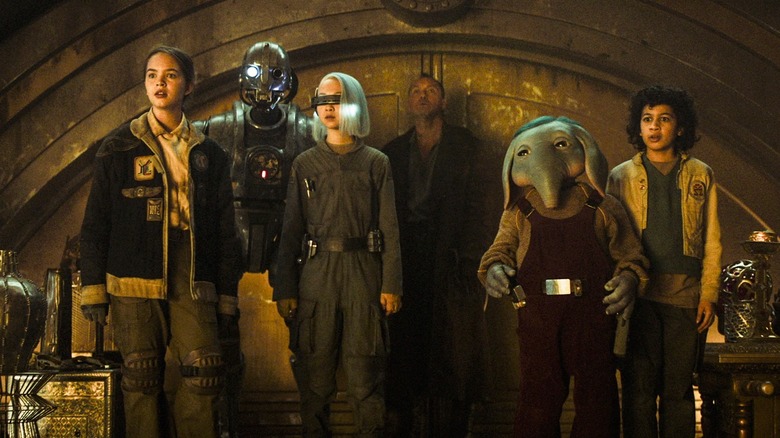 I reviewed a writer-director Black List script titled, Carousel, just as I was finishing the Disney Plus Star Wars series, “Skeleton Crew.” What do a character study about divorce in Cleveland and a group of kids who travel the galaxy battling space pirates have in common?
One key thing.
To provide ample context, Skeleton Crew was a better show than the last four seasons of Star Wars content. Of course, that’s like saying you’re the brightest lamp in a room full of candles. Lucasfilm phoned in Mandalorian Season 3. Ahsoka appealed to kiddies who liked Star Wars cartoons. Andor was well-written but didn’t feel like Star Wars at all. And The Acolyte was so tone-deaf to its potential divisiveness that it went sour like a bad batch of witch’s brew.
At least Skeleton Crew was fun.
However, in the end, it was never “recommendable” due to its lack of scope. It was about a tiny group of people on a tiny adventure.
Which brings me back to Carousel. Carousel had some great dialogue. It had some strong character development. But you know what it didn’t have? IT DIDN’T HAVE STAKES. Just like these Star Wars shows, it didn’t give us a big enough reason to care.
Now, of course, “stakes” are relative. The stakes of The Brutalist aren’t going to be as big as the stakes in Avengers.
But, ya see, when it comes to Star Wars, a universe where evil Emperors blow up entire planets, something feels off when the stakes of a show are “kids getting back home.” Those stakes are fine for say… The Goonies. But Star Wars takes place in a much bigger universe than The Goonies. So the stakes have to reflect that.
 This is the primary issue with all these Star Wars shows. They’re built around mid-level stakes. So they never feel important. The argument Lucasfilm might throw back at me is that I need to change my expectations because these shows are about character development. I’m sorry but Star Wars is not a character-development-first franchise. It is a spectacle-first franchise. And nothing you can do with these shows is going to change that.
In general, as a screenwriter, you want to maximize the stakes relative to the story you’re telling. I can’t remember a single instance where a writer said, “I think we should lower the stakes here” and the story turned out better for it.
Sticking with Star Wars, George Nolfi has been hired as Screenwriter #478 on the Rey Skywalker movie. Also, that Sean Levy (of Deadpool & Wolverine fame) Star Wars movie, which everyone assumed was dead is, somehow, still alive! In fact, Ryan Gosling is attached to star.
I am here to tell you not to take either of these announcements at face value. I can pretty much guarantee that neither of the movies is going to happen. So, why are they still in development? An old Hollywood trick, that’s how. Lucasfilm receives money from Disney. They’re not allowed to just sit on that money. They must spend it. This requires Kennedy to develop projects regardless of whether they’re going to happen or not.
I don’t feel bad for the screenwriters who come onto these projects. They’re going to get paid a lot of money to write a draft, even though they know no one will ever see it. I don’t feel bad for Daisy Ridley. She doesn’t have to do a thing until cameras start rolling so her time is not being impeded upon.
But I feel bad for director Sharmeen Obaid-Chinoy, whose entire career is on pause while she works on a movie that’s never going to happen. They’re never going to greenlight a movie by a director whose most popular film grossed less than 5 million dollars at the box office. It makes zero sense from a business standpoint. So, any pretense that they’re going to make this movie is a joke. In the meantime, Obaid-Chinoy is stuck in a prison. And this is what annoys me so much about Disney. They’re so terrified to fire someone – especially someone like Sharmeen Obaid-Chinoy, who helps Lucasfilm promote representation – that they’d rather string her along to save face. She’s going to be attached to this fake-movie until she’s 60.
Star Wars has only a single successful property left, which is The Mandalorian. And I do think that movie is going to be good. I predict it will be an All-Star team-up of some sort. Don’t be surprised if Luke Skywalker is involved.
But that movie has to figure out a way to navigate the problem that’s haunting all these Star Wars projects. WHAT ARE THE STAKES??? If they are sky-high, the movie will shine. If they are not, it’s going to feel like a Fast and Furious spin-off. You go to the theater, you have an okay time, and you forget what you saw before you arrive back at your house. That’s not Star Wars. Star Wars is supposed to be timeless. If Mandalorian is a “tasty but empty calories” snack, I don’t know if there will ever be another Star Wars film again. I really don’t. Because what Star Wars movie could you possibly make, after that, that would get anyone excited?
 Now that I’ve bummed you out with my Star Wars rant, what do you say we gab about something good?
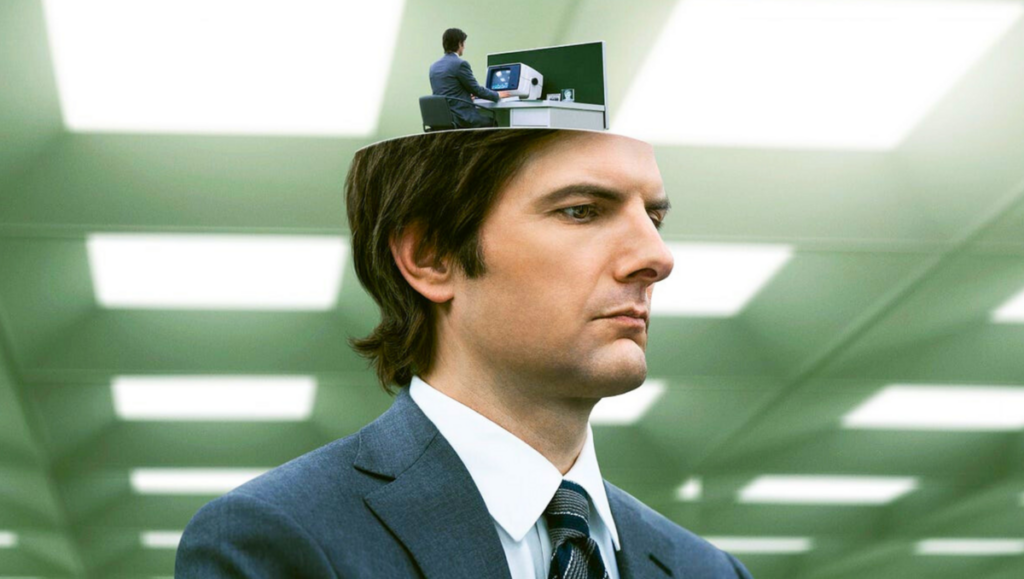
My favorite show right now is Severance.
Average writing keeps you engaged. Decent writing makes you think. Good writing makes you feel. And great writing does all three.
Severance does all three. Particularly that second one.
Mark, the main character, lost his wife. Which is why he severed himself. Being “severed” means you divide your life in two. Half of you goes to work, forgetting all memories on the outside. The other half stays on the outside, forgetting all memories at work.
This seems like a smart move for Mark. He’s consumed by the pain of losing his wife so it would make sense to live half your life not having to think about her. But what about the half that doesn’t go to work? They’re still stuck in hell.
The more you watch Severence, the more questions like that pop up. How would one cope with a life where work never ends? Yes, the second your work day is over, your new work day begins. That sounds like hell to me. So, you’re wondering, why did these guys choose to do this to their other selves? The most logical answer is selfishness. You sacrifice this “other” version of yourself so you can live a life of leisure and never have to work again. That sounds to me like the definition of evil.
 I haven’t thought this deeply about a show since Lost. It feels cool to know that I can recapture that feeling with a more sophisticated version of that show.
There are a lot of writing lessons to take from Severence but the two biggest, for me, are, 1) High concept television can work. 2) Deliver on the promise of the premise.
For a while there, a ton of high concept TV shows were dying on the vine, forcing networks and streamers to shift to boring but battle-tested IP. But, if you look at the reason those shows, like “La Brea” and “See” didn’t work, it’s because they were shoddily crafted. You could tell that not enough time was put into the development of the series and the mythology. From cliched characters to lazy plot developments, nothing felt thought-through.
If you haven’t heard about the history of Severence, Ben Stiller and the writer worked tirelessly developing the show FOR YEARS. That’s because Stiller knew it was a complex show that wasn’t going to work without an acute attention to detail. As a result, when it came time to shoot, they were ready. The show was confident, sure of itself, and determined to deliver on the promise of its premise. It wasn’t like all these weak shows where you can sense the writers are trying to figure out the show as they go along (ever remember that show “Heroes” – Exhibit #1!).
Do the work. It’s the most basic screenwriting advice you’re ever going to get but it’s also the best. Do the work. Put in the time. Give it your best shot. And then all you can do is let the chips fall where they may.

NEXT SHOWDOWN
I hope you had as much fun as I did with the first showdown of the year – Logline Showdown. It was so fun, we’re going to do a comedy focused second Logline Showdown this Friday. So make sure you tune in. Remember, I did this with a larger plan in mind. Each month, the showdowns will grow into something further down the line in the writing process. So, this first showdown was about choosing an idea. The second showdown, which will take place on Friday, February 28th, is going to be for your first page. So, that’s our next showdown, people: FIRST PAGE SHOWDOWN. You can start submitting… RIGHT NOW. And if you want to check out the rest of the showdowns on Scriptshadow this year, head on over to this link.
What: First Page Showdown
When: Friday, February 28
Deadline: Thursday, February 27, 10pm Pacific Time
Submit: A script title, a genre, and your first page
Where: carsonreeves3@gmail.com
AROUND TOWN
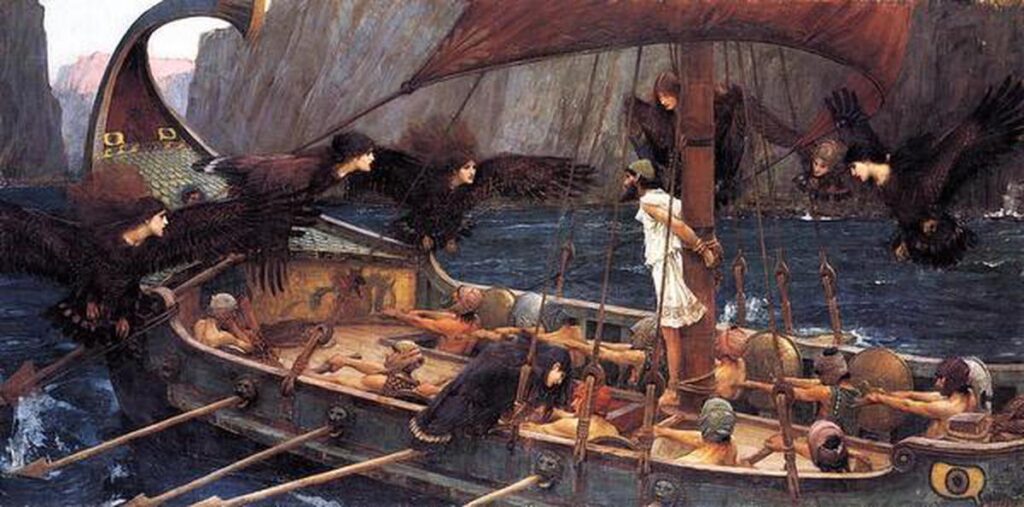 Christopher Nolan’s The Odyssey – Guess what, guys? This is going to be the closest thing you get to a Christopher Nolan Star Wars film. How do we know this? Because The Odyssey is a classic Hero’s Journey tale. And we all know that George Lucas obsessively used The Hero’s Journey to craft Star Wars. There are some differences. This story isn’t about leaving home. It’s about coming home. But it’s still got all those classic Hero’s Journey beats. If you haven’t read The Odyssey, it’s about Odysseus trying to get home after the Trojan War and encountering a bunch of obstacles along the way, like the Cyclops and the deadly sirens. Once he gets home, he has to disguise himself as a beggar to take back his kingdom before, finally, convincing his wife that he’s really Odysseus. Another notable detail about The Odyssey is that it’s a pretty clean story. A character journeys from Point A to Point B. Because of that, there shouldn’t be a lot of exposition required. Which is Nolan’s Achilles heel. He spends half of his movies explaining things, which always stifles the narrative momentum. With such a clear goal, we should get a clean exciting story here. And I’m excited. :)
 White Lotus Trailer 3rd Season – Let’s get something out of the way. White Lotus is not a “trailer” show. It’s unabashedly character-driven, which doesn’t present well in trailer form. This is a situation where we’re not going to know if that character stuff is working until we’re in the trenches with these characters. And it’s a tall order for Mike White, my favorite writer in all of Hollywood. I still don’t know how he pulled off such a great second season of White Lotus with so little time. I’m never surprised by all the terrible second seasons I’ve seen on TV. Because I know how hard it is, as a screenwriter, to write good stuff quickly. And writers spend, probably, 1/10th the amount of time writing their second season as their first. But, somehow, Mike White wrote an Emmy-worthy season in a tenth of the time. Can he do that again? I don’t know but my instinct is skepticism. Cause the hardest thing in screenwriting is coming up with strong characters. And Mike White doesn’t get to carry any of the great characters he’s written from the old seasons into the new ones (except for a couple). So that means he’s starting all over again. If he pulls this off, it will be one of the greatest writing feats in Hollywood history. I’m not exaggerating. If you want to read my week of White Lotus screenwriting lessons, you can do so here.
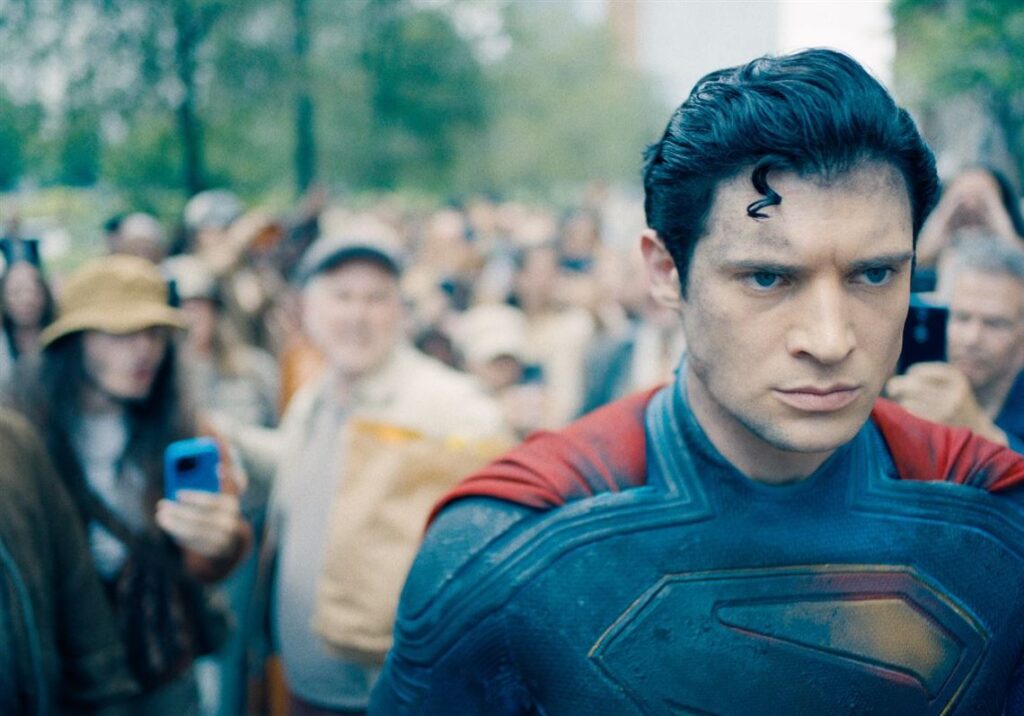 Superman Trailer – Superhero movies are baaaaaaaaack! Maybe that’s an exaggeration but this trailer was great. James Gunn is one of the few writers who can balance the grandiosity of superhero films with the heart of character-driven films. We see that right away in this trailer. We do not focus on some cliche shot of Superman and Lois Lane. No, we show Superman on death’s doorstep. And if that isn’t emotional enough, man’s best friend comes along to save him! Opening Day ticket purchase moment right there. That’s all I needed. What I’m impressed by with Gunn is that he takes the emotion right up to the melodramatic line but he never crosses it. He only takes you to the brink. And that’s a huge reason why his films succeed. The emotion is offered but never forced. That, and he’s got that unique voice. He can be emotional, he can be weird, he takes risks. All of these things are what result in a boss-ass superhero film as opposed to Kraven The Hunter.
 28 Years Later Trailer – The original 28 Days Later contained a highly risky creative choice. It asked the question: What if zombies were fast? Now, changing the rules of classic monsters has been a go-to throughout history. It’s one of the easiest ways to differentiate your take on the subject matter from the past. But the reason this was so daring was because of the zombie movie’s greatest attribute: since zombies are slow, you can draw out a lot more suspense. You can’t draw out suspense if a zombie sprints at your character, reaching him in 2 seconds. But, 28 Weeks Later counteracted that by making its zombies terrifying. These things looked like they wanted to rip every sinewy muscle from your body until you were just bones. That and it approached its situation from a more realistic place. This felt more like how a zombie apocalypse could go down in real life. 28 Weeks Later was a solid sequel. But I’m not sure anyone was pining for a 28 trilogy. And when I look at this trailer, I see something dark and beautiful. But I also see something depressing and inaccessible. There’s got to be a way in for the reader/viewer. We’ve got to attach to someone and feel that, if they survive, we survive. This trailer does not give us that. Which is why I’m not sure I want to see it. Point blank, it looks too depressing. That’s not why I go to see horror movies. I go to horror movies to be scared. To tap into that feeling of fear. But also to have fun. I think this movie is going to be good. How could it not be with Alex Garland and Danny Boyle guiding it? But I think it’s going to alienate a lot of people. At least based on this trailer.
Buy The Greatest Dialogue Book Ever Written!
Screenplay Review – Test Drive
Genre – Action/Thriller
Premise – A down-on-his-luck car salesman takes a mysterious stranger on a test drive– which turns into a dangerous and unsettling crime spree across the rain-soaked streets of Los Angeles.
About – This made the top 10 of the Black List. Matt Venne has actually been writing for over a decade. He almost exclusively writes horror so this seems to be his attempt to transition to a new genre.
Writer – Matt Venne
Details – 96 pages

Fight Club meets The Game?
The one thing I’ll say about this year’s Black List is that it was concept-friendly. Almost every logline has a high concept or “high concept adjacent” slant to it. That’s something we haven’t had in a good 7 years with the Black List. Most of these scripts could actually be movies.
Imagine that!
And today’s script definitely leans into that high-concept theme.
Cooper Reed is a car salesman at one of the worst dealerships in Los Angeles. Still, he’s somehow managed to sell the second highest number of cars this month. In fact, he only needs one more sale to become salesman of the month. Which comes with a bonus. A bonus he desperately needs to cover the mortgage and expenses of his new child.
Unfortunately, it’s the worst day of the year for selling cars, as the rains are coming down hard in Los Angeles. But just when it seems Cooper is screwed, a mysterious cool dude named Jim Ryder shows up (Old Soul. Cool Motherfucker. Weird Witchy Energy). Jim says he wants to buy a car. All he needs is a quick test drive.
Cooper hops in the car with Jim, not believing his luck. Strangely, though, Jim doesn’t seem that interested in the car. He seems interested in Cooper. He wants to know everything about Cooper, especially what his dreams were before he became a car salesman. Cooper, eager to get the sale, explains that he wanted to be a writer, like his father, who committed suicide earlier this year. The death has been especially tough on Cooper.
Just as Cooper is settling into this share session, Jim has him stop across the street from a bank and says ‘hold on.’ Jim then goes into the bank and ROBS IT! WTF! He jumps back in the car and Cooper becomes an inadvertent getaway driver. Jim then informs Cooper that he has two more banks to rob. And Cooper’s going to help him.
The FBI immediately gets involved, with two agents jumping into action, following Jim around, and trying to figure out the big mystery of the case: Does Cooper actually have a passenger with him? Could it be that Cooper’s father’s suicide has so broken him, that he’s invented Jim? And might this invented Jim have a more nefarious mission? To have Cooper end up just like his father?
This script is sort of like the girl you meet at the bar who’s dressed like Billie Eilish but by the time the night is over, she’s revealed herself to be Celine Dion. I don’t know if that’s the best analogy but the point is, this started off as one script and became a completely different one.
And it caught me by surprise, to be honest.
Cause I was ready to write this one off.
(Spoilers) The moment in this script that got me happened around the midpoint. We get this line, which comes from Cooper’s wife talking to the cops: “It was a real shock for all of us. Nobody more so than for Cooper. Started suffering these horrible bouts of anxiety. Really severe panic attacks. Even experienced a few “hallucinatory events” – which I had no idea could happen in times of extreme mental strain. Eventually got him on some psych meds. Which helped.”
Notice how “hallucinatory events” is spotlighted. I read that and I thought, “oh boy. It’s a Fight Club ending. Cooper and Jim are the same person.”
But then, instead of boring us for the next 50 pages then giving us the twist ending we all saw coming, Venne leans into the question of, “Are Jim and Cooper the same person?” almost right away. Then, in the end (spoiler), it turns out Jim is a real person. It was almost like a reverse-twist.
When I read something like that, I know the writer has put a lot of thought into his script. Because 95 out of 100 writers would’ve gone with the easier “Fight Club” twist. A screenwriter who understands that that’s a letdown and that he needs to go deeper, is a good screenwriter.
And what’s cool about Test Drive is that it still gives us a twist. It’s not an earth-shattering twist. It’s a twist organically born out of the character development Venne’s been setting up all script and therefore more emotionally satisfying. (Spoiler). Here, we learn that Jim was a student of Cooper’s father. He came here because Cooper was on the same path as his dad and Jim wanted to stop it.
That’s what surprised me about this script. It started out as this, almost straight comedy about this wily guy taking a car salesman on a test drive from hell. But the deeper into the script we go, the more we learn about Cooper’s father, who committed suicide, and the script really leans into that reality.
What I mean by that is, a lot of writers will write in character stuff because it checks a box. They might even write that our hero’s father died recently, just like this script. But you can tell the writer doesn’t really care about that death or how it affects our hero. They’re just checking the box they’re supposed to check that makes their character “deeper.”
Instead, you should be doing it like Venne. If you’re going to include something that would have a major impact on your hero’s life, you have to commit to the reality of that. You can’t just say it’s there and hope readers feel sad. No, you have to integrate it into the story, like Cooper’s father’s death is integrated here.
Usually, I give scripts with strong character development good marks. Unfortunately, there was one aspect of this script that was so annoying, it counteracted all that great character development.
The philosophizing.
Oh my god the philosophizing. It’s everywhere!
I don’t want to inundate this review with some of these endless philosophical monologues so I’ll provide you with the shortest Jim monologue in the script: “Truth be told, everyone is “You” and everyone is “I” and everyone is “Me” – that’s our name. We all share that. Especially at the subatomic level where there are literally no separations. No distinctions. Everything One. Including “You” and “Me” and -“
There’s a whole script full of that.
It’s not all that bad but here’s the thing – if you’re going to make something a “thing” in your script, whether that thing is “snappy dialogue” or “killer set pieces” or “quirky characters” or “a twisty-turny narrative” — whatever it is that you’re going to feature in your screenplay – that aspect of the script needs to be great.
Cause if 90 pages of your script is snappy dialogue and you’re only mildly good at snappy dialogue, your script won’t work.
The philosophizing here bounced back and forth between average and decent. It never reached, “Wow, this philosophy is completely making me rethink everything I know about life,” which is what good philosophy should do.
And if you want a good example of that, go watch the original Fight Club. There’s a scene in there that I still think about today, which is when Tyler Durden puts the gun to the guy’s head and tells him to go live the life he’s always wanted to live. It’s not exactly philosophical. But it’s one person getting another person to change their life. That is ALWAYS going to affect the audience more than a character rambling about Buddhism for five minutes.
So that was unfortunate.
As for the rest of the script, Jim is, no-doubt, a character that actors are going to want to play. Even if I didn’t like his philosophy, he’s modeled after Tylder Durden and what actor doesn’t want to play this generation’s version of Tyler Durden?
The set pieces were okay but there was one really good chase scene with their car zipping around the Los Angeles Metro underground, dodging trains left and right. That was fun.
And the script gets better as it goes on. Which is a great asset for a script to have since most scripts get worse as they continue. For that reason, this hangs on for a ‘worth the read.’
Script Link: Test Drive
[ ] What the hell did I just read?
[ ] wasn’t for me
[x] worth the read
[ ] impressive
[ ] genius
What I learned: Today’s writer is a reminder that, whatever the genre of the script is you break in with, that is the genre you’ll be asked to write going forward. And the more of those you write, the harder it will be to break away from that identity. Venne has made a solid career out of writing horror films. But he clearly wanted to branch out. So he wrote this. Will it be enough to get him a job writing in this new genre? Depends on if the movie is made and if it does well. The point is: make sure, whatever you’re writing, you LOVE that genre. Cause it will become your career.
 Will Taxi Driver 2 be written by AI?
What: 5 Loglines Showdown
When: Friday, January 31st
Deadline: Thursday, January 30th, 11pm Pacific Time
Submit: 5 loglines, each with a title and a genre
Where: carsonreeves3@gmail.com
So, the other day, I heard that Paul Schraeder was in the news for saying outlandish things. For those of you who don’t know, Paul Schrader is a famous Hollywood screenwriter best known for scripting Taxi Driver. He also wrote Raging Bull.
Just to provide some context, Schrader’s last five movies were Master Gardener, There Are No Saints, The Card Counter, Dark, And First Reformed.
The reason, it turns out, Schraeder was in the news is because he said he’s been spending a lot of time on Chat GPT and that the AI program is better at coming up with movie ideas than he is.
Now, the last time I checked this, which was about six months ago, that statement would be demonstrably false. AI could come up with these ideas that SOUNDED like movies. But they were always missing an ingredient or two that made them sound like an actual movie.
Maybe that’s changed. But that was my experience six months ago.
Another thing to keep in mind here is that Paul Schraeder isn’t exactly an ideas guy. Taxi Driver is literally a movie about a guy driving around in a taxi. Its strength is in its execution, not in its concept.
And here’s the logline for Master Gardener: “A meticulous horticulturist is devoted to tending the grounds of a beautiful estate and pandering to his employer, the wealthy dowager.” Not going to win any Pitch Fests, that’s for sure.
So, from the jump, my initial thought was, “Well, Paul, lots of people could come up with better movie ideas than you.” He’s not very good at it.
But, in the leadup to next week’s Logline Showdown, I’m curious where we stand on AI movie ideas. Is it getting to a point where AI could actually come up with an idea that’s worthy of spending 30 million dollars on?
So, what I thought I’d do is challenge AI to come up with five movie ideas in the five most marketable genres. Horror, Thriller, Action, Adventure, and Sci-Fi. I’m going to tell it exactly what I’m telling you here. In fact, I’m going to paste this paragraph into the prompt and tell it I want it to come up with its five best loglines for those genres. And then I want to dissect those ideas and see if they’re any good.
Are you ready?
Okay. Here goes nothing!
Horror:
Echoes in the Hollow – When a grieving mother moves into an isolated mountain village, she discovers the town’s eerie folklore about soul-stealing shadows might be true, as she begins to hear whispers from her dead child calling her into the woods.

Thriller:
The Algorithm – A brilliant tech investigator uncovers a government-run AI capable of predicting crimes before they happen, but as the AI starts framing innocent people, she must outsmart the machine before she becomes its next target.
Action:
Code Red: Omega – When a rogue paramilitary group hijacks a U.S. missile submarine, an ex-Navy SEAL turned disgraced shipwright must infiltrate the vessel to prevent a global catastrophe, relying on his engineering wits and old combat skills.
Adventure:
The Titan’s Map – After discovering a hidden map etched into an ancient statue, a group of rival treasure hunters embarks on a perilous journey across the globe, chasing a mythical lost city rumored to contain an artifact that can rewrite history.
Sci-Fi:
Quantum Divide – In a future where teleportation has revolutionized travel, a physicist discovers a dark secret: each teleportation creates a copy while killing the original. When the technology is weaponized, she must expose the truth before humanity destroys itself.
First impressions?
Before I share those, let me emphasize that the ultimate goal of a logline is to make the reader go, “Holy shit, I want to see that movie now.” It’s rare to achieve that, whether you’re human or artificial intelligence, but that’s the goal.
So, that’s the initial criteria I’m judging these loglines by. And none of them pass the test. Nothing here makes me go, “I have to see this!”
With that said, none of them are bad. I didn’t read any of these loglines and roll my eyes, which, to be fair, is something I do often when I go through logline submissions. Just the fact that there are no spelling or grammar errors puts them above 60% of the entries in my competitions.
But, ironically, AI’s loglines have the same issue that a lot of human loglines have, which is that they sort of feel like a movie you’ve already seen, yet they don’t offer a fresh enough perspective to make this new version movie-worthy.
Let’s take a look at them one by one.
Title: Echoes in the Hollow
Genre: Horror
Logline: When a grieving mother moves into an isolated mountain village, she discovers the town’s eerie folklore about soul-stealing shadows might be true, as she begins to hear whispers from her dead child calling her into the woods.
The “special attractor” here (otherwise known as the variable in your story that’s supposed to make your idea sound exciting) is “soul-stealing shadows.” I’m just not interested in shadows. I don’t find them very compelling. In fact, they seem kind of boring. Shadows? So, your special attractor is weak from the get-go.
Then, you have the dead kid calling from the woods trope. I mean, come on. I must’ve read a thousand scripts where you can hear kids or babies, laughing or crying from the woods or deep in the house. It’s lazy and it’s far from a hook.
Again, there’s nothing wrong with this idea. But nothing about it stands out. Which means it’s going to get passed over.
Title: The Algorithm
Genre: Thriller
Logline: A brilliant tech investigator uncovers a government-run AI capable of predicting crimes before they happen, but as the AI starts framing innocent people, she must outsmart the machine before she becomes its next target.
I’ve noticed that AI does this thing where it takes movies that already exist and makes a minor change to them. This is just Minority Report with AI instead of those milk-laden prognosticator people.
But, to be fair, this is what humans do, too. They keep trying to spin their favorite movies in new directions. The success of a movie idea often lies in finding the perfect balance—pushing the concept in a fresh, new direction while still preserving the core elements that made the original idea compelling.
The Algorithm is too close to the original Minority Report to feel fresh.

Title: Code Red: Omega
Genre: Action
Logline: When a rogue paramilitary group hijacks a U.S. missile submarine, an ex-Navy SEAL turned disgraced shipwright must infiltrate the vessel to prevent a global catastrophe, relying on his engineering wits and old combat skills.
This is an interesting one because straight action concepts aren’t usually flashy. With that said, Hollywood still places value on originality and a flashy concept in a genre they love to make could be the difference between your movie getting picked over another one.
I know that Hollywood has been looking for a great sub script for a while now. Therefore, if you can come up with a good submarine concept, you have a chance at filling that requirement.
Ironically, the problem with this logline is a logistical one. Which I didn’t expect to encounter with AI, since AI is built on 1s and 0s. But how do you infiltrate a submarine that someone has already hijacked? Do you swim down there and, when they’re not looking, climb in through the missile hole?
I suppose he could’ve already been on the sub. And, if that’s the case, it’s not a bad idea. I would’ve liked a little more irony in his job (having him be a ship builder feels barely adjacent to the task at hand).
And then the ‘save the world’ thing feels generic. But I guess a lot of big action movies subscribe to those stakes. — On the plus side, I like the title.
Title: The Titan’s Map
Genre: Adventure
Logline: After discovering a hidden map etched into an ancient statue, a group of rival treasure hunters embarks on a perilous journey across the globe, chasing a mythical lost city rumored to contain an artifact that can rewrite history.
More than any other example, this idea feels stitched together from other movies. And this is the big complaint against AI, that it doesn’t know how to create on its own. Its creation is always built on top its database of previous creations.
And while the argument is that humans do the same, I would argue they go about the process differently. AI literally cherry picks variables from these past successful movies and stitches them together in a mechanical way.
Humans tend to think more emotionally when they build on top of previous ideas, utilizing what they feel, specifically in relation to how humans would be involved in these stories.
Most of the time, protagonists are stand-ins for the writers writing them. Writers use the characters they’re writing to work through their own problems they’re dealing with in life. And that’s what makes the story feel relatable and human.
AI has not figured out how to do that. Nor do I think it’ll ever figure that out. Because how do you work through a human experience if you’ve never been a human?
On top of that, The Titan’s Map feels like an old discarded Indiana Jones sequel pitch. It’s just not very original.
Title: Quantum Divide
Genre: Sci-Fi
Logline: In a future where teleportation has revolutionized travel, a physicist discovers a dark secret: each teleportation creates a copy while killing the original. When the technology is weaponized, she must expose the truth before humanity destroys itself.
Same problems. AI is aware of Christopher Nolan’s The Prestige. It’s using the basic premise behind that as its foundation. And the rest of the idea doesn’t even make sense. It’s going to be weaponized??? What do you mean? Are you going to trick people into teleporting so you can secretly kill them?
I’m just working this out in my head here. Teleportation R&D, building of the devices, powering these devices – probably equates to a couple of million dollars per teleport? How much does a bullet cost again? About 10 cents?
Can someone do the math for me? Which one of those options is more cost-efficient if you want to kill someone?
Look, maybe the implementation of the weaponization makes more sense in the actual script. But it’s your job as the writer to convey that in the logline. Or else you’re going to get snarky responses like this one.
For fun, I copied and pasted my critiques of all five loglines back into ChatGPT and asked it to rewrite the loglines incorporating the criticism. I’m not going to include all of those rewrites since I don’t want this post to be 5000 words. But I’ll include one to give you an idea of if it’s able to improve.
Title: The Titan’s Map
Genre: Adventure
New Logline: When an estranged father and daughter uncover a map etched into an ancient artifact, they must navigate deadly rivals and their fractured relationship as they search for a mythical city rumored to grant its finder unlimited power.
As you can see, AI tries to create an approximation of a “human issue,” by adding a father daughter team with problems. But it’s conveniently just that – the symbol of a human problem. There is no sense at all that these two are real people. That’s what AI continues to miss the mark on.
So, what’s my conclusion in all of this?
AI has gotten A LITTLE BETTER at creating movie ideas. But because it doesn’t have any power to create brand new ideas out of nothing and because it lacks any understanding of human behavior, its output continues to result in half-baked ideas without any emotional depth. The more you scrutinize them, the less they hold up.
Motherboy goes for the shockiest ending of the 2024 Black List. Does it succeed?
Genre: Thriller
Premise: A pregnant wife dreads spending the Thanksgiving holiday with her husband’s parents due to his odd mother, who continues to baby her son well into adulthood.
About: I got sold on this script due to its one line pitch. “BARBARIAN by way of an erotic, Hallmark holiday movie.” How brilliant is that!? Screenwriter Tess Brewer is originally from Australia. She is yet to secure her first writing credit.
Writer: Tess Brewer
Details: 94 pages
 Mommy?
I love setups like this.
It’s simple setups like this that have led to classic movies such as Get Out.
Send two characters to a remote location where they encounter other characters that they are in conflict with in some way and then allow the drama that gestates from that clash to guide your story.
The reason I like this setup so much is because you can write a really cheap movie this way, which massively increases the chances of your script getting made. We just saw it with the great Speak No Evil.
The pitfall with these setups is that there aren’t as many places to take the story. Which means you gotta be a really good writer to make them work. I have a very structured way in which I judge these scripts. I’ll share that process with you after the plot breakdown.
33 year old Tatum Woodrow is pregnant. But that equates to 1/100th the anxiety she feels compared to her impending holiday hang-out session with her husband’s, Owen’s, mother. The two are headed to Owen’s parents’ remote cabin for the Thanksgiving holiday.
Owen’s obsessive mother, Amelia, has never quite accepted her son as anything other than a 10 year old child. She loves him, she babies him, she bathes with him, she sleeps in the same bed as him whenever they’re in the same house. Tatum has brought this up numerous times during their marriage counseling but it never seems to get through Owen’s thick skull.
They head to the house where we meet Amelia, along with her sick and fast-deteriorating husband, Neil. Right away, Amelia is babying Owen (she wants to get him into that warm bath ASAP!). On the first night, Tatum wakes up to find herself alone in her bed. She goes downstairs and see Amelia watching over Owen, who’s asleep on the couch. Creepy!
The next day, when Neil and Tatum are alone, he tells her he wants to do something that makes him feel independent again and heads off. Tatum feels weird about letting him go due to his dwindling physical state but what can she do? An hour later, Amelia finds Neil in his car in the garage, dead from carbon monoxide poisoning. Suicide.
Amelia is furious with Tatum for not watching over him more closely. She quickly has Owen turning on his wife as well. It’s not looking good for Tatum! But then, later, Tatum stumbles upon a secret so shocking, it will pit her against Amelia in a fight to the death.
One of the primary ways I grade screenplays is I look at the concept and I note what the average screenwriter would do with that concept. In other words, if you gave 100 screenwriters that concept, 75 of them are going to write a very similar version of that story.
That’s the version of the story you DON’T WANT TO WRITE. Because that version is the version that anyone could write. You want to write the version that only a few screenwriters could write. That’s the reason Hollywood pays screenwriters – to give them the version of the story they could not write themselves.
That’s a fancy way of saying: NEVER WRITE THE OBVIOUS VERSION OF YOUR CONCEPT.
Give us a version that’s unique in some way. That can be through the unique voice you use to tell the story. It can be in how you play with the structure. It can be through adding a couple of bold creative choices that send the story down non-traditional paths. It can be through the creation of unique characters we don’t typically see in this setup.
But whatever you do, don’t go into auto-pilot and give us exactly what we expect the movie to be. Cause, if you do that, why do we need to watch it? We’ve already seen that movie in our heads.
So, where did Motherboy land on that game board? The obvious version or the unique version?
A bit of both. The first half of the script was very by-the-numbers. Anybody could’ve written it. For example, there’s a scene where Tatum wakes up in the middle of the night, her husband gone. She hears giggling down the hallway. She creeps down it, she peeks inside the bathroom doorway where Tatum and Owen are naked kissing in the bathtub.
AND THEN OF COURSE it’s a nightmare.
I must read scenes like that a thousand times a year. They’re so cliche. They’re so obvious. That’s what I mean when I say, 75 out of 100 writers are going to write the same version of the story. That kind of writer will write that scene. Why? Cause it’s obvious. And it takes no work to come up with.
You should be writing scenes that DON’T COME TO YOU EASILY. Cause those are the ones that nobody’s thinking of.
But the second half of the script was less predictable. Lots of spoilers so you’ve been warned. First, Neil kills himself. I wasn’t expecting that. Then, not too long after, Amelia kills Tatum! That’s a bold creative choice right there, getting rid of one of the co-leads. Finally, you get this shocking twist. I’m not going to spoil it here but I’ll just say, the script wanted to give the Chinatown ending a run for its money.
Now, did it all work?
Ehhhhh… that’s not easy to answer. I suppose I was mildly entertained throughout that second half of the script. But I’m not sure pure shock earns you a ‘worth the read.’ I needed a more. So, it’s by no means a hard ‘wasn’t for me.’ But it didn’t quite climb enough rungs to get to recommendable.
[ ] What the hell did I just read?
[x] wasn’t for me
[ ] worth the read
[ ] impressive
[ ] genius
What I learned: This is a great way to conceive of a concept. Take a known issue in society then extrapolate it to its extreme. So, if you have a mommy’s boy, make it the most inappropriate mother-son relationship ever. If you have a helicopter parent, make that parent so psycho that they’d kill to keep control over their kid. For an empty-nester, maybe they’ll do anything to lure their kids back to their home, lie, cheat, steal, kill. Something to consider for the Logline Showdown!
What I learned 2: Little details. Little details can be the difference between cliche and original. For example, I read more screenplays than you can possibly imagine with a miscarriage backstory. So that story choice has become cliche to me. But if you can add just one small differentiating detail, I won’t see it as cliche. That’s what Brewer did here. Tatum had a miscarriage but they were twins, not a single baby. It’s a small thing but it makes a difference. You know why? Because it shows that the writer is THINKING. They’re not going with the obvious. If a writer is constantly putting thought into their choices, their script usually ends up being good.
Million dollar sale for first-time screenwriter!
Genre: Thriller/Drama/Supernatural
Premise: A couple struggling to save their failing marriage take a risky step in their sex lives, igniting a chain of events that threatens to destroy everything they’ve built together.
About: Script sold for a million bucks once Robert Pattinson attached himself. It’s a great sign for screenwriters who believe that selling a script is impossible. Newbie Ross Evans doesn’t have a single credit to his name yet still pulled a 7 figure sale. It’s also a reminder that the people you have to win over to get a script sold these days are the high profile creatives. The name director or the name actor.
Writer: Ross Evans
Details: 101 pages
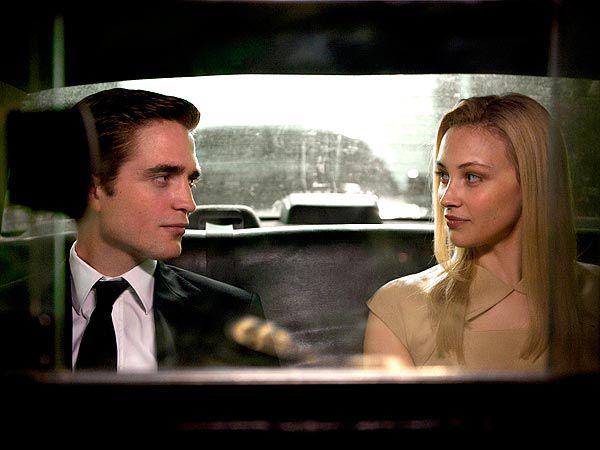
I still don’t know what to think of Robert Pattinson. He’s not very memorable in any of his performances. But he’s not bad either. The one thing I will give Robert Pattinson is that he seeks out incredibly talented people. Therefore, when he gets involved in a project, it’s usually, at least, interesting.
Let’s see if this continues that trend.
Jake and Emma have been married for 8 years and are incredibly unhappy. Unfortunately, instead of acknowledging that they’re unhappy, they either ignore it (Jake) or act out (Emma).
After Jake runs into his ex, Kate, he comes to realize that it’s finally time to cut his losses. That is until Emma suggests something radical to inject some spark back into their marriage – she’ll have sex with another man and he’ll watch.
Jake is reluctant at first but what does he have to lose at this point? So they hire some guy off the internet and he’s at their house the next night. Unbeknownst to Emma, the guy slips Jake a vile of mystery liquid. He then has sex with Emma.
But, during the sex, he starts chanting some weird language and the next thing you know, Jake is in Emma’s body and Emma is in Jake’s. WHAT THE HELL JUST HAPPENED!!?? Before they can ask Sex Guy, he disappears!
Uh oh. This is bad. The two are forced to continue their lives in each other’s bodies while they try and locate Sex Guy so he can give them the cure. But when Jake goes into Emma’s work the next day, her boss does some dirty sexual things to Emma (aka Jake), confirming that the two are having an affair.
Furious, Jake (as Emma) invites the boss up to their remote cabin under the premise of sex only to chop his penis off and kill him. Emma shows up not too long after, having caught on to Jake’s plan, and the two must work together to bury the body.
What we eventually learn is that the vile Sex Guy gave Jake is the cure and will change them back. But when Jake (as Emma) gets pregnant, they decide not to change back, since Emma (as Emma) could never get pregnant. Something about Jake being in her body has changed that.
Oddly enough, all this energy has reinvigorated their marriage. The two are…happy? That is until Emma admits she liked the thrill of Jake’s murder and wants to kill someone else. This happens right as Kate (Jake’s ex) becomes suspicious that the two are up to no good. So she tries to bust them. What happens next changes all three of their lives forever.
Well that was……….. not what I was expecting.
I think after you watch a movie like The Brutalist, it’s hard to come back down to earth and read something this detached from reality.
My eyes might as well have been dice when Emma and Jake switched bodies cause they were rolling all over the place.
However, I quickly began to see what Pattinson saw in this. When Jake goes to Emma’s work (as Emma) and her boss does something sexual that Jake isn’t remotely prepared for, I realized that this was a good setup to explore gender roles.
Not only is the moment a shock for Jake in so far as, within seconds, he experiences the world through a woman’s eyes. But it opened the door to explore this genre in a bold, new, uncharted way. We always see this genre as a broad comedy, but making it Hard-R allowed us to push boundaries and reveal uncomfortable body-switch antics that have never been seen before.
In the ultra-competitive world of storytelling, where every story has been told a thousand times over, that’s the name of the game – finding new avenues that allow you to explore things in ways they haven’t been explored before.
In other words, this ain’t Freaky Friday. This ain’t Tootsie.
The setup is also, clearly, why it sold for a million dollars. Robert Pattinson gets to play two parts for the price of one. He gets to play Jake and he gets to play Emma. Actors LOVE playing multiple roles in a movie. And oddballs like Pattinson love scripts like this especially because they get to play a woman. What better acting challenge is there than playing a member of the opposite sex?
The movie’s biggest challenge is going to be de-messifying the script. There’s a lot going on here. Our two leads are in each others’ bodies. There’s a serial killer subplot that comes into play. The “potion” is used as a way to switch other bodies throughout the story. So the two need to save enough liquid to switch themselves back. Then you have the pregnancy. Then you have Kate coming into the picture. It’s a lot.
But I give it to Evans because, unlike yesterday’s film, he landed the plane. There’s a wild scramble during the climax (spoilers) where characters are bouncing into other bodies and when the dust settles, we’re not sure who’s where. It’s really clever because, in those last scenes, two out of the three people die, and we don’t know which ones!
In the end, How to Save a Marriage is a great example of what happens when you take a big creative risk. That body-switching scene was a bridge too far for me. It was tonally inconsistent with the rest of the movie and felt beyond sloppy. But once we got past that, the darker body-switch dynamic – specifically placing our heroes into opposite-gendered bodies – allowed this script to feel much deeper than your average screenplay.
It’s still too messy. But I’m hearing they’re continuing to develop it so I hope they’re smoothing all these bumps out.
[ ] What the hell did I just read?
[ ] wasn’t for me
[xx] worth the read
[ ] impressive
[ ] genius
What I learned: Back in 2011, there was a Ryan Reynolds, Jason Bateman body-switch movie called “The Change-Up.” When Reynolds and Bateman were debating on whether to make the movie, they asked the same question I alluded to above. What’s different here than other body-switch movies? Reynolds argued that they were making the first R-rated body-switch movie. That was enough for Bateman and he signed on.
Years later, however, Bateman was asked about the failure of the film and Bateman noted that, yes, they were doing the first R-rated body-switch movie but they didn’t really do anything with it other than swear more. It wasn’t enough to truly explore the different path.
The reason How to Save a Marriage works is because they fully exploited the different path of their premise. They didn’t merely swear more. They explored uncomfortable territory that occurs when men and women switch bodies, stuff we’ve never seen before. That’s what every writer should be doing. When you come up with a premise, after you decide what your unique angle is, make sure to lean 100% into that unique angle. It’s the only way your script is going to be different. If you pull punches, like they did in The Change-Up, it’s going to be a forgettable screenplay.