
Search Results for: F word

Good news. The final newsletter of the year will be landing in your inbox in the next couple of days, so keep an eye out. There will be a Blood and Ink update, some Osculum talk, and a script review from a writer who created one of my favorite scripts of all time. It’s going to be juicier than a Jack In The Box breakfast burrito.
As for today, I want to swan dive into a pool of industry chatter because it feels like I’m the only person in town who isn’t bothered by Netflix kicking Warner Brothers into its ocean of content.
This has been on the horizon for a long time, people. I wrote an article ten years ago about the streaming wars that were coming. The key word was WARS. That meant casualties. It was never going to stop with streaming platforms. Studios were always going to get pulled onto the battlefield. This latest power grab was telegraphed the second Amazon bought MGM.
The question I asked myself when everyone else started losing their minds was simple: Does this really matter? So let’s break it down.
The biggest concern I keep hearing is that this is the death of theatrical. The theory is that Netflix will dump every new Warner Brothers movie directly onto their service. Goodbye theaters. Goodbye popcorn. Goodbye happiness.
Here is the truth. That is never going to happen with anything IP driven. There is too much money to be made. But even if it did happen one day, is it truly the apocalypse everyone is making it out to be? Is it so dreadful to imagine yourself watching Matrix 7 on your seventy inch television in the comfort of your living room?
I used to be Christopher Nolan levels of “all-in” on theatrical. I believed the cinema was a sacred temple. Then two things rewired my brain. The first was an interview James Cameron gave a couple of years after Titanic came out. The film was about to premiere on network television for the first time and I was shocked to hear that Cameron was deeply involved in the television edit. As far as I was concerned he had already climbed Everest. He had made the hardest film ever shot. Why did he care so much about a broadcast version of the movie?
Yes, television edits were more complicated back then. There were built-in commercial breaks so you had to protect moments that landed right before the cut. There was also pan and scan, which meant your widescreen frame was crushed into a square and certain parts of the image had to be sacrificed. I could understand Cameron not wanting to leave those choices up to a thirty dollar an hour editor.
But it was Cameron’s answer to a simple question that completely changed the way I thought about theatrical. Someone asked him why he cared so much about this television edit. His answer stunned me. He said more people were going to watch his movie on television, in one night, than had ever watched it in theaters.
Paradigm shifted. Every week during Titanic’s run I was reading headlines about how it was the biggest film of all time. I assumed that if billions of dollars were being made then surely an un-toppable populace of people had seen the movie. Apparently that total could be topped easily.
Once I learned that, any preciousness I had about movies needing to be in the theater faded away. If you couldn’t control the fact that most people were going to wait for your movie to hit television before they saw it, then why sweat it? Why sweat where the person enjoyed your film?
Several years later, I had a second epiphany that sealed the deal. I went to see one of the Transformers movies in the theater. There is no film franchise more engineered for the theatrical experience. It is spectacle. It is sound. It is the full weight of two hundred and fifty million dollars exploding in front of you.
And I was bored out of my mind.
That was it for me. A bad film is going to bore you in a theater and it is going to bore you on your couch. A great film is going to move you in a theater and it is going to move you in your house. So, again, who cares where you watch it?
Now, are there going to be movies that would be genuinely better to watch on the big screen? Sure. There will be a few every year. And guess what? THEY’RE STILL GOING TO BE ON THE BIG SCREEN. That’s not going to change. I PROMISE YOU Netflix will give Christopher Nolan’s movie a proper theatrical release. Granted, him threatening to kill Ted Sarandos’s entire family if they don’t will have an influence. But superhero movies, Star Wars movies, Harry Potter movies – they’re all going to get theatrical releases. Theatrical will never die. It will just exist for the movies that make a lot of money for the studio. And that’s pretty much how it already is.
The more interesting conversation regarding Netflix buying Warner Brothers is whether Netflix meddles with the creative structure at Warner Brothers. That’s the real danger.
Netflix is notoriously bad at generating IP. Their strategy has always been to empower the filmmaker regardless of talent then stay out of the way. It sounds romantic. But all the great movies you remember were forged through the gauntlet of development. People pushed back. People challenged choices. Ideas were sharpened under pressure until the edges were clean.
Netflix loves being hands off with projects like The Old Guard, which is precisely the sort of movie that needs every possible voice in the room to push back. They do the same thing with legendary directors except in those cases the directors swindle Netflix into financing the one project they’ve been carrying around for twenty years that no studio will make it because it is both boring and uncommercial. Here’s looking at you David Fincher’s Mank and Alfonso Cuaron’s Roma.
The only valuable IP Netflix has ever created is Stranger Things. And that’s not even a movie property.
Warner Brothers, on the other hand, has spent decades building a system that develops scripts into actual stories that resonate with audiences. They know what they are doing. Netflix needs that. Netflix has leaned so heavily on its algorithm that it has lost touch with anything that connects on a human level. Everyone who has ever studied screenwriting knows that the secret sauce to making movies work is the human condition. You need a character who feels like someone you know. Someone who connects with you beyond the runtime. The algorithm cannot measure that.
So Netflix, if you’re listening? Stay far away from the creative structure at WB.
Of course, here’s the funniest part of all this.
It will probably never happen.
We are looking at two or three years of court battles and anti trust challenges. But even if it does go through, I promise you it will not affect your moviegoing life anywhere near as much as you think it will.
Don’t worry folks. Be happy. :)
Today I will share the single most important screenwriting tip you will ever learn

A little update.
Technically, I’m supposed to be on vacation for two weeks but that vacation fell apart for a couple of frustrating reasons. The problem is, my mind hasn’t accepted this yet and, therefore, I’m in denial. My brain is in vacation mode.
However, I have been doing consultations. And an issue keeps popping up in these consultations that I need to share with you guys so you don’t make the same mistake.
But before we go there, we’ve got to talk about Troll 2 (on Netflix). Because Troll 2 makes this same mistake in its very first scene. Which means that the lack of understanding in this key area of screenwriting is ubiquitous. It’s even happening in Norway!
I loved the first Troll and I just wanted to have a good time with the sequel. I wasn’t expecting anything groundbreaking. Just entertain me.
And Troll 2 tries to do that. It lives inside that 1997-1999 Hollywood box office era where you had these big ideas with lavish production with things just getting destroyed! Does it give the film a dated feel? Sure. But I was open to time-traveling back to that era, as long as I enjoyed myself.
The story follows this scientist lady, Nora, who is sort of like Ripley in Aliens in that she’s had experience with trolls before. So the Norway government hires her because they’re having trouble understanding this (currently solidified) troll that they captured. They need her insight.

What they were not expecting was that Nora, in her first opportunity at being alone with the troll, would sing it a troll lullaby favorite, which then WAKES UP THE TROLL. The troll then struggles free and bursts out of the secret underground hideout, where it goes racing across the land and wreaking havoc.
Nora and a team consisting of soldiers and scientists hop in a helicopter and begin chasing this thing around. But I guess the troll’s presence signals some other hibernating troll that it’s time to wake up, because another troll, this one angrier than the first, emerges and makes it his mission to beat up Troll 1! So now the humans are chasing two trolls!
This culminates in the two trolls fighting each other in a Mano a Mano battle in the city canal. And only one troll is going to make it out alive. Once that happens, the humans are going to have to decide whether they need to eliminate that survivor or coexist with him. The end.
Okay, so what’s this magical piece of advice that very few screenwriters are aware of? Pay close attention because this might be the single most important screenwriting tip you ever learn.
Here it is…
When writers sit down to write a scene, 90% of them look at that scene THE WRONG WAY. What they do is they say to themselves some combination of the following…
“I need to set up this character here.”
“I need to set up this plot point.”
“I need to make sure that the reader understands this key piece of information.”
“I have to hint to the audience that this character could be the killer.”
“I need to establish the chemistry between these two characters.”
“I need to hint at this backstory.”
“I have to remind the reader of that story thread I haven’t mentioned in a while.”
The writer has this list of things he wants to do in the scene he needs to write… and then he writes it. And he makes sure that he gets all of those things in. Once he does this, he then spends every subsequent rewrite of that scene trying to make it a little more entertaining. He tries to make it the best it can possibly be.
And because he approaches things in this way, his scenes are never good.
You want to approach your scenes IN THE EXACT OPPOSITE MANNER.
The first thing you should do before thinking of ANYTHING ELSE about your scene is ask: “How can I write the most entertaining scene possible?” That’s it. Figure THAT OUT first AND THEN once you’ve come up with a scene design that leads to an entertaining scene THEN you can inject your laundry list of needs into the scene. NOT THE OTHER WAY AROUND.
This will ensure that you always have an entertaining scene. Period.
The opening scene of Troll 2 is the perfect example of a writer doing this the wrong way. The scene, for some stupid reason, is set 30 years before the main timeline and takes place in a small Norway home with a father reading his daughter a book about trolls.
And you can feel the writer approaching this scene with Method 1 (the incorrect way). “I need to set up that trolls have always been a part of this woman’s life.” “I need to set up that the mom has cancer.” “I need to set up that she has lived in this house her whole life.”
The words “I need to set up…” are the devil in screenwriting. They are legit evil.
UNLESS!
Unless they come after you orchestrating an entertaining scene idea! Then it’s okay. But here, it’s this boring scene we’ve seen a million times in a million movies that doesn’t have any dramatically compelling moments. It is literally allll setup, and therefore boring as shit.
So, how would you create an entertaining scene here, Carson? I don’t know! Get creative. What kind of scene would entertain *you*?
It doesn’t need to be World War 3 levels of entertainment. The level of entertainment you can offer is always relative to the situation. We’re in a small home in the middle of nowhere. What can we do with that?
Maybe someone knocks on the door, late, when nobody should be around for miles. That sounds like it could lead to an interesting scene. And in just two seconds I’ve already come up with a more entertaining idea for a scene than this bore-fest of a father reading his daughter a book before she goes to bed.
Again, if you go into every single scene starting with this question: “What situation can I create to come up with the most entertaining scene possible?” your scripts are going to be MILES AHEAD of 99% of screenwriters. Seriously! Because even professionals don’t know this advice. They set up all this stuff in a scene then retroactively come up with just enough entertainment surrounding it to get by.
Congratulations, you are now a very good screenwriter. Just by reading this article.
Certainly, armed with his knowledge, you could’ve written a better version of Troll 2.
How was the rest of the movie?
It was pretty bad.
Honestly? The script made no sense. Who was this other troll? Why was he around? It was clearly just to create another troll for the first one to fight with.

But you know what? I already knew it wasn’t going to work. How? Because of that first scene. If you prove to me in your first scene that you don’t know how to prioritize entertaining the viewer, then I know you won’t be able to properly entertain me later.
Which is too bad because Troll 1 rocked!
Maybe I’ll go watch that again.
In the immortal words of LL Cool J, “DON’T CALL IT A COMEBACK!”
Or maybe do!
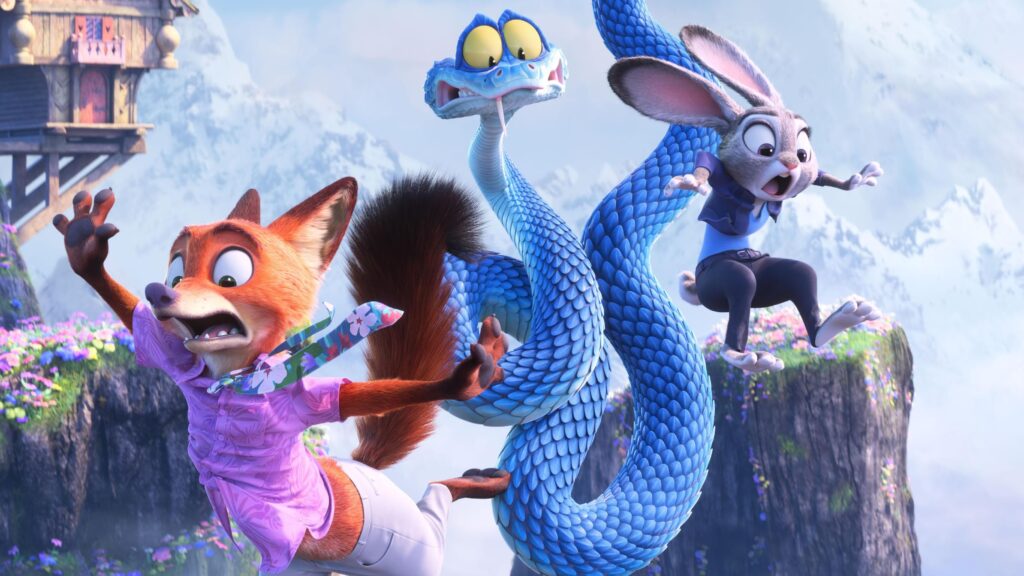
The box office is firing on all cylinders as it hits the home stretch of 2025. First Wicked For Good killed it. And now Zootopia makes a half-a-billion dollars worldwide in a single weekend!
Oh, and if you think that’s all, I hear there’s a new James Cameron movie coming out. Those calling for the end of Hollywood are, all of a sudden, scrambling to rewrite their headlines.
It seems like there was something for everyone this weekend.
The musical theater crowd went to see Wicked for the 46th time. Young families went to see Zootopia. Millennials and Gen X binged part 1 of 7 of the final season of Stranger Things.
I’d say it’s a pretty good time to be a content lover.
And me? Well, I didn’t watch any of that stuff. I plugged in Bugonia and got my brain warped. I know indie films aren’t interested in becoming box office titans. But do you think that they could’ve chosen ANY TITLE IN EXISTENCE that had less appeal than “Bugonia?” Just hearing that title makes me never wanna watch a movie again, much less this movie! Sometimes I think these indie outfits go too far in their indie-ness. Just give your movie a fucking normal title!!! You could’ve made another 5 million bucks had you just done that. More on Bugonia in a bit.
Let’s handle Wicked first. Do you know that the author of the Wicked books just announced a prequel to Wicked, titled, “Galinda: A Charmed Childhood?” And you KNOW they’re greenlighting that movie in the next 48 hours. Lol. I love how shameless Hollywood is.

But can you blame them??
Nobody knows where the next hit is coming from. Like Steven Spielberg famously said: The only sure thing in Hollywood is a sequel.
Or, apparently, a prequel to a prequel.
As for Zootopia, trying to figure out which of these Disney movies is going to be the next Finding Dory and which is going to be the next Buzz Lightyear is like trying to predict who’s going to win the Super Bowl. You have no idea. Or at least I don’t.
But I will say this about the Zootopia formula. It has two big things going for it that increase the likelihood of ADULTS wanting to take their kids to the movie. Cause that’s part of the deal when you write animation. If you write it like too much of a kiddie flick — think Transylvania — then you limit how many adults want to suffer through that. So if you can sneak in some successful adult movie tropes, you can change that.
Here we have a 2-hander. 2 people teaming up for the same goal. This is every cop movie ever. It can be used in other genres as well. We love a great pairing, which we get with Judy (the bunny) and Nick (the fox). It’s a little more exciting than going with a single hero. Also, the right pairing ensures you’ll have conflict in every single scene, since the characters in these 2-handers are always at odds with each other.
Secondly, we have AN IRONIC pairing. The irony is what gets the adults interested. Sure, you could have paired a bunny with a badger and kids still would’ve come. You could’ve paired a fox with a horse and kids still would’ve come. But neither of those pairings would’ve been intriguing to adults. It’s the irony of pairing a fox with an animal that foxes usually eat that intrigues adults.
Finally, you have a good old-fashioned investigation mystery storyline. Which is no different than Knives Out, or any number of crime mysteries. So that’s a bonus THIRD THING that brings in the adults.
If you do that right, you can pull in 100, 200, even 300 million dollars more than if your animated film was a straight kiddie movie.
So, if you factor all that in, it’s not a surprise at all that the film did gangbusters business. So, good for Zootopia. There are some Disney franchises I wish could be publicly executed but Zootopia is the epitome of what a Disney animated film should be. It’s pure entertainment. No overt messaging. All about the fun. I will see it the second it hits Disney Plus.
Okay, let’s get into what I really want to talk about, which is ALIENS.
Let’s start with the documentary, Age of Disclosure. If you’re on the fence about whether aliens have visited earth, this documentary pretty much erases all doubt. 37 high-ranking government officials come clean and say they know there’s some sort of intelligent species on earth. Why they’re here is still unclear. But they’re definitely here, and this documentary exposes that. If you’re new to the topic, this movie will literally blow your mind.
Speaking of movies about aliens, guess what Bugonia is about? ALIENS! It’s about these two small-town beekeepers, one of them mentally retarded, who kidnap the CEO of a bio-industrial corporation that plagues our food with countless chemicals and, our lead kidnapper believes, is responsible for giving the rest of his family cancer and killing them.

The lead character, Teddy, played by Jesse Plemons, has kidnapped Michelle, played by Emma Stone, because he believes she’s an alien and wants her to introduce him to her leader so he can demand that they stop poisoning their food.
The best way I can describe this movie, which I’m only halfway through (I’m going to finish it tonight), is that it’s uncomfortable. In particular, you feel very uncomfortable about Don, Teddy’s cousin, who’s retarded. And Teddy is manipulating him to believe all this and Don knows it’s not right and keeps asking if they can stop but Teddy manipulates him with love and false morality, essentially forcing this retarded cousin to help him do this thing that will ruin his life. It’s highly uncomfortable, which is why I needed to split it into a 2-night viewing experience.
On the screenwriting side, if you’re going to write a movie like this, you have to have a theme. You have to have a message. And this movie has one. It’s demonstrating how the abundance of media can prey on our propensity to latch onto conspiracy theories.
It used to be, back in the day, if you had an offbeat conspiracy theory, you would read about it in some alternative magazine, read a book about it, talk to a couple of friends about it who think you’re a little nuts, and then you were done. There was nowhere else to look to indulge that addiction.
But nowadays? The rabbit hole of even the rarest conspiracy theory is endless. There’s always another Reddit thread about it, always another Youtube video, always another podcast. We see that here with Teddy, who indulges in this very specific alien conspiracy theory about Andromedans coming to earth and infecting the food supply to control the people.
There’s this one scene where he’s riding his bike to work and listening to this podcast about Andromeda, and you can just tell that this is his whole life. He doesn’t spend a single moment not studying this. And it’s made him crazy.
So, the point is, if you’re going to go away from writing something commercial, your movie has to say something. Because, otherwise, why wouldn’t you write a movie that had a much better chance of making money?
What I will say about this script is that they were smart in how they set the plot up. With these weird indie movies, it’s tempting to leave all structure and form behind and just write whatever weird shit you come up with. But, if you do that, you write a movie like Under the Skin. Which is an experimental film.
Here, we have a kidnapping at the center of the story. Which makes the movie part crime genre. Which is a familiar genre. It’s a familiar setup. That increases the likelihood of the movie connecting with a broader audience. In this case, that didn’t happen. I think the marketing made it look too weird. But if they had cut a trailer focusing on the kidnapping crime aspect, and built the marketing around that alone, it would’ve done much better than it’s doing.
Okay, on to Pluribus!
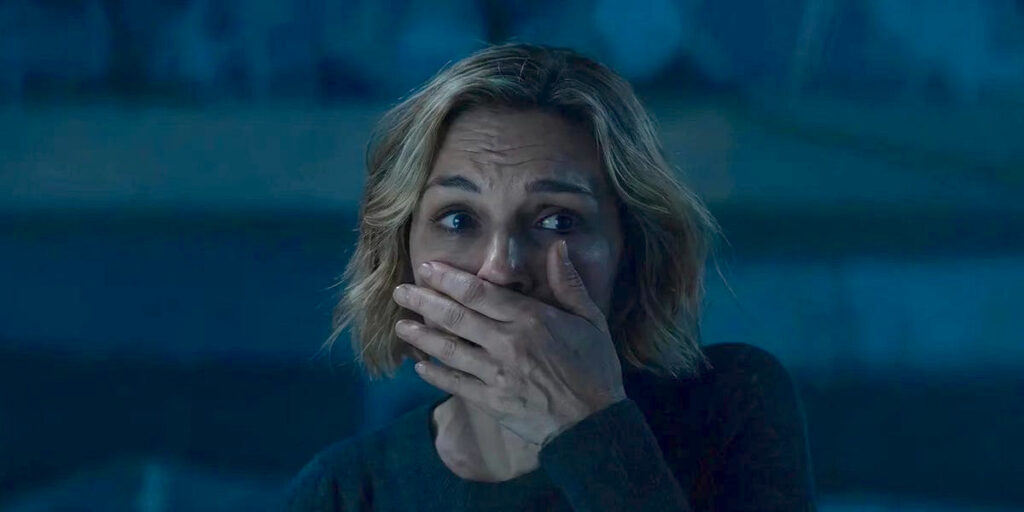
I’m still on the Pluri-bus! HONK HONK!
I’m so freaking fascinated by this show. But not for the same reasons as everyone else. I’m definitely still into the mystery of what’s going on.
But I’m way more into the mystery of how the writers are going to manage this highly nontraditional story. Gilligan has created one of the most inert story engines ever.
The show is basically about a woman hanging out at her house and being frustrated.
You know how you can tell a script has a weak story engine? They use a lot of “bump in the night” plot beats. “Bump in the night” plot beats are when the story is moving at such a slow pace that the only way to create any excitement is to have something go bump in the night. This is metaphorical, of course, and just means anything that pops up out of nowhere to jolt the story. But I’m shocked at how many literal times in this show Gilligan has used “bump in the night” plot beats.
One happens in this episode! Carol is going to bed and hears a bump outside. She gets up and runs outside to see wolves eating her trash. In a previous episode, the lights in the city go off (bump in the night). In another episode, someone unexpectedly arrives (bump in the night). I believe there are two more literal bumps in the night in episode 2.
There’s so little for your hero to do that the only thing to get them to do something, is to bring in a bump from outside.
So, if you’re bringing in a lot of bumps in the night to your script, that’s typically a sign that your plot is weak. You need a more active story engine.
Having said that, I have a theory that Gilligan, who’s a very good writer, knows this, and enjoys the challenge. He’s already conquered this realm of TV storytelling so he’s decided to see if he can win it on hard mode. He created this deliberately slow plot and now he’s challenging himself to make super slow plots entertaining.
For the most part, he’s succeeded. Like I said, I’m still into the mystery. But the show does feel like it’s teetering on the edge of a cliff and, at any second, could fall into the valley of boredom. I applaud him for taking that risk though and hope he keeps the show teetering rather than falling. Cause, ironically, the teetering is where the fun is at, as it’s the definition of unsafe.
Oh, and one final thing: TROLL 2 COMES OUT ON NETFLIX MONDAY! If you haven’t seen the first one, treat yourself to it now! I guarantee you’ll love it.
Hep beats out the competition with his digital possession tale. The scene takes place in the aftermath of neuroscientist Richard’s successful simulated demonic possession.
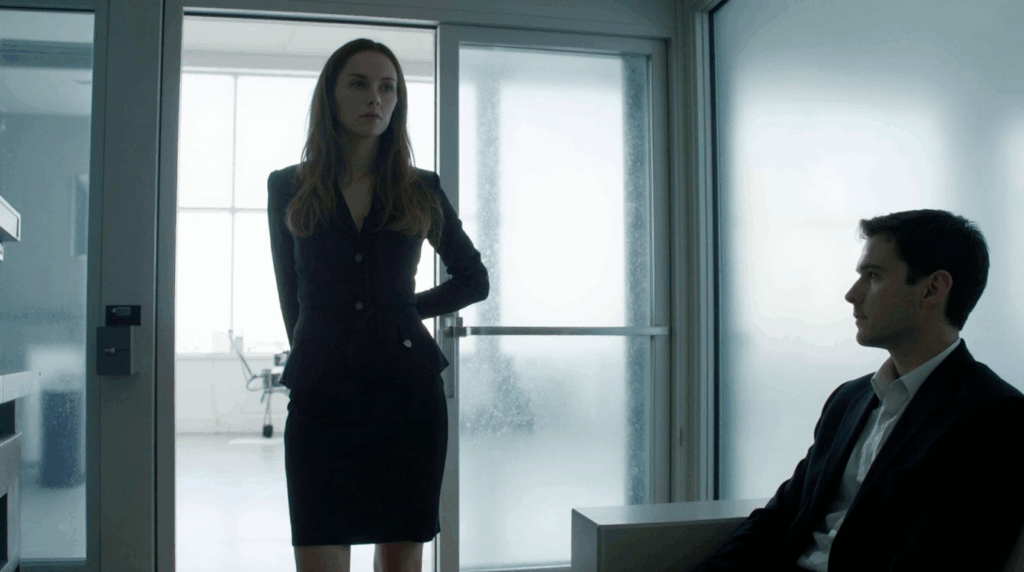
Today’s breakdown includes a long scene. The art of writing long scenes has been lost. In our determination to edit and chop and condense every single aspect of storytelling, we’ve created a series of mini-scenes instead of good old fashioned long scenes.
The big benefit of writing long scenes is that they can be stories unto themselves. And you can tell those stories not unlike the story of your script. Just like a script has a beginning, a middle, and an end, a long scene has the requisite real estate to do that as well.
But here’s the real proof that we should be writing longer scenes: All my favorite scenes in movies are long. As I’m guessing yours are too.
So then why don’t we write long scenes these days? Simple. Because nobody knows how to do it anymore. It’s easy to write a 2 page scene because you don’t have to come up with much of a scene idea to write two pages of text. But a longer scene requires you to plan something out. And that’s harder.
With that in mind, let’s check out Hep’s winning scene for his Blood & Ink entry, Transcranial.
Download full scene here: Transcranial


In horror, the formula you want to go back to again and again when it comes to scene-writing is this: Imply that there is potential danger close by, and with every 30 seconds that passes, that danger should feel a little closer than it was before.
That’s what these first two pages are setting up. Daniel is the potential danger. We don’t know how bad it will be. But we know something isn’t right here, and that’s what motivates us to keep reading.
That’s the important part of the equation. If you don’t imply that the danger is close, then we don’t have as much of an incentive to keep reading. That’s why this setup is so powerful.
And when you do it right, it allows you to play around as a writer. It allows you to sit in the anticipation of what’s coming and make the reader earn it. “Moving on to the hard questions already. What’s 2+2? Now that’s a question for the ages. Do you want to know the right answer? The real answer?”
This is a response that can only work within this type of setup. If the same line is used between two friends catching up at a coffee shop, it’s white noise dialogue. It’s wasted script space. It’s unneeded. But here, because we sense that Daniel is not okay, a line like this almost comes off as a threat, which deepens our curiosity and makes us want to find out what happens next even more.


As Hep moves into this second set of pages, he has a choice to make. He can keep creating this sense of mystery, and slowly pull you deeper and deeper into the web of the scene. Or he can ramp things up and be more up front with his horror.
He chooses the latter. Daniel starts quoting lines from the Bible. There’s some fervor to the way he quotes the book, implying he’s passionate about the passage. There is no pretense anymore. At this point, we know he’s possessed. But Sarah doesn’t know that yet.
I personally feel that Hep jumped the gun here – he went too fast into “Daniel is possessed.” But, again, these are the creative choices that every writer must make. You’re never going to please everyone but you have to be okay with that. If you’re trying to please everyone, you’ll please no one. In other words, Hep doesn’t owe me the version of the scene I would’ve preferred.
Also, there’s a small mistake I want to note. This line: “Sarah cannot fully hide being slightly taken aback by Daniel’s response.” Avoid overuse of adverbs in general. But definitely avoid two of them in the same sentence. “Fully” and “Slightly.” I am guilty of this myself so I’m quick to recognize it. In many cases, adverbs cancel each other out. “Fully” means the opposite of “slightly.”


One of the things I’m very attuned to when I read a script is truth. Is the writer writing the truth of the situation (how it would actually go down if this were real life) or are they manipulating the truth because they prefer it for their story?
Here, I don’t feel that Hep is being truthful. This woman is in a room, alone, with a man, who’s acting weird, and who starts making sexual noises. You’re getting into some risky territory there. Someone (Sarah) could get hurt. So, the truth of this scenario is more likely to be Richard sending people in to protect Sarah. The safety of one’s employees is always the most important thing.
So, then, if you wanted to continue this scene as is, how would you address that issue? Well, it would be easy. You’d make it so that Richard wants to shut down the interview but Sarah is the one insisting that they keep going. She’s the one who wants to get to the bottom of what Daniel is going through.
With that said, I haven’t read the whole script. We do get a line from Richard here, where he lies to Sarah, which implies that he’s snakey. If that’s set up appropriately before this scene – that he will sacrifice anything for this experiment – then I might change my tune. But it did feel false in the moment, as I was reading it.
On the plus side, Hep is doing what I said these scenes should do. Which is, with each passing 30 seconds, the situation has become more dangerous than it was before. Daniel may be able to read minds now.
That’s how good scenes operate. They keep BUILDING. Where long scenes die is when they either stay stagnant or they recede. But here, so far, things are getting more dangerous by the minute. The scene is BUILDING. I’m going to say this again because it’s important. It is very hard for readers to stop reading if a scene is building towards something.


Another strong choice that Hep made here was to add a third entity to the scene – Richard and James in the control room. Most of these types of scenes play out with one person talking to another. And there’s nothing wrong with that. Clarice and Hannibal Lecter turned that type of scene into an art.
But having a third entity there creates a more complex dynamic that makes the scene less predictable. That’s important because a big reason why scenes become boring to readers is that the reader’s seen them before. So anything you can use to throw off the traditional rhythm can take an average scene and elevate it to a higher level.
The best thing to come out of these last two pages is Sarah going off-book. She ditches the plan and starts asking her own questions. I LOVE when characters go away from the plan because, again, it creates uncertainty. We live in a collective media that is way too predictable. It’s the same setups. The same motivations. The same words. It’s your job, as a writer, to find those less certain avenues in a scene and exploit them.
My only problem with this move by Sarah is that she didn’t get enough time to explore her off-book curiosity. I wish she had time to cook before James and Richard came in.


When it comes to the moments where the possessed try and psychologically manipulate those attempting to stop it, that dialogue tells you a lot about if the writer is up to the challenge of writing a possession script.
What I usually read is a lot of “generic evilness” from the possessed. “Do you remember, Jane, when you didn’t stop Darla from cutting her wrists?” This dialogue needs to be original, it’s need to be thoughtful, it needs to be specific, and it needs to cut in a way that takes the reader’s breath away.
Daniel’s final takedowns were a mixed bag. Sarah, you think about killing yourself. That’s weak-sauce. It’s lazy. It’s not specific enough. It feels like a filler line for someone who is supposed to be true evil embodied.
The takedown of Richard was much better. It was more specific. And it truly was cutting. To tell someone that they were happy that their infant child died and be right about it is going to take the breath away from some audience members. So that was good.
But you do have to be aware of the fact that the demon-possession sandbox requires you to recruit the most evil thoughts within you. Cause PG-13 possession dialogue doesn’t cut it.
Overall, I thought the scene was pretty good. I do have an idea I wanted to throw at Hep for the rewrite. The only thing that nagged me was the lack of a true goal in this scene. The approach to this interview was loosey-goosey. It was very, “Err, let’s see what happens when we talk to him.”
I would prefer a little bit more form. So, what if they’re trying to find out something specific from him? That’s the goal of the interview. But they can’t just ask the question right away. They have to work their way up to it. Make sure he’s comfortable first. So that’s the plan.
Also, they should know that, sometimes, after these intense experiences, there is a possibility of random anger or violence in the subject. So they should either arm Sarah with a syringe with a sedative in it. And if Daniel gets too riled up, she’s supposed to inject him with it to knock him out. Or, they can have an IV prepped and connected right to his arm and Richard has the power to press a button and the sedative will be injected directly into his blood and he’ll pass out.
This gives this scene more form — since there’s a plan in place. And it gives you more to play with. Clearly, what we’re going to do, is have them inject Daniel towards the end of the scene and become shocked when it has no effect on him at all. And Richard can keep pumping more and more of the sedative in him. But it’s not affecting him.
And maybe that even ends up killing him later. Or putting him in a coma. And now Richard is in some deep shit from the medical board.
It was fun breaking down something from Hep finally. Good job, buddy. What did the rest of you think? Gimme the good and bad of this scene.
The Scriptshadow community demanded a review of this script. So it’s time to give them what they want!
Genre: Thriller
Premise: After stealing a traumatized war-dog from the army, a washed-up veteran battles a relentless posse through an inhospitable mountain range to give her a new life in the wilds.
About: This script won the Grand Prize of the Page Awards! Bjack, the writer, has been a loyal reader and commenter at Scriptshadow forever. He’s had one review before which you can check out here.
Writer: Jack Azadi
Details: 103 pages

I believe this has been submitted to several Scriptshadow showdowns, as well as my contests, but has never been chosen. Why? I’ve been pretty vocal that the concept isn’t my cup of tea.
But hey, one of the coolest things a screenwriter can accomplish is to put a script in front of a doubter and win them over. It doesn’t happen often. But when it does, it’s sweeter than whipped cream on pumpkin pie.
Heck, it looks like it’s going to happen at the box office soon. I thought the Project Hail Mary book completely imploded when its secret reveal arrived. But after seeing the latest trailer, I’m now thinking it could be great.
I hope Mal is great too.
Let’s find out if it is.
Sergeant Dean Black-Feather was a soldier in Afghanistan. He was part of a K-9 unit with a dog named Mal. When we meet them, he sends Mal into a cave to get info on Taliban soldiers inside. His superior makes an order that puts the dog in danger. The dog gets attacked by the Taliban but survives.
Nine months later, Dean is back in the US, drinking all the time and getting in enough trouble that he occasionally ends up in jail. After he’s out, he gets word that Mal is back in the US and at a nearby base. He’s been having some intense behavioral problems.
When Dean gets there and reconnects with Mal, they give him the bad news. They have to put Mal down cause he bit off a serviceman’s fingers. Dean is not going to let that happen so he sneaks the dog off the base. He’s immediately chased by Lt. Ashley Miles, a reckless soldier who has a lot of pent up anger for not yet getting to see real action. Ashley is given the order to kill the dog on sight.
Ashley visits Sheriff Bill Gatewood to get some intel on Dean. Gatewood decides that he and Deputy Cole are going to join Ashley to corner Dean at his house. The problem is, Dean’s already getting the hell out of here. He takes Mal and heads into the woods. They follow him.
What follows is a cat and mouse game as Dean heads deeper and deeper into the forest, all the way up to the nearby mountains. He and Mal encounter some hunters and Mal viciously attacks them. Then he viciously attacks Dean! That’s when Dean realizes Mal really is sick. But he still picks Mal over these army assholes following him.
And it *is* assholes now, as the army volunteers a freaking attack helicopter to help out. Somehow, Dean and Mal defeat that thing, and head even deeper into the woods. At this point, Ashley realizes that if they don’t catch up and kill Mal soon, the two of them may be gone forever. So Ashley ups her game and prepares for a final showdown with Dean and the dog.
Okay, let’s get into what I liked.
I liked how easy the script was to read. I liked how quickly my eyes moved down the page. Not just that but, even as my eyes raced down the page, I could always retain the information I was reading. That’s a skill. Not every writer who writes in a minimalist style can do that.

I liked the type of dog at the center of the story. I’ve read a lot of dog scripts but not any about a war dog. That immediately makes the story stand out in the K-9 space.
I also liked the clever manner in which Jack explored PTSD. We’ve seen an endless number of movies about returning soldiers with PTSD. And so, at this point, it’s just noise. By shifting that PTSD over to a dog, it gives the disease new life and a fresh way to discuss it.
And finally, I can see this doing REALLY WELL with conservative audiences. If I were Jack, I would do everything in my power to get this in front of Angel Studios. It seems like the kind of thing they would love.
Okay, now… did I personally like this script?
I would probably answer that with a soft “no.” And let me explain why. I was reading through the script and, like I said, it was moving fast. There was always something happening. But something kept nagging me. There was an aspect to the story that wasn’t working and I couldn’t figure out what it was.
Then it hit me.
The concept was shaky.
I don’t care how you spin it. The army sending someone out to kill a dog at all costs just because it was prone to violent outbursts. I mean… I just didn’t believe that. At one point, there are 8 different people trying to kill this dog. Some of them are even trying to kill Dean!
And I’m sitting there thinking, “It’s a dog.” “Why do you care so much??”
It’s not like the dog had a jump drive taped to its collar with the Epstein files on it. So, no matter what happened, I kept going back to that. I mean there’s a Rambo level helicopter attack in this. And I kept thinking, “It’s a dog!” I couldn’t wrap my head around any logical reason why so many resources were being used to take down a dog whose crime was that he gets angry sometimes. Under that logic, the army should be hunting down 1 million dogs across America.
The other big issue was that Jack used a retroactive motivation. And retroactive motivations rarely work. I can think of a few. Shawshank Redemption comes to mind. But, in Mal, we spend the whole movie racing through these mountainous forests and I never knew why!
Already, I’m not buying the army’s motivation. Now you’re adding a main character without a motivation. Where are we going? Why are we going there? We don’t know. Until after the fact. We finally learn that we’ve arrived in reservation land where the army can’t chase the dog anymore.
Retroactive motivation doesn’t mean we all of a sudden feel motivation for the previous 90 minutes. We still participated in that 90 minutes, clueless as to why our hero was going where he was going. And that’s a big deal. Cause it frustrated me when I was reading it. I kept thinking, “Is he just going into the forest for the next 10 years to live with his dog like a hermit?”
By the way, neither of these things made this a bad script. The things about the script that were working helped offset a portion of these problems. But, in the end, the problems were bigger than what worked (in my personal reading experience).
As for the characters, I didn’t feel like I knew Dean well. I knew he loved Mal. I knew he was a drunk. But that’s about it. So he felt thin. Meanwhile, Ashley was way overcooked. It never made sense to me why she was so determined to kill this dog other than that’s what the plot needed.
If I were Jack, I would change Ashley into a man, into someone who was way more physically threatening, and someone who was a full on psychopath. Not in the Hollywood sense. But in the way he feels no emotion whatsoever. He’s REALLY heartless and scary. I can tell you for certain that I would’ve been a lot more into this script with him as a villain. Ashley felt like a gnat on coke. She was going to eventually find you. But you could handle her with a fly-swatter.
Finally, the ending. The ending is sad. And if I’m going to invest 90 minutes into this, I don’t want to be sad if I don’t have to be. Dean and Mal need to end up together or this movie doesn’t work. Period end of story.
Despite this critique, I can totally see why this did well in the contest. The writing is of a higher quality than 95% of contest entries out there. And I’m guessing that the PTSD commentary through the dog is what put it over the top. It gave it that extra pop that likely inspired the judges to anoint it over the others.
So I congratulate Jack. Regardless of my meanie analysis, I’m happy that he’s getting attention for Mal and hope he continues to do so. :)
[ ] What the hell did I just read?
[x] wasn’t for me
[ ] worth the read
[ ] impressive
[ ] genius
What I learned: Definitely avoid retroactive motivation if possible. The whole point of motivation is to tell the audience why what we’re doing is so important. If you don’t tell them that, they’re always a little confused about why things are happening.
What I learned 2: If I don’t fear the bad guy, I don’t feel a whole lot of tension during the story. And I never feared Ashley for a second. That’s why I think she should be changed into someone a lot more formidable.