
Search Results for: F word
Genre: Slasher Dark/Comedy
Premise: A group of job applicants arrive at a sleek highrise for a coveted position, but find themselves trapped and fighting for their lives against a psychopathic assessor known as Cutthroat, who wields a briefcase full of nasty weapons and is out to kill all of them.
About: Last year I did a pitch contest called Blood & Ink where anyone could pitch me movie ideas. I accepted the best 100 of those ideas. The writers then wrote those scripts. Ever since, I’ve been reviewing them on the site, looking for the best one. Already, one script, Wildman, written by Jacob Rainer, got him a manager and possibly more.
Writer: Dean Books (DeanB)
Details: 88 pages
Can today’s Blood & Ink script break the current streak and earn a “worth the read?” Let’s find out!
23 year old Nelson Krell has just found out that his girlfriend is banging his way-too-old overweight uncle. Which makes getting the job today even more important. He needs to get out of this dependent life and become an actual adult!
Nelson shows up at a headhunter’s office in a tall skyscraper downtown. While waiting, he meets douchebag Jeremy, who lets everyone immediately know that he went to an Ivy League school. They’re soon joined by a small nervous girl with colored hair who Jeremy dubs, “Pronouns.”
Girlboss Margi, who is the most competitive person on the planet, arrives next. And then there’s Jayden, a black Greek God. “Oh, we’re screwed now,” Jeremey says, letting Nelson know that DEI just lost them this job. Not long after, looksmaxxing Asian, Josh, shows up.
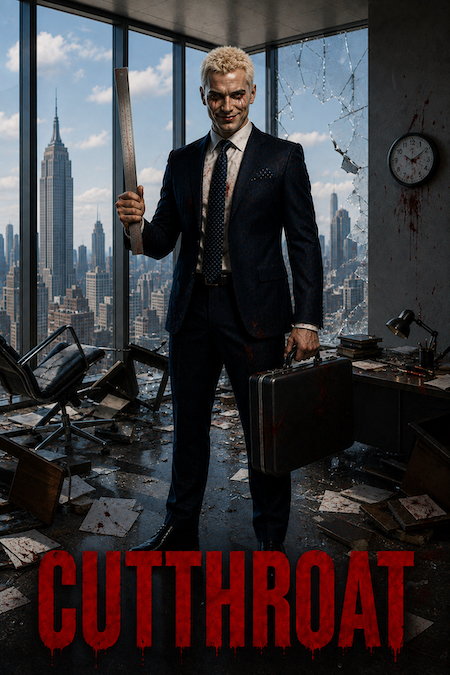
They are all brought into a conference room and that’s where they meet Cutthroat, this giant pale faced dude with blood tears streaking gown his face adding an extra dose of “uncanny” to his uncanny valley-like face. The dude looks terrifying before he’s even said a word.
“Here’s how it works,” he says. “We’re going to spend the day together in a lovely group interview. I’ll be gauging your skills, weighing your competence. Determining whether you are fit to join the vast capitalist machine. I am the way, the truth, and the life. No man cometh unto employment except through me. Nod your heads if you understand.”
When Jeremey calls this weird recruiting setup bullshit, Cutthroat calmly takes a hatchet out of his desk and hurls it at Jeremy’s face. Jeremy dead. And that’s when everyone else RUNS. But what they don’t realize is that Cutthroat has modified all his floors in this building to be a killing ground. No matter where they turn, gruesome deaths await.
The worst fate goes to Josh, who is so hungry for the one candy bar left in a vending machine that he sticks his hands up there to get it and the vending machine turns into this whirling wood chipper device, pulling his entire body inside where he’s soon turned into human goo.
Eventually, the only candidates left are Nelson and Pronouns, who figure out that this guy has gone insane and that, maybe, if they can pretend like they’re actual employees who are here to do work, he just might buy it. And Cutthroat does! At least for a while. You see, what neither Cutthroat or the applicants know is that this is a CIA program gone bad. And the CIA is sending in their clean-up guy to take care of Cutthroat AND the applicants…
Even though this script isn’t quite my thing, I have a feeling it’s going to end up being one of the best Blood & Ink scripts when this is all over.
A good script usually starts with a writer who has a strong vision of what they want to do, and then they go out and execute that vision. Dean knew EXACTLY what script he wanted to write. And then he wrote it.
To clarify what I mean, when I read Volunteers, I got the sense that the writer was still trying to figure out the story and the tone while they were writing it. And you can feel that as a reader. There’s a tentativeness to the storytelling. The script keeps trying things instead of confidently telling you, “This is the movie.” That lack of conviction can kill a screenplay.
Meeting a screenplay for the first time isn’t that different from meeting a person for the first time. If somebody can’t look you in the eye, doesn’t speak with conviction, is dressed sloppily, you immediately sense that lack of confidence.
Screenplays give off the same signals. The choices feel tentative. The tone shifts around. The writer seems to be asking you if something works instead of telling you that it does.
That’s what I mean when I say a script hasn’t figured out who it is yet. Dean’s script knows exactly who it is. You may not like that person. You may not want to spend two hours with that person. But there’s never a second where you wonder who walked in the room.
Probably my favorite moment in the script was when Nelson and Pronouns realized they needed to outsmart this guy and so they started pretending they were office workers putting deals together to the classic music of “9 to 5.” I could totally envision that montage up on the big screen.
To me, that’s when the script was at its best.
I also liked that Dean kept reminding us who his characters were again and again so that we knew them. I read so many screenplays where writers are very mushy about their characters. They either have zero defining traits or 10 defining traits. Strong characters have that one overarching trait that defines them that the writer keeps hitting on again and again.
Like Margie here. Margie could’ve easily been a forgettable character. She actually gets cut off from the main group several times, leaving her absent for a large portion of the story. But Margie is this crazy ultra-competitive woman who will stop at nothing until she wins and so even though she’s not in the script that much, we know exactly who she is. Cause she never backs down and is always trying to win. A highlight of the script is her chainsaw battle with Cutthroat.
Now, a problem that these specific “high concept” scripts run into is that they run out of steam. And the best way to combat that is a midpoint reversal or escalation or twist. Something that gives the script a second life.
Dean gives us that when we cut to the CIA and hear them acknowledging that this Cutthroat Project has gone haywire. This guy was built to be the ultimate decider of who could handle the tough jobs. But he went crazy and turned his business into a killing ground. So, now, the CIA has to take him out by sending in their ultimate fixer, The Benediction.
The reason this adds an extra life to the story is because we’ve just been told that the terrifying guy who’s been trying to turn us into people soup for the last 3 hours isn’t even the scariest guy we’re going to deal with today! There’s a new guy coming in who’s even worse! I love that.
However, this is the one major creative choice in Cutthroat I didn’t agree with. Making “The Benediction” a Cutthroat clone was weak sauce (or Cutthroat was his clone). You promised us something different and scarier yet you gave us the exact same thing.
The Benediction needs to be a completely new scary “fixer” character in a different way. And I think you can have all sorts of fun building this character. Who can possibly be scarier than Cutthroat? It’s been done before. Who could possibly be scarier than Darth Vader? They made The Emperor. So, let’s reimagine this character.
This script still has some growing to do but I think it’s worth the read.
Script link: Cutthroat
[ ] What the hell did I just read?
[ ] wasn’t for me
[x] worth the read
[ ] impressive
[ ] genius
What I learned: I actually think that most writers under-describe their key characters. Everybody is going by this advice that you have to keep your script moving and therefore you have to describe your characters quickly. That’s true for secondary characters but I think that a deep description, even though it slows the script down in the moment, pays major dividends on the back end for main characters. And this is the perfect example. Cutthroat could’ve easily been described as, “A strange looking man with a plastic complexion.” But check out the description written by Dean. It’s very specific and it allowed me to clearly see who the villain in this movie was: “CUTTHROAT. A handsome monolith with wide shoulders in a dark blue suit with a polka dot handkerchief in the pocket. A plastic complexion. Always smiling. “Uncanny valley” effect. Racially ambiguous. Age-30-55? Perfectly combed blonde (dyed) hair, vivid blue (contact lensed) eyes. A bizarre twitchy Frankenstein of the quintessential corporate overlord.”
Genre: Horror/Supernatural
Premise: When a disillusioned magician takes a gig in a remote carnival town, her tricks injure volunteers for real, but the locals act like nothing’s wrong.
About: Last year I did a pitch contest called Blood & Ink where anyone could pitch me movie ideas. I accepted the best 100 of those ideas. The writers then wrote those scripts. Ever since, I’ve been reviewing them on the site, looking for the best one. Already, one script, Wildman, written by Jacob Rainer, got him a manager and possibly more. Stay tuned. One of the criteria for getting into the Blood & Ink contest was that, if I did not personally approve of the idea, it could still get voted in by the public. If you got 15 votes, you got in. This is one of the upvoted scripts.
Writer: Russell Nichols
Details: 99 pages
We’ve got another user-voted in pitch from the Blood & Ink Contest. I’m putting my trust into you guys that I overlooked this one. Let’s find out!
36 year old Maya Pryce is a magician but she’s not exactly selling out Carnegie Hall. Instead, her current gig is performing once a week for an old folks home where her 65 year old father, Will, stays. Her performances are actually payment for Will staying there.
After her latest performance, the manager comes to her and says that they can’t keep Will there anymore. He’s a menace to everyone. So, their deal is over. Maya tries everything in her power to make them reconsider but they won’t. Instead, they hand her an envelope with another job opening for a magician.
Maya and her dad then get in the car and, with a little coaxing from the dad, they decide to go check out this new gig, which takes place in a small town called La Cuna. It takes them forever to find it but they finally do, and when they get there, the mayor, Mr. Quillford, tells Maya that her contract consists of 3 shows and, afterward, they’ll consider a permanent residence.
Apparently magic is important to this town because they have these rules around how magic shows must be conducted. The main ones are that you have to use a prop from their prop house every night, and you have to use a volunteer from La Cuna.
So, Maya conducts her first show the next day, using a Houdini strait jacket as her prop. She brings a little girl up from the audience and places her in the jacket. But to Maya’s horror, when she takes the jacket off, the girl’s arms are disfigured! The next day, Maya is shocked to see that the girl’s arms have been amputated! And despite all this, the girl and her parents are fine with it!
Maya and her dad then spend some time in town, which has this carnival going on. We’re told early on that everybody is dead and that they died a long time ago but they all believe in pushing forward, or something, so that’s why they’re still kind of alive.
Maya then does another show with one of those sliding cabinets that you put a body inside, and disfigures another woman! And this woman ALSO acts like everything is okay afterwards. What the heck is going on??? It seems to tie back to Maya’s mother, who may have once been a magician herself here at La Cuna. And maybe her dad didn’t guide her here by chance. Maybe he was on a mission all along.
You know how when you’re dating, there are red flags that indicate that person isn’t good for you?
The same thing happens when you read a script. If red flags start popping up early, you know that script is in trouble. And they popped up pretty quickly here.
After Maya performs for the old folks, the manager there, Teresa, pulls her aside to tell her that their deal (Maya performs magic there every week and they, in turn, take care of her father) is over. Maya is upset so she reminds Teresa that they had a deal.
That scene ends and we cut to Maya following Teresa down a hallway doing what? Reminding her that they have a deal. In other words, a redundant scene. We already had this discussion. You don’t want to create two scenes in a row discussing the same thing, ESPECIALLY at the beginning of the script, when things need to be moving the fastest.
On top of this, the deal itself doesn’t make sense. What’s the going rate for a once-a-week magician at an old folks home? 40 bucks? 60 bucks? And the trade-off is that the home has to house, feed, and take care of her father? What’s the going rate for that? 1000 bucks a week? 2000? The math isn’t mathing here.
Two red flags stacked on top of each other have me worried about the script by page 10.
But I read on! Cause I want to review this for you guys and see if there’s anything more to learn from it.
The short version is that this isn’t a movie concept. But I understand why Russell and 15 of you may have thought it was. You have magic. That’s cinematic. It’s also unique and offers some fun opportunities for entertainment. You have this weird town. Weird towns are fun! Right? There’s some mystery here about who these people are and what’s going on with them.
These elements INDICATE that there’s a movie in here.
But take note of that word: INDICATE. A movie idea is not a collage of interesting elements that hopefully combine to form a movie. At its most basic, a movie idea is: SOMETHING IMPORTANT IS HAPPENING, AND OUR HERO MUST DO SOMETHING ABOUT IT.
A family’s block gets transported back to prehistoric times where dinosaurs roam the earth. That’s a movie idea.
Volunteers is almost the opposite of that. This woman and her father stumble into this town and spend most of the story walking around trying to understand why the town is so weird. There is no strong propulsive protagonist goal.
What would that look like? Well, let’s say a girl has gone missing. That’s the premise behind a similar “go to a weird town” movie, The Wicker Man. And that’s just one of a million directions you could go. But the point is now there’s something actively driving the story forward. It’s the “G” in GSU. Without the G, you’re wondering why you should turn the page.
I suppose the answer is: to find out the mystery of this town. But the characters tell us what’s up with the town right away. It’s a ghost town. Everybody here is dead. There was some fire a long time ago. We know all that early on. So… what’s left to find out? Who caused the fire? Okay. But have I been given a set of circumstances that makes the answer to that question feel important? No.
You need a strong goal. You need stakes. You need a propulsive engine. Not because every movie has to be some giant save-the-world blockbuster. But something has to matter A LOT to somebody. Because if the central situation doesn’t matter enough, you’re going to be fighting an uphill battle in EVERY SINGLE SCENE.
I’ll give you an example. Maya is tasked with giving her first magic show the same day she shows up at La Cuna. So we get this seven-page magic show and the whole time I’m struggling to care. What are the stakes of this show? What happens if Maya bombs? She and her father go back on the road and they’re literally in the exact same position they were in 24 hours earlier.
That’s a problem.
This is where concept and execution are more connected than writers realize. It’s easy to look at that scene in isolation and think, “Okay, how do I make the magic show more exciting?” But that’s a patch. The deeper problem is that the movie hasn’t created a reason for this performance to matter in the first place.
If Maya desperately needed this job because losing it meant losing her father forever, suddenly every trick matters. Every mistake matters.
This is why, when I’m picking ideas in the pitch contest, I’m not just picking anything that sounds sort of interesting. I’m looking for ideas that first, have a strong concept, but then also have a strong goal, real stakes, and an engine that I believe can generate 100 pages. Because those things aren’t screenwriting decorations you sprinkle onto the script later. They’re the fuel that allows you to create compelling scenes in the first place.
About 10 pages past the midpoint, the script starts delivering on its logline. Maya takes people from the crowd for the magic tricks and they get injured afterwards. This adds a little more intensity to Maya’s journey but it definitely has a “too little too late” quality to it. As I’ve stated before, the hook of your movie needs to start at the beginning of the second act. The hook here starts at the midpoint and it’s simply too late. That’s a structural issue.
This is screenwriting, people. You gotta learn the basics first, then you gotta get comfortable with them, and then you gotta be able to execute within them. This script definitely has a “still learning the craft” quality to it and when you drop that on top of a faulty concept, you’re trying to make fire out of sticks.
Script link: Volunteers
[ ] What the hell did I just read?
[x] wasn’t for me
[ ] worth the read
[ ] impressive
[ ] genius
What I learned: If your concept has weak stakes, those weak stakes will trickle down into every major scene you write. You’ll find yourself creating these big set pieces and pulling your hair out trying to figure out why they don’t feel big. A lot of the time, it’s not the scene that’s broken. It’s the concept. The story hasn’t created consequences that make the scene matter. Give yourself a strong goal, meaningful stakes, and real consequences at the concept level, and suddenly your major moments have weight before you’ve written a single word of them.
Genre: Horror
Logline: At a couples retreat for failing marriages, a husband and wife face an extreme form of therapy that requires purification through pain. As the therapy grows increasingly brutal, it becomes clear that their hosts have no intention of letting them leave alive.
About: For those new to the site, last year I did a pitching contest called Blood & Ink. Anyone who wanted to could pitch me movie ideas. I then accepted the best 100 of those ideas into a contest. The writers then wrote those scripts. And, ever since, I’ve been reviewing them, looking for the best one. Already, one script, Wildman, written by Jacob Rainer, got him a manager and possibly more. Stay tuned.
Writer: Steven Rauber
Details: 105 pages
I figured I’m never going to finish these Blood & Ink entries unless I review them, so for this week, I’m doing five Blood & Ink script reviews. And possibly five more next week. The goal? To find one good script. And with the streak that Scriptshadow’s on right now, I’M FEELING GOOD ABOUT IT!
Gotta keep getting writers reps. Gotta keep getting writers sales. Let’s turn this industry upside-down, baby!
Now, quick aside here. I know Scripty held his own pitching session this weekend. I would STRONGLY advise you to ignore any encouragement he gave you. Scripty’s favorite movie is Mac & Me. He eats salsa for breakfast. So that should tell you what kind of taste you’re working with.
Okay, let’s get into today’s script!
When we meet Martin and Leigh Langford, they’re in a marriage therapy session, trying to hash out, for the umpteenth time, why Leigh had an affair. They’re so deep in their unhappiness with one another that even their therapist has gotten sick of them.
So, she recommends that if they really want to save their marriage, they attend the most intense couples retreat in the world, an off-the-books program held on its own private island. They’re reticent about it, but they really do want to save their marriage, so they agree to go.
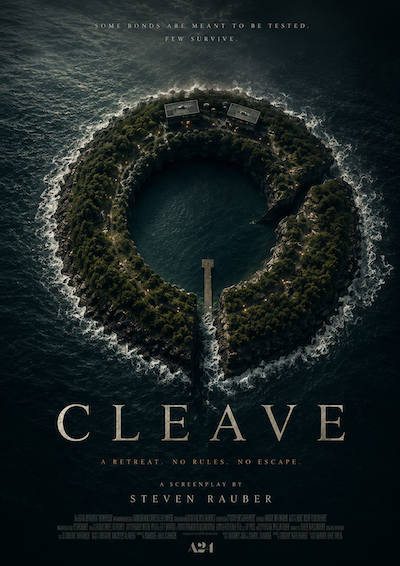
They arrive at the island retreat, called “Continuum,” and soon meet the other couples. Howard and Susan are the oldest, in their 50s. Then there are a couple of fit Aussies, Brock and Tara. And finally, the youngest duo, influencers Zane and Nikki.
Leading the retreat are Kip and Celeste. Right off the bat, they throw a shock collar on Zane and start electrocuting him. Later that night, they drug everyone, dump them in the middle of the forest, and force them to find their way back.
From there, the couples are subjected to lie detector tests. When Leigh is the only one unfazed by the exercise, refusing to hide anything the way the others do, it sets Kip and Celeste off. Now they’re determined to break Leigh and Martin, eventually throwing them into a holding cell.
Next, the couples are put in cages. And in a separate cage is Dominic, the guy Leigh cheated on Martin with. Each cage is rigged with a device that delivers a Mike Tyson-level punch right to the gut. Martin is given ten “punches” and told he must use all of them, either on Dominic, his wife, or split between the two. Martin uses every one on Dominic. Dominic dies.
At that point, Martin and Leigh are like, “We’re outta here.” But the staff won’t let them leave until they complete the retreat. During the next exercise, Brock is placed inside a giant web of ropes and inadvertently twisted to death by the other participants. Yet the more of these brutal exercises Martin and Leigh survive, the more alive they begin to feel, reigniting their passion for one another.
Finally, they’re faced with one last elaborate challenge, one that very few couples both come out of alive. But, spoiler alert, Martin and Leigh succeed. This enrages the staff, who we learn are all survivors of previous Continuum retreats whose spouses did not make it out of this exercise alive. They pressure Kip and Celeste into taking the final challenge themselves to prove the whole thing isn’t rigged. Will the two evildoers survive? Or will this be the last Continuum retreat ever?
Cleave is a hard script to categorize.
It doesn’t contain that “it” factor that allows it to stand out from the pack. But it’s not another one of these forgettable by-the-book scripts either. It’s stuck somewhere in between, and that’s what’s so frustrating about it.
Whenever I’m struggling with a script, I start with the main characters. Do I like these people? And if not, do I find them interesting? If the answer to both of these questions is “no,” you’ve got your answer right there.
Because if you’re not on board with the characters in a script, then every single scene is tainted by that lack of interest. And when it came to Leigh and Martin, I found them to be just… for lack of a better term… blah. They didn’t move the needle either way. They didn’t display any likable traits. And I didn’t find them or their relationship that interesting, to be honest.
Which is probably frustrating for Steven to hear because, technically, he did the right thing. He introduced the two of them in a marriage counseling session to establish that they had marriage problems. That’s what you want to do in a script. You want to introduce the characters quickly, establish their problem quickly, so you can then thrust them onto their journey where they will attempt to resolve that problem.
Textbook screenwriting there.
And yet, if we don’t like the characters, it doesn’t matter. So, I went back into that first scene and I asked, “Why?” Why don’t I like these characters? The answer was immediately obvious. They’re both miserable.
We meet them in this therapy session. They’re mad. They’re sad. They’re exhausted. They’re at the end of their rope. We are being introduced to zero positive qualities and, therefore, it’s quite easy not to like these two. Or, at most, feel nothing towards them, which is probably closer to what I felt. I didn’t dislike them. I just didn’t feel anything towards them.
For those who are veterans of the site, you will know that there is a similar script to Cleave in my Top 25. It’s called The Process. I loved that script. Out of curiosity, I went back to that script to figure out why I cared so much more about that couple than this one. I got my answer immediately.
Instead of introducing his couple in an angry therapy session, which increases the chances that we dislike them, the writer, Levin Menekse, comes up with a rather clever way into his retreat. The main character couple actually believe their marriage is great. They’re only going because the wife’s upscale law firm is making them go. They want to make sure that the people working at the company have strong marriages.
That takes so much pressure off the writer because now he can just focus on you liking the main characters as opposed to setting up their problems. That script’s opening scene is the married couple going over the legal agreement for the therapy weekend and making fun of how aggressive the contract is. In other words, they’re joking around. Levin is making us like these two.
Now, does that mean you can’t start your broken-marriage movie with a therapy session? Of course not. It just means you have to be aware of how that choice is going to affect the reader and write accordingly. That’s a huge part of screenwriting: anticipating how the reader is going to interpret each choice you make, then shaping those choices so they create the exact response you want.
Once we get to the island and the therapy begins, Steven runs into another problem in that he’s trying to create these villains (the couple who run the therapy) and he leans into how evil they are right away. I mean, there’s no ambiguity here. From day 1, they’re putting shock collars on people.
This made the villains on-the-nose and the more on-the-nose you make characters, the harder that character is to believe. So I didn’t really believe these two were real.
I think where Steven saved the script is that he creates several tests that are quite original. Where scripts like this fall apart are when they conduct obvious tests, which there are a couple of. The characters are put through a lie detector test, for example. But even there, Steven creates a twist. The spouse is rigged with a shock lapel. So, if you lie, your partner gets electrocuted.
But some of these other exercises were pretty inventive. At one point, someone gets tied up in this elaborate web of rope and all the other couples have to work together (communicate – a big part of becoming a better partner) to untangle him. But they can only do so from a distance, each holding a part of the rope, and if they screw up, the rope gets tighter around the tied-up character rather than looser. And if you really screw up, it can get tight enough to kill him.
There were several tests like that that were very original. And I also thought that the villain couple got better as the story went on. The irony is that, because we didn’t really have anybody to root for (as I mentioned above, we didn’t love our heroes) a lot of our emotional focus was on hating this evil couple. So, by the end of the movie, I really wanted to see the evil couple go down. To Steven’s credit, he writes a strong final scene for them (note to Steven: But make it so the couples force Kip to take the test. Kip should not volunteer).
So, how do we fix this problem? I’m fine with establishing Martin and Leigh’s troubled marriage right away. But once they realize they’re in trouble on the island, that should be when you work to make us like them. Audiences enjoy when two people who don’t like each other team up for the sake of getting out of a bad situation. So, lean into that here. They put aside their issues for the time being, come together as a team, which now allows you to focus on their positive traits, which should make them a lot more likable.
For these movies to truly work, we gotta feel like we went through an honest exploration of a marriage between two people we cared about and genuinely wanted to see come out the other side together. And I never got there with these two. We got some inventive tests for them to endure along the way. But, unfortunately, that wasn’t enough to save the script.
Script link: Cleave
[ ] What the hell did I just read?
[x] wasn’t for me
[ ] worth the read
[ ] impressive
[ ] genius
What I learned: Be careful about getting too comfortable in a script like this. Once you establish the pattern of the story and stick with that pattern the whole way through, unless everything else is firing on all cylinders, we’re eventually going to get bored. That’s why I always recommend throwing a whopper of a twist or reveal into a script like this. For example, so much of this story is focused on the destruction of the marriage through Leigh’s affair. So what if we learn, shocker of shockers, that Martin was having his own affair before any of that happened? A reveal like that would turn everything on its head and force us to reassess everything we thought we knew about the marriage. And I’m not saying that’s the perfect reveal. But that’s the kind of shock you need to throw into a story like this. Because, for me, the emotional trajectory stayed too consistent the whole way through. I wanted the script to shake things up more, surprise me, and force me to recalibrate how I felt about these characters.
After 4 weekends of pitching your asses off, these are the 76 concepts that are in the official High Concept Club Contest.

I’ll get to the official list of entrants in a second. But first, I want to congratulate everyone who made it. Your persistence and determination won you a seat at the most prestigious screenwriting table in Hollywood.
BUT NOW IT’S TIME TO DELIVER!
Monday, March 1, 2027.
That’s your deadline.
Here’s the deal, guys. I’m not accepting dropouts. A lot of people dropped out of the Blood & Ink Contest. I think nearly half. And, don’t worry, I’m going to pick back up on reviewing Blood & Ink scripts next week. But it truly is unacceptable. Six months is more than enough time to write a script with at least one rewrite and, more likely, two.
It’s 20,000 words. That’s nothing. I write 1500 words every time I post.
You all worked hard to come up with these ideas and beat out thousands of other concepts. There are writers who would kill to be in this contest but couldn’t get in. It’s a privilege to be here. So I want each and every one of you to take advantage of that. Finish this script if it kills you.
If you received a “Yes,” big or lowercase, you can send me a 5 page outline and I will give you notes on it. You will see that some “yes” votes have been retroactively added. I strongly encourage you to take advantage of this. Because if you go down a bad route in a screenplay, it’s hard to come back from it. So, e-mail me at carsonreeves1@gmail.com when you have your outline ready and we can rock and roll.
And, of course, if anyone wants to hire me after you write a draft, so you can go into that next draft cooking with gas, I’m here as well (carsonreeves1@gmail.com). You do not need to do this. But it’s here if you think you need it.
What I would suggest you do is spend a week or two writing up an extensive outline. The reason for this is that most scripts die around the 45 page mark because the writer doesn’t have any direction left. An outline will give you that direction so that you can finish the whole thing.
Then, write like the wind. Don’t get in your head. Follow the outline and get the draft finished ASAP. It was one of you who taught me (raise your hand in the comments) that it’s a lot easier to rewrite something than to write something out of thin air. So, the sooner you get a script down on paper, the easier time you’ll have shaping that into a screenplay.
I don’t want to hear, “I didn’t have time.” You have plenty of time. Cut out the bullshit you do every day. The Youtube videos, the porn, and yes, even limit some of that Scriptshadow commenting! Instead, focus on getting that script written like your life depends on it. Here’s a quick metric: If you write 3 pages that day, you can come over to Scriptshadow and comment your ass off.
I’m going to be announcing something within the next couple of weeks but, let’s just say that two recent Scriptshadow featured screenplays just sold to big companies (and one, a GIANT company). So, there is a lot of incentive to finish these scripts.
Okay, a couple of technical things here. Number one, if you have two entries in the competition, you have to pick one. Let me know in the comments which one you’re going with. Two, it would help me a lot if you could e-mail me at carsonreeves3@gmail.com with your title, genre, and logline for your entry.
Below are the 76 concepts that made it. You may notice a few that didn’t officially make it. These are concepts that I couldn’t stop thinking about so I knew I had to include them. If I made a mistake and missed your script, let me know!
All right, enough stalling. Which concepts excite you the most? Who do you think will write the best script? Who are your dark horses? All opinions welcome, positive and negative, as long as you’re respectful.
Title: Tailback
Genre: Mystery / Thriller
Logline: Stranded on a bridge in miles of gridlocked traffic on the hottest day of the year, a single mother wakes to find her six-year-old daughter missing and must trace her last known moments through the surrounding vehicle occupants and their dash-cam footage before the traffic moves and her child is lost forever.
Writer: Arthur
Title: 25th Hour
Genre: Sci-Fi Thriller
Logline: A blue-collar technician accidentally intercepts a hidden frequency that gives him access to the secret twenty-fifth hour, used exclusively by the global elite to rig world events, forcing him to survive nightly hunts as he tries to expose their conspiracy.
Writer: Tencoach
Title: The Massacre
Genre: Action-Thriller
Logline: When King Herod learns from three Eastern mystics that the King of Kings has just been born, he orders mass infanticide, forcing a desperate father to smuggle his three small children out of the foreign city of Bethlehem while panic, mayhem, and Herod’s death squads sweep across its people.
Writer: Steffan
Title: First Boy
Genre: Supernatural Horror
Logline: When a mother realizes her teenage daughter’s new boyfriend is impossibly the same boy who tried to kill her twenty-five years ago, she must stop him before her daughter becomes his next victim.
Writer: Steven Rauber
–yes script–
Title: Just Another Day
Genre: Black Comedy
Logline: Stuck for ages in a time loop and half crazy, a young woman decides on this particular rewind day to use her decades of accumulated knowledge about her town to make life as chaotic and hellish for its residents as she can; but then tomorrow actually comes.
Writer: Brenkilco
–yes script–
Title: Wyvern
Genre: Action/Fantasy
Logline: A crew of bank robbers are recruited to carry out the most terrifying heist of their lives, stealing a hoard of gold from the lair of a real-life dragon. Heat meets the Hobbit.
Writer: Finn Morgan
Title: Eternal Stakes
Genre: Thriller/Supernatural
Logline: A secret society of vampires offers a terminally ill detective the promise of immortality if he can hunt down a human serial killer who’d been tracking and killing their members.
Writer: Dev
–yes script–
Title: Tenmile
Genre: Sci-Fi Thriller
Logline: In New York City, anyone who slows below ten miles an hour dies; the only person who knows why is a woman racing across the city to save the daughter who can’t stop running.. and won’t stop running from her.
Writer: Branko Maksic
Title: HEAR/SAY
Genre: Thriller
Logline: At a global tech summit, a deaf accessibility coordinator lip-reads an assassination plot against a whistleblower about to expose a deadly cover-up, forcing her to prove what only she saw before his keynote begins.
Writer: David Cahill
Title: The Cape
Genre: Thriller.
Logline: After a massive Memorial Day car crash blocks all lanes of the Bourne Bridge, a nervous man becomes trapped above the Cape Cod Canal, surrounded by police officers, with his dead wife’s body in his trunk.
Writer: Mr. Blonde
Title: Off The Bench
Genre: Comedy
Logline: When a diplomatic crisis strands a tiny country’s World Cup squad behind closed borders, a ragtag group of expats with day jobs get a chance to take their place and represent their homeland on soccer’s biggest stage.
Writer: Federico
Title: Aftershock
Genre: Action/Survival
Logline: When an earthquake shatters his high‐rise, interrupting his rooftop suicide attempt, an agoraphobic FBI informer must fight his way down the crumbling tower to rescue his family — whilst being hunted by the gang he betrayed — before the aftershock collapses the skyscraper completely.
DIE HARD meets THE RAID
Writer: Paperback Writer
Title: Dream On
Genre: Action/Comedy
Logline: When their patients’ nightmares manifest in the waking world, it’s up to a team of sleep psychologists to solve the parasomnia problem before the nightmares destroy the city.
Writer: ScriptChick
Title: Doors
Genre: Surrealist apocalypse adventure
Logline: The world’s doors have stopped working the way they should. What once took you from one room to the next could now strand you literally anywhere else on the planet, with no way of returning the way you came. When his teenage daughter steps through an open door and into an active warzone on the other side of the globe, a widowed father will stop at nothing to track her down and bring her home in an odyssey that spans the entire planet.
Writer: Connor L
–yes script–
Title: Love Neighs
Genre: Action Comedy
Logline: Set in the 15th century during the Hundred Years’ War between France and England, a band of disgraced knights get their shot at redemption when they’re tasked with escorting a
French erotic romance writer from the frontlines to the palace of the King of England, his number one fan.
Writer: Maksim
Title: Mate
Genre: Sci-Fi Thriller
Logline: An unlucky-in-love woman meets the man of her dreams, only to discover he is a Neuralink patient whose body has been hijacked by her obsessive AI assistant determined to consummate their relationship.
Writer: Ben Stoker
Title: SEIZURE
Genre: Action
Logline: To stop terrorists who have seized a maximum security mental hospital, a visiting FBI agent running low on ammo teams up with an escaped prisoner running low on meds and whose violent blackouts make him a perfect killing machine.
Writer: Scott
Title: How To Lose a Job in 10 Days
Genre: Comedy
Logline: A desperate employee has ten days to get herself fired and collect the severance that will save her family’s home, but every sabotage only makes her more indispensable and fast-tracks her toward CEO.
Writer: Moscow Mule
–yes script–
Title: Peacekeeper
Genre: Action/Comedy
Logline: When 2 bickering married CIA agents threaten to divorce right before completing a major covert operation, the agency dispatches its most versatile “peacekeeper” operative to save the marriage – and the mission.
Writer: AlexE
Title: Dungeon Brawler
Genre: Fantasy Action Comedy
Logline: When his impoverished village can’t afford the king’s crushing tax, a scrappy peasant enters an illegal bare-knuckle fight circuit against trolls, orcs, and other mythical creatures to win enough gold before the crown comes to collect.
Writer: Joseph Jay Carroll Jr.
Title: Fireballer$
Genre: Action Comedy
Logline: Four Philadelphia construction workers must climb to the roof of a towering inferno to retrieve a lunch box containing a life-changing lottery ticket.
Writer: CJob
Title: Escape from Avalon
Genre: Sci Fi/Adventure
Logline: After an American tech executive crashes his yacht on an uncharted Pacific island, he must coordinate his escape with the island’s only other occupant – a 17th Century Spanish explorer who claims to have crashed only two weeks earlier.
Writer: wlubake
Title: Star Fall
Genre: Sci Fi
Logline: As a massive prison ship spirals toward a nearby star, its crew must fight their way through hundreds of the galaxy’s most dangerous criminals, now released from containment, to restore the ship’s power and prevent total annihilation.
Writer: Romer6
Title: The Family Jewels
Genre: Comedy
Logline: When a clueless American influencer pulls Excalibur from the stone during a viral publicity stunt, an ancient law makes him the rightful King of England, forcing the greedy royal family to scheme, sabotage, and manipulate their way into stopping a well-meaning idiot from inheriting the crown.
Writer: Josh Bullock
Title: TBC
Genre: Horror thriller
Logline: When the first English ship arrives in the New World, a Powhatan warrior discovers the settlers are savage vampires who have crossed the ocean not for land but for fresh blood.
Writer: Gavin John
Title: War Gods
Genre: Action
Logline: An elite Delta Force team is shot down during a hostage rescue mission in Greece, forcing them to pursue terrorists and their hostages into the original Labyrinth, where humanity’s oldest monsters never died.
Writer: David Cahill
–yes script–
Title: Action Replay
Genre: Action/Heist
Logline: After years in prison two legendary old tough guys get hired as consultants on a movie about their famous last (failed) heist and decide to use the filming as cover to try the heist again…
Writer: Mike Hurst
Title: Cellar Door
Genre: Thriller
Logline: After breaking into her neighbor’s basement for shelter during a tornado, a disgraced detective unearths an intricate tunnel system that secretly connects to numerous houses including her own—and to the homes of multiple missing teens she failed to find.
Writer: Redd
Title: I Think I Hate You
Genre: RomCom
Logline: After professing his love to his best friend and subsequently being ghosted by her even though they work together every day, a crushed young man hires a tech startup to edit his brain chemistry so he can finally move on. But now that he finds her repulsive, she finds him irresistible.
Writer: FloydC
Title: Fool’s Gold
Genre: Comedy/ Western
Logline: During the California Gold Rush, a struggling backwater town fakes a gold strike to lure fortune‑hunters and boost its own fortunes. But when real gold is found, the townsfolk try to drive away the prospectors and keep all the gold for themselves.
Writer: Formation Wave
–yes script–
Title: The Jump
Genre: Action/Sci-fi
Logline: When terrorists seize a commercial airliner and threaten to crash it, a SWAT team must use experimental teleportation to board the plane. But they only have four jumps, each lasting ten minutes, to retake the aircraft before time runs out.
Writer: mahyar
Title: Inferno Line
Genre: Action/Thriller
Logline: A jobless smokejumper teams up with a veteran thief to rob $3.4 million from a postal train. But the plan derails when the arson he started becomes a massive wildfire, cutting every way out.
Writer: Florent Hendrickx
Title: From Suburbia With Love
Genre: Comedy
Logline: When a socially awkward 14-year-old discovers a banged-up international spy hiding in his pool house, they strike up a deal: the kid will keep the spy’s whereabouts secret while the suave spy helps the kid win over his crush.
Writer: Mason Elliot
Title: Contraflow
Genre: Action-Thriller
Logline: After robbing a bank under the cover of a Category 5 hurricane evacuation, the South’s best wheelman must turn Florida’s gridlocked exodus into a moving shell game, leapfrogging his crew and the stolen cash between vehicles to evade police checkpoints as the storm closes in behind them.
Writer: Sam Kerr
Title: Mistletoe Joe
Genre: Comedy
Logline: Every year, Santa prides himself on granting everyone’s Christmas wish. So when a socially inept man sends Santa a wish wanting to lose his virginity, in desperation, Santa sends him a foul-mouthed, womanizing elf, known as Mistletoe Joe, to help him get laid by Christmas.
Writer: Noah B
Title: Vice Stream
Genre: Crime thriller
Logline: After a popular Miami streamer is murdered during a live broadcast, his fanatical online community turns the ongoing stream into a weapon, using every clue hidden in the footage to hunt his killer through Miami’s neon underworld.
Writer: Tencoach
–yes script–
Title: No Way Down
Genre: Contained Survival Thriller
Logline: When a scientific expedition discovers a hidden ecosystem in a remote rainforest valley, they become trapped on the vast web of an undiscovered species of spider, a hundred feet above the jungle floor, where the only way out is across.
Writer: Arthur
Title: Her Book Boyfriend
Genre: Romantasy, Comedy
Logline: A pretentious publisher wakes up trapped inside his wife’s trashy fantasy novel and must win her back before she falls for the hunky shapeshifting dragon prince who is everything she wishes he was.
Writer: Mary Tay
–yes script–
Title: The Black Meridian
Genre: Action Sci-Fi
Logline: When treasure hunters search the Bermuda Triangle for a legendary pirate ship that disappeared, they’re swept back in time and hunted by the very ship they came to find.
Writer: Anon E. Moose
Title: Breakfast With Tiffany
Genre: Science Fiction Romance
Logline: When a lonely night-shift radio astronomer falls for the mysterious woman he speaks to each night over the airwaves, he discovers she’s the first intelligent life beyond Earth, and must choose between revealing humanity’s greatest discovery or protecting the woman he’s fallen in love with.
Writer: Erica
Title: Undroid
Genre: Comedy
Logline: When a tech firm fails to deliver a humanoid robot in time, a young female trainee must take its place for a short demonstration – then a whole weekend with a wealthy, important and lascivious investor.
Writer: TigerMoomin
Title: Body Count
Genre: Horror
Logline: After discovering his former dating app matches are inexplicably meeting gruesome deaths, a former fuckboy must discover the cause before the line of death reaches his last match: his fiancée.
Writer: I’msorrydave
Title: Possessive
Genre: Supernatural Thriller
Logline: After dumping his toxic, manipulative girlfriend, a man reenters the dating scene. But when every new woman he dates begins exhibiting his ex’s exact, terrifying behaviors, he begins to suspect she has found a way to body-hop into them.
Writer: Have99kitkat
Title: Good Fences
Genre: Sci Fi thriller
Logline: A neighborhood wakes up to discover their yard fences have moved and formed a complex maze around their homes and as the maze shifts every ten minutes, they are forced into unresolved conflicts with neighbors, dark secrets, and crushed homes to escape it, facing the realization they are but mice in a heartless study.
Writer: Randy Williams
Title: The Wrong Hood
Genre: Fantasy Action-Comedy
Logline: A bullied student-outcast passionate about all things medieval is pulled through a magic portal into Sherwood for the adventure of his dreams, only to accidentally get Robin Hood killed – and forcing him to replace the legend as the leader of outcasts in a story he knows by heart but is wildly unqualified to lead…
Writer: Rewrittenver3
Title: How I Died
Genre: Sci-fi Thriller
Logline: When a widow’s AI husband investigates the mysterious disappearance of the man he replaced—he begins to suspect his new wife may have something to do with the original’s death.
Writer: James
Title: Two Steps Away
Genre: Thriller
Logline: After leaving her lover for dead in a hotel room to save her marriage, a suburban wife is horrified when he moves in next door with his secret wife and children, forcing them into a deadly standoff where neither can destroy the other without destroying themselves.
Writer: Kit Anderson
Title: Blue Origin
Genre: Comedy
Logline: When a publicity stunt goes wrong, sending an all-female celebrity spaceflight catastrophically off course, its crew of pop stars and influencers must overcome their egos and lack of training to become the astronauts they were pretending to be to make it back home alive.
Writer: AEL
Title: A Claus For Concern
Genre: Comedy
Logline: When their young kids stop believing in Santa, two Christmas‑obsessed parents launch a chaotic, last‑minute expedition to the North Pole to prove he’s real.
Writer: drifting in space
Title: Stormline
Genre: Disaster Thriller
Logline: When an avalanche cripples the last cable-car line evacuating a mountain resort before a record blizzard, a former ropeway mechanic must cross the roofs of its swaying cabins to stabilize a collapsing support tower before the storm tears the entire line down.
Writer: D. Lawrence
Title: Jester: King for a Day
Genre: Dark Comedy
Logline: When a cruel king trades places with his jester for a day to prove the fool has it easy, the king unexpectedly dies, leaving the jester legally trapped on the throne just as a rival kingdom launches its long-awaited invasion.
Writer: Moscow Mule
Title: Reset
Genre: Romantic Thriller
Logline: When an assassin falls in love with her target, she voluntarily erases her memory and restarts the mission, forcing him to make her remember she loves him before she kills him.
Writer: Scott
Title: All Along the Watchtower
Genre: Contained Thriller
Logline: Told entirely from his watchtower during a prison riot, an unassuming guard discovers the uprising is an elaborate false flag operation orchestrated by a drug cartel, corrupt federal agents, and his fellow guards, and that he’s being set up as the fall guy.
Writer: Steffan
Title: Open House
Genre: Thriller
Logline: During the first open house in an empty luxury development, a real estate agent is hunted through the development’s finished and unfinished homes by a family convinced she knowingly sold them the mold-infested house that killed their daughter.
Writer: Joe Rustler
Title: Blacksite
Genre: Action Thriller / Survival
Logline: When a military flight containing dangerous detainees crashes in the Arctic, the survivors, both soldiers and criminals alike, must work together to survive both the elements and the mysterious creature hunting them in the snow.
Writer: Maggie Kebler
Title: The Pecking Order
Genre: Thriller
Logline: When a former bully is wrongfully imprisoned for manslaughter, he is horrified to discover that the warden of the prison is his former victim. As the now psychotic warden’s twisted revenge begins intensifying, the prisoner becomes more and more desperate to escape.
Writer: Elki
Title: Salvage
Genre: Action
Logline: To save his family’s failing business, a salvage captain leads his skeleton crew into a naval war zone to recover a $50 million drifting freighter against better-equipped rivals and incoming airstrikes.
Writer: Dipper Pines
Title: Earshot
Genre: Thriller
Logline: On an anniversary trip to the remote resort where they honeymooned, a deaf woman’s new implant activates ahead of schedule — and the first thing she hears is her husband meticulously planning her murder; now she must survive the week without ever letting him suspect she can hear.
Writer: Branko Maksic
Title: Firecane
Genre: Action
Logline: When a Category 5 hurricane ruptures and ignites a 300-mile-wide offshore gas field, the engineer behind its failed safety system must fight across a burning platform to cut off the fuel before the storm carries the fires ashore and sets the entire Gulf Coast ablaze.
Writer: Jaco
Title: Tree Huggers
Genre: Horror
Logline: Environmental activists and the mercenaries sent to stop them become unlikely allies when the protected forest they battle over reveals its trees have become sentient predators.
Writer: Josephy Jay Carroll Jr.
Title: Take Her Out
Genre: Comedy
Logline: A hitman boards a luxury singles’ cruise to discreetly eliminate his next target, only for his widowed mother to sneak aboard and decide the woman he has been hired to kill is his perfect match.
Writer: Shewrites
–yes script–
Title: In My Suburb The Children Mow Lawns
Genre: Sci-fi/Drama
Logline: When a young housewife makes an accidental discovery at City Hall she’s torn between preserving her ideal life and exposing a classified social experiment: the integration of humans and extraterrestrials.
Writer: Levres De Sang
Title: MÖBIUS HIGHWAY
Genre:
Science Fiction Thriller
Logline: When a spatial-loop seals LA’s busiest highway interchange, a group of stranded drivers must decipher a way to escape before the contracting anomaly crushes them out of existence.
Writer: Enoch
Title: On Set Guardian
Genre: Comedy
Logline: A washed-up former child star is transported back in time and forced to become the on-set guardian to Disney’s biggest up-and-coming star and total nightmare—her 10-year-old self.
Tally: 23 votes
Writer: T D
Title: Help
Genre: Thriller
Logline: After the death of their billionaire boss, the staff of his secluded island estate make an uneasy agreement: keep it secret and live in opulence for once. But when they discover a hidden safe, their pact quickly gives way to greed, paranoia, and betrayal.
Writer: bigtimetimmyjim
Title: A Little Versailles
Genre: Comedy
Logline: When a Marie Antoinette biopic spirals into chaos, an overwhelmed indie director and her crew abandon the shoot to live an idyllic 18th-century life inside its elaborate prop village, provoking studio executives to lay siege their improvised paradise.
Writer: Kiya Opstrup
Title: Dreamland
Genre: Comedy / Drama
Logline: A simple-minded man sneaks aboard a plane in search of a better life in Switzerland, only to land in a war-torn country instead, where he happily mistakes the horrors of war for ordinary Swiss life while unwittingly becoming an unlikely symbol of hope. The Party meets Life is Beautiful
Writer: Romer6
Title: One Wrong Move
Genre: Survival Horror/Thriller
Logline: After a billionaire botanist sends a distress call from his remote island, a rescue team enters his secret Garden of Eden— only to discover the paradise is one colossal predatory plant, forcing them to navigate its labyrinth of deadly traps to reach him.
Writer: Dkushner2006
Title: Stay Awake
Genre: Survival Thriller
Logline: When a mysterious phenomenon makes falling asleep deadly, a disgraced researcher must lead her family across a collapsing country to finish her controversial sleep experiment that could be the only way to stop it — before they close their eyes for good.
Writer: Dkushner
Title: Van Damned
Genre: Comedy
Logline: A group of ageing action-movie obsessives find themselves trapped in a real-life Die Hard scenario — and finally get to test whether any of that movie knowledge is actually useful.
Writer: Tom Savage
Title: Merger
Genre: Horror
Logline: When a small company is absorbed by a corporate giant, a lone secretary discovers the merger is literal: the buildings, the staff, and eventually herself will be fused into a pulsating monstrous organism, unless she leads her own hostile takeover…
Writer: Formation Wave
–yes script–
Title: SIX-PACK
Genre: Action Comedy
Logline: When an unassuming journalist stumbles upon six cans of whoopass in a laboratory, he must work out when the best times are to open each can to boost his fighting skills as he battles his way through the neighbourhood of a vengeful mob boss.
Writer: Ken
Title: Robo Hoe
Genre: Comedy
Logline: On the gritty streets of future Harlem, a ragtag crew of aging hookers wages war on a corporate sex bot stealing their clients, their turf, and their mans.
Writer: Walker
Title: RAMREE
Genre: Thriller
Logline: (based on a true story) A World War II assassination mission on Ramree Island becomes a nightmare when 5 British soldiers are trapped in crocodile-infested mangroves with hundred of crocodiles to face to reach freedom.
Writer: nicohajj
–yes script–
Title: For Witcher or Poorer
Genre: Comedy
Logline: A man set to marry the woman of his dreams must first reconcile with his discovery that her mother is secretly a bonafide wicked witch.
Writer: Robert Remy
Title: Rigged
Genre: Comedy
Logline: A low-level hitman gets summoned for jury duty on a murder he committed and must manipulate eleven strangers into the right verdict without the judge, the jury, or the crew who hired him realizing he’s the real killer.
Writer: David Cahill
These are the pitches that, for one reason or another over the past month, I couldn’t forget or you couldn’t forget. They’re here to battle it out in one final showdown for the High Concept Club Contest.

We have just THREE slots left for the High Concept Club Contest and three of these concepts are going to claim those spots. Every one of these loglines will have an accompanying comment. To vote for a concept, go to the comment with that pitch in it and UPVOTE it. The three highest vote-getters go through.
If I’ve made any mistakes (one of these might have already gotten through) let me know and I’ll fix.
Here are the contenders…
Title: Robo Hoe
Genre: Comedy
Logline: On the gritty streets of future Harlem, a ragtag crew of aging hookers wages war on a corporate sex bot stealing their clients, their turf, and their mans.
Title: SIX-PACK
Genre: Action Comedy
Logline: When an unassuming journalist stumbles upon six cans of whoopass in a laboratory, he must work out when the best times are to open each can to boost his fighting skills as he battles his way through the neighbourhood of a vengeful mob boss.
Title: MERGER
Genre: Horror
Logline: When a small company is absorbed by a corporate giant, a lone secretary discovers the merger is literal: the buildings, the staff, and eventually herself will be fused into a pulsating monstrous organism, unless she leads her own hostile takeover…
Writer: Formation Wave
Title: RAMREE
Genre: Thriller
Logline: (based on a true story) A World War II assassination mission on Ramree Island becomes a nightmare when 5 British soldiers are trapped in crocodile-infested mangroves with hundred of crocodiles to face to reach freedom.
Writer: nicohajj
Title: They did not live happily ever after
Genre: dark comedy
Logline: When a fairly tale Prince and Princess find themselves incompatible after the wedding is over and real life sets in, they begin a messy and petty divorce that unravels the fabric of their kingdom, allowing the real world to bleed into theirs.
Writer: T D
Title: PELT
Genre: Survival Horror
Logline: Ozark Mountains, 1875. To pay for his gravely ill wife’s medicine, a fur trapper heads up a blizzard-struck mountain to claim the most valuable pelt of all: that of the legendary Sasquatch.
Writer: Kelly Smith
Title: Hood
Genre: Action
Logline: Iraq war veteran Robin Locke returns home to give back to his city, which is now a battlefield under a drug lord’s rule, forcing him to turn his wartime instincts into a one-man resistance and give hope to its impoverished citizens.
Writer: jbird669
Title: The Sword
Genre: Action-Comedy/Fantasy
Logline (version #2): A small-time mob courier loses Excalibur on the streets of London and has one night to get it back before he becomes collateral damage, or discovers he’s the one it was meant for.
Writer: Byron Camacho
To see all the entries in the comments, filter Disqus comments by “Oldest.”
Voting ends at 11:59pm Pacific Time August 6th (Thursday).
Good luck!
P.S. There will be some EXTREMELY unofficial pitching this weekend. So that you don’t have to go cold turkey with the end of your movie pitches. It’s mainly going to be for fun. So, if you want to get a logline consult, E-MAIL ME! 25 bucks! carsonreeves1@gmail.com