
Search Results for: F word
Okay, today’s going to be an informal day off. But because I’ve seen so many comments asking, “what the hell does Carson’s response mean?”, I’ve decided to decode some of my more common replies for you.
Keep in mind that I’m very rushed when I analyze each logline so if I don’t like something, I’m typically spending less than 10 seconds coming up with a reason why. For that reason, I’m going to screw up sometimes. There are often times when I write a response and think, “I probably could’ve said that better.” But I have to keep moving cause there are so many loglines.
If you really want to know why I didn’t like something. Or you think us working on it together could bring out a movie you truly believe in (which actually just happened this evening with one reader), get a logline consult. 25 bucks for 1 e-mail and 1 reply. 50 bucks for unlimited back-and-forth where we get the logline in the best shape possible.
carsonsreeves1@gmail.com – e-mail me!
Okay, now for the replies.
“Mythology heavy, I want concepts” – What this means is that you’re creating entire worlds and rules instead of actual story ideas. A dinosaur theme park gone bad is a story idea. A trip to the mythical land of Booshalius, where vampires feast on possum-walkers, and a young fairy must learn the value of the “cocopasada” in order to evolve to the next phase of existence — that’s all mythology. There’s no clever story idea in there.
“Need to learn how to simplify loglines” – Once you go over 35 words, you’re probably in logline danger. The whole point of loglining a movie concept is to help yourself get to the core of the idea. That helps you write it. And it helps everyone else understand it. There are so many loglines being pitched where the writer just babbles on. Or they try to fit in every single little detail. Ironically, the more you try and tell everyone what your movie is, the less clear the movie idea gets. Instead, create the simplest version possible so that we get it immediately.
“Not big enough” – It means that there’s something in the main character and the story he’s in that feels small. “Years after a female serial killer spared his life and then turned herself in, a reclusive ex-journalist must confront the enigmatic woman’s cultish fans drawn to his hometown by a copycat murder… and the killer’s request for one final interview.” You may think just adding a serial killer here is enough to make it big and high concept. It isn’t. Or that there’s a copycat murder. It isn’t. Because there are a million serial killer ideas. And the ending: get an interview. Who cares? An interview is only big if it’s the most important interview in the world, like getting the president’s interview at the end of Civil War. This is a high concept contest. The ideas have to feel BIG.
“Not buying into the setup” – “When the deciding task in the Guardian Angel Selection Course is to help a human charge to experience the full gamut of emotions…” Every idea requires buy-in from the reader. If you present them with a setup that seems overly manufactured or forced or too complex, the reader simply isn’t going to buy in. So I don’t even need to read beyond the beginning of this logline. I’m already out because I don’t buy into the setup. Guardian Angel Selection Course? I don’t believe that that exists no matter how hard you try and convince me it does.
“A lot of build up for not a lot of payoff” – This is when loglines go on for way too long and set up way too many things and then instead of giving us a big climax to excite us, end with a whimper or end with something vague. “Joe must learn x and y and then he goes to a, before conquering b, and before he climbs up the ladder at company c, he must complete a set of challenges from s, t, u, and v. And then when an earthquake hits and w, x, y, and z happen… he must learn what’s truly in his heart.”
“Not clever enough” – This gets to the heart of what I’m really looking for in these concepts. I’m looking for ideas that are clever. Where the first half of the logline connects to the second half in that special way that makes you go, “Oooh, cool.” We see it in the only ‘yes’ from this week: “When treasure hunters search the Bermuda Triangle for a legendary pirate ship that disappeared, they’re swept back in time and hunted by the very ship they came to find.” Perfect. Now, notice what happens when you change the second half: “When treasure hunters search the Bermuda Triangle for a legendary pirate ship that disappeared, they must deal with the National Coast Guard, an angry clan of Bermuda nationals, and the captain’s ex-wife.” You see how easy it is to un-cleverize an idea?
“Seen too many variations of this” – This is a nice way of me telling you, you’re not being original enough. Too many writers assume they’re competing against 27 other people in Hollywood. You’re literally competing against hundreds of thousands. Millions if you consider everyone all over the world. There has to be something in your logline that is truly special to stand out against all those other pitches Hollywood is getting. Whether it’s a subject matter we’ve never seen before. Or a new twist on a genre we’ve never seen before. Or some clever take on an idea we’ve never seen before. If you’re just putting serial killers and vampires in your logline and creating one slightly new angle, such as being in a coma, that’s not enough.
“Feels lazy” – I can tell when a writer has spent a long time with an idea. You can see it in the pride behind the logline. That they believe in this idea because they’ve thought about it a lot. And because of that, they’ve made the wording as perfect as they can make it. And it just has this glossy sheen on it that communicates: “I tried a bunch of different ways to express this idea and this is the best one I came up with.” Meanwhile, when you slap an idea together that you’ve thought about for 30 minutes and you barely think about how to write it up, I’m going to call you out on it. It’s lazy. You’re being lazy. Which is the second worst thing you can be as a writer. Anybody know the first?
“Too simple”/“Too simplistic” – What this means is that the idea’s missing that thing that turns it into a bigger story or a more high stakes situation or makes you contemplate something you haven’t contemplated before. Instead of that, it’s just a regular normal obvious idea: “After suffering a nervous breakdown and losing her job, Celia returns home during her high-school reunion only to discover a childhood friend is missing and her three ex boyfriends still hold a grudge.”
“Too much going on here” – Writer adds too many variables to his pitch, to the point where they start stepping on each other or obscuring what the movie is. “After a billionaire obsessed with Ancient Egypt dies, his wife and his two lovers wake up buried in his mausoleum and must work together to escape the sadistic AI hologram of the deceased and its deadly games determining who is worthy of becoming its queen of the afterlife.”
“You hint at the concept but stop before telling us what it is”/“Ending too vague!” – This is one of my biggest pet peeves. The writer hides the actual movie. Instead, they use their ending to hint at it. “After a husband gaslights his wife into believing he’s not having an affair with her best friend, she books a weekend cabin retreat with the friend, unaware that the husband’s machinations have awakened something primal and unhinged in the jilted lover.” The “primal” and “Unhinged” part are the movie. Tell us what has been awakened. I understand what these writers think they’re doing. They think they’re creating mystery that will result in readers requesting the script. But it actually achieves the opposite. Because you don’t tell us what the antagonist is, we’re not interested! Because without that, we can’t envision the poster, the trailer, the freaking movie itself! Nobody wrote the logline for Jurassic Park and didn’t include dinosaurs.
“Execution dependent” – This means that you’ve chosen the kind of idea that is going to require an extremely high writing skill level to pull off. “Seeking a fresh start, a traumatized Indigenous woman enters a mysterious escape room, only to discover it’s a living labyrinth that builds itself from each victim’s deepest trauma. To escape alive, she must survive a series of deadly puzzles that weaponize the abuse, fear and cultural disconnection she’s spent years trying to bury before the maze consumes her identity forever.” The second you make this a metaphor and it’s about trauma and cultural disconnection and abuse… integrating it through simile and hiding it inside of scenes through subtext and carefully constructed character relationships, that’s the highest difficulty of writing there is. I wouldn’t trust any writer with that. Meanwhile, three loglines previous to that pitch, I’m getting a group of characters in the Amazon who are stuck in a giant web with a giant spider chasing them. I’m way more confident that a writer can pull that idea off.
Only FOUR go through!
Okay, another day of voting! It’s like Vote-a-palooza here at Scriptshadow. I have already locked in the 7 winning loglines from yesterday, which will move into the official competition. But I don’t want to bog today’s post down so I’ll wait until tomorrow to post the entire list of scripts that made it through in the second week.
Today are the maybes from the weekend. Not every maybe makes it into today’s post. I went through all of them and I went through everyone’s extra 300 word pitch, if they made one. So, if you’re wondering where your ‘maybe’ idea went, it unfortunately went to idea heaven.
These are not going to be as strong as yesterday’s bunch. And, for that reason, only FOUR IDEAS are going to get into the competition today. So every vote counts. You can vote for multiple loglines. Again, I encourage everyone here to stick to the spirit of the competition and not just vote for your friends. Vote if you would want to see that movie. Cause that’s the ultimate goal of this contest – is to get movies made.
No need to waste time. Here are your contenders…
Title: Snakeboy
Genre: Comedy
Logline: After surviving a bite from what he mistakes for a deadly venomous snake (but is really a harmless garden snake), a delusional comic book nerd becomes convinced he’s developed snake-like superpowers and adapts a vigilante persona, oblivious to the very real danger he’s putting himself in as he haphazardly makes waves taking on the city’s criminal underworld.
Writer: AEL
Title: Untitled
Genre: Slasher
Logline: When a legendary horror director reunites the surviving final girls from his franchise at his remote estate, someone in the franchise’s iconic mask crashes the party, and the women must band together to survive their deadliest role yet.
Writer: Rupert Pumpkin
Title: What It’s Like
Genre: Horror-Comedy
Logline: When a die-hard fan and her favourite pop star accidentally swap bodies, the singer desperately tries to switch back, but the fan revels in her new fame and refuses. However, when she commits a public faux-pas and gets cancelled, she’ll do anything for her own life back, even murder.
Writer: JakeG177
Title : You have died of Dysentery
Genre: Comedy
Logline: Two tech addicted siblings whose phones have been destroyed by their fed up parents find an old copy of The Oregon Trail. When they get transported into the game, they must lead a group of pioneers and survive the entire nightmarish journey west in order to get back home.
Writer: T D
Title: Contraflow
Genre: Action-Thriller
Logline: After robbing a bank under the cover of a Category 5 hurricane evacuation, the South’s best wheelman must turn Florida’s gridlocked exodus into a moving shell game, leapfrogging his crew and the stolen cash between vehicles to evade police checkpoints as the storm closes in behind them.
Writer: Sam Kerr
Title: Mistletoe Joe
Genre: Comedy
Logline: Every year, Santa prides himself on granting everyone’s Christmas wish. So when a socially inept man sends Santa a wish wanting to lose his virginity, in desperation, Santa sends him a foul-mouthed, womanizing elf, known as Mistletoe Joe, to help him get laid by Christmas.
Writer: Noah B
Title: The Triangle
Genre: Adventure/Sci-Fi
Logline: When a small cruiser touring the Bermuda triangle sends out an SOS after incurring storm damage, it is rescued by the surviving crew of the HMS Atalanta, last seen 1880, and who are unaware a day has past since their own battering at sea. Our heroes now wonder how long they themselves have been lost in the triangle, and what kind of world awaits them if they can find their way out.
Writer: Mason Elliot
Title: Vice Stream
Genre: Crime thriller
Logline: After a popular Miami streamer is murdered during a live broadcast, his fanatical online community turns the ongoing stream into a weapon, using every clue hidden in the footage to hunt his killer through Miami’s neon underworld.
Writer: Tencoach
Title: Bad Review
Genre: Comedy
Logline: A young go-getter is tormented by the disturbed inventor of a product after he writes a review online that causes its downfall.
Writer: Patrick
Title: From Suburbia With Love
Genre: Comedy
Logline: When a socially awkward 14-year-old discovers a banged-up international spy hiding in his pool house, they strike up a deal: the kid will keep the spy’s whereabouts secret while the suave spy helps the kid win over his crush.
Writer: Mason Elliot
Voting ends 11:59pm Pacific Time Wednesday.
To see all 10 entries together, filter Disqus comments by “Oldest”
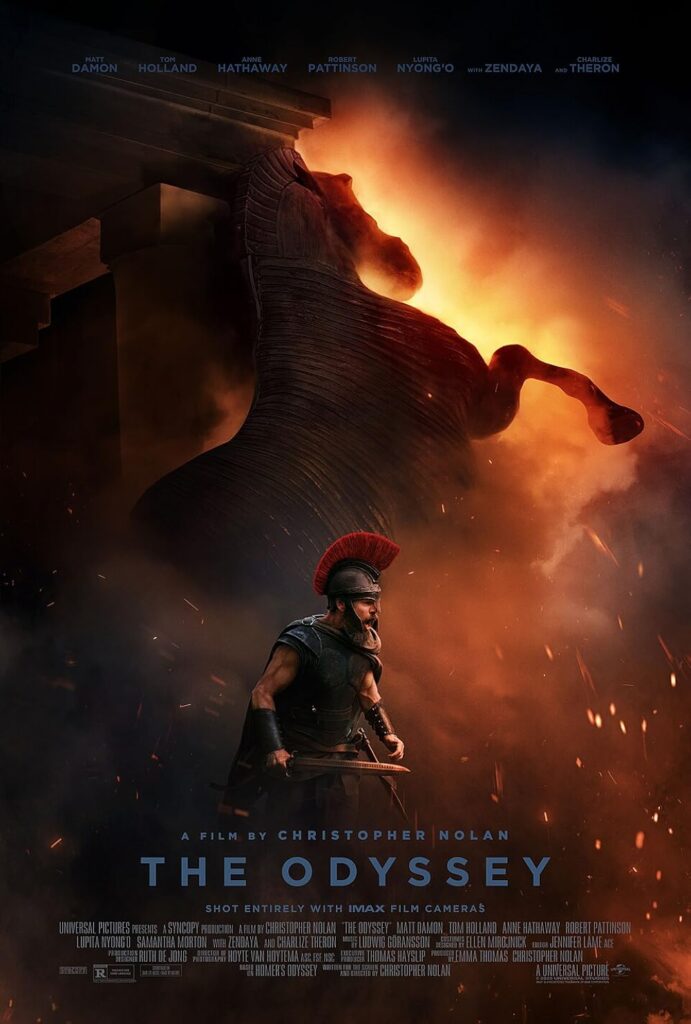
Genre: Period/Light Fantasy
Premise: After the fall of Troy, the legendary Greek king Odysseus must survive monsters, vengeful gods, and impossible temptations on a perilous voyage home to reclaim his kingdom and family.
About: Christopher Nolan’s latest is powerhouse at the box office, taking in 125 million dollars. This is a movie that, just a couple of weeks ago, was projected to hopefully make 80 million dollars. In a movie world where everyone is underperforming, Nolan is one of the few people who you can count on to overperform.
Writer: Homer & Christopher Nolan
Details: 2 hours and 45 minutes
By far, the coolest thing about The Odyssey is the fact that 2700 years ago, this guy wrote this story and it was so powerful and affected people so much, that 2700 years later someone is making a movie out of it.
Think about that for a second. To write something so impactful that 2700 years from now, somebody will make a movie about it. Or whatever the equivalent of a movie is in 4726. That’s pretty freaking awesome and shows the power of the written word.
Just imagine for a second Homer… staring at the blank page (or the blank air since I don’t think they had paper back then), just like you do every day. Mentally writing something down. Not liking it. Changing it. Being unsure. Figuring something out. There may have even been a moment where he said, “You know what? I don’t think this is very good. I’m not going to finish it.” But then he forged his way through the doubt and finished it anyway. And now people all over the world are going to see the visual adaptation of that story. It’s amazing when you really think about it.
The other big cool thing about this movie is Christopher Nolan. I love the fact that he’s still making movies the old fashioned way. Not just because that’s “how they used to do it.” But Nolan understands that when you record reality (as opposed to computer generated artificiality), the viewer’s suspension of disbelief is stronger. The audience feels like they’re seeing something that’s real.
And he’s just great at steering the ship. There were so many times during this movie where I would admire the composition of a shot. The lighting in a shot. The music in a scene. There were several times where I marveled at the costuming. I never think once about costumes but, in this movie I did. I loved certain performances, like John Leguizamo and Samantha Morton’s. And I loved the fact that when we were watching those people on a boat, they were all really on the boat. I wouldn’t even be surprised if Nolan taught them all how to properly row like they did 2000 years ago and the actors were all rowing the boat to locations themselves.
But you want to know something funny?
I was bored out of my mind watching this movie.
If you haven’t seen the movie or read the poem it was based on, Odysseus wins the Trojan War. Meanwhile, back in Ithaca, everyone assumes he’s dead. The timeline here is never explained in a clear way but, the main idea is that many years have passed and everyone assumes Odysseus is dead except for his wife, Penelope, and his young son, Telemachus.
The journey home for Odysseus is a greatest-hits album of Greek mythology. Odysseus outsmarts the Cyclops, escapes the Lotus-Eaters, survives the witch Circe, sails past the Sirens, outsmarts a whirlpool, gets drugged into a nonconsensual relationship, and even ventures into the underworld, where he reconnects with all of his fallen soldiers.
Odysseus is told by the dead that he shouldn’t show up in Ithaca as himself or they’ll kill him. So he disguises himself as a begger, where he eventually infiltrates the lunch room where the Ithacans spend 99% of their daily life, and engages them in a 1 vs. 100 battle. All so he can finally be with his wife and son.
How bored was I, you ask?
At one point I fell asleep.
Look. I just praised the fact that this story has lasted 2,700 years. But let’s be real. Any 2,700 year old story is going to have issues when you drop it into the modern day. Going off to war was a rite of passage back then. Everybody understood it. Today? The vast majority of us live in air conditioned homes and have food delivered straight to our door. Let me repeat that. We don’t even have the battle strength to get our own food!
So that whole aspect of the story was just a big fat “whatever” to me. I didn’t care. Nor did I care all that much about Odysseus getting home, which is kind of a problem since that’s the entire point of the movie.
For starters, I didn’t like his wife. She came off as a bitch. So I wasn’t exactly rooting for her to get her husband back. His son had never even met the guy. So I wasn’t all that invested in him getting his father back, either.
Then, as I was leaving the theater, I overheard someone say that Odysseus didn’t even want to get home. He wanted to stay away. And I thought, “You know what? He really didn’t seem like he wanted to get home.” Sure, he occasionally took a step in that direction. But the dude spent ten years hanging out on a beach before finally deciding to leave. That doesn’t exactly scream, “I can’t wait to get home.”
So then what’s the point of the movie? If the main character doesn’t really want to get home, what’s the engine driving the story? Is it just the inevitability of the writer needing to end the story and, therefore, forcing Odyssesus to return by his own (the writer’s) hand so that we can get to “The End?”
I know a lot of you will say, “You didn’t get it Carson.” Hand raised! I agree with you. I did not.
At one point, Odysseus is just chilling with this woman in a desert house that he borrowed from the Dune movie and he’s half-confused because he’s doping on drug flowers, and he’s not even sure why he’s there.
That’s when we learn this woman drugged him for seven years to forget to go home?? Come on. That doesn’t make sense at all. For starters, THEY’RE IN A DESERT!!!! THERE ARE NO FLOWERS!!! But let’s say that there’s a secret nearby flower garden. Even then! You’re saying you were able to keep him drugged every single second for seven straight years?????
Come on already.
It didn’t make sense, people. I need my stories to make sense.
2,700 years ago, stories didn’t have to make total sense. There wasn’t an internet logic-checking you. Heck, there weren’t even reviewers logic-checking you. You were one of the first stories. You could make up random rules and people just accepted them. But in 2026? No. We don’t just go with it anymore. And the Drug Woman sequence wasn’t the only example. There were a lot of moments like that.
I knew the movie was in trouble when we got to the Cyclops scene. I’d heard this set piece was incredible. I heard it was going to bring the house down. It wasn’t. It didn’t. It was… average. Which ended up being the theme of the movie. There was a shit-ton of average.
I didn’t even understand the rules of the Cyclops. He was already stumbling around like he was half blind. Then they actually blinded him and… he stumbled around like he was slightly more blind? It was all very murky and poorly constructed.
The pacing didn’t help either. Instead of playing the escape out in real time, everybody just goes to sleep right next to the Cyclops. You know, the giant thing who’s been murdering and eating you all day. I guess he doesn’t eat people after 8 p.m.?
There was a lot of clumsy, murky storytelling like that throughout the movie.
By the midpoint, I was dying. I was tapping my feet anxiously. I was rolling my eyes. Especially whenever we cut back to the wife and son. Who, by the way, spent 20 years hanging out in the lunch room. Did these people ever go outside????
I’d heard that the ending was amazing so I kept holding out hope for that.
It wasn’t.
It was like everything else in this story. Average.
I respect Christopher Nolan as a filmmaker. But I think he’s a terrible writer. That’s where he always sabotages his work. The cutting back and forth in time here was an attempt to make the story feel more sophisticated. In actuality, it just made things unnecessarily harder to follow.
The one truly good thing about this movie was learning that there was an actual dude named “Mentor” and that’s where the word “mentor” came from. That was honestly the only moment where my mind and body lit up and I felt something resembling excitement.
This movie is so boring guys. It is boring boring boring.
I do not recommend spending money on it.
[ ] What the hell did I just watch?
[x] wasn’t for me
[ ] worth the price of admission
[ ] impressive
[ ] genius
What I learned: One of the earliest lessons in storytelling is that the strength of your narrative engine is directly tied to how desperately your protagonist wants to achieve their goal. Whenever Odysseus is singularly focused on getting home, the story has urgency and momentum. Whenever that desire wavers, so does the narrative. The audience can only invest as much energy in a goal as the protagonist does.
You can begin pitching loglines in the comments section RIGHT NOW!
The contest is COMPLETELY FREE!

This is unlike any screenplay contest you’ve been involved with before. All of those contests let anybody in as long as they pay. My contest is free. Therefore, I demand only the best ideas. I’m looking to create great screenplays that every studio in town is going to want to read because the concept has already survived a public trial by fire.
How does it work?
You get to pitch 5 loglines every weekend for four weekends. We are already in weekend 2. Weekend 1 resulted in 16 screenplays making it into the contest. You can see all 16 of those loglines here. There are some REALLY GOOD ONES. That’s the bar you’re up against.
If you aren’t sure what a high concept is, go back to last week’s inaugural post where I explain in detail what ‘high concept’ means, and give you examples of high concept as well as examples of what’s not high concept.
Before you start pitching your ideas, you’re going to want to look at the rules. For those of you who were here last weekend, the rules are basically the same, however I’ve tweaked a few things. So you might want to re-read them.
If you come up with a script idea strong enough to get into the contest, you will have 6-7 months to write your script. The prize is the exposure. Industry people are watching this contest. If you write something good, I will review it. And if you write something extremely good, I’m going to get on the phone and do everything I can to get you representation.
But what I love most about this contest is that even if you don’t knock it out of the park with the screenplay, you’ll still have a concept that’s better than 95% of the ideas being pitched out there. That’s a huge advantage. Great concepts get read requests off the logline alone. And unlike most writers, you won’t just think your idea is good. You’ll have proof that hundreds of people responded to it. Most writers never get that. They write their ideas on a wing and a prayer.
Okay, let’s get to the rules!
1) There will be 4 pitch weekends. Friday through Sunday. Pitching ends every Sunday at 11:59pm Pacific Time. This is the second of those 4 weekends.
2) You can pitch five loglines each weekend.
3) Make sure you pitch each logline in its own comment. Do not pitch all 5 loglines in a single comment. This is because I need to vote yes or no on individual loglines.
4) I will vote on every single logline pitched. I will give you either a “YES!”, a “yes,” a “strong maybe,” a “maybe,” or a “no.” An all-capital “YES” Is the Holy Grail. It means you not only get in, but you can also send me a 5 page outline of your script before you write it and I will give you notes on it. This is HUGE because what I learned from the Blood & Ink contest is that a lot of writers went down weak creative paths that I could’ve prevented had I seen their outline.
5) A “yes,” still gets you in. Just without outline privilege.
6) If you get a “maybe” or a “strong maybe,” you then have, if you want, 300 words to pitch that idea to me. Tell me more about the story or the characters or what you’re thinking of doing with it. I will then use that information to decide, on Tuesday and Wednesday, whether that idea moves on.
7) The large majority of ideas will get a “no.” Try not to get offended. The bar is high here. I’m not here to make you feel good. I’m here to find great movie ideas.
8) Upvoted Entries – Upvote any loglines that you like (besides your own). If an idea gets 15 upvotes, the concept gets in. However, if I don’t like the concept, I’m vetoing it.
9) Golden Weekend Ticket – However, the ‘strong maybe,’ ‘maybe’ or ‘no’ entry with the most upvotes each weekend automatically gets in. So one user-voted entry will get into the contest each weekend. Therefore, even if I’ve voted “no” on something, and you like the idea, you still want to upvote it because that entry might win the Golden Weekend Ticket. I have special plans for those scripts once written which will involve users reviewing them.
10) Posters – You can include an AI poster with your logline for TWO IDEAS PER WEEKEND.
11) You can get multiple ideas into the contest. But you must choose only one to write.
12) You CAN pitch scripts that have already been written.
A quick reminder that my popular logline consultation service ($25 per logline, $100 for 5) is available. If you want a more extensive reason for why I didn’t pick your logline, order one. If you want to see ahead of time if a logline has a shot, order one. You can also do a deluxe logline consult ($50) where we keep workshopping the logline until it’s perfect. I believe 4 loglines got into Blood & Ink that way. But most of them did not. So, don’t think it’s a guarantee. If you want to use this service, e-mail me at carsonreeves1@gmail.com.
Finally, keep in mind that I am going to be living my life during these weekends. In fact, I’m going to see The Odyssey today (Friday) which is like 9 hours long, and then I have a fairly extensive list of errands I have to do. So if your idea is stuck in moderation or waiting in the comments section for a vote, I WILL vote. It just might take a little longer than you want.
I’m going to blast out a newsletter letting everyone know about the pitch weekend. So, it should get crazy. :)
Who’s going to have that standout “HOLY SHIT!” idea this weekend?
I can’t wait to find out!
These are movie pitches from this past weekend that received a “maybe” vote from me. You will now vote for your favorite pitches. Only the top FOUR will make it into the contest!

We have our first official eleven entries, ready to be sent to the island to find love. They are…
Just Another Day by Brenkilco
Wyvern by Finn Morgan
Eternal Stakes by Dev
Tenmile by Branko Maksic
Hear/Say by David Cahill
The Cape by Mr. Blonde
Aftershock by Paperback Writer
Off The Bench by Federico
Doors by Connor L
Dream On by ScriptChick
Love Neighs by Maksim
Mason Triumphant, by Kit Anderson, scored just as many upvotes as Love Neighs but I’m making a personal choice here. I’m worried about a superhero movie where nobody ever uses superpowers, especially in a high concept contest. But I’m sure Kit will be pitching some sweet ideas over the next three weekends. So, it’s not over yet!
Also, shame on you guys for not voting in Robo-Hoe. So much shame being sent your way. I would definitely save that idea for the next comedy contest on the site, though.
Okay, moving on, we’re doing the same thing we did yesterday. I’m going to post all the ‘maybes’ down in the comments section. Each script idea will occupy its own comment. Upvote the ideas you like. Simple as that. And you can upvote as many as you want. But please only upvote the ones you genuinely like and for which you’d want to see the movie.
Now, this next part is going to be controversial. But there are too many ‘maybes’ to place in this mini-voting contest. Therefore, I got rid of a bunch of them. It wasn’t easy. But I went with my gut. By the way, I couldn’t find COUNTDOWN by Simon Veksner or Six Pack by Ken. If you can find those, post them below. I will decide whether to include them in today’s voting.
You have until 11:59pm Pacific Time tonight (Tuesday). Only FOUR scripts are going to make it through today. So every vote counts!
Title: FINALE
Genre: Dark Comedy/Horror
Logline: After being publicly fired from the most popular show on television, a disgraced actor races to flip the script when he finds himself trapped as his character in the episode in which he is fatally written out.
Writer: Matt
Title: KILL VEHICLES
Genre: Action/Comedy
Logline: In a race to disable America’s early warning system ahead of a nuclear attack, a self-aware movie villain finds himself under-resourced, overwhelmed and well-intentioned, leaving him in danger of saving the day and becoming his worst nightmare – a hero. (‘The Last Action Villain’)
Writer: Auckland Guy
Title: The Massacre
Genre: Action-Thriller
Logline: When King Herod learns from three Eastern mystics that the King of Kings has just been born, he orders mass infanticide, forcing a desperate father to smuggle his three small children out of the foreign city of Bethlehem while panic, mayhem, and Herod’s death squads sweep across its people.
Writer: Steffan
Title: The Sword
Genre: Action-Comedy/Fantasy
Logline (version #2): A small-time mob courier loses Excalibur on the streets of London and has one night to get it back before he becomes collateral damage, or discovers he’s the one it was meant for.
Writer: Byron Camacho
Title: 25th Hour
Genre: Sci-Fi Thriller
Logline: A blue-collar technician accidentally intercepts a hidden frequency that gives him access to the secret twenty-fifth hour, used exclusively by the global elite to rig world events, forcing him to survive nightly hunts as he tries to expose their conspiracy.
Writer: Tencoach
Title: They did not live happily ever after
Genre: dark comedy
Logline: When a fairly tale Prince and Princess find themselves incompatible after the wedding is over and real life sets in, they begin a messy and petty divorce that unravels the fabric of their kingdom, allowing the real world to bleed into theirs.
Writer: T D
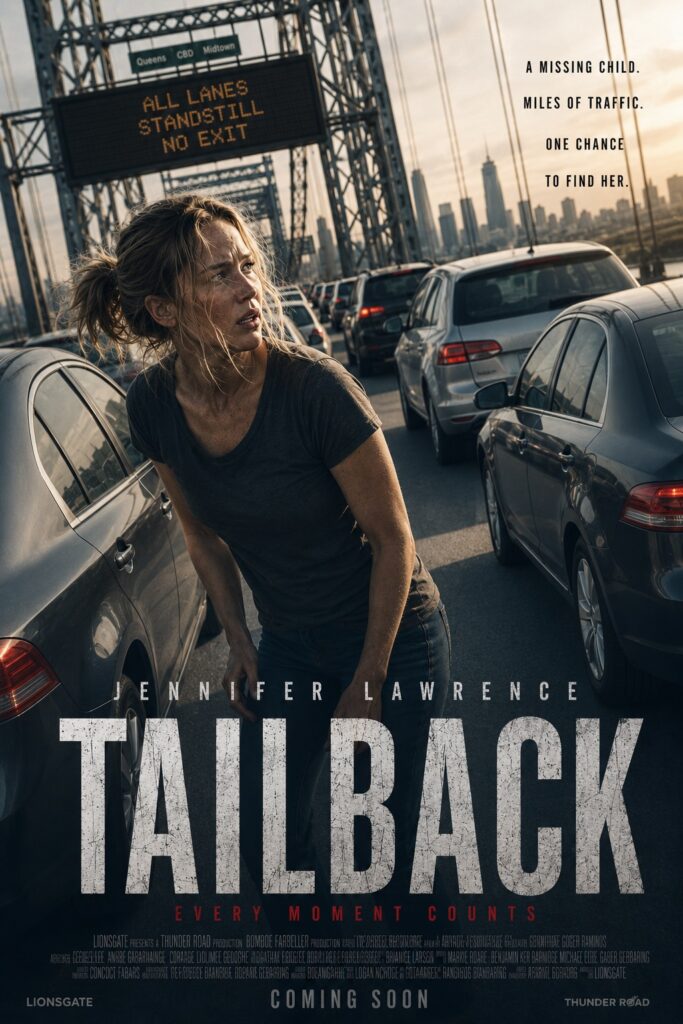
Title: TAILBACK
Genre: Mystery / Thriller
Logline: Stranded on a bridge in miles of gridlocked traffic on the hottest day of the year, a single mother wakes to find her six-year-old daughter missing and must trace her last known moments through the surrounding vehicle occupants and their dash-cam footage before the traffic moves and her child is lost forever.
Writer: Arthur
Title: ATM
Genre: Contained Action/Thriller
Logline: When he discovers the ATM where his fiancée was murdered is the most notorious robbery hotspot in America, a traumatized man becomes obsessed with returning there night after night, engineering violent confrontations he can claim as self-defense in order to eradicate the gang responsible. But as his abilities improve, what was originally an act of revenge turns into a violent addiction.
Writer: Arthur
Title: First Boy
Genre: Supernatural Horror
When a mother realizes her teenage daughter’s new boyfriend is impossibly the same boy who tried to kill her twenty-five years ago, she must stop him before her daughter becomes his next victim.
Writer: Steven Rauber
Title: The Pot Washer
Genre: Action, Buddy Comedy
Logline: When a debt-ridden restaurant owner becomes the target of New York’s criminal underworld, he finds an unlikely savior in his new, mild-mannered pot washer—a fugitive former Russian general.
Writer: Paddy
Title: MATE
Genre: Sci-Fi Thriller
Logline: An unlucky-in-love woman meets the man of her dreams, only to discover he is a Neuralink patient whose body has been hijacked by her obsessive AI assistant determined to consummate their relationship.
Writer: Ben Stoker
Title: SIX-PACK
Genre: Action Comedy
Logline: When an unassuming journalist stumbles upon six cans of whoopass in a laboratory, he must work out when the best times are to open each can to boost his fighting skills as he battles his way through the neighbourhood of a vengeful mob boss.
Writer: Ken
BEGIN THE VOTING! If you want to make sure you see all the entries below, you can filter Disqus comments by “OLDEST.”