
Search Results for: F word
Genre: Horror/Thriller
Premise: A medical courier delivering an organ to a hospital finds himself pulled into a quickly deteriorating scenario involving a rapidly growing number of monsters and zombies.
About: Zach Cregger strikes again, improving on his flawless resume. His Resident Evil film just opened higher than any Resident Evil film in history, with 60 million, as horror continues to thrive. Cregger says producer Roy Lee asked him if there were any video game properties he’d want to adapt and Cregger said Resident Evil. He then wrote the script with Shay Hatten, who he describes as his “good buddy.” Hatten popped onto the screenwriting scene about 6 years ago at a super young 25 years old. He had a couple of scripts on the Black List before joining the John Wick franchise and writing on a bunch of those films. I suspect that with Cregger’s time being stretched thin these days, he elected to bring on a co-writer, unlike with his first two films.
Writer: Zach Cregger and Shay Hatten
Details: 95 minutes
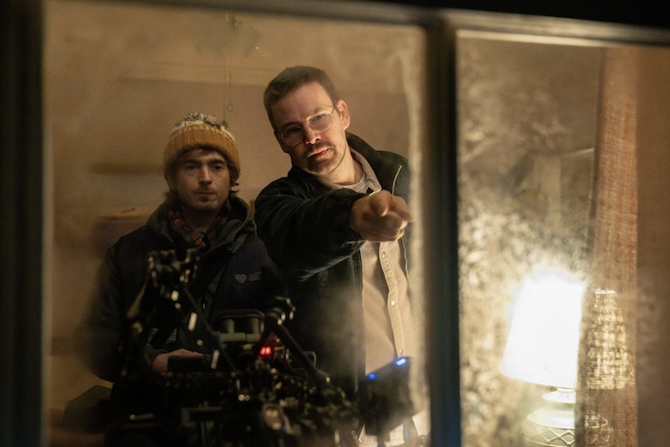
Zach Cregger has been listening to all this chatter about the new plucky crew of YouTube filmmakers who are supposedly the next generation of horror and said, “Hold my kombucha, chumps.”
It’s actually insane that this movie has done so well. Think about what Resident Evil used to be. This was a MAJOR action franchise. Guns. Armies. Explosions. Elaborate set pieces. And now the movie that’s shot out of a cannon to become its highest opening weekend grosser is basically ONE GUY running around by himself. A guy who doesn’t know how to use guns. A guy who’s never been in a situation remotely like this. Just some dude trying to survive.
It speaks to the magic of screenwriting, and specifically the choices we make BEFORE we start writing the script. Sometimes the most important creative decision isn’t what happens on page 60. It’s deciding what version of the movie you’re going to write in the first place. Those choices determine whether your movie feels fresh and exciting or like something we’ve seen 25 times already.
Because when you saw the trailer for this Resident Evil, you didn’t think, “Been there, done that.” You thought, “Wait, what is this??” And I talk about this all the time, but that’s the name of the game. You have to find a fresh way into whatever story you’re telling. If audiences know exactly what they’re getting, they’ve already started tuning out.
Resident Evil follows Bryan, a medical courier whose job is to transport organs from one hospital to another. But Bryan isn’t doing this because he’s some noble crusader. He’s a glorified Postmates driver who needs straight cash, homie.
Tonight, his girlfriend just told him her pregnancy test came back positive. Bryan’s clearly in denial about it but he knows he has to go home and talk to her. That is until the hospital offers him double pay for a super urgent delivery to Raccoon City General Hospital. Bryan decides, “Okay, I’m in.”
The problem is Raccoon City is up in the mountains, it’s nighttime, there’s a snowstorm, Bryan doesn’t have chains, and his car is barely staying on the road. Then, just when he thinks things can’t get worse, a woman comes flying out of the forest and Bryan SLAMS INTO HER.
Bryan, to his credit, isn’t the kind of guy who’s going to leave a bleeding woman in the middle of nowhere, so he puts her in his car and figures he’ll take her to the same hospital he’s heading to. A cop eventually stops them and agrees to take the woman himself while Bryan follows. Sweet. Problem solved. Until the cop’s car goes flying off the road into a field. Bryan goes down to investigate and discovers that the cop is dead and the woman he just rescued is now trying to kill him.
Bryan somehow survives that encounter and makes it to a nearby farmhouse, where things get really weird. He gets attacked by a dog that suddenly sprouts appendages. The people associated with the house aren’t welcoming either. Bryan is beginning to understand that something VERY BAD is happening.
But he still has his package, he still believes it’s time-sensitive, and therefore he still has to get to that hospital and get his money! Which means that while every instinct is screaming, “DON’T DO THIS!” Bryan keeps heading toward the place where all the monsters seem to be coming from.
Once Bryan finally gets to Raccoon City, he discovers that the entire place is falling apart. He briefly hooks up with a couple of Umbrella employees where he learns that his mysterious package is actually an ingredient scientists at Raccoon City General need to complete an antidote.
But then Bryan gets infected himself, which gives the delivery a much more personal ticking clock. Bryan fights his way through sewers, monsters, and an ooey-gooey maternity ward, finally reaching the scientists who can complete the antidote. But will they finish it and cure him in time? Or are Bryan’s future plans as a dada officially kaput?
Resident Evil is a horror movie that does something I honestly didn’t think you could do. It turns horror into a thriller. The conventional wisdom with horror is that you need to slow things down, milk the suspense, let the audience sit there and wonder what’s coming next.
Think of one of my favorite horror movies, The Others. You’re wandering around this giant house, you enter a room where every piece of furniture is covered by a sheet, and then you take your sweet time wondering if something might be underneath one of those sheets. That’s horror.
Thrillers are the opposite. They’re about MOVEMENT. They’re about getting somewhere, doing something, solving something, surviving something. Somehow Zach Cregger has figured out how to make those two things coexist.
Because this movie is MOVING. Our hero is driving down highways. He’s stranded in a field with a crazy woman. He’s racing to deliver his package. He’s constantly encountering some new problem that forces him forward. Early on, Cregger will still hit the brakes when he needs to deliver a killer horror sequence. But what’s interesting is that, as the movie goes on, even the horror sequences start becoming thriller-like. There’s less lingering, less waiting, more GO GO GO.
Cregger also does something I wish more writers would do. Whenever I’m evaluating a screenplay, I ask myself: If you gave this concept to 100 professional screenwriters, what movie would 95 of them write? With Resident Evil, I think 95 writers would’ve written some variation of the original game. Two cops arrive at a house. Something seems off. They investigate. They find increasingly disturbing things. Eventually they discover this is bigger than the house. There’s an underground facility. There’s a corporation. Monsters. BORRRRRRRRRINNNNGGGGG. You just lost the assignment. That pitch is so weak you don’t even get your parking validated, loser.
When you’re going up for an assignment, whatever direction those 95 writers are going to take, THAT’S THE VERSION YOU DON’T TAKE.
Instead, Cregger embraces the five-percent version. Forget the cops. Our hero is an organ courier who’s been dropped into the worst possible situation for his skill set. He doesn’t know how to investigate a crime scene. He doesn’t know how to operate a gun. He’s probably the least qualified person on the planet to survive this, which immediately makes him more interesting to watch.
On top of that, making him a courier gives the story something horror movies rarely have: a ticking clock. He thinks he’s transporting an organ that has to reach its destination within an hour. So before a single zombie needs to show up, we already have a goal, stakes, and urgency. Get the package there. Someone’s life depends on it. And HURRY UP.
There’s another sneaky-good screenwriting lesson buried in all this. We reveal that he’s not transporting an organ at all. He’s transporting a serum that can cure what’s happening. A lot of writers think that once they’ve established the stakes of their movie, they’re locked into those stakes. They’re not. You can eliminate your original stakes halfway through the story. You just have to REPLACE THEM. Preferably with something bigger. That’s what happens here. The original “save this one person’s life” stakes disappear, but by then Cregger has replaced them with stakes involving a whole lot more people.
Now, I’ve heard the word “classic” thrown around with this movie, and I wouldn’t go that far. It’s very good. But I think we’re starting to see one of Cregger’s weaknesses as a writer, which is that there isn’t a ton of depth to his characters or his thematic exploration. I’m not sure Resident Evil is really trying to say much about the human experience. I’m sure somebody on Reddit can write a 4,000-word dissertation explaining that every zombie in this film represents late-stage capitalism but I’m talking about purposeful thematic exploration. By the end, I wanted this kid to survive, but I didn’t feel like I’d learned much about him.
There is an attempt at a character arc involving his girlfriend, who may be pregnant, and this vague idea that our hero has reached the point in his life where he needs to grow up. But that’s delivered in isolated scenes where the movie essentially stops and reminds us, “Oh yeah, there’s this whole girlfriend/pregnancy/growing-up thing too.”
That’s not character development. Character development works when the story forces the character to confront the thing they need to change. If your character is selfish, don’t have his girlfriend call him three times and tell him he’s selfish. Put him in situations where he has to choose between selfishness and selflessness. The first time, he chooses himself. The second time, he hesitates. The third time, he doubles down and says, “I’m selfish, that’s who I am.” Then, when it really matters, he finally chooses someone else over himself. Now the plot itself is developing the character. That’s the difference between having a character arc sitting next to your story and having a character arc built INTO your story. Resident Evil is incredibly good at keeping its hero moving. I just wish all that movement had been taking him somewhere character-development wise.
I thought the first half of this movie was excellent. I was hoping that the whole movie would be low-budget Resident Evil. So I wasn’t thrilled when it went more “video-gamey” and CGI for its second half. But it still manages to keep the train on the tracks due to all the goodwill it built up earlier. Also, this actor, Austin Abrams, is the best “stumbling and mumbling” actor in Hollywood. Guaranteed there is no one in his league who can stumble and mumble like this guy. He turned it into an art form here.
[ ] What the hell did I just watch?
[ ] wasn’t for me
[xx] worth the price of admission
[ ] impressive
[ ] genius
What I learned: I like the idea of injecting non-genre-friendly elements into particular genres IF YOU HAVE A GOOD GAME PLAN for how to do it. Thriller and Horror aren’t natural bedfellows. Which means if you can somehow make that marriage work, your script is immediately going to feel different. Could you inject tons of urgency into a Drama? Conventional wisdom says no. Which is exactly why, if you pull it off, you might have something special. Uncut Gems comes to mind. Fargo injected comedy into a movie filled with grisly violence. Those two things should’ve fought each other. Instead, that strange combination helped make Fargo iconic. The point is, sometimes the thing you’re NOT SUPPOSED TO DO in your genre is the very thing that can make your script stand out. Pulling this off requires an incredibly high level of skill, though, so don’t engage with this lesson flippantly. I’m just asking you to consider it.
Genre: Action/Horror
Premise: In a city locked under a brutal curfew, a desperate teen must brave the night to save her younger brother from a winged billionaire vigilante armed with high-tech gadgets and a sadistic obsession with exterminating lawbreakers.
About: Last year I did a pitch contest called Blood & Ink where anyone could pitch me horror movie ideas. I accepted the best 100 of those ideas. The writers then wrote those scripts. Ever since, I’ve been reviewing them on the site, looking for the best one. Already, one script, Wildman, written by Jacob Rainer, sold! Today’s script was voted in by you, the readers of the site. It did not get the Carson seal of approval. But let’s see if Federico can prove me wrong!
Writer: Federico Frachhia
Details: 99 pages
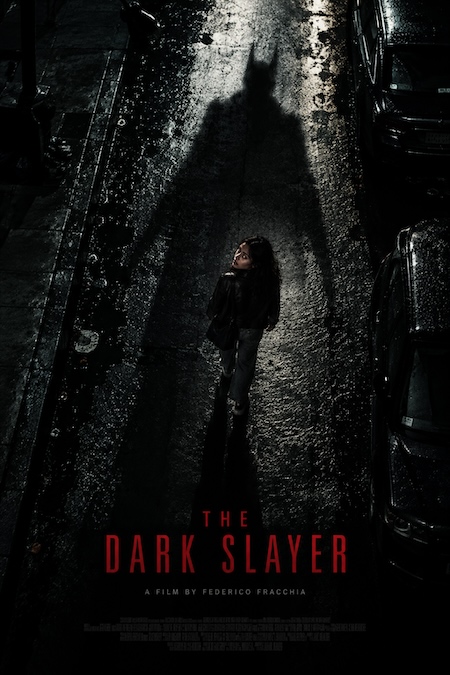
Okay, you guys voted this one in.
The main reason I didn’t vote for it was because I’m out on anything “superhero” these days unless it’s literally the most clever superhero idea ever.
My feeling is that every superhero movie angle was explored during that 10 year Marvel period and there’s nothing left.
I will say that exploring Batman from the point of view of an innocent person being hunted by him is a solid idea. It’s still not enough to get me excited. But it’s definitely better than most of the superhero ideas I get pitched.
The Dark Slayer follows 19 year-old Maya, who lives in a city under a nightly curfew. Once the sun goes down, nobody is allowed outside, and an army of surveillance drones patrols the streets looking for anyone who breaks the rules. But there’s also a much scarier presence out there. A mysterious figure in a bat-like armored suit known as the Dark Slayer. If the drones catch you, you get arrested. But, according to rumor, if the Dark Slayer catches you, you disappear.
Maya’s 17-year-old brother Leo hates the curfew and everything it represents. He and his rebellious friends (who run around in clown masks) decide to sneak out one night and tear through the city, defacing anything deface-able. When Maya discovers what Leo has done, she’s terrified he’s going to get himself killed. So she does the one thing she’s never supposed to do: goes outside after dark to find him.
Almost immediately, Maya finds herself dodging drones as she makes her way across the deserted city. Along the way, she encounters Harvey, a night-dweller with half his face burned off, who reluctantly becomes her guide through this world. Harvey knows how the drones operate and, more importantly, how to avoid the Dark Slayer. But while hiding inside a department store, the Slayer finds them. During the confrontation, Harvey manages to remove the asshole’s helmet, revealing the shocking truth: the Dark Slayer isn’t a robot like everyone assumed. He’s Julian Ward, the billionaire tech mogul responsible for creating the city’s entire curfew system!
Maya escapes and falls in with a group of underground rebels, one of whom has a question mark sign on their sock (the Riddler???), where she discovers that Leo and his friends have an even bigger plan. They’re throwing an illegal rooftop party designed to lure the Dark Slayer into an ambush and destroy him. Maya gets word to Leo that the Slayer is actually Julian Ward (as opposed to an assumed robot), and the group calls off the ambush, not wanting to murder someone. But Julian is not so kind. He tracks Maya down, kidnaps her, then attacks the rooftop gathering, slaughtering the rebels and ultimately killing Leo.
Julian returns to his mansion with Maya, intending to kill the only person who knows who he is. But Maya escapes her restraints and begins a final battle with this psycho. What began as a frightened sister breaking curfew to bring her brother home becomes a fight for survival against the man who built an entire city around fear.
I’m actually pretty surprised by what Federico was able to get out of this story. I didn’t love the script, but a lot of that comes down to this simply not being my jam. Because there were definitely stretches where I found myself getting pulled in.
The arrival of Harvey, for example, was a cool moment because that’s when I started to realize what Federico was doing. He was taking these Batman staples and injecting them into the story in subversive ways. And then there’s the moment where the Dark Slayer first attacks Maya. He does so with such violence that I developed this visceral hatred for him. Once that happened, I noticed myself becoming a lot more invested in the story because I wanted to see this guy go down.
That’s probably the thing I respected most about the script. Federico commits to the darkness of the idea. He doesn’t sugarcoat the Dark Slayer or try to make him “fake scary.” This guy is fucking really scary. And once I realized Federico was willing to go all the way, I became more intrigued by what was coming.
Where the script ultimately fell short for me was Maya.
We don’t learn much about Maya before the story kicks into gear, and that’s always a dangerous choice. One of the easiest ways to pull a reader in is to introduce your protagonist doing something that makes us interested in them. It could make us like them, sympathize with them, become curious about them, or even hate them. It doesn’t really matter. You just want some kind of strong reaction that makes us think, “I want to follow this person.”
Think about Cassie’s introduction in Promising Young Woman. She pretends to be blackout drunk, allows a supposedly “nice guy” to take her home, lets him reveal exactly who he is, and then turns the tables on him. Within a few pages, you’re fascinated by this woman.
Or look at Louis Bloom in Nightcrawler. We meet him stealing chain-link fencing and other metal from a construction site. A security guard confronts him, Louis tries to talk his way out of it, and the encounter ends with Louis attacking the guard and stealing his watch. Then he goes and sells the stolen material to a scrap yard. Before the story has even really begun, we understand that we’re dealing with a deeply unusual human being.
We don’t get an equivalent with Maya. And when you don’t make your protagonist interesting up front, you’re essentially deferring the task. You still have to make us interested in that character, you’ve just decided you’re going to do it later. Which means that over the next 30, 40, 50 pages, Maya has to make fascinating choices, reveal surprising things about herself, or interact with people in ways that gradually build our investment in her.
That’s possible. But it’s risky, particularly for an unknown writer, because the reader may check out before you even get there.
And to Federico’s credit, I did eventually care more about Maya. Ironically, a lot of that came through the Dark Slayer. Once I saw how brutal he was, I didn’t want him to beat her. So the stronger the villain became, the more invested I became in Maya’s survival. But it never quite crossed that tipping point where I was obsessed with what was going to happen next. And I think that’s ultimately what kept The Dark Slayer from reaching a “worth the read.”
Still, I think there’s a legitimate strategy behind writing a script like this. Mattson Tomlin, who worked on The Batman, is another writer who wrote a Batman-coded script and got that Batman job because of it. And Hollywood has repeatedly shown an appetite for writers who can demonstrate that they understand this kind of grounded, psychologically dark superhero storytelling.
So if you’re a writer who desperately wants to write Batman someday, writing your own “Batman without Batman” spec isn’t a crazy move. You’re essentially saying, “Look, I can’t legally write Batman for you yet, but here’s proof that I know how to handle this kind of stuff.”
Ultimately, though, this just wasn’t my bag. But I can see hardcore superhero fans responding to it more strongly than I did. So, superhero fans? Take a look for yourself and tell me what you think.
Script link: The Dark Slayer
[ ] What the hell did I just read?
[x] wasn’t for me
[ ] worth the read
[ ] impressive
[ ] genius
What I learned: Be very careful about who you choose to put through your story. Sometimes simply changing the protagonist can dramatically increase our investment in the exact same plot. In The Dark Slayer’s cold open, we follow a pregnant woman and her husband who are forced to break curfew because she’s going into labor and they need to get to the hospital. I kept thinking: Would I have been more invested if they were the protagonists? I think I would have. They HAVE to be outside. Their baby is coming. Compare that to Leo, who’s basically a punk who sneaks out because he hates the curfew, forcing Maya to go save him. Put that pregnant couple through the same nightmare and I’m immediately rooting for them: Get to the hospital. Keep the baby alive. Don’t let the Dark Slayer find you. Always ask: Is this the most compelling person I could be telling this story through?

I wanted to do something different today. For those unaware, I did a pitch contest recently called the High Concept Club Contest. You pitched me ideas for four weeks and I picked the best ones. These writers then had six months to go write their script.
For my favorite ten ideas, I offered to look at the outlines of the scripts so I could provide some guidance and help the writers know if they were on the right path. I think everybody agrees that Dragonvault (formerly Wyvern) was one of the scripts people were looking forward to the most. Here is that logline: A crew of bank robbers are recruited to carry out the most terrifying heist of their lives, stealing a hoard of gold from the lair of a real-life dragon. Heat meets the Hobbit.
So I was looking forward to this outline. Cause I wanted to make sure Finn was on the right path. So, what I’m going to do today is give you the outline he sent me and then my response. That way, you can see how I see screenplays and the ways in which I think the writers should direct their story. This doesn’t mean I’m right. Only that I’m hoping some of these thoughts inspire the writer in ways they would not have been inspired without the notes.
So, with that in mind, here is Finn’s outline…
Dragonvault (formerly known as Wyvern)
Logline: A crew of bank robbers are recruited to carry out the most terrifying heist of
their lives, stealing a hoard of gold from the lair of a real-life dragon. Heat meets the
Hobbit.
Protagonist: George Larsen- a high-class professional thief, a planner and organizer for
cash and jewelry heists in London. Raised in a bleak industrial town in Wales, he is
motivated to amass a fortune, seeking the security and respect wealth brings. He is
professionally successful but socially isolated, without family or friends.
Character Arc/theme: from thief (greed, isolation) to knight (human connection, self-
sacrifice)
Outline
Act 1
Teaser
1980. In an isolated mountain range in North Wales, a speeding car veers off the road.
Inside, a married couple fight to the death over a lump of gold marked with the symbol
of a dragon.
Sequence 1- the Mountain
The present. The mountain rage is under the ownership of American fracking firm
HarCor. Professional thief George Larsen infiltrates the firm’s security perimeter around
the mountains by hijacking a HarCor truck. With him is disgruntled fracking surveyor
Daniel Rayburn.
As they scale the tallest mountain in the range, Cromen Draig, they encounter their first
obstacle. A “galley trap”, a magic circle around the mountain that disorientates and
causes hallucinations in any who cross it, like the worst drug trip of your life. Larsen
almost falls to his death. By lashing themselves together with a rope and rigging up a
GPS tracker, they are able to reach the summit alive.
At the top, they use a tomography ground radar to reveal a vast maze of tunnels and
vaults beneath the mountain.
Rayburn explains that three thousand years before, a great Welsh sorcerer-king lured a
horrifying dragon into the deepest vault beneath the mountain with an immense hoard
of gold as bait. It has been trapped inside ever since. Dragon’s gold is highly addictive.
Those who come in contact with it risk becoming psychotically obsessed.
In seven days, HarCor will begin exploration of the mountain and reveal the hoard
within. Larsen will have a week to break into the vault and claim the treasure for himself.
Larsen is skeptical but agrees to organize the heist.At the HarCor office, the firm’s psychotic fixer, Billy Vaspall, kills an antique dealer with a broadsword for a fragment of dragon’s gold in the dealer’s possession.
Sequence 2- the Crew
Larsen recruits a crew of specialist criminals. We get a glimpse into the lives of each:
• Irene Montpellier- an ageing aristocratic safecracker. Larsen’s former mentor.
She lives alone in a house filled with stolen art
• Katya Al-Pashia- a Kurdish gunwoman stuck in her Northern English hometown,
torn between her beloved family and a desire to escape.
• Yehor Zarofsky- a Ukrainian drone pilot living in a tiny apartment in Manchester
with his wife and daughters, desperate to provide for them.
Brian Kerry- a motor-mouthed miner turned bank robber from Ireland.
• Niamh Ferguson- a disgraced Scottish mountaineer, recently released from
prison after the murder of her rival in the Alps. A cold-blooded sociopath.
Act 2
Sequence 3- Preparation
The crew set up base in an abandoned farmhouse near the mountain. Unbeknownst to
them, their arrival has been spotted by HarCor. Vaspall puts surveillance on the crew.
The crew race against the clock to prepare for the heist. The legend tells of three deadly
barriers intended to keep the dragon trapped; the Maw, the Hand and the Eye.
Al-Pashia purchases high powered rifles from a dealer in Amsterdam. Kerry steals
mining equipment.
The night before the heist, the crew carry out final preparations. Al-Pashia and Larsen
have an intimate scene testing the rifles, there is a clear connection, but no time.
The heist begins the next night. The crew scale the mountain, under a barrage of heavy
snow. Vaspall leads a team of mercenaries in pursuit.
Sequence 4- Traps
Zarofsky uses his drones to find the concealed entrance, an impenetrable living door
built into the summit of the mountain, the Maw. Montpellier sets to work on the intricate
lock. But the door fights back. The door’s “jaw” bites off her hand. Bleeding out, she
must direct Larsen to finish breaking the lock before she dies.
The tension within the crew rises. Al-Pashia suggests retreating. But Larsen is
committed, and they continue on.
Through the mountain door, the crew narrowly avoid plummeting to their deaths down
the sheer thousand-foot drop on the other side. As they attempt the perilous climbdown, the wall is revealed to be a mass of horrific grasping hands. Ferguson is almost
dragged to her death by them. The crew must climb down without touching the wall.
After barely surviving the climb down, the crew venture into the maze of tunnels,
heading for the main vault. Al-Pashia and Zarofksy try to leave but Larsen convinces
them to forge on.
The crew, tensions fraying, face the final trap, The Eye. A passageway lined with cursed
mirrors. Kerry is trapped in the mirror world when he makes eye-contact with his
reflection. In doing so, he unleashes a monstrous version of himself in his place.
The crew must defeat the Kerry-thing without looking at their own reflections. Larsen
saves the heist but permanently traps Kerry by shattering the mirrors with an explosive,
leading to a brutal falling out with Al-Pashia.
Midpoint
Sequence 5- the Hoard
The crew open the gate at the end of the passageway and at last they are into the vault
itself. A vast and cavernous hall, with the only illumination coming from their flashlights.
Everywhere are towering mountains of treasure. Here sleeps the dragon itself, a huge,
grotesque creature, pallid from a thousand years without light.
The crew must silently begin transporting the gold out of the mountain without making
any noise that could wake the dragon. They nervously track the dragon’s heartbeat with
a sensor for early warning of it awakening. Ferguson almost brings one of the hills of
gold tumbling down, trying to hoard some for herself, and the dragon stirs.
Slowly but surely, they ferry the gold out onto the mountainside in strict silence. For a
brief moment, success seems within reach.
As the final load of gold is stowed for transport out, Vaspall’s mercenaries attack the
vault wearing night vision goggles. Not only is Rayburn wounded but their gunfire
awakens the dragon.
Sequence 6- the Attack
The dragon incinerates the mercenaries. The heist crew attempt to hide in the
cavernous vault as the dragon hunts them. A tense experience in the complete
darkness of the vault as they can hear the dragon approach their hiding place.
In the pitch black, they attempt to sneak out. But Ferguson betrays them. She calls out
to the dragon and offers it the intruders in return for a share of the gold. The dragon tears Ferguson apart. Zarofsky pilots his drones directly into the dragon’s mouth and sacrifices himself in theensuing explosion. It delays the dragon enough for Larsen, Al-Pashia and the wounded Rayburn to escape back through the tunnels, with the dragon in pursuit.
When the crew reach the mountainside, they plant explosives around the door and plan
to bring the mountain crashing down on the dragon as it pursues them. They have the
explosives rigged and are ready to trigger the trap when Vaspall attacks, beheading
Rayburn.
Act 3
Sequence 7- the Getaway
There is a brutal close combat fight which ends with Vaspall falling to his doom and
Larsen only narrowly avoiding the same fate.
But the battle with Vaspall has slowed them down. The dragon breaks out of the
mountain and attacks. Only Larsen and Al-Pashia left.
They race down the mountain. Larsen is seized in the dragon’s claws. Al-Pashia must
use her rifle to snipe him free, firing on the dragon’s claws to force it to drop him. He
survives the fall to the ground, battered but alive.
Together they reach the woods at the bottom of the mountain and attempt to hide. But
the dragon unleashes its flaming attack. The whole forest burns. Larsen and Al-Pashia
must escape.
In the escape, Larsen is separated from Al-Pashia. He makes it back to the farmhouse.
There is a car waiting. He could get away now with enough gold in his backpack to make him a rich man.
Sequence 8- Dragonslayer
But he cannot abandon Al-Pashia. He prepares hidden spike traps in front of the
farmhouse and lures the dragon towards it with the gold he has left. The dragon attacks,
almost burning Larsen to death.
But Larsen succeeds at luring it onto the hidden spikes. The dragon crashes to the
ground but it is still alive. Larsen must avoid the acid blood spraying from the dying
beast in a final brutal battle at close quarters. Finally, he beheads the dragon.
We end with Larsen and Al-Pashia, together, wounded but alive.
CARSON’S NOTES TO FINN
I think we need to start with a heist. Something really clever where we show why Larsen is top tier. But maybe the take ends up being much smaller than expected. The whole crew is pissed. They were promised more. Larsen is starting to come face to face with reality, that this modern world doesn’t reward real heists anymore. Everything is virtual. Online. Crypto. He’s becoming extinct (not unlike dragons).
Then someone comes to him with this crazy tale about a dragon and gold in a mountain. This is key. Nobody really thinks a dragon is involved. And they certainly don’t believe that a dragon is still there now. Although the buried gold is old enough that a lot of ancient approaches to guarding it were used. The kinds of things you could imagine (certain vaults) were created by people who believed in dragons. But again, nobody actually thinks there’s a dragon. Larsen most of all. He’s Sculley. I think a character like that would be fun.
But to be clear, the gold haul is supposed to be LARGE. That’s all that Larsen cares about. He’s still skeptical that this gold would even be there. But he needs a big score (for some reason – his last heist cost him a fortune to research and prepare for and it gave him back barely half that).
He hires someone who knows the mountain and studies it. Finds out about the fracking somewhere in here, which obviously complicates the plan. Especially when they hear that the fracking team is going to go into the mountain soon. Ticking clock. They have to move faster than they thought.
They have to put together a team. And I want one addition. A knight. Or someone who was once related to a knight. The guy who originally tells Larsen about the mountain suggests it. Basically, they need his knowledge, especially if there’s going to be a dragon. Again, Larsen scoffs. A dragon? Seriously? He thinks that part is utter bullshit. But he agrees to employ the knight. Also, I think you should create a slightly bigger crew. I want a few people to die on the way in. Just to show how high stakes this is. Make it like Aliens. There will be lots of casualties.
I do not like that the gold casts a spell on you and makes you greedy. I think that’s silly. Besides, they’re all greedy anyway! They’re going after dragon gold! They don’t need cursed gold to make them more greedy.
I like the idea of three major obstacles they must pass.
Something needs to happen to accelerate the job. The fracking company needs to move in three days ahead of schedule instead of their original seven. So the whole plan is accelerated. Which of course makes it prone to more mistakes.
I don’t like a living door. First, I think it’s kinda silly. Second, I want us to be unsure of if dragons are real until we get into the lair. So if we’re showing magical doors first, we give that away. Also, that makes me think of Harry Potter. I want to think of Heat.
I don’t like grasping hands. Again, too magical. Too Harry Potter
People wanting to quit. I like that. It creates a harder and harder situation if they lose people. But the quitting needs to directly affect the mission. The person who quits or dies, for example, is the one who was needed to open the vault. Something like that. You may say, ‘Then how do they open the vault???’ GOOD! Cause that means the audience is wondering that too.
Transporting this much treasure is logistically the hardest part of the deal. So how the hell do they plan to do that? Nothing in the outline seems to indicate they’re prepared for that. Gold is heavy as shit so what’s the plan here?
I love a Heat-like firefight in a dragon lair. This should be the second best set piece in the movie (after the dragon chasing ending). I want a scene that will eclipse the firefight in Heat. Which will be difficult. You can’t just have peopel hiding behind stone colums and stacks of gold shooting guns. You must make it a really well thought out firefight with multiple stages and unique ways in which they’re fighting each other. For example, maybe to start, when they first sense people are coming, they have to hide. And the only place to hide is on the dragon, who’s still sleeping. The whole team having to hide on the dragon and not wake it up could be a great precursor to the set piece itself.
An overall note for you is that, throughout the script, make things TEN TIMES MORE IMPOSSIBLE FOR THE CHARACTERS THAN YOU ORIGINALLY PLANNED TO DO.
Even if you have no idea how you’re going to get your characters out of these problems. Key guy is needed for a key action? Kill him before he gets there. We should be doubting they have any chance to achieve this at literally every stage of their mission. This is the stategy that made me fall in love with Osculum Infame. Apply it to your story.
“But Ferguson betrays them. She calls out to the dragon and offers it the intruders in return for a share of the gold.” – not sure I like this. Unless this is your Burke from Aliens character? That wasn’t clear. But I don’t like magical gold is my point.
How does one behead a dragon? I would be open to allowing the dragon to escape. Sequel. But I’m not saying it’s necessary.
Additional Note Just For This Scriptshadow Post: As I’m looking over these notes, I’m realizing that pretending there’s no dragon may not be possible. The whole point of a heist is that you’re stealing something from someone. If there’s nobody preventing you from taking the money, then there’s no heist. So my idea about ‘maybe there isn’t a dragon’ doesn’t make complete sense. Unless we can straddle the line maybe? They plan for a dragon but Larsen never truly believes there’s a dragon. Also, I suppose, we could make the inside of the mountain itself extremely challenging, which would imply you need someone good with heists. Curious about others’ thoughts on this.
And any of you have any great ideas for this script, share them with Finn here! Let’s help him make this script amazing!
And let the power of possibility motivate you.
Ever since The Ballad of the Ember Knight and Wildman sold, I’ve been getting a lot of e-mails from writers new to Scriptshadow. Which I love. Come on in, the water’s warm.
But because these writers are new to the site, they don’t yet know how Scriptshadow works. I think some of them believe it’s like the Black List, where you send your screenplay in and it enters some giant system where, theoretically, someone important might find it. Except nobody’s sending me any money. Apparently, I’m the Black List’s new nonprofit division.
As a result, I’ve been getting pitched A LOT of movie ideas lately. And reading through a lot of these weak ideas, combined with the fact that Ember Knight and Wildman just sold, has gotten me thinking that if you want to write a script that has a shot at selling, there are two viable routes you should focus on.
You can write a GREAT STORY.
Or you can write a GREAT CONCEPT.
Let’s start with The Ballad of the Ember Knight.
Ember Knight is almost the anti-high-concept. It’s a giant medieval period piece written by two unknown writers. The draft I originally read was 185 pages long. I’m not sure you could construct a screenplay more hostile to the spec market if you limited your subject matter to parking regulations and probate law. And yet the script sold. Why? Because Kieran and Brennan did something that sounds ridiculously obvious but that a surprising number of writers don’t do.
They wrote a GREAT STORY.
What does ‘great story’ mean? Let’s get specific.
In Ember Knight, we have a disgraced knight traveling through 14th-century France who must protect the murdered king’s son and get him to the city where he can eventually take the throne. Right there, we’ve got a strong narrative spine.
I had lunch with one of my brothers the other day and he hasn’t seen a movie in 5 years. He has zero interest in them. When I told him about the Ember Knight sale and then told him the plot, I was shocked when his face lit up and he said, “That sounds like it could be good.” This is a guy who falls asleep if I even mention the word “Godfather.”
We have a destination. We have a goal. We have stakes. We have danger. We have people trying to stop them.
But that’s only the beginning. The Ember Knight is hiding a gigantic secret. HE’S THE ONE WHO KILLED THE BOY’S FATHER. We know that. The boy doesn’t. Which means that in addition to wondering whether these guys are going to make it across France alive, I’m wondering when this kid is going to find out who the man protecting him really is. And, more importantly, WHAT’S GOING TO HAPPEN WHEN HE DOES?
That’s what I mean when I say STORY. You’re creating reasons for me to keep reading.
You’ve got a destination I want the characters to reach. You’ve got a secret which I’m waiting for to explode. You’ve got mysteries I want answers to. You’ve got relationships whose dynamics are changing. You’ve got characters I’m interested in. You’ve got danger closing in. You’ve got reveals that change my understanding of what I thought was happening.
And, most importantly, the story BUILDS.
That last one is important. A lot of writers mistake “things happening” for story. Somebody gets attacked. Then they go somewhere. Somebody else attacks them. Then they go somewhere else. Then another problem occurs. Technically, stuff is happening. But the story isn’t BUILDING.
So if you want to take the Ember Knight route, here’s a simple exercise. Before you start writing, write down five reasons why someone will want to keep reading your script. And “to see what happens” doesn’t count. Be specific. “I want to know if Michael discovers that Sarah killed his brother.” “I want to know if they reach the border before midnight.” “I want to know what’s inside the red door nobody is allowed to enter.” “I want to know whether Bill finally gets together with his Tess after 20 years.”
If you can’t come up with five strong answers, I’d be worried. Because your screenplay should be a machine that’s constantly generating reasons for the reader to turn the page.
But before any of that matters, you have to give them a reason to turn the very first page of your script and start reading.
And that’s where a great concept comes in.
Here’s the Wildman logline: “When his brother is gunned down by a murderous gang, reclusive Joel must leave his hidden mountain home to get revenge. His quest for justice sets him on a collision course with a homicidal cop, stone-cold psychopaths, and a bloodthirsty militia, but Joel won’t stop until he’s torn them all limb from limb. Also, Joel is a Bigfoot.”
Come on.
You hear that last part and you immediately want to read the script. That’s what a great concept does. It gets you to turn that very first page. After that, it’s the story’s job to keep you turning the rest of them.
Now I know there’s a cabal of you who think starting with concept is evil. To you guys, screenwriting should be more pure than that. Write what moves you. Write what you care about. Write the story you desperately need to tell.
And you know what? I don’t disagree with that! Ember Knight just proved that route can work.
But you also have to acknowledge reality. A great concept makes everything that happens AFTER YOU FINISH THE SCRIPT easier. Mainly, it gets you more fucking reads. A LOT MORE.
Let’s say you write this beautiful deeply personal screenplay about agricultural studies in Sudan and five people read it. All five say, “Wow, this is really good.” But none of them can figure out how to turn it into a movie, so that’s where your journey ends.
Meanwhile, the guy who came up with a fire hurricane headed towards Miami is getting 50 reads. Maybe his script isn’t as good as yours (hypothetically speaking). But he has ten times as many people reading his screenplay. That’s ten times as many opportunities for somebody to fall in love with it, ten times as many opportunities for somebody to pass it to someone else, ten times as many opportunities to get that script into the hands of someone who can actually do something with it.
And let’s not forget about the little cheat code that comes with high concept: AN ERROR MARGIN.
Let’s say the reader gets to page 45 and there’s a sequence that isn’t working. In Ember Knight, if that happened, a reader is looking at that page count and all of a sudden wondering if continuing on is worth it. With Wildman, there’s something sitting in the back of their head saying, “Yeah, but it’s a Bigfoot revenge movie.” They can still see the poster. They can still see the trailer. They can still imagine THE MOVIE.
And this brings me to the thing I’ve really been thinking about these last couple of weeks. When you choose your next screenplay idea, you aren’t just choosing what you’re going to spend the next six months writing.
YOU’RE CHOOSING THE ROAD YOU’LL HAVE TO TRAVEL AFTER YOU WRITE IT.
If you write Wildman, you know when you’re finished, the logline’s going to open doors. If you write Ember Knight, you’re accepting that you’ll have to fight harder. You’ll have to enter a lot of contests. You’ll have to query more people. You may have to pay for professional feedback just to get the script in front of somebody who recognizes how good it is.
That road can absolutely work. It just did.
But know what you’re signing up for. And make sure it factors into what your writing life looks like right now. If you’re 23 years old and you’ve got all the time in the world, write your Ember Knight. Spend a year on it. Obsess over the characters. Obsess over the story. Obsess over every twist and turn.
But let’s say you’ve been writing for 15 years. You’ve written twelve screenplays. Every new screenplay takes six months out of your life and you’re still having trouble getting people to read them. At some point, I think you have to ask yourself: Why am I playing on hard mode?
Why not write something where, when you tell somebody the idea, they immediately say, “SEND ME THAT!” That’s the direction I would lean. Cause I’ve seen too many writers send me their versions of Ember Knight, and even though they were good, they weren’t good enough to overcome how difficult the scripts were to market. Ember Knight was that rare 98th percentile script that was good enough to overcome its extracurricular shortcomings.
The good news is, you get to choose which avenue you want to go down. So pick one and give it everything you’ve got. That’s all we can do as screenwriters. :)
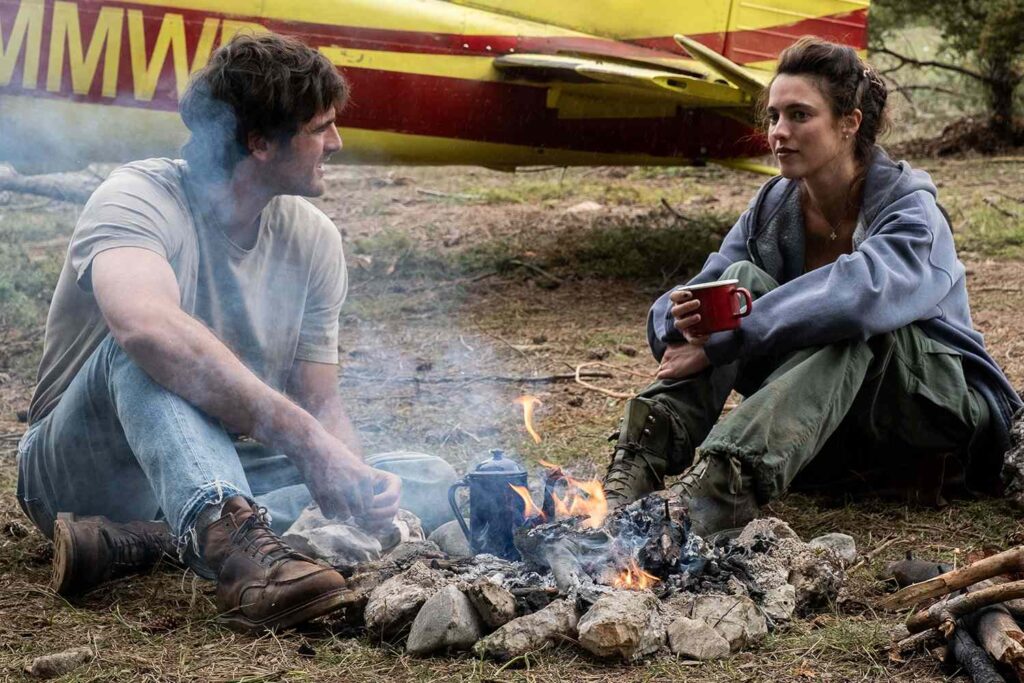
A lot of people are talking about Ridley Scott’s latest film, The Dog Stars, bombing at the box office, snagging just 8 million bucks on its opening weekend. And all I could think was, “Uhhh… how did you NOT see this coming?”
This remains one of Hollywood’s biggest blind spots. They put together packages and not movies. Let’s take The Dog Stars out of this. Doesn’t matter what the project is. When someone comes to you with a package that has mega-director Ridley Scott directing and shooting star Jacob Elordi starring, every single executive at every single studio says “yes.” Every time. Cause it’s a strong package.
The downside of that? The Dog Stars. Dud dud DUD subject matter.
I actually read The Dog Stars (the novel) and I specifically remember finishing it, dropping it down on the floor and, in theatrical fashion, screaming, “That’s it!????” The book was about some guy who’s mourning his dead dog in the apocalypse. Almost nothing happens in the story. And what’s up with this premise?? Why do we need to go to the apocalypse to explore someone’s feelings about their dead dog? YOU CAN DO THAT IN THE PRESENT!
I eventually concluded that the only reason the book became popular was because it made people cry. That’s it. “Dead dog. Sad.” That could be the logline of the book. I’m not kidding. It made no sense as a story and even less sense as a movie. I didn’t keep up with the development of the project but it looks like they may have changed some things and turned it into more of a basic apocalyptic adventure.
And guess what? That’s EXACTLY why no one went to see it! You watch that trailer and you say, “This is a basic bitch apocalyptic story.” The only thing that differentiates it is the dead dog stuff and they knew if they led with that in the trailers EVEN LESS people would’ve shown up. Which begs the question: WHY DID THEY MAKE THIS MOVIE???
I’m starting to realize that studios don’t have the control in this town anymore. They had it for awhile when people went to see superhero movies. But nowadays? The directors have all the control. Specifically the top 10 directors. Whatever those 10 directors want to do, the studios have to do them.
I’m learning this even as I hear rumors regarding The Ballad of the Ember Knight. Not from Aaron or Kieran or Brennan (they won’t tell me anything because they’re afraid I’ll spill the beans on the site). I’m hearing it from my other contacts. All they care about now is getting one of those top 10 directors attached. And the word on the street is that they’re very close! And once you get that director, you get that actor. And now it’s a huge package. That project is on a buzzy run like I’ve never seen.
I feel bad for Coyote vs ACME. Here is a movie that got ditched, was celebrated as this canceled tour-de-force. And then it sat in a trash can. Then another studio bought it. And finally it’s being released.
And after allllllllllllll that, nobody went to see it. All that celebration for nothing! The problem, of course, is that the big story (of how secretly amazing the movie was) was being spread to the exact demographic (people over 30) who had absolutely zero interest in seeing the movie.
You could’ve said Coyote vs. Acme was better than Casablanca and it wouldn’t have mattered. It’s a movie for little children. And I’m just guessing here, but I don’t think 7year-old Joey was sitting in the sandbox telling 7 year-old Billy, “You know, I just think Warner Brothers completely mishandled the Coyote vs. Acme situation.”
But all is not bad with the box office! Especially if your name is either Christopher Nolan or Spider-Man.
What’s crazy about the success of these two films is that they’re the two most adult films of the summer. The Odyssey’s success is particularly impressive when you consider that, prior to its opening, its claim to fame was being something your English teacher forced you to read. Christopher Nolan somehow took a homework nightmare and turned it into $1.4 billion.
And then you have Spider-Man, which is easily the most adult Spider-Man film ever made. Which is a risk when you think about it. Spider-Man is uniquely high school. But this latest iteration went deeper into the character than ever before, culminating in a very adult, character-driven finale. I know people in their 60s who love this movie. Sony better take half the profits they made from this film and invest it in cloning technology so they can keep Tom Holland around forever.
Speaking of Sony, I had a meeting there last week. I was meeting with a producer and he is all in on family films. If there is a great family film script, he wants it. “Get me an awesome four quadrant script, Carson!” I was kinda busting his balls a bit about how many family films he makes and he said, “Hey, this is my way to compete with IP. I don’t have Spider-Man. I don’t have Fast & Furious. But I have holidays. Everybody knows what Christmas and Halloween and Independence Day are. So I can use those to get big movies made.”
I’m not a family film guy but I know what a good concept looks like. So if you guys have one, keep me in mind!
Finally, I continue to look for something, ANYTHING, to watch on TV. I’ve gotten pretty desperate. It’s like clockwork with these shows. Two episodes are good and then the writing COMPLETELY falls apart. Why? Because the whole system for how shows are made is faulty. The only script you show them is the pilot. So you can spend an entire year getting it perfect. And because you always end the pilot with a fun cliffhanger, the second episode is usually good too. But now you’re writing the other six episodes in six months! Of course the writing is going to suck.
I decided to take a shot at Sterling Point, an Amazon show about a New York girl who inherits a tiny island in Canada and heads up there, where she discovers there are many mysteries to discover about her past. I’m five episodes in and while there are definitely aspects of what I just said (the lead girl’s brother – played by Mark Ruffalo’s kid – follows her up there and, within 24 hours, throws himself a giant birthday party that everybody comes to despite the fact that literally nobody knows who he is), the show is quite good.
If you ever spent your summers away from home when you were young, you know the strange little world that gets created. You’re surrounded by people you’ve never met before, nobody knows who you were back home, the entire social hierarchy has been wiped clean, and suddenly you’re free to become somebody different. Throw in raging hormones, that girl/guy you’re obsessed with, instant friendships, and that weird knowledge that this whole thing has an expiration date, and everything feels ten times more intense. Sterling Point does an amazing job of capturing that very specific feeling.
Most important of all, as is the secret to making anything with impact, the main character is instantly lovable. You’ll follow her anywhere. She’s very sympathetic and sweet and raw and open and we want so desperately for her to find the truth to all these questions she has.
Writing, in many ways, is so simple. Write us a character we love and we’ll come back week after week to watch them. And the nice thing about the script is that it’s got some plot to it as well. So it’s not all soap opera scenes. It’s worth checking out.
What are you guys watching? What did you see? Is Coyote vs. Acme as good as everyone says it is?