
Search Results for: F word
IT’S MORE ABOUT THE CHARACTERS THAN THE PLOT
I used to think plot was the only thing that mattered. If you could follow Blake Snyder’s famous beat sheet and hit every one one of his predetermined page-targets, you’d create a mathematically perfect screenplay. Eventually I realized that where the real power lies is in creating compelling characters. If you can make us like your hero, add depth to your characters, and execute arcs for your key characters, that’s where the magical recipe for success lies. The proof-is-in-pudding moment for me was when I realized there’s no such thing as a good well-plotted movie with weak characters. However, there are plenty of good movies with weak plots but great characters (Rushmore, Flight, The Wrestler, Whale Rider). Ideally, you want both. But great characters are the deodorant that covers up a smelly plot. (bonus: Here’s a quick way to add instant character depth. CONTRAST. If the quarterback of the football team is charming and popular, there’s no contrast. But if the quarterback of the football team is awkward and shy, there is. Contrast creates instant depth).
PROSE IS ONE OF THE LEAST IMPORTANT COMPONENTS OF SCREENWRITING
I remember once spending an 8 hour day trying to get the prose just right on a single screenplay page. What I learned many years later is that no one gives a crap about your ability to write beautifully if they’re bored to tears by your story. It’s always story first, guys. Get them hooked and they won’t care how average the writing is. One of the most talented prose-writers I know started a blog a long time ago. Naturally, I was excited to read it. After a week, I never went back to it again because, while the prose was magnificent, the content was boring as f*&%. Focus on the content. That’s what readers respond to.
DON’T TRY AND BE A SYSTEM DISRUPTER
When I first got into screenwriting, all I cared about was re-writing the rulebook. I wanted to tell stories backwards, break the fourth wall, introduce an entirely new type of formatting I thought was better (I’m not kidding). As exciting as all of this was, it wasn’t getting me any better at what mattered – writing a compelling dramatic story that hooked readers and kept them interested until “The End.” If you’re trying something different because you think it will make your story better, go for it. If you’re trying something different because you’re raging against the machine, turn around and start over.
COMPLEXITY IS FOOL’S GOLD – KEEP IT SIMPLE
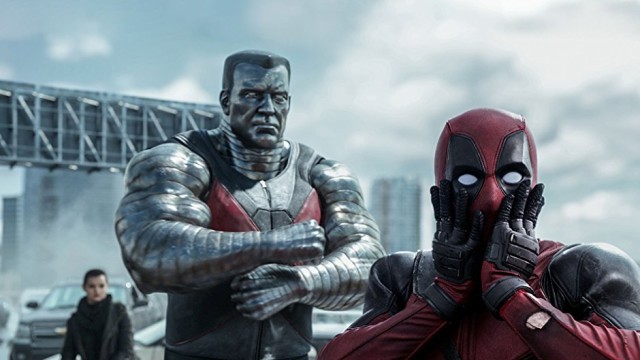
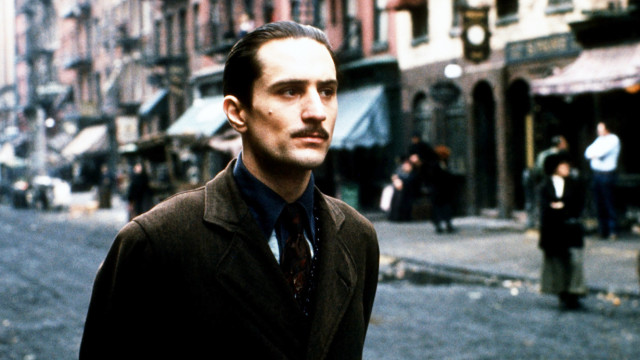
I can’t emphasize this enough. It’s the biggest lesson I’ve learned throughout this journey. When we start writing, not only do we want to disrupt the system, but we want to write the single greatest screenplay that’s ever been written. So we add tons of characters, lots of subplots, a timeframe that goes on for years, flashbacks, flash-forwards, a narrator or two. All you’re doing when you add these things is making your story hard to navigate, for both you and us. The simplicity of movies like Deadpool, Nightcrawler, Ferris Bueller’s Day Off, Rocky, Logan, Once, Baby Driver, Her, Get Out – that’s what you should be striving for. Yes, there are complex movies out there that are wonderful. The Godfather 2. The Shawshank Redemption. But those scripts take an amazing amount of skill to pull off – more than you realize. So save those for the second half of your career. For now, focus on writing a simple well-told story.
PRESENTATION IS MORE IMPORTANT THAN YOU THINK
I used to be of the mindset that my writing was such a gift to readers that if I made a spelling, grammar, or formatting mistake, they would look past it. Why wouldn’t they, I thought. What’s important is the bigger picture – whether the script is good or not. Now that I’m on the other side, I know that mistakes are the easiest (and quickest) way to weed out beginners. Writers who have been doing this for awhile take pride in their work and make sure that whatever they put out there is presented as professionally as possible. There are instances in the thousands of scripts I’ve read where a script was good despite a sloppy presentation. But I can count them on one hand.
DIALOGUE IS IMPORTANT, BUT NOT AS IMPORTANT AS THE SITUATION YOU COME UP WITH TO INSPIRE THE DIALOGUE
Unlike prose, good dialogue is actually important. However, beginners go about writing dialogue the wrong way, focusing on clever witty banter as opposed to the real secret to good dialogue – unresolved issues between characters. All of the best dialogue is built around two (or more) characters who have unresolved business. Sometimes they battle each other straight up on that business (John McClane and his wife arguing about their marriage when he gets to LA). Other times they keep their issues to themselves, resulting in conversations dominated by subtext (imagine two old lovers meeting for coffee for the first time in years who talk about how wonderful their lives are when what they really want to say is how much they miss each other). So focus less on trying to be Diablo Cody and more on building scenarios that inspire interesting conversation.
THE MOST POWERFUL TOOL IN SCREENWRITING IS CONFLICT
Conflict makes every aspect of your script more interesting. Conflict within one’s self. Conflict with outside forces. Conflict between people. The variations of conflict – full-on fighting, passive-aggressiveness, ignored problems, dramatic irony. Think of a script as an empty tube of toothpaste and you need to get every last inch of that toothpaste out if you’re going to brush your teeth. Put pressure (conflict) on every square inch of that tube (your script). That’s what’s going to bring out the best in your story (as well as a bright smile).
SPLITTING THE SECOND ACT IN TWO
For the longest time, the second act was terrifying to me. It was this giant 60 page black hole with no form or purpose. I would fudge my way through it on every script. Needless to say, the results weren’t ideal. However, once I learned to split the second act in two (two sets of 30 pages), writing scripts became a lot easier, especially if you map out a mid-point twist (a major event in your story that throws the plot off-kilter at the midpoint) ahead of time. Also, remember that the second act is about conflict. So if you keep throwing conflict at your hero, both from outside forces, from other characters, and from within the character, you should get out of your second act unscathed.
FIGURE OUT THE ENDING BEFORE YOU START WRITING
It’s fine if you’re anti-outline. Everyone has their own creative process. Although I’d argue that 99% of the people who refuse to outline are people who’ve never tried it. But that’s a discussion for another time. At the very least, you should have your ending figured out before you start writing. Screenplays aren’t like novels. They’re much more focused. We need to get to a very specific place within two hours. And, over time, I realized that when you don’t know where you’re headed, you get lost. And the only way to find your way back, is to write like 20 drafts. In order to save yourself a lot of time, figure out your ending first. And I promise you, writing your script is going to be a lot easier.
THE TWO BEST MINI-PIECES OF ADVICE I EVER RECEIVED WERE “SHOW DON’T TELL, IDIOT” and “MORE SETUPS AND PAYOFFS, MORON”
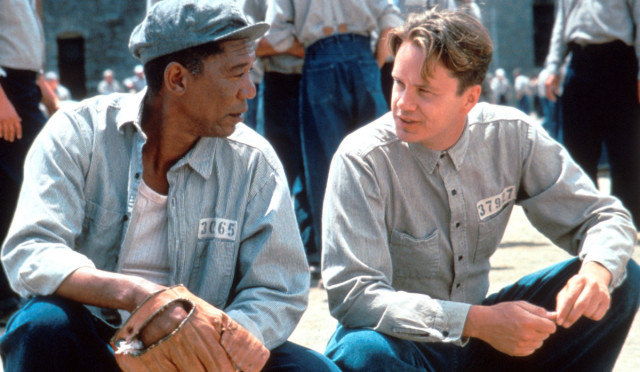
Both these tools are small, but they easily give you the most bang for your screenwriting buck. If you have the choice of writing a kid who can’t stop talking about his dead father or giving that same kid his dead father’s watch that he fiddles with every time he thinks of him, go with the latter. Show don’t tell. Also, the best moments in a script tend to come as a payoff to an earlier setup. One of the greatest endings in movie history, The Shawshank Redemption, builds its legendary finale off a series of payoffs (hiding the hammer in the bible, the Rita Hayworth Poster, the buried box by the tree). Just remember an important rule when using these: With great power comes great responsibility.
Carson does feature screenplay consultations, TV Pilot Consultations, and logline consultations. Logline consultations go for $25 a piece or 5 for $75. You get a 1-10 rating, a 200-word evaluation, and a rewrite of the logline. I highly recommend not writing a script unless it gets a 7 or above. All logline consultations come with an 8 hour turnaround. If you’re interested in any sort of consultation package, e-mail Carsonreeves1@gmail.com with the subject line: CONSULTATION. Don’t start writing a script or sending a script out blind. Let Scriptshadow help you get it in shape first!

So I got to thinking after Monday’s post. Because people wanted me to expand on the topic – How to break in. And I’ve spent the last two hours, sitting in this chair, staring at the wall, thinking about that and only that, looking for that kernel, that ONE MAGICAL MORSEL, that could somehow distill this answer down into a single actionable piece of advice. “JUST DO THIS AND YOU’LL BECOME A PROFESSIONAL SCREENWRITER” was the goal.
Needless to say, that was a failed experiment.
Sort of.
Whenever I thought I’d come up with something, I’d realize, “But they still need to put 7500 to 10,000 hours of work into learning how to write.” There was no way around that. And I think that’s the part no new screenwriter wants to hear. Or, it’s not so much they don’t want to hear it. It’s that they’re looking for a shortcut, a way to shave off a thousand hours here or a thousand hours there. I suppose that’s possible if you’re one of the lucky ones – a writer with innate talent. But, baseline, we’re talking about 5000 hours AT LEAST before you’re ready.
Assuming you’ve put in that time, there’s ONE THING I’ve found is the closest you’re going to get to a single “Holy Grail” piece of actionable advice on how to break in. And I figured it out by going in the opposite direction. I asked myself, “Okay Carson, what is the WORST thing a screenwriter could do? The one thing that would ensure failure?”
And the answer to that was easy: A bad idea.
The most common problem I see in amateur screenwriting is BAD SCRIPT IDEAS. I read so many submission e-mails where I literally close my eyes, slowly shake my head, and think, “What is this person thinking??” I know, just by looking at that logline, that the script has ZERO CHANCE of being good. Not even .00001%. Zero. And it’s sad. Because even if they’re a good screenwriter, they’re working with a faulty premise. There’s no strange attractor, no clear sense of conflict, no irony, no clear goal, no imagination, no clarity. The idea is just HORRIBLE.
Horrible idea generation tends to break down into two types. The beginner screenwriter who doesn’t yet know what constitutes a good idea. And then the more frustrating scenario – a writer who simply doesn’t realize his idea is bad. This usually happens because a) he doesn’t ask anybody whether his idea is good or b) nobody tells him his idea is bad. And “b” is, unfortunately, a common scenario. Nobody wants to be the asshole. Nobody wants to destroy the writer’s enthusiasm. What they don’t realize is that by not being truthful, they’re sending that writer on a one-year journey of misery where they’ll be turned down again and again, because people either won’t like the idea enough to read it, or the ones who do read it, will hate it because the idea was faulty in the first place.
This is why I encourage people to send me their loglines. I rate them 1-10. If it’s below a 7, I tell them not to write it. And if you don’t have $25, find a friend who knows screenwriting and ask them to do the same. Make sure you preface it with, “Please please please be honest. Tell me if it sucks.”
This indirectly leads us to our Holy Grail answer. The one thing that gives us the BEST CHANCE at breaking in is… A GOOD IDEA!!!
That’s all it takes to open all the doors, to line up all the agents, to get the studios bidding. Ehh, not exactly. But what a good idea does do is it INCREASES YOUR CHANCES AT SUCCESS EXPONENTIALLY. Everyone will at least open your script if it’s a good idea. And since Hollywood is a numbers game, the more reads you get, the better the chance you’ll finally get that “yes.”
All of this begs the question: What is a good idea, Carson?
Look, if I had a bunch of great script ideas, I wouldn’t be posting them here for you guys. I’d be writing them or hiring other writers to write them. A great script idea is no different from a great song hook. You don’t know if it’s going to catch unless you put it out there and see what people think. The advantage YOU have is that it only takes minutes to come up with an idea. And it only takes minutes to send that idea off and get someone’s opinion. So there’s power in that. You can send a lot of ideas out there with very little time wasted. That’s preferable to wasting an entire year of your life on a script only to learn afterwards that the idea sucked.
Or you know what’s worse than that? Is writers who don’t even realize that that’s the reason their script failed. They might assume they’re just bad writers and quit. But had they been working with a GOOD premise instead of a BAD one, everything about their writing would’ve been better. I’ll give you a real-world example of this. Dan Gilroy, who wrote one of my favorite scripts, Nightcrawler – great character, unique premise – also wrote a new Denzel movie, Roman J Israel, Esq. Awful premise. Confused concept. Bad script. From everyone I’ve heard who saw the movie – they say it’s bad. That bad idea turned Gilroy into a bad writer for one script. That’s how important concept is.
Cause I don’t want to leave you guys out in the dark. Here are the last three articles I wrote about how to come up with a good script idea. Read them. Embrace them. Make the most of them.
The Secret To Better Movie Ideas
The Power of Reinventing Ideas
Ten Tips to Come Up With Better Movie Ideas
But the main thing is GET FEEDBACK on your idea. Hell, you have one of the best screenwriting networks on the web right here at Scriptshadow. Take advantage of it! Tell people to be “brutally honest” when assessing your idea. Because if you’re SUPER DUPER EXCITED and tell them, “This is my best idea ever,” before asking their opinion, they’re going to lie to you. They don’t want to rain on your parade.
Good luck!
Carson does feature screenplay consultations, TV Pilot Consultations, and logline consultations. Logline consultations go for $25 a piece or 5 for $75. You get a 1-10 rating, a 200-word evaluation, and a rewrite of the logline. All logline consultations come with an 8 hour turnaround. If you’re interested in any sort of consultation package, e-mail Carsonreeves1@gmail.com with the subject line: CONSULTATION. Don’t start writing a script or sending a script out blind. Let Scriptshadow help you get it in shape first!
Genre: Action
Premise: When his family gets stuck in Hong Kong’s newest super-scraper during a fire, a former FBI agent must figure out a way to save them.
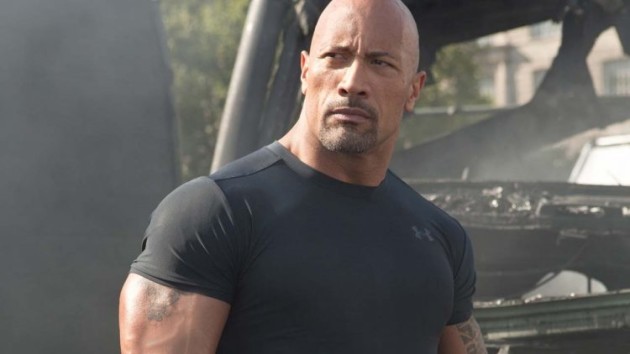
About: The Rock is big. Therefore, it makes sense that he only goes big. Big monsters (Rampage). Big earthquakes (San Andreas). And now, Big Buildings. Rawson Marshall Thurber is writing and directing. Thurber directed two movies that over-performed beyond everyone’s expectations (We’re the Millers and Central Intelligence), and is therefore moving up to the big leagues – Summer Tentpole Action. This is actually a smart path for directors wanting to get into action. Direct a comedy (cheap to make). Use your comedic success to pitch an action-comedy. Use that film’s success to go straight action.
Writer: Rawson Marshall Thurber
Details: 117 pages – 3/10/17 draft (Revised)
There’s a story in Hollywood that goes like this. Die Hard comes out. It becomes a smash hit. Everyone in town loves this movie so much that a pitch trend is born: “Die Hard on a…” If you weren’t pitching your script with those four words at the beginning of it, you were out of touch. “Die Hard on a boat.” “Die Hard on a bus.” “Die Hard on a space shuttle.”
This pitch trend goes on for YEARS, with “Die Hard on a…” eventually becoming the single most popular way to pitch a movie ever. It went on for so long, in fact, that young execs a decade later who’d never even seen the film, were now pitching “Die Hard in a…” to their bosses. One cocky exec hushed the room, as he felt like he had the Die Hard pitch of all Die Hard pitches. “Are you ready for this?” He says to his boss, adding a dramatic pause for effect. “What about… Die Hard in a building?”
In many ways, this story was bigger than just the joke, as it was a commentary on how ignorant studio execs had become – these bean counters with zero artistic ability were making major decisions about what made it to the big screen. And they didn’t even know they were pitching the original Die Hard. But maybe – JUST MAYBE – that infamous studio exec was ahead of his time. Because guess what? 20 years later. We finally have it. Die Hard in a building.
Will Ford is a former FBI agent who specialized in hostage situations. After one of those situations goes bad enough that Will loses a leg, we cut to ten years later, where Will is now looking for a job. Luckily, his old friend from his unit, Horace, gets him set up with one. In Hong Kong.
The billionaire owner of a new skyscraper, Zhao, needs a security and safety evaluation of his building in order to get the insurance people to sign off on it. The building is called The Pearl, and it’s the tallest building in the world. In fact, it’s its own little city, with a mall and a garden and elevators without cables. Shit, I think there’s even a zoo in it somewhere.
Will’s staying on the 98th floor with his family while in town. The floor is bare, as everything above the 95th floor needs Will’s ‘okay’ before they can start renting it out. When Will heads outside to take a quick breather, his laptop, which contains the only copy of the building’s secret security system, is stolen.
This starts a chain reaction of events across the city where Will must get his laptop back. However, back at the Pearl, someone sets fire to the 96th floor, just a couple of floors underneath where Will’s family is staying. He will now have to get back inside the Pearl somehow, entering the building above the level of the fire, and figure out a way to rescue his family. I, for one, hope he succeeds.
I really liked this script for 40 pages. Then it started crumble, like a past due Pepperidge Farm cookie. I take that back. Those cookies crumble regardless of if they’re past due. But you get what I’m saying.
This building was so damned cool. And I liked that Thurber didn’t throw some generic bland description at us like: “It’s a rad technologically advanced building with cool gadgets in it!” Just like we discussed with Club Lavender the other day, there’s a ton of specificity built into this skyscraper, and that’s what kept my suspension of disbelief suspended. Thurber’s description was so specific, in fact, I even looked up the building online, assuming it had to be real.
Thurber also did a good job of conveying how big and impressive this thing was. When size matters in your screenplay (if your script follows a giant monster, a huge spaceship, an enormous skyscraper), it helps if you VISUALIZE that size for the reader. Just saying, “It’s really big” or “It’s 3000 feet tall,” isn’t a visual. Thurber includes this line in the video demo of the building: “It’s so tall, you could fit the entire Empire State Building in it twice.” Aha! Now that I can visualize.
Unfortunately, the plotting in this script is very clumsy. We have these weirdly specific setups, such as the family being placed on a deserted 98th floor. Or that the bottom half of the building is filled up but the top half is empty. And we also have this deal where an insurance company needs to okay the top 100 floors before Zhao can rent them out. Each of these setups were so blunt in their conception, it made it blatantly obvious that a writer had shoehorned them in there.
Remember that your job as a writer isn’t just to plot. It’s to make that plot invisible. That’s one of the primary skills of a screenwriter. Anybody can write big obvious plots. It takes a skilled hand to mask the exposition or place a sheet over the plot gears, not unlike a top-flight real estate agent steering potential buyers eyes away from the house’s weaknesses during a showing.
But the biggest problem with the plotting is that the main character spends almost half the movie OUTSIDE THE BUILDING. The building is your strange attractor. Plot-wise I sort of understand this decision. It creates an action-movie-friendly scenario by which the main character must do the impossible and find a way into the building through one of its upper floors to save his family.
But when you have a toy everyone wants to play with at the party, you don’t toss it in the closet and lock the key. 90% of this story needed to take place inside the strange attractor, which is the building! That’s the big ticket item we paid for. We don’t want to see your hero running around the streets of Hong Kong. We can get that in any cheap Hong Kong B-Action movie. We want the building, baby.
With that said, once Will does get in the building, things get fun. There’s a lot of cat-and-mousing around the unique super-structure as Will’s family attempts to escape the bad guys, all while the fire continues to grow. And there are plenty of twists and turns, with allies turning into foes, and a growing plot that may or may not lead back to Zhao. I could see all of this being entertaining if they nail the production of the The Pearl.
But the makers of the film would’ve done well to study why Die Hard was so successful – it had a simple yet powerful plot. This plot was too messy for its own good.
[ ] What the hell did I just read?
[x] wasn’t for me
[ ] worth the read
[ ] impressive
[ ] genius
What I learned: I never understand why writers do this. Stay with your strange attractor. You have a cool ass super-building unlike anything we’ve seen on film before. Why is our main character outside of it for half the movie? Spend every second of the film playing with your toy.

Sorry guys. I couldn’t get into Gerald’s Game. I wanted to watch and review it but I immediately realized the movie was less about the story and more about Acting! With a capital “A!” I’ll revisit it at some point because I want to see how they handled the ending – still one of the most gruesome and clever endings I’ve ever read in a book. But that will have to come at another time.
Instead, I decided to do something I’d been putting off for years. I have this giant folder of screenplays I haven’t filed away yet. Every pdf is just a script title. Which meant I would have to open the script, see who wrote it, Google the info, then file it away depending on what I discovered (Read, Produced, Black List, Read Later, etc.).
These scripts ranged from 2 years old to 20 years old. After about an hour of this, I noticed that my mood had changed considerably. Earlier I was watching football, eating a Shack Burger, feet up, happy. I was now noticeably downbeat, on the verge of depressed.
What had happened?
Well, every time I looked up a script, it went like this: Find an old article mentioning the script (made the Black List, got a director attached, optioned it, if they were lucky sold it). And then, when I checked their IMDB to find out what they’d done since… NOTHING. It was like every one of these writers had been erased from existence. This happened a good 100 times, lol. And I chuckle when I say that more as a coping mechanism than anything.
It depresses the hell out of me when writers don’t succeed. I want them to reach their dreams of paying their way through life as a professional screenwriter. I don’t want anyone to fail.
This led me to the question: How DOES a screenwriter succeed? How do they avoid this curse? Is there one thing they can do to rise above everyone and become one of the cool kids for good?
This is a harder question to answer than you’d think. I remember asking it to the agent of a writer who’s on my Top 25. We both agreed that his client was a much better writer than several big name screenwriters who wrote in his genre. So why wasn’t it him who was getting those big assignments? Why was he still struggling to break into the A-List? Point blank the agent looked at me and said, “I don’t know.”
One reality that might help answer this question is how Hollywood determines success. They do so via produced credits. There are some caveats to this (a straight-to-VOD credit doesn’t carry a lot of weight) but for the most part, that’s the endgame. Because while selling a script makes YOU money. Getting that script turned into a movie makes EVERYBODY ELSE money.
So how do you do that? How do you write a script that gets made into a movie? There are clearly a dozen ways to answer this question. You can write something “marketable.” You can write something “actor-driven” in order to attract high-caliber actors. You can hop on the current trend (Jane Wick The Biopic). And if you’re a good writer who’s honed their craft, any of these can result in a sale. But I think the best way to break in and stay in these days, is to write a script that gets people excited. Scripts that get a lot of buzz get major talent interested. And once talent is interested, the movie finds a way to get made.
The formula for a “Get People Excited Script” is four-fold.
1) Give us a concept that’s fresh in some way.
2) Give us something that promotes your unique voice.
3) Give us something that takes chances.
4) Give us something you’re passionate about.
The reason I highlight these four things specifically is because these are the things that are directly responsible for getting people to talk about your script. Whenever you come across a fresh original idea, you feel the hair on your arms stand up. Whenever there’s a writer with a weird new voice, everyone wants to talk about them. Whenever you read a script that surprises you with the chances it takes, you want to tell someone about it. And the way passion works is: if you’re passionate about your script, we’re going to feel that passion on the page. Your passion then becomes our passion.
Because think about it. All of these readers and managers and agents and producers are essentially filing through the same ether of screenplays I am. And if they’re anything like me, they’re seeing all these scripts they’ve already read before: “Really, another version of Crank?” “Really, another dark Western?” “Really, another biopic about the first whoever?” That’s not to say those scripts can’t be executed well and turn out good. But everyone’s looking for that script that’s unlike anything they’ve seen before – something they can get behind, announce to the world, and really be excited about.
And once you’ve written a movie that’s pulled in big actors and a big director? You’ve bought yourself work for the next ten years. So when you sit down to write your next script, I’m not saying you need to check all these boxes. Writing a great screenplay is never that black-and-white. But you should definitely be thinking about this list. In other words, if you don’t have the “take chances” component, maybe you make up for it because you’re Level 100 passionate about the story. Cause, in the end, I do think that the way you become a part of this town is to write something they’re never going to forget.
You guys have been KILLING IT with the submissions and the votes. We continue to find and celebrate good writing. Let’s do it again this week. What do you say!
By the way, I’m probably going to be reviewing Stephen King’s Gerald’s Game on Monday. So if you have Netflix, watch it so you can participate in the discussion. It’s the ultimate Contained Thriller and a huge writing challenge (which is why it’s taken so long to make). But I hear the writer nailed it.
How to play Amateur Offerings: Read as much of each script as you can and submit your winning vote in the comments section. Votes will be counted through Monday, 11:59pm Pacific Time. Winner gets a script review next Friday!
Title: Human-Like
Genre: Horror
Logline: After learning her deceased mother might still be alive, a young woman traces the mystery to an abandoned farmhouse occupied by eerie mannequins – mannequins that move when no one’s looking.
Why You Should Read: Haunted dolls/puppets/mannequins. Staples of the horror genre for decades. But here’s my problem: most of the time, the real threat turns out to be something else — like ghosts or a masked killer. Did Annabelle even blink? Of course, there’s the “Child’s Play” and “Puppet Master” movies, but those are closer to black comedies. “Human-Like” is my attempt to create a sincere, creepy film that delivers on the promise of inanimate objects coming to murderous life. The story was inspired by the John Lawson house in upstate New York, a supposedly abandoned residence with oddly dressed mannequins on the porch. When I read that, I knew immediately – horror film! Thanks for your time and I appreciate any thoughts you might have.
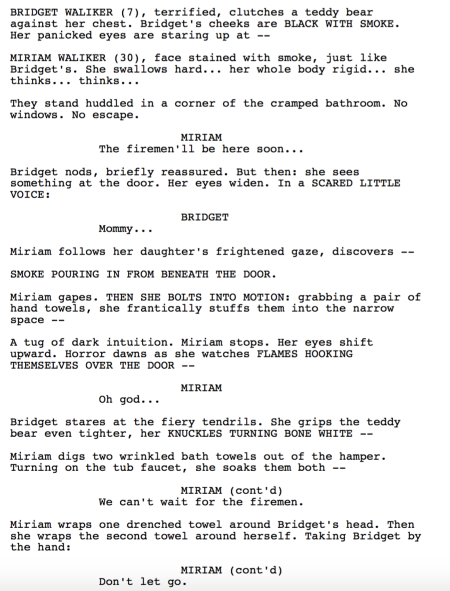
Title: Therapist of the Year
Genre: Comedy
Logline: A marriage counselor’s quest for the coveted therapist of the year award gets put in jeopardy when the world’s worst couple decides to blackmail her into taking them on as clients.
Why You Should Read: A hysterical breakdown of relationships. A rounded ensemble of oddball and memorable characters. Billed as “It’s Always Sunny in Philadelphia” meets “What About Bob”, Therapist of the Year is guaranteed to make you laugh and possibly even cry, as well as providing a litany of unforeseeable plot twists, generally not seen in the broad comedy genre, which will keep the audiences at the edge of their seat.
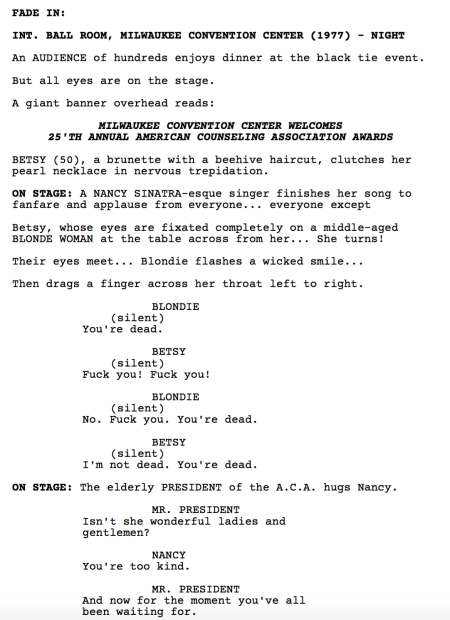
Title: Anything Helps
Genre: Dramedy
Logline: An ad agency copywriter feeling unfulfilled at work and annoyed by recent run-ins with pushy panhandlers decides to leverage his marketing expertise to become the Don Draper of beggars.
Why You Should Read: I’m a huge fan of Sorkin, Mamet, and Tarantino for their dialogue-driven scripts. If you like dialogue-driven scripts, I think you’ll like this one.
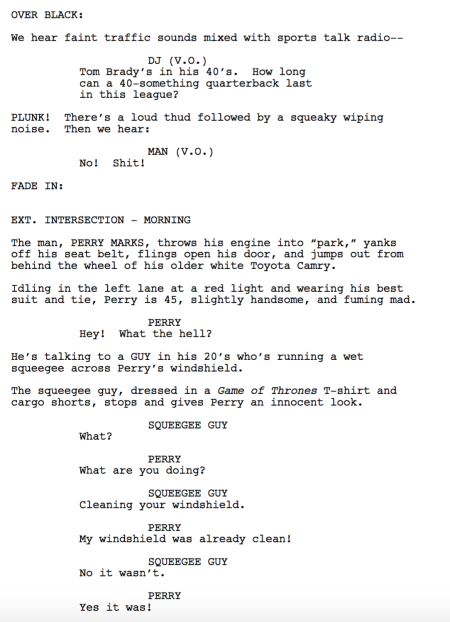
Title: The Firefly Gang
Genre: Western Action-Adventure
Logline: When a young girl’s family is threatened over unpaid debts, her older brother goes after the bounty on a killer bear. When he doesn’t return, she pulls together a rescue party of ragtag friends to find him, venturing out into a Wild West full of bandits, native tribes, and monsters.
Why You Should Read: My partner wanted to write a monster movie. I wanted to write a Western. So we did. Our last monster script placed in the quarter-finals of the Nicholl, so it was a challenge to take that similar element in a new direction. This is pure adventure in cowboy land, driven by heart and studded with the fantastical. It’s Stranger Things meets True Grit. It’s a movie on the page.
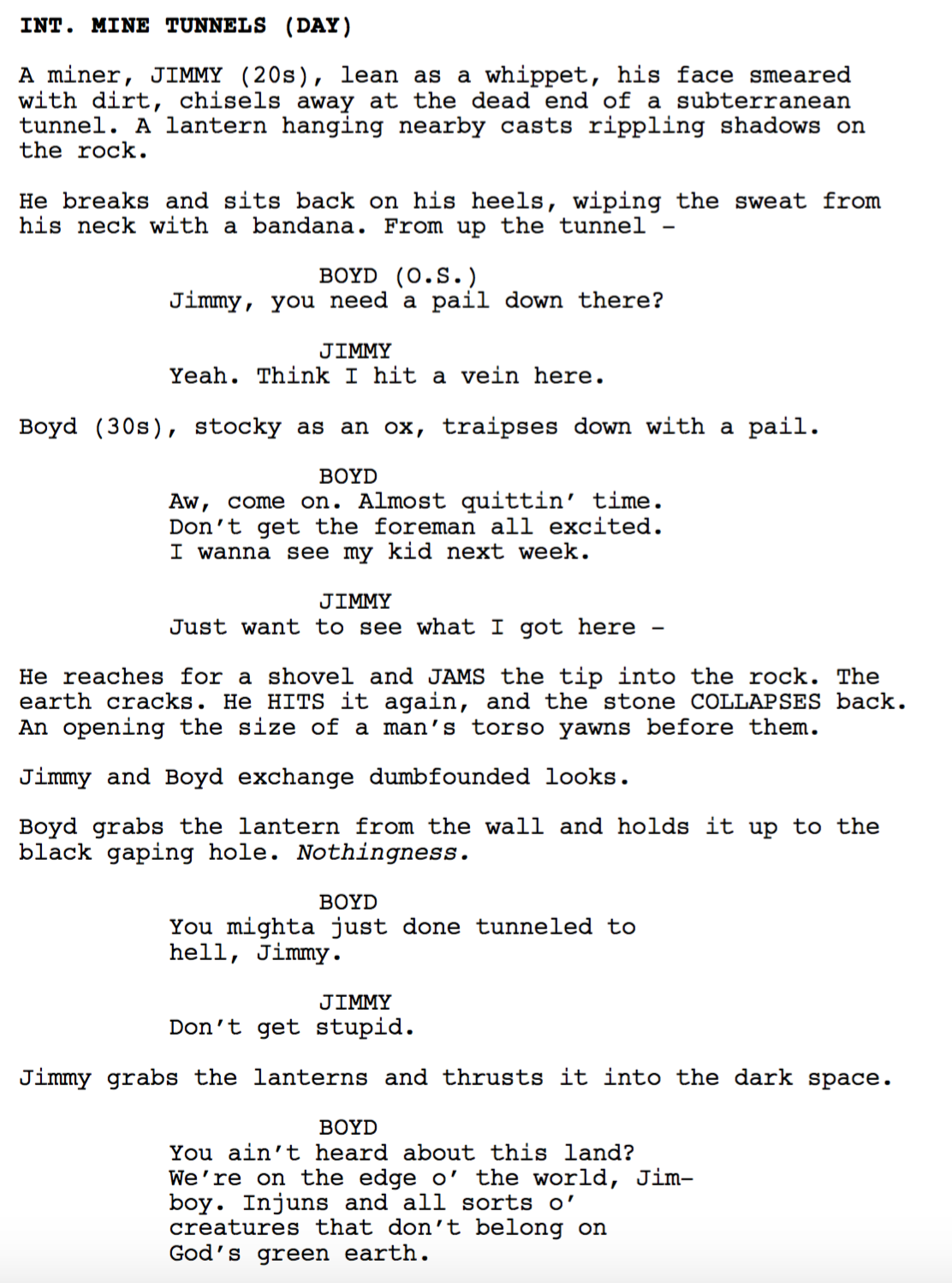
Title: Leo In The Dark
Genre: Sci-Fi, Drama Adventure
Logline: When a grieving man stumbles upon a strange camera that can peer into the ghost world, he sets out on a journey to find his late son and find the closure he never got… But as the owner of the device comes after him for it, a deeper plot begins to unfold that not only puts his son’s ghost in danger, but his living family as well.
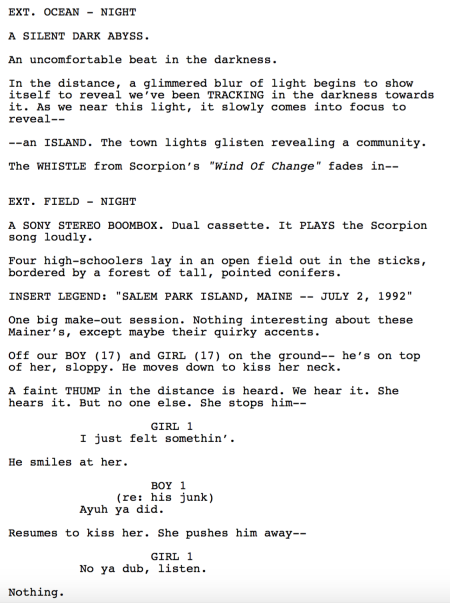
Why You Should Read: You reviewed a much earlier draft of this script back in 2013 and told me verbatim, “you have what Hollywood needs — an original mind”. You called my story Chinatown meets Ghostbusters, but it needed to be drastically simplified. In the 4 years since, I moved on to focus on producing and sharpening my writing craft—writing one other feature and two pilots. Earlier this year I had a cathartic moment: I decided that if I could only tell ONE story in my life and get it made into a film, it would be this earlier story you reviewed. SO, I dedicated 2017 to revising this story, taking the common denominator of notes I received professionally, and tweaking… And here it is. Based on your film sensibilities, and focus on theme, I truly believe you will love this revised, simplified script. It’s story world is Maine in 1992; Amityville meets Derry. Hope you enjoy.
Carson does feature screenplay consultations, TV Pilot Consultations, and logline consultations. Logline consultations go for $25 a piece or 5 for $75. You get a 1-10 rating, a 200-word evaluation, and a rewrite of the logline. All logline consultations come with an 8 hour turnaround. If you’re interested in any sort of consultation package, e-mail Carsonreeves1@gmail.com with the subject line: CONSULTATION. Don’t start writing a script or sending a script out blind. Let Scriptshadow help you get it in shape first!