
Search Results for: F word
A quote doesn’t always become part of the screenwriting lexicon because it deserves to. A lot of times, a quote becomes famous simply because it sounds good. And there’s nobody better at creating sexy-sounding quotes than writers. I mean, that’s their job, right? So today I wanted to sift through some of the sexiest writing quotes throughout the years and determine which advice is actually good, and which you should ball up and toss in the wastebasket.
“If you want to send a message, go to Western Union.” – This was uttered by a famous studio head in the Golden Age of Hollywood in response to screenwriters who argued that their stories should be about more than surface-level entertainment, that their movies should actually contain a theme, or “message.” Here’s the thing about this piece of advice. I think what the studio head was referring to wasn’t themes in screenplays. He was responding to bad writers clumsily executing over-the-top themes in screenplays. Of course your script should be about something. But if you’re on-the-nose and clumsy with the way that theme is executed, people aren’t going to respond well. As is the case with most aspects of screenwriting, you must integrate the component invisibly.
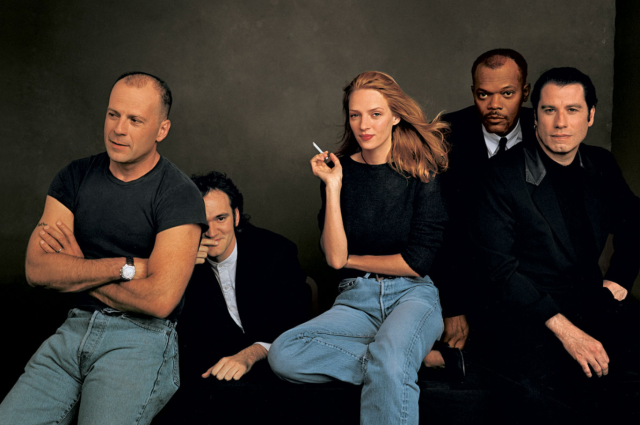
“Every story should have a beginning, a middle, and an end. But not necessarily in that order.” – This was one of the most famous screenwriting quotes to come out of the 90s, and it was born out of the success of Quentin Tarantino, specifically Pulp Fiction. The advice itself is fine. But it set a bad precedent to aspiring screenwriters, encouraging them to write these wild out-of-sequence narratives before they knew how to tell a simple story. Who cared about a narrative spine, stakes or compelling characters when you could rapidly cut back and forth between disparate storylines? As such, I would be wary of this advice. Learn to tell simple stories first and then move on to more complex narratives like Pulp Fiction.
“Kill your babies” – This popular piece of advice has been around for half a century, and the idea behind it is simple. Writers – especially beginner screenwriters – believe that every thing they write down on the page is gold. As in, once it’s there, it cannot be erased. Ever. To be a great screenwriter, you must be willing to eliminate that character, that scene, that subplot, that dialogue exchange, if it doesn’t keep the story moving forward. This is the essence of “Kill your babies.” You have to be a harsh editor. This advice was relevant when screenwriting was invented, and it will be relevant for as long as screenwriting is around.
“A professional writer is an amateur who didn’t quit.” – I remember when I first heard this quote and it kind of blew my mind. You can’t fail if you never give up. Death is literally the only thing that can stop you. But I do think the quote is dangerous. There are people who are 15 years into their pursuit of screenwriting (or whatever artistic endeavor they’re pursuing) who aren’t living productive lives. You have to be smart about it. As you get older and “adult” responsibilities creep in, you shouldn’t be hedging every aspect of your life on selling that big screenplay. It’s cute at 25. Not at 35. However, the awesome thing about writing is that it’s the cheapest of all the artistic pursuits. So make sure you’re giving the rest of your life ample attention and squeeze in time to write after those duties are over. As long as you love to write, there’s no reason to stop.
“Always ask yourself, what’s the worst thing I can do to my hero right now? Then do that.” – There are a lot of variations of this quote. Another comes from Kurt Vonnegut: “Be a sadist. No matter how sweet and innocent your leading characters, make awful things happen to them—in order that the reader may see what they are made of.” One of the biggest mistakes young writers make is that they’re too kind to their protagonists. Every aspect of their journey is too easy. You gotta put your protagonist through the wringer, man! For the exact reason that Vonnegut points out. We only find out who a person truly is when they’re faced with adversity.
“If there’s a problem in the third act, it’s because of an issue in your first act.” Of all the famous pieces of screenwriting advice out there, this is one of the ones I like the least, mainly because it’s vague. And there’s no quicker way to confuse a newbie screenwriter than to give them vague advice. I think what the advice is trying to say is that if something isn’t working in your third act, it means you didn’t set it up properly. For example, if your hero kills the dragon with some potion he randomly found two seconds prior, that would’ve worked better had you set the potion up earlier. But it doesn’t mean you needed to set it up in the first act. You could’ve just as easily set it up in the second act. So the advice here is more, “If something isn’t working in your climax, you need to set it up better somewhere.” Of course, that doesn’t sound as flashy, which is one of the problems with famous quotes.
“If you show a gun at any point in your story, it must be used later.” – I agree with this one. And note that “gun” is a stand-in for any weapon. Crossbow, hunting knife, bomb. And this is mostly due to the way we’ve been conditioned by cinema. It’s happened so many times in movies before, that if you DO show a weapon and don’t use it, it’s confusing to the audience. I remember reading a script once where the writer went to great lengths to highlight this sword on a wall. He described every crevice of the thing. I was convinced it would be used later to decapitate someone. Nope. It was never mentioned again. Drove me crazy.
“If I have anything to say to young writers, it’s stop thinking of writing as art. Think of it as work.” This one comes from Paddy Chayefsky and it’s something I’ve come to appreciate more as I’ve grown older. Screenplays only reach their potential during rewrites. And, unfortunately, when you’re on your 7th draft and nothing about your story is fresh or fun to you anymore, busting the computer open isn’t as easy as it was during that stream-of-conscious rollercoaster ride of a first draft. The good writers buckle down and they get the work done, even when it’s not fun. So I totally agree with Paddy here.
“Write drunk, edit sober.” – I don’t know who said this (was it Hemingway?) but this is the very definition of what’s wrong with famous quotes. This is such a sexy quote and so fun to say but it’s terrible advice. While writing drunk is fine to do every so often, you do not want it to become a crutch. You’ll be convinced that the only way you write good stuff is to get wasted, and that’s not sustainable. However, I do like the cousin of this quote, as it captures the spirit of it in a much healthier way: “Write from your heart; rewrite from your head.” Be non-judgmental when you write. Let yourself feel things without right-braining them to death. Then, when it’s time to rewrite, bring a more logical assessment to the writing.
“Grab’em by the throat and never let them go.” – This comes from Billy Wilder and I think it’s one of the most important pieces of screenwriting advice you’ll ever hear. Too many writers put the burden of investment on the reader. “You owe me,” is how they look at writing. No no no no no. Readers don’t owe you anything. It’s up to you to keep them invested. And the second you drop that ball, whether it’s on page 1 or page 50? They’re gone. They’re done with your script and they have that right. You want to grab your reader with the very first page and then every subsequent page, ask yourself, “Do I still have them?” If you don’t think you do, rewrite the scene until the answer is yes. That doesn’t your script should be one long action set-piece. You can use mystery, suspense, foreshadowing, conflict, dramatic irony, confrontation, anticipation, an intriguing new character, and, sure, a kick-ass action scene we’ve never seen before. You have hundreds of tools available to yourself. You are in control of whether your scenes are good or boring. Never take that for granted.
Carson does feature screenplay consultations, TV Pilot Consultations, and logline consultations. Logline consultations go for $25 a piece or 5 for $75. You get a 1-10 rating, a 200-word evaluation, and a rewrite of the logline. I highly recommend not writing a script unless it gets a 7 or above. All logline consultations come with an 8 hour turnaround. If you’re interested in any sort of consultation package, e-mail Carsonreeves1@gmail.com with the subject line: CONSULTATION. Don’t start writing a script or sending a script out blind. Let Scriptshadow help you get it in shape first!
Genre: Horror
Premise: A man’s life starts to unravel when he undergoes an experimental form of hypnosis to recall what he saw during a near-death experience.
Why You Should Read: The concept of this script is very loosely based on a true story. I actually knew someone who survived a near-death experience and he hasn’t been the same since. When I asked him about it he told me he didn’t remember what he saw but I had the strange feeling he actually did and was holding back for reasons I don’t know. Since the incident he’s left his family, quit his job and went off the grid. I honestly don’t know where he is now. — I’m a huge fan of horror movies and I believe “dread” is key component is some of the best of them. Any writer can throw in some good scares here and there but building up real dread for the characters and the story on a whole seems to be overlooked in many scripts I read these days. I feel like I’ve been able encompass this with BLACK BOX without losing the pace of the story. It’s a fast entertaining read with some big scares wrapped inside an intriguing mystery. I hope you’ll take the time to check it out and look forward to your honest feedback.
Writer: Stephen Herman
Details: 100 pages

I don’t know what’s the bigger horror film on the docket this weekend, Jigsaw or Suburbicon. Bada-BUM! No, but seriously. I don’t know what’s scarier. Pennywise or George Clooney thinking he can direct satire. BADA-BUM! I’ll be here all night. Try the veal.
No, but seriously. I’ve been looking forward to today all week! Black Box bowled down the competition in last week’s Amateur Offerings, so much so that it looked like we had another Amateur Offerings success story on our hands – an event that’s becoming more and more frequent, thanks in big part to you guys.
I was only worried about one thing going into the script – the dream aspect (the hypnosis). Putting dreams in the hands of an amateur writer is a bit like putting the recipe for a Gino’s East deep dish pizza in the hands of a line cook. It’s not like that cook won’t one day become a great chef. But it’s hard to bake the most luscious crust in the world when you’re still learning where the pans are located.
One of the biggest challenges for amateur writers is narrative structure – for their script to stay focused and purposeful all the way through. Dreams are anti-structure and therefore encourage the writer to move away from purpose. As a result, they’re the script’s undoing. The narrative becomes a loosely connected series of tripped-out scenes sewn around shaky logic. Let’s hope that didn’t happen with Black Box!
40 year-old Nolan Wright is recovering from a recent car crash that killed his wife. The crash, which left Nolan dead for six minutes, resulted in brain damage so severe that it’s gradually stripping away Nolan’s memories. Lucky for Nolan, he still has his beautiful young daughter, Ava, by his side. She’s the one thing keeping him going.
However, Nolan gets word that if he doesn’t do something soon about the brain damage, the world will start slipping away from him, including Ava herself. This forces Nolan to seek out Dr. Lillian Grey, an experimental doctor who’s on the cutting edge of memory recall. Lillian believes that if Nolan can remember everything that happened during those six minutes he was dead, he can permanently heal the brain and eliminate his amnesia.
This becomes increasingly important when Nolan loses his journalist job and the Department of Children and Family Services start sniffing around, trying to decide if Nolan is a fit enough parent to take care of Ava.
Lillian’s therapy involves a literal black box that you plug yourself up to. The box helps you go into the deepest levels of your subconscious, and this is where Nolan relives his crash. On that first trip, he finds footsteps near his crash, which he follows into the woods. It’s there that he sees a dead man hanging from a tree who quickly drops and starts walking towards Nolan backwards.
Nolan’s so freaked out that he pulls himself out of the hypnosis and says he’s never coming back. But in order to keep his daughter, he has to come back, and in a series of hypno-trips, Nolan will learn that this journey extends beyond him, and to a number of people who also cheated death.
Man, I can see why everyone voted for this.
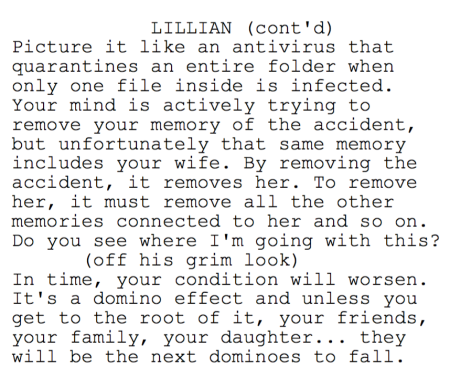
The first act is AWESOME. There was an assuredness in the writing that I wasn’t prepared for. Assuredness is a key trait of professional writing because professionals are better at knowing where their story is going. When you know where your story is going, you write with confidence. I mean, listen to how clear, dominant, and assured the character of Lillian is when she brings Nolan in.
With amateurs, there’s more of what I call the “shiny object” approach to writing. They’re often trying to figure things out on the page. Every once in awhile they’ll see something that’s interesting (a “shiny object”) and it’s like, “Ooh I’ll follow this for awhile.” Black Box didn’t have that.
Well, at least at first.
Once we got 15 pages into the second act, the tight narrative began to unravel. I could feel Stephen being tempted more and more by the shiny object, until it got to the point where it was the only thing left. The biggest problem was in explaining what was going on with Nolan.
I see this a lot. Whenever we come up with a high concept idea, there’s this pressure to construct a big flashy reason for what’s going on. So in Black Box, we find out that there are other people who also had near death experiences, and then there’s somebody who’s using these people to take their bodies and live in them… or something, because once you’ve gone through death, it’s easier to take your body?
To be honest, I barely understood it. And that’s the thing. When you try and get too big, you come up with a convoluted rule-set that’s hard to understand. And because we don’t understand it, we stop investing, we stop caring, and by the end, we don’t really know what’s happened. I know I didn’t.
Honestly, the issues in Black Box take us right back to yesterday. This shouldn’t have been about a flashy serial-body-stealing near-death-experience conspiracy. It should’ve been about characters. And this is my plea to amateur writers out there: stop trying to write the most-blowing mind-bending script ever. Just focus on the characters!
There are some good characters here. Nolan is great. The stuff with the car crash all felt honest and authentic. Ava is great. Lillian is great (minus her turn at the end). Gary is okay but could also work. The social worker who cares “a little too much” is great. Yet they get lost in this silly weird plot that doesn’t make any sense.
I mean at one point we have an ancient shaman killing a dog and becoming part of its soul. This isn’t what I signed up for.
I would strongly recommend dialing back all of the weird shit and focus more on the real-life character journeys. Keep the hypnosis scenes grounded. Have a simple and clear set of rules for what happens inside each hypnosis. Keep the mystery itself simple. Something that happened around the car crash. Don’t bring in people who died 50 years ago halfway across the world. We don’t care about them.
I know I sound like a broken record, guys. But simplify simplify simplify simplify simplify simplify simplify simplify blah blah blah a million more times.
Every time you overcomplicate things, you’re destroying your story.
Script link: Black Box
[ ] What the hell did I just read?
[x] wasn’t for me
[ ] worth the read
[ ] impressive
[ ] genius
What I learned: I love it when HUGE stakes can be conveyed simply and powerfully. Here, it takes just a single line to set up the stakes for the entire movie. It occurs when Lillian explains why this therapy is so crucial for Nolan: “In time, your condition will worsen. It’s a domino effect and unless you get to the root of it, your friends, your family, your daughter… they will be the next dominoes to fall.”
Genre: Horror
Premise: Back in 1838, a real estate agent must travel to a remote castle to bring a client back to town, ignorant of the fact that the client is a vampire.
About: Yes, they’re remaking the classic, Nosferatu. If that scares you, it should help to know that the director is the same director who helmed 2015’s creepy breakout hit, The Witch – writer-director Robert Eggers. Eggers got his start in the business as a production designer, which would explain the lush attention to detail of that film.
Writer: Robert Eggers
Details: 111 pages
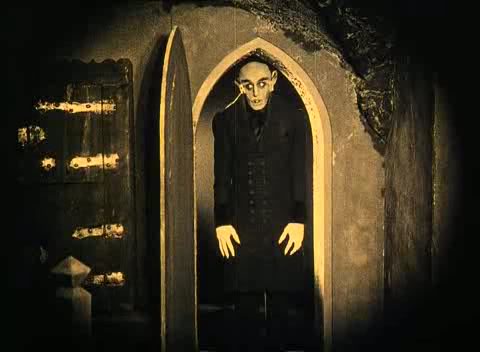
Double Disclosure. I was one of those people who didn’t like The Witch. I felt it was all ambience and zero story. Also, I’ve never seen Nosferatu. Sure, I’ve seen clips of it like everyone else. But despite its well known status as a classic, what I saw never intrigued me enough to make me go back and watch it. My assumption was that it was mostly about the creature design anyway. That the story would be bleh.
I’m hoping these two things aren’t a problem with this new iteration. I’m guessing that with more money comes more of a responsibility to make this market-friendly, and for that reason, both of my issues will be wiped out in one fell swoop. Let’s find out. On to some Nosferatu!
It is the year 1838. We are in the small seaside town of Wisburg, Germany. Real estate agent Thomas Hutter, and his wife, Ellen, have as rad of a life as you can expect in 1838. The only thing missing is a family and that should come as soon as Thomas starts making more money.
That opportunity presents itself when Thomas’s boss, Knock, informs him of a rich client who lives up in Transylvania who wants to buy a place here. There’s a catch. Thomas has to travel to him and bring him here, an excursion that will take two whole months.
Ellen, who’s had premonitions all her life, begs Thomas not to go. In the immortal words of Han Solo, she’s got a bad feeling about this. But Thomas wants to make that ching ching so he can get that bling bling, and goes anyway. Missssss-STAKE!
Needless to say, Thomas wakes up after the first night at Orlok’s castle with a giant bite-mark on his neck. Not only that, but Orlok has taken a creepy liking to Thomas’s picture of his wife, along with the lock of Ellen’s hair that he brought.
Note to all men: Do not carry a lock of your girlfriend’s hair near anyone named “Orlok.”
Meanwhile, back in Wisburg, Ellen starts having really fucked up sexual dreams and keeps telling anyone who will listen, “He’s coming for me.” I don’t think she means Thomas. The local doctor, Sievers, does everything he can to help Ellen, but she keeps going more and more insane.
Cut to a ship that’s now heading to Wisburg. What the crew doesn’t know is that that coffin they’ve agreed to ship to Germany? Yeah, that coffin has a vampire in it. Luckily, Thomas is racing across land to get back to Wisburg first. He instinctively knows that the extremely horny old man that is Orlok will stop at nothing to have sexy time with his wife. But I’m afraid it’s too late for that. Orlok is coming. And when he gets there, Orlok is coming.
Here’s what I’ll say about this Nosferatu. They did NOT sell out. This isn’t some made-for-Instagram-generation bastardization of a classic. While I’ve never seen the original, I’d be surprised if this new version was actually faster. Indeed, this story has all the expediency of a sailboat minus the sail.
What’s interesting about Nosferatu is that it doesn’t mine a single setting, like traditional horror films do, but rather jumps from location to location. We have the setup of Wisburg. Then we have the journey to Transylvania. Then we have the sequence at Orlok’s castle. We have the sequence of Ellen going insane. Then we have the journey BACK to Wisburg, from both Thomas and Orlok (one on land, the other on boat). And then we have Orlok finally in Wisburg (which doesn’t happen until page 75).
Why is this relevant? Well, with horror, there’s an expectation to hunker down and actually deal with the horror. When we’re jumping all over the place for half the movie before that can happen, it feels less like horror and more like adventure. And I suppose that’s okay if that’s what you’re going for. But, again, you’re working with EXPECTATIONS here. Horror audiences aren’t looking for adventure. They’re looking for horror. So if you’re not giving them a setting where horror can thrive, they get restless.
I wondered if this wouldn’t have been a better movie with Thomas AND Ellen traveling to Transylvania to meet Orlok. Staying in his castle. There are story trapping there as well, such as “How do you keep a story moving within a castle for a full 90 pages?” But there are ways to deal with that. You could’ve included some of the story in a spooky town just down the mountain from Orlok’s castle, for example.
It’s not that the story doesn’t work. Once we understand Orlok’s obsession with getting to Ellen, that plot engine keeps us engaged. Once you set up the expectation of something – assuming the components of that expectation are well-constructed – most readers will stick around to see the expectation met. Indeed, I wanted to see what would happen once Orlok got to Ellen.
But that want was more of a casual curiosity than a burning desire. I think that’s because the script introduced a ton of plot yet still managed to, somehow, feel slow. I just wanted to get to the promise of the premise. I mean, this script is titled “Nosferatu.” Let’s set this dude in a small town so he can start doing damage.
Sometimes we can fall in love with the history of our subject matter and give that precedence over the actual story. Sure, the whole Dracula on a ship thing is part of the lore. But did we really need to see that in this movie? Why not bring him and Thomas back in some spooky carriage ride, with Thomas wondering why they’re only traveling at night, and that way we’re back in Wisburg early?
Ehh, maybe I’m being too “Hollywood Executive.” Clearly this filmmaker loves slower more melodic storytelling. We’re all different. And, for all I know, he’s doing a beat-for-beat remake of the original. But that’s the thing. You DO have to respect the fact that it’s 2017. Not 1922. That has to factor into the storytelling. And I’m not sure it did.
[ ] What the hell did I just read?
[x] wasn’t for me
[ ] worth the read
[ ] impressive
[ ] genius
What I learned: When you come up with an idea, you want to ask, “What is is that audiences want to see when they come to a movie like this?” This should help inform how to approach your story. I’d imagine people would want to see a creepy movie in a castle with Nosferatu, or a creepy movie with him back in this dark dying town, Wisburg, everyone slowly goign crazy after he shows up. I’m not sure audiences want to see the logistics of how a vampire travels. But that’s just me.
Genre: Horror/Thriller
Premise: In 1984, a group of teenage friends suspect that their neighbor is a serial killer and spend the summer trying to prove it.
About: Summer of ’84 made last year’s Blood List and is currently in post-production. The writers are newbies. But the script is being directed by the trio behind the weird yet beloved breakout indie film, “Turbo Kid,” – Francois Simard, Anouk Whissell, and Yoann-Karl Whissell. I didn’t even know it was possible to have three directors on a film. Ya learn something every day!
Writers: Matt Leslie & Stephen J. Smith
Details: 111 pages

Don’t count out those 1980s nostalgia-driven small-town group of teenage friends horror movies just yet. Cause we’ve got another one coming at you courtesy of last year’s Blood List. I didn’t put much stock into “Summer” until I saw it was being directed by the trio who made Turbo Kid. At the very least, these guys have a unique voice. So their take on the Stephen King Steven Spielberg world of 80s teenagers should be interesting.
Of particular interest in today’s screenplay will be TROPES. Tropes are common beats within genres that are generally acceptable to use if they’re done well. However, if they’re not, they get hit with that most dreaded of labels – CLICHE! And no writer wants to hear that word thrown about in relation to their script. We’ll talk about tropes more in a second. In the meantime, let’s break down Summer of 84’s plot.
In case you have trouble reading titles, it’s 1984. The summer, to be exact. Davey Armstrong is 14 years old and things are looking up. He’s got a group of friends (geeky Farraday, big lug Woody, and punk Eaton, or “Eats”) that he hangs around with every day. And he’s even got a crush, 17 year old neighbor Nikki, who likes chatting with him. Life could be worse.
But Davey’s small Massachusetts’ town has been wracked by a series of missing children of late – teenagers specifically. And Davey suspects that his neighbor, 40-something Mackey, a charming cop, has been killing these kids and burying them in his backyard. At first, Davey’s friends think he’s nuts. But when someone they know goes missing and was last seen near Mackey’s house, they change their tune.
The plan is to stake out Mackey for a couple of weeks and gather evidence to bring to their parents. They know they have to be thorough because Mackey’s a cop. So that’s what they do. And because this is the 80s, their stakeout bag consists of two things – walkie-talkies and binoculars.
Meanwhile, Davey tries to get it on with the older Nikki, using her parents’ impending divorce as an emotional “in.” And it’s actually working! It seems like everything’s working until Mackey catches wind of the kids watching him. This forces the gang to unload their serial killer theory on their parents. It doesn’t go as planned, with the embarrassed parents forcing the kids to apologize to Mackey.
Their investigation a bust, it’s time to move on with their lives. And that’s what Davey plans to do. The problem is, he can’t get rid of a nagging feeling that something’s off about Mackey. It’s time to find out what’s going on once and for all. And hopefully live to tell about it.
Back to tropes.
There was a moment in Summer of ’84 where Davey waits for his mom to tuck him in for the night and leave the room. As soon as she’s gone, he busts out his walkie-talkie, calling his friends, while simultaneously watching the girl of his dreams undress in the next door house. I considered closing the script right then and there.
The 80s walkie-talkie thing. The girl undressing in the next door house. These are tropes. And tropes can work. But ONLY if they’re used alongside an otherwise original script. If the dialogue is popping. If the characters feel unlike characters we typically see in these movies. If the writing itself has a unique voice. If the plot is doing things you didn’t expect…
When you do these things, tropes work because they’re the familiar residing within the unfamiliar. However, when everything else in the story is familiar, then tropes become cliches. These kids were all kids I’ve seen before. The things they were doing (walkie-talkies, bragging about fucking moms) were all things I’ve seen before. So a trope about the girl of your dreams undressing in the adjacent house is just one more thing I’ve seen before. It’s the familiar within the familiar.
In the writers’ defense, this was likely written before Stranger Things and It came out. However! That doesn’t completely get you off the hook. If two other high profile movies/shows are making the same choices you are, regardless of whether those choices came before or after your script, it means you’re not digging deep enough. If you were digging deep enough, writers wouldn’t be using the same things you were. You’d be using stuff that NOBODY thinks of.
I also thought the dialogue could’ve been better. Whenever you have teenagers, that’s going to be a dialogue-dependent script. The dialogue will have to stand out. Some of the dialogue here is okay. But there were too many times where it only felt adequate. “I bet her hair smells like Vidal Sassoon.” “Definitely. If I was over there right now, she’d be pregnant.” “Guys, show her a little respect. Her parents are getting divorced.” “Statistically that means she’s, like, 78 percent more likely to engage in pre-marital sex.”
Not bad. But it almost feels like the safe version of how teenagers talk. That’s what I loved about Stephen King. He had his kids talk like real kids. There was never a sense that he was holding back. And that’s what makes a great writer. Someone who’s fearless and always pushing boundaries. If you’re afraid to offend or afraid to go too far, believe me, your dialogue will feel that way. Plus, King is just so damn clever. There’s always bite to his dialogue, even during the most mundane conversations.
Summer of ’84 gets better as it goes on. My favorite part was the relationship between Davey and Nikki. It felt like we were really experiencing the trauma a young girl goes through when she finds out her parents are getting divorced, and that brought some character development to a movie that was, for the most part, plot-based.
We talked about this yesterday. A plot feels empty unless you’re exploring multiple characters on a deeper level. And that’s why “It” worked. They took the time to get to know all the kids and their families. They took the time to add fears and flaws to all the kids. They even took the time to build character into the group itself, a self-identifying gang of “Losers.”
Remember, once you add an identity to a character, you can explore that character’s transformation throughout the script. So it isn’t just about “Will they catch the killer or not?” It’s about, “Will this boy ever become brave? Will he ever stand up for himself?” which was the case for the main character in Netflix’s “The Babysitter.” You can’t give your character an ending point if you never gave him a starting point.
Summer of 84’ isn’t a bad script at all. The problem is that there isn’t anything exceptional about it. If you don’t have any part of your screenplay that stands out, it makes it hard for the script itself to stand out.
[ ] What the hell did I just read?
[x] wasn’t for me
[ ] worth the read
[ ] impressive
[ ] genius
What I learned: With any horror script, there has to be a sense of danger present. Maybe not right away. But once we hit the second act, it should be there. I never felt that in Summer of ’84. It felt more like a group of kids having fun. Establish that sense of danger in your horror script and make sure the danger keeps bubbling up throughout. If we, the reader, feel safe for the majority of the journey, you’re not relying enough on fear.
Genre: Horror
Premise: A group of geologists in the Amazon stumble upon a fossil of a mysterious hand, and when they go looking for the rest of the body, get more than they bargained for.
About: The birth of an idea! Mexican cinematographer Gabriel Figueroa told producer William Alland about a myth he’d heard of a race of half-fish, half-human creatures in the Amazon. Alland revisited the conversation 10 years later, thinking it would make a good movie. He wrote some story notes, which writer Maurice Zimm would later expand into a treatment. Finally, Harry Essex and Arthur Ross turned the treatment into a full-fledged script. Listen to the people in your life, guys. Ya never know where your next idea might come from. What’s interesting about this film is that it was shot and projected in 3-D. However, the year was 1954, and the 3-D fad was dying quickly (hmmm, why does this sound familiar?). The Creature From The Black Lagoon was a last ditch attempt to save the format. However, it didn’t, and most people ended up seeing the film in regular format.
Writers: Harry Essex and Arthur Ross (story by Maurice Zimm, idea by William Alland)
Details: 79 minutes
When I go through all the old scripts that have been purchased or optioned throughout the years, there are tons that never get made. However, the one genre whose purchased scripts get made the most – BY FAR – is horror. It’s crazy. Almost every old horror script I find on my hard drive has ended up becoming a movie. It’s the friendliest genre to writers out there.
While I continue to look for stuff that hasn’t been made yet, I thought I’d review a horror classic that I hate to admit I’d never seen before. In fact, I was so ignorant of this film that I thought it and “Swamp Thing” were the same movie. I need to work on my water body differentiation. But yes, when I saw this film at the top of Itunes’ Classics list, I thought, “It’s about time for me to check this out.”
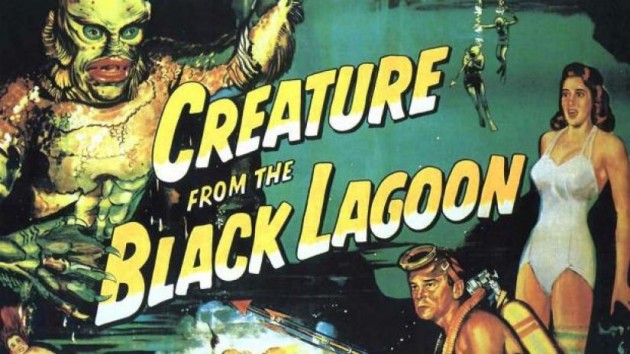
For those who haven’t seen “Creature,” it follows fish scientist David Reed and his girlfriend Kay, who go on an expedition into the Amazon with a small crew of scientists to find additional information on a mysterious amphibious hand that David’s old geologist teacher, Dr. Thomas, dug up.
When they get to the dig site, they find that the two men guarding the site have been killed. Hmmm, might a modern-day version of the creature have attacked the men? Meanwhile, David’s getting agitated with one of the crew members, Mark Williams, who only seems to care about money. But since Williams is funding the expedition, David has no choice but to suck it up.
Eventually they realize that the river drifts down into a secluded lagoon, so that’s where they go looking for more fossils. David and Williams do some deep-lagoon diving, where they eventually encounter the creature. At first they want to capture the thing, but when it starts killing their crew members, priorities change. It’s time to jet. There’s only one problem. The creature has lodged a blockade into the only exit. The ship is stuck there. And it’s time for battle.
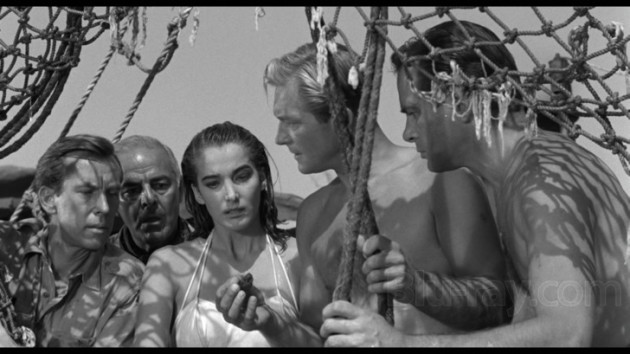
Wow, the first thing I noticed about this is how much influence it had on Spielberg. You can see a lot of the same shots that Spielberg uses. The creature’s hand, which we see throughout the first act, might as well be a shark fin. And the creature’s attack on the two natives in the tent, seen from outside, with only a bunch of shadows bustling around, had a distinctive “Jurassic Park” feel to it.
You can also see how this influenced James Cameron. I wouldn’t be surprised if he’d used this as a pseudo-template for Aliens, with the financially-motivated Williams a dead-ringer for Paul Reiser’s “Burke.”
But the big question is, does the script hold up after all these years? Yes and no. The first act moves surprisingly fast. Plot points are set up quickly and we’re off to the races without a moment to spare. Of particular interest was a scene where Dr. Thompson picks up Dave from a dive, then shows him a picture of the creature’s hand on the boat ride back to the beach.
The fact that they were combining beats (the ride back to the beach AND intro’ing the fossil to David) is proof that even back in 1954, they were looking for ways to speed the story along. I would’ve imagined that they’d wait to get the character back in a still room with everyone standing around before showing David the picture.
Where the movie runs into trouble is once they start deep-diving into the lagoon to look for the creature. I have to remember that people didn’t have the internet back then. I mean, while I was watching this movie, I was texting, interneting, and doing some work. People just didn’t do that back then. They had all the time in the world. Imagine that for a second. Going to a movie and that was your day. It was what you looked forward to, what you experienced, and what you talked about after. We just don’t do that now.
Anyway, I’m guessing underwater photography was a new toy in 1954 because any time we went underwater, we stayed there forever. How many times can you show a girl swimming and the creature creeping up and barely touching her before swimming away again? According to Creature From the Black Lagoon, a good 8 or 9. Ditto whenever the men go hunting for it. We cut endlessly back and forth between the men and the creature.
I’m guessing 1950s audiences were more tolerant of this because their attention spans were longer. But you can’t get away with that today, and it’s not just for technical reasons. It’s for story reasons. The longer you show something, the more used to it the audience/reader gets. So if you’re going to show us 50 shots of the creature on the first dive, we’re going to get used to him. And the more used to him we are, the less afraid of him we’ll be.
“It” did a nice job of this. When Pennywise comes, he comes in forms other than a clown, he’s hidden behind balloons, we’ll hear him but not see him, he’ll pop up then disappear immediately. Even in the famous opening scene, we’re only seeing his eyes. This is important. If we get used to Pennywise, he won’t be as scary.
Another issue here is that there was zero attention paid to character development. I don’t know if that was common back then, or just common in creature-features. Citizen Kane had some pretty stellar character development and that came out 13 years before this did.
But it really hurts the movie as it goes on. This is important to remember, guys. If all you’re doing is moving the plot along, it’s a bit like moving chess pieces. Things are happening. We’re getting closer to a resolution. But we feel strangely detached, and eventually bored. To keep the chess analogy going, tell us something about the people playing. That’s how you make a chess match truly captivating.
I remember an old girlfriend of mine who HATED basketball. Thought it was so dumb. She’d actually get mad at me whenever I’d watch my beloved Chicago Bulls. “I don’t see why you care so much about a bunch of guys throwing a ball in a hoop,” was a common argument-starter.
Finally, one day, I sat her down. “You don’t understand,” I said. “You see that guy there? He doesn’t believe that our coach is any good. So half the time the coach gives him a play, he ignores it. And you see that guy? He was once the worst guy on the team. But now he’s knocking on the door of being the best. Our best player, that guy with the buzz cut, is feeling that pressure. He’s afraid of being supplanted. So he doesn’t pass that guy the ball. And that guy? Our center? He’s so badly injured that he shouldn’t be playing. But he has to or else he won’t get a contract extension and probably be out of the league next year. If you watch him closely, you can see how much pain he’s in.”
She became fascinated. These weren’t just “guys throwing a ball in a hoop.” These were real people with problems and conflicts and drama! Which equals entertainment! I couldn’t keep her away from watching games with me after that.
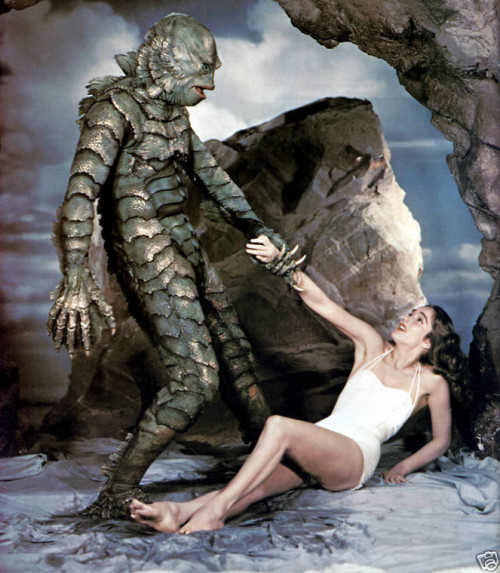
Getting back to Lagoon, there wasn’t a more boring relationship in the last 100 movies I saw than David and Kay. It was the single most agreeable couple I’d seen on film (tip: agreeable is a BAD WORD in screenwriting). I guess no one was breaking down walls to write captivating female characters in 1954. Still, this was a major reason why the movie lost steam. We simply didn’t know enough about these people to care about them.
Which leads us to the dialogue. Most of it was written to either move the story forward (“We need to go to the lagoon!”) or to pose theories (“This could be the link between man and fish we’ve been looking for”). You’re going to have to do those things in every script. But dialogue should primarily be used to explore character.
And by that, I don’t mean each character should spout off a 50 line monologue about who they are and what their life philosophy is. I mean you need to create unresolved issues between characters and each dialogue scene should make us feel like we’re getting a little bit closer to resolving the issue.
In another water based movie, Dead Calm, a husband and wife haven’t resolved the death of their child. It’s hanging there in every scene, even if they’re not talking about it. So we know that, eventually, we’re going to get a resolution to that. That’s how you explore character.
Anyway, this was more fun than I thought it would be. But because I live in 2017 and not 1954, there were only so many things I could overlook. Still, it’s worth checking out if you have 80 minutes.
[ ] What the hell did I just watch?
[ ] wasn’t for me
[x] worth the watch
[ ] impressive
[ ] genius
What I learned: Something only stays mysterious if you give us bits and pieces of it. If you give us the whole thing and you keep showing it to us again and again, we’re going to get used to it, and eventually, bored of it. Both filmmakers that I named in this article – Spielberg and Cameron – know that well, as their films Jaws and Aliens do a magnificent job of only showing us bits and pieces of the monsters throughout.