
Search Results for: F word
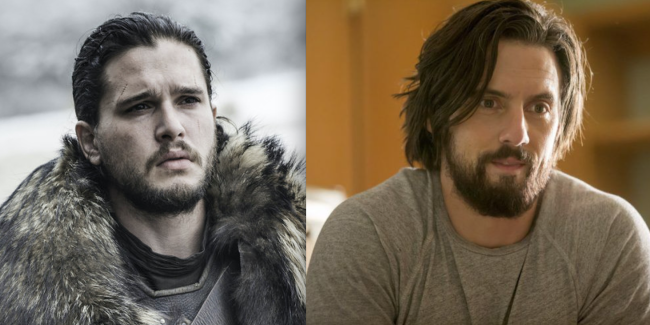
It’s the goal of every producer in Hollywood, the dream of everyone who’s ever had an idea for a TV show – to not only create a hit show. No no. Creating a hit show is easy. But to create a WATER COOLER show – the kind of show that’s so good, so exciting, so twisty-and-turny, that people MUST talk about it the next day. Let’s list some of these shows.
But before we do, let me put the needle on the record of some Barry White. Get a good vibe going. Oh yeah, can you hear Barry? I can. Okay, let’s get to that list…
Lost
Breaking Bad
True Detective
Walking Dead
Game of Thrones
This Is Us—
SCRAAAAAAAAAAAAAAATCH
I’m sorry. Run that last show by me again. This is Us??? A show about family with no dragons, no drug dealers, no serial killers, no zombies, and no Others. The show is just about… people? How did a show that ONLY explores interpersonal relationships become so addictive? And what can we learn from it that we can apply to our own TV writing?
Water cooler shows used to be common. That’s because only 30 shows aired a week and even the lowest rated shows did better than the highest rated shows today. Everybody was watching the same stuff so, chances were, you’d want to discuss the latest episode of Seinfeld with your co-worker the next day. Today, with 300+ shows a week to choose from, everybody can pick their own little weird show to watch. And that means writing a show that a lot of people watch and that generates widespread discussion has become almost impossible.
Every network wants the next Game of Thrones but what does that even mean? You can’t just make another swords and sandals dragon show or else it looks like a cheap version of Game of Thrones. The same thing happened when Lost was big. Everyone wanted the next Lost. But you couldn’t replicate Lost. It was too unique.
Enter “This is Us,” the most unlikely water cooler show of them all. And maybe that’s our first lesson of the day. Whenever there’s a mega-hit show, the collective industry response is to try and copy it. But what you’d be better off doing is finding something that’s the opposite, which is what This is Us is.
But that doesn’t explain how this show got so buzzy. Once again, the show relies solely on internal and external character conflict to drive episodes. So how can it possibly compete with a show that spends 25 million on movie-level battles every other other week, or kills off multiple beloved characters in a singular blood-curdling wedding? It seems impossible.
For those who haven’t seen This is Us, go watch the pilot right now. I’m serious. Stop reading this and watch the pilot, because it’s one of the best written episodes of television ever. Also, it’s impossible to talk about the show without indirectly spoiling the pilot. And I need to get into the pilot to explain why this show is so buzzy. Okay, did you watch it? Are you sure? Cause every sentence going forward is a spoiler. You’ve been warned!
For those who don’t have the time, This is Us follows “triplets” Kevin, Kate, and Randall Pearson. Kevin is a handsome successful sitcom actor who decides to quit his show to pursue theater in New York. Kate is his extremely obese manager whose entire life revolves around trying to lose weight. And Randall, who is black and was adopted by the same parents of Kate and Kevin, is an extremely smart and successful businessman with a great family.
The show, however, doesn’t just cover the triplets in the present day. Half of every episode is dedicated to 30 years ago, where we show their parents, Jack and Rebecca Pearson, going through the struggles of being a young couple trying to raise three kids.
There is one more major plotline, which is that Randall seeks out his biological father, William, who left him at a fire station that night that Jack and Rebecca adopted him. Randall learns that William is dying, and extends an invitation to move in with him and his family, where he learns about William’s unique life as a struggling artist/addict.
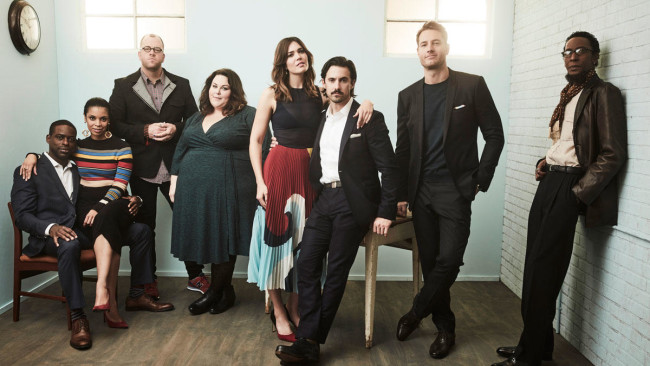
Okay, now that we’ve got the basics, let’s get to why this show, which, once again, is just about people, is able to compete on the same buzzworthy plane as Game of Thrones. We’ll start with the number one reason, which I’m guessing nobody here picked up on. If you did, kudos to you. Cause it took me awhile to figure it out.
This Is Us’s PAST-PRESENT structure allows it to introduce sexier twists and turns than your average character-based show.
Case in point: The pilot. This is Us hides the fact, with clever directing, that Jack and Rebecca’s storyline – they’re at the hospital about to have triplets – is happening in the past. It also hides the fact that Randall, who’s black, is in any way related to Kevin and Kate. This allows them to throw a quadruple-whopper at us in the pilot’s climax. Jack and Rebecca’s storyline is set in the past, one of their triplets dies during birth, Jack and Rebecca decide to adopt Randall, who was dropped off to the hospital during delivery, which, of course, means that Kevin, Kate, and Randall are all siblings in the present. Wow! Now that’s writing.
However, even after the gig is up on the hidden past storyline, This is Us still uses it to deliver dose after dose of surprises. For example, at the end of the second episode, Randall, Kate, and Kevin’s parents stop by the house. “Grandpa and Grandpa are here!” Randall’s daughters excitedly yell. We open the door to see Rebecca…. but she’s not with Jack. She’s with Jack’s best friend. Cut to black. End of episode. WTF. This is a twist you can only pull off inside of this unique PAST-PRESENT format. And This is Us goes back to that well again and again (mostly to success, but not always).
It’s funny, when I looked up at my list of water cooler shows, I noticed there are two others that use this exact same format – Lost and True Detective. So there’s obviously something writers have discovered that’s like this little miracle worker for twists. Nobody had figured out how to do that for a character-driven show yet, though. So kudos to Dan Fogelman, the creator of This is Us, for doing so.
From there, This is Us utilizes good old fashioned solid-writing to make sure you love it. In television, your primary job in the pilot is to make us either a) fall in love with or b) be intrigued by each and every character. If you can accomplish that, it’s an investment that pays dividends for a loooong time. We’ll endure some bad episodes if you’ve given us characters we love. And This is Us has some bad episodes. But I don’t care. Because I want to see if Kate’s going to prioritize her relationship over her eating issues, if Kevin ends up with the playwright, or how Will, the biological father dying from cancer, is holding up.
This is Us also utilizes a cheap, but effective, tool for keeping its show buzzworthy. It’s not afraid to kill people. Or, when it isn’t killing people, it’s coming damn close to it. When you look at all those buzzworthy shows – Walking Dead, Game of Thrones – they love to kill off characters. And look at the time tested TV genres – cop shows, medical shows – death is basically built into their DNA. This is Us understands that just having a bunch of people lollygagging around, sharing jokes, isn’t enough. There had to be the threat of death hanging over each episode to give the show weight and generate discussion.
In closing, let me offer you some TV writing advice. And this extends to the feature world as well. I have no problem with writers capitalizing on trends. If you’ve got a Game of Thrones like show that takes place in a completely different setting and feels new and fresh, that’s a powerful marketing tool for you when you go out and pitch it. “I’ve got the next Game Of Thrones” does perk up some ears. However, remember that TV producers hear “I’ve got the next Game of Thrones,” all the time. So going in the completely opposite direction, like Dan Fogelman did with This is Us, may be just as lucrative.

The other day, I was talking to a friend. He’s more a director than a writer. So he doesn’t write unless he has to. And it so happens this is one of the rare times he’s writing one of his scripts. He said he could use my help. So I met with him and we talked through a bunch of ideas regarding the characters and the plot, and by the time I left, I felt like the script was ready to go.
A couple of days later I called and asked how the writing was going. “It’s not,” he said. I naturally asked, “Why not?” There was a long pause. “Because I don’t even know where to start.”
I live and breathe screenwriting. I know all the ins and outs of the medium. So it’s easy for me to forget that for many people, looking at 110 blank pages is like looking down into an endless black hole. The prospect of knowing where to begin, and then of how you’re going to fill in all those pages, seems impossible.
I’m hoping to erase that fear today. To give you all a little guidance. You see, to write a great script, your writing must have PURPOSE. We, the reader, must feel like you have a plan in place – that you’re bringing us somewhere. So before you do anything with your script. Before you write a single word. You need to know HOW YOUR STORY ENDS.
Think about it. How can your driving have purpose if you don’t know where the trip ends?
I call this: The Check Point Method.
You set yourself a series of check points to write towards. And you start with your ending. That’s going to be your final check point.
How do you come up with an ending if you haven’t even started your script yet? It’s easier than you think. What is the problem that sends your hero on his/her journey? Once you have that, you know what they must do to solve the problem. And the climax will be their attempt to solve it.
In Wonder Woman the problem is the evil German baddie who’s waging World War 1. The climax, then, will be her battling that villain, trying to take him down.
If you were to, say, came up with an idea about a group of kids in a small town who start seeing a creepy clown, it’s pretty clear how that script should end. They will have to battle the clown! So there you go. You’ve just identified your climax. Which gives you your first check point to write towards.
BUT.
That check point is still really far away, isn’t it? You’ve given your script SOME purpose. But it still has the potential to wander around in circles before it gets to that final check point. Which means we need MORE check points!
The big plot beat that comes before the climax is the second act climax. What typically happens at the end of the second act is you main character reaches his lowest point. The bad guy gets away. The hero loses his girlfriend. Your NAVY SEAL’S entire team is killed. Your character has hit rock bottom.
Which means that for your second check point, all you have to do is figure out how your hero reaches his lowest point. In “It,” for example, all the friends get in a fight and break up. They leave one another. How the hell can they defeat It if none of them are talking to each other? Look at that. Another check point’s been added that’s even closer to the start of the script than the climax. All of a sudden, this giant black hole isn’t looking so giant anymore. Crafting a story starts to seem possible.
Let’s keep it rolling and find another major plot beat that happens even closer to the beginning. For example, in “It,” you have that haunted house the kids always see. You know you’re going to have to build a set piece into that haunted house somewhere. You may not know what the scene is yet. But you know something big needs to happen there. So, once again, you make that another CHECK POINT. “Kids get stuck in house for some reason. Major battle occurs there.” We’ve just added a third major check point to the story. This isn’t looking difficult at all.
By this point, we’re almost backed up to our midpoint. The midpoint is usually when a major plot beat occurs, something that adds another dimension to the story or sends it off in an unexpected direction. You could argue that in “It,” this occurs when the “Losers Club” fends off the bullies and befriends Mike Hanlon. A new member has joined the group. An EVEN CLOSER check point to write towards. The script, now, is even smaller.
We also know that early on, we want a series of scenes where It scares the children. That can become our first major check point of the movie – “Each kid gets scared by It in a unique way.” That means that after your script’s opening, when you set up your characters, you have FIVE CHECK POINTS to write towards.
1) Series of scenes where kids get scared by It
2) The Losers group befriends Mike Hanlon after fighting off the bullies.
3) Big haunted house set piece.
4) Friends break up.
5) Friends battle It.
The idea with these check points is to make it so you always have something to write towards, which means your story always has purpose. If you don’t set up these check points ahead of time, you’ll find yourself scrambling for plot ideas and story directions, which inevitably lead the story nowhere. If you’ve ever run out of steam on a screenplay around pages 40-60, this is usually why.
Now remember, you don’t have to limit yourself to five check points. You can include as many check points as you want. And I’d argue that the more you figure out ahead of time, the better. The writers of “It,” for example, may have known beforehand that they wanted “It” to kidnap Beverly near the end, which motivated the Losers to regroup and go after It. So you’d slip that check point in between numbers 4 and 5.
To truth is that the less check points you have, the more likely you are to get lost. If you have to cover even 20 pages in your script with no check points to write towards, there’s a good possibility that that section will lose focus.
Also, you don’t have to start at the climax like I did and work your way backwards. I just find it easier because the two easiest plot beats to figure out are the Climax and the Hero’s Lowest Point. And both are at the end. Feel free to start forming check points at the beginning if you want. Just make sure you have your ending figured out before you start writing. That’s the one non-negotiable check point. Your climax guides the entire story as well as all the check points before it. So you want to have that one down.
I find that one of the most common issues in amateur screenplays is an unfocused narrative. The writer doesn’t have a plan. And a lot of that comes from not having your major plot beats figured out ahead of time. Figure those plot beats out, CHECK POINT THEM, then write towards each, one at a time. Keep it simple guys. That’s the name of the game.
Logan Martin’s script, “Meat,” becomes the first amateur script to make it into my Top 25 in over 5 years!!
Genre: Mystery/Horror
Premise (from writer): A misanthropic man notices bizarre changes in himself, his wife, and the animals inhabiting the territory around their homestead as they attempt to survive self-imposed isolation.
Why You Should Read (from writer): After moving from North Dakota post-college at the end of 2016, I started to write scripts in my spare time and fell in love with it. My first screenplay placed in the top 20% of the 2017 Nicholl fellowship, and as of now I’ve “finished” five features and am working on my sixth. I aim to create original, meaningful stories, but even more so focus on presenting them in a unique way. MEAT has been compared to The Witch by readers due to its low budget, as well as its setting and tone. It’s an unconventional horror story that poses a moral question without appearing pretentious.
Writer: Logan Martin
Details: 72 pages!
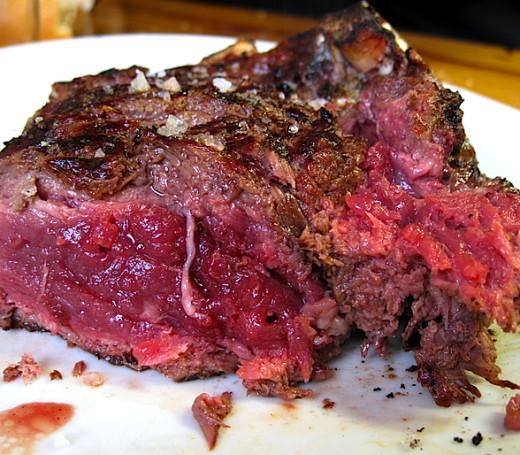
Okay, I have to admit I’m a little nervous. I like this script so much. And I’m afraid I’m not going to convey all the reasons why in this review. I’m not going to articulate something or I’m going to forget a key reason for its awesomeness.
But the biggest thing I want to get across is that this is one of the best ways to break in as a screenwriter. Find a topic that interests you, come up with a story, then tell it in a way that best shows off your voice.
Because beyond this just being a great script, it’s a tremendous showcase for the unique way in which the writer sees the world.
Does that mean Meat’s perfect? That’s a tough question to answer. It’s perfect for what it is, for what it’s trying to be. But as a piece of screenwriting, it’s filled with lots of “mistakes” and rule-ignoring. However, I contend that following the rules is how you write a good screenplay, but breaking the rules is how you write a great one.
Meat introduces us to 30-something couple Ben and Rein. Ben and Rein are normal adults in every way but one – they live in the middle of nowhere, off the grid.
We learn later that they both had normal jobs, lived in the city. But at a certain point they became exhausted by the monotony of it all – the rat race, that thing all of us get sick of sooner or later. The difference is, Ben and Rein decided to do something about it. Or, maybe it was more Ben than Rein. But we’ll get into that more in a second.
When these guys say “off the grid,” they really mean, “off the grid.” To the point where they’re hunting their own food. Ben enjoys the thrill of the hunt, and he’s got a particularly healthy deer population to shoot away at. They also have rabbits skittering about, chickens, and a couple of pigs (Bert and Ernie) in their mini-barn next door.
Every night, Ben prepares some juicy red MEAT for dinner. He takes pride in the fact that he’s killed and prepared the meal. So there’s nothing that makes him happier than sitting with Rein after a long day and eating. That juicy bloody dripping red… meat.
The only thing left in life that agitates Ben is going into town. There are still supplies the two can’t obtain on their own. And so a few times a year, Ben has no choice but to make that trip to the grocery store and stock up on necessities. Ben dislikes his latest experience so much, he proposes to Rein cutting the store out completely so that they’ll finally, officially, off the grid. Rein’s hesitant but if it’s what Ben wants, she supports him.
As the days go by, we get the sense that Rein is having some regrets about this new life of theirs. It’s not blatant. She’s always agreeable and on board with her husband’s choices. But Rein may not have envisioned that “off the grid” was this off the grid.
And so one day she drops a bombshell on Ben. She no longer wants to eat meat. Ben stares at her, stumped. Hunting, preparing, cooking – they’re his favorite thing to do for her. “Why?” is all he can think of to say. While she doesn’t say it then, it’s clear that the process of killing animals and eating them has started to affect her. “Well, if that’s what you want,” Ben concedes.
And while they don’t know it yet, that tiny choice is the beginning of the end. Without a sufficient amount of food and protein, Rein starts getting thinner and thinner. Ben is increasingly frustrated with her decision, but he’s dealing with his own issues. Not long after that day, Ben goes hunting, and when he lines up a deer in his scope, he sees that a second deer, next to it, is… STANDING UP ON TWO FEET. As if talking. Ben lowers the rifle to watch the deer disappear into the woods.
Ben’s shaken by the experience as it was just so real.
As time goes by, Rein becomes more resistant to Ben’s hunting, and seems to be getting too close to the animals, particularly Bert and Ernie, their pigs. One day, one of the pigs gets out of its pen, and Ben goes chasing after it, following its tracks in the snow. To his shock, after awhile, the tracks turn from four separate feet… to just two.
And if that isn’t bad enough, the next time Ben goes hunting, he gets shot at. What the hell is going on? When he comes home later to find that Rein has made dinner with three table places instead of two, the truth of just how fucked up things have gotten comes to light. But what Ben doesn’t know is that it’s gotten far worse than he can imagine. And that he finally may be the hunted, rather than the hunter.
Oh man. Where do I start with how good this was!
Let’s start at the top and discuss the TENSION in Ben and Rein’s relationship, something that was felt from the get-go. This choice was paramount to the script working because, remember, 80% of this script is two characters. So you need some sort of conflict to make that interesting for that long. By adding this underlying tension to Ben and Rein’s relationship, you build SUBTEXT into every conversation they have. Every word has an additional meaning. A simple “How are you?” doesn’t mean “How are you?” It means, “Why aren’t you talking to me? Why are you acting so weird? Did I do something wrong? I’m trying to be respectful here and not push but I’m getting frustrated.”
This is something newbie screenwriters don’t get. Every time a character in one of their scripts says, “How are you?” it literally means, “How are you?” Which is boring. And that’s not to say sometimes “How are you?” can’t mean “How are you?” But it’s when EVERY line is literal that dialogue becomes patently boring. This is where the critique, “Your dialogue is on-the-nose” comes from.
Martin needed to stick the landing on that relationship because, as many of you noticed, there wasn’t any GSU in Meat! “Yo Carson. Didn’t you say all scripts need GSU to be good? Why you lie?” Sheesh, get your bloody meat hooks off me. GSU is the main ingredient required for mainstream genre screenwriting – horror, thriller, action, adventure, sci-fi. But it isn’t a writer’s only option. And it’s used less frequently with indie fare, which is what Meat is.
If you’re not going to utilize the GSU formula, your next best option is creating a dramatic question that drives the narrative. That’s a fancy way of saying: Have an overarching question that the audience wants to see resolved. In the case of Meat, it’s “Are these two going to make it?” It will, of course, be up to the individual reader to determine whether that question is interesting enough for them to be invested. And I would assume that, for some of you, it wasn’t. You didn’t care if these two “made it” or not.
This is the danger of moving away from heavy horsepower storytelling tools like GSU (goal, stakes, urgency). Is that people with short attention spans or less interest in the psychological battles of characters aren’t going to jump on board.
But see, this is why I think Meat is so great. It’s not just about the frame-battle between its two main characters. Martin starts adding little mysteries here and there that add layers to the story. When Ben starts seeing animals propped up on two legs talking, it’s like, what the fuck is going on? And when he starts getting shot at, it’s like, who’s shooting at him?? It could be their neighbors, it could be Rein, it could also be… the animals he’s been hunting.
And there’s actually one big advantage to a non-GSU script. It’s easier for the writer to stay ahead of the reader. If your hero has a clear goal, like getting the Ark of the Covenant or killing the terrorists, there aren’t a ton of ways to achieve that goal. As readers, we have a good sense of how things are going to play out, even if we don’t know the exact path by which we’ll get there.
Without that clear end point, the writer can yank the reader around in a multitude of unexpected directions because the narrative isn’t being pulled towards an obvious one (kill the terrorist). And that’s why I enjoyed this so much. I had no idea where it was going, pretty much up until the final page. And I can count the number of times that’s happened in the past year on one hand.
Now a lot of you may point out the short page count. And yes, I agree that that’s a problem. The industry standard for a feature is between 90-120 pages, with the sweet spot being between 100-110. However, if you are going to make a mistake in this area, it’s better to be on the low end (less than 90) than the high (over 120).
I fought with the 75 page count for awhile, wondering if it was because of the lack of dialogue. Dialogue takes up more space, so if you don’t use a lot of it, your script is going to be shorter. And there wasn’t a lot of dialogue here. Which I liked, by the way. It made it so that each time there was a conversation, that conversation had weight.
In the end though, I think this needs to be beefed up (no pun intended). You need one more subplot. And I’m not sure where that’s going to come from. I’d love to hear your suggestions in the comments. I’m thinking Ben gets most of the focus here. So a subplot that focuses on Rein would be nice. Maybe something where she spends more time with the pigs and chickens, especially since the pig payoff in the end is so great. If we can just get this up to 85 pages, I think you’ve got enough for a feature.
Man, I really liked this. Never has a sentence as simple as, “I don’t want to eat meat anymore,” shaken me so much. And that’s a testament to Logan and his amazing ability to capture the depth of this fractured relationship. I mean hell, this script even had a dream sequence in it (a HUGE Scriptshadow no-no) that a I liked. Has the screenwriting sky fallen?
I would love for “Meat” to get as much publicity as possible because I think it deserves to make the Black List. It’s exactly the kind of script they used to celebrate before they went all true-story/biopic. Hopefully the industry recognizes that it’s still possible to write original unique stories. Great job, Logan. I hope this script jump-starts your career!
Script link: Meat
[ ] What the hell did I just read?
[ ] wasn’t for me
[ ] worth the read
[x] impressive (Top 25!!!)
[ ] genius
What I learned: Learn to dramatize your ideas. Say you want to make a statement about our society’s obsession with killing and eating animals. The bad writer will come up with a series of scenes of characters debating the issue. “Meat eating is bad.” “But we were put on this earth to hunt. We need food.” “If slaughterhouses had glass walls, no one would eat meat anymore.” Watching and listening to shit like that is nauseating. As a writer, what you want to do is DRAMATIZE your idea, like Logan did with “Meat.” In order to make a statement about this topic, he placed two characters up in the middle of nowhere where they had to hunt their own food then had one of the characters no longer want to participate, leading to an organic exploration of the moral implications of an animal-killing meat-eating culture. Always look to dramatize your ideas!
Genre: Drama/Horror?
Premise: A man who’s lived his entire adult life in a mental institution obsessing over the beautiful niece he’s never met, finally decides to leave and find her.
About: Ted Foulke, aka Wentworth Miller, became a tour de force on the screenwriting circuit back in 2010, selling two scripts, Stoker and The Disappointments Room, back to back, winning over Hollywood with his sophisticated, intelligent, dark voice. Stoker became a huge project, attracting visionary South Korean director Chan-wook Park (Oldboy, Lady Vengeance, The Handmaiden). But something fell through the cracks during the adaptation, and the movie performed badly at the box office, disappearing out of the public eye almost immediately. The Disappointments Room, the more commercial of the two projects, didn’t fare much better, getting caught in the Relativity meltdown, ultimately dumped into the VOD market without any promotion. Today’s script, “Uncle Charlie,” is a prequel to Stoker.
Writer: Ted Foulke (Wentworth Miller)
Details: 119 pages

There was a good one year period there where Wentworth Miller was considered the best up-and-coming screenwriter in Hollywood. He wrote two specs, Stoker and The Disappointments Room, that wowed the shit out of anybody who read them. There was a depth and attention to detail that was absent from all the vapid empty scritps selling at the time, and just an interesting dark voice at the center of it all, giving us stories we’d never quite seen before.
But then the movies came out and they were… ignored. And I have a theory on that. Films that fall under the horror tag but don’t contain supernatural elements struggle to find an audience. There are exceptions to this. If the scripts have a big flashy hook (Get Out or The Purge), they can work. But if you have something like Stoker, where it isn’t 100% clear when you watch the trailer what genre we’re in or what kind of story we’re watching, that’s going to keep people out of the theater.
And the problem with Miller is that he actually makes his scripts intelligent. Which, funnily enough, alienates audiences even more. If he could just dumb it down a little (throw a killer clown in there), I’m sure he’d be one of the biggest horror screenwriters in town. I’d love to see a Miller supernatural horror film. I think it would be awesome. But for right now, we have his prequel to Stoker, Uncle Charlie. Let’s check it out.
“Uncle Charlie” starts out explaining that this a prequel to Stoker, and therefore if you don’t know that film, you won’t be able to appreciate this one. That’s a tricky choice because I don’t remember much about Stoker. But I do remember that a teenage girl named India loses her father and she and her mother move in with his mysterious brother, Uncle Charlie.
What we come to know later in the film is that Uncle Charlie has spent nearly his entire life in a mental institution. And that’s where we find Charlie here, a year before the events of Stoker, pulling off his best One Flew Over the Cuckoo’s Nest impression, wrecking havoc on his version of Miss. Ratchet, Doctor Walker. Charlie could’ve left this place years ago. He was actually able to leave the day he turned 18. But he CHOOSES to stay here.
When Charlie’s not making Doctor Walker’s life miserable, he’s drawing pictures of India. This part I didn’t understand. As far as I can tell, he’s never met India. So I don’t know how he can draw her so well. Maybe he’s seen pictures of her?
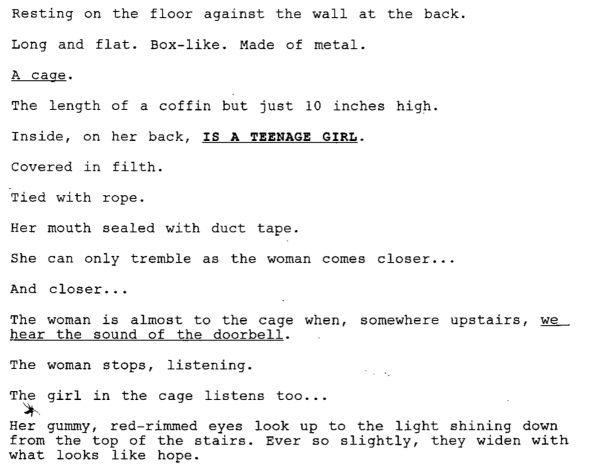
Meanwhile, back at the farm, India divides her time between going to school and taking piano lessons with her new teacher, Miss Price. Miss Price is an excellent teacher minus the fact that she moves from town to town, torturing and killing her students. In fact, she’s got one locked up in a cage in her basement right now. One that will have to be “taken care of” in order to make room for an unsuspecting India.
Over at the nut house, Uncle Charlie finally decides to flee the coup, illustriously turning Dr. Walker into a vegetable before doing so. And the first place he goes is India’s town. He’s got to meet his obsession, of course. He gets there right when India goes to her first high school dance. And let’s just say he “takes care” of India’s date so that she’s free.
That night, after the dance, India runs into Miss Price, who “happens” to be driving by, and who offers India a ride home. But, oh yes, she wants to stop by her house first to “show India something.” We all know where this is going. However, what Miss Price doesn’t know is that India’s got a new guardian angel. A very dangerous new guardian angel.

If yesterday’s prose annoyed you and you prefer a more classic writing style, this script is for you. Miller’s prose is simple, efficient, descriptive, and flows better than any script you’ll read this year. It’s what makes his scripts so easy to read, which, in this case, was necessary, since the story itself doesn’t stack up to his previous entries.
The problem is that Miller handcuffs himself with the prequel treatment. Prequels never work. Ever. I’m not sure why writers like them. They’re one giant narrative fork in the road where every path you take leads to a dead end. George Lucas painfully found this out when he started writing Episode 1. Wait, I have to keep two of my biggest characters, Obi-Wan Kenobi and R2-D2, apart for 99% of the trilogy?
Uncle Charlie follows two separate storylines, Uncle Charlie’s and India’s, and while these storylines want to find each other, or, at the very least, intersect, they can’t. Because in the next movie, Uncle Charlie and India meet for the first time. Miller tries. He tries his darndest, even cheats to give us that crossover moment. But the storylines never overlap in any meaningful way, which leaves the reader wondering, what was the point?
Another issue is that the script’s best plot thread, the serial killer piano teacher, is operating at a net negative. We know Miss Price can’t kill India because India appears in the next movie. And if you don’t have the uncertainty of whether India will succumb to this monster or not, where is the suspense? These movies only work if they’re suspenseful. So if your splashiest storyline can’t mine that tool, what’s the point?
You also run into issues like, what are the chances that so many killers are randomly intersecting in life? What are the chances that this girl has a serial killer uncle AND a serial killer piano teacher? Audiences start asking themselves these questions. And the answers are what break the suspension of disbelief.
“Uncle Charlie” also reminded me of a problem I had with Stoker. India isn’t an interesting character. I’ve told you guys this before. Be careful about making your main character a sociopath, eliminating all feeling and personality from them. These people walk around emotionless for 100 minutes, leaving the story feeling empty and cold whenever we’re around them. Miller tries to balance this out with the wackier more expressive Uncle Charlie, and it works to an extent. Uncle Charlie is a compelling character to watch. But like I said, the narrative is so handcuffed by its inability to intersect, it ultimately doesn’t matter.
“Uncle Charlie” is a fun and easy read for those who like reading scripts. But there’s neither a hook or a plot here that necessitates it becoming a movie. If Miller were to ever pursue this, it’d be in his best interest to eliminate the India side of the story and watch Uncle Charlie go off on some adventure. There are plenty of fun threads you could find there.
Old School Scriptshadow Script link: Uncle Charlie
[ ] What the hell did I just read?
[x] wasn’t for me
[ ] worth the read
[ ] impressive
[ ] genius
What I learned: Prose is simplicity. Miller is known for having some of the best prose in the business. But note how his description usually stays between 1-3 lines long. Note how he doesn’t use SAT words. Note how a lot of his prose breaks down to short fifth-grade level sentence structure. “Uncle Charlie” is right up there for you to download and see for yourself. A lot of beginner writers would do well to study it.
Genre: Event Horror
Premise: When a group of young kids begin seeing a demonic clown around their small town, they suspect he may have something to do with all the local kids who’ve gone missing over the years.
About: You’ll float too. After the chillingly bad TV movie version of “It,” in the 1990s, Stephen King’s most notorious novel was all but discarded as a vessel for adaptation. But in recent years, a King resurgence resulted in a newfound desire to produce a feature film based on the material. The problem was length. “It” is a huge book, 1489 pages, yet it wasn’t the kind of book you could build a trilogy around. Finally, someone came up with the genius idea to split the book in two – the children’s side and the adult side – and build a movie around both. This is the children’s side. And holy heck did it kick ass this weekend at the box office, pulling in $117 million, doubling the next highest horror opening of all time.
Writer: Chase Palmer & Cary Fukunaga and Gary Dauberman (based on the novel by Stephen King)
Details: 135 minutes
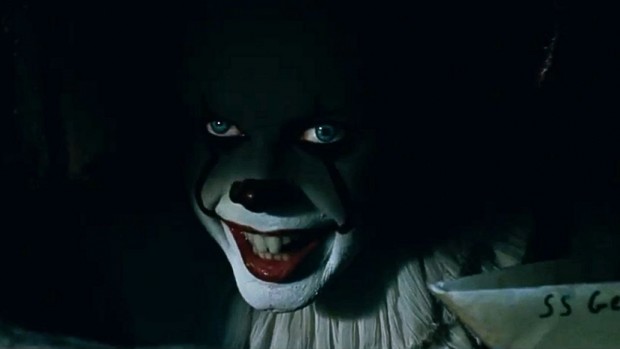
Let me start off by dispelling a myth Hollywood likes to propagate. “We’re putting out good movies. People just aren’t showing up.” That statement is nowhere close to true. For the past five years, Hollywood’s been upchucking retreads they only barely convinced us to see the first time around. They haven’t been trying for awhile now and the audience is calling them on it. You have to listen to your audience, Hollywood. They want something new. And in this case, they proved it. They wanted Event Horror.
So what is this thing I’ve been talking about all week that’s going to become the hot new thing? This “Event Horror?” How is Event Horror any different from Normal Horror?
To explain this, let’s go over the current Hollywood horror formula. Throw a group of characters into a single location (cabin, haunted house, deserted warehouse, woods), add scary element (monsters, ghosts, zombies, leprechauns), let the scares take place.
The reason this formula is rarrrrrely messed with is because it works for all three points on the triangle. Hollywood loves it because single location movies are cheap to produce. Writers like it because this is the preferred setup for building believable horror – locking characters into a location with nowhere to run. And audiences like it because the setup is inherently scary.
This is why “It” feels so different. It’s not just a bunch of one-dimensional characters packed into a haunted house. We’re getting to see these characters back in their homes, we’re getting to see them hang out together in their everyday lives. But, most importantly, we’re seeing an unrestrained group of characters. They can move about freely. It’s this “open-ended” character-driven adventure setup that makes this more of an “Event.” It feels bigger and less simplistic than your average horror movie. It’s horror opened up.
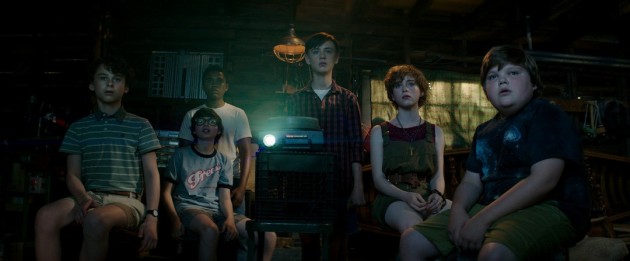
For those who haven’t seen the movie or read the book, “It” follows a group of 13 year old kids in the small town of Derry, in 1988 (updated from King’s original 1950s setting). The group leader is a kid named Bill who lost his kid brother, Georgie, to mysterious circumstances last year. Everyone else knows Georgie is dead. But Bill holds out hope that he’s still out there, along with all the other kids who have gone missing from Derry over the years.
One by one, Bill and the rest of the “Losers,” as they call themselves, are visited by a creepy clown who goes by the name, “Pennywise.” Pennywise performs a slightly different bag of tricks from your average clown. He eats children, as we (spoiler) see in the script’s nail-biting opening scene. Bill believes that Pennywise is holding Georgie hostage, and rallies the troops to infiltrate Pennywise’s domain and get Georgie back. But the kids realize that this… “It”… they’re dealing with is more powerful than anything they’ve ever dealt with in their lives.
Okay, now that I’ve emptied my book of praise all over the decision to make It, did the movie – and script – live up to the hype? It did. And that’s not to say there weren’t roadblocks along the way. In fact, the very thing that makes “It” different is what causes the writers so many problems. This results in a choppy narrative that was constantly in search of calmer seas.
What the hell are you talking about, Carson?
Earlier I was talking about the traditional horror film. For argument’s sake, we’ll call it the “cabin in the woods” scenario. Put a group of characters in a cabin in the woods, take away their car (it’s broken for whatever reason), unleash some evil entities on them, and you’ve got yourself a horror film.
In this scenario, coming up with scares is easy. The characters can’t go anywhere, so you just send monsters at them and they have no choice but to fight back.
Because “It” is open-ended and the characters aren’t restrained, the writers are constantly forced to come up with scenarios by which our heroes would willingly seek out dangerous situations. Either that or manufacture ways to get them into places where horror might occur, even if it doesn’t make a lick of sense.
For example, Ben (the “fat kid”), is reading at the library about the infamous Easter Massacre weekend in Derry 30 years ago where 100 people died. As he’s reading this, he spots a trail of flaming easter eggs that lead down to the basement. So Ben simply… FOLLOWS THE EGGS DOWN INTO THE BASEMENT. It’s here, of course, that he runs into a headless child and Pennywise the Clown. This is as manufactured as it gets. Nobody in their right mind would be dumb enough to do what Ben did. But the writers don’t have much choice. They have to push these characters into scary situations somehow.
Or Beverly, the lone girl in the group. There’s a scene where she gets home, goes to her bedroom, and a postcard Ben secretly planted in her bag pops out. On the back, Ben’s written her a 12 word poem. For some odd reason, Beverly rushes into her bathroom, locks the door, sits in her tub, and reads the poem. At the time I’m thinking, “Why is she going into the bathroom to read this? The poem isn’t War and Peace. It’s 4 lines long.” Then, as she’s reading it, something starts calling her from the sink. Ohhhhhhhhh, I realized. That’s why we had to manufacture this artificially closed-door bathroom scene. So something could attack her in the sink.
You see, this is why the “trapped” scenario is the preferred horror scenario to go with. You don’t have to force scary moments like this. They come to the characters organically.
Lucky for “It,” it has a trump card. Pennywise. This is easily the most iconic horror monster of the decade. He’s a perfectly crafted evil entity. So even when we do hit these manufactured scares, we forget about them the second Pennywise hits the screen because he’s so damn scary.
I have to give the producers props for casting relative unknown Bill Skarsgard. He’s so good in this. And the character creation and the make-up and the attention-to-detail (how the left eye is a little lazy). Wow. This is the kind of monster that will give kids nightmares for years. We can debate whether that’s a good thing or not in another post.
And the characters were great. To me, “It” is Stephen King’s magnum opus. Almost all of his characters in future books are variations on these characters. But these characters were the OGs. And the difference is, he really thought about these kids’ lives. Every kid here has a legitimately tense living situation at home that informs how they act in the outside world. I don’t think King ever tried as hard as he did with this group. And we’re the beneficiaries for it.
I felt that the plotting in the film was strong. The defining choice was having Bill search for his brother. That made sure that the characters were ACTIVE – that they were out there trying to achieve something. Without that, the characters are just waiting around for bad things to happen, and that’s where plots fall, where second acts deflate. So always make sure you’re injecting ACTIVE STORYLINES into your scripts, guys.
There’s a reason this movie made 117 million dollars this weekend. It was an event. It was a spectacle. It was more than your average horror offering. So I’m expecting this trend to pick up, hopefully extending into the spec market. It’d be nice to have another lane to sell scripts in other than biopics and female John Wicks.
[ ] What the hell did I just read?
[ ] wasn’t for me
[xx] worth the read
[ ] impressive
[ ] genius
What I learned: Sometimes, in order to find something original, you have to take a genre out of its comfort zone. Sure, horror works best in tight isolated locations where your characters can’t leave. But that’s also where everything’s been done before. Leave that setup behind to find new, potentially unknown, horror avenues to explore.
P.S. Stay tuned Thursday. I’m going to break down the rejected “It” script from Cary Fukunaga to see what they changed.