
Search Results for: F word
Genre: Biopic? Comedy?
Premise: The infamous true story about how figure-skating protege Tonya Harding conspired to win the Olympics by having her competition, Nancy Kerrigan, violently attacked.
About: I, Tonya is the number one script on The Tracking Board’s “Hit List,” a list of the best spec scripts of the year, and a good indicator of what to expect when the Black List comes out next week (A quick shout out to the number 2 writer, Nick Yarborough, who I’ve known for four years now – I remember when he was out there hustling with every new screenplay – good job, Nick!). I, Tonya is a departure for writer Steve Rogers, who’s best known for romantic fare like P.S. I Love You, Hope Floats, and Kate & Leopold. In maybe one of the strangest casting choices I’ve heard all year, supermodel-esque Margot Robbie will be playing Tonya Harding. Um, okay.
Writer: Steve Rogers
Details: 106 pages

Does anybody really understand the Olympics?
Who came up with this “every four years” idea anyway? Not sure what the Olympic masterminds were thinking on that one. I mean yeah, that may have made sense back in 1608 when it took 4 years for everyone to actually travel to each Olympic host country. But we live in a world now where we can be anywhere within 2 hours. 4 years seems like overkill, no?
And then there’s the whole, “It’s only for amateur athletes” thing. Which means that the ultimate test in sports doesn’t include the best athletes in the world (professionals).
Except for in some events, where professionals ARE allowed.
Oh, gotcha. So it’s only for amateurs except for sometimes when it’s for professionals. Makes total sense. Pardon me for the misunderstanding.
Here’s one of my favorite parts. We prop up athletes like Michael Phelps as “the best athletes in history” because they win 8 gold medals every Olympics.
Oh, but here’s a small detail no one seems to acknowledge: SWIMMERS GET TO COMPETE IN 90 EVENTS! I mean, of course they win 8 medals. They have 20 times more chances than everyone else. I’m sure LeBron James would win more gold medals if he was allowed to compete in more than 1 event.
Who comes up with this stuff?
Let’s go back to a simpler time. A time when the Olympics were pure. Where Olympic figure skating hopefuls could hire mob goons to whack their opponents. I’m talking about the infamous battle between Tonya Harding and Nancy Kerrigan.
“I, Tonya,” starts out in… I guess I would call it “mockumentary” style, with modern day interviews from Tonya Harding, her thuggish former husband, Jeff Gillooly, Tonya’s despicable mother, Lavona, and Tonya’s prissy coach, Lavona.
Tonya and her crew lay out what it was like for Tonya growing up. For those who don’t know, Tonya was unabashedly white trash. Her chain-smoking bitch of a mom (who had four kids from five marriages) recognized that Tonya was a talented ice skater and bullied her way into the figure skating clique to get Tonya the proper training.
Because Tonya was so poor, she was looked down upon by the skating community. But no one could deny that she had historic talent. When Tonya reached her teens, she was the only female American in figure-skating history who could pull off the triple-axel. So the U.S. figure-skating team had no choice but to take her on.
Tonya ended up marrying the thuggish Jeff Gillooly, who quickly started beating her, just like her mom did. As Tonya tells us, all she knew growing up was violence, which would foreshadow the infamous decision she made (or “allegedly” made) to solve her competition problem by resorting to violence.
Anyway, after watching Tonya grow up amongst all this chaos, we finally get to the nitty-gritty, the attack on Nancy Kerrigan at the U.S. Nationals leading up to the Olympics. This is where things get confusing.
Giloolly’s best friend, weirdo Shawn (a man who claimed to be a counter-terrorism expert despite nobody being able to find any evidence supporting the claim), was supposedly asked by Giloolly to scare Kerrigan away from competing. But Shawn took that to mean he had free rein to do what he wanted. So he hired some goon named Shane Stant to cripple Kerrigan with a bat (the aftermath which can now be seen in the famous video of Kerrigan on the ground crying, “Why me???”).
The last 30 pages of the script chronicle the aftermath, as everyone attempts to figure out who ordered the hit, and if Harding knew anything at all. Unfortunately, we don’t get any definitive answers. Everyone has a different version of how things went down. And to this day, Harding denies any involvement in the attack.
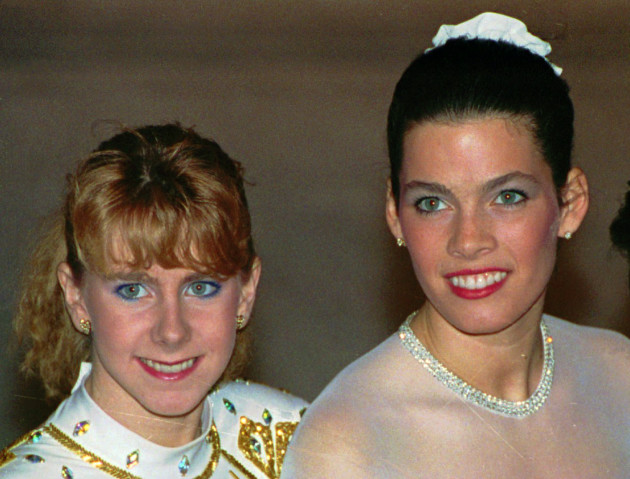
“I, Tonya” is a classic “end of year” list script. It’s a dark comedy that jumps between having fun with its subject’s white trash roots (Tonya: “I won my first competition before I was 4. Those bitches didn’t know what hit’em.”) and going dark with a healthy dose of violence (coming from both Tonya’s husband and mother).
For that reason, the finished product will be a wild card. There is no tone harder to nail than dark comedy. And while it seems to be celebrated annually on these lists, it rarely does well on the big screen. The Beaver, The Oranges, Butter. The director has to have a deft touch and be in lock step with what the writer intended. And we all know how often the director and writer are in lock step.
As a script, however, I liked what Rogers did. I always say to find fresh ways into tired genres, and there’s no genre more tired, at this moment, than the biopic. So to write one that doesn’t take itself so seriously? That uses the mockumentary style? Not a bad call.
The stuff that works best is the buffoonish Gillooly and his insane best friend, Shawn. When they attempt to put together a plan to take out Kerrigan, it’s true lunacy. Imagine Carl and Gaear from Fargo but 200 times dumber. Details like Shawn’s hitman choice, Shane, stalking Kerrigan at the rink for 3 days before realizing the skater was in a different city were classic.
But here’s where I differ with I, Tonya’s approach. They should’ve explored the craziness more. You have this grade-A idiot doing 3 days of “recon” in the wrong city, and that moment is relegated to a throwaway line in an interview? Imagine if we would’ve been with him and his clueless partner during these scenes?
Once “I, Tonya” commits to this mockumentary format, it digs in and never lets go. This results in a staccato like storytelling style where there are no actual scenes. Just recollections of events peppered with lots of interview interjections. That was fine at first, when we were setting up the story. But when somebody’s still interrupting fun moments on page 75? Kill me now.
I’m not saying that can’t work. But, up until this point, it’s only been proven to work with pure comedy, like the Spinal Taps of the world.
“I, Tonya” wants to tackle some pretty intense stuff (we actually see Gillooly punch Tonya in the face at one point). And those moments deserve to breathe. To always cut out of them to an interview answer: “He liked to hit me a lot,” felt disingenuous. And I don’t just say that because I like writing the word “disingenuous.”
I really wanted to like this. I thought I, Tonya could’ve done for biopics what Deadpool did for superhero flicks. But the deeper I got, the less confident I felt that the script knew what it was doing.
Maybe I was expecting something more like (HBO Tennis mockumentary) “7 Days in Hell.” But “I, Tonya” came off a lot like the person it covered – an outsider that didn’t know how to fit in.
[ ] What the hell did I just read?
[x] wasn’t for me
[ ] worth the read
[ ] impressive
[ ] genius
What I learned: If you’ve got a great scene or great character in mind, but they don’t fit into your original vision for the script, rethink your vision so you can get them in there. These bumbling idiots who Shawn hired to take out Kerrigan felt like they deserved their own movie. Instead, they get one and a half scenes and a few references in the dialogue. It’s so hard to find anything that sticks with a reader. So when you’ve got gold, through hell or high water, find a way to get that gold in your screenplay, regardless of the difficulty.
Genre: Comedy
Premise: An agnostic father on the brink of losing the respect of his family decides to live his life by the literal rules of the Bible for an entire year.
About: David O. Russell scripted today’s screenplay, and you may be wondering why an Academy Award winner wrote Yes Man 2, err, I mean The Year of Living Biblically. It appears this was written BEFORE Russell resurrected his career with The Fighter. In other words, he was paying that mortgage, baby! Hey, award-winning writers take jobs for $$$ just like actors do. Anthony Hopkins is in the new Transformers movie. What’s that about if it’s not about $$$? You need bills for bills!
Writer: David O. Russell (based on the book by A. J. Jacobs)
Details: 123 pages (undated)
I’m always looking for those undiscovered screenplay gems that have been hiding out in the houses of busy producers in the Hollywood Hills, buried underneath 20 year old piles of “Home and Garden.” They gotta be out there, right?
So when I saw a 2009 script by Russell hanging out on my hard drive that I’d never heard of before? I thought I struck black gold. This had to be good, right?
Let’s find out.
All Jon wants to do is write musicals. In the meantime, he’s making just above minimum wage playing piano at a bar and driving rich dicks around in a town car. That’d be a-okay for a 40 year-old if he wasn’t responsible for anyone. But Jon’s got a wife, Kate, a 10 year-old son, Walter, and a newborn. He’s kinda pressing his luck.
Luckily for him, Kate makes a ton of money and doesn’t judge him. But that’s beginning to change with a young baby. Is Jon going to be one of those people who pursues his dreams until he’s collecting an AARP check? And if so, is that the man she wants to spend the rest of her life with?
When Jon notices that Walter’s taken a liking to a hip Christian book store owner named Mike, he asks his son what’s up. Walter informs him that he’s learned most sons grow up to be like their fathers, and Walter’s afraid to grow up like Jon because Jon doesn’t live by any code of ethics. In fact, Jon doesn’t live by any code of anything.
Jon’s crushed that his son thinks of him this way, but he realizes he’s right. Jon doesn’t have any moral core. So he gets an idea. Live an entire year by the literal rules of The Bible. That way he’ll be viewed as the ultimate moral righteous person and become the perfect role model for his son. With Walter’s help, Jon prints out the 1100+ rules accumulated in all the different versions of the bible and starts following them.
As you would expect, this is hard. For example, Jon likes to swear. He can’t swear. Jon lies every once in awhile. He can’t lie. But it’s the little rules that have the biggest effect. You can’t shave your beard. So when the owner of the bar he plays piano at tells him to shave or GTFO, he gets fired.
Things get more specific. In the bible, “mediums” are seen as witches who you must pelt with rocks. So Jon and his son throw pebbles at a local medium. A woman on her period tries to touch Jon. But that makes you “unclean,” so Jon tells the woman she must stay away from him.
All the while, Jon’s life begins to fall apart, as following the rules of the bible is seriously hard in the modern age. But a promise is a promise. And Jon plans to follow the teachings of God until the year is up. Will he still have a family before it’s all over? Only God knows.
Wow.
This was so brutal even Jesus himself would have a tough time saying something nice about it.
There were a couple of huge problems with the script in particular.
The first is something we talk about a lot here. EXPLOIT YOUR CONCEPT.
If you’re not exploiting your concept, what’s the point? And when you have a comedy concept specifically geared to being exploited, and you don’t exploit it? The reader’s freaking confused, man.
This concept has potential. Someone trying to follow all the rules set out in the bible literally? I’m imagining tons of funny scenarios already. But instead of focusing on the simple bible rules everyone knows about – The Ten Commandments – Russell makes the curious decision to focus on 1100 rules, the majority of which we’ve never heard before.
So instead of exploiting a giant “thou shall not lie” hilarious set piece (like Liar Liar, when Jim Carrey must make it through a court room deposition without lying), we get a ton of smaller stuff, like throwing stones at mediums or having hasidic Jews come to the house to remove anything that looks sexual.
The majority of the script reads like that, where we’d get these machine-gun bursts of rule-following, never allowing for the big memorable “must follow this rule” scene that made these types of comedies so memorable in the 80s and 90s.
The other issue is the approach to the concept. I thought this was going to be something like Evan Almighty, where Russell (or whoever asked him to write it) has Jon give himself over to this way of thinking and become a better person because of it.
Instead, it spends as much time making fun of religion as it does propping it up. And that was the problem. A relentless look at how ridiculous all these bible rules are would’ve not only been daring, but really funny. However, every time the script gets nasty, it evens it out with something sweet, as if it’s afraid of offending someone.
But what’s the point of tackling a controversial or offensive topic if you’re afraid to be controversial or offensive? You have to commit for it to work. I didn’t personally like The Invention Of Lying (which ventures into similar territory). But I give it high marks for committing to its premise. It knew what it wanted to be and stayed true to that, which is the reason the script was so highly regarded around town (and got made).
Beyond that, the structure for Biblical is pretty bad for being based on a dude who was a carpenter. 75 pages in, Jon realizes that the reason this isn’t working is because he doesn’t believe in God. So the goal switches over to “Jon attempts to find God.” And by that point it was like, “What do you want to be?” A script is a pile of bits and bytes if it doesn’t know what it wants to be.
I couldn’t even tell you what the message was here. The bible is silly? The bible is good if you only listen to certain rules? Everyone has religion in them?
I always go back to Ferris Bueller when it comes to comedy themes. CARPE DIEM. Keep it simple so that the audience knows what’s going on. And so you, the writer, know what’s going on. Cause when you don’t, it shows.
Religion has the potential to be funny. But no one’s done it for a long time. Maybe one of you comedy writers can change that.
[ ] What the hell did I just read?
[x] wasn’t for me
[ ] worth the read
[ ] impressive
[ ] genius
What I learned: Look to add suspense early in the script. Remember that the opening pages are when you’re most likely to lose the reader. They’re assuming your script is going to be terrible, just like the last 10 scripts they read. So suspense is a great way rope them in for a few more pages, which gives you more time to convince them that your script is worth reading. In the opening of “Biblically,” Jon gets a letter back from his idol, Neil Diamond, after sending Neil the song he’s working on. Jon could’ve opened the letter right away. But what’s suspenseful about that? So Russell writes this little storyline where Jon’s too nervous to open the letter. He carries it around for a few days, getting himself into the right frame of mind to read it. It’s a subtle thing, but it ensures that, at the very least, the reader will read until Jon opens the letter. Which gives you, the writer, more time to hook him. :)
Genre: Crime/Thriller
Premise: An inmate slash former Ranger gets a 48-hour furlough to attend his son’s funeral, but uses it to get revenge on the men who killed him.
About: This script sold a few years back to the production company with the best name in town – Lava Bear. If that name sounds familiar, it’s because they just produced the biggest surprise of the season, Arrival. However, the script seems to be stuck in development at the moment. I hear Colin Farrell is looking for a John Wick project. Could this be it? (Sherman Payne, the writer, is credited with some indie films, but still looking for his big break).
Writer: Sherman Payne
Details: 122 pages (6/9/12 draft)

It’s a happy time for those of us in Earthquake Land (and those of you living in that Arctic Tundra known as the East Coast). We’ve got Rogue One coming out in less than two weeks. We’ve got a Guardians of the Galaxy 2 trailer with Baby Groot. We’ve got a Mummy trailer with everything in it but mummies. And to top it all off, we’ve got Sony igniting the internet’s social justice warriors and trolls with the announcement that Amy Schumer is playing Barbie. Let the comment battles begin!
Oh, and we’ve also got a script review. Yippidee-skadoodle!
39 year-old Shawn Dianellos, a former Ranger in the Army, got stuck doing odd jobs for bad people after the war. As a result, he killed a man and is now doing time for it. The only thing that keeps Shawn going is the thought of seeing his son, Michael, now 20, once he gets out.
He gets to see his son all right, just not how he planned. Shawn gets word that Michael and his girlfriend were killed in their apartment over drugs. The warden awards Shawn a 48 hour “furlough” to attend the funeral and the wake, with the stipulation that he’s escorted by two badass cops, tough guy Sheehan and big burly Malcom.
Once home, Shawn starts sniffing around, and learns from his Greek buddies that his son was killed by the local Albanian gang, run by some dude named “Bad Rites,” named after his proclivity to turn right when he should’ve turned left (that’s a lie – I just made that up). Shawn easily dispatches of his detail, who turn out to be anything but badass, then starts his investigation of revenge.
Along the way, he learns that the Albanians are shaking down his old girlfriend and her shop, so he’s got to take care of that as well. But can he do that along with taking down one of the most powerful crime chains in the region all within 48 hours? Methinks he’s got a good shot at it because I’ve read the ending and I know what happens.
Ahhh! This one started off so fucking good!
My hopes were high.
There’s a wonderful opening sequence where we see this young couple get killed in their apartment, then we cut to Shawn, in a prison group session, reading a letter his son just sent him, the son, we realize, who was just killed in the previous scene. The juxtaposition between his joy and us knowing that these are the words of a dead man is heartbreaking.
I was in.
But the longer the script went on, the more plotty it got, and ultimately that’s what killed it. I mean we’ve got Greek gangs, Albanian gangs, Mexican gangs… I’ve seen less gangs in a Grand Theft Auto game.
Whenever I see a script that’s 120+ pages in a fast genre, I’m waiting for the moment when things get bogged down. And once Shawn got to the wake, it was one character introduction after another.
Worse than that, there were too many “people sitting around in rooms” scenes. You guys know how I feel about “sitting in rooms” scenes. You’re writing a movie. Movies need active characters. Active characters don’t sit around in rooms and talk. They go out and do shit!
There are exceptions to this. Certain genres or plot set-ups are more favorable to it. But not this one. I don’t remember John Wick sitting around and talking in rooms with people. Do you? He was always on the move. Always taking care of the next guy he had to kill.
Now if you’re writing this kind of movie and you do have a “characters talking in rooms” scene, make sure it has TENSION in it. For example, Revenge Protagonist walks into a car garage, catching his next victim by surprise, the owner. We know Revenge Protagonist is going to kill him, but he needs some information first. So we milk the tension through the dialogue before, finally, he blows his brains out.
What you DON’T want is a bunch of “characters talking in rooms” scenes where all that’s being talked about is exposition or backstory. Those scenes are almost always boring. And that was my problem with Furlough.
Instead of, say, the two escort cops hurrying after Shawn, we’d be in a motel room with them as they talked about if they should alert their bosses and what should the next step be.
I’m not saying you can never write these scenes, but you should actively avoid them if possible. And if you can’t avoid them, figure out a way to add tension or conflict or ANYTHING to make them more than just an exposition or backstory scene. Cause I’m telling you: THEY ARE SCRIPT MOMENTUM KILLERS.
Something else I want to talk about here. It’s important in these simple setups to EVOLVE THE STORY at some point. Otherwise, the audience gets bored. Being subjected to the same thing for 2 hours is boring.
But some people get “EVOLVE” mixed up with “RAISING THE STAKES.” Raising the stakes is still good, but it doesn’t change the story in the way that EVOLVING does. So in Furlough, around page 65, the media gets wind that Shawn is at large. Which means everybody’s now looking for him. This is good, as it makes Shawn’s job tougher. And we always want to make the hero’s job as tough as possible.
But it doesn’t change the story in an interesting way. Evolving, however, does, and I’m going to give you a recent example. This example kind of dropped the ball, which I’ll talk about, but it was the right idea.
The movie is Don’t Breathe (spoilers). It’s about a trio of kids who sneak into a man’s house to steal his money. When the man realizes they’re in the house, he locks the place down and starts hunting them.
That’s the setup. Now, we could’ve played this plot out the whole film. He hunts them, they try to escape. But is that going to be interesting for 100 minutes? Probably not. So you EVOLVE the plot. And what happens is that our protagonists slip down into the basement where they see that A GIRL IS BEING HELD CAPTIVE DOWN THERE.
This is a new element THAT SPINS THE STORY IN A DIFFERENT DIRECTION. That’s what evolving does. We’re no longer thinking just, “Escape.” We’re thinking, “Who is this and how does this change things?”
Now they don’t take this captive storyline in an interesting direction (spoiler – they kill the girl off quickly and her inclusion isn’t as mysterious as it could’ve been). But if they had, it would’ve been exactly what I’m talking about. You want to evolve simple stories with some kind of twist at some point, less we get bored doing the same thing over and over again.
Furlough is a script with potential but it gets in its own way with too much plot and too many characters. Too many scenes are passive instead of active. If you promise us the urgency of a 48 hour timeline, the script has to feel like time is running out in every scene. Until the last 40% of the script, the characters here felt like they were relaxing at Club Med. And that ultimately doomed the story.
[ ] What the hell did I just read?
[x] wasn’t for me
[ ] worth the read
[ ] impressive
[ ] genius
What I learned: Once again, concepts that have a natural built-in tight time frame are perfect for screenwriting. One of the toughest things to do in writing is to come up with a time frame that adds urgency to a story that doesn’t want it. The great thing about Furlough is we never question the time frame (48 hours) because it’s built into the concept.
What I learned 2: Familiar situations breed familiarity. Like I said at the beginning of the analysis, we’ve seen the “Sit down in a room to receive bad news” scene so many times, that when presented with the moment in our own scripts, we’re like, “Yeah, we’ll just do the old sit-down in a room to receive bad news thing.” It’s these scenes SPECIFICALLY that you must identify and resist. These scenes are “cliche land mines” just waiting to be detonated. You must ask, in these moments, “How can we do this differently?” Backing up, showing us the son getting killed, then cutting to the incarcerated father reading a letter from his son to the rest of the inmates, thinking he’s still alive? That’s a much more interesting way to explore that scenario.
Michael Jackson once sang, “I’m looking at the man in the mirror. I’m asking him to change his ways.”
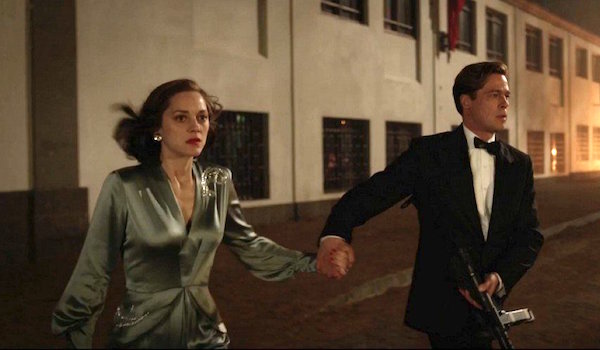
I don’t know if mega-star screenwriter Steven Knight (Allied) is a Michael Jackson fan or not, but I was reading an interview he did at Slash-Film the other day, and one of the questions asked of Knight was one that has pockmarked the screenwriting community for centuries. It’s the closest thing we have to a trigger question. Our equivalent of a political nut walking into a room and saying, “I can’t wait for Trump to build that wall.”
“SHOULD YOU FOLLOW THE RULES?”
Early in the interview Knight says that he avoids following screenwriting rules, specifically the one that states a character has to CHANGE over the course of a movie. When then asked which rules he isn’t fond of, Knight doubled-down on character change…
I mean, the arc thing is interesting. It’s good sometimes to have a character that starts as one thing and ends as another, but James Bond, Hercules, these are pretty enduring stories. [Laughs] Like a Greek myth. In a Greek myth, you can have the characters and objects, and it just goes through these events in the same as a computer game now.
I’ve always found this discussion fascinating because I believe it’s essential that a character change over the course of a movie. In fact, I’d argue that 99% of main characters in films do change, and that if your character doesn’t change in some way, we’ll feel let down, even leave disliking that character.
The only time a character doesn’t change and it still works is when that character dies because of their inability to change. I just watched Hell or High Water, and in that movie, the trouble-making brother lived a selfish sinful life. He never changed his ways (spoiler) and he ended up dying because of it. We also saw this with Robert DeNiro’s character in Heat.
Here’s where everyone gets tripped up though. They think that “change” has to happen along the traditional lines of assigning your character a flaw, and then having that character overcome that flaw by the end of the movie.
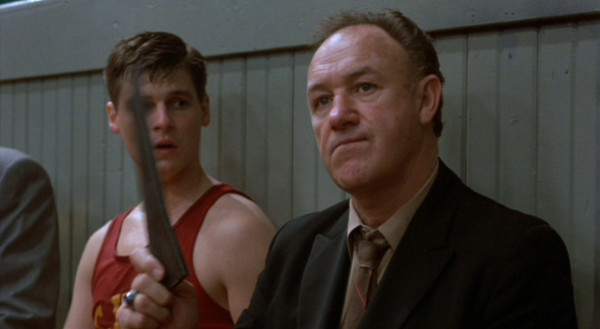
I agree that, when done well, this is the most effective way for change to work. When a selfish character (Trainwreck) learns to become selfless, we feel warm inside. When a stubborn character (Hoosiers) learns to listen to others, we feel tender inside.
However, the more scripts I read, the more I realize this type of change doesn’t happen often. And a look into history tells us why. The time when this advice became popularized was in the 80s and 90s, a period when comedies, rom-coms, and less serious fare dominated. In those movies, the “flaw-change” worked perfectly. The films (along with animated and sports movies), were already skirting reality, so the fact that this unrealistic 180 degree character turnaround occurs at the end of the movie didn’t faze anyone. They bought into it wholeheartedly.
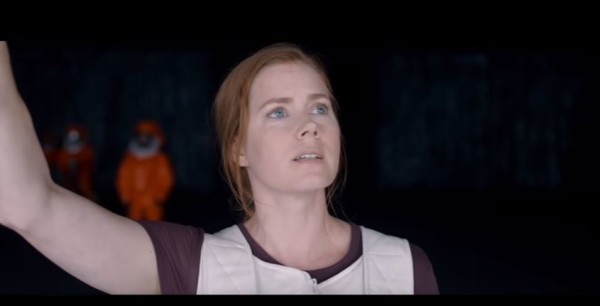
But when you watch a movie like Drive or Bourne or Mad Max or Arrival – you don’t see traditional flaws explored. And because you don’t, you don’t see that arc Knight is referring to.
BUT…
Those characters still change. And the reason screenwriters miss it is because they’re looking specifically for the flaw-change. But alas, my screenwriting snickerdoodles, there are OTHER WAYS TO CHANGE A CHARACTER.
Two big ones, in fact:
LEARNING
and
OVERCOMING
Learning is just like it sounds. The character doesn’t have to become a different person by the end of the movie, which is where rule-defamers get their panties in a bunch. But they do need to learn something. I consider this a “mini-change,” and while not as earth-shattering as a core change, it still leaves the audience feeling good, since the character has evolved.
One of my favorite movies of all time is Ferris Bueller’s Day Off, a film used by flaw-change naysayers as proof that your main character doesn’t have to change over the course of the film. Ferris Bueller has no flaw, they say. And therefore he doesn’t fix his flaw by the end of the movie.
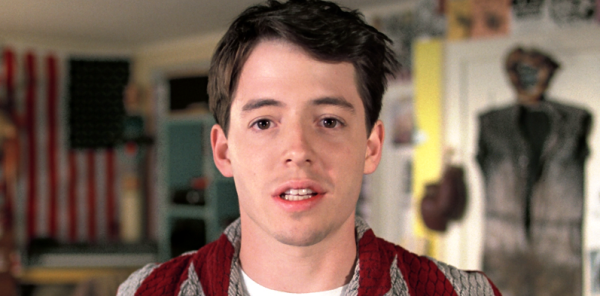
But let’s look at that analysis more closely. Is Ferris Bueller the same person at the end of that film as he was at the beginning? I’d say no way. Ferris has LEARNED two valuable lessons – the value of friendship (with Cameron) and the value of family (with his sister). If Ferris hadn’t changed, he’d still be joking around when Cameron has a breakdown destroying his father’s car. If Ferris hadn’t changed, he wouldn’t have connected with his troublemaker sister, who saves his ass at the end of the day.
The operative word here is that Ferris has LEARNED something. And if you’re not going to add a full-scale flaw-change, this is a nice secondary option. Make sure your character has learned something by the end of the day. It doesn’t have to be big. But it should make us feel that, going forward, the character is better equipped for life.
Next we have “OVERCOMING,” and overcoming comes in two flavors:
LOSS
ADDICTION
Movies that tackle these subject matters tend to be more serious. As a result, the gimmicky “overcoming a flaw” stuff doesn’t work as well (it can work, but it takes more skill to do so). The good news is, this is a fairly easy “change” to pull off. Since the problem is built right into the character, all you have to do is have the character overcome that problem and they have “changed.”
Arrival is an example of “overcoming loss.” Amy Adams’s character, Louise, has lost her child. Her entire life is defined by this loss. By the end of the movie, she’s able to find peace with the loss and move on. Louise is in a better place at the end of the movie than she was at the beginning (note: I know it’s more complicated than that because of the time stuff – but I don’t want to get into spoilers here).
I want you to think about that for a second because it gets to the heart of why, I believe, Steven Knight is wrong. If Louise is the same bummed out hopeless person in the last frame of the movie as she was at the beginning, would we be satisfied? I’m willing to bet you’d all have the same reaction: “Well what the fuck was the point of that then?” This is why change is important. It makes us feel like the journey we just went on had a point.

For an example of a character overcoming addiction, look no further than The Girl On The Train. That film is about a woman whose drinking is so bad, it’s preventing her from solving a murder. If she doesn’t change her ways (her drinking), she will wallow in this drifting pointless existence til the day she dies. Change is imperative for her to succeed and for us to feel satisfied. And she does just that.
And that’s what I want to get across here. Characters must change over the course of the story. It doesn’t have to be with a flaw. It can be by learning something. Or it can be by overcoming something within. But they can’t be at the exact same point at the end as they were at the beginning, or else what’s the point of making us watch your stupid movie for two hours?
I’m so sure of this, that I pose a challenge to you: Name me any good movie where the main character doesn’t change in the three ways listed above (flaw, learn, overcome) where the character doesn’t then end up dead.
And yes, I know the first film you’ll go to is the James Bond series. I don’t know these films well enough to argue against them. But I have a feeling that, in a lot of Bond films, Bond learns something by the end of the movie. Especially in the Daniel Craig versions, which are more character-driven. But what I’m really curious about is if anyone can give me examples other than Bond. And remember, the films have to actually be good! Meaning, the act of not changing the characters resulted in a strong film.
Go at it!
Hey guys, sorry for the lack of posts. I enjoyed the holidays too much, apparently. So here’s how this week is going to work. This is TUESDAY’S post. Wednesday is another review. Thursday is an article. Friday is the Scriptshadow Tournament. The good news is that tomorrow or Wednesday, I’m sending out a NEW NEWSLETTER! And I review a really good script from a really good screenwriter. Or, at least, it’s good so far. :) So make sure to sign up for the newsletter at Carsonreeves1@gmail.com.
Genre: Period/World War 2
Premise: A paratrooper finds himself stranded behind enemy lines when his plane goes down while on one of the most important missions of World War 2. Can he still complete the mission in time?
About: EDIT (UPDATE) – Oh wow, they just attached Bradley Cooper hours after review went up. Talk about timing this just right. :) Zach Dean is a mainstay on the Black List. This is either his 3rd or 4th entry on the list, and his writing seems to get better each time. This one finished on the lower half of the 2015 List. Atlantic Wall was sold in PITCH FORM in a competitive bidding situation. That’s what happens when you’re getting on the Black List every year, boys and girls. Companies start competing for your scripts!
Writer: Zach Dean
Details: 116 pages
If you’ve been here long enough, you know how I feel about World War 2 stories. There are in the neighborhood of 300 movies about World War 2. So if you’re going to bring a new story to the table, it better be unique. One of my favorite World War 2 movies is Life is Beautiful because it’s a CONCENTRATION CAMP COMEDY. How could that movie NOT be unique??
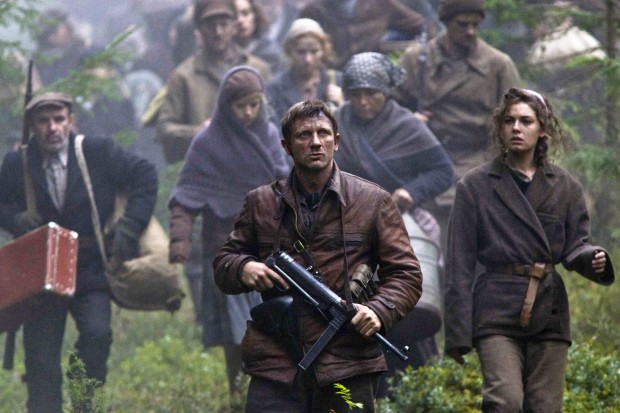
What I don’t like is when writers use a generic World War 2 situation that isn’t that interesting just so they can slap that “World War 2” label on their logline. Like that Daniel Craig movie – what was it? Defiance? About a bunch of people who lived in the woods during World War 2 (“We must go deeper into the woods, Frank.” “Deeper? But we’re literally 100 miles from civilization.” “God dammit, Frank, I said DEEPER!”) WHAT THE FUCK WAS THAT MOVIE????
My favorite talk show right now is, by far, James Corden. My least favorite is Seth Meyers. The reason Corden is so good and Meyers is so forgettable is because James Corden asked the question, “What do we bring to the table that the other talk shows don’t?” Or, more to the point: “Why do we deserve to exist?”
By asking that question, they had no choice but to differentiate themselves. So they added a multi-interview format instead of one guest at a time. They created segments that were online friendly (Carpool Karaoke) and dance numbers (Intersection Musical). Meanwhile, what does Seth Meyers do? He brings the exact same no-frills format that talk shows have been using for 50 years and his late-night show is the least watched as a result.
This is a long-winded way of saying, your idea must have a reason for existing. If you’re just writing something because it has a cursory attachment to a high-profile event, it’s going to reflect in the execution. One of the reasons it’s taken me so long to read this Black List script is because I was afraid that was the case. I’m hoping I’m wrong. Let’s find out…
It’s 1944 and Britain is about to enact something called Operation Overlord, where they’ll fly over the channel and invade Nazi-occupied France. However, there’s a secondary component to this attack.
France has been using secret operatives who have been meticulously marking where all the key German gun points are. With this knowledge, the British-American Coalition will know exactly where to land, which areas to avoid, and how to attack to destroy the Germans. Without this information, they’d be walking in blind.
There’s only one issue. The map has only just been finished. And the attack is launching tomorrow. This leaves American Captain, Lowry Scott, and his team, just a tiny window to get in, grab the map, and get out.
So Scott and his team fly in. Everything seems to be going well. And then Scott’s plane gets shot down. Scott is the only one to survive, and finds himself having to evade the entire Nazi army to get to the rendezvous point.
Once there, Scott secures the map, but not without needing to slaughter a clan of curious Nazis. His attache, close to death, makes Scott promise he’ll take his 10 year old son, Jasper, to his sister. Jasper, ironically, is the one who performed all the reconnaissance for his father and is responsible for this invaluable map.
An annoyed Scott pairs up with Jasper and is able to fulfill his end of the bargain. But when a traitor disrupts the French resistance, Scott and Jasper will need to come together once again to both get out alive, and get that map to the higher-ups so that the invasion can be a success.
This was a lot better than I thought it would be.
There’s one thing you can learn right away from this script and it’s an approach all writers should hang their hat on. When you have a big idea, you want to find the small personal story within it.
A lot of writers will take an idea like this and cut between seven different groups of characters as they all get ready for the big invasion. It’s a common mistake when doing a period or war film and it results in too much jumping around where we never get to know or care about anyone, and therefore don’t give a shit what happens.
What Dean does here instead is he finds this personal story to tell. Our hero teams up with a kid and the two must escape an entire occupied country that’s looking for them.
This leads to the second thing Dean does well: GSU (goal, stakes, urgency).
Goal: Get the map back to his superiors.
Stakes: If he doesn’t, an entire operation will fail, and hundreds of thousands will die.
Urgency: The invasion is happening that day. So he needs to achieve this FAST.
When you combine this with an unresolved relationship between our two leads, Scott and Jasper, you have yourself the ingredients for a kick-ass movie.
This is where the World War 2 tag HELPS your script – when you’ve written something good. Because it acts as a PUBLIC IP in that everyone’s heard of World War 2. So, naturally, it’s easy to promote.
In a film market where everyone (and when I say everyone, I’m talking about the studios as well) struggles to make consumers aware of their product, paying hundreds of millions of dollars to do so, it’s nice to have something well-known in your back pocket (World War 2) to instantly create recognition.
Think about how hard it’s been for them to promote spec scripts Passengers and Collateral Beauty this holiday season. There’s nothing either film can throw at you that creates instant recognition besides movie stars. And movie stars, strangely, aren’t enough anymore.
In addition to this, Dean has researched the shit out of his script, making sure we believe what’s going on. I bring this up because there’s nothing worse than a World War 2 script where it’s clear that the writer doesn’t know a) How war really works, b) the unique details of World War 2 including weapons, vehicles, and protocol, c) the fine print of the subject matter he’s writing about.
I’m not saying the writer should go into exquisite detail about each German gun being shot (more on this in “What I Learned”). I’m saying that we never question any object, person, or interaction because they all felt so damn authentic.
And yet, despite this elaborate research, Dean never forgets to entertain. This is another common amateur mistake. Writers will get that research down, but then that’s ALL they get down. Everything is meticulously described and yet we’re bored to tears because nothing fun or dramatic is happening.
We get lots of Entertainment 101 scenes here, like the dickhead SS officer prepping to kill Julian for accidentally splashing water on his shoes. Or we get to know Scott’s entire team, only for them to be blown to pieces before the mission. That’s how you entertain – throw a plot twist in there that we’d never expect.
Atlantic Wall is a really well-researched fun romp with lots of GSU and, in my opinion, Dean’s best script to date.
[ ] What the hell did I just read?
[ ] wasn’t for me
[xx] worth the read
[ ] impressive
[ ] genius
What I learned: If there isn’t a lot of dialogue in your script, make sure you’re focusing on ACTION rather than DESCRIPTION. In other words, write less about what we’re looking at and more about WHAT THE CHARACTERS ARE DOING. As long as you’re documenting action, the reader feels that SOMETHING IS HAPPENING and is therefore less likely to get bored. It could be cleaning a house. It could be charging up to a bully to settle a score. It could be adding another target to the Operation Overlord map. What you don’t want is a lot of description of rooms or fields or people or vehicles. That’s not to say you won’t describe things. You’ll just do it quickly, expanding only if the moment is really important. But, for the most part, description equals to boredom. Focus on what your character IS DOING instead.