
Search Results for: F word
Genre: Contained Thriller
Premise: A weekend tryst between two cheating spouses goes south when the husband of the woman finds out and makes them pay in the most unimaginable ways possible.
About: This one was acquired by 1984 Defense Contractors (“The Grey”) a couple of years ago. Before selling the script, the writer, Elliot San, wrote and acted in a comedy troupe in Muncie, Indiana.
Writer: Elliot San
Details: 96 pages
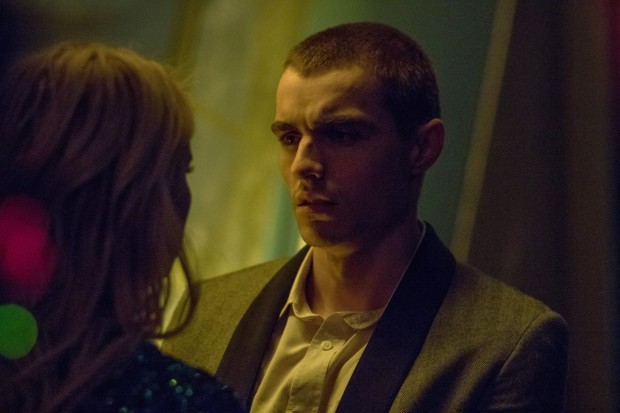
What caught my attention with this script was that it was said to be in the same vein as Hard Candy, the 2005 film about an older man who preys on a younger girl online, and when he brings her home, realizes that he’s the prey.
It was a good movie (Ellen Paige’s debut) and I realized that we haven’t had a good contained thriller in the vein of Hard Candy in forever. So let this be an official shout-out to those of you looking to sell a script, that this is the perfect sub-genre to write in.
It costs NOTHING to shoot. And it stands out from 90% of the other contained thrillers just by not being a horror script.
Assuming you go this route, You’ll Be The Death of Me is your competition. It’s already made a splash. I’m sure someone is out there trying to make it. Let’s see if it’s good enough to be the next Hard Candy.
40-something Holly seems to have a good life going for her. She’s got a husband, Russell, who loves her, and a daughter in college. Yet we get the sense that the recent uptick in Holly’s business trips is straining the marriage.
When Holly heads out on one of those trips, we learn that they’re more personal in nature than she’s letting on. As in, she’s been banging some pool boy for the past six months. And this particular getaway in Palm Springs is going to be the biggest and craziest sex-a-thon yet.
Oh, it’ll be big and crazy all right. Just not how she planned it. You see, Russell figured out what was going on. And instead of going the whole “lawyer up,” route, he’s going to have some fun at his wife’s and Everett’s expense.
He kidnaps Everett ahead of time, brings him to the hotel room, and tells him that his only job is to keep Holly in that room until tomorrow morning. If Holly leaves that room before then, Russell will kill Everett’s wife and daughter, who he’s holding hostage.
Russell then leaves, Holly never knowing he was there, and calls her, pretending to be back at home. He informs Holly that he knows she’s with Everett and that Everett is a killer. Holly, he believes, will be his next victim. Holly must get out of that room at all costs.
And hence begins a life-or-death game of both lovers attempting to outwit one another, unknowingly going up against a likewise manipulated foe. Who’s going to come out with their pants on? I can promise you this. You’ll have no idea unless you read the script.
I LOVED the way this script started. You guys should all read the opening of You’ll Be The Death of Me. It starts out by breaking the rules, giving us a dialogue scene (you rarely want to start with a straight dialogue scene) that takes place on the phone in a car (the characters engaging in the dialogue aren’t even together!). Can you ask for a scene that’s more designed to bore an audience?
Here’s why it works though.
SUBTEXT
Holly, who’s in the car, is talking to her husband, Russell, about seemingly unimportant things (their daughter’s college life, for example). As they continue talking, we get the sense that the conversation is boring Holly. Not in a normal husband-wife know-everything-about-each-other way. But that she has something else she’d rather focus on.
And what that does is it creates a question in the reader: “Why does she want to get off the phone with her husband so badly?”
Once you have the reader questioning the situation, you’ve got them hooked, at least temporarily. And San starts dropping more bait crumbs for us. Holly mentions her “conference” that she’s going to. Russell says, “I thought you said it wasn’t a conference.”
Okay, now we know Holly is lying. Why is she lying? Whether we like it or not, the writer has us in the palm of his hands. We want to know where this is going and that, my friends, is how you pen an opening scene that hooks the reader.
Once Holly gets to the hotel, we sense that something is off. Everett, the man she’s cheating with, isn’t around. He’s left messages with instructions for her instead. Something’s up. The suspense is building. We want to see what’s going to happen here because we know it’s probably going to be bad (pro tip: simple suspense is implying something bad is going to happen then suspending the outcome of that moment).
For the first 15 pages, I was so onboard with You’ll Be The Death of Me.
And then San makes a risky choice. He has Russell threaten Everett, secretly telling him that if Holly leaves that room before tomorrow morning, he will kill Everett’s family.
He then calls up Holly, and secretly tells her he knows she’s having an affair, and that Everett is a killer.
In the immortal words of Saturday Morning Cartoons: “WAH WAH WAHHHHHHH.”
First of all, if you’re a wife having an affair and your husband calls you while you’re with the other man and tells you he’s a killer, what’s your first response going to be? I’m assuming it’s something along the lines of “bullshit.” Your husband has every reason to want to get you away from this man or make you scared of him. So of course he’ll lie.
And this is something I’ve been trying to tell screenwriters forever, and something they don’t want to listen to: Before you have a character do something incredulous, ask yourself if this were the real world, would that character still do what you’re having them do?
If the answer is no, readers are going to call bullshit on you. Russell is written as a smart man. A real life smart man isn’t going to try and pull something over on a wife that she would never believe. And likewise, a real-life wife would never believe that thing even if her husband was dumb enough to try it.
Unfortunately, when a mistake like this is built into the conceit, it disqualifies everything that happens after it. If we don’t believe in how we got here, we can’t believe in what follows.
But here’s the thing about You’ll Be The Death of Me. It adds ANOTHER twist that throws everything you thought you knew out the window. It becomes a completely different story.
And I’ll be the first to admit, despite the thousands of screenplays I’ve read, I had NO FUCKING CLUE what was going on. I couldn’t venture a guess at who was pulling the strings if you gave me temporary access to Einstein’s brain.
Now was the script perfectly constructed? It was not. But it takes chances and after it hits that midpoint, it always stays ahead of you. It’s enough to keep you entertained, that’s for sure.
The contained relationship thriller is like a secret weapon sub-genre. Not many people write them, so the competition is minimal, they’re cheap to make, since they’re one location, and they’re easy to market, so producers want them. It’s the trifecta! So if you’ve got a good idea for a contained relationship thriller, the market is due for one. Take advantage!
[ ] What the hell did I just read?
[ ] wasn’t for me
[x] worth the read
[ ] impressive
[ ] genius
What I learned: Be careful with scripts where there’s no one to root for. They can still work as thrillers because the audience is there for the thrills as much as they are the characters. But in You’ll Be The Death of Me, you have a cheating wife, a cheating husband, and a man who’s torturing them. Who do we root for in that scenario? Even if we’re left thrilled by the breakneck pace and clever plotting, we feel empty at the finish line because we never had anyone to latch onto. So if you’re going to write one of these films, try and add someone to root for!
Genre: Dark Comedy
Premise: A high school soccer star’s life is turned upside-down when a relationship with a teacher makes him question his life after graduation.
About: This is a good example of what a widely-read well-liked script around town can do for you. After this made the rounds, the writer, Zander Lehmann, pretty much a neophyte, was able to set “Casual” up at Hulu, which turned out to be their big breakout show. Outside of that, Zander wrote one episode of The Shannara Chronicles for MTV.
Writer: Zander Lehmann
Details: 106 pages (1/21/13 draft – rewrite).
The Unicorn Store has reinvigorated my thirst for good indie scripts. In my experience, most writers who write indie scripts see “indie” as permission to be boring – a built-in excuse to write entire acts that take place inside greenhouses where your deaf goth hero contemplates suicide as he examines each individual flower.
The truth is, writing an indie movie isn’t that different from writing a Hollywood movie. All the scenes still have to move the story forward. You need high stakes. There’s got to be some urgency. If you think writing an “indie” script is a license to fuck around, expect a lot of frustrated readers who come back with a couple of vague compliments and a pool-sized list of excuses when you ask them to read “the new draft.”
The Beautiful Game follows four characters. There’s Matt, a senior high school soccer star who’s about to get a scholarship to the college of his dreams. There’s Elaine, the girl who he recently broke up who adds new meaning to the phrase, “All is fair in love and war.”
There’s Dr. Astle, a school counselor who’s failed at everything in life except for this. Dr. Astle cares about his students more than anything, but it’s also widely believed that he’s in the closet and afraid to come out. Dr. Astle is constantly pursuing Neve, a 32 year old teacher who coaches the girls junior varsity soccer team and hates every minute of it, preferring instead to toke up whenever possible.
We follow each character’s narrative through their own inner monologues, allowing us to feel much closer to them than we normally would in a high school movie. One day, when Neve’s car doesn’t start, she gets a ride from a passing Matt, ends up inviting him into her apartment, and you can guess what happens next.
The problem? Matt falls in love with her. So while that’s going on, Elaine does everything in her power to get Matt back. Dr. Astle does everything in his power to get Neve to go out with him. And Neve has to figure out if Matt is a mid-life crush or someone she can really see herself with. All of this comes to an explosive conclusion during the beautiful championship game climax.
The Unicorn Store reminded me of the importance of “dressing up” an indie script. You have to understand that indie scripts that deal with relationships and suicide and feelings and backstory and that have NO HOOK are impossible sells. The only producers you can rope into making these movies are producers who have never produced before. All the producers who have made one of these films learned their lesson and will never make them again.
I’m telling you. When you spend four years of blood, sweat, and tears, only for your film to show up on iTunes “special finds” list for one week and then forgotten about forever, you stop seeking out concept-less films.
Scripts like The Unicorn Store, which add a unique hook to things, allow you to have the best of both worlds. You get to explore a bunch of indie themes, yet do so inside a concept that will get attention. If you don’t have that weird hook, you’re running up No Chance Avenue. There is one exception to this rule however: YOU’RE A REALLY GOOD FUCKING WRITER.
Zander Lehmann is a really good fucking writer. No, he’s not going to dazzle you with any word-smithing like Diablo Cody, or give you some unforgettable Tarantino-esque scene like plunging a shot of adrenaline into an overdosed mobster’s wife’s heart. But he’s got an offbeat voice, he takes chances, he makes interesting plot choices, his character-writing is top notch, he surprises you without being gimmicky, and he knows how to tell a story.
That last one may seem generic but it’s the most important of the bunch. I can’t express how big of a requirement the ability to tell a story is, and how many scripts I read – even professional ones – where the writer doesn’t know what that entails.
They don’t use GSU, they don’t use suspense, mystery, dramatic irony, a 3-act structure. And if they do know how to do all of those things, they often do it in a forced manner, following a list of checkboxes some screenwriting book told them to follow instead of making story choices naturally.
This is a part of screenwriting I don’t talk about enough. How does one “follow the rules” yet keep their story natural? It’s like learning any new skill. When I taught tennis, I would have to break down a forehand to a new student in minute detail to help them hit it the correct way. For six months to up to two years, they’d be thinking about all those movements as they hit the forehead. So even though the forehand was technically correct, it looked stiff, mechanical, and the ball didn’t pop off the racket effortlessly.
But once they got it logged into their muscle memory and they didn’t have to think about it anymore, it became this thing of effortless beauty. Writing is the same way. You have to go through all the dirty hard work of THINKING about the rules as you’re applying them. But once it’s ingrained in you, you can start focusing on making the best choices for the story, even if those don’t fall within the boundaries you’ve been taught to stay within. It’s okay because, now, you know that even if you leave the reservation, you have the skills to find your way back.
As with all indie scripts, their success depends on the creation of interesting complex characters. Unlike big Hollywood movies where character depth boils down to an easy-to-define flaw and some bare-bones backstory, the characters in indie scripts are your special effects. You can see how good of a writer Lehmann is through his creation of Dr. Astle. Here’s a character who’s gay yet who spends the entire movie pursuing our female lead.
This is way trickier to pull off than you know, and speaks loads about Lehmann’s skill level. See, he knows that the more you can tie the characters together, the more compelling the story is going to be. If Astle is off on an island, not involved with anyone else, he becomes less interesting. So Lehmann writes in the one-sided romance of Astle pursuing Neve. The problem is, Astle is gay. So how do you make that work? Lehmann’s solution is to place Astle in the closet, so he’s not quite out yet, and he makes Neve a pursuit of denial. She’s Astle’s way of not confronting his sexuality more so than a genuine love interest.
There isn’t an amateur writer in the world, and very few professionals for that matter, who could’ve walked that line and pulled this off. But Lehmann does it.
There’s only one problem with the script, and it’s the reason it only gets a double worth the read as opposed to an impressive. It’s too inspired by Election. You have the high school setting, the multiple voice overs, a student with a teacher. The script eventually evolves into a completely different story than Election. But you can’t deny the initial similarities. We always subconsciously copy our favorite movies, guys. You have to be on the lookout for that.
If you’re interested AT ALL in writing good indie material or a dark comedy, you’ll want to read The Beautiful Game right away. This is really good stuff.
[ ] What the hell did I just read?
[ ] wasn’t for me
[xx] worth the read
[ ] impressive
[ ] genius
What I learned: You have more leniency to delve into backstory in indie scripts. The audience is expecting more character development, so you can slow down in places if it offers us an opportunity to get to know a character better (as long as what we learn is interesting!). Lehmann goes into an entire flashback montage to show how Dr. Astle ended up at this school. Be wary of this approach in big Hollywood movies though.
What I learned 2: I read a lot of these student-teacher dark comedy scripts. They seem to always make the Black List. But now that the female and male student versions of these stories are so ubiquitous, I think someone has to write the gay version of this setup. Where either a female student engages with a female teacher or a male a male. That’s the only fresh version of this setup left.
I am borderline furious about this new Star Wars trailer. Even more furious than when I try and understand Snapchat.
Something’s going on behind the scenes, and while I don’t claim to have direct knowledge of what that is, little bread crumbs have been dropped onto the internet over the past year, enough so that you can almost put the loaf back together.
People who like this trailer have been tricked by the familiar and the cool – Darth Vader, rocket launchers taking down AT-ATs, robot sidekicks. Like a great magician who’s mastered sleight-of-hand, they’ve got us looking in the wrong direction.
But seriously, what the hell is happening in this trailer??? It’s a complete mess. For starters, you have a freaking PREQUELS shot to open things.
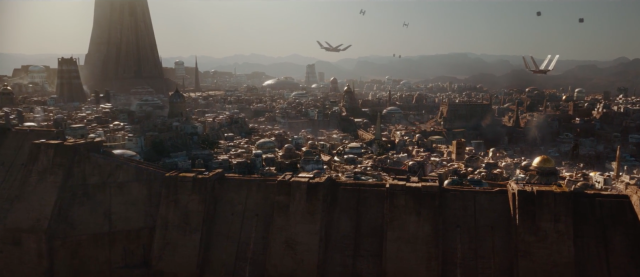
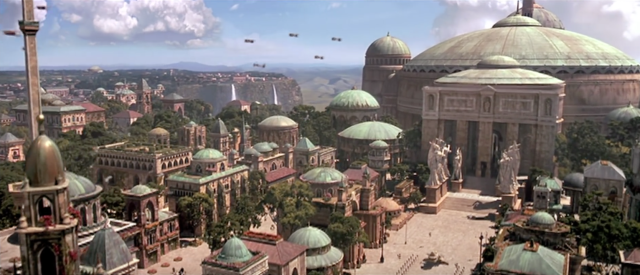
And let me tell you why this is a bad sign. Gareth Edwards does not want to make a Prequels film. Everything he’s told us indicates he wants real locations, a real-world feel, and to make this as real and gritty as a Star Wars movie can be. A CGI prequels shot tells me someone besides Edwards ordered that shot in there.
Then, to follow that, we have a second look at the city with the now ubiquitous “Star Destroyer nearby to add gravitas” shot. Where else have we seen this shot? Oh yeah, The Force Awakens trailer.


The subtext here is clear as day. These shots are Disney-ordered. This is them wanting to juice up what they believe is a movie that needs juicing up (more on that in a bit).
Now, unlike a first trailer, which is about mystery and creating buzz, the second trailer is supposed to tell us what the story is. This trailer starts to do that, with us learning that Jyn is going to lead some mission. But then descends into a hodge-podge “sort-of look for the rest of the gang” montage that feels either rushed or awaiting a bunch of shots that aren’t ready yet since half the movie was reshot a few weeks ago. They introduce us to Sword Guy and that’s about it.
Most egregiously, the longer the trailer goes on, the more un-fun it gets. Not “gritty,” not “dark,” but un-fun.
So here’s my suspicion. Gareth Edwards made a boring movie and they’re trying to figure out how to un-boring it. Watch the trailer again and focus on the acting. What jumps out at you? The answer is nothing. Nothing jumps out at you because every character is boring as shit save for, maybe, Forest Whitaker, and that’s only because he’s an awesome actor.
This is the director’s choice to mute characters, to keep all of their line-readings subdued, and it’s what doomed directors like M. Night. In a movie, just like in a script, you need VARIETY IN CHARACTER, as that leads to CONTRAST, which leads to exciting scenes. Here we’re treated to crackling interactions such as this one: (glumly) “I want to help.” (slightly less glumly) “Good.” A near endless pause. Then, glumly, “Good.”
If every character is written in a subdued serious manner and every actor acts in a subdued serious way, you can expect a subdued serious movie. Which in most parts of the world is synonymous with BORING.
Gareth Edwards knows how to make a movie look good. That’s never been in question. What’s still up in the air is whether he knows how to tell a story. Look no further than his gorgeously-shot debut film, Monsters, to see how little he either a) understands storytelling, or b) cares about it.
Word on the street is that he didn’t even use a script when he shot Monsters. And it shows. At one point, while two characters walk into a jungle area they know is inhabited by monsters, there is a loud roar and one of them asks, “What was that?” Hmm, I might be off-base on this one but… I think it’s a monster?
I thought this would be solved once he got a real screenwriter. But while his Godzilla film was also gorgeous to look at, there were a bafflingly large number of screenwriting faux-pas made, even for a Hollywood system that places emphasis on production value over script value. We had the multiple openings, confusion over what to do with the star monster, and the single weakest main character in movies that year.
Say what you want about the first Rogue One trailer, but at the very least, THERE WAS SOME CREATIVITY TO IT. They were taking chances, having some fun, giving us the things they promised us with these Star Wars off-shoot movies. The trailer had the feel of a few guys sitting in a room, excitedly trading ideas. “Wouldn’t it be cool if we did this!?”
This new trailer feels like the result of a 13 hour heated conversation between the multiple people in charge – the director, the president of Lucasfilm, the president of Disney. Very cautious. Very safe. Very compromising.
When you add all that up with the fact that they threw some cobbled together snore-fest version of the trailer up at Star Wars Celebration then made it disappear faster than Casper, released one of the most amateurish posters for a major Hollywood film in recent memory…
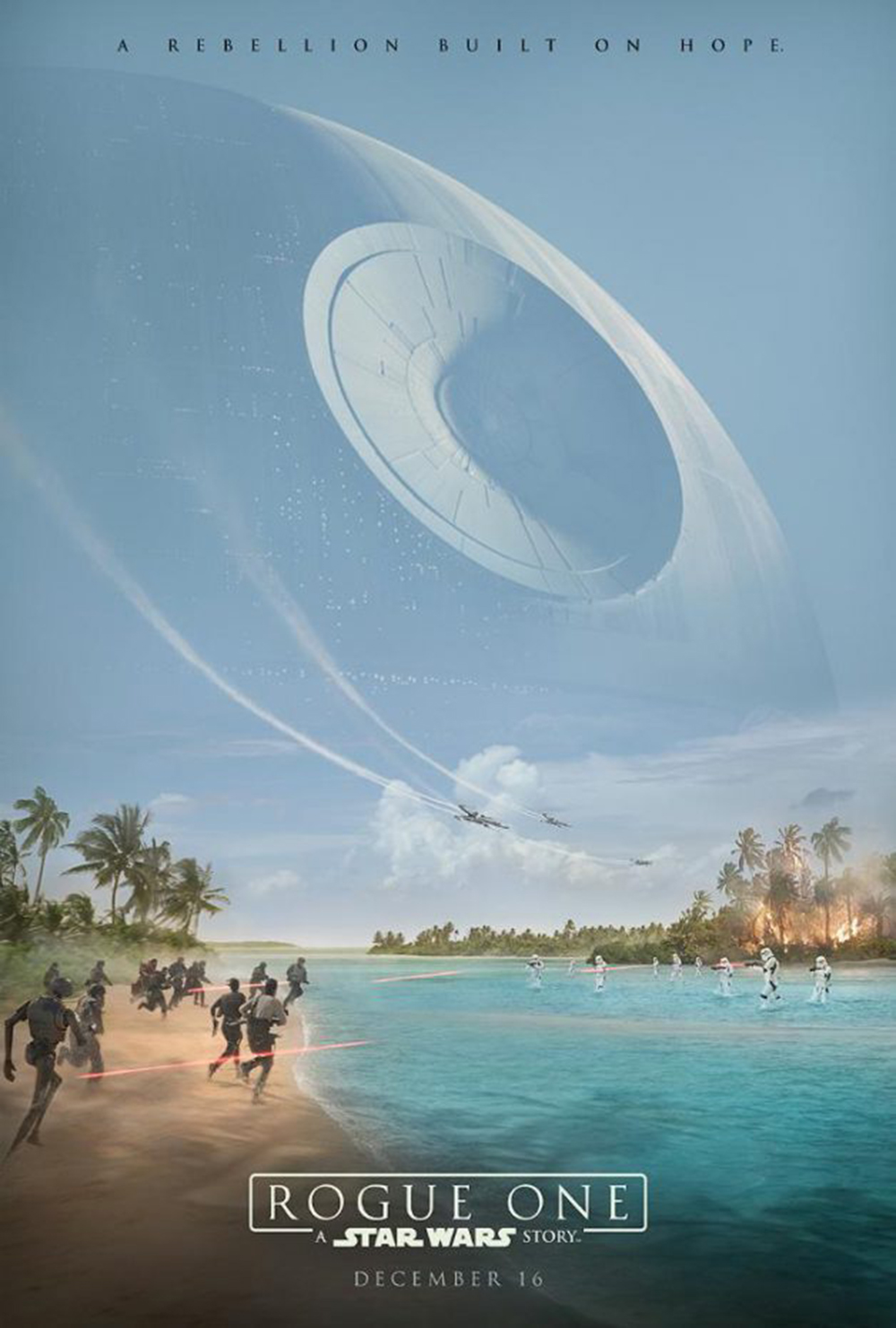
…BURIED this trailer to a post 10pm Eastern Time slot (Force Awakens trailer came out first thing in the morning), and have pushed every single marketing step of this project back 3-4 months later than it normally is, and you can see why I’m a little bit worried.
Dare I say, I’ve got a bad feeling about this.
If you’re new to the Scriptshadow Script Challenge, here are all the previous posts…
WEEK 0
WEEK 1
WEEK 2
WEEK 3
WEEK 4
WEEK 5
WEEK 6
WEEK 7
WEEK 8
WEEK 9
WEEK 10
WEEK 11
WEEK 12
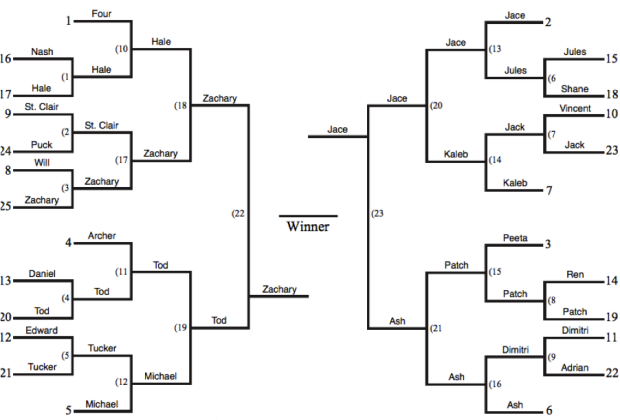
Okay everybody, so this upcoming week, you will be finishing your second draft. But for those of you who’ve been lagging behind, fear not. I am giving you five more weeks to get your scripts ready for THE 1ST ANNUAL SCRIPTSHADOW SCREENPLAY TOURNAMENT. Anyone wishing to enter the Scriptshadow Screenplay Tournament will need to submit their script by 11:59pm Pacific Time, Sunday, September 4th. Here’s what you want to include in the e-mail.
All entries should be sent to: Carsonreeves3@gmail.com with subject line: “SCRIPTSHADOW TOURNAMENT.”
Title
Genre
Logline
Why You Should Be Picked
From there, I will be picking between 40 and 64 screenplays to compete in the tournament. Since this is unprecedented and nobody has done it before, I’m going to be figuring out a lot of this as I go along. But basically, Saturdays will become Scriptshadow Tournament days as opposed to Amateur Offerings days. You guys will be voting on which scripts go through each round, just like you vote for which scripts get a Friday review.
How do we know which scripts were written for this contest and which weren’t? We don’t! The large majority of people who follow this site do not comment. And I’m not going to exclude them from the contest. So we’re going by peoples’ word here. As far as which scripts I choose for the tournament, it’ll be no different from picking scripts for the Scriptshadow 250. The best overall presentations (concept and pitch) get in.
So get those scripts ready people! Let’s find something great. :)
Genre: Horror/Slasher
Premise: After their friends run a supposedly haunted red light and suffer horrible deaths, three disbelieving teens run the same red light to dispel small town superstition, only to find themselves the next targets of a sinister figure hellbent on revenge.
About: I’ve been teaching Pre-Kindergarten for seven years now, so trust me — I know horror. Besides wanting to bring the slasher film back for the Z Generation, I’ve always wanted to write a movie that made an ordinary thing seem terrifying. Think of what Jaws did for going swimming, or Shallow Hal for, uh, going swimming.
One night, while sitting at an empty intersection waiting for the light to change, I found myself coming up with reasons not to go through it. A car could smash into me. I could get pulled over. An unflattering photo of me taken from a traffic camera could appear in my mail. But it wasn’t until I convinced myself the vengeful ghost of a woman — a woman wrongfully killed at that very intersection by another red light runner — would follow me home that I knew I had something special.
I’m confident anyone who reads my script will never go through a traffic light the same way again. But don’t just take my word for it. Professional script consultant Danny Manus gave it a strong consider and called it, “A fast and enjoyable read with a solid climax, a couple good twists in the plot, some strong scare moments, suspenseful scenes, and enough gore to satisfy PG-13 horror fans while still having a solid mystery.”
So how isn’t this a movie yet? How am I still without a manager or agent? How did I keep you reading this long without the exchange of payment or sexual favors? Maybe you can educate an educator. I’m hoping you’ll give my script the chance for some extra attention and critique, but more importantly, I just want everybody reading it to have fun. Because I had a blast writing it.
Writer: Chris Shamburger
Details: 103 pages

So, honest first thoughts when I read this logline:
A haunted red light?
Ehhhh… I wasn’t too confident.
It seemed a bit goofy.
But then I thought about The Ring, one of the most popular horror movies of all time, and wondered, “Is it any less goofy than that? A haunted video tape?”
Then again, the great thing about The Ring was that the video tape was the ultimate visual freak fest. What you saw on that tape chilled you to the bone. It really helped you buy into the premise.
I’m not convinced a red light does that. But let’s find out. WAIT! Hold on. Press the walk sign button. Okay… and it’s green now.
We start off with an eclectic mix of high schoolers and college kids. There’s 18 year old Nikki, a young black woman with some sass. There’s Xander, 19 and athletic. There’s Hannah, 17 years old and eager to start going to college parties. And then there’s some periphery players, like Hannah’s older brother Jimmy, who treats her like a misbehaving child, and Rebecca, Jimmy’s bitchy ex-girlfriend.
So Nikki, Xander, and Hannah head to a college party at ASU where the talk is of a recent group of kids who ran a red light and all but one got butchered at a diner afterwards. When Xander hears that the operating theory is that they were butchered by a ghost who’d been killed when hit by somebody who ran the same red light, Xander wants to run the light too.
So he recruits Nikki and Hannah under the pretense that they’ll hashtag it and become internet famous, only to learn afterwards that there may be more truth to the story than he originally thought. When strange things start happening to them, the three each separately start investigating this woman who was killed, and find out some disturbing things about the incident.
Eventually, as you would expect, teenagers start dying, and the question becomes, is this really a ghost, or might it be a real life killer who’s big on road safety.
Okay so, we’ve got a lot of beginner mistakes here and I hope that by highlighting them, I can help Chris as well as other writers out. Remember that readers are quick to pick up on red flags. And red flags are like ants. Where there’s one, there are usually more. And remember when I said I was skeptical of the premise? That tends to be a red flag out of the gate. When the premise isn’t on point, other things tend not to be either. Unfortunately, that was the case here.
Starting with the opening scene where something immediately jumped out at me. Our drunk teenagers are in a car, but instead of acting like drunk teenagers, they’re spouting out functional backstory-laden dialogue such as, “It’s Rebecca.” “I haven’t heard that name in a while.” “We just started talking again.” “Why?” (remember that leading questions are bad!), “She’s the new president of Alpha Omega Pi.”
Does that sound to you like drunk high school kids? I remember the conversations myself and fellow drunken high school kids had and they were nothing like that. There were random screams and woops about nothing in particular. Someone would say out of nowhere, “We should go to New Orleans!” Someone would always mention some girl that someone recently banged and that “we should call her.” There’d be lots of laughter.
You have to honor the truth of the moment. If you prioritize screenwriting conventions over truth, your scene won’t feel honest, and that’s the case here.
Next on the docket is this description: “He’s so lit, you could probably read a book by him.” It took me several reads before I finally understood what the writer was saying. These overly cute descriptions are almost always the sign of a beginner. Pros prioritize storytelling over everything. They don’t want to break the suspension of disbelief and understand that lines like this can do that.
The exception is when they’re built into the style of the script and the writer is REALLY good at it. When cute lines like this appear out of nowhere, they’re lone wolves and draw attention. I’d avoid them.
Next you have the dialogue. One of the genres where dialogue is extremely important is teen movies. Teenagers are often at the forefront of whatever slang is dominating the zeitgeist, and seek to one-up one another with the latest burn or turn of phrase. For these reasons, when the dialogue in a teen movie is boring, it’s a huge mark against the script.
The dialogue here was very functional, very robotic, and didn’t sound like teenagers at all. When Hannah’s brother’s ex runs into her, she says, “And Hannah, when you see Jimmy again, please tell him I said hi.” That sounds like a 35 year old speaking. Not someone in college. The script was littered with dialogue like that. No style, no fun, no slang. There were a few sections that eschewed this, but not enough.
The next red flag didn’t take long to appear. When they go to this party, Matt, the lone survivor from the first gang to run the red light, gets out of jail after being questioned, and goes straight to this party.
So let me get this straight. You’ve just watched your friends die horrible deaths. The police think you may have done it. And the first thing you do when they release you is head to a party by yourself? But it gets worse. The first thing Matt does when he gets there is go to a bathroom, sit in a stall, and cry???
Why did he come to the party if all he was going to do was cry in a stall? Soon after, the stall is burned to the ground with Matt in it, and we have our answer. The writer wanted to kill Matt in this bathroom. He didn’t care how he got the character there, as long as he could have his bathroom killing scene.
This is another difference between amateurs and pros. Pros will find logical motivations for characters to do things. Amateurs don’t care about that stuff. They’ll pace their character through the most illogical set of actions (showing up at a party the second you’ve been released from jail for being a murder suspect, heading to the bathroom to cry by yourself) to get them to the scene they want to write.
This is why when people say that Hollywood movies are terribly written, I chuckle. Yes, there is badly written professional material. But the bad in those movies is “professional bad.” It’s a whole different level from amateur bad.
On the plus side, the premise began to win me over as the script went on. I thought it was clever to make the ghost woman an investigator who was in the middle of trying to find a missing child. It brought another level of mystery to the teenagers’ investigation. I mean who knows. I could see this being a direct-to-digital horror title. Why not? It has a great title. It’s an easy-to-understand concept. However, before you can rope in the people necessary to make this movie, you have to take care of these basic mistakes.
Script link: Red Light
[ ] What the hell did I just read?
[x] wasn’t for me
[ ] worth the read
[ ] impressive
[ ] genius
What I learned: Another red flag is character descriptions that are purely physical. Here’s Xander’s character description: “XANDER, 19, stands on the front step, newspaper in hand. Lean, athletic build. Strong chin. He’s a six foot tall drink of water.” It’s almost always better to convey something about the character in their description. For example, a simple word like “mischievous” tells us so much more than that “he’s a tall drink of water.”