
Search Results for: F word
Genre: Science-Fiction
Premise: After earth becomes uninhabitable, a ship is sent into deep space to look for mankind’s next planet.
About: S. Craig Zahler is back. For the holidays! I mean what says “holidays” better than the man who brought us death by hamster insertion? The Brigands of Rattleborge and They Repair Us writer hits us today with some hard sci-fi. Let’s see how juicy an S. Craig Zahler science-fiction script gets! This seems to be an early draft (it’s called “Draft A”) so take that into consideration ya little turkey thieves.
Writer: S. Craig Zahler
Details: 156 pages (c’mon, what did you expect) – “Draft A”
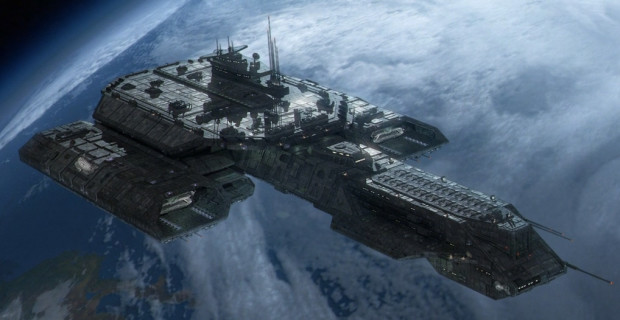
It only makes sense after the last couple of days at Scriptshadow that we’d want to get as far away from planet earth as possible. And who better to take us there than the Director of Description, the Pioneer of Prose, S. Craig Zahler himself.
Before I summarize the story, I want to say that the “Leave Earth To Find A New Planet” scenario is one of the oldest plots in science-fiction. We saw it with Avatar. We saw it with Interstellar. I’ve even read three amateur scripts dealing with this subject matter in the past six months.
This setup requires embracing the un-obvious. Just like a romantic comedy writer has to find new ways into a romantic comedy so that it’s not just another romantic comedy, you, as a science-fiction writer, need to find new ways into old setups like this one so they’re not just another “leave earth and find a planet” flick. And since Zahler invented the un-obvious, I’m hoping he can do just that.
The first ten pages of “Conflicts” thrusts us through 150 years on earth. Our environment is going to shit cause we’re lazy assholes, which gives rise to fringe religious groups who take advantage of peoples’ fears. Religion meets terrorism. Attacks on the rich are made. It turns out Leo was right, and it’s only a matter of time before this garbage can we call “home” is uninhabitable.
So we build Elysabeth, a self-sufficient self-intelligent ship that’s capable of putting a thousand bodies on ice while it searches the universe for habitable planets. This is one weird ship. They’ve peppered it with hundreds of HUMAN EYEBALLS that stare out into the nothingness of space while we jet-set around on our intergalactic road trip.
Eventually, after 600 years, we find a planet that, because the ship is run by a bunch of boring scientists, we name, “Option 1.” Option 1 is not ideal. While it’s got rocks and water, it also has temperatures that swing 100 degrees in a matter of minutes. Not exactly beach living. Unfortunately, Elysabeth is falling apart, so they’ve got no choice but to make Option 1 their only option.
After exploring Option 1 for a few weeks, they come across a tiny group of intelligent beings who live inside a hollow mountain. These brash beasts invite the humans to build their own village next to theirs.
Meanwhile, a few religious nuts who stowed away in the cryo-beds want to kill everyone on Elysabeth then hijack the ship back to earth, where they plan to unfreeze their cryogenically frozen children that they’ve hidden underground. Yeah, cause that sounds doable. “Hey guys, I know it’s been 1700 years. But wake up!”
All of this implies the inevitable, that mankind is probably going extinct. If it’s not the planet, it will be the aliens. And if it’s not the aliens, it will be each other. Unless, of course, our crew can pull it together. But with noted pessimist Zahler at the controls, I sincerely doubt that’s going to happen.
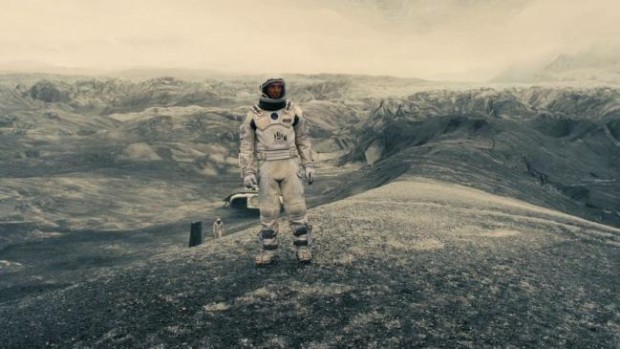
I don’t know what to make of “Conflicts.” Either it’s an early draft or one of Zahler’s rare misfires. Notice how in my breakdown, I didn’t mention any characters. That’s not by accident. I couldn’t find any.
We bounce around between so many people that we never identify a protagonist. And I’ll tell you right now, if there’s one choice a screenwriter can almost NEVER recover from, it’s not having a clear protagonist. Readers are desperate to identify with and see the story through someone’s eyes. If you don’t give them that, they’re confused. But more importantly – DISTANCED.
Think of a story as a mother. And you, the reader, are a baby. If you don’t have your mom carrying you around, taking you from place to place, you don’t know what the fuck to do. You sit on the sidewalk and cry.
And the basic tenets of storytelling go out the window without a main character. You don’t have an active person driving the story. Which means you don’t have a strong goal. Which means no urgency. Which means no stakes. I guess you can include these things in the abstract. The “goal” is for the crew to find a place to settle. But without that one person who we feel close to leading the charge, it’s hard to care whether they succeed or not.
It’s the exact opposite of yesterday, where Ingelsby LOCKS US IN to one character and makes her SO DAMN SYMPATHETIC that even though nothing is technically happening, we still wanted to see what she’d do next.
That’s why, if someone were to put a gun to your head and say your script could only include character development or plot, not both, I’d tell you to go with character. Because people want to connect with other people, even if they’re imaginary. Nobody wants to find the Ark of the Covenant if Indiana Jones isn’t taking them to it.
There isn’t a single character in Conflicts who’s explored with any depth besides maybe Sven, a spoiled kid in his 20s whose father was a big-shot back on earth. And yet we barely know the guy cause we’re jumping around to so many other characters.
Another issue I ran across with Conflicts was backstory. And this goes back to yesterday’s script as well. One of the first things you learn in screenwriting is to come into the story as late as possible.
In other words, if you’re writing Star Wars, you don’t start six months ago, getting to know Darth Vader during a week-long vacation on Endor. You start ten minutes after the Death Star plans have been stolen with Darth Vader chasing your thieving ass.
Ingelsby threw this rule out yesterday, leisurely taking us through Deb’s daily routine for 27 pages before her daughter went missing. Zahler takes that to another level as we traverse 800 years in 30 pages before finally discovering Option 1.
In both cases, an argument can be made that we should’ve come in later. Do we really need 27 pages to set Deb and her daughter up? Do we really need 30 pages to set up how and why we left earth? Wouldn’t it have been easier to start with the characters waking up from cryo-sleep outside their new planet?
The reality is there’s no right answers to these questions. It’s a judgment call made by the writer. If you feel like you need extra setup, include extra setup. But I will say this. In screenwriting, it’s best to err on the side of less rather than more. It’ll benefit you to come in too late rather than too early.
But if we are going to come in early, I’d argue the long setup of Deb and her daughter was way more important to its story than the long setup of leaving earth was to Conflicts.
And I’ll tell you why.
Deb’s character is DEFINED by her loss. Everything she does is based on that loss. So it makes sense to draw out the relationship that led to that loss. With Conflicts, there’s no crucial character being built up here. In fact, all we’re doing is highlighting the same thing that happens in every “leave earth for other planets” story. The earth is dying. People are fighting each other. Build a ship. Leave.
That’s a key difference that I need you guys to realize. If your backstory is something the reader could’ve assumed on their own, you don’t need to show it. And, in this case, that could’ve saved “Conflicts” 30 pages.
With that said, I know we’re talking about Zahler. He doesn’t follow screenwriting rules and is usually better for it. Indeed, some of the trippy stuff he adds to our exit (spaceships with eyeballs??) can be used as an argument for their inclusion. But it’s always a balancing act. You have to balance what you like against what’s best for the screenplay. And I don’t think a backstory that’s 95% the same as every other backstory we’ve seen in these movies was best for Conflicts.
This early draft of Conflicts needed two things – a later entry into the story and characters we actually got to know. I have a feeling that if all Zahler had to concentrate on was getting us onto this planet and having strange shit happen to our characters, he could’ve written to his strengths, which, ironically, are really weird and powerful characters encountering memorably detailed fucked-up situations.
[ ] What the hell did I just read?
[x] wasn’t for me
[ ] worth the read
[ ] impressive
[ ] genius
What I learned: One of the first things you should ask yourself when you come up with a movie idea is how late can you start your story and how soon can you get out of it? I’ll give you the perfect example. Star Wars. That movie could’ve taken place over 2-3 years. Instead, it took place over 1 week. Contrast that with, say, Revenge of The Sith. Remember how wonky that plot felt? A big reason for that is because Lucas came into the story too early and got out too late. All in all, it took place over 8 months I believe? Yikes. That’s Disaster Sauce when dealing with plots. “Conflicts” could’ve benefitted a ton form this line of thinking, at least on the front end, when we came in way too early.
P.S. I’m not saying all movies need to take place over a week. I’m merely warning you that the longer you spread your plot out, the harder your story will be to tell. I guarantee that. So get in late and get out early. Even if it means changing your planned plot. For example, I’m sure George Lucas would’ve argued, “It had to be 8 months. Queen Amidala was one month pregnant at the beginning of the movie and the ending is her giving birth.” Okay, so get creative then. Ask yourself if you can start the movie with Queen Amidala already 8 months pregnant. That’s what this line of thinking is all about.
Genre: Sci-fi
Premise: When a series of alien ships arrive on earth, it’s up to a linguist to learn their language and find out what they came here for.
About: This was one of those half-assignment/half-spec type deals. Eric Heisserer adapted Ted Chiang’s short story. The project was considered low-priority. But when it came together, everyone realized the film’s flashy premise provided them with an opportunity to draw in a bigger audience. Paramount became the primary suitor, eventually picking it up after a stellar preview at Cannes, and it came out this weekend to a higher than expected box office of 24 million bucks. For perspective, a Marvel movie will cost 4 times as much and land in twice as many theaters. So this is a huge coup for Arrival. One of the hottest directors on the planet, Denis Villeneuve, directs Amy Adams, Jeremey Renner, and Forest “Rouge One” Whitaker.
Writer: Eric Heisserer
Details: 1 hour and 55 minutes
Coming out of Arrival, I had the same reaction half the country did after the election…
“What the fuck just happened?”
Arrival is a testament to exploring a big idea on an intimate scale. It’s a script that should be lauded for its commitment to deeper introspective storytelling. But it’s also a cautionary tale for screenwriters – both in how the system forces your hand and how time travel mechanics are the biggest minefield in screenwriting.
Arrival follows Dr. Louise Banks, one of the top linguists in the world. Louise recently lost her daughter to cancer and therefore drifts though life, allowing her professorial duties at the local college to distract her as much as possible.
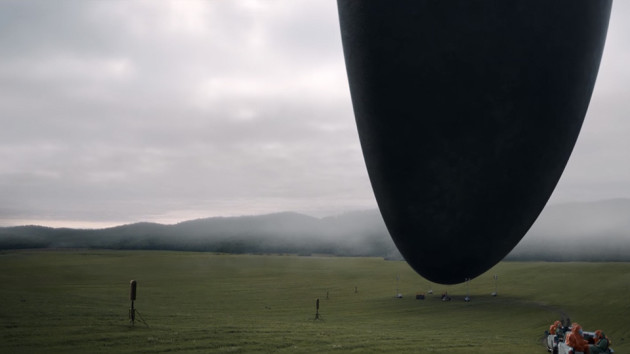
Her life is violently interrupted when twelve alien ships that look like giant tear drops arrive, hovering over twelve of the biggest countries in the world. Just as Louise is taking this in, an army colonel named Weber shows up and tells her her services are required. They need to communicate with the aliens, and she’s the only one they believe who can do it.
Louise is paired up with Ian Donnelly, a scientist, and the two join a small team that go into the alien ship every 18 hours to try and develop a common language with the aliens so that they can communicate.
The process is slow-going, and they’re repeatedly getting pressure from the higher-ups to speed it along. The big dogs believe that the other countries are making faster progress, and word on the bike path is that the aliens might be here to offer us a weapon. In some sort of twisted game, whichever country wins the language war, they will receive the weapon, and, if they so please, have the rest of earth at their mercy.
It’s a classic tale of of the tortoise and the hare, as Louise wants to learn the language from the ground up in hopes of a comprehensive dialogue, whereas the other countries are learning a few key words quickly so they get the message faster, even if that means error-prone communication.
Who will win? And what is the weapon the aliens have at their disposal? That’s the million dollar intergalactic question, baby.
Arrival is an example of the sign of the times. No, I’m not talking about how aliens relate to our political reality or any such nonsense. I’m talking about how in the original story, China plans to take over the world.
Oh no, but we can’t portray China in a negative light! Like, literally, we’re not able to. China is in the process of investing money in all seven studios with the stipulation that they cannot be portrayed negatively in any of the movies their money funds.
So what we’re seeing is scripts like Arrival have to be rewritten. And the results are anything but ideal. Instead of the Chinese being bad guys like in the earlier draft, the Chinese are now heroes, bravely defending the planet by threatening the aliens.
This sets a ticking time bomb up for the final act, as Louise and Ian hurry to learn the last bits of the alien language in the hope that they can prevent this attack.
At first glance, it’s a subtle shift. The Chinese no longer want to harm us. They want to harm the aliens. But in terms of stakes, it’s everything. Our characters and the United States are no longer under direct threat. No matter how you dress it up, there’s less stake in this scenario than a chicken sandwich.
Sure, there’s still “connect-the-dots” stakes. If China attacks the aliens, the aliens may attack earth, and everyone dies. But this scenario isn’t as clear, and the connect-the-dots nature of it makes it less scary than if China was threatening the U.S. directly.
So how do you deal with this as a working screenwriter? You can’t. There are things you have no control over. Studios are going to ask you to change things you don’t want to change all the time. And all you can do is do your best.
What sucks about Arrival is that it compounds this decrease in stakes with a risky story choice – adding time-travel.
[major spoilers below]
While I will never say “Don’t use time travel” in your screenplay, I will heed you this warning: Time travel is the hardest thing to get right in storytelling.
It goes back to Terminator. As a singular movie, that film worked because it was so simple. You didn’t have to think much. But once a second Terminator appeared in the second movie, it got everyone thinking: “Wait a minute. If they fail, why can’t they just keep sending Terminators back, one after another until they succeed?” That’s the pitfall of time travel. It opens up so many fucking, “Well wait a minute…” questions.
And Arrival is no exception.
The “weapon” that the aliens give Louise? Is the ability to see the universe like them – without the constraints of time. So Louise has the power to see forwards and backwards into her entire life.
Okay, now here’s where things get tricky, so stay with me. The daughter she lost to cancer? That hasn’t happened yet. What Louise is remembering in the early part of the movie is the future, not the past.
That daughter she had, she had with Ian (her co-worker). Which begs the question, where is Ian in all these future memories? It turns out he left when Louise informed him that their daughter would eventually contract cancer.
We then go back to the end of the aliens’ visit, where a troubled Louise asks Ian that if he could live a happy life despite knowing something terrible was coming, would he change it? He says no, he’d still live that life. And that’s the end.
Okay so, let’s get this straight here. Louise is having memories of her dead future child when we start the movie because the aliens gave her the power to see time forwards and backwards, which goes into effect retroactively, giving her that power to see the future, essentially, right when she’s born.
So then how come she didn’t know the aliens were coming???
Apparently this ability to see the future is selective.
Also, where is Ian in these future memories if he’s the father? Oh right, he left. Because when Louise told him that their daughter would eventually get cancer, he was so mad that he deserted the fam.
Let’s think about that for a moment, shall we? You leave the woman you love and the daughter you love because you’re mad your wife told you she’s going to get cancer. Does that make sense to you? Wouldn’t you stay and fight and go to every doctor on the planet to find preventative measures to stop the cancer, especially since you already know which cancer it’s going to be?
A little more digging however, tells us the real reason Ian isn’t there. If Ian was there, we’d have known the “flash-backs” were actually “flash-forwards.” They needed Ian out of the picture to execute the sleight-of-hand. Hence the artificial reasoning for him leaving.
All of this is an elaborate way of saying: If you’re going to fuck with time travel, be prepared to take it on the chin. The more embedded time travel is in your plot, the more plot holes you’re going to have. Period. If you’re okay with that, go for it. But I promise you, they’ll be there.
Despite this frustrating issue, I still liked Arrival. I loved the realistic approach it took to the arrival. I loved the unique manner in which contact was explored (with language). On a filmmaking note, I thought the score was amazing. And I thought Villeneuve shot the movie in a mesmerizing manner.
There’s this flying tracking shot early on, where we helicopter into the base outside the ship, and we’re floating down and around the make-shift barracks, and the score is booming and the clouds are sliding off the nearby mountains and this majestic ship is silhouetted by the sun — that shot fucking sold me. The aliens could’ve communicated in farts and burps at that point and I still would’ve bought in.
So warts and all, this was quite the movie-going experience. Not to mention it’s a great discussion piece for screenwriters and filmmakers alike.
[ ] What the hell did I just watch?
[ ] wasn’t for me
[x] worth the price of admission
[ ] impressive
[ ] genius
What I learned: There is such a thing as too much subtlety, you know. Writers and directors who prefer subtlety are terrified of coming off too “on-the-nose.” In principle, I agree that on-the-nose is bad. But if you go to the other extreme, where you don’t give us anything, there’s a chance we might not catch what you’re trying to say. This love story between Louise and Ian is dealt with so subtlely, we don’t even know it’s happening. There’s no kissing, no touching, no compliments, no looks, not even a hint that they like each other. So when they get together at the end, it comes out of left field. It’s fine to be subtle. But you still have to give the audience SOMETHING to let them know what’s going on. Every payoff in your story must be set up on some level.
Genre: Drama/Conspiracy/Thriller
Premise: (from Black List) With America’s first viable independent presidential candidate poised for victory, an idealistic young journalist uncovers a conspiracy, which places the fate of the election, and the country, in his hands.
About: The Independent made the semifinals of the Nicholl Competition in 2013 before later finishing high on the 2013 Black List. Parter is new on the scene. This is his breakthrough screenplay.
Writer: Evan Parter
Details: 114 pages

Guess what day it is??
It’s ellllllllection day!!!
Yayyyy!!!
It’s time to vote for one of these two wonderful fault-free candidates we’ve decided are the best options to represent our country. And what better way to fire up those voting fingers than to review a political script?? Cause we all know how much I love politics. I talk about it all the time on Scriptshadow. Clintons, Bushes, Obamas. Sometimes this blog is so political, I might as well be blogging atop that big spire-like thing in Washington.
In all seriousness, I know very little bout politics, starting with what that spire-thing in Washington is named. In fact, I just learned a few months ago the purpose of voting for the Independent. I always used to wonder, “Why do people vote for this guy if nobody knows who he is?” But now I’ve learned that voting for the independent candidate isn’t a vote for them. It’s a vote against the system. You’re making, like, a statement with your vote that you don’t like America or something.
Might that be what The Independent is about? No idea. But who cares! I get to review a political script today. YAHOOOOOOO!!!!
Last year Nate Sterling wrote a book that sold 40 million copies and shot in him into the likability stratosphere. Sterling has used that buzz, as well as his innate charm, to climb the polls and become the favorite to win the United States presidency. The catch?
Nate is an independent candidate.
The United States has never had an independent president. So this is pretty unpresidented (heh heh – joke).
Across town, 28 year-old Eli Brooks isn’t exactly moving mountains like Sterling. But he’s an up-and-coming star at the Washington Tribune, the only paper in town that hasn’t succumbed to the evil internet news machine.
The chief editor at the paper implores his writers to hit hard and hit big. It’s the only way they can keep killing trees. And Eli’s got a story that’s going to knock out a rain forest. Eli believes that Republican presidential candidate and Sterling’s main rival, Roger Turnball, is siphoning money out of the state’s lottery coffers to pay for his campaign.
Eli lassos senior editor and mentor, Nate Sterling, into his conspiracy theory, and the two set out to prove Turball is a nasty dude. But just when the story’s coming together, they’re hit with a bombshell that will throw everything everybody thought they knew about Sterling on its head. The question is: Can they report it? And what will happen to them if they do?
Yikes.
This was so not a Carson script.
It had politics, politics, and… more politics! Had I paid more attention to the logline, I probably would’ve realized that.
Regardless of my personal feelings about politics, here’s my big issue with The Independent: It ignored its strange attractor.
Remember guys, your first order of business is to identify the strange attractor in your story. What is it that you’re bringing to the table that’s never been brought to the table before? I’d never seen the matrix before The Matrix. I’d never read a movie about a soldier who refused to use a gun before Hacksaw Ridge. I’d never seen a movie about magicians who pulled off bank heists before Now Your See Me.
However, that’s only THE FIRST PART of the equation.
The next part is that you must EXPLOIT THAT ATTRACTOR. In other words, you must show the soldier not using his weapon. You must show fighting that defies physics. You must show people using magic to steal money.
In The Independent, the independent candidate is your strange attractor. It’s what makes your movie unique. Yet there is nothing in here that exploits that. In fact, had you turned Nate Sterling into a Democrat, absolutely nothing about this script changes.
That’s when you know you’re not exploiting your concept. When you can change the attractor and nothing else in your script needs to be rewritten.
This script is more about a journalist trying to prove a presidential candidate is corrupt. I don’t know what that has to do with independent presidential candidates. And, quite frankly, that bummed me out. Because I don’t know much about the independent sector, and I was hoping that by the end of this script, I would know a lot.
Even if that wasn’t a problem for you, I was baffled by the fact that this script is titled “The Independent,” and yet 90% of the movie focuses on a journalist. Why aren’t we focusing on the most interesting part of your concept?
It just seemed odd to me.
As for the rest of the script, it was a mixed bag. I found the dialogue to be great when it was quick and punchy (“Listen up, buddy. Only eyes on that story are the ones you’re dotting.”), and insufferable when the characters couldn’t shut up (“There’s many wonderful things about a choir. Intimate friends, tight community, beautiful music. But, if you only sing in one choir your whole life, you’re only listening to one preacher… you’re only meeting one God.”).
There were so many lines like that last one, where characters would talk talk talk then summarize their thoughts with a famous quote or philosophical life lesson, that I felt like I was stuck in a Princeton Lecture Hall during some kind of Pretentiousness Competition.
That’s where this script lost itself, in its middle act. The characters couldn’t shut up, we the reader got bored, and both sides forgot what the movie was about.
The Independent almost saves itself with a wowzer of a late-story twist, but a lot of the impact of that twist came simply because I was bored. It was like, “Oh! Finally! Something’s happened!”
The Independent needs a lot of work. For starters, it needs to include its subject, Nate Sterling, more. It needs an investigation that’s more exciting than a corrupt lottery board. It needs to better explore its one interesting dynamic (spoilers) – that Eli’s fiancé works for the secretly corrupt Sterling. More time with her and more time with all three of them would be nice. And it needs to stop indulging in these endless 8-10 line pretentious dialogue exchanges that are more about sounding smart than pushing the story forward.
If The Independent can do all those things, maybe it makes it through the primaries.
Good luck to your candidate, everybody!
[ ] What the hell did I just read?
[x] wasn’t for me
[ ] worth the read
[ ] impressive
[ ] genius
What I learned: One of the more common mistakes I see with new writers is dialogue that’s written to make the writer look good rather than to serve the story. The Independent is full of characters who talk forever but don’t actually say anything. It’s okay for a character to ramble on about something every once in awhile, but remember, even in the talkiest of movies, it’s more important to show than tell. And it’s more important to keep the story moving than listen to yourself talk.
Due to my impending death, I couldn’t get a full post up today. The good news is that a new Scriptshadow Newsletter is coming out within the next couple of days! In it, I’ll be reviewing another hot trend – studios buying specs to adapt into already-owned franchises. This one is a small but intense spec that a major studio purchased to jump start an early 2000s franchise that could’ve been awesome, but they screwed it up big-time (for those guessing, I’ve talked about the film here within the past year). So make sure you sign up for the newsletter if you’re not on it already. Just send the word “NEWSLETTER” to Carsonreeves1@gmail.com
Now on to today’s tip, which is actually inspired by yesterday. In the number 1 Blood List script, Orb, I discussed the notion of exposition in scene-writing, with backstory being a part of that. Backstory is any information you include about your characters or plot that occurred before your story started. If your main character’s mom died during child birth and you have one of your characters tell us this, or even jump back in time and show it? That’s backstory.
So today’s question is, when should you include backstory? The quick answer is: ALMOST NEVER. Seriously. Screenplays work best when they’re dealing with the present moment. Therefore, characters talking about the past or us going into the past is moving away from the strength of the medium. However, sometimes you need to add context to your plot and your characters and backstory is the only way to do that.
That leads us to the more involved answer: If the audience can approximately fill in the backstory themselves, you don’t need to include it.
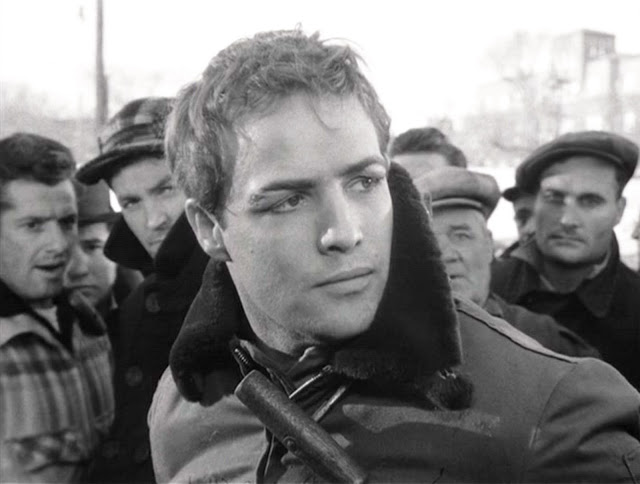
“Approximately?” What the hell does that mean, Carson? Say we meet a Marlon Brando-like blue collar character who grew up on the wrong side of the tracks. Just from his weathered eyes, his defeated demeanor, some scars on his back, we know this dude had a rough life. Therefore, including a scene where he tells his girlfriend that his dad used to beat him up every Thursday after drinking with his buddies, doesn’t add anything to the narrative. We figured something like this must have happened, and this daddy abuse sounds about right. So it comes off as redundant.
However, if “Marlon” informed his girlfriend that, at one time, he was a chess prodigy ranked #3 in the world? That’s something we wouldn’t have guessed. This makes him a bit more interesting to us, and builds an extra layer into the character. Therefore, the argument for including this piece of backstory is much stronger.
Keep in mind, though, that as with any information you bring into a script, your backstory needs to be relevant to the story. If you’re going to tell us your character was a chess champion, that should pay off or slide into the story later. That doesn’t mean Marlon has to enter a chess tournament. But this “hidden intellect” might serve him well in a Good Will Hunting “How do you like them apples?” kind of way.
Backstory is a tricky monster that should mostly be avoided. But if you are going to use it, make sure it tells us things we wouldn’t have guessed ourselves. Or else what’s the point?
Genre: Sci-Fi
Premise: An astronaut in 1969 tries an experimental aircraft that accidentally sends him 50 years into the future.
About: This script finished with 10 votes on the 2014 Black List. The writer, Kimberly Barrante, graduated from the NYU Tisch School of Arts. According to an interview, this is the first script Barrante wrote, and one she started while at NYU.
Writer: Kimberly Barrante
Details: 111 pages

One of the things I’ve been struggling a lot with lately is originality. I’m reading the same shit over and over again, from concepts to execution, and, in most cases, am so far ahead of the script, I might as well skip to the last five pages.
This led to me asking the question: How do you find originality in a world with 100 years of cinema history and 400 tv shows? Do you just give up? Accept there’s nothing new to say and copy your favorite writers?
Then last night I turned on Black Mirror, the unexpected British hit on Netflix, which spurned Netflix to produce another season, recruiting top level talent from the acting and directing worlds (Bryce Dallas Howard and Joe Wright take on the first episode of Season 3).
The show is about modern technology’s effect on society – and it was from this synopsis that I realized: BAM. That’s where you find originality, in the ways our world is changing, in the new developments, whether they be technological or sociological or psychological, stemming from the way our world evolves.
Of course, there’s a caveat to that. You are now competing in a brainspace occupied by a LOT more people. For example, if you wanted to write a movie about the effect of Instagram on the populace, you’d be competing with the 50 million people who use the app and 50 million others who have heard of it.
In that sense, it’s a double-edged sword. You’ve been given some originality real estate, yet everyone on the planet already owns a piece of it.
The connective tissue between this and Celeritas is that writer Kimberly Barrante has somehow managed to find originality in a world where it doesn’t exist anymore. I’ve never seen a story told quite like this. But as we’ve pointed out here before on Scriptshadow – coming up with something original is one thing. Making it good is another. Let’s see if Celeritas is good.
It’s 1969 and Paul Hawkins is an ace astronaut about to get the opportunity of a lifetime. He’s been chosen for a top secret project called “Janus,” which will put him in an experimental aircraft that will attempt to break the speed of light.
Meanwhile, in 2020, NASA has just recovered a ship called “Janus” that has landed in the ocean. This is, of course, the same ship, which would imply the project was a success. However, NASA seems confused by the arrival of Paul, believing that his ship had blown up during take-off back in 1969.
Speaking of 1969, we repeatedly jump back to it where an entirely different story plays out. Paul has a twin brother, Norman, and both are in love with the same girl, Maggie. While Paul was always considered the Golden Child, Norman was more the workhorse of the family, the guy who gets all the shit done that nobody wants to do.
We keep cutting back and forth between the past and the future, eventually meeting Old Norman and Old Maggie, who are now married, as they attempt to break Paul out of NASA. Will NASA take Paul out? Or will this rag-tag group somehow escape? And if they do, how does Paul live in this new unfamiliar world?
Celeritas feels to me like a concept in search of a story. We have this pilot who jumps forward in time (the concept), yet the story doesn’t want to focus on that. It would rather focus on 1969 and the more mundane story of this twins love triangle.
It’d be like if you wrote Jurassic Park, but instead of focusing on a group of people getting stuck in a park with killer dinosaurs trying to chase them, we instead focused on a young man who was trying to be the first in his family to graduate college.
We have fucking dinosaurs man! But instead we’ve got our eyes on a Diplomasaurus.
Celeritas is also lacking major GSU. Now I’m aware I have a bias towards GSU. And I recognize it’s not the only way to tell a story. But when a script seems to openly avoid using any story-enhancer, I get frustrated.
Because without a goal, what are we looking forward to here? What’s the end game? What are these people trying to do? Even when they break Paul out of NASA, which is around page 75, there isn’t a plan to it. It’s kind of like, “Okay, let’s just go somewhere where NASA isn’t.”
The great thing about a goal is it gives your story purpose. The reader understands what needs to happen for the characters to complete the journey. And the added benefit with a goal is that you can now add STAKES, you can now add URGENCY, two things that turbo-ize a story.
Take the upcoming alien arrival flick, Arrival. That script could’ve been very similar to this one. Aliens are coming. But instead of focusing on them, you focus more on the psychological effects of people in a post-aliens world. There’s no point. It’s more of a character exploration.
But instead, Arrival gives us a clear goal – figure out the alien language so we can communicate with them. They then add stakes. Other countries are also talking to the aliens. Whoever breaks the language barrier first will receive alien tech that could alter the balance of the world. That naturally lends itself to urgency. It’s imperative that they beat out these other nations.
A lot of newbie writers make this mistake. They attempt to write character-driven fare, but do so at such an expense to story, that there’s no meat to the script. Sure, we’re kind of interested in how Paul lost Maggie to Norman back in 1969. But since the cool conceptual stuff is so passively developed, it’s hard to care that much.
There’s a brief moment in Celeritas where the honchos at NASA imply that Paul may be connected to the Soviets somehow. That there’s more going on here than meets the eye. I was like FINALLY! We’re exploring this cool concept! But that thread is dropped as soon as it’s raised, and we’re stuck again with more hang-dog looks between Paul and Norman as they reconcile Maggie choosing between them.
I give Barrante major props for trying something different here. And as I mentioned before, this script reads unlike other scripts out there. But creating something different is just the beginning. You need to embed a compelling story along with it, preferably one with those storytelling tenets (GSU) that can take an average tale and turn it into a kick-ass one.
[ ] What the hell did I just read?
[x] wasn’t for me
[ ] worth the read
[ ] impressive
[ ] genius
What I learned: Be careful about running away from your idea. If you have a cool idea, it probably shouldn’t be the B-story. Doing so will definitely make your script more original. But unless you create a hell of an A-story, you’re going to have the reader wondering why you aren’t focusing on the coolest part of your premise.