
Search Results for: F word
Could is be? Did someone just write American Psycho with a 13 year-old girl?
Genre: Thriller
Premise: 13-year-old Emily Derringer seems like the perfect girl. But she’s not. She’s a serial killer known as “The Misfit Butcher.”
About: Another high-ranking Black List script from last year. Chris Thomas Devlin is one of the newer writers to make the list. This is his breakthrough script!
Writer: Chris Thomas Devlin
Details: 94 pages

Like I always say, one of the best ways to get noticed is to take a common genre or idea and come at it from a fresh angle. That’s exactly what Devlin’s done. He’s taken the serial killer genre and infused it with the most unlikely of killers – a 13 year old girl.
Herein lies the challenge with doing something new. When you’re looking for things that haven’t been done, you’re likely to find that there’s a reason they haven’t been done. Making a 13 year-old girl a serial killer sounds great in a logline, but practically speaking, has all sorts of challenges.
Serial killers need to be strong to kill their victims, especially if they’re doing it without guns. So now you’re rubbing up against suspension of disbelief, and some people won’t go there with you. I’ll give you an example from the script. At a certain point, there’s a second killer, a man (more on this in the plot breakdown), and Emily “confronts” him in the woods. So you’re saying that a grown killer is confronted by a 13 year-old girl in the woods and he’s not going to kill her right then and there?
There are ways around this. You can take on a more absurdist tone, a wink-wink understanding with the audience that, yeah, we both know this wouldn’t happen in real life. But let’s have fun with it anyway.
That leads to its own set of challenges. The further into the absurdist universe you go, the less clear it is what the rules are. And without rules, it’s hard to know what the audience will and won’t buy into.
All of this is a long way of saying, I wanted to see how Devlin tackled this unique premise. Let’s check it out.
Emily Derringer is a perfectionist. When she kills someone, she wants it done right. Killing is an art. And if it’s messy or lazy, it sheds a bad light on the person responsible. Therefore, our 13 year-old protagonist makes sure that everybody she kills is killed with respect.
After taking out the local priest, Emily preps for a killing vacation, that is until she attends the first day of school and runs into former best friend turned mega-bitch Pepper Devonshire. Just a few cunty words from Pepper and Emily decides she’s going to be next.
But then a problem arises. Emily’s new milk man, Garret Bluestone, kills the local soda shop owner. Nobody else knows this, of course. But Emily is a trained killer, and therefore recognizes others with the affliction. And Emily is pissed because Garret is sloppy. If people mix up his work with hers, it’ll ruin everything she’s worked so hard for.
She confronts Garret, tells him if he does it again, there’s going to be problems, and goes on her way. Meanwhile, Emily starts planning the school Halloween party with her favorite teacher, Mr. Goodwin. But things turn sour when he also pulls in, duh-duh-duh-duhhhhhhh – Pepper Devonshire!
Emily decides to use the time to plan Pepper’s murder. However, a strange thing happens as their meetings go on. Emily and Pepper begin to mend their broken friendship. The question is, will they be able to mend it entirely before Emily decides to kill her?
The Wretched Emily Derringer was pretty good.
There’s a lot for screenwriters to take away from the script, especially if you’re writing a serial killer movie yourself.
For starters, serial killer protagonists only work when you make their plight sympathetic ON SOME LEVEL. And there are some easy ways to do that. For starters, make sure the victims deserve it. All we need to see is a slimy priest who’s trying to snare little Emily off the street before we’re rooting for her to take him out.
We also have the lesser known “voice over” technique. Voice overs are tricky to execute. But they work well when your main character is a serial killer, since they put us inside their head. If our hero seems like a good person and she makes good cases for killing people, we’ll be on board.
Without the voice over, there’s a detachment there. We’ll never feel as close or sympathetic towards them as we would if we’re listening to their reasoning.
Bonus points if you can motivate the voice over. Sure, you could just place us in their mind. But it always feels more natural if it’s motivated. For example, lots of young girls write in diaries. So it makes sense that Emily has a diary. And her musings in said diary are where we get our voice over.
Another lesson we can take away from Emily Derringer is the idea of CONCEPT EVOLUTION. One of your jobs as a writer is to evolve your concept. If your concept stays the same the whole way through the script, it’s likely to be boring.
So here, the concept is a 13 year old girl who’s a serial killer. We could play that out from page 1 to 100 and have an okay story (focusing solely on Emily’s obsession with killing Pepper). The problem with that is, readers get ahead of you. You’re not evolving the concept so there’s nothing new to look forward to.
What Devlin does is he brings in Garret Bluestone – A SECOND KILLER. Now, a story we thought we had a handle on, takes an entirely unpredictable turn. We’re not sure where things are going to go. And, of course, that’s exactly why we keep reading.
The only thing I didn’t like about the plotting was the lack of a detective. One of the easiest ways to create tension in a story where your hero is the killer (or has killed someone in any capacity – by accident or otherwise) is to have someone on their trail. That way, the whole time we’re thinking, “Oh no, they’re catching up to Emily! Will they figure out it’s her?” It’s exciting.
And, actually, the thin page count here tells me that’s exactly what was missing. This is 95 pages but could’ve easily been 110. Those extra 15 pages are your detective storyline.
I don’t know if this is going to become a movie. It’s a tough sell to say the least. They have to play it really absurd and get a director who’s a complete weirdo. Because if this is played anywhere close to straight, people are going to be scratching their heads.
With that said, it’s the perfect type of script to get you noticed. And that mission was accomplished, since this made the Black List. Sometimes, it’s about showing you’re a unique writer, not writing the perfect Hollywood screenplay. Whatever gets you through the door, right?
[ ] What the hell did I just read?
[ ] wasn’t for me
[x] worth the read
[ ] impressive
[ ] genius
What I learned: Your premise starts as a baby. It’s your job to help it grow. If it stays the same the whole way through, the audience will get bored. This advice isn’t just for your main plot. It’s for your subplots as well. Make sure your plot elements are changing and growing into the “adult” version of the ideas. Bringing in a second serial killer was exactly what this script needed to grow into an “adult” version of the concept. Without that evolution, I fear the script would’ve been too thin.
Genre: Drama?
Premise: After her daughter is brutally raped and killed, a woman living in a small town erects three billboards that ask the local police chief why he’s not doing anything to solve the murder.
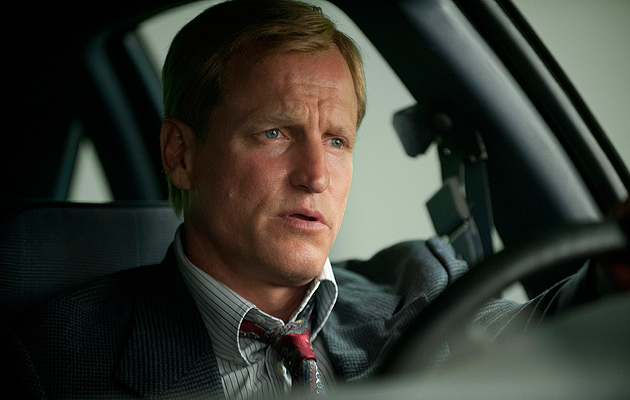
About: This script was written and will be directed by Martin McDonagh, who famously wrote and directed, In Bruges. I’m one of the few people who didn’t connect with In Bruges (hey, I couldn’t understand half the things coming out of Colin Farrel’s mouth!). Nor did I like his later film, Seven Psychopaths. So it shouldn’t be a surprise that today’s entry into the McDonagh film club left me disappointed. You may be asking, “Carson, if you hated those films, why did you read this one?” I didn’t know it was written by McDonagh when I read it. I avoid knowing the writer whenever possible for this very reason. I don’t want to go in with any prior bias. The film has a great cast with Peter Dinklage, Woody Harrelson, Sam Rockwell, John Hawkes, and Frances McDormand. I had assumed the odd premise had to have been based on a real life story. But keeping up the strange vibe of Three Billboards, it’s complete fiction.
Writer: Martin McDonagh
Details: 102 pages
Today’s script was written by someone it feels like has never written a script before. Now I know that’s not true. Because I can look on IMDB and see that he’s written other screenplays, one of them beloved by many. But it still feels that way.
This screenplay makes so many frustrating choices, goes against the grain so many times, that it stops existing as a screenplay, and teeters on the edge of becoming some giant inside joke, or a piece of performance art whose purpose will be revealed many years from now.
It sure makes for an unexpected read. And you guys have heard me say many times that that’s a good thing. Except when you make so many strange choices, that the story stops having a point. That’s what frustrated me most about Three Billboards. I kept wondering what the point was. I thought I’d get some answers by the end. But even then, this baffling monstrosity has you asking why the hell you just wasted two hours of your life on it.
Mildred Hayes is a mean bitch. I suppose losing your daughter to a rape-murder will do that to you. But you get the feeling that Mildred was a horrible person long before that happened.
With that said, she’s a woman who takes action. And as nine months have passed since her daughter was raped and murdered, and the local police haven’t done anything about it, Mildred decides to buy three billboards for the month which she uses to ask the police, “Why haven’t you done anything about the people who raped and murdered my daughter?” (in so many words).
Those police are beloved Chief Bill Willoughy, and racist cop Officer Dixon. Why do we have a racist cop when this movie’s central concept has nothing to do with race? One of the many strange choices that you have to get used to while reading “Three Billboards.”
Anyway, these billboards were put up to put pressure on the police to figure out what happened to Mildred’s daughter. But do you think we actually follow that storyline? No. Since this script reads like it was written on drugs, the billboards inspire NOBODY to do anything about the investigation. That’s right. Not a single second is spent by anyone to look more into the case after the erection of the billboards.
Instead, Bill Willoughy dies of cancer (WHAT??????), a new black chief takes his place (remember, race has nothing to do with the concept here, yet race keeps getting brought up), and a lot of locals take pot shots at Mildred for stirring up trouble with the billboards.
SPOILER ALERT. All of this leads to… NOTHING. At the end of the movie, we’re no closer to solving the crime than we were at the beginning. In fact, Mildred instead decides to kill some random dude who raped someone in Iraq. Cause, yeah, that makes sense.
All I wanted with Three Billboards was SOME kind of connective tissue. I wanted any two parts of the story to come together in a cohesive manner. For example, this weird subplot of making the deputy a racist. Race is a non-factor in Mildred’s death. So why have a subplot about it? Remember what we said yesterday in the great “Storyville?” If the subplot has nothing to do with the main plot, DON’T INCLUDE IT.
If Mildred believed that a black man had raped and killed her daughter, now we at least have SOME connective tissue to tie that into Dixon’s racism. But nope. Dixon’s racism stands off on its own island, leaving us to question its inclusion the entire running time.
Or what about the concept itself. There’s something empty and boring about a woman putting up billboards to remind the police to look into something. Hey Mildred. Ever hear of e-mail? I heard it’s a lot cheaper. Had Mildred heard that the police were covering something up? And her billboards implied that? NOW YOU HAVE A FUCKING STORY!!!! But we don’t get anything even resembling a compelling setup like that. Just a glorified flier telling the cops to spend a few more hours a week on her daughter’s investigation.
I guess the argument for this story’s existence is that it’s less about the murder and more about grief and the uncontrollable feelings that come with being the surviving mother of a rape victim. But here’s the problem with that. If you set up a murder at the beginning of your story, and you build your concept around the idea that a mother wants answers regarding that murder, the audience is going to want to find out who the murderer is!!! If you don’t bother, then, investigating the case, don’t you think you’re pulling a bait and switch on us?
It’d be like in Silence of the Lambs, if they set up Buffalo Bill kidnapping this woman, and then focused the story on corruption in the FBI. We never went after Buffalo Bill. We just watched Clarice deal with bureaucratic red tape inside her division. That’s what the setup and execution of Three Billboards felt like.
If the script has a saving grace, it’s that it’s an actors wet dream. Whoever plays Mildred gets to act like a crazy lunatic bitch for 2 hours, which should surely earn then an Oscar nom. Someone gets to play a racist cop when racist cops are all the rage in the news. And every character seems to have a larger backstory, some legitimate depth.
But when your hero is the least sympathetic person in the script and the villain is the most sympathetic, it leaves the audience utterly confused about what and who they’re supposed to root for.
To top it all off, Three Billboards has an ending that is so shamelessly anti-mainstream, it’s begging you to hang a “keeping it real” gold medal around its neck as you walk out the theater. I’ll be surprised if anyone in the theater makes it that far though.
[x] What the hell did I just read?
[ ] wasn’t for me
[ ] worth the read
[ ] impressive
[ ] genius
What I learned: Making your hero unsympathetic and your villain sympathetic will certainly win you style points with the film school crowd. But assuming you aren’t a director with the ability to get a film made, this is the fastest way to make your script unsaleable to every single producer in town.
Genre: Comedy
Premise: After getting dumped, a young adventurous woman invites her mother, who hasn’t done anything exciting in years, to join her on a trip to Brazil.
About: Kattie Dippold got her start on MADTv back in 2009. She then wrote for Parks and Rec. Her major breakout was The Heat, which starred Melissa McCarthy and Sandra Bullock, and most recently, she’s responsible for the most questionable excuse for a reboot ever, Ghostbusters. Dippold, who’s risen to one of the top 3 female screenwriters in the business, is keeping the female empowerment train going with this latest untitled script that will star the polarizing Amy Schumer and lost-in-time Goldie Hawn. The script is said to have been inspired by Dippold’s own mother, who was once adventurous but now lives a safe boring life. You can learn more about the project over at The Mary Sue, where they are very upset that the project is being directed by, gasp, A MAN!
Writer: Katie Dippold
Details: 119 pages
[REVIEW PORTION TAKEN DOWN]
Fox doesn’t think this review reflected the current state of the project. So it’s been taken down. I’ve kept up the What I Learned though, so you guys can go kick ASS and sell a screenplay.
What I learned: How do you predict what Hollywood will fall in love with so you can write that script ahead of time and have it ready for them when the moment comes? Here’s how Hollywood works. When something becomes an unexpected hit, the entire industry copies it for a period of 3-5 years or until the trend dies. Now there’s a key word here: UNEXPECTED. If everyone already expects for a movie to be a hit, you won’t write something that nobody else has thought to write. It has to be something that nobody expects. So what you want to do is look at movie release schedules 6-12 months in advance and locate movies that you believe will be surprise hits. You’ll want to be the one, for example, who predicted The Hangover was going to be a hit six months before it came out. Or The Sixth Sense. Or Taken. Or District 9. Or John Wick. Granted, a lot of this is born out of how well you know the industry. Knowing that a script had some major buzz or has hot elements attached to it (a flashy new director, a hot star), is wowing the festival circuit, has been bumped from a limited to wide release, will increase the accuracy in your prediction. For example, Todd Phillips was one of the best comedy directors around. So even though The Hangover had no stars (at the time), the fact that he wanted to direct the project was an indication that the material was good. Once you’ve located that movie that you believe is going to break out, you want to write something in the same vein. Because if you’re right, once that movie does well, that’s the type of script everyone is going to be looking for. If you wait until that movie becomes a hit before you start writing, you’ve already lost, my friend. Because now everyone in Hollywood – and more importantly, professional writers with direct access to executives with green-lightable power – are doing the same thing. And they’ll get their script sold WAAAAAAY before you can even get an agent to call you back.
The writer of the best-written show on television comes to us with his next Boob-Tube project. Will it take over the airwaves like Fargo?
Genre: Supernatural
Premise: A schizophrenic man living in a nuthouse falls in love with a fellow patient who he must team up with when outside forces descend upon them, believing that their illnesses are actually powers.
About: Noah Hawley is best known for bringing Fargo to television and creating the best anthology series, well, I’ve ever seen. This is his new show which will appear on FX. (note: I originally wrote this review having no idea that this was a Marvel character. Now that I now that, a lot of the weaknesses in this pilot make sense. This isn’t Hawley’s baby. He’s constrained by the ubiquitous Marvel universe).
Writer: Noah Hawley
Details: 62 pages
It’s been awhile since we’ve dipped into the TV waters but that’s only because there haven’t been any highly buzzed about projects out there. If you believe all the networks, there’s a scarcity of good 1-hour dramas being pitched. And why wouldn’t there be? There are now 100 suitors for projects as opposed to the old days, when there were 5. So yeah, television, get used to competition.
I’ve been all over Noah Hawley like syrup on pancakes, looking for anything in my archives he may have written. I excitedly found a script he wrote with his brother called Dead in the Water, only to realize I’d already reviewed it (it was good! here’s the review). I was particularly excited to find Legion, since TV appears to be what Hawley does best (though I’d bet we’ll see Hawley dominate the feature world soon enough). Will Legion turn Hawley into the next Ryan Murphy?
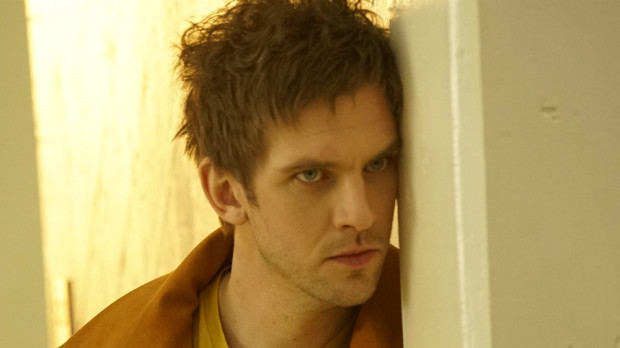
For as long as 30-something David Haller has been alive, he’s heard the voices in his head. Sometimes these voices tell him to do good things, but usually they tell him to do bad things. He’s fought these voices tooth and nail, but at a certain point, the battle was too intense for him to fight alone.
So David now lives in a psyche ward with a bunch of other crazies, existing on a steady cocktail of anti-psychotics, which seem to keep the voices at bay.
David’s life is turned upside-down when Sydney arrives, a beautiful young woman who’s, of course, crazy in her own way, as in she refuses to touch anyone. The two begin a unique romance whereby they can never touch, which only seems to make their love stronger.
Then one day Sydney gets better and has to leave, and that’s when things get fucked up. David rushes to finally kiss Sydney and when they kiss they… switch bodies???
This takes the script in a whole different direction. All of a sudden we’re flashing forward to an interrogation session between some guy named The Interrogator and David. He’s asking David about an “event” that happened in the hospital.
Jumping back and forth in time, we eventually learn that this event consisted of all the windows and doors in the facility disappearing, people being locked in rooms, some people being seared into the wall itself. Oh, and this seems to have happened because when Sydney jumped into David’s body, she used his special powers to wreak havoc on the ward. Or something like that. Confused? I know I am.
As we gradually move away from the backstory and to the present, David uses his powers to escape the Interrogator and reunite with Sydney. But for what? What kind of plan does Sydney have in store? We’ll have to see.
Wow.
Um.
I did not like this.
I mean, there’s a lot wrong here. From big things to little things. I’m kind of shocked that this is the same person who wrote Fargo.
For starters, there is no ground floor in Legion. There is nothing to hold this story up. As a result, we feel weightless, unsure, constantly searching for something to grab onto. And there’s nothing but a boatload of confusion.
Not only are we unsure if David’s crazy or not, but we’re also jumping around in time, turning a disorienting experience into an even more disorienting experience. The tipping point for me was when David and Syd kissed and switched bodies. Did we really just pull a Parent Trap? Then Sydney’s using David’s powers to sear people into walls? Why???
When you pose a question in a story, it’s supposed to make the audience want to know the answer. I didn’t care why Sydney and David switched bodies. I didn’t care why Sydney seared people into walls.
Somehow the two go back into their own bodies but it’s never explained how. I guess their consciousness took a wormhole back to the source body after getting bored? Talk about bizarre.
And there were little issues too. Like the dialogue. The characters— would talk— like this— where they would— always— pause— every few words— to find— the next— thing to say. Imagine reading an entire script like that. Wow.
And I kept hearing about these voices David was hearing. Yet we never hear what the voices actually say. It’s written as, “David keeps hearing the voices.” It seems like that would be a really important plot and character point to know what the voices say. Yet we never get one word. If it’s going to be on the screen, it needs to be on the page.
A much better version of this show would be Stranger Things, which has its share of weirdness. But it’s grounded by a clear storyline. A kid is missing. Another kid has escaped a nearby laboratory. This allows for the other characters to make logical choices based on these problems. Either they’re off looking for one kid or helping the one who escaped.
I don’t know what the hell David and Syd are doing. I suppose The Interrogator is trying to figure out what happened that day at the ward, but there are so many unknowns involved and so many weird choices (switching bodies?? really??) that we lose track of what the point of it all is.
I don’t know. Lost got beat up for its constant mindfuckery. This is Lost x 100 at least. Nothing is clear. Nothing is normal. Nothing is explained. It’s one “what the fuck” moment after the next.
Did I like anything here? I liked the character descriptions. TV shows are more character-dependent than features. So a description like, “Syd is in her 30s and a handful” doesn’t tell me a whole lot. Hawley goes 5-6 lines deep for his character descriptions, and I liked that. Here’s his Syd description:
And here’s what you need to know about Syd, aside from the fact that she doesn’t let anybody touch her: she still believes in happily ever after. Yeah, she knows it makes her a sucker — that it Puts Her At Risk — but she just can’t help herself. Hope is like an ember she can’t stamp out, a place in her heart that knows somehow, one day, things are gonna work out.
Anything that helps me understand a character better, I like. Because most of the time writers will neither describe a character in any kind of specific way or pace them through enough relevant action to help me understand who they are. Any trick you want to use to circumvent this issue, I support.
When you wrap your mysteries in enigmas that are already wrapped in mysteries, the audience isn’t going to know which way is up. And I don’t think the average person is going to be onboard for that. I mean sure, you’ll have your iowaska demographic firmly in hand. “Yeah, make shit even more confusing!” But I don’t think a show can sustain even a few episodes of this level of mind-fuckery, much less 7 seasons. People won’t have the patience.
I was really confused by this one, guys. And sadly disappointed.
[ ] What the hell did I just read?
[x] wasn’t for me
[ ] worth the read
[ ] impressive
[ ] genius
What I learned: In TV, character is king. So make sure to fully define your characters. It doesn’t have to be via 6-line paragraphs, like Hawley does here. But the more specific you can be in defining your characters, the better. Unlike features, where plot is the engine, characters are the engine in television. Make them big, bright, unique, and specific. Oh, and if you’re having trouble figuring out what’s unique about your character, so will the audience.
So in my most recent group of consultations, I got this question a lot: “What about my dialogue?”
I remember when I first got into screenwriting, I came across an interview where a professional screenwriter was asked, “How do you write good dialogue?” His answer: “Dialogue is the least important part of a screenplay. Learn everything else first.”
I subsequently discarded this screenwriter as insane, refused to watch any of his movies, and wrote a handful of e-mails to him explaining everything that was wrong about his proclamation that I never sent. But over time, I realized there was some truth to his statement. I mean how else do you explain writers rewriting dialogue the day of shooting a scene and coming up with something perfectly suitable?
What you eventually learn is that it’s the structure of the scene that enables the potential for good dialogue. Good dialogue rarely emerges on its own. For example, if a director came to you with a structure-less scene and said, “I need new dialogue here,” you’d be fucked. You could try and write some clever Quentin Tarantino shit with some Diablo Cody witticisms and a Paul Thomas Anderson monologue about milkshakes. But no matter what you did, it would be a mess.
However, if the director came to you and said, “Here’s the scene. This wife is about to cheat on her husband, and while he doesn’t know that yet, he’s suspicious of her recent behavior. This is their phone call. I need you to rewrite the dialogue,” now you have something to work with. You have some underlying tension in the scene. You have subtext. You have conflict.
With that setup, you could have a hundred screenwriters come in and write your dialogue and most of them would come up with something good. Why? Because there’s an underlying STRUCTURE to the scene that is built for dialogue. And that was the inspiration for today’s lesson. I wanted to look at the three big elements responsible for good dialogue.
Before we get to that, though, I want to make something clear. None of this will help if you don’t have the basics down. You can’t have a bunch of on-the-nose dialogue. You can’t have a bunch of melodramatic dialogue. The dialogue can’t be robotic. It’s got to sound like real people talking to one another. Ironically, there should be a slightly heightened quality to movie dialogue, yet not so heightened that you look like you’re showing off. And finally, like all of writing, there can’t be any laziness. Come up with a better word, a better sentence, a better analogy, a better turn-of-phrase. You have to try hard. When you’ve done all that, you’ll be ready for the below.
1) DIALOGUE FRIENDLY CHARACTERS
Last week a writer asked me, “Why does my dialogue suck in this scene?” I re-read the scene which took place between “the boring friend” and “the quiet guy.” In other words, of course the dialogue sucked. Neither of the characters was built for dialogue. If you want to write good dialogue scenes, you need characters who are good at talking. It’s no different than sending a couple of socially awkward introverts into a bar and telling them to pick up women. Their personalities aren’t built for that.
If you look at Pulp Fiction, one of the reasons the dialogue is so memorable is that the movie has a dozen characters who are dialogue-friendly. If you look at Deadpool, one of the reasons the dialogue rocked was because it starred the most dialogue friendly character of the year. Jokesters, anybody opinionated, motormouths, philosophical potheads, people who “just tell it like it is and if you don’t like it, fuck off,” really smart people who love to hear themselves talk, really dumb people who who love to hear themselves talk, weird people who have weird views of the world, idiots, the list goes on. If you want more good dialogue scenes, this is something you should be thinking about during the character creation stage. “Is this a character who’s going to say interesting things?” If you don’t have at least one of these guys, your dialogue is going to suffer.
2) CONTRAST
Many of the best dialogue scenes come from a contrasting dynamic. Two characters who are on different ends of the spectrum. Take one of the best dialogue movies ever – When Harry Met Sally. Harry was brash, opinionated and pessimistic. Sally was reserved, thoughtful, and optimistic. It was no wonder their dialogue was fun. Clementine and Joel in Eternal Sunshine. She was extroverted and a motor-mouth. He was introverted and chose his words carefully. 500 Days of Summer. He wanted to make it work badly and she didn’t. Silence of the Lambs. She was timid and scared. He was brilliant and manipulative.
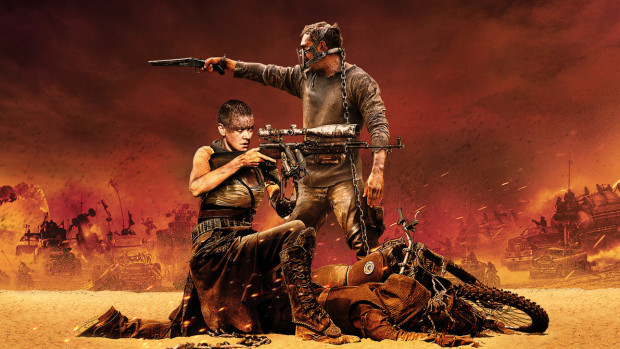
What happens when you don’t have contrast? Let’s look at Mad Max: Fury Road. Great movie, right? But do you remember the dialogue? Did it stand out in any way? No, it didn’t. Why? Maybe the fact that Max and Furiosa were essentially the same person (alphas who did things their own way) contributed to the lack of interesting conversation. There wasn’t enough contrast in their dynamic. Not to mention, neither was dialogue-friendly. It should also be noted that “contrasting” can be momentary. It doesn’t have to be built into the characters from the get-go. For example, two characters who are similar may enter a situation where they disagree. In that case, the contrast is momentary, but it’s still contrast. It still enables the potential for good dialogue. With that said, it’s beneficial for your key characters to have a contrasting dynamic, since they’re going to be in the most scenes together. If they’re too similar or agreeable, you’ll have a lot of sub-par dialogue scenes.
3) THE NEGATIVE ELEMENT
Now this is a working theory so it’s not 100% there yet. But what I’ve found when I’ve broken dialogue down is that in almost every circumstance, the dialogue gets better when you introduce a NEGATIVE ELEMENT. The example I always like to use is a couple (NICK and LISA) talking at a diner. If all Nick and Lisa do is talk, that’s boring. But if we know that Lisa plans to dump (NEGATIVE ELEMENT) Nick at some point during the conversation, you now have interesting dialogue. And even if she dumps him at the start of the conversation (NEGATIVE ELEMENT) you’re going to have interesting dialogue.
Or maybe, for whatever reason, you want Nick and Lisa happy in the scene. That’s fine. But if you want to keep the dialogue interesting, you need to introduce the NEGATIVE ELEMENT somewhere else. For example, maybe Lisa’s abusive ex-boyfriend shows up (NEGATIVE ELEMENT) and sits a few tables away. I guarantee you the conversation between Nick and Lisa is going to get a lot more interesting, even if neither acknowledges that the ex has shown up.
Likewise, let’s say Nick’s just joined the army (I guess Lisa dumped him). If you write a scene where, when Nick gets to the base, he sits down with another soldier and the two discuss where he came from and how he got here, it’s going to be boring. But if the second Nick gets there, he’s thrown onto a Humvee to go check out an IED explosion, and the route they’re taking is laced with insurgents (NEGATIVE ELEMENT) and THAT’S when Nick is asked where he came from, the dialogue’s going to be a lot more interesting.
The negative element could also be subtle. Let’s say we’re following Nick and Lisa (he survived his tour of duty and they’re back together) to a concert. She’s been looking forward to this all week whereas he doesn’t want to be here (NEGATIVE ELEMENT). We’re more likely to get good dialogue out of that than if they’re both happy and excited to be here.
And it’s important to note that you have OPTIONS once the negative element’s been introduced. For example, Nick can be transparent about not wanting to be at the concert OR he can keep his feelings to himself. Either scenario will lead to some interesting dialogue. The idea is that a negative element creates conflict, and conflict necessitates resolution, or at least an attempt at resolution. So there’s more curiosity on the reader’s part on how this situation’s going to end.
Finally, just like there are characters who aren’t built for dialogue, there are genres and movie-types that aren’t built for dialogue. Dramas are one of them. You rarely come out of a straight drama going, “Wow, the dialogue in that was amazing.” It’s the same with Thrillers. Since they’re always on the move, you don’t have many long conversations. So it’s harder to write memorable dialogue.
For those types of movies, you want to place less focus on dialogue-friendly characters and contrasting dynamics and more on the NEGATIVE ELEMENT. As long as you’re introducing negative elements into your scenes, whether they be from the characters themselves or from outside forces, it should lead to better dialogue.
Negative Element Theory reminds me of Rashomon both in its simplicity and complexity. Feel free to comment on it, as well as offer your own dialogue tips, in the comments section.