
Search Results for: F word
Might today’s action spec be the most manly ever reviewed on Scriptshadow???
Genre: Action
Premise: A group of badass mercenaries are hired for the most difficult security detail in the world, protecting a Mexican politician targeted by the biggest cartel boss in the country.
About: Originally written by Predators scribe, Alex Litvak, Five Against a Bullet pulled in the king of cool, Joe Carnahan, to rewrite the script and direct the film.
Writers: Joe Carnahan rewrite (original script by Alex Litvak)
Details: 121 pages

Here’s my question. How do you turn a script like this into the next Fast and Furious franchise as opposed to the next straight-to-digital franchise? Cause honestly, it could go either way. It’s got five cool testosterone-busting leads for actors, the kind of badass parts you could see action actors playing over and over. Yet if they don’t get the right mix of hot faces and money, it doesn’t matter how good of a director Carnahan is. This will never get a wide release.
“Five” follows five badass dudes, starting with the leader, Frank, a man of few words who can get out of any situation by always expecting the worst. There’s Simon, a mouthy Australian desperate to prove he’s got the biggest dick in the room. Terry, a weirdo Japanese-American who can hardly be bothered to look up from whatever video game he’s playing. Vic, a slimy private detective who will bang your wife the second you hire him to see if she’s cheating on you. And finally, Rico, a former bodyguard who failed to protect his boss from one of the most ruthless cartels in the country.
These five are brought in to protect Alvaro Diaz, a Mayoral candidate in a large Mexican City. All they have to do is keep him alive for three weeks, until the election is over. The problem is, every cartel member and their step-mom wants to off this guy as he’s the only candidate with the balls to stand up to them.
The script follows our team as they try and figure out how to navigate even the most mundane of tasks, like traveling a few blocks. When the bounty on Diaz’s head is raised to 20 million, even the girls playing hopscotch are libel to slit your throat. And the longer this goes on, the more Frank worries he may have gotten himself in over his head.
When the heat of the campaign eclipses the heat of an average day in Mexico, Diaz decides to confront the man who wants his head, Montero, face-to-face. He lets him know that he’s not backing down, and if Montero wants to kill him, he’s going to have to pull something out of his ass. Frank, for the record, is not a fan of that challenge.
Eventually, when gang members start showing up at locations in advance of our team, Frank figures out they’ve got a mole. If he doesn’t flush out that mole quickly, there is no way they’ll make it anywhere close to election day. And we’re not just talking about Diaz. We’re talking about every single one of them.
So what is the difference between a straight-to-video balls-to-the-wall action flick and the next Fast and Furious franchise? Fuck if I know. But if I had to guess, I’d say eliminating as much generic as you can from your action movie. If all you have is guys shooting at each other and getting in car chases, it’s likely you have a boring action movie.
With Fast and Furious, as cheesy as the original was, it took place in a world (underground car racing) that hadn’t been explored much on the big screen. This is the unheralded benefit of a unique concept. Just by the nature of it being unique, most of the scenes you write will be unique without you even having to think about it.
Five Against A Bullet straddles the line between that world and the generic world (we get plenty of ubiquitous Mexican standoffs) but comes out on top strictly because of how good of a writer Carnahan is. I’m serious. This guy writes action better than anyone in town, and there isn’t anybody even close. When a car crashes in a Carnahan script it doesn’t “flip five times before coming to a stop.” It “barrel rolls over and over, vomiting metal and glass as it slides to a shuddering halt in the middle of the freeway.” I grew a beard reading this script it was so manly.
Also, Carnahan knows that the secret ingredient in an action movie is non-action scenes. If every scene is people shooting each other up, the audience gets bored. You have to find ways to mix it up.
One of the best scenes in Five Against A Bullet is when our guys are driving through town at night and get stopped by a police blockade. The police chief, obviously in bed with Montero, tells Diaz that his team is illegally carrying firearms and that the cars they’re driving aren’t up to code. Unfortunately, he apologizes, he’ll need to take both. This leaves the entire team in the middle of the city, in the middle of the night, without vehicles or a way to defend themselves. The suspense and anticipation this situation presents is far more engaging than yet another “Pew pew pew! Got’em!” gunfight.
Then there’s the mole stuff. Someone in the group is informing Montero where they’re going to be ahead of time. So Frank has to figure out who it is. I was far more engaged in this mystery than I was the next car chase. And a lot of newbie action writers don’t realize this. They just write the most elaborate gun fights they can think of.
My big problem with the script was the structure. I’ve mentioned this before. I don’t like stories that are built on waiting. I like it when the characters are actively going out and trying to achieve a goal (like a heist, which is what one of the recent Fast and Furious films was about).
Five Against A Bullet is all about waiting for someone else (Montero) to make a move, and then repeatedly reacting to that move. It’s not to say that can’t work. There’s a level of suspense involved in “Where is the next attack going to come from?” But movies tend to work best when the main character is pursuing something as opposed to waiting on others to pursue something. The latter results in a more passive story, which is particularly dangerous when you’re writing a testosterone-filled action film.
But again, Carnahan is such a good action writer, he makes it work. And to that end, I implore ALL action writers to find and read this script. Particularly, pay attention to the detail Carnahan adds. It makes everything he writes feel so much more tactile than your average action spec. You really feel like you’re there. For example, here’s how he has one of his characters introducing the cars they’ll be using to drive the team around: “V-12 short stroke switchout engines. These cars will turn 600 horses apiece and look like everyday drivers. Reinforced bumpers, so we can punch through roadblocks. Run flat tires. UL Level 10 Bullet-resistant glass. And that’s as much as 50k gets for three cars.” A bit different from your average newbie description of “A badass muscle car” no?
[ ] What the hell did I just read?
[ ] wasn’t for me
[x] worth the read
[ ] impressive
[ ] genius
What I learned: Look beyond the action for the best scenes in an action movie. Use tried-and-true storytelling tools to find scenes instead. Mystery (which one of them is the mole?) and suspense (place them in the middle of town, at night, with no way to defend themselves). You obviously want action in action movies. But if ALL you’re offering is action, then all you’re offering is boredom.
Genre: Comedy
Premise: When ghosts take over New York City, a team of female scientists with a strict, “No men allowed” policy, must figure out a way to control the supernatural outbreak.
About: One of the most storied project developments in cinema history. 30 years of trying to get a third Ghostbusters made. There have been numerous scripts written by an endless line of writers. Bill Murray refused to read any of the scripts for some reason, preventing the project from ever moving forward. Eventually, a “young corps of Ghostbusters” idea was thrown onto the table. But Sony strangely split that plan into two separate scripts taking two separate angles on the idea. That led to even more confusion and frustration and never went anywhere. A few years ago, Paul Feig (Bridesmaids, The Heat) felt that he could bring something new to the franchise with an all-female cast. Desperation reared its ugly head, the studio greenlighted the film before Feig could change his mind, and for the last two years, the internet attacked the odd angled remake, culminating in a Youtube war where the Ghostbusters trailer became the most disliked trailer of all time. The film finally came out this weekend. Time to figure out how it was received!
Writers: Katie Dippold & Paul Feig (based on the film, “Ghostbusters” written by Dan Akroyd and Harold Ramis and directed by Ivan Reitman).
Details: 116 minutes long
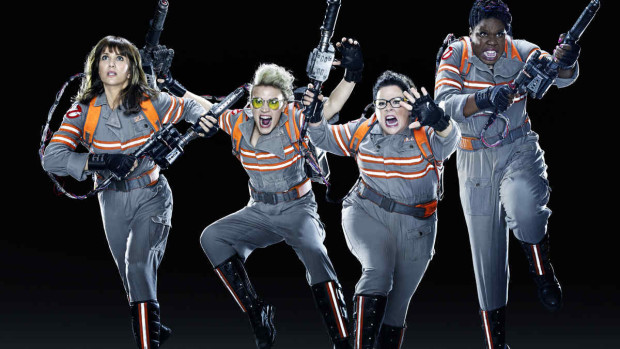
Oh man. Ghostbusters.
After all these attempts. After all these scripts. After all the Dan Akroyd interviews promising another Ghostbusters.
And we’re finally here, 30 years later, a finished product in hand.
I’m sure you’re asking the same question as I.
Was it worth the wait???
The answer can be found in Ghostbusters’ opening weekend take: $45 million.
I think that says it all, right? 45 million dollars. It’s not exactly a bust. It’s not exactly a hit. It just “is.” And that’s the best way to describe the new Ghostbusters. It just “is.”
So what happened? How did this film end up in box office purgatory, critical consensus purgatory, audience consensus purgatory?
I’ll tell you how. Because nobody involved wanted to make it.
Including the most important person on the project – THE DIRECTOR! That’s right. Paul Feig turned this down. He only later agreed to do it so he could get back together with his girl posse. And thus this passionless project was born.
Contrast this with the original Ghostbusters. Have you read any of the interviews from that time? Dan Akroyd was OBSESSED with this idea. He was PASSIONATE about this idea. This was his baby. And that’s the biggest difference between the original and this alternate universe version.
Passion.
I mean when you see Akroyd excitedly sliding down that pole in the original, that’s genuine excitement! His eyes tell us everything: “Can you believe we’re making this!?”
There isn’t a single person on this cast or behind the camera that would slide down a pole for this movie. And that’s why we have a lame Ghostbusters. When you walk out of the film thinking, “Something was missing and I can’t put my finger on what.” THAT’S the “what.”
And that’s the real reason behind the blowback. The Ghostbusters people want to paint it as misogyny because it’s the narrative that favors them. But the reality is, this movie got greenlit to take advantage of a hot trend – comedies centered around females. NOT because someone who loved and cared about Ghostbusters wanted to share it with the world.
Now you may reply with, “Wait, Carson. What about Star Wars. Didn’t they do the same thing with that movie? Wasn’t that all about the money?” One big difference. They hired people WHO CARED about Star Wars. Who would’ve made it for free. Who would’ve given up their first born to direct a Star Wars movie. That’s not the case with this Ghostbusters reboot and everybody involved knows it.
Find me one interview in the past 20 years of Kristin Wiig or Melissa McCarthy or Paul Feig citing Ghostbusters as an inspiration. You won’t find it. I’d be willing to bet Wiig only did this franchise as a favor to Feig for jump-starting her career.
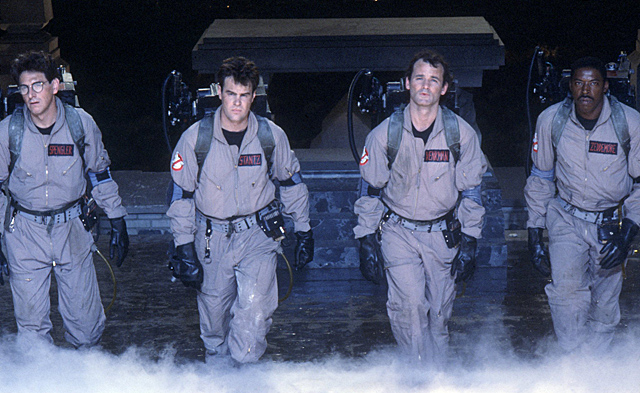
By this point you’re probably desperate to know what this movie is about. And by “desperate” I mean you couldn’t care less. Too bad. I’m going to tell you anyway. A group of scientists with an interest in the paranormal hear that real ghosts are invading the city and start a business (Ghostbusters) to capture those ghosts.
The difference between this and the original is that instead of our three Ghostbusters being buddies, core members Erin (Kristen Wiig) and Abby (Melissa McCarthy) USED to be friends, and don’t get along anymore. They’ve also added a street-wise expert on New York City (Leslie Jones) and the lamest villain this side of a Saturday morning cartoon.
Despite the overall lameness of the movie, as far as screenwriting goes, there are some things worth talking about, starting with that broken friendship.
When I went back to watch the original Ghostbusters, a movie that came out before there was a single screenwriting book on the market, I noticed there weren’t any issues with the friends. They were one big happy unit.
Whereas Ghostbusters 2016 was made during a time when there are 100+ screenwriting books on the market (mine included) drilling into your head that you have to explore characters, explore characters, EXPLORE CHARACTERS. Hence, in this new modern Ghostbusters, we have a broken relationship at the center of the film.
So the question becomes, has this newfound obsession with conflict-heavy relationships made storytelling better or worse? Are we overthinking our screenplays when it’s clear, from the original Ghostbusters’ success, that eschewing character development, at least in some cases, results in a better film?
The answer to this is complicated. Good character development always trumps good non-character development. But if your character development is uninspired, hackneyed, or lazy, than the script would’ve been better off without it. And that’s how I feel here. The Erin and Abby riff wasn’t bad. But there’s a definite “Screenwriting 101” vibe to it, as if the script needed to be approved by a USC professor before Sony could read it.
A bigger issue here is the lack of economic storytelling. Feig seems to come from the Judd Apatow school of directing, which is to say, the more, the better. But movies, especially comedies, always work best when the story is streamlined and all of the fat is stripped away.
I can point to a couple of examples for you. In the original Ghostbusters, the secretary is just there answering phones one day. She doesn’t get some grand entrance or interview. That would’ve slowed the story down. This allows us to move through that section of the story quickly.
In the new Ghostbusters, they stop the plot cold to add an interview scene for Chris Hemsworth’s character. Now is this scene a crime against screenwriting? No. I’m not saying never write an interview scene. In fact, I bet they even shot one for the original Ghostbusters secretary.
But here’s the difference. If they did shoot that scene in the original, they cut it. Feig, on the other hand, more concerned with a couple extra jokes, kept his unnecessary scene intact. And it was choices like this – keeping unnecessary scenes around instead of deleting them – that slowed this movie to a crawl.
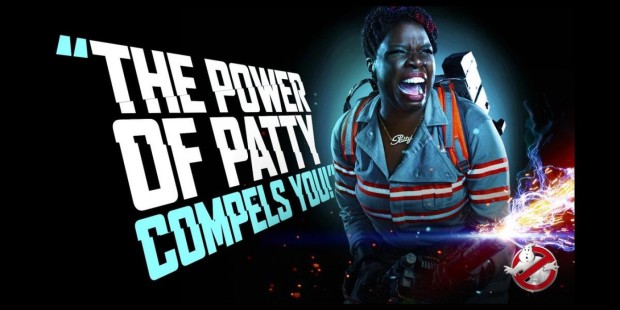
A more blatant example of this occurs near the middle of the film. We get this weird back-alley “test out our new Ghostbusters weapons” scene. The scene has the requisite number of explosions, prat falls, and variations of “Oh snap.” And the scene is, at best, okay.
BUT IT DOESN’T PUSH THE STORY FORWARD!
Here we are, in the middle of the script. The story has already slowed to a crawl. The audience is getting bored. And you place a scene in the movie that has NOTHING TO DO with the story. It’s just characters goofing around. That’s a screenwriting sin right there. And for neither Feig or Dippold to realize this and cut the scene out, proves why this film was doomed.
It goes back to passion. When there’s no passion, you don’t care about getting it perfect. You care about goofing around and having fun on set. A director passionate about this material would’ve known that that scene wasn’t necessary.
And then there are things beyond the script that irk me. Like Paul Feig talking about Chris Hemsworth. When asked by Deadline what he thought of Hemsworth, this is what he said: “Without hyperbole, I think he’s the next Cary Grant, if he continues on the comedy route.” I mean, seriously? Give me a fucking break. At BEST Chris Hemsworth was an above-average surprise. Cary fucking Grant? Right. And Melissa McCarthy is the next Audrey Hepburn.
This is desperate over-selling, which tells you just how little confidence Feig has in his product. And I think if you strapped Feig to a lie detector and asked him if he could do it all over again, would he have made this movie, he’d tell you unequivocally, no. Which is ironic. Since it doesn’t feel like a new Ghostbusters has been made anyway.
Who you gonna call? Amy Pascal. To tell her this franchise is dead.
[ ] What the hell did I just read?
[x] wasn’t for me
[ ] worth the read
[ ] impressive
[ ] genius
What I learned: Reverse dynamics. This works well in comedy. What you do is you write a scene where one character is very dominant and the other submissive. Then, later in the script, you find a way to reverse their roles and play the scene over again. So in the original Ghostbusters, Venkman (Bill Murray) comes over to Dana’s (Sigourney Weaver) place to look for ghosts, but he’s really trying to make a move on her. She’s disgusted by him and eventually kicks him out. Later on, Venkman comes over again, but this time Dana is possessed by Gozer, who desperately wants to have sex with a human. So now it’s Dana who’s putting the moves on Venkman and Venkman’s resisting. We never get anything close to this clever in the 2016 Ghostbusters, of course.
I am so mad at Disney right now for leading me on all week with the promise of a new Star Wars trailer only to give me some lame behind the scenes crap. Behind the scenes clips are exclusively for DVDs as extra material when you’ve already seen the film five times and there’s literally nothing new left to learn and you’re bored so you remember, “Oh yeah, there’s those behind the scenes featurettes. Let’s check those out.” And then you watch them and you’re like, “Eh, that was kind of cool. George Lucas grew another chin.” They are NOT meant as a primary piece of entertainment to get people excited for a movie. So Disney? SCREW YOU! And Mickey. And Goofy. And Elsa. But not Officer Hopps. I still love her. And if the new trailer is up by the time I wake up, then yes, I will forgive you. But until then, SCREW YOU!
Oh yeah, Showdown Saturday below. Read the scripts and vote for your favorite in the comments section! Winner gets a snazzy Friday review!!!
Title: Defend The Point
Genre: Thriller
Logline: 18 year old Kevin Crutchfield is having a hard time adjusting to his first year at West Point in upstate New York. He better shape up quick; a group of terrorists are on their way to webcast a massacre at the prestigious military academy.
Why you should read: Hello again, writer of Drone here. Let’s see… what did Carson think about Drone( that’s right I read your stupid ass newsletter) and I’m paraphrasing… “I think I’d prefer getting killed by a drone to watching that movie”. What a dick you are huh? Anyway, under the crushing disappointment of yet another contest where I have to pull on my bridesmaid’s dress I began to get angry. That anger led to drinking. And then more drinks. And then a bunch of drinks after that. A month and some days passed and I came out of a blackout with this script. It’s an angry script. Watching the news and seeing all the atrocities playing out across the world was very frustrating. I think a lot of that got put into the screenplay. If Inglorious Basterds was Tarantino’s revenge fantasy on Nazis, this is mine for the assholes who kill people on a whim. Hope you like it.
And yeah I know it’s long… whatever….fuck you.
Title: Red Light
Genre: Horror/Slasher
Logline: After their friends run a supposedly haunted red light and suffer horrible deaths, three disbelieving teens run the same red light to dispel small town superstition, only to find themselves the next targets of a sinister figure hellbent on revenge.
Why you should read: I’ve been teaching Pre-Kindergarten for seven years now, so trust me — I know horror.
Besides wanting to bring the slasher film back for the Z Generation, I’ve always wanted to write a movie that made an ordinary thing seem terrifying. Think of what Jaws did for going swimming, or Shallow Hal for, uh, going swimming.
One night, while sitting at an empty intersection waiting for the light to change, I found myself coming up with reasons not to go through it. A car could smash into me. I could get pulled over. An unflattering photo of me taken from a traffic camera could appear in my mail.
But it wasn’t until I convinced myself the vengeful ghost of a woman — a woman wrongfully killed at that very intersection by another red light runner — would follow me home that I knew I had something special.
I’m confident anyone who reads my script will never go through a traffic light the same way again.
But don’t just take my word for it. Professional script consultant Danny Manus gave it a strong consider and called it, “A fast and enjoyable read with a solid climax, a couple good twists in the plot, some strong scare moments, suspenseful scenes, and enough gore to satisfy PG-13 horror fans while still having a solid mystery.”
So how isn’t this a movie yet? How am I still without a manager or agent? How did I keep you reading this long without the exchange of payment or sexual favors? Maybe you can educate an educator. I’m hoping you’ll give my script the chance for some extra attention and critique, but more importantly, I just want everybody reading it to have fun. Because I had a blast writing it.
Title: Ripper Squad
Genre: Action/Adventure
Logline: In 1888, an ex-cop seeking to unravel the mystery of his daughter’s death is recruited into an organisation dedicated to protecting London from fantastical evils. As our hero hunts for answers, Jack the Ripper commences his reign of terror with an apocalyptic plan that transcends mere murder. Men in Black meets the Victorian macabre as the fate of the world hangs in the balance.
Why you should read:
1. Am I a 20-something, college educated male?
Yes. Please don’t hold it against me.
2. In what ways are you fit to write for the screen?
I am a 20-something, college educated male. What else am I gonna do?
3. So your movie is PERIOD, BIG BUDGET and requires extensive WORLD-BUILDING? Sounds like a viable first script.
Yeah, right?
4. Why should I read it?
Because I think it’s a lot of fun. It’s puts a spin on a legendary figure from history (Jack the Ripper), funneling it through a commercial sensibility with strong action, and lively characters. I’ve always been fascinated by Victorian England, and felt that with its unique history of crime, tabloid journalism and mystique, the opportunity to write a Men in Black style adventure was super exciting. Hopefully the pitch whets your appetite, and even if it doesn’t, maybe you’ll give it a chance. I think it’s an enjoyable read.
Title: The Space Hotel
Genre: Sci-fi / Action
Logline: When a massive fire breaks out on the world’s first space hotel, a mismatched group of survivors must fight their way through twelve floors of chaos to safety.
Why you should read: After failing to win the Amateur Offerings weekend back at the start of the year I ripped everything out and started all over again with a page one rewrite, leaving only the unique setting intact (and even that has been developed and improved). Four months on, I have this new draft, with a tighter plot, more focused characters and plenty of new, not-seen-before, set pieces. Hopefully you’ll enjoy reading this version as much as I enjoyed writing it. Thank you in advance for any comments.
Title: The Siren Song
Genre: Thriller/Horror
Logline: A young doctor in a sea-side town becomes fascinated with a patient who plays a mermaid in the local carnival. After a series of strange occurrences, she reveals that she believes she may actually be a real mermaid that kills during the cycle of the full moon.
Why you should read: “The Siren Song” is a two year labor of love, that I think is ready to be put out into the world. Also, it’s a lean, mean 85 page reading machine.
Genre: Biopic
Premise: The true, and at times shocking, story of how the Oxford dictionary was created.
About: This was a big project around 2001. Mel Gibson’s company bought the rights to the book it was based on. At one point, Luc Besson was tapped to direct. The script’s original writer, Todd Komarnicki, has had a bit of a spotty career, but actually just landed a huge assignment. He scripted Sully, which you may remember me opining about in my newsletter. The script was then rewritten by writer-director John Boorman, who’s done a million things, including Excalibur, Exorcist 2, and a dialogue polish on Deliverance.
Writers: Todd Komarnicki (rewrite by John Boorman) (adapted from the book by Simon Winchester)
Details: 121 pages

How does one make the dictionary interesting?
How does one make any inherently boring subject matter interesting.
I’ll tell you how.
Murrrrrrrr-derrrrrrrrrrr.
Like Pokemon Go or Chewbacca Mom, murder makes everything more palatable! And that’s what caught my interest with this long forgotten project. You see, unfortunately for “Madman,” it hit the streets long before the biopic craze. Hell, even before the Black List craze. And therefore this offbeat tale of how the Oxford dictionary was conceived never built enough buzz to turn the light green.
If this had been written today, however? I have no doubt it would already be in production. True, Squirtel or Bellsrpout might have played a prominent part. But who ever said making movies was easy? Quentin Tarantino almost cast a no-name female actress as one of the gang members in Reservoir Dogs because her boyfriend promised to give the production 1 million dollars. Casting Squirtel as a dictionary is a no-brainer.
It’s 1872. It’s London. It’s dirty. But most importantly, it’s a definition-less city. All this language is being bandied about by 3 million people, yet nobody has a reference for how to correctly say any of it.
James Murray wants to change that. He wants to do what Oxford has tried and failed to do for decades now – write a dictionary. A container of every single word and its definition in the English language. The reason this hasn’t been accomplished yet is because nobody knows how to accomplish it! Nobody even has a game plan for rounding all these words up.
Enter Dr. Minor. Actually, let’s back up a little. Dr. Minor was a surgeon in an American war who branded a soldier with a giant “D” on his face after that man tried to desert the army. After the war was over, Dr. Minor became convinced that the soldier was attempting to find him and kill him.
Dr. Minor escaped to London, only to find the man still stalking him (or so he believed). He finally ran into D-Man and shot him dead. Except it turned out Dr. Minor didn’t shoot the correct man. It was just some random Londoner. After going through the English court system, Dr. Minor was considered crazy-town, and sent to an asylum.
From there, we cut back and forth between Murray’s tireless quest to find and define all the words ever, and Dr. Minor, who becomes sort of the “Andy Dufresne” of his asylum, helping others learn art and accumulating a mini-library in his cell.
When Dr. Minor hears that Murray is building a dictionary from scratch, he decides to help, meticulously going through every book he owns, writing down a definition for each word, and sending them to Murray.
In the meantime, Dr. Minor must deal with the guilt he feels over leaving a woman and her children without a husband and father. And when he tries to mend that fence, eventually meeting the widow for the first time, things don’t go as planned. I suppose that’s why life cannot be defined.
Have you ever thought of how difficult it would be to create a dictionary from scratch when one had never been written before? Think about that for a minute. You don’t have the internet, remember. You don’t even have a list of the words to define yet! Where would you begin?
That question definitely pulled me in. But then reality hit. How would you DRAMATIZE that? That’s the question you must ask with any idea you come up with. How do I dramatize this? In some cases, the idea itself incites drama. In other cases, you’ll have to go looking for it. It is my belief that if you have to go looking for it, it probably isn’t a movie-worthy premise.
Drama /drämə/ (noun) – an exciting, emotional, or unexpected series of events or set of circumstances.
To understand that statement better, here are two premises. Notice how one is dripping with dramatic possibility, while the other doesn’t have a dramatic bone in its body
1) When a private plane full of rich passengers crashes on a barren island, the people on board will devolve into the worst versions of themselves in order to survive.
2) A private plane escorting a soccer team to the West Coast allows its passengers to explore the power of friendship.
Do you see the difference here? How the first idea bleeds drama, meaning you can already imagine tons of scenes in your head. Whereas with the second one, you probably can’t think of a single scene. This is the kind of thing to be aware of when coming up with ideas. “Do dramatic scenes start popping up in your head after reading the premise?”
To “Madman’s” credit, it finds SOME dramatic elements. But it’s not as juicy as the title would have you believe. The big murder that takes place happens at the beginning of the movie, and then that’s it as far as murder.
Pokemon Go /ˈpōkiˌmän/ (noun) A video game by which people with little to no lives chase miniature monsters in a virtual world created by their phone.
I thought there was going to be some competition – like two dictionary groups trying to beat each other out to win the historic prize of first-ever-dictionary. And that they would’ve resorted to murder to win the competition.
The reason that would’ve worked better is that now you have something to BUILD TOWARDS. You can build towards the growing frustration, the growing tension, the impending murder. We know that things are coming to a head and we’re excited! But when you murder someone before the main story even begins, you’ve eliminated that chance to build.
We talked about this yesterday. We built towards this big rescue, but then were done with it by the midpoint. What’s left to build towards? That’s another question you want to be aware of. Am I still building towards the most powerful moment in the story? Because if the most powerful moment in your story is in the rearview mirror, there’s something wrong with your structure.

“Madman” does its best to mitigate these problems by creating a strange love story between Minor and the woman whose husband he killed. And then with Murray, we see him stressing out a lot under the pressure.
But where the story really struggled was in its stakes. The script never answered the question: WHY DID THIS NEED TO BE DONE? And WHY RIGHT NOW? If they failed, what would happen? Lots of bad grammar? Time has proven that we’re going to have that problem whether there’s a dictionary or not.
I’ll give you an example of stakes from another English period piece with a somewhat similar setup: The King’s Speech. The King attempts to get rid of his stutter in order to warn the world of Hitler (just like Murray is attempting to finish this dictionary) with the difference being that HIS SPEECH MATTERED. It needed to be done. And fixing his stutter did matter RIGHT NOW because time was running out to stop Hitler.
As far as I can tell, finishing this dictionary is more of a prestige thing. Everyone involved just thinks it would be rad to achieve it. That’s fine. But that’s not movie stakes.
Despite this, “Madman” moves along with just enough strangeness to keep you curious. Dr. Minor, for example, was convinced that the man chasing him could raise spirits from Hell to find him. And who would’ve thought he’d bag the woman whose husband he killed?? I mean I’ve seen some strange attempts to get a woman’s attention before, but never one quite like that.
[ ] What the hell did I just read?
[ ] wasn’t for me
[x] worth the read
[ ] impressive
[ ] genius
What I learned: If your script covers a long period of time, and therefore doesn’t have a lot of urgency, a nice trick is to add a cross-cutting storyline that will help move through time effortlessly. We saw this with The Martian. By cutting back to earth, we could come back to Matt Damon 3 months later and the audience wouldn’t blink. That same 3-month jump becomes a lot more prominent if we’re with Matty the whole time. We do that here too. One of the ways they disguise the years it takes to write this dictionary is by cutting back and forth between Minor and Murray. Each time we cut, we do so 3-6 months ahead. So if masking a huge swath of time is a problem, consider a second narrative you can jump back and forth from.
What I learned 2: Potentially mundane subject matter is the perfect subject matter to add weirdness to because it’s unexpected. For instance, if I said I’m writing a movie about the ice cream truck business, you’d be like, “Wonderful. Let me know how it goes.” But if I said I was writing about a war between two ice cream truck drivers fighting over the same turf (a real project that just got picked up), that combination of mundane and weird would intrigue you.
The writer of today’s script does something I’ve NEVER SEEN BEFORE in all my script-reading. Read on to find out what it is!
Genre: Sci-fi
Premise: When a blitzkrieg-style alien invasion occurs during a couple’s divorce proceeding, they must run back home by foot to save their children.
About: This is the hot spec of the moment, picked up by Spielberg’s Amblin shingle in what I think is a renewed dedication to finding projects that capture the wonder that Amblin used to be famous for. This is writer Pete Bridges’ first sale!
Writer: Pete Bridges
Details: 107 pages – undated
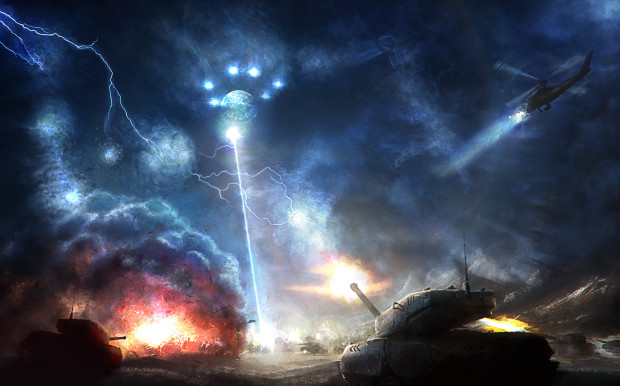
No less than three days ago, I called a writer out for some suspect choices on his title page that painted him as an amateur. So what am I to make of today’s script, where we not only get a map of the route our main characters take during the movie, but a Google Maps link that notes every single beat of the screenplay? For example, we get a marker for the “All is Lost” moment.
Now may be a good time to remind everyone that when I say, “Don’t do this!” think of it more as a suggestion than a rule. Because while I stand by my belief that doing out-of-the-ordinary things with your script (Huge titles in unique fonts, pictures, taglines, etc.) has more of a potential for disaster than success, none of it really matters as long as the writing is good.
Is The Fall good?
Megan and Sam Girard have just finished getting their divorce finalized in downtown Atlanta. It’s an odd moment. It’s not like these two hate each other. They have two beautiful children back in the suburbs. They seem to have a lot in common. They even consider grabbing a coffee before calling it a day!
As they work through this oddness, a plane falls out of the sky. And then another plane. And another. And everything turns off. Phones, cars, elevators. What’s going on? An EMP bomb? A solar flare?
Try aliens.
Before the two can say “E.T.,” a bunch of alien bombers swoop down and drop these magnetic blue balls that paralyze everyone nearby. It’s around this moment that the divorced duo realize: We gotta get home and save our kids. So they start running.
It doesn’t help that Megan is diabetic and getting ever closer to a diabetic seizure. They need to find her some insulin fast. And since everything – especially pharmacies – are being looted, that ain’t going to be easy.
As they make their way through the city, they discover more and more about these aliens, such as their on-the-ground soldiers, 7 foot tall alien thingeys called Slims, which move to the paralyzed people, zip them open, torture them, then take their insides. Yeah, not a fun way to die.
And with new alien ships coming in to suck up all the humans that remain, it’s looking less and less likely that they’re going to get out of this alive. But with the strongest motivator in the world pushing them (the desire to save their children), our duo achieves the impossible, making it past the majority of the chaos. But will they make it to the finish line? Not if the Slims have something to say about it.
So is The Fall good? Let me answer that question this way. It’s very tuned into the spec process. We have a light spin on a common setup (an alien invasion, but told in a single shot). We have tons of urgency. We have a clear goal with high stakes. We have an “event” like setup. This script bleeds GSU.
On top of this, Bridges makes a ballsy choice that I’ve NEVER seen before. There isn’t a single sentence outside of the dialogue that’s over a line long. Everything is one line! I don’t know if I love that idea but I sure as hell respect the dedication required to achieve it.
But let’s get down to the nitty-gritty and why these scripts are so hard to write. Anything that moves really fast is difficult to mine emotion from. You don’t have time to delve into your characters. Sure, you can have your occasional quiet moment where your characters hide out, catch their breath, and remember an incident from their past that helps us connect with them.
But it’s not the same as when you have real time passing. That’s the reason that “Allied,” the WW2 script I reviewed in my last newsletter, got into my Top 25. I felt like I spent a ton of time with those characters because I did. 2 in-script years passed before the second half of the screenplay, where everything was contained to 3 days.
Had we started the film as those 3 days had begun, it wouldn’t have left any emotional impact on us. Who cares if these two betrayed each other if we didn’t know them?
Ultra-urgent setups leave the writer in a tricky situation where they’re required to build emotion into these tiny little pockets where characters remember “emotional” things from their past. And while it’s better than nothing, it’s still hard to care since we weren’t there when any of these things happened. We’re only hearing about it in retrospect.
The best way to create emotion in fast-paced stories is 3-fold. You do it through:
Action.
Choice.
Interaction.
With action, you look at someone like Han Solo. His repeated ACTION throughout Star Wars is one of selfishness. He always acts selfish. Then in the end, he saves the day by acting selfless. Note that Han Solo never tells us about how his dad left him when he was four. That kind of thing doesn’t matter to most people, unless the story the character is telling is earth-shatteringly compelling. And it’s really hard to do that. The emotion comes from the actions he takes connected to his flaw.
With choice, I’ll give you an example from one of last year’s best movies, Inside Out (another script that takes place inside a very short time frame). The most emotional moment in that film occurs when Joy and Riley’s imaginary friend, Bing Bong, are trying to make it out of a deep cavern by riding a rocket up its side. They keep trying and keep trying and can’t seem to get enough power to reach the top. At that point, Bing Bong realizes that his extra weight is preventing the rocket from getting them all the way up. So he makes the CHOICE to stay behind. Joy makes it up on the next turn, but we’re devastated because Bing Bong is now gone forever. Choice creates emotion.
With interaction, you’re creating emotion through a desire to resolve character conflict. You have two people who don’t see eye to eye on something, yet they have to work together to achieve a common goal. If you’ve done your job and we want to see these characters resolve their issue, we will feel an emotional connection to them and their journey.
Of the three, this is the one The Fall executes best. It never goes overboard with Sam and Megan. But there are still things they never hashed out in their marriage. And we see a few of those things pop up as they make their way home. Was it perfect? No. But it was the right idea and the execution was solid.
I liked The Fall. It wasn’t perfect. It did borrow a lot from War of the Worlds. But it moved, it was entertaining, and you could see the movie in your head.
[ ] What the hell did I just read?
[ ] wasn’t for me
[x] worth the read
[ ] impressive
[ ] genius
What I learned: In the immortal words of Bonnie Raitt: “Let’s give them something to worry about.” Have you ever gone out to enjoy your day but in the back of your head, you couldn’t stop worrying about that one thing? Maybe you didn’t know how you were going to pay this month’s rent. Maybe your sister was having a big surgery tomorrow and you didn’t know how it was going to go. While this may suck in real life, this is EXACTLY what you want to make your reader experience in a screenplay. Instead of ONLY focusing on the goal at hand (get home to the kids), you want to have your characters (and by extension, the reader) worried about something in the meantime. Here, it’s Megan’s diabetes, specifically, where are they going to find her some insulin? This creates a sense of anxiety in the reader that keeps them invested. They will not be able to put your script down until your character solves that problem. So that’s today’s tip. Keep your reader worried!