
Search Results for: F word

CHECK YOUR SPAM AND PROMOTIONS FOLDERS!
I’ve heard that Gmail’s getting super-harsh on anything that isn’t a personal e-mail, so if you didn’t receive my Scriptshadow Newsletter in your Inbox, make sure to check your SPAM and PROMOTIONS folders. This is one of the bigger newsletters I’ve written in awhile and it contains a script review of the best screenwriter in the world’s hot new script. So if you didn’t receive it or want to sign up, e-mail me at carsonreeves1@gmail.com with the subject line, “NEWSLETTER,” and I’ll send.
On to today’s review…
Genre: Horror/Fantasy?
Premise: A recently released convict travels to his wife’s funeral, only to meet a mysterious man along the way who tricks him into becoming his employee. Employee for what though? That’s the question.
About: I’m surprised American Gods (a multi-award winning novel) hasn’t made it to our television sets sooner. The geek-friendly IP is a favorite amongst horror and fantasy savants and its author, Neil Gaiman, celebrated to the level of deity. You’d think with super-show Game of Thrones pulling in watch parties that rival that of The Bachelor, a show based on “Gods” would’ve been next on deck. Now that it’s finally here, the question is, will anyone be able to find it? The show will air on Starz, and while that network has put out some quality television, it doesn’t seem to have the footprint that buzzier destinations Netflix, HBO, and AMC have. This one’s being adapted by some heavy hitters though. Bryan Fuller is the creator of the beloved (but ultimately little-watched) NBC show, Hannibal, and Michael Green scripted the new Alien AND the new Blade Runner movies.
Writers: Bryan Fuller & Michael Green
Details: 57 pages
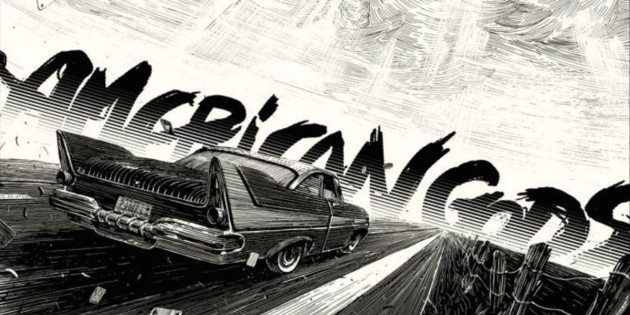
So let me tell you about my history with Neil Gaiman. At 12 years old, I, like every other kid, started reading Stephen King. And if you remember what it was like to read Stephen King at 12 year old… well it was akin to running through -12 degree weather with a pack of wild dogs chasing you. In a word – thrilling. And the metaphor truly is apt because when you finally escaped them, just like when you finally escaped “It,” you felt like you got away with something.
But then you hit your teens and all of a sudden books weren’t cool anymore. Sports were cool. Going out was cool. Girls were cool. And even if you didn’t totally agree with the notion, you felt like you’d outgrown King. I mean how does King compete with your first trip to second base?
Somewhere around that time I began to hear of Neil Gaiman. Neil Gaiman, people said, was the next Stephen King. With me being “over” King, I felt it only obvious that I couldn’t then read another version of King. Which means my history with Neil Gaiman is zip. I don’t know anything about the guy. I don’t know anything about any of his books or anything that he’s done.
As I’ve grown up, I realized that King still had a lot left to say and that being too cool for him or any author is silly. But I still never got back to Gaiman. That leaves me writing this review from a place of ignorance. But sometimes that’s for the best. It means I can judge the pilot solely on its story and not on if it’s meeting the expectations of everyone who loves the book so much.
Shadow is a 30 year-old prisoner with five more days left on his sentence. Luckily for Shadow, the warden calls him in to let him know he’s being released tomorrow. Unluckily for Shadow, it’s because his wife just died in a car accident.
Shadow hops on a plane to head home for the funeral, and that’s where he meets the mysterious Mr. Wednesday, a 60 year-old chatterbox who looks like he should be hustling a 2 for 1 Miller Lite deal in some sleazy south Florida bar.
Sensing his taste for law-breaking, Mr. Wednesday wants to hire Shadow to work for him. Shadow kindly declines, but when the plane is diverted due to weather, and Shadow tries to drive the rest of the way, Mr. Wednesday keeps showing up at all of Shadow’s stops, inquiring about that hiring. We get the sense that there’s something otherworldly about this fella.
Shadow finally gets home, only to learn that there’s more to his wife’s death than he was told. As in she died with another man’s dick in her mouth. That dick belonging to Shadow’s best friend. This leaves Shadow in a very dark place, which we can only guess will spur him to take that job with Mr. Wednesday. Now if we only knew what Mr. Wednesday planned to do with him.
American Gods contains symbols, philosophy, and dream sequences. In other words, all the stuff that I hate. Why do I hate this stuff? Because it’s cheap. 9 times out of 10 it’s a go-to crutch for when you don’t know what to do with your story. Don’t know where the characters are going next? Uhhh… Here’s a tree made out of bones to distract you! And someone talking about how storms are like birds!
To put this in perspective, this is the same thing I knocked a little pilot script called True Detective for. And that turned out all right. Well, for you guys anyway. Not for me.
But American Gods gradually pulls itself out of that haze and provides us with a narrative (Shadow trying to get to his wife’s funeral). While things do start to pick up, I couldn’t help but feel like not enough was happening. Yes our hero’s got a goal. Yes there’s something intriguing about Mr. Wednesday. And there is a holy-shit scene where a woman swallows a man up in her vagina during sex.
But I was never compelled to find out what happened next. The goal didn’t seem important enough (if he doesn’t get to the funeral, so what?). The mystery didn’t seem mysterious enough.
But the biggest problem with American Gods is one that I’m assuming they discuss all the time in the writers room. This is a complex world. I don’t even know what the fucking genre is. The final scene has Shadow, our main character, as a stock ticker, and his value doubling. What the hell does that mean?
For readers of the book who know exactly what’s going on, a moment like this makes them grin. Me? I don’t have any reference points. There’s nothing for me to compare this to. And as I kept reading, I wondered if that was going to be a blessing or a curse. How “out of the loop” can non-fans of the book be before they give up? Do you try to play to them then? Or stay with the super-fans?
Another thing I still haven’t figured out in the TV world is how little plot you can get away with. You can’t have fast-moving plots in every TV episode. It’s impossible. It’s more about putting characters in rooms and exploring the conflict between them. Which is exactly what they’ve done here.
And yet it doesn’t feel like enough. At least in your pilot, you gotta go bigger, don’t you?? Then you can pull back in subsequent episodes. But I don’t think you can sneak into your story with a TV show these days. There are too many of them out there, too many reasons to turn the channel. If you don’t wow us right away, we won’t tune in again. I keep trying to remind people that the Game of Thrones pilot, while slow, ended with a brother and sister having sex and the brother pushing a young boy off a tower to his death. Uhhhh… I’m going to come back to see what happens next after that. I’m not so sure I’m coming back to see what Stock Ticker Shadow means.
Long story short, I wanted to be punched in the gut by this pilot. Instead I was massaged. And while that massage was relaxing, it’s not compelling me to come back for more.
[ ] What the hell did I just read?
[x] wasn’t for me
[ ] worth the read
[ ] impressive
[ ] genius
What I learned: I personally think choices are more dramatically compelling if we understand the stakes. The major choice driving this story is “Will Shadow work for Mr. Wednesday?” Unfortunately, we don’t know what Mr. Wednesday does. So we don’t know if working for him is going to be a good thing or a bad thing. And hence we’re not that interested in whether Shadow says yes or no.

We’re about to get weird today. Like Studio 54 weird. First offs, señor Carson apologizes about no post offices yesterday. He got stuck in the back room of a Chuck E. Cheeses for reasons he’d rather not divulge. But Paul Clarke’s winning Amateur Offerings script WILL get reviewed next Friday. And that means today’s winner will get reviewed THE FOLLOWING Friday. Confused? So am I. Yeah, so, today’s showdown has a subplot. In addition to voting for which of these five scripts is the best, Mayhem and Klmn have challenged each other to a screenplay Death Match. I’m not sure what the rules of this match are, only that the loser has to jump into a pool of expired jello or something. Hey, it could be worse. They could have to jump into a tub of jello pudding pops with Bill Cosby offering to take care of the drinks. Read and vote for your favorite script in the comments. And if you want to enter your own script, send it to carsonreeves3@gmail.com with the genre, title, logline, why we should read it, and a PDF of the script. Good luck to all! And to all a good jello fight!
Title: ALEXXXA
Genre: SCI-FI
Logline: In the year 2122, an insane humanoid recounts his epic quest to save a troubled sex robot he won off a space lotto scratch card.
Why You should Read: I was standing in line at In-N-Out wondering how the hell I could bribe Carson to get on AOW to face my robot nemesis, Klmn Jong-Un. I then gotta brilliant idea: ATTACH IN-N-OUT!! So I ordered $70 worth of food (not 100% sure what he likes). “Want these to go?” they asked. “No, to EMAIL. It’s for someone who potentially only exists on the internet.” I hopped on Gmail and clicked “ATTACH”. I smacked Double-Double’s into the screen. I poured Neapolitan milkshakes into the USB port. I replaced the motherboard with grilled onions. I dumped a pint of “SECRET SAUCE” on the keys. Finally, something called the “White Screen of Death” popped up. It was THEN I knew: my email had gone through!!! At least, I think it did. The people in lab coats only let me use the internet twice a month.
Title: DESTRUCTO
Genre: Black Comedy
Logline: A young programmer uncovers a conspiracy involving murderous androids. As he digs deeper, his investigation endangers his job, his brothers, and the woman he loves.
Why You Should Read: Some time ago, Mayhem Jones threw down the gauntlet to me – her robot script against mine. Well, she has advised me that she is now ready. So, I’ve oiled up my ‘droids and I’m ready to send ’em into combat.
She has intended this as a package deal, so we’re each attaching both scripts to our respective emails.
I hope you allow this to happen, lest the wrath of Mayhem befall you.
Title: Bon Jovi Sucks!
Genre: Comedy
Logline: In 1987 New Jersey, an aspiring rocker can win the big break of a lifetime opening for Bon Jovi, but when handicapped by a life threatening hairspray allergy, he attempts to cleanse the world of all hair-metal, beginning with hometown heroes Bon Jovi.
Why you should read: So, did you see X-Men this weekend and say to yourself “Damn! They really nailed what it was like to be a teenager in the 80s!” Then have I got a screenplay for you.
As aspiring writers of film, we all love movies and have our concerns about the current state of cinema. If you’re anything like me, when you open up Rotten Tomatoes and see the latest 370 million dollar CGI crap-fest that was written and rewritten by a team of fourteen professional writers using source material that was based on a video game, that was based on a theme park ride, that was based on a cartoon, that was based on a Hasbro toy, that was based on a different Japanese toy, that was based on a religion, that was based on a fever-dream induced by syphilis, and it’s sitting number one at the box office with a very robust 18% on the tomato-meter, then a little piece of you dies.
Now imagine you wake up one day with a literal allergy to CGI. You can’t go to a Cineplex or pass a Redbox or “Netflix and chill” without developing a rash and having your throat swollen shut. Your dreams of working in Hollywood crushed, because movies are literally trying to kill you. Would you lock yourself in your basement and cry yourself to sleep every night on your pillow of unproduced, Oscar caliber spec scripts or would you do everything in your power to rid mankind of the Michael Bays of the world? Well, Bon Jovi Sucks! is a slightly more realistic version of just that but with rock n’ roll.
It’s a subject I think most of us can relate to on some level, even if you haven’t a recollection nor an opinion of 80s popular culture. Plus it’s a comedy so it better damn well be funny. I’m really looking forward to some of that always great SS community feedback.
Title: Killing Machine
Genre: Sci-Fi/Action
Logline: When an MMA fighter discovers that she has been infected with a nanotech that will transform her into the ultimate killing machine, she must regain control of herself in order to stop those responsible from launching a viral outbreak of the cyborg-creating technology.
Why You Should Read: Fourteen years of writing and about five years of following Scriptshadow have lead to this brash and edgy full-throttle action thriller.
KILLING MACHINE is roughly my thirteenth feature and the fact I’m actually submitting something to AF means I finally feel I’m onto something special. It is a project that is fun and exciting whilst being tough and grim in a manner that injects a FIGHT CLUB-style attitude into the skin of a Marvel origins movie.
If you’ve ever wondered what a movie focusing on the transformation of a Ronda Rousey-style badass into THE TERMINATOR looks like, then this script would be well worth your time.
Actions speak louder than words so I’ll let Deanna and her unique journey take it from here…
Title: Interloper
Genre: Action/Thriller
Logline: As a devastating storm isolates their small town, an idealistic cop must stretch her moral boundaries to team up with a brutal and relentless Interpol agent as they race against time to find a deadly assassin trapped in the town with them.
Why You Should Read: This story is based around the events of the 1987 hurricane that devastated England, my country of birth. I was only a young child at the time, and I remember quite clearly my house being obliterated by an oak tree that came through the window, smashing everything in sight.
I always wondered what other people must have gone through that night. I had an overactive imagination. What if there was a killer, trapped in my town on the night of the storm and everyone was in danger unless we found him?
Years later I took that concept and started to flesh out the idea a little more.
Earlier this year, I decided to adapt a sequence from this feature script and shoot a 10 minute short film, revolving around one of the main characters, The Stranger. It was played at the Cannes Short Film Corner, and received positive feedback.
Living in the UAE at the time, I was unable to truly capture the events and locations that I wrote in the original script, but I did the best I could with what little I had.
The trailer is here. Hopefully it gives you the kind of tone I was going for in this script.
Interloper by definition means “a person who becomes involved in a place or situation where they are not wanted or are considered not to belong.” Having lived in three different continents in the last 15 years, I truly understand what that means. This was a chance at some sort of catharsis.
If you’re into tense and uncomfortable situations, commentary on 1980s England, contrasting and challenged characters, and a few twists and turns on the way, then I would invite you to read my script.
I hope you enjoy reading it as much as I did writing and filming some of it.
Wow, I can’t believe it. We’re only three weeks away from finishing a first draft!
As a reminder, you should’ve completed somewhere between 70-80 pages of your screenplay by this point, or, if you break your script into 8 sequences (each sequence lasting 10–15 pages), you should’ve just completed sequence number 5. That means we have 3 more sequences to go.
WEEK 0
WEEK 1
WEEK 2
WEEK 3
WEEK 4
WEEK 5
This is another little-talked about section of the screenplay, but I consider it a little easier than last week’s section, since we’re writing towards a clear story beat: the end of the second act. Any time you’re writing towards something definitive, it’s easier to figure out how to get there.
So what happens at the end of the second act?
THE LOWEST POINT
This is the point in the script where your heroes, in that big final push to achieve their goal, will definitively fail. While you, the reader, will know this isn’t true, the idea is to convince the audience that the movie is effectively over. They’ve lost, they’ve given up, they have no options left.
The trick here, like any creative choice, is to make it specific to your own movie. For Raiders of the Lost Ark, it’s when Indy and Marion get captured by the Nazis. In Deadpool, it’s when Ajax kidnaps Deadpool’s girlfriend. In Room, it’s when Ma is taken to a mental institution.
The operative word here is: DOUBT
This moment in the script should be the moment when the audience has the MOST DOUBT that the hero is going to achieve their goal than at any other time in the movie.
Now that you know what that plot beat is (and many of you should already know from completing your outline six weeks ago!), you can write towards it. If you know, for example, that you’re going to have Indy and Marion get captured at the end of the second act, you can construct an 8-scene sequence to get them to that point.
This is why movies with goals are so advantageous when it comes to structuring. If your hero is actively trying to achieve something, it’s easy to come up with ways to get them there. You just write another sequence with them trying to achieve that goal and have them fail.
When you’re writing a character piece, however, it’s trickier. The goals will be more abstract. But for the script to work, SOME sort of “this is what needs to happen” directive must be put in place by the writer so that he can work against it.
Again, let’s take character piece “Room” as an example. Once Ma and Jack get out of room, the abstract goal “for mother and son to survive in this new world” is what drives the story. That’s why we’re still reading – to see if these two are going to be okay.
Once you’ve established that, you can play against it, by infusing a major event that creates DOUBT (the end of the second act!). So what do they do? Ma has a mental breakdown and is forced to go to a mental institution. Our goal (for mother and son to survive in this new world) is now put into serious doubt. So of course we’re going to stick around to see if Ma’s going to make it out of the institution and reunite with her son.
The only way to understand how important that plot choice was, is to imagine the movie without it. If Ma stays on an even keel at this point in the story, or even gets better, we’re feeling GOOD going into the final act, and as counterintuitive as it may sound, if you make the audience feel good (or “safe”) for too long, they get bored. They need that doubt. They need that uncertainty. Which leads me to my next point. This moment in the script must feel like the pinnacle of uncertainty.
You should’ve been raising the stakes throughout the script. At this moment, we should feel like it’s all or nothing. Whereas in that first journey out into the world (sequence 3 – right after the first act), there’s still a feeling that they could somehow salvage their lives if this doesn’t work out, at this point it should feel like if they don’t achieve their goal, they lose everything, whether that be their literal life or their figurative life (their job, their family, their home, their reputation). If we’re not feeling that kind of pressure moving into the end of the second act, you’re not doing it right. Because then when they do fail (and reach their “lowest point”), it won’t really feel like they’ve failed.
That’s what’s happening on the surface. But if you really want to make this section sing, you want to be exploring the same low point BETWEEN your characters and WITHIN your characters.
So remember how we were talking about your hero’s flaw? Well, this is the moment in the script where overcoming that flaw must be at its lowest point as well. In essence, this is the moment when your protagonist should doubt himself the most. Are they good enough? Do they believe in themselves? Has their selfishness finally doomed them? In When Harry Met Sally, Harry’s flaw (his fear of commitment) has left him alone and depressed.
And finally, you want to do the same with your relationships. Every one of them should be on the ropes. In romantic comedies or dramas, this is easy. You just split the main couple up. But you should be doing this in every script. Friends, family members, lovers – almost every one of them should be at odds with your hero. Every relationship should be in jeopardy.
Again, remember what this is: THE LOWEST POINT.
That means your hero should be at his lowest point in every facet of the story: plot, relationships, himself.
You may be noticing a pattern here. In many ways, this sounds like what we did with the midpoint. The heroes hit a major speed-bump, fell into a mini-depression, had to regroup and go back after their goal. We’re doing the same thing here, just more intensely. Well, the reason these sections feel similar is because that’s what storytelling is. It’s a rollercoaster. You bring the audience up to a high (yay! everything’s great!) then pull them back down to a low (oh no, we’re screwed!). And as the story goes on, each high will get higher and each low will get lower. This moment in the script – the end of the second act – will be the lowest. Orrrrr…. maybe it won’t. More on that in a couple of weeks!
Minimum page number to meet: 90 (that’s 15 pages this week guys, less than 3 pages a day!)
Genre: Crime Drama/Thriller
Premise: When a pair of criminal brothers kill four cops during a robbery, the city orders all 17 bridges in Manhattan shut down until the men are caught.
About: This spec just sold last week to new studio STX, becoming well known for their good relationship with China. It’s being produced by Marvel’s new golden boys, the Russo Brothers (Captain America: Civil War). The writer, Adam Mervis, started as a playwright and, in addition to this sale, is currently developing a TV show for USA.
Writer: Adam Mervis
Details: 112 pages (4/21/16 draft)
The summer of shitty sequels continues. Turtles 2 made half of what the first movie made opening weekend. It joins X-Men, Divergent, Neighbors, Huntsmen, and Alice in Wonderland as movies whose sequels are dying at the box office (with potential catastrophes Star Trek and Ghostbusters still on the way). Could consumers finally be sending Hollywood a message? Will Tinsletown be forced to do the one thing it’s most afraid of? Come up with original ideas? And is Seventeen Bridges, the town’s most recently acquired spec, the answer to this problem? Let’s find out!
34 year-old Ray Fernandez is in deep to the type of folks who you don’t want to be “in deep” to. And when I say, “in deep,” I mean 200,000 dollars deep. So Ray visits his older brother Felix in Manhattan to ask for his help. Felix used to be a thug but is now on the straight and narrow, and normally he’d tell someone offering him a job to schlep off. But this is his bro, yo.
Ray’s got an idea. He knows of a cocaine delivery center nearby that fronts as a pizza joint. If they could rob that place after a shipment, they could clear 2 million bucks easy and go live on a Mexican beach somewhere for the rest of their lives. Felix finally says ‘fuck it,’ and we cut to the robbery going all sorts of wrong. Not only do they get stuck with a bunch of coke as opposed to hard cash, but they end up killing four New York cops.
Cut to Detective Spevack, a former top-level detective who lost it all after a bad decision. Well, lucky for Spevack, he’s being given a second chance and is named point on this case. The catch? He’s got to find these guys before morning.
So what is Spevack’s first order of business? He shuts down every single bridge in Manhattan. He makes sure these guys aren’t going ANYWHERE. And the manhunt begins.
Meanwhile, the Fernandez’s need to offload that coke they grabbed before they leave the island, since… well, I don’t know why, they just do. So the race begins. Bad guys try to sell coke and run before good guys are forced to open the bridges back up to an increasingly annoyed city. Who will win??
Look, we can’t all be the Golden Gate Bridge.
Some of us have to be that rickety old wood-and-rope bridge that a couple of sherpas threw together five decades ago to connect two mountain peaks.
Which bridge is 17 Bridges? Somewhere in between. But closer to the mountain bridge than the Golden Gate.
My first hesitation with 17 Bridges came via its first monologue. Spevack is telling some entitled dick that he needs to play by his rules if he wants to survive. The monologue is two pages long and covers a lot of shit. How Spevack lost his badge, how his father died of cancer, how he doesn’t drink anymore, how he met the guy who now holds the key to his life, what this dude can expect if he doesn’t cooperate.
And it’s not that you can’t make a monologue like that work. But monologues, like scripts, need a theme. If you’re going to talk forever, there needs to be a point, a feeling that it all connects. And this didn’t feel that way at all. Rather, it felt like a not-so-well-disguised attempt to pump out as much backstory about our hero as possible. In laymen’s terms? The monologue was all the hell over the place.
A good monologue, just like good dialogue, feels effortless. It definitely doesn’t feel like the writer is trying to stuff a bunch of information inside of it. That’s something you need to be aware of. If it ever feels like you’re trying to stuff a lot of shit into any part of your script, whether it be a sequence, a scene, a monologue… STOP. Cut out the 50% you know you don’t need, and then cut more.
One of the basic tenets of screenwriting is: Say as much as possible in as few words as possible. That applies across the board. The only people who can get away with more are geniuses. The Aaron Sorkins, the Woody Allens, the Quentin Tarantinos. And until you’ve come out with a film where everyone praises you as a genius? Assume you aren’t. And write the way that’s proven to work: Less is more.
What about the plot?
Unfortunately, I had problems with this too.
Why is New York being shut down to the tune of several hundred million dollars worth of inconvenience for two hack criminals? These guys are nobodies. And they’re worthy of shutting a city down? I know they killed four cops but within an hour, Spevack has the Fernandez’s names and faces. So if they make it out of Manhattan, is it really going to be that hard to find them?
This is a case of liking one’s concept so much (and it is a cool concept!) that the writer isn’t able to see the logic through the trees. The logic here being: Would New York City really do this? For a terrorist who blew up a bank? Maybe. For a man who shot up 30 people at a school? Maybe. But for a couple of losers? I don’t know, man. That doesn’t sound very realistic to me. And if there’s a lack of realism in the logline, there’s a good chance that the writer won’t establish a suspension of disbelief. If that’s never established, THE MOVIE DOESN’T WORK.
What did the script do right? Well, for starters this is a contained easy to understand high-pressure high-conflict situation, which is an ideal setup for a movie. Everybody’s goals are clear. Our cop-in-charge has to catch the baddies. The baddies have to escape the island. The writer even added a goal for the Fernandez’s – to sell the drugs they found before they leave the island. I tend to like choices like this because if all your characters do is run away, they’re passive. By giving them a goal to achieve, it makes them active.
The problem was, that choice brought up all sorts of questions. Like would they really be trying to sell drugs during the first time in history that Manhattan has closed down all their bridges to catch someone!? And that was my big problem with 17 Bridges. You could never just enjoy the story because you were constantly questioning it.
You’re probably wondering, then, why did it sell?
Easy answer. It’s a cool concept!
Cool concepts are the rose-colored glasses of the screenwriting world. They make all those mistakes look so much prettier!
I believe this project can be saved, much like the abysmal early draft of The Town turned into a solid heist flick when Ben Affleck rewrote it. But in its current form, it doesn’t live up to the promise of its premise.
[ ] What the hell did I just read?
[x] wasn’t for me
[ ] worth the read
[ ] impressive
[ ] genius
What I learned: Like I always say, a cool concept is the one area of screenwriting where you have a chance of selling something that’s not well-written. If someone loves your concept enough that they can imagine the poster, imagine the trailer, and imagine people paying to see it? They can forgive the writing, since all it means is hiring a new screenwriter for $200k-700k to fix the execution. And in the grand scheme of a 50 million dollar movie, that’s not that much.
This is why it kills me to see writers writing about characters traveling across the Sahara Desert on a journey of self-discovery. The execution for that kind of market-less concept has to be Oscar-worthy to even get looked at, much less purchased. It’s much smarter to start with a buzzy concept.
Guess what time it is? It’s time to venture into the SECOND ACT!
NOOOOOOOOOOO!!! you say.
Don’t worry, my screenwriting salsolitos. Just like The Beatles, I’m going to hold your hand.
For those of you new to the site or you infrequent visitors, I’m doing a 13 week “Write a Screenplay” Challenge, where I guide you through the process of writing a screenplay step by step. If you missed the first few weeks, you can find them here:
As of today, you should have written 21 pages. That means you’ve completed your inciting incident (located near page 12-15) but are not quite at the end of your first act (page 25). So today, we’ll be covering the break into Act 2, as well as the first sequence of Act 2.
Now I heard some grumbling last week about 3 pages a day being too difficult. Come on, guys. Seriously? That’s one scene. You only have to write a single scene. You’re telling me you can’t write a scene in a day??
Maybe this will help. Brendan O’Brien and Andrew Jay Cohen said that when they were trying to figure out their script, “Neighbors” with director Nicholas Stoller, they’d pitch him a bunch of directions they could go, thinking he’d pick one and let them go write it.
Instead, Stoller would say, “Well let’s try that version right now.” “What do you mean right now?” they’d ask. “Let’s sit down and write it and see if it works?” “You mean write the script… now??” “Yeah.” And they’d sit down and write the whole thing over a few days. If it didn’t work, they’d try a different take.
The point is, you’re capable of one scene a day. Don’t be a perfectionist. Just write.
Okay, on to this week’s challenge. You’ve got between 4-8 pages before the end of your first act. If your hero is in a refusal of the call situation (Luke Skywalker claims he can’t join Obi-Wan because he must stay and help his Uncle on the farm), this will be the last bit of resistance your character experiences before accepting that they have to go on their journey (pursue their goal).
If your hero isn’t refusing the call, this is the last few pages of logistics before they pursue their objective. Indiana Jones don’t refuse no call. He just packs his bags and prepares for the fun. If your character doesn’t have any say in the matter, the forces of the story will simply kick them out on their journey, much like a bird kicks its babies out of the nest to see if they can fly. Tough love, amirite?
Now in some cases, a journey is literal. Rey’s journey in The Force Awakens takes her across the galaxy. Tom Cruise and Dustin Hoffman take a road trip to Vegas in Rain Man. Joy has to travel deep into the recesses of Riley’s mind in Inside Out.
Other times, it’s more symbolic. As long as your character is constantly pursuing something, even if they’re stationary, it’s considered a journey. To use the aforementioned Neighbors as an example, our heroes may be inside the same house the whole movie, but their “journey” consists of trying to get the frat next door kicked out.
So the first 15 pages of the second act are a unique time in a script. Your heroes are going off on their journey, but since we can’t throw the kitchen sink at the audience right away, this section tends to be more of a “feeling out” period for the characters. Maybe they’re feeling out each other (“Bad Grandpa”) or feeling out the situation (In a heist flick, the characters might scout out the bank they’re planning to rob, or the team they’re trying to recruit).
The late Blake Snyder, whose book “Save The Cat!” is somehow still the best selling screenwriting book out there despite Scriptshadow Secrets being available, famously termed this section, “Fun and Games.” Since Blake mainly wrote comedies, this was meant to define the period in the script where you showed off the promise of your premise.
The best example of this is probably super-hero origin stories. This is the moment when Spider-Man or Ant-Man first get their powers and play around with them. But it can also be applied to other genres. In Jurassic Park, it’s seeing the dinosaurs for the first time. In The Equalizer, it’s when Denzel starts administering justice on the locals.
If all of this is confusing, however, or it doesn’t feel like it applies to your movie, don’t worry. There’s a backup. What’s that backup?
SEQUENCES
Divide your script into a series of eight 12-15 page sequences. You’ve already finished the first two sequences. That was your first act. Now you’re on your third. You have to fill up 15 more pages. The easiest way to do this is to give your characters an objective they have to meet by those 15 pages. That way, you don’t have to worry about this giant chasm-filled void of a second act. You only have to write 5-7 scenes getting your hero to the end of that sequence goal.
A good example is the Mos Eisley sequence in Star Wars. We’re officially on our journey into the second act. What’s the goal here? The goal is to get a pilot and get the fuck off this planet, since the Empire is chasing us. We experience a series of scenes where our characters come to Mos Eisley, enter a bar, look for a pilot, get a pilot, head to the ship’s hanger, get chased by stormtroopers, then leave. That’s a sequence right there, folks. That’s all you have to do.
You can even use this for non-traditional scripts. Room is a movie that’s basically two long acts. It’s divided in half. But if you look closer, you’ll notice that there are sequences to give the story structure. For example, the fourth sequence of that movie (which would roughly be page 40/45 to page 52/60) is Ma (Brie Larson) planning the escape. That’s a sequence folks. It’s got a goal. It consists of a series of scenes. This stuff isn’t rocket science.
Gravity is a great movie to study for sequencing. It’s evenly broken down into a series of sequences where Sandra Bullock constantly has to get to the next destination, which usually takes between 10-15 pages (no, that is not an excuse to procrastinate!).
So that’s this week’s challenge, guys. You have to get 15 pages into Act 2. Seeing as we finished on page 21 last week, that means you only have to write 19 pages this week, which is LESS than 3 pages a day. Which means no more complaining. I’ll see you next week, with 40 total pages completed. And that’s when we head into the HEART of the second act. Ooh, I can’t wait for that. And by “can’t wait,” I mean, “Shit, that’s going to be terrifying.” Seeya then!