
Search Results for: F word
Genre: Thriller
Premise: A paralyzed man who can only communicate by blinking is kidnapped by a nurse who knows his secret, that he robbed a bank eight years ago and has hidden the money.
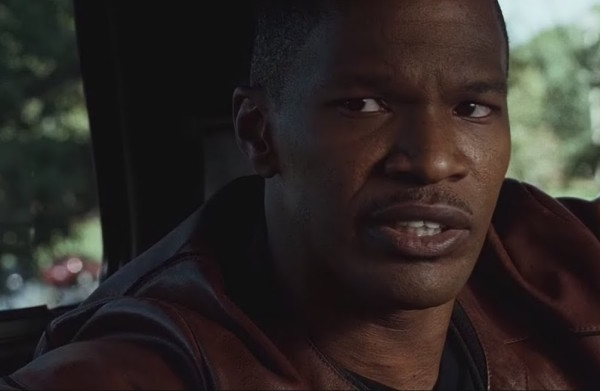
About: Blink finished on the Black List a couple of years ago and managed to pull in Jamie Foxx to play the lead, with 300: Rise of an Empire director Noam Murro helming. Screenwriter Hernany Perla has spent most of his career producing, with his most well-known film being The Last Stand, starring Arnold Schwarzenneger.
Writer: Hernany Perla
Details: 90 pages
Can you believe what happened this weekend? Spielberg gets beat by The Purge 3? What kind of alternate universe am I living in? Everybody has their theories on why The BFG didn’t do well. Some say the title caused confusion. Others say the marketing was generic. I have my own theory. And it’s going to get me ripped in the comments, but I’m okay with that.
I think the reason nobody showed up to this movie is because the main character looked like a mini Lena Dunham. There, I said it. They took one look at that girl and went, “Nuh-uh.” And before you go nuts, remember that the face of a story is the person we have to relate to and care about. And I don’t relate to or care about a mini-feminazi.
Anyway, segueing to today’s unrelated topic: Gimmick scripts. While the word “gimmick” exudes a negative connotation, gimmick scripts are a legitimate option for the spec screenwriting crowd.
We don’t have many avenues to drive down as screenwriters, since Hollywood blocks the majority of them with their “IP or Die” rally cry. And for whatever reason, something about this quirky format encourages a good gimmick. Which leads us to the question: How do you write a good gimmick script? We’ll get to that after the synopsis…
Eddie Locke is paralyzed. The only thing he can move are his eyelids, leaving him with a binary communication process of “yeses” (two blinks) and “no’s” (one blink). Eddie’s been this way for eight years. Lying in the same hospital room staring at the same ceiling and the same stupid ass TV reruns. His nurses are pleasant but you get the feeling that if Eddie had the use of his hands for just 30 seconds one more time in life, he’d use that time to strangle them.
But Eddie’s life is about to get more exciting. A new nurse, country bumpkin, Moe, seems to know a thing or two about Eddie’s past. Like that he was paralyzed by a stray bullet during a bank robbery. A bank robbery where three men made off with a safety deposit box and were never seen again.
Moe, who’s clearly done his homework, is convinced that Eddie was the unknown fourth member of that team, and that he knows what they grabbed from that safety deposit box – a series of access numbers to an offshore account containing 40 million dollars.
Moe forces Eddie to answer all of his questions with blinks. And maybe now’s a good time to tell you, we never see Eddie. The whole movie takes place from his point-of-view. This allows us to experience the blinks from Eddie’s perspective, as well as all the other shit that happens. And a lot happens.
Moe kidnaps Eddie, brings him to his fellow bank-robbing brother’s house, only to find out his bro is dead, but that his daughter, Hayley (Eddie’s grown-up niece), knows a thing or two about the heist. Moe grabs Hayley and the three of them go on adventure to find those account numbers, which have been re-hidden.
With Eddie observing the whole ordeal helplessly, he’ll need to depend on Hayley to get him out of the mess alive. That’s assuming Eddie wants to be alive after this is all over.
So, the gimmick script. How do you write one? First, you gotta find the gimmick. I famously loved the gimmicky coffin contained-thriller, “Buried.” I reviewed a gimmicker not long ago, “The Shave,” about a cop who kills a man then goes to get a shave from the man’s father, where each side will make their case for whether the killing was justified. And it seems like every year we get a couple of “Balls Out” scripts, which are built on making fun of screenwriting conventions.
The big pitfall with gimmick scripts is that the audience is onto the gimmick quickly, usually between 10-30 pages. Once that happens, what’s left? Because if all you’ve got is a gimmick, and we’re onto your gimmick, boredom sets in.
The secret to writing a good gimmick script is NOT RESTING ON THE GIMMICK. Yes, you want to exploit your gimmick. That’s what’s going to set your script apart. Find everything you can that’s specific to your gimmick and make sure you write a scene that exploits that.
In “Buried,” for example, you better put a snake or some other freaky animal into that coffin at some point. That choice specifically takes advantage of your unique setup.
But after that, you need to make sure you’re doing two things. Going back to storytelling basics.
1) Always move your story forward
2) Always explore your characters.
If you’re not doing those, we’re not going to care. Your gimmick can only keep our interest for so long before we need more. And those two things are your “more.”
Blink achieved the first half of that equation. Unfortunately, it didn’t do enough of the second, and that’s where it fell short for me.
And this is an EXTREMELY common problem with scripts – moving the story but not the characters. I think it’s because the one thing that’s drilled into your head early on as a screenwriter is: KEEP THE STORY MOVING KEEP THE STORY MOVING KEEP THE STORY MOVING.
And you’re so focused on that, that you don’t think about anything else. You just care about getting to the next story goal or the next plot twist or the next deception.
And while that’s good advice. If that’s all you’re doing, and you’re not working to create a bond between us and the characters, we’re not going to care. It’s like the difference between me telling you that a man in Thailand got in a car accident and your best friend from high school got in a car accident. The first one you don’t even think about. Why would you care about some random man in another country getting in an accident? But as soon as I tell you it’s someone you know, you’re affected on a deep level.
To achieve this in screenwriting, go back to basics. Create an unresolved struggle WITHIN your characters and create an unresolved struggle BETWEEN your characters.
One of the unique attributes of Blink is that we don’t see the main character. So it’s hard to connect with him. That leaves us with Moe and Hayley. Moe is only about moving the story forward. There isn’t a single thing going on underneath the surface. He just wants money and that’s it. And while that’s great for the plot, it doesn’t help us FEEL anything in relation to his character.
I was just rewatching The Bourne Identity and the girl character that Jason Bourne picks up – we meet her in a very vulnerable place financially, where she’s just trying to get from paycheck to paycheck. It’s a small thing, but it creates some level of sympathy in us for the character. So we care about her on a deeper level.
With Hayley’s character, it’s a little better, since she seems to be more of an emotional person in general. But Eddie never really knew this girl. There’s no unresolved issues between them, outside of her belief that her father is dead because of Eddie. And she gets over that quickly, leaving us with nothing to resolve.
We do experience some internal strife with Eddie during his memories, and this is where the character exploration had the most potential, since Eddie was a terrible human being before he became paralyzed. But all exploration of that came late and it wasn’t very deep.
All this resulted in a fun setup and and an interesting gimmick (watching everything take place from a helpless POV). But that’s it. There wasn’t much more. And this is a great reminder for you guys. A good gimmick script can you get noticed. But if you write a gimmick script with a solid story THAT GENUINELY EXPLORES ITS CHARACTERS, that’s the kind of script that changes writers’ lives.
Blink isn’t a bad script by any means. It just didn’t have enough emotional juice to pull me in.
[ ] What the hell did I just read?
[x] wasn’t for me
[ ] worth the read
[ ] impressive
[ ] genius
What I learned: If the only thing that’s getting resolved in your screenplay is your plot, you’re not doing enough. You need to resolve internal characters issues and you need to resolve broken relationships. That’s how you add dimension to your screenplay.
I don’t know what to make of Finding Dory’s success or what it means to screenwriters. There have been few sequels less necessary than this one. How do I know this? Because in ten years, I’ve never heard someone say, “I wonder when they’re going to make a Finding Nemo 2.”
I suppose we can chalk it up to a couple of things. Number 1, there is NOTHING good out right now. Nothing. And there hasn’t been in months. People are desperate for something good – heck, even AVERAGE will do. And boy is this movie average. The plotting and exposition are some of the laziest in Pixar’s library. And it feels like entire sections were borrowed from Toy Story 3.
Which leads us to number 2: Never underestimate family films, particularly animated ones. The hardcore screenwriters don’t think much of them. But these are the movies that keep studios afloat, no pun intended. It’s the Parent Principle. Leaving young kids at home while you go see a movie is a major hassle for parents. Which means no one shows up. But give parents a movie they can take their kids to, and both of them show up.
So what’s the secret to getting nobody to show up? Ask Independence Day 2, which squeaked into the box office number 2 slot with a little over 40 million bucks. The irony here is that Will Smith just gave an interview where he admitted that studios can’t fool audiences anymore. You can’t go seven days at the theater before word gets out that your movie sucks. These days it happens on social media instantaneously.
The studios are still trying to control things though. Fox wouldn’t screen this for critics before its release. Here’s the funny thing about that. People are using social media to talk about how the studio isn’t letting critics see the film, which actually creates more of a negative buzz than had they just let critics see it in the first place.
Now this may seem like a weird vendetta I have against the film. But I’m really happy this happened. The original film ended with someone uploading a mac virus into the alien computer system. To me, that’s highway robbery. You pulled us in with this fun invasion story, and you concluded it with an ending a 3rd grader could’ve written. You are stealing money when you do that. I’m serious. It’s borderline unethical. So I’m happy that they’re paying the price for that now. I guarantee you, if that movie had ended strong – or just where it was clear that they tried, people would’ve begged for a sequel.
I know I sound like a broken record. But you need to start writing better scripts if you want us to show up. There’s no summer that’s proven that more than this one. Audiences aren’t responding to your lazy concepts (part of writing) and lazy execution (the nuts and bolts of writing). People in positions of power are going to have to look at themselves in the mirror come Labor Day and ask if they’re still okay with churning out risk-averse product. Sure, they can keep throwing ancient IP at us, like Tarzan and Universal’s upcoming monster universe, but they’ll pay the price if they do.
And let me be clear about something. Writers, directors, producers – these people are DYING to create original content. The only reason they’re not is because the studios won’t let them. The studios hold the keys to all movies that cost north of 40 million bucks. If you want to play in that sandbox, you have to make the movies they want to make. So the people that need to be targeted for the garbage we’re seeing are the studio heads and their executives.
The one highlight from the weekend is the showing of The Shallows. This is a spec script that made 16 million dollars on a 19 million dollar budget in its opening weekend in the heart of summer. For comparison’s sake, that’s a little less than half of what Independence Day 2 made, yet Independence Day 2 had a budget NINE TIMES that of The Shallows. It goes to show that if you choose a juicy subject matter (sharks always sell), and create a clever storyline that keeps the budget low, you could see your spec script opening strong against major tentpole franchises in the heart of summer. Pretty cool.
Before we wrap up, I want to share a conversation I had with a professional screenwriter this weekend. And he vocalized something I’d always considered but never had a term for. He calls it “burning reads.” And I thought it was apropos with our script rewrites coming up this Thursday.
The idea is this. Every time you read your script, you become one step more numb to it. More numb to the plot machinations, to the characters, to the dialogue exchanges, to the jokes, to the emotional beats. This becomes dangerous because, after a certain amount of reads, you feel nothing when reading your script. You know everything so well that it’s just words on a page. And how can you continue to improve your script if you can’t feel anything while writing it?
Because of this, this writer rarely reads his script from start to finish. He’ll identify a problem section (say, the sequence after the mid-point) and work on that individually. And he’ll do that for a number of other sections as well. Then only once he’s applied changes to everything does he go back and read the script all the way through.
And when you think about it, it’s a good strategy, because the more you can mimic the experience of a reader reading your script for the first time, the better. Now I realize this is an imperfect and somewhat tricky science. But I do believe in the principle of it. Only burn full reads when you absolutely have to. Otherwise, you’re numbing yourself to everything that works so well in your screenplay.
We’ll discuss more about rewriting on Thursday!
Until then, eat a crumb cake.
Genre: Comedy
Premise: In 1987 New Jersey, an aspiring rocker can win the big break of a lifetime opening for Bon Jovi, but when handicapped by a life threatening hairspray allergy, he attempts to cleanse the world of all hair-metal, beginning with hometown heroes Bon Jovi.
Why You Should Read (from writer): So, did you see X-Men this weekend and say to yourself “Damn! They really nailed what it was like to be a teenager in the 80s!” Then have I got a screenplay for you.
As aspiring writers of film, we all love movies and have our concerns about the current state of cinema. If you’re anything like me, when you open up Rotten Tomatoes and see the latest 370 million dollar CGI crap-fest that was written and rewritten by a team of fourteen professional writers using source material that was based on a video game, that was based on a theme park ride, that was based on a cartoon, that was based on a Hasbro toy, that was based on a different Japanese toy, that was based on a religion, that was based on a fever-dream induced by syphilis, and it’s sitting number one at the box office with a very robust 18% on the tomato-meter, then a little piece of you dies.
Now imagine you wake up one day with a literal allergy to CGI. You can’t go to a Cineplex or pass a Redbox or “Netflix and chill” without developing a rash and having your throat swollen shut. Your dreams of working in Hollywood crushed, because movies are literally trying to kill you. Would you lock yourself in your basement and cry yourself to sleep every night on your pillow of unproduced, Oscar caliber spec scripts or would you do everything in your power to rid mankind of the Michael Bays of the world? Well, Bon Jovi Sucks! is a slightly more realistic version of just that but with rock n’ roll.
It’s a subject I think most of us can relate to on some level, even if you haven’t a recollection nor an opinion of 80s popular culture. Plus it’s a comedy so it better damn well be funny. I’m really looking forward to some of that always great SS community feedback.
Writer: Eric Boyd
Details: 99 pages

It’s going to be a wild weekend at the box office with a five-tet of new films coming to theaters. For starters we have Independence Day. I know people loved the first film but I always mark my viewing of Independence Day as the first day I learned about the importance of screenwriting. That was one of the worst-written scripts I’ve ever come across in movie form. Roland Emmerich seems incapable of understanding how writing actually works. And to think he made a movie about Shakespeare. At least Jeff Goldblum is back. We need more Jeff Goldblum in this world.
Then we have The Shallows – A SPEC SALE! Not many of these make it to theaters, so I’ll be rooting for it to do well. From there we have shameless Oscar hopeful, Free State of Jones. When your campaign screams, “Please give us the Oscar!” I’m out. A movie should stand on its own. Speaking about standing, Swiss Army Man is one of the most original films to come out in a decade. Dead Ratcliffe practically guarantees I’ll see this. And finally Nicolas Refn has a new movie out, The Neon Demon. I don’t trust Refn as a writer, so I won’t be seeing this. But, at the very least, it’ll be unique, which is nice.
What about Bon Jovi Sucks? Will it ever make it to a multi-plex? I suppose that depends on your definition of “multi-plex.” It may also depend on your definition of Bon Jovi.
17 year-old Eddie may be the only person living in 1987 who hates Jon Bon Jovi. While the rest of his band, Cured Herpes, thinks the fluffy-haired one is the next coming of Jesus Christ, Eddie thinks his music sucks ass. To add insult to injury, Eddie is allergic to hairspray. So even if he wanted to to be in a Bon Jovi inspired band, he couldn’t be.
After Eddie’s unhealthy hatred of Bon Jovi loses him his friends and band, Eddie meets the new girl in school, Stacy, a Seattle transplant who believes in cool music, JUST LIKE HIM! In fact, she starts teaching him about the upcoming Seattle music scene, and finally Eddie feels like he has purpose again.
No teenage music movie would be complete without a Battle of the Bands contest, and Stacy introduces Eddie to a new band of guys who ALSO hate Bon Jovi. They’re not very good, but with Eddie’s guitar-shredding skills, they may have just enough to win it all. But will Eddie’s obsession with a man who has absolutely no bearing whatsoever on his life be his undoing? Or will Eddie finally become okay with Jersey’s version of Jesus?
A couple of quick thoughts here. Celebrity names in the title are a cheap but effective way to get your script noticed. Remember that in a business this competitive, every little advantage counts. And if you can present a reader with some familiarity in the title, you’re more likely to get a response than having zero familiarity. For example, which one of these scripts are you more likely to read? “George Clooney Must Die” or “Fallen Fields?” The first one contains familiarity. The second is just words.
When you do go with these titles, you have two options: the obvious route or the ironic route. The obvious route would be something like, “Murdering Donald Trump.” People hate Donald Trump. So building a title around that is going to get those people charged up. Then there’s the ironic way, “How I Destroyed Oprah Winfrey,” where you go negative against someone beloved. I think the second option is more clever.
Unfortunately, Bon Jovi Sucks’ problems extend beyond its title. For starters, I don’t have an opinion on Bon Jovi. He’s so blase that it’s hard to care about someone loving him OR hating him. So right from the start, it was difficult for me to get invested. I kept saying, “Dude, who cares? He’s just a guy with a few hit songs.”
Bigger problems started creeping up during the dialogue. We have characters saying things like, “It’s amazing, right?” “Chode.” “Jihad.” “Mind-fuck.” “Take a valium.” These are terms that were not being used in 1987, and the reason this is relevant is because I now know that the writer isn’t old enough to understand the era he’s writing about.
Obviously, you don’t need to have lived in the era you’re writing about to write a good script. If that were the case, how would anybody write period pieces? But if you haven’t lived in that time, you better study your fucking ass off and be the resident expert on that era. Because as soon as we know you’re bullshitting? Suspension of disbelief is done, and we no longer believe what’s happening.
I read an interesting article on that Cold War show The Americans. One of the teenage actors in the show was in a high school classroom scene and was given a calculator. When they started shooting, someone noticed that she was pressing the buttons in the way one would text on a smartphone. They stopped, went in, and explained that, back then, you pressed buttons with a single finger. She changed the action, and they continued shooting.
Small thing? Sort of. But sort of not. Authenticity is a huge component of writing convincing fiction. Every mistake you make makes your script less convincing. Never forget that.
Structurally, Bon Jovi Sucks sort of limps along, not unlike a lazy 80s ballad. Thing are happening (Eddie’s rushed to the hospital due to his allergy, his band dumps him, his girlfriend dumps him), but there doesn’t seem to be any urgency to the story. I remember when I first saw American Pie, another teenage high school film, and you got the sense that there wasn’t a lot of time to find dates to the prom. The characters needed to make their moves quickly. There’s nothing like that here to propel the story forward.
Finally, I never really understood why Eddie hated Bon Jovi so much. The rock star didn’t personally do anything to him. Eddie just disliked his music. While that kind of setup might’ve worked in a really broad comedy where logic isn’t as important, Eric seemed to be going for something deeper here. And if that’s the case, we needed a more personal reason for why Eddie despises this man so much. Without that, it seemed like the only reason Eddie hated Bon Jovi was so that we’d have a movie.
Bon Jovi Sucks wasn’t funny enough to be a broad comedy. It wasn’t serious enough to be a thoughtful comedy. It leaves you unsure of why the writer wanted to write the script.
Script link: Bon Jovi Sucks!
[ ] What the hell did I just read?
[x] wasn’t for me
[ ] worth the read
[ ] impressive
[ ] genius
What I learned: It’s hard to make miserable characters work. I’m not talking about unlikable characters. It’s possible to make them work. But characters who are miserable – who don’t like their lives – who take that out on others – it’s hard for a reader to care for or want to root for them. Midway through Bon Jovi Sucks, Stacy says something that caught my eye: “Wow. I think this is the first time I’ve seen you really happy.” Duh, that’s why I don’t like this guy. He’s miserable. Nobody likes miserable people.
Genre: Horror
Premise: A con woman masquerading as a psychic helps a young mother deal with her possessed step-son, only to realize she’s in over her head.
About: We’re doing something different today. Earlier this year, Gillian Flynn of Gone Girl fame sent out a short story to all the studios and a huge bidding war erupted. Universal ended up winning the rights for seven figures. Short stories are actually perfect for adaptation. While novels are huge and cumbersome and you have to leave a lot of the nuances that made the novel great out, short stories allow you to flesh things out, expand on what’s working and make it even better. In an interesting side-note, Flynn wrote this for George R.R. Martin.
Writer: Gillian Flynn
Details: 61 pages

I’ve been working on this far-from-groundbreaking theory that the bigger the situation in your screenplay, the higher your ceiling at the box office. So if you blow up our planet in your script, you can top out at 500-750 million dollars. If, by contrast, you chronicle a murder mystery in a small town, you may top out at 15m if you’re lucky. If you write about the mob’s stranglehold on one city, expect 75m tops.
It didn’t always used to be this way. Movies like “Love Story” could make a billion dollars. But the reality of the matter is, in order to pay that 15 bucks, audiences want an experience these days. And if the world (or something similar) isn’t at stake, it’s hard to feel like you’ve experienced anything. There are exceptions to this rule. There always are. And certain genres like horror can muck up the equation. But on the whole, it’s becoming more and more true.
Which brings us to Gone Girl. I always wondered why that film was successful. Sure, it was a big novel. Yeah, it had David Fincher. But the average moviegoer hasn’t read the novel (nobody reads, in case you were wondering) and I can guarantee you they have no idea who David Fincher is. This was just a missing wife movie. Then I realized, it’s because the missing wife storyline went national. Had Amy’s disappearance stayed local, the situation wouldn’t have seemed as big, and the box office wouldn’t have been as big.
For all intents and purposes, Flynn’s follow-up film, Dark Places, should’ve been a huge hit. In the old days, it would’ve been heavily promoted and everyone would’ve rushed to the theater to get themselves some more Gillian Flynn. But it was a smaller situation with less at stake, and therefore, it had that low ceiling.
Where does this leave The Grownup? Let’s find out.
Our nameless narrator didn’t plan to become a con woman. It’s just the only thing she grew up knowing. When her father died, her mother resorted to begging, and our heroine quickly learned the art of conning – of doing anything to get that next GW.
After she grew up, she got a job at a local psychic’s office, which she quickly learned doubled as a place for rich assholes to get handjobs. And our heroine would soon be giving those handjobs.
She would eventually graduate to the front room, however, becoming a “psychic,” and that’s where she met Susan Burke, a rich wife who’d obviously had a rough go of it. Susan confided that she had a step-son, 15 year-old Miles, who she feared was possessed or demonic, or possibly just crazy, and feared for her life. She felt that the old house they lived in may have been possessing Miles, and she wanted our heroine to check it out.
Once at the old Victorian mansion, we learn that it is, indeed, fucking creepy. But that creepiness is nothing compared to Miles, an undersized teenager who looks like he could shoot up a school while snacking on a box of cracker jacks.
One day, when Susan isn’t around, Miles threatens Heroine, “Do not come back or you will die,” and Heroine makes the mistake of ignoring that request. What follows is not at all what we expect, as our heroine learns that she may have been afraid of the wrong person all along. And that maybe it isn’t the house that haunts, but one’s past indiscretions.
What’s funny about this short story is that it’s exactly 60 pages. Which means if you double-spaced it, you’d have a screenplay. So why didn’t Flynn just write a ready-to-go screenplay? Maybe because when George R.R. Martin says, “Write me a story,” you do it no questions asked? Even if he’s incapable of finishing his own stories?
I was paying particular attention to the structure of this story, since I don’t know much about short stories, and found it to be somewhat similar to screenplay structure. You start out with a shocker of an opener, something that grabs the audience. Even better if you can do it with the first line, as we see here: “I didn’t stop giving hand jobs because I wasn’t good at it. I stopped giving hand jobs because I was the best at it.”
From there, you pull back, tell us about the characters. With novels you can go more into backstory, which we do here. In screenplays, it’s more about giving us a scene that encapsulates our character’s identity (so if your hero is stubborn, write a scene where he insists to his boss that he’s right).
And from there you start building the elements of your story. Get to know our heroine’s job. Get to know who the key characters are and what’s going on with them. And with that, you want to create some mystery. You can’t just be in set-up mode where you’re conveying nuts and bolts information. Your set-up must be entertaining. And mystery is an easy way to entertain.
For instance, Susan comes into the shop and looks bad. Something terrible has happened to this woman. You can hear the quiver in her voice. So when she leaves after that first session, we want to know more. We’re curious about her circumstances.
But when you’re talking about Gillian Flynn – let’s be honest – you’re talking about one thing: her endings. That’s her achilles’ heel. Gone Girl had one of the most nonsensical unsatisfying endings for a great story ever. You can paint it however you want, but the reality is, Flynn painted herself into a corner and couldn’t find a dry spot to jump back to.
So how do you write a good ending?
There’s two schools of thought here. The first is the Michael Arndt (Toy Story 3) philosophy. Don’t start writing your script until you’ve figured out your ending. In other words, outline! If you don’t know where you’re writing towards, your story will jump all over the place.
The second way is the opposite of the first. Embrace a “searching” philosophy and find the ending by writing the script! The argument here is that you’ll find a much more interesting ending than would’ve been possible had you methodically bullet-pointed your way through an outline. While this approach is riskier (without a destination, you could completely lose direction), the potential reward is bigger.
Here’s the trick with the second option though. If that’s you how find your ending, YOU NEED TO THEN GO BACK AND REWRITE YOUR ENTIRE SCRIPT.
Why? Because the large majority of what you’ve written, you’ve written with no idea of how things were going to end. So you now have all these scenes which have little-to-no connection to your ending. The best thing to do, then, is go back and rewrite everything so that it connects organically with that ending.
The thing is, VERY FEW WRITERS HAVE THE PATIENCE TO DO THIS. They instead change a scene here and a scene there and convince themselves it’s good enough. And they’re left with this patchwork story that, at times, connects with the ending and at times tells a different story entirely.
Then there’s the third option. I call this the “Fuck it” option. This is when you don’t really know how to end things, so you write a bunch of bullshit and hope for the best. This is how The Grownup ends. It’s so apparent that Flynn didn’t know how to end this that you can actually hear it in the character himself. As he’s talking, you can hear him searching for a logical ending. I can’t get into specifics without spoiling things, but let’s just say that any bottom level prodco executive would tear this to pieces.
Maybe whoever adapts this will address this issue. I hope so. Because there is a lot of good to the story. But man, that ending?
[ ] What the hell did I just read?
[x] wasn’t for me
[ ] worth the read
[ ] impressive
[ ] genius
What I learned: There are a TREASURE TROVE of great movie ideas out there. Where? SHORT STORIES. Why? Because a) it’s the last place people think to look for movie ideas, and b) nobody reads short stories. If you’re looking to hack the system, get a bunch of those “Great short stories” books and devour them. I guarantee you’ll find a good idea sooner or later. And since it’s an adaptation, anybody you send it to in Hollywood will take it more seriously. Good luck!
Genre: Fairy Tale
Premise: After being abandoned by a prince who promised to rescue her, an unhappy Rapunzel vows revenge on him and his kingdom.
About: Damsel made last year’s Black List, but only barely. It’s written by former male model slash actor, Bryan McMullin, which means we’re going to be answering the question that’s been debated among screenwriters since the beginning of time: Is it possible to be a screenwriter and also be really really really really good-looking?
Writer: Bryan McMullin
Details: 115 pages

One of the stronger trends as of late has been the live-action fairy tale. Driven mainly by Disney’s obsession with live-actioning their entire animated catalogue, it’s opened the doors for spec writers to deconstruct the more popular fairy tale characters (Snow White) or build new stories around less popular characters (Prince Charming).
As spec writers, we don’t have too many options these days, which is why the fairy tale option is a tempting one. There are a bajillion characters to choose from, and since many are in the public domain, it allows you to do what the studios are doing (write high profile IP scripts) without paying for the rights.
Of course, technically speaking, you can write about anything. If you wanted to write a Batman movie, you could write one. It’s not illegal. But you have one potential buyer and that buyer is probably going with one of the top 3 screenwriters in the world over Joe Nobody.
I suppose if you wrote the best Batman script ever, they’d buy it. But I’m yet to see an amateur writer pull this off with any high profile property. I mean if you want a chuckle, search out all the fan-written Indiana Jones scripts. It gets ugly folks. You’re much better off delving into the fairy tale world.
Rapunzel started off as a good person, particularly since she was raised by a witch in a tower all by herself, her only friends being animals. Then one day, Prince Edward came along and everything went to shit.
After Edward promised to come back and save her, the witch caught wind of the plan and moved Rapunzel somewhere else. When Edward couldn’t find her in this new spot, Rapunzel decided he was an evil heartless liar and vowed revenge on him for as long as she lived. Hey, before you judge, keep in mind her best friend was a raccoon. She wasn’t exactly socially conditioned.
Many years later, Edward has a son, Prince Cavill. Cavill is driven into the woods by a siren song he’s been hearing since he was a child, and along the way, meets Elise, a cute but poor young woman who’s immediately taken by Prince Cavill, and he with her. Unfortunately, he’s still gotta see who’s at the end of the song rainbow, so he leaves E-leaves.
Of course, the song is a trick from Rapunzel to take Cavill hostage so she can get her revenge on Edward. When Edward puts out a reward for whoever brings his son back, Elise realizes she’s the only one who knows where he is, and heads after him.
In the meantime, King Edward’s wife, even more desperate to get her son back, lets loose the nastiest criminal in the kingdom’s prison, Vel, to find him.
With Elise, Vel, the king’s soldiers, and everyone else in the land who wants to collect that reward money looking for Cavill, he’ll most assuredly be rescued. Unless, of course, Rapunzel has some master plan in her back pocket. And as I like to say, never underestimate a woman who spends that much time on her hair.

Let’s talk about plot. What is plot? And how does it differ from story? They’re often confused and that’s because there’s some crossover between the two. The best way I can describe it is that plot is the ingredients and story is the meal. When you have a great meal, you don’t think about how much paprika was added, or how many onions they used, or how many minutes it was baked. You just enjoy the presentation and the taste.
Plot consists of all the mechanical beats (the ingredients) required to move the story along. So in The Force Awakens, all this stuff about Kylo Ren coming to Jakku to look for the map to Luke Skywalker, to figuring out how to make Rey and Finn meet up, to finding a way to have them run into Han Solo, to deciding when the First Order was going to blow up a star system… all that is plot.
Story is more about the choices you make that result in the most pleasing movie possible. The overall concept of finding Luke Skywalker and how captivating the characters are and how we move through the narrative, that’s story.
If that’s confusing, let me put it a different way. Take Gravity. Gravity’s story is Sandra Bullock desperately moving from outpost to outpost in space, air running out, trying to survive long enough to make it to earth. Good story! Let’s say instead, though, it was about a panel on the International Space Station that had broken, and Sandra Bullock had to fix it. That’s not a very good story, is it? It doesn’t lend itself to a lot of interesting choices that an audience would be entertained by.
Why do I bring this up? I bring it up because a lot of writers get bogged down in plot to the detriment of their story. And there are two ways this happens. One, they simply add more plot than the story can handle. Every single scene is desperately trying to keep up with explaining what’s happening. Two, they’re not good at conveying plot CLEARLY. So even if the amount of plotting is average, they don’t hold our hand enough and clearly convey what’s happening enough, to keep things clear.
This happens all the time when you’re watching bad movies. You’ll forget what’s happening, why it’s happening, or what we’re doing at the moment. You’ll often chalk this up to “this movie is stupid.” What probably happened was the writer wasn’t being clear enough in regards to key plot beats.
I point this out because Damsel has a ton of plot, and yet it never gets in the way of the story. I mean we have to establish this whole backstory of how Rapunzel became the way she did. We have to establish King Edward visiting her, this evil witch’s plan, King Edward growing up, his son coming to Rapunzel, this forest girl he runs into, this plan to rescue the prince from several different groups. There’s a shit-ton of information here.
And yet I was never once confused because McMullin was so damn clear about everything. You could almost feel the dedication to clarity. Each section (for example, the King Edward visits Rapunzel section) is its own little story. It’s not some hastily-written piece of setup that’s only there to get us to the real story. Every moment is important.
And the writing is really good and really sparse. Why is sparse important? Because there are less words to overburden the reader with information. You guys give me shit sometimes for saying, “Stay under 4 lines per paragraph!” and yet the large majority of paragraphs in Damsel are 1 or 2 lines.
Simply put, this was a really enjoyable screenplay. If you’re a beginner screenwriter, in particular, try and get your hands on this script. You can learn a lot from it.
[ ] What the hell did I just read?
[ ] wasn’t for me
[xx] worth the read
[ ] impressive
[ ] genius
What I learned: Never write a section just to get to (or “set up”) the next section. EACH SECTION SHOULD BE ENTERTAINING IN ITS OWN RIGHT.
What I learned 2: Too much plotting is dangerous. If every scene feels like you’re trying to keep up with all the information you have to convey, you have too much plot. Figure out a way to strip some of that plot out so that you can focus on making scenes entertaining.