
Search Results for: F word
Genre: Sci-fi e-book
Premise: Set during an unknown time, Wool follows a select group of workers inside an expansive 100-story underground bunker who begin to suspect that the world they live in is a giant lie.
About: Writer Hugh Howey initially wrote Wool as a stand-alone short story. He published the work through Amazon’s Direct Publishing system. After the story began to do well, he started writing more entries for it (the entries are now combined into a single book). 20th Century Fox bought film rights for the book last year, and Howey just signed a print-only deal with Simon and Schuster for half a million dollars.
Writer: Hugh Howey
Details: 530 pages
One of the things I’ve been keeping an eye on of late is Hollywood’s interest in self-published material. It used to be that, on the book end, there was only one chance of getting your work adapted. You had to get a book published! And to publish something, you had to crack into an industry that was just as hard to break into as this one.
Times have changed. The burgeoning E-book industry has allowed that “nobody” writer to finally bypass a system previously designed to keep you invisible. Having published an e-book myself (yeah, yeah, the physical copy is coming), one of the things that baffled me was how easy it was. I mean you literally go to Amazon, upload your document, and it’s on the site 6 hours later.
Now, of course, you still have to get noticed. You still have to find ways to get people to know about your book. But the tools are in place, especially with the pricing flexibility you have. You don’t need to compete with those huge books because you can price your book at 1/10 their price (99 cents), making it an easy gamble for hungry readers looking for something new to try.
Not to mention you’re not beholden to any page count. A lot of e-writers are selling serialized novellas, allowing them to write a quick 150 page book, charge 99 cents, gain some fans, then write three more 150 page novellas (each a dollar) to finish the series (which is similar to what Wool did). This is a great way for screenwriters to dip their toes into the medium and see if they like it.
I bring this all up because Hollywood is obsessed with adaptations. They want to see things proven before they take a chance on them. And this is a way for you to exploit that business model without having to convince a publishing industry to print half a million copies of your debut book. You can create a small tremor in the book world and turn it into a big splashy sale that way as opposed to the spec route. Which brings us to today’s book, Wool.
Note: Wool is the kind of story that plays best when you don’t know all its little surprises. I recommend you read it if you don’t want to know what happens. There will be spoilers below.
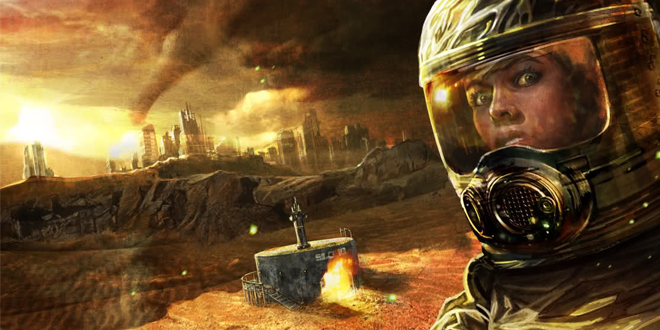
Wool is about an immense underground “silo” (almost 150 levels deep) that houses a community of people doing various jobs all focused on one thing – keeping the silo running smoothly. Although it’s never explicitly stated, it’s implied we’re in the far off future and that something terrible happened that destroyed the atmosphere and made earth inhospitable. In fact, if you’re lucky enough to be on the top floor of the silo, you can see giant monitors displaying the outside’s rolling lifeless hills, as well as the decrepit remains of a city in the distance.
The story centers around a young machine welder named Juliette who becomes an unwitting sheriff of the silo. She received the job after the previous sheriff was picked for the “lottery.” While winning the lottery may sound wonderful to you, the lottery of this world means you’ve been designated to clean the cameras outside the silo. Because the atmosphere is so harsh, this ensures your death, even with the most technologically advanced suits available. This is actually considered an honor in the silo. Wining the lottery allows you to do your duty for your people.
Anyway, while running across some of the old sheriff’s e-mails, Juliette finds out that he had begun questioning the purpose of the silo (a huge no-no in the community). Even worse, he found that some silo truths didn’t add up. Maybe the lottery wasn’t a “privilege” after all. Maybe it was a backdoor way for the silo leaders to get rid of those who were onto their secret? But what was it the silo leaders were covering up exactly? And why did all trails seem to lead back to IT, the secluded computer hub of the silo?
Juliette does some more digging and learns of something called “the uprising,” something that happened many years ago in the silence, and finds evidence that there wasn’t just one, but maybe many uprisings. Dozens! Her curiosity finally causes her downfall though, as IT catches her snooping, and announces she is the next “lottery” winner.
Before she goes down, Juliette learns that there is a much bigger world out there with many secrets, and that IT is entrusted with keeping those secrets. If she’s going to find out what those secrets are, and she’s going to survive “cleaning,” a procedure that not a single Silo member has ever survived, she’ll need to call on her friends, her unique skills, and her intelligence to identify exactly what this Silo is.
I mean, is it any surprise at all that I liked this? It’s right up my alley in just about every category. And I don’t know if Fox only bought it for a feature adaptation, but this would be an even better TV show. That’s all I kept thinking while I was reading it. “This is the next fucking Lost.” It’s got such a vast mythology (mythology I’m still learning about in the sequel, Shift) and such a great environment for characters, you could just see this thing taking over the geek community.
But this could just as easily be a film. And that’s one thing I admired about Hugh’s writing. Taking a page out of screenwriting books, he always kept the mystery high and the story moving. We always had a clear goal – much of which was based on Juliette’s desire to figure out what was really going on in the Silo – investigating mysterious murders, looking into mysterious e-mails, following up mysterious rumors.
That’s a great tip for all you young writers out there. Put your character in some sort of investigative position. That way, they’ll always have a goal. They’ll always have something to solve, something to look up, something they must find out. This keeps your character active and active characters are almost always the most interesting to watch. Wool doesn’t play nearly as well if, say, Juliette is a stay-at-home mom. She has no reason to investigate any of the cool stuff she had to investigate as a Sheriff. And if you DO send a stay-at-home mom off to investigate a bunch of things, you have a very confused reader on your hands wondering, “Uhhhh, why is she doing this?”
In addition to its TV and feature qualities, I also enjoyed Wool doing certain things you can only do in a book. For example, we originally start off following the sheriff (whose death Juliette looks into later). So he’s our main character. But then he walks outside for the lottery, experiences something mind-boggling, and dies. So our main character’s dead! Then in the next section, we meet the mayor, who we follow for awhile. She too starts to dig into some silo inconsistencies. She’s then picked for a cleaning and dies too. So our SECOND main character is dead. This finally leads us to Juliette, who becomes our hero throughout the rest of the book.
Now in retrospect, of course, this makes sense. Howey originally wrote this as a standalone short story. So the need for a new hero to replace the dead hero from that original novella was obvious. And he probably didn’t know yet if he was going to write an entire book, so again he followed that storyline to its logical conclusion, ending up in the dead Mayor. Once he realized he was going to turn this into an entire book, he knew the next hero would have to be the protagonist for good.
But I love reading stuff like this because it’s easy, after immersing yourself in screenplay land for years, to think the Hollywood beats are the only beats available. Try killing your main character off twice in a script. We wouldn’t meet the third real main character until at least page 40 and by then it’s too late to start your story.
But I still love seeing this because it REMINDS me that there are other ways to do it. You don’t HAVE to do it the way it’s always been done. I don’t know how you’d do two fake-out main character introductions in a major Hollywood movie but MAYBE it could be done with the right approach and the right writer. And knowing that’s an option, no matter how far-fetched, keeps you on your creative toes. You can do anything you want to with a screenplay. Wool reminded me of that.
Getting back on track, I just think it’s cool that these other options are popping up for screenwriters. You no longer have to have a best-seller to get your script adapted. Just put a great story up on Amazon. Heck, start with a simple short story and charge 99 cents. You could be the next High Howey!
[ ] what the hell did I just read?
[ ] wasn’t for me
[ ] worth the read
[x] impressive
[ ] genius
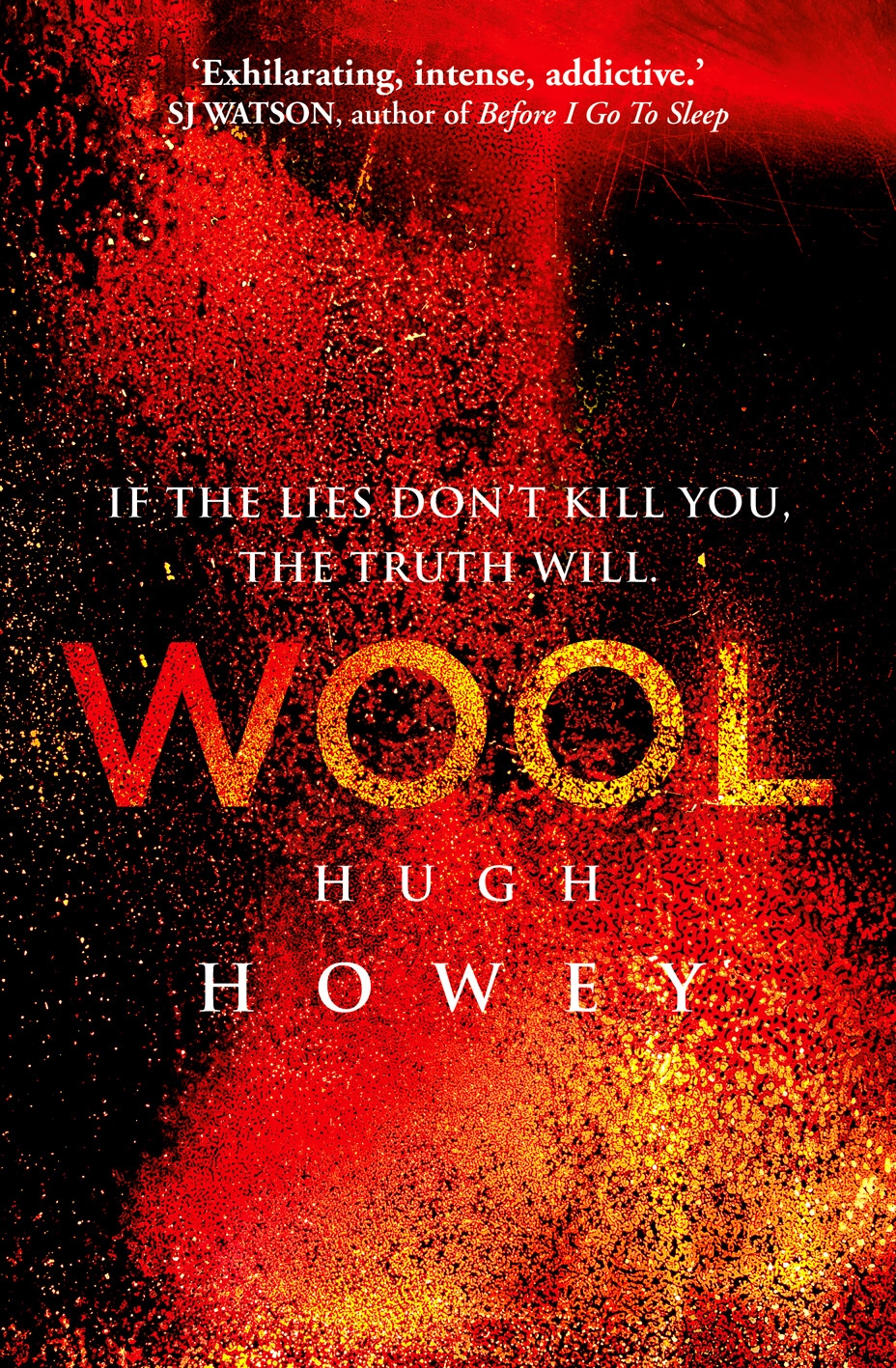
What I learned: People do judge a book by its cover. If you’re going to self-publish, pay the extra dough and get a professional cover done. I saw the old (before a publishing company came in) cover for “Wool” and I would’ve never read it off that cover. It just looked so cheap. The much more professional one I placed at the top of this review is actually how I first spotted the book. It got me to click on it, learn about it, and actually buy it.
Sing it with me now. “Mish Mash Monday…. Mish Maasssh Muuunnnnday!”
There were no major releases this weekend that contained see-ocity and therefore no big movies to write about. Unless you’re Team Smurf (hey, Hank Azaria was genius as Gargamel in Smurfs 1 – not that I’ve, um, seen it). As for the other major release, 2 Guns, I thought it was pretty original when I read it, but once I saw the trailer, it dropped on the priority list to somewhere between a kitten funeral and sign flipping. It was like all the originality was sucked out of whatever I read. It looked Generic City, like Safe House in the desert.
I was discussing this the other day. Everyone starts off making a movie with these great intentions of creating something unique, but as the development process (and the production process) goes on, everybody starts freaking out that people aren’t going to “get it” and therefore tip toe closer and closer to the most generic version of whatever they’re doing. I understand this phenomenon because it’s scary to go off and be different. But I wish more production teams (and studios) would trust themselves with what they originally bought and stick to that vision.
My movie-going experience was not totally deprived of optimism, however. Miss SS and I went to see The Spectacular Now and both really liked it. Let me just offer some words of wisdom though for those in the LA area. Do NOT go see any movies at the West LA landmark unless you a) wear adult diapers, b) sport life alert or c) smell like a hospital. The median age of the showing we were at (about a high school couple, ironically) was 87 at least. The 106 year old woman next to me wore one of those audio assist headphones and it was BLASTING static louder than a freaking Kanye West concert. It didn’t help that her husband had to go to the bathroom 9 times during the first 45 minutes. And you know the annoying person at a theater who always asks their date/friend, “What did they just say?” Imagine if there were FIFTY of them in a single theater. There was more talking going on OUTSIDE the movie than inside it. I don’t know if we accidentally stumbled in on a special hospice showing or Landmark was allowing Civil War vets to use their facilities, but you won’t see me at the Landmark again for another 60 years at least.
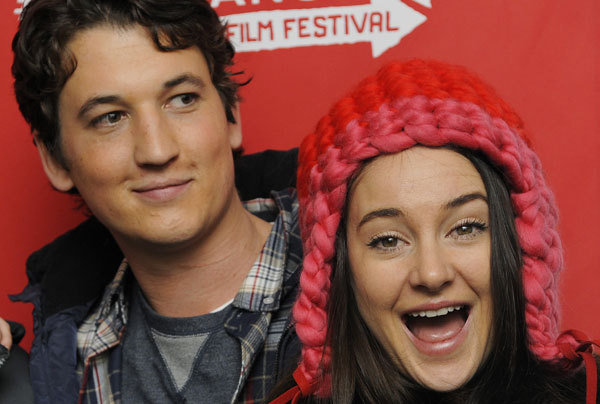
Anyway, from what I was able to hear, the performances of the two leads (Miles “No, I’m not going to be in Fantastic Four” Teller and Shailene “I got cut out of Spiderman 2 because Andrew Garfield wants a male love interest” Woodley) lived up to the hype. They have wonderful chemistry that elevated a script which was already good to begin with. And I loved that director James Ponsoldt used long takes with his leads, which made the dialogue even more natural than it already was. That decision is what’s making this film play so well in my opinion. We don’t get any of those hard artificial dialogue cuts where you can tell the editor is fishing for the best line reading. The actors were allowed to just let go, and the film feels like real life as a result.
The only thing I didn’t like about The Spectacular Now was the last twenty minutes as it reminded me of a problem a lot of screenplays (especially character-driven screenplays) face: RRSS (“Relationship Resolution Stacking Syndrome”). Whenever you write a character piece that has your main character embedded in multiple relationships that need resolving, the last 20 pages of the script becomes a chore of stacking all those resolution scenes on top of each other.
That happened big time in Spectacular Now. Obviously, our main character was going to need to resolve stuff with his absent dad. That was fine. But then we have the scene where he wraps up his issues with his sister. Then the scene where he wraps up issues with his boss. Then the scene where he wraps up issues with his mom. Finally the scene where he wraps up things with Aimee. It just went on and on and on. I feel like there’s a more delicate way to handle this, where you don’t feel the scenes climbing up on top of each other.
Then again, if you try and create space between them, the third act can go on forever, which is a whole other problem to deal with. I think the key may be to resolve some of these relationships earlier. Maybe at the end of the second act. And also ask yourself if you really need to resolve every relationship. Like did we really care about his three-scene boss enough to resolve that? I know the writers might say, “Well yeah, but the boss is the one who makes it clear that he’s not fooling anyone with his drinking. So that scene was needed.” True, but remember, this is writing. There are a million ways to solve a problem. Why not give one of the other characters he’s resolving issues with that observation?
Another idea is to create devices where you can resolve a relationship quickly, as opposed to with endless melodramatic conversations. Good Will Hunting did this famously. Damon and Affleck set up the whole Chuckie, “I’m hoping that one day I show up for work and you aren’t there” moment early on. That way, at the end, they could quickly show Chuckie going to Will’s door and Will isn’t there, and that’s it. Relationship resolved. And now that I think about it, they resolved the relationship with Robin Williams quickly too. Will leaves him a note that says, “I’m going to see about a girl.” (another payoff of a setup). So maybe the lesson here is to set something up earlier so you don’t have RRSS problems in your final act.
Moving on to a completely different genre, I finally saw Evil Dead (the remake) this weekend on iTunes. I have to say that I was really disappointed. When I read the script, I thought it was kind of clever that they created this whole “heroin-addicted woman takes her friends out to the middle of nowhere to help her beat her addiction” storyline. I’d never seen that as a way to start one of these middle-of-nowhere horror movies before.
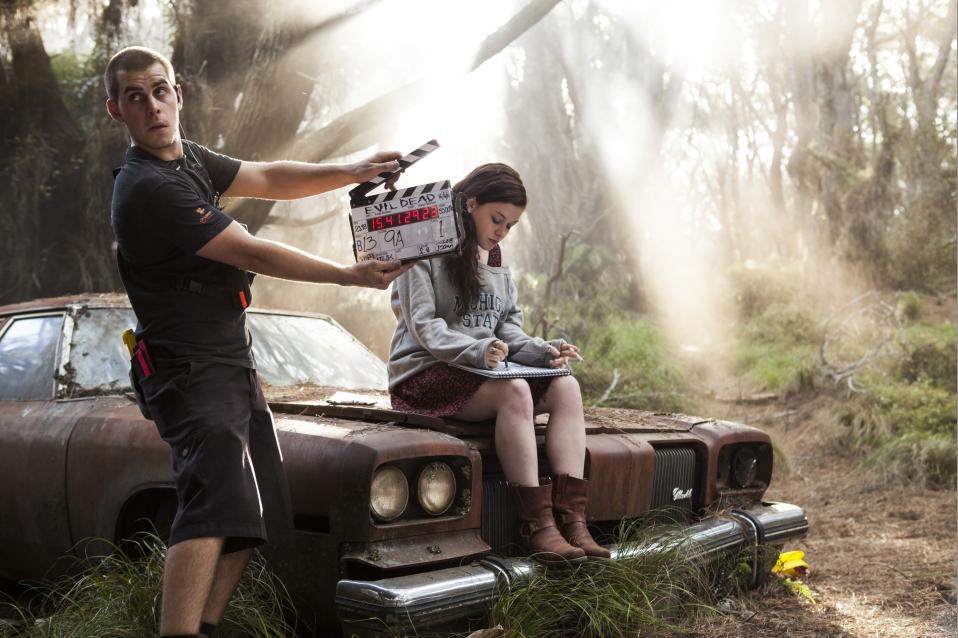
But when I watched how this played out onscreen, something felt off and I couldn’t figure out what it was. Everybody seemed so… bummed out. I’m talking right from the beginning. Nobody really liked each other. They all seemed to be in a pissy mood. And that’s when it hit me. The detox storyline was all wrong. It meant that the characters were already starting in a dark place. So there was no shift when the horror hit. Everybody was pissed off and upset beforehand and everyone was pissed off and upset after.
There’s a reason the classic formula of a bunch of happy college kids going out to a secluded cabin works. Because we start from a high place. We start with a positive charge, with hope. That way, it’s more jarring when bad shit starts happening to them. There’s an arc in the emotion. And we never experienced any arc in Evil Dead. I mean, it was a well-made movie, but it was such a fucking downer. As silly as it sounds, we like to ENJOY being scared. This film made being scared sad.
Moving on, I couldn’t help but notice this story about George Clooney and Daniel Loeb. The short of it is that this guy, Daniel Loeb, is one of the biggest investors in Sony, and he got really pissed when two of Sony’s big blockbusters bombed this summer (After Earth and White House Down). So he publicly bitches and moans that Amy Pascal and the Sony folk have no idea what they’re doing and that Sony, to protect people like him, needs to sell off the entertainment division to another company (or something like that – I don’t understand all this financial terminology). In other words, he’s trying to strike fear in Hollywood so that they become even MORE risk-averse than they already are. And we all know what risk-averse gets us.
Well George Clooney to the fucking rescue. Clooney basically told Loeb to go fuck himself. That Loeb doesn’t know jack shit about how the entertainment industry works and that he was part of the financial culture that almost bankrupted the U.S., so why the fuck should he have anything to say about how to run the movie business. I mean he really handed it to him. And when you think about it, that was a dangerous thing to do. Clooney is a movie star, but money crushes everything, and this Loeb guy is loaded. You just don’t hear guys of this stature taking each other on in the public like this. Props to Clooney for speaking his mind and defending this business we’re all dying to get into.
Look, I didn’t think After Earth was very good. And the trailers for White House Down made it look like they cared more about Channing Tatum’s muscle definition than, you know, a story. But that doesn’t mean Sony won’t make good movies in the future. There will always be duds. I can only imagine how difficult it is to be a studio head and come up with a slate of films for the entire year. There are so many variables at play and you don’t always get the movie you thought you signed up for. But this business is predicated on taking risks and if you, as an investor, don’t know that’s what you signed up for, take your money elsewhere. This business is mega-profitable and we’ll find the money somewhere else.
Finally, I wanted to congratulate writer Mickey Fisher. He did well in a small pilot contest, which got him repped by Brooklyn Weaver, and now he finds the pilot he entered in that contest (Extant – about an android boy) as the hottest TV pilot in town. Every network wants it. This guy is about to become very rich, very fast, and probably get a guarantee that his show will be on the air. That never happens. And it definitely never happens for a nobody.
I read the pilot (the 2013 version that went out to the networks) and while it starts slow, it really gets good at the end. In addition to the android boy storyline, his mother has just gotten back from an 18 month solo-trip on the space station where she’s inexplicably pregnant. We have hints that aliens could be involved. There are mysterious Japanese men coming out of hyper-jello sleep. And probably, most interestingly, the pilot poses questions about a future society WITHOUT the famed “3 robot rules.” In other words, the robots can do whatever they want. They’re not bound by directives like “never hurt humans.” And the more I think about that, the more I’m starting to see the reason why everyone wants this show. I mean it has the possibility of going on for 30 seasons if approached right. We could watch as these robots integrate deeper and deeper into society and explore the issues and philosophical questions that come with that integration. What the humans want. What the robots want. If robots should have the same rights as humans. What happens if a robot kills someone? They’re still the same person after an 80 year jail sentence. Do they just get out again? The show would be able to explore issues extensively that movies like Bi-Centenial Man and A.I. and 2001 and I-Robot were only briefly able to touch on because of their 2 hour format. That sounds like it could be pretty awesome to me.
That’s all for Mish-Mash Monday. I had this epiphany about clichés that I wanted to get into but I’ll save that for another time. See you tomorrow when I give you 10 screenwriting mistakes to avoid via Southland Tales.
Genre: Horror/Drama
Premise: (from writers) The residents of the small town of Grover’s Mill are trying to put their lives back together, make sense of what they had to do for survival, and remember those lost during the Week of Hell, the seven days the dead walked the earth and then, just as mysteriously, stopped. It’s the one-year anniversary and fear and uncertainty are rampant. Could it happen again?
About: You probably remember Nathan Zoebl. He wrote a script I really liked last year called “Keeping Time.” Now you may be mad that I’m bringing a ringer back on TV Pilot Week. But what can I say? I get excited when I see a writer I like and the opening to this was good. I was intrigued to see what Nathan would do with the zombie genre. Plus now he’s got a partner!
Writers: Ben Bailey and Nathan Zoebl
Details: 58 pages
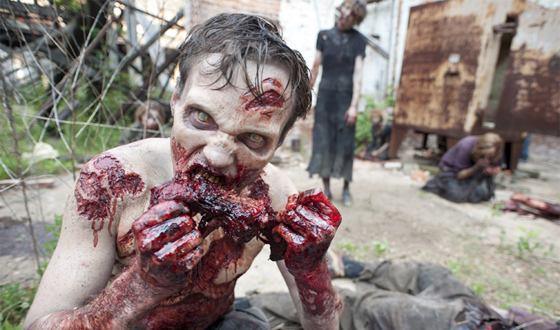
I was talking to this really talented up and coming director, Tze Chu (who directed Bryan Cranston’s new movie) and I asked him about selling pilots, since he had recently sold one himself. And he told me that when he goes in to pitch pilots, the things they tend to be most interested in are the teaser (the opening scene of the pilot) and the characters. This made sense. The teaser is that thing that has the potential to hook a viewer so they watch the whole pilot, and well-crafted characters have the potential to hook a viewer to watch a whole season. So get those things in order, my friends. You do that and you’re well ahead of your competition.
So how does State of Decay fare in these categories? Let’s find out.
State of Decay’s structure is hard to get used to. We basically start in the past, one year ago to be precise, in the small town of Grover’s Mill, where a zombie outbreak terrorizes the town. We meet characters like Alex, a 20-something who gets cornered by zombies only to watch them all mysteriously die right before they’re about to kill him. Then there’s John, who’s on a fishing trip with his son, takes his eyes off him for a second only to find him being attacked by a zombie when he looks up again.
We then cut to the present, one year later, long after the zombie outbreak has died (it only lasted a week). The town’s kind of nervous, a little fidgety about the reunion, as there’s something in the back of their minds telling them that since they never found out what caused the outbreak in the first place, who’s to say it couldn’t start up a second time?
However, except for a few exceptions (like John losing his son), many of the people seem to be doing okay. It was one wild ride for a week there, but now they’ve pretty much put their lives back together.
The driving force of State of Decay’s pilot episode is rather elusive, but seems to be guided by two motors. The first is a town hall memorial ceremony for everyone to remember the men and women who fell during that terrifying week. And then there’s Brian, our narrator, who keeps us on track by describing how everything went down via both webcam and voice over.
And that’s pretty much it. We’ll occasionally jump into the past to see gruesome scenes where zombies kill town members (like when a group that’s locked themselves inside a building would rather play it safe than let a begging fellow town-member inside), but for the most part we establish there was a zombie outbreak and meet all the people who were associated with it.
So the first thing that worried me did so before I even opened State of Decay. This was a big issue I had with one of the early drafts of World War Z, which followed the book’s storyline, which had us watching the world try to get their lives back together after the zombie outbreak had been contained. My big issue with that was, “How do you make a zombie movie interesting when you don’t have any zombies?” The producers of the film eventually felt the same way, which is why they changed the setting to the ACTUAL zombie outbreak (a VERY good move in my opinion). However, I knew Nathan was a clever writer so I had confidence he’d come up with a way to circumvent this.
Unfortunately, in my opinion, that issue wasn’t addressed. We get shots of zombies killing people in the past. But nothing where the zombies are killing now. Which left us with a lot of moody, broken-down characters and not a lot of action. I feel like Nathan and Ben are trying to echo the tone of Walking Dead here. The problem with that is that Walking Dead had active zombies. You can get away with those thick dramatic melancholy moments because there could always be another zombie right around the corner to infuse tension and suspense into the episode if needed.
And that’s an important word here. Suspense. I didn’t feel it here. And I think we need to feel it when we’re dealing with this kind of subject matter. There’s no real problem, real issue, in this story. Everyone (when we’re in the present) isn’t doing much. They’re chatting with each other. They’re talking about the memorial. But there’s nothing driving the story. No goal. No problem. No mystery. No suspense. I kept waiting for something fun or unexpected to jump start the story, but it never did.
True, we did have the zombie attacks from the past to jump back to, but every zombie attack was very basic, stuff we’ve seen hundreds of times before. Turn around, there’s a zombie. A person outside being attacked by zombies. Someone wants to save him. Someone else doesn’t. We’ve SEEN that. I mean remember the scene in The Walking Dead when Rick goes into the city and is surrounded by hundreds of zombies and he goes under the tank and they’re reaching in on him and we’re wondering how the hell this guy is going to get out of this situation. That’s the kind of fun innovative never-before-seen zombie moment I was waiting for.
I maybe would’ve been able to deal with this IF the characters kicked ass. But these characters are too low-key. There’s nothing dynamic or memorable about them. John’s still sad about his family’s death. Jenny’s sleeping with Alex behind her boyfriend’s back. The gas station attendant lost his friend and co-worker. There are a lot of sad people, which keeps the tone dark and restrained. But never let tone take precedence over drama. You need interesting people who have interesting problems with other people.
There’s actually a great movie Nathan and Ben should watch if they haven’t already that has a very similar set-up to this. It’s called The Sweet Hereafter and, like State of Decay, it takes place in a small town. The difference is, instead of a zombie outbreak, it’s a school bus accident that ends up killing a lot of children. The story jumps back and forth between the past, with the town happy and optimistic, to the present, with the town beaten down and undone.
The big difference is that in the present, all the characters have carried over the baggage from the crash and turned against each other. Daughters are turning on fathers. Parents are blaming the bus driver. Families are fighting over the best way to get the most settlement money out of their children’s deaths. In other words, there’s CONFLICT! Blame is being tossed around. Everything that everyone had was changed by that bus crash and NOBODY’S relationship with anyone else in town has been the same since. I’m not getting that from State of Decay. Everyone here is too agreeable. Everyone’s patting each other on the back, saying, “Glad we beat that, right?” I wanted to see repercussions here. I wanted to see problems. Too many people here seem fine. And “fine” isn’t dramatic.
Now all of this may become moot as the season progresses. It’s hinted at that another zombie outbreak is coming. But no one’s going to get that far unless the pilot is awesome. And right now I’m sensing Nathan and Ben think they can get by on tone alone. We need cooler more original zombie kills. We need more dynamic characters with bigger secrets (Locke anyone?). We need way more conflict in the character relationships. We need more suspense. And we need something more to drive this first chapter of what will hopefully be a 100 chapter story. A memorial isn’t going to cut it.
I mean what if you add ONE mysterious character to the mix (like Robert Hawkins in Jericho) or an out-of-towner, a lawyer even (just like The Sweet Hereafter), who’s helping people settle zombie-related lawsuits. Someone who just gets in there and MIXES SHIT UP. Because nothing’s getting mixed up right now and the pilot is too restrained as a result.
While I know this review is harsh, it’s only because I know what Nathan is capable of. We’re never as good as when someone’s pushing us to be our best.
Script link: State of Decay
[ ] what the hell did I just read?
[x] wasn’t for me
[ ] worth the read
[ ] impressive
[ ] genius
What I learned: Don’t hold back too much in the pilot — TV shows are tough because there are so many surprises you plan on unveiling in future episodes. And I’m sure that’s what Nathan and Ben were saying as they read this review. “But, but, but we’re going to do all that in Episode 3 and Episode 6 and Episode 9.” I understand that. But you don’t want to hold too much back for later episodes. You need to give us some crazy shit in the pilot. Something to get us excited and make us want to come back. ESPECIALLY in a genre pilot. This needed one or two much bigger surprises. Had that happened, I probably would’ve been more accepting of the slow pace.
Welcome to the week where I review Amateur TV pilots. This competition was held exclusively through my weekly newsletter. To make sure you’re aware of future writing contests and opportunities, sign up for the newsletter here.
Genre: Hour-long Drama
Premise: (from writer) In a world where superheroes are real, a shell-shocked journalist obsessively follows the exploits of a city’s new vigilante. All the President’s Men meets Heroes.
About: (from the writer) I’m a comic book nerd and I wanted to see what happens between the panels, to the people who have to live in a world of super-powered battles. The series will follow a vigilante, but through the eyes of a normal newspaper reporter, Eugene McGuire. The catch is that McGuire isn’t starry-eyed over the superheroes of his world. He doesn’t trust them. And if no one else is going to question these “walking weapons of mass destruction”, he will. Moreover, in The Times, figuring out the vigilante’s identity will be half the draw of the show. It’s the story that we would see if Superman was about Lois Lane.
Writer: Kyle Jones
Details: 55 pages
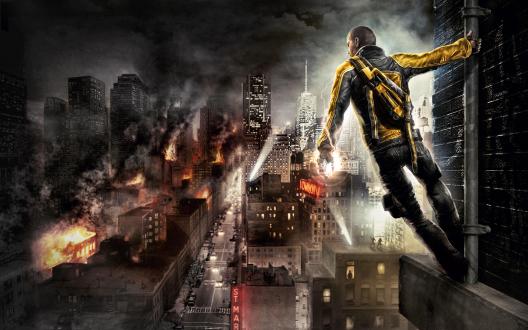
So how has Amateur TV Week been going so far? Not bad, I suppose. It’s forcing me to look harder at what’s on TV and why those shows are on TV and what kind of script to write to also get on TV. There’s definitely a similarity to looking for amateur features. A lot of the writers and pilots are pretty good. But “pretty good” isn’t good enough. This is the top of the heap. This is fucking Hollywood. Your pilot needs to knock someone over to get noticed. And too many of the pilots I’ve read feel like those safe middle-of-the-road episodes you get in the middle of the season that pass the time until the good season-ending stuff comes. They’re polite. But they’re not a PILOT. A pilot’s got to engross you. It’s gotta be fucking exciting or earth-shattering or mind-blowing or dramatically gobsmacking. It’s got to make someone think they could build 100 episodes out of this. It’s got to make a viewer go, “Holy shit. I’m in.” You know when you love a show so much that you mentally block out the period of time next week when it’s on? That’s what a pilot needs to do.
There hasn’t been a pilot yet (from all the entries or the ones I’ve reviewed so far) that’s made me do that. Everything is about potential. And potential’s fine. Potential’s great. But you never know when potential is going to turn into fulfilled potential. So you’d prefer for a pilot to just be… ready. “The Times” felt like it could be ready. It had a big idea (superheroes) and it had a new spin (told from the perspective of mortals). And it had some tight writing. Now I’ve seen this kind of thing before. And it’s a tricky thing to get right. I mean, how are you going to convince us, in a world of really cool fucking superheroes, that it’s actually more interesting to follow a normal person? That guy better be the most fascinating person ever, because otherwise, you run the risk of a bewildered audience going, “Why aren’t we following one of the super heroes again?” Funny enough, this is the same curiosity I have for the Fall’s upcoming Avengers show. Now the advantage of that show is that they’re talking about super heroes we actually know. The Times is building its super-heroes from the ground up. Let’s see if it succeeds.
30-something Gene McGuire’s been a stellar journalist all his life. But at the moment, he’s just trying to find a job. He’s back from Afghanistan and the world over here is a little less exciting. Well that’s about to change. While at a job interview for a magazine, the building McGuire’s in blows up. Well, mostly up anyway. As McGuire stumbles around trying to save the few survivors, he sees two superheroes. One, a man who can become fire, and another, a masked vigilante.
The vigilante (superhero name: Vigilante) ends up saving McGuire but despite the near-death experience, he’s not fazed. You see, this is the world we live in. Superheroes (or meta-humans, as they’re called) run rampant. The bad ones kill people. The good ones save people. It’s kind of old hat by this point. Nobody points into the sky and says, ‘Look, it’s a bird. It’s a plane. It’s Superman!” It’s more like, “Is that Supes again? His hair is getting thin.”
McGuire’s quickly able to find a job at the city’s top newspaper, and starts looking into the bombing. What he finds is that the bad meta-humans were trying to destroy some biotech server on the floor below the magazine, which housed the DNA breakdown of their kind. You see, scientists are obsessed with learning the genetic code of these mutations so that, one day, anyone who wants to can become a superhero. The superheroes aren’t too keen on that.
McGuire becomes convinced that the key to finding out the deeper meaning of all this is to find Vigilante. So he heads to the recesses of the city’s underbelly where he ends up running into Fire Dude again. Fire Dude tries to kill him, but once again Vigilante comes to the rescue. Despite saving him twice now (I’m thinking he must have a human-crush on McGuire), Vigilante warns him to stop following him. He then disappears, and we’re left with McGuire. It’s clear Vigilante’s words have no effect on him. He will not be satiated until he knows who the mysterious crime-fighter is!
Okay, I’m not the president of the comic book geek squad, but I like a good comic book movie or TV show. Remember Heroes? That was awesome (for about 7 episodes – until it was clear the writers had no idea what they were doing).
The Times is a cool little pilot. But there’s something nagging at me here. There’s a certain… I don’t know… lack of sexiness. In trying to make the super hero world SOOOOOO nonchalant, I think Kyle’s actually gone too far. Part of the fun of these shows is watching the characters experience super-heroic acts for the first time and be wowed by them.
I get that that’s not this show, but I’m wondering if there’s a middle ground somewhere. Maybe a certain superhero (or villain) shows up and does something that no one’s seen before? Because otherwise, it’s all so bland. Everyone is so blasé about everything (McGuire isn’t even shaken after he’s saved by a superhero from a burning building!). And because they’re blasé about it, I’m blasé about it.
With that said, the pilot is well-written. And it does have a different take on superheroes. We’ve always known that Superman was secretly Clark Kent. That Batman was secretly Bruce Wayne. Imagine if we were one of the billions of people who didn’t know. I could see us wanting to find out.
Ahh, yet that was another issue I had with The Times. I think Kyle is banking too much on us wanting to find out the identity of Vigilante. To him, that’s going to be enough to drive interest through the entire series (or first season). I beg to differ. Remember, you’ve established that nobody cares about these superheroes (someone even says to McGuire – “No one wants to read about the Supers.”). And that blasé-ness is the exact same reason we (or at least, I) aren’t desperate to find out who he is.
So if I were Kyle, I’d try to come up with a mystery that’s much bigger. Like Lost. I want to see a bunch of people looking at a fucking big-ass thing in a forest and going, “What is this place?” I’m there for the long-haul after that. Once McGuire figured out why the building had been blown up (the supers were trying to destroy bio data), I was like, “What’s left to keep me reading?” All my questions had been answered. At that point, I was kind of done with the series.
You know, maybe it’s as simple as making Vigilante a new superhero. Instead of everyone being like, “Oh yeah, there’s that Vigilante guy again. I just saw him getting a burrito on 4th and Madison last night,” make him a new kind of superhero with a new approach. It’s the first superhero people can’t explain. Make people excited about it, wanting to know more about this guy. And because they’re excited, WE’LL be excited. And it will make sense for the story, because our main character’s a reporter. He wants to find out too (and am I the only one who’d like to see the lead change to a female for that situation? Following Lois Lane in her quest to de-mask Superman?)
Ironically, Kyle, a self-professed comic book geek, may love comic book heroes so much that he’s become numb to them. Because that’s what this feels like. I don’t feel the passion on the page that a superhero lover would have. If we can get more passion, more sexiness, a bigger feel to this comic book show (keeping the same general approach to the material) it could be really good. I’m afraid that now, it’s a few damsel-in-distresses from being a worth the read.
Script link: The Times
[ ] what the hell did I just read?
[x] wasn’t for me
[ ] worth the read
[ ] impressive
[ ] genius
What I learned: I never understand these dark shadow characters giving a puzzle to our hero instead of giving them the freaking information they need! Our secret shadowy informant (who knows everything) tries to help McGuire solve his case by saying, “Go back to the beginning. There’s something you’re not seeing.” Why the puzzle? There’s no logical reason whatsoever for the character to not just TELL HIM what the answer is. Writers do this because it’s cooler but it’s not realistic. That’s movie (or TV) logic. If a character has the information our hero needs and doesn’t tell him, there has to be a reason for it. Don’t just create a puzzle to make the plot cooler. It must make sense!
For the fully immersive 4-D experience, make sure to read today’s review on your commute to work!
Amateur Friday Submission Process: To submit your script for an Amateur Review, send in a PDF of your script with your title, genre, logline, and finally, why I should read your script. Use my submission address please: Carsonreeves3@gmail.com. Your script will be posted. If you’re nervous about the effects of a bad review, feel free to use an alias name and/or title. It’s a good idea to resubmit every couple of weeks so your submission stays near the top.
Genre: Sci-fi found-footage (although the writer prefers the term: “live streaming event”)
Premise: A trio of car-poolers who podcast their commute every morning come upon a mysterious van that begins defying the laws of physics. The longer they follow the van, the stranger and more suspicious it becomes.
About: Writer Bryan Stumpf is looking to either sell Commute outright or raise money to direct it himself.
Writer: Bryan Stumpf
Details: 90 pages

So Wednesday night, I was getting through the last of the pilot scripts in preparation for PILOT WEEK (which is next week. Yahooo!), and, not surprisingly, I was losing my sanity. I had to read so many scripts back to back that my eyeballs had courier font burned onto the retinas. But these moments are often the most enlightening as a reader. When you read so many scripts next to each other, you realize how few people actually write anything unique.
We’re all telling the same stories with the same characters, using the same writing style, with the same plot twists and the same endings. Sure, there are little differences here and there, but the majority of writers are rehashing their favorite movies in one form or another, copying their favorite writer’s style, instead of looking for new ideas and telling stories in new ways. So when one of those scripts does come around, it’s impossible NOT to notice. It’s like, “Oh, finally, something different.”
“Commute” is not a pilot. It’s a feature. But when I picked it up, I noticed right away that I hadn’t seen this idea before. First and foremost, we’re introduced to a new take on found footage. A video podcast commute. Okay, I’ll admit, it was a little weird. But it was so unique, I wanted to know how it would play out.
The man in charge of this podcast is Adam Earling, a 25 year old who works at a ski resort outside the city and therefore must make a long commute to work every day. He’s decided to create a commute podcast with two of his co-workers (cameraman Jorma and Tweet-Girl Dawn) to move the ride along faster, and it’s worked out pretty well. For a tiny podcast, they’ve amassed a substantial audience. Nobody’s going to confuse them for the Adam Corolla Podcast, but at least folks find them entertaining.
On this particular day, the commute seems to be going fine until a black van crashes into them, then drives off as if nothing happened. Curious (and let’s face it, because it’s the most exciting thing that’s ever happened to them on their commute) Adam starts following the fan. Strangely enough, the thing isn’t speeding away. Rather it seems… determined. Determined to reach its destination.
As Adam and crew document this strange event, they receive news updates that a huge irregular meteor shower hit last night. When Adam notices the wheels on the van seemingly skidding across the ground, he starts putting together a theory. What if this black van and those meteors were related somehow?
As the real-time event continues, Adam’s listeners tweet him with their opinions on what to do. Some say to engage the van, others say to stay away. But it’s what Adam, Jorma and Dawn hear on the news next that really changes the game. People are spotting these black vans all over the world. And just like this one, they’re barreling forward, knocking into cars, and continuing on.
Eventually, it becomes clear why the vans are acting so strange. They’re alien. Adam theorizes that each of them, then, is trying to get to a particular spot on the planet where they can “triangulate” a laser, allowing them to take out the whole damn planet. Adam figures that if you take out one link in the chain, you take out the whole chain. In other words, our podcasters are the only shot at saving the world. And because these vans seem to be indestructible, they’re going to have a hell of a time figuring out how to stop theirs.
Commute is a hard script to analyze. At first glance, it has a lot of good things going for it. It’s different. It takes chances. It reads fast. It’s short. There’s a clear goal. It builds. The stakes are sky high. It’s marketable. There are lots of mysteries. There are some fun sequences (like having to throw one of their cameras inside the van to see what’s inside).
Despite all this, when you’re reading Commute, something about it feels off. And I struggled to figure out what exactly was causing that feeling. One of the issues, I surmised, was the characters. They didn’t feel real enough. Yesterday we talked about flaws, inner conflicts, and vices. I barely saw any of that with these characters. And the one sort-of inner conflict happening with our hero, Adam, surrounded a race-car past that was too cheesy and on-the-nose to take seriously.
The way these characters interacted just never felt genuine, particularly early on, and that’s the time you need the reader to latch on to your characters the most, not pull away. I pulled away early and for that reason, I never became invested. I say this time and time again. We need to either fall in love with or become fascinated by your main characters right away so that we care for and root for them immediately. If we don’t, we’ll tune out before we get to the meat of the story.
But the big issue with Commute was that there were too many strange and unbelievable choices being made. Take the lack of cop cars for example. While the alien van isn’t doing anything “wrong” at first (besides hitting them), and because the world starts falling apart in the second half of the script, an argument could be made that there’d be no cops. But no matter how hard I tried, I couldn’t envision a scenario where tons of cops weren’t following and trying to stop this thing.
Then there were strange things like a motorcycle podcast fan riding next to them, tweeting them his communication. A motorcyclist communicating by text? Then there was the fact that our characters became super-human due to their proximity to the alien van. Super-heroes? Then at one point, they realize the van is held together by a sort of gelatinous compound. So to destroy it, they start scooping parts of it out with their hands. Scooping?
Alien vans, a gelatinous construct, no cops, characters with super-powers, a motorcycle accomplice communicating via tweeting. At a certain point, there are just too many things for the reader to buy into. If you challenge a reader’s suspension of disbelief enough, sooner or later it’s going to break. That’s how I felt here. I mean it’s hard enough to buy into the fact that aliens are constructing vans. You’re asking a ton from your reader right there. So to keep laying more and more outrageous things on top of that? Like superpowers? You’re really pushing the envelope at that point.
With that said, there’s something to this idea. There were moments where I could see a movie here. But it needs to be stripped of all its outrageousness and weird choices, and approached from a more grounded point of view, not unlike the tone of War of the Worlds. Some really crazy shit happened in that movie. But the execution of the film was always straight-forward and realistic.
So, what about you guys? How was your commute?
Script link: Commute
[ ] what the hell did I just read?
[x] wasn’t for me
[ ] worth the read
[ ] impressive
[ ] genius
What I learned: There’s a moment early on in Commute where Kawasaki Karl (our motorcyclist) tells Adam (via tweet) to check his Youtube channel for some info on the meteors. Adam does, and we see that Kawasaki Karl does a show of his own called, “Rooftop Stoners.” During the video, we hear a meteor crash, seemingly the point of Karl’s request, but instead of cutting out there, the conversation shifts between Karl and his co-host to Adam. The two start discussing how Adam used to be this amazing race car driver until he got into this big accident. An accident he could’ve avoided if he hadn’t froze. Now to Bryan, our writer, this is a necessary moment. He wants to inform the reader that Karl used to race, as that will come into play later as he chases the alien van. But to us, it feels really obvious and on-the-nose and “let’s stop the movie so we can tell the audience Adam’s backstory.” This is an important lesson. It doesn’t matter how badly you have to get some exposition or backstory into your story. Until you can get it in in a way that’s invisible and doesn’t draw attention to itself, you haven’t tried hard enough. Because audiences will spot this kind of thing every time.