
Search Results for: F word
It’s another pilot day here at Scriptshadow. Today we take a look at a show from the writer of Easy A!
Genre: TV Pilot – Comedy/Light Sci-Fi
Premise: A young female filmmaker obsessed with a long since dead rock star, finds herself travelling back in time, where she meets and falls in love with him.
About: This pilot was written by the same writer who wrote “Easy A.” Word on the street is that the script was good, but whoever directed it ruined it and that was the last time poor “Dakota” saw the light of day. Bert Royal is known as a gifted writer who hasn’t had to work very hard for his success. His first professional writing gig, a play, was written while Royal was unemployed and living at his dad’s house. He actually told his father the reason he needed to move in was to “write something,” then promptly spent the next few months doing nothing but watching TV. It wasn’t until his dad asked to see what he was writing that Royal force-fed a play onto the page. Lo and behold, that play went on to get picked up!
Writer: Bert V. Royal
Details: 55 pages

Emma Roberts would’ve been a perfect choice for Maya! I should’ve cast this.
I was talking to Miss Scriptshadow about this one. I said, “I don’t know, Miss Scriptshadow. I don’t think I’m the audience for this. It’s got entitled rich girls who are actresses, directors, and celebutants. There’s a drop-dead gorgeous rock star. There’s a five-minute musical sequence that spans two time periods. As a straight non-female, I just don’t think this was written for me.”
She conceded that I might need some help, particularly because, like Royal, she too is inspired by trashy television. She’s actually seen shows like Gossip Girl and Pretty Little Liars, which clearly inspired Royal. So she snagged the script and we both started reading it. Now in honor of Royal’s love for trashy television, I’ve decided to review this entire pilot while watching The Bachelorette, which is down to the hometown dates.
Oh come on, Des! You have zero chemistry with Zak and don’t like him! You should’ve never met his family. #dontleadmenon
Dakota follows 22 year old Maya Beaumont. Maya is obsessed with this hot (and talented) rock star who committed suicide 20 years ago named Joey Dakota (a cross between Jeff Buckley and Jim Morrison I’m guessing). It just so happens Maya is the daughter of Joey’s manager and best friend, Nicky, which has given her some extra insight into the singer’s life. Unfortunately, her parents died in a car accident when she was five, so she doesn’t know much about them either.
This is probably why she just finished a documentary on Dakota’s music and tragic death. So much of her life is connected to this man, that the more she can learn about him, the better. Her obsession isn’t exactly helping her love life though. She’s scared off every boyfriend she’s ever had since none of them feel like they can measure up to the brooding Joey Dakota.
Oh my gawd, the family is actually SINGING A SONG they wrote for Des. Most awkward hometown date EV-ER!
So one day, Maya is minding her own business when she gets a secret package under the door that says “Joey Dakota didn’t commit suicide.” She rips opens the package, which has a CD with a song inside called “Come Back To Me,” that to Maya’s knowledge has never been recorded. Listening to the song makes her woozy and she passes out. When she wakes up, it’s 1990, the prime of Joey’s career!
The two bump into each other after one of his concerts and start hanging out, instantly falling in love. Ironically, Joey’s manager, Nicky (who will give birth to Maya in a few years) doesn’t like this mysterious chick who came out of nowhere and tells Joey to ditch her. That problem takes care of itself though, as Maya eventually wakes up back in the present day.
To me, Drew is just creepy. There’s something “American Psycho” about him. Don’t The Bachelor producers see this? Where is Chris Harrison when you need him?
There, she tries to convince her hot actress best friend that she travelled back in time and met Joey. Kinda believing her, they locate the man who sent her the mysterious CD. He tells her he can get her back to see Joey again. She’s excited, as she also wants to talk with her parents more. The man is taken aback. “Nobody’s told you,” he says. “Told me what?” “Your father’s not dead.” “He’s not?” “Your father is in prison. For the murder of Joey Dakota.”
Duh duh duh duhhhhhh. The End.
It’s Week 3 of my Pilot Warm-Up reviews and while I’m definitely becoming more familiar with these small-screen Rubik’s cubes, I’m not sure I’m reading the best material out there. I’ve gotten to the point where I know most of the feature writers. So if a script comes in, I have a good idea if it’s going to be good just by seeing who wrote it. Here, I’m more in the dark. Just because you’re a good feature writer doesn’t mean you’re going to be a good TV writer. So if you know of any good TV pilots, out there, send them to me!
Speaking of, as I read this, I couldn’t help but notice it felt more like a movie than a TV show. There really aren’t that many characters, which leaves very few people we want to continue to get to know as the show goes on. Everything comes down to this relationship between Maya and Joey, and I don’t know if that’s enough.
This is so awkward. This guy’s dad, who’s a chiropractor, is giving Desiree a back alignment! Not cool for a first time ‘meet the parents’ moment.
Are we just going to keep bouncing back and forth between the present and the past, with Maya continuously screwing up the timeline? I’d imagine that’d get boring by episode 6. While I didn’t fall in love with County last week, I could at least see characters that had long-term potential. For example, the main character was clearly going to have to fight against his flaw of wanting to help everyone in a system designed to help no one. It’s easy to imagine a hundred episodes of that. I’m not sure we even deal with any character flaws here, and character flaws that can’t be overcome are the heart of television, aren’t they?
#bachelorette. Chris says “there’s no way any of the other guys have a connection like us,” but I see no way he’s making it to the final two. #deadmanwalking
Another thing you have to establish (in a TV pilot or a movie) is the character hierarchy. Who’s who and what’s their connection to everyone else? The way all of the key characters were connected here felt clumsy. We meet Maya premiering her documentary about Joey Dakota, and her obsession with Dakota feels the way a daughter would obsess over the father she never had. But, of course, if Dakota is her father, that neutralizes any romantic storyline between the two, so Dakota is moved from a father to the friend and client of Nicky, who is Maya’s father. The best way I can describe this is it felt “made up.” Joey Dakota even lives in Nicky’s house, who’s married. What international rock star lives in his manager and wife’s home??
On top of all this, “Dakota” is so plot-based (needing to set up Maya’s obsession with Joey Dakota, the backstory of her parents, the time-travelling, and the two falling in love) that it took away from Royal’s biggest strength – his dialogue! That’s what really shined and what set him apart when he broke through with Easy A. I remember when that script came out, everyone kept saying, “the dialogue, the dialogue, the dialogue!” We get a little of that here with Maya and her friends, and then flashes of it with her and Dakota, but otherwise we’re too busy jumping from plot-point to plot point.
#bachelornation Oh my God! Zak threw his family heirloom ring OUT THE WINDOW after getting dumped. O.M.G.! Top Ten Bachelor Moment!!!
This is proof of just how difficult pilots can be, in that you have to set up all your characters AND your plot in this tiny little 45 minute chunk. This is particularly true with a pilot that’s plot-centric, like this one. If I were a show-runner on this (which I’m sure network execs would just be thrilled about) I’d work really hard to develop ALL the other characters and not just the main two. And I wouldn’t make everyone so vapid (not everybody has to be beautiful and stupid). I would try to get into who these people were and how they became this way. Isn’t that why we write TV, to explore people? I asked Miss SS if this was an accurate representation of the script and she looked at me and said, “Huh?” “The pilot?” I said. “What’d you think?” “Oh, I stopped reading that an hour ago. I’m watching The Bachelorette now.”
[ ] what the hell did I just read?
[x] wasn’t for me
[ ] worth the read
[ ] impressive
[ ] genius
What I learned: If you’re going to write a pilot that’s plot-heavy, know that writing in all that plot is going to take time away from setting up your characters. Since almost all TV is character-based, this is a risky move.
If you want to see me review more pilots, send me the good professional pilots that are out there! carsonreeves1@gmail.com.
The Other Star Wars had the most difficult job of any script I’ve ever read. It followed my viewing of Sharknado, the greatest movie in history.
Amateur Friday Submission Process: To submit your script for an Amateur Review, send in a PDF of your script, a PDF of the first ten pages of your script, your title, genre, logline, and finally, why I should read your script. Use my submission address please: Carsonreeves3@gmail.com. Your script and “first ten” will be posted. If you’re nervous about the effects of a bad review, feel free to use an alias name and/or title. It’s a good idea to resubmit every couple of weeks so your submission stays near the top.
Genre: Comedy/Satire
Premise: (from writer) When President Reagan announces his Strategic Defense Initiative, it sets off a chain of increasingly outrageous misunderstandings between the KGB, CIA… and George Lucas. Only a fanboy-slacker can help avert nuclear disaster.
About: This script won the Amateur Offerings Weekend a couple of weeks ago. Submit your script (details up top) to get on the list. Best of the 5 picked that week will get a review. So make sure to submit a snazzy, well-crafted logline and a great query letter!
Writer: Paul Jarnagin
Details: 111 pages – (this draft has been slightly updated from the newsletter draft based off notes the writer received).

I’ve cooled on comedies lately because I’ve read so many bad ones over the past couple of years. But when you mix in Star Wars, my midichlorians start to tingle and everything’s a-okay in the galaxy once more. “Use the force, young Carson. Review this script,” are the words I hear from my Jedi Master, the late great Togan Sheeves.
And, of course, anything that gets me thinking about Episode 7 is good. For those who haven’t joined my newsletter yet, you should know I’m actually holding a Star Wars script contest that culminates at the end of the year. You write a Star Wars script, and I review the best five submitted. Write a sequel, a spin-off, any story that could happen in the Star Wars universe. We’ve been complaining about the prequels forever now. Show Disney you can do better and maybe they’ll buy your script. Now, onto TODAY’S Star Wars script.
It’s 1982. Tensions are high between the world’s two superpowers, the U.S. and the U.S.S.R. At any moment, someone could lob a nuclear missile at the other and begin the destruction of the planet. Not an optimistic time.
Which is why President Ronald Reagan and his group of advisors come up with SDI, a missile defense shield that will prevent any Soviet missiles from penetrating U.S. airspace. His team decides to designate this project, “Star Wars.”
Over in San Francisco, George Lucas hears about this and gets pissed. He’s about to release Return of the Jedi and the last thing he wants to worry about is politics. Little does George know, however, that the Soviets are VERY interested in him. Convinced that George’s movies hold some secret tidbits about the SDI program, the Soviets sneak into Skywalker Ranch, break into George’s biggest vault, and steal what’s inside – a single, mysterious video tape.
Hoping they can gleam clues from it, the Soviets bring the tape back to Russia and make hundreds of KGB agents watch it around the clock. The tape turns out to be The Star Wars Christmas Special, the single worst movie ever made. Worse than Sharknado 2: Shrimpicane. This plan has an unintended effect: after watching the tape, all of the agents go insane.
Meanwhile, across the galaxy (or the ocean), we have our hero, 21 year old Kent Macleroy. Kent is a jobless, penniless slacker who spends most of his time as the dungeon master in a 3 person Dungeons and Dragons group. Kent’s busy being a nobody when he’s suddenly recruited by the CIA for his unhealthy knowledge of Star Wars.
You see, the CIA has caught wind of the KGB’s obsession with George Lucas and now believe that Lucas is the key to this whole equation. So, Kent heads over to the CIA and just starts answering Star Wars questions for them (i.e. “Who is that little guy who sits next to Jabba The Hut?” “What are Ewoks?”). They then use this information to try and one-up the Soviets.
In the end, there’s a lot of posturing and positioning and red-tape ripping from the three major players– the Soviets, the CIA, and George Lucas. Only a miracle is going to prevent world disaster, not necessarily from a nuclear war, but from the The Star Wars Christmas Special being released again.
Looking back at “The Other Star Wars,” I’m sad to say I didn’t laugh much. And I’m not sure why. I’m thinking it could be the whole “satire” thing. Satire scares me. It puts this “serious” slant on humor, which seems to contradict the very meaning of humor. Whenever I see the word, I feel like I need to get myself in “intelligent mode,” which forces me to pay attention more, which gets me all tense, which completely takes me out of the mood to laugh.
But even if that isn’t a problem for you (I’m sure it’s not), there are still some big issues that need fixing. First, the main character is barely a part of the story. I’m not even sure Kent has to be in this script. He’s basically an observer, and I would argue the fourth most important entity behind the CIA, the KGB, and Lucas. It’s possible, of course, to write a good movie without a main character, but it’s usually a death star sentence. Audiences like to identify with someone, hop on someone’s back, and root for them. I’m not sure Kent had enough weight to be a main character. He didn’t have any presence.
And even if he did, he wasn’t doing anything. He was just observing. You’d like for your protagonist to be active, to drive the story, but Kent was more of commenter, constantly telling the CIA how stupid they were for believing that Lucas had anything to do with this. Which was funny, but you need your main character to do more than comment and observe in a script.
The next big issue was the lack of stakes. It wasn’t clear what happened if everybody didn’t get this sorted out. The logline ends with “help avert nuclear disaster,” but unless I missed something (which is possible – I found my mind wandering due to the lack of an engaging protagonist), there’s no impending nuclear disaster. This would be an easy fix. When the Soviets find out that the U.S. is instituting a missile defense shield, why not decide to launch an attack before the shield can go up? Now you have your movie’s ticking time bomb (literally) and everything everyone does has a lot more weight, because world destruction is only a button-press away.
Finally, the story became unnecessarily confusing. Again, a script read is a compound process. When a reader doesn’t like one thing, he starts to check out a little. When he doesn’t like another, he checks out more. Doesn’t like another, happens again. It’s human nature. And those two things (the lack of a solid hero and the lack of stakes) were so big, by the time the second half came around, my head wasn’t in it.
Still, I had trouble keeping up. I understood the Soviets motivation for going after Lucas’s stuff. But I was never clear on what the CIA was doing. They wanted to learn Star Wars in order to… understand why the KGB wanted to learn about Star Wars? Everything between the CIA and George Lucas was muddled. It needed to be laid out more clearly. And I think this goes back to that lack of a doomsday scenario. Because we were never sure what anyone was trying to prevent (no missile was in danger of being launched), it was hard to discern everyone’s motivations.
This was a cool idea, but I think for it to really sparkle, Paul would need to create a more present and active protagonist, inject higher stakes, and clear up what everyone is after. I wish him the best. Always rooting for my fellow Star Wars fans. ☺
Script link: The Other Star Wars
[ ] what the hell did I just read?
[x] wasn’t for me
[ ] worth the read
[ ] impressive
[ ] genius
What I learned: If a character isn’t described when he’s introduced, I know immediately that the character is going to have problems. That’s the most basic form of character identification there is – the physical description. So if that’s not there, it tells me the writer didn’t look into his backstory, his flaws, his fears, his dreams, his secrets. Kent wasn’t described when introduced, and sure enough, he wasn’t active or present in the story.
 The Big Idea script
I’ve written a couple of articles covering this kind of thing in the past, but observing the script market over the last couple of years, I’ve noticed and learned a few more things. One of those things is that most writers don’t break in with a big splashy spec sale. The more common route is to write a script that gets noticed around town, sign with a manager or agent off that script, meet with all the new contacts you’ve gained, and sooner or later start landing assignment work, which will afford you an opportunity to move up the professional ladder and hopefully make that big spec sale yet. For that reason, I’m no longer solely concerned with which kinds of scripts sell, but rather which kinds of scripts get you noticed. That’ll be the focus of today’s article. Here are the six script types that will, at the very least, get you noticed, and if you’re lucky, sell.
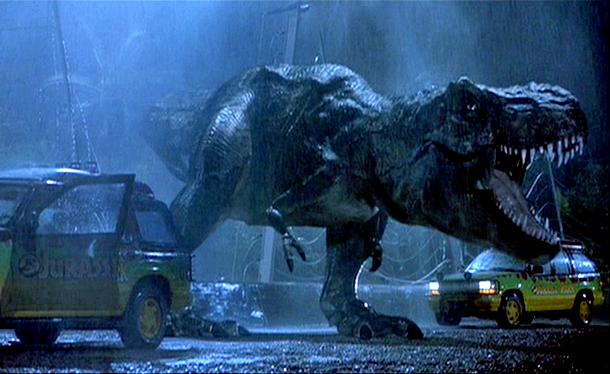
The Big Idea – What producer out there doesn’t love money? They love it! Money not only affords a producer a nice house, a nice car, nice schools for their kids – it affords them OPTIONS. When you have money, you can be picky. You can take more chances. And those chances allow you to grow as a company, to become a bigger player, a more dominant force in the industry. Which is really all any producer wants. And the script that affords them the best chance at this is The Big Idea. High-Concept movie fare. Stuff that can be turned into a franchise. This includes, but isn’t limited to, big robots, big monsters, vampires, spies, time-travel, big comedy ideas, wizards, zombies, super-heroes and much much more. Anything that you can imagine audiences coming out in droves to see. Now you still want to be clever with your idea. You want to look for ways to write these ideas that haven’t been done before. But if you do, these scripts almost always give you the best shot at getting noticed.
The Spectacular Script – The Spectacular Script is just that, a spectacular script. Nothing short of amazing will suffice. The story should be expertly plotted. The characters should be original, deep and dynamic. The relationships should move us. We shouldn’t be able to predict any of the twists or turns, yet when they arrive, they should make perfect sense. The ending should rock us to our soul. This is the rarest script to break through with because there just aren’t many people out there who can pull off a spectacular script and those who can are usually already professionals. I consider Where Angels Die a spectacular script. I consider American Beauty a spectacular script. If you’re using a character piece or a straight-forward drama to get noticed, you have no choice but to write a spectacular script as these genres aren’t marketable enough to weather anything but perfection.
The “Out of Left Field” Script – This is that goofy wacky idea that’s so bizarre, readers HAVE to read it. Charlie Kaufman popularized these scripts back in the 90s, and they’ve since become a staple on the Black List. We have The Beaver (a man who walks around with a Beaver puppet on his hand), The Happytime Murders (puppet noir). The Voices (A serial killer whose talking pets inspire him to keep killing). The idea is to write something so odd, so weird, so unexpected, that it inspires this reaction from the reader: “You’ll never believe what I read today.” Often, the trick with these scripts is to take something people normally consider light and fun, and turn it into something dark, dirty or violent. Cute kitty? Have him tell your main character to kill his girlfriend. Puppets? Have them investigating a murder. These scripts are less about selling and more about getting read. There hasn’t been a huge “Out of Left Field” script for a couple of years now so the market is definitely ripe for one.
The “Flipping A Genre On Its Head” Script – Flipping a genre on its head (or “updating” a genre) has been one of the most tried and true ways to write a saleable script out there. The idea is to take a genre (or idea), and add something new, fresh, or unexpected to it. The pirate genre was dead for 20 years. Then Pirates of The Caribbean came around and added ghost pirates to the mix. The genre was instantly invigorated. Snow White was this fragile pale little fairy tale creature. Snow White and the Huntsman turned her and the world around her hard and edgy. We saw big directors add contemporary spins to Star Trek and The Great Gatsby. Maybe one of the reasons The Lone Ranger failed was that they failed to flip it or update it. It was just the same old story. There’s a lot of classic material out there just waiting for a makeover. It takes writers with vision to spot this material and know what to do with it.
The “A List Actor” Script – Outside of huge franchise properties, the biggest thing that makes a movie go is the star. And the good news is that stars like good material. Sure, they love money too. Every big actor wants to be paid their 20 million dollar quote. But when they’re not doing those huge films, they’re just looking for good material that has a part in there they’d love to play. This is where you enter the equation. Simply put yourself in an actor’s shoes and ask, what role would I love to play more than anything? Chances are, it’d be something complex, right? Something that challenges you and allows you to flex your acting chops? OCD, multiple personality disorder, multiple parts, addiction, historic complex figures, mentally challenged, physically challenged, mentally disturbed, someone with a potentially damning secret (i.e. they may be homosexual). But that’s not all. Actors also like to play heroic kick-ass roles if there’s a unique angle to them (Book of Eli – he’s blind, The Bourne Identity – he has amnesia). Write a good script for an A-List actor and you’re in good shape.
The Viral Script – These are scripts that do not have a shot at selling. They are written to be read only, and therefore the goal is to go viral. Now why would you ever write a script that wasn’t meant to be purchased? Because for your long-term prospects in the industry, you want as many people reading your stuff as possible. The Viral Script spreads through word-of-mouth, which is the best way to find new fans. Popular Viral Scripts include Blockhead, about the Peanuts gang grown up in New York doing drugs and having sex. Balls-Out, a script focused on making fun of screenwriting conventions. And A Many Splintered Thing, a noted Nicholl script, which was written in the first person. These scripts are always a gamble, because you run the risk of people going, “Why the fuck are you giving me a script that has no chance of selling?” But the entire screenwriting profession is a risk, and the cool thing about these scripts is you can take chances with them you’d normally never be able to take. Seriously – break every rule in the book. You’re writing without the pressure of having to sell anything. One other piece of advice with these scripts: Push the envelope. You want to be really crazy, out there, and constantly challenging the boundaries of screenwriting. Nobody sends a “viral” anything around that’s safe.
Now are these the only scripts that get noticed? Of course not. High-Concept found footage films still get a lot of reads (i.e. Chronicle and recent spec sale, Glimmer). A good horror script will always get reads because horror’s cheap to produce and offers a big up-side. And of course, anyone with a script that displays an original voice will get read. But the six I’ve listed above – those are the biggies. I will remind you of two more very important factors in getting noticed though. First, you need to give us something we haven’t seen before. No matter which one of these options you pick, do not copy what you’ve seen before. You have to give it your own unique spin. Second, you have to execute. A Big Idea script is useless to me if it’s sloppily constructed and has boring characters. And finally, the more of these things you can pack into one script, the better. If you give me a big idea that flips a genre on its head with a great part for an A-List actor (Pirates Of The Caribbean), you’ll have all of Hollywood knocking at your door.
NEXT THURSDAY – The Six Types Of Scripts Least Likely To Get You Noticed
Genre: TV Pilot – Medical Drama
Premise: A brand new young crop of doctors begin their career at a cash-strapped county hospital.
About: Jason Katims is best known for producing the beloved TV show, Friday Night Lights. He also updated the old Ron Howard film, Parenthood, turning it into a TV show, which I’ve heard makes everybody who watches it cry. County was a show he was putting together for NBC with Jason Ritter to star last year. A pilot was shot, but it never aired. Let’s figure out why.
Writer: Jason Katims
Details: 71 pages – Network Draft 1/5/12

What in the world is going on?
Why am I reviewing a TV pilot??
I’ll tell you why. Because Pilot Week is coming up at the end of the month and I gotta get in some TV reviewing practice! I don’t know jack shit about these TV scripts, or telescripts or teletubbies or whatever the hell they’re called. When I wanna watch TV, I pal up with Johnny Depp and watch myself some scratch n sniff Honey Boo Boo!
Okay okay. I do watch SOME scripted TV. I almost watched every season of Breaking Bad (the 4th season was starting to get repetitive so I haven’t returned in awhile). But ever since Lost went bye-bye, I’ve been desperately searching for something to drool over. I actually have one (and only one) idea for a TV show (it’s an hour-long sci-fi drama, of course), but since I’m so unfamiliar with all these strange TV terms (cold open???), I need me some study time before I can even begin to write anything related to TV.
Which brings us to today. Jason Katims is a big deal in the TV world. He wrote this show called Friday Night Lights, which pretty much every single girl I’ve ever run into is in love with. So I figure it must be good. And with medical dramas being the bread and butter of the TV business, who better to give it a shot than the guy writing about football in Texas, right?
29 year old Jack Malloy is on his first day of work as an intern at County Hospital. Jack is a good guy, the kind of guy who wants to make a difference. Given the opportunity to help someone but lose his job or not help someone and keep his job, it’s pretty clear what Jack’s going to do. This man’s a helper!
Joining Jack is Erica (“too pretty for this place”). She’s a little fragile. A little afraid to speak her mind. But she’s freaking adorable. Which is why Jack falls for her immediately. Uh-oh. Too bad, Jack. Erica’s got a fiancé who lives out of town!
Next we have Talaikha (95 pounds and maddeningly unemotional). Why do I feel like I’ve seen this character before? Travis – African American who worked his way up from nothing (not that he’d ever tell you that). Billy is the oldest intern of the bunch at 40, but he’s plump and ready to share a joke no matter how inappropriate the situation. And finally, Rosa, a Hispanic “ball of fire” (what else!).
Each character experiences their own shocking first day, with some having a tougher time than others. The most interesting storyline, of course, is Jack’s. He’s got a dying Vietnamese mother who’s a Jehova’s Witness and therefore refuses to accept a blood transfusion (she only accepts the blood of Jesus Christ and they’ve run out of that at the moment). Making matters worse is that the mother has a teenage daughter without a father. In other words, this is the only person she has in the world. Therefore, Jack must come up with a solution to save a woman who refuses to be saved.
Across the hallways, Rosa must tell someone her age that she has inoperable cancer. Erica gets beat up by a family for possibly swaying a patient to sign a “do not interrupt” dying request. Travis spots his sister in the E.R. after, once again, O.D.’ing, an issue exacerbated by the fact that she’s got a daughter. Oh, and of course that goofy Billy’s stuck with a leg amputation patient who insists on keeping his leg!
The pilot mainly focuses on the unique problems a typical doctor goes through working at a county hospital. For example, when a patient is having major headaches, an intern suggests an MRI. They’re promptly told that they might as well be ordering brain surgery. When people get sick here, the stuff you learned at medical school is useless. This is the real world where neither the patients nor the hospital have any money. This forces doctors like Jack to make awful choices, like sending deathly sick homeless patients back out on the street in order to clear up rooms for all the new bodies arriving. Don’t agree with it? Sorry, that’s County.
But don’t you think that’s going to get Jack down. After abandoning all his other patients and even jetting across town to another hospital to see if they can perform a rare bloodless transfer procedure on his Jehova’s Witness, he finally finds a solution to the problem and saves her life. Looks like that daughter is going to have a mother after all.
Okay, really though? The sassy spitfire Latina doctor? The pudgy funny doctor? The white lead who’s constantly trying to do the right thing, rules be damned? Isn’t this like every other one of these shows ever created?
Here’s the thing, though. Whenever these shows show up (like Gray’s Anatomy), aren’t they ALL just like every other medical drama ever created? What’s different about them? To me, not much, and yet Gray’s Anatomy became this big hit. So on the one hand I’m saying, “I’ve seen this before,” but on the other I’m saying, “As did I with other medical dramas that became hits.”
But to me, the stereotypes were just too big here. I mean come on. The 95 pound Indian girl with zero emotion, who tells her patients they’re going to die without a hint of compassion. Isn’t that THE EXACT SAME CHARACTER as the Korean doctor on Gray’s Anatomy!?? What’s scary is that I know that and I don’t even watch that show! People who love these shows, I’m guessing, would find this even more cliché.
Then again, maybe this is something I don’t understand about television. Maybe television writers consider these characters “archetypes” and you start a pilot with them because their issues are easy to identify with and latch on to. Then, because you have a hundred hours to play with via all those episodes, that’s where you get into the depth, into the origins, into the meat of who these people really are. I ask you, TV writers, is that the case? Because I know in the feature world, I would call these blatant stereotypes and would tell you to avoid them like the plague. Why not make the fat guy the one with no emotions? Why does fat always have to equal “the funny guy?”
Despite HUGE problems with the endless character clichés, I have to give it to Katims. He almost made me tear up a couple of times. A favorite plotline of mine was the Rosa “delivering cancer news” stuff. It’s been done before, but Katims did a good job giving us some backstory on the girl (her boyfriend stuck with her through the first cancer treatments, but he’s pulling away at the thought of a second round) and created this great bond between the girls as they decided to stick it to this asshole when the negative tests came back. But instead they come back positive. And they’re REALLY BAD. As in she’ll die soon. And all of a sudden, Rosa realizes that these two won’t be friends, that there’s nothing she can do for this girl, and that she’s basically leaving too, just like the boyfriend. I silently cursed myself for falling for this but darnit if it didn’t work.
And Katims seems to have a talent for that. You can’t help but eventually hop onto the idealistic Jack’s back and believe in his quest to save every damn person in this hospital. And I loved how he did that with very little dialogue. Jack is almost all action, and yet you feel closer to him than anyone else. To that end, Katims did a really good job. I cared about enough of these people in the end to want to know more about them. But County never quite overcomes the obnoxious feeling of familiarity behind it. Placing things at a cash-strapped hospital made for some fresh challenges, but that doesn’t mean you can just transplant the character sheet over from another show. And for that reason, there’s no way I can give County a clean bill of health.
[ ] what the hell did I just read?
[x] wasn’t for me
[ ] worth the read
[ ] impressive
[ ] genius
What I learned: Ultimately, TV is about the characters, not the idea. It’s your characters who are going to take you through 100 episodes, so they have to be fascinating. In my opinion, that’s harder to do if they’re stereotypical. Give us people we’ve never seen before – especially if it’s a familiar setting like a hosptial – and you’ll rope us in immediately. There wasn’t a single character in County that I haven’t seen in a medical show before, and I believe that was its downfall.
Is it possible for a script about the high school experience to feel original anymore? The Spectacular Now says, hell yeah.
Note, this review was first posted awhile back, but I re-read the script and added some new thoughts to the review in anticipation of its release.
Genre: Dark High School Dramedy
Premise: A popular alcoholic high school student starts dating a nerdy girl, possibly out of pity.
About: The names of today’s writers, Scott Neustadter and Michael H Weber, may sound familiar. That’s because they broke onto the scene with the structure-defying spec, 500 Days Of Summer. One of their first jobs after the success of that film was adapting The Spectacular Now, a book by Tim Tharp. The film recently debuted at Sundance and won awards for both of its leads, one of whom is Shailene Woodley (Clooney’s daughter in The Descendents), who’s gotten a lot of press lately for being completely cut out of the new Spider Man movie. The Spectacular Now will debut in limited cities this August.
Writers: Scott Neustadter and Michael H. Weber (based on the novel by Tim Tharp)
Details: 119 pages – July 23, 2009 – first draft

It’s been awhile since I was in high school. I was there before Twitter and Vine. I was there before you knew you were in a relationship (We didn’t have “Facebook status” to confirm that stuff. We had, “Uhh, are we going out n stuff?” “Uhhh, I guess so.” Bam. Sorta-relationship). And the more I think about it, should high school kids even get relationship titles? I mean come on. High school relationships have the same lifespan as a fruit fly. Who cares who’s going out with who? It’ll be over tomorrow.
Oh yeah, NOW I’m remembering. Back then, every single moment was the most important moment EV-ER. If you accidentally walked into Homeroom with a smidge of jam on your face from breakfast that morning, your life was destroyed for the next two weeks. You’d meticulously break down who in the school saw the .1 millimeter of jam. Did Julie see it? Did Claire? Did Kenny? He would surely tell everyone about the glob of raspberry jam pouring down your cranium like blood from a bullet wound. That image would be stuck in your head. The giggles that were going on behind your back you didn’t see. Ahhhh!!!
You have to remember this when reading a high school script. You have to transport yourself back to that frame-of-mind, even though in hindsight, all those things you obsessed over were so ridiculous (although I do wonder sometimes if the reason Becka Madel never went out with me was because she saw the jam on my face that day). Now the bar for high school movies this decade is low. I mean what do we got? Perks of Being A Wallflower? (How exactly was it a perk seeing that again?) So “Spectacular” doesn’t really have a lot of competition. I hope it takes advantage.
Sutter Keely is a complicated individual. He’s somehow managed to become “the popular guy” without carrying the dubious title of being “the popular guy.” Watching him walk into a room is like following Obama into the White House. Everybody knows him. Everyone wants to be around him. So it shouldn’t be surprising that Sutter is dating the hottest girl in school, Cassidy.
But Sutter has some other sides to him as well. First off, he’s a drunk. He keeps a flask and a buzz with him wherever he goes for the explicit purpose of being able to see the world through rose colored glasses. Sutter doesn’t keep any “real” friends either. He’s the guy who knows everyone but nobody knows him. And Sutter doesn’t plan ahead. His life’s goal is to cruise around and bring smiles to people’s faces. Sutter lives his life in the “spectacular now.”
But Sutter’s 18 years old and on the verge of the biggest decision of his life: What does he do next? Does he go to college? Does he get a job? These are things Sutter wishes he never had to deal with. Yet here they are, closing in on him like a coffin, forcing him to do what he hates to do most: commit.
This is probably why Cassidy dumps him. She’s sick of the fact that their relationship holds no meaning to him, and as if to prove her right, Sutter barely blinks afterwards. The way he operates is to never get too close. That way he never feels anything when they leave. Little does he know that that’s the very reason they do leave.
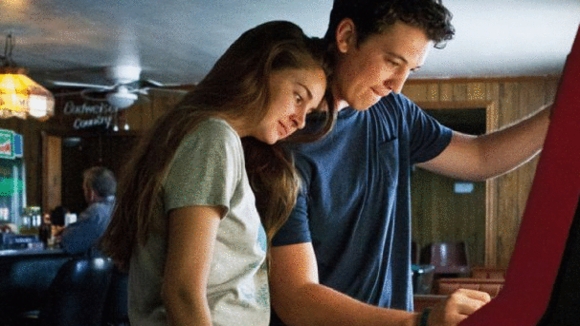
The post-breakup phase doesn’t last long. Sutter randomly runs into a girl from his school, oddball Aimee Finicky. Aimee’s the nerdy girl who sits in the corner of the room, hoping nobody notices her. There’s some cuteness there but Aimee’s complete lack of personal style destroys any chance of it coming through. Out of a combination of pity and curiosity, Sutter starts hanging out with her.
This seriously unbalanced relationship goes the way most of these relationships do. Aimee falls madly in love with Sutter, while Sutter goes along with it only because he’s got nothing better to do. At a certain point, he realizes he either has to stay in or get out, and he decides to stay in. Aimee’s love eventually seeps through the walls he’s put up, helping him get to the root of his issue, which is that his father left him at a young age.
Aimee encourages him to go see his father, and while initially reluctant, he realizes that if he’s ever going to grow up, this is what needs to happen.
The biggest trap you can fall into with these teenage high school scripts is cliché. Since most real-life high school kids mimic pop-culture, they actually live a life of clichés, making cliche movie versions of themselves “technically” authentic (everybody’s using the same catch phrase, kids identify themselves via film stereotypes). Regardless, you want to avoid any kind of cliche you can when writing these scripts. Cliche equals flat and flat equals boring.
What you have to do then, is move away from the high school and see what defines these characters as people, as individuals. You need to find out what parts of their lives make them unique, what specific challenges are theirs and theirs only. Once characters start to feel like individuals (real people!), it doesn’t matter where you place them, high school, a Fortune 500 Company, or a job at the local 7-11, the story will be interesting because we’re interested in THEM.
Take Cassidy for example, Sutter’s ex-girlfriend. The easy way to write this character would be to make her the “hot popular bitch.” And to a degree, she is. But when she and Sutter break up, she doesn’t fuck the first dude she sees to piss him off. She’s still concerned about him, about his drinking, about his choices. She still has feelings for him, but has met someone else as well, and isn’t really sure what to do. Or take her new boyfriend, the popular jock, Malcom. When Malcom finds out that Cassidy’s still talking to Sutter, we think he’s going to kick his ass. And at first, that’s the plan. But he ends up breaking down to Sutter and admitting that he wishes he could be more like him, more relaxed, more fun. He’s afraid that if he doesn’t do so, he’s going to lose Cassidy. In other words, the characters aren’t acting like stereotypes. They’re breaking those stereotypes and acting like people.
The Spectacular Now also does a great job with dialogue. Whenever Sutter and Aimee were having conversations, I believed what they were saying. And that might not seem like much but most of the time when I’m reading words on a page, that’s exactly what I’m feeling: words on a page. It takes a lot to break that spell.
So I spent a few minutes trying to figure out why these particular words (which weren’t mind-blowing by any means), felt so real. This is what I realized: The more real you make your characters (their goals, their flaws, their backstories, etc.) the less convincing the dialogue has to be. The most important thing about dialogue is that we believe it. So if the audience accepts the characters, it doesn’t matter what they’re saying. They could be bumbling morons. But since you already believe in their existence, the words themselves are an extension of that existence. I’m not saying dialogue doesn’t matter, of course. I’m saying develop your characters and your dialogue will emerge naturally.
And the last thing that really surprised me was how well the father stuff worked. The “father who deserted his family” thing can be quite the cliché in movies. But I liked how Neudstater and Weber gently weaved that storyline in here. Usually these things hit us with the subtlety of a church bell, but Sutter’s father isn’t even mentioned until the second half of the script. It had a real-life feel to it. Nobody blurts out their family problems to you on the first day. It takes time to open up. And I like how these guys mirrored that approach here.
Don’t have a lot of bad stuff to say here. I guess Sutter is such a complex character that I never understood exactly what his problem was. He drank too much? He lived in the present too much? He was too nice to people? He never allowed himself to get close to people? These flaws overlapped each other at times and made him a little confusing. Luckily, we like the guy enough to overlook it.
I thought the plot could’ve been a little stronger (it’s really threadbare), his relationship with Cassidy wasn’t all that clear to me, and the final father meeting was maybe a little too on-the-nose. But hey, it’s a first draft. You can’t ask for the moon. This was really well done. If you like your screenplays character-driven, check this out.
[ ] What the hell did I just read?
[ ] wasn’t for me
[xx] worth the read
[ ] impressive
[ ] genius
What I learned: Whenever your main character is gearing up for a big moment (a speech, a confrontation, a race, whatever), throw something unexpected at them. If it’s a speech in front of a hundred people, have them get there to find out it’s now in front of 10,000 people. If they’re confronting their girlfriend about cheating, have them bang down the door only to find her parents with her. If it’s a bike race, have them get there only to find out their bike is broken and they’ll have to ride a shitty second rate bike. – You want to make things difficult for your characters. It’s always more interesting. (spoiler) After Sutter sets up the big meeting with his dad, he gets there to find out his dad’s forgotten about it. Now the dad wants to meet a friend and drag Sutter along. You see how much more interesting the dynamic becomes as opposed to if they’d sat down and had a predictable boring heart-to-heart? Think about real life. Everything that goes according to plan is uninteresting. It’s only a story when the unexpected happens. You need to think that way in your screenplays.