
Search Results for: F word
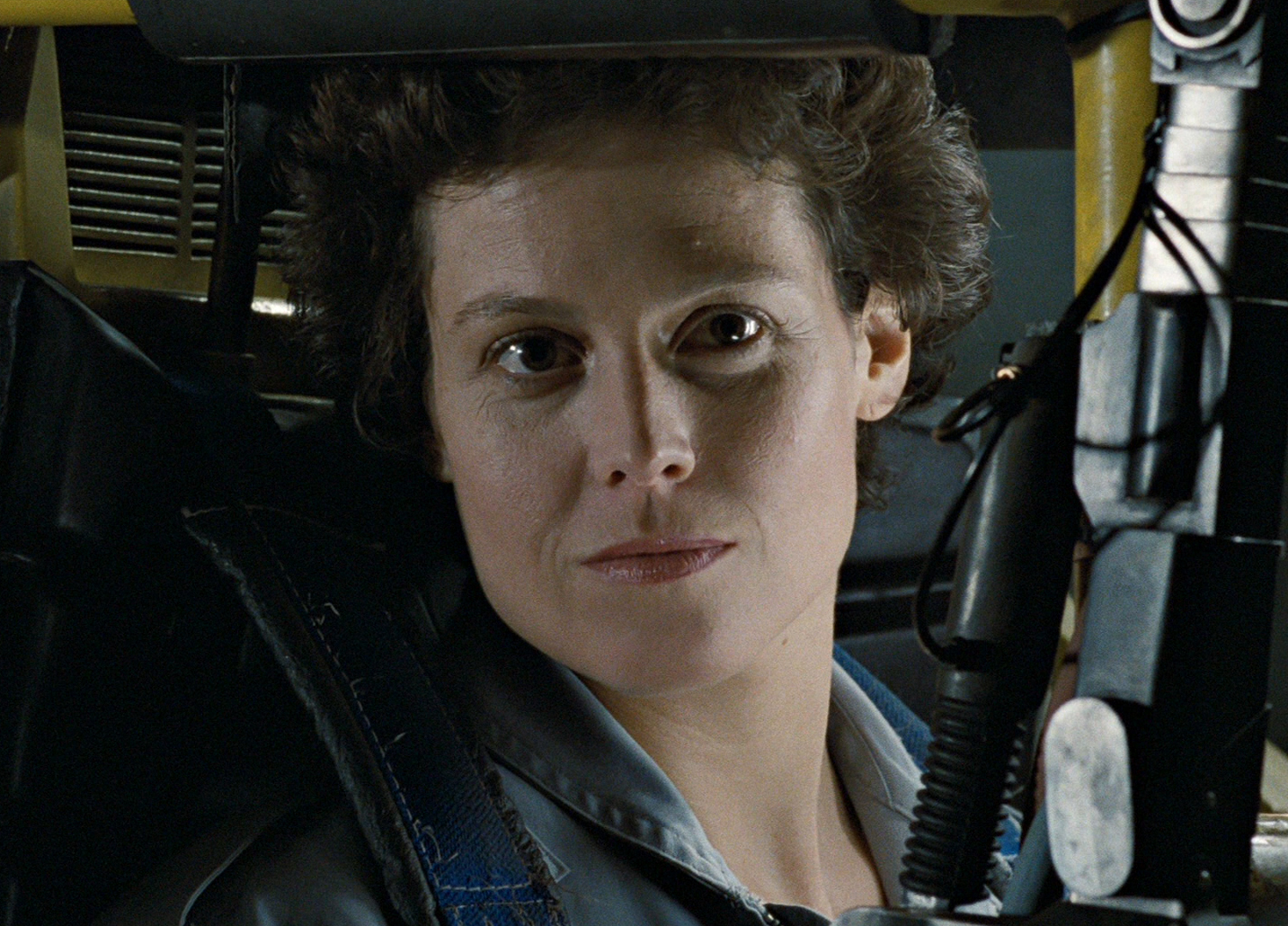 Ripley – Character flaw: Lack of trust
I remember when I first heard the term “three-dimensional character.” It sounded like one of those things clueless producers mutter when they don’t know why they don’t like something. Oh yeah, the characters weren’t, umm, “three-dimensional.” That’s why I didn’t like it. Occasionally, you’d run into one of the more affluent execs, who might throw this curve ball at you: “Your characters never popped off the page.” What the hell does that even mean? It’s a freaking piece of paper. If you want things popping off pages, head over to the children’s section at Barnes & Noble.
Ah, but as time went on and I came into contact with more intelligent and established entertainment folk (purely by accident of course), I noticed them using these same darn phrases. “Sorry, the characters have no depth.” “They were paper thin.” “The plot was okay but the characters never popped off the page.” Urgh. Wherever I went, this three-dimensional character thing was following. I needed to find out what was going on.
So I did a little research into this “3rd dimension” and repeatedly came across the term: “character flaw.” This seemed to be the all-elusive key to achieving character depth. A character flaw, I found out, was a negative trait holding your character back from becoming whole. Okay, I could get on board with that. I started watching my favorite movies and, lo and behold, it was true! There were character flaws everywhere I looked. Neato!
But then tragedy struck (well, subjectively speaking). I was on a screenplay message board one evening and found a thread discussing this exact topic. The head screenwriting message board guy in charge (HSMBGIC) was saying that not all characters had character flaws. Indiana Jones didn’t technically have a flaw. John McClane in Die Hard didn’t have a flaw. My whole screenwriting world came crumbling down. What next? Were there screenplays without words?? How could anything make sense anymore!!!
If only that were it. As if some phantom force was set on getting me to commit scripticide, I was introduced to yet another term: “Inner Conflict,” which writers were using interchangeably with “character flaw.” Yet another screenwriter cornered me and whispered, “Don’t listen to those bums. The key to a great character? A VICE.” Don’t even get me started on 70s Writer Guy, who kept telling me all I needed was a good “character fear.” Character fear?? What the hell was that??! It was at that moment I did what any slug-fearing screenwriter would do. I bought a case of Bud Ice at the corner liquor store and got drunk.
I won’t get into how that began a three year bout with alcoholism that ended with me on the top of a stoplight on Santa Monica and Wilshire screaming (the cops informed me), “Knick-Knack Paddywack, give E.T. a phone!” The good news is, I’m better now. And I have medication. Which allows me to drive by myself. Which led to a lot of library visits, where I actually learned what all these terms meant! And because I don’t want you to have to go through what I went through, I’m going to break all of them down and show you how you can use them to add depth to your characters. Get ready for your life to change. As one of the greatest philosophers in history once said…”I’m tan mom. Biyyyyyyaaaaattttcchhhh.”
Flaw – A character (or fatal) flaw is the dominant negative trait that’s held your character back from becoming the person he’s meant to be. Selfishness, lack of trust, won’t open up, won’t stand up for themselves, being irresponsible – these are all flaws you’ve seen hundreds of times in films. The most powerful character flaws tend to be the ones that have hindered your character their entire lives. So in Rocky, Rocky has never believed in himself. But flaws can occasionally be a more recent problem, typically the result of a recent traumatic experience. So if a character was recently dumped by someone they loved, maybe their flaw is that they don’t trust love anymore.
When done right, the character flaw is the most effective way to add depth to your character. This is because once a reader identifies a character’s flaw, there’s an intrinsic need to see that flaw overcome. Being able to change is one of the most universally relatable experiences there is. So seeing someone else do it makes us believe we can do it. It’s almost like we’re living THROUGH the character, and that’s what creates that deep emotional connection.
Inner Conflict – The term “Inner conflict” is often mixed up with “character flaw” because they both infer struggle within our character. But inner conflict is less about overcoming one’s big weakness and more about a battle being waged inside the character. To execute a great inner conflict, you want to give your character two opposing forces that are pulling at him. Luke Skywalker (as well as Darth Vader) is being pulled by both good and evil in Return of the Jedi. Travis Bickle in Taxi Driver is trying to decide between being good or bad. A newly announced Andrew Garfield film is about a real estate agent who starts illegally kicking people out of their homes. He becomes rich doing so, but his conscience starts to eat at him. He’s conflicted with whether earning a living this way is the right thing (inner conflict).
Again, the advantage of adding an inner conflict is that you’re tackling a universal experience. We’re constantly dealing with our own conscience, with what’s right and wrong, being pulled in opposite directions. The most unsettled we tend to be in our lives is when we’re fighting these inner battles. It’s a very intense experience, and therefore we relate to and engage when we see a character going through the same.
Vices – Vices are often used incorrectly in screenplays, as many beginning writers believe that simply adding a drinking or drug addiction will give their character that elusive “depth” all these producers and agents talk about. 99 times out of 100, however, the characters unfortunate enough to be created this way feel cliché. Why? Because unless you’re exploring the vice in all its depth and complexity, it feels sprayed on, a false veneer hiding the fact that you don’t know how to build depth. A vice is the physical manifestation of an inner conflict. It’s drugs, food, alcohol, sex, gambling – any physical addiction your character can’t control.
In my experience, the only time vices truly add depth to characters is when the writer commits to them 100% – when they explore all the complexities and faults and issues and pitfalls and devastations that come with them. We saw it in Flight, we saw it in Leaving Las Vegas, we saw it in Half-Nelson, we even see it in The Dark Knight (The Joker’s vice is chaos). The screenplay almost has to be ABOUT the vice for it to truly resonate. Otherwise, if you’re just slapping it in there to try and make your character feel “deep,” it’s probably not going to work.
Fears – Fears are the last and typically weakest way to add depth to your character. The reason being, they’re surface level. Unlike a flaw, an inner conflict, or a vice, there isn’t a whole lot going on under the hood with a fear. Take Indiana Jones. His fear is snakes. Good for a chuckle, not much else. Or Brody from Jaws. He’s afraid of water. Cool for later when he must go into the ocean to kill the shark, but it doesn’t really add much depth to his character. Or Richard Gere in Pretty Woman. His fear is heights. Sets up a nifty little finale where he must climb up the building to get to Julia Roberts, but there’s never a moment in the film where we feel the depth of Richard Gere being afraid of heights. It’s just a cute little setup and payoff, as are all these examples.
Now this doesn’t mean you don’t want characters who are afraid in your screenplays. Fear is a very powerful emotion. And as you can see from the examples above, it’s a nice little addition to a character who already has depth. You just don’t want fear to be the only element of depth in your character. Any fear should be in addition to, not in place of, these options. The one exception is if the fear is integral to the storyline. For example, if your character was raped, and now they’re afraid to leave the house in fear of getting raped again, obviously the fear is adding depth to your character.
Moving forward, my suggestion for adding depth to your character would be to start with the character flaw. If a character flaw doesn’t feel right for that particular story (Hey, Ferris Bueller didn’t have a character flaw), move to inner conflict. If your character doesn’t seem like the kind of guy with a lot of internal strife going on (aka Seth Rogan’s character in Knocked Up), go with a vice. Only use fear as a last option or if it’s integral to the kind of story you’re telling. There are a few other things you can do to add depth (backstory, mystery, your character’s relationships with others), but for the most part, if you’re not using one of the four elements featured in this article, your character will feel flat (leading to the dreaded, “Your characters never POPPED off the page.”).
Also, it’s okay to mix and match these elements. It’s okay to give a character a flaw and a vice. Or a vice and an inner conflict. If you really commit to one of these elements, one is all you need, but I’ve seen plenty of characters that are battling two or even three of these things. My only advice, if you take that route, is to connect the elements so they feel organic, as opposed to mechanically adding multiple things because a screenwriting blog told you to. For example, if your character’s flaw is that they don’t think they’re worthy of having a boyfriend, an addiction (vice) to food could keep them overweight and unattractive and therefore allow them to perpetuate that belief.
Remember that the main reason readers label characters as “thin” is that there isn’t a lot going on with them. I read so many scripts where I don’t remember the characters five minutes after I finish because there WASN’T ANYTHING GOING ON UNDERNEATH THE SURFACE. These four options are the things you place underneath the surface. Because the characters now have something underneath them, by definition, they have DEPTH. And just like that, you’ve created a three-dimensional character.
I must apologize about the late post. You know, ever since it was announced that Kate Middleton went into labor last night, I’ve been unable to eat, sleep, or concentrate. Just like all of you, life cannot go on until this baby is delivered. I mean so many things can go wrong in childbirth. Is it not natural that one need to know that the baby is okay? And then of course we all need to know if it’s a boy or a girl. Well, she’s FINALLY delivered. And it’s a boy! (spoiler alert) So everyone can take the rest of the day off and relax after all that intense anxiety you’ve been under. I know I will.
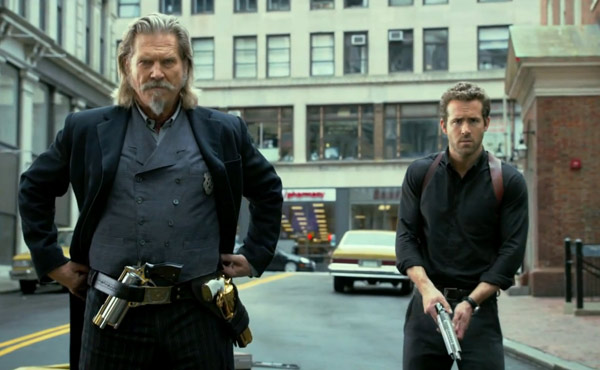
But that’s not the only thing that happened this weekend. R.I.P.D. was officially R.I.P.D. upon its own delivery. I reviewed the script a year ago and thought it was pretty good. But man did it land with a thud. I’m trying to glean some lessons for writers from this but I’m not sure I have any. On the one hand, I encourage writers to come up with high-concept ideas, like R.I.P.D., but I think in this case it was so similar to Men In Black that audiences had no interest in seeing a lower-rent, lesser-cast version of that film. I mean, people aren’t even interested in seeing sequels of the original M.I.B. Why would they be interested in seeing a copycat film? If there’s a lesson here, it’s to write something familiar but different, with a little more emphasis on the different than the familiar.
Speaking of, R.I.P.D. is yet another example of the Ryan Reynolds Isn’t A Movie Star Paradox, which was most famously explored in an article written by sports/entertainment writer Bill Simmons. Indeed, it is strange that Reynolds continues to be so popular amongst studios when he’s never been able to open a movie on his own (his biggest successes like The Proposal and Safe House have him coupled with bigger stars). I like Reynolds. He seems like a good guy. I love that he takes chances in his career, and I think some of his movies have been really good, like Definitely, Maybe and Buried. But he’s gotta take advantage of this time. Unless he starts giving a better return on his investment, I’m afraid he might go the way of Ben Affleck in the first phase of his career.
Also, in news that has nothing to do with that, I’m hearing an awful, awful rumor. JJ Abrams is thinking of quitting Star Wars. The main point of contention is that Abrams has a family here in the States but will have to shoot the movie in England. It’s something I actually worried about as soon as Abrams took the job. He stated that he really wanted to shoot the movie here because of his family and an issue like that just doesn’t go away. Imagine being away from your wife and kids for a year. This isn’t a simple 3 day business trip to Cedar Rapids. We’re talking AN ENTIRE YEAR.
If he drops out, I don’t know who the heck is going to take his place. But the mad scramble will probably dictate a less-than-desirable replacement. Nightmare names like Rian Johnson and Edgar Wright popped into my head. I know those names bring about happy thoughts in certain geek circles, but trust me, those guys would destroy Star Wars. That’s why JJ was so perfect. He was a big director who knew what he was doing and also had that sensibility that could make Star Wars great. I’m afraid if he leaves, there are no super-big directors who would be interested, which means taking a shot in the dark on one of these lesser guys who hasn’t proven himself. Ugh. May the force be with us.
So, in slightly less depressing news, I saw The Conjuring this weekend with Miss Scriptshadow. We’d both read the script, both liked it, and so were interested in seeing the finished product. Well, long story short, Miss Scriptshadow hated it. Which kinda baffled me because she loves scary movies.
The scene that set her off was the opening one, in which paranormal investigator husband and wife team, the Warrens, investigate a creepy doll that keeps writing to its owners, “Miss me?” in really bad crayon handwriting. Indeed, the scene felt like it was part of another movie. Coupled with its cliché scary doll cheesiness, there was a goofiness to it that contrasted heavily to the otherwise “take me seriously” tone the rest of the film exhibited. It just goes to show how powerful an opening scene is. Give us the wrong one, and we could decide we hate your film within a couple minutes. The scene didn’t turn me off as much as it did her, but something did feel off about it.
My problem with the film had more to do with the same issues I saw in the script stage. Now to their credit, the writers did eliminate a lot of the “one month later” and “two months later” stuff they had in the screenplay that gave the story a laid back feel. Instead, after the opening scene, they kept everything in one continuous timeline and made it build. In other words, they added URGENCY, which is important in any movie, but especially a horror film, where you should feel the danger increasing at a scary rate.
But getting back to my main issue, it really bothered me that every time the Warrens saw something freaky, they went, “Oh yeah that. Ppffhhh. That’s just the demon wanting attention.” “Oh, the reason the clocks stop? That’s just because it’s the time the ghost died. No biggie.” Even when they’re researching the haunting, the answers seem to bore them. “No wonder these guys are experiencing hauntings. A witch used to live here and killed her child.” I don’t know about you, but I’m scared when people have no fucking clue why they’re being terrorized and they’re freaking the fuck out about it. Everybody here was too damn calm. We needed the Warrens to be like, “Yo, we’ve never seen this before. We’re scared. We don’t know what to do.” Remember The Exorcist? Part of what made that so scary is that the priests themselves seemed terrified. We never get that with the Warrens, who always seem to be in control. That was a super-big issue with me. If they could’ve fixed that, this might’ve been a classic.
I did learn something cool from the script-to-screen translation though. One of my favorite moments in the screenplay was when Lorraine Warren was in a crawlspace in the house, and starts pulling on this rope, and pulling on it and pulling on it, and all of a sudden, at the end of it is… THE WITCH’S HEAD (who had hanged herself when she was alive – hence the rope connection). It was terrifying. But they didn’t do that in the movie. Instead, she lifts the rope up and sees at the end… a noose. Scared for a moment, the floor of the old house then breaks beneath her, and she goes shooting down through the walls into the basement. Injured and unable to move, she starts hearing scary-ass shit. She now must fend off potential danger from every side of her. In other words, the writers sacrificed what was originally a jump scare (the witch’s head), and milked an entire scene of scares out of it. There’s your lesson. If you have a choice, no matter how good your jump scare is, see if there’s a way to milk one long scene of scares instead. That’s always the better option.
Finally, I still think the script itself, while interesting and original, was clumsy. I was never entirely sure who the main characters were. Was it the parents in the house or was it the Warrens? It felt like the writers weren’t sure either, as we’d occasionally jump back to the Warrens’ home where a barely-there subplot was happening with their daughter. The entire Warren’s Home storyline felt like that friend who nobody wants to bring to the party. “Oh man, I guess we have to call Bill.” Everybody rolls their eyes. Yeah, I guess so. Everything that happened over there felt like an afterthought. But in retrospect, I’m convinced that the studio sees the Warrens as their franchise. They’re the ones with all these scary stories to tell. Sequels upon sequels upon sequels. Therefore, they have to give them weight in the story. The problem with that was, because we had to spend so much time with the Warrens, we didn’t really get to know the Perrons. I mean, somebody tell me anything about the father in this script. You can’t. There was nothing. But hey, The Conjuring 2 is already ramping into development so it ended up working.
With The Conjuring and The Purge being two of the biggest return-on-investments this summer, you best start thinking about writing that horror spec. People love to be scared, so scary movies will always have an audience. Just try and come up with an idea that’s either based on a true story (Conjuring) or that has a really high concept (Purge). You do that, we’ll be analyzing your film here on Scriptshadow soon.
The weekend is here. Writer Jay Eden would love if you busted out your old record player and took a trip into the past. Vinyl lovers unite for… WHITE LABEL!
Amateur Friday Submission Process: To submit your script for an Amateur Review, send in a PDF of your script, along with your title, genre, logline, and finally, why I should read your script. Use my submission address please: Carsonreeves3@gmail.com. Your script will be posted. If you’re nervous about the effects of a bad review, feel free to use an alias name and/or title. It’s a good idea to resubmit every couple of weeks so your submission stays near the top.
Genre: Dark Rom-Com
Premise: (from writer) When a young vinyl music store owner loses everything — love, friendship and vinyl records — he struggles to rebuild his life, hindered by pimp-like friends, a beautiful agent provocateur and an ex-girlfriend who refuses to let their relationship die until she finds a suitable successor. In the vein of HIGH FIDELITY and 500 DAYS OF SUMMER.
About: (from writer) WHITE LABEL landed me a Blacklist manager for three days when I sent it out last year. We had a weekend love-in, swapped lots of emails, planned a campaign to attach a director and talent — then she emailed back the following Monday and said she was simply too busy to take on another client. The script (under a different name) got a professional rating on SPEC SCOUT, and was ranked on the TOP 10 list of the best scripts of 2012 by a Scriptshadow reader (someone I have never met, honestly!).
Writer: Jay Eden
Details: 113 pages

One of the cooler things you can do in LA is head up to Sunset and Vine and visit Amoeba Records. It’s this huge sprawling store with about a billion records. It’s kind of amazing to think about. Vinyl died off a long time ago. In fact, it’s died many deaths. First by cassette, then CD, and now digital. Many people who swore by the vinyl listening experience watched helplessly as their flagship sound experience was ripped away from them.
So to think that there’s this entire store that still sells these things. And not just that – they’re ALWAYS packed. It’s baffling. With that being said, I have to admit I’ve never been a music geek. I mean don’t get me wrong. I’ve bought a hell of a lot of songs on Itunes. But I’m not someone who can tell you what venue Led Zeppelin first played in. Or what studio Pink Floyd’s “The Wall” was recorded in. It’s just not my thing.
Music is something for me to experience and enjoy, not dissect. And really, I wouldn’t have it any other way. One of the downsides of being in the movie business (and I use that term loosely, don’t worry), is that in order to survive, you have to dissect, you have to watch things over and over again to understand why they do or don’t work so you can talk about them intelligently, as well as apply that knowledge to your work. I’m not going to lie, that takes some of the fun out of it. It’s hard for me to just sit down and enjoy a film these days. I’m too busy thinking about all the shit that’s gone into it.
With music, I don’t have to worry about that. It’s why I can enjoy “Satisfaction” and “Gangnam Style” in equal measure. I don’t have to bring any of that judgmental snarkiness over from the film world. Which leads us to White Label. This is a script written by a music geek for music geeks. And for that reason, while I appreciated it, it never truly resonated with me. It sort of drifted around me. I enjoyed some moments, but was never totally enthralled.
White Label puts us back in the decade of big hair and male mid-riff shirts (the 80s) and follows a guy named Matt. Matt is the owner of a store named Urinal Vinyl, a record shop famous for its giant urinal in the middle of the floor, where those desperate for rock schoolage can sacrifice their old shitty records and be given the truly best rock in return. In other words, it’s a gimmick that separates UV from every other record store in town.
But the fun and games of the 70s and early 80s are coming to an end. That’s because a new medium is hitting the streets, the compact disc. And they’re making their way into every record store in California. Every record store except for one. Urinal Vinyl. That’s because Matt refuses to bend to the constraints of capitalist America.
Cut to our romantic foil, the royally fucked up but unimaginably beautiful Charlie, one of those women who could find trouble in a church. Charlie works for one of these compact disc companies and realizes if she could infiltrate Matt’s little store, she could find out what they’re up against. So that’s exactly what she does, hoping to rope Matt in and get all the information she needs and use it against him. But it’s not that easy. Matt is still in love with his dead wife (who he’s able to physically see and talk to by the way) and just getting an uninterrupted moment with him is like trying to get some one on one time with Madonna (80s reference).
There are tons of other people coming in and out of the shop with their own stories as well. There’s Ray, Matt’s best friend, who’s in love with an Argentinian woman he can’t have. There’s Bunker, a 15 year old kid who’s so obsessed with the Goth girl working at the store he comes in every day and stares at her from the corner. There’s Todd, Charlie’s married boss whom she erroneously believes will leave his wife. There’s Phil, who’s married to Matt’s sister. There’s Maddie, who’s trying to rope in Matt as well. Oh, and of course there’s Emma, Matt’s dead wife. Shit, there’s a lot of people here!
Charlie eventually finds a provision in the rental agreement on the building that will close the place down unless Matt finds 30k. All this espionage is getting harder and harder to do, of course, since she’s falling for Matt. And in the end, Matt will have to call on all the famous rockers who once graced one of the greatest record stores in the world to rock out and raise money so they can save the place where they got their first rock education!

I feel really bad about reviewing White Label because there’s more passion and depth in this script than most of amateur scripts I read in a month. You can tell when a writer really loves his subject matter. He gives the words a power you just don’t see when a writer’s writing for the market. I can vouch for that here with Jay. I felt the sweat he laid out on the page. But this just isn’t my thing. So no matter how hard I tried, I couldn’t get fully into it.
Regardless of that, there’s some really great character development here. Every single character has something going on, from the best friend (who’s obsessed with the coffee shop girl) to Charlie, who has several different people she’s trying to please. I’m a big fan of writers who give every character something to do, something important happening in their lives.
Here’s the irony in that, though. There are too many characters here to begin with. And because Jay is so good with character-building, it actually ends up working against him. Because he’s adding storylines for characters that probably shouldn’t be in the script in the first place. Start with Emma, Matt’s dead wife. I’ve seen the “dead wife who talks to the lead character” half a dozen times before in the last two years alone. We even reviewed a script with this exact hook a few months ago.
Then we had characters like Jake (a late boyfriend for Charlie), Charlie’s sister (who has very little to do with anything), Matt’s semi-gf Maddie, and Bunker’s late girlfriend, Christy Turlington. I didn’t care about the specifics of any of these storylines. All I care about are the main characters’ plights. I want to see THOSE characters interacting with one another, not some late “thrown in” character who I barely know or care about.
To me, White Label’s biggest problem might be that there’s TOO MUCH going on. And some of the more important character storylines get lost in the excessiveness of all the subplots and tangents. This script needed someone to come in there and straighten out all the curls. It needed a “simplification comb,” or, to use a music reference, it needed a simpler beat.
Another thing I’m worried about is how similar this is to High Fidelity. It’s music geeks hanging out in a record store talking about music. Clearly, this was an influence for Jay. But there’s a fine line between influence and “the same thing,” and while there are portions of this story that are its own, there are way too many that feel like excerpts from that film.
Moving forward, here’s what I’d recommend to Jay. Streamline the character count (starting with Emma – represent her with a unique record they used to listen to or something, not a physical talking person) and remember that you don’t have to go into every little detail in every little character storyline. The big storylines should take precedence. Drop stuff like Jake and Christy Turlington. We don’t need them. I’d also bring up the story problem earlier. Right now, it’s introduced at the midpoint and that leaves the first half of the script without a story. Introduce their need to save the store at the end of the first act. Also, make “White Label” a bigger part of the story. It sounds like these “white label” records are worth a lot of money. If they went on a search to find one to save the shop (or he had to, say, decide whether to sell the super-valuable white label record he found with Emma that represents their relationship), that’d be more interesting than the cliché “hold a concert to save the shop” climax. Finally, do everything you can to make this NOT feel like High Fidelity. I’m not even sure how you do that, but the more you separate the two, the more this will feel like your own movie as opposed to a homage to the movie you loved.
This script deserves to be read. Jay has some real talent. The only reason I’m not personally recommending it is because it’s not my thing. But do yourself a favor and check it out so you can form your own opinion, especially if you’re a music geek.
[ ] what the hell did I just read?
[x] wasn’t for me
[ ] worth the read
[ ] impressive
[ ] genius
What I learned: I learned this from a recent TV-related article on Vulture, and it stuck with me. If you’re setting your story in the past, try to set it during a transitional time. Transitional times are usually the most exciting and are well-springs for conflict and drama. In this case, we cover a record store during the CD revolution, which is what creates much of the conflict that drives the plot.
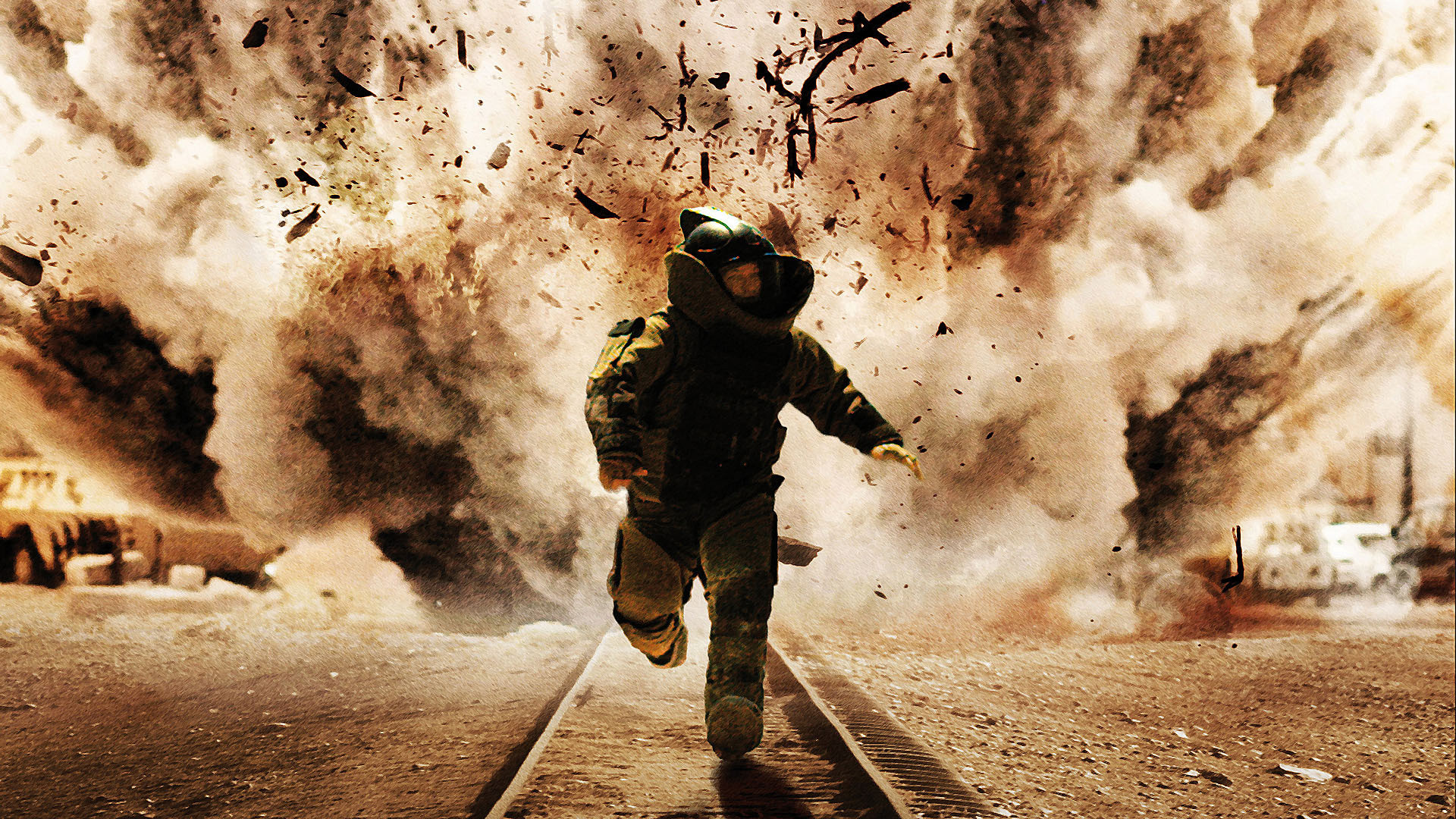 Should you write the next Hurt Locker?
So last week I went over the six types of scripts most likely to get you noticed. This week, my plan is depress the hell out of you and do the opposite. I’m going to give you the six types of scripts LEAST likely to get you noticed. And since I know there’s a portion of you probably writing one of these right now, you’ll likely want to castrate me. You’re going to scream-comment, “You’re wrong Carson! You don’t know anything!” And since I live in a country that protects one’s right to speak their mind, I’ll respect your opinion, even if I know it’s wrong.
Truth be told, since Scriptshadow is like a big warm blanket we’re all cuddling under, I don’t want everyone leaving here miserable. The only time I want people leaving the Scriptshadow Blanket is to sell their script. With that in mind, I’m going to offer you an alternative to these career-killing scripts. Think of them as food substitutions. Sure, we all love mayonnaise, but sometimes yogurt can do the trick. I know I’m not going to talk you out of everything, but if I can give you an alternative, maybe we can meet half-way.
Coming-of-Age script
Examples: Garden State, An Education, Beautiful Girls
Ahhh yes. It’s your early 20s. You’re recently out of school and confused about the giant unforgiving world. This leads to a malaise, a depression of sorts, a construct that makes you question the very worth of your everyday life. All you writers in your 30s are chuckling about now. You’ve written these before. Heck, we all have. An average looking main character with nothing going for him. He’s usually coming back to his childhood home. And of course he meets a really hot alternative girl who likes him for no other reason than the story needs her to and… well, you know the rest. Readers dread these scripts because their bosses would rather cut their eyes out than read them (yet they still have to do coverage) and they’re typically just a reason for the writer to complain about his life anyway. People rarely go to the theater to see this kind of film so the chances of one selling on the spec market is miniscule.
What you should do instead: Write a novel! The novel is much more accepting of this kind of story because instead of just seeing our protagonist look depressed for 50 scenes, you can actually write down what’s going on in his head, adding depth and context for why he’s so down on himself. Another option is to write a TV show! Shows like Girls prove that the coming-of-age genre can work in the 30-60 minute format.
Straight Drama
Examples: Winter’s Bone, Rust and Bone, The Words
I’ve already gone into depth on this site about why you don’t want to write dramas but it basically boils down to this. Almost all dramas that are produced are done so through pre-existing properties, mostly adaptations of books or articles. On the rare occasion that one isn’t, it’s usually a writer-director project. Studios tend to bust the straight drama out only when they want to win Academy Awards, and for that reason, only the best of the best writers are called in to pen these.
What you should do instead: Give us a hook! Look for some way to turn your boring straightforward drama into something more exciting. Life of Pi is about a kid stuck in the middle of the ocean with a hungry tiger. The Grey has men after a plane crash fighting off killer wolves. Midnight in Paris has time-travelling. Sure, you can write only about mundane everyday life, but I can almost guarantee you nobody’s going to buy your script if you do.
Fantasy/Sci-fi Fantasy
Examples: Avatar, John Carter, Percy Jackson and the Olympians: Lightning Thief
This kills a lot of writers. Because fantasy and sci-fi fantasy writers have got to be some of the most passionate writers out there. They love that they know all 49 planets in their dual-son solar system, Quazor. They love detailing every little inch of their weapons, like the Sword of Tagatu. They can probably tell you exactly what all 98 of their characters were doing 8 months ago to the day. But here’s the reality: There isn’t a genre readers hate more than this one. In fact, it’s easily the most made-fun of genre there is. Readers love trading stories about how fantasy writers teased their “quintology” at the end of their script. Or how they had seven moons surrounding the main world, three of which were alive. Do you really want to be the writer who readers make fun of?
What you should do instead: Write a self-published e-book. This is becoming an increasingly popular way to get noticed. More and more production companies and studios are buying up self-published books. And within these books, you have more room to get into all those fantastical eccentricities writers in this genre love. Scripts are more about action and energy and moving forward. They tend not to work when they’re bogged down by a million details.
The Sports Movie
Examples: Any Given Sunday, Goal!, Leatherheads
I love a good sports movie. But I learned early on that writing these things is a useless endeavor. You know what ruined it for us sports movie geeks? True stories. Unless it happened for real (Miracle, The Natural, Hoosiers), executives just don’t care because, let’s face it, there’s something a lot more exciting about an event that actually happened. Stay away from this genre unless you want to experience a lot of heartache and a lot of rejection.
What you should do instead: But wait! There are three things that can save you if you love sports so much you can’t write about anything else. First, find an article about an amazing true sports story and option it. That’s your best bet at selling a sports script. If not that, write a boxing/fighting movie. These can still sell if they’re not based on real life. If those two don’t work, write a sports comedy. Comedy is still the leading spec sale genre out there and sports lends itself perfectly to comedy.
An Animated Film
Examples: Hotel Transylvania, Brave, Paranorman
I’ve said it plenty of times before but nobody buys these. Every major animation department in town creates their stories in-house. And you know what? I never understood why. If someone comes up with a better animated movie idea than you, why wouldn’t you buy it? Unfortunately, not everything the studios do makes sense. I mean, someone decided to spend 280 million dollars on a Western. So don’t shoot me on this one. I’m just the messenger.
What you should do instead: A couple of things. Try to get jobs in any department you can at one of the big animation houses. People work their way up the ladder there all the time, many who started as interns. If you hope to ever write an animated film, you’re going to need a direct pipeline to the people who make them. Getting in the door is one of the only ways to do that. Save that, write a live-action script that’s light in nature, somewhat complex, funny, and that has a lot of heart. In other words, an animation film in a live action film’s body. Little Miss Sunshine by Michael Arndt is a perfect example. That’s the kind of movie that the animation houses notice.
A Contemporary War Film
Examples: The Hurt Locker, Green Zone
I keep getting sent these scripts and I keep trying to tell writers, you’re going to have a hell of a time trying to sell these. Contemporary war films just don’t make money because people don’t like to experience pain and suffering in the theater when they experience it every day in the news (for free!). And every producer knows this so every producer is wary of them. Take The Hurt Locker. Won an Oscar. Turned an unknown actor into a star. But it didn’t break 20 million dollars worldwide. Green Zone. Matt Damon, one of the biggest stars in the world. A movie shot similarly to his Bourne franchise. Nobody went to see it. Ditto for a war movie with another huge star in it: George Clooney in Men Who Stare At Goats. I could go on.
What you should do instead: If you must write about war, write a World War 2 film. There’s always an audience for those. Save that, find a GREAT original, unique, compelling, TRUE story with a hook. American Sniper just got Spielberg attached, and that’s because it’s based on a real soldier’s autobiography (that has a spoiler-ish hook to it which I won’t mention here). Still, I have doubts if that project will ever get made because, again, these movies just don’t make money.
There are other genre types I’d be wary of, but I’ll admit this. I have seen spec sale exceptions to every genre I listed above. I have seen people sell contemporary war scripts as well as straight dramas. The point of this article, though, is to steer you away from false hope. You’re already in an industry ruthless for how few people it lets through its doors. Writing in a genre that the industry never responds to is kind of like knowing your blind date hates sports and taking her to a baseball game. Sure, there’s a CHANCE it’ll be an amazing game and she’ll change her mind. But she probably won’t.
However, I know that writers are some of the most stubborn people on the planet. They love to prove people wrong. So if you’re going to ignore all this advice, let me offer up a couple of tips. First, if you’re going to write one of these scripts, make sure it’s because you’re beyond passionate about it. Make sure it’s because you can’t even conceive of writing anything else. And second, add SOME unique spin to it, something that makes your idea fresh. If it’s a contemporary war film, add time travel. If it’s an animated film, tell half the story in the real world. Do something unexpected and that just might be enough to make a producer bite.
Today’s script review challenges the notion of non-traditional narratives.
Genre: Drama/Thriller
Premise: When a Native American girl’s brother is critically injured, she rushes to a nearby military compound for help. But after two soldiers are deployed to find the man, it becomes unclear if their intention is to help or hurt him.
About: Rupert Wyatt directed one of my favorite movies of the last few years, Rise of the Planet of the Apes. Since then, however, he’s been carefully taking his time looking for his next project. I’ve seen him attached to everything from the Apes sequel to The Equalizer. But word on the street is he’s looking to direct one of his own projects. This dark drama-thriller could be in the running.
Writers: Rupert Wyatt and Daniel Hardy
Details: 97 pages
 Scriptshadow suggestion: Christian Bale for Patrick
When I first saw Rise of the Planet of the Apes, I was baffled as to what I was actually watching. A big-budget movie that was essentially a silent film? An animal as the main character (no, I’m not referring to James Franco)? A non-traditional narrative? Was I in a 1990’s New York art house or the Arclight in Hollywood?
We’ve had some debate about this before, but USUALLY (not always) scenes tend to be more interesting when you tell them through action as opposed to words. Go ahead, try it. Pop open the script you’re currently working on and pull open a talky scene. Try to do that exact same scene with no words. It’ll probably end up better.
I was curious to see if Wyatt, along with his writing partner, Daniel Hardy, would bring that same approach to this new script. And really, I was just wanted to see what these guys would write about when left to their own devices. Once again, I wasn’t prepared for what would unfold. Like Apes, we have another non-traditional narrative here. The question is, did that choice help or hinder the screenplay?
30 year old Squad Leader John Patrick is the cool, cold soldier under pressure. When you encounter the enemy, there’s no one you’d rather have leading you into battle than this guy. But we aren’t on the battlefield. We’re at a military base in the U.S. with a bunch of soldiers who have nothing to do. And when a bunch of young jarheads with too much testosterone in their blood have a bunch of time on their hands, bad things usually happen.
So one day Patrick, while watching the post with his wet-behind-the-ears partner, Cobb, spots a teenage Native American girl Zote, running towards the base. When they confront her, they find out her older brother has been critically injured and needs help. The two follow Zote into the woods, and we notice that Patrick is particularly interested in finding the brother, despite (supposedly) knowing nothing about him.
Once they get to the spot where the brother is injured, they see that he’s been taken. But where? And by whom? Patrick and Cobb determine that it’s probably whoever hurt him in the first place and he’s likely transporting the brother back someplace where he can finish the job. So they follow the man’s trail in hopes of catching up and saving the brother.
In the meantime, we’re jumping back in time to a parallel storyline that happened a couple of days ago, where Patrick, Cobb and the rest of the station’s soldiers go out drinking at a nearby bar frequented by Indians. After flirting with some Indian girls, we notice Zote’s brother watching the soldiers from the corner of the bar, particularly Patrick’s best friend, Bennett.
Back in the present, Patrick, Cobb and Zote finally find the brother safe in a cabin. It turns out whoever brought him here wanted to help, not hurt, him. But that doesn’t last long. Patrick pulls out a gun and coldly shoots the brother in the face! Holy Moses what the hell just happened?!
As Cobb and Zote wrestle Patrick to the ground, we learn from Patrick and a couple more flashbacks that the brother is responsible for killing Bennett. Patrick and the other soldiers had already tried to kill the brother once, but he obviously survived. That’s why he’s been so hell-bent on catching up to him – to finish the job.
This of course means, unfortunately, that Patrick has to kill the sister as well. But Cobb isn’t down with that and takes Zote on the run. What started as a pursuit now becomes a race to get to safety before Patrick catches up to them and kills them both.
Whoa, this script was a tale of two halves. I’ll be honest. For the first half, I was in “What page am I on?” mode. There were two main reasons for this. First, I couldn’t figure out why Patrick was so set on saving the brother of a girl he didn’t even know. He’s a soldier, not a policeman. Why not call the cops and let them deal with it? The motivation didn’t seem to be there.
Now later on we find out the truth, that he wanted to kill this guy all along. But that’s the thing with hidden motivations. They pay off eventually, but run the risk of frustrating the audience before they get there.
Then there were the flashbacks. In the second half of the script, these flashbacks helped formulate what happened two nights ago and how that led to the present situation. We understand, after Patrick kills the brother, that these two timelines are a cause-and-effect situation.
Before that, however, there’s nothing interesting happening during the past timeline. It’s just a bunch of soldiers hanging out. But what’s worse is that there’s no indication that THERE EVER WILL BE A CONNECTION with that timeline. So we go on for half the movie watching character backstory and nothing more.
However, once Patrick, who is supposed to be our protagonist, takes out that gun and shoots the brother, everything changed. The script literally became a different story. It was almost like a Psycho situation where you’re going, “Wait? Who’s our protagonist now??”
This got me thinking about non-traditional narratives in general. When to use them and when to stay away from them. Having us go through 25 pages of backstory that didn’t seem to be pushing towards anything was a huge risk. It paid off in the end, but I can see some readers being like, “Man, why are we watching all this past stuff when nothing’s happening??” then mentally checking out.
So I think you have to ask yourself WHY you’re using a nontraditional narrative and if it’s the most effective way to tell your story. Are you just doing it to be different? Or is there an actual story purpose for it? And maybe, just as importantly, is there an actual EMOTIONAL purpose for it? What is it you want the audience to FEEL by jumping around in your timeline?
A perfect example is 500 Days Of Summer. The reason the writers kept jumping around between the 500 days of this relationship was to show the emotional toll this was taking on our protagonist. One second (Day 38) he’s having the time of his life with Summer, the next (Day 189) he’s fighting for the relationship’s life. You can’t bring a reader to such a high and then such a low so quickly by showing that relationship linearly.
Getting back to The Trail, I think the key to making this entire script work (and not just the second half) may be to imply something bad is going to happen in the flashback storyline. Because until we get to the bar where the soldiers cross paths with the brother, there’s no indication as to what the purpose of these flashbacks is, and therefore they’re kind of boring.
In good old fashioned storytelling terms, we need some suspense! Tarantino and Hitchcock are masters at this. Indicate a terrible thing will happen, then milk the scene or sequence until that moment arrives. Check out the opening scene of Inglorious Basterds. We indicate the Jews under this floor are going to be murdered, then Tarantino toys with you for the next ten minutes until it happens.
Then again, I’m thinking that Wyatt and Hardy purposely kept things uneventful in those flashbacks so the killing would be a surprise. And it was. And that’s the thing about storytelling. With every choice, you’re making a trade-off. You can never it all. If you could, then everyone would be writing million dollar scripts.
The Trail got good right when it needed to. But it has the potential to be great with some first-half re-writing. I hope Wyatt and Hardy figure it out cause I can’t wait to see what Wyatt does with his next film.
[ ] what the hell did I just read?
[ ] wasn’t for me
[x] worth the read
[ ] impressive
[ ] genius
What I learned: Try not to use flashback storylines that run parallel to your present day storylines if all you’re using them for is backstory. Make sure there’s a goal, a mystery, or the implication that something big (usually bad) is going to happen. In short, let the reader know you’re building towards something so that they see the past narrative as a story in itself.