
Search Results for: F word
Today’s script will hopefully answer the age-old question, how is he the “lone” ranger if he has a partner?
Genre: Action-Adventure/Western
Premise: When a corrupt sheriff takes over a hidden silver mine, a lone Texas Ranger and a local Indian named Tonto must team up to stop him.
About: Okay, this is not the draft that you’ll see in theaters. This is actually the draft that was written in 2009, when The Lone Ranger was set to be a really big movie. But then Disney got scared and canceled the movie, only allowing it back once the script was rewritten to drastically reduce the budget. So that’s what the writers did. And maybe this is why those trailers look so generic. They likely had to get rid of a couple of really big set pieces to get the price down. As a result, The Lone Ranger comes into 2013 as one of the summer’s more questionable entries. It just doesn’t feel like one of those “must see” films. Of course, as one astute Scriptshadow commenter mentioned, you can never count out “The Depp Factor.” We’ll see if Johnny Miracle can save this film from being one of summer’s big underachievers when it’s released tomorrow.
Writers: Ted Elliott & Terry Rossio (based on the radio series created by George W. Trendle and Fran Striker)
Details: March 29, 2009 draft – 125 pages
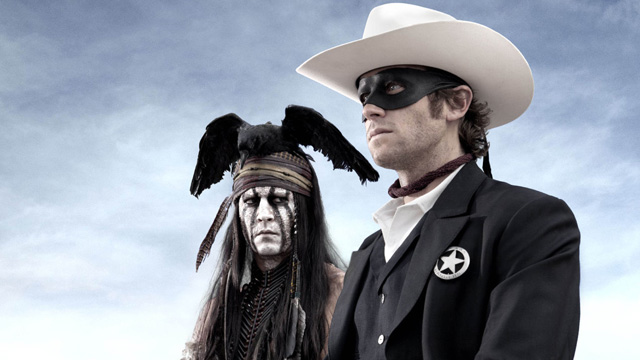
I’ve always looked up to Ted Elliot and Terry Rossio. They were a huge inspiration when it came to writing about screenwriting. Their Wordplayer Blog, at one point, was the only real place to find quality articles on screenwriting. They’re also incredibly wealthy and successful screenwriters who came to Hollywood with a 5 year plan, made their first sale way ahead of schedule, and have been kicking ass ever since (well, except for Treasure Planet, of course).
With that said, I’ve always been a little disappointed in them. They spend so much time working on these Disney movies that I’m not sure I know what a Ted Elliot and Teddy Rossio screenplay looks like. These guys have been such cogs in the Disney machine that they’ve never written anything for themselves. After reading John Favreau’s, “Chef” (which I reviewed in my newsletter), which was basically about Favreau realizing he needed to write for himself again, it seems insane that we’ve never seen a film from these guys that they created on their own.
Easy for me to say, right? It ain’t hard to call out safe screenwriting when you’re not the one making 5 million a film. I guess I have to remember that everyone successful in Hollywood is operating out of fear, fear that one day they’ll stop being asked to write or direct or act for millions of dollars. When those jobs dry up, THAT’S when you take your chances. Because that’s when you NEED to take chances. But until then? Why wouldn’t you take the money? Which leads us to The Lone Ranger, a script (or a draft of the script) that is every bit the prototype for safe screenwriting.
Texas Ranger John Reid has just stumbled onto one hell of a crime scene. An entire train full of people has been killed. So he takes a team of fellow rangers and heads to a nearby town, the only town that our murderer (or murderers) could’ve run off to. Once there, he finds a semi ghost town, with a few suspicious characters manning the local shops.
This leads him to the town’s half-crazy Sheriff, Latham Cole, a man so bizarre he’s placed a full-on locomotive in the middle of town (he figures by doing so, the tracks will have to come to him). We can’t tell if Latham Cole is good or bad but it doesn’t really matter because after their meeting, the murderer of all those train passengers, Butch Cavendish, pops out and kills all the Rangers except for Reid, leaving him to die.
But he doesn’t die! That’s because his mysterious soon-to-be-partner, Tonto, shows up and nurses him back to health. Tonto mostly spits out vague “wisdom,” which annoys Reid, but he can’t really get mad at the guy who saved his life. And actually, Tonto wants to help him get back at this Cavendish guy, but on one condition: Reid help him kill Latham Cole (who Tonto’s convinced is currently being possessed by an evil spirit). Reid agrees, in part because Cavendish has kidnapped his sister-in-law and nephew.
Soon After, Cavendish and Latham join forces and head to an old silver mine that Latham had been prepping, and begin readying it for operation again. Which means, of course, that Reid (now The Lone Ranger) and Tonto, must stop it! The End.
Man, what a disappointing script this was. Here’s the biggest lesson I’d take away from it. Don’t update something that can’t be updated – something that’s old news. I mean let’s be real. The Lone Ranger and Tonto are boring. They were created for a different time. Heck, they were born on radio! Neither of these two characters are relevant today and you feel it in every single page.
There’s a reason you didn’t see any classic Johnny Depp zingers in The Lone Ranger trailer. There are none. Tonto is a stereotypical Native American Indian that offers sage wisdom. That’s all he does. The whole movie. That’s the extent of his character is the sage-wisdom-offering guy. Naturally, with neither of the two lead characters being interesting, this movie was dead from the get-go.
But then you have the plot. And here’s my issue with Rossio and Elliot. These guys LOVE changing goals during their scripts. They’re never going to give you a clean narrative like Raiders Of The Lost Ark (i.e. “Get the Ark”). It’s going to start off as a murder mystery, then someone wants revenge, then someone’s sister-in-law is kidnapped, so they’re after her, and then there’s a spirit in one of the bad guys, so they’re after him, and then they get the sister-in-law back, and then there’s this mine they have to stop. And that’s the problem. When you keep changing the goals in your story, at some point, the audience stops remembering why the characters are doing what they’re doing. This was one of the big complaints leveled against Rossio and Elliott with the Pirates movies, the difference being that the characters in that film were actually interesting.
In addition to this, I couldn’t figure out why we needed two villains here (Cavendish and Latham). It was never clear which one was the “real” bad guy, leaving me constantly confused. And I never understood what their relationship was with one another. At one point, for example, Latham is going to have Cavendish executed. But a tribe of Indians interrupt the execution, forcing the two to work together to fight them off. After that, they start working together for good. Cavendish seemed to forget the fact that, oh yeah, earlier, two hours earlier you wanted to kill me! And I’m not saying the explanation wasn’t in there somewhere. But when you’re throwing so many plot changes at us, it becomes hard to keep up. This script would’ve been so much easier to follow with just one bad guy and a manageable amount of goal-changes.
I’m also unclear why this draft resulted in such a high budget. It looks to have even less action sequences than the movie I’m seeing in the trailer. There was a scene where Reid had to fight off a hundred coyotes, as well as a few sorta-big gunfights. But for the most part, there was a lot of talking here and not a lot of action.
Truth is, I’m afraid Rossio and Elliot took on an idea that was impossible to breathe life into. These characters feel ancient. Their interactions are dull. Tonto is stereotypical and boring (I can’t believe Johnny Depp was interested in this role when he has scripts like Desperate Hours at his production company). Reid is just…there. I don’t even know why he wears a mask. It’s not like it matters if anyone knows he’s John Reid or not. Even if the current draft is way different, I have a feeling this movie just won’t work. There’s something about this world that feels stale. A great film for 1956. Not for 2013.
[ ] what the hell did I just read?
[x] wasn’t for me
[ ] worth the read
[ ] impressive
[ ] genius
What I learned: Remember, motivation is what makes audiences CARE about whether the protagonists achieve their goal or not. A weak motivation could destroy an otherwise good script. So you HAVE to get it right. The character motivation here was weak. The Lone Ranger was trying to save his sister-in-law? A woman he didn’t even like?? We’re supposed to care about that??? Contrast that with the motivation in an almost identical film, Django Unchained. Django’s WIFE, who was taken from him, is being held by a slave owner. Now THAT’S motivation! It’s personal. It’s heartbreaking. It’s intense. An audience will care if Django gets his wife back. I don’t see a single person going to The Lone Ranger and caring whether Reid gets his sister-in-law back.
So last week I took some kryptonite-laced shots at the man of steel for being a “reluctant” protagonist, an issue I contend can destroy a screenplay. What’s a reluctant protagonist? It’s a hero who doesn’t want to take on the problem. I contend that we don’t like our heroes wimpy. We don’t like them sitting back and doing nothing. It’s the exact opposite of what the word “hero” means. However, there’s no such thing as a screenwriting rule that works across the board. There are times where the reluctant protagonist works, The Godfather being one of those examples. This gave me an idea to kill two birds with one stone. I’m not the foremost authority on The Godfather, and therefore wanted a reason to read it. And I knew that Michael Corleone, the main character, is a reluctant protagonist, which would allow me to see why the character works here when in so many other scripts, it doesn’t. I’ve also always been drawn to how slow stories work. Only the best writers know how to keep you turning the pages during a slow burn. So those are the main things I went into this script looking for. Let’s see if I found my answers, or any good tips for that matter. (you can have 500 MORE TIPS just like these by buying my e-book here)
1) Counter your hero’s reluctance with positive qualities – I think the biggest issue with reluctant heroes is when you couple them with a downbeat or depressed disposition. The combination of those two things always makes characters droll and boring. Look no further than Superman in Man of Steel for that. Instead, look for traits that CONTRAST that negative quality. One of the best traits you can use to offset this is charisma. Michael Corleone has it. William Wallace (a reluctant hero from Braveheart) had it. A double dose of negativity can quickly make your hero moody, depressed, and a downer. Steer clear of that with a positive trait (if not charisma then something else!).
2) If you have a reluctant protagonist, the earlier you can break out of being reluctant, the better – In actuality, most screenplays have reluctant protagonists at the start of the story. This is the period where they’d rather stay in the safety of their everyday lives than take on the pressures of this new adventure that’s presented itself. So we almost always see reluctant protagonists become willing and active participants at the beginning of the second act. For stories where this doesn’t happen, note that the longer you keep your hero reluctant, the more frustrated with him we’re going to get. Because we came to your movie to see your hero DO SHIT, not RESIST DOING SHIT. Michael Corleone starts being active pretty early, when he must protect his father after the assassination attempt.
3) There’s a difference between an reluctant active protagonist and an reluctant inactive protagonist – I think the problem I had with Man of Steel was that Clark was not only reluctant to do anything, he DIDN’T do anything. A reluctant character works much better if, even though he doesn’t want to get involved, HE DOES. Michael Corleone doesn’t want to be doing the things he’s doing, but he does them anyway. Another famous reluctant character, Mad Max, didn’t want to be there helping any of those people, but he did because it furthered his own agenda. Ditto with William Wallace. He didn’t want war, but he realized it needed to happen to free his country. So write a reluctant protagonist, just make sure he’s out there still being active.
4) If you have a character you need us to like who does bad things, introduce them doing good things – Vito Corleone (The Godfather) does a lot of bad shit. He’s hurt a lot of people. He’s killed a lot of people. But the power of writing is that you can make the audience like ANYONE. Don’t believe me? Have you seen Silence Of The Lambs? Yes, writers have made cannibalistic serial killers likable. One of the simplest ways to do this is to introduce your “bad” character doing something good. Vito Corleone is introduced helping a man whose daughter was beaten and nearly raped by two men who got away with it. He orders those men to be taken care of. How can you dislike a guy who’s taking down rapists?
5) Outline big party scenes – Big party/event/wedding scenes (anything with a lot of people) are some of the hardest to write. Writers often bounce around from character to character without a plan, which results in a messy directionless sequence. When you’re writing a big scene, like the famous wedding scene that opens The Godfather, make sure to plot out beforehand every character and what that character is doing. Preferably, you’ll have characters that need something during the sequence (a goal!), as that tends to make things more focused and interesting. Here we’d map out all the people coming to the Godfather with their requests. We’d map out Miachel showing up with his new girlfriend – what they’re going to talk about and why. We’d map out a scene to show that Carlo, who’s marrying the Don’s daughter, is sketchy. We’d map out Michael’s brother Sonny, who cheats on his wife with one of the bridesmaids. Map all of this out ahead of time and make sure each set of characters is doing something IMPORTANT. That’ll keep you from lingering on irrelevant stuff, which is where these big sequences go to die. Have a plan and you’ll do just fine at your next wedding.
6) A reluctant protagonist in a drama has a much better chance of working than a reluctant protagonist in an action film – Know what genre you’re writing when considering the reluctant protagonist. In an action movie, when your audience wants a lot of action, it’s going to be pretty silly if your main character is avoiding it all. In a slower drama, however, where plot and action aren’t as important, you have more freedom to play with a reluctant lead. I’d still be wary of it, but you do have more freedom there.
7) The best setups and payoffs establish high stakes during the setup – Remember, a payoff doesn’t really resonate unless you establish high stakes when it’s set up. That’s what makes the famous “horse head in the bed” scene so powerful. The day before, Jack Woltz, our unlucky movie producer, shows Hagen (Don’s lawyer) his horse stable and gushes about how much he loves horses, especially one in particular, a 600,000 dollar horse which he’ll put out to stud, leading to endless riches. Guess which head ends up under his covers? This scene doesn’t work the same way if Woltz casually passes a race track and barely points out a horse that he likes. We build the stakes up high by having him LOVE this horse.
8) Always look for an indirect way to handle backstory/exposition – Remember, one of the most boring ways to convey backstory or exposition is to lay it out in a very straightforward manner via dialogue. Instead, try to find an angle that conveys the information in a nontraditional way. They did this quite cleverly in The Godfather. Michael tells Kay (his girlfriend who knows nothing about his family’s lifestyle) about Luca Brazi, the muscle for his father. His story is about how Luca was sent over to take care of these men who attacked his father. The backstory for this character he gets into is very graphic and violent. But Coppola added an angle. Michael is smiling while he’s telling the story, so Kay isn’t sure if he’s telling the truth. Gone is the on-the-nose boring rundown we’re USED TO in these situations, replaced by a, “is he or isn’t he telling the truth” angle that makes the same information kind of fun. It’s a slight change, but it’s these slight changes that separate you from the next guy, who’s doing it the obvious way.
9) Conflict, suspense and mystery are your friends when writing a slow story – When you don’t have urgency (as is the case with The Godfather), you need to use other tools to keep your audience interested, or else they get impatient. You do this with these three tools: suspense, conflict, and mystery (and tension – though it can be argued that tension is conflict). Consistent use of these should keep even the slowest stories interesting. We see conflict, for example, in all of the requests of Vito Corleone, who makes his guests work for it. We see tension in his relationship with Michael, who doesn’t want to be involved in the family business. We have suspense in what’s going to happen with Johnny, the movie star who desperately needs a part from a producer who won’t give it to him, in Michael needing to save his father at the hospital when he knows the bad guys are coming, and leading up to the dinner where Michael plans to kill the police chief and Sollozzo. There aren’t a lot of mysteries in The Godfather, but that’s an option for you to use as well. If you’re writing a slow screenplay and you’re not using these three tools frequently, your script is probably boring.
10) How committed are you? – The more I read, the more I find that the deepest most emotionally affecting stories are based on books and real life. Why? Because the writer has tons of backstory and character knowledge to draw from. When a screenplay is written from nothing, the writer often doesn’t fill in the details that happened before the story. As a result, the characters never project any depth (why would they? They never existed before they were placed on the page). I’ve constantly been looking for a solution to this. How does one manage the same depth of a book adaptation without writing a book? Is it possible? Or should a screenwriter actually write a book before his screenplay? It sounds nuts but I GUARANTEE you, if you did that, your screenplay would be a hundred times deeper than if you didn’t. And aren’t we all looking for an advantage over the next guy? Reading the opening of The Godfather (based on the book by the same name), with this huge wedding, with Vito Corleone listening to requests for help, with Sonny cheating on his wife, with Vito’s daughter desperately trying to keep a man she barely has, with Michael introducing his new girlfriend to everyone, to Luca Brazi, to movie stars pleading for a break, a spec writer just wouldn’t know or care about 75% of these characters. They’d know their hero, they’d know the second most important guy in the scene, and then maybe one other character (the lead girl). Everybody else they’d know their first name, what they’re wearing, and that’d be it. And that’s exactly why all spec scripts feel so thin. To measure up to this expected level, try to write as much backstory as you possibly can on every character in order to give them as rich and as detailed of a history as you can. Then and only then, will they project the kind of depth and presence characters in adapted scripts like The Godfather project.
URGENCY solves all your screenplay’s ills!
Genre: Zombie/Horror/Thriller/Action
Premise: (from IMDB) United Nations employee Gerry Lane traverses the world in a race against time to stop the Zombie pandemic that is toppling armies and governments, and threatening to destroy humanity itself.
About: World War Z, the movie, has had its own apocalypse leading up to its release. Its well-publicized awful third act (which forced the studio to rewrite and reshoot the whole thing) steered buzz on the film towards Death Valley. Things didn’t exactly get better when geek screenwriting whipping boy Damon Lindelof came on to “save” the movie. But just like a zombie, the film came back from the dead and started building positive word-of-mouth with strategic early screenings and that cleaned up ending. Projected by much of Hollywood to bomb, the film made $66 million this weekend, 16 million more than the studio’s best case scenario. It looks like all aspects of World War Z got an improved ending.
Writers: Matthew Michael Carnahan and Drew Goddard & Damon Lindelof (story by Matthew Michael Carnahan and J. Michael Straczynski) (based on the novel by Max Brooks)
Details: 116 minutes
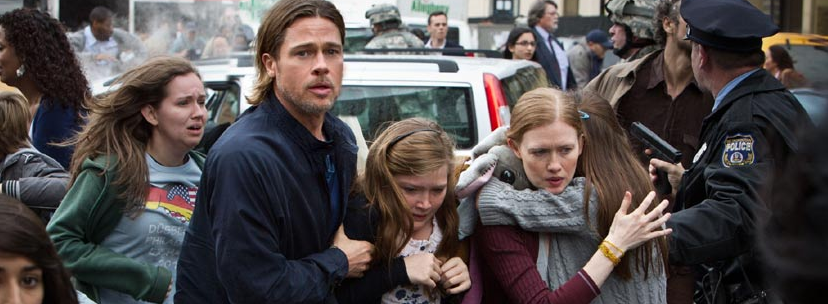
I’m not sure why everyone thought this was going to flop. The trailers looked awesome. It had Brad Pitt in it. What else do you need to get butts in seats?
I actually read an early draft of this script a long time ago and there were textbook problems with it that needed changing if this movie was going to have a shot. They made those changes (nailed them, in fact) and voila, we have a MUCH BETTER script and therefore a MUCH BETTER movie.
World War Z follows United Nations agent Gerry Lane as he and his family (wife and two daughters) are beginning their day. As they’re driving through the city, chaos erupts, with crazed possessed people attacking and killing everyone in sight. Those victims then turn into attackers as well, creating an exponential path of destruction.
In a harrowing opening 20 minutes, Gerry leads his family to safety and eventually to an extraction point where the government picks them up. They head to the only safe area on the planet, military boats in the middle of the sea, and everyone starts trying to find out what’s going on.
What’s going on is a particularly lethal strain of zombie. One that’s making quick work of the planet. If they don’t do something soon, these boats may be their final destination. Just like any plague, if you find out the source (Patient 0), you have a chance of coming up with a vaccine. Because Gerry’s job is to go into dangerous places and get answers, he’s a natural fit to go searching for this patient.
Problem is, every country is being overrun by zombies. So it’s sort of like sending a tree into a field of chainsaws. The chances of making it out with all your bark in tact isn’t very good. Gerry starts his investigation in South Korea, which experienced the worst of the attacks. Clues there eventually lead him to Israel, which somehow knew to build a zombie wall before the zombie outbreak even began. These guys were onto something and Gerry wants to know what.
While there, however, our clever (and quite energetic) zombies, figure out a way to scale the walls and overrun the city, forcing Gerry to make a harrowing escape on a passenger plane. That plane eventually leads him to a World Health Organization center where Gerry uses the clues he’s gathered to (spoiler) come up with a vaccine.
Okay, are you guys ready for today’s big screenwriting lesson?
URGENCY!!!
This script proves how important urgency is to a story. Why do I say that? Because I have the old script to compare it to.
In that version, the script tried to stay true to the novel. The novel was more about the AFTERMATH of the zombie outbreak. It took a “Post-Hurricane Katrina” approach to things, with Gerry trying to find who was to blame for the outbreak rather than Patient 0.
That’s fine for a book. But shit like that don’t fly in movies. In a movie, you need urgency. I’m surprised they didn’t figure this out right away – that they paid a writer to write a draft that had no hope of pleasing audiences. But someone finally got it right. They realized that telling everything in flashbacks and having Pitt strolling around countries leisurely without a single immediate threat didn’t lend itself to an exciting flick.
The brilliance of World War Z, the movie, is that it never slows down. Outside of the opening scenes establishing the family together, once the zombies hit, they never stop hitting. And for that reason, Gerry had to do his investigation WITH THE THREAT OF BEING KILLED AT ANY MOMENT as opposed to the threat of getting a paper cut at any moment. And everywhere he went, the zombie threat was right behind him. I know some people don’t like fast zombies, but they multiplied the urgency in this case a thousand fold and really made things exciting.
The best example of this was in Israel. We saw these zombies clamoring to get inside the country and we knew it was only a matter of time before they did. So when Pitt’s investigating, he doesn’t have time to hop around the country meeting numerous people and getting detailed rundowns. He talks to one dude before the zombies scale the wall and he’s running for his life.
World War Z is actually the prototypical GSU script. You have the Goal (find Patient Zero so you can create a vaccine), the stakes (Gerry being reunited with his family AS WELL AS the fate of the human race) and the urgency (zombies always on their tail).
Speaking of, that was another great change Damon Lindelof and Drew Goddard made. They actually suggested going back and adding the family scenes at the beginning of the movie, as well as another phone call between Gerry and his wife during the second act. They wanted more stuff between the family. They know that GSU doesn’t work unless the audience CARES ABOUT THE CHARACTERS and WANTS THEM TO REUNITE.
One of the best ways to create that caring is to create a family unit, a pair (or a group) of people who we want to see reunited. You do this by showing the family together, show how much they care for each other, then rip them apart. If Gerry is ONLY trying to save the world here, this movie doesn’t work. It’s that we want to see him back together with his family that keeps us so invested.
As for the ending, I don’t know what they changed the script from, but you can tell where the split happened. Clearly, that plane was going somewhere else in the old film. Now the plane crashes and Gerry comically walks over to the World Health Organization, which just happens to be a pleasant 5 minute walk form the crash site.
But once Gerry’s in the building, things pick up splendidly. Lindelof and Goddard create their own little mini-movie with new GSU. The goal is for Gerry to get a special bottle the scientists need in B-Wing, the stakes are, once again, survival of mankind, and the urgency isn’t as prominent, since the situation is so fraught with tension (the zombies potentially spotting them at any time). For coming up with this ending as quickly and under as much pressure as they did, they really did a great job.
You know, I got to thinking about this movie and wondering why it was so good, despite its mechanics being so simple. There are no real surprises in this script, no x-factor. It was all straightforward. I was reminded of a movie from earlier this summer that had a similar structure, yet wasn’t nearly as good: After Earth.
In that movie, we have the family unit (Dad and son) and a clear goal with high stakes and lots of urgency (son must get to the tail section to retrieve the S.O.S. beacon). So why did it fall so short of this one? A few things stuck out to me. The first was that the stakes were so much higher in World War Z. In After Earth, only the father and son’s lives were at stake. World War Z had the lives of the family at stake AS WELL AS the entire world.

A second problem was that the obstacles were so much greater in World War Z. I always talk about the value of creating big impossible obstacles for your characters and I never saw that in After Earth. Everything the son ran into was bad, but never “Oh shit ohmygod holy shit we’re fucked” bad. Contrast that to World War Z, which has tons of these moments. I mean at one point Gerry is watching the plane he’s on be overrun by zombies and must decide whether to blow a hole in the side of the plane with a grenade, effectively crashing it, or take on the zombies in close combat. Now THAT’S what I call an obstacle.
The other problem was that After Earth’s storyline was too simple. You were always way ahead of the story. World War Z squashed that issue by creating a central mystery to the storyline: What happened? Pitt needed to put together clues to figure out what happened in order to get to each successive clue. In After Earth, the kid didn’t really have to figure out anything. His father just told him where to go and he followed orders.
And that’s ANOTHER reason why this is such a great screenplay to study. On top of all this, we have a snapshot of the proper way to write a protagonist: HE’S ACTIVE! Pitt is making his own choices, figuring things out himself, and charging forward. Isn’t that a way more interesting protagonist than one who just follows orders from his dad the whole movie?
That’s not to say World War Z was without fault. What keeps this from being impressive are some of the glaring logic oversights. Israel is being heralded as this genius country for building a wall before anybody else to keep the zombies out. Yet they’re allowing random planes to land on their runway and random people from those planes to hop into their city without enduring – oh, I don’t know – a QUARANTINE.
Ditto for the random folks they’re letting through the wall. If someone can take as long as 10 minutes to turn, why are you allowing people into your city after a Q & A session that basically amounts to “Are you a zombie?” The plane that Gerry and crew stop and board is the worst example of this. Gerry’s helping along a pale sickly woman, who’s coming with him. She never turns into a zombie, but if you’re those pilots, aren’t you thinking she might?? And yet they never blinked. Yeah, sure, come on in.
I understand why they did this. They balanced the audience’s need for logic against the audience’s need for urgency. It’s a problem screenwriters are constantly faced with. You could have had Gerry and crew placed into quarantine for 12 hours after they landed in Israel to be more realistic, but it would’ve killed the momentum. I’m not sure there’s a universal solution for this. It needs to be addressed on a case by case basis. But my gut tells me they needed it here. Because everybody looked like morons for never once considering the fact that the new guy they’re letting in the room might be infected.
The thing was, everything else was so damn well done that I thoroughly enjoyed myself. I mean there isn’t a slow moment in the movie. So congrats to the writers who worked so hard on this. It paid off!
[ ] what the hell did I just watch?
[ ] wasn’t for me
[xx] worth the price of an EVENING ticket
[ ] impressive
[ ] genius
What I learned: I always talk about giving your protagonist a difficult choice at the end of the movie, something that challenges their fatal flaw. This reminded me that you don’t want to ONLY wait for that ending to do this. You should give your characters difficult choices WHENEVER YOU CAN in the script. I loved the scene in the plane where Gerry is watching the zombie mayhem get closer and closer, and must make an impossible decision. He’s got a grenade he can throw at them, which will crash the plane and probably kill him, or he can try and fight the zombies off, which will probably kill him. Those are the great moments in scripts, where you see the character battling that impossible choice.
 Unless you’re a genius like Bradley Cooper, you’ll want to outline.
Screenwriting, more so than most writing mediums, is about structure. You’re telling a story within a very specific framework (usually three acts: A beginning, a middle, and an end). If you don’t plan ahead for how you’re going to lay that story out, it’s kind of like trying to tell a joke at a party without practicing it beforehand. You’ll start to wander, repeat things, and forget stuff. You’ll see your audience getting bored, checking their phones, losing interest. When it comes to screenwriting, you don’t have that luxury. You won’t see the people getting bored, which means you’ll have no idea that the “joke” isn’t working.
So think of outlining as “practice” for your screenplay. It’s where you test and try out everything until you get it exactly where you want it to be. If you don’t outline, chances are your script will feel lost. Screenplays require a certain pacing and escalation to keep a reader’s attention. Outlining fosters that process. Now everybody has their own methods, their own outlining styles, so what I’m about to share with you is only one approach. But it should familiarize you with the process and give you a base point to start from.
STEP 1 – FIGURE OUT YOUR ACT BREAKS
Assuming you’ve already got an idea, the first thing you’ll want to do is set your act breaks. On a 100 page script (which is what I’ll be using as the page count basis for this article), your act breaks are going to occur around page 25 and 75 (or at 25% through and 75% through, if your script is longer). The first act break (act 1 into 2) will be when your hero leaves on his journey and the second act break (act 2 into 3) will be when it appears he’s failed at his journey. For this to work, you’re going to want a protagonist with a goal (find the Ark, save the wife from terrorists, snag the girl, survive the Purge, find and get Doug back to his wedding on time). It becomes a lot harder to structure a screenplay if you don’t have a protagonist with a goal.
All you have to do, then, is figure out how these moments play out in your specific story. So let’s say I’m writing a movie about a plague that’s threatening to destroy the human race and our main character is looking for an exotic monkey he believes has the cure (I think this is an actual script I reviewed – it sounds familiar). Hence, our main character, Jason (a primatologist), must find this monkey. Page 25, then, might be outlined as: “Jason takes a plane to Kansas City where the plague began and where he believes this monkey escaped from the zoo.” Boom, you just outlined your first story beat!
Page 75, the break into the third act, will require a little more thought, because you have to think through your entire story to figure out how your protagonist will get to his lowest point. In the case of future blockbuster “Monkey Plague,” it might be that Jason is rushing to the labs with the monkey, only for our villain to race him off the road and steal the monkey away. It looks like poor Jason has failed at his mission. :(
STEP 2 – HOT SPOTS
Now that you have the two most important places in your screenplay mapped out, you have a solid sense of where your story needs to go. This should make tackling your story easier. But remember that the average screenplay has 50-60 scenes. We’ve only written two of those. I’ve found that the more advanced the writer, the more specific they want their outline to be. So if you want to take this a step further, here are the next set of scenes you’ll want to outline before you start. I call these major beats “Hot Spots.”
The inciting incident (Page 10) – The inciting incident happens in the first act, somewhere between pages 5-15, and is the thing that throws your hero’s world upside down. It could be the death of someone they’re close to, getting fired, wife divorcing them, someone tries to kill them, aliens showing up. Everything’s cool for your hero until this moment happens, so it’s a good (and usually obvious) moment to map out on your outline. In Monkey Plague, this might be the announcement on television of the plague. Or, if you already started with the plague, maybe the government announces an official quarantine on the city Jason lives in. You’ll notice how this conflicts with the First Act Turn I outlined above. How can he take a plane somewhere if his city is quarantined? I’ll go back and change the First Act Turn to him paying a black market bus to take him out of the city. These kinds of changes happen all the time while outlining and are part of the process.
First major obstacle/jolt (Pages 35-40) – I’m a strong believer that something exciting should happen every 10-15 pages in your script, something that jolts the reader a little, whether it’s a major obstacle, a reversal, a mystery posed, a surprise, a character intro, a mystery answered, a twist, or just something that ups the stakes. Use these moments to reignite the flame of your story, which may have grown dimmer as your reader has settled in. Keep in mind that most of these moments should be based in resistance. They should make your protagonist’s journey more difficult. In Monkey Plague, Jason may get to Kansas City only to find that the city infrastructure is crumbling as everyone flees to the safety of their homes. Electricity is starting to go out, public transportation is shut down, looting has begun.
The Midpoint Shift (second major obstacle/jolt, page 50) – The Midpoint Shift is one of the most important pieces of the outline because the second act (between pages 25-75) is where most stories fall apart. It’s such a big gap that writers don’t know what to do with all that space. Enter the Midpoint Shift, which is basically the most extreme obstacle/twist you’re going to write into your movie. The idea is to shake things up and turn the story on its head a bit so that the second half feels different from the first. I can’t stress this enough. Without a solid midpoint shift, your second half will feel like a repeat of the first and we’ll get bored. So in Monkey Plague, I’m thinking of two things happening. First, everybody in the city is mysteriously disappearing. Something’s up, and Jason doesn’t know what it is. On top of this, Jason finds out he’s infected (either by random exposure or someone infecting him on purpose). Notice how this changes up the story (the danger becomes more personal) and ups the stakes (our own character’s life is at stake, and he doesn’t have long to save himself).
Third Major Obstacle/jolt (page 65) – This is probably the least known hot spot, but an important one as the late second act is often the most boring part of a movie. Therefore we need one more jolt before we get to the end of the second act. What that jolt is (a twist, raising the stakes, a giant obstacle) is up to you, but a lot of times it has something to do with death (the death of Obi-Wan for example). But it can also be a good guy who’s secretly revealed to be a bad guy. It could be a false victory (the guys in The Hangover find Doug only to realize… it’s not the real Doug). Or it could just be something strange and unexpected, such as the discovery of the Guinea Pig Island in Life of Pi. In Monkey Plague, maybe Jason comes upon a slaughter house. They’re killing all the monkeys to get rid of the plague. But as he gets closer he realizes they’re not slaughtering monkeys. They’re slaughtering HUMANS! Ahhhhh!!!
Ending (page 95) – Michael Ardnt (Toy Story 3 and Star Wars VII) says he doesn’t write scripts until he knows the ending. That’s because the ending dictates everything that comes before it. The more specifically you know your climax, the more direction your story will have. Period. But endings are also really hard to figure out. Coming up with an original one that will surprise an audience is rare. So you’re not always going to get it on the first try. Still, try to put something down, even if you think it might change later. It’ll give your writing direction and purpose. I’m having a hard time with the ending for Monkey Plague, so for now, I’ll just say that Jason gets the monkey back and creates the antidote, with mere minutes to spare…only to find that it was the wrong monkey!
SETP 3 – FILL IN THE REST
Okay, now you have the basic story beats laid out. These will be the pillars of your plot. From here, you have a choice. You can either charge forward and start writing your script or you can start filling in the gaps. My advice is to fill in the gaps. The more scenes and beats you know, the easier it will be to write the script and the less of a chance you’ll encounter writer’s block. Depending on the length of your script, you’ll have anywhere between 10-15 scenes in the first act, 25-30 scenes in the second, and 10-15 in the third (the number of scenes will also vary based on what type of script you’re writing as well as your writing style). Since you have the Inciting Incident, the First Act Turn, the First Major Obstacle, the Midpoint Shift, the Third Major Obstacle, the Turn into The Third Act, and the ending, that means you already have seven of these scenes set. You just have to come up with the final 50. As you keep working on your outline, both before and during the writing of the script, you’ll become more specific with each beat and scene (even adding notes to yourself in sub-headers as to what you’re trying to accomplish with the scene). If you can get your outline to the point where every scene is noted (should be easy after the first draft), you’ll be able to see what needs to stay, what needs to go, where things need to speed up, etc. Wordpress won’t let me add sub-headers without learning Fortran, but the outline will look something like this (I’ve added a few scenes to fill out the outline).
ACT 1 (numbers denote scene numbers)
1 – Jason working in the lab on a monkey that’s showing exceptional abilities.
2 – Jason goes home. Girlfriend pissed cause he spends too much time at work.
3 – Jason gets a surprise phone call – told not to come into work tomorrow. Government has called in to suspend all primate studying for the time being.
4 – Inciting Incident – The government announces an official quarantine of the city.
12 – (break into act 2) Jason heads to Kansas City on a sketchy bus.
ACT 2
18 – (Obstacle 1) City infrastructure is crumbling. Violence is erupting in the city. Phones go down so no one can call him back.
25 (Midpoint Shift/Obstacle 2) – Jason betrayed by Sara after getting injured. While asleep she injected him with the plague and is now gone. Plague kills within 72 hours. (where is everyone disappearing to??)
32 – (Obstacle 3) Jason finds out that government has taken over all slaughterhouses and is using them to slaughter humans with the plague.
38 – (Lowest Point/Break into Act 3) Is chased after getting the monkey, rammed off the road. The monkey is taken from him. He’s at his lowest point. Has nowhere left to go.
ACT 3
50 – (climax) Jason infiltrates the government base where the monkey testing that created the plague was happening. Takes down the bad guys, completes the antidote… but finds out it’s the wrong monkey!
CONCLUSION
Besides Monkey Plague starting to sound more and more like a midnight Sy-Fy channel flick (hey, what did you expect? It was called Monkey Plague!), I think this gives you a pretty good idea of how to outline. What’s important to remember is that this is a very general approach. It’s tricky to put a one-size-fits-all approach on outlining. When Harry Met Sally, for example, doesn’t have a character goal driving the story. This meant finding another way to structure the script, and therefore another way to outline. They did this with time jumps, which divided (structured) the story into five parts.
Multi-protagonist movies (Crash) and multiple storyline movies (The Dark Knight) don’t follow the traditional “Character goes after a goal” structure either. These are trickier to outline because there just aren’t as many successful movies in those formats to draw from. With that said, it’s even more important to outline these scripts since they’re more likely to lose focus.
Outlining should also work closely with rewriting. The more complicated your story is, the harder it will be to figure out all the beats right away. The Dark Knight, with its many storylines and characters, is going to require some playing around to discover the storyline. So feel free to get the basics down in your initial outline, then write a draft that helps you discover where everything else is going to go. As you write, you’ll feel yourself coming up with ideas, which you can fill in on the outline on the fly. Your second draft, then, will be the powerhouse draft.
Now there’s no law that states you must outline. You can drop into your script guns a’blazin and see where it takes you. But the more you know about your story, the more it frees you up to just write (as backwards as that sounds). If you’ve never outlined a script before, give it a try and see if it helps. And if you already do outline, maybe I gave you a few extra tricks to use. Next Thursday is a Character Outline article so try to have your plot outlined by then!
I predict today’s writer will be writing movies we see one day. So how come I’m not onboard with this skill-rich script?
Genre: Drama/Coming-of-Age/Comedy
Premise: (from writer) Fatherless Copywriter, Nick Adams, uncovers a stash of immaculate love letters dated the year he was born and post marked from Key West and Havana, Cuba. Convinced he is Hemingway’s bastard love child, he travels to Key West with teenage son in tow to usurp his birthright.
About: This is an amateur script that came referred to me by one of my consultants.
Writer: Eric Brown
Details: 113 pages
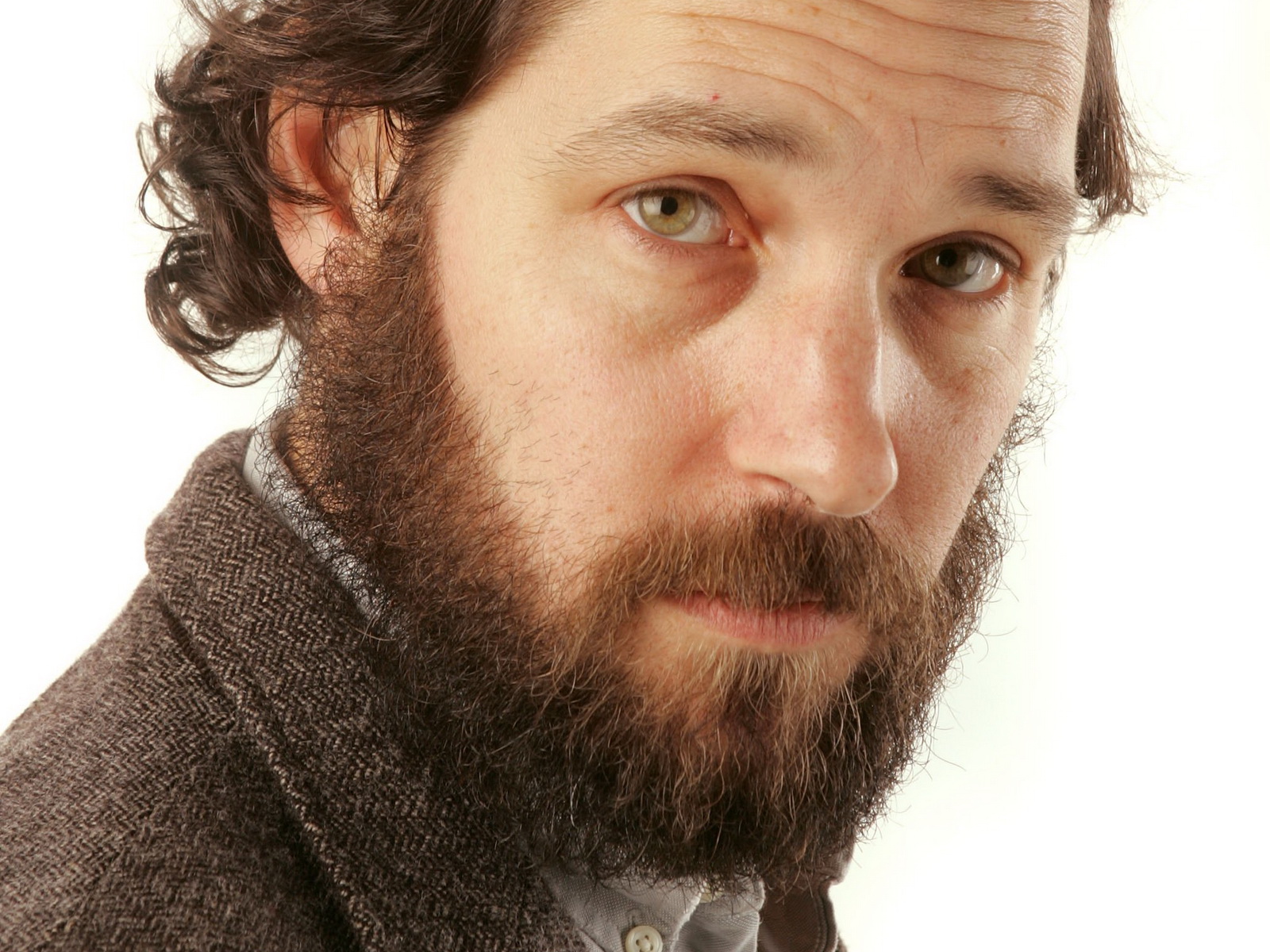 Paul Rudd for Nick?
Now that we’ve proven there’s undiscovered talent out there just waiting to be found (Patisserie baby!) I’m back on the amateur bandwagon, hoping to bring more scripts to Hollywood’s attention. Hemingway Boy, I’ve been told, has a shot at being one of those scripts. The script was given to one of my consultants for notes and later recommended to me (which doesn’t happen very often).
In the time it’s taken me to finally read and review it on the site, it was picked as one of the coveted “referrals” on The Tracking Board’s site. One person recommending a script can always be a fluke. Two? Means we probably have something good here. And since my taste matches up well with Christian’s (my consultant), I figured Hemingway Boy might be able to bring me to my screenwriting happy place.
40 year old Nick Adams feels trapped. As writer Eric Brown points out, he’s like “all of us” in that respect. You know when you’re a kid and you plot out where you’ll be in 30 years? Yeah, well, Nick’s at the opposite of wherever that is. How opposite? Well, he writes advertising slogans for baby food. And while he gets paid a lot of money for it (he’s even in line for a promotion!), how excited can you get when you’ve won over a target audience who’s not only illiterate, but hasn’t learned their ABCs yet?
In addition to the career stuff, Nick has to take care of a chirpy mother with early onset dementia. He must contain an increasingly rebellious teenage son (Sam). And he must learn to be civil with his irritating ex-wife.
Well at least one of those problems gets solved when Nick’s mom kicks the bucket. But just when he thinks that’ll calm things down, Nick stumbles upon an old box of love letters written to his mom from a mysterious man. After doing a little research, Nick becomes convinced that that man is Ernest Hemingway, and that his Mama Mia’esque mother made him the bastard child of the famous author.
Feeling some purpose for the first time in his life, Nick grabs his son and heads to the town in Florida where Hemingway spent most of his life. He hopes to ask around, find out if anyone saw Hemingway and his mom together, and go from there. When he gets there, he’s greeted by his tour guide Joe Jack, a step-father of sorts who dated Nick’s mother for awhile. Back then he was a pretty selfish prick, and now he wants to make up for that phase in his life by helping Nick however he can.
Once set, Nick meets a bus driver named Charlie (noooo – not the female love interest with the male name!) who he starts to fall for, while Sam ends up meeting a too-cool-for-school hottie named Stacee who he falls madly in love with. We jump back and forth between these relationships as they equal parts sputter and sparkle. With time running out before Nick has to be back in Detroit for work, it’s looking like he’ll never find the truth. That is until he locates an old friend of his mom’s who lives in Cuba. Going there is a risk, but Nick HAS to know. So grabs a boat and endures the final leg of his journey.
Here’s the thing about Hemingway Boy. It’s written by a real writer. It’s not one of those amateur scripts you read and say, “This guy isn’t even ready to be judged because he doesn’t know how to write yet.” Brown knows how to write. He’s very comfortable in this medium. For that reason, I see this more as a professional script than an amateur one. And for that reason, you’re going to judge it like a real movie, not on its mistakes, but rather its choices.
While I can understand why people responded to this, it wasn’t quite my cup of tea. Let me try and explain why. I don’t react well to scripts that are high on quirk. Scripts that feature the kooky grandmother, scripts where billboards are talking to our characters, scripts where every other character is flamboyant or over-the-top. I’m a big believer that the story always comes first. So if I feel that the writer is more interested in coming up with a wacky character than they are pushing the story forward in an interesting way, I start to turn on the script.
I do this because I’m now focused on the writing instead of the reality the writer’s created. In other words, I’m out of the story. And you don’t want your reader to be outside the story thinking about YOU, the writer, writing this. The spell is broken once that happens. And I found myself increasingly reacting to things other than the story.
The first moment this happened was Grandma Janice (I say “grandma” if we’re looking at her through Sam’s p.o.v.). As soon as she came in and started acting kooky and quirky, I said, “Uh-oh,” under my breath. I’m not going to lie. I hate the unpredictable “says whatever’s on her mind” grandma character. I see it so much. I think it’s so cliché. It’s kind of like screenwriting kryptonite to me (ahh, I can’t seem to forget Man of Steel!). And I’m not saying you should never write the character. Obviously people respond to it (who doesn’t like Betty White in The Proposal?). But that character kills me so much that when she showed up, I instantly turned on the script.
And if that was all, I might have rebounded. But it felt to me like every character was over the top. For example, Joe Jack, the grandfather character, almost seemed like a male version of Alice. He was big, loud, over-the-top, and always said embarrassing things. So again, we’re favoring quirkiness over reality. And I get that that’s a choice. I’m not saying it doesn’t work. It just doesn’t work for me.
On top of this, I couldn’t pinpoint why exactly Nick wanted to know if Hemingway was his father other than it would’ve been kinda cool. He mentions a couple of times that he just wants to know where he came from, but we seem to be missing out on a potential bigger story here. I wanted to know exactly why Nick needed this answer because it was the question driving the entire story. And if I’m not even sure on why he’s going after it, it’s hard for me to 100% engage in that quest with him.
With all that said, there’s definitely something here. While I didn’t like how extreme the characters were, there was a lot of depth to them. And all of them stood out, which can’t be said about the majority of amateur screenplays out there – which struggle to come up with a single memorable character. That’s a big-time writer skill. I thought the stuff with Sam and Stacee was interesting (although I was hoping he would end up with Stuckey, her younger sister). There’s definitely a goal here (trying to find proof if he’s Hemingway son). There’s some urgency (he’s only got two weeks). There’s plenty of conflict in the scenes, with characters meeting obstacles in whatever goal they’re pursuing. The 3-Act structure is in place.
So it’s clear Eric knows what he’s doing. My preference was just that the script be a little more grounded in reality and less proud of itself. I wanted more people who acted like people as opposed to caricatures of people. That would’ve pulled me in and made me believe in everything more, instead of concentrating so hard on the person writing the script. Then again, the same thing can be said for writers like Tarantino or Shane Black, and they’re doing all right. So maybe I’m just being Grumpy McGrumperbottoms. What did you guys think?
Script link: Hemingway Boy
[ ] what the hell did I just read?
[x] wasn’t for me (but this writer shows a lot of promise)
[ ] worth the read
[ ] impressive
[ ] genius
What I learned: I’m a firm believer in the hero going after the goal hard. If he’s not going after the goal hard, that tells me he doesn’t want it that much, and if he doesn’t want it that much, then why should I want it for him? Nick’s actions never matched up with his words. He always felt a bit too casual in his pursuit. I wanted him to be dedicating more time to this endeavor. I wanted to feel more urgency and desperation.